The podcast, which is called McCartney: A Life in Lyrics, starts on September 20. It promises listeners a fly-on-the-wall opportunity to sit in on recordings of conversations made over many years between Paul McCartney and poet Paul Muldoon as they dissected the people, experiences, and art that inspired his songwriting.
The conversations between the two were a central part of their process in compiling the book The Lyrics: 1965 to the Present, released in hardback in 2021, and just about to be re-published in paperback form – with added chapters.
Over two seasons and 24 episodes the podcast will let us in on how that book came together. We’ll be able to hear what is described as “a combination master class, memoir, and an improvised journey with one of the most beloved figures in popular music”.
Each episode will focus on one song from McCartney’s catalog and will span early Beatles through to his solo work.
You can listen to a promo for the new podcast here:
For more background on how it all came about there’s also an interview in The Verge with Justin Richmond, Executive Producer of the podcast. It’s really interesting. “The idea for the podcast came through McCartney’s production team, from the person in charge of special projects. The sort of system that [McCartney and Muldoon] came up with to write [The Lyrics: 1956 to the Present] is that Muldoon turns up to McCartney’s house, turns on his phone, and records a conversation between the two of them. Eventually, the pandemic happened, lockdown, etc., and some stuff was delivered over Zoom.”
“My read on it is that after the stress of getting the book together was relieved, they were sort of realizing that they have hours of Paul McCartney being candid in a really special way. It’s not like this was expertly recorded in the studio. It’s not as if he was sitting down to be Paul McCartney of The Beatles to give an official interview about the band. These [recordings] really have the tenor of someone sitting down with a friend and having a leisurely chat about times past. And McCartney’s “times past” happens to be, for him, The Beatles and Wings and a litany of incredible solo work.”
Season One drops weekly starting September 20. It will feature twelve episodes examining ‘Eleanor Rigby’, ‘Back in the USSR’, ‘Let It Be’, ‘When Winter Comes’, ‘Penny Lane’, ‘Uncle Albert/Admiral Halsey’, ‘Here Today’, ‘Live and Let Die’, ‘Magical Mystery Tour’, ‘Jenny Wren’, ‘Too Many People’ and ‘Helter Skelter’.
Season Two will follow with an additional 12 episodes in February, 2024.
(If you don’t want to wait for each weekly episode and need to binge the whole series all at once you can subscribe to Pushkin+ to get access to all of Season One on September 20).
Whichever way you look at it the announcement overnight by Paul McCartney and Penguin Books that the paperback edition of his book The Lyrics: 1956 to the Present will contain seven additional song commentaries to those in the hardback edition from 2021 is a sneaky marketing ploy to get fans to buy additional copies of content they already own.
Yes, the paperback will have different cover art and will come in one volume (the hardback is split into two separate books), but still, to get McCartney’s thoughts and memories of those seven additional songs we’ll have to fork out yet again…..
The seven new song commentaries will be: ’Bluebird’ ’Day Tripper’ ’English Tea’ ‘Every Night’ ‘Hello, Goodbye’ ’Magical Mystery Tour’ ‘Step Inside Love’
Fans are already reacting to the news – and not in a good way:
“The old bonus track swindle. 😦 I’m sure people who bought the hardback get a free copy.”
“Next up: the expanded hard cover edition with the 7 additions as well as 3 additional additions. This is getting ridiculous.”
“Gotta love marketing. Extra songs for a new book edition, man. I have the hardcover. It’s beautiful. I’m good with what I have…No second bite of the apple from me.”
“I’m waiting for the limited edition cream paper, newspaper, blue paper, green paper, lambskin paper, pink paper, yellow paper, parchment paper, orange paper, purple paper, swirl paper, papyrus paper, 98 bright paper, rolling paper and black paper editions. Each with a unique and previously unreleased song write up! Collect them all!”
The paperback is scheduled for release on 7 November, and preorders are open now in the UK (Penguin) and in the USA (Norton).
Let’s get this straight up front. Luca Perasi’s Paul McCartney: Music Is Ideas – The Stories Behind the Songs (Vol.1) 1970-1989 is a big, weighty tome. It is way more book in real life than you might imagine from seeing it pictured on the web. At over 520 pages Music Is Ideas is thick and packed with tons of useful information. Its an obvious labour of love into which he’s poured an enormous amount of thought, hard work and creative effort.
Obviously Music Is Ideas serves as a very handy adjunct to McCartney’s own award-winning, two-volume set The Lyrics (published in 2021) which covers off a selection of just 154 songs from Paul’s earliest boyhood compositions, his Beatle days, some Wings songs, and solo work to the present day. Perasi’s book however extends and amplifies this with it’s aim (eventually in subsequent volumes) to detail absolutely every post-Beatle composition we know of. This first installment – Volume 1 – closely examines 296 released songs, plus a further 50 unreleased works. It should be said too that The Lyrics is a book Luca Perasi knows extremely well. It was he who officially co-authored the translation for the Italian market.
Music Is Ideas is also a natural partner to the terrific Allan Kozin and Adrian Sinclair release published just at the end of last year, The McCartney Legacy – Volume 1 1969-1973. While that work deals more with the day-to-day life of McCartney (and so far only goes up 1973), these two books together will provide the reader, collector, or anyone even vaguely interested in popular music and the process of songwriting with an in-depth examination of the life and work of one of our most important creative artists.
As mentioned, this latest book includes all the songs released by McCartney on album or as singles, plus side projects or songs written or co-written by him between 1970 and 1989. In other words, everything from McCartney to Flowers In The Dirt. That’s a total of 296 entries. This includes songs he didn’t write himself but has recorded (think Choba b CCCP), plus songs composed and recorded during the preparation of particular albums but maybe not released until much later. These are clustered together at appropriate points in the timeline so as not to be missed. In addition there are 50 completely unreleased songs detailed. There is also an index and a bibliography at the end which is always good to see.
Each entry deals with the story behind the song in detail: its inspiration, the demos that were recorded, as well as the studio recordings themselves. How were they made? Where was each song recorded? Are there alternative versions? And on which album or albums does the work appear?
As you read it becomes clear that Perasi tries to cover off five main aspects for each entry. He begins with an analysis of the songwriting technique employed by McCartney for the particular work – in other words how the song came into being in the first place, and by which means.
A second analysis is around the genre utilized. Paul McCartney’s vast catalogue ranges across experimental and rock’n’roll, to traditional music hall and classical. Over the years he’s dabbled in reggae, blues, folk, country, disco, children’s music and new wave, a huge array of influences – sometimes following but also often leading the way with avant-garde and electronic sounds. So, what are the influences? These are mentioned in each entry.
The third examination in each entry is how Paul worked in the studio to get the recording down. The Beatle years were a steep learning curve for him of discovering just what could be achieved in the studio and how to use the studio as an instrument in itself. So, what were the processes for each recording? These are touched on in each entry in the book.
Fourthly comes an accounting of the instrumentation used on each track. McCartney is well-known as a master of many instruments – not the least of which is his own voice. There is an in-depth look in each entry at who played what, and how. Specific attention is paid to the many vocal influences and techniques employed too. What is the style at play in any given song?
Lastly there’s consideration paid to the lyrics. What is the song about? How has it been written? What is McCartney’s main theme? Perasi breaks down each of the songs in an effort to understand and appreciate the poetry (and sometimes call out the doggerel!) for each entry.
Let’s take one example to illustrate for you what a typical entry might involve. A prime candidate is that quintessential McCartney song from the 1970s – ‘Silly Love Songs’.
This is entry 126 (on page 233) of Music is Ideas. Composition is credited to Paul and Linda. We learn in the first instance that the basic track was put down at Abbey Road Studios on January 16, 1976 with just guide vocals and piano from Paul and drums by Joe English being recorded. Overdubs were added during February. The engineer was Peter Henderson. A faster tempo version that is quite different appears on Give My Regards to Broad Street in 1984, there’s a live version on Wings Over America (1976), and its also appeared on the compilation albums Wings Greatest (1978), All The Best! (1987), Wingspan (2001), Pure McCartney (2016), and as a single in the The 7″ Singles Box (2022). Oh, and a demo alternate version appears on the 2014 release Wings At The Speed of Sound – Archive Collection. This demo is important as it clearly shows – which Perasi expands upon in his entry – that ‘Silly Love Songs’ was already a completely well-defined song. All the different melodies characteristic of the final version are in place. We also learn that, according to an unofficial source, McCartney had second thoughts about the initial arrangement and that a reggae version was tried out but put aside!
Then follows an in depth examination. ‘Silly Love Songs’, Parasi writes, is “…a prime example of McCartney’s polyphonic art, here using a contrapuntal technique, piling three different melodies on top of each other over the same chord pattern. The song….masterfully alternates between verses, chorus, bridge and instrumental breaks, while concentrating on a bass line that is technically simple but full of invention and which binds the whole track together….”
There’s then an explanation of how the song was arranged and how the horn and string arrangements (by Tony Dorsey) were added. Another interesting sidelight for me was that ‘Sha La La’, a hit for soul singer Al Green in 1974, was probably an inspiration: “The link between the two is clear in many respects, such as the horn and string arrangements as well as the melodic and jagged bass line.” True.
The single was a huge hit around the world, reaching number 1 on the Billboard charts in the US, and was also number 1 in Canada and in Ireland. In the UK it peaked at number 2. (Incidentally, it only got to number 20 here in Australia!)
And so similar information is provided for each of the 296 song entries. There’s also a mix of shorter and longer entries for the 50 unreleased tracks, making this book is a great companion as you listen to your Paul McCartney collection.
It all adds up to an intriguing mix of information that truly demonstrates that music is indeed about ideas, and that the prolific PaulMcCartney is never short of them.
Music Is Ideas – The Stories Behind the Songs (Vol.1) 1970-1989 is guaranteed to inform, stimulate, and lead to further exploration of the music.
That cover is a harbinger of what is contained inside.
Let’s get straight to the point – this is one of the best studies of Paul McCartney and his solo music you are going to find. Epic and essential, full stop.
The McCartney Legacy by Allan Kozinn and Adrian Sinclair is the first installment of what will become a multi-volume set. As its subtitle suggests, Volume 1 captures the life of McCartney in the years 1969-1973. That’s immediately following the dissolution of the Beatles, a period in which he had to recreate himself as both a person and a performer. In musical terms, this first volume takes us from the LP McCartney through to Band On The Run.
This book is a seriously in-depth and revealing exploration of McCartney’s creative and personal life. The thought and research that has gone into it is immediately evident. But it’s not scholarly and cold in tone (as some highly researched books can be). It’s actually a real page-turner! Kozinn and Sinclair write in a conversational and descriptive style that belies the hundreds of interviews, extensive ground-up research, and the thousands of never-before-seen documents they’ve trawled to give us a very approachable and personal story. They are very good storytellers and it is almost guaranteed that every couple of pages you will learn something you didn’t know about Paul McCartney and his music.
Kozinn and Sinclair initially set out to do a book about McCartney’s solo time in the studio, detailing recording dates, personnel, etc. – a bit like Mark Lewisohn’s 1988 book The Complete Beatles Recording Sessions, but looking at Paul’s solo career. However, following a couple of interviews with former Wings drummer Denny Seiwell and the discovery of a treasure trove of additional information that he had, the pair decided to change tack and broaden the scope of their book considerably.
Once you read this book you’ll have a renewed insight into the music McCartney created across this period. In fact with the clever connections the authors make and the stories they tell you’ll never be able to hear some songs in the same light again. Take for example ‘Another Day’. In late 1970 and early 1971 the song was being recorded and worked on as part of the preparations for the album Ram. But Paul, knowing that in February 1971 he had coming up a key court date in the messy ‘divorce’ proceedings that were under way with his former band mates, wanted a new single to be out and played on the radio to coincide with his and Linda’s court appearance. He settled on that single being ‘Another Day’ to send a subtle message that nothing could faze him. Despite his life and business dealings being publicly picked over, for him this was just another day: “It’s just another day, du-du-du-du-du, it’s just another daaaaaay!”
Alongside the copious information on every page there are many illustrative photographs and memorabilia scattered throughout as well, as are frequent breakout boxes containing the aforementioned dates detailing his recording sessions.
If this truly is the first of a multi-volume set, let’s hope that subsequent volumes arrive much faster than Lewisohn’s 2013 biography of The Beatles. Ten years later we are still waiting for Volume 2 of his epic…..
Kozinn and Sinclair however say they’re well under way with preparations for The McCartney Legacy Volume 2. It should be in stores in late 2024. It will cover the years 1974 – 1980. We can’t wait to read the next installment!
Volume 1 is getting rave reviews. The only criticism of it we’ve seen so far is that the font used is a bit small and spindly to read! (FYI it looks like a slight variation of a font called Brandon Text Light).
You can read a generous extract of The McCartney Legacy here to see if you like what you see.
If audio books are more your thing, here’s an extract from the Introduction, read by Simon Vance, to further whet your appetite:
The McCartney Legacy Volume 1 is published by Dey Street books (an imprint of Harper Collins).
It’s available in hardcover, paperback, e-book and, as mentioned, an audio book and audio CD:
The McCartney Legacy Volume 1 1969-73 is highly recommended.
For many years we’ve catalogued our Beatle collection using a fairly simple Microsoft Word document. There are columns for Artist, Title, Catalogue Number, Year and Place of Manufacture, plus space for any other details – for example does it have hype stickers, inclusions, it’s rarity, and finally a column for a quality rating for the cover and for LP or CD.
Over the years of course this document has grown and grown, and has become more and more bulky and a bit unwieldy to use.
So, why not transfer the whole thing into Discogs, the huge database and marketplace that contains many more details about each entry and is accessible when out and about crate digging or visiting stores if you need to check if you have a particular pressing or release.
With that in mind we’ve slowly been creating entries of what we have in the “Collection” section of Discogs. It’s going to take a while but we’ve been plugging away at it!
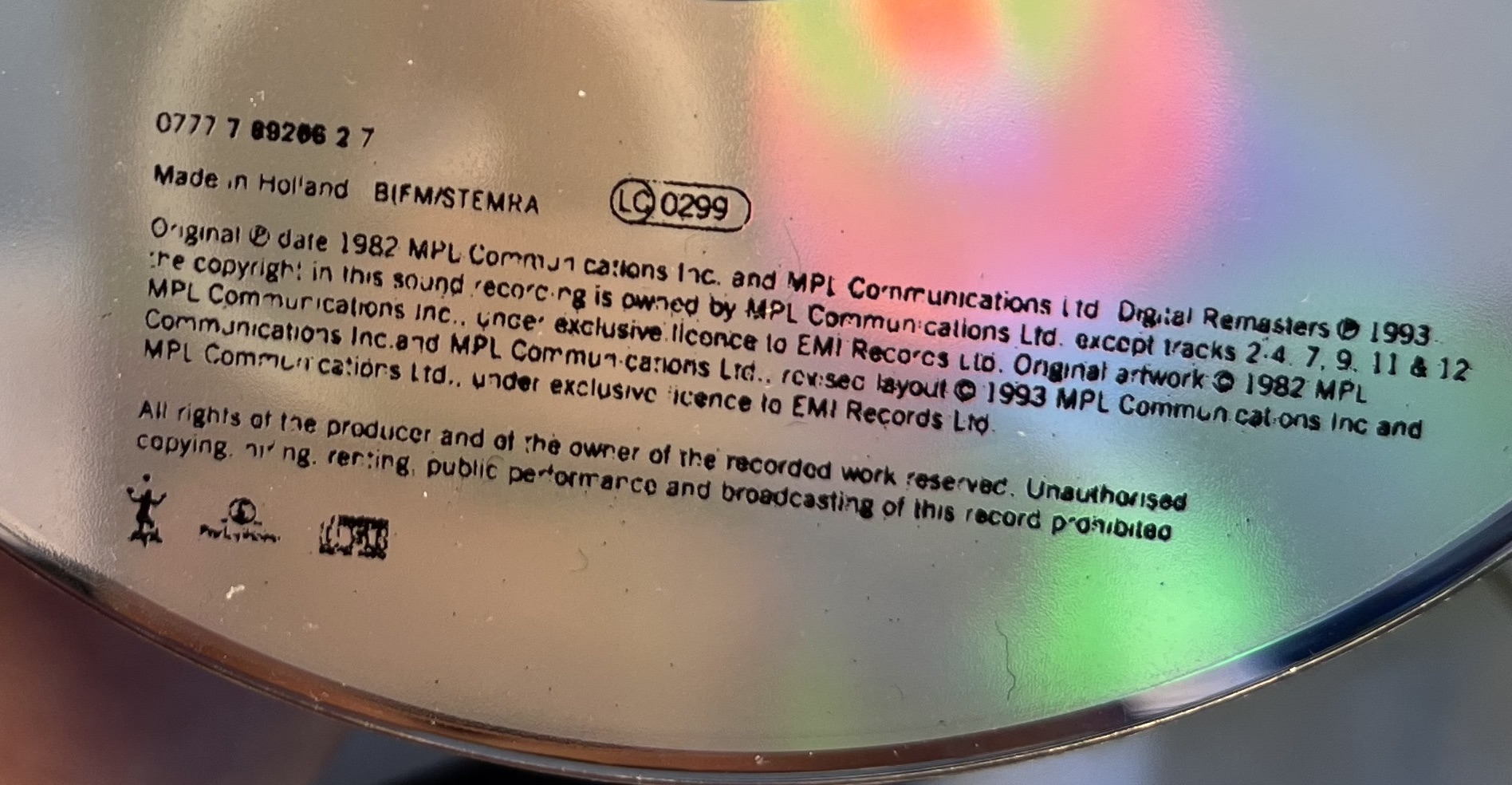
Imagine our surprise then, while interrogating the Discogs database, to learn that what we thought were legitimate CDs from The Paul McCartney Collection series from 1993 are actually Russian fakes?
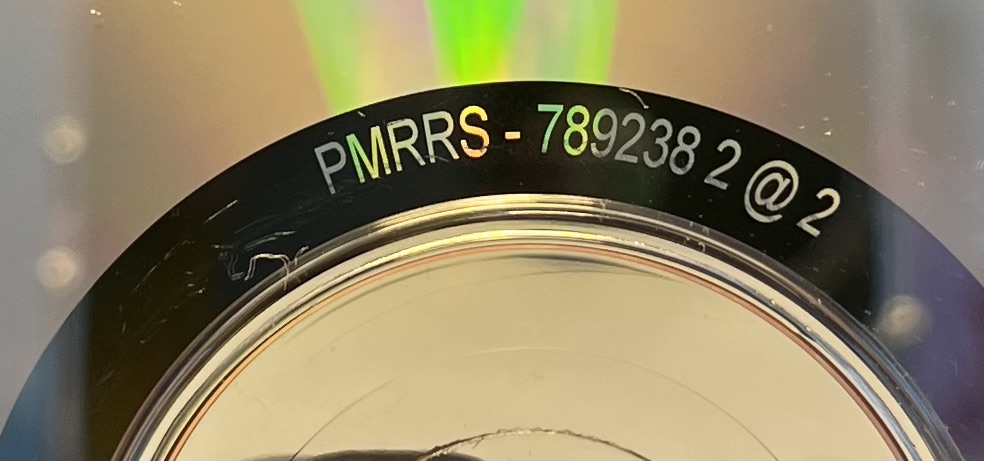
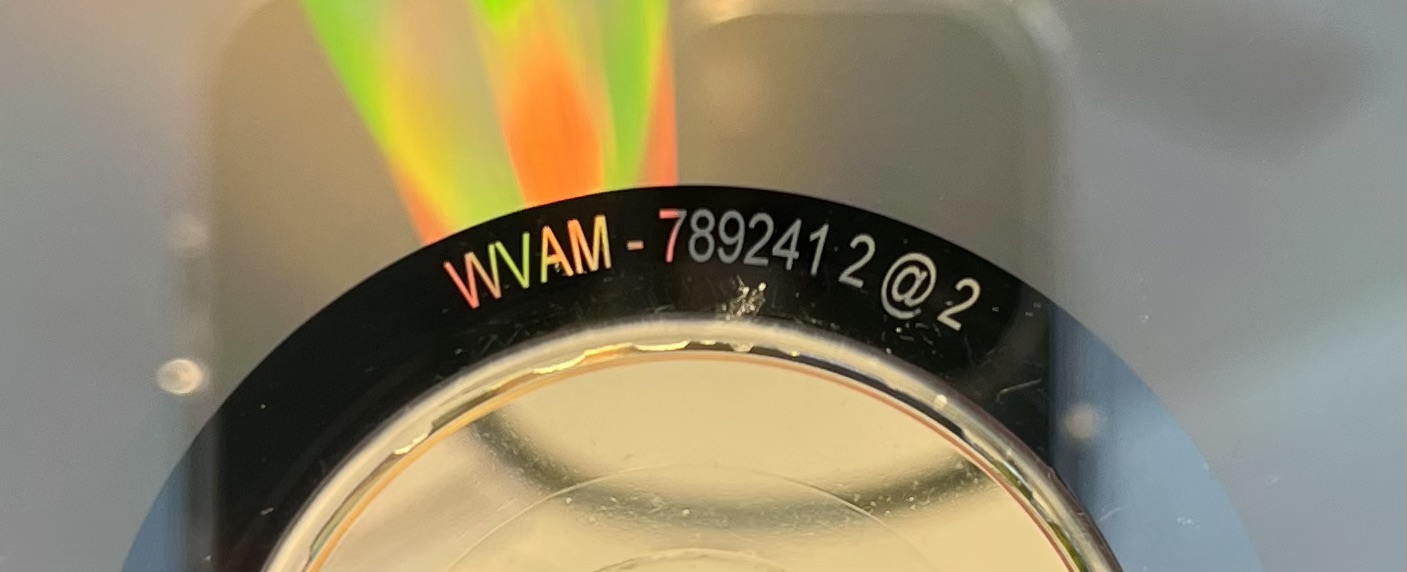
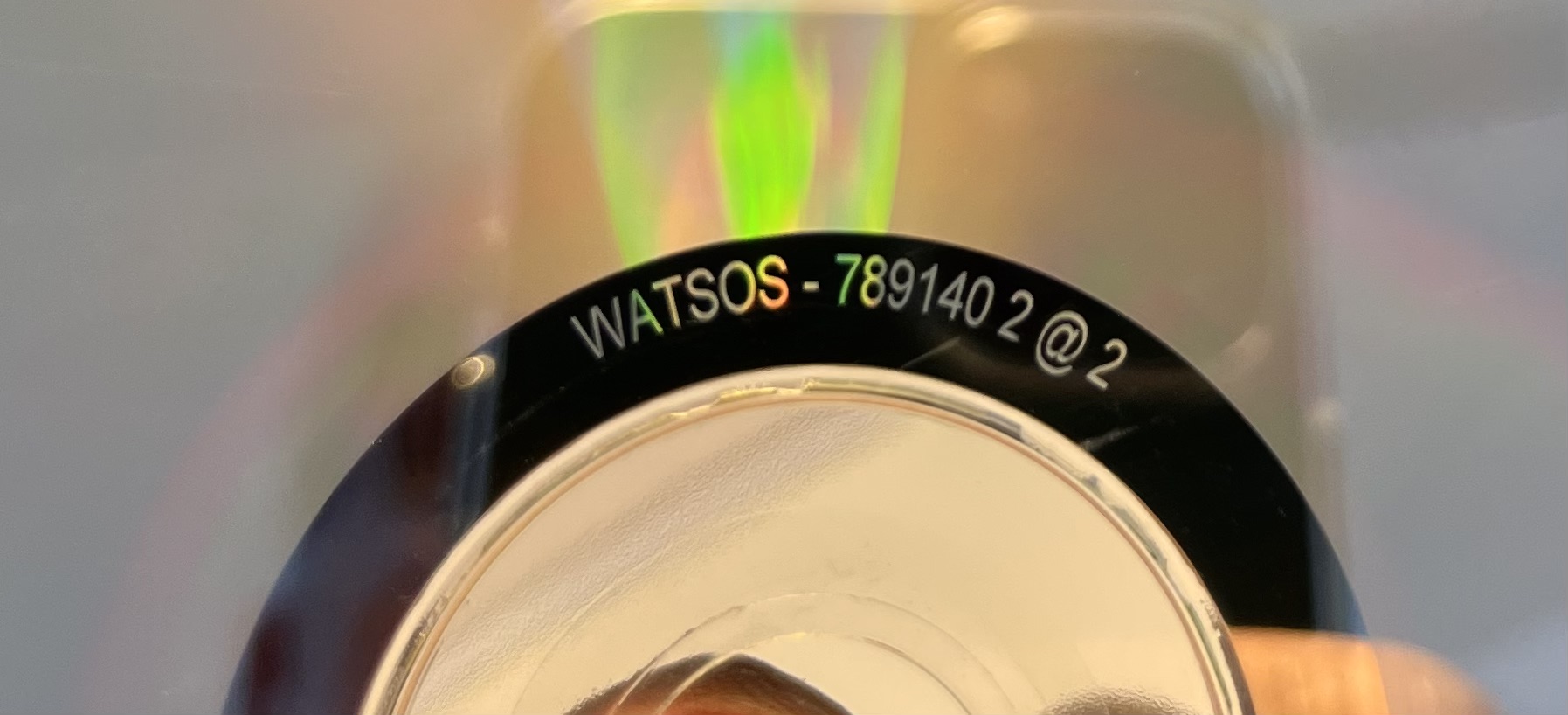
We now have all sixteen CDs in the series but while entering them into Discogs it became apparent that 5 of them were definitely illegal copies:
On the surface they all look entirely legit. The external covers are correct in every detail, as are the CD booklets, and the CDs themselves. They look just like the originals. The barcode numbers match up, and the place of manufacture is listed as Holland (or the UK in the case of the McCartney CD).
However, when you go into Discogs there are usually more intricate details listed to help you identify exactly which country or issue you have. For artists like Paul McCartney, whose work is reproduced in multiple countries, there can be multiple entries to check through to confirm the one you have.
You do this by looking closely at what is etched in the tiny letters and numbers that appear on the “run out” section at the centre of the CD. And it’s here you’ll discover the true place of mastering and manufacture.
For us it was an eye opener to see an odd type of etching on these five of our Paul McCartney CD’s from The Paul McCartney Collection series. For McCartney it shows this:
Discogs says this is a Russian fake. They use the term “unofficial” and it is therefore not permitted for sale on their site.
And finally an “unofficial” version of Tug of War:
The remainder of the CDs we have in this series are legitimate. It’s interesting that when you know you have a fake you can start to see some other tell-tail indicators. The most obvious with these CDs is the printing quality on the disc itself. The fakes are blurry while the legitimates are much more crisp and clear.
Here’s the fake Tug of War CD:
Compare this to a legit version of Band on the Run from the same series:
You can see that Band on the Run is much clearer. A close-up of the small print at the bottom illustrates this even better. Here’s the “unofficial” Tug of War:
And here’s the detail of Band on the Run:
By comparison the Tug of War printing is inferior. It is kind of blotchy and the lettering is unclear.
The subtitle of our blog is “Adventures in Collecting Beatles Music”. Looking out for fakes is part of the adventure I guess. But it’s a bit disheartening to learn that what you thought for many years was legitimate is not so after all.
If in doubt, check out Discogs – it’s a brilliant database.
The Record Store Day 2023 release list has just come out and come April 23 there’ll be at least three titles of interest to Beatle collectors.
Probably the most interesting and hard-to-get will be a re-imagining of John Lennon’sGimme Some Truth best-of compilation which is being re-issued as a boxset containing 9 x 10” white vinyl EPs. Each EP will feature four tracks. Only 500 copies of this will be produced, hence the ‘hard-to-get’ moniker….
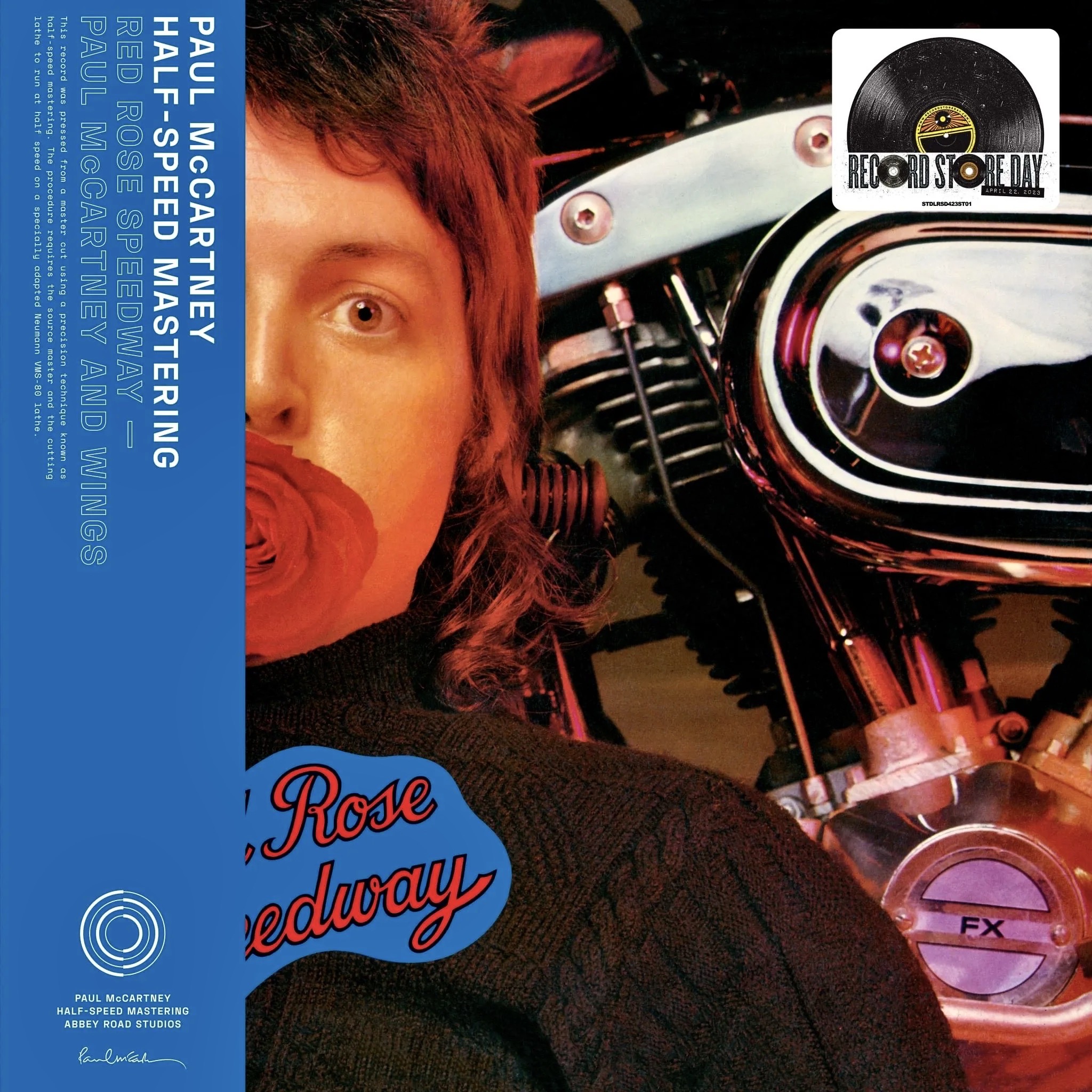
Next is the highly speculated 50th anniversary release of Paul McCartney’sRed Rose Speedway in limited edition, Half Speed Master vinyl form:
According to the RSD list there will be 5,000 pressed so this should be much easier to secure. It follows similar Half Speed Master editions of McCartney, Wings Wild Life and RAM.
Then there’s a re-issue of the 1981 Ringo Starr title Stop and Smell the Roses. This is being re-issued on vinyl as a 2LP with six bonus tracks for the first time. It will come in a gatefold with printed inner sleeves, original record labels and specialty color vinyl described as lava lamp effect clear red/white for LP1 and lava lamp effect clear red/pink for LP2. There are 2,500 copies being pressed.
Stop and Smell the Roses will also be issued on RSD as a CD (500 copies).
But wait, there is a George connection too. Dark Horse, the record label he started up (now run by son Dhani Harrison) is releasing not one but two LPs.
The first is by Stairsteps, a band originally signed to the label back in 1975. For Record Store Day 2023 we’ll see their 1976 album 2nd Resurrection re-issued on black vinyl. Billy Preston played synthesizer and served as co-producer alongside Robert Margouleff.
Dark Horse will also have a 20th Anniversary edition of the Joe Strummer & The Mescaleros album Streetcore as a limited edition pressing on white vinyl for RSD:
We’ve had readers doing a lot more detective work and research into the photographs that Klaus Voormann used for his collage and line drawings for the famous Revolver cover.
In case you’ve missed it the story on our blog started here and here when we stumbled across a terrific montage detailing all the then known images used for the cover.
Turns out the author of that montage was Ukrainian Beatle fan Sergey, one of our readers! He wrote to us letting us know he’d first created it (way back in 2012!) for a Russian Beatles discussion forum called beatles.ru.
Sergey has since tracked down the source of the image of Ringo used as inspiration for the line drawing of him Klaus placed at the bottom left of the Revolver cover – the one where he is looking skywards.
We’re still not sure of the photographer, but it was published in a German booklet Das sind die Beatles which features a series of black-and-white photographs and short comments about each. It was produced by Bravo magazine for the 1966 Bravo Blitztournee tour, under the auspices of Beat Publication Ltd. The photographer details are not indicated, but Sergey sent us these photographs of the actual publication:
We then published what we feel is another piece in the mystery – the photograph of John Lennon that was very likely the inspiration for Klaus’s line drawing of John at the top right-hand side of Revolver. You can read about that here.
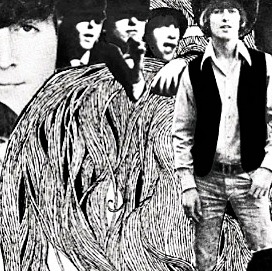
That prompted two other readers – Tom and burnham42 – to offer up even more clues. These revolve around the source images for the three small Beatle faces (and two hands) on this part of the cover:
burnham42 wrote:
I think the one of the three small photos top left is in The Beatles Anthology book page 70 (in my French edition). You can also find it on pinterest. The photo was taken on the way to Hamburg. There is John, Paul, George and Gerry and the Pacemakers in the photo. The man on the floor (George?) is pulling a face and you even have the hands that Klaus also used.
Well, drag out your English edition of The Beatles Anthology book too if you have one because the image is also on page 70 there as well:
The Anthology Book says the photo is from George Harrison’s private collection. The caption in the book reads: In a lay-by on the road to Hamburg and the Ost See. Me, Paul and John with Gerry and the Pacemakers.
We have George and Paul, who are standing on the left, and John sitting on the ground pulling a funny face.
Voormann has cut out three sections of this image. Paul has been placed to the left, his raised arm now just below George’s face. And he’s cropped John’s face to make it appear he has a Beatles hair-cut, and tilted it so that it is more upright. His hand from the image is also used, but also at a different angle.
So, one more mystery solved!
Following all this, Sergey has been back in touch and has offered up a revised, updated version of his original Revolver cover “sources” montage. Here it is:
Please click on the image to see a larger version.
Liverpool, London, Paris, New York, Washington, D.C. and Miami.
Six cities pivotal in the success of The Beatles as their music and their fame burst into the world, changing a generation forever.
The year: 1964.
Captured on film by one of those at the very centre of the storm: Paul McCartney.
In 2020, a treasure trove of nearly a thousand photographs taken by McCartney on a 35mm SLR camera was re-discovered in his archive. It was realised that his photographs form a unique view of the months towards the end of 1963 and beginning of 1964 as Beatlemania erupted in the UK and, after the band’s first visit to the USA, four young men became the most famous people on the planet. These photographs serve as a personal record of this explosive time when The Beatles were inside looking out – right inside the eye of the storm.
Now comes a new photographic exhibition and a book, 1964: Eyes of the Storm – Photographs and Reflections by Paul McCartney. They present his photographs and memories from six cities, capturing these intense months with many never-before-seen portraits of John, George and Ringo.
In his Foreword to the book, and in the introductions to each of the city portfolios, McCartney remembers: ‘what else can you call it – pandemonium’, and conveys his impressions of what Britain and America were like for him and his band mates in 1964 – the moment when the culture changed and the Sixties really began.
‘Anyone who rediscovers a personal relic or family treasure is instantly flooded with memories and emotions, which then trigger associations buried in the haze of time. This was exactly my experience in seeing these photos, all taken over an intense three-month period of travel, culminating in February 1964. It was a wonderful sensation to be plunged right back.
Here was my own record of our first huge trip, a photographic journal of The Beatles in six cities, beginning in Liverpool and London, followed by Paris (where John and I had been ordinary hitchhikers just over two years before), and then what we regarded as the big time, our first visit as a group to America’ – Paul McCartney
1964: Eyes of the Storm Photography Book Includes:
Six city portfolios – Liverpool, London, Paris, New York, Washington, D.C. and Miami – featuring 275 of McCartney’s own photographs – and his candid reflections on them
A Foreword by Paul McCartney
Beatleland, an Introduction by Harvard historian and New Yorker essayist Jill Lepore
A Preface by Nicholas Cullinan, Director of the National Portrait Gallery, London, and Another Lens, an essay by Senior Curator Rosie Broadley
The book, to be released on 13 June, is accompanied by a major exhibition at London’s National Portrait Gallery from 28 June – 1 October, 2023.
The Gallery will display, for the first time, a selection of the extraordinary archive of rediscovered and never-before-seen photographs taken by Paul.
Like the book, the exhibition provides a uniquely personal perspective on what it was like to be a ‘Beatle’ at the start of ‘Beatlemania’ – from gigs in Liverpool and London, to performing on The Ed Sullivan Show in New York to an unparalleled television audience of 73 million people. At a time when so many camera lenses were on the band, these photographs share a fresh insight into their experiences, their fans, and the early 1960s, all through eyes of Paul McCartney. Find out more and get tickets here.
P.S. If you’re wondering about the cool music used in the YouTube promo video above it’s the McCartney track ‘222’, released as a bonus track on the special edition version of “Memory Almost Full“. The song was written for his youngest child, his daughter Beatrice, when she was aged 2. See The McCartney Project for more detail.
The 80 singles (containing 159 songs) are to be released December 2 and represent half a century of Paul’s musical life with releases dating from 1971 (‘Another Day’), right up to 2022 (‘Women and Wives’).
The box set features recreations of 65 singles – complete with their original B-sides (using restored artwork from 11 different countries) as well as 15 singles which have never before been released on 7”. These 15 singles are made up from tracks previously released on 12”, picture discs, CD singles & promos, digital downloads, music videos, two previously unheard demos, and a previously unheard 7” single edit (click here for the complete track listing).
As you can see in the video and images, the singles are housed in a custom wooden art crate designed and built in Derbyshire in the United Kingdom. It includes a 148-page book with a foreword by Paul McCartney, an essay by music journalist Rob Sheffield, plus extensive chart information, liner notes, and single artwork.
Each box will include a randomly selected exclusive test pressing of one of the singles, so in theory if you get a set only 37 other people in the world are likely to have the exact same box set.
The set will be available to download (or stream), and two songs have already been made available. Both have only previously been available as a rare US promo 7″ single: ‘Uncle Albert/Admiral Halsey’ (2022 Remaster – in Mono):
And ‘Too Many People’ (2022 Remaster – in Mono):
To summarise, the numbered, limited-edition box set collection of 80 x 7” singles contains:
Recreations of 65 singles/promos using restored original artwork from 11 different countries (including 2 from Australia!)
15 singles never-before-released on 7” including singles previously released on 12”, picture discs, CD singles/promos, digital downloads, and music videos
2 x previously unheard demos
1 x previously unheard 7” single edit
1 x EP
1 exclusive test pressing randomly selected from the manufacturing process
148-page book containing foreword from Paul, essay by Rob Sheffield, recording notes, release dates, and chart information on each of the singles – each single included is shown on the attached insert, which will be packed into each box
Remastered and cut at Abbey Road Studios, London
All housed in a two-piece, four-walled FSC-approved Redwood pine and Birch Ply wooden art crate manufactured in the United Kingdom.
* Tempting that is until you get to the checkout page! Being in Australia we pay a premium for our lousy exchange rate and for shipping. If Australians were foolish enough to shop at the UK Universal Music site we’d be looking at this box costing £614.99, plus shipping £99.99, making a grand total of £714.98. That is a staggering $1265.02 Australian Dollars on today’s exchange rate. The smarter move would be to go to the US Paul McCartney Store. There the box is US$611.98, plus $61.20 in import taxes. Shipping, apparently, is free. That makes a total of $1019.24 Australian Dollars. That’s a big difference…..but still a hell of a lot of money. 😦
Now that international travel is slowly becoming more feasible for many of us again, a visit to Liverpool – the city where it all began for The Beatles – might just be back on your travel “must do” list.
If so, it’d be nice to have a guide to point you in the right direction when you get there.
Liverpool, on the banks of the River Mersey always looms large in any discussion about the formation of the band and their influences. Many of the physical places they lived or frequented have become key parts of the Beatle story. It is of course the city where John, Paul, Ringo and George were born, grew up in, and knew well.
Now a new guide book The Beatles’ Liverpool – just released – takes you there by gathering more than fifty Liverpudlian localities. The fully illustrated guide then explains why those particular places played such a key role in the band’s development and success.
Of course there are the obligatory entries for the childhood homes (Menlove Avenue for John, Arnold Grove for George, Forthlin Road for Paul, and Admiral Grove for Ringo); there’s the background to Penny Lane and Strawberry Fields; The Cavern Club; and the well-known St Peter’s Church, Woolton where John first met Paul.
But there are many more obscure listings too. Like Hulme Hall in Port Sunlight; the Neston Institute in Wirral; and 4 Rodney Street, birthplace of Beatle manager Brian Epstein.
There’s also a handy two-page guide map pinpointing the location of all the places mentioned in the guide.
If you’re planning a Liverpool visit, this book would be an essential to take with you – and it won’t cost you any excess luggage fees. At just over 44 pages The Beatles’ Liverpool is compact and light enough to easily slip into a travel bag or backpack to have with you as you walk the streets of the historic city.
Even if you’re still a way off physically getting to Liverpool, you can dive into The Beatles’ Liverpool and pay a visit vicariously. It’s the perfect armchair alternative to actually being there.
Author Mike Haskins was himself born and raised in Merseyside – and he still lives there! He’s worked as a scriptwriter and researcher for TV, radio and the stage, and has published over fifty books.
All you need to do is provide your name, email address and have a go at answering two easy Beatle Liverpool-related questions. Just click on the link below to enter:
Good luck!
UPDATE: Thank you to everyone who entered. And congratulations to the two readers who were first in with the correct answers!
They are Fred, from Ontario, Canada; and Diane from New York, USA. They will receive a copy of The Beatles’ Liverpool book, courtesy of Pitkin Publishing and Batsford Books.
The correct answers to our questions were:
In their early career band members purchased many of their instruments from which famous Liverpool music store? Hessy’s Music Centre
Ringo’s family hails from Liverpool’s Dingle area. His Mum worked at pub called The Empress there. In what way did Ringo put that building on the map? It’s on the front cover of his Sentimental Journey LP