Budget Beatles

For many years now Apple Records have pursued a deliberate policy of maintaining the entire Beatles recorded catalogue as a premium product and brand.

Compact Discs (and vinyl LP’s in an earlier time) are very rarely discounted or put on “sale” with discounted prices. They always come with a high recommended retail price. The long-running fight with iTunes (which saw Beatle songs unavailable for download for years) only added to this perception in the marketplace giving the Beatles product an aura of exclusivity stretching right back through their entire back-catalogue.

However, that doesn’t mean that the Beatles music, both as a group and as individual artists, has never been re-packaged and offered at a discount prices over the years.

In the vinyl days this came in the form of a small number of selected albums being re-issued on the Music for Pleasure label in Britain and Europe, on the Fame label in Britain and Europe, and on the Axis label here in Australia. Many of these titles came with unique covers and labels, making them collectable items for fans.

The Music for Pleasure (or MFP) label was set up in Britain as a joint venture between EMI Records and the Paul Hamlyn group – which was better known as a book publisher. The result of the deal meant that these titles were largely sold in supermarkets and department stores rather than the traditional record shops of the day. As a result of the EMI connection most titles on the label came from the rich and extensive EMI back-catalogue of artists, both classical, jazz and popular.  The complete listing of all releases can be found here.

The first Beatles album to be re-released as an MFP title was “At the Hollywood Bowl” from 1977. The cover has a variation in the typeset and the way the title is displayed, and of course there’s that MFP logo in the top right-hand corner:

The Beatles album “Rock’n’Roll Music”, initially issued as a gatefold double album on the Parlophone (UK) and Capitol (US) in 1976 was re-issued on the MFP budget label in Britain in 1980 and instead of being a double LP, you could buy these as two separate discs, “Rock’n’Roll Music Vol. 1” and “Rock’n’Roll Music Vol. 2”:

Also in 1980 came three re-issues of solo Beatles work. John Lennon’s “Mind Games” (originally released in 1973); George Harrison’s “Dark Horse” (originally from 1974); and Ringo Starr’s self-titled “Ringo” (also originally from 1973). Lennon’s “Mind Games” had a unique cover – a kind of mash up image from the original LP:

George’s “Dark Horse” got a unique treatment (using the image from the rear of the 1974 release), while Ringo’s LP front cover looked much the same, with the addition of his name in large letters across the top:

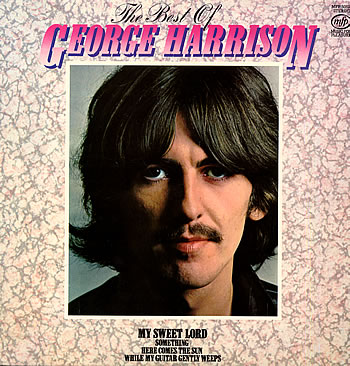
1981 saw an MFP re-issue of Lennon’s “Rock’n’Roll” album (with a slightly different cover to the original – the neon sign above his head was larger). Also in 1981 came Ringo’s compilation “Blast From Your Past”, and a second George Harrison MFP release “The Best of George Harrison” – with quite a different cover:
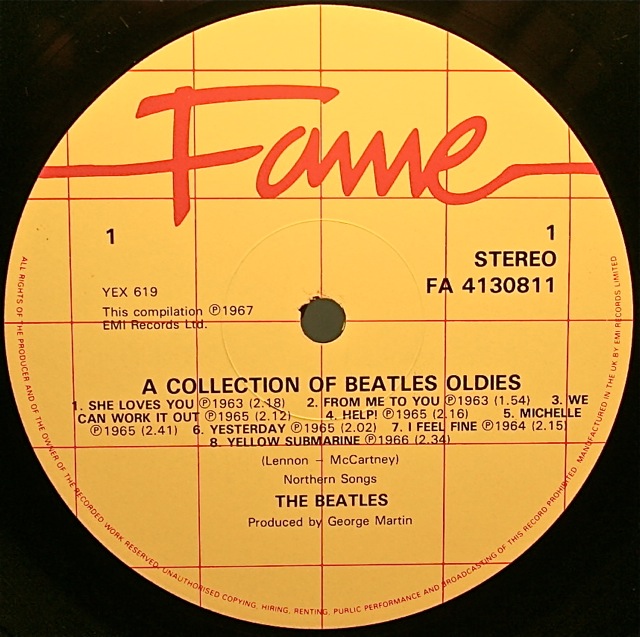
The budget Fame label (another EMI subsidiary which released both vinyl and CD’s as budget items between 1983 and 1994 in Britain and in Europe) issued just one actual Beatles title, the compilation “A Collection of Beatles Oldies”. This appeared on vinyl in 1983 and the front cover is distinguished only by a very small “Fame” logo written diagonally across the top right-hand corner of the LP. The rear cover is also the same as the original Parlophone one (but with  Fame logo at the bottom), and the LP came out with a Fame label:

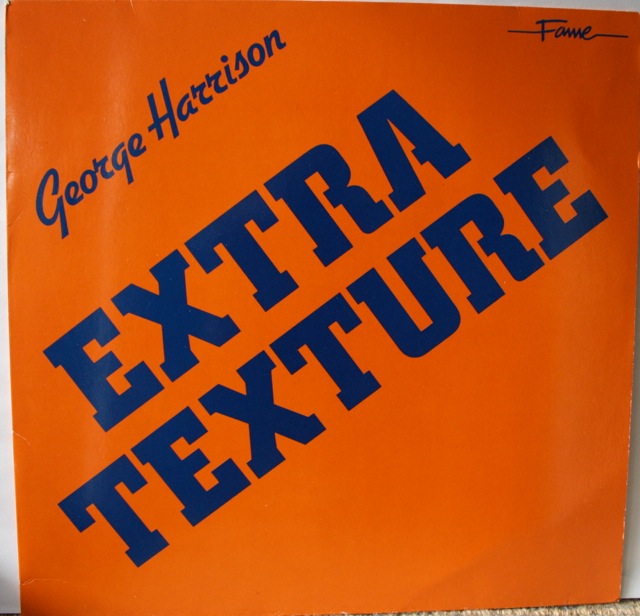
Fame also re-issued three Beatles solo works on vinyl: the John Lennon “Plastic Ono Band” (in 1984); Paul McCartney’s self-titled “McCartney”; and George Harrison’s “Extra Texture”. Each of these came out using the green Apple label on the record itself. Here’s the cover of a German Fame pressing of “Extra Texture”. Again, note the Fame logo on the top right-hand side:
In 1987 and 1988 Fame also released the Paul McCartney and Wings titles “Wildlife”, “Red Rose Speedway”, “Venus and Mars” and “London Town” – all these (as far as I can tell) were issued on CD only.

In Australia EMI’s budget label was called Axis Records and it followed along the same lines as MFP. Axis released a range of very similar Beatles and solo titles, although it had some interesting and unique cover variations – and of course a label variation. The Beatles “A Collection of Beatles Oldies” was joined on Axis Records by their “Rock’n’Roll Music” compilation – again made available in two separate volumes like the MFP release – but with a slightly different cover to the British releases:

The Australian Axis “Rock’n’Roll Music” LP covers are pretty much the same as the budget Capitol US releases of these titles. There were a couple of Axis label variations for this title as well.

Axis also produced vinyl re-issues of Lennon’s “Plastic Ono Band”, “Mind Games” and “Rock’n’Roll” albums; Harrison’s “Dark Horse” and “The Best Of George Harrison”; McCartney and Wings “Wildlife”; and Ringo Starr’s “Ringo”. Note the Axis logo top right-hand side, and the title of the LP is printed as well on the top left:

The Axis “Best of George Harrison” got the same cover as the US Capitol records budget release. This cover image was also used by Parlophone/EMI for the official Australian LP, but is different to the UK’s Music For Pleasure re-issue, and different again from the CD release of the same title:

So, that’s a quick trawl through the collection for budget Beatles items. It’s not exhaustive, and if you’d like to add or comment please do by using the email beatlesblogger@gmail.com or by using the comment box below, or now by tweeting us onTwitter. We’re at beatleblogger.
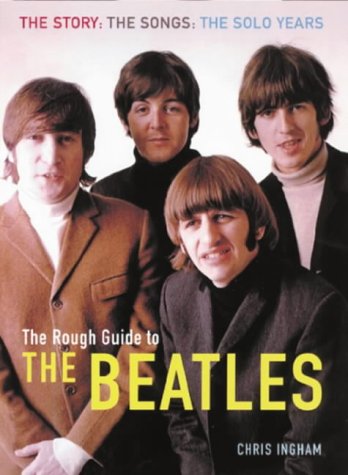
The Rough Guide to the Beatles

Got the opportunity to wander through a second-hand bookshop in Sydney (Australia) the other day, and what should I see sitting all on it’s lonesome on a shelf? A little book called “The Rough Guide to the Beatles”.

The “Rough Guides” book series cover a wide range of topics, starting with travel and then extending out into all sorts of reference book territory, from The Rough Guide to Android, through to World Music and everything in-between. Of course if they wanted to be serious about covering music they had to have a guide to the most influential musical group of the twentieth century: The Beatles.

The other good thing about the book I found this week in the second hand shop was its price sticker of just A$7.95. Even with the very favourable exchange rate we have here at the moment that translates to just US$8.25 – very good buying in anyone’s language or currency. And its a great little find content-wise. Author Chris Ingham (who has also written books about Frank Sinatra, Billie Holiday and Metalica, along with countless articles about music and interviews with musicians) has done an excellent job of pulling together the story and the essential facts around the Beatles, their music and the main players in their world. The Rough Guide adds in lots of other incidental information about the band and their recordings which makes it great reading – even for a devoted Beatles fan.

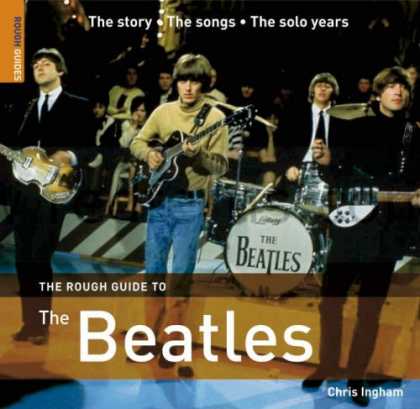
The First Edition (2003) looks like this:

My copy (2nd Edition – 2006) looks like this:

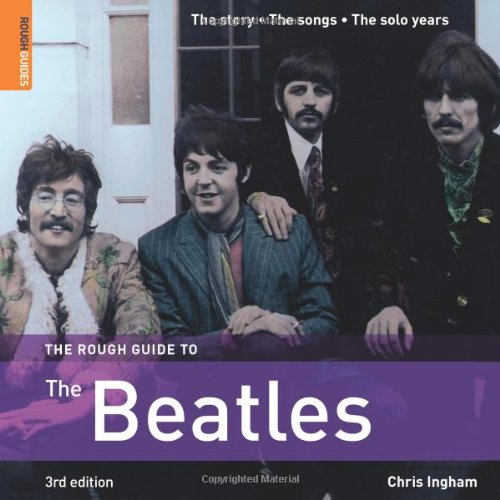
It also comes out with this picture of the band on the cover (3rd Edition with expanded content) as well:

If you’d like a bit of a look inside you can see about 17 pages or so (plus the Index) here.

The Rough Guide to the Beatles has sections on the post-Beatles Beatles (or as Ingham calls it “Being and ex-Beatle”); their movies, promos, cartoons and biopics; the 50 essential songs you have to have (“The Canon”); and a great little chapter called “Beatleology” containing a range of trivia and oddball information. It’s a book you can dip into and learn something new. Well worth it if you can track down a copy for yourself.

Apple Moves to Finally Own the Original Apple Logo

In what will be a sad end to a long-running trademark war, Apple Computers is taking action to finally get to own what we always thought was a unique symbol associated with the Beatles – the original Apple Corps logo.

This one came to my notice about mid-March – and as a Beatles collector with a fondness for the Beatles Apple Records label I find it interesting and so have done a bit more research.

As Shelley Germeaux wrote in her regular John Lennon Examiner column last month, this comes as a result of a 23 year-long legal battle between the two companies. The Beatles and Apple Corps actually lost their legal rights to the famous Granny Smith apple logos as part of a 2007 settlement.  Apple Inc. is now just taking the required steps to formally trademark for themselves the two logos that have, since 1968, symbolised the Beatles company and especially their recordings. From the trademark documentation submitted last month come these two images:

Two trademark applications have been filed with the European Trademarks Office under 14 International Classifications and indicate that Apple Inc. will have control over the use of the logos across a very wide range of products and services including computer hardware, online social networking, mobile phones, musical instruments, games, clothing/headgear, advertising, education and broadcasting – to name just a few. If you really want the full bottle on the trademark story go to Patently Apple – its got more of the actual documentation filed last month and further links…

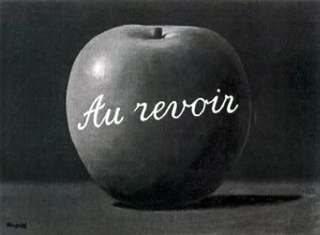
Its interesting to note that while the Apple Computer logo was inspired by the Beatles, the original Beatles Apple logo in turn was itself directly inspired by a Belgian painter, the surrealist René Magritte (1898-1967). Paul McCartney owns one of his paintings called Le Jeu de Mourre (The game of mora), which dates from 1966:

The Belgian Beatles Society page says that in an interview with Johan Ral in 1993, Paul McCartney recalled:

“….I had this friend called Robert Fraser, who was a gallery owner in London. We used to hang out a lot. And I told him I really loved Magritte. We were discovering Magritte in the sixties, just through magazines and things. And we just loved his sense of humour. And when we heard that he was a very ordinary bloke who used to paint from nine to one o’clock, and with his bowler hat, it became even more intriguing. Robert used to look around for pictures for me, because he knew I liked him. It was so cheap then, it’s terrible to think how cheap they were. But anyway, we just loved him … One day he brought this painting to my house. We were out in the garden, it was a summer’s day. And he didn’t want to disturb us, I think we were filming or something. So he left this picture of Magritte. It was an apple – and he just left it on the dining room table and he went. It just had written across it “Au revoir”, on this beautiful green apple. And I thought that was like a great thing to do. He knew I’d love it and he knew I’d want it and I’d pay him later. […] So it was like wow! What a great conceptual thing to do, you know. And this big green apple, which I still have now, became the inspiration for the logo. And then we decided to cut it in half for the B-side!”

That story seems to be true because as recently as last year, Paul McCartney himself told it again to David Jenkins at the Telegraph newspaper in London.

Taking Magritte for inspiration, the Apple record labels were designed by a fellow named Gene Mahon, an advertising agency designer. The Beatles Collection website has a great summary of how this all came about:

“[It was Gene Mahon who] proposed having different labels on each side of the record. One side would feature a full apple that would serve as a pure symbol on its own without any text. All label copy would be printed on the other side’s label, which would be the image of a sliced apple. The white-colored inside surface of the sliced apple provided a good background for printing information.
The idea of having no print on the full apple side was abandoned when EMI advised Apple that the contents of the record should appear on both sides of the disc for copyright and publishing reasons. Although Mahon’s concept was rejected for legal (and perhaps marketing) reasons, his idea of using different images for each side of the record remained. Mahon hired Paul Castell to shoot pictures of green, red and yellow apples, both full and sliced. The proofs were reviewed by the Beatles and Neil Aspinall, with the group selecting a big green Granny Smith apple to serve as the company’s logo. A sliced green apple was picked for B side. Alan Aldridge provided the green script perimeter print for labels [on UK, EU and Australian releases – this does not appear on US labels] and, in all likelihood, the script designation on the custom record sleeve.”

Australian-Only Magical Mystery Tour

You might be more familiar with this cover:

But in Australia, the Beatles “Magical Mystery Tour” LP first came out as a 12-inch on the World Record Club (WRC) label – and it had a very different cover:

Here is the rear cover, also a real departure from the US release:

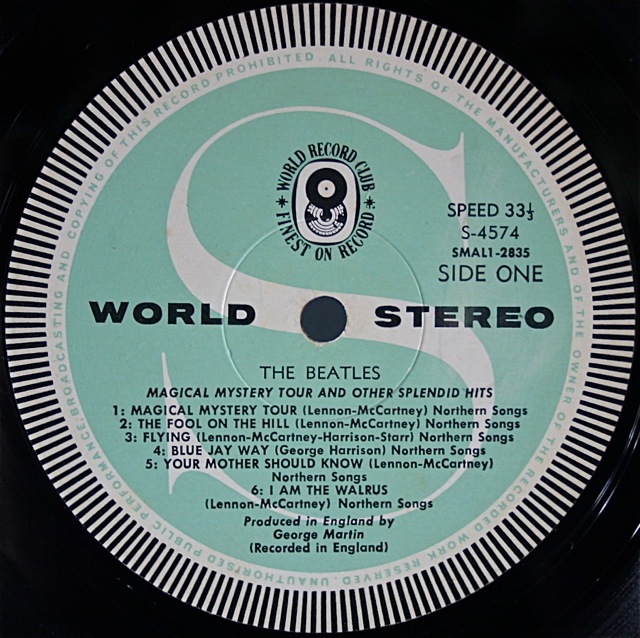
This WRC record (catalogue number S-4574) was issued in 1970. The World Record Club was EMI’s mail order division, making the purchase of music recordings possible to people who lived in remote areas and to music buffs who subscribed to the club for regular releases posted direct to their homes. The company had the rights to sell a wide range of recordings (including popular, jazz and classical titles) from around the world – often issued with unique and artistic individual covers.

This Australian edition of MMT came with the expanded front-cover title “The Beatles: Magical Mystery Tour and Other Splendid Hits”. The rear cover went into even more detail: “The Beatles in Songs and Music from the Color Television Film called “Magical Mystery Tour”.  The image used on the front cover was taken from page 10 of the 24 page booklet (plus a 4 page lyric sheet) in the centre of the original 7″ EP version from 1967.

There were two different types of WRC labels as well. The initial pressings came with this light-green “S” label:

Later pressings came with a green “Trumpeter” on a light-blue label:

The terrifically detailed Beatles Australia Album Labelography site has much more information on this and other unique Australian releases.

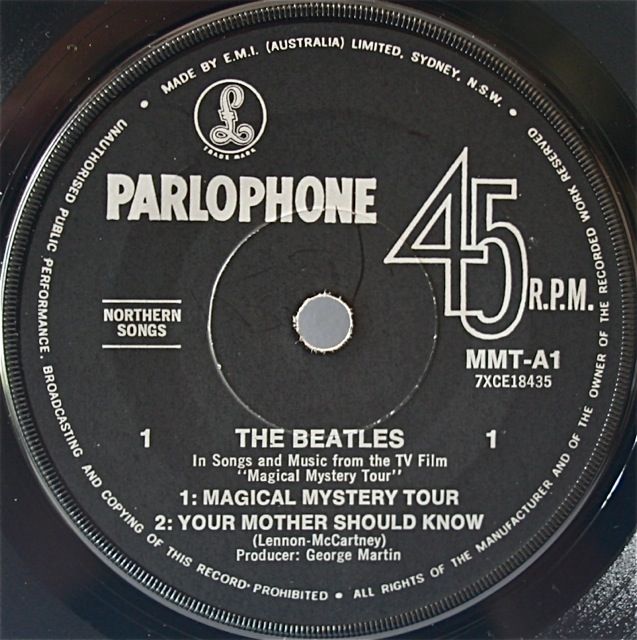
In Australia we also got local pressings of the original double 7″ EP 45rpm, six-song “Magical Mystery Tour” set which would be familiar to British collectors:

This is the mono version above (denoted by the catalogue number MMT-1 at the bottom left-hand side). It also came out in stereo in Australia and both were released in 1967. These EP’s were on the black and silver Parlophone label:

UPDATE:  You might also be interested in this post.

Concert For George – Win a Free New Blu-ray

This week a new 2-disc Blu-ray version of “Concert for George” was released. It’s the first time we get to see this spectacular memorial concert in all its true high-definition glory. And you can win a free copy of the set – see below for details.

The “Concert for George” took place at London’s  Royal Albert Hall on November 29, 2002 – one year to the day after the sad passing of George Harrison. Olivia Harrison and longtime friend Eric Clapton organized a performance tribute in his honor.  It was a celebration of his music on a number of levels. The concert begins with a spectacular Indian orchestra performance of a composition called “Arpan”,  specially composed for the occasion by Ravi Shankar who was  a friend and mentor to George since he first discovered Indian music and began incorporating it into his Beatles music in the mid-1960s. “Arpan” means offering and within the piece Ravi Shankar expresses aspects of George’s moods and spiritual aspirations. The work includes Eric Clapton playing a haunting acoustic solo.

Disc One of the new Blu-ray “Concert for George” set contains the concert in its entirety.  A second disc features the original theatrical version of the film. There are also concert highlights, interviews with the performers, rehearsals and behind-the-scenes footage. The second disc also contains a previously unreleased interview segment entitled “Drummers,” featuring Ringo Starr, Jim Keltner and legendary percussionist Ray Cooper.

This very special evening featured many of George’s original compositions (both as a solo artist and as a Beatle) and the music he loved – all performed by a lineup including Eric Clapton, Jeff Lynne, Paul McCartney, the Monty Python team, Tom Petty, Billy Preston, Ravi Shankar and his daughter Anoushka, Ringo Starr, and George’s son Dhani Harrison.

The concert focusses very much on George’s writing and features songs like “While My Guitar Gently Weeps” (with Eric Clapton on guitar, Paul McCartney on piano and Ringo Starr on drums), “Taxman” (performed by Tom Petty and the Heartbreakers), “My Sweet Lord” (by Billy Preston), “Old Brown Shoe” (Gary Brooker), and “The Inner Light” (covered by Jeff Lynne and Anoushka Shankar).  Jeff Lynne  was George’s longtime friend and collaborator and he produced the recording of the concert, while Eric Clapton oversaw the entire proceedings as Musical Director. The concert film is directed  by David Leland.

Now – here’s your chance to win a copy of the new Blu-ray 2-disc release. All you have to do is be the first person to email me at beatlesblogger.gmail.com with the correct answer to this “Concert for George” question:

In the “Concert for George” singer Sam Brown (daughter of Joe Brown, who is also in the concert) performs a version of a George Harrison/Dhani Harrison composition called “Horse to the Water”. What is the name of the album on which this song was first released?

Its a little bit tricky but the first correct entry sent to my email address above will win a Blu-ray copy of  the “Concert for George” set – released just this week.

The “Concert for George” Blu-ray is courtesy of Rhino Entertainment.

Here’s a promotional trailer for the film.

The Beatles’ Second Album – Book

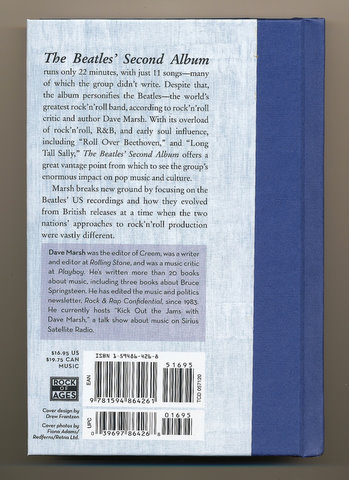
What has to be the cutest little Beatles book ever:

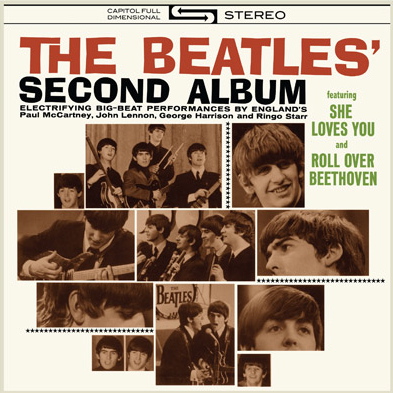
It’s a small-format hardback book. Measuring just 12.5cm x 18.5cm (5ins x 7ins) and written by legendary music journalist Dave Marsh. This book tells, in 184 pages, the story behind this album:

Its the 1964 Capitol Records US LP release “The Beatles Second Album”, and for Dave Marsh and millions of Americans, when it came out (despite its manifold flaws) it was a paradigm shift in music.

I say “despite its many flaws” because Marsh outlines numerous arguments as to  why “The Beatles’ Second Album” was indeed flawed – from the poor sound transfers from the original UK master tapes of individual songs; the way the song running order differs from those being released on the Beatles original albums in Britain; because in it’s 22 minutes so many of the songs are not original compositions but cover versions; right down to the shoddy, slapdash cover art. However, putting all that aside, it’s an album which still had the power to turn a young teenage boy onto rock music – a passion which remains to this day more that 45 years later…

Marsh writes:

“There’s a story here. I mean to tell it. It has a beginning, a centre, an aftermath….Because of all the contrdictions of its creation, and becasue it unwittingly came closer to describing the shape of the Beatles’ musical roots than anything else they did in the recording studio, “The Beatles’ Second Album” tracks on several other levels. Also because of the response of fans now and the Beatles then to how it and its other bastard American brethren, spawned from greed and greatness in near equal measure, because of what it says about who the Beatles could have been and what they were and who we could have been and what we were, too…..What we were left with pretty much traveled on a single track: the story of the Beatles as a grand triumph of good cheer and fellowship, teen idols turned into heroic artists.”

If you want to see more the front and rear covers, plus the first chapter in full (and half the second chapter), are available online.

While it’s a cute little book, it is an odd one in that it is published by Rodale Books. Rodale, from what I can gather from the web, are the publishers of magazines like “Men’s Health”, “Women’s Health”, and “Runner’s World” etc., as well as a range of health and lifestyle books – so its unusual that they ventured into the world of popular music back in 2007 when they published this one. It definitely sounds like there’s a bit of an intriguing back story about just how it came to be published….

Twin Freaks – Variations and Limited Releases

“Those of you who were there for the European Tour will have heard our DJ, Freelance Hellraiser, cooking up some mixes before we came on and people have been enquiring about these mixes ever since. Well the good news is he’s put together an album called ‘Twin Freaks’ using fragments from my original multi-tracks which we hope will rock your little cotton socks!”
Paul McCartney.

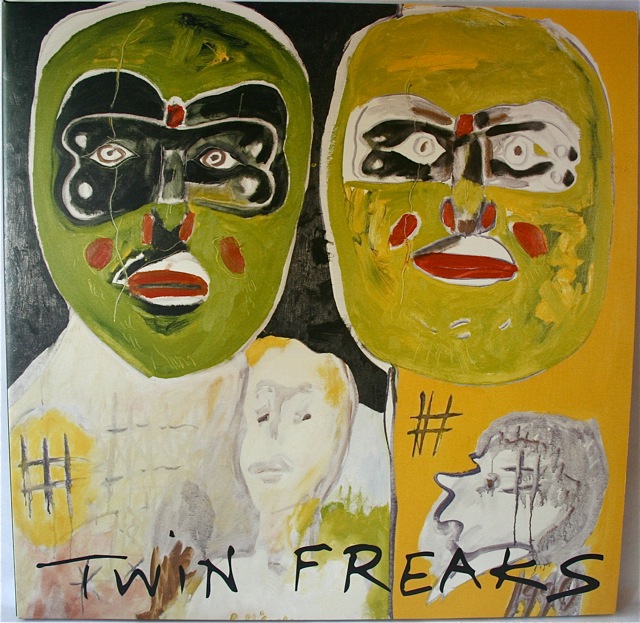
That’s how Paul McCartney introduced listeners to his 2005 project, “Twin Freaks”:

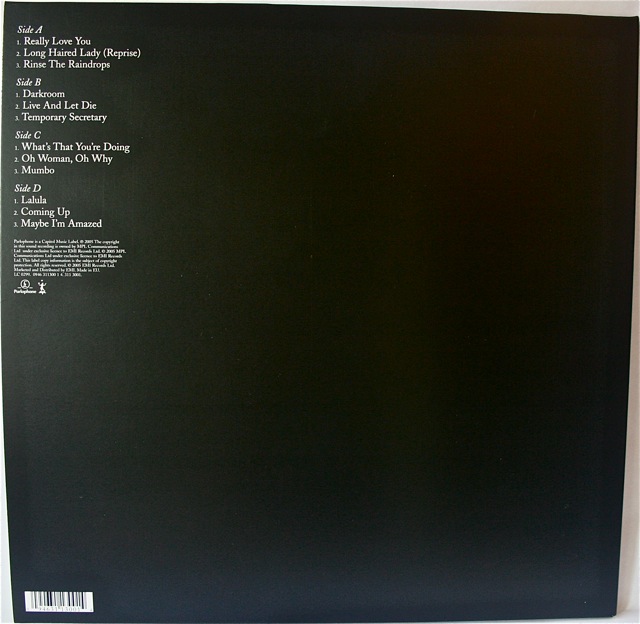
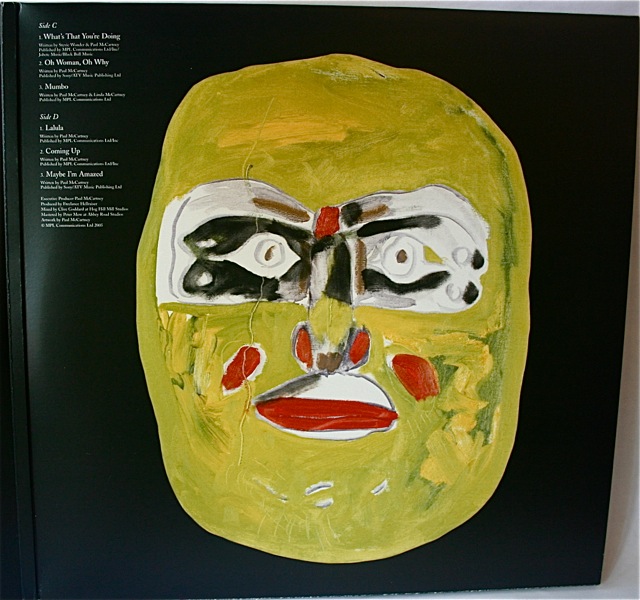
The front and rear covers (above) of “Twin Freaks”. The cover image is a painting actually called “Twin Freaks” which is featured on page 69 of Paul’s book of his artworks entitled “Paintings“.

Back in June, 2005 one of the increasingly frequent experimental releases by Paul McCartney, using a nom de plume like his Fireman records, came out. It was a 2 LP, vinyl-only release of twelve remixed McCartney tracks by British DJ and producer Freelance Hellraiser (a.k.a. Roy Kerr).

The Wikipedia entry for the disc sums it up pretty well saying McCartney and Kerr “….created the double vinyl album as a continuation of Kerr’s collaboration with McCartney from a 2004 tour. Kerr had previously released the mash-up album “A Stroke of Genius” in 2002. The format of the mashup is that of an extreme remix in which two disparate musical and recording experiences are combined in a manner that goes beyond remix to literally merge or mashup the two songs so that they emerge as something unique or hybridized. The technique sometimes obscures the original source material or so seamlessly blends the divergent elements that disentangling the grafted parts becomes nearly impossible.

Kerr performed a half-hour set prior to McCartney’s 2004 gigs in which the DJ remixed various McCartney solo tracks into some unusual and often unrecognizable forms. “Twin Freaks” was the outgrowth of these manipulations.

All the McCartney tracks are revised and reinvented in the process. Who is responsible for what aspects of the works or their reinvention is unclear.

The album was produced as a double vinyl release and as a digital download. The cover and interior artwork, which feature paintings by Paul, are similar in tone and style to artist Willem de Kooning.  McCartney knew the late artist, with whom he shared a similar painting style.” (ex Wikipedia)

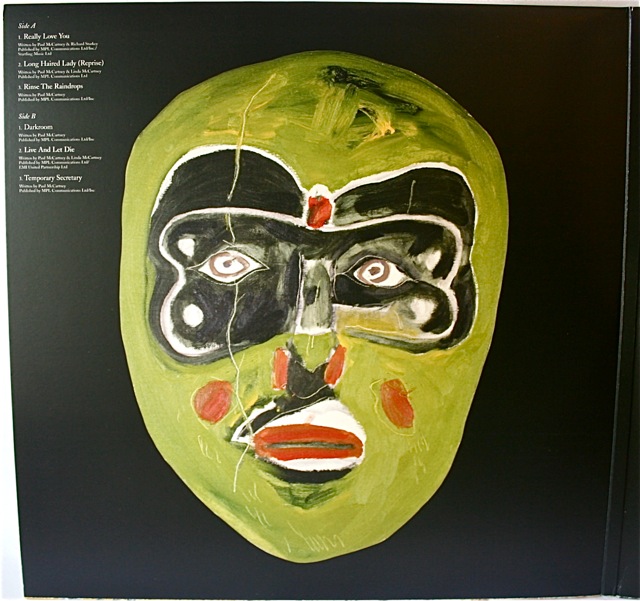
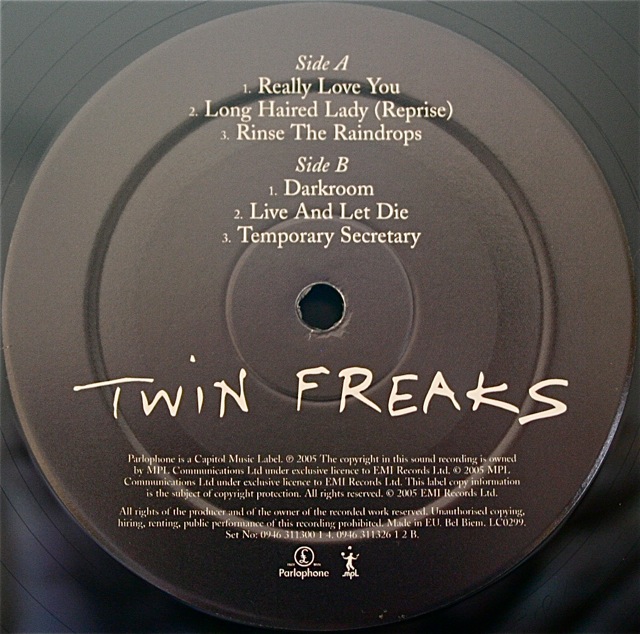
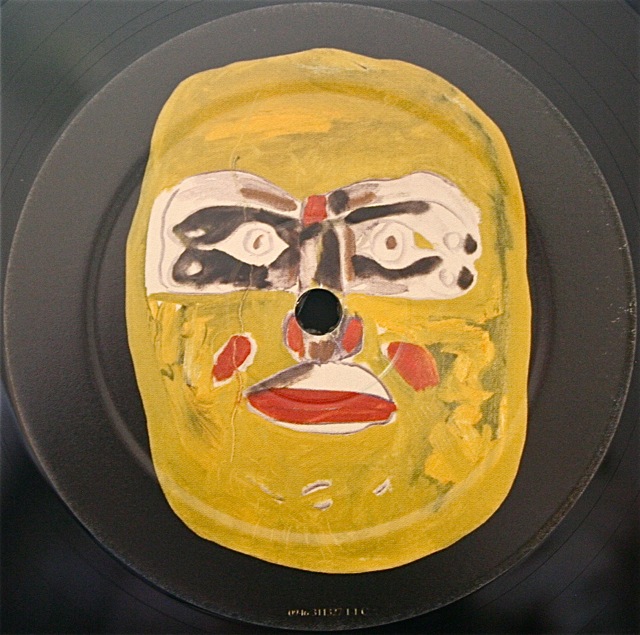
The LP (on Parlophone Records) comes in a nice thick cardboard gate-fold cover. The images above are from inside the gate-fold and show more McCartney-painted faces and a track-listing (with writer’s credits) for each record. The labels on each of  the LPs are custom-designed with one side having the track-listing for both sides, and the other a painted face:

If you want to hear the type of thing DJ Roy Kerr does with the McCartney tunes here’s a YouTube example of “Maybe I’m Amazed”:

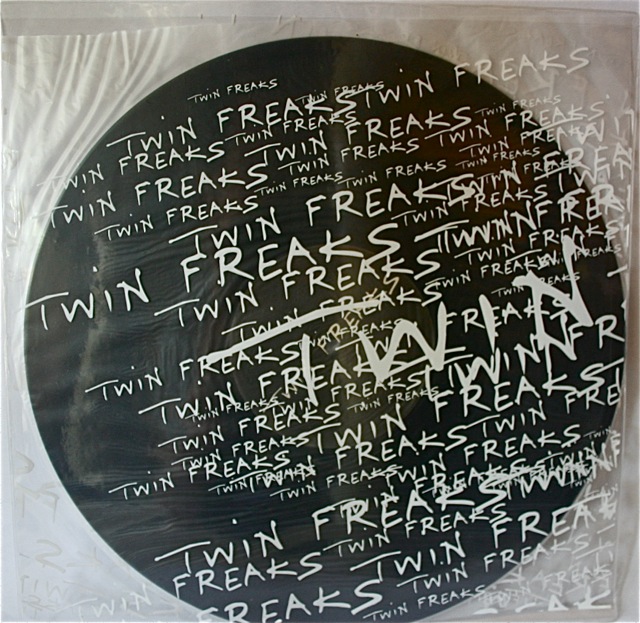
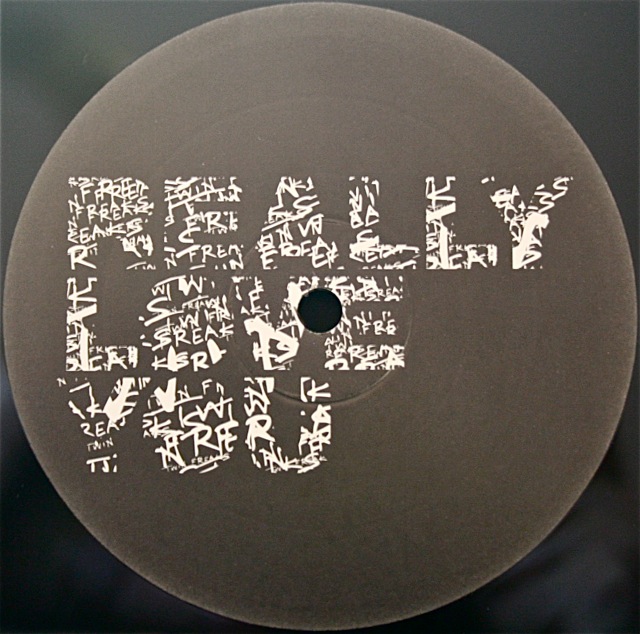
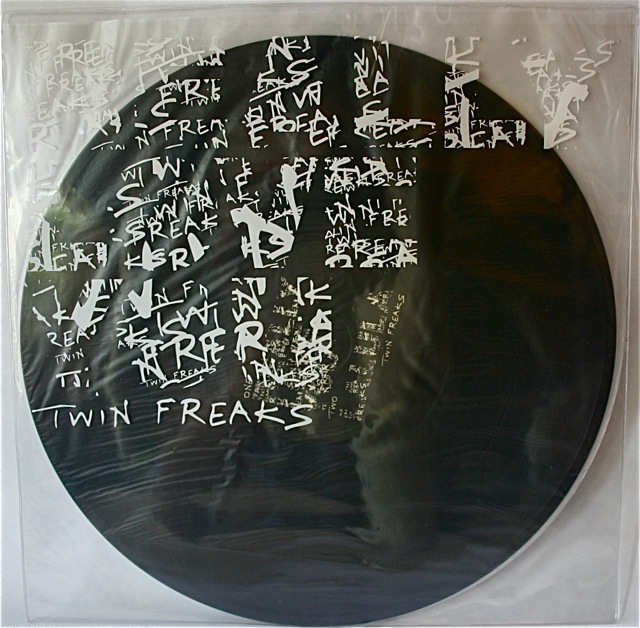
The album spawned two – and possibly three (see below) – 12-inch vinyl singles. The first was a promo-only release of the song “Really Love You”. It was limited to 500 copies worldwide and came out in a clear plastic sleeve that was heavily screen-printed on both sides (the printing is different on each side), with the repeated words “Twin Freaks”:

The “Really Love You” 12-inch promo came out on MPL/Graze Records and carried the catalogue number GRAZE 010. It has just the one song on Side A:

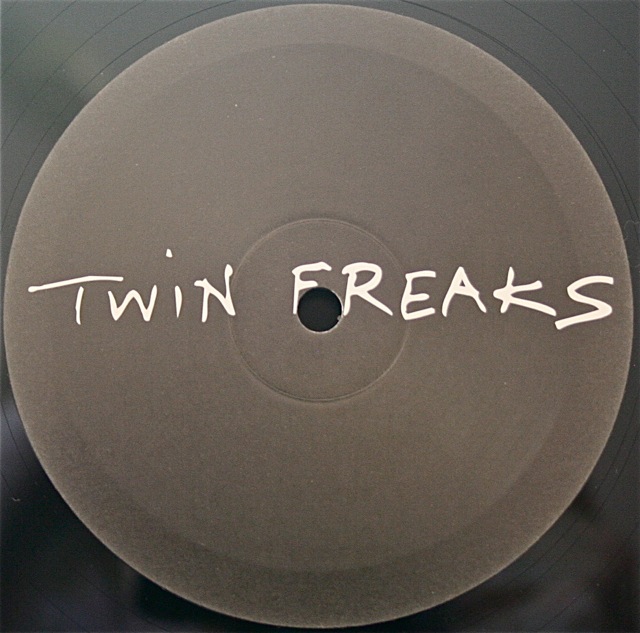
The other side was entirely blank – no grooves, just smooth vinyl – but it had a simple label:

“Really Love You” also had a commercial as a 12-inch single. This came out teamed with another song from the Twin Freaks album – a new McCartney song called “Lalula”. It carried the catalogue number GRAZE 012 and came in a clear plastic sleeve, screen-printed on just one side:

“Really Love You” and “Lalula”, like the promo single, was a one-sided 12-inch single – but this time the “B” side carried what was described as an acid-etched image of the “Twin Freaks” faces painting. It was apparently limited to 2500 copies. It’s quite difficult to capture in a photograph but I’ve had a go below:

Side A carried this label:

I think there was a third, very limited 12-inch vinyl single released from “Twin Freaks”. It was the song “What’s That You’re Doing”, a song co-written by McCartney and Stevie Wonder. I remember at the time seeing a few copies of this for sale on Ebay, but they were expensive and always quickly snapped up. I think it carried the catalogue number GRAZE 011. These have disappeared from trace now and must be real collectors items. If you have any more information on this 12-inch vinyl single please let me know using the comments box below, or email me at beatlesblogger@gmail.com

Did the “Twin Freaks” LP ever come out on CD?  You see them occasionally on Ebay, but I don’t think this one was ever officially released by McCartney. Please let me know if this is wrong.

Below is the full 2005 Press Release for “Twin Freaks”:

TWIN FREAKS SET TO RELEASE SELF-TITLED DEBUT ALBUM
TWIN FREAKS OUT 13TH JUNE, 2005

The TWIN FREAKS eponymous debut album is released through Parlophone Records on the 13th of June. TWIN FREAKS is a collection of some of Paul McCartney’s best-loved classics alongside some hidden gems from music’s most envied back catalogue.

TWIN FREAKS features the studio wizardry of DJ and producer The Freelance Hellraiser, best known for his unforgettable mash-up the 2002 bootleg ‘A Stroke Of Genius’. Hellraiser has since become one of the most sought after remixers and last year he came to the attention of music legend Paul McCartney.

In the summer of 2004 The Freelance Hellraiser joined Paul McCartney’s 13 date European stadium tour, opening each show with a twenty-five minute set of remixed McCartney tunes, which culminated in the famous headline performance at Glastonbury. At the time The Freelance Hellraiser said, “There is such an amazing album to be made of some of Paul’s unknown tracks from the late Seventies and early Eighties. He was doing some utterly cool stuff then that the young audience would lap up now”.

Causing quite a stir on the underground club scene throughout the UK TWIN FREAKS has already received airplay on Radio One’s prestigious show The Blue Room as well as support from Zane Low, Annie Mac, Huw Stephens and XFM. The album is packed with dance-floor epics that span Paul McCartney’s illustrious career.  From his solo debut album McCartney (“Maybe I’m Amazed”) through to 2003’s Driving Rain (“Rinse The Raindrops”) and including electro-pop rediscovered classics such as “Temporary Secretary” from 1980’s Coming Up album. TWIN FREAKS is an alternative take on the greatest back catalogue in music.

TWIN FREAKS will be released as a double vinyl
(Catalogue Number: 3113001)

12-inch single Press release:

TWIN FREAKS NEW SINGLE ‘REALLY LOVE YOU’ RELEASED ON GRAZE – 6TH JUNE

6th of June sees the release of the debut single ‘Really Love You’ from TWIN FREAKS on the new underground label Graze Records.

‘Really Love You’, a twelve inch only release, is the debut from TWIN FREAKS, featuring the studio wizardry of London based DJ and Producer The Freelance Hellraiser AKA Roy Kerr. Best known for his unforgettable mash-up the 2002 bootleg ‘A Stroke Of Genius’. Hellraiser has since become one of the country’s most sought after remixers and last year caught the eye of music legend Paul McCartney.

In the summer of 2004 Hellraiser toured Europe with Paul McCartney, opening each show with a twenty-five minute set of remixed McCartney tunes, which culminated in the famous headline performance at Glastonbury.

‘Really Love You’ is a remix of the original track taken from Paul McCartney’s 1997 hit album Flaming Pie. TWIN FREAKS are set to take this McCartney classic to a new audience in clubs across the country this summer.

TWIN FREAKS are in the process of putting the finishing touches to their first full album to be released later in the year. ‘Really Love You’ and ‘Lallula’ are just a taste of what’s to come.

Release date:  June 6, 2005     Label:  MPL/Graze GRAZE012 (12″)

John Lennon’s Rolls Royce

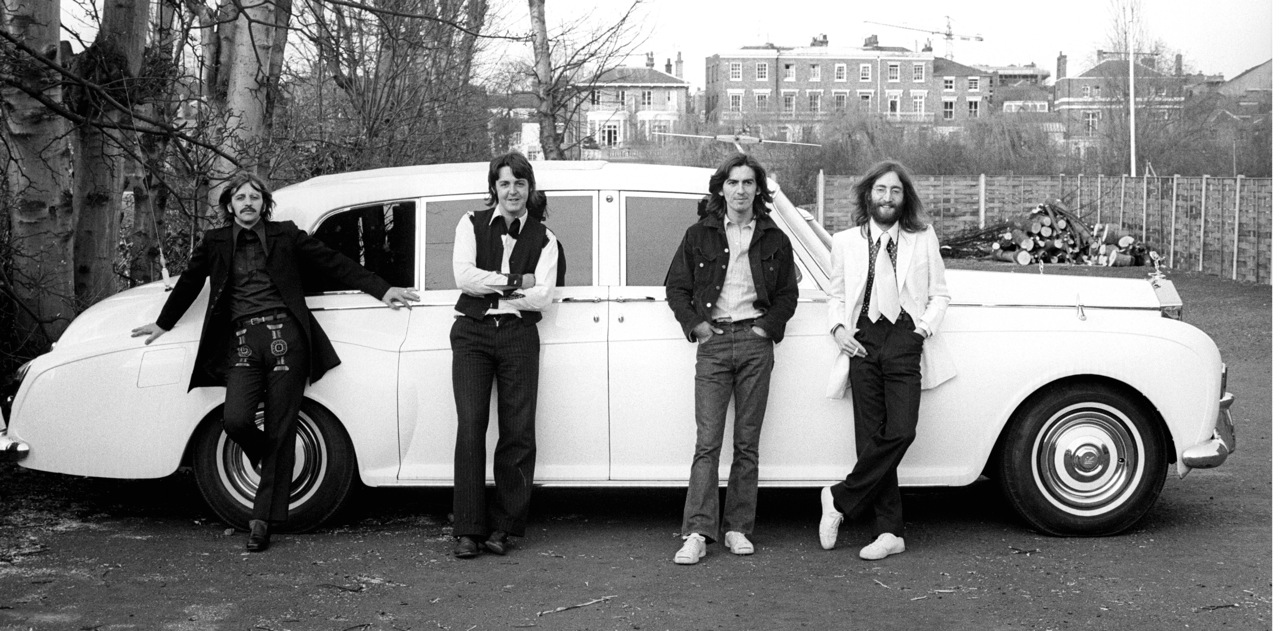
I use this great photo of the Beatles standing in front of an impressive all-white Phantom V Rolls Royce in my blog banner from time to time:

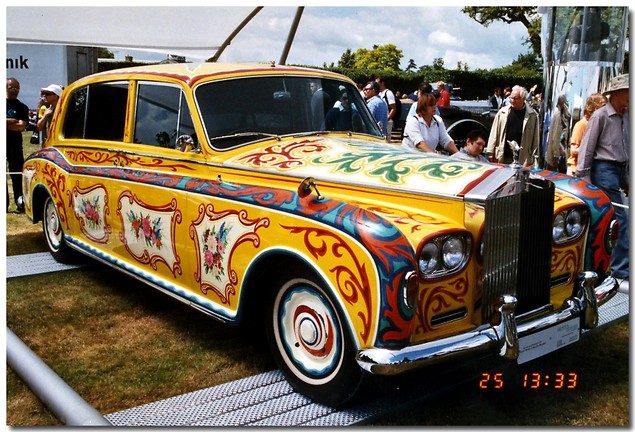
This 1969 photo reminded me of a similar car that John Lennon took ownership of in 1965 – and had substantially and dramatically re-painted:

Or if you prefer it in colour for the full effect:

Lennon’s psychedelic Roller wound up in 1993 as a display item at the Royal British Columbia Museum in, of all places, the city of Victoria, British Columbia in Canada. How did it get to be in Canada? You can read the full story here. It is still owned the Royal British Columbia Museum, but is now on display at the motor shop which takes care of it’s maintenance and servicing.

How do I know this? Well, when I posted on Paul McCartney and the portable Sony TV set which can be seen on the front cover of the famous “Sgt Pepper” album, it prompted some comments including one from the very knowledgeable   WogBlog, who said that the TV was actually owned by John Lennon. WogBlog’s post then got a comment from Jim Walters, who is a volunteer at the museum in Victoria, saying that he looks after maintenance on the Rolls. He says the restoration work is all done at Bristol Motors in British Columbia which now credits itself as “the home of John Lennon’s Rolls“.

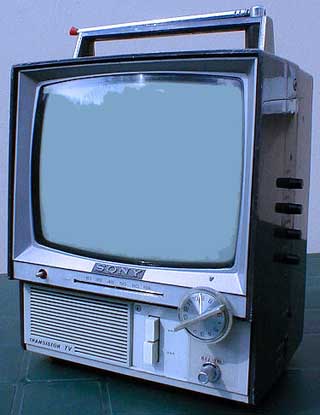
Anyway, the volunteers are looking for a replacement portable Sony TV. The original from the Rolls had gone missing (you can see it in the black and white YouTube clip above) – and it indeed looks just like a Sony TV9-306UB – the one on the “Sgt Pepper” cover:

Jim Walters is determined to find a replacement TV. He also posted on a Sony collectors page called Sony Insider saying of the little portable TV:

Paul McCartney bought two while they were on tour in Japan. One was used on the cover and I think the other was for John Lennon. I look after John Lennon’s yellow Rolls-Royce Phantom V for the owner, the Royal British Columbia Museum in Victoria, BC, Canada. This same model was installed in the rear seat console when JP Fallon Coachworks painted the car yellow and had artist Steve Weaver do the Romany style scrolls and flowers in 1967. The TV went missing from his car over 25 years ago. I am trying to find the same model of TV so I can donate it to the museum to fill the big hole in the console where it used to be. If you can think of anyone who may be able to help please forward this message to them.

This kind of fits with what I wrote about the TV on the cover of “Sgt Pepper”, that it was actually owned by Paul. It kind of makes sense because John’s TV of course would have been installed in the Rolls Royce at the time of the photo shoot. The article I was quoting from the Japan Times in my post said that the Okazaki City Mindscape Museum would be displaying the actual receipt for the purchase of the TV in an exhibition called “Swingin’ London” from January 2011. So, I decided to look and see if the Okazaki City Mindscape Museum in fact has that “Swingin’ London” exhibit on at the moment. And it does!

My Japanese is non-existent so I put some text from the site into Google Translate and it came back with:

“Famous Beatles record jacket ・ (・ サージェント・ペパーズ・ロンリー・ハーツ Club Band) that was captured on television unravel the mystery of the “bill signed by Paul McCartney (invoice).”

So I reckon we are still working out the mystery of the who owned the TV set. Seems it might have been Paul McCartney after all……

The Beatles – Then There Was Music

I got to go to a garage sale (or where you live they might call them “yard sales”) last Saturday morning.  I try whenever I can to have a brief look at garage sales because you just never know what people might have out for sale….and this time I was in luck.

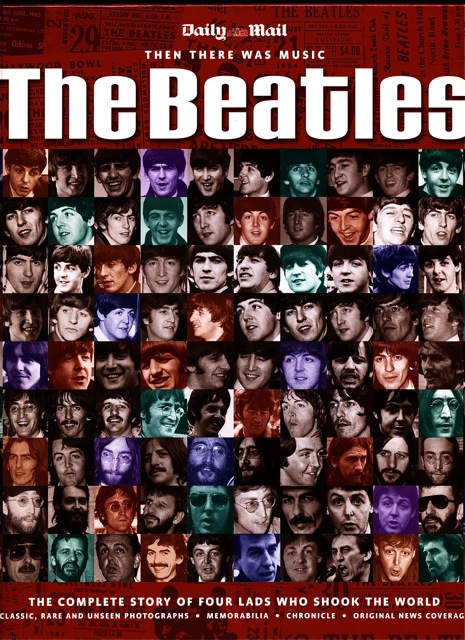
There was only one Beatle item there, but it was a beauty:

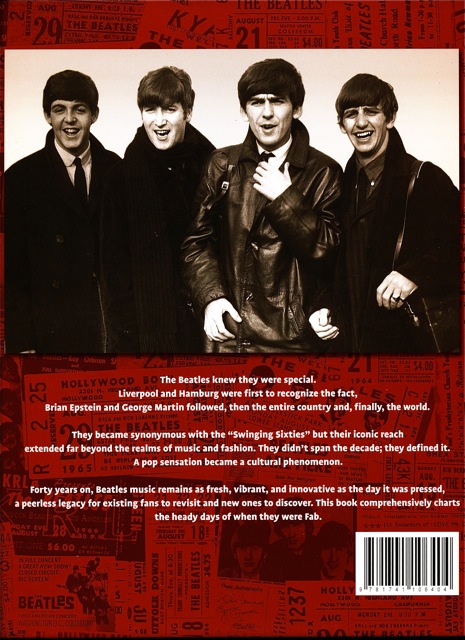
It was copy of a large and heavy book called “The Beatles – Then There Was Music”.  This book was published in Australia by New Holland Press in November, 2007.  It was first published in the UK by Transatlantic Press the same year.

“The Beatles  – Then There Was Music”  is written by Tim Hall and it’s illustrated with hundreds of  photographs from the archive of London’s Daily Mail newspaper. The cover also says: “The complete story of four lads who shook the world. Classic, rare and unseen photographs. Memorabilia. Chronicle. Original news coverage”.

I picked this up for just $5.00. And it is practically brand new. You can see at the publisher’s official Australian website that it actually retails for $49.95.

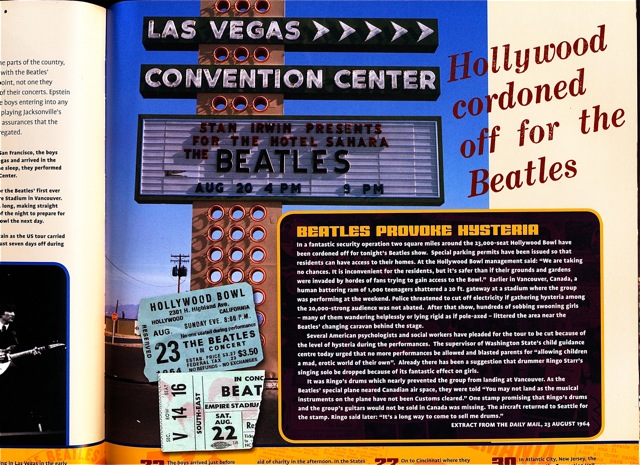
As I said, lots of interesting photographs, and at the bottom of every page is a timeline.  For example, in August, 1964 the Beatles North American tour started when they arrived in San Francisco and played the first of 25 dates with a show at the Cow Palace on Geneva Avenue. On August 20 they traveled to Las Vegas Nevada and played two shows at the Convention centre there:

From Vegas the band traveled to Washington state, and then on August 22 they appeared at the Empire Stadium in Vancouver. The next day they played the now famous Hollywood Bowl concert in Los Angeles. You can see the ticket stubs for both these concerts in the in picture above.

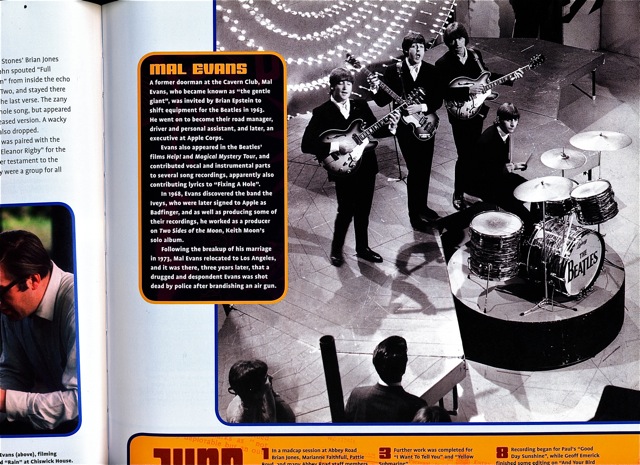
Scattered throughout the book there are also small vignettes of those who were a part of the Beatles inner circle – including one for long-time Beatles minder Mal Evans, who’d been with the band from the very earliest of days in Liverpool. You can see that entry for Mal below, along with a photo of the band rehearsing for a performance on the BBC’s “Top of the Pops” TV show:

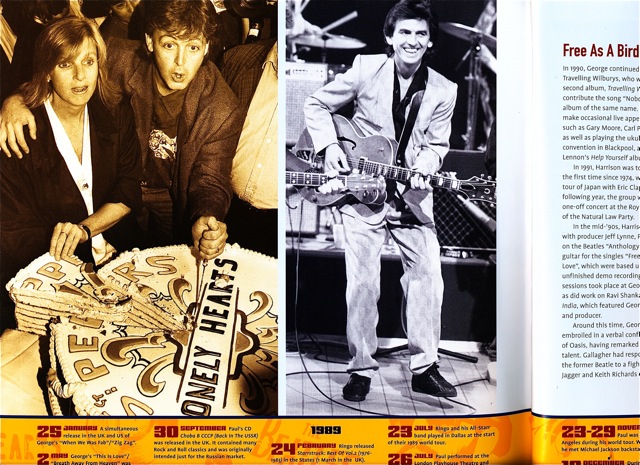
This book has lots of great newspaper photographs from the Daily Mail – including these two below.  Paul and Linda celebrating the 20th anniversary of “Sgt Pepper” with a big slice of cake, and George playing at a tribute concert to one of his rock’n’roll heroes, Carl Perkins:

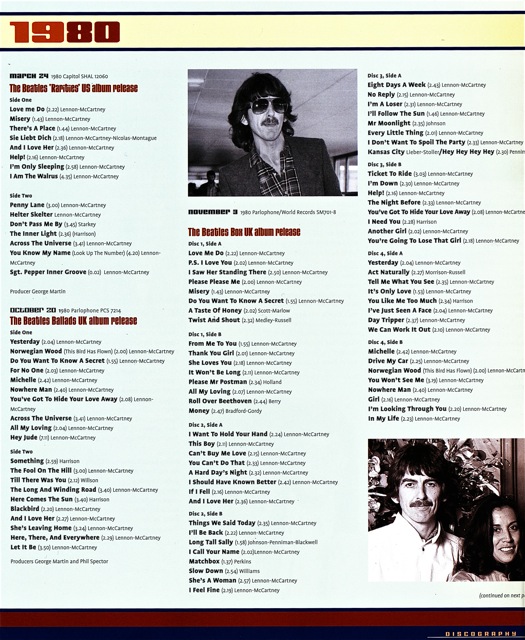
There’s also a complete discography (from 1962 up to 2006) beginning with January 5, 1962 and “My Bonnie” right through to the BeatlesLove” in 2006. Here’s the page for the year 1980 including entries for the “Rarities” album, “The Beatles Ballads” release, and the Beatles Box set (UK release):

So, thats it. “The Beatles – Then There Was Music”.  A collectors item discovered at a garage sale. I always say that one person’s trash is another person’s treasure. Let me know of any great second-hand Beatles finds you’ve made.

See also the recent post on another similar, but probably not as comprehensive book, simply called “The Beatles“.

Beatles “Love” iTunes Exclusives

Beatles Examiner reports that the two new iTunes exclusive “Love” tracks aren’t new – they date back to 2006 when George and Giles Martin originally mixed the music for the Cirque du Soleil Las Vegas theatrical production. To get the additional new tracks (“Fool on the Hill” and “Girl”) you have to download the whole Beatles “Love” album from the iTunes Store……that’s the only way they are officially available.

That got me thinking about how many more tracks might have been given the “Love” treatment back then and are just awaiting an opportune time for release.

And that reminded me of an interview Giles Martin gave on Australian radio when he was doing the worldwide publicity rounds for the “Love” CD back in 2006.

When explaining how they made “I Want To Hold Your Hand” he told The Music Show host Andrew Ford on the Australian Broadcasting Corporation that there were quite a few more tracks sitting in the can ready to go:

Did you hear that? He said there’s a whole swag of Beatles rock songs that were prepared for Cirque du Soleil that were never used in the show and quote: “….maybe we’ll stick them out later on.”  Giles specifically mentions “Love” versions of “Twist and Shout”, “She Loves You”, “Can’t Buy Me Love” and “A Hard Day’s Night”. I think we can look forward to more releases in the future.