FAB: An Intimate Life of Paul McCartney – Reviewed

This is the US cover of the hardback edition of “FAB: An Intimate Life of Paul McCartney” by well-known biographer Howard Sounes.

I posted previously on this book when I got a copy of the Australian edition in softback. If you click on the link you can see it was published with a very different cover to the rather subdued and conservative North American edition.

It has really taken me some time to actually read the book and write this appraisal.

What happened was I’d published that earlier post and then Da Capo Press, the US publishers of the book, saw the post and wrote offering me a review copy of the US release. It took a while to get here via snail mail and then, at 634 pages, it took me a while to read it from cover-to-cover.

I found it a pretty good read actually. Sounes writes in an engaging style and the book had just enough new details to keep me coming back. All-in-all it really was a great summer holiday read (its still summer here in Australia!). The book is not sensationalist – it pretty much sticks to the facts and tells it like it is – and that is refreshing.

One thing does stand out though – like many books on the Beatles it’s still written from an outsiders perspective. No matter how many interviews you do with some of the main players in and around McCartney’s life (and Sounes did many – he says he interviewed over 220 people for the book), he didn’t interview McCartney himself and so you still get this feeling of an outsider looking in.

Having said that, “FAB: An Intimate Life of Paul McCartney” is very revealing of the man himself, showing us aspects of the Paul personality we’ve perhaps thought were there but were never really sure. What we tend to see is the facade Paul wants us to see: “Macca”, the thumbs-up, positive, likable guy. This book goes deeper and reveals his his perfectionism; the fact that he he doesn’t suffer fools lightly; that for a wealthy man he was often quite frugal (for example paying Wings band members a very basic wage); that he wants above all to be remembered for having made a mark and leaving some sort of legacy; that family is very, very important; and that his mother (and her early death) has played a central role in his life, in his creative work, and in his relationships.
Sounes’s book is also good because it brings the reader right up to the present day. Its not just about the pre-Beatles and Beatles glory days. It includes a lot of detail about the Wings years, and about Paul’s solo career right up to 2009’s “Good Evening New York City“. In fact a good half of the book deals with the post-Beatles life of Paul.

It also gives a hint of what it must be like to live, practically for your whole life,  as one of the most famous and wealthy people in the world. Paul is a man who is used to getting his way and getting what he wants. Its not a life to be envied really. Everyone around you agrees with you because you are Paul McCartney. They suck up to you, they pay their respects. It must be incredibly difficult to keep a handle on what is real.

The gratifying thing about this book is that it’s not sensationalist. To be sure there’s plenty of opportunity to do that – particularly in that period of his later life (post Linda McCartney) when McCartney made some really bad relationship choices – but Sounes wisely sticks to the facts.

The book also has some great photographs. Who better to step us through the contents using some of those than the author Howard Sounes himself:

Russian Beatles – Fantastic Website

My post about the many label variations of Paul McCartney’s 1988 Russian album “Choba B CCCP” prompted a response from a reader named Vadim who gave me some links to an absolutely fantastic website that deals specifically with Beatles and Beatles-related releases from the former USSR and Russia.

You can find the site here and, if you’re not careful, it will open up a whole new world of Beatles record collecting to you. I don’t read Russian and so many parts of the site are a mystery – it looks like it has been created by three friends and Beatles fans: Andrey Lukanin, Vadim Legkokonets and Valentin Isaikin, who run something called The Beatles Association. It also appears that The Beatles Association puts out a regular magazine called “From Me To You”. There are links on the Foreword page of the site to download two recent issues.

The site is huge and so comprehensive with details of seemingly every USSR/Russian release and variation – complete with pictures of the covers, labels, catalogue numbers and heaps of other fascinating information for the collector. It is truly mind-blowing and well worth a look. Put aside some time – you’ll need it to have a good look around. Once you figure out how the site is constructed and linked you can delve into more and more detail about individual releases.

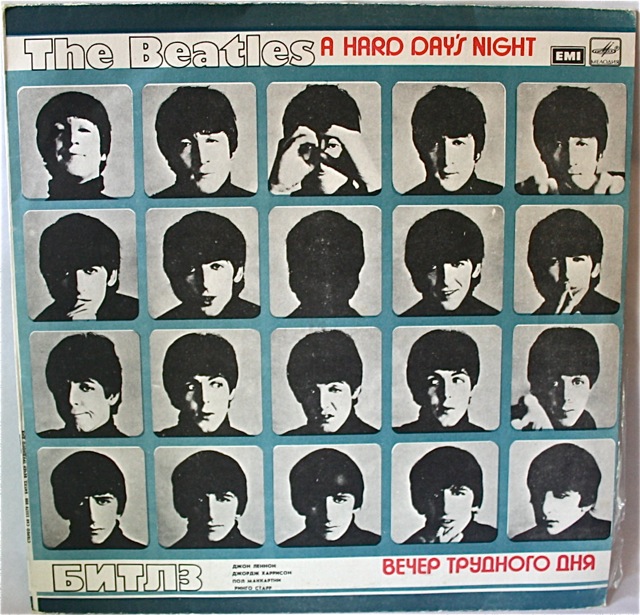
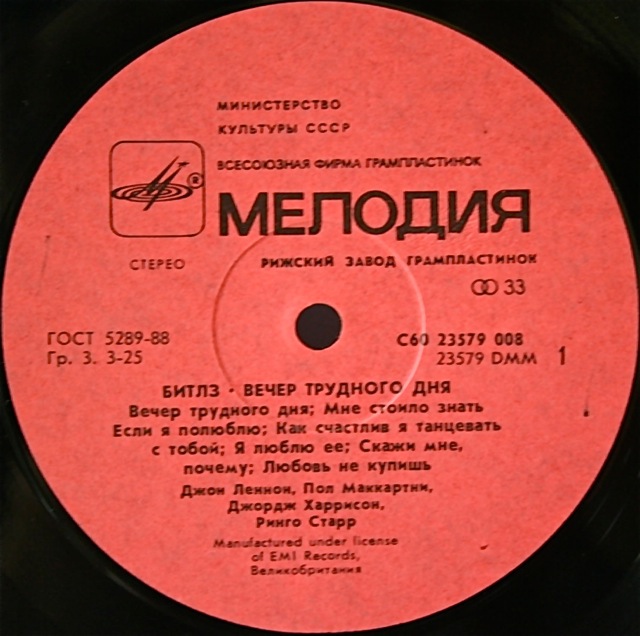
It got me thinking about other Russian releases I have in my own collection – apart from the McCartneyChoba B CCCP” ones. I had a bit of a look and found these (and I must say its very meagre compared to Vadim’s treasures). The first is “A Hard Days Night”. This is on EMI/Melodiya and comes in a single sleeve with a plastic inner. It has one less track than the British release. Its also stated that this is a “Direct Metal Mastered” pressing and it has a small official DMM logo on the rear cover:

[You can see the exhaustive details for this pressing on the amazing Russian Vinyl records site here. It looks like my copy is pressed at the Riga pressing plant.]

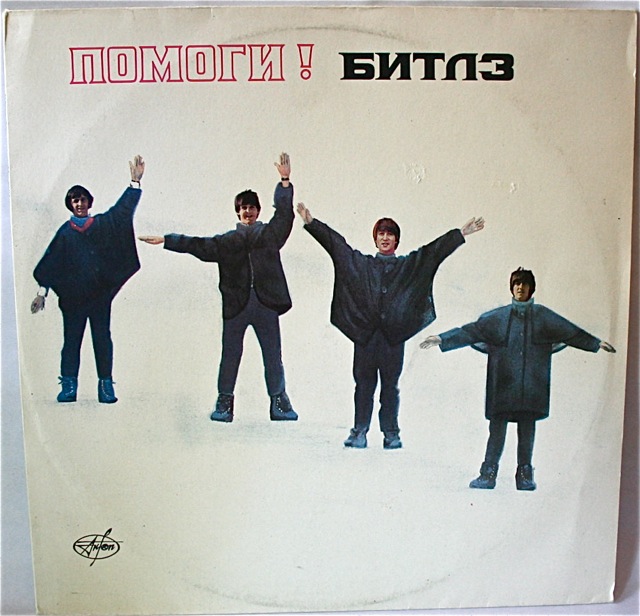
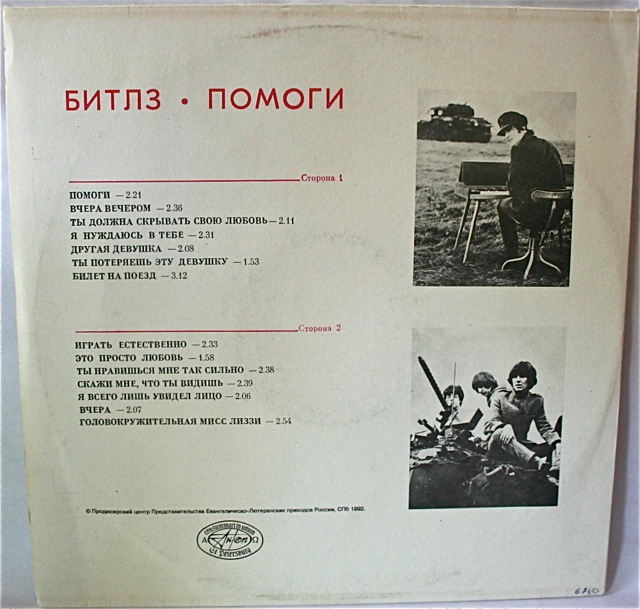
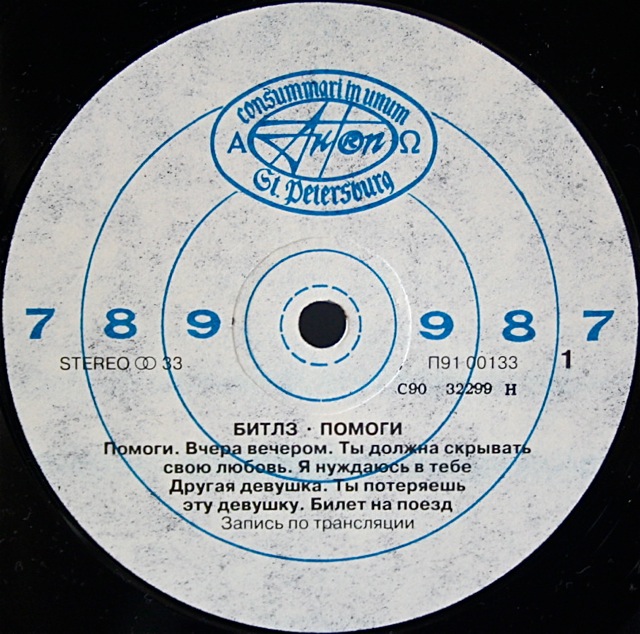
Then comes “Help”. This is on AnTrop Records from St Petersburg, and has a plain white paper inner sleeve:

[You can see the exhaustive details for this pressing on the amazing Russian Vinyl records site here. It looks like my copy came out in 1991 and is sleeve and label Variation 2.]

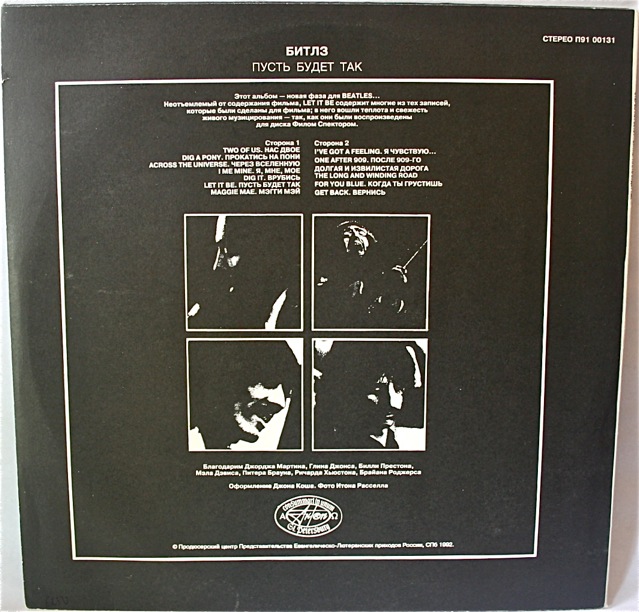
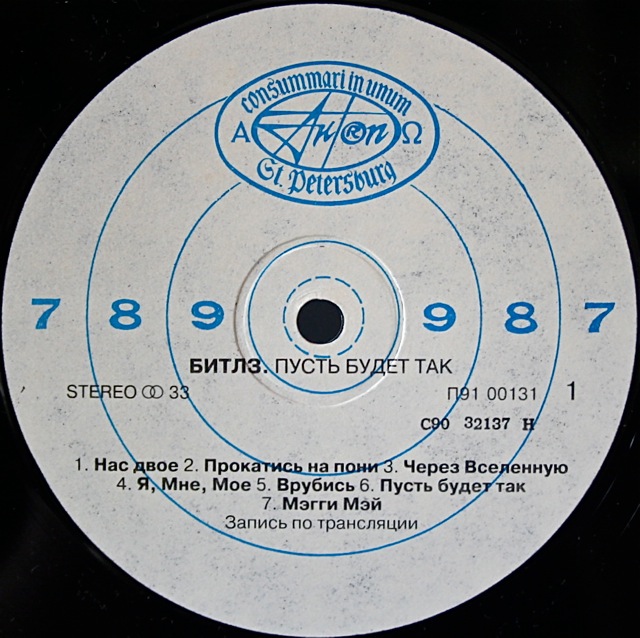
Also on AnTrop Records is “Let It Be”. This comes in a single, quite thin, cardboard sleeve with a plain white paper inner sleeve:

[You can see the exhaustive details for this pressing on the amazing Russian Vinyl records site here.  This was released in 1992 and is sleeve Variation b., and label Variation 2.]

There are more “Let It Be” label variations on my site here.

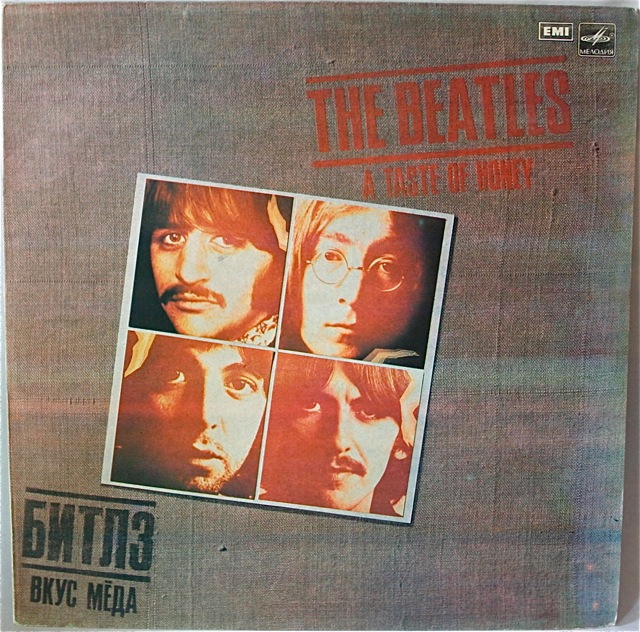
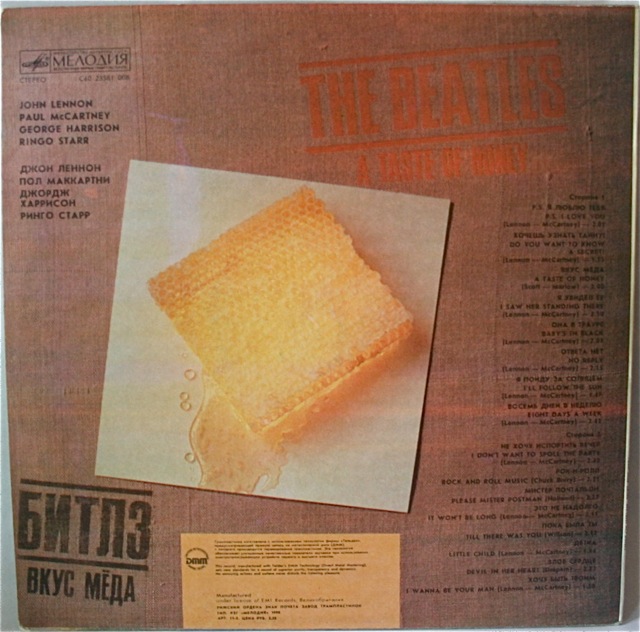
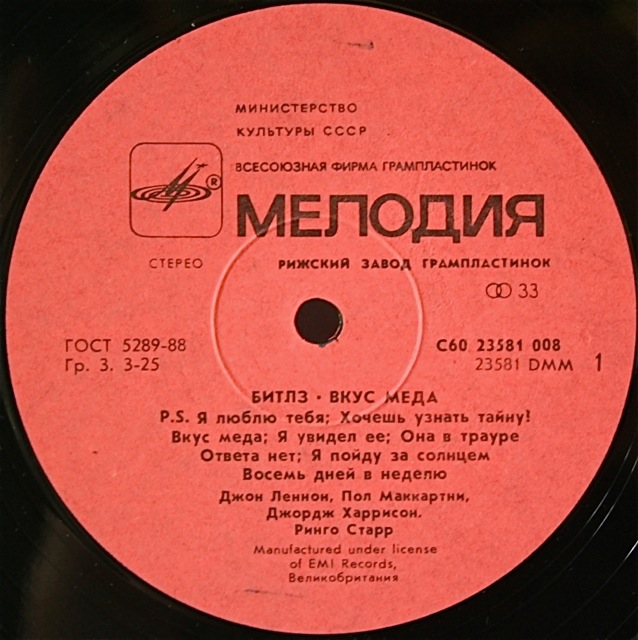
The final Russian Beatles pressing I have is a unique compilation of early material called “A Taste of Honey” (1986). It is on the Melodiya label (and there’s also an EMI logo on the front cover). This is another “Direct Metal Mastered” pressing and it has an official DMM logo on the rear cover. Its in a single sleeve and a plain white inner bag:

[You can see the exhaustive details for this pressing on the amazing Russian Vinyl records site here and here. It looks like my copy is pressed at the Riga pressing plant.]

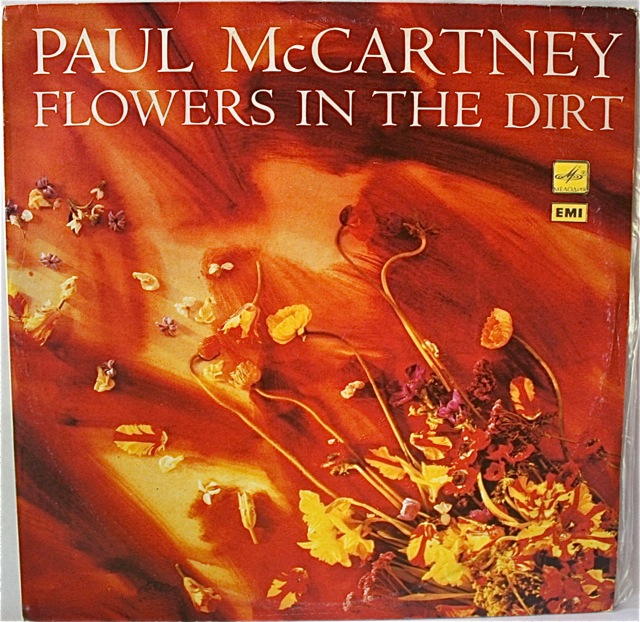
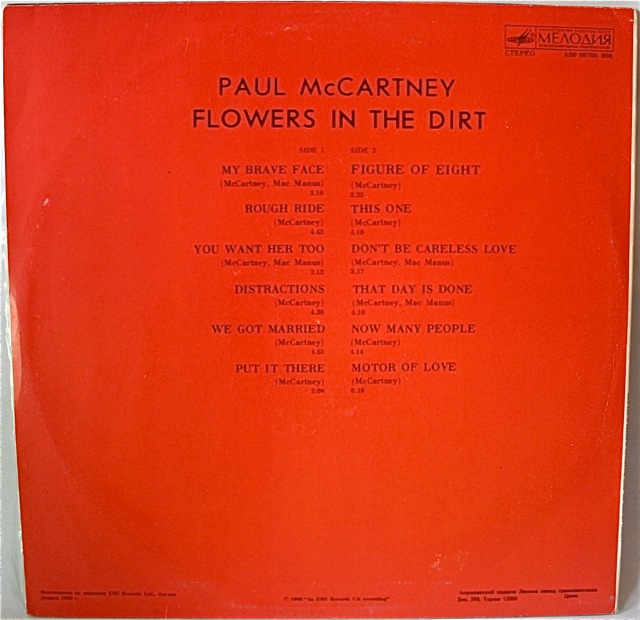
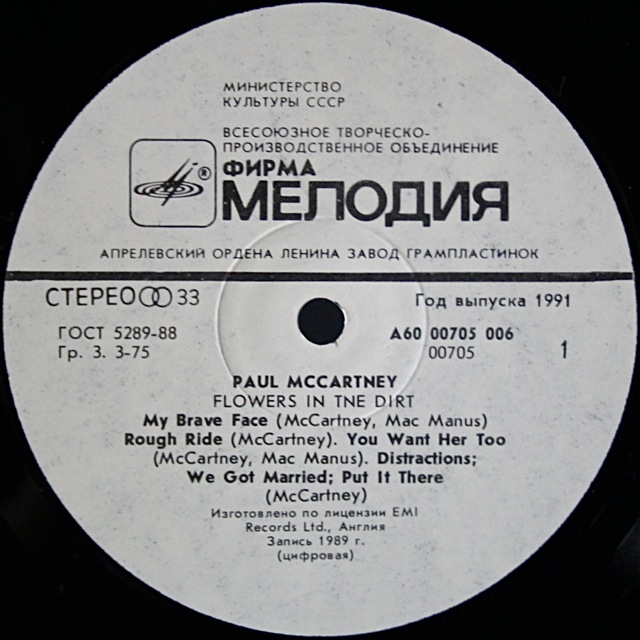
There is one other in my collection. Its Paul McCartney – “Flowers in the Dirt” (1989). This is on the white Melodiya label and has a plastic inner bag:

[You can see the exhaustive details for this pressing on the amazing Russian Vinyl records site here. It was pressed in 1991, and it looks like my copy was manufactured at the Aprelevka pressing plant, with sleeve variation 1d., and label variation White 2.]

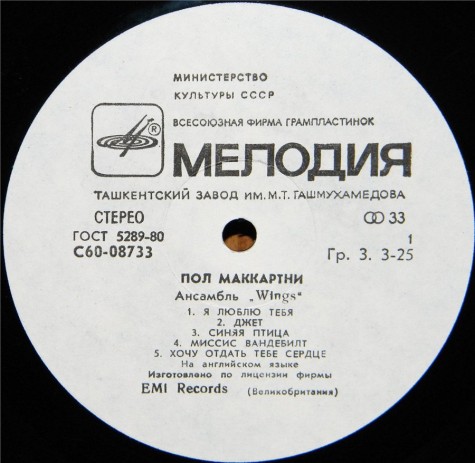
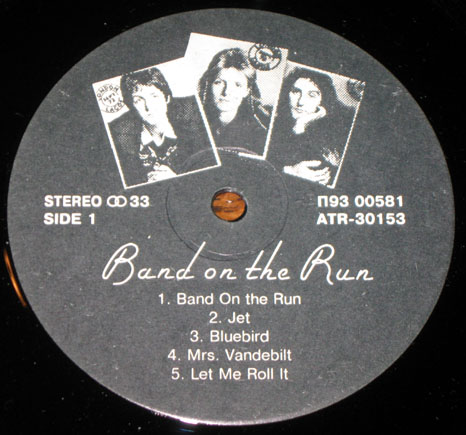
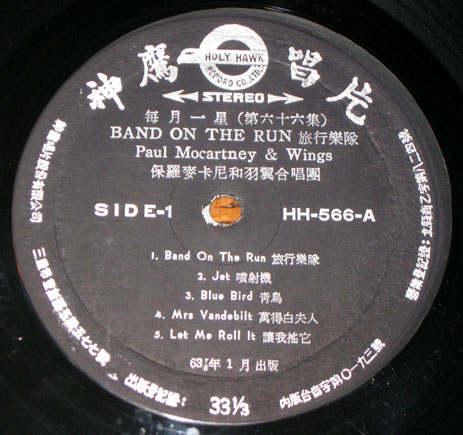
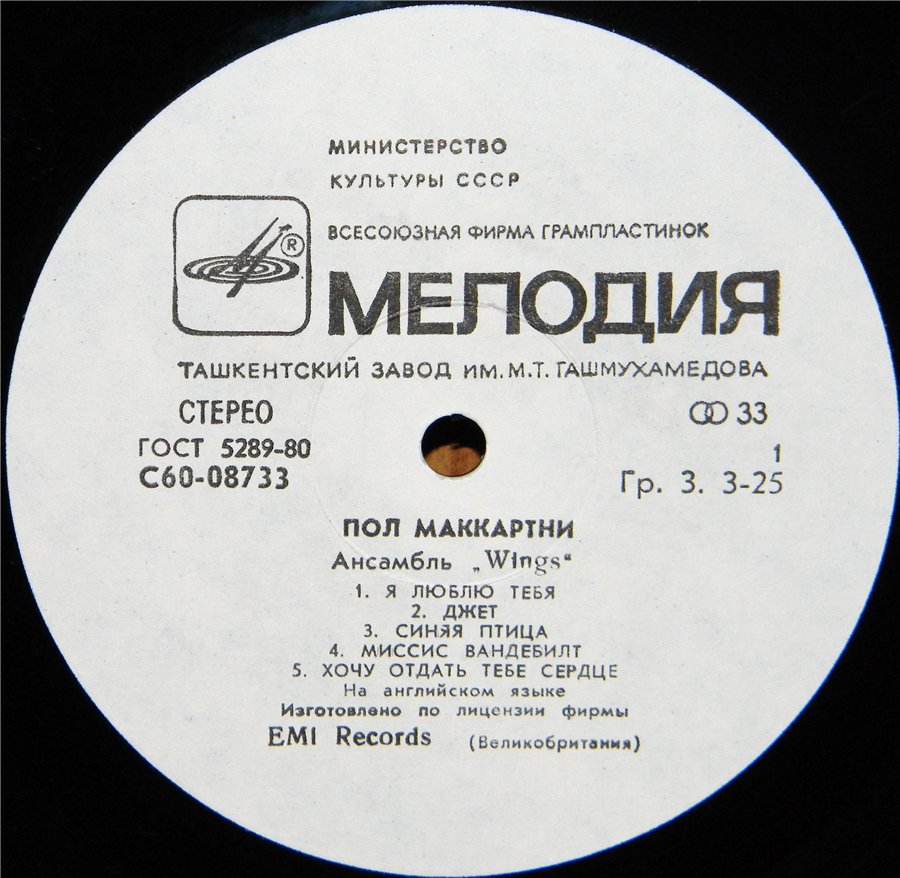
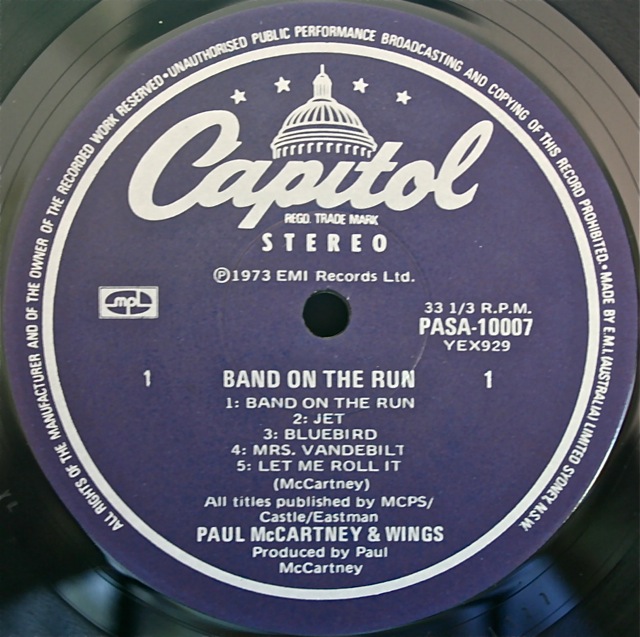
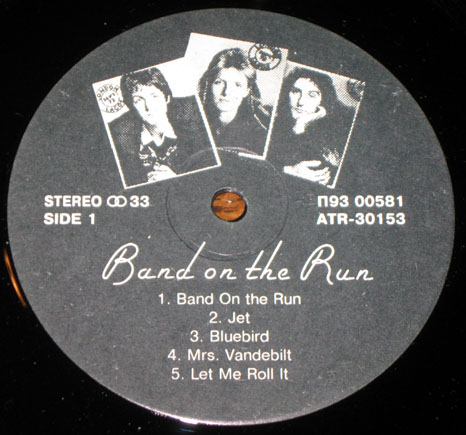
Finally, in my post about different versions of Paul McCartney’s “Band on the Run” from around the world there were two on Russian labels – the first a Melodiya pressing, the second from Santa Records:

The Ole Black Gretsch – An Update

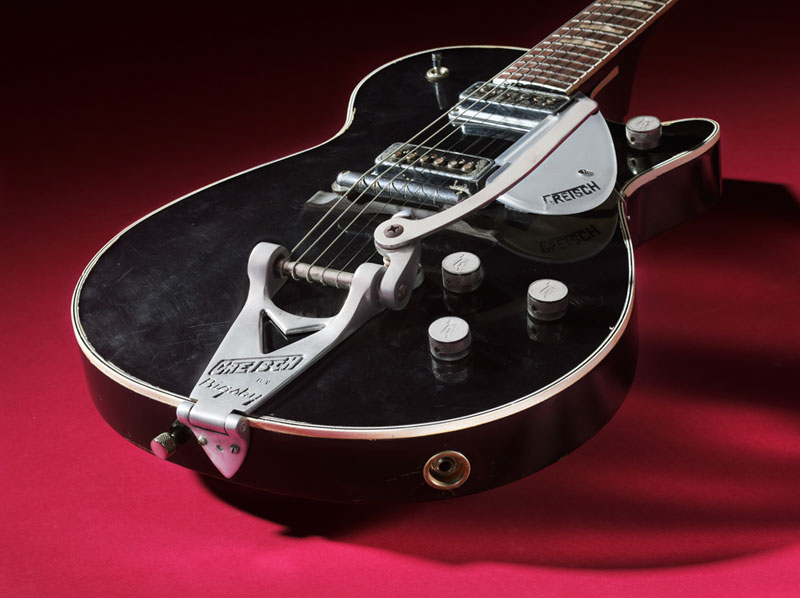
Just after Christmas I posted that the Gretsch guitar company was flagging they’d soon be releasing a very special, exact recreation of the guitar George Harrison owned back in the early Liverpool Cavern days of the Beatles the Ole Black Gretsch.

Its time for an update because Gretsch have announced that a faithful, limited edition replica is now for sale – for a cool US$20,000……

The guitar is a Gretsch Duo Jet that George purchased back in 1961 for £90.00:

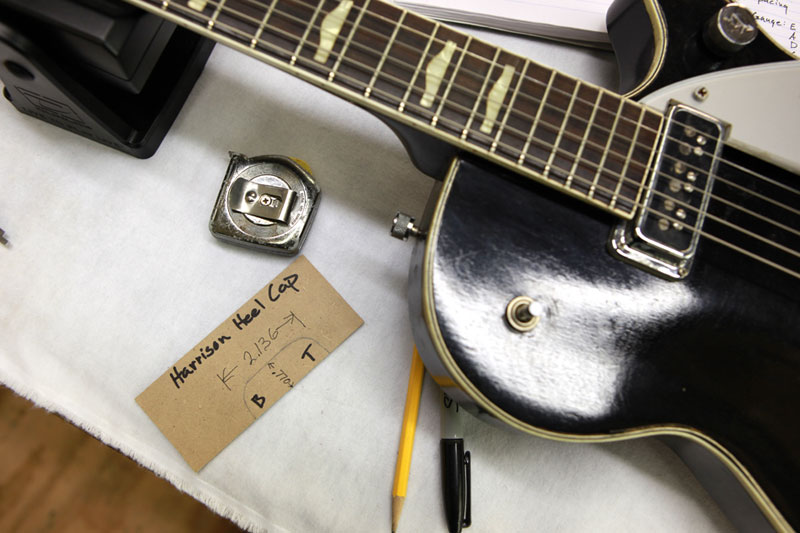
Gretsch guitars in the United States has measured every dimension, every detail right down to the scratches and dings and even the rust on the metal of the pick-ups so that each of the limited edition of just sixty guitars is accurate in every respect.

There’s much more information and background at: http://www.gretschguitars.com/features/georgeharrison

Label Variations – Part Five “Band on the Run”

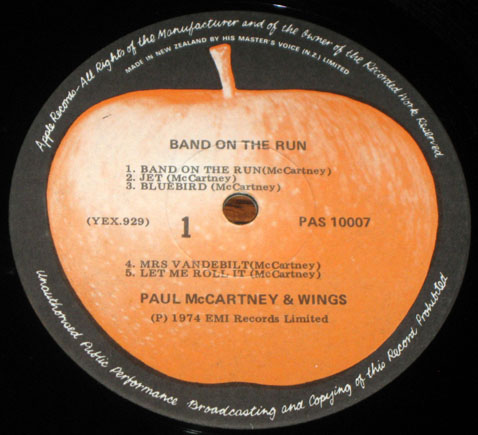
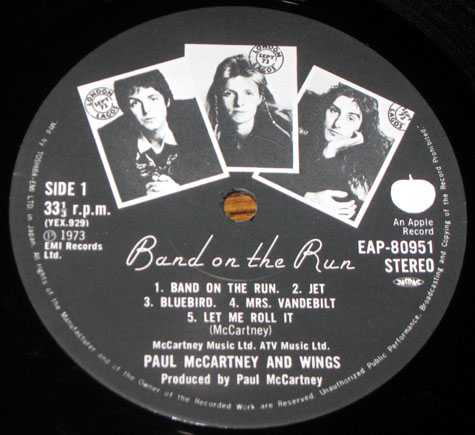
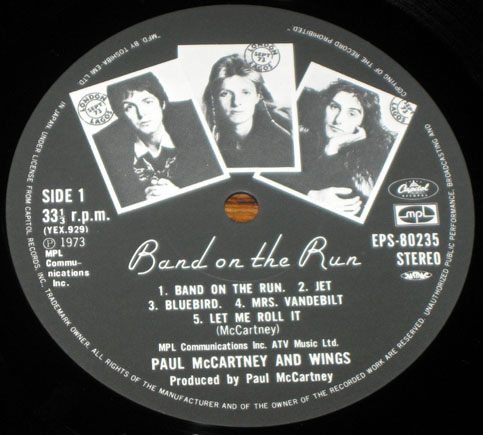
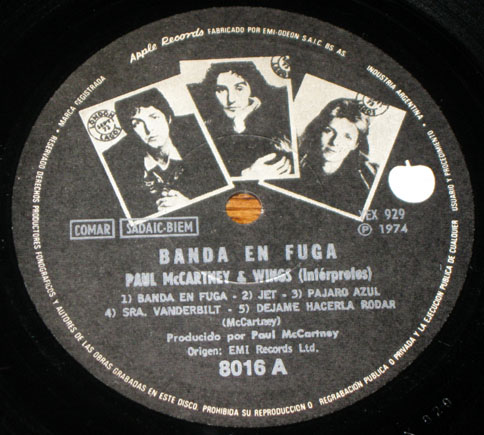
I have to thank the very wonderful Chained and Perfumed blogsite for this one. Every now and then this site features photos of interesting record labels from their own collection. One recent post highlights a whole raft of great images – different versions of “Band on the Run” (on vinyl) from around the world.

Chained and Perfumed got these from Ebay from a seller who has on offer a large number of versions of Paul McCartney’s classic album, itself recently re-issued on vinyl.

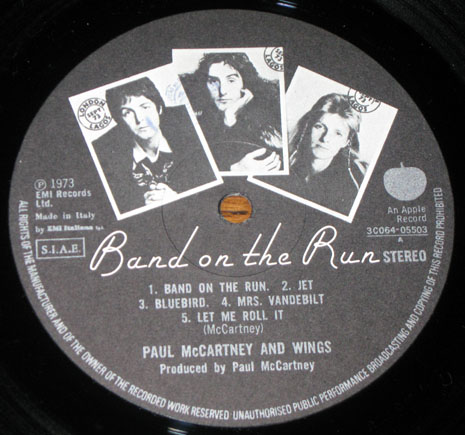
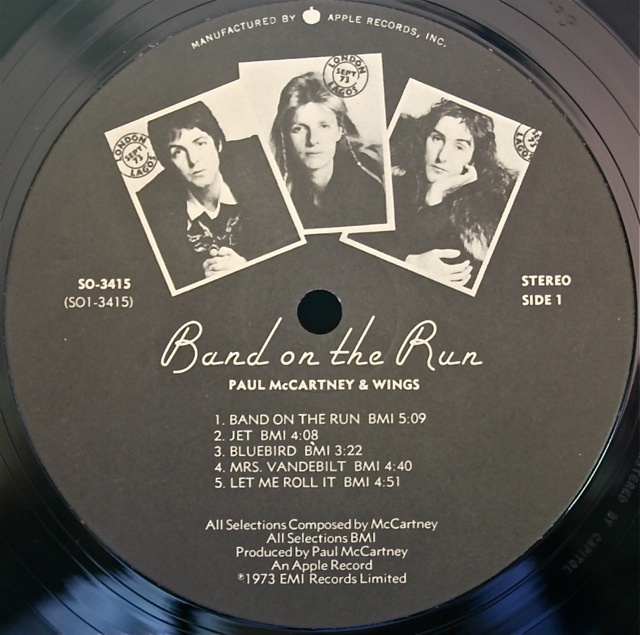
Like Chained and Perfumed we like seeing different global variations – so here are few from the Ebay collection, followed by a couple from my own collection. First off a couple of different Korean pressings:

Then Greece and Italy:

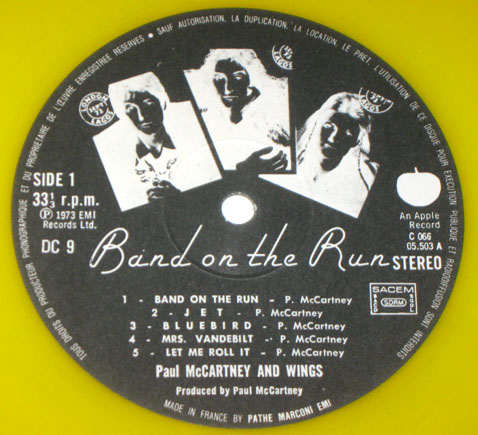
And France (on nice yellow vinyl):

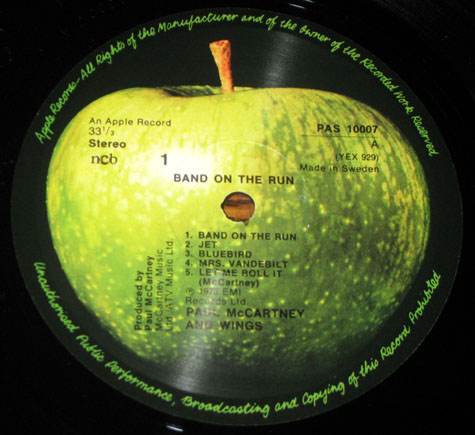
India and Sweden both used the traditional Apple:

While for some strange reason New Zealand used the same Apple colour as those used on George Harrison’s “All Things Must Pass” original vinyl:

The Japanese pressings used the original custom labels. Here are two versions, one with the Apple logo, the other with the Capital and MPL logos:

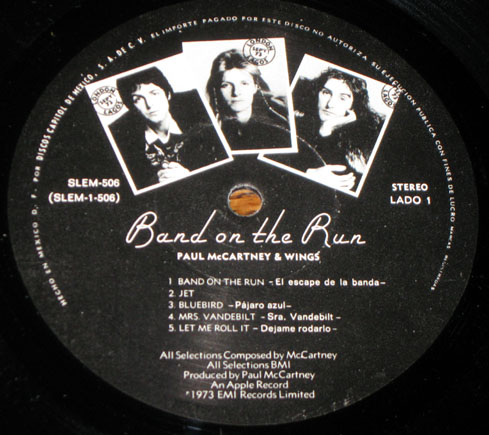
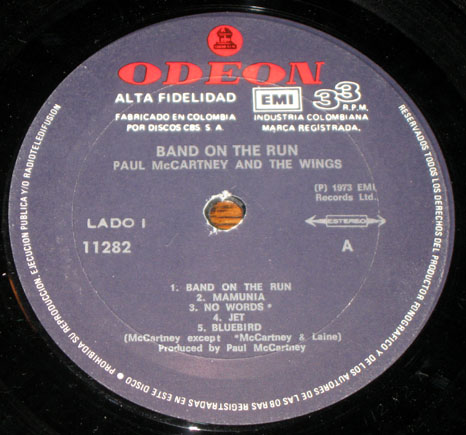
And now for Argentina and Mexico:

Here’s an interesting version on Odeon Records in Germany:

There are a couple of Russian versions on Ebay. Firstly one on Santa Records and then the more common Melodiya:

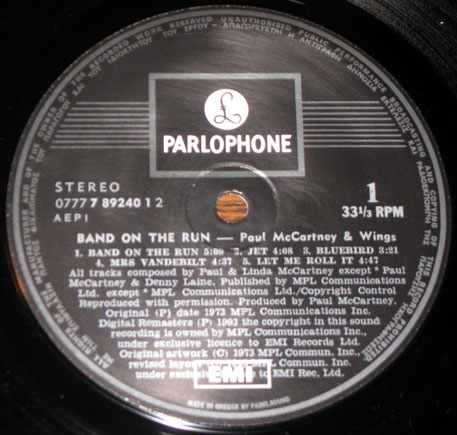
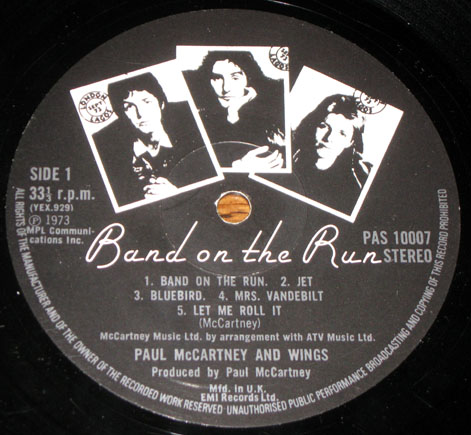
Next come a couple of UK versions. The first is a pretty standard issue, but without the Apple logo appearing:

The next is a special limited edition of the disc from 1997, released to celebrate the EMI Records Centenary – 100 Years of recording:

Here are some labels that are from my own collection which are not represented  above which you might also find interesting if you are into this sort of thing. First is a Canadian pressing – which I think is actually exactly the same as the US:

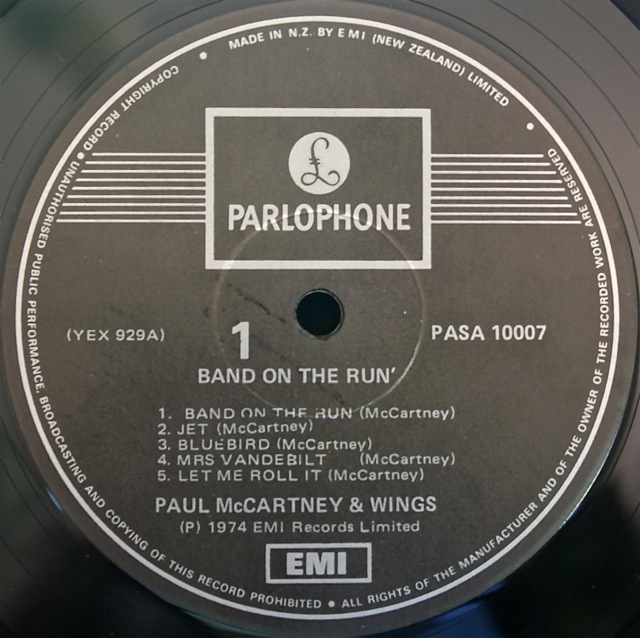
We had a strange example from New Zealand above. The re-issue of “Band on the Run” in that country came out on Parlophone Records:

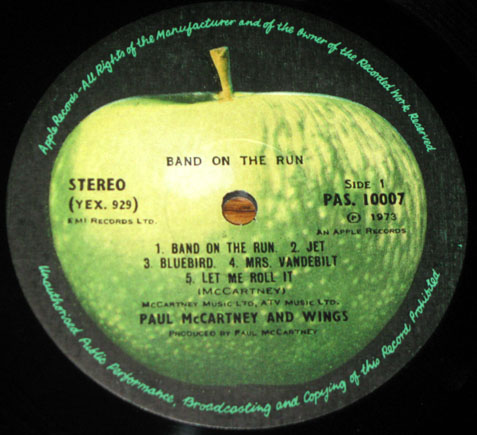
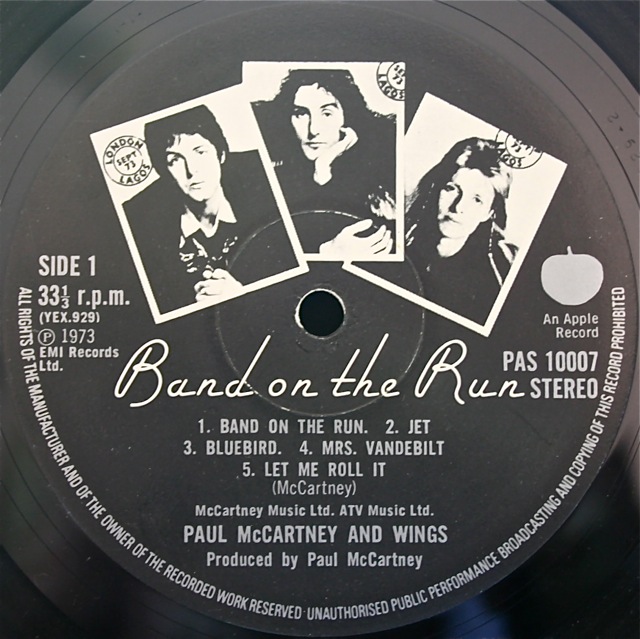
Of course there is always the standard, original UK pressing with the Apple logo:

In Australia the original release also looked very much like the UK:

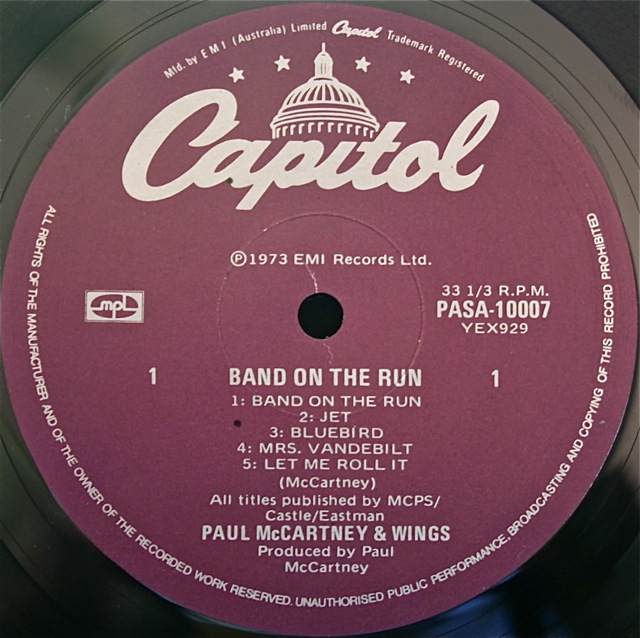
The re-issues in Australia though came out on the Capital label. Here are two variations, one on purple Capital the other on blue Capital:

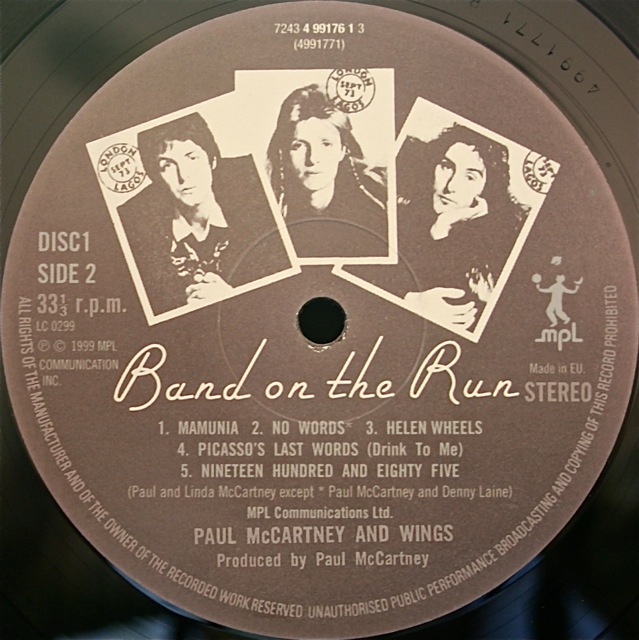
Finally, in 1999 for the 25th anniversary of the release of “Band on the Run” there came a two-disc, limited edition, remastered version. This is the UK pressing of disc 1:

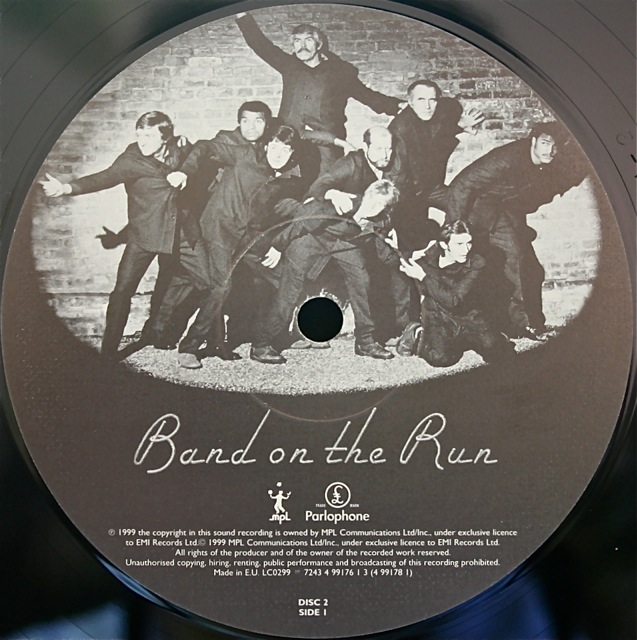
And here’s the second disc, which contained previously unreleased material featuring alternate versions and special interviews on the making of “Band on the Run”:

If you’d like to see some more Beatles and Beatles related record label variations you can go to:

Label Variations – Part One “Sgt Pepper”

Label Variations – Part Two “Let It Be”

Label Variations – Part Three – McCartney’s “Choba B CCCP”

Label Variations – Part Four  “Shaved Fish”

“All Things Must Pass” – Variations and Collectors Items

and

The Beatles “Love” collectable variations

The Next McCartney Releases

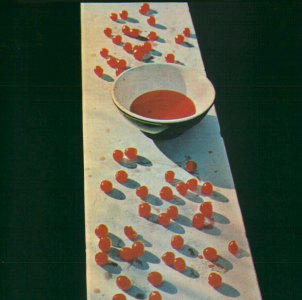
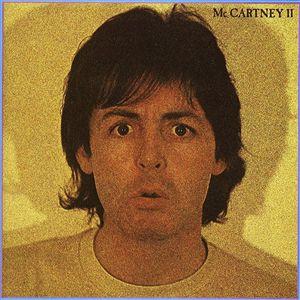
Wogblog is one Beatles blogsite you can trust when it comes to accurate news and information about planned future releases. I don’t know where Roger Stormo (who is based in Norway) gets his information from, but it is usually correct well out from any officially released news. In his latest post Wogblog is saying that the next two confirmed releases in The Paul McCartney Archive Collection series will be Paul’s first solo album “McCartney”, and the album that came out ten years later (and was recorded in a similar fashion at home studios), “McCartney II”.

“McCartney” (1970) will be available in two forms: as a 2 CD set, and as a 2 CD plus 1 DVD deluxe set with a 100 page book.

“McCartney II” (1980) will also be available in two forms: as a 2 CD set, and as a 3 CD plus 1 DVD deluxe set with a 100 page book.

I’m guessing the books will be just like the book format used for the recent deluxe packaging of “Band on the Run” (2010). There is no talk of vinyl pressings yet – hopefully they will be announced soon. No release dates are yet available for both collections.

Wogblog had the inside running on all the details for that “Band on the Run” set very early. It was the first release in the Archive series, so there’s reason to believe he could be onto something here too.

Beatles on CD – “1962-1966” – the Red Album

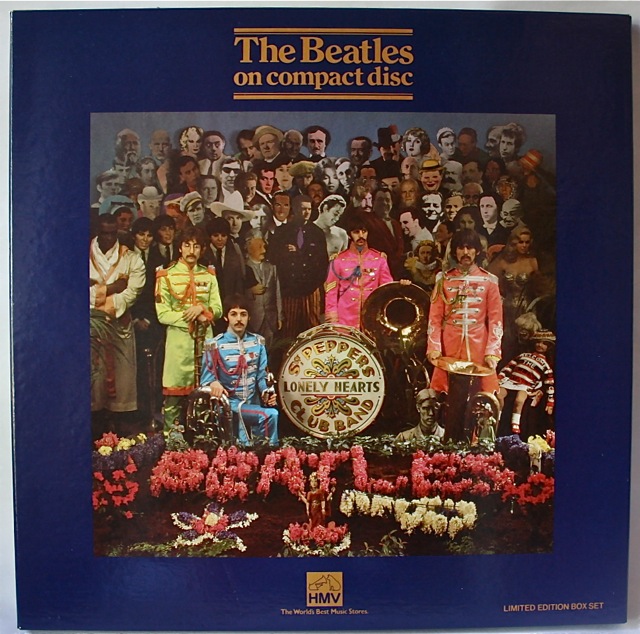
Last time I posted on getting a bargain on the HMV box set of “Sgt Pepper”. This comes from back in 1987 when the Beatles catalogue was released on Compact Disc for the very first time. EMI used their UK record store chain HMV to release all the titles in special, limited edition 12″ box sets.

The other set I was able to get at the same time was “The Beatles 1962-1966” (which was issued later – in 1993).

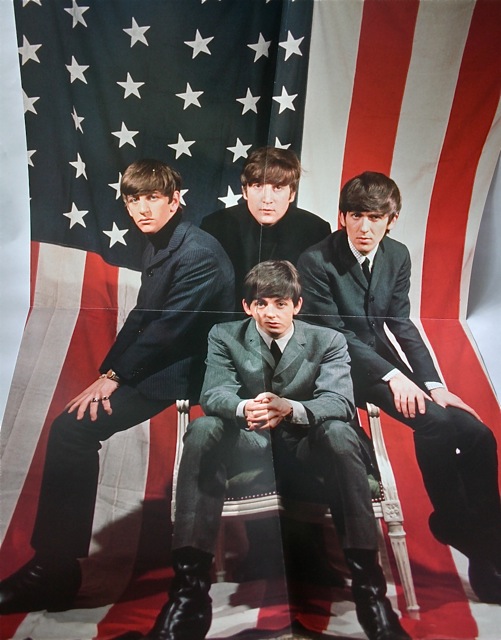
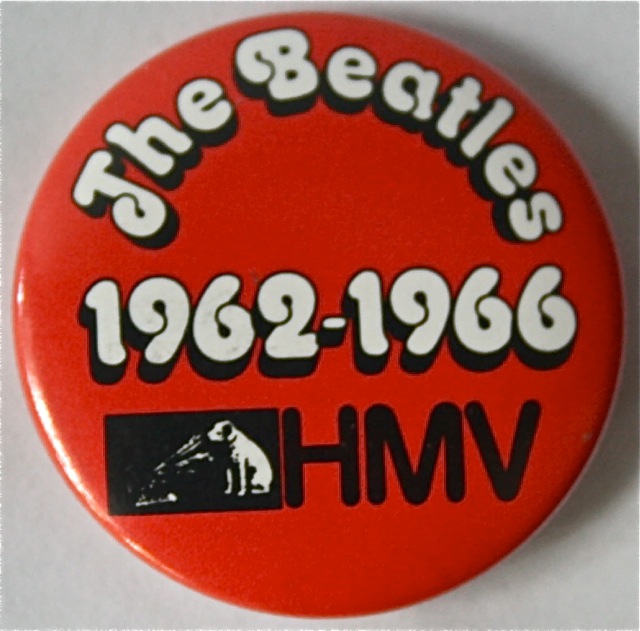
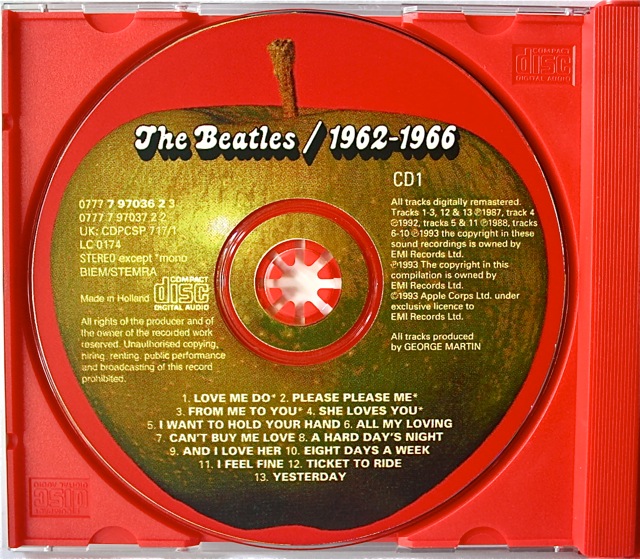
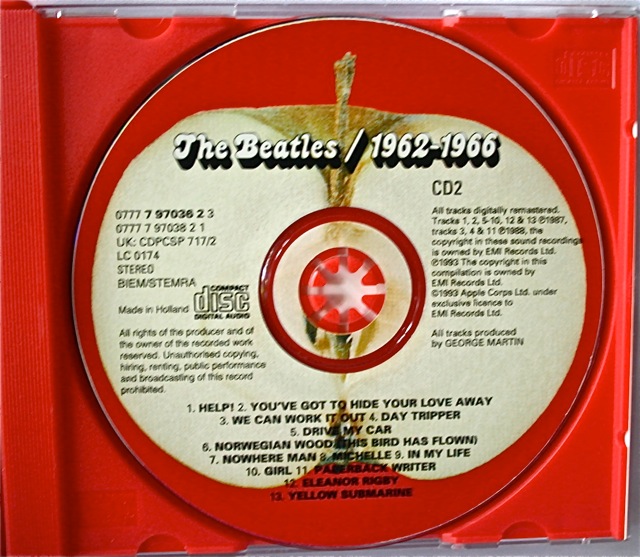
This is a limited edition box with the catalogue number BEACD25/11. It contains the well-known Red Album double CD set, and comes with a large-format 12-page colour booklet featuring song reviews, a 16″ x 24″ colour poster of the band (posed in front of a big US flag), and a special metal badge.

The front of the box looks like this:

Note the original price sticker still attached. When you take off the lid, this is what you see:

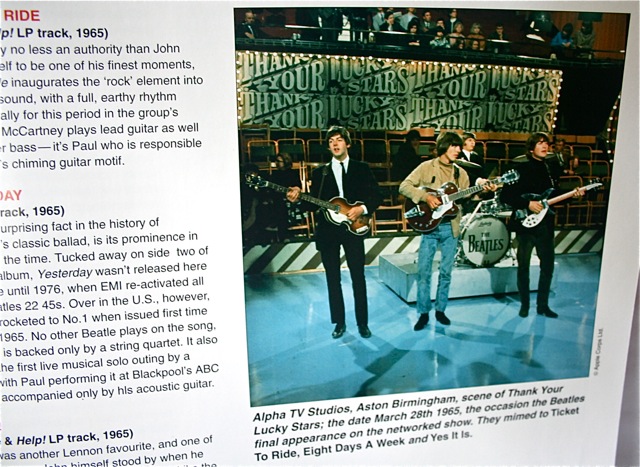
This is the 12-page booklet, and it is different to the small booklet which comes with the CD itself. It features some great photos, a short essay, and a song-by-song commentary by Andy Davis from Record Collector magazine:

Next in the box there’s a large poster:

Then comes the CD itself, held in place by a special cardboard holder with a slot just right for the CD and it’s outer cardboard sleeve. There’s a small thumb-slot at the bottom to help you get the CD out. This box, by the way, is thicker so that it can accommodate the jumbo-sized double “Red” CD :

Also in the box is a small metal pin or badge:

As already mentioned, the CD’s which come with this are in the red jumbo-sized double CD holder – which comes with a booklet:

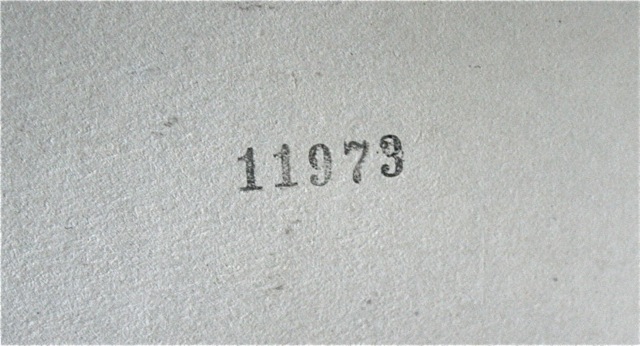
Inside the lid of the HMV box there’s a limited edition stamped number:

See also the “Sgt Pepper” HMV box set.


Beatles on CD – The “Sgt Pepper” Box Set

When the Beatles catalogue came out on Compact Disc for the first time back in 1987 it was a very big deal and the British record store chain HMV (which has close ties back to the Beatles record company EMI) released a series of limited edition 12” x 12″ box sets to mark the occasion. These boxes look just like those which contain 12″ LP’s so I guess there was a certain symbolism in releasing them in this way – the boxes containing CD’s indicating a move forward from the LP to the Compact Disc.

In all there were 12 individual box sets containing either individual or grouped CD’s, plus there was also a large (and expensive) HMV box housing every Beatle CD title then available.

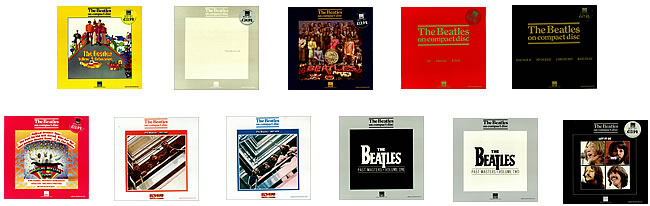
You can see here all the “Beatles on CD” HMV Box Sets (minus “Abbey Road”) above. These (except for the 1962-1966 and 1967-1970 sets) all came out in 1987.

The box numbered BEACD25 contained “Please Please Me”, “With The Beatles”, “Hard Days Night” and “For Sale” on CD, plus a 224-page book ‘The Book Of Beatle Lists’, plus a Beatles fact sheet.

BEACD25/2 contained “Help”, “Rubber Soul” and “Revolver”, plus a reprint of Beatles Monthly No. 12 and a Beatles fact sheet.

“Sgt Peppers Lonely Hearts Club Band” (BEACD25/3) had the album with a slipcase, an 8-page ‘behind the scenes’ booklet, the 12″ cut-outs sheet and  a badge.

The “White Album” (BEACD25/4) featured an individually numbered double CD album, a 12-page glossy booklet and a badge.

BEACD25/5 was “Yellow Submarine” and came with an insert, a cut-out ‘Yellow Submarine’ model, and a fact-sheet, while “Magical Mystery Tour” (BEACD25/6) had a 12-page booklet, a large fold out colour poster and badge.

“Abbey Road”  (BEACD25/7) comprised the 17-track CD album, two different posters, a badge and an 8-page booklet.

The “Let It Be” HMV box has a 12-page booklet and badge, and has the catalogue number BEACD25/8.

The “Past Masters Vol.1” and “Vol. 2” came in separate boxes – each with a badge and a 12-page booklet with pictures and track-by-track details. These were numbered BEACD25/9 and BEACD25/10.

Finally, when they were released in 1993 the “Beatles 1962-1966” Red Album and the “Beatles 1967-1970″ Blue Album also came in separate boxes containing the double CD sets, a 12-page colour booklet featuring song reviews, a 16″ x 24” colour poster and a badge. These were numbered BEACD25/11 and BEACD25/12 respectively.

I got a bargain the other day – I was able to get the “Sgt Pepper” HMV box and the “Beatles 1962 – 1966” – both practically mint copies. I’ll give you a close up look at the “Sgt Pepper” box set here, and post on the “62-66” red box next time.

You can see the front of the box above – and it features a different photograph from the one used on the CD. When you take the lid off this is what you first see:

This is an 8-page booklet with lots of photographs taken at the photo shoot for the famous cover of “Sgt Pepper”. There’s also some text about each song. Here are couple of pages from the booklet:

Underneath that there’s the same “Sgt Pepper” cardboard cut-out sheet which came with the original copies of the LP version:

Then comes the CD itself, held in place by a special cardboard holder with a slot just right for the CD and it’s outer cardboard sleeve. There’s a small thumb-slot at the bottom to help you get the CD out:

Also in the box is a small metal pin or badge:

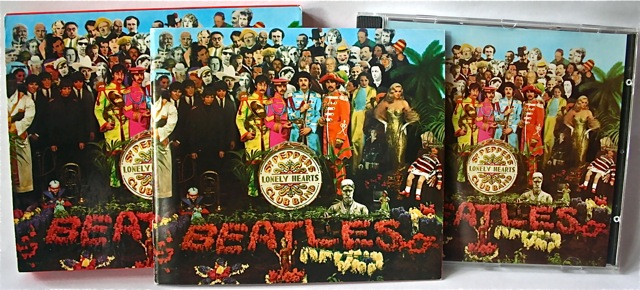
The CD that comes with this is the original release with the cardboard sleeve, booklet with additional info, and an insert that has details of all the faces used in the famous Peter Blake photograph of the band standing with all their heroes:

Inside the lid of the HMV box there’s a limited edition stamped number:

Next post we’ll take a look at the “Beatles 1962-1966” HMV Limited Edition box set.

The Lost Lennon Tapes – Rolling Stone Magazine

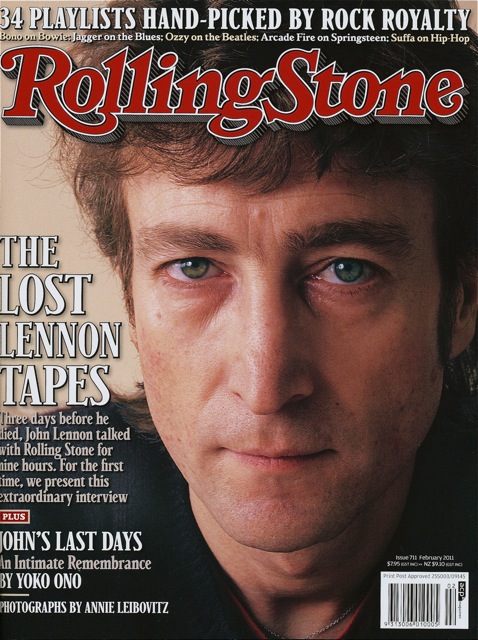
We’re a bit slow down here so pardon if you’ve got this info already – but the latest (February) Australian edition of Rolling Stone magazine has just hit news stands.

Don’t know if they waited  intentionally to release this into the Christmas/New Year holiday market here, or there was something more pressing to put on the front cover Down Under a few weeks ago. This content was seen in the US back in early December . It was timed to coincide with the anniversary of John Lennon’s death. Here’s the Australian cover:

As you can see, the feature article is the final print interview with Lennon, conducted by journalist and writer Jonathon Cott:

On December 5, 1980, three days before he was murdered, John Lennon sat down with Rolling Stone‘s Jonathan Cott for a nine-hour interview. Select excerpts from the interview ran in Rolling Stone‘s tribute to John Lennon the following month — but Cott never transcribed all of the tapes. For 30 years they sat in the back of his closet.

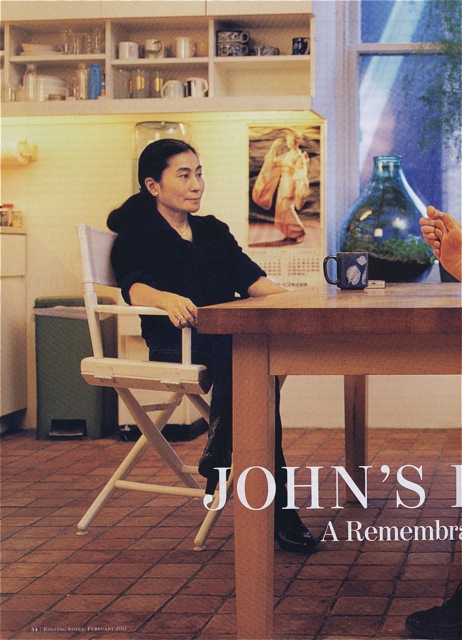
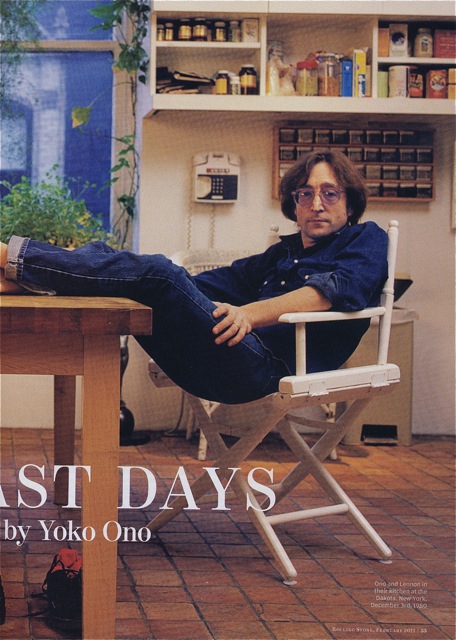
So, much of this content is seeing the light of day for the very first time, accompanied by some terrific photographs by Annie Leibovitz, Rolling Stone magazine chief photographer at the time. One of the most interesting, spread over two pages, is the Lennon’s at home in their Dakota apartment kitchen:

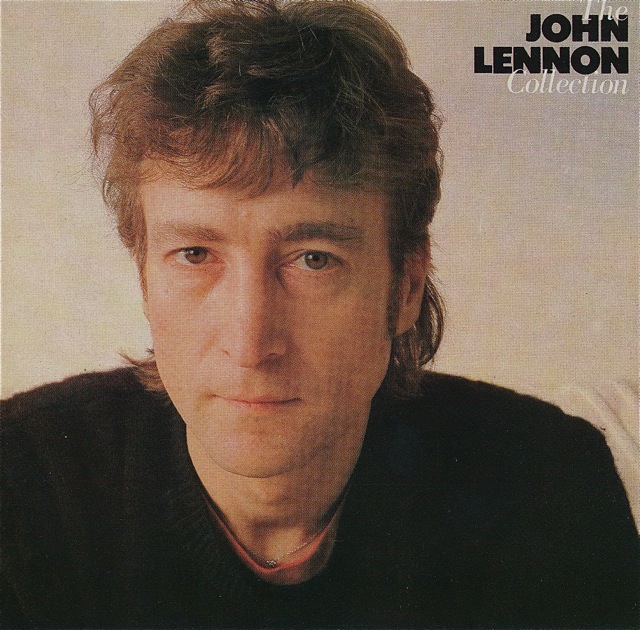
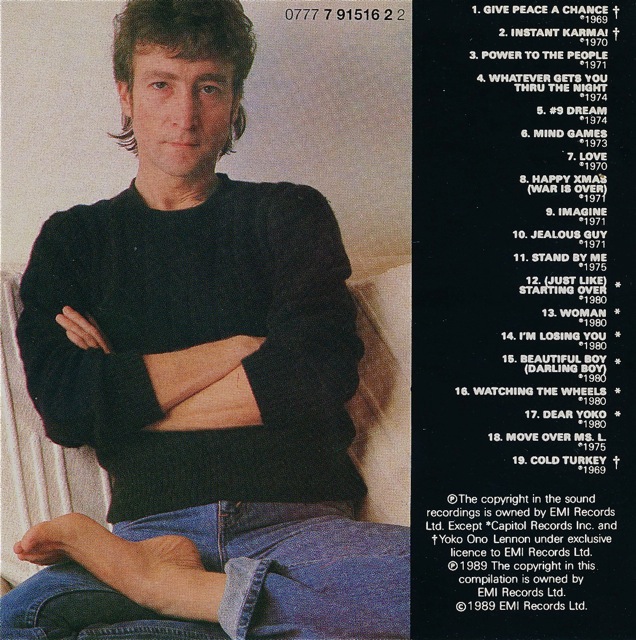
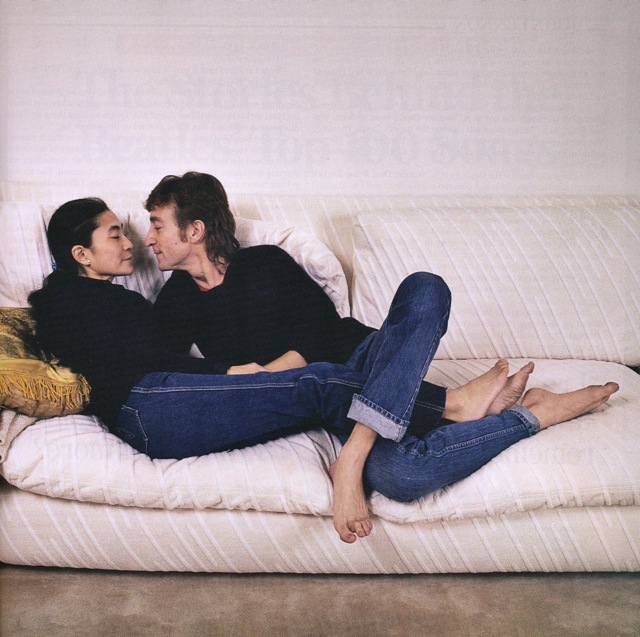
Its a great photo – one I’d not seen before and so homely and domestic. Clearly many of the photographs by Annie Leibovitz from this day’s shoot at the Dakota  have now been seen in many iterations, including the LP and CD cover for “The John Lennon Collection”, a best-of released in 1989:

The Rolling Stone “Last Interview” is accompanied by a lengthy piece called “John’s Last Days” written by Yoko Ono in London. It’s dated October 18th, 2010, and in it she says that one day during the recording of “Double Fantasy” they had some time to spare, and had some retail therapy:

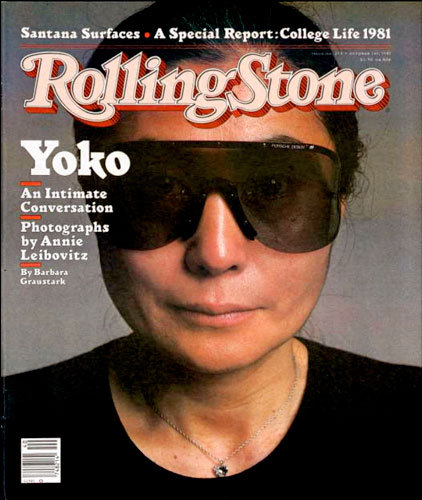
“After being in the dark studio for ages, the outside made us squint. It was like spring! A beautiful, beautiful day. The sky was shining blue. We felt like two kids skipping class. John decided we would go into Saks Fifth Avenue. He went through a few counters and stopped at the glasses: “We should get one for you.” He picked a pair out – large black wraparound shades – and put them on me….”You should wear these all the time.” I thought that was silly and wanted to laugh, but stopped short. He was gazing. “Why?” I asked with my eyes. He just took my hand and we walked quickly toward the exit. It was time to get back to the studio. I immediately forgot the incident totally. Later, those were the glasses I used to face the world.”

I’m guessing that these are those same glasses – by Porsche Design – which Yoko was seen wearing in public frequently in the years after John’s murder. This is a cover from a 1981 edition of Rolling Stone. If you look closely you can see that she is also  wearing the same necklace that John is wearing in the “The John Lennon Collection” CD cover shot:

Rolling Stone have uploaded four audio extracts from the Jonathan Cott “Last Interview” here, and you can download an 18 minute podcast here. Also in this latest edition of the magazine Yoko Ono lists her ten best John Lennon songs.

Let It Be – Dialogue From the Beatles’ Motion Picture

This little item came into the collection last week:

It’s a one-sided 45rpm single with three tracks on the A side. These are as the label describes – three brief extracts of dialogue from the Beatles’ 1970 film Let It Be, which premiered in New York in May that year.  We’ve been looking around on the internet for some further information on it.

Fab 4 Collectables (which is a really interesting site by the way) says that this disc was issued to fan club members, but as it states on the the label “Beatles Promo – 1970”  you’d have to think it’s more likely a disc that was sent to radio stations to promote the Let It Be film which had only just been released in the United States. The dialogue was produced during the ill-fated recording and filming of the film in Twickenham studios in London in January, 1969.

The Apple By The Numbers site (no longer active) said that there are bootleg copies of this around: “….fakes exist which do not have machine stamped symbols in the matrix area of the run-out grooves. The original was on black vinyl. Fakes exist on colored vinyl. This record was made at Bell Sound Studios to promote the release of the Let It Be film documentary”. It was Bell Sound that pressed the official Let It Be LP for Apple Records in the USA.

This promo 45 here has symbols stamped in the run-out area, so I guess it could be an original. It says: “Promo  1970 . D – 1” then a symbol that looks like a circle within a circle, followed by a squiggle that looks like this:  ˜ (all hand-written).  As you can see, Apple is mentioned on the label, as is ABKCO, Allen Klein’s company which was managing the Beatles at the time.

It comes in a plain white sleeve, and the B-side is blank. There’s just a white label with no writing, and some groves stamped into the vinyl:

If anyone has any further information on this disc please leave a comment.

For other Let It Be posts see Label Variations – Part 2 ; Let It Be At 40 ; and At Last – A Genuine US “Let It Be” LP.

George Harrison – The Ole Black Gretsch

The Gretsch guitar site has been running an interesting teaser video for a couple of weeks now….The advertising spiel goes something like this:

“Gretsch is pleased to announce the GEORGE HARRISON product “teaser” that will grace their homepage website beginning at midnight, December 9, 2010. By clicking on the “watch video” icon, George will narrate a brief story about his “ole black Gretsch”. There’s no doubt it will cause a major stir in the global marketplace. Want to know more about this project? Please keep checking back on the website as it will be updated over time…”

Seems like there’s to be a new line of reproduction George Harrison “Duo Jet” model guitars – which was his very first decent axe, purchased second-hand back in 1961.

You can read more about this guitar here. According to this site the “friend” to whom George gave the Gretsch (and who subsequently gave it back to him years later) was none other than Klaus Voormann.

Another great source I have is a really interesting book by Andy Babiuk called “Beatles Gear – All The Fab Four’s Instruments, From Stage to Studio“, which came out in 2001.

This book goes into a lot more detail about Harrison and his guitars. After 1961 he went on to purchase other Gretsch models notably the “Chet Atkins Country Gentleman” – George owned two, and the “Chet Atkins Tessessean“.  His profile helped greatly in continuing the brand’s fame in the 1960’s.

Here are some shots of George with that first, now legendary “Duo Jet” guitar:

And probably most notably it makes an appearance on the cover of his 1987 solo album “Cloud Nine”:

The Ole Black Gretsch is featured with Harrison in all the  photos used in the “Cloud Nine”  CD booklet too. I guess we know now that we have Klaus Voormann to thank for re-uniting the pair.

How famous is the Gretsch “Duo Jet”? It even turned up as one of the instrument choices for buyers of The Beatles “Rockband” console game:

How many kids playing “Rockband” today would know they’re “strumming” away on a stylised version of a 1957 model guitar that a young George Harrison purchased in 1961 second-hand from a Liverpool sailor?