John Lennon – Vinyl Box Set from 1981

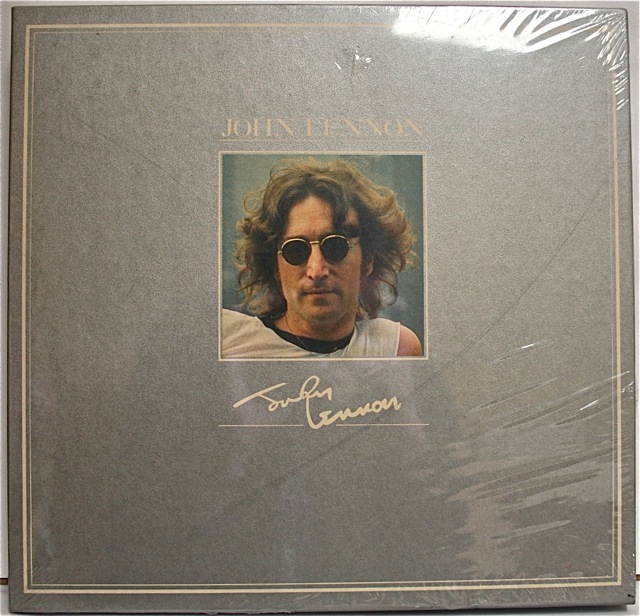
This week I managed to secure a still sealed copy of the 1981, 8-LP box set simply called “John Lennon”. Mine is the one in the silver box with the now famous Bob Gruen photo of John (taken in New York) on the front cover:

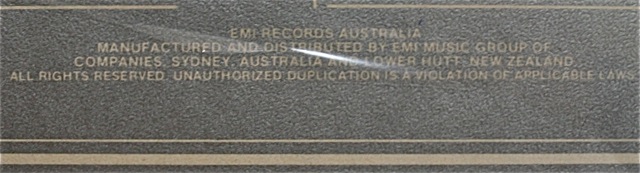
This is the Australian release of this set, put out by EMI.

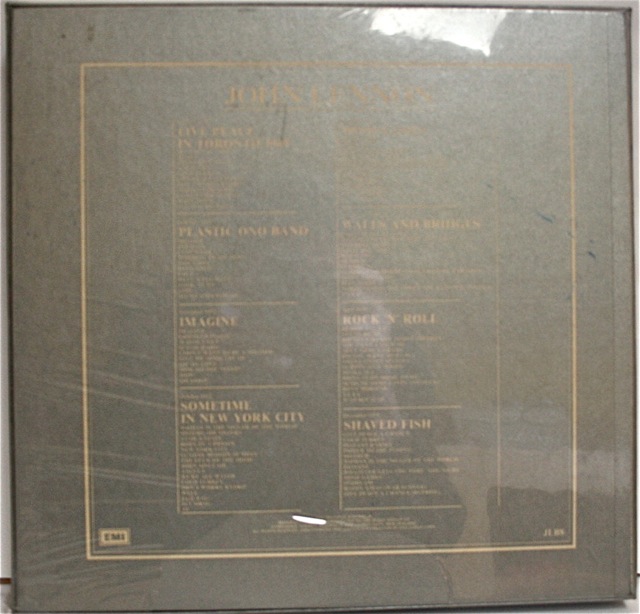
The box contains:

1. “Live Peace In Toronto”;  2. “Plastic Ono Band”;  3. “Imagine”; 4. “Sometime In New York City”;  5 . “Mind Games”;  6. “Walls And Bridges”;  7. “Rock ‘N’ Roll”;  and  8. “Shaved Fish”:

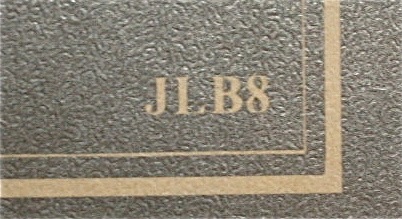
The set came out just a year after John Lennon’s death and followed the success of other Beatles box sets. It was released in several countries using very similar packaging. The set was first released in Britain, and was later sold in Japan, Germany, and of course Australia – with the catalogue number JLB8:

Mitch McGeary and William McCoy write (on their Beatles Rarities and Box Sets website) that all the LPs were issued on the Apple label and packaged in their original covers: “Included in the UK and other sets was a twenty-page, black-and-white booklet, “The Liverpool Echo’s Tribute To John Lennon,” which was loaded with pictures and song lyrics. The albums were encased in a silver box that had a color photo of John on the front. The set’s title and facsimile of John’s autograph were also embossed on the front of the box while the LP and song titles were printed on the back”.

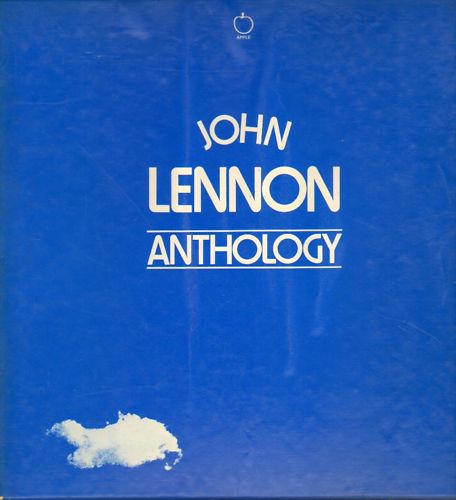
EMI in Italy also issued a Lennon compilation and it is unique. Its called the “John Lennon Anthology” and consisted of all the albums in the British/Australian edition, but omitted the “best of” album “Shaved Fish”. Instead the box had three singles made up of tracks not found on any of the other seven LPs. Unlike the silver box versions these discs came in a blue, pizza-style box reminiscent of the “Live Peace in Toronto” cover:

Apparently only 1,000 copies were made of this one, making it quite a collectable item.

Tittenhurst Park

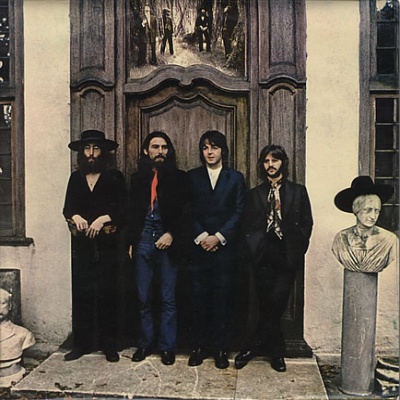
Stumbled upon an interesting article on the BBC website about John Lennon’s former home Tittenhurst Park near Ascot, Berkshire in England. It reminded me how much it has formed a part of the imagery surrounding record covers in my collection, and probably in yours. These albums, along with videos and publicity shots taken at Tittenhurst, have gone into the collective consciousness. Fans will know of this mansion house because although Lennon and Yoko Ono only lived there for around two years it featured in many a photo session, song video and documentary about John Lennon and the Beatles. There were in fact a huge number of photographs taken there – probably the most famous being the front and rear cover images for the Beatles best-of album known variously as The Beatles Again/Hey Jude (released in 1970 in the USA), and as Hey Jude (released in 1979 in the UK): This image, also taken at the house, was used for the rear cover: The next most famous images from Tittenhurst Park (which by the way is on London Road at a place called Sunningdale – one blogger has dedicated an entire blog to the house) came about when Lennon recorded his Imagine album there in 1971. When the song ‘Imagine’ was released as a single it was accompanied by this now legendary video which begins with John and Yoko walking through the fog-filled extensive grounds of Tittenhurst, and ends in an all-white main room inside the house:

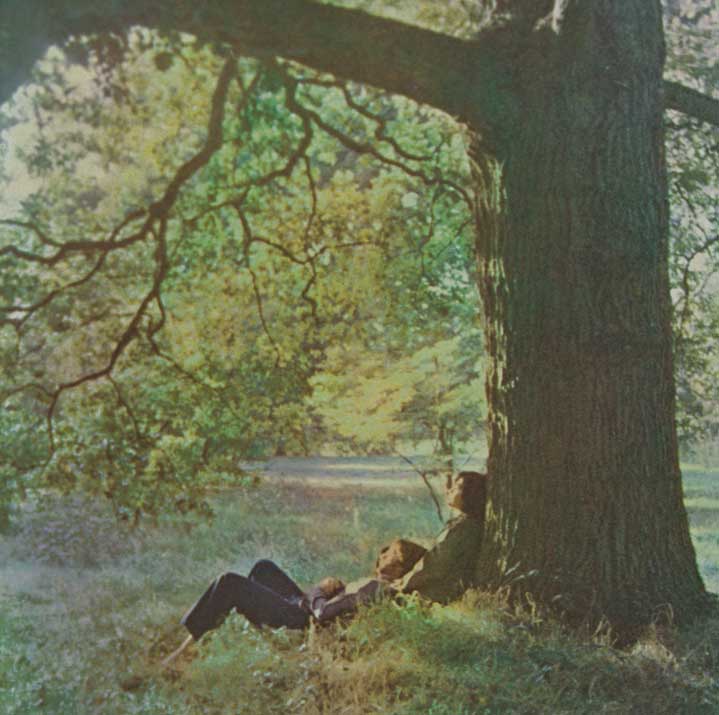
There’s also a fantastic scene from Gimme Some Truth, the documentary on the making of the Imagine album, where John talks to a young man who turns up at the house and invites him in for breakfast. And of course the cover photograph for Plastic Ono Band (1970) was also taken in the grounds of the manor – beside the man-made lake the Lennon’s had constructed on the property:

There’s a fairly comprehensive article about Tittenhurst Park in Wikipedia. John subsequently sold the property to Ringo Starr. Lennon biographer Philip Norman wrote:

“Ringo had…recently bought Tittenhurst Park, in the same obliging spirit that a Liverpool pal might take over some old banger of a car. John hated the thought that his rolling parklands and lake had gone forever, and drew comfort from Ringo’s promise that a bedroom would always be kept for him there.” (“John Lennon – The Life”. Harper Collins, 2008)

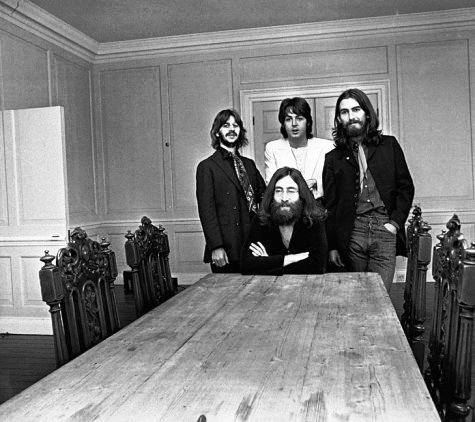
Sadly the events of 1980 meant that was no longer a requirement. The house and grounds were again sold in 1988 to present owner, Sheikh Zayed bin Sultan Al Nahyan, President of the United Arab Emitrates and ruler of Abu Dhabi. On Friday, August 22, 1969 the Beatles final photo session as a band was at Tittenhurst. The dream was over.

(See also “John Lennon’s Rolls Royce“, and the Kenwood site which goes into great detail about the house Lennon owned prior to purchasing Tittenhurst Park)

Budget Beatles

For many years now Apple Records have pursued a deliberate policy of maintaining the entire Beatles recorded catalogue as a premium product and brand.

Compact Discs (and vinyl LP’s in an earlier time) are very rarely discounted or put on “sale” with discounted prices. They always come with a high recommended retail price. The long-running fight with iTunes (which saw Beatle songs unavailable for download for years) only added to this perception in the marketplace giving the Beatles product an aura of exclusivity stretching right back through their entire back-catalogue.

However, that doesn’t mean that the Beatles music, both as a group and as individual artists, has never been re-packaged and offered at a discount prices over the years.

In the vinyl days this came in the form of a small number of selected albums being re-issued on the Music for Pleasure label in Britain and Europe, on the Fame label in Britain and Europe, and on the Axis label here in Australia. Many of these titles came with unique covers and labels, making them collectable items for fans.

The Music for Pleasure (or MFP) label was set up in Britain as a joint venture between EMI Records and the Paul Hamlyn group – which was better known as a book publisher. The result of the deal meant that these titles were largely sold in supermarkets and department stores rather than the traditional record shops of the day. As a result of the EMI connection most titles on the label came from the rich and extensive EMI back-catalogue of artists, both classical, jazz and popular.  The complete listing of all releases can be found here.

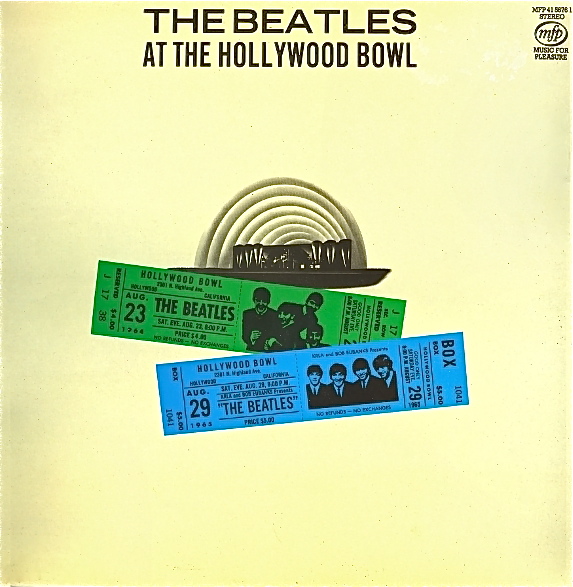
The first Beatles album to be re-released as an MFP title was “At the Hollywood Bowl” from 1977. The cover has a variation in the typeset and the way the title is displayed, and of course there’s that MFP logo in the top right-hand corner:
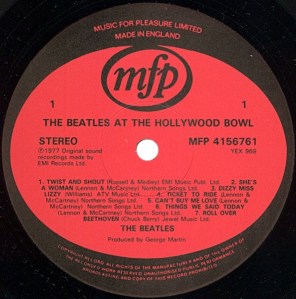
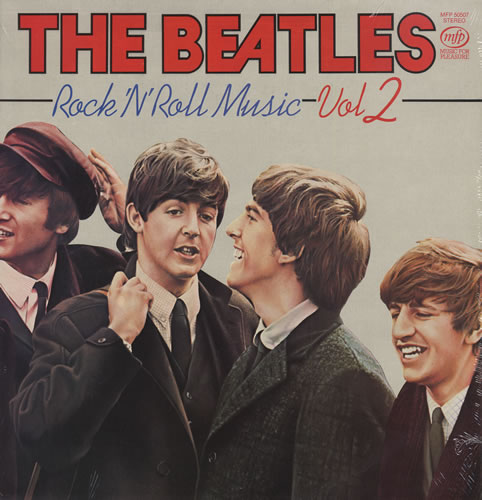
The Beatles album “Rock’n’Roll Music”, initially issued as a gatefold double album on the Parlophone (UK) and Capitol (US) in 1976 was re-issued on the MFP budget label in Britain in 1980 and instead of being a double LP, you could buy these as two separate discs, “Rock’n’Roll Music Vol. 1” and “Rock’n’Roll Music Vol. 2”:

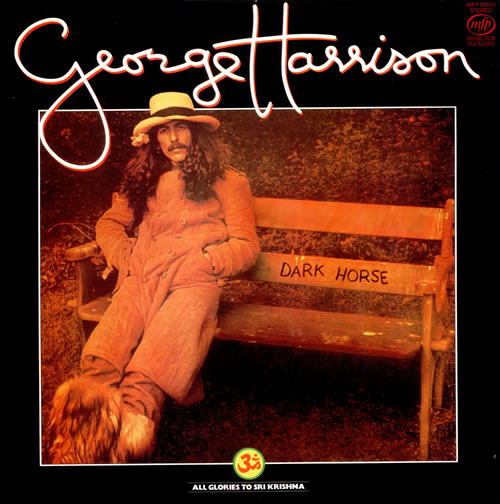
Also in 1980 came three re-issues of solo Beatles work. John Lennon’s “Mind Games” (originally released in 1973); George Harrison’s “Dark Horse” (originally from 1974); and Ringo Starr’s self-titled “Ringo” (also originally from 1973). Lennon’s “Mind Games” had a unique cover – a kind of mash up image from the original LP:

George’s “Dark Horse” got a unique treatment (using the image from the rear of the 1974 release), while Ringo’s LP front cover looked much the same, with the addition of his name in large letters across the top:
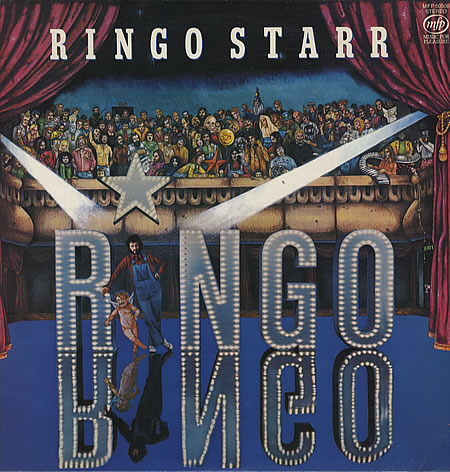
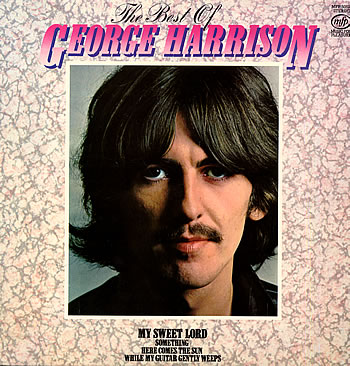
1981 saw an MFP re-issue of Lennon’s “Rock’n’Roll” album (with a slightly different cover to the original – the neon sign above his head was larger). Also in 1981 came Ringo’s compilation “Blast From Your Past”, and a second George Harrison MFP release “The Best of George Harrison” – with quite a different cover:

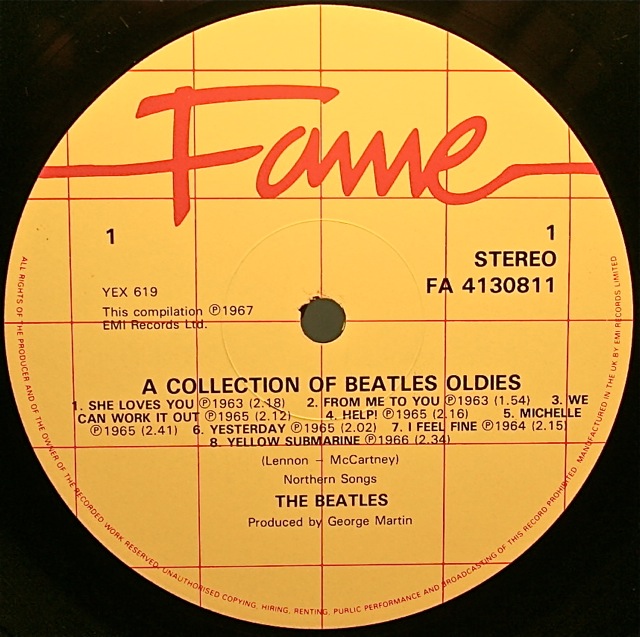
The budget Fame label (another EMI subsidiary which released both vinyl and CD’s as budget items between 1983 and 1994 in Britain and in Europe) issued just one actual Beatles title, the compilation “A Collection of Beatles Oldies”. This appeared on vinyl in 1983 and the front cover is distinguished only by a very small “Fame” logo written diagonally across the top right-hand corner of the LP. The rear cover is also the same as the original Parlophone one (but with  Fame logo at the bottom), and the LP came out with a Fame label:

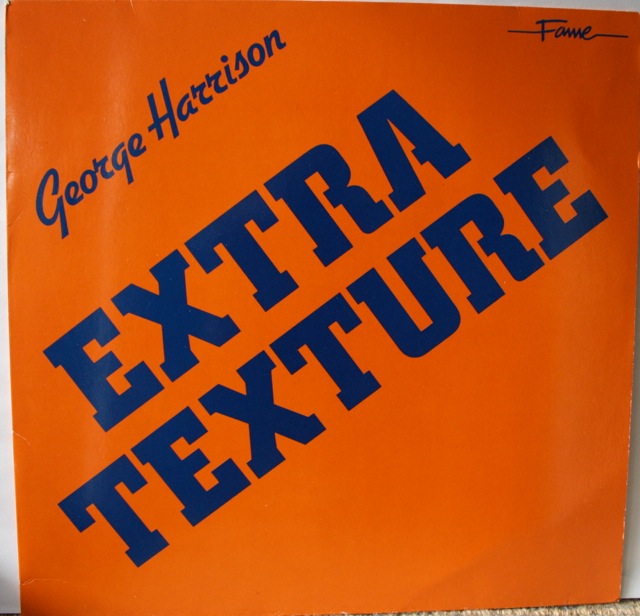
Fame also re-issued three Beatles solo works on vinyl: the John Lennon “Plastic Ono Band” (in 1984); Paul McCartney’s self-titled “McCartney”; and George Harrison’s “Extra Texture”. Each of these came out using the green Apple label on the record itself. Here’s the cover of a German Fame pressing of “Extra Texture”. Again, note the Fame logo on the top right-hand side:

In 1987 and 1988 Fame also released the Paul McCartney and Wings titles “Wildlife”, “Red Rose Speedway”, “Venus and Mars” and “London Town” – all these (as far as I can tell) were issued on CD only.

In Australia EMI’s budget label was called Axis Records and it followed along the same lines as MFP. Axis released a range of very similar Beatles and solo titles, although it had some interesting and unique cover variations – and of course a label variation. The Beatles “A Collection of Beatles Oldies” was joined on Axis Records by their “Rock’n’Roll Music” compilation – again made available in two separate volumes like the MFP release – but with a slightly different cover to the British releases:
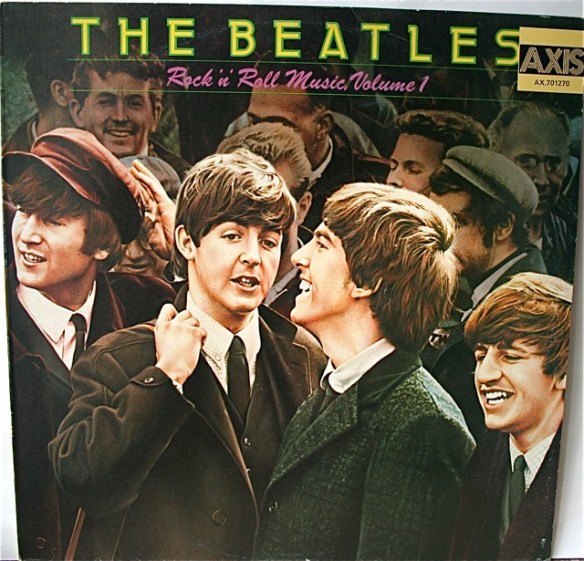
The Australian Axis “Rock’n’Roll Music” LP covers are pretty much the same as the budget Capitol US releases of these titles. There were a couple of Axis label variations for this title as well.

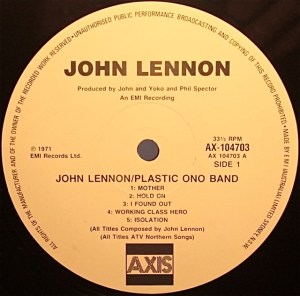
Axis also produced vinyl re-issues of Lennon’s “Plastic Ono Band”, “Mind Games” and “Rock’n’Roll” albums; Harrison’s “Dark Horse” and “The Best Of George Harrison”; McCartney and Wings “Wildlife”; and Ringo Starr’s “Ringo”. Note the Axis logo top right-hand side, and the title of the LP is printed as well on the top left:

The Axis “Best of George Harrison” got the same cover as the US Capitol records budget release. This cover image was also used by Parlophone/EMI for the official Australian LP, but is different to the UK’s Music For Pleasure re-issue, and different again from the CD release of the same title:

So, that’s a quick trawl through the collection for budget Beatles items. It’s not exhaustive, and if you’d like to add or comment please do by using the email beatlesblogger@gmail.com or by using the comment box below, or now by tweeting us onTwitter. We’re at beatleblogger.
John Lennon’s Rolls Royce

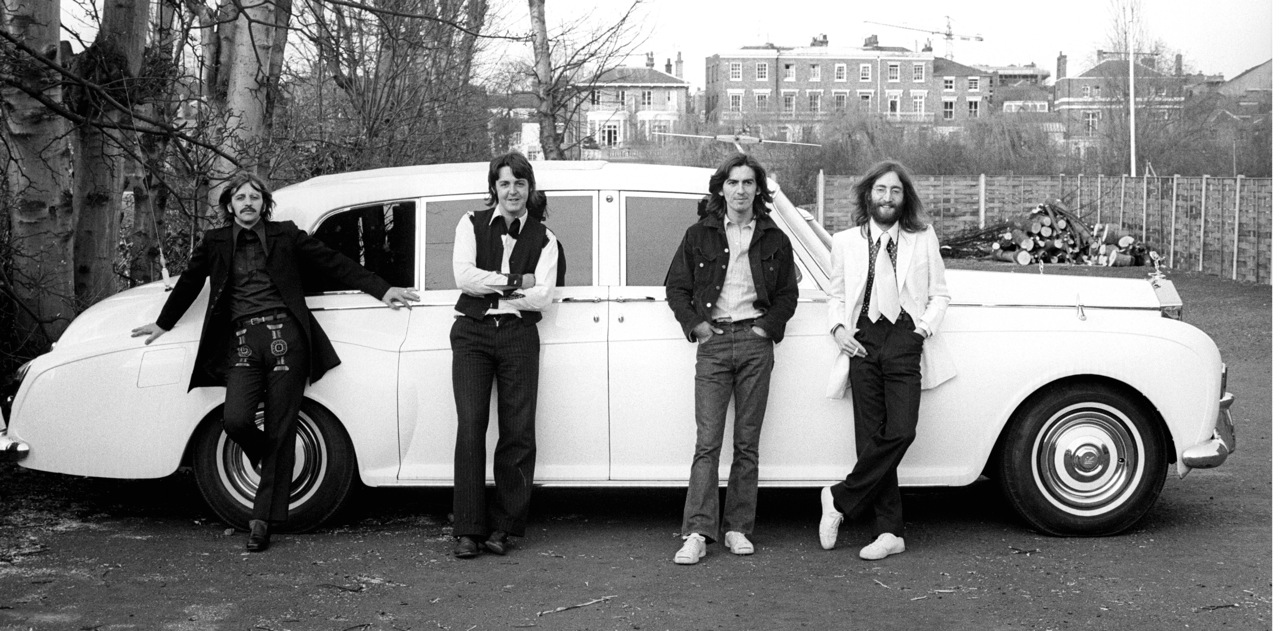
I use this great photo of the Beatles standing in front of an impressive all-white Phantom V Rolls Royce in my blog banner from time to time:

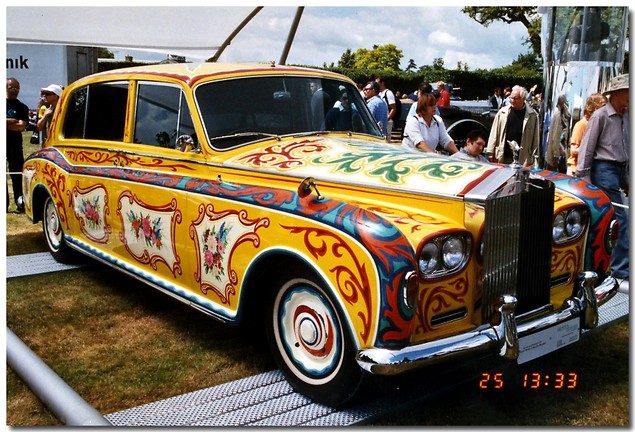
This 1969 photo reminded me of a similar car that John Lennon took ownership of in 1965 – and had substantially and dramatically re-painted:

Or if you prefer it in colour for the full effect:

Lennon’s psychedelic Roller wound up in 1993 as a display item at the Royal British Columbia Museum in, of all places, the city of Victoria, British Columbia in Canada. How did it get to be in Canada? You can read the full story here. It is still owned the Royal British Columbia Museum, but is now on display at the motor shop which takes care of it’s maintenance and servicing.

How do I know this? Well, when I posted on Paul McCartney and the portable Sony TV set which can be seen on the front cover of the famous “Sgt Pepper” album, it prompted some comments including one from the very knowledgeable   WogBlog, who said that the TV was actually owned by John Lennon. WogBlog’s post then got a comment from Jim Walters, who is a volunteer at the museum in Victoria, saying that he looks after maintenance on the Rolls. He says the restoration work is all done at Bristol Motors in British Columbia which now credits itself as “the home of John Lennon’s Rolls“.

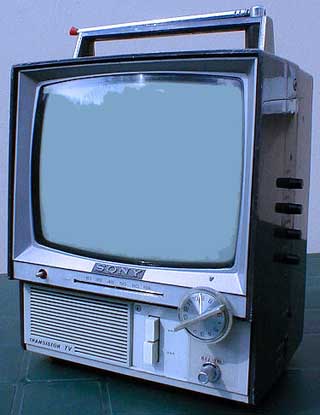
Anyway, the volunteers are looking for a replacement portable Sony TV. The original from the Rolls had gone missing (you can see it in the black and white YouTube clip above) – and it indeed looks just like a Sony TV9-306UB – the one on the “Sgt Pepper” cover:

Jim Walters is determined to find a replacement TV. He also posted on a Sony collectors page called Sony Insider saying of the little portable TV:

Paul McCartney bought two while they were on tour in Japan. One was used on the cover and I think the other was for John Lennon. I look after John Lennon’s yellow Rolls-Royce Phantom V for the owner, the Royal British Columbia Museum in Victoria, BC, Canada. This same model was installed in the rear seat console when JP Fallon Coachworks painted the car yellow and had artist Steve Weaver do the Romany style scrolls and flowers in 1967. The TV went missing from his car over 25 years ago. I am trying to find the same model of TV so I can donate it to the museum to fill the big hole in the console where it used to be. If you can think of anyone who may be able to help please forward this message to them.

This kind of fits with what I wrote about the TV on the cover of “Sgt Pepper”, that it was actually owned by Paul. It kind of makes sense because John’s TV of course would have been installed in the Rolls Royce at the time of the photo shoot. The article I was quoting from the Japan Times in my post said that the Okazaki City Mindscape Museum would be displaying the actual receipt for the purchase of the TV in an exhibition called “Swingin’ London” from January 2011. So, I decided to look and see if the Okazaki City Mindscape Museum in fact has that “Swingin’ London” exhibit on at the moment. And it does!

My Japanese is non-existent so I put some text from the site into Google Translate and it came back with:

“Famous Beatles record jacket ・ (・ サージェント・ペパーズ・ロンリー・ハーツ Club Band) that was captured on television unravel the mystery of the “bill signed by Paul McCartney (invoice).”

So I reckon we are still working out the mystery of the who owned the TV set. Seems it might have been Paul McCartney after all……

The Beatles – Then There Was Music

I got to go to a garage sale (or where you live they might call them “yard sales”) last Saturday morning.  I try whenever I can to have a brief look at garage sales because you just never know what people might have out for sale….and this time I was in luck.

There was only one Beatle item there, but it was a beauty:

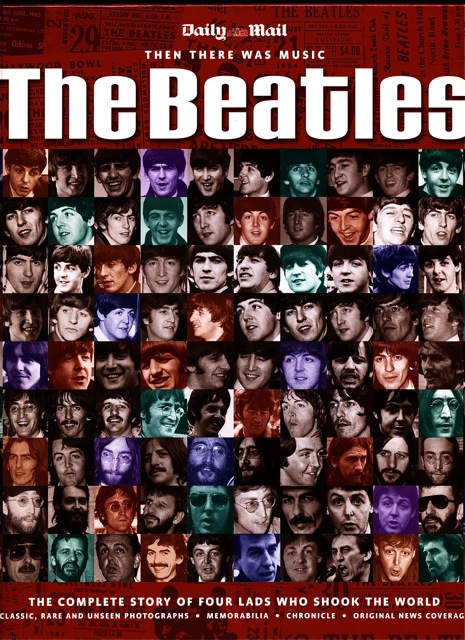
It was copy of a large and heavy book called “The Beatles – Then There Was Music”.  This book was published in Australia by New Holland Press in November, 2007.  It was first published in the UK by Transatlantic Press the same year.

“The Beatles  – Then There Was Music”  is written by Tim Hall and it’s illustrated with hundreds of  photographs from the archive of London’s Daily Mail newspaper. The cover also says: “The complete story of four lads who shook the world. Classic, rare and unseen photographs. Memorabilia. Chronicle. Original news coverage”.

I picked this up for just $5.00. And it is practically brand new. You can see at the publisher’s official Australian website that it actually retails for $49.95.

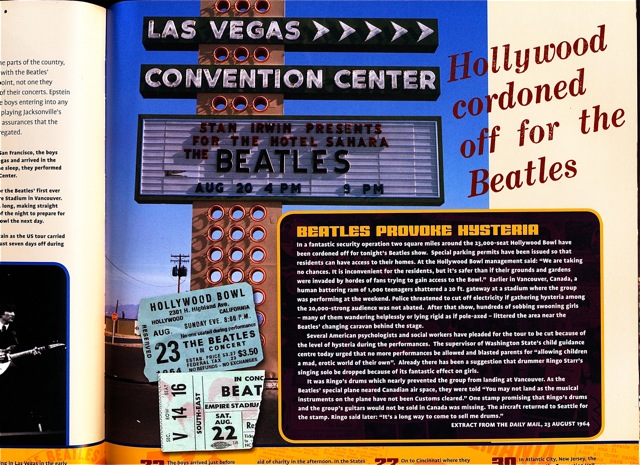
As I said, lots of interesting photographs, and at the bottom of every page is a timeline.  For example, in August, 1964 the Beatles North American tour started when they arrived in San Francisco and played the first of 25 dates with a show at the Cow Palace on Geneva Avenue. On August 20 they traveled to Las Vegas Nevada and played two shows at the Convention centre there:

From Vegas the band traveled to Washington state, and then on August 22 they appeared at the Empire Stadium in Vancouver. The next day they played the now famous Hollywood Bowl concert in Los Angeles. You can see the ticket stubs for both these concerts in the in picture above.

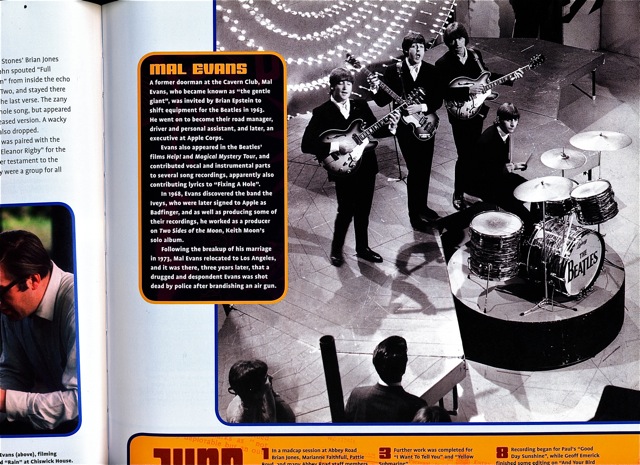
Scattered throughout the book there are also small vignettes of those who were a part of the Beatles inner circle – including one for long-time Beatles minder Mal Evans, who’d been with the band from the very earliest of days in Liverpool. You can see that entry for Mal below, along with a photo of the band rehearsing for a performance on the BBC’s “Top of the Pops” TV show:

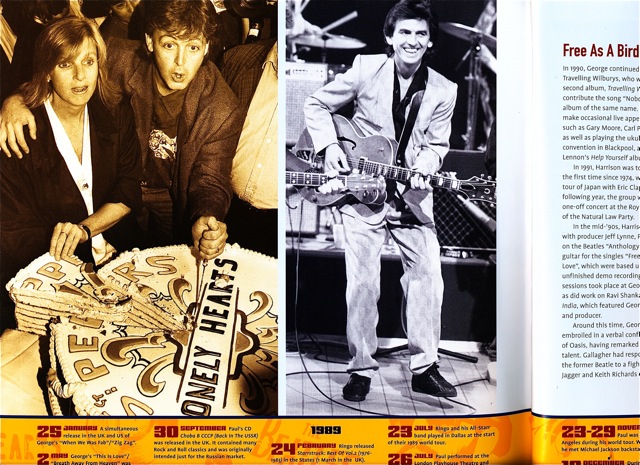
This book has lots of great newspaper photographs from the Daily Mail – including these two below.  Paul and Linda celebrating the 20th anniversary of “Sgt Pepper” with a big slice of cake, and George playing at a tribute concert to one of his rock’n’roll heroes, Carl Perkins:

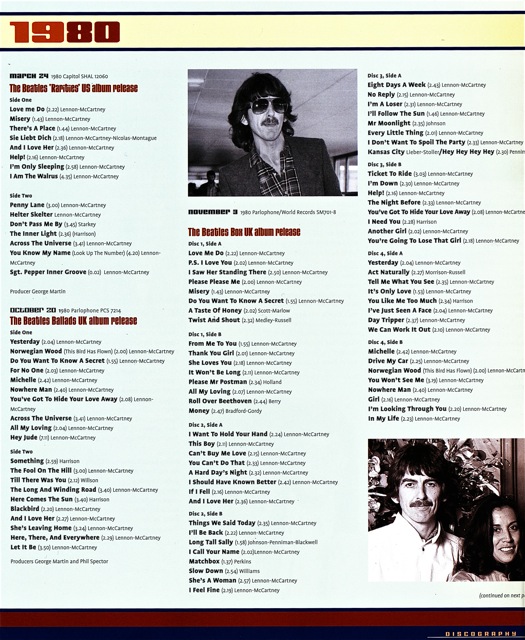
There’s also a complete discography (from 1962 up to 2006) beginning with January 5, 1962 and “My Bonnie” right through to the BeatlesLove” in 2006. Here’s the page for the year 1980 including entries for the “Rarities” album, “The Beatles Ballads” release, and the Beatles Box set (UK release):

So, thats it. “The Beatles – Then There Was Music”.  A collectors item discovered at a garage sale. I always say that one person’s trash is another person’s treasure. Let me know of any great second-hand Beatles finds you’ve made.

See also the recent post on another similar, but probably not as comprehensive book, simply called “The Beatles“.

“The Beatles” – An Interesting Book

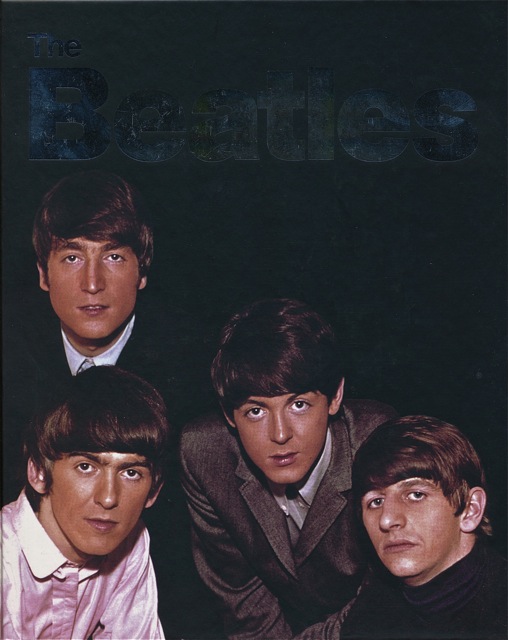
Another Beatles book has recently come into the collection. Again, it’s from a discount book store that is just near where I work. They specialise in selling remaindered stock at greatly reduced prices and I’ve picked up some interesting titles from there over the years. This one is simply called “The Beatles“:

There’s a great photo of the band on the front cover – it’s highly colourised but quite striking in its effect. The title words “The Beatles” are printed in silver and so don’t show up too well in this scanned image. Interestingly, nowhere on the front or rear covers, or even the spine, is there mention of the author. You have to go to the publishers details page inside where in the fine print it says “Written by Mike Evans”. I’m not sure why Mike doesn’t get a mention anywhere on the outside of the book. A quick Google search reveals Evans is actually quite prolific having written or edited, amongst many other titles, “The Beatles: Paperback Writer: 40 Years of Classic Writing“, “The Art of British Rock: 50 Years of Rock Posters, Flyers and Handbills“,  and “The Beatles: On Camera, Off Guard 1963 – 1969“, so the guy has form.

The Beatles” is chronological in nature and, over 21 chpaters and 224 pages  traces the evolution of the band from the early years through to the final chapter called “The Beatles’ Legacy” which brings the story up to 2009 and the release of the newly remastered CD sets – so I’d say it came out in late 2009, although again the book itself does not have a publication date on it. Strange.

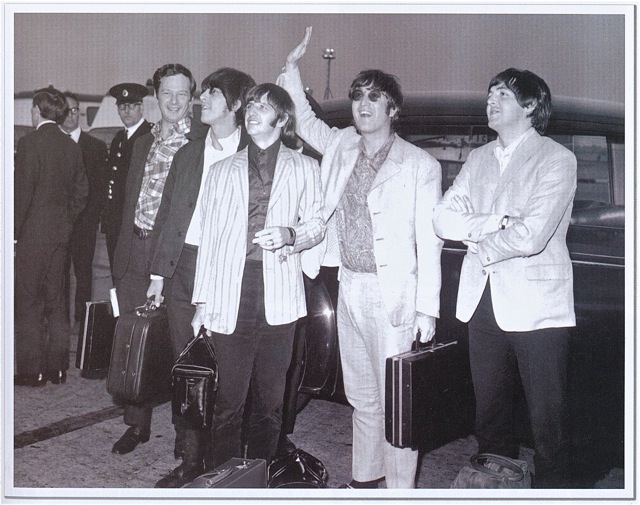
In a lot of ways its a pretty standard Beatles book – but a nicely produced one – one that has at least been done with some care. Its a hardback with lots and lots of photographs (some of them unusual and interesting), and quite detailed text covering each important Beatle release, from “Please Please Me” (1963) through to “Let It Be” (1970). Mike Evans deals with the tours as well – including the troubled 1966 tour to Japan and Philippines where the Beatles were lucky to escape with their lives. In this news photo in the book they, along with manager Brian Epstein, look pretty happy to be back in London in one piece, their smiles belying the danger they faced after a perceived offense to the President of the Philippines and his wife:

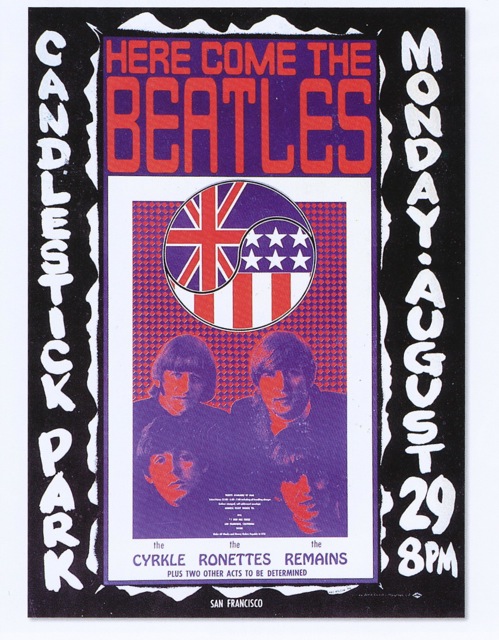
As well as terrific photos there are lots of other worthwhile visual additions scattered throughout, like colour reproductions of Beatles memorabilia like movie posters, concert tickets, Beatles stamps, and this US concert poster from August, 1966 for the concert at Candlestick Park, San Francisco:

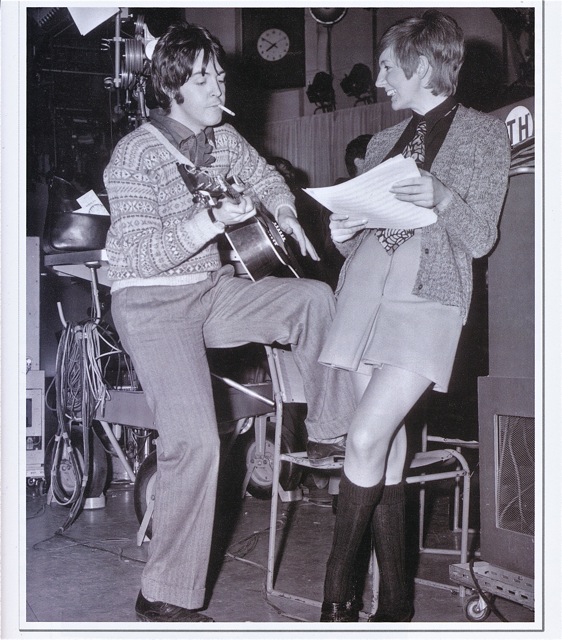
The photos inside are often unusual, like this one of Paul in the studio in January, 1968 with Cilla Black, taking her through the song he’d written for her called “Step Inside Love“. It became the theme for Black’s successful TV show of the same name:

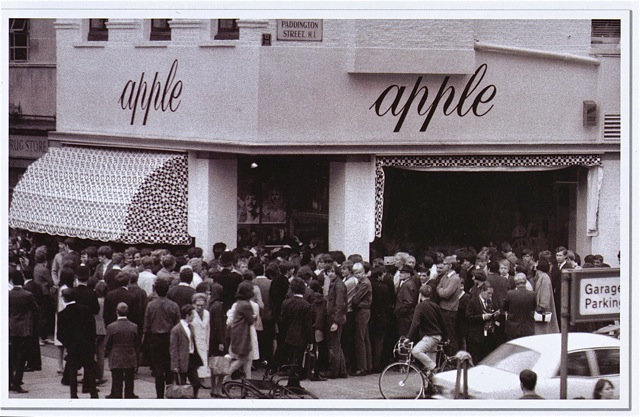
Author Mike Evans deals with both the up-side of the Beatles’ success, and the down-side, including the ill-fated Beatles foray into selling fashion. Described by Evans as “..the biggest disaster for Apple….The idea was to sell trendy items; Paul McCartney described it as “a beautiful place where beautiful people can buy beautiful things.” In reality, though, it was a clothes store, and became known as the “Apple Boutique”. By the middle of 1968, the shop had made a loss of nearly US$500,000/£250,000, a fortune in those days and on July 30 it closed.” In this photo crowds gather outside to grab a bargain and to witness the Apple Boutique’s last day of business:

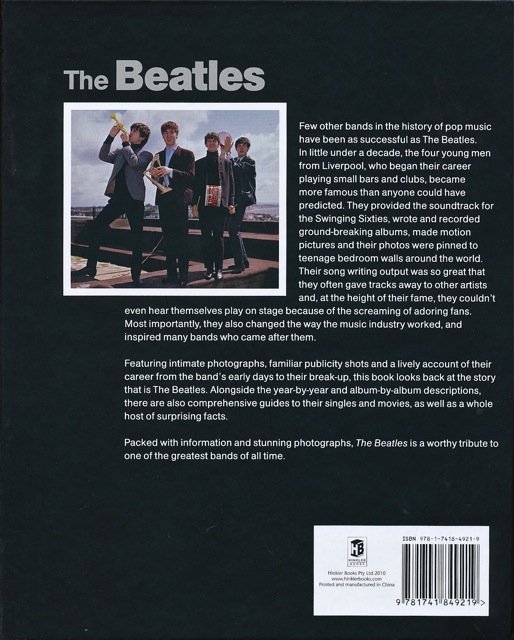
The Beatles” is published in Australia by Hinkler Books.

Beatles on CD – “1962-1966” – the Red Album

Last time I posted on getting a bargain on the HMV box set of “Sgt Pepper”. This comes from back in 1987 when the Beatles catalogue was released on Compact Disc for the very first time. EMI used their UK record store chain HMV to release all the titles in special, limited edition 12″ box sets.

The other set I was able to get at the same time was “The Beatles 1962-1966” (which was issued later – in 1993).

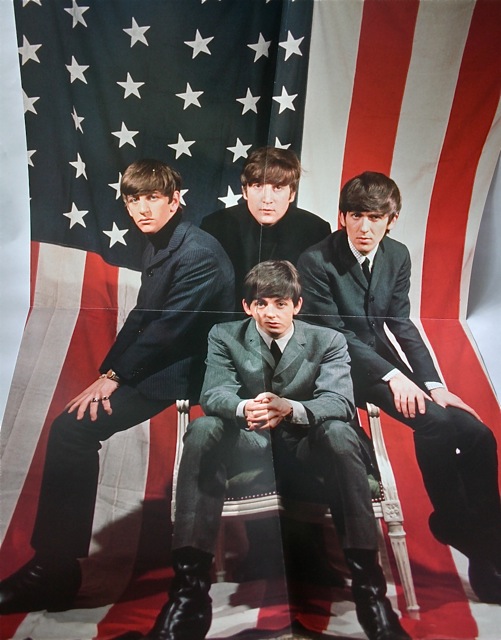
This is a limited edition box with the catalogue number BEACD25/11. It contains the well-known Red Album double CD set, and comes with a large-format 12-page colour booklet featuring song reviews, a 16″ x 24″ colour poster of the band (posed in front of a big US flag), and a special metal badge.

The front of the box looks like this:

Note the original price sticker still attached. When you take off the lid, this is what you see:

This is the 12-page booklet, and it is different to the small booklet which comes with the CD itself. It features some great photos, a short essay, and a song-by-song commentary by Andy Davis from Record Collector magazine:

Next in the box there’s a large poster:

Then comes the CD itself, held in place by a special cardboard holder with a slot just right for the CD and it’s outer cardboard sleeve. There’s a small thumb-slot at the bottom to help you get the CD out. This box, by the way, is thicker so that it can accommodate the jumbo-sized double “Red” CD :

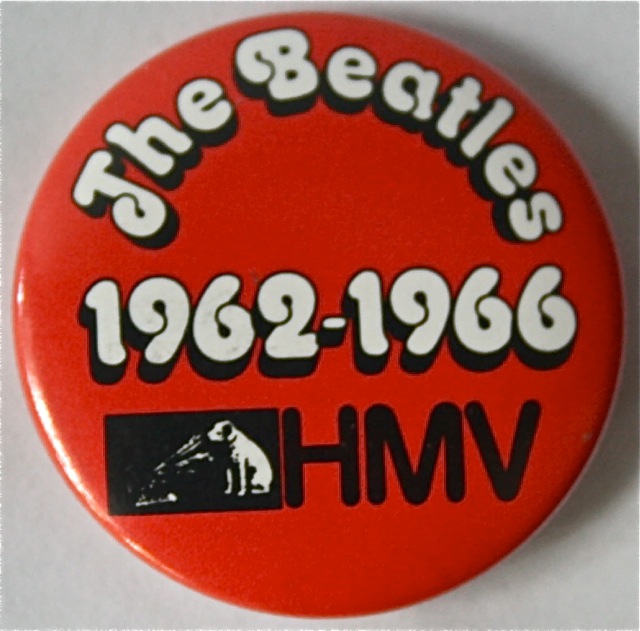
Also in the box is a small metal pin or badge:

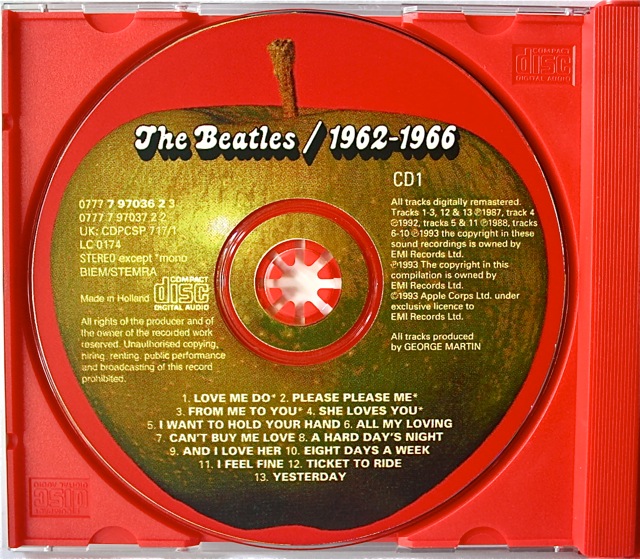
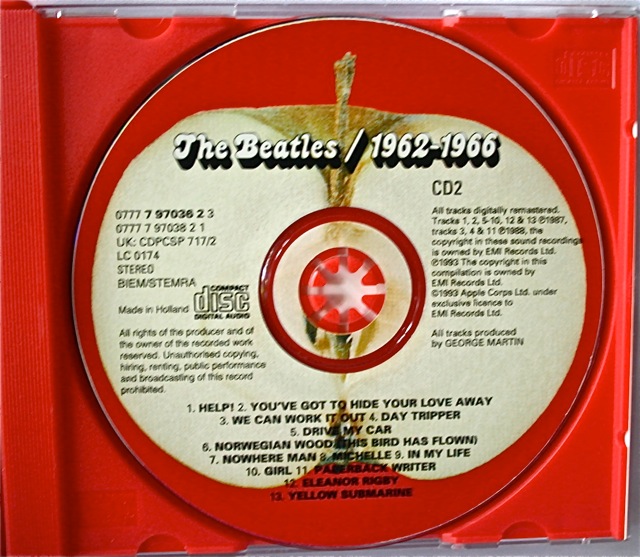
As already mentioned, the CD’s which come with this are in the red jumbo-sized double CD holder – which comes with a booklet:

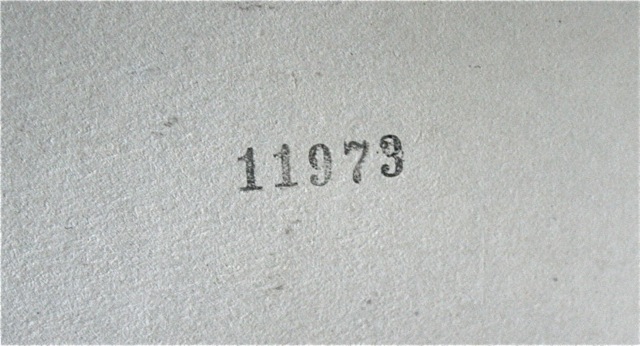
Inside the lid of the HMV box there’s a limited edition stamped number:

See also the “Sgt Pepper” HMV box set.


Beatles on CD – The “Sgt Pepper” Box Set

When the Beatles catalogue came out on Compact Disc for the first time back in 1987 it was a very big deal and the British record store chain HMV (which has close ties back to the Beatles record company EMI) released a series of limited edition 12” x 12″ box sets to mark the occasion. These boxes look just like those which contain 12″ LP’s so I guess there was a certain symbolism in releasing them in this way – the boxes containing CD’s indicating a move forward from the LP to the Compact Disc.

In all there were 12 individual box sets containing either individual or grouped CD’s, plus there was also a large (and expensive) HMV box housing every Beatle CD title then available.

You can see here all the “Beatles on CD” HMV Box Sets (minus “Abbey Road”) above. These (except for the 1962-1966 and 1967-1970 sets) all came out in 1987.

The box numbered BEACD25 contained “Please Please Me”, “With The Beatles”, “Hard Days Night” and “For Sale” on CD, plus a 224-page book ‘The Book Of Beatle Lists’, plus a Beatles fact sheet.

BEACD25/2 contained “Help”, “Rubber Soul” and “Revolver”, plus a reprint of Beatles Monthly No. 12 and a Beatles fact sheet.

“Sgt Peppers Lonely Hearts Club Band” (BEACD25/3) had the album with a slipcase, an 8-page ‘behind the scenes’ booklet, the 12″ cut-outs sheet and  a badge.

The “White Album” (BEACD25/4) featured an individually numbered double CD album, a 12-page glossy booklet and a badge.

BEACD25/5 was “Yellow Submarine” and came with an insert, a cut-out ‘Yellow Submarine’ model, and a fact-sheet, while “Magical Mystery Tour” (BEACD25/6) had a 12-page booklet, a large fold out colour poster and badge.

“Abbey Road”  (BEACD25/7) comprised the 17-track CD album, two different posters, a badge and an 8-page booklet.

The “Let It Be” HMV box has a 12-page booklet and badge, and has the catalogue number BEACD25/8.

The “Past Masters Vol.1” and “Vol. 2” came in separate boxes – each with a badge and a 12-page booklet with pictures and track-by-track details. These were numbered BEACD25/9 and BEACD25/10.

Finally, when they were released in 1993 the “Beatles 1962-1966” Red Album and the “Beatles 1967-1970″ Blue Album also came in separate boxes containing the double CD sets, a 12-page colour booklet featuring song reviews, a 16″ x 24” colour poster and a badge. These were numbered BEACD25/11 and BEACD25/12 respectively.

I got a bargain the other day – I was able to get the “Sgt Pepper” HMV box and the “Beatles 1962 – 1966” – both practically mint copies. I’ll give you a close up look at the “Sgt Pepper” box set here, and post on the “62-66” red box next time.

You can see the front of the box above – and it features a different photograph from the one used on the CD. When you take the lid off this is what you first see:

This is an 8-page booklet with lots of photographs taken at the photo shoot for the famous cover of “Sgt Pepper”. There’s also some text about each song. Here are couple of pages from the booklet:

Underneath that there’s the same “Sgt Pepper” cardboard cut-out sheet which came with the original copies of the LP version:

Then comes the CD itself, held in place by a special cardboard holder with a slot just right for the CD and it’s outer cardboard sleeve. There’s a small thumb-slot at the bottom to help you get the CD out:

Also in the box is a small metal pin or badge:

The CD that comes with this is the original release with the cardboard sleeve, booklet with additional info, and an insert that has details of all the faces used in the famous Peter Blake photograph of the band standing with all their heroes:

Inside the lid of the HMV box there’s a limited edition stamped number:

Next post we’ll take a look at the “Beatles 1962-1966” HMV Limited Edition box set.

The Lost Lennon Tapes – Rolling Stone Magazine

We’re a bit slow down here so pardon if you’ve got this info already – but the latest (February) Australian edition of Rolling Stone magazine has just hit news stands.

Don’t know if they waited  intentionally to release this into the Christmas/New Year holiday market here, or there was something more pressing to put on the front cover Down Under a few weeks ago. This content was seen in the US back in early December . It was timed to coincide with the anniversary of John Lennon’s death. Here’s the Australian cover:

As you can see, the feature article is the final print interview with Lennon, conducted by journalist and writer Jonathon Cott:

On December 5, 1980, three days before he was murdered, John Lennon sat down with Rolling Stone‘s Jonathan Cott for a nine-hour interview. Select excerpts from the interview ran in Rolling Stone‘s tribute to John Lennon the following month — but Cott never transcribed all of the tapes. For 30 years they sat in the back of his closet.

So, much of this content is seeing the light of day for the very first time, accompanied by some terrific photographs by Annie Leibovitz, Rolling Stone magazine chief photographer at the time. One of the most interesting, spread over two pages, is the Lennon’s at home in their Dakota apartment kitchen:

Its a great photo – one I’d not seen before and so homely and domestic. Clearly many of the photographs by Annie Leibovitz from this day’s shoot at the Dakota  have now been seen in many iterations, including the LP and CD cover for “The John Lennon Collection”, a best-of released in 1989:

The Rolling Stone “Last Interview” is accompanied by a lengthy piece called “John’s Last Days” written by Yoko Ono in London. It’s dated October 18th, 2010, and in it she says that one day during the recording of “Double Fantasy” they had some time to spare, and had some retail therapy:

“After being in the dark studio for ages, the outside made us squint. It was like spring! A beautiful, beautiful day. The sky was shining blue. We felt like two kids skipping class. John decided we would go into Saks Fifth Avenue. He went through a few counters and stopped at the glasses: “We should get one for you.” He picked a pair out – large black wraparound shades – and put them on me….”You should wear these all the time.” I thought that was silly and wanted to laugh, but stopped short. He was gazing. “Why?” I asked with my eyes. He just took my hand and we walked quickly toward the exit. It was time to get back to the studio. I immediately forgot the incident totally. Later, those were the glasses I used to face the world.”

I’m guessing that these are those same glasses – by Porsche Design – which Yoko was seen wearing in public frequently in the years after John’s murder. This is a cover from a 1981 edition of Rolling Stone. If you look closely you can see that she is also  wearing the same necklace that John is wearing in the “The John Lennon Collection” CD cover shot:

Rolling Stone have uploaded four audio extracts from the Jonathan Cott “Last Interview” here, and you can download an 18 minute podcast here. Also in this latest edition of the magazine Yoko Ono lists her ten best John Lennon songs.

John Lennon – Double Fantasy (Stripped Down)

At long last my copy of the John Lennon and Yoko Ono “Double Fantasy – Stripped Down” two CD set has arrived.

I know, it was released way back in October as part of the Lennon 70th birth-date celebrations, along with the big LennonSignature” box set, the “Gimme Some Truth” 4 CD box set, and the two versions of the “best of” John Lennon compilations called “Power to the People – The Hits”.

The lengthy delay for me in getting “Double Fantasy – Stripped Down” was caused by a bad Ebayer who disappeared off the face of the earth after taking my (and many other peoples) money. After waiting weeks the item just didn’t turn up, and he didn’t reply to emails. Fortunately I’d paid  using PayPal and after lodging a refund claim with them I got my money back. I must say here that it was all very efficiently done by PayPal – so I’d recommend using them as a way to pay for anything you order on Ebay as it comes with this sort of buyer protection.

After quite a few weeks that dispute was solved and I placed another Ebay order – this time with a store in the US. I particularly wanted a US copy of “Stripped Down” to go with all the US versions of Lennon’s other titles contained in the “Signature” box set. They sent it surface mail or something and it also took a while to get here – but this time at least it has finally arrived.

You’ve probably gathered by now that I’m quite interested in the packaging, small print text, and the images used for the covers of LPs and CDs. (If you are too, you might like a page called “Sleevage” that specialises in album music, art and design of all types).

Clearly, this late in the day, this CD cover isn’t new to you. Its been out since October and everyone has come to terms with the fact that both the front and rear covers are cleverly based on sketches of the original LP’s black-and-white shots of John and Yoko taken back in 1980. I think its a nice touch that they asked Sean Lennon to do this. Yoko says in the booklet liner notes (quote):

“And thank you Sean, after many days of hesitation, you finally did the drawings for the front and back covers…for your dad and your mom. All sorts of memory of that time came back to you, you said.. I know how hard it must have been. This is a thank you from me and your dad.”

One other piece of information that caught my attention reading the small print in the cover notes was that two of the photographs used on the inside panels of the cover are actually significant. This shot of John and Yoko leaving the Dakota building was taken on their  way to the Hit Factory studios in New York on August 4, 1980, for the first day of recording for what would become the “Double Fantasy” album:

From inside the gatefold cover: John and Yoko leave the Dakota for the studio and the very first day of recording "Double Fantasy" - August 4, 1980

And this photo on another panel of the gatefold for “Stripped Down” was taken on 44th Street, New York on December 6, 1980 – the last day of recording:

Another image from the packaging: John and Yoko on 44th Street on the very last day of recording "Double Fantasy"

Its not the first time that photo of the pair leaving the Dakota Building has been used. It appeared as the picture sleeve for the US release of one of the three singles taken from the original “Double Fantasy” LP – the song called “Watching the Wheels”:

The same Dakota photograph was used for the vinyl single "Watching the Wheels", released on 27 March, 1981

Interestingly, when you purchase the LennonSignature Box“, which reissues all his original solo albums, you get “Double Fantasy” remastered in its original form – a single disc with the 1980 cover art and without the “Stripped Down”  version as an additional CD:

In the booklet for this edition of “Double Fantasy” you get a different short essay by Paul Du Noyer, but it has all the same photographs as those used in the booklet for the “Stripped Down” booklet.

Also, I’m not sure that you can purchase this single disc 2010 remastered version of “Double Fantasy” as a stand-alone item. I had a quick look around on the web and couldn’t find it for sale anywhere and so I think it may only be available by getting the “Signature” box. If anyone has any info on that one please let us know.