
A Very Happy Christmas From Us to You
1
We weren’t even aware of this until alerted yesterday by Instagram poster @applerecordspictures…..
Billy Preston, currently wowing viewers for his keyboard prowess in The Beatles: Get Back documentary on Disney+, recently had his 1970 Apple Records LP Encouraging Words re-issued on vinyl by the label.

It was released in October as a way to celebrate Preston’s induction for Musical Excellence into the Rock & Roll Hall of Fame and will only be available for a limited period.

First issued in the UK on September 11 1970, the album was co-produced by Billy and George Harrison. Encouraging Words contains covers of two of George’s songs – ‘All Things Must Pass’ and ‘My Sweet Lord’ where they appeared for the very first time, two months before George’s own recordings of those tracks appeared on his album All Things Must Pass. The LP also contains a cover of the Lennon/McCartney track ‘I’ve Got A Feeling’, from The Beatle’s Let It Be LP.

So, while it is timely of Apple to mark his Rock & Roll Hall of Fame induction, this reissue of Billy’s album is also a great tie-in with the release of Peter Jackson’s The Beatles: Get Back film too.


I wonder if we’ll be seeing any other Apple Records artists getting vinyl reissues?
These are the ages of all the key players in Peter Jackson’s Get Back documentary, set in January, 1969:
Paul McCartney – 26, John Lennon – 28, Ringo Starr – 28, George Harrison – 25.
Producer/Engineer Glyn Johns is 26, Director Michael Lindsay-Hogg – 28, and Producer George Martin – 43.
Yoko Ono is 35, Linda Eastman – 27. Her daughter Heather is 6.
Roadie Mal Evans is 33, Keyboard Player Billy Preston – 22, Photographer Ethan Russell – 23, and Tape Operator Alan Parsons – 20 (wouldn’t be 21 until December).
It is a fascinating glimpse into the world of The Beatles at that time. Catch it on Disney+ if you can.
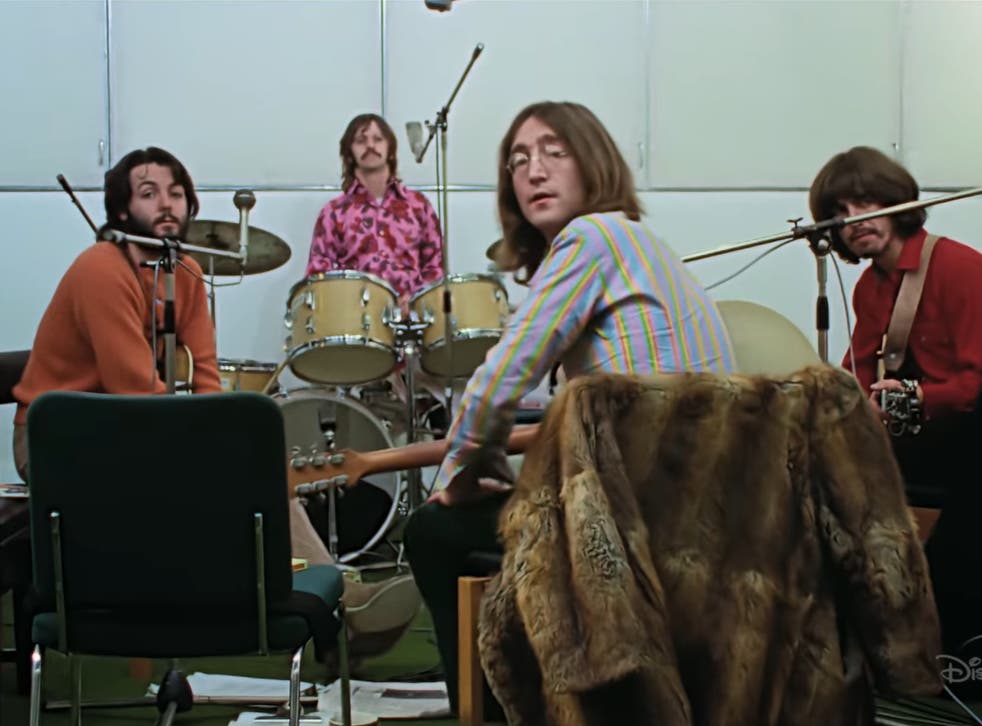
50 years ago, on December 7, Wings released their debut album Wild Life – recorded over an eight-day period at Abbey Road Studios in London.
Now it joins McCartney and RAM in getting the Limited Edition, 50th Anniversary Half Speed Master treatment:

Paul and Linda McCartney, Denny Seiwell and Denny Laine arrived at the studios on 25 July, 1971 to begin recording with engineers Tony Clark and Alan Parsons.
“They rehearsed for a while, sang some old songs, wrote some new ones and in time headed for the big city studios. In three days they had laid down most of the tracks and by the end of a couple of weeks the album was finished. In this wrapper is the music they made. Can you dig it?”, wrote Clint Harrigan for the original album’s back cover liner notes.
On PaulMcCartney.com Paul wrote: “Wild Life was about spontaneity: the opening track ‘Mumbo’ was recorded in one take. I’d read that Bob Dylan had just made a quick album and I really liked the idea, because we tended to take longer and longer to make records. The early albums by The Beatles hadn’t taken long and it seemed to me that Dylan was getting to that. I was a great admirer of his – and still am to this day – so I thought, well, if it’s good enough for him, let’s do it.”
The 50th anniversary edition of Wild Life is cut at half speed at Abbey Road using a high resolution transfer of the original 1971 master tapes. The Half Speed 50th will be released on February 4. It is available for pre-order now.
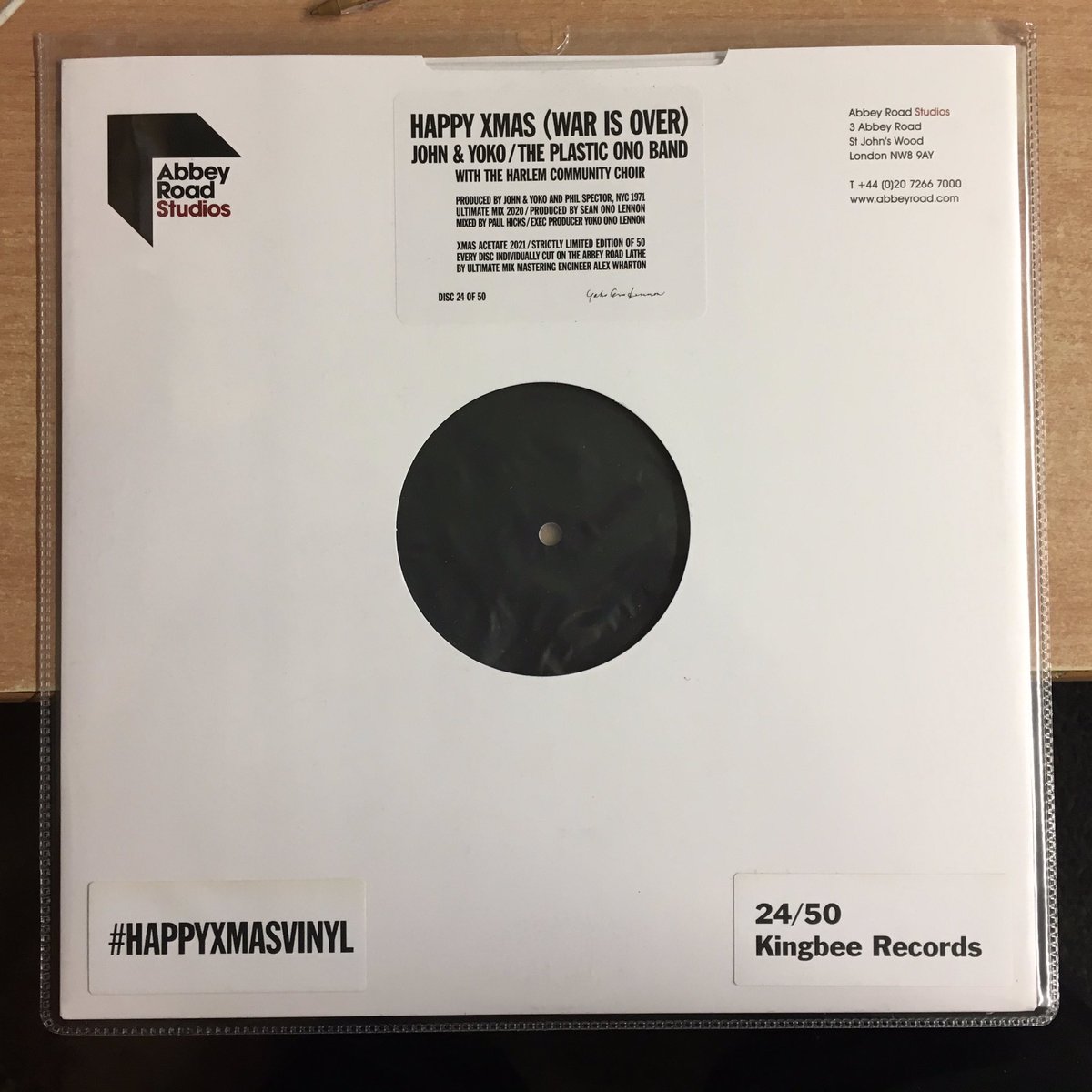
In the lead up to Christmas what a fantastic idea from the John Lennon Estate to mark the 50th anniversary of the release of the Plastic Ono Band song, ‘Happy Xmas (War Is Over)’.
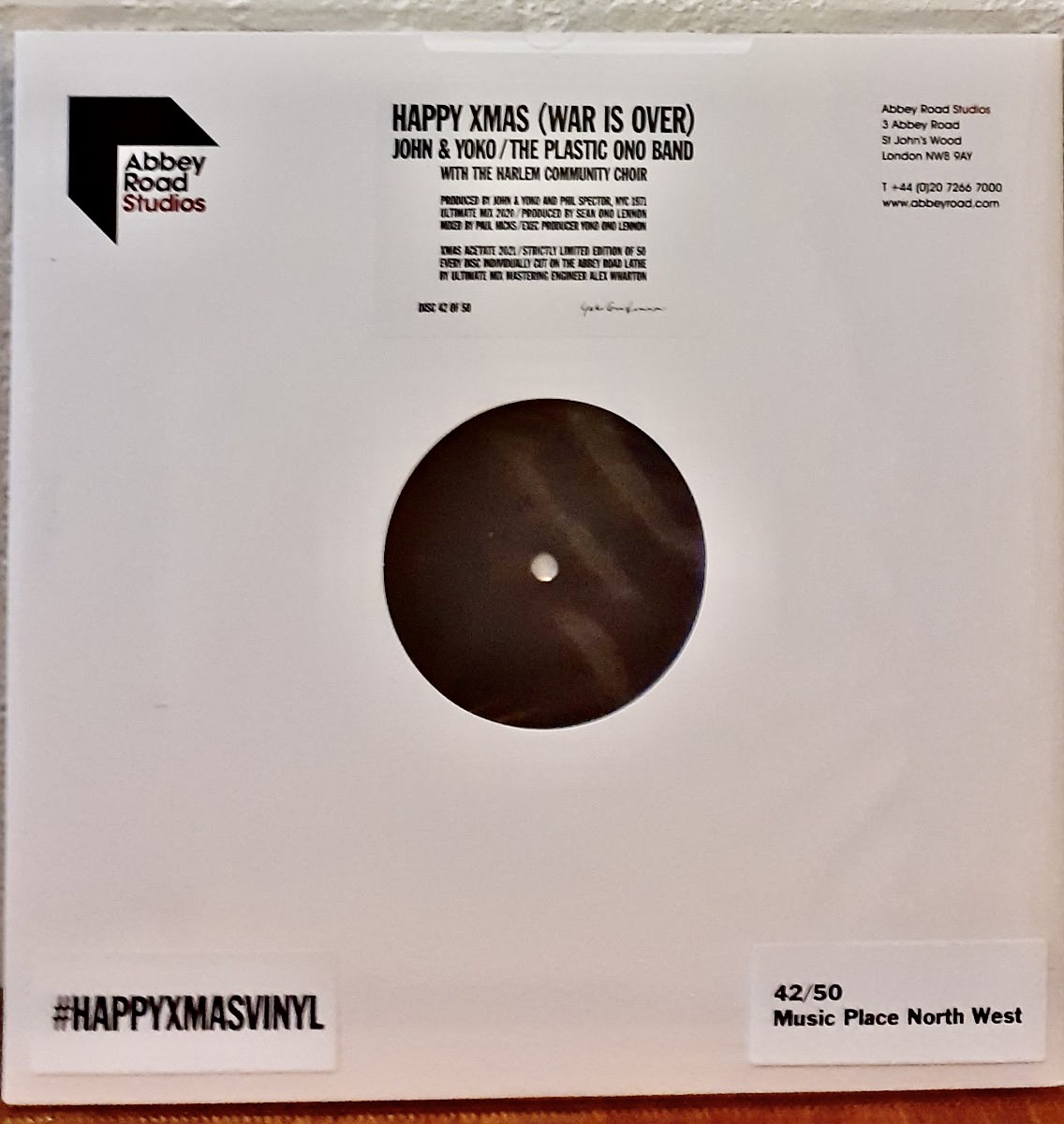
They have sent selected record stores and charities across the UK a very, very limited edition 12″ single of the song in the form of an acetate, each individually cut at Abbey Road Studios.
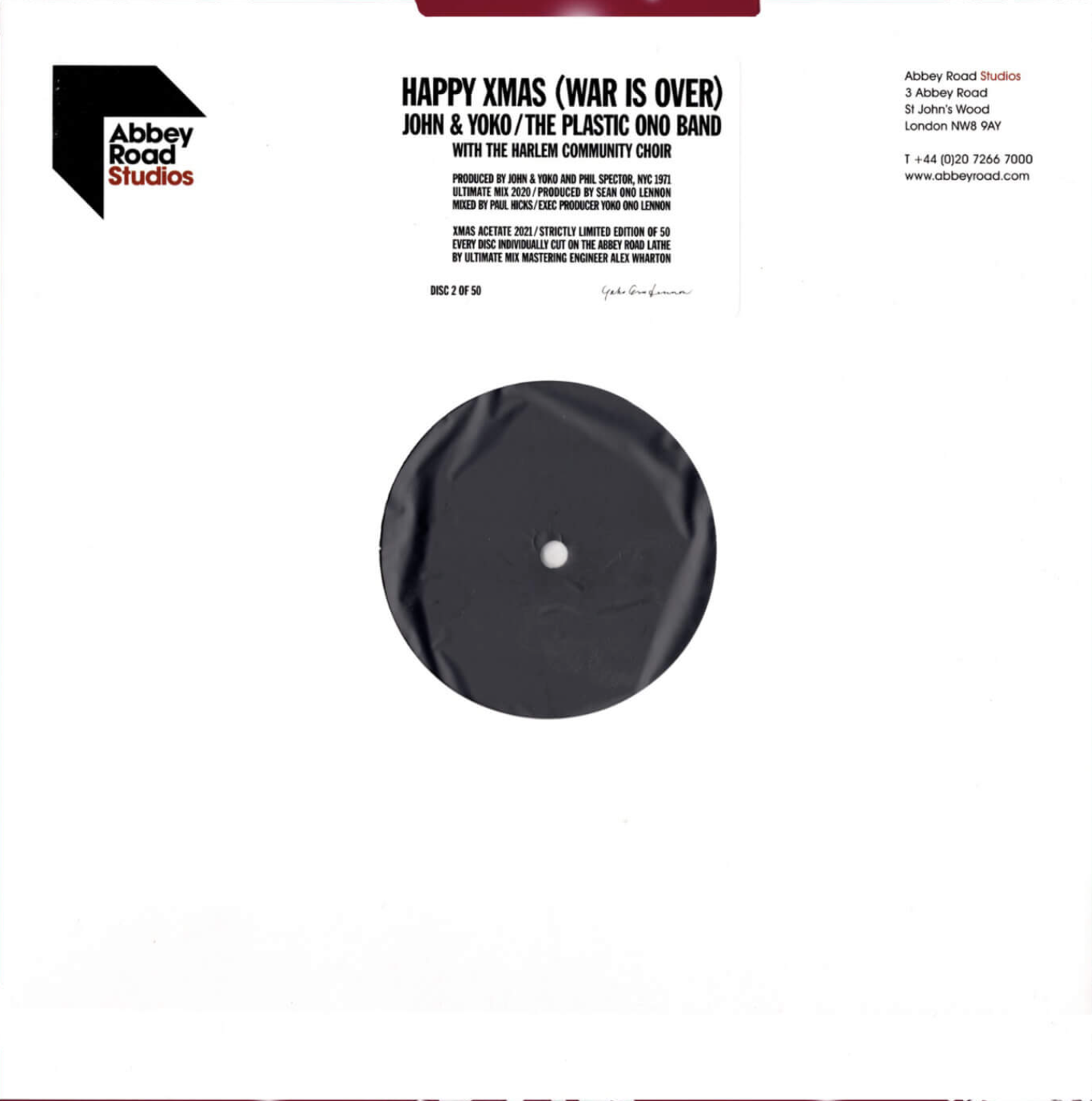
Only 50 of these have been produced – so they are instant rarities and valuable collectors items. The outer sleeve is stamped with the signature of Yoko Ono, and each recipient received a letter signed by Sean Ono Lennon outlining the Estate’s request that they use the disc (in which ever way they please) to help raise much needed funds for charity. Brilliant!
The entire idea is fully outlined on the John Lennon official site.

That got us curious to see how many of the 50 individually numbered acetates we could track down in the wild. We’ve pulled together these images of the discs – and sometimes their new owners who are charged with on-selling them for charity. Each recipient is doing this in their own way – so check out their details for how you could possibly secure one of these 50 rare acetates for yourself. You’ll be helping a good cause along the way!
03/50 Assai Records – Dundee, Scotland. They have decided to run an auction with bids lodged via email. Details here.


07/50 Five Rise Records – Bingley in Yorkshire. They’ve chosen the eBay option to raise funds for charity. See their eBay auction here.

10/50 Jacaranda Records – Liverpool. They have taken the online raffle route.

11/50 Kelly’s Records – Cardiff, Wales:

12/50 Monorail Music – Glasgow, Scotland: They are holding an eBay auction.

13/50 The Musical Box Records – Liverpool:


15/50 Probe Records – Liverpool:

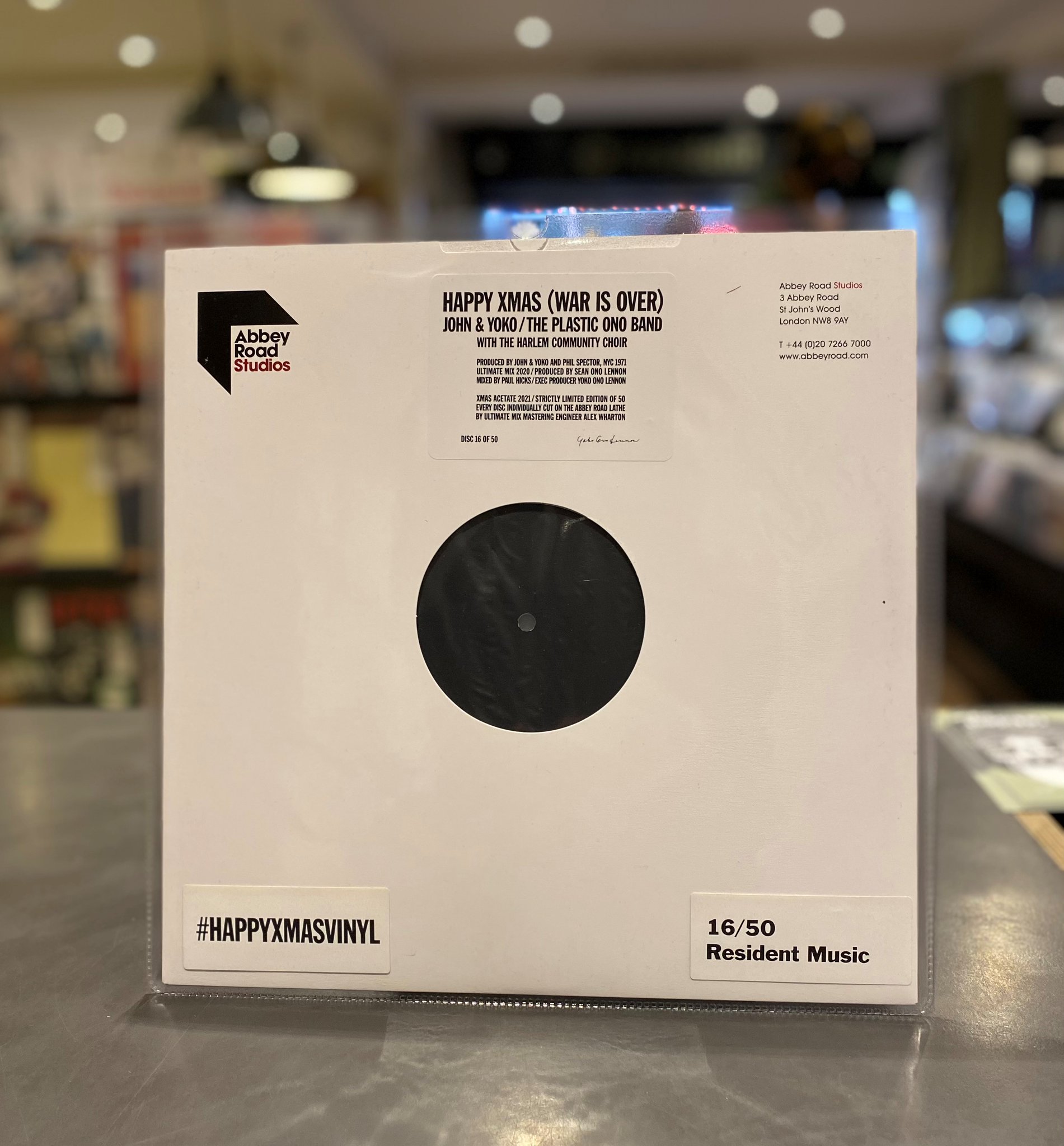
16/50 Resident Music – in Brighton, UK. They’re running a raffle where every purchase at their store gets an entry. Money raised goes to the Gig Buddies charity.
18/50 RPM Music – Newcastle upon Tyne:

20/50 Skeleton Records – Liverpool. They’re auctioning their acetate on Boxing Day. Watch this space for more details.


21/50 Spillers Records – Cardiff, Wales. Spillers have given their record to Oasis, a charity doing good work with refugees and asylum seekers in Cardiff. They in turn are holding a raffle by donation. i.e. you make a donation and go in the draw to win! Details here.

22/50 Spinning Discs – Sheffield:
24/50 Kingbee Records – Manchester:
25/50 Vinyl Revival – Manchester:

26/50 The Vinyl Whistle – Headingly – Leeds (These guys have decided to sell raffle tickets. At £2 quid each you can buy as many as you like and go in the draw to win!):

27/50 Wax and Beans Records – Bury (near Manchester):

29/50 Attitude is Everything – a UK charity based in London working on giving deaf and disabled people better access to live music.
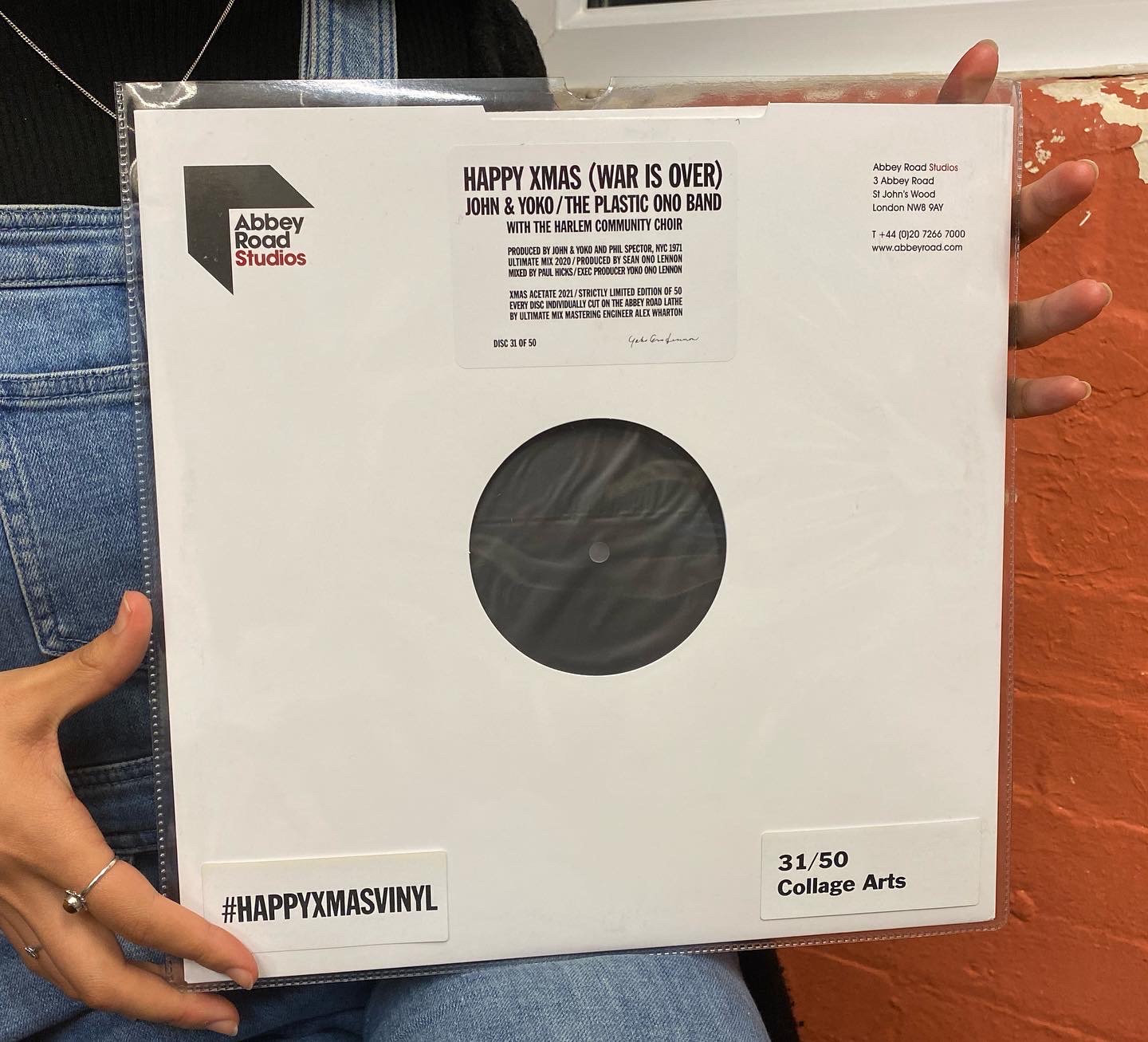
31/50 Collage Arts is in London. It works in the community and offers artist studios, creative enterprise training, young people’s arts programmes, live music and events. They joined in a group of seven other recipient charities and used Crowdfunder to raise £13,720!
32/50 went to Earth Percent, a charity set up in part by Brian Eno to raise awareness of climate change. Watch their Twitter account for plans on how they’ll use the gift to raise funds.

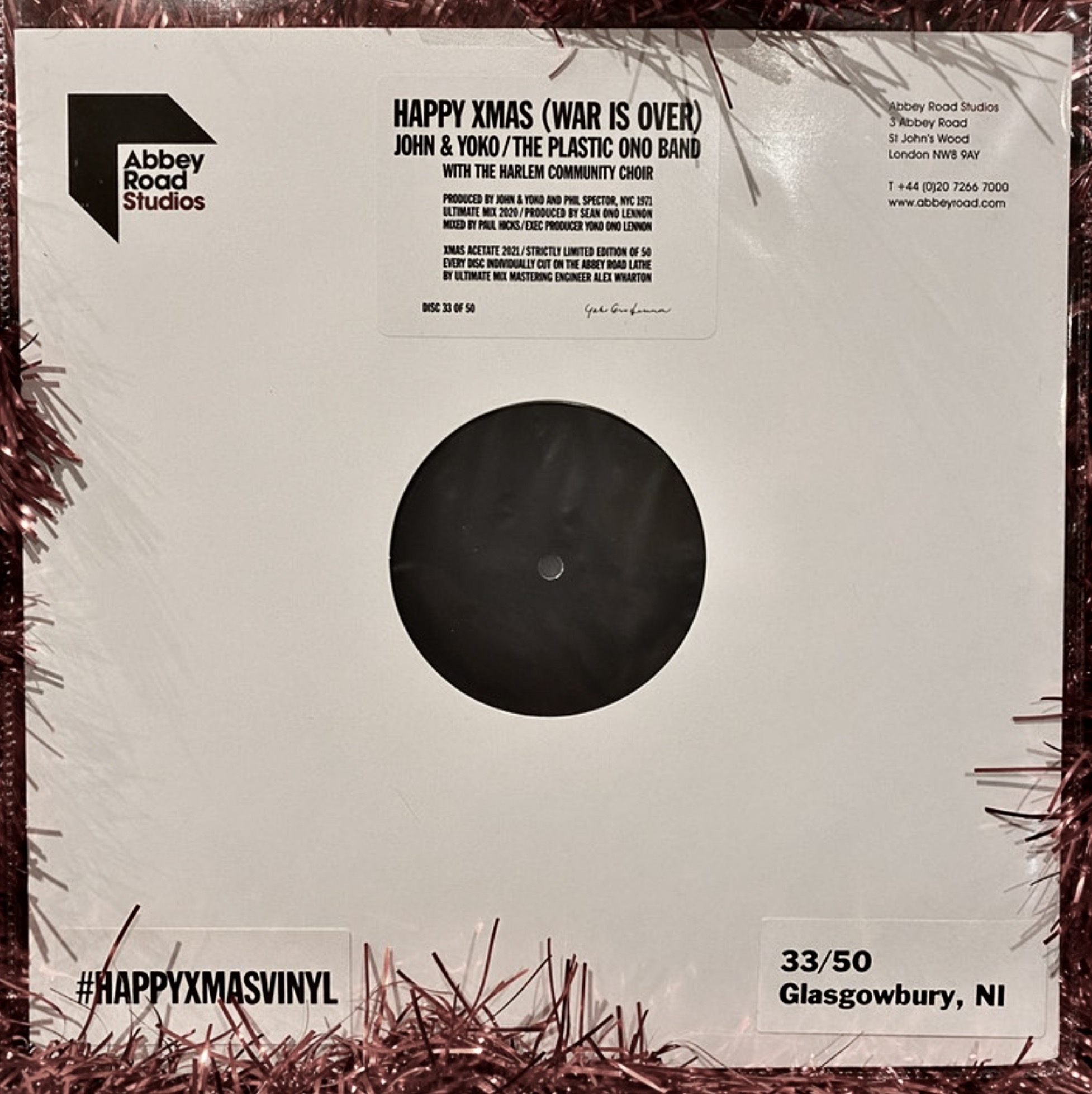
33/50 Glasgowbury – Northern Ireland’s emerging music festival, established from a need to support and develop homegrown artists. They’re HQ is located in Draperstown and they’re taking bids via email.
34/50 This acetate went to Help Musicians UK, an independent charity that provides support and opportunity for professional musicians of all genres and career stages. They also joined in a group of seven other recipient charities and used Crowdfunder to raise £13,720!
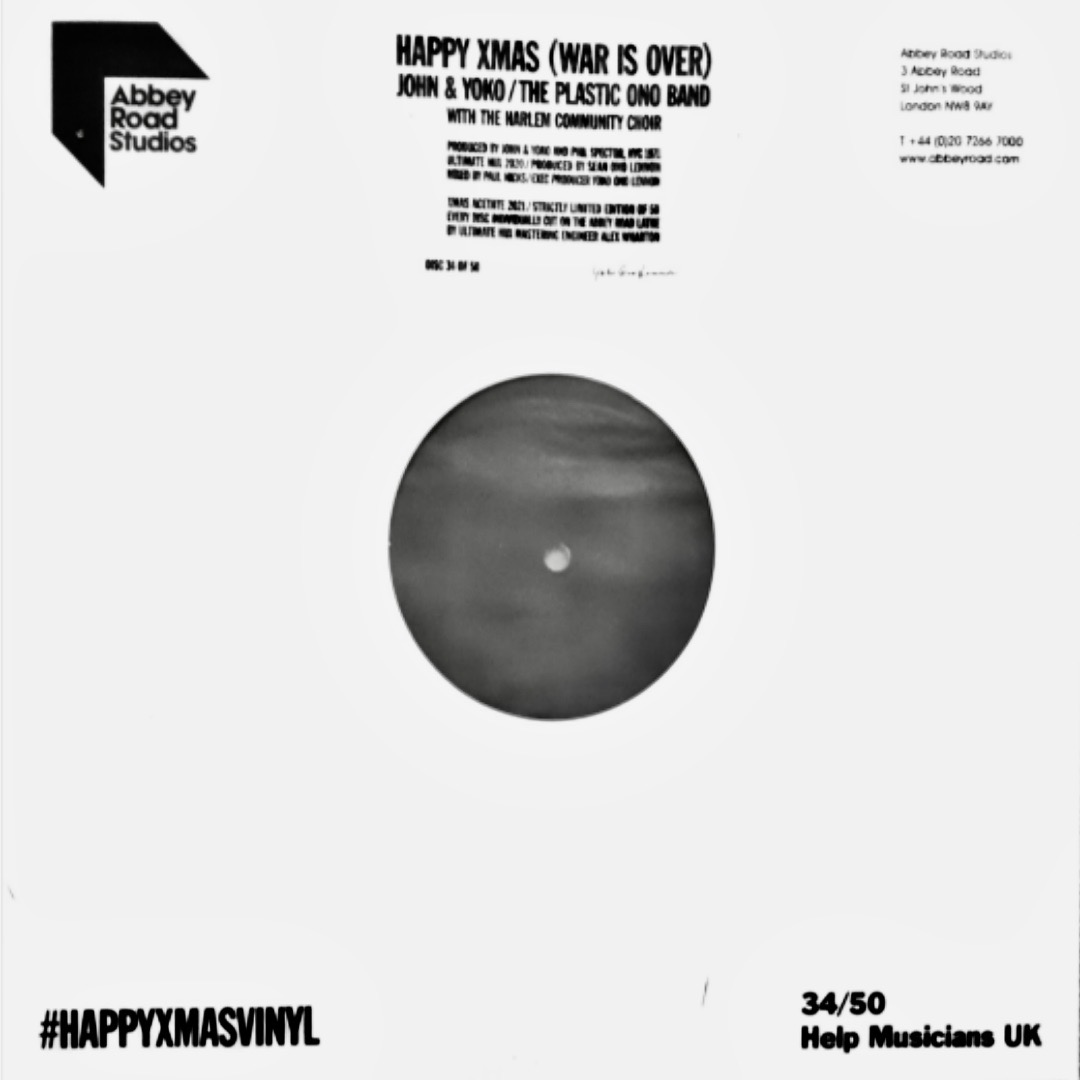
?/50 Sister Ray Records – Soho, London (Not sure of what number these guys got, but they decided to hold an auction across their various social media sites – for example Instagram). It raised £2,300. Not bad!
35/50 Hen Hoose – Scottish female and non binary songwriters and music producers. (They have also posted a lovely video unboxing on Twitter). Their auction via the Omega Auction house raised £4,320!

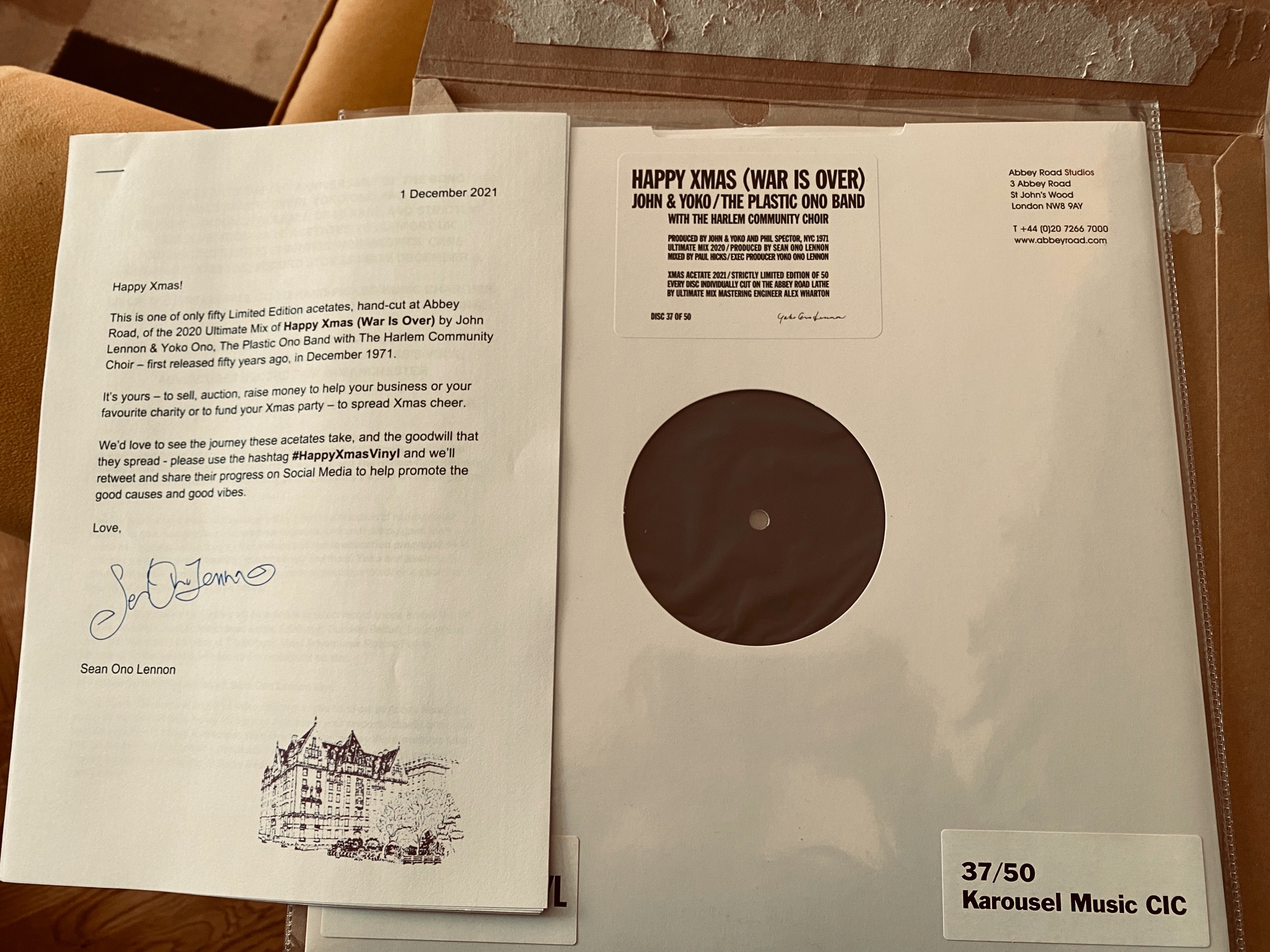
37/50 Karousel Music CIC – This is a London-based music industry hub promoting collaboration amongst artists, songwriters, musicians and industry. See their ticket raffle here.
39/50 Moving On Music – Located in Belfast, this is an independent, not-for-profit and registered charity. It provides an eclectic mix of music and education services to the entire community in Northern Ireland. See their eBay auction here.

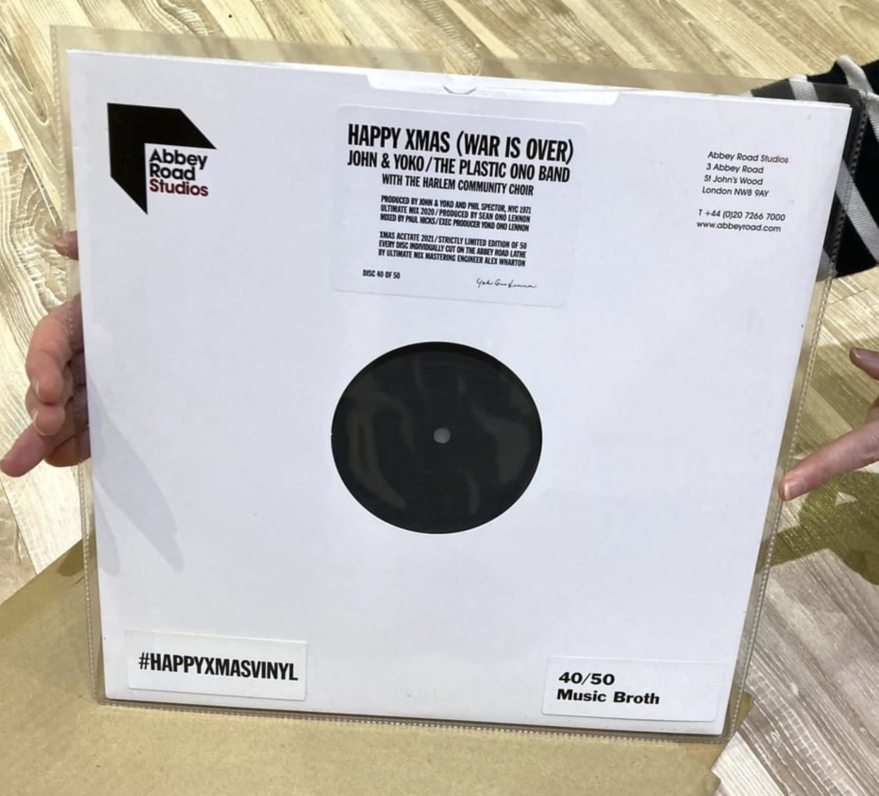
40/50 Music Broth – Scotland’s musical instrument and equipment library. Social enterprise and charity improving access to music making for all:
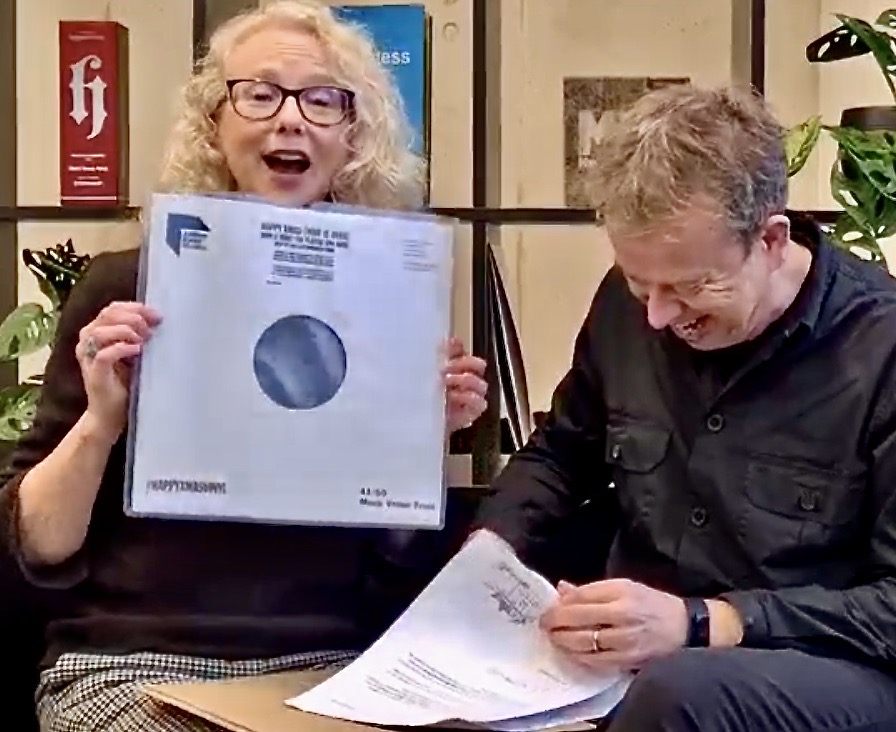
41/50 The Music Venue Trust is a London-based registered charity which acts to protect, secure and improve grassroots music venues. They have uploaded a Facebook unboxing and appear to be totally surprised by what they find in the package! See their ticket raffle here.
42/50 Music Place North-West is a music therapy charity from Liverpool’s Merseyside and they are auctioning their acetate through Bonhams. It will be auctioned in the new year so watch their Twitter account for details.
45/50 Phoenix Arts Club is also located in London and they too have done a Facebook video unboxing in which they are absolutely bowled over by the generosity of Sean and Yoko in choosing them. Watch it. It’s great!

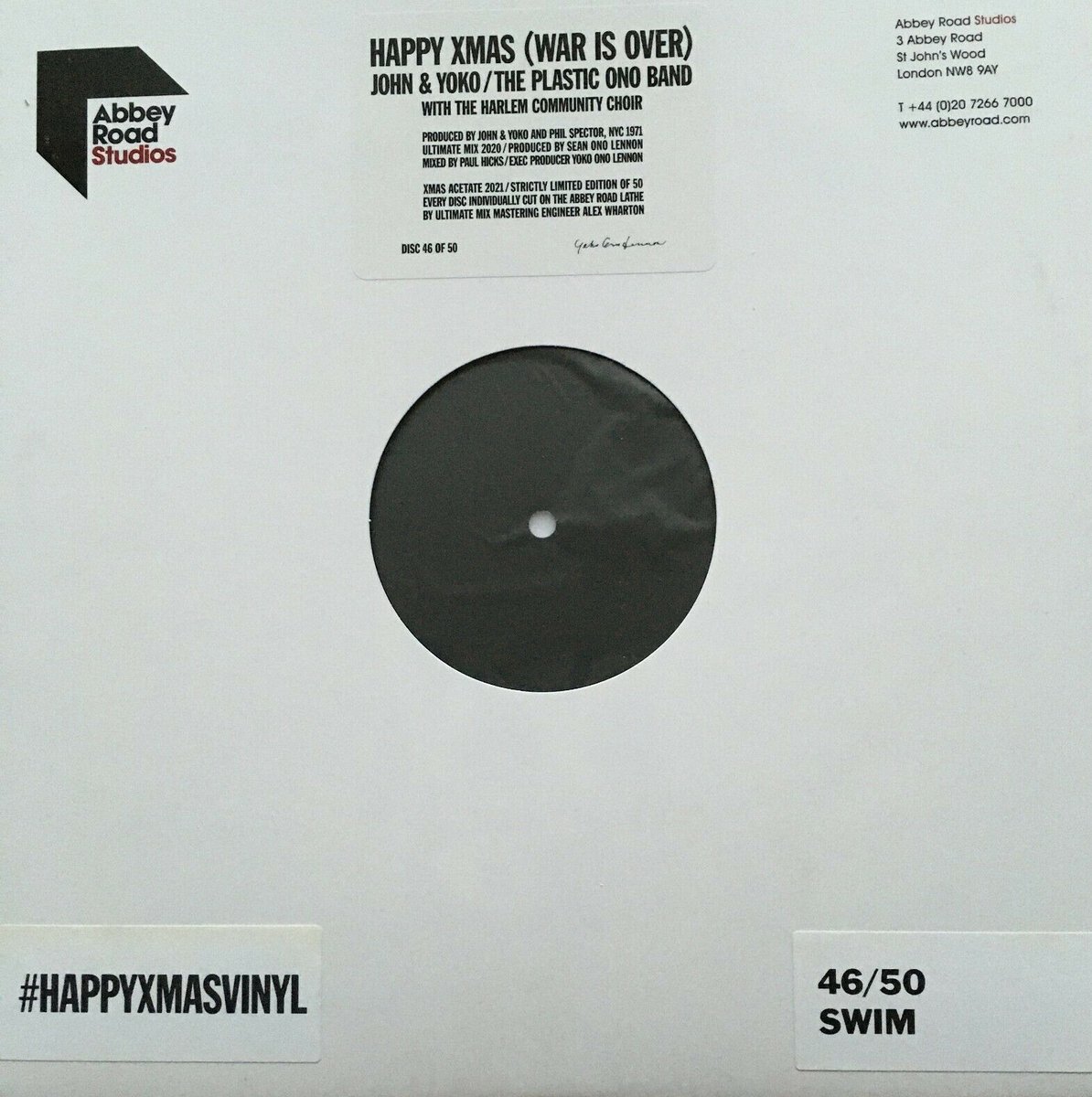
46/50 SWIM stands for Scottish Women In Music. It is a collection of music creators and industry professionals who identify as women working in all music industries. It’s committed to achieving a level playing field for women, pushing for gender equality. They’ve decided on an eBay auction for their acetate.
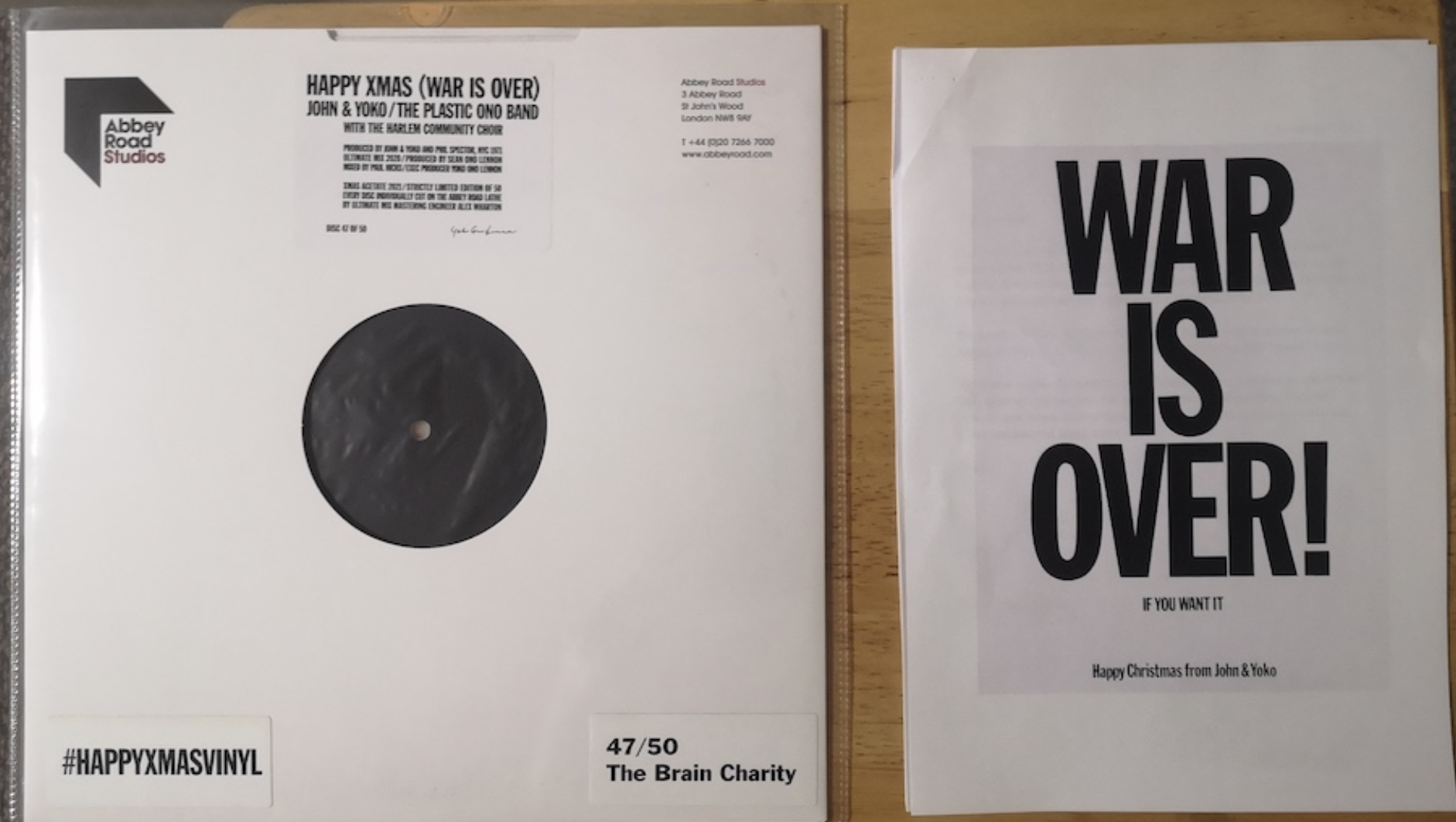
47/50 The Brain Charity is based in Liverpool and does amazing work helping those affected by neurological conditions to live longer, healthier, happier lives. They also decided to auction their ‘Happy Xmas (War Is Over)’ acetate disc on eBay – and it sold for £4,900. Wonderful effort!
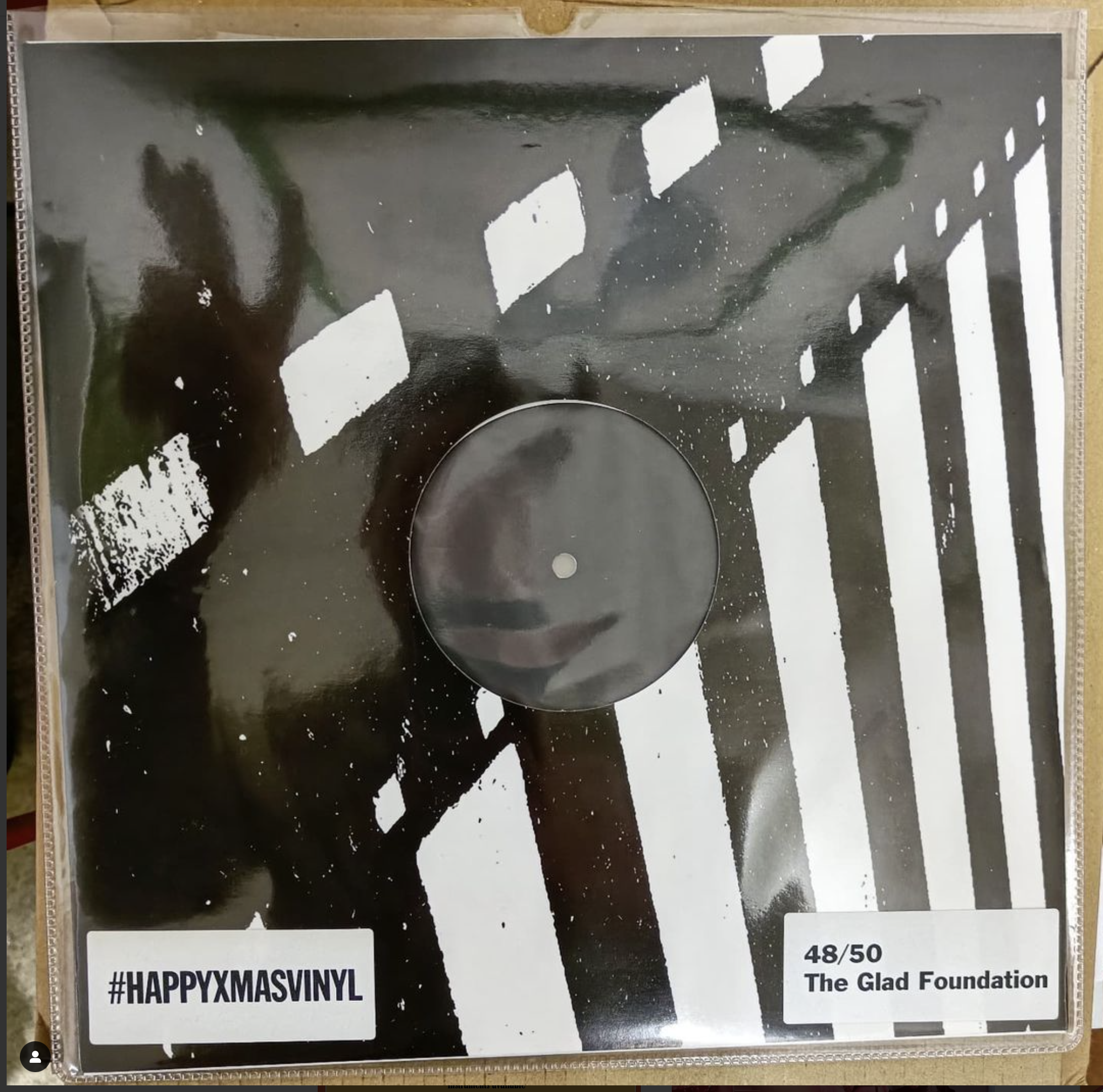
48/50 The Glad Foundation is a charity in Glasgow. It provides a wide range of free and affordable music workshops for people of all ages and abilities:
?/50 The Coda Club in London seems to be associated with the Phoenix Arts Club (see 45/50 above) because their acetate disc is mentioned and seen still sealed in the Phoenix Arts Club Facebook video. The Coda Club is a meeting and support network for retirement-aged classical/jazz/session musicians to reconnect and meet and combat loneliness.
We reckon this is a fantastic initiative by Yoko Ono, Sean Ono Lennon and the John Lennon Estate to do some good in the world this holiday season. In it’s 50th anniversary year good on them for having the vision to use ‘Happy Xmas (War Is Over)’ in this creative way.
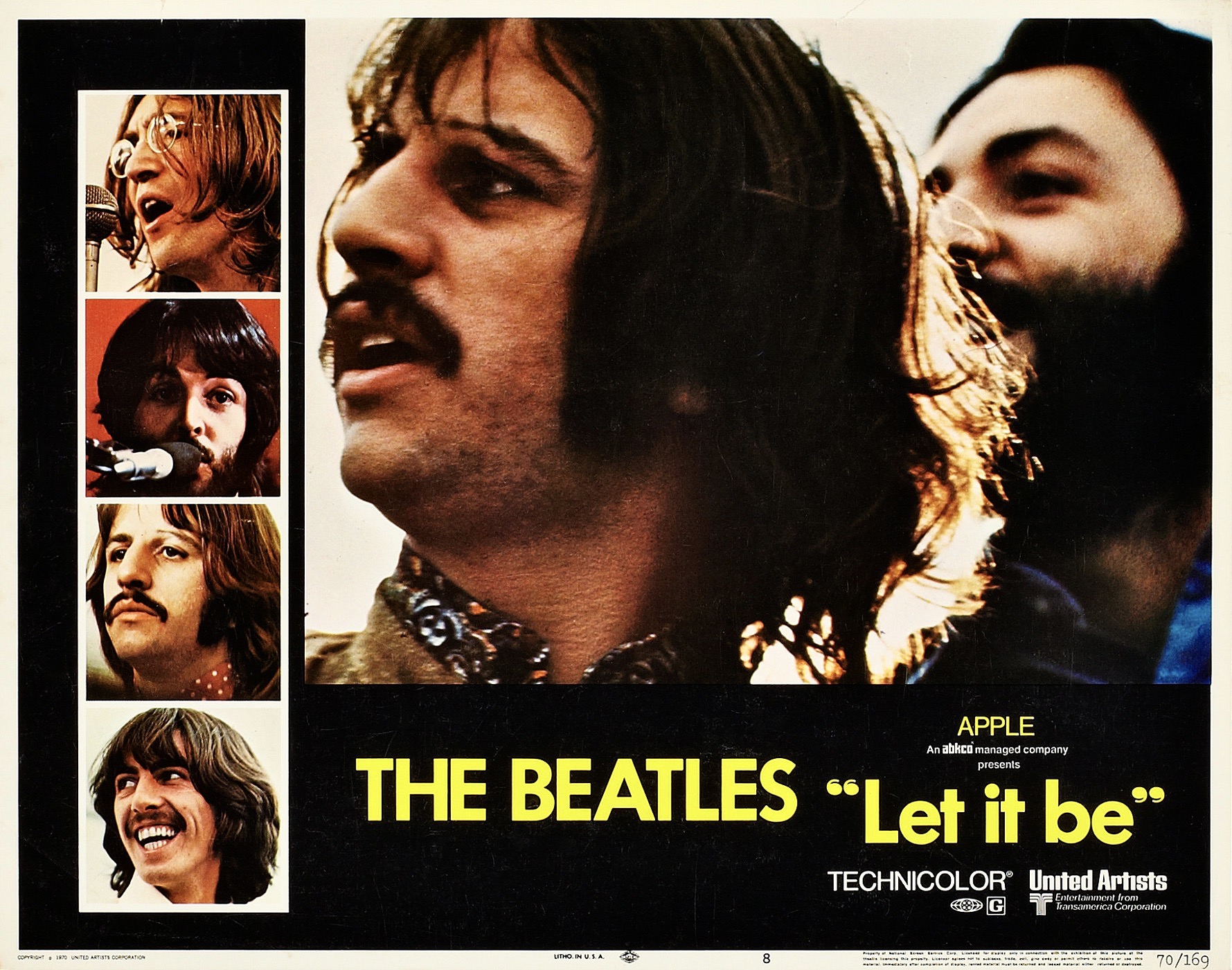
To celebrate the release this week of the Disney+/Peter Jackson marathon re-cut of the original Let It Be footage, here are some of the movie theatre lobby cards (and a poster) from the 1970 movie-length version, directed by Michael Lindsay-Hogg:



The Beatles And India documentary film (released last month) is an historical chronicle of the influence that India had on the Beatles – and how that in turn changed perceptions of that country in the West.

Through rare archival footage, recordings and photographs, eye-witness accounts and expert comments, along with location shoots across India, the film brings alive the journey’s of George, John, Ringo and Paul “from their high octane celebrity lives to a remote Himalayan ashram in search of spiritual bliss that inspired an unprecedented burst of creative songwriting. It is the first serious exploration of how India helped shape the development of the greatest ever rock band and their own pioneering role in bridging two vastly different cultures”.
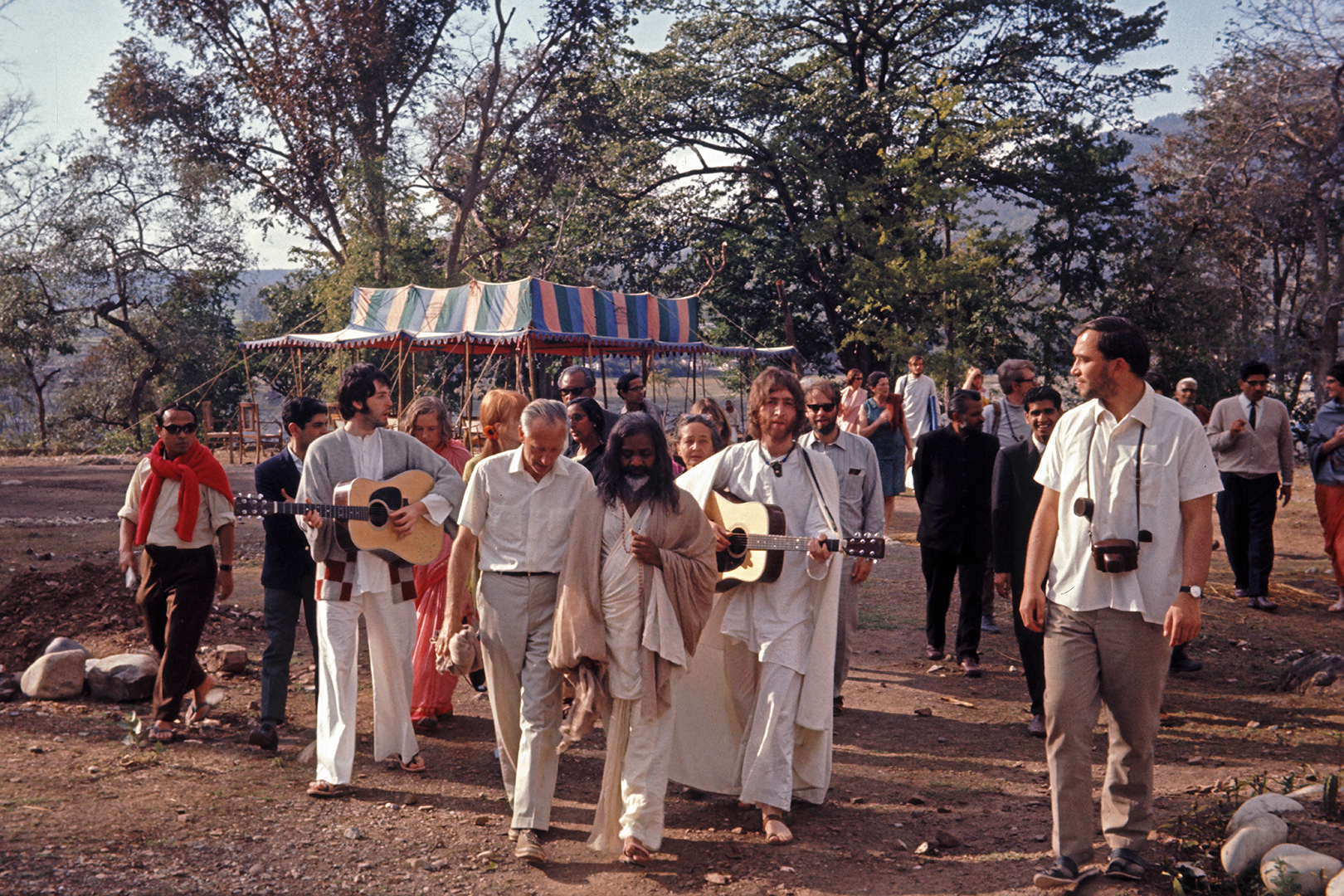
The Guardian newspaper wrote of The Beatles And India: “The memory of the Beatles’ relationship with India is revived in this engaging documentary, and if there isn’t much really new here, it’s still salutary to be reminded of how these four young men…used their colossal influence, greater than any politician or movie star or religious leader, to direct the world’s attention to India.”
Now, following the release of the film, comes the original soundtrack to the film:

Not only that, there’s also a companion album called Songs Inspired By The Film The Beatles And India. This CD features interpretations by contemporary Indian artists of the songs the Beatles were inspired to write as a result of the time they spent there.
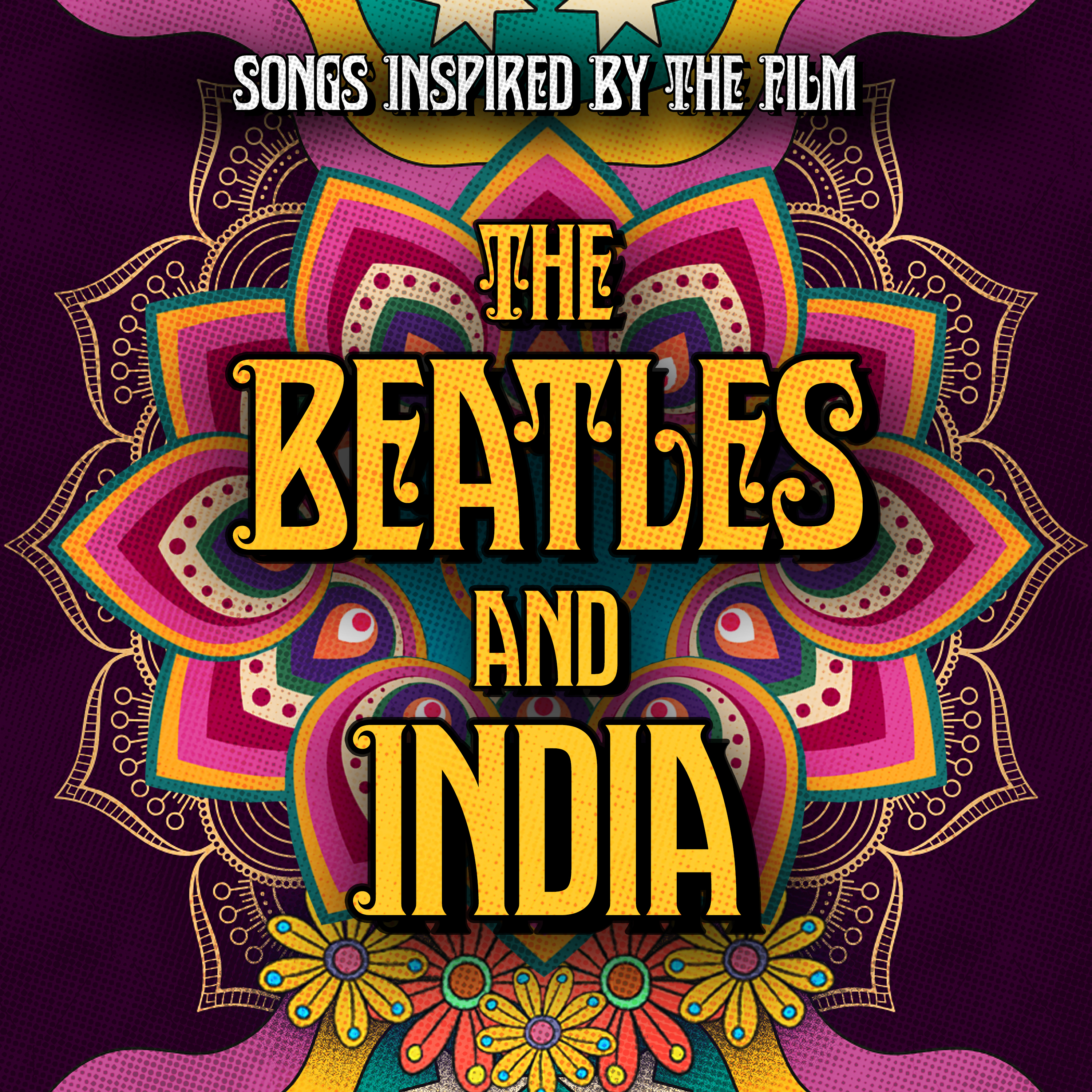
The album is evidence of the legacy of the enduring cultural and musical crossover which occurred and it features a diverse cast of Indian artists (Vishal Dadlani, Kiss Nuka, Benny Dayal, Dhruv Ghanekar, Karsh Kale, Anoushka Shankar, Nikhil D’Souza, Soulmate and many others) – each bringing their own musical styles, as well as contemporary and classical Indian influences and techniques to the record.
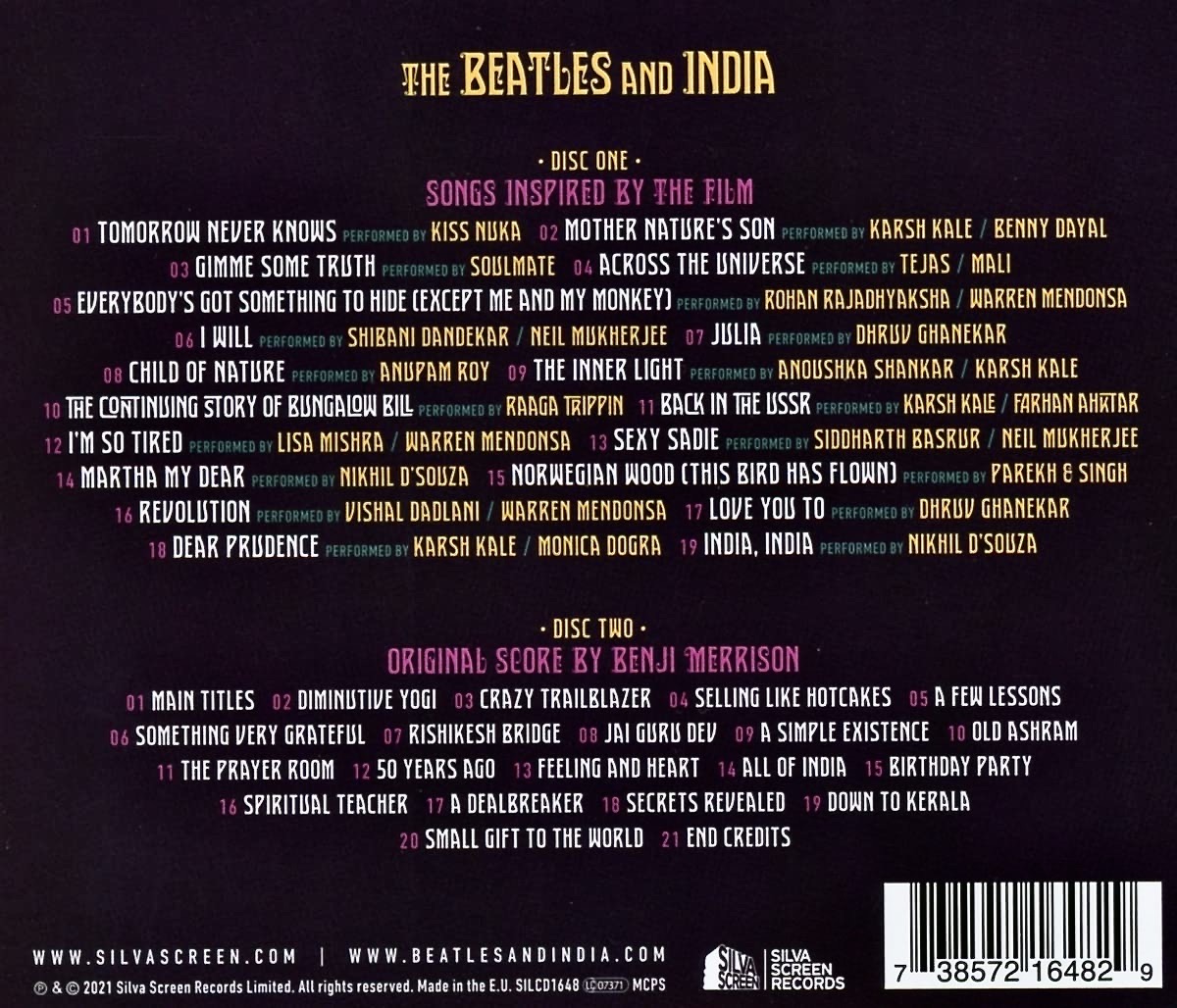
The companion CD release also includes a bonus disc of the original soundtrack score to the film. The music is composed by award-winning composer Benji Merrison and was recorded at Abbey Road Studio 2 (the legendary home of The Beatles recording sessions), and also in Budapest in Hungary and in Pune, India.
Here’s Nikhil D’Souza’s interpretation of John Lennon’s ‘India, India’, a song written by Lennon and recorded in 1980 as a home demo, but not released until 2010’s John Lennon Signature Box.
In the lead-up to the release next week of the Peter Jackson film The Beatles: Get Back, John Harris, editor of the new book of the same name, takes us on a fascinating journey to the three key locations in the making of the Let It Be album. It is delightful:
While looking around the web shopping for Paul McCartney’s fabulous new book The Lyrics, we stumbled across a couple of different translations, and it got us wondering how many countries were getting versions of the book in their own language?
There are of course two main English editions. The two most common of these are the US edition in the green outer box:

And there’s the UK edition – which has exactly the same content as the US, but externally is quite different in design:

Also worthy of mention is a third English language version of the book: the Limited Edition. This one is actually signed by Sir Paul. There have reportedly been just 175 copies made available worldwide, though as one reader points out there have been two different signed books with the number #95 sold on eBay. Each had a different publishing logo, raising doubt on the accuracy of “175 worldwide”. Maybe it is 175 in the US, and 175 in the UK. Either way, it comes in a distinctive bright orange box with blue lettering. The design inside is quite unique too – including the two volumes inside which are also in that distinctive orange binding:

Then we get onto the translations, and those we’ve been able to uncover (to date) all seem to have the same outer box and book binding as the US green version above.
Here is the German:

And the Dutch language edition:
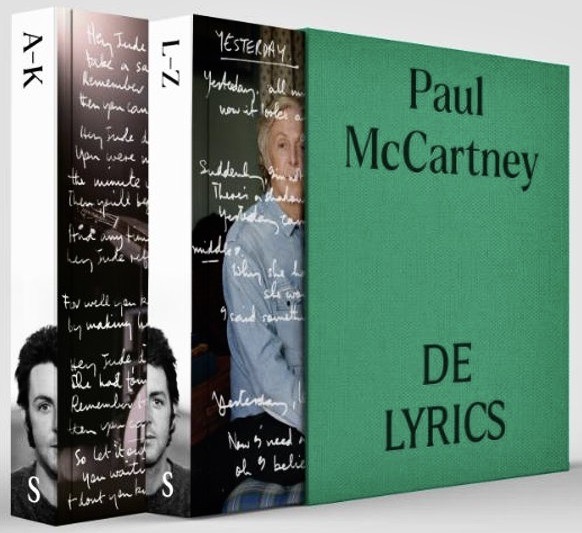
Next up is the Spanish:
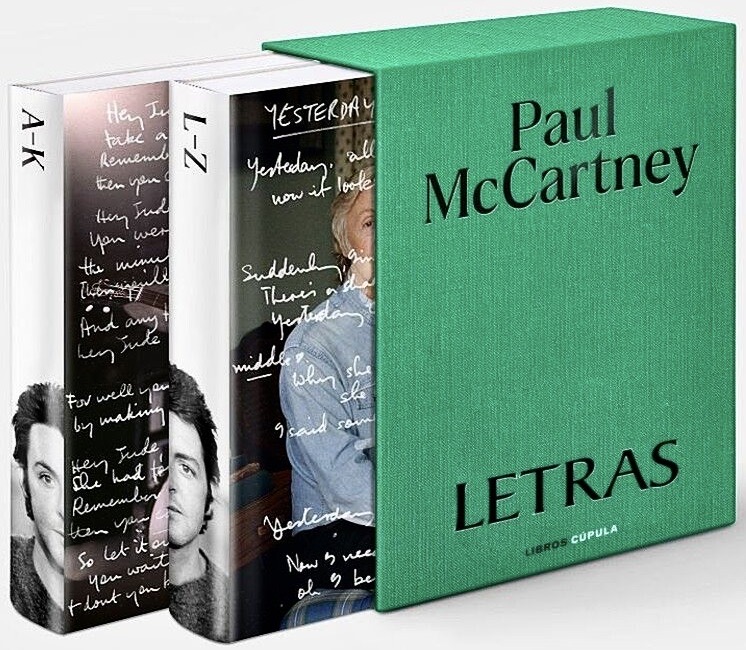
And close by (in terms of geography) there is the Portuguese:

There is a French language edition too, and it seems to come with an outer box re-design as well:

The Italian translation has only just been released (9 November). There aren’t any great images of how it is packaged yet – but we’ve asked one of the translators and can confirm that this is the cover:
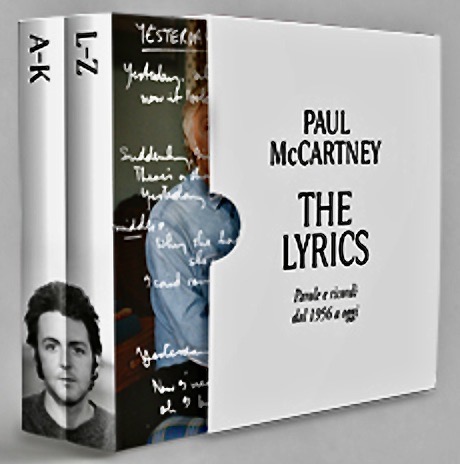
As you can see, like the French edition, the Italians have gone for a white outer box. The translation has been done by Franco Zanetti and Luca Parasi, who is author of the highly regarded Paul McCartney reference book Recording Sessions (1969-2013).
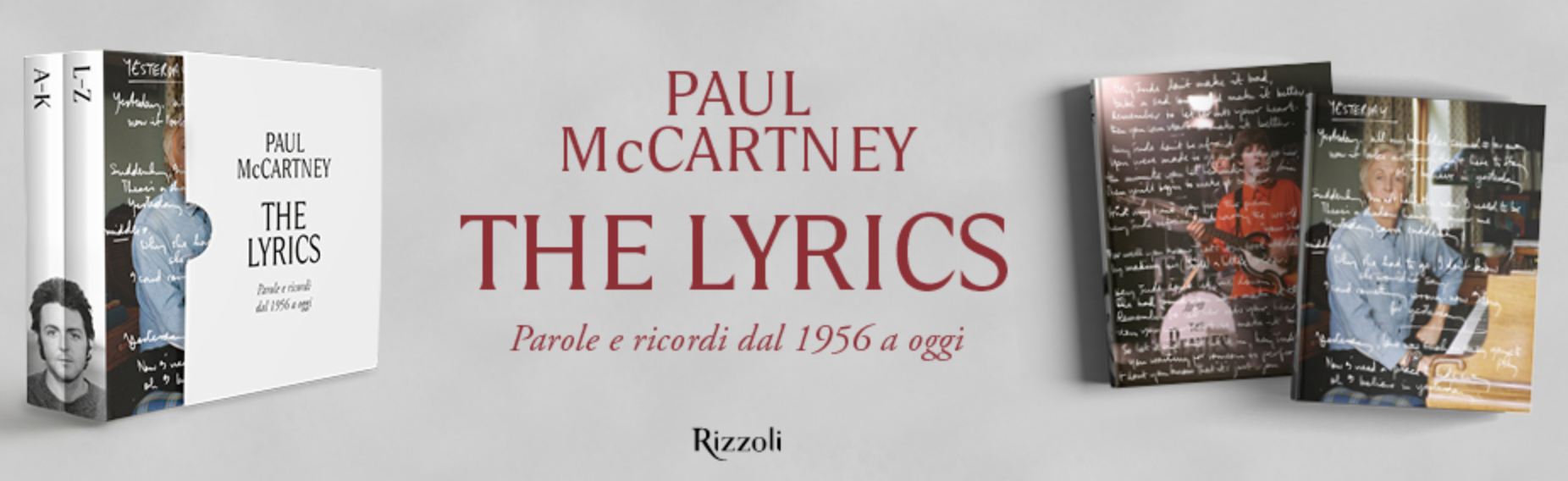
A further confirmation that this is the way the Italian edition is presented are the images in this advertisement that the publishers, Rizzoli Libri, was running on Amazon:
And finally, two unexpected translations – one in Finnish:

And the other in Swedish (thanks to reader Ole for sending this one in). Interesting that the front covers of the two books inside appear to have the images and super-imposed lyrics used for the rear covers of the books in the rest of the world:

Is that all? Do you know of any others?
Let us know using the ‘Leave a Reply’ link below if you have any updates and we’ll publish them here.
Paul McCartney and Third Man Records have just released a short film called McCartney/333.

The film is a mini-documentary detailing the vinyl pressing process for McCartney III 333, the extremely limited-edition version of McCartney’s 2020 solo album, McCartney III, manufactured at the Third Man Pressing plant in Detroit.
The mini doco goes into exactly how the project first came about, and exactly how the unique records were made. It shows just how multiple vinyl copies of the 1970 release McCartney and the 1980’s McCartney II were broken down and reformed into 333 limited-edition copies of McCartney III at Third Man Pressing.
Interestingly, it is revealed that it wasn’t old, second-hand copies of the original McCartney and McCartney II LPs that were ground up as part of the process. It was brand new pressings of these two albums.
Several Third Man Records employees, including co-founder Ben Swank, are interviewed for the film alongside Beatle author and Rolling Stone journalist Rob Sheffield, all spliced in alongside footage of Paul McCartney creating the album in his studio.
Click on the image below to view the mini documentary:

 Beatles Blog