The Beatles’ Second Album – Book

What has to be the cutest little Beatles book ever:

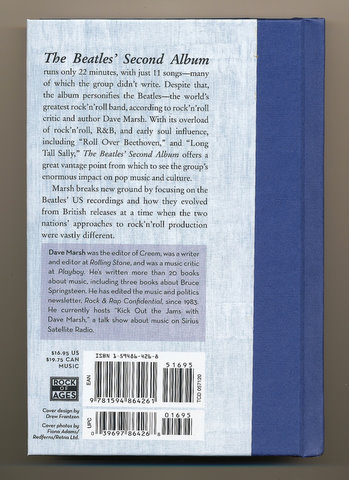
It’s a small-format hardback book. Measuring just 12.5cm x 18.5cm (5ins x 7ins) and written by legendary music journalist Dave Marsh. This book tells, in 184 pages, the story behind this album:
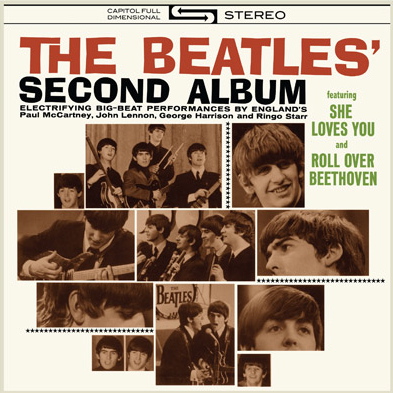
Its the 1964 Capitol Records US LP release “The Beatles Second Album”, and for Dave Marsh and millions of Americans, when it came out (despite its manifold flaws) it was a paradigm shift in music.

I say “despite its many flaws” because Marsh outlines numerous arguments as to  why “The Beatles’ Second Album” was indeed flawed – from the poor sound transfers from the original UK master tapes of individual songs; the way the song running order differs from those being released on the Beatles original albums in Britain; because in it’s 22 minutes so many of the songs are not original compositions but cover versions; right down to the shoddy, slapdash cover art. However, putting all that aside, it’s an album which still had the power to turn a young teenage boy onto rock music – a passion which remains to this day more that 45 years later…

Marsh writes:

“There’s a story here. I mean to tell it. It has a beginning, a centre, an aftermath….Because of all the contrdictions of its creation, and becasue it unwittingly came closer to describing the shape of the Beatles’ musical roots than anything else they did in the recording studio, “The Beatles’ Second Album” tracks on several other levels. Also because of the response of fans now and the Beatles then to how it and its other bastard American brethren, spawned from greed and greatness in near equal measure, because of what it says about who the Beatles could have been and what they were and who we could have been and what we were, too…..What we were left with pretty much traveled on a single track: the story of the Beatles as a grand triumph of good cheer and fellowship, teen idols turned into heroic artists.”

If you want to see more the front and rear covers, plus the first chapter in full (and half the second chapter), are available online.

While it’s a cute little book, it is an odd one in that it is published by Rodale Books. Rodale, from what I can gather from the web, are the publishers of magazines like “Men’s Health”, “Women’s Health”, and “Runner’s World” etc., as well as a range of health and lifestyle books – so its unusual that they ventured into the world of popular music back in 2007 when they published this one. It definitely sounds like there’s a bit of an intriguing back story about just how it came to be published….
The Beatles – Then There Was Music

I got to go to a garage sale (or where you live they might call them “yard sales”) last Saturday morning.  I try whenever I can to have a brief look at garage sales because you just never know what people might have out for sale….and this time I was in luck.

There was only one Beatle item there, but it was a beauty:

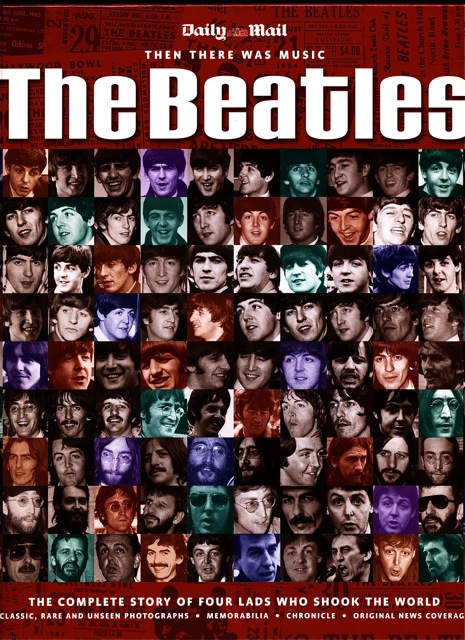
It was copy of a large and heavy book called “The Beatles – Then There Was Music”.  This book was published in Australia by New Holland Press in November, 2007.  It was first published in the UK by Transatlantic Press the same year.

“The Beatles  – Then There Was Music”  is written by Tim Hall and it’s illustrated with hundreds of  photographs from the archive of London’s Daily Mail newspaper. The cover also says: “The complete story of four lads who shook the world. Classic, rare and unseen photographs. Memorabilia. Chronicle. Original news coverage”.

I picked this up for just $5.00. And it is practically brand new. You can see at the publisher’s official Australian website that it actually retails for $49.95.

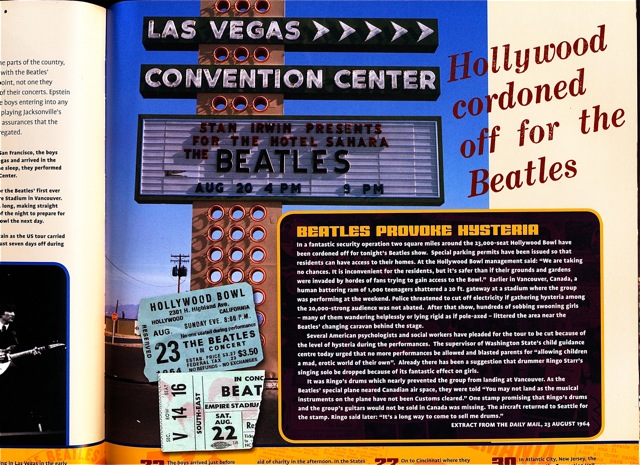
As I said, lots of interesting photographs, and at the bottom of every page is a timeline.  For example, in August, 1964 the Beatles North American tour started when they arrived in San Francisco and played the first of 25 dates with a show at the Cow Palace on Geneva Avenue. On August 20 they traveled to Las Vegas Nevada and played two shows at the Convention centre there:

From Vegas the band traveled to Washington state, and then on August 22 they appeared at the Empire Stadium in Vancouver. The next day they played the now famous Hollywood Bowl concert in Los Angeles. You can see the ticket stubs for both these concerts in the in picture above.

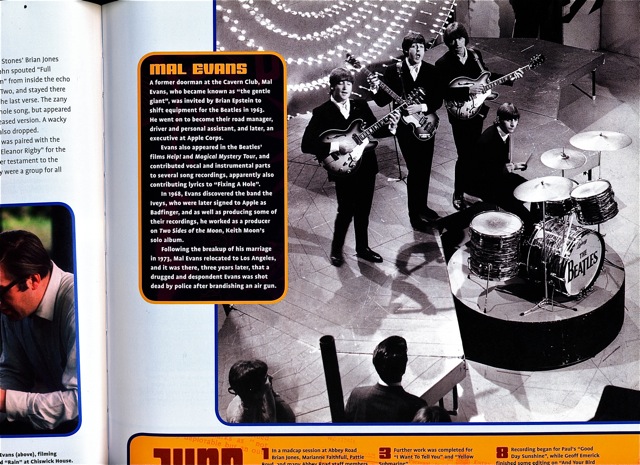
Scattered throughout the book there are also small vignettes of those who were a part of the Beatles inner circle – including one for long-time Beatles minder Mal Evans, who’d been with the band from the very earliest of days in Liverpool. You can see that entry for Mal below, along with a photo of the band rehearsing for a performance on the BBC’s “Top of the Pops” TV show:

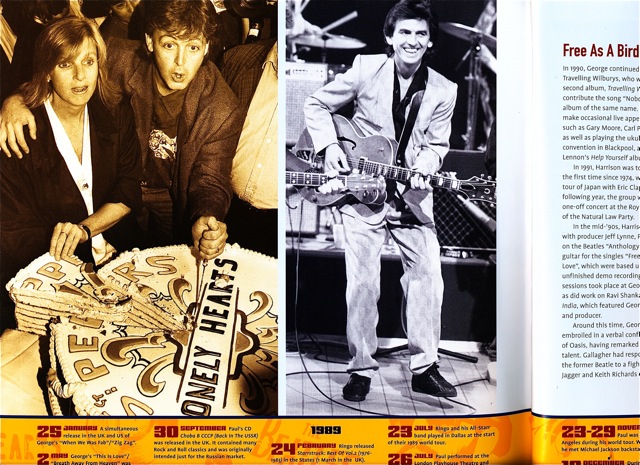
This book has lots of great newspaper photographs from the Daily Mail – including these two below.  Paul and Linda celebrating the 20th anniversary of “Sgt Pepper” with a big slice of cake, and George playing at a tribute concert to one of his rock’n’roll heroes, Carl Perkins:

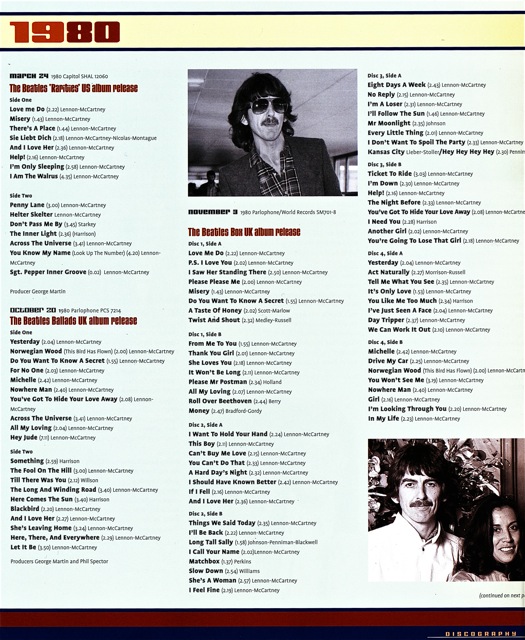
There’s also a complete discography (from 1962 up to 2006) beginning with January 5, 1962 and “My Bonnie” right through to the BeatlesLove” in 2006. Here’s the page for the year 1980 including entries for the “Rarities” album, “The Beatles Ballads” release, and the Beatles Box set (UK release):

So, thats it. “The Beatles – Then There Was Music”.  A collectors item discovered at a garage sale. I always say that one person’s trash is another person’s treasure. Let me know of any great second-hand Beatles finds you’ve made.

See also the recent post on another similar, but probably not as comprehensive book, simply called “The Beatles“.

FAB: An Intimate Life of Paul McCartney – Reviewed

This is the US cover of the hardback edition of “FAB: An Intimate Life of Paul McCartney” by well-known biographer Howard Sounes.

I posted previously on this book when I got a copy of the Australian edition in softback. If you click on the link you can see it was published with a very different cover to the rather subdued and conservative North American edition.

It has really taken me some time to actually read the book and write this appraisal.

What happened was I’d published that earlier post and then Da Capo Press, the US publishers of the book, saw the post and wrote offering me a review copy of the US release. It took a while to get here via snail mail and then, at 634 pages, it took me a while to read it from cover-to-cover.

I found it a pretty good read actually. Sounes writes in an engaging style and the book had just enough new details to keep me coming back. All-in-all it really was a great summer holiday read (its still summer here in Australia!). The book is not sensationalist – it pretty much sticks to the facts and tells it like it is – and that is refreshing.

One thing does stand out though – like many books on the Beatles it’s still written from an outsiders perspective. No matter how many interviews you do with some of the main players in and around McCartney’s life (and Sounes did many – he says he interviewed over 220 people for the book), he didn’t interview McCartney himself and so you still get this feeling of an outsider looking in.

Having said that, “FAB: An Intimate Life of Paul McCartney” is very revealing of the man himself, showing us aspects of the Paul personality we’ve perhaps thought were there but were never really sure. What we tend to see is the facade Paul wants us to see: “Macca”, the thumbs-up, positive, likable guy. This book goes deeper and reveals his his perfectionism; the fact that he he doesn’t suffer fools lightly; that for a wealthy man he was often quite frugal (for example paying Wings band members a very basic wage); that he wants above all to be remembered for having made a mark and leaving some sort of legacy; that family is very, very important; and that his mother (and her early death) has played a central role in his life, in his creative work, and in his relationships.

Sounes’s book is also good because it brings the reader right up to the present day. Its not just about the pre-Beatles and Beatles glory days. It includes a lot of detail about the Wings years, and about Paul’s solo career right up to 2009’s “Good Evening New York City“. In fact a good half of the book deals with the post-Beatles life of Paul.

It also gives a hint of what it must be like to live, practically for your whole life,  as one of the most famous and wealthy people in the world. Paul is a man who is used to getting his way and getting what he wants. Its not a life to be envied really. Everyone around you agrees with you because you are Paul McCartney. They suck up to you, they pay their respects. It must be incredibly difficult to keep a handle on what is real.

The gratifying thing about this book is that it’s not sensationalist. To be sure there’s plenty of opportunity to do that – particularly in that period of his later life (post Linda McCartney) when McCartney made some really bad relationship choices – but Sounes wisely sticks to the facts.

The book also has some great photographs. Who better to step us through the contents using some of those than the author Howard Sounes himself:

“The Beatles” – An Interesting Book

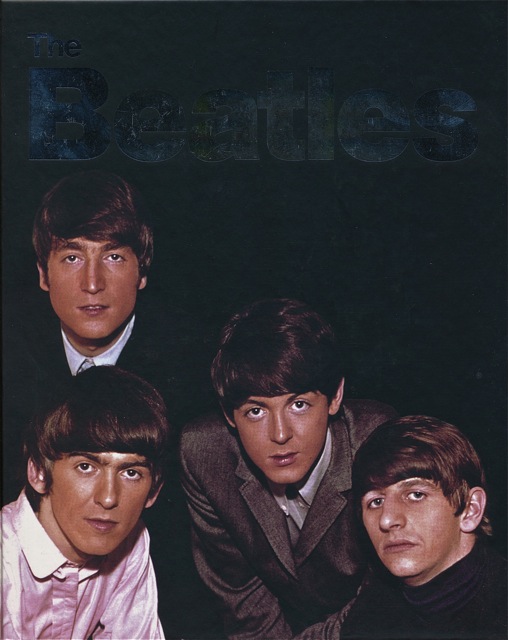
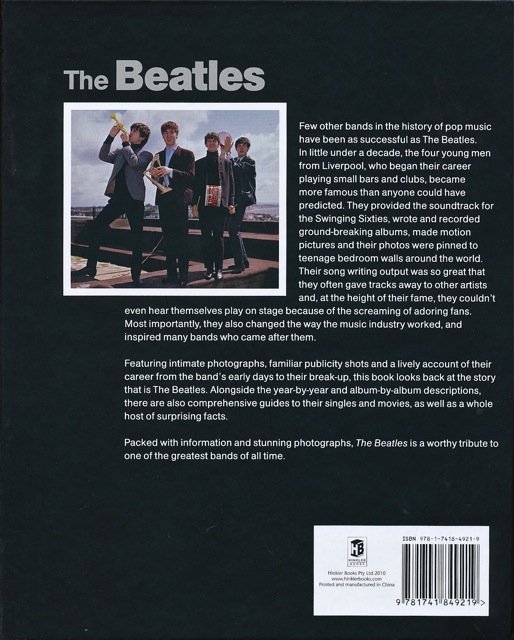
Another Beatles book has recently come into the collection. Again, it’s from a discount book store that is just near where I work. They specialise in selling remaindered stock at greatly reduced prices and I’ve picked up some interesting titles from there over the years. This one is simply called “The Beatles“:

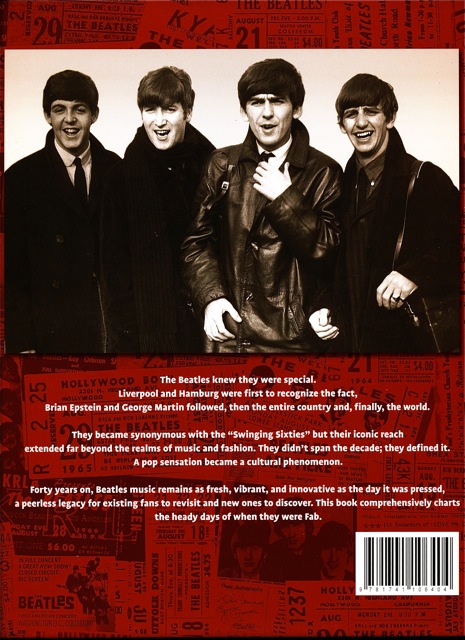
There’s a great photo of the band on the front cover – it’s highly colourised but quite striking in its effect. The title words “The Beatles” are printed in silver and so don’t show up too well in this scanned image. Interestingly, nowhere on the front or rear covers, or even the spine, is there mention of the author. You have to go to the publishers details page inside where in the fine print it says “Written by Mike Evans”. I’m not sure why Mike doesn’t get a mention anywhere on the outside of the book. A quick Google search reveals Evans is actually quite prolific having written or edited, amongst many other titles, “The Beatles: Paperback Writer: 40 Years of Classic Writing“, “The Art of British Rock: 50 Years of Rock Posters, Flyers and Handbills“,  and “The Beatles: On Camera, Off Guard 1963 – 1969“, so the guy has form.

The Beatles” is chronological in nature and, over 21 chpaters and 224 pages  traces the evolution of the band from the early years through to the final chapter called “The Beatles’ Legacy” which brings the story up to 2009 and the release of the newly remastered CD sets – so I’d say it came out in late 2009, although again the book itself does not have a publication date on it. Strange.

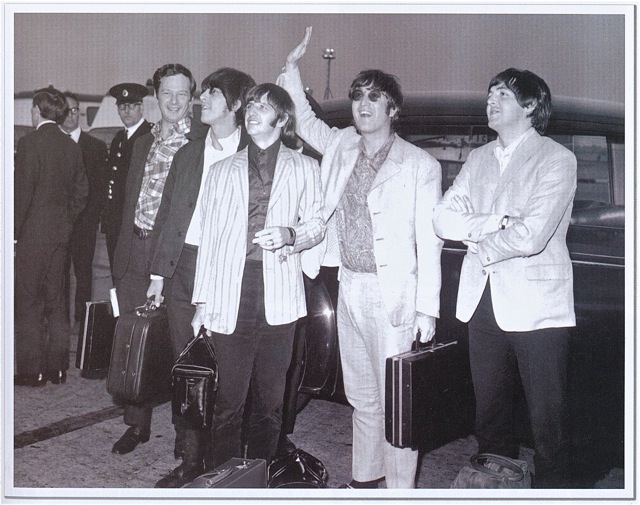
In a lot of ways its a pretty standard Beatles book – but a nicely produced one – one that has at least been done with some care. Its a hardback with lots and lots of photographs (some of them unusual and interesting), and quite detailed text covering each important Beatle release, from “Please Please Me” (1963) through to “Let It Be” (1970). Mike Evans deals with the tours as well – including the troubled 1966 tour to Japan and Philippines where the Beatles were lucky to escape with their lives. In this news photo in the book they, along with manager Brian Epstein, look pretty happy to be back in London in one piece, their smiles belying the danger they faced after a perceived offense to the President of the Philippines and his wife:

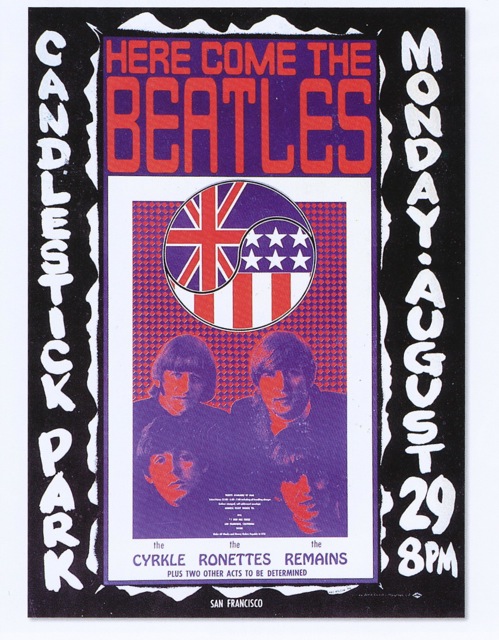
As well as terrific photos there are lots of other worthwhile visual additions scattered throughout, like colour reproductions of Beatles memorabilia like movie posters, concert tickets, Beatles stamps, and this US concert poster from August, 1966 for the concert at Candlestick Park, San Francisco:

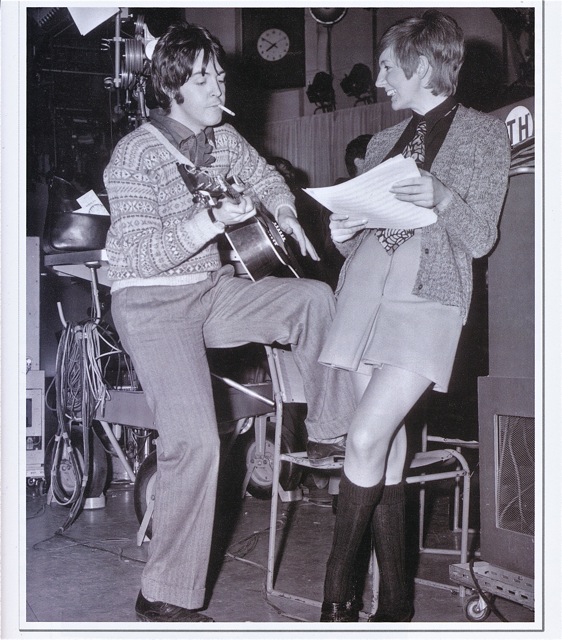
The photos inside are often unusual, like this one of Paul in the studio in January, 1968 with Cilla Black, taking her through the song he’d written for her called “Step Inside Love“. It became the theme for Black’s successful TV show of the same name:

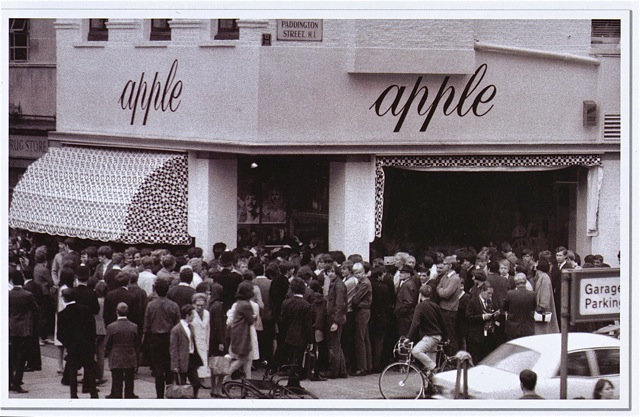
Author Mike Evans deals with both the up-side of the Beatles’ success, and the down-side, including the ill-fated Beatles foray into selling fashion. Described by Evans as “..the biggest disaster for Apple….The idea was to sell trendy items; Paul McCartney described it as “a beautiful place where beautiful people can buy beautiful things.” In reality, though, it was a clothes store, and became known as the “Apple Boutique”. By the middle of 1968, the shop had made a loss of nearly US$500,000/£250,000, a fortune in those days and on July 30 it closed.” In this photo crowds gather outside to grab a bargain and to witness the Apple Boutique’s last day of business:

The Beatles” is published in Australia by Hinkler Books.

George Harrison – The Ole Black Gretsch

The Gretsch guitar site has been running an interesting teaser video for a couple of weeks now….The advertising spiel goes something like this:

“Gretsch is pleased to announce the GEORGE HARRISON product “teaser” that will grace their homepage website beginning at midnight, December 9, 2010. By clicking on the “watch video” icon, George will narrate a brief story about his “ole black Gretsch”. There’s no doubt it will cause a major stir in the global marketplace. Want to know more about this project? Please keep checking back on the website as it will be updated over time…”

Seems like there’s to be a new line of reproduction George Harrison “Duo Jet” model guitars – which was his very first decent axe, purchased second-hand back in 1961.

You can read more about this guitar here. According to this site the “friend” to whom George gave the Gretsch (and who subsequently gave it back to him years later) was none other than Klaus Voormann.

Another great source I have is a really interesting book by Andy Babiuk called “Beatles Gear – All The Fab Four’s Instruments, From Stage to Studio“, which came out in 2001.

This book goes into a lot more detail about Harrison and his guitars. After 1961 he went on to purchase other Gretsch models notably the “Chet Atkins Country Gentleman” – George owned two, and the “Chet Atkins Tessessean“.  His profile helped greatly in continuing the brand’s fame in the 1960’s.

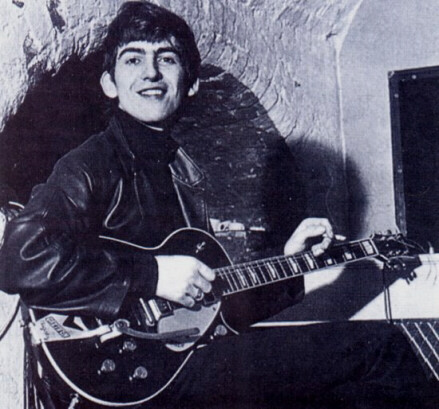
Here are some shots of George with that first, now legendary “Duo Jet” guitar:

And probably most notably it makes an appearance on the cover of his 1987 solo album “Cloud Nine”:

The Ole Black Gretsch is featured with Harrison in all the  photos used in the “Cloud Nine”  CD booklet too. I guess we know now that we have Klaus Voormann to thank for re-uniting the pair.

How famous is the Gretsch “Duo Jet”? It even turned up as one of the instrument choices for buyers of The Beatles “Rockband” console game:

How many kids playing “Rockband” today would know they’re “strumming” away on a stylised version of a 1957 model guitar that a young George Harrison purchased in 1961 second-hand from a Liverpool sailor?

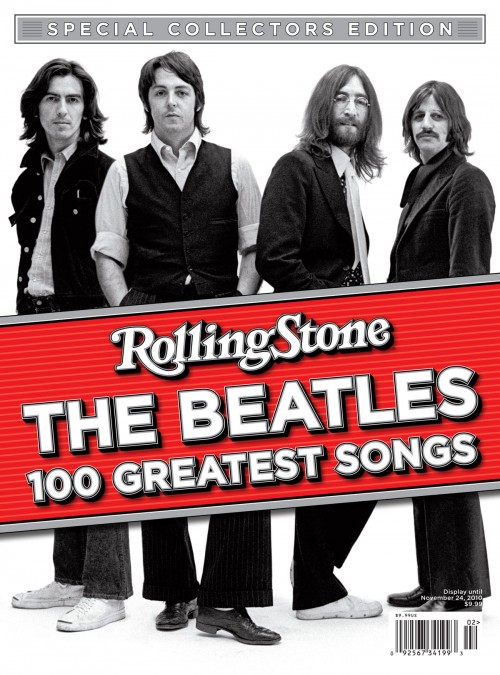
Rolling Stone – 100 Greatest Beatle Songs – Australian Edition

Back in September I posted on the Rolling Stone magazine special edition release called “The Beatles – 100 Greatest Songs“.

Finally, its been released in its Australian and New Zealand version. This 122 page “book” has a different cover!

Clearly its a photo by Bruce McBroom from the same photo-session in London on April 9th, 1969 – but it is different to the one used for the front cover of the US version of this special edition Rolling Stone magazine:

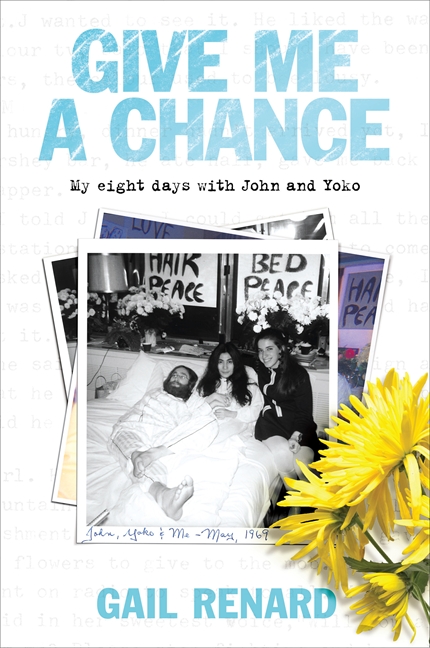
Give Me A Chance – New Book

When Canadian Gail Renard was sixteen she had a life-changing experience. She lived in Montreal and in 1969 John Lennon and Yoko Ono came to town to stage their “Bed-In” protest for peace.

Give Me A Chance” is a new book out now and in it Gail Renard tells her story of meeting John and Yoko and spending eight amazing days with them as their guest and helper in room 1742 of the Queen Elizabeth Hotel, Montreal.

She babysits Yoko’s five-year-old daughter Kyoko, and she sits in on John and Yoko holding court as the press and the rich and famous make a beeline to their  bedside to interview them, to argue, to pay homage, and to hear about spreading the word of peace throughout the world. I really liked the book. While not full of revealing facts, its easy to read and has a genuine sense of fun and adventure. Gail writes in an endearing naive style and we get to experience the “Bed-In” for peace up close but very much through the eyes of a sixteen year-old girl. How did she get to spend eight days with the Lennon’s? We learn that when she called her mother to get permission there was a very awkward moment:

“Put John on the phone,” she demanded. I recognized her inquisitor’s voice and was mortified. “Oh Mum, you can’t!” I knew she could and she would, and that I didn’t have a choice….so I reluctantly handed the phone over to John. I tried not to cringe as Mum carefully spelt out her conditions to him. There was to be no funny business – no sex or drugs around her innocent daughter. As if that wasn’t enough, Mum also said that I could help at the Bed-In during the day but I’d have to be back at home by my bedtime every night. To my amazement, John agreed…

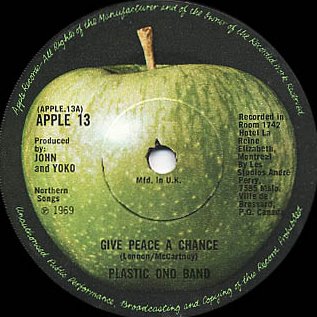
With permission from her mother out of the way Gail gets to sit in and sing as part of the rowdy chorus in the now historic recording of “Give Peace A Chance”. Every label for the song has the words “Recorded in Room 1742 Hotel La Reine Elizabeth, Montreal…”:

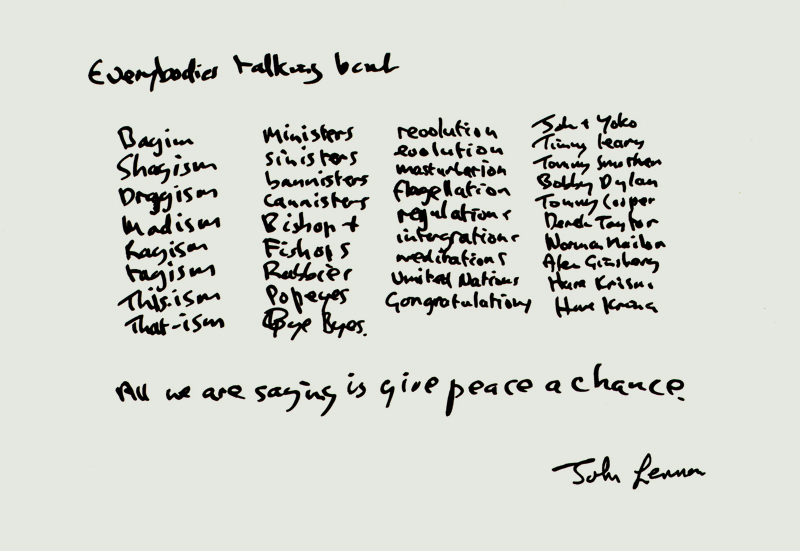
Afterwards, John gave her his hand-written lyrics for the song . These were written out with a black magic-marker pen on a big white cardboard square. These became the cue sheet for the crowd in the bedroom during the recording of the song in Suite 1742.

In 2008, Gail sold the “Give Peace A Chance” lyrics at a Christies auction for £350,000.  She says “Thank you, John. And thanks for not throwing them out, Mother!” She’s since been back to the room where it all happened over eight days in 1969 and writes about that visit here.

In many ways the book “Give Me A Chance” is very like an earlier book about a similar transformational experience with the Lennon’s – this time for a fourteen year-old boy named Jerry Levitan – who snuck into their Toronto hotel room and attended the Toronto version of the “Bed-In” for peace. He wrote a book about his experiences called “I Met the Walrus“.

Thank you to Beatles collector Bruce Hamlin for sending me a copy of this book. It’s richly illustrated with photographs and memorabilia and is a great little read!

Paul’s Poem For John – Still Poignant After All These Years

As part of the recent commemoration of John Lennon’s 70th birthdate, the respected NPR radio program “Fresh Air” re-broadcast a wide selection of interviews it had done over the years about Lennon.

One of them was an interview that host Terri Gross did with Paul McCartney. It comes from back in 2001 when he was on the promotion trail for a new book of his collected words called  “Blackbird Singing – Poems and Lyrics 1965-1999“. Its a beautiful little book. If you haven’t seen a copy it looks like this:

In it are the lyrics to “Here Today (Song for John)”, the song Paul wrote specifically for John Lennon after he’d been murdered. It had first appeared on the 1982 album “Tug of War” with a lovely string arrangement by George Martin. More recently though McCartney has been performing it live as a solo acoustic guitar number and speaking more openly about how much he misses his friend and colleague. There’s a very emotional version of the song on the live “Good Evening New York City” (2009), for example.

Anyway, back to the “Blackbird Singing” book interview…..in 2001 radio host Terri Gross asked Paul to read the words to “Here Today” out loud as a poem. In 2010, at this time of remembrance for John, its also very moving:

In his book “FAB – An Intimate Life of Paul McCartney“, author Howard Sounes recounts a story from composer and musician Eric Stewart (ex 10cc) which also sheds some light on how those words might have come about. During the early sessions for “Tug of War” McCartney was working at his friend Stewart’s Strawberry South Studios. He says at the time McCartney was going through a pretty low period:

“He said, ‘I’ve just realised that John has gone. John’s gone. He’s dead and he’s not coming back.’ And he looked completely dismayed, like shocked at something that had suddenly hit him. I said, ‘Well, it’s been a few weeks now.’ He said, ‘I know, Eric, but I’ve just realised.’ It was one of those things maybe he wanted to say something to him [John], but it was too late to say it then….”

Three Copies of “Q” Magazine

I needed to visit Australia’s national capital Canberra for work the other day and ended up staying overnight. That meant driving back to Sydney on a Saturday morning and so I had time to call into the large-ish New South Wales country town of Goulburn, which is just off the freeway on the way home.

Goulburn, I had discovered on a previous trip, has a very large second-hand book and record shop just off the main street called The Argyle Book Emporium. When I say big I’m talking an extensive old rambling period building with room after room literally filled floor-to-ceiling with books. One room at the rear is devoted to music. There’s a small selection of music-related books and magazines, and boxes and boxes of records and CDs. Its a bit frustrating as these boxes are just randomly grouped together. They’re not split out into Male Vocal, Female Vocal or Groups for example. Not even 50s, 60s ,70s and 80’s. Just everything mixed in together – making finding anything of interest a needle-in-a-haystack affair….

I didn’t have a lot of time and so I gave the LPs just a cursory flip through. I looked at a couple of boxes at the front which were easy to get to and didn’t find anything. What was more interesting was a very large pile of “Q” and “Rolling Stone” magazines. A collector had obviously off-loaded a lot of past editions that were no longer wanted. The “Rolling Stone” magazines had been pretty well picked over. Nothing really of interest to the avid Beatles collector. However, in the “Q” magazine pile I found these three editions: 

This slideshow requires JavaScript.

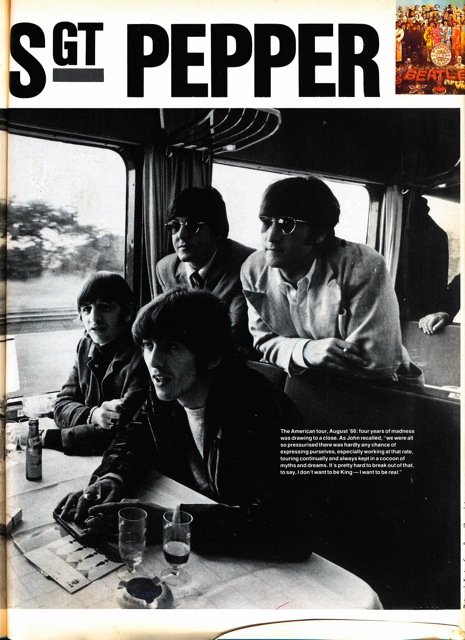
The first dates way back to June 1987 – a time when we were all celebrating the 20th Anniversary of “Sgt Peppers”. Inside there are ten pages of photos and text:

Sadly, there was a “Sgt Pepper Part II” article that was due to be published in the following month’s magazine. It wasn’t on the pile of mags I found in Goulburn….oh well.

The next “Q” magazine I found featured an extensive article about Paul McCartney from July 1989. The headline on the front cover screams: He sings! He plays! He writes his own songs! For  PAUL McCARTNEY OPPORTUNITY KNOCKS! * Now available for live work! *.  Inside there’s a nine-page article about Paul. It begins: “He never expected to be doing this when he was 46 – “We thought 25 was the end of the line” – but Paul McCartney has stoutly refused to give up his day job. Engaged in rustic rehearsals for his first British tour in 10 years, and with a fresh solo album on offer [“Flowers In The Dirt”], he’s preparing once again to be public property. With mixed feelings…”. In the article there’s reference to the number of times McCartney makes reference to his father, Jim McCartney….”a Liverpool cotton broker and part-time musician who brought Paul up after his mother’s death (when McCartney was 14), and who died himself in 1976. One song on McCartney’s new album “Flowers In The Dirt”, is called “Put It There”, after a favourite phrase of his Dad’s”.

Finally, the “Q” magazine with that awesome David Bailey portrait of Paul and John on the cover. It comes from August 1999. Its a pretty simple premise on the part of “Q”. As the century draws to a close why not run a reader poll asking who are the 100 greatest stars of the 20th Century. According to “Q” readers back then the top ten are (were):

10. Michael Stipe; 9. Liam Gallagher; 8. Noel Gallagher; 7.Madonna; 6. David Bowie; 5. Elvis Presley; 4. Bob Dylan; 3. Kurt Cobain; 2. Paul McCartney; and and number one the runaway winner (according to “Q” by a long way)…..John Lennon.

It is kind of fitting to look back and read a magazine like this (from 1999) in this year (2010) when Lennon would have turned 70, don’t you think? Kind of cements the fact that his presence could in fact be enduring. That now, a further eleven years down the track, his music is still around and he’s still held in very high regard by many. There’s an additional article right at the end of the poll headed: “John Would Have Been Proud”. It says: “Yoko Ono, the keeper of the Lennon flame and the Lennon vat of money, telephoned Q as soon as she heard about the readers’ tsunami-sixed endorsement of her late husband’s transcendental magic and generation-straddling stature….”. That article is illustrated with this beautiful photograph:

Enough said.

(see also “Nine Copies of Rolling Stone”)

1001 Songs You Must Hear Before You Die

I was sent a new book the other day. Its called “1001 Songs You Must Hear Before You Die”. Great title.

Its edited by Robert Dimery and is a compendium of entries about the greatest popular songs ever recorded. The book is a companion to his previous work “1001 Albums You Must Hear Before You Die”.  (Click here if you are wondering about what’s on that album list).

The front cover of "1001 Songs You Must Hear Before You Die"

Of course the first place I went was to the index to find where the Beatles appeared.

They have no less than six full entries:  “A Day in the Life”; “Eleanor Rigby”; “Hey Jude”; “Strawberry Fields Forever”; “Ticket to Ride”; and “Tomorrow Never Knows”.

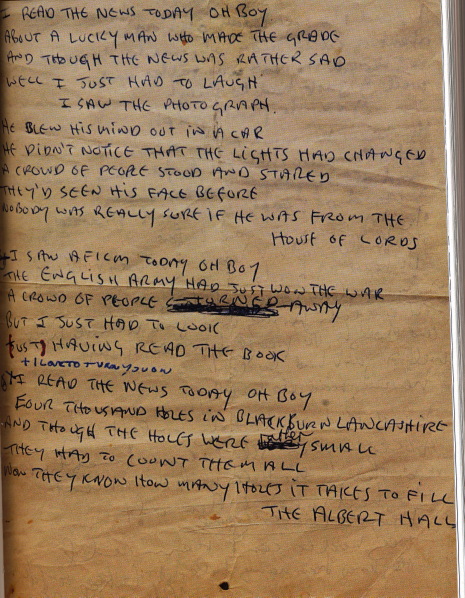
The entry for "A Day in the Life" uses an image of John Lennon's hand-written lyrics for the song

Interesting that “A Day In The Life” features so prominently as it was also recently nominated as the number one Beatles song in Rolling Stone’s Beatles special edition “Top 100” list.

The Beatles are matched in the book only by Elvis – who also featured with six entries. Bob Dylan, by way of comparison, has four entries…..

John Lennon as a solo artist gets one (a little predictably its “Imagine”); Paul McCartney gets one (perhaps surprisingly its “Maybe I’m Amazed”); George Harrison gets one (“Awaiting On You All”); and Ringo…well, Ringo doesn’t get any solo mentions.