As interest grows around the release this week of the new Martin Scorsese documentary on the life of George Harrison, much is being written about the documentary and it’s importance.
Many will know and respect the work of US travel writer and novelist Paul Theroux. He has written a lengthy but insightful piece for The Daily Beast on “Living in the Material World”. It carries the title “The Sixth Beatle?” and contains the byline “George Harrison was liberated by rock and roll. Turns out Martin Scorsese was too”.
Theroux postulates that the two men, the musician and the film-maker, have more in common than might first appear:
“He had everything so young—everything was possible. He was struggling for his own creativity—for his creativity to be recognized,” Scorsese said. “But he wouldn’t have been able to create All Things Must Passhad he not gone through the relationship—the family relationship of the Beatles. That’s what you pay. That’s the price you pay.”
Scorsese’s solemn tone suggested that he could relate to George’s ups and downs. George’s Dark Horse tour was savaged, in the way that some of Scorsese’s greatest films were initially greeted with bewilderment and scorn.
Scorsese agreed, saying, “In my own work I was in those areas not once but many times—coming up against a brick wall. I thought Raging Bull was the last picture I was ever going to make. A number of times I was that way, flattened out, and coming back. As George’s story developed there was no way I couldn’t relate to it in my own life.”
The George Harrison official site now has full details of the release of the book, DVD, BluRay and Deluxe editions of “Living in the Material World” – the new Martin Scorsese documentary about George’s life which will premiere on TV next week.
In the US the film will be broadcast exclusively on HBO on October 5 (Part 1) and October 6 (Part 2). A US home video release will follow in the Spring.
In the UK the film will debut on October 4 in selected cinemas for one day only, then on October 10 it will be released in the UK released on home video on DVD, Blu-Ray and Deluxe Edition versions:
On the Harrison site now there’s a short extract from the film with Ringo talking about the recording of “Here Comes the Sun” which will give you taste of what is to come.
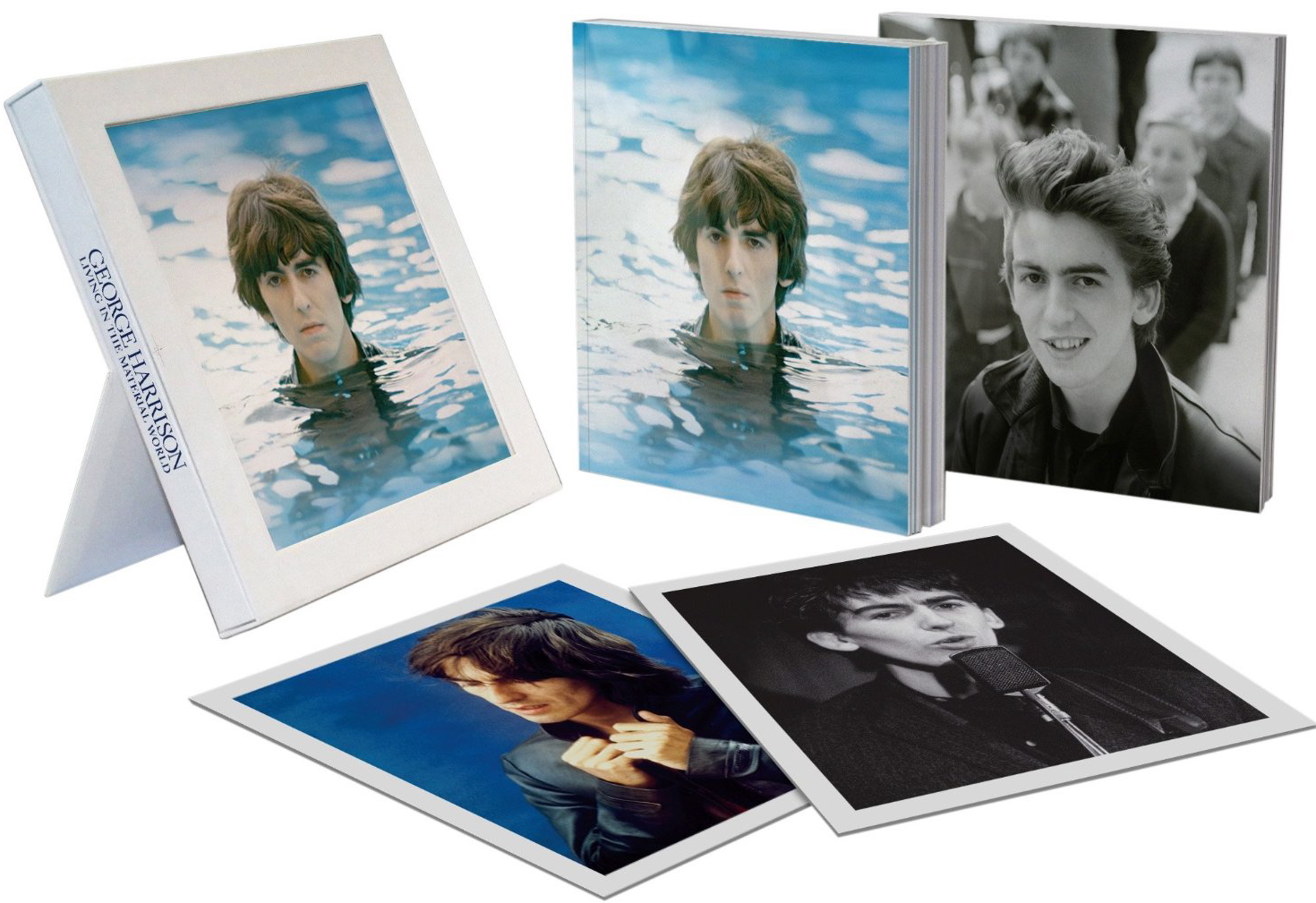
The Deluxe edition box set looks like it will be very nicely packaged:
The limited-edition Deluxe version is packaged in a bespoke picture frame box with easel back for photo display, and includes 2 DVDs and one Blu-ray featuring the film plus 11 bonus features, a 10-track CD of previously-unreleased recordings, 2 exclusive lithographs, and a 96-page book.
CD:
My Sweet Lord (demo)
Run Of The Mill (demo)
I’d Have You Any Time (early take)
Mama You’ve Been On My Mind (demo)
Let It Be Me (demo)
Woman Don’t You Cry For Me (early take)
Awaiting On You All (early take)
Behind That Locked Door (demo)
All Things Must Pass (demo)
The Light That Has Lighted The World (demo)
DVD Bonus Features: (*exclusive to Deluxe Edition)
George plays the Uke*
Deep Blue*
Here Comes The Sun
Dispute and Violence
Growing Up In Liverpool*
Paul McCartney
Neil Aspinall*
The Inner Light*
Jeff Lynne
Gordon Murray*
Damon Hill
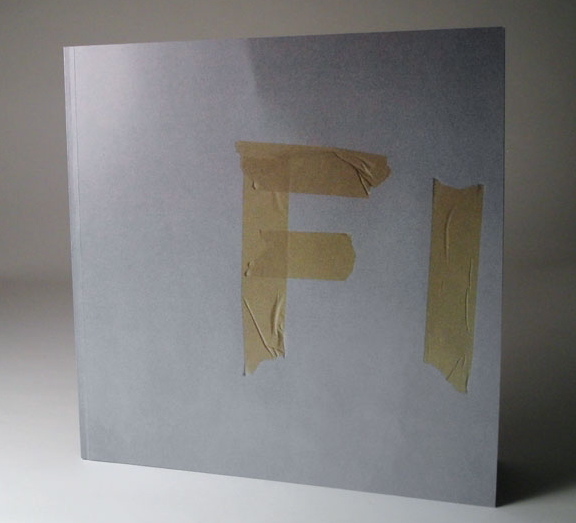
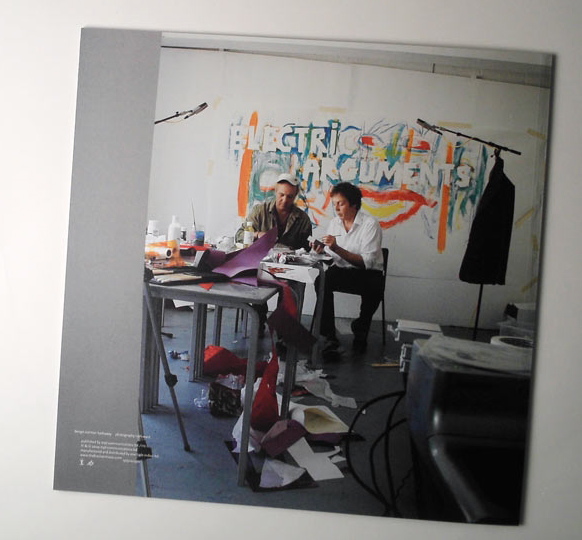
This latest addition to my collection was released a little while back now – but I’ve just been able to secure a very nice copy of the very rare and limited deluxe edition of the 2008 release “Electric Arguments” by The Fireman (a.k.a Paul McCartney and his producer, Youth). This is a truly over-the-top item, a bespoke, hand-made item with unique artwork and inserts.
Before we get to the details of this release, we’ll take a look at the standard editions first – and there are a quite a few. Just the scale of the different versions and artwork created for the “Electric Arguments” project is staggering.
The most common commercially-released and readily available version of “Electric Arguments” came out as a single CD. McCartney was between labels at the time and so in the UK it was released and distributed on the One Little Indian label. In the US it was released and distributed by ATO Records.
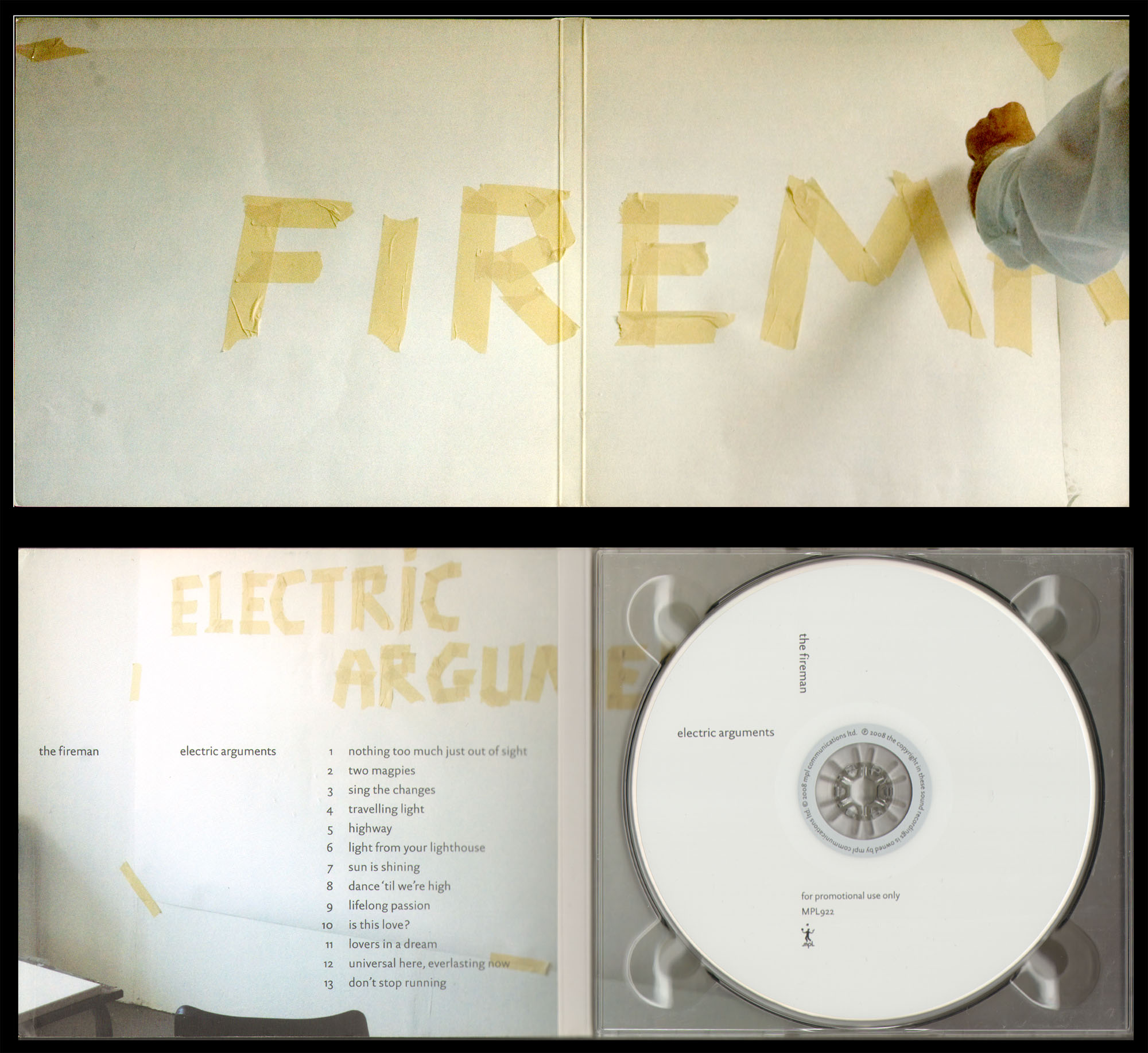
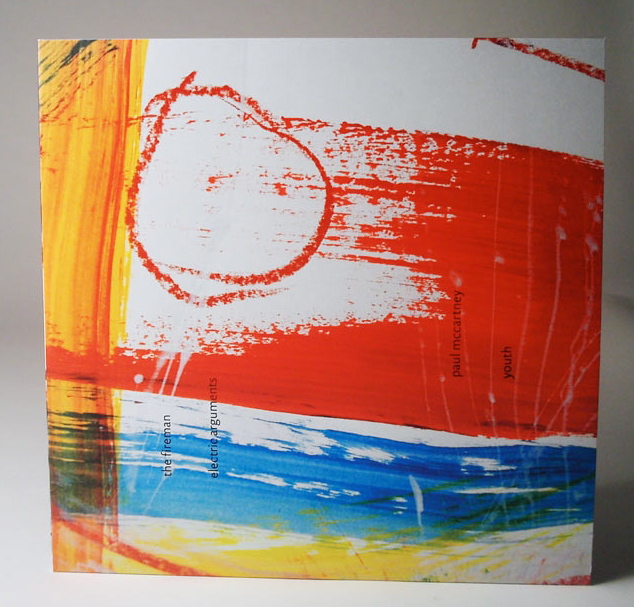
In both markets the CD is contained in a cardboard digipac gate-fold, the cover of which looked like this in both markets:
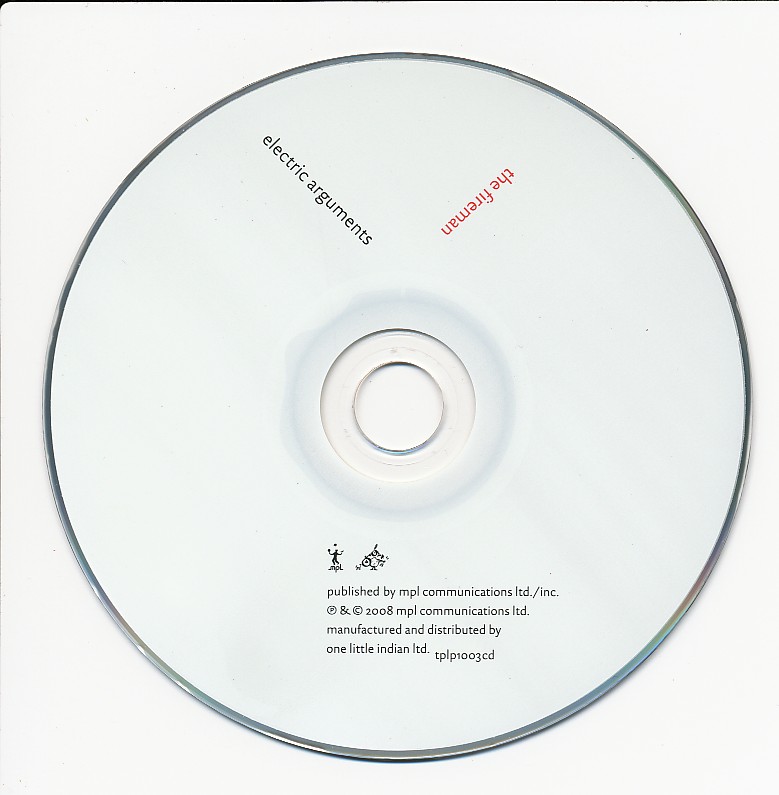
The black square and those circles that look like stickers on the front of the cover are actually printed onto the shrink-wrap plastic around the cardboard cover, not on the cover itself. The only difference between the two countries is the catalogue number and the printing on the CD – which carries the name and logo of the record company releasing it:
The UK CD released and distributed by One Little Indian – catalogue number: tplp1003cd
The US released – distributed by ATO Records – catalogue number: 88088-21640-2/ATO 0063
(If you’d like to see larger versions of any photographs here just click on the image).
The CD gate-fold contains a 46 page booklet, which slips into a pocket inside the cover:
This official, commercial CD release was supported by three promotional CDs. These were only sent to music reviewers and to radio stations. The first contained exactly the same 13 tracks as the commercially-released album, but with a completely different cover and artwork, and different printing on the CD, which states “For promotional use only”. Its catalogue number is MPL 922:
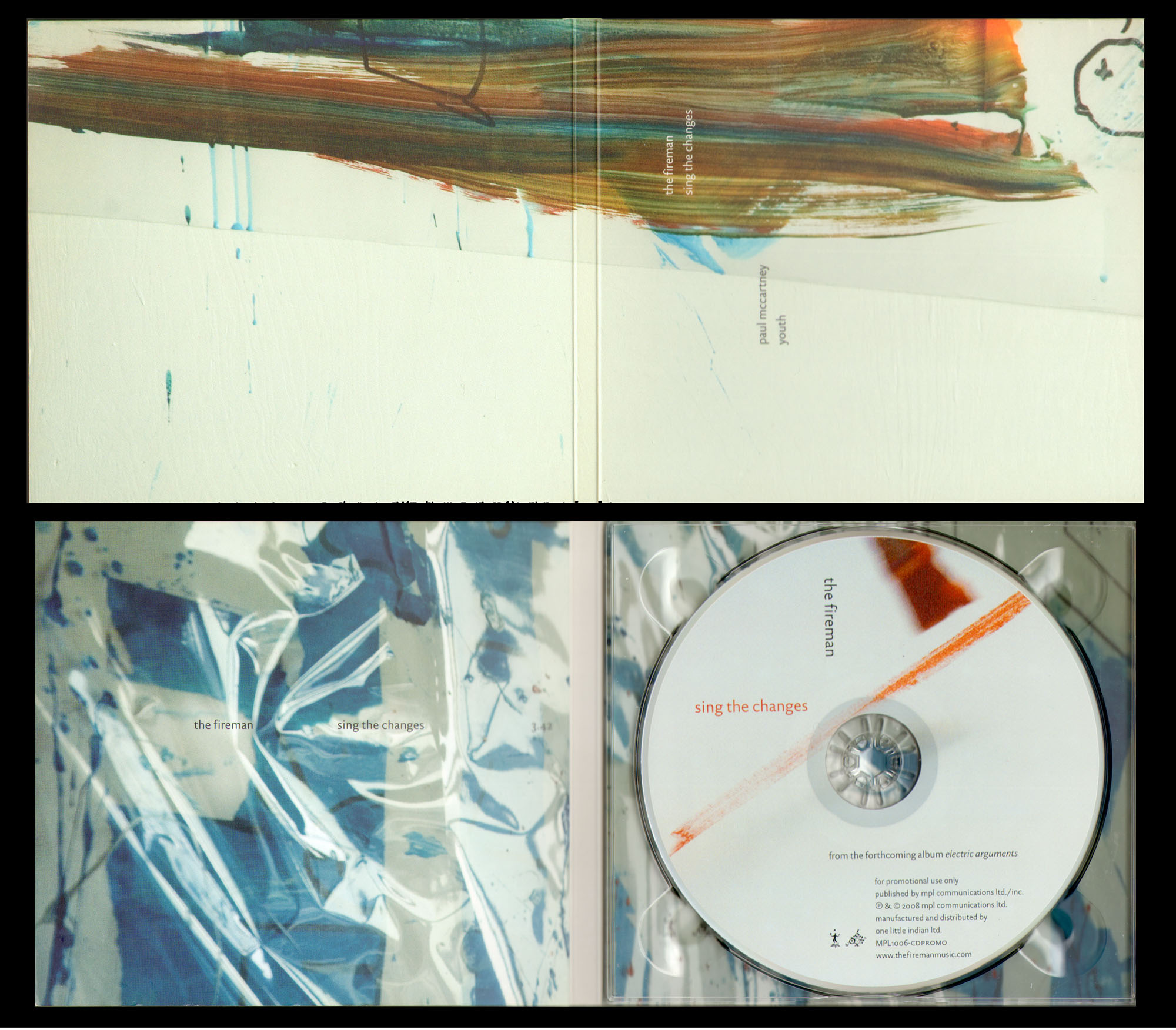
There were also two separate, single-song promo CD’s sent to radio stations to promote the album. The first (and more common one) was for the song “Sing the Changes”. It came out in a simple digipac gate-fold with unique artwork and printing on the CD itself. It has the catalogue number MPL 1006-CDPROMO:
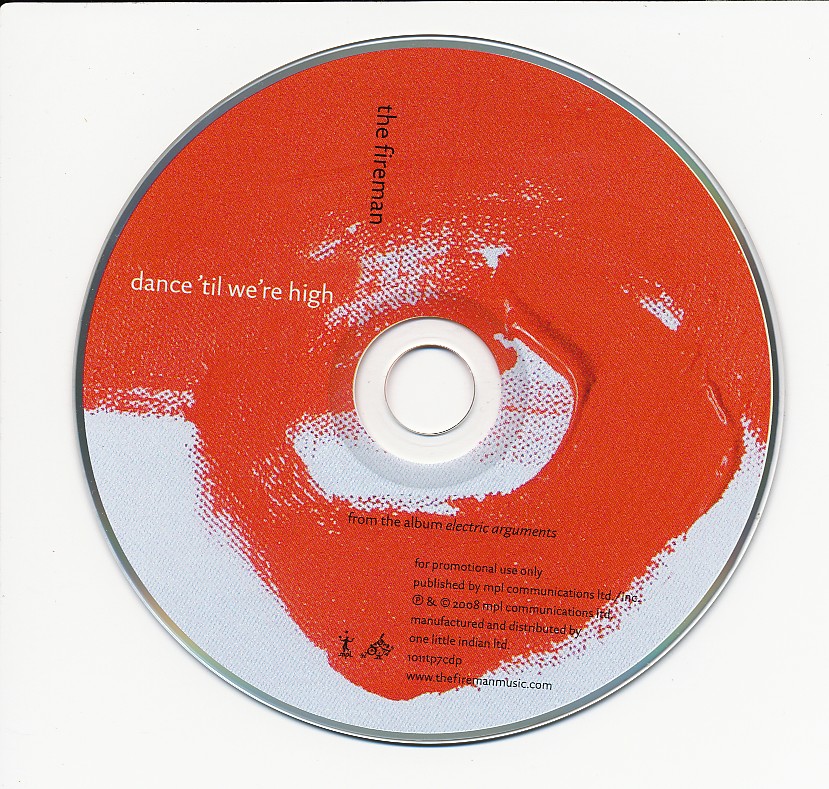
The second and more difficult to find promo CD contains the song “Dance ’til We’re High”. Again, like the other two promos, it is presented as a unique picture disc mounted on a clear tray in a digipak cover with alternate artwork. The CD printing was different, and the catalogue number is 1011tp7cdp:
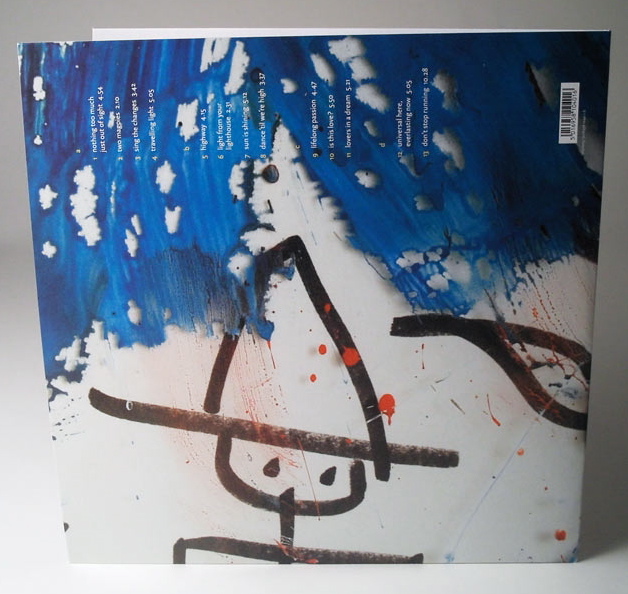
There was also a limited edition, double LP vinyl pressing of the album (catalogue number tplp1003/5016958 1040 1 6) which has been Direct Metal Mastered at the Abbey Road studios. The two LPs are in a gate-fold cover which has the same artwork as used on the outside as the commercially released CD. Its pressed on heavy 200g vinyl and the cover comes inside a thick clear-plastic outer with a yellow limited edition numbered sticker on the outside:
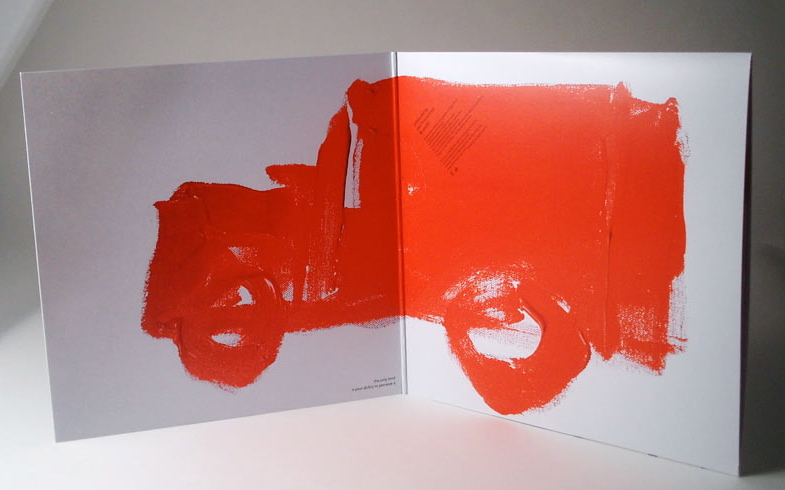
Inside the gate-fold cover of the 2 LP set is a 15 page book:
The LP packaging also contains a CD copy of the album which is held in a simple custom slipcase envelope. Here are the front and rear covers:
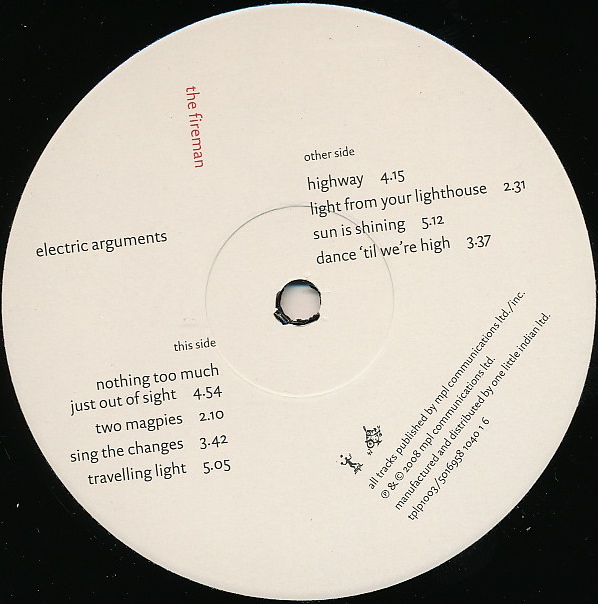
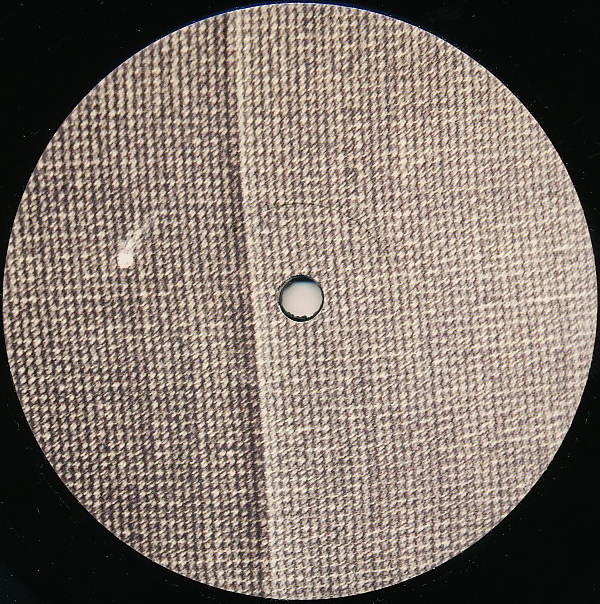
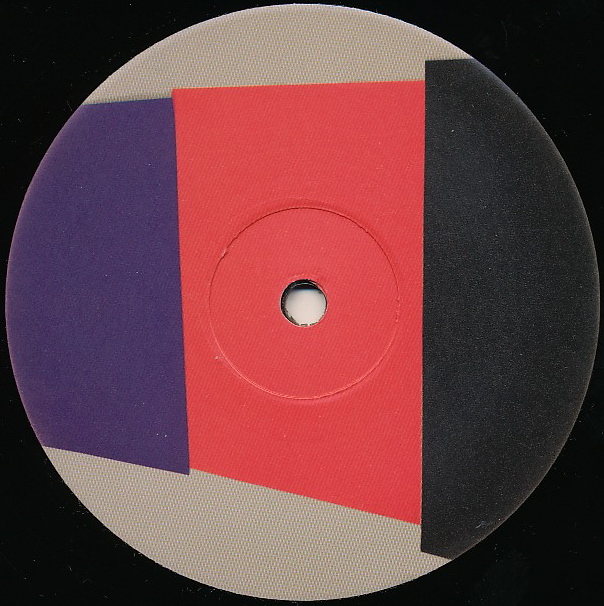
The records themselves are also held in thick paper inner sleeves with even more artwork on them and each side of the the vinyl has these custom designed labels:
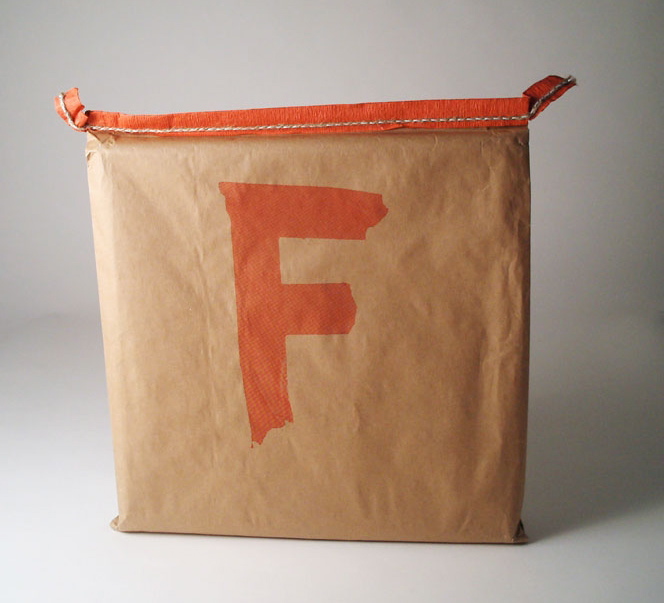
Then, a few months after all these releases above (LP and CDs) came what could only be described as a very special and limited edition of the whole “Electric Arguments” project. This version has the catalogue number TPLP1003DE. It came sealed in this large, custom-made paper satchel:
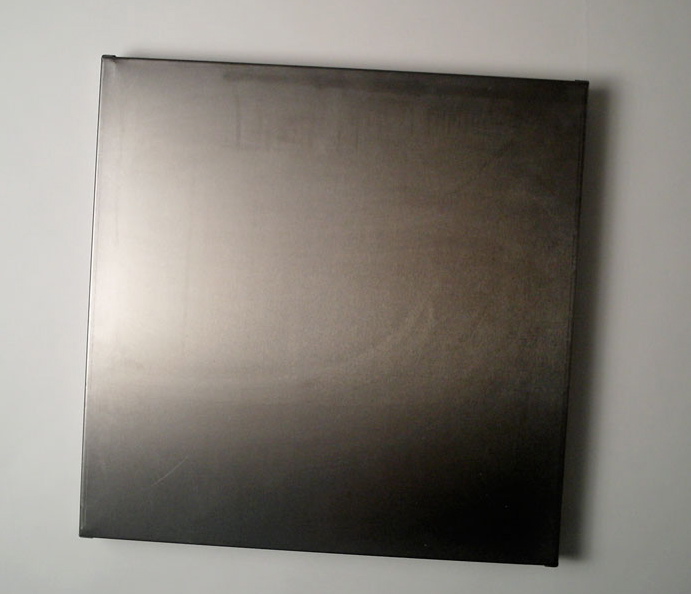
Inside the bag is a heavy-duty steel box:
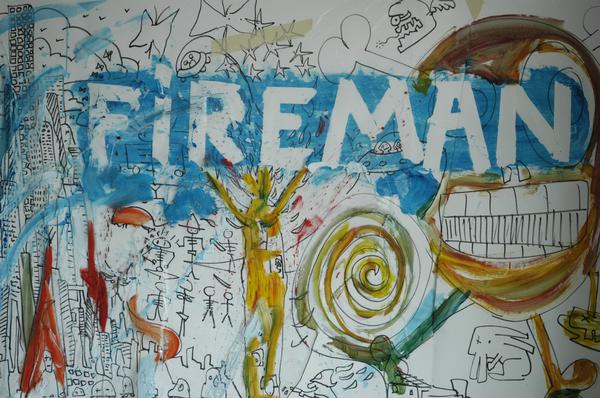
Before we go any further, I must acknowledge and talk about the person responsible for the entire design of The Fireman “Electric Arguments” packaging. Art direction for the project (including the standard CD, promo CDs and the Deluxe Edition) is by Norman Hathaway, a creative director based in Brooklyn, New York who has done a number of other projects for Paul McCartney, including CD covers and books. It’s not the first time Hathaway has done a Fireman album either – he also did the artwork for “Rushes”, Paul McCartney’s second collaboration with producer Youth. His work on “Electric Arguments” though, particularly this Deluxe Edition, is very special. I’m really not sure how they manufactured it – parts really do have the look and feel of being hand-made.
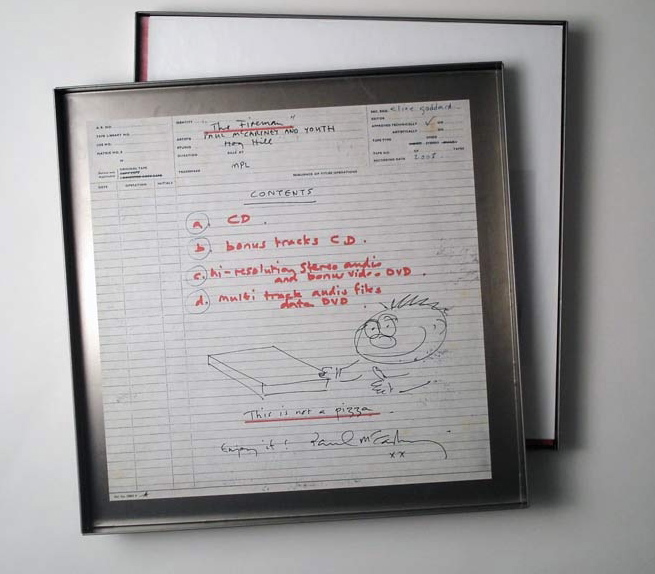
Once you open the metal box you see this sheet pasted inside the lid:
As you can see, its like a replica studio reel-to-reel tape box, listing the contents, and stating it was recorded at May Hill, McCartney’s own Hog Hill Mill studio in Sussex in the UK. Down the bottom it says in Paul’s handwriting: “This is not a pizza. Enjoy it: Paul McCartney x x “. The next thing you see is the first of two art prints, exclusive to the box set:
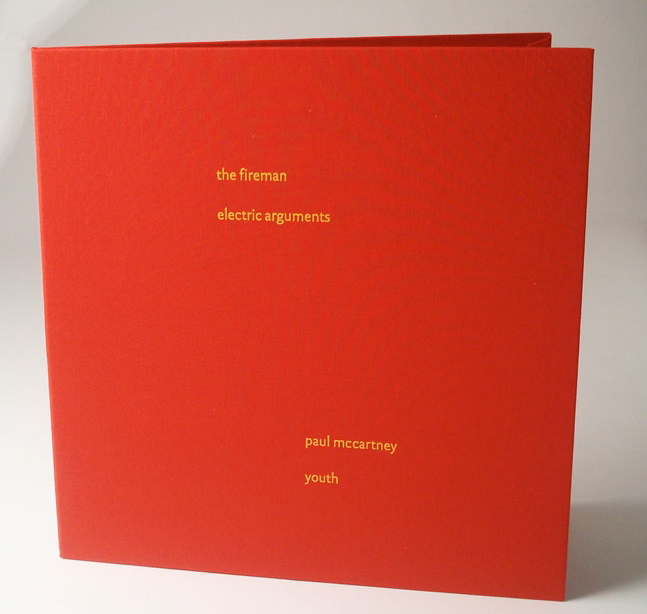
Underneath these is a deep red cloth-bound folder, with embossed writing on the outside saying “the fireman – electric arguments – paul mccartney – youth”:
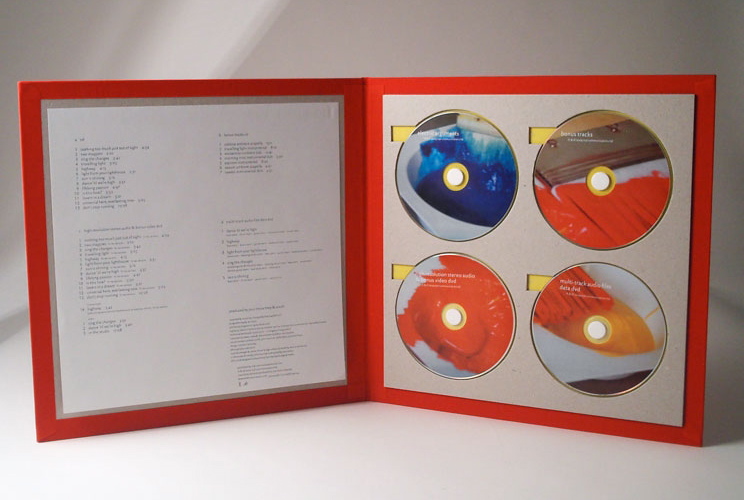
This opens up to reveal not one, but four separate CDs:
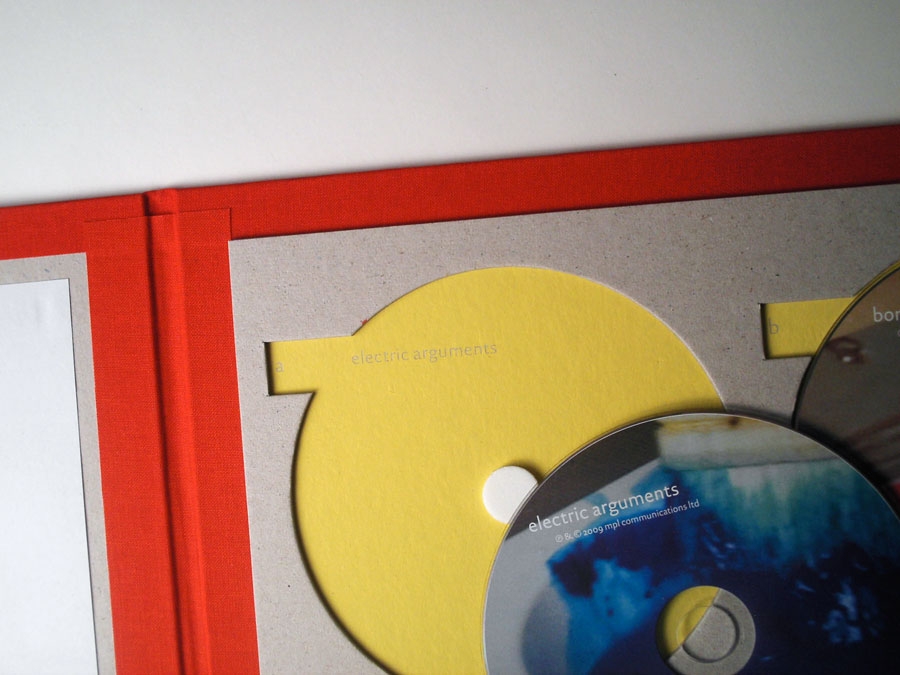
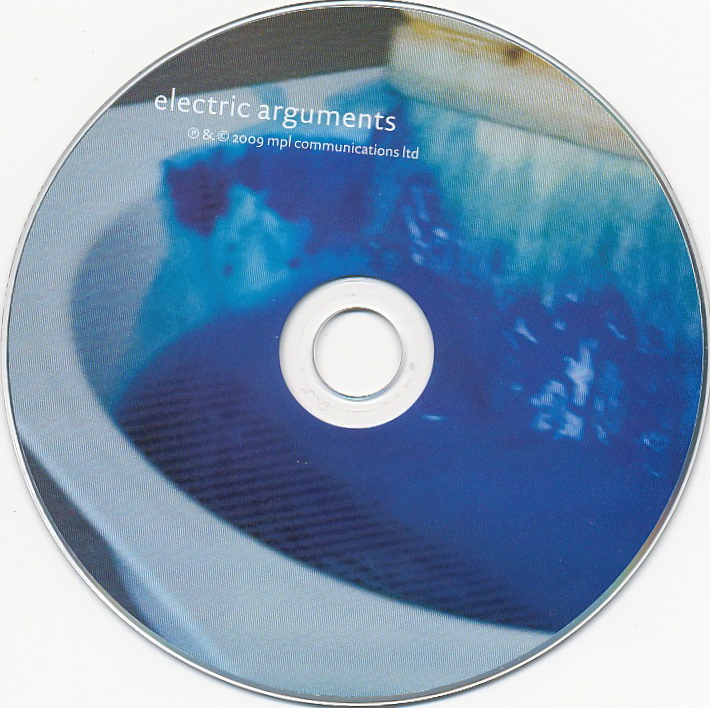
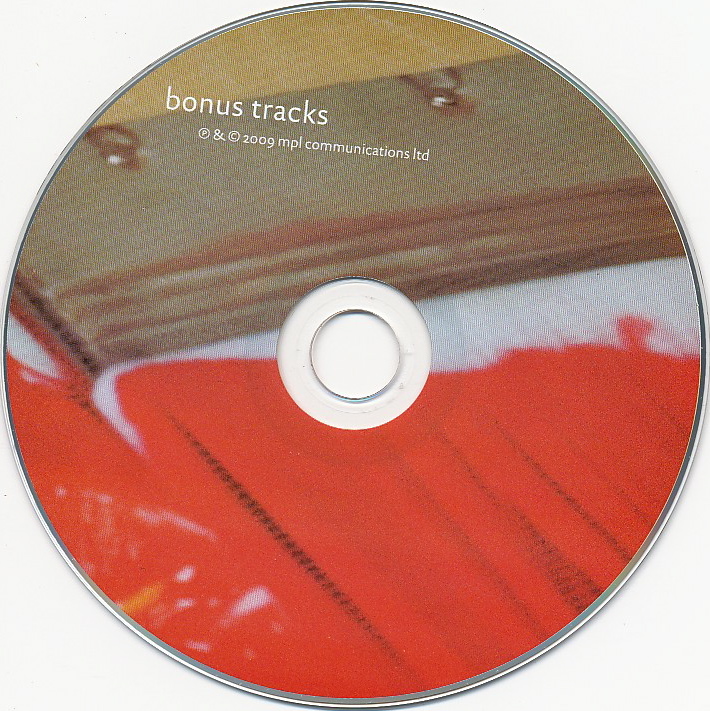
This CD holder looks truly handmade – you can see it in the image above, and it has nice detail touches, like the words “electric arguments” imprinted on the cardboard inside the place where the CD sits. The CDs are: the full 13-track album (with different printing on the disc to the standard release); a 7-track bonus song CD; a high resolution stereo audio CD with all 13 songs from the standard edition, plus a further bonus track (a dub-step remix of the song “Highway”), and three videos (“Sing the Changes”, “Dance ’til We’re High” and “In the Studio”); and finally a multi-track audio files data DVD containing mixing “stems” for 5 different tracks from the album:
OK. Then comes a 46 page art book, which is the same as the booklet you get with the standard CD but in a larger format:
And then a copy of the 200g vinyl 2 LP set:
Really, for the collector and completist it is all fairly breathtaking!
Finally, to get an idea of the Deluxe packaging in it’s entirety here are two short videos of owners “un-boxing” their copies. The first is a bit rough in places, but it gives you a good idea of the way this entire project is put together:
Paul McCartney’s first ballet score “Ocean’s Kingdom“, with choreography by Peter Martins, has it’s gala debut tonight at the Lincoln Center in New York.
In this short film Paul McCartney and Peter Martins discuss the creation of the work. It includes some great rehearsal footage – including a sneak look at some of the costumes for the dancers by Stella McCartney, audio clips from the score, and shots of Paul working with the company:
There’s also this very short preview teaser from the McCartney site:
The vinyl and CD of the score are available for pre-order on Amazon.
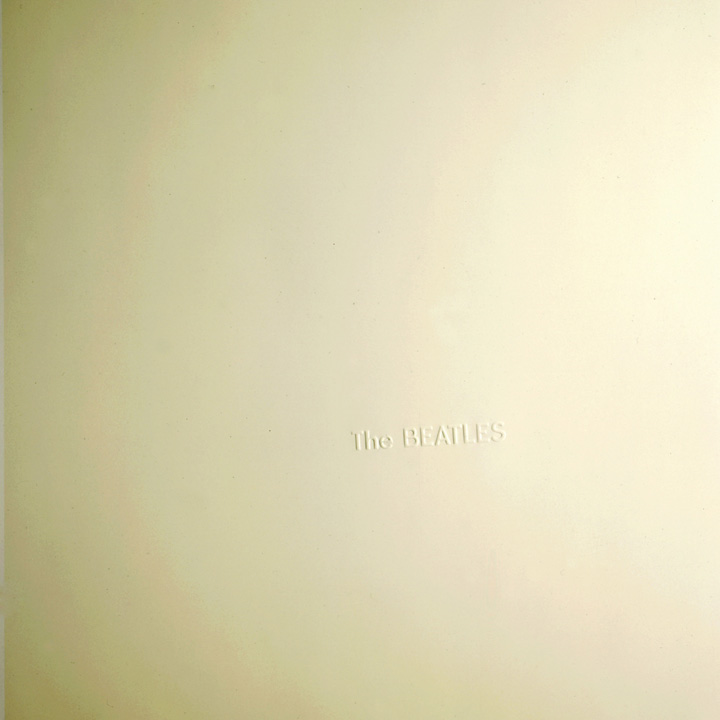
Sad news this past week that Richard Hamilton, the British artist who helped the Beatles design the minimalist cover and inserts (a large photo-collage poster and four individual photographs of the band) for their famous “The Beatles (White Album)” LP has died at the age of 89.
Released in 1968, no Beatles collection would be complete without it. Its simple plain white cover was the very antithesis of the one which immediately preceded it – the comparatively gaudy and colourful “Sgt Pepper”.
I really don’t have to write much here as there is such a lot of good information on the web already about Richard Hamilton and the work he did on “The Beatles (White Album)”.
In fact there’s one extensive website dedicated to just about everything you’d care to want to know about it, including a page on the design, and a page about Hamilton the artist himself.
Earlier posts about the Beatles actually being photographed holding either their own records or those of other artists have generated a lot of interest. People are sending in more photos from their own collections and so its time to do a Part Four.
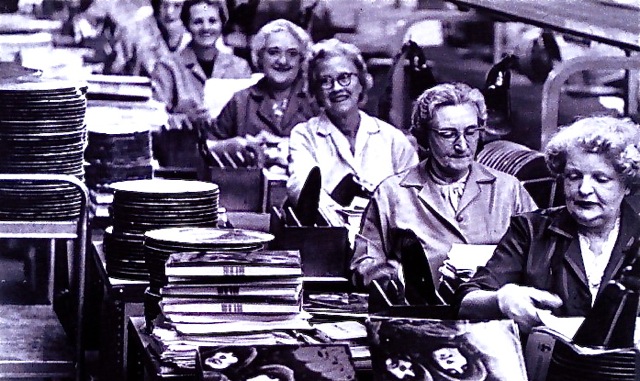
This first one is not exactly the Beatlesthemselves holding records, but William sent in this great shot of ladies on the EMI Records factory floor packing stacks and stacks of copies of “Rubber Soul”. Its from 1965:
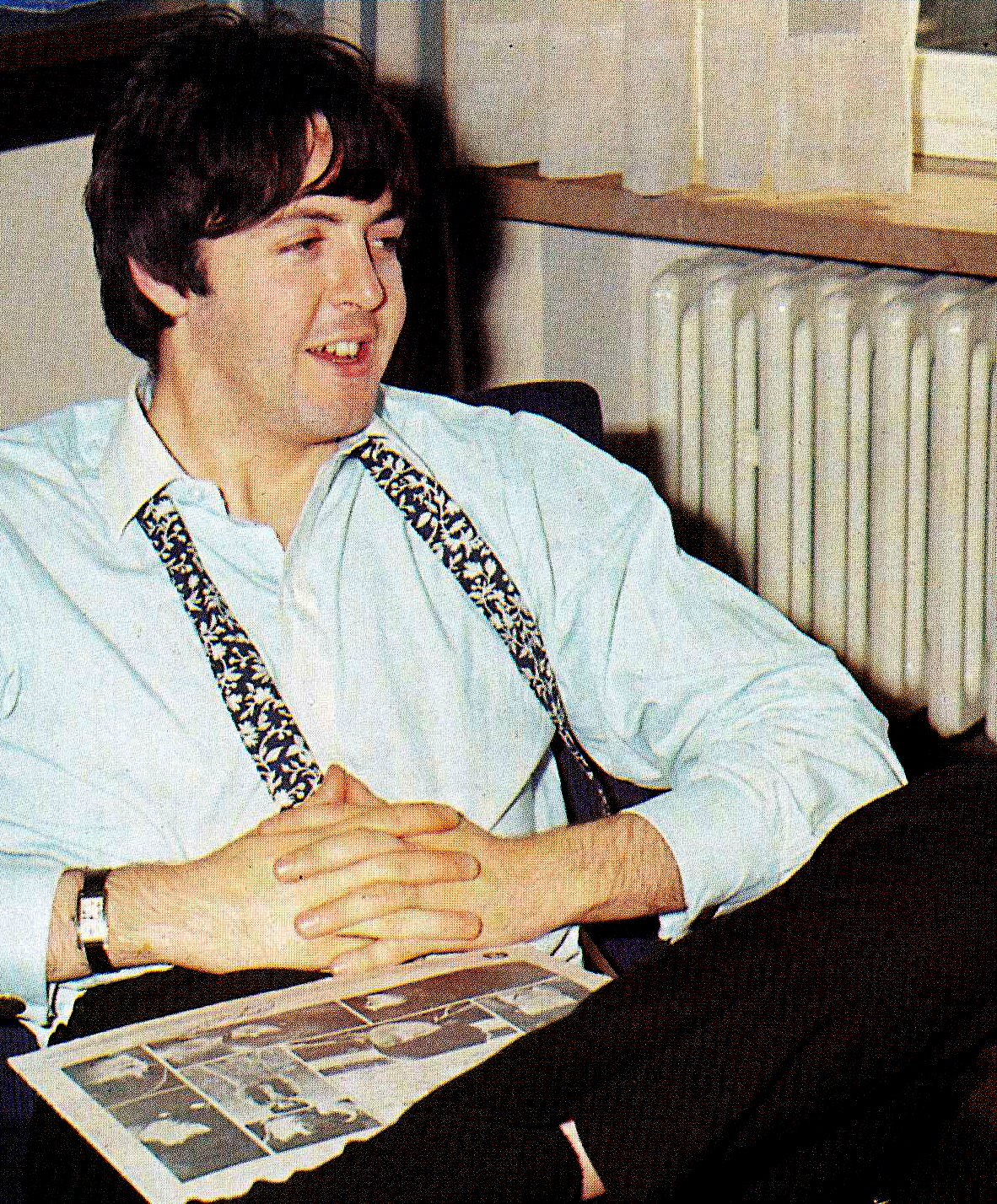
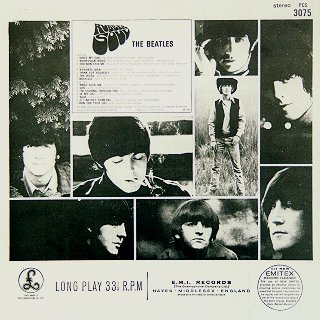
I reckon that is a beauty. Speaking of “Rubber Soul”, Claude Defer in France sent this great photo of Paul McCartney with a copy of that LP – you can see the rear cover of “Rubber Soul” in this shot:
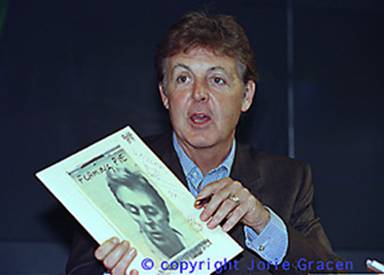
Claude also sent in this more recent one of Paul, this time with his 1997 LP “Flaming Pie”:
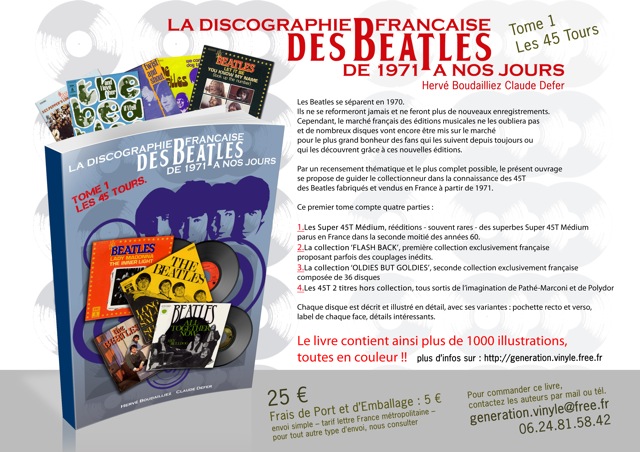
Thanks Claude! (Claude Defer by the way is a prolific Beatles collector and expert and he has released a book in France, with his co-writer Hervé Boudaillez, about the Beatles French Discography, from 1971 following the split of the Fab’s until the last vinyl record manufactured in France. The text of the book is in French, and Volume One (which deals with the 45 rpm releases) has 200 pages, including more than 1,000 pictures (sleeves and discs, with details):
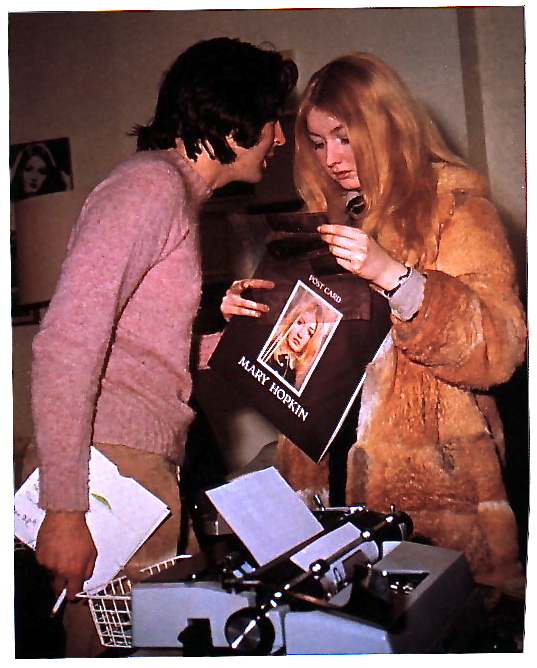
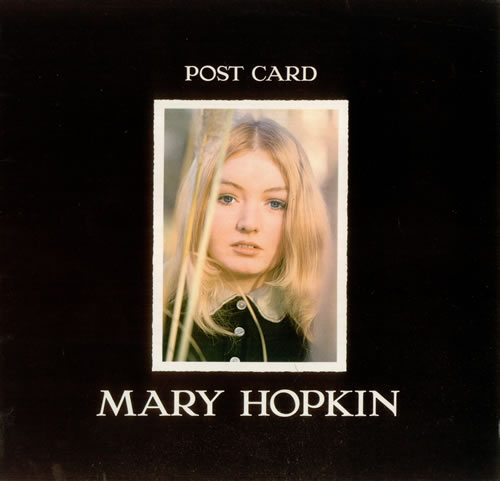
Back to the Beatles with Records – Part Four…and some more Paul McCartney, this time with Mary Hopkin in 1969 with a copy of the LP he produced for her, “Postcard”:
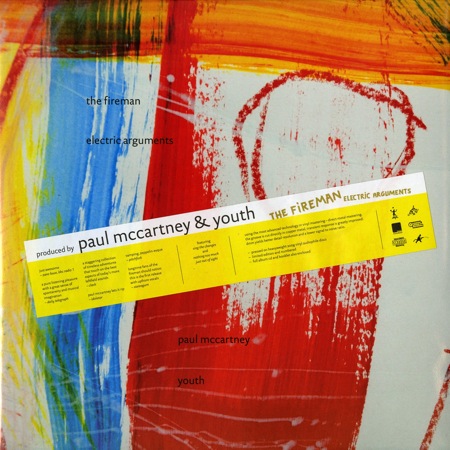
I also found this McCartney one. It’s Paul at the HMV store in London for the 2008 release of “Electric Arguments”, a collaboration with Youth released under the pseudonym The Fireman (more on the Super Deluxe edition of this album soon). Here he’s holding the double vinyl LP pressing:
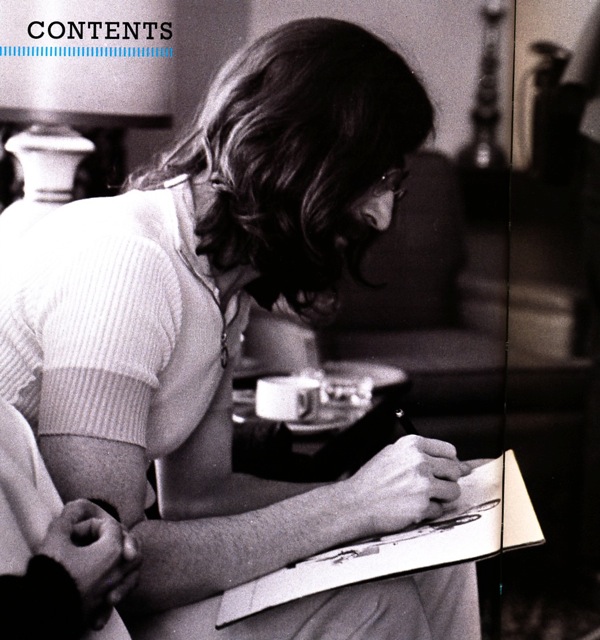
This next one comes from Canadian Jerry Levitan, author of a great little book called “I Met the Walrus“, which details John and Yoko’s visit to the city of Toronto in 1969 and an extended personal brush with fame he had with the couple. He took this photograph of John Lennon signing and drawing a caricature of himself and Yoko for Jerry on the cover of the “Two Virgins” album:
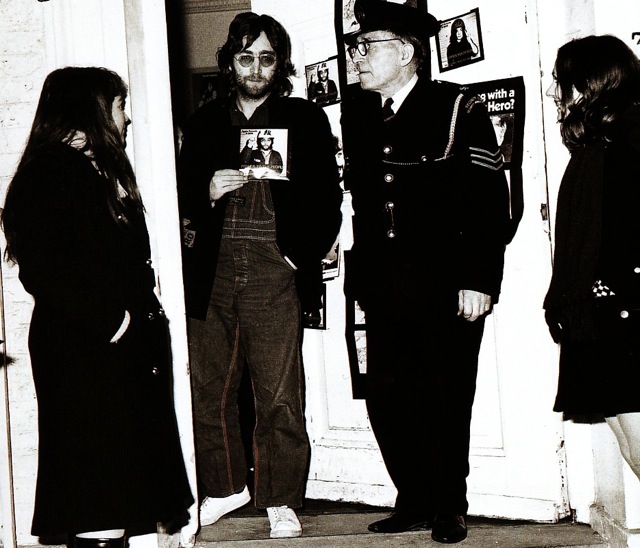
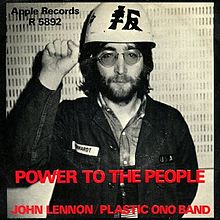
And finally to another one of John, taken on the publicity campaign trail in 1971 for his single “Power to the People”:
To see more Beatles with Records see: Parts 1, 2, 3, 5 , 6, 7 , 8 and 9.
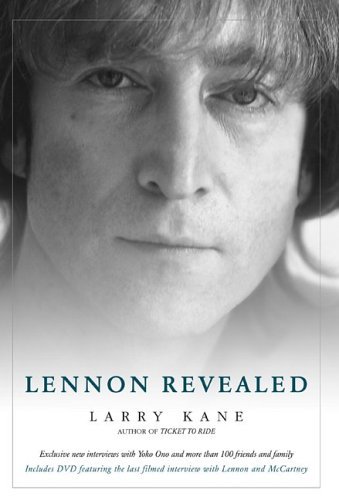
I was able to drop into a local second-hand book and record fair this week and picked up a couple of things. One of them was this book by Larry Kane about John Lennon:
“Lennon Revealed” came out in 2005.
Larry Kane is an award-winning journalist with a career that spans more than 45 years. From that 45 years in the business he says the thing that stands out most—and the thing people ask him about most often—is his adventure as the only American journalist to travel in the official Beatles entourage during the legendary 1964 and 1965 tours of North America. Kane told that story in his previous book: “Ticket to Ride: Inside the Beatles’ 1964 Tour that Changed the World“. In “Lennon Revealed” he digs deeper to give his take on story of John Lennon.
The book has a website with a variety of features so you can delve more into what it’s about, including this extract which will give you an idea of the flavour and approach taken in “Lennon Revealed”. I haven’t had time to read the book yet – but there’s a pretty good review here, and author Larry Kane promotes his book in a couple of online videos here.
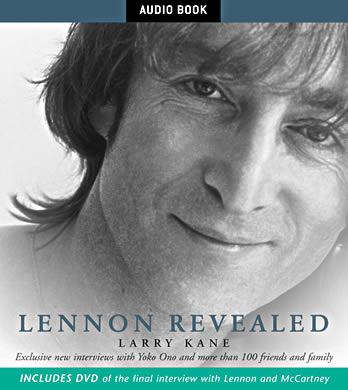
Searching on the web I found the cover photograph for the audio book of this same title and it has a different image. Clearly taken during the same photo session as that of the book I include it below because its such a good one of a happy John Lennon:
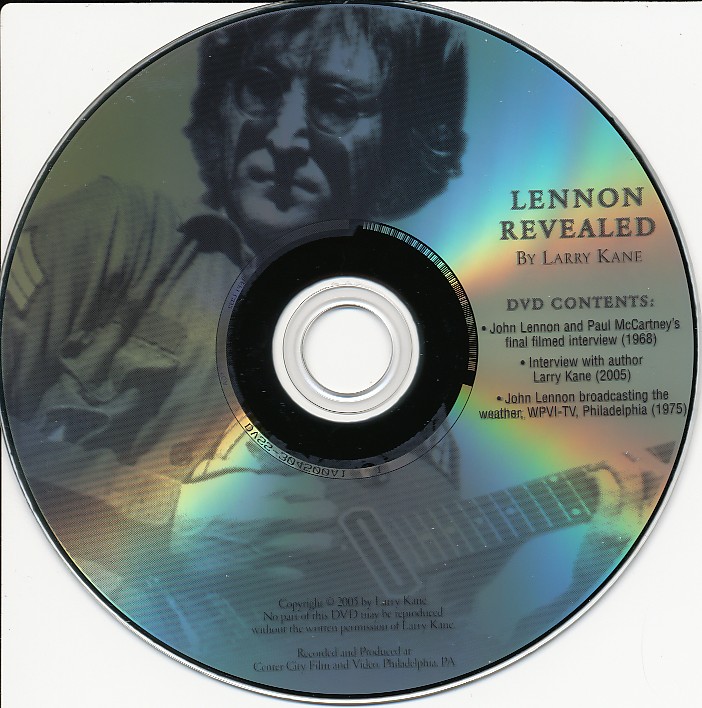
Included with the book (and with the audio book edition) is a bonus DVD. It features Larry Kane being interviewed by Andre Gardner (host of the radio show “Breakfast with the Beatles”); the full footage of John and Paul’s last filmed interview together conducted by Larry Kane (part of which was seen in the “Beatles Anthology” and the “Imagine: John Lennon” film); and a clip of the legendary 1975 “Lennon weather report” from “Action News” in Philadelphia:
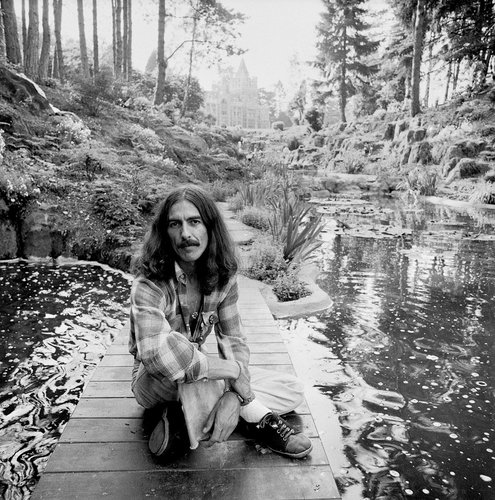
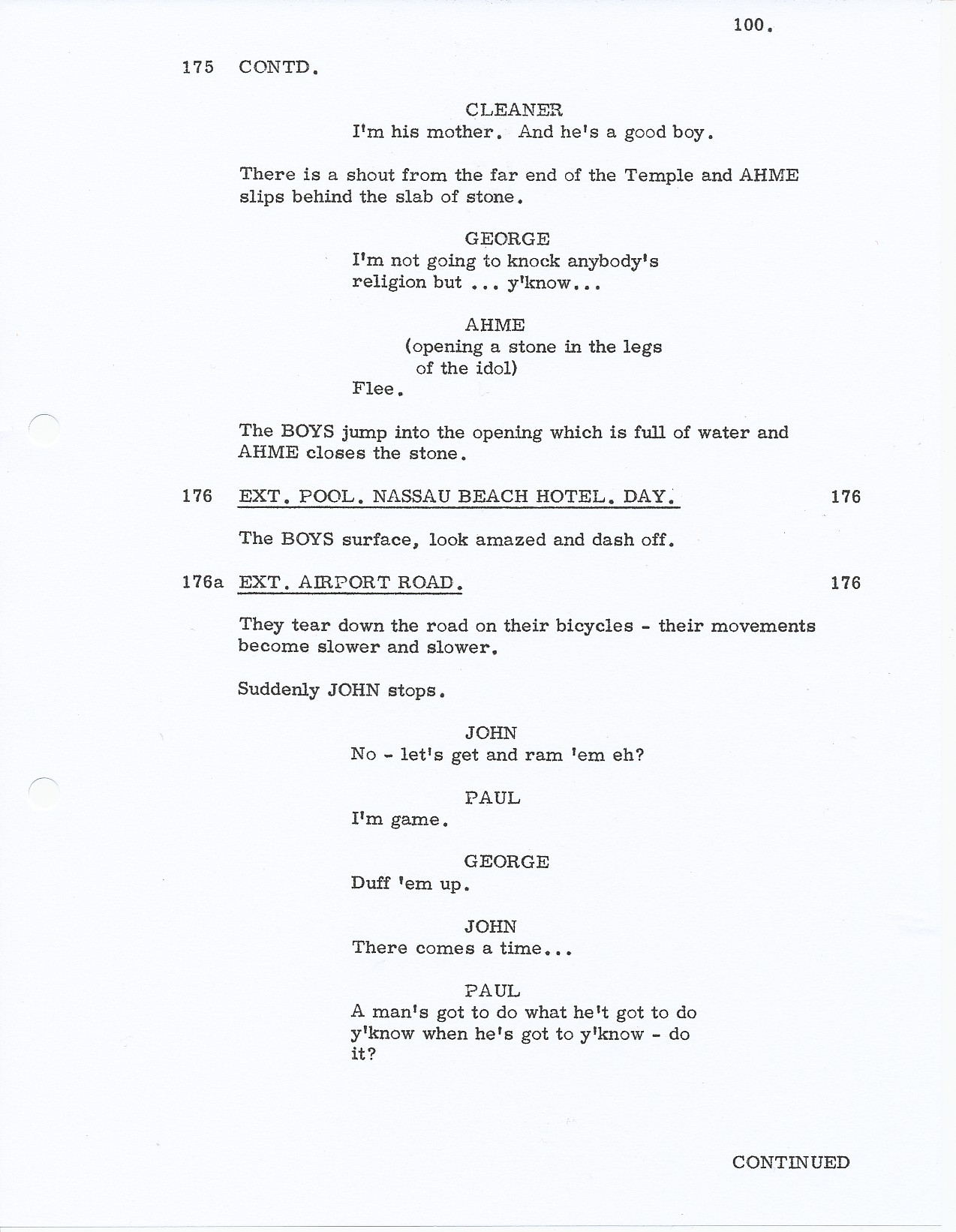
The photograph of George Harrison chosen for the publicity posters (and for the front cover of the accompanying book) of “Living In The Material World“, the forthcoming Scorsese-directed film, CD and DVD is impressive:
It is simple and arresting. Quite peaceful really, and it got us wondering about where it was taken, and why. After a bit of online research we think we can confirm that it was taken during the filming for the Beatles movie “Help!”, released in 1965.
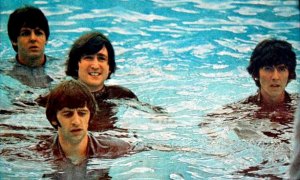
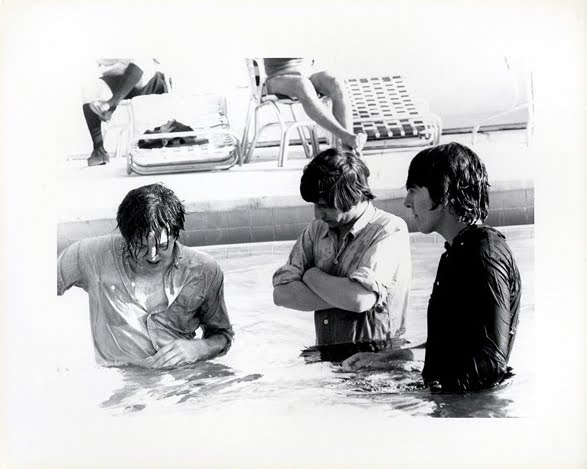
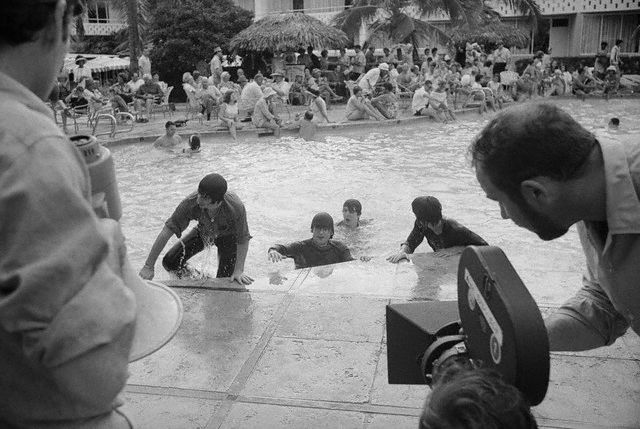
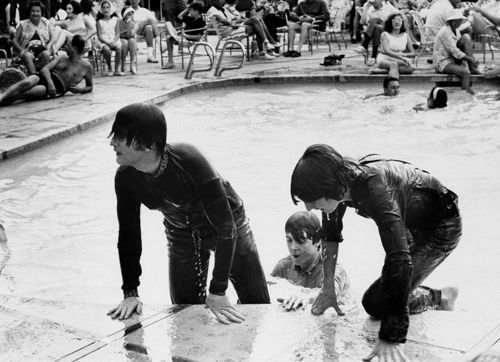
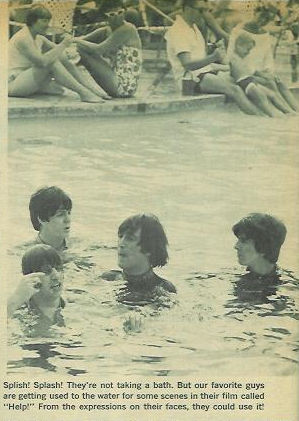
In the film there’s a very brief scene – shot at New Providence in the Bahamas – where the Beatles, after being chased by the bad guys, end up in the swimming pool of a resort hotel with all the guests looking on as they emerge wet, bedraggled and fully-clothed from the pool.
Here’s the page in the “Help!” script with the scene:
So, I think the Scorsese poster and book cover photo was from filming on this day, February 23, 1965 at the Nassau Beach Hotel. Here’s some photographic proof:
Interestingly, in 2007 Martin Scorsese wrote a short appreciation of the film “Help!” for the book that comes with both the standard and the deluxe DVD box set re-issue of the film. Perhaps that’s where he came across the striking image of Georgefor his latest project?
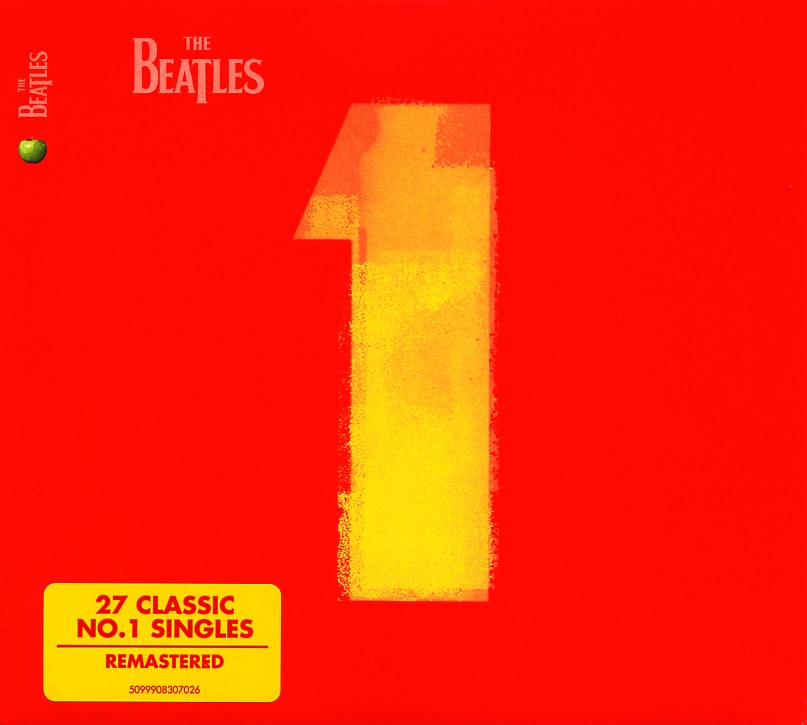
It was released today (Friday, September 2) in Australia:
This is the re-issue, in newly remastered form, of “The Beatles 1” compilation which first came out in the year 2000. As the sticker on the front cover says: “27 Classic Number 1 Singles – Remastered”. Here’s the rear cover:
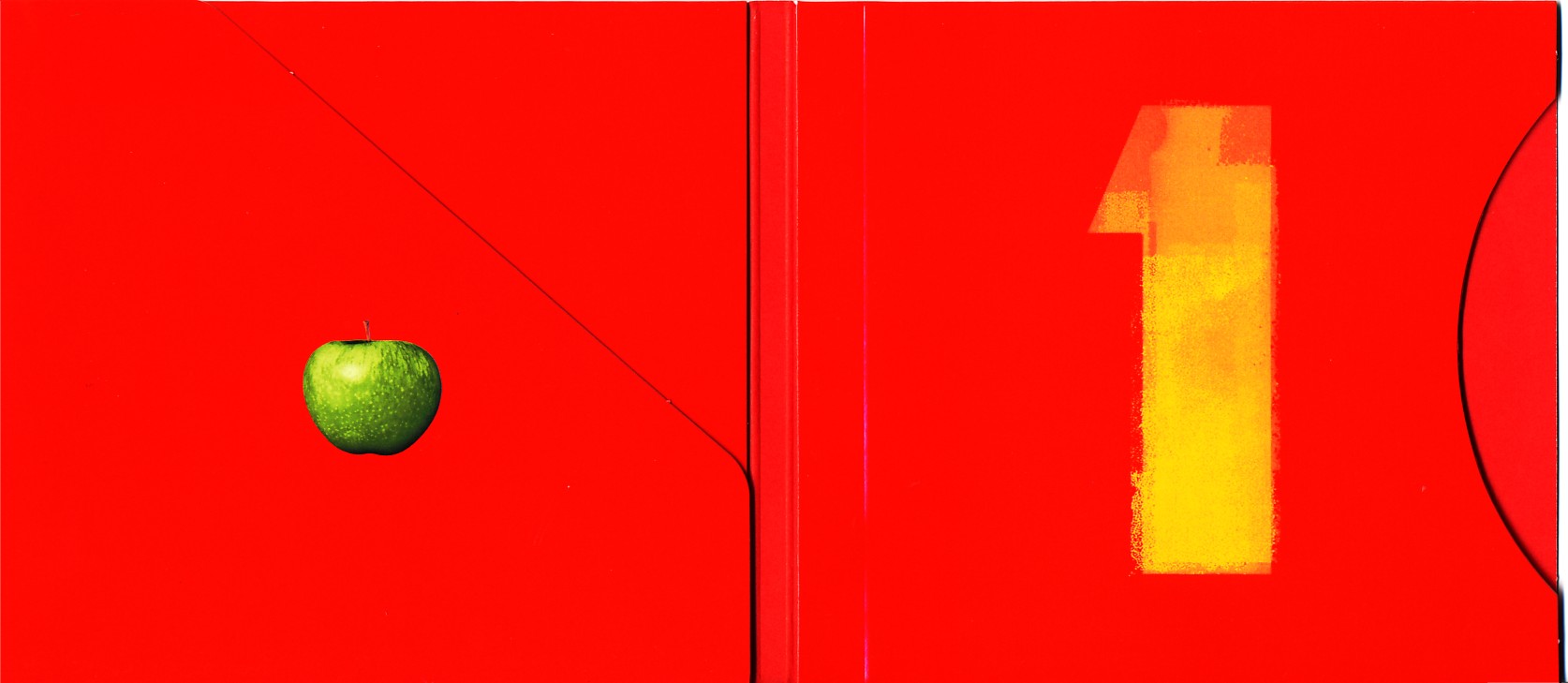
These are the remasters done at the same time as the big release of all the albums back in 2009. It comes in a cardboard gatefold sleeve that’s in the same format as all the 2009 re-issues.
Below is the front cover of the booklet, which despite some speculation that it would be different, has exactly the same 30 pages and layout as the 2000 issue:
Each page is dedicated to a particular song and gives the recording place and date, chart information and full colour photographs of various record sleeves of that single from around the world. Even the CD printing is the same as the 2000 issue:
We recently moved offices at work and I needed something to brighten up my new space. So I got onto Ebay and found this Beatles poster, which I’ve had framed. Here’s the Ebay image (its not my office!):
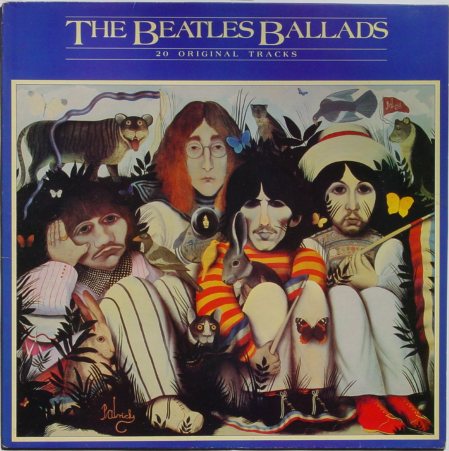
I got it because it’s the painting used on the front cover of “The Beatles Ballads” which, when it was released back in 1980, spent some seven weeks in the number one spot on the Australian charts:
The cover art is by an artist simply known as ‘Patrick’ (you can see his signature at the bottom left in the image above).
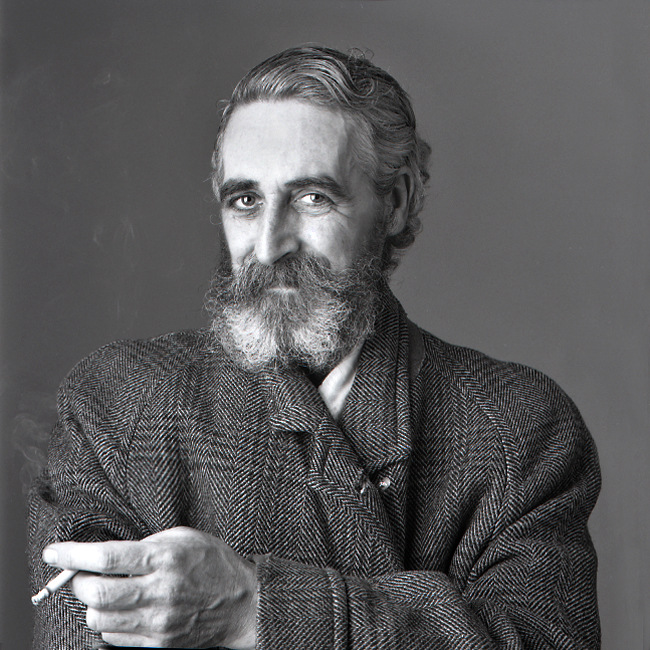
‘Patrick’ is actually Scottish artist and playwright John Byrne. His art was popular with the Beatles and in 1968 they commissioned him to create a possible cover for what would become “The Beatles” (also known as “The White Album”). Byrne’s style and concept appears to support the original working title of that album which was “A Doll’s House”. Turns out it wasn’t used then, but the work re-surfaced as the cover for the compilation album “The Beatles Ballads” twelve years later.
John Byrne (b.1940) has had an interesting and varied life. He grew up on a notoriously tough housing estate in Paisley, not far from Glasgow in Scotland. He escaped work in a carpet factory to study at the Glasgow School of Art, and carved out a successful dual career as both an artist and a writer.
John ‘Patrick’ Byrne’s biography reflects his diverse talents. He’s designed theatre sets and record covers. His play “The Slab Boys” (1978) won him the Evening Standard’s most promising playwright award. The very successful, six-time BAFTA award-winning television series “Tutti Frutti” appeared in 1987. These writing achievements developed alongside his prolific artistic career, which took off in 1967 when Byrne assumed the identity of ‘Patrick’ for a solo show at the Portal Gallery in London. A prolific painter, illustrator and print-maker, Byrne today boasts a range of works held in many prestigious public collections.
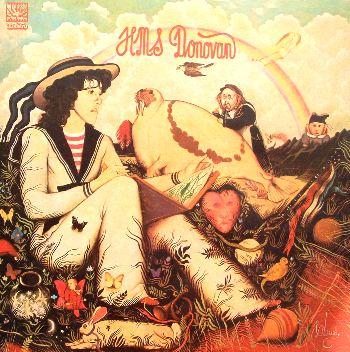
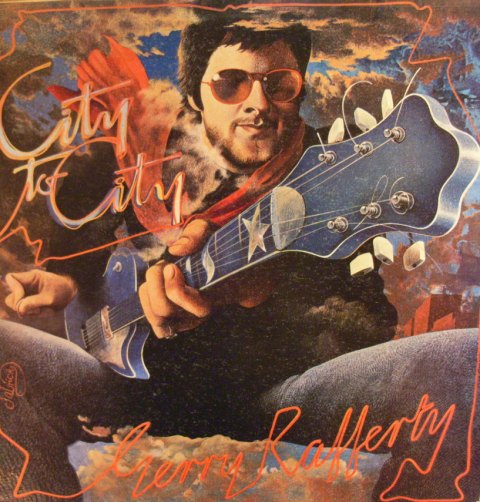
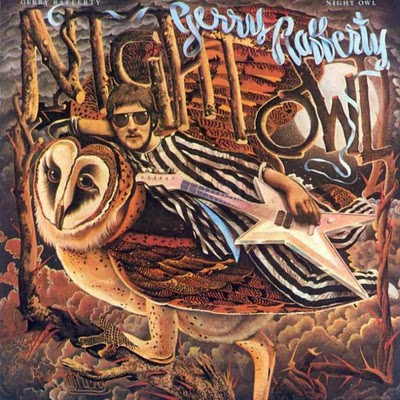
His record cover credits include works for Donovan, Gerry Rafferty and Billy Connolly:
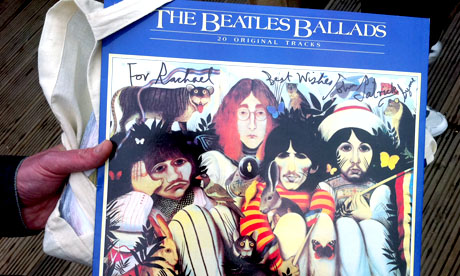
Two weeks ago, at the Edinburgh International Book Festival, Beatles fans got to catch up with Byrne who was there to publicise his new illustrated childrens book called “Donald and Benoit: A Story of a Cat and a Boy“. He signed this copy of “The Beatles Ballads” as John ‘Patrick’ Byrne:
* Photo credit: John Byrne portrait by Trevor Yerbury

 As interest grows around the release this week of the new Martin Scorsese documentary on the life of George Harrison, much is being written about the documentary and it’s importance.






















 Beatles Blog