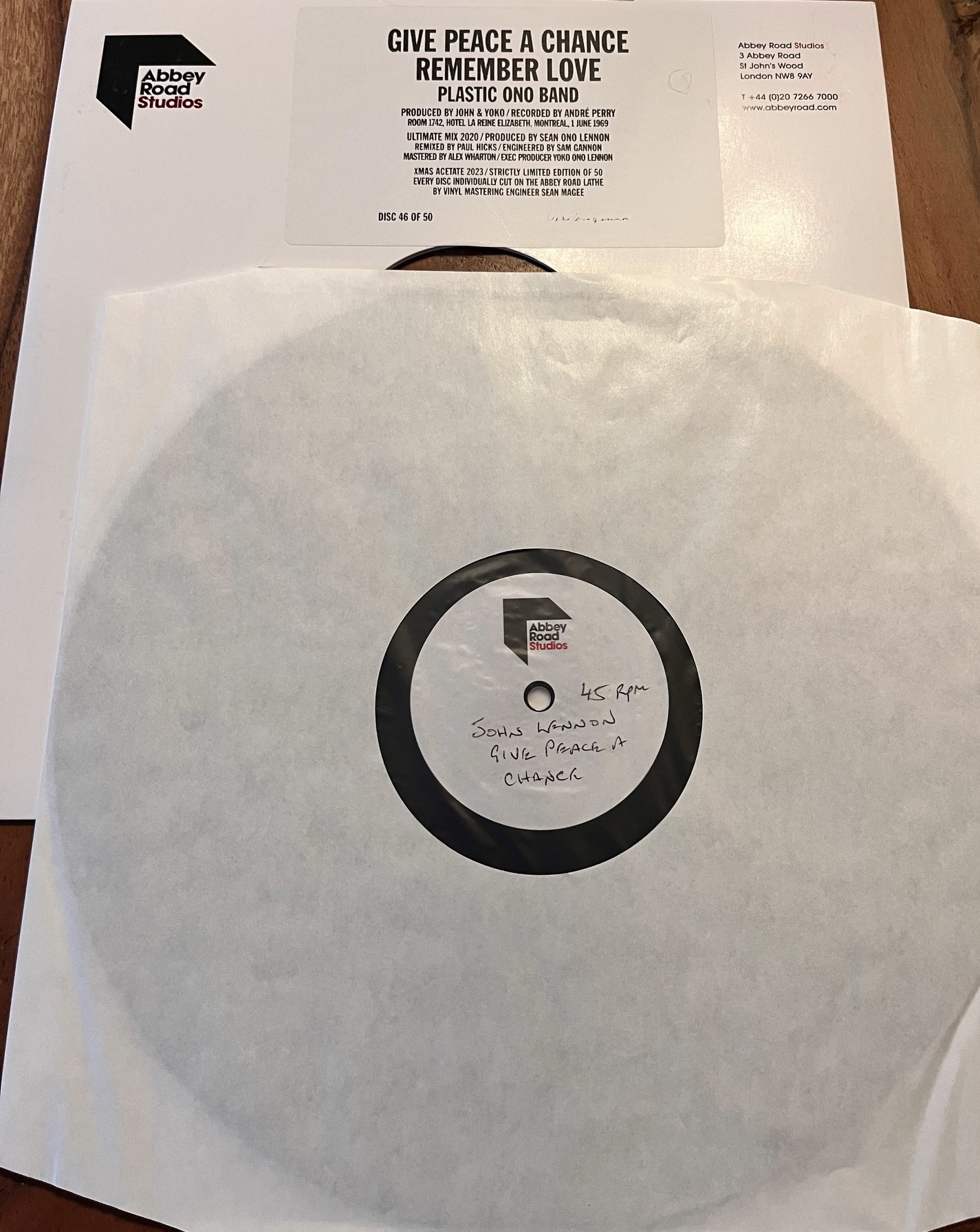
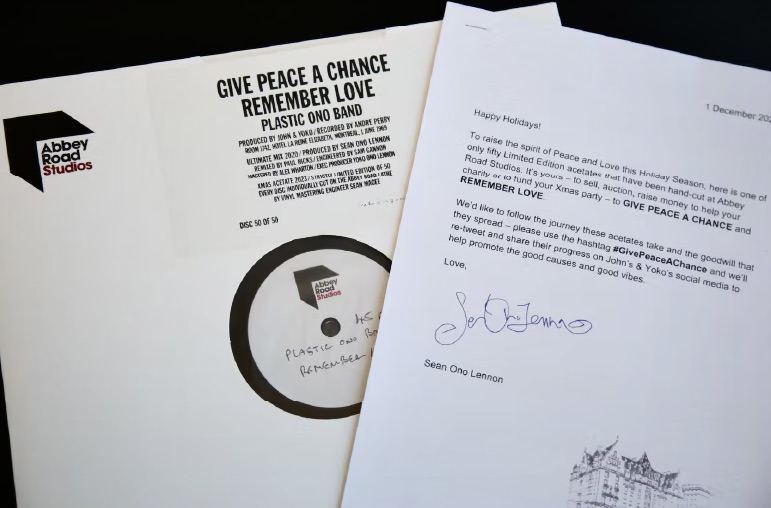
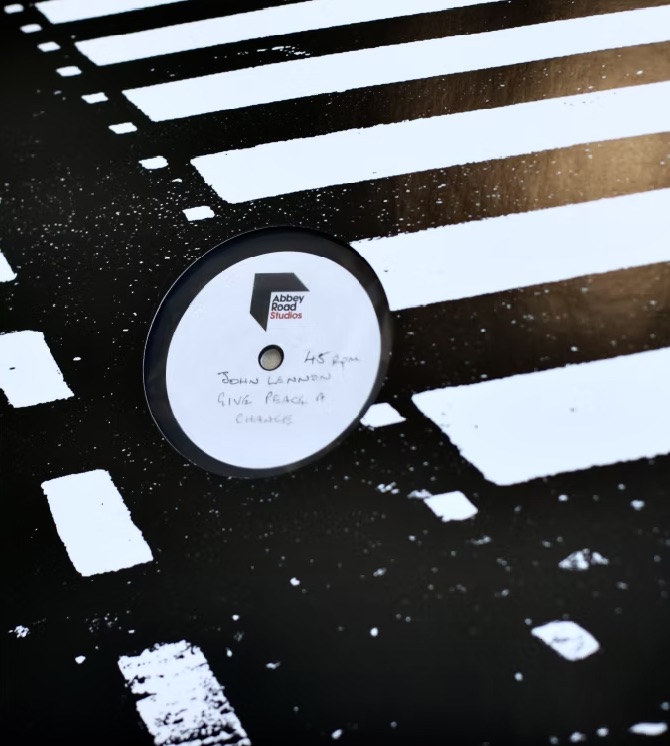
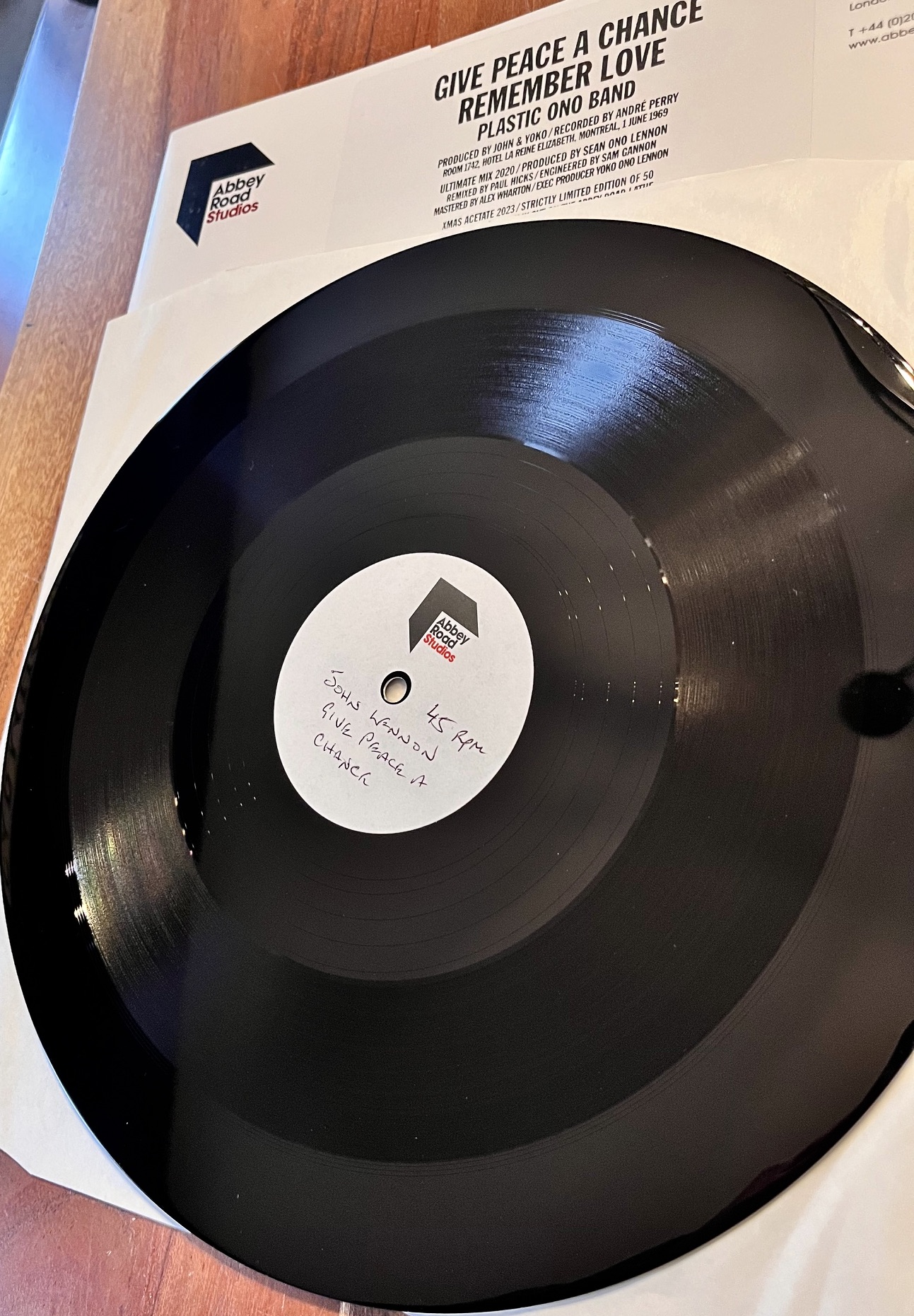
One of our readers has been in touch asking about how to get a valuation on a very unusual promo copy of Sgt. Pepper’s Lonely Hearts Club Band.
They write: “I have a radio station promo copy of Sgt. Pepper I won from them in a contest in 1967. Black/white label, songs in a different order from the released album. Etched serial numbers are SS10077-01A and SS10077-01B. Have you any suggestions for getting it appraised?”
While we don’t know the exact name of the radio station which ran the promotion, you can see some handwriting on the label that indicates it might possibly have come from a station called WCFL. According to Wikipedia WCFL is located in Chicago and is today on the airwaves there broadcasting as a Christian Adult Contemporary station. However, there’s also an online WCFL run by some nostalgia buffs with a sound similar to what it would have sounded like when it was one of Chicago’s leading Top 40 music stations. Back in the sixties WCFL’s coverage of the Beatles 1965 and 1966 U.S. tours was provided by a disc jockey named Jim Stagg, who traveled extensively with the group.
The station also began a weekly British Countdown program with British DJ Paul Michael, so it is quite feasible they had some sort of exclusive record giveaway competition in 1967.
The mystery around this one though is that no one else seems to have ever seen this record. It is not listed amongst Discogs’ 1176 versions for example and, having asked around the community, others have doubts about its authenticity and also can’t find any information about it. Some of the concerns raised include:
no promo markings of any kind on the labels
no performers printed anywhere
no record company, composers, or publishers listed
a minor spelling mistake in the LP title itself
several not quite correct song titles
two tracks missing (‘Sgt. Pepper’s Lonely Hearts Club Band (Reprise)’ & ‘A Day In The Life’)
and several song timings that differ with the originals
One friend thinks it’s not even a «Not For Sale» record, but simply a pirate vinyl.
It would be interesting to know if the music on the disc is actually the Beatles, and not a cover group or even orchestral/instrumental versions of the songs – though that would have been difficult to pull off quickly if the album was genuinely a 1967 radio “giveaway” at the same time as the Pepper LP US release.
As you can see, the disc looks like it has had a hard life but would probably clean up and play OK if you had a record cleaning machine.
So, what do you think? Very interested to hear your thoughts! Is this a genuine collectors item?
P.S. We suggested the owner get in touch with Perry Cox, the well-regarded valuation expert in all things Beatle. If anyone has any other suggestions on who to speak to, thoughts or knowledge about this one please chime in.
Just in time for some holiday listening The Beatles have quietly launched a new official 6-part podcast celebrating the legacy of the band.
Written, produced and presented by someone close to the band, music historian Kevin Howlett, it features interviews with John, Paul, George and Ringo, as well as many other musicians and producers including George and Giles Martin, Dave Grohl and Mark Ronson,
The podcast documentary ties in with the 50th anniversary reissues of the ‘Red’ and ‘Blue’ compilations and also unpacks the story behind the band’s final single, ‘Now And Then’.
Part 1 of The Beatles’ Legacy is divided into three chapters and deals with The Beatles 1962-1966. You can find it here.
One of our readers (Guy in the USA) prides himself on securing every possible variation and often sends us a tantalising image or two. For ‘Now and Then’ he points out that most collectors only show pictures of the outer covers. Here, he says, are the contents – photographed all together:
For collectors in the west there are no fewer than 9 variations to seek out. If you add in unique Japanese editions that number creeps up to 14.
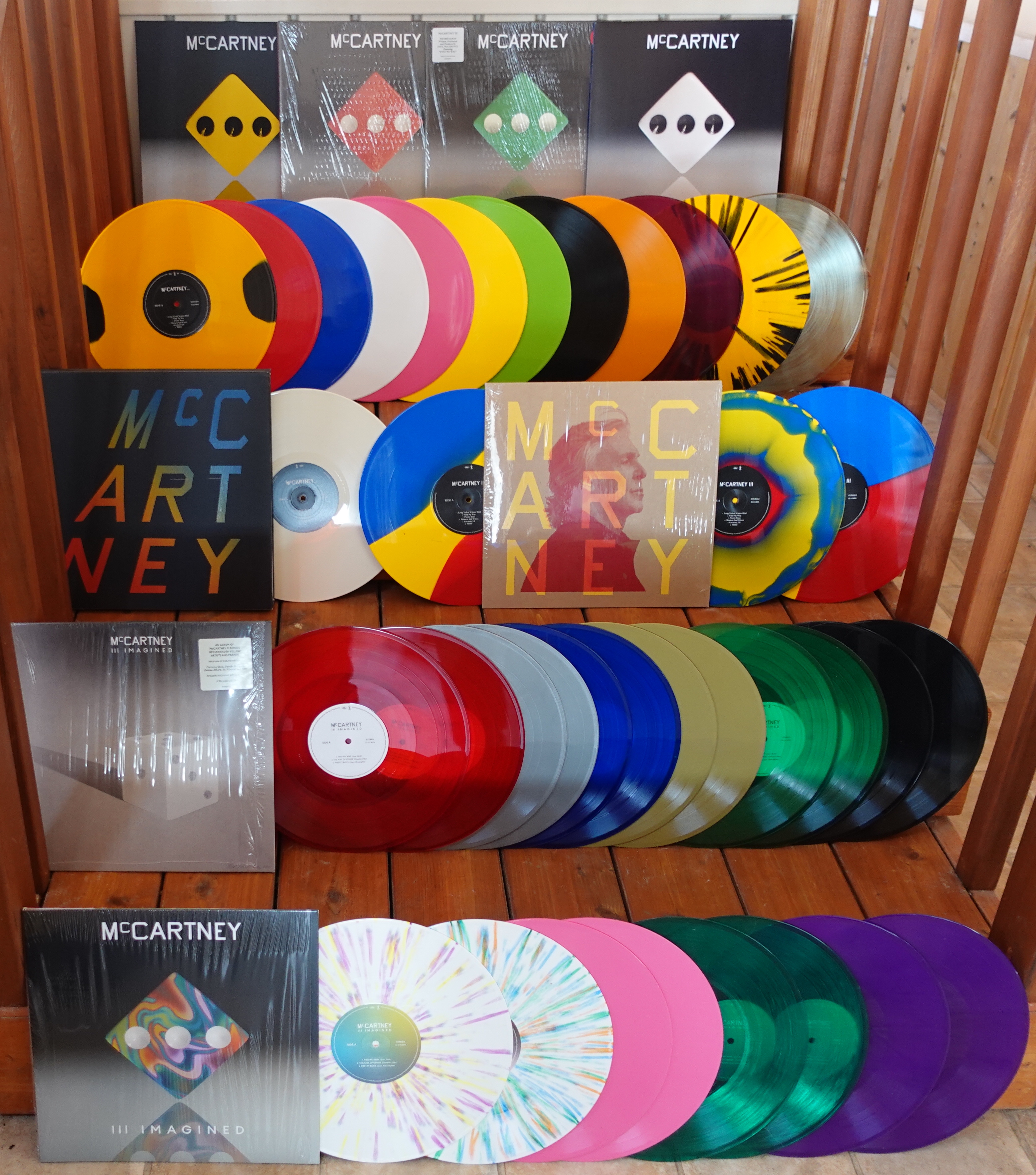
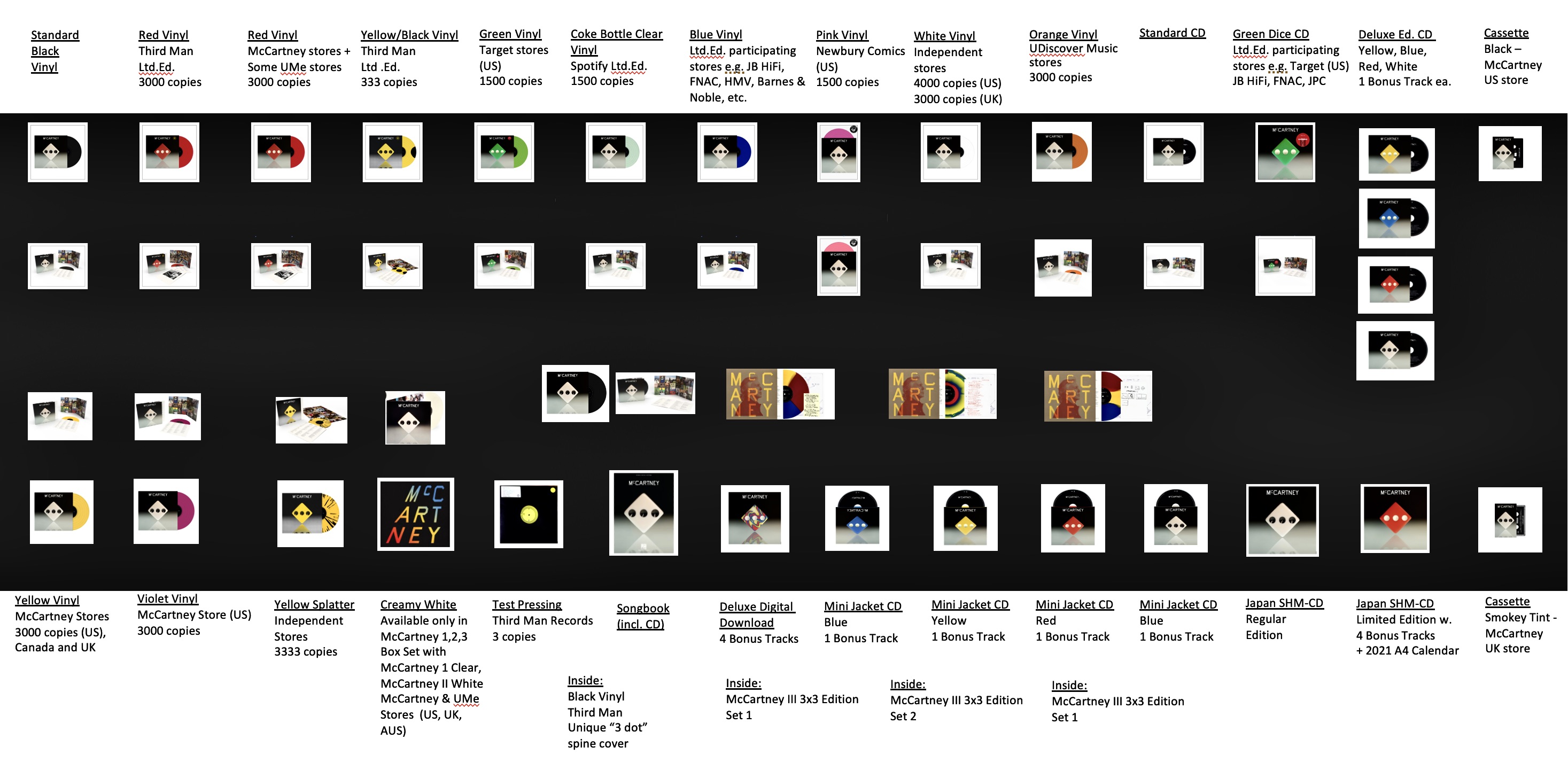
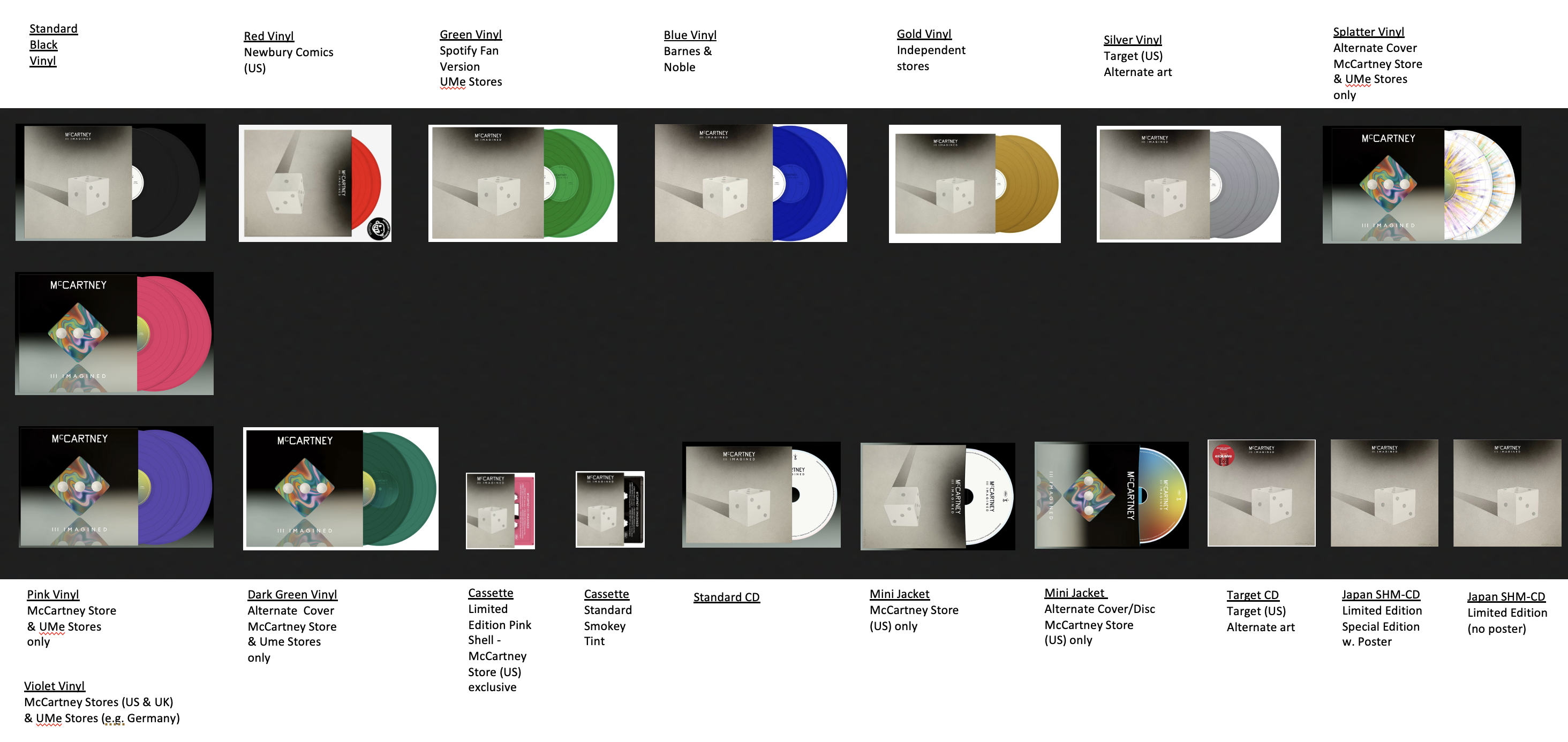
Because there are enough different pressings we thought we’d create another visual representation to capture them all (we have previously created these for McCartney III and McCartney III Imagined too):
(Click on the image to see a larger version)
The Japanese ‘Now and Then’ vinyl pressings are unique in that they have a rear cover written in Japanese. They also come with a special lyric sheet with the lyrics in English and Japanese:
Additionally, the SHM-CD single comes with an OBI strip (and also the extra lyric insert):
To add to the onslaught on collector wallets there was also Black Friday Record Store Day.
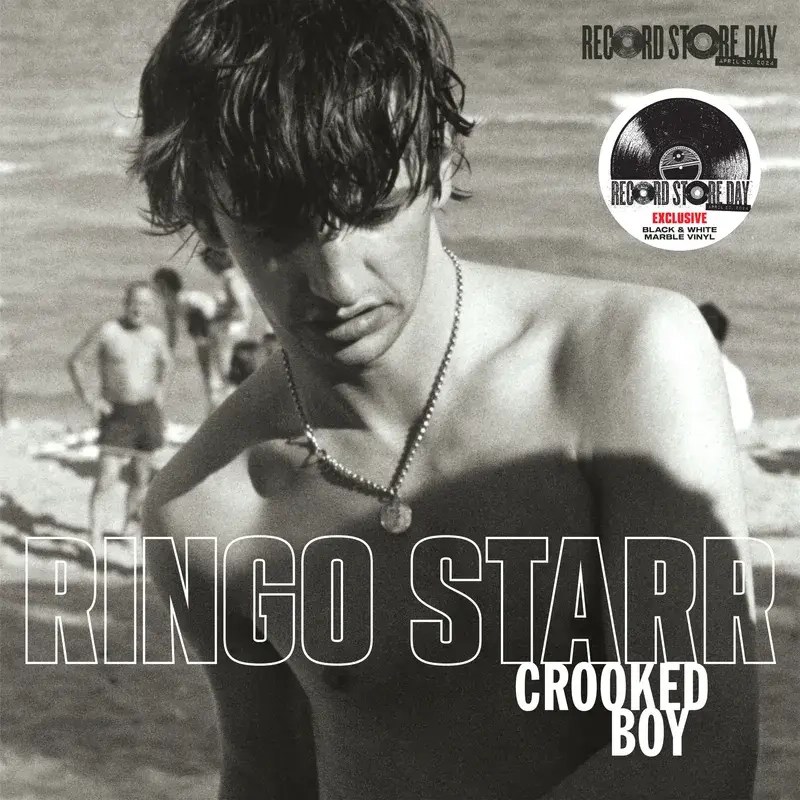
Also released on that day were further coloured vinyl editions (in “Yellow Submarine Yellow”) of Ringo Starr’sOld Wave and Stop and Smell the Roses. Here’s Guy again:
You can see there on the bottom row the little Yoto kids toy card editions of the 2023 Red and Blue albums, plus a unique Paul McCartney card containing a selection of his hits for kids which also contains two hard-to-get instrumentals.
“It wasn’t like we were following a trend; we were in the trend.” — PAUL MCCARTNEY
There’s no doubt that clothing is one of the most visible aspects of the development of a culture. A new book that’s just hit the shelves, Fashioning the Beatles – The Looks That Shook the World, is a well-researched and thoughtful exploration on how The Beatles played a leading role in shaping the fashion, attitudes and social change going on around them throughout the 1960s and beyond.
Author Deirdre Kelly wisely begins her book with a brief preliminary section called ‘Dressing for Pepperland’. That’s because during this period the band reached the zenith of their flamboyant style. Designers on Carnaby Street and around the world were influencing, and were in turn being influenced by, The Beatles in something of a symbiotic relationship. They were in their heyday.
We then journey back to the year 1960 and in chronological order, chapter by chapter, visit key fashion moments with quite a detailed examination year-by-year of what the band were wearing through to 1970, and beyond. We learn who was helping, advising, and being commissioned to come up with new looks for them, but also importantly, how The Beatles themselves played a central role in defining their style. Kelly then uncovers how that style in turn influenced whole industries and often swung the pendulum of the fashion world in new directions.
After a stint as “the savage young Beatles” which (in their early Hamburg/Liverpool days) saw the band sporting a tough look (black leather pants and jackets, black shirts, black t-shirts), in 1961 the group underwent a complete makeover. At the suggestion of their new manager, Brian Epstein, the band took on a suited, clean-cut, almost boy-next-door look that was carefully designed to help them break through in the pop world. They weren’t forced into this. It was something the group agreed was the right thing, as they too saw it as a way to achieve their goal of becoming the “toppermost of the poppermost!”. It was a makeover that worked, one where even the footwear they chose was considered. Kelly goes into detail about how the band had input into the evolution of the famous “Beatle Boots” and how this too became part of their defining look, and a fashion icon of the time. Soon manufacturers where knocking off copies and The Beatles were well on their way to becoming major influencers.
1963 was the year of the now iconic collarless suit – created for the band by UK tailor, Dougie Millings, whom we learn went on to make over 500 outfits for the group. His collarless creation was conceived in a brainstorming session involving Paul McCartney, who’d originally proposed the idea. Their suits were modeled on an original design by Pierre Cardin, but tweaked to make it a distinctively Beatles’ garment. Kelly writes: “It established the Beatles as fashion forerunners”:
It continued what was to become a trend. What a Beatle wore today would soon turn up as the latest hot trend in the shops tomorrow:
However, as with their music, The Beatles never stood still, always pushing the boundaries and never repeating themselves. Once a particular fashion look they’d pioneered started catching on, they’d already moved on.
Fashioning The Beatles is meticulously researched and contains fascinating detail around how the designs they wore came to be. The book also turns up interesting side observations along the way. Take this 1965 photograph taken during the filming of Help!:
In the movie, the band mixed British and US clothing styles. Denim wasn’t yet the ubiquitous fabric it would become and was regarded as something of a novelty. Notice though that George has bleached his jeans, prefiguring the acid wash jean trend that proliferates to this day.
By this mid-decade period and beyond The Beatles largely discard the suits (and boots) and begin to dress to please themselves. In doing so they have a further profound influence on the way young people dress and behave too. What the band wears is an extension of their innate creativity: their personal taste, their natural sense of style – and it was being followed closely by millions.
Tony Palmer (director of the documentary series All You Need is Love: The Story of Popular Music) says in his Preface to the book that The Beatles didn’t set out to be trendsetters. They were innately stylish young men and by simply wearing what they wanted to wear, became the leading style-makers of their day. Their huge, worldwide fame ensured that whenever they were photographed, filmed, or simply seen out and about in public, people took notice of their sartorial style, and those looks helped influence the culture of the day.
By the mid to late 60s The Beatles were now routinely mixing stage clothes with items from their personal wardrobes, and even (albeit briefly) starting up commercial fashion outlets of their own. Kelly provides great detail and context to these ill-fated forays into the fashion retail world via the Apple Boutique store and Apple Tailoring. And herein lies an Australian connection (and yet another example of The Beatles’ questionable choice in business partners), in the form of one John Crittle, proprietor of a business often frequented by the band called Dandie Fashions. They eventually came to own a 50% stake in the store and re-branded it Apple Tailoring (Civil and Theatrical). They opened a hair salon in the premises too, presided over by Leslie Cavendish (who’d been cutting the hair of Paul, George and John). However it turned out that the brains and style behind the clothing part of the venture was really Crittle’s fashion-savvy wife Andrea, who is perhaps better known as the mother of British prima ballerina, Darcey Bussell. Just how Crittle sullied Apple Tailoring’s reputation is something you’ll need to buy the book to read about. It’s not pretty.
Fast forward to today and the influence and spirit of The Beatles still ricochets around the fashion world. Take for example this 2023 collaboration between fashion house Rabanne and the multinational, mass market clothing retailer, H&M. The look could easily owe its inspiration to 1967 and the famous foursome’s adoption of the militaristic uniforms from their Sgt. Pepper era:
We here at beatlesblogger.com have a mountain of books about The Beatles. Amongst them is just one other book on Beatle fashion, Fab Gear – The Beatles and Fashion by Paolo Hewitt – and it’s long out of print. That is proof that very little has been written about this aspect of the band’s creativity and their huge impact on fashion and culture. It is why Fashioning The Beatles – The Looks That Shook the World is an important piece of scholarship. Deirdre Kelly’s new work is a very welcome addition to the library. Grab a copy while you can.
Ever heard of Yoto, the children’s educational toy?
Me either, until one of our readers named Tom pointed out that they exist, AND they have a couple of items that will be of keen interest to the absolute Beatle completists among us.
Yoto is a digital player that accepts specially pre-recorded cards (slightly larger than a credit card) which kids slot into the player to hear stories, podcasts, games and……..music:
The big news is that Yoto has just added two very special music cards.
Yoto describes the contents of their unique 12-track Red Album like this:
An introduction to The Beatles for kids. Enjoy timeless hits from their early years, 1962-1966.
Twelve special chosen tracks from the early years of The Beatles, 1962-1966. The perfect introduction for music-loving kids to the fab-four.
Discover the songs that broke them onto the world stage. Sing, dance and play along to these timeless classics, some of the most popular and indelible rock songs of all time.
Tracklist:
Love Me Do (2023 mix)
Please Please Me (2023 mix)
From Me To You (2023 mix)
She Loves You (2023 mix)
Can’t Buy Me Love (2023 mix)
Ticket To Ride (2023 mix)
I Want To Hold Your Hand (2023 mix)
If I Needed Someone (2023 mix)
Drive My Car (2023 mix)
Got To Get You Into My Life (2022 mix)
I’m Only Sleeping (2022 mix)
Yellow Submarine (2022 mix)
And their 12-track Blue Album like this:
An introduction to The Beatles for kids. Enjoy timeless hits from their later years, 1967-1970.
The second curated collection of tracks from the most iconic band of all time. Charting the later part of their career where they experimented with new sounds and created some songs that are loved across generations and around the world.
The perfect way to share music as a family and the ultimate inspiration for all the music-loving, dancing and singing little ones out there.
Tracklist:
Penny Lane (2017 Mix)
Sgt. Pepper’s Lonely Hearts Club Band (2017 Mix)
With A Little Help From My Friends (2017 Mix)
All You Need Is Love (2015 Mix)
Hello, Goodbye (2015 Mix)
Magical Mystery Tour (2023 Mix)
Hey Jude (2015 Mix)
Ob-La-Di, Ob-La-Da (2018 Mix)
Blackbird (2018 Mix)
Here Comes The Sun (2019 Mix)
Octopus’s Garden (2019 Mix)
Let It Be (2021 Mix)
But that’s not all the original Beatle content Yoto has. Also recently added is a unique Paul McCartney card, Say Hello To Paul McCartney:
Yoto says: Dance, sing and play along to a selection of songs, especially chosen for Yoto.
Say Hello To Paul McCartney is a unique collection of timeless songs from one of the greatest ever songwriters and performers. Paul McCartney has curated this collection of tracks from his legendary catalogue and it’s sure to get all of your family singing and dancing along.
Sway and jump to ‘Dance Tonight’, take a trip to the Scottish Coast with ‘Mull of Kintyre’ or sing along in chorus to ‘We All Stand Together’ – these and many more songs await you on this ultimate Yoto music card! This card also includes two tracks never before released on a music product – the ‘Hey Grandude’ and ‘Hey Nandude’ themes, from Paul’s highly acclaimed children’s books.
Tracklist:
Grandude Theme
Dance Tonight
Little Willow
Heart of the Country
Mary had a Little Lamb
We All Stand Together
Great Day
Mama’s Little Girl
Calico Skies
Let ‘Em In
Mull of Kintyre
Winter Bird, When Winter Comes
Who Cares
Nandude Theme
So, this is one way for you to get clean versions of two rare original McCartney tracks – the instrumental ‘Grandude Theme’ and ‘Nandude Theme’, taken from the audiobook recordings of his two children’s books Hey Grandude (2019), and Grandude’s Green Submarine (2021).
Sincere apologies if this news is going to cost you more money!
Techmoan has done a great video explaining just how these little players and the cards work (you don’t have to have a player):
Our readers Tom and Guy have both confirmed that you don’t need a stand alone Yoto player. The Yoto app can be downloaded for free to your phone, and a simple tap of the card gives you access to the contents. The cards are the size of a credit card:
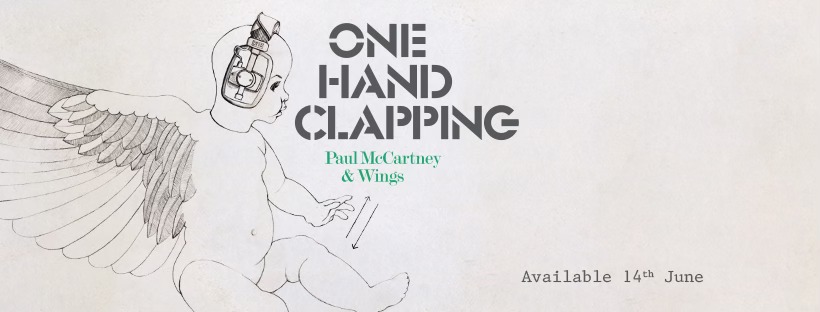
Hot on the heels of a huge two weeks of Beatle announcements and expectation comes just a little bit more vital detail on the John LennonUltimate Collection box set of his 1973 album Mind Games.
This builds on the scant detail in an October 9 Tweet (for John’s birthday) teasing that the Lennon estate would indeed be releasing “….a brand new, completely remixed Mind Games (The Ultimate Collection) in the summer of 2024, featuring an incredible six albums worth of material, followed by even more surprises later in the year.”
Today’s news makes it very clear that the June 2024 box set follows in the format footsteps of Imagine and Plastic Ono Band, two highly acclaimed reissues already out there. Good news for Lennon fans and collectors!
We can also confirm that, as was done for Imagine and Plastic Ono Band, there will be a separate accompanying hardback book to go with Mind Games.
There’s been huge discussion on a lot of forums and socials about the cover art choices for the new ‘Now and Then’ Beatle single.
This post on Reddit (by PowerPlaidPlays) is an articulate argument for why it actually works:
“A lot of people have a lot of negative things to say about the new single art. I initially did not like it at first ether, but it’s grown on me and I thought a post defending it would be a good counterbalance to all of the “improved cover” mock ups lol.
The biggest thing I appreciate about it is how it stands on it’s own.
It reminds me of how The White Album was a deliberate departure from Sgt Pepper’s cover, or how Abbey Road lacked the band’s name on the front. It’s not rubbing the band’s legacy in your face or leaning too hard into nostalgia. We already have Anthology if you want references to their entire career, or the Red/Blue albums if you want the ‘Please Please Me’/’Get Back’ photos paired together. It’s not just a normal boring photo of the band like the ‘Real Love’ single got. It’s not focusing too much on John like the ‘Free as a Bird’ single did by using one of his drawings. The song has it’s own unique image.
I think the most it hearkens back to old Beatles imagery is the serif font (similar to the drop-T logo) and the color palate reminds me of Abbey Road, with the blue (like the sky), green (like the trees), grey (like the road), and white (like the crosswalk).
The back cover is where I think some more symbolism is present. With the “Then” being the I ‘Wanna Hold Your Hand’ photo, and the “Now” being a clock with 3 and 9, but missing 6 and 12. I think the assembled sculpture also is fitting for a song that is a mix of 1979, 1995, and 2023 recordings, with apparently some stuff sampled from a few other Beatles songs.
I also do like how it seems to be a painting and not digital typography. Looking at higher resolution images of it, you can see the canvas texture and paint imperfections.
Admittedly I am not in love with it, and probably like it more for the things it’s not, but I can appreciate it for being an interesting decision. I keep looking at it, and it keeps making me think. It’s not just an obvious “yep, it’s a Beatles single and it has a photo of the Beatles.”“
And this (from zosterpops) also on Reddit:
“To add to the interpretation, the angles are reminiscent of the covers on the Red & Blue comps and it has a decades-spanning quality to it with its colors, typography, and texture.
I think it’s also worth mentioning how the cover works as a minimalist design. It’s inspired paragraphs of both appreciative and unappreciative discussion on this sub. That’s always a hallmark of good art/design for me. Something that gets people talking about it.“
This make a lot of sense. Yes, it’s a very plain front cover but it has lots of references and room for interpretation.
As to the rear cover image, more information on the origins of the cute little clock image have come to light since the 7″, 10″ and 12″ records have landed in fan hands.
Inside the record sleeve is an insert with notes by John Harris which reveals the origins of the art piece shown:
So, it turns out this is an actual little clock owned by the Harrison estate, purchased by George in 1997. It was made by an Oregon artist named Chris Giffin, who is regarded as something of a local cultural treasure. She specialises in found object, assemblage and altered art.
“I create objects from materials that capture my eye, and that can be recycled materials or found objects. I make functional and sculptural and jewelry objects out of these materials that I collect. I try to take things that have had a past life and then give them a new life.”
Much of Giffin’s work involves metaphor, specifically concepts having to do with measurement, or man-made divisions applied to natural forms: “Time for me is a real metaphor, so I do make a lot of clocks, and I have a lot of measurement objects in them. Because time is a measurement, and of course tape measures and rulers and protractors—all that kind of stuff—to me is just the way we have chosen to decipher our need to organize our daily lives.”
What better way to depict “Now” and “Then”? You can see more of Giffin’s work on this Pinterest page. You get the feeling that the value of their pieces just went up 1000%!