The Ole Black Gretsch – An Update

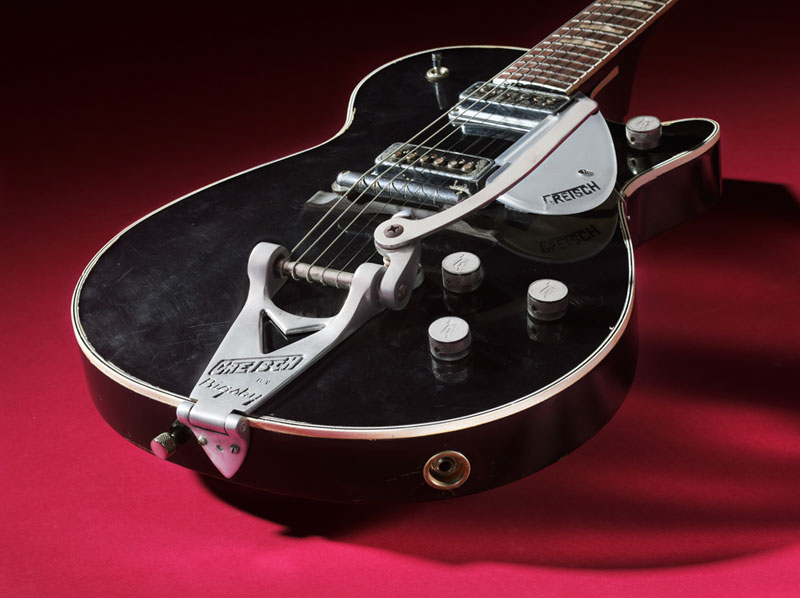
Just after Christmas I posted that the Gretsch guitar company was flagging they’d soon be releasing a very special, exact recreation of the guitar George Harrison owned back in the early Liverpool Cavern days of the Beatles the Ole Black Gretsch.

Its time for an update because Gretsch have announced that a faithful, limited edition replica is now for sale – for a cool US$20,000……

The guitar is a Gretsch Duo Jet that George purchased back in 1961 for £90.00:

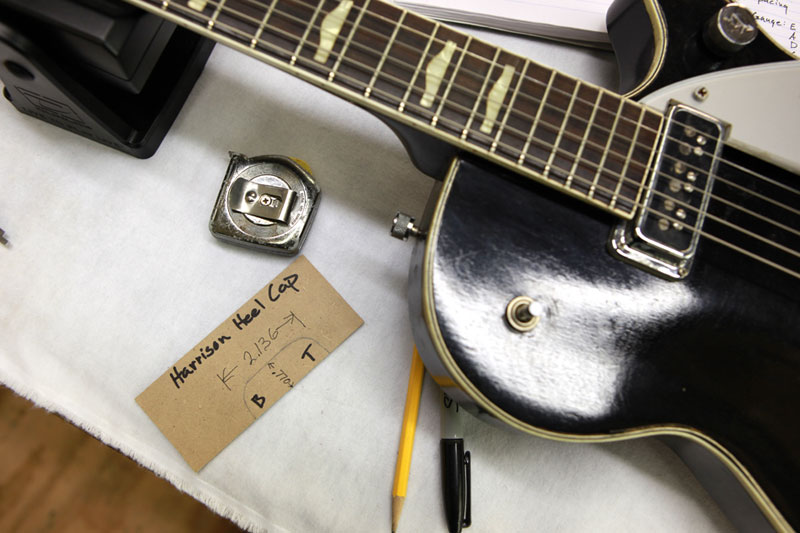
Gretsch guitars in the United States has measured every dimension, every detail right down to the scratches and dings and even the rust on the metal of the pick-ups so that each of the limited edition of just sixty guitars is accurate in every respect.

There’s much more information and background at: http://www.gretschguitars.com/features/georgeharrison

“The Beatles” – An Interesting Book

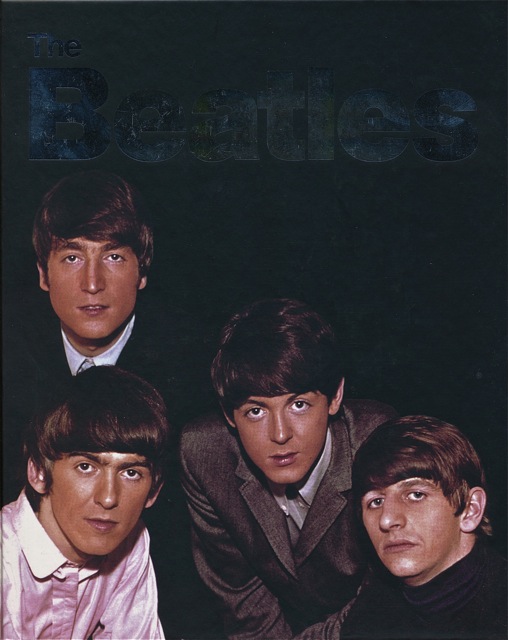
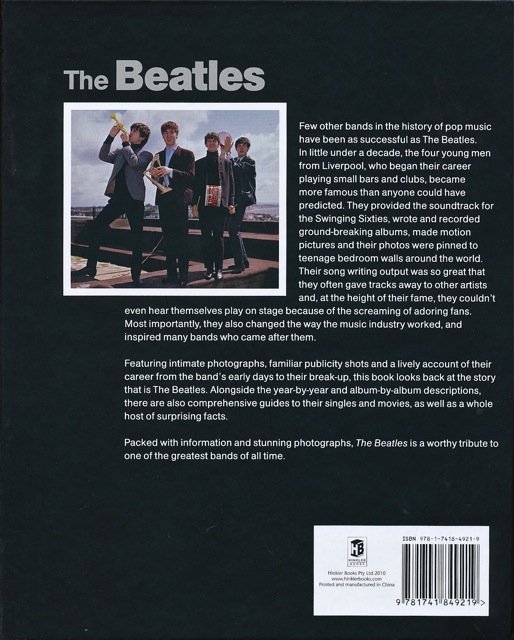
Another Beatles book has recently come into the collection. Again, it’s from a discount book store that is just near where I work. They specialise in selling remaindered stock at greatly reduced prices and I’ve picked up some interesting titles from there over the years. This one is simply called “The Beatles“:

There’s a great photo of the band on the front cover – it’s highly colourised but quite striking in its effect. The title words “The Beatles” are printed in silver and so don’t show up too well in this scanned image. Interestingly, nowhere on the front or rear covers, or even the spine, is there mention of the author. You have to go to the publishers details page inside where in the fine print it says “Written by Mike Evans”. I’m not sure why Mike doesn’t get a mention anywhere on the outside of the book. A quick Google search reveals Evans is actually quite prolific having written or edited, amongst many other titles, “The Beatles: Paperback Writer: 40 Years of Classic Writing“, “The Art of British Rock: 50 Years of Rock Posters, Flyers and Handbills“,  and “The Beatles: On Camera, Off Guard 1963 – 1969“, so the guy has form.

The Beatles” is chronological in nature and, over 21 chpaters and 224 pages  traces the evolution of the band from the early years through to the final chapter called “The Beatles’ Legacy” which brings the story up to 2009 and the release of the newly remastered CD sets – so I’d say it came out in late 2009, although again the book itself does not have a publication date on it. Strange.

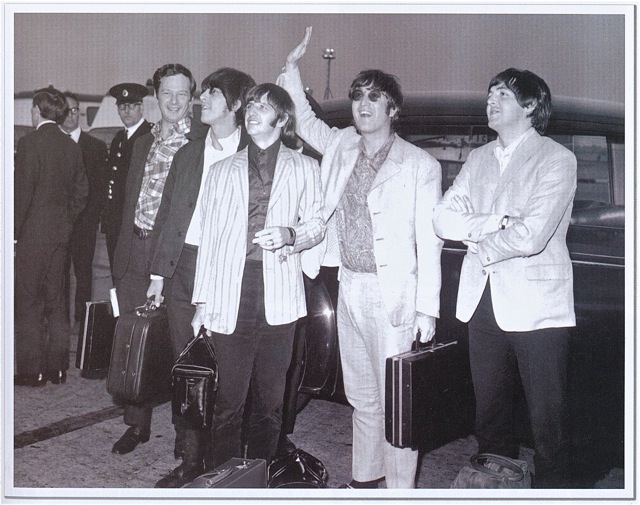
In a lot of ways its a pretty standard Beatles book – but a nicely produced one – one that has at least been done with some care. Its a hardback with lots and lots of photographs (some of them unusual and interesting), and quite detailed text covering each important Beatle release, from “Please Please Me” (1963) through to “Let It Be” (1970). Mike Evans deals with the tours as well – including the troubled 1966 tour to Japan and Philippines where the Beatles were lucky to escape with their lives. In this news photo in the book they, along with manager Brian Epstein, look pretty happy to be back in London in one piece, their smiles belying the danger they faced after a perceived offense to the President of the Philippines and his wife:

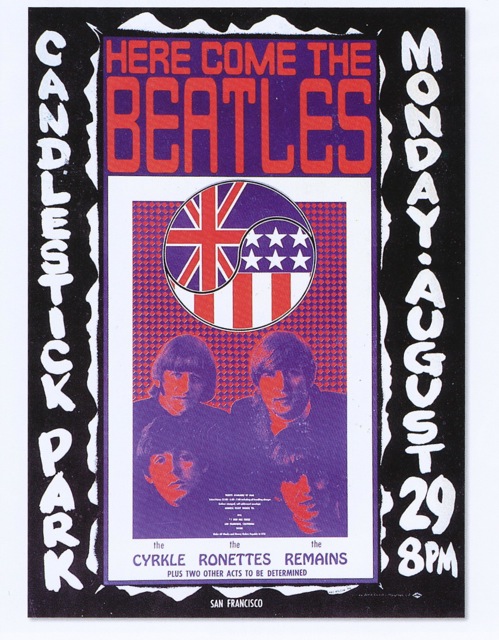
As well as terrific photos there are lots of other worthwhile visual additions scattered throughout, like colour reproductions of Beatles memorabilia like movie posters, concert tickets, Beatles stamps, and this US concert poster from August, 1966 for the concert at Candlestick Park, San Francisco:

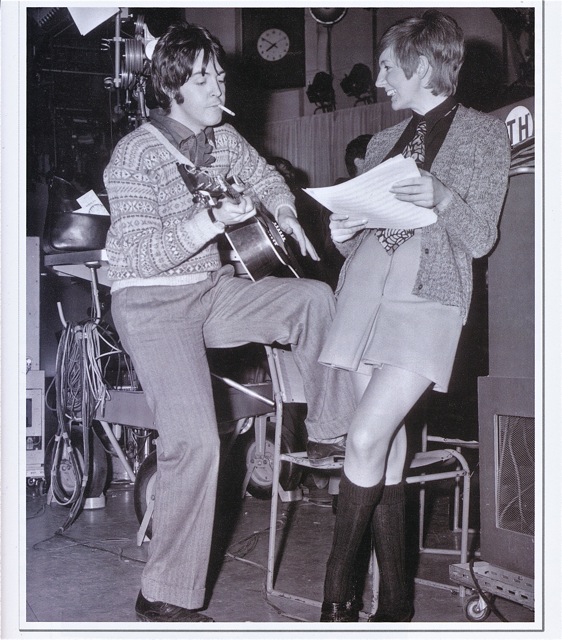
The photos inside are often unusual, like this one of Paul in the studio in January, 1968 with Cilla Black, taking her through the song he’d written for her called “Step Inside Love“. It became the theme for Black’s successful TV show of the same name:

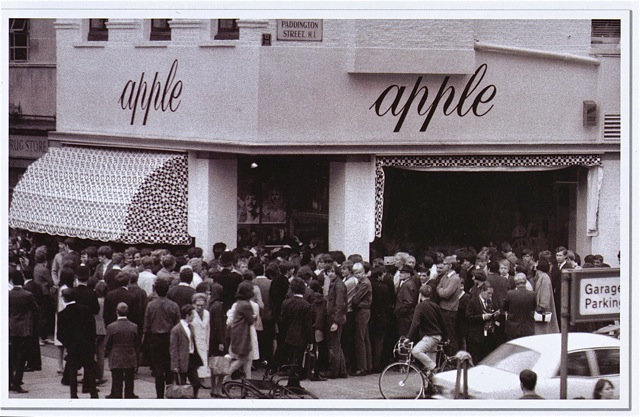
Author Mike Evans deals with both the up-side of the Beatles’ success, and the down-side, including the ill-fated Beatles foray into selling fashion. Described by Evans as “..the biggest disaster for Apple….The idea was to sell trendy items; Paul McCartney described it as “a beautiful place where beautiful people can buy beautiful things.” In reality, though, it was a clothes store, and became known as the “Apple Boutique”. By the middle of 1968, the shop had made a loss of nearly US$500,000/£250,000, a fortune in those days and on July 30 it closed.” In this photo crowds gather outside to grab a bargain and to witness the Apple Boutique’s last day of business:

The Beatles” is published in Australia by Hinkler Books.

Beatles on CD – “1962-1966” – the Red Album

Last time I posted on getting a bargain on the HMV box set of “Sgt Pepper”. This comes from back in 1987 when the Beatles catalogue was released on Compact Disc for the very first time. EMI used their UK record store chain HMV to release all the titles in special, limited edition 12″ box sets.

The other set I was able to get at the same time was “The Beatles 1962-1966” (which was issued later – in 1993).

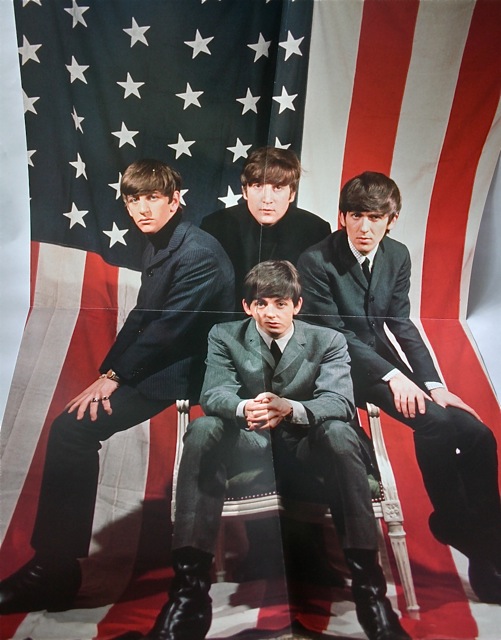
This is a limited edition box with the catalogue number BEACD25/11. It contains the well-known Red Album double CD set, and comes with a large-format 12-page colour booklet featuring song reviews, a 16″ x 24″ colour poster of the band (posed in front of a big US flag), and a special metal badge.

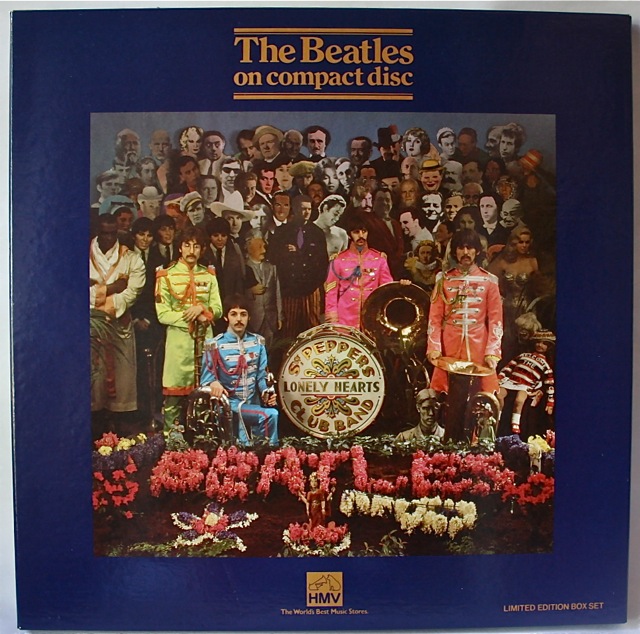
The front of the box looks like this:

Note the original price sticker still attached. When you take off the lid, this is what you see:

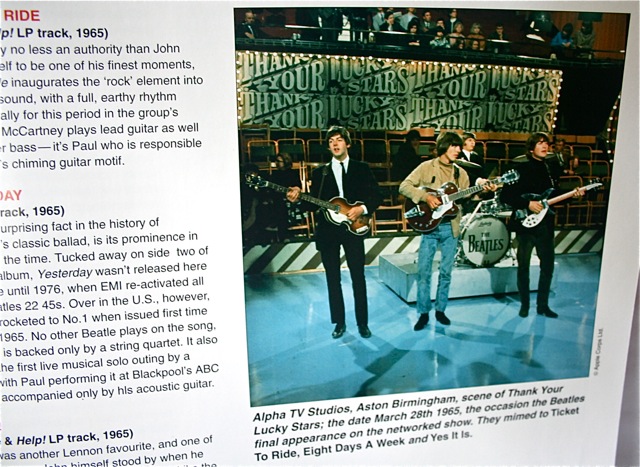
This is the 12-page booklet, and it is different to the small booklet which comes with the CD itself. It features some great photos, a short essay, and a song-by-song commentary by Andy Davis from Record Collector magazine:

Next in the box there’s a large poster:

Then comes the CD itself, held in place by a special cardboard holder with a slot just right for the CD and it’s outer cardboard sleeve. There’s a small thumb-slot at the bottom to help you get the CD out. This box, by the way, is thicker so that it can accommodate the jumbo-sized double “Red” CD :

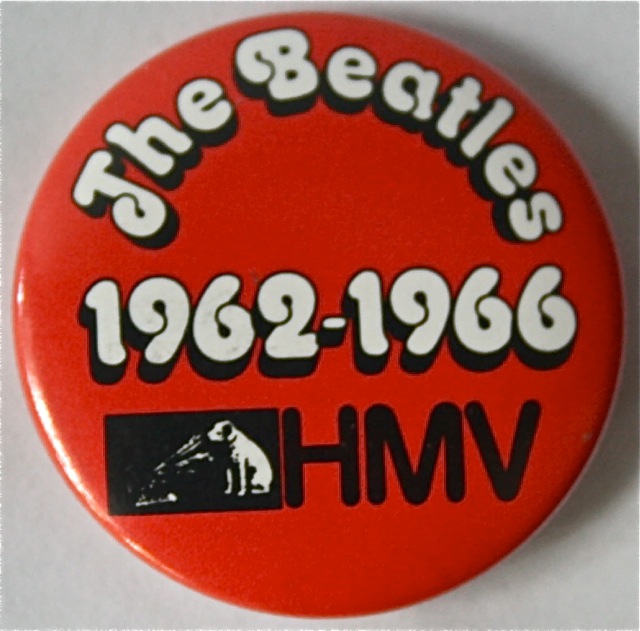
Also in the box is a small metal pin or badge:

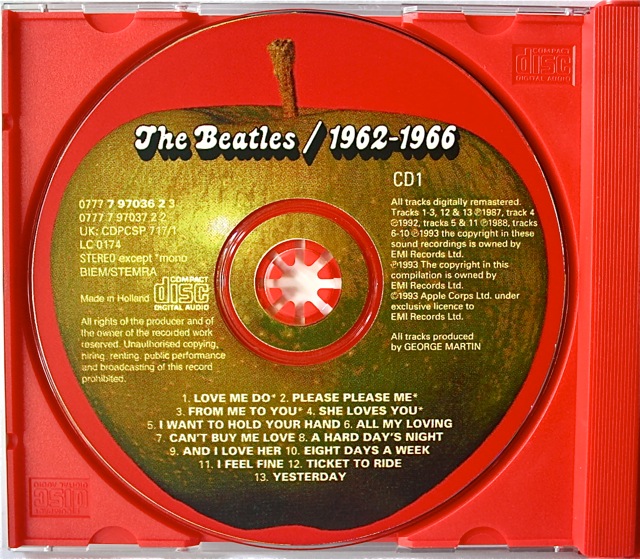
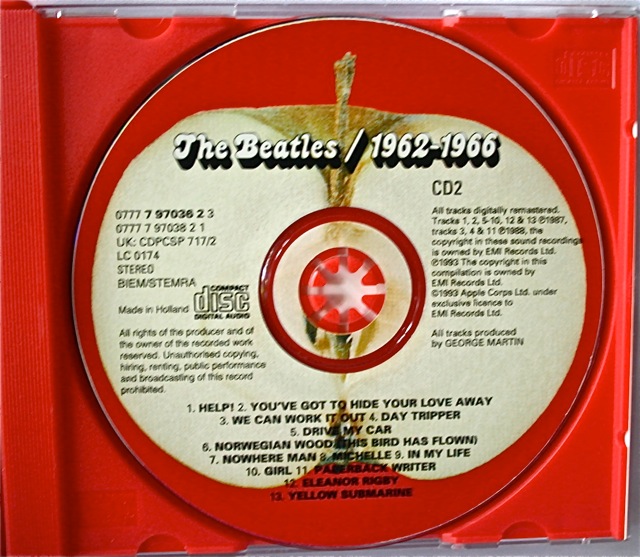
As already mentioned, the CD’s which come with this are in the red jumbo-sized double CD holder – which comes with a booklet:

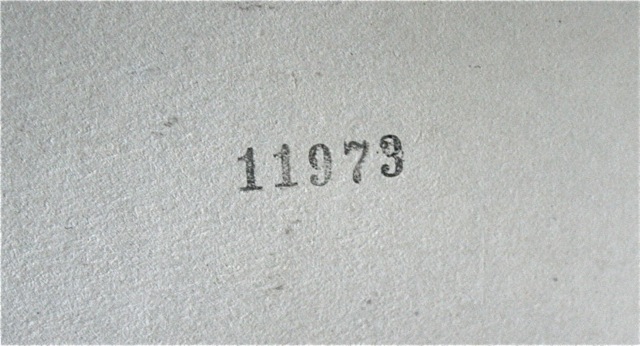
Inside the lid of the HMV box there’s a limited edition stamped number:

See also the “Sgt Pepper” HMV box set.


Beatles on CD – The “Sgt Pepper” Box Set

When the Beatles catalogue came out on Compact Disc for the first time back in 1987 it was a very big deal and the British record store chain HMV (which has close ties back to the Beatles record company EMI) released a series of limited edition 12” x 12″ box sets to mark the occasion. These boxes look just like those which contain 12″ LP’s so I guess there was a certain symbolism in releasing them in this way – the boxes containing CD’s indicating a move forward from the LP to the Compact Disc.

In all there were 12 individual box sets containing either individual or grouped CD’s, plus there was also a large (and expensive) HMV box housing every Beatle CD title then available.

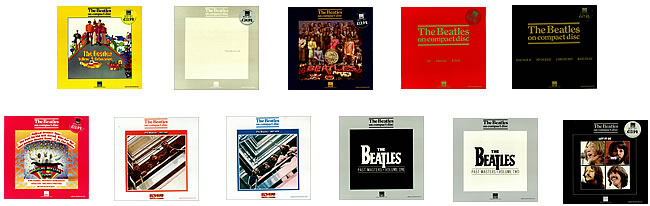
You can see here all the “Beatles on CD” HMV Box Sets (minus “Abbey Road”) above. These (except for the 1962-1966 and 1967-1970 sets) all came out in 1987.

The box numbered BEACD25 contained “Please Please Me”, “With The Beatles”, “Hard Days Night” and “For Sale” on CD, plus a 224-page book ‘The Book Of Beatle Lists’, plus a Beatles fact sheet.

BEACD25/2 contained “Help”, “Rubber Soul” and “Revolver”, plus a reprint of Beatles Monthly No. 12 and a Beatles fact sheet.

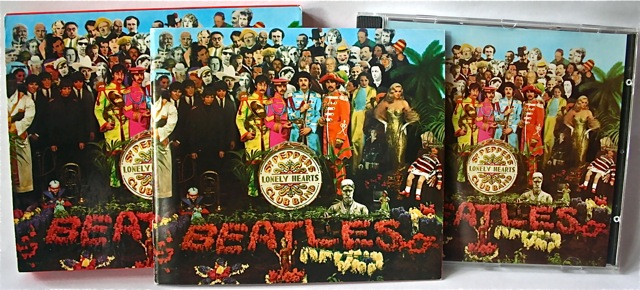
“Sgt Peppers Lonely Hearts Club Band” (BEACD25/3) had the album with a slipcase, an 8-page ‘behind the scenes’ booklet, the 12″ cut-outs sheet and  a badge.

The “White Album” (BEACD25/4) featured an individually numbered double CD album, a 12-page glossy booklet and a badge.

BEACD25/5 was “Yellow Submarine” and came with an insert, a cut-out ‘Yellow Submarine’ model, and a fact-sheet, while “Magical Mystery Tour” (BEACD25/6) had a 12-page booklet, a large fold out colour poster and badge.

“Abbey Road”  (BEACD25/7) comprised the 17-track CD album, two different posters, a badge and an 8-page booklet.

The “Let It Be” HMV box has a 12-page booklet and badge, and has the catalogue number BEACD25/8.

The “Past Masters Vol.1” and “Vol. 2” came in separate boxes – each with a badge and a 12-page booklet with pictures and track-by-track details. These were numbered BEACD25/9 and BEACD25/10.

Finally, when they were released in 1993 the “Beatles 1962-1966” Red Album and the “Beatles 1967-1970″ Blue Album also came in separate boxes containing the double CD sets, a 12-page colour booklet featuring song reviews, a 16″ x 24” colour poster and a badge. These were numbered BEACD25/11 and BEACD25/12 respectively.

I got a bargain the other day – I was able to get the “Sgt Pepper” HMV box and the “Beatles 1962 – 1966” – both practically mint copies. I’ll give you a close up look at the “Sgt Pepper” box set here, and post on the “62-66” red box next time.

You can see the front of the box above – and it features a different photograph from the one used on the CD. When you take the lid off this is what you first see:

This is an 8-page booklet with lots of photographs taken at the photo shoot for the famous cover of “Sgt Pepper”. There’s also some text about each song. Here are couple of pages from the booklet:

Underneath that there’s the same “Sgt Pepper” cardboard cut-out sheet which came with the original copies of the LP version:
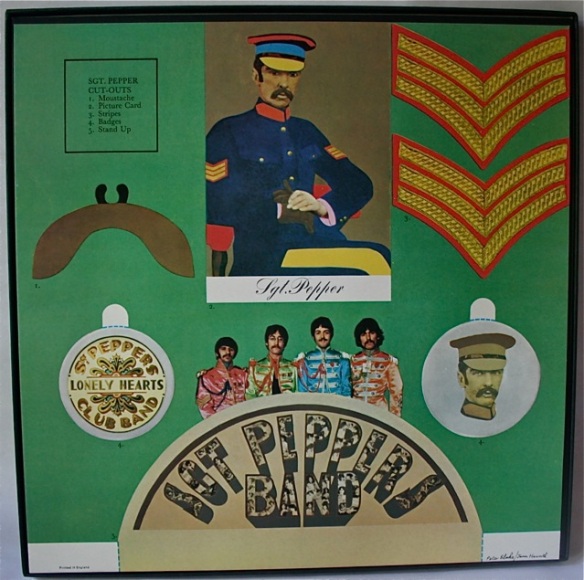
Then comes the CD itself, held in place by a special cardboard holder with a slot just right for the CD and it’s outer cardboard sleeve. There’s a small thumb-slot at the bottom to help you get the CD out:

Also in the box is a small metal pin or badge:

The CD that comes with this is the original release with the cardboard sleeve, booklet with additional info, and an insert that has details of all the faces used in the famous Peter Blake photograph of the band standing with all their heroes:

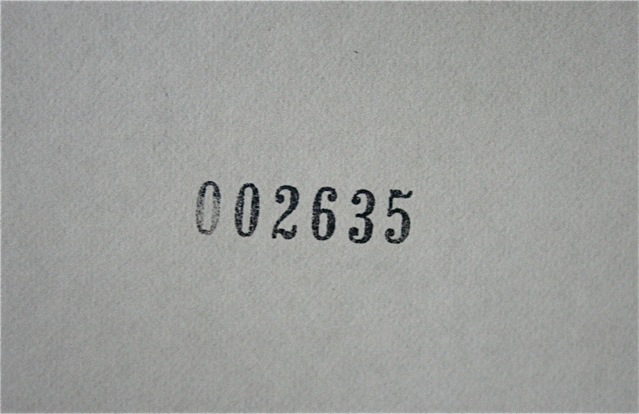
Inside the lid of the HMV box there’s a limited edition stamped number:

Next post we’ll take a look at the “Beatles 1962-1966” HMV Limited Edition box set.
George Harrison – The Ole Black Gretsch

The Gretsch guitar site has been running an interesting teaser video for a couple of weeks now….The advertising spiel goes something like this:

“Gretsch is pleased to announce the GEORGE HARRISON product “teaser” that will grace their homepage website beginning at midnight, December 9, 2010. By clicking on the “watch video” icon, George will narrate a brief story about his “ole black Gretsch”. There’s no doubt it will cause a major stir in the global marketplace. Want to know more about this project? Please keep checking back on the website as it will be updated over time…”

Seems like there’s to be a new line of reproduction George Harrison “Duo Jet” model guitars – which was his very first decent axe, purchased second-hand back in 1961.

You can read more about this guitar here. According to this site the “friend” to whom George gave the Gretsch (and who subsequently gave it back to him years later) was none other than Klaus Voormann.

Another great source I have is a really interesting book by Andy Babiuk called “Beatles Gear – All The Fab Four’s Instruments, From Stage to Studio“, which came out in 2001.

This book goes into a lot more detail about Harrison and his guitars. After 1961 he went on to purchase other Gretsch models notably the “Chet Atkins Country Gentleman” – George owned two, and the “Chet Atkins Tessessean“.  His profile helped greatly in continuing the brand’s fame in the 1960’s.

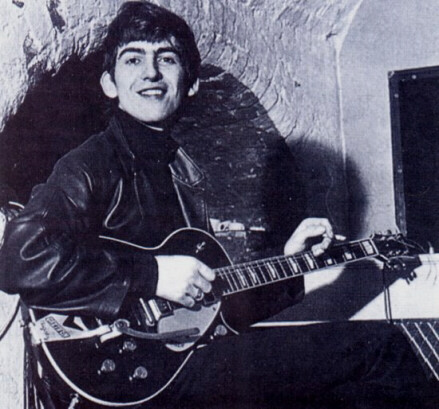
Here are some shots of George with that first, now legendary “Duo Jet” guitar:

And probably most notably it makes an appearance on the cover of his 1987 solo album “Cloud Nine”:

The Ole Black Gretsch is featured with Harrison in all the  photos used in the “Cloud Nine”  CD booklet too. I guess we know now that we have Klaus Voormann to thank for re-uniting the pair.

How famous is the Gretsch “Duo Jet”? It even turned up as one of the instrument choices for buyers of The Beatles “Rockband” console game:

How many kids playing “Rockband” today would know they’re “strumming” away on a stylised version of a 1957 model guitar that a young George Harrison purchased in 1961 second-hand from a Liverpool sailor?

Abbey Road – Crossing to be Heritage Listed

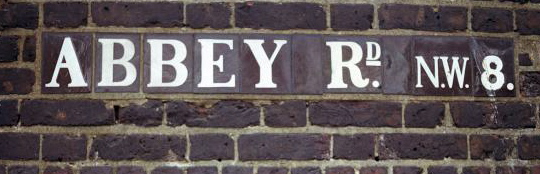
The zebra crossing made famous by the Beatles has just been designated a site of national significance by the British government. Fans from around the globe flock to the crossing every day to have their photo taken walking over Abbey Road, just down from the EMI studios of the same name. The Abbey Road studios became almost a home-away-from-home for the Beatles and was where they recorded just about all their greatest songs.

The story of the heritage listing (which means it will be preserved forever from change) has been picked up by media around the world.

Here’s how the BBC World Service covered it this morning:

Paul McCartney says he’s pleased with the news, and that for him it caps off what has been a run of recent success: “It’s been a great year for me and a great year for the Beatles and hearing that the Abbey Road crossing is to be preserved is the icing on the cake.”

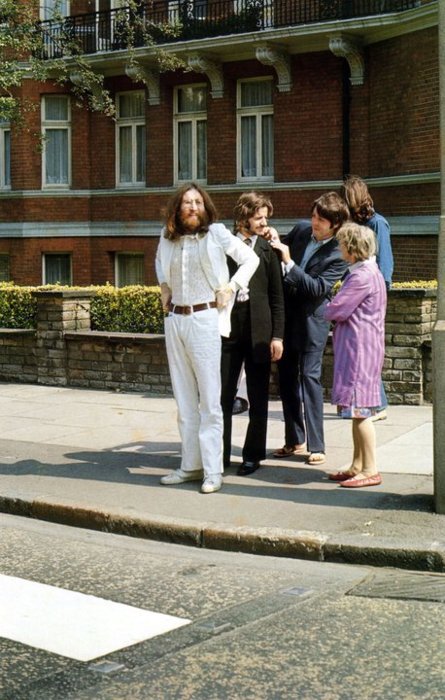
The photo-shoot for the album which put the pedestrian crossing on the map took just ten minutes to complete. On a sunny day on August 8th, 1969 photographer Iain Macmillan took what would become one of the best-known, copied, and parodied album covers of all time.

Getting ready to cross

People today can’t get the exact same look as the Beatles got for their cover for two reasons. First is that the crossing is not in exactly the same place it was back in 1969, and second is that Iain Macmillan was about ten feet up on a ladder. He took just six photos and it was the fifth one that was used for “Abbey Road”.

Starting the famous walk. Paul is in bare feet and getting nicely out of step....

There is a webcam (run by Abbey Road Studios) that looks over the crossing now 24 hours a day –  so even if you can’t get to London you can experience it virtually any time you like. The latest release to bear the photo that put a zebra crossing on the map is the remastered CD of “Abbey Road” – which came out last year in the new look with the white strip down the left-hand side. The legend lives on:

Rolling Stone – 100 Greatest Beatle Songs – Australian Edition

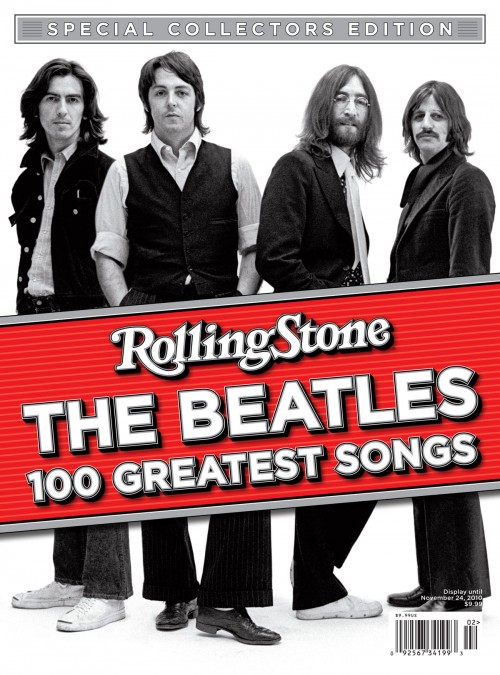
Back in September I posted on the Rolling Stone magazine special edition release called “The Beatles – 100 Greatest Songs“.

Finally, its been released in its Australian and New Zealand version. This 122 page “book” has a different cover!

Clearly its a photo by Bruce McBroom from the same photo-session in London on April 9th, 1969 – but it is different to the one used for the front cover of the US version of this special edition Rolling Stone magazine:

George Harrison – All Things Must Pass 2010

As if the constant rush of Apple and Beatles-related product had not been enough so far over the last two months….

The George Harrison camp has decided,  as part of international Record Store Day, to release a very special 40th Anniversary limited edition, 3 LP vinyl set of  “All Things Must Pass”:

It’s available now – exclusively at Record Store Day-participating independent music retailers (and via mail order and digital download from the George Harrison site). It came out yesterday – Friday, November 26, 2010 – exactly forty  years on. “All Things Must Pass” was originally released on Friday, November 27, 1970.

This album is a limited edition, individually numbered, 180-gram vinyl set in its original 3 LP configuration. The faithfully replicated box set has all the original album art, the poster and the inner sleeve packaging. The LPs have been newly remastered at the Abbey Road studios from the original analogue master tapes.

I got my copy yesterday from Red Eye Records – one of my favourite Sydney independent stores. The heat-shrink wrap has a sticker attached on the front right-hand side that looks very like the one that appears on some original albums telling you what’s inside:

The specially replicated front sticker

And there’s also a special bar-code sticker on the rear lower right-hand side of the box that acknowledges Record Store Day:

The rear Record Store Day bar code sticker

Finally, each box is stamped with a number in gold print, also on the rear of the box. Mine is a pretty low number which I’m pleased about – No. 001708:

Each box is a Limited Edition

The official George Harrison site is offering a free digital download of “Wah Wah”, and there’s a bit of a discussion going at the George Harrison message board. See also Plug In Music.

And click here for more on “All Things Must Pass” variations.

Three Copies of “Q” Magazine

I needed to visit Australia’s national capital Canberra for work the other day and ended up staying overnight. That meant driving back to Sydney on a Saturday morning and so I had time to call into the large-ish New South Wales country town of Goulburn, which is just off the freeway on the way home.

Goulburn, I had discovered on a previous trip, has a very large second-hand book and record shop just off the main street called The Argyle Book Emporium. When I say big I’m talking an extensive old rambling period building with room after room literally filled floor-to-ceiling with books. One room at the rear is devoted to music. There’s a small selection of music-related books and magazines, and boxes and boxes of records and CDs. Its a bit frustrating as these boxes are just randomly grouped together. They’re not split out into Male Vocal, Female Vocal or Groups for example. Not even 50s, 60s ,70s and 80’s. Just everything mixed in together – making finding anything of interest a needle-in-a-haystack affair….

I didn’t have a lot of time and so I gave the LPs just a cursory flip through. I looked at a couple of boxes at the front which were easy to get to and didn’t find anything. What was more interesting was a very large pile of “Q” and “Rolling Stone” magazines. A collector had obviously off-loaded a lot of past editions that were no longer wanted. The “Rolling Stone” magazines had been pretty well picked over. Nothing really of interest to the avid Beatles collector. However, in the “Q” magazine pile I found these three editions: 

This slideshow requires JavaScript.

The first dates way back to June 1987 – a time when we were all celebrating the 20th Anniversary of “Sgt Peppers”. Inside there are ten pages of photos and text:

Sadly, there was a “Sgt Pepper Part II” article that was due to be published in the following month’s magazine. It wasn’t on the pile of mags I found in Goulburn….oh well.

The next “Q” magazine I found featured an extensive article about Paul McCartney from July 1989. The headline on the front cover screams: He sings! He plays! He writes his own songs! For  PAUL McCARTNEY OPPORTUNITY KNOCKS! * Now available for live work! *.  Inside there’s a nine-page article about Paul. It begins: “He never expected to be doing this when he was 46 – “We thought 25 was the end of the line” – but Paul McCartney has stoutly refused to give up his day job. Engaged in rustic rehearsals for his first British tour in 10 years, and with a fresh solo album on offer [“Flowers In The Dirt”], he’s preparing once again to be public property. With mixed feelings…”. In the article there’s reference to the number of times McCartney makes reference to his father, Jim McCartney….”a Liverpool cotton broker and part-time musician who brought Paul up after his mother’s death (when McCartney was 14), and who died himself in 1976. One song on McCartney’s new album “Flowers In The Dirt”, is called “Put It There”, after a favourite phrase of his Dad’s”.

Finally, the “Q” magazine with that awesome David Bailey portrait of Paul and John on the cover. It comes from August 1999. Its a pretty simple premise on the part of “Q”. As the century draws to a close why not run a reader poll asking who are the 100 greatest stars of the 20th Century. According to “Q” readers back then the top ten are (were):

10. Michael Stipe; 9. Liam Gallagher; 8. Noel Gallagher; 7.Madonna; 6. David Bowie; 5. Elvis Presley; 4. Bob Dylan; 3. Kurt Cobain; 2. Paul McCartney; and and number one the runaway winner (according to “Q” by a long way)…..John Lennon.

It is kind of fitting to look back and read a magazine like this (from 1999) in this year (2010) when Lennon would have turned 70, don’t you think? Kind of cements the fact that his presence could in fact be enduring. That now, a further eleven years down the track, his music is still around and he’s still held in very high regard by many. There’s an additional article right at the end of the poll headed: “John Would Have Been Proud”. It says: “Yoko Ono, the keeper of the Lennon flame and the Lennon vat of money, telephoned Q as soon as she heard about the readers’ tsunami-sixed endorsement of her late husband’s transcendental magic and generation-straddling stature….”. That article is illustrated with this beautiful photograph:

Enough said.

(see also “Nine Copies of Rolling Stone”)

Harrison-Shankar “Collaborations” – Unboxing

Our copy of the George Harrison/Ravi Shankar box set “Collaborations” has just arrived. The first thing to say about it is that it’s much bigger than we’d expected it to be from the photos and info on the web so far.

Here’s a shot of the box alongside the 1997 release of the standard “Chants of India” CD so that you can get an idea of the scale:

“Collaborations” box – size comparison

There’s a stick-on label on the plastic shrink-wrap which sums up what you will find inside:

After the plastic shrink wrap comes off you discover that this is a very solid, richly embossed green-coloured box. It’s a bit like the Beatles “Remastered” stereo box set in that it has a magnetic clasp on the right-hand side that allows the box “lid” to flip out and open:

Once you have the box open the first thing you see is your individually numbered “Certificate of Authenticity” and a white ribbon that helps lift out the contents below very neatly:

These box sets are Limited Editions and this one is number 13486. Here’s a close-up of the certificate:

Immediately underneath the certificate is a beautiful hardback book with a foreword written by composer Philip Glass; then George Harrison and Ravi Shankar talk about their collaborations together in a section called “In Their Own Words”.  This is followed by descriptions of the three CDs and the DVD; there’s some information about George’s Material World Charitable Foundation; an insight into Indian music by Ravi Shankar (along with drawings and descriptions of the Indian musical instruments used on the albums); information about and photographs of the individual artists who perform on each disc. Then there’s a glossary of terms, and finally the album and production credits.

This book is beautifully produced – clearly it has been put together with a great deal of care and there are many really special glossy photographs included throughout:

After the hardcover book come the albums themselves. And these are a surprise as they are each housed in over-sized cardboard covers that are about 8 1/2 inches (or 21 cms) square. They are “Chants of India”:

Then comes “Music Festival From India”:

Then “Shankar Family and Friends”:

And finally the concert DVD, “Ravi Shankar’s Music Festival From India”:

The CDs all replicate the original LP artwork faithfully. Again, here’s a comparison photograph with a cover from the box set alongside a standard CD so you can get an idea of the size of the box set covers:

That’s the standard “Chants of India” CD on the right, compared to the box set version behind. Each of the CDs in the 2010 box are held in special, thick cardboard inserts:

On the flip-side of each of these cardboard CD holders is a large Dark Horse Records logo:

And inside each CD cover there’s also an accompanying folded paper insert with information about the recording. This is the one for “Chants of India”:

The great part about this set is that both “Shankar Family and Friends” and  “Music Festival From India” are being released for the first time ever on CD, and the DVD “Music Festival From India” is previously unreleased.

In conclusion then, for me this is a very interesting, limited-edition box set. For many Beatle collectors George Harrison’s excursions into the exotic world of Indian music and culture lie on the outer edges of  their musical tastes, but for others this forms an essential part of their collections. We really enjoy Indian music and having a connection to it through George makes this set very special – just like this photograph [by Carolyn Jones] which appears on the final page of the book: