The Countdown Begins
Image
Reply

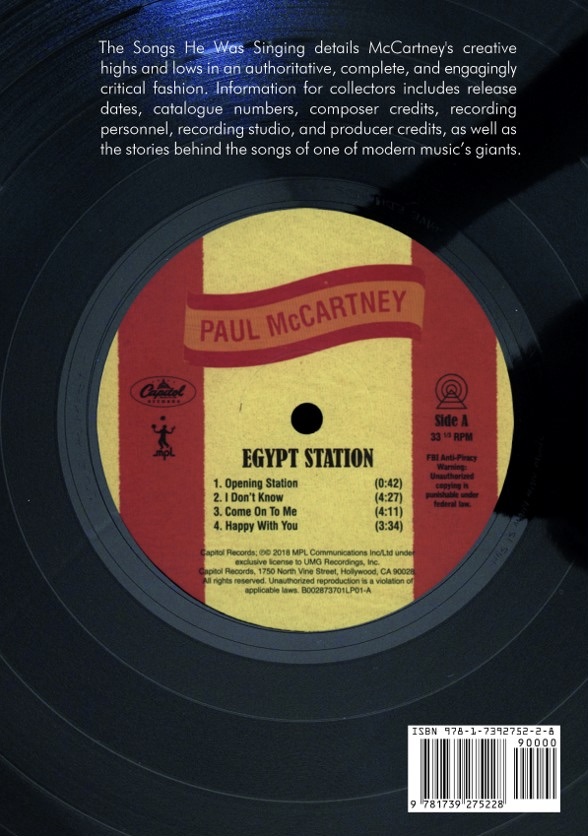
If you’re a completist and want to cross check that you have every physical and digital release, or if you’re interested in a smart, informed commentary on every song by Paul McCartney then this book series is for you.
Paul McCartney The Songs He Was Singing Vol. 5 2010 – 2019 is (as its title suggests) the latest installment in a series compiled and written by John Blaney. Blaney, a passionate Beatle fan, brings to his writing the expertise and rigour of a professional historian. After starting out in music retail he trained as a graphic designer and studied History Of Art at Camberwell College Of Arts and at Goldsmith College (both in London) before taking up his present post as the curator of a museum of technology. He’s the author and publisher of no less than twelve books on The Beatles, Paul McCartney, John Lennon and George Harrison.
In The Songs He Was Singing series Blaney has split McCartney’s songwriting and his steady release schedule roughly into ten-year slabs, with Volume 1 covering the period 1967-1979; Volume 2 the 1980’s; Volume 3 the 1990’s; and Volume 4 the Noughties (i.e. the years 2000-2009).
And that brings us to the present book (due out next month) and the years 2010 – 2019. Or, to put it another way, from the re-release of Band On The Run – the very first in the Archive Collection series – through to the bloated Egypt Station (Traveller’s Edition).

The way Blaney has structured the content in this series is comprehensive – with just a couple of caveats. For each entry you get US and UK release dates and chart positions, then the name of each song, the personnel who played, and recording locations. If it’s not a re-issue (or, if it’s a previously unreleased bonus track) you get an individual song description and an appraisal by Blaney. Then there’s a concluding “Data” section for each release detailing correctly and succinctly exactly how it was issued i.e. which formats (LP, CD, digital), along with the sometimes complex configurations and extras the release came in. This includes if promo copies were produced and distributed. It is great book for identifying those rarities which may have escaped your attention. A good example of this is the “Tug Of War Data” section where Blaney explains the more obscure extras. Like for example the Barnes and Noble-only 7″ bonus single ‘Ebony and Ivory’/’Rain Clouds’, released exclusively to their customers in a replica picture sleeve; or the fact that there was a very limited Super Deluxe Edition of the Tug Of War box set issued in a red acrylic slipcase with exclusive hand-numbered 8×10 photo prints. It’s detail like this the avid collector sometimes forgets. Then, for each release, there’s a selection of colour photographs of the packaging and labels to help further identify what you have – or what you might be still be seeking out for your own collection.
The album summaries and individual song descriptions which Blaney provides are worth a special mention – especially for their often outspoken honest opinions. It’s clear that while he reveres the McCartney canon, Blaney is no fanboy who treats everything McCartney touches as brilliant art. If there’s something he feels isn’t up to scratch he has no qualms in saying so. Take this example from the Archive Collection edition of McCartney II. Blaney is addressing one of the included bonus tracks, ‘Mr H Atom’/’You Know I’ll Get You Baby’:
“Not so much a song as a chorus in search of a verse, ‘Mr H Atom’ sounds like a demo recorded by an obscure New Wave band fronted by a female singer – Linda McCartney. Another example of McCartney being unable to flesh out his original idea, ‘Mr H Atom’ is little more than an unfinished fragment. If McCartney had the will to finish the song it may have developed into something a little more interesting. As it stands it’s of passing interest but no contender as a lost gem. ‘You Know I’ll Get You Baby’ is, if anything, less interesting. Consisting of the title repeated over a chugging 12-bar, it may possibly be the worst ‘song’ McCartney has allowed to slip out of his archives.”
Ouch.
Now to a couple of items missing from the book and, to be fair here, what we were sent for review is an early “proof” copy, so there could still be some changes prior to it’s October release. We think the 12 track Paul McCartney Live in Los Angeles should have been included. Yes, it was a free CD given away in 2010 to buyers of the UK newspaper The Mail on Sunday (and also The Irish Mail on Sunday), and it is related to a four-song EP called Amoeba’s Secret officially released on CD and 12″ single by Hear Music in 2007 and 2009 (so it my well have been detailed in a previous volume), but it was the first release of 9 previously unavailable live tracks. Having said all that, Blaney provides at the back of the book a separate section listing all the release dates, record company information, catalogue numbers, etc. Mentioned there briefly is the 2019, 2 x LP, 21 track Amoeba Gig album (also available on CD). But the Mail on Sunday release is different.
There’s also no mention of the 2011 CD re-issue of The Family Way original soundtrack on the Varese Sarabande label. Nor the 2015 vinyl LP of the same title. Again, these may have been dealt with in Volume 1 as the original did come out in 1967.
This volume does give a good amount of space (including some handy photographs) to the12″ EP Hope for the Future from 2015. This contains music McCartney composed for the Bungie online video game Destiny. It even references the very obscure (and rare) secret Record Store Day 12″ ‘Sweet Thrash’ single mix of the song. But it misses an important reference to a 6-LP release called The Music of Destiny Volume I containing the Destiny original soundtrack with many McCartney co-compositions, and a piece titled Music of the Spheres which ends with a movement called ‘The Hope’ that includes his ‘Hope For The Future (Main Version)’.
Having said that some items are missing, in all fairness these are minor and there is plenty here that will be a revelation – even to avid collectors. For us there was numerous releases included we hadn’t been aware of at all. For example in 2011 McCartney and his company MPL helped put together a compilation CD and LP of Buddy Holly cover versions. Rave On Buddy Holly has contributions from the likes of Modest Mouse, Florence and the Machine, Patti Smith, Nick Lowe, and Lou Reed. It also contains Paul McCartney singing a strange, rocky, distorted version of ‘It’s So Easy’. We also learn there was a different digital download only version of the same song sung in a more traditional Holly fashion. Of the CD version Blaney writes “…while McCartney delivers a passionate vocal, the backing is more than a little sloppy and sounds for all the world like a first run through…..And quite why [he] felt compelled to burst into an improvised rap before the track returns for a brief reprise is beyond me…..the result is like watching your dad dancing at a wedding: embarrassing.” When a song is great it gets praised in this book, but if it’s lacking then that gets called out as well – which is kind of refreshing.
Overall, this book is a delight to read, dip into, and is a great resource to cross-check your own collection. John Blaney has done a power of work in researching and engagingly critiquing (almost) every release by Paul McCartney between the years 2010 – 2019. Well worth having in your library.
Now all I need to do is track down the four previous volumes!

Sometimes tip-offs about Beatle stuff come from the most unexpected places…
Beatlesblog is located in Australia, but it took an email from our friend and avid collector Andrey – based in Russia – to let us know about this magazine, out now in Australian newsagents.
Its the latest edition of Australian Guitar and, following Andrey’s email, we simply walked up to to the corner store and got a copy. Wouldn’t have known it was there otherwise!
As you can see, the mag has a major article (13 pages in all) called ‘The Ultimate Beatles Tone Guide’. In it they unpack how the band crafted their sound from the perspective of the instruments and the electronics used.

To do this writer Chris Gill examines 11 specific songs: ‘Please Please Me’, ‘A Hard Day’s Night’, ‘I Feel Fine’, ‘Ticket To Ride’, ‘Michelle’, ‘Taxman’, ‘Sgt. Pepper’s Lonely Hearts Club Band’, ‘Revolution’, ‘While My Guitar Gently Weeps’, Let It Be’, and ‘The End’.
Obviously, this article has been published previously in the US by parent magazine Guitar World (and you can read it here), but it’s nice to have a physical copy to flip through.
Being a guitar magazine the focus is entirely on the gear – the makes, model and year of manufacture, the amplifiers, studio speakers, etc. In some cases they even get right down to the likely strings used on the guitars to achieve a particular sound quality.

Gill acknowledges a big part of the challenge here is the great amount of sometimes conflicting information out there about these things. The Beatles themselves, their producer George Martin, and even engineers like Geoff Emerick, have offered over the years conflicting accounts. They even contradict themselves in some of their personal recollections.
So, its a tough ask to get this stuff right. Gill says that what the feature contains are his best efforts to determine the guitars, basses, amps and effects actually used. He admits it is not perfect and in many cases highly speculative (for example the amp used by John Lennon to record his solo on ‘The End’), but he reckons it is a good guideline for any guitarist wanting to replicate those magic sounds.
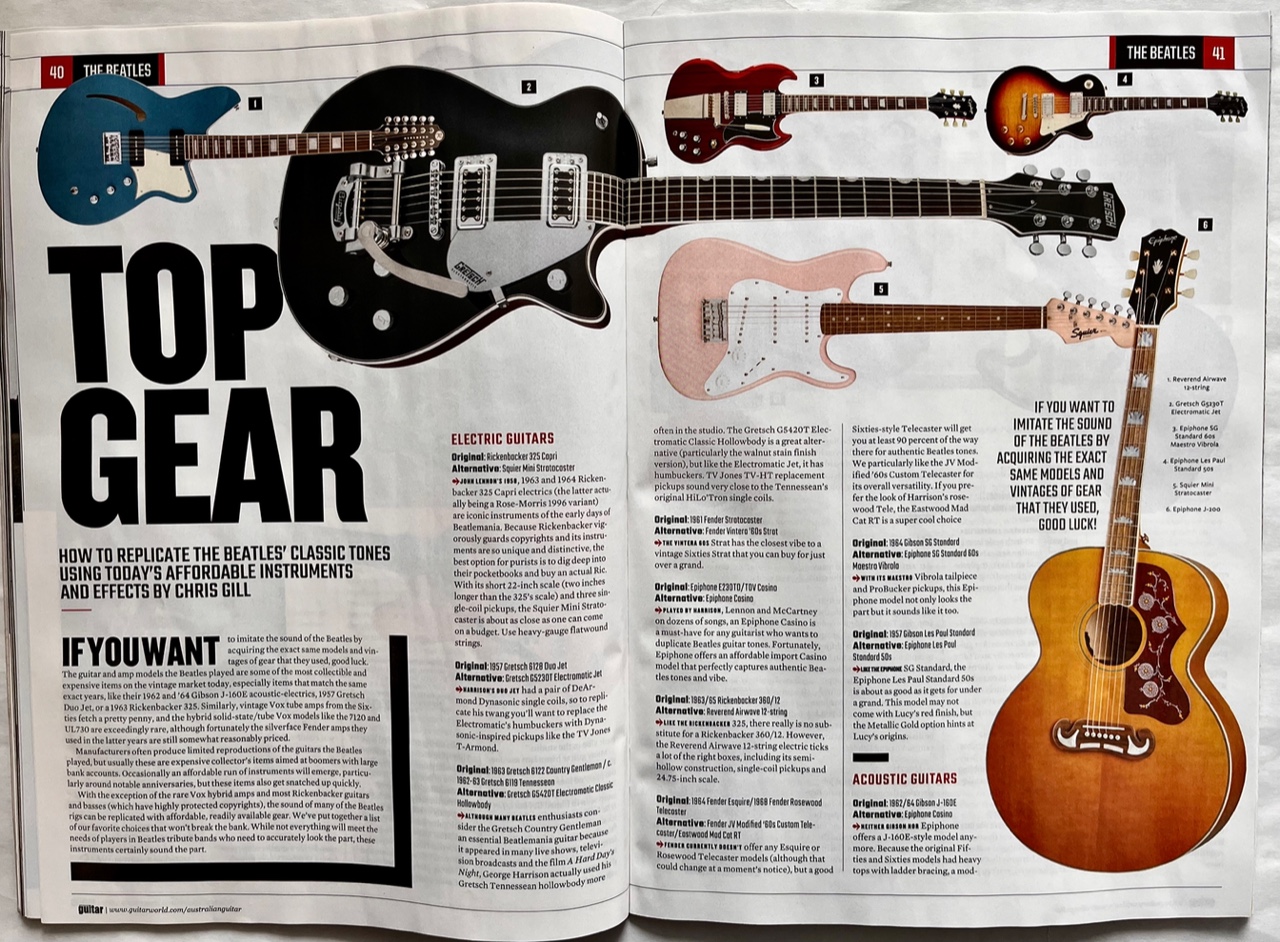
The feature is richly illustrated with great photos and examples of the the actual guitars and amplifiers, plus a list of suggestions for modern-day or way less expensive alternatives to get your hands on if you want to sound like John, Paul or George.
And yes, there’s a whole section on guitar string specifics. To quote: “Many guitar nerds note that perhaps the most important detail of replicating the Beatles’ tones after their guitars and amps is the types of strings that they used. It is generally believed that Harrison and Lennon used flatwound strings in the early years up until late 1965, just after the release of Rubber Soul. After that, from Revolver and beyond, they apparently switched to roundwound strings.” Check out the section on string theory here.
The feature ends with a short article called ‘Beatles Unplugged – A Guide to the Fab Four’s Acoustic Arsenal’. You can read that too online here:

The Record Store Day 2023 release list has just come out and come April 23 there’ll be at least three titles of interest to Beatle collectors.
Probably the most interesting and hard-to-get will be a re-imagining of John Lennon’s Gimme Some Truth best-of compilation which is being re-issued as a boxset containing 9 x 10” white vinyl EPs. Each EP will feature four tracks. Only 500 copies of this will be produced, hence the ‘hard-to-get’ moniker….

Next is the highly speculated 50th anniversary release of Paul McCartney’s Red Rose Speedway in limited edition, Half Speed Master vinyl form:
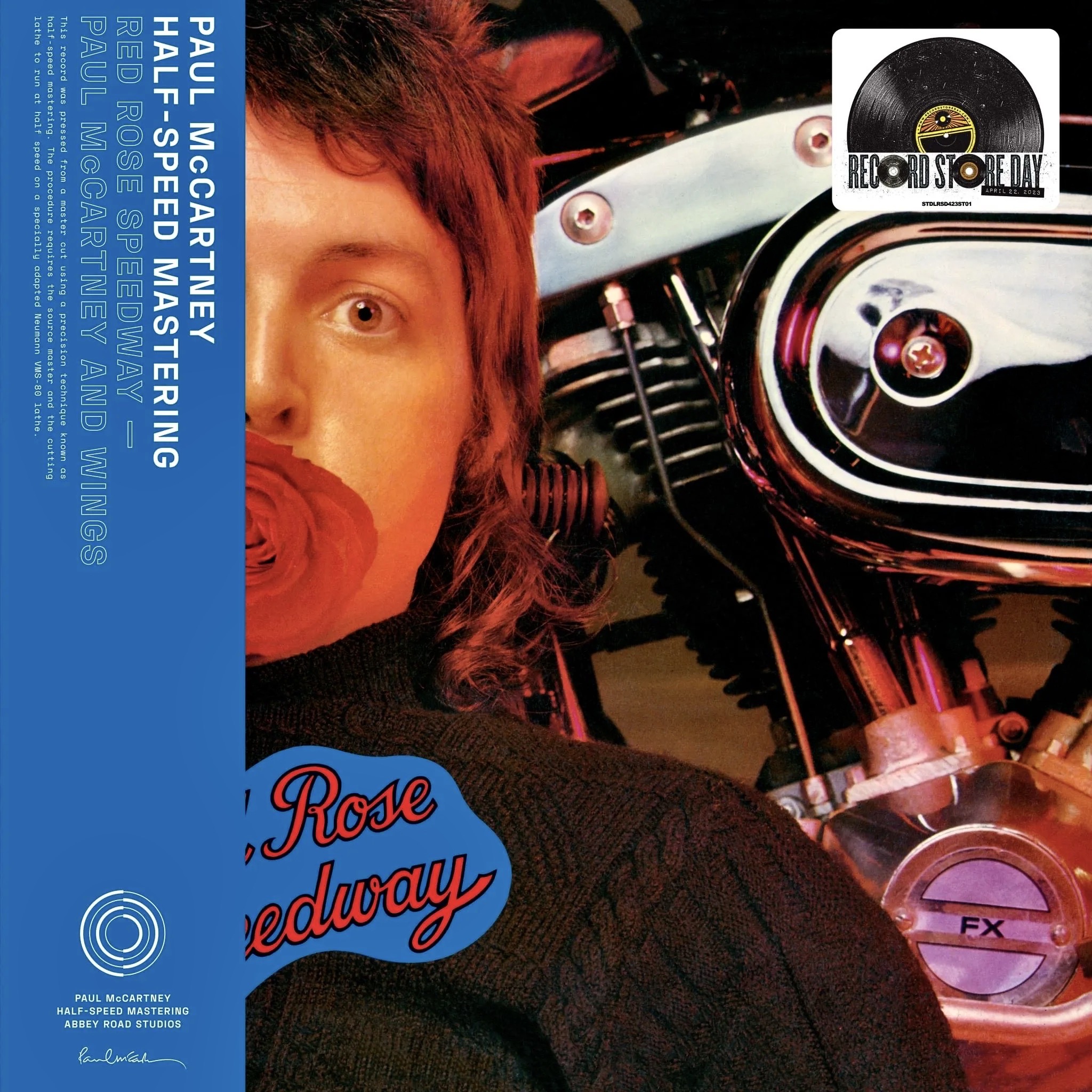
According to the RSD list there will be 5,000 pressed so this should be much easier to secure. It follows similar Half Speed Master editions of McCartney, Wings Wild Life and RAM.
Then there’s a re-issue of the 1981 Ringo Starr title Stop and Smell the Roses. This is being re-issued on vinyl as a 2LP with six bonus tracks for the first time. It will come in a gatefold with printed inner sleeves, original record labels and specialty color vinyl described as lava lamp effect clear red/white for LP1 and lava lamp effect clear red/pink for LP2. There are 2,500 copies being pressed.

Stop and Smell the Roses will also be issued on RSD as a CD (500 copies).
So, that’s John, Paul, and Ringo for Record Store Day 2023.
But wait, there is a George connection too. Dark Horse, the record label he started up (now run by son Dhani Harrison) is releasing not one but two LPs.
The first is by Stairsteps, a band originally signed to the label back in 1975. For Record Store Day 2023 we’ll see their 1976 album 2nd Resurrection re-issued on black vinyl. Billy Preston played synthesizer and served as co-producer alongside Robert Margouleff.

Dark Horse will also have a 20th Anniversary edition of the Joe Strummer & The Mescaleros album Streetcore as a limited edition pressing on white vinyl for RSD:

We’ve had readers doing a lot more detective work and research into the photographs that Klaus Voormann used for his collage and line drawings for the famous Revolver cover.
In case you’ve missed it the story on our blog started here and here when we stumbled across a terrific montage detailing all the then known images used for the cover.
Turns out the author of that montage was Ukrainian Beatle fan Sergey, one of our readers! He wrote to us letting us know he’d first created it (way back in 2012!) for a Russian Beatles discussion forum called beatles.ru.
Sergey has since tracked down the source of the image of Ringo used as inspiration for the line drawing of him Klaus placed at the bottom left of the Revolver cover – the one where he is looking skywards.
We’re still not sure of the photographer, but it was published in a German booklet Das sind die Beatles which features a series of black-and-white photographs and short comments about each. It was produced by Bravo magazine for the 1966 Bravo Blitztournee tour, under the auspices of Beat Publication Ltd. The photographer details are not indicated, but Sergey sent us these photographs of the actual publication:


We then published what we feel is another piece in the mystery – the photograph of John Lennon that was very likely the inspiration for Klaus’s line drawing of John at the top right-hand side of Revolver. You can read about that here.
That prompted two other readers – Tom and burnham42 – to offer up even more clues. These revolve around the source images for the three small Beatle faces (and two hands) on this part of the cover:
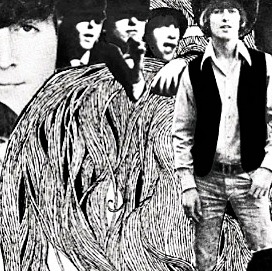
burnham42 wrote:
I think the one of the three small photos top left is in The Beatles Anthology book page 70 (in my French edition). You can also find it on pinterest. The photo was taken on the way to Hamburg. There is John, Paul, George and Gerry and the Pacemakers in the photo. The man on the floor (George?) is pulling a face and you even have the hands that Klaus also used.
Well, drag out your English edition of The Beatles Anthology book too if you have one because the image is also on page 70 there as well:

The Anthology Book says the photo is from George Harrison’s private collection. The caption in the book reads: In a lay-by on the road to Hamburg and the Ost See. Me, Paul and John with Gerry and the Pacemakers.
We have George and Paul, who are standing on the left, and John sitting on the ground pulling a funny face.
Voormann has cut out three sections of this image. Paul has been placed to the left, his raised arm now just below George’s face. And he’s cropped John’s face to make it appear he has a Beatles hair-cut, and tilted it so that it is more upright. His hand from the image is also used, but also at a different angle.

So, one more mystery solved!
Following all this, Sergey has been back in touch and has offered up a revised, updated version of his original Revolver cover “sources” montage. Here it is:

Please click on the image to see a larger version.
Could this be another piece in the jigsaw puzzle that is the famous Revolver cover montage by Klaus Voormann?
In this explainer collage below there’s a question mark about the origins of the photograph Voormann used as inspiration for his drawing of John Lennon:

(Click on the image to see a larger version)
It is the drawing on the top right-hand side:

Could it have been this image?

The eyes, mouth and hair all look very similar.
We don’t think this has been identified in other Revolver photo research info before. See our previous posts on this here and here.
We’re still looking to confirm who might have taken the photo (more on this soon) but beatlesblogger.com reader naturalkatsup, who kindly sent it in, says it was taken at Reed Pigman’s “Pigman Ranch” in Missouri on September 19th, 1964. They say it seems to be taken by a photographer named Curt Gunther? We’re not sure if the image was published in a magazine that Klaus had access to, but naturalkatsup has found other photos from the same day on the web. Here’s the full photo:

And here are a couple of other shots from the same photo shoot:
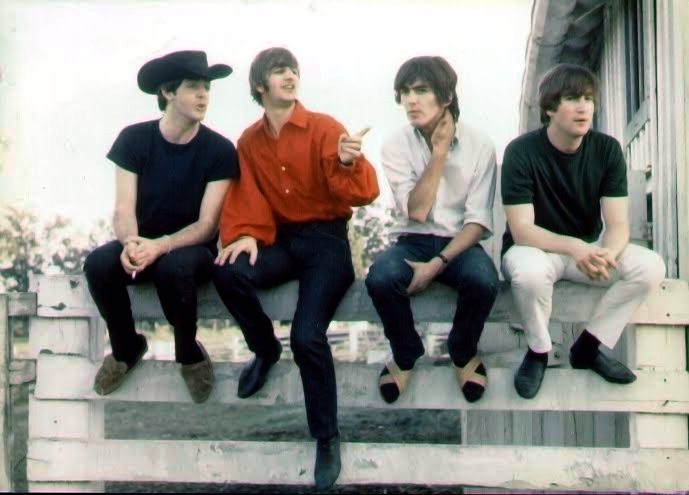
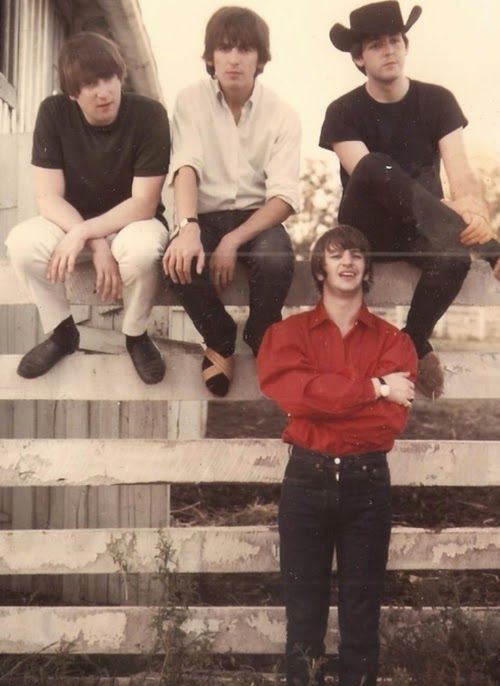
What do you think? Could this be the source for Klaus Voormann’s Revolver drawing of John?
If you definitely know who the photographer is please get in touch.
UPDATE:
We can now confirm that this image was in fact taken by photographer Curt Gunther:
Thanks to the info supplied by naturalketsup, we checked our own Beatle library, and found this book:

It was published in 1989 and chronicles the Beatles’ 1964 tour of the U.S. and Canada in great detail. It includes 150 never-before-seen photographs at the time by freelance photographer, Curt Gunther.
Although Beatle manager Brian Epstein had ordered that no photographers accompany The Beatles on the tour, Derek Taylor, their Press Officer and friend, had persuaded Epstein to allow Gunther to tag along with the touring party. And he captured some amazing images. They were issued in 2000 in an expensive Genesis Publications book called Mania Days.
But prior to that came another more affordable book called Beatles ’64 – A Hard Day’s Night In America, with text by A.J.S Rayl and many of the same photographs by Curt Gunther. Here’s the rear cover:
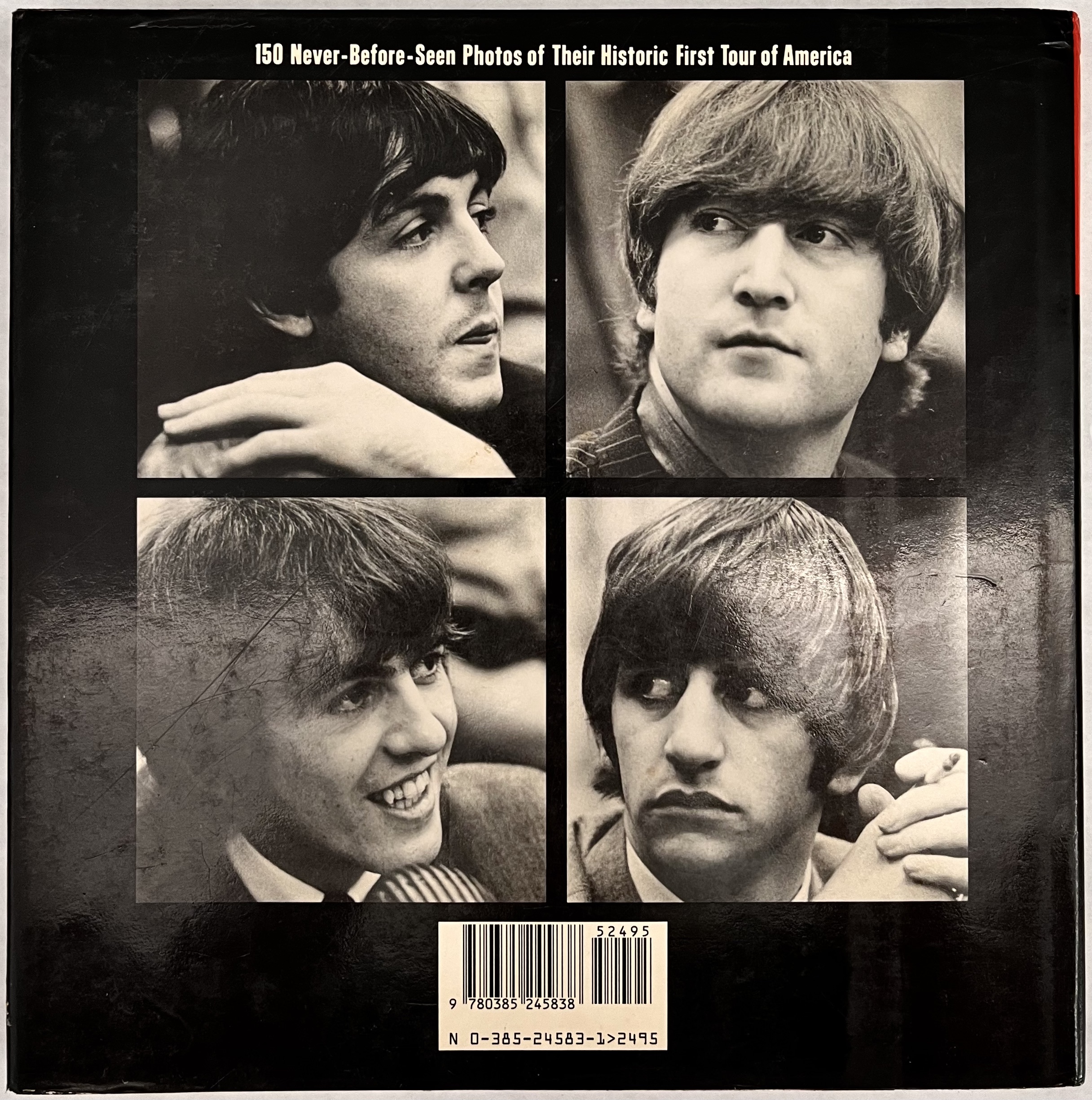
The book has the details a day the band had off in their hectic schedule and their visit to Reed Pigman’s “Pigman Ranch” in Missouri on September 19th, 1964, including a very scary night flight from Arkansas in a small plane to get there. George Harrison feared they’d perish, just like Buddy Holly, Ritchie Valens and the Big Bopper had in a small plane crash in 1959:
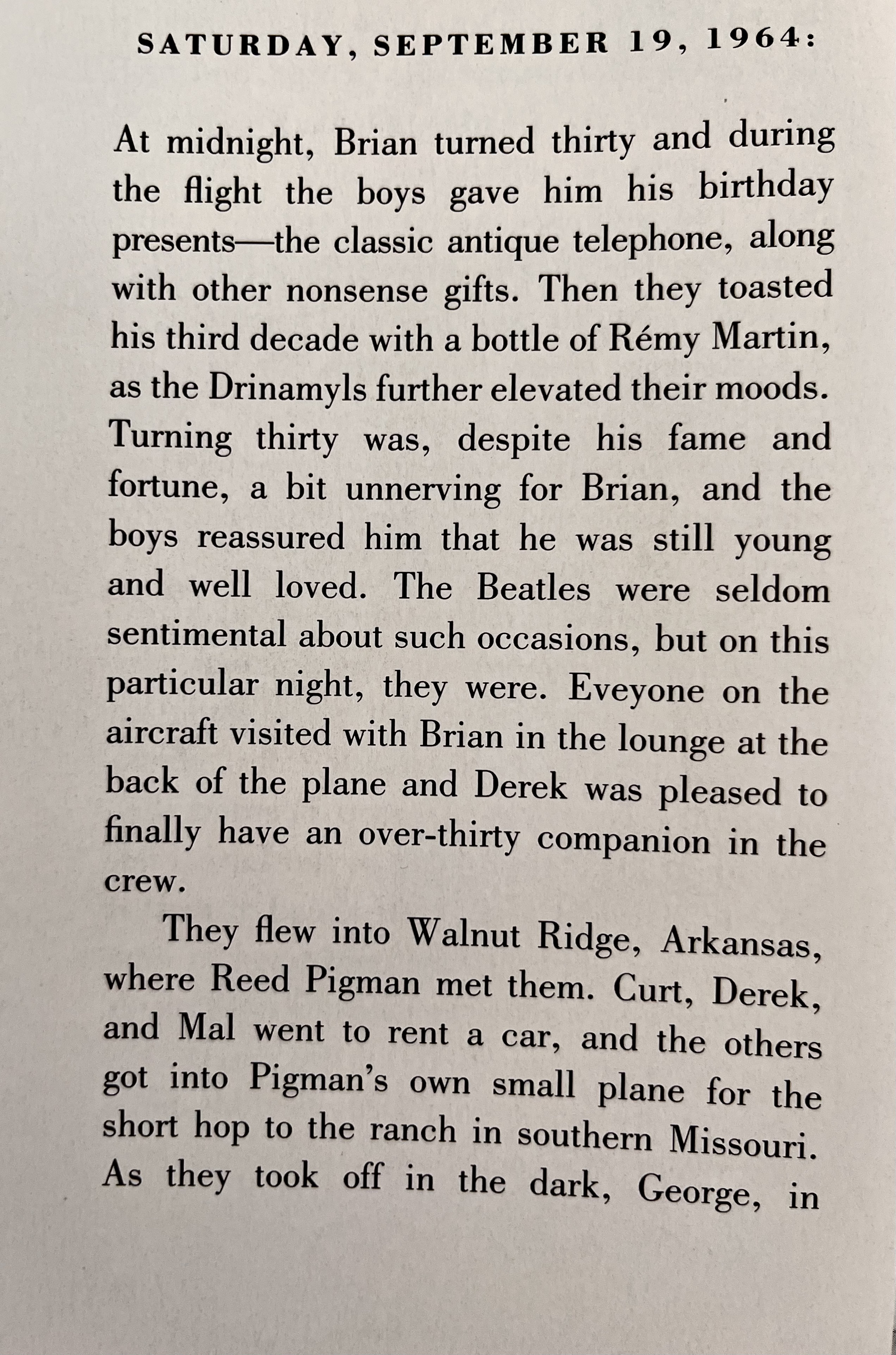
So, this confirms the origins of the image:
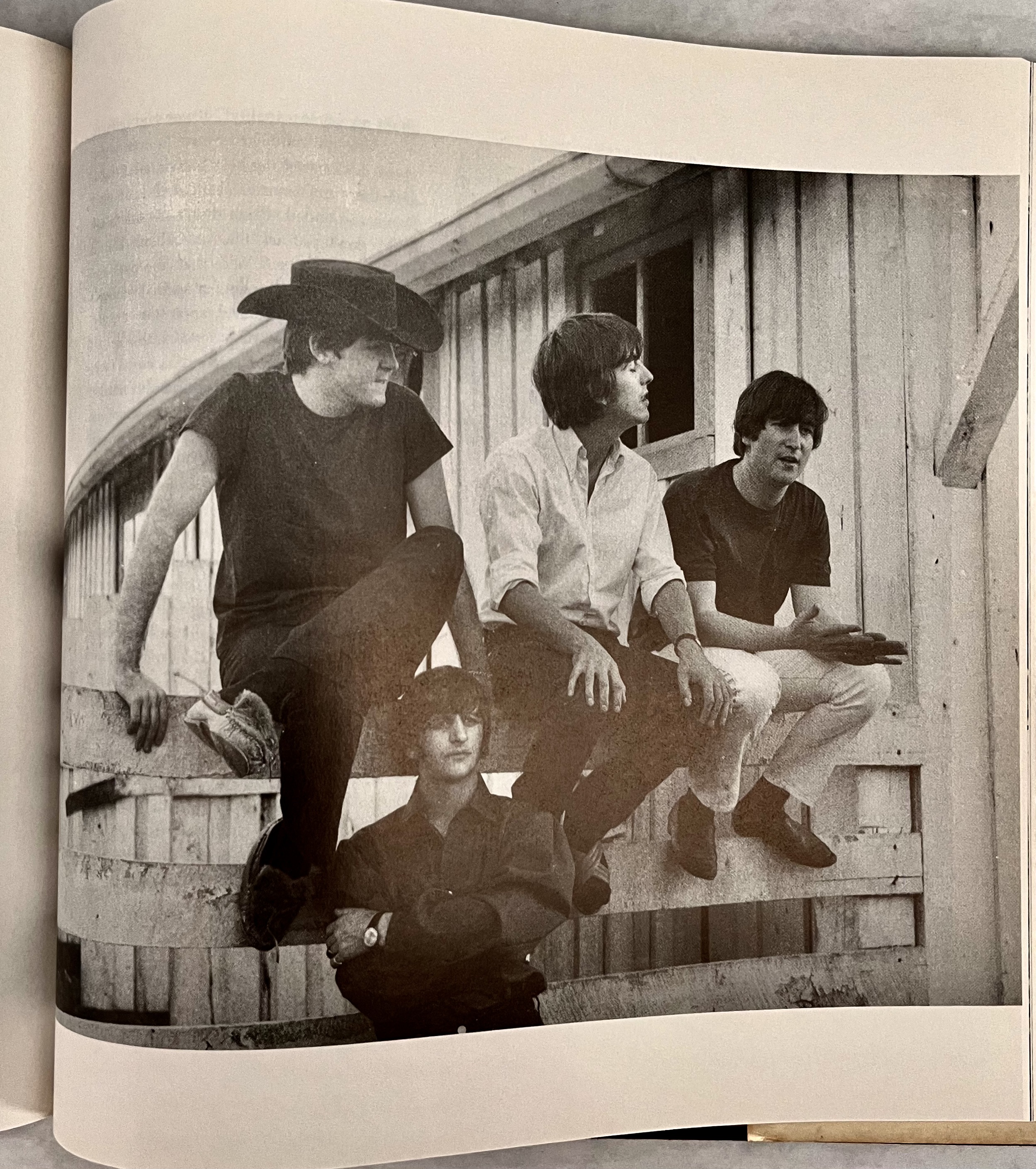
And the photographer:

The meetthebeatlesforreal.com site has some more images from the Pigman ranch stay.
The only question is, did Klaus Voormann use one of Gunther’s photos as his inspiration for John Lennon’s image on the cover of Revolver?
We reckon it’s likely.
With the 2022 remaster and remix of The Beatles‘ Revolver album due to hit stores next month, there’s renewed interest in solving some of the remaining mysteries of just where cover designer Klaus Voormann sourced all those little images that make up the collage he created for this now-famous cover:

As you know last year we published an article about the latest thinking. There were still at least four images (circled in yellow) that remain mysterious as to their source (click on the image to see a larger version):
Now at least three of those four yellow circles have been solved (to an extent) by German fan and YouTuber, Yaacov (Jack) Edisherashvili.
Jack actually took a trip to visit Klaus Voormann in person and spoke with him about the Revolver cover. While there he asked him about where he’d sourced some of those photos.
You can see that video below. It’s interesting because in this first video Klaus talks about the cover and how it will be explained in the new book that’ll be included in the new 2022 release:
After Jack visited Klaus he wrote to us to say:
“The image on the top left corner – the three faces – was never published. This was given privately to Klaus by the band.
The one on far right – the tiny image of Klaus himself – was shot by the late Astrid Kirchherr while Klaus was in his band Paddy, Klaus & Gibson.
The Ringo image – on top right corner – Klaus says was shot on a boat trip.
The John Lennon image with cigarette – I forgot to ask, but looks to me taken from press conference pictures?“
So, that’s more information than we’ve had previously. Following his visit to Klaus, Jack has also uploaded this comprehensively researched YouTube with a detailed breakdown of the Revolver cover:
As you can see still a couple of mysteries remain.
If anyone knows the origins of the John Lennon photo with the cigarette – please let us know.
Also, two other outstanding questions are around the origins of the image of Ringo that Klaus used as inspiration for the drawing at the bottom left of the Revolver cover. Where was it published and who’s the photographer? And also the George image on the right – same questions:


Now that international travel is slowly becoming more feasible for many of us again, a visit to Liverpool – the city where it all began for The Beatles – might just be back on your travel “must do” list.
If so, it’d be nice to have a guide to point you in the right direction when you get there.
Liverpool, on the banks of the River Mersey always looms large in any discussion about the formation of the band and their influences. Many of the physical places they lived or frequented have become key parts of the Beatle story. It is of course the city where John, Paul, Ringo and George were born, grew up in, and knew well.
Now a new guide book The Beatles’ Liverpool – just released – takes you there by gathering more than fifty Liverpudlian localities. The fully illustrated guide then explains why those particular places played such a key role in the band’s development and success.

Of course there are the obligatory entries for the childhood homes (Menlove Avenue for John, Arnold Grove for George, Forthlin Road for Paul, and Admiral Grove for Ringo); there’s the background to Penny Lane and Strawberry Fields; The Cavern Club; and the well-known St Peter’s Church, Woolton where John first met Paul.
But there are many more obscure listings too. Like Hulme Hall in Port Sunlight; the Neston Institute in Wirral; and 4 Rodney Street, birthplace of Beatle manager Brian Epstein.
There’s also a handy two-page guide map pinpointing the location of all the places mentioned in the guide.
If you’re planning a Liverpool visit, this book would be an essential to take with you – and it won’t cost you any excess luggage fees. At just over 44 pages The Beatles’ Liverpool is compact and light enough to easily slip into a travel bag or backpack to have with you as you walk the streets of the historic city.
Even if you’re still a way off physically getting to Liverpool, you can dive into The Beatles’ Liverpool and pay a visit vicariously. It’s the perfect armchair alternative to actually being there.
Author Mike Haskins was himself born and raised in Merseyside – and he still lives there! He’s worked as a scriptwriter and researcher for TV, radio and the stage, and has published over fifty books.
WIN A COPY OF THE BEATLES’ LIVERPOOL (NOW CLOSED)
Courtesy of Pitkin Publishing and Batsford Books in the UK, we’ve have two copies of The Beatles’ Liverpool to give away to two lucky readers.
All you need to do is provide your name, email address and have a go at answering two easy Beatle Liverpool-related questions. Just click on the link below to enter:
Good luck!
UPDATE:
Thank you to everyone who entered. And congratulations to the two readers who were first in with the correct answers!
They are Fred, from Ontario, Canada; and Diane from New York, USA. They will receive a copy of The Beatles’ Liverpool book, courtesy of Pitkin Publishing and Batsford Books.
The correct answers to our questions were:
There’s no doubt there are some very generous souls in the Beatle collecting community and we’ve recently been the recipient of such generosity. In a tidy-up and down-sizing of his collection one beatlesblog reader found he had two copies of the 2009 release Beatles Box of Vision and, very kindly, decided to pass one of them along to us. And a welcome addition it is as we didn’t have this treasure in the collection.
The Beatles Box of Vision was the brainchild of former Capitol Records Executive Vice President/Chief Operating Officer and Beatle fanatic, Jonathan Polk.
Timed to coincide with the 2009 release of the Beatles stereo CD remasters, Box of Vision was a sumptuous way to store all that officially reissued CD catalogue – and more. Its storage section could contain every release from Please Please Me right up to the then-current Love, including Past Masters 1 & 2; the ‘best of’ albums 1962-1966 and 1967-1970; Live at the BBC; Anthology 1, 2 and 3; the Yellow Submarine Songtrack; the 1 compilation; and even Let It Be…Naked.
Box of Vision is large and impressively constructed. It comes shipped in a protective white cardboard outer (that is really worth keeping):

On the rear of this protective box is printed information about the contents:

When you open this white outer box the first thing you see inside is the large, well-protected, very good quality Box of Vision box. This initially looks like it might be designed to hold LPs instead of CDs because it is of LP-like proportions:

Taking it out reveals this still striking Robert Freeman image on the front cover of of what is a black linen covered storage box:

The box is deep and has the core collection LP spines printed along its edges :

As mentioned, the box is beautifully made. It is hinged on the left, opens like a large clam shell. It is designed to store, organise and display your Beatle CD collection. It contains two high quality books plus a set of plastic sleeves. The first thing you see when you open it up is a slim, soft cover book called The Beatles Catalography.

Then comes a series of 4 plastic storage sleeves – each of which can hold 8 CDs plus their booklets (4 on the front, 4 on the back of each sleeve). These have black and white images at each slot to show which CD goes where:


Then at the back of the box is an impressive cloth-bound hard back book containing all the full-sized artwork for every release. This is embossed on the front in shiny black lettering that simply says The Beatles:

Each box is numbered. This one is #1369:

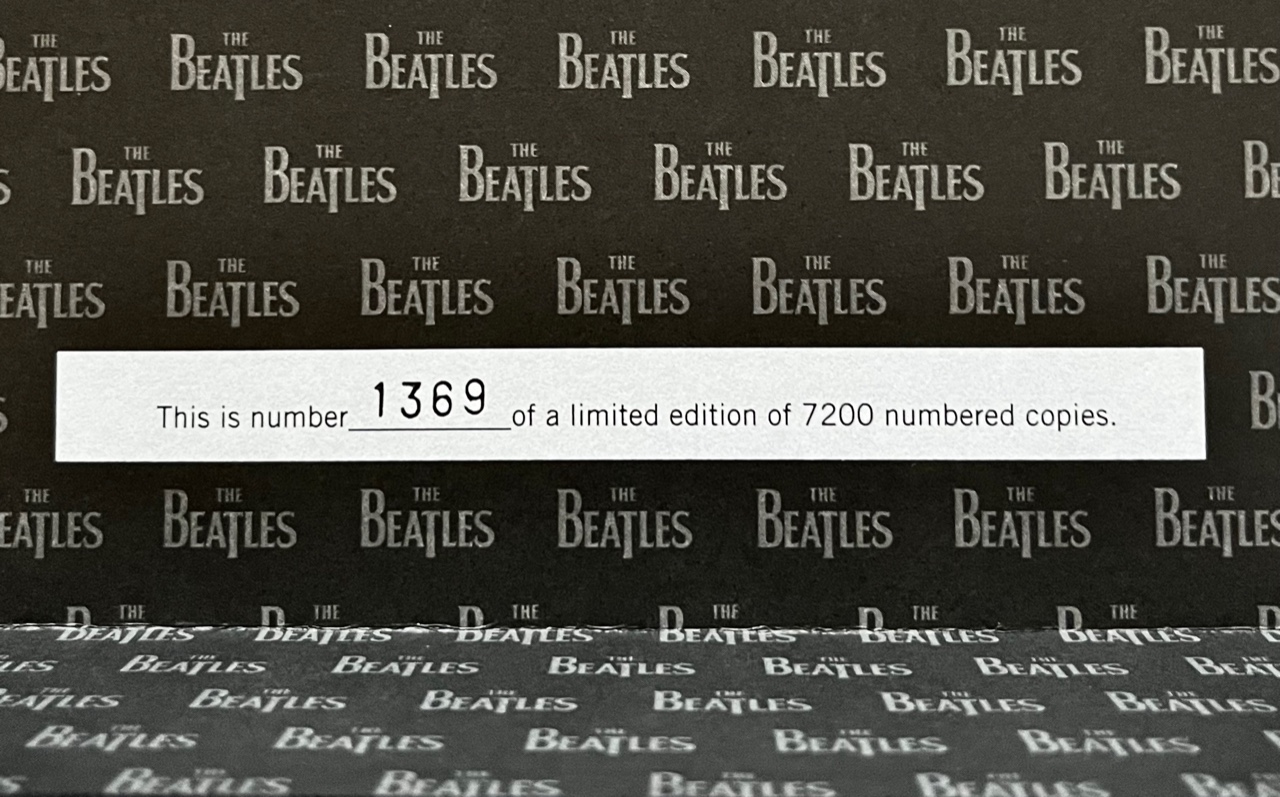
Even the rear of the box has a nice detail:

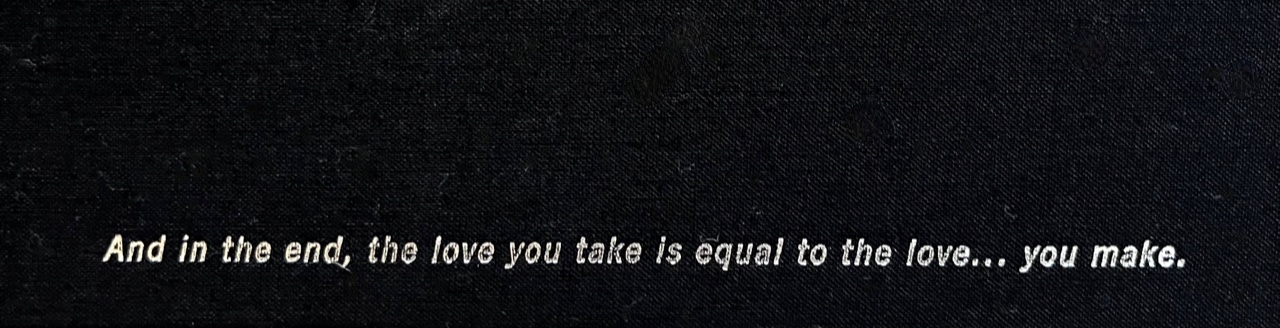
Let’s look first at The Beatles Catalography book:


This is a guidebook to the unique history of Beatle releases. It details their UK and US catalogue in a side-by-side presentation so that you can immediately see the differences between the two countries, both in the artwork and the track listings:


Then comes the hefty, cloth-bound book The Beatles with high quality images of all the artwork associated with every official Beatle release in the UK to 2009.

Where that artwork extends to posters, special inserts or booklets these too are reproduced. For example, the story picture book stapled inside the Magical Mystery Tour LP is reproduced in full:
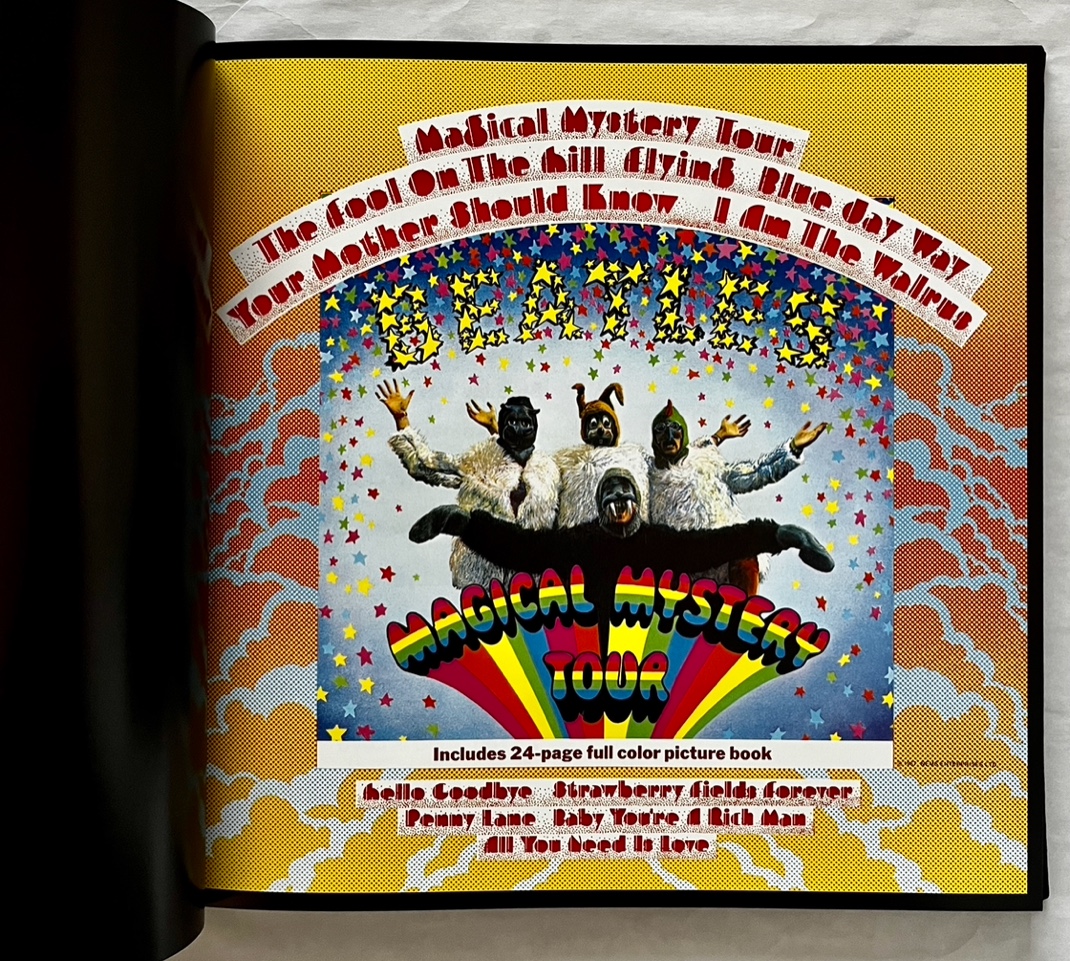

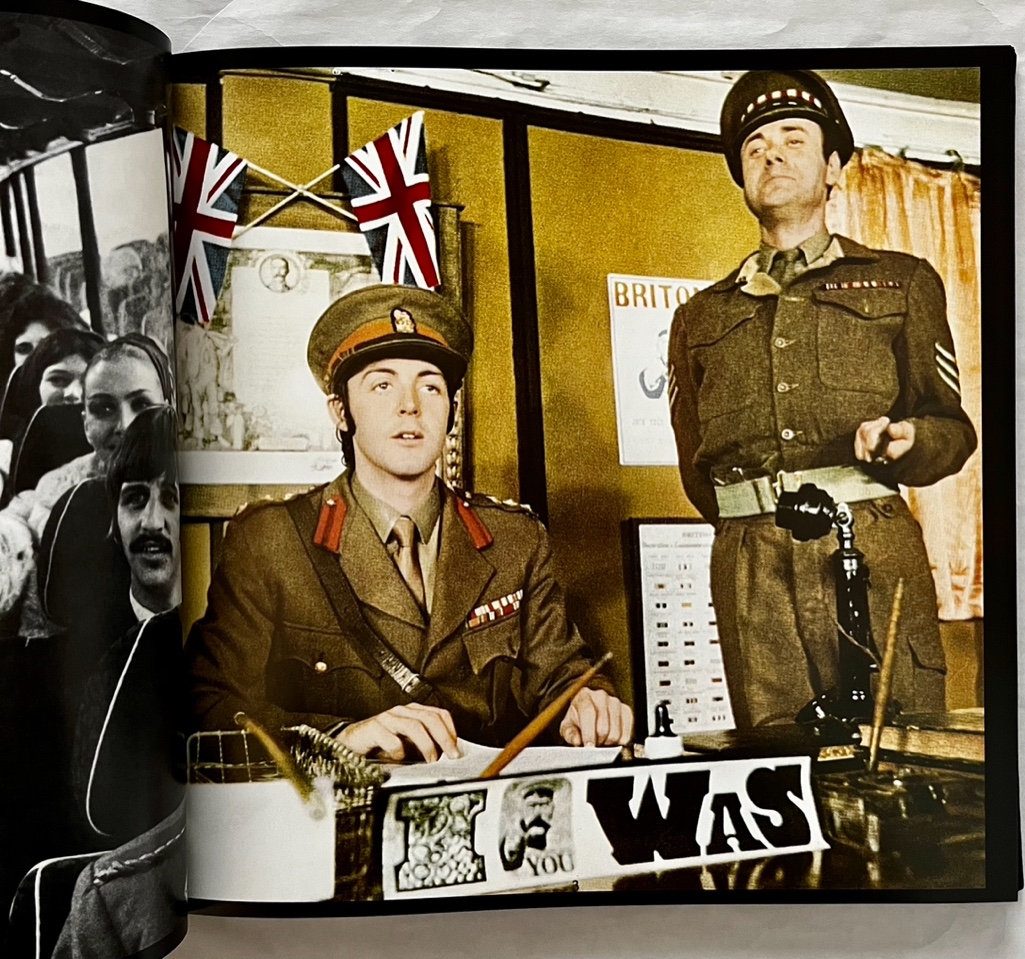
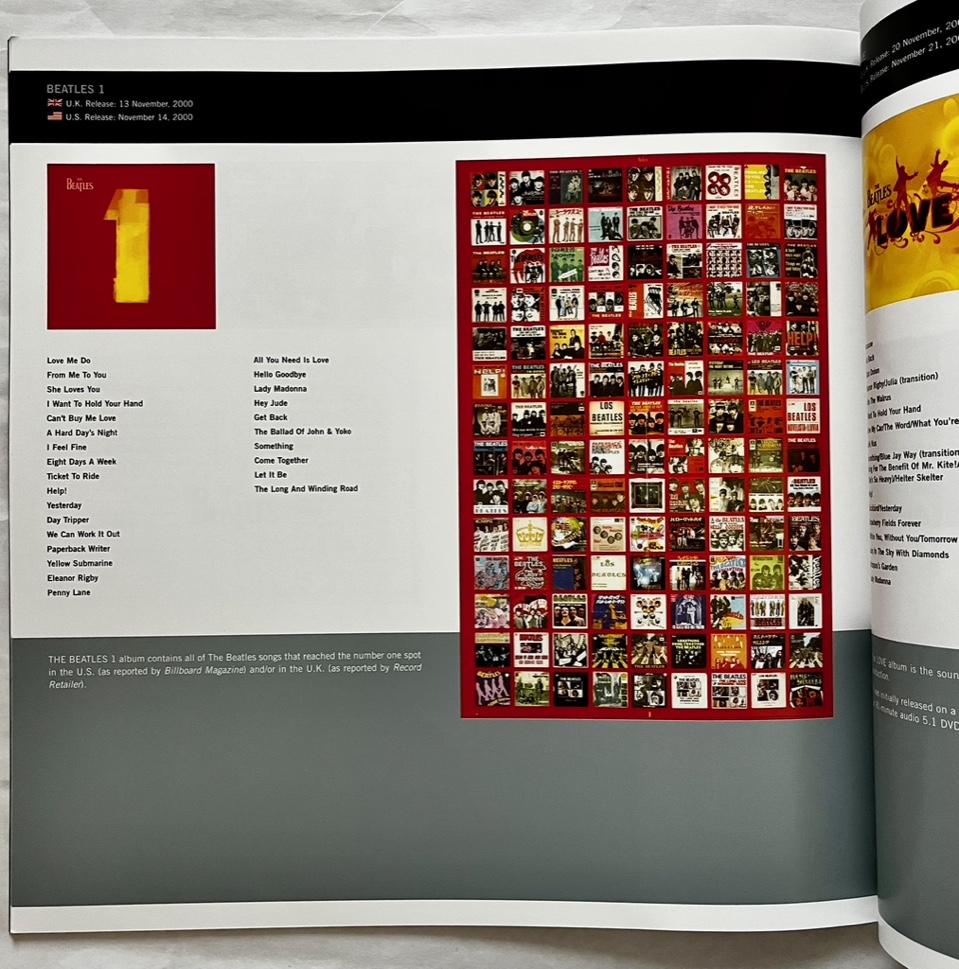
When you get to the 1 album an image of the poster is reproduced:
Likewise the booklet that came with the Let It Be…Naked LP:


The rear covers of each album are also faithfully reproduced:


Where did the name ‘Box of Vision’ come from?
At the time Jonathan Polk told The Houston Chronicle that title is from a song by Tom Russell. “The gist of the song is a father wishing he could give his child a box with all the things he would like her to experience in her life. I thought it was a good fit as I had envisioned this as a way to give a young fan the context to appreciate the history and chronology of the Beatles catalog, and what they were able to accomplish, in a much deeper way than as simply a bunch of hit songs.”
At the time you could order Box of Vision through the official Beatles site, or through a dedicated Box of Vision site – but that sadly is now long gone.
The Beatle/Apple connection – and the incredible quality of the images reproduced in both the books accompanying the storage box – very clearly hints at the close involvement the Beatles camp must have had with this project. They obviously supported the initiative fully, and it shows.
Here’s a YouTube ‘unboxing’ video from the time:
There was also a John Lennon Box of Vision released a year later in 2010, as well as a Bob Dylan Archive in 2011 – both done in a similar style to the The Beatles Box of Vision.
Thank you so much to reader Michael who very generously gifted us the Beatles Box of Vision.
Thanks also to Marc who read our article about The Beatles Box Of Vision and writes: “After it was released the Box Of Vision website had a PDF download containing corrections for three pages in Catalography book: one for the Let It Be/Let It Be…Naked page, and two of the Song/Album Reference pages.” Marc has made that PDF available. He hopes this is useful for others who may have missed it at the time. You can download those pages here:
It has really been quite some time since we’ve done a Beatles With Records post.
Our Beatles With Records series is exactly that: photographs of the band actually holding those things they sold so many of: records and CDs. These can be Beatle discs, or discs by other artists.
The posts prompted quite a few readers to send in additional photographs, and also to do some amazing detective work on the sometimes mysterious records the Beatles are holding in photos. Sometimes the albums are easy to guess. Then there are others where you can only see a fragment of a cover, or the rear image of a sleeve, making it very difficult to identify – especially when the record is by an unrelated artist.
One recent photo to come to light is definitely in that latter camp. It comes from the recently released book by Paul McCartney’s brother, Mike McCartney (a.k.a. Mike McGear).
His book, published by Genesis Publications, is called Mike McCartney’s Early Liverpool and it contains some never-before-seen early photos of The Beatles, including this gorgeous one of John and Paul (and most probably George too, on the left). It is called Mathew Street, 1962 and hey are no doubt standing outside the famous Cavern Club:

This one had us intrigued. Paul is clearly looking at some 45’s, and John has under his arm what at first appears to be an LP of some kind. Further investigation though reveals it not to be a record but a bag containing a record from Liverpool’s NEMS record store. NEMS of course was owned by the family of their manager, Brian Epstein.

Wouldn’t it be great to know which LP John had purchased? What it is will probably never be known….
A couple of other items of interest have surfaced.
This one shows George Harrison in his kitchen at home at Kinfauns:

Quite interesting to see pinned up on the wall behind him a John Lennon/Yoko Ono album cover:
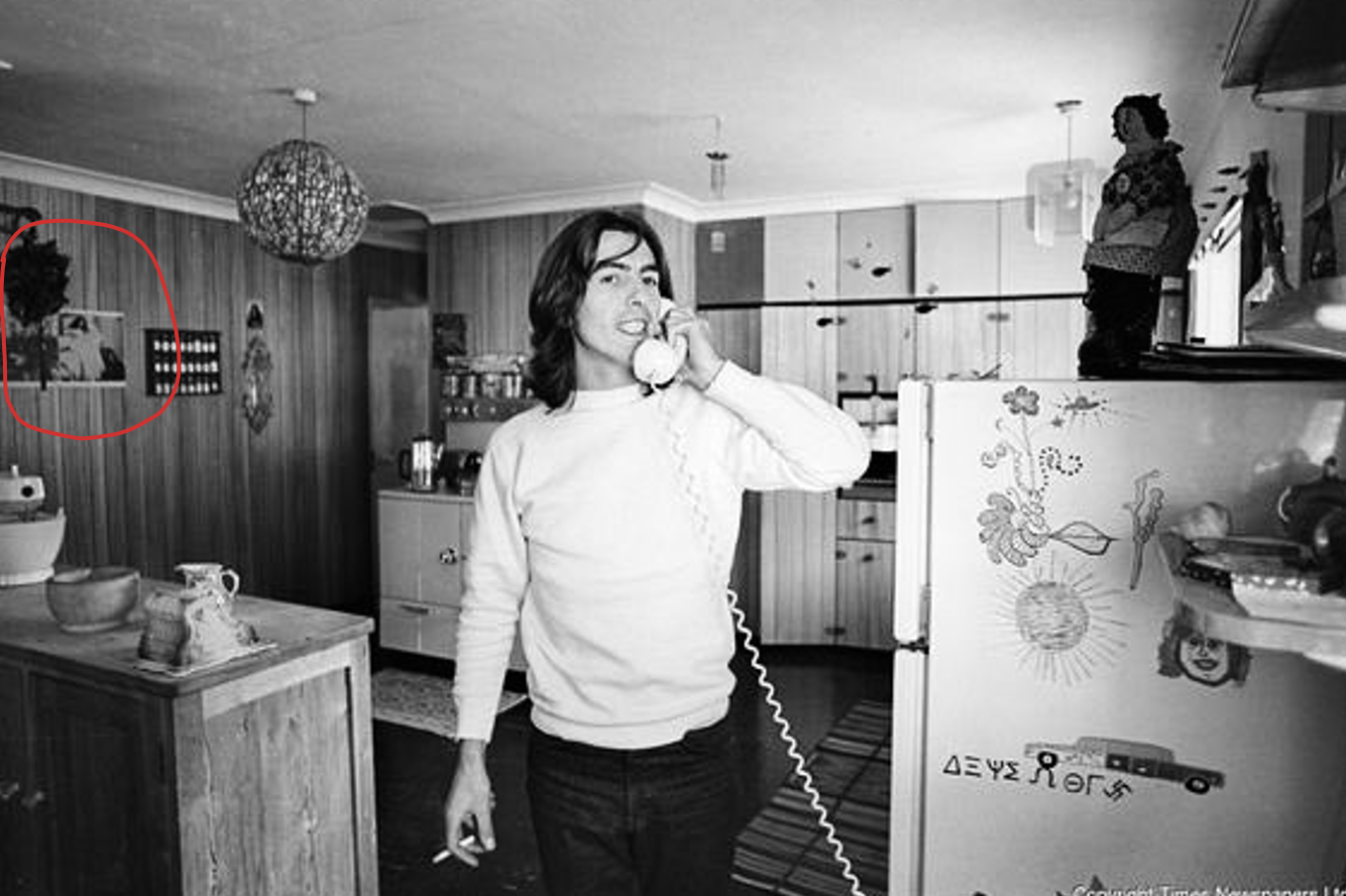
Here it is again, a different angle from the same photo shoot (click on image for a larger version):

It is Unfinished Music No.2: Life With The Lions, an experimental album on the Zapple label from 1969:
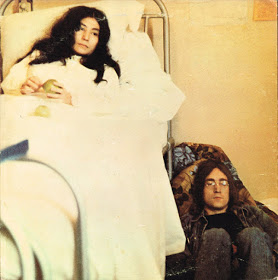
It appears to be an album slick opened out containing the rear cover image as well:

George seemed quite fond of putting up album covers, or elements of album covers, on his walls. If you look at the top left of this photo – taken in what seems to be a hospital ward – you can see two prints of the Linda Eastman photograph of Apple artist Mary Hopkin. That image was used for the front cover of the Hopkin LP Postcard:
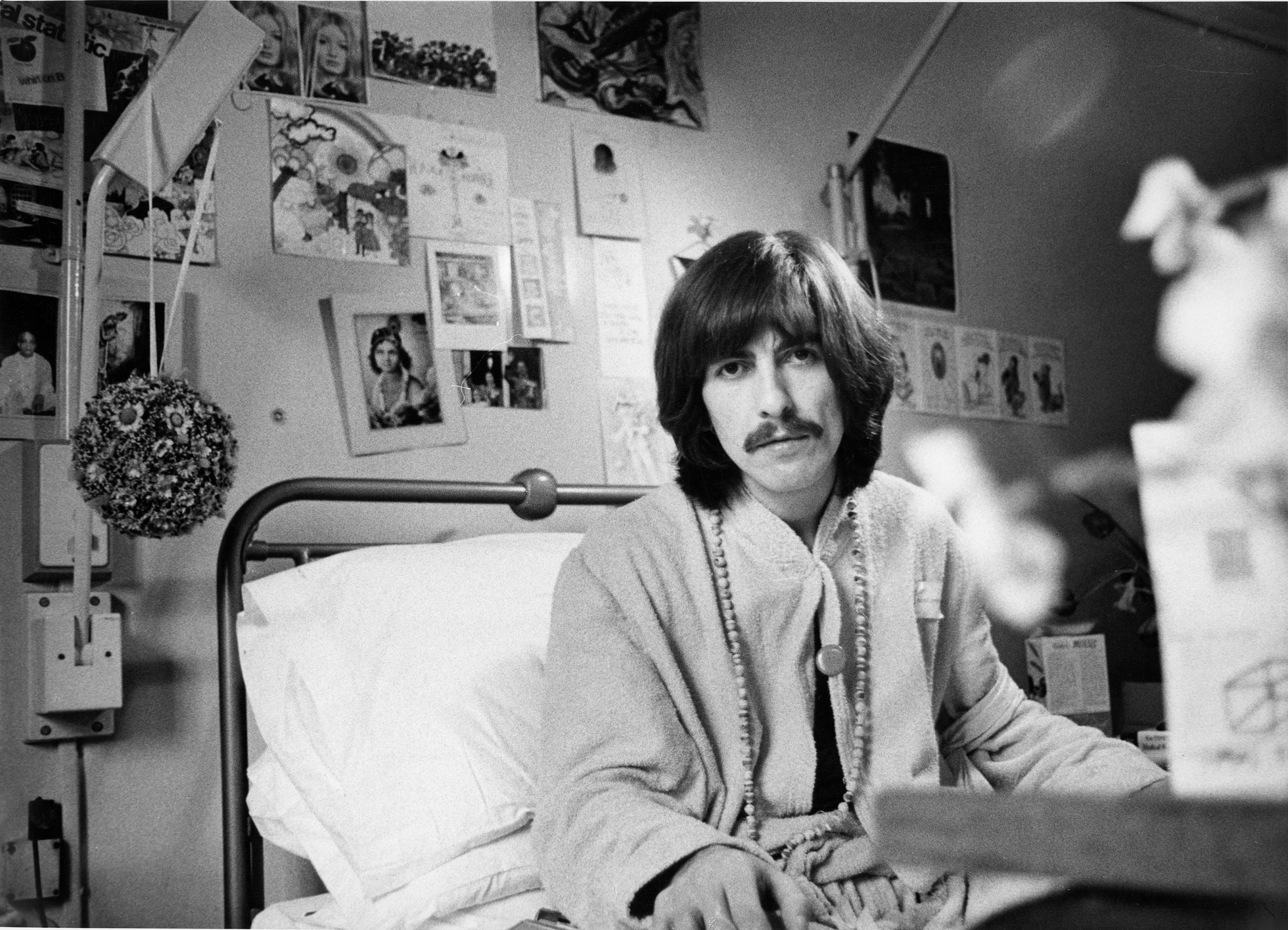

(Turns out that George was at London’s University College Hospital, where he got his tonsils removed in February, 1969)
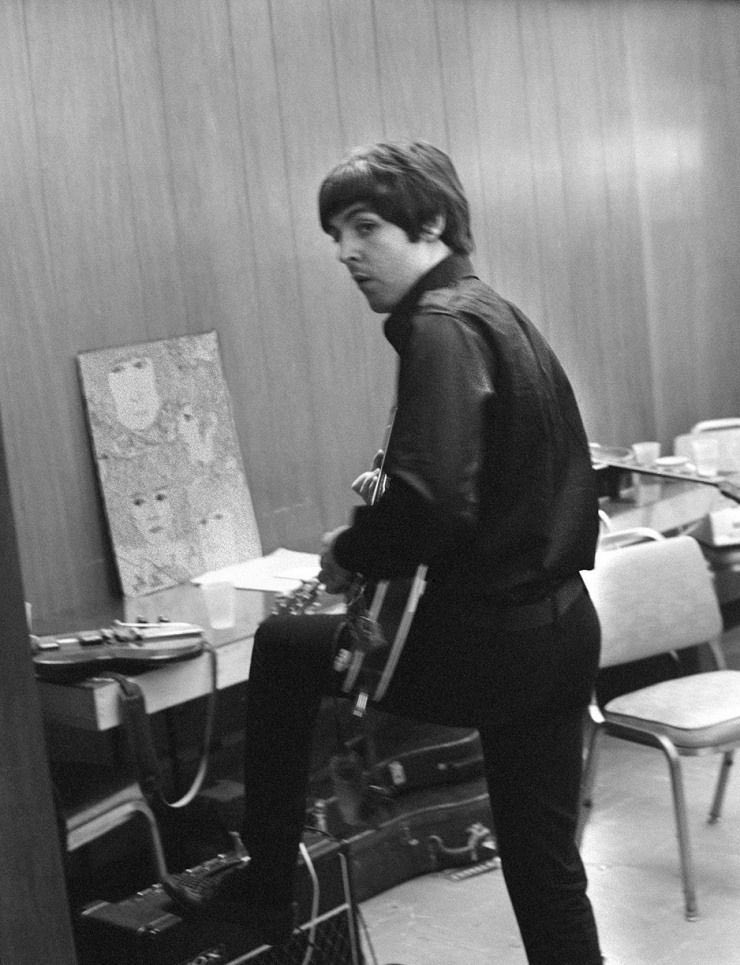
Here’s an image of Paul McCartney with what could be an early rendering of the Klaus Voormann cover for the Beatles Revolver LP. Either that or an attempt by a fan to replicate Voormann’s amazing artwork:

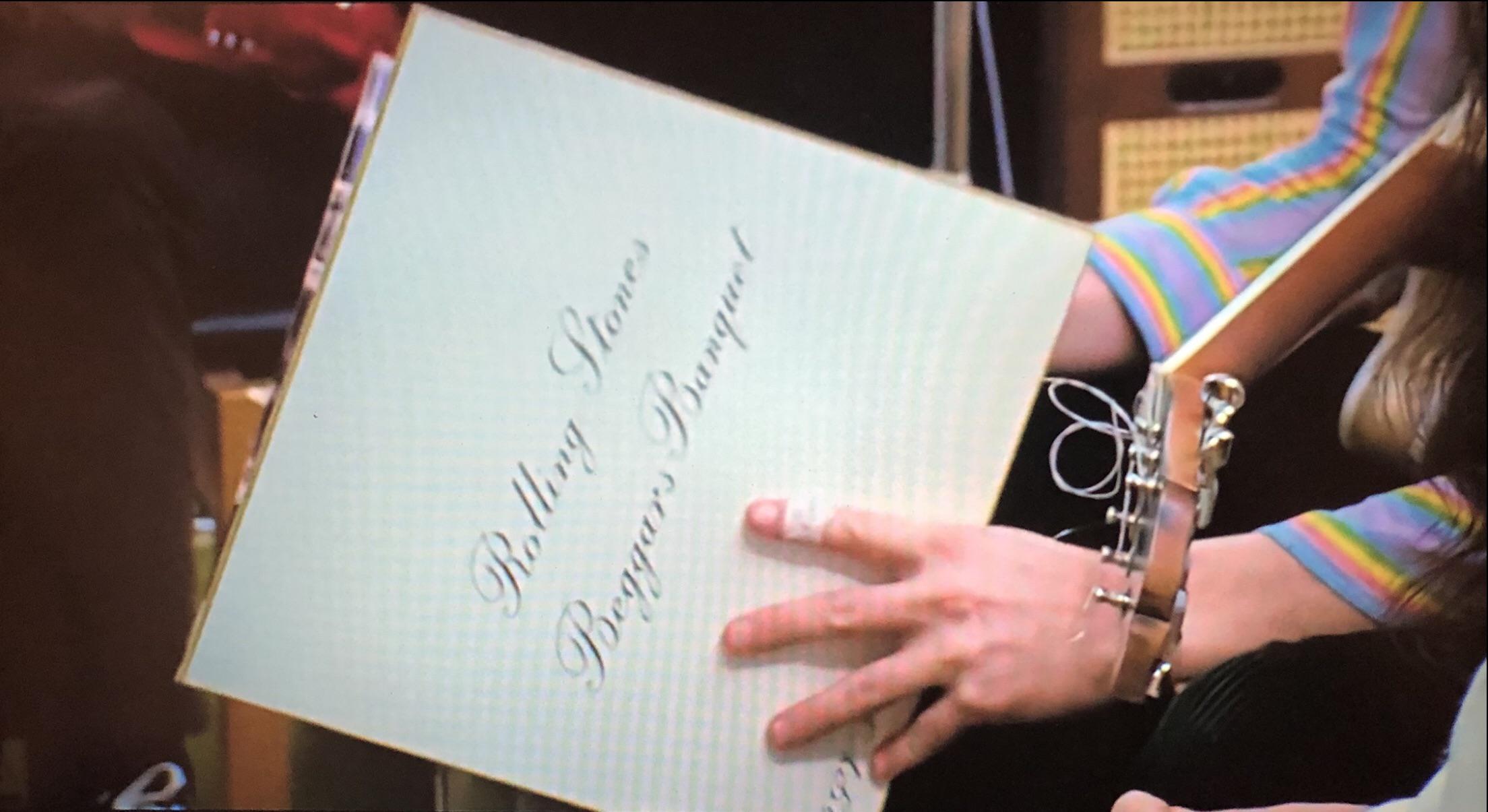
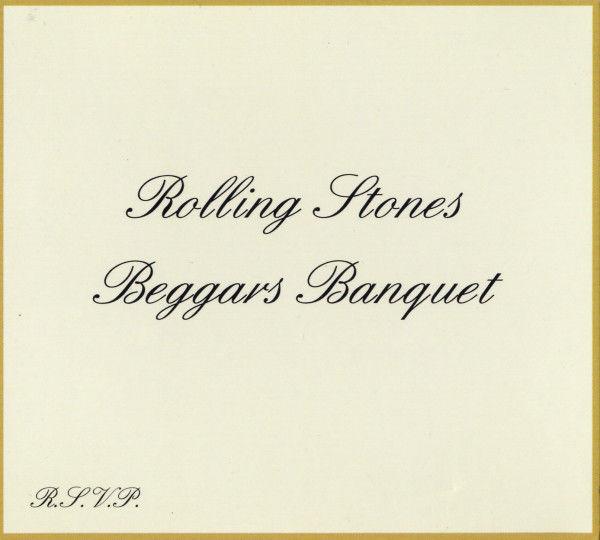
And finally, a still taken from the incredible Peter Jackson/Disney+ 3-part series Get Back on the making of the Let It Be album, this image of John Lennon taking a look at the latest Rolling Stones LP of the day:
See the other instalments of The Beatles With Records here.
 Beatles Blog