McCartney’s “Destiny” Credits and Closing Theme Song

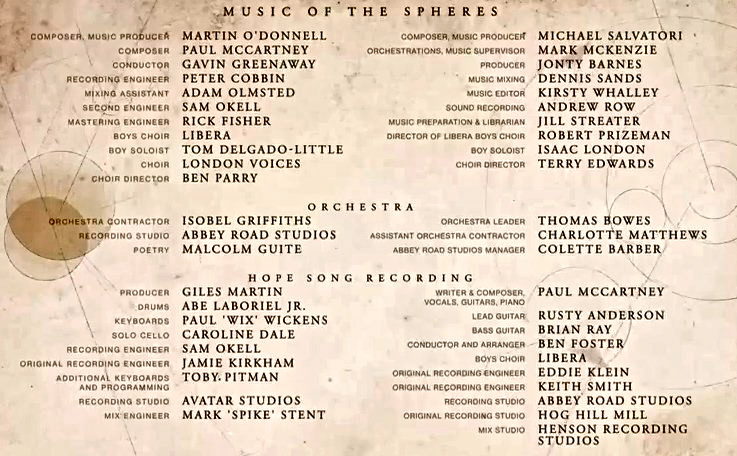
Paul McCartney’s work on Destiny, the long-awaited new blockbuster in the video game world, made its public debut when the game hit store shelves for the first time earlier this week:McCartney Destiny-Hope credits

As you can see in the screen grab above, there are two main McCartney contributions. There’s his joint composing credit (with Martin O’Donnell) for the instrumental passages used throughout the game called “Music of the Spheres”, and there’s a new song recorded specifically for the game which is played across the extensive closing credits – much like those at the end of a movie. That song is called “Hope”. Produced by Giles Martin, and utilising members of McCartney’s current touring band, the song was recorded in Abbey Road and at Sir Paul’s own Hog Hill Mill studio in East Sussex, England:

It has been confirmed on McCartney’s official site that “Hope” is to be released as a single, but no date has been announced yet.

The Beatles in Mono Vinyl Is Here

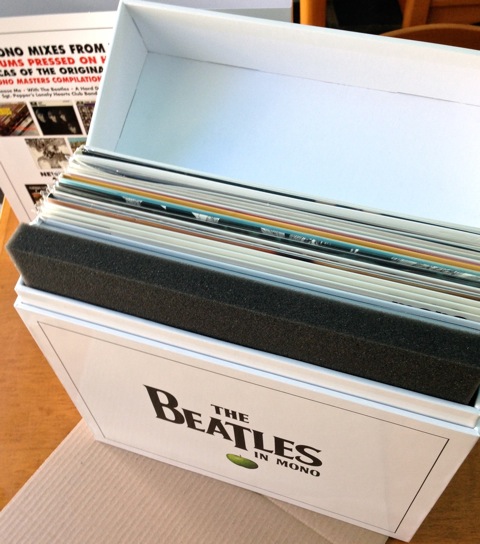
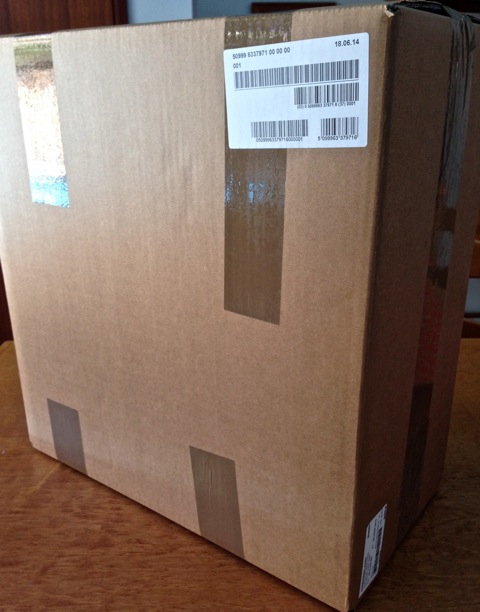
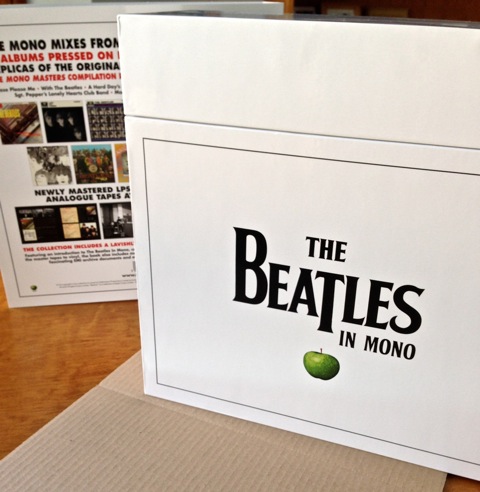
Picked up our copy today!Beatles Mono Box1BEatles Mono Box2

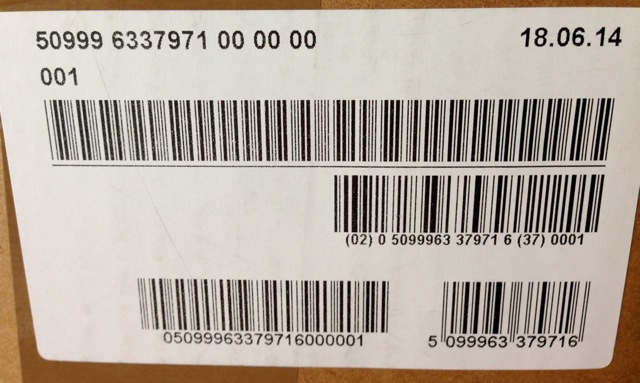
As you can see, The Beatles in Mono comes in a protective outer cardboard shipping box, similar to the one the Stereo LPs set was delivered in back in 2012. The sticker shows our Mono box was packed on June 18.

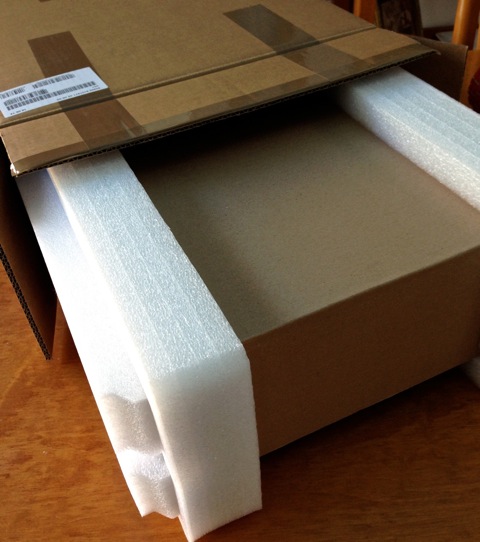
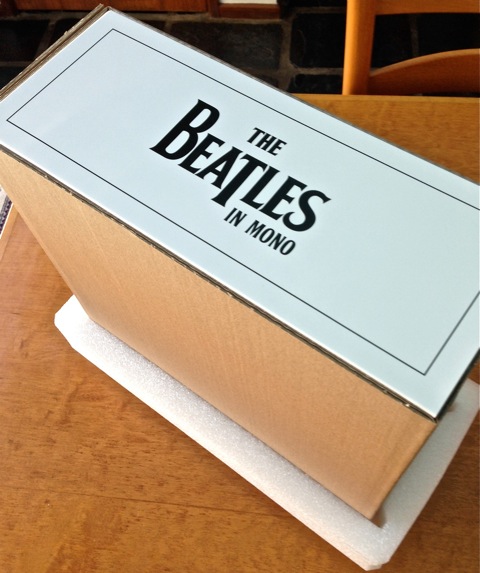
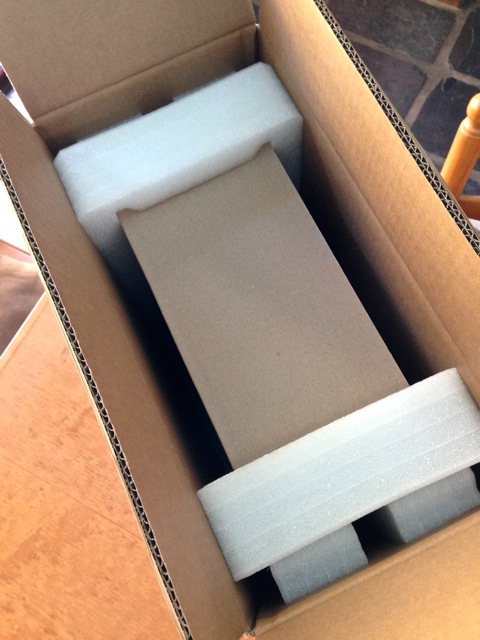
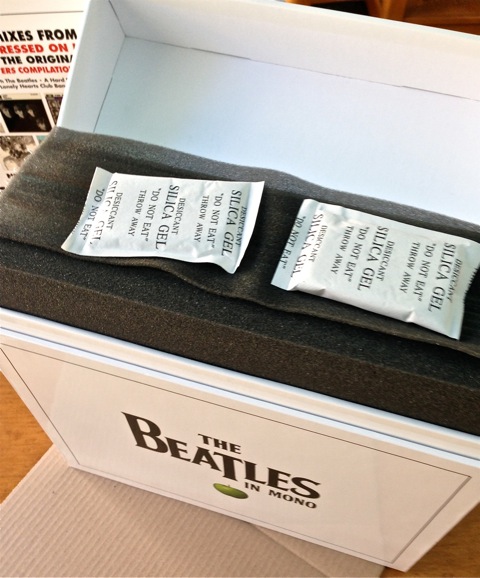
Like the Stereo box it comes delivered essentially as a box-within-a-box, providing very good protection and padding while the set is in transit:Beatles Mono Box3 Beatles Mono Box4 Beatles Mono Box6

In Australia The Beatles in Mono was actually available in store from last Thursday (September 4). The reason for the delay in posting these photos is that we couldn’t physically get to the shop we’d ordered ours from (the fab Redeye Records in Sydney) until today….a frustrating four-day wait!

Once removed from its protective packaging there’s a printed cardboard slip-cover which wraps around the box. Here’s the front:Beatles Mono Box7
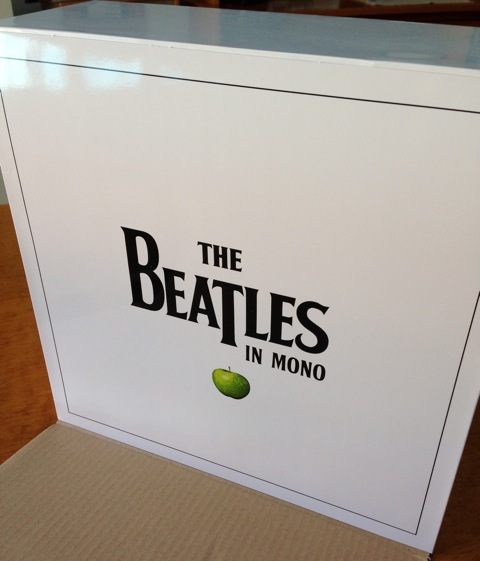
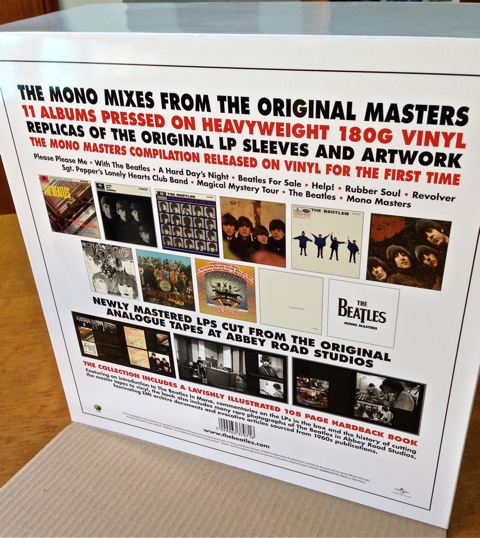
And here’s the rear of the slip-cover:Beatles Mono Box8

Slip it off and here’s what you see on the front of the actual box itself:Beatles Mono Box9

FYI on the rear of the box is a sliced Apple logo: Beatles Mono Box10

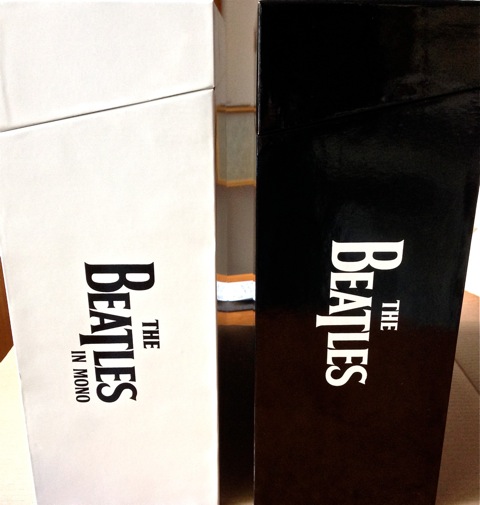
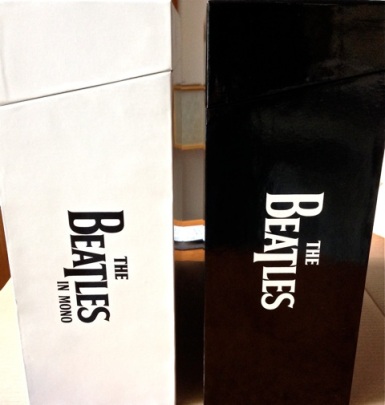
The Mono box is exactly the same size as the Stereo box from 2012. If they are sitting side-by-side on a shelf they are pigeon pairs – one black, one white: Beatles Mono Box30Beatles Mono Box 31
No need to go into hugely great detail about this set as there has already been a very early “unboxing” video released by Pete Nash of the Beatles Fan Club Magazine. That video is comprehensive and well worth a look, but here are a few photos of some of the detail contained in the packaging you might be interested in seeing – things that Pete Nash doesn’t show up close:Beatles Mono Box11 Beatles Mono Box12

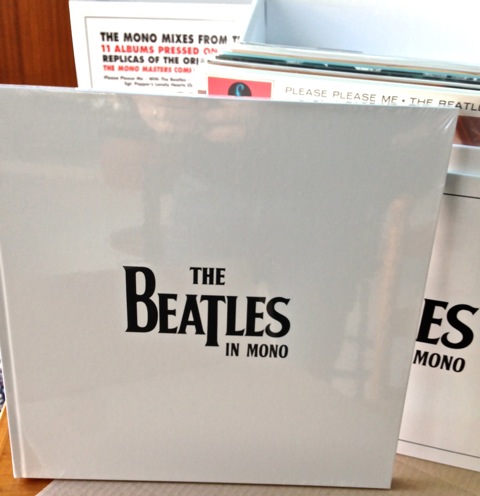
First this out is the beautiful, specially produced hard-cover book (still sealed in its heat- shrink):Beatles Mono Box13

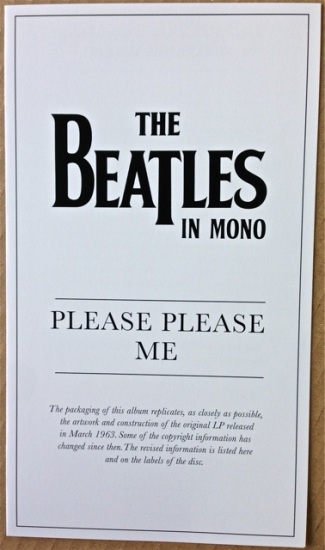
Of course first album out is Please Please Me:Beatles Mono Box14Beatles Mono Box16

(Click on images to see a larger versions)

Each album (except the triple LP Mono Masters) is in a re-sealable clear plastic sleeve. This is different to the Stereo box where each LP was in heat-shrink plastic which has to be cut open to get to the cover and the record inside.

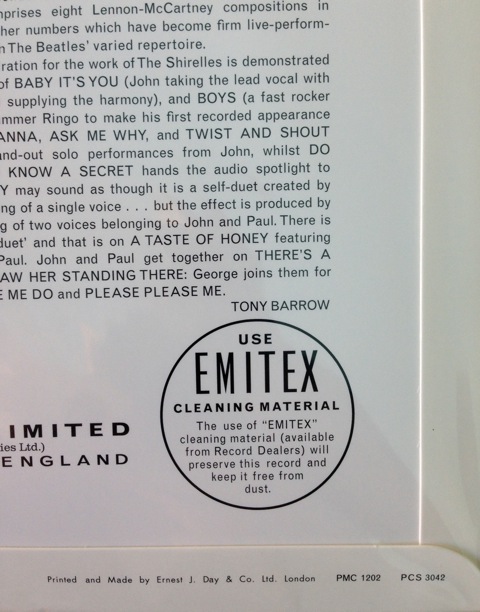
Here’s some of the detail in the printing and sleeve construction – all exactly faithful to the way this would have looked in 1963:Beatles Mono Box15

All printing and pressing of the box set is done by Optimal Media, based in the town of Robel in Germany. It has to be said that the quality and attention to detail is absolutely first-rate. The cardboard used for the covers is thick, and the 180g vinyl feels chunky and solid in your hands.

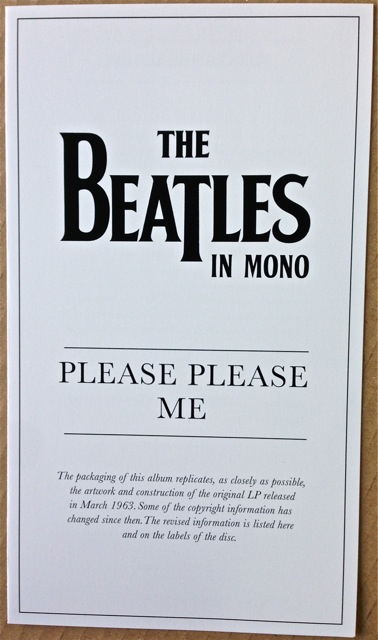
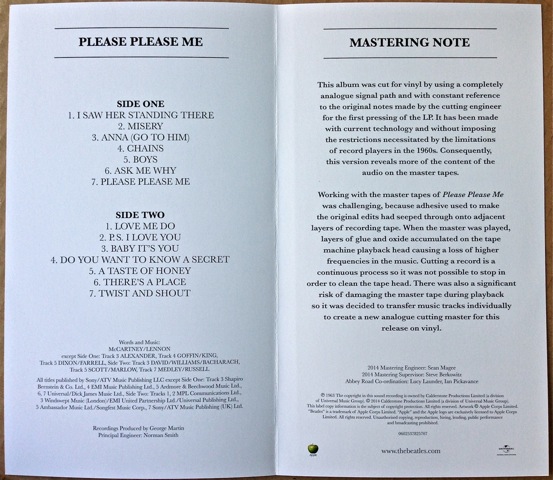
Each LP comes with individual 2014 insert cards, complete with mastering notes specific to each title:Beatles Mono Box17 Beatles Mono Box18 Beatles Mono Box19
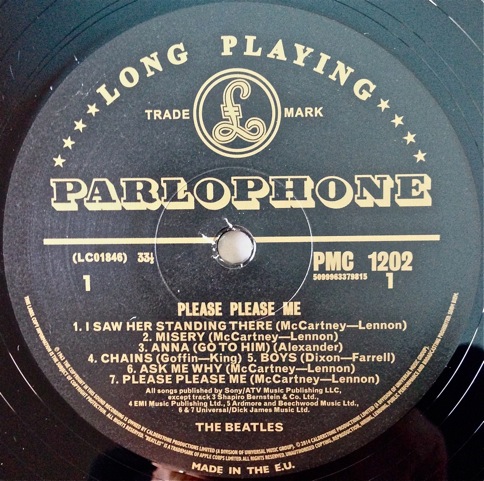
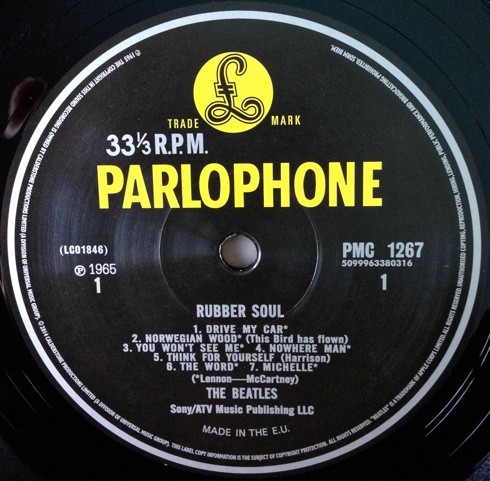
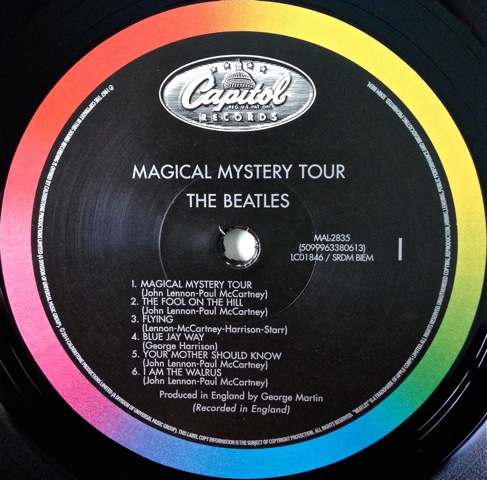
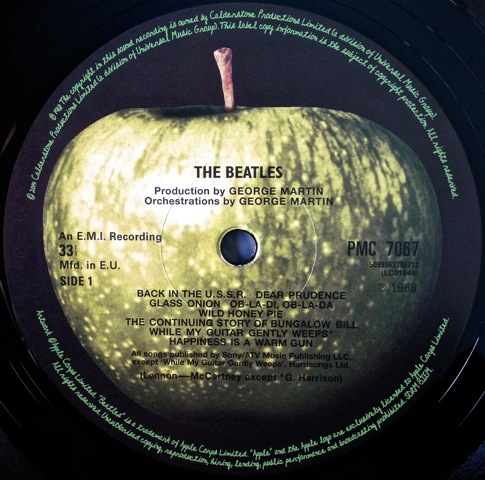
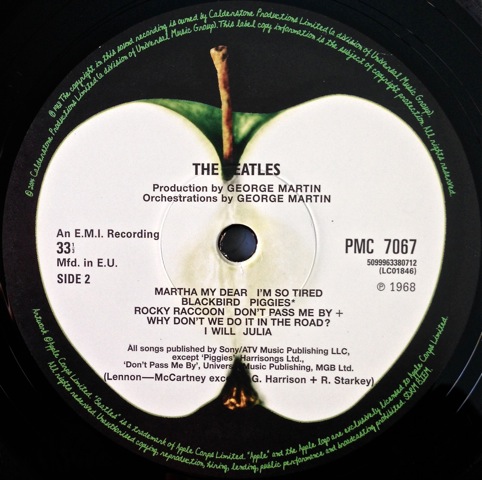
All the labels are authentic reproductions of what the originals would have looked like at the time of release:Beatles Mono Box20 Beatles Mono Box21

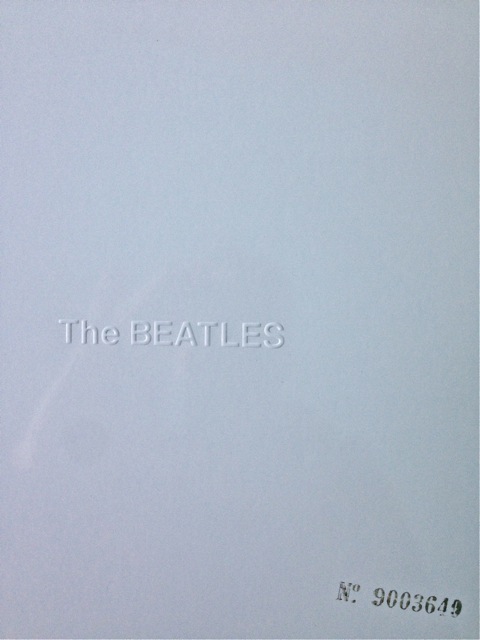
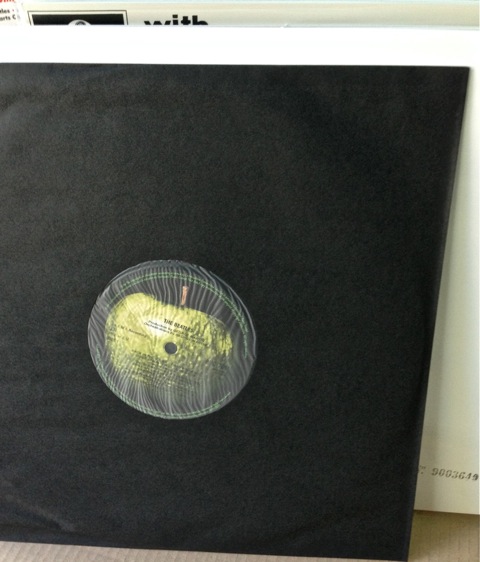
Magical Mystery Tour has the original booklet pasted inside the gatefold cover; Sgt Pepper is a gatefold with the cut-out sheet and a replica of the psychedelic pink inner sleeve; and the White Album is a top-loader, with The BEATLES embossed on the front, a limited edition number stamp, poster, four photos, and black inner sleeves – just like the 1968 originals:
Beatles Mono Box22 Beatles Mono Box23

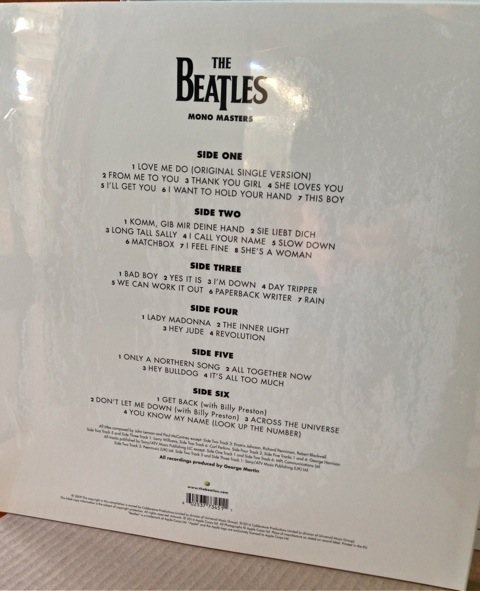
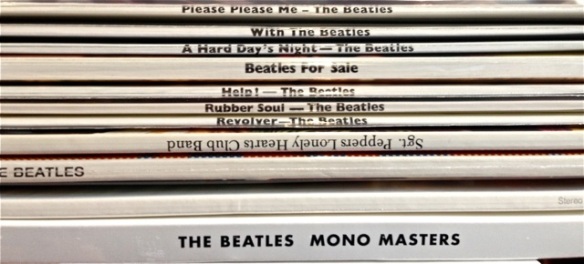
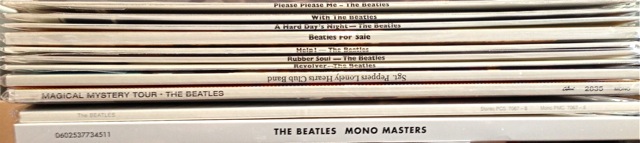
Beatles Mono Box24 Beatles Mono Box25Last album out of the box is the Mono Masters triple LP, containing all the singles and B-sides not captured on any of the original albums:Beatles Mono Box26 Beatles Mono Box27A reader has requested we publish some shots of the record spines. Here they are – and yes, that is the way that Sgt Pepper is printed. It looks upside down, but that’s also faithful to they way the original LPs were presented: Beatles Mono Box32

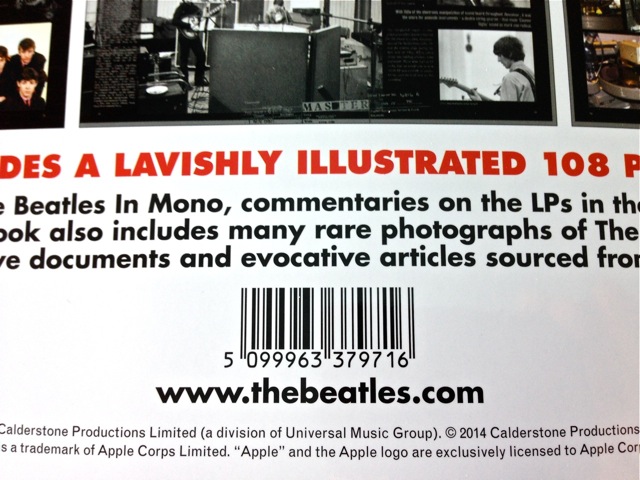
Beatles Mono Box33There are only two bar-codes to be seen. One on the rear of the Mono Masters, and one on the outer slipcase for the box set:

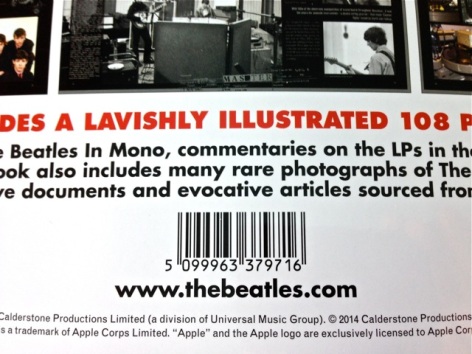
Beatles Mono Box28 Beatles Mono Box29

(Click on images to see larger versions)

There’s a very interesting Billboard magazine article in which it is clear that these LPs are not “sanitised” versions of the mono releases like the mono CDs were all the clicks and pops and studio mistakes removed:

‘Five years after the Beatles mono recordings were released on CD, Capitol Records and Universal Music are fostering the notion that to hear the Beatles music the way John, Paul, George and Ringo did in the 1960s, a mono LP is mandatory listening….The mono CDs, which were cleaned up and re-EQ’d in a way that did not occur with the new set of LPs, “was an attempt to give the history its day in the sun,” said project supervisor Guy Hayden. “There was no hurry and, in true Beatles fashion, if you can do it better, you do it again,” says Sean Magee, an Abbey Road-trained engineer who oversaw the mastering of the albums.’

For a more in-depth review from a sound quality perspective have a look at this article from the audiophile magazine The Absolute Sound. Reviewer Neil Gader steps through a listen to of each album. As he says, “Spoiler alert: Wow!”.

There is also a great set of reviews of the sound at Analog Planet.

And who could have resisted this invitation to hear the Mono LPs launched at a function held in the actual place where these masterpieces were recorded – Abbey Road’s famed Studio 2:beatles-mono-sidebar

Apple Records, Universal Music and Mojo magazine hosted a once-in-a-lifetime gathering for a select few at Abbey Road in London last week. Not only did the lucky audience get to listen to tracks from the new records in-situ on a £300,000 sound system (that’s A$522,000!), but also to hear a panel of distinguished guests discuss how the group recorded and mixed their songs. Read more here.
Beatles With Records – Part Twenty Four

One of the most difficult items to identify in photographs of the Beatles with records are vinyl test pressings or acetates. These are cut at the studio and often contain demos or finished versions of songs or albums for them to listen to privately to gauge the quality of the pressing or the mix.

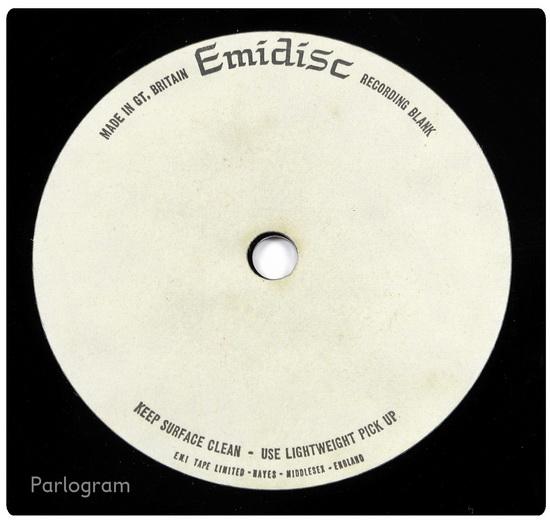
At EMI in the 1960s these were pressed onto 45rpm singles or 331/3 LP’s using labels which looked like this: emidisc recording blankThe labels were left blank for the producer or engineer to hand-write or type information about the track including the title, which take it was, duration, name of the artist, etc.
That brings us to this great picture of George Harrison, taken in the studio at about the time of the recording of the The Beatles (or The White Album) in 1968:George with ACETATE 2First thing to say is that is a really cool watch he has on…..

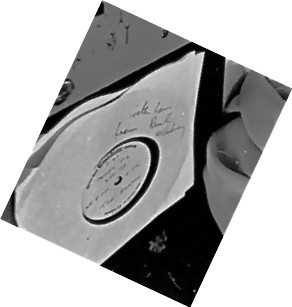
Second point of interest is that acetate or test pressing of a single he has at his left elbow. It’s in a plain white paper sleeve with writing on it, and it’s on the Emidisc label – just like the example in the picture shown above. If we rotate the picture and adjust the contrast a bit we get this:George with Acetate

This makes the writing on the sleeve a little easier to make out. If we rotate it just a little bit more we can see a bit more clearly:George with Acetate 3It is fairly clear that the hand-writing on the sleeve says: “with love  from  Paul McCartney“. His signature is very distinctive – it features on his official website even now – and here we can see that familiar looped “l” in the word “Paul”, and the trailed off “y” at the end of “McCartney”. Here’s another random example:Paul autograph

The tougher task is to identify what is hand-written onto the Emidisc label. We reckon it is this: under the word Emidisc there’s something like a number (maybe the duration of the track), then comes the song title. We think two words and, given this picture was taken during recordings for The White Album, our guess it’s the McCartney song “Honey Pie”. The writing looks a bit like that, too. Under that, just above the spindle hole, are some more letters or code numbers. On the left of the spindle hole it says “45 RPM”. On the right it looks like the duration of the track in minutes and seconds (which is difficult to make out). Then at the very bottom the writing clearly says “The Beatles”.

Was this a test cut for George to take home and have a listen to “Honey Pie”? Any further insights, thoughts or suggestions are very welcome.

There is one fly in the ointment with theory though……It is this photograph from the web of Ringo Starr, clearly taken at around the same time, also holding an acetate/test pressing:2RingoWithGetBackAcetate

The person who posted this says it is Ringo holding an acetate recording of “Get Back” -which would place it in early 1969, not 1968. We’d prefer to go with this website that clearly places it as a photo session from September, 1968. It is pretty likely therefore that this is the exact same disc as the one seen with George. The plain paper sleeve has the same greeting written in the same position: “With love  from  Paul McCartney“. It is difficult to make out the writing on the label, but it has a very similar set-out to the previous one….again, thoughts and theories are welcome!


Next McCartney Archive Series Releases – Dates Pushed Back

Seems the never-ending announcements about releases for Beatles or Beatle-related product in the month of September has forced Paul McCartney to delay the release of the next two instalments in his Archive series. We just had an email from Amazon saying that the dates for Venus and Mars and Wings at the Speed of Sound have been pushed back.

It’s not that surprising that something had to give.

We’ve just had the new DVD and BluRay of A Hard Day’s Night, the Beatles Japan Box CD set, and the vinyl re-issue of Lennon’s Shaved Fish. Then in September comes The Beatles In Mono vinyl box set (September 8); the Icon series CD’s for John Lennon and Ringo Starr (both September 9); and the news that a George Harrison The Apple Years CD box set is due for a September 22 release.

The schedule was getting very crowded….not to mention the strain on collectors’ wallets!

Beatles With Records – Part Twenty Three

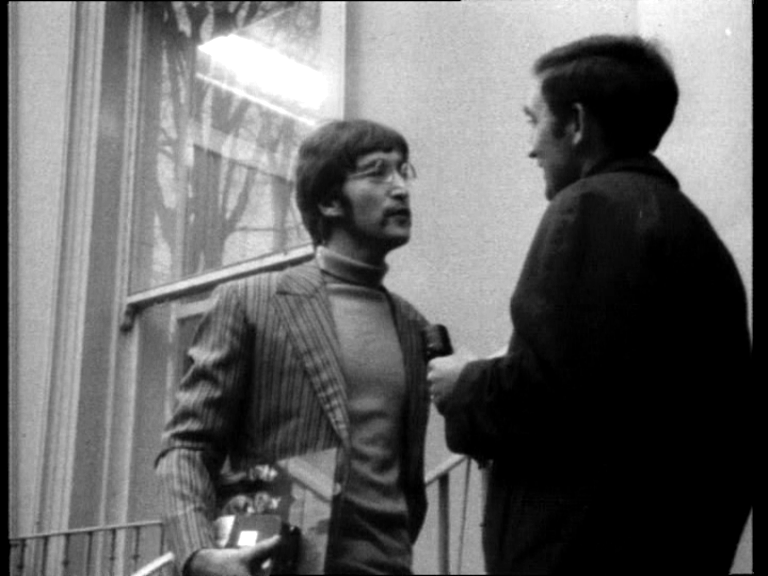
Over at The Beatle Forum there’s a bit of a discussion happening at the moment about a record that John Lennon was carrying into the EMI Abbey Road Studios. He’s being interviewed on the steps of the studios in 1966 for the UK weekly television series Reporting ’66, made by Independent Television News (ITN):

The video is quite interesting in itself as it has all four Beatles arriving at Abbey Road and being quizzed on the band’s future directions.

The question is: is that a record John has under his arm? And if so, what is it?

Here’s a still from the video, plus some close-ups:

Lennon with RecordLennon LP closeup1Lennon LP Ultraclose

Can anyone out there help identify the record?

If so please contact us at beatlesblogger @ gmail.com

You can see more in the Beatles With Records series here (just go to the links at the bottom of the page).


Ron Howard to Direct New Beatles Film – Just Announced

The Beatles official site has just announced that the highly respected US film director Ron Howard has been chosen to direct the new film about the Beatles touring years. They have linked to the micro-site set up to collect material for the project called thebeatlesliveproject.

The call out to fans who where there and have still images, film or audio from Beatle concerts and events is continuing. If you or someone you know has visual or audio materials documenting your personal experience of the Beatles live tours, Apple wants to hear from you. They are looking for rare or unusual footage, photographs, and audio recordings, particularly those that highlight the fan experience – what it was like to be a part of the frenzy.Beatles Live Project

The film will be a new, Apple-authorised Beatles documentary feature about the band’s touring years. It has the full co-operation of Paul McCartney, Ringo StarrYoko Ono and Olivia Harrison.

Read all about it.


Imagine – The Story of a Song

Charles J. Shields is a respected biographer and author. His literary studies of Kurt Vonnegut (And So It Goes: Kurt Vonnegut, A Life – 2011) and Harper Lee (Mockingbird: A Portrait of Harper Lee – 2006) have been widely recognised as significant works on these two authors.

Now he’s turned his attention to one song. And a significant song at that: John Lennon’s “Imagine”.imaginecover

“Twenty-two lines of graceful, plain-spoken faith in the power of a world to repair and change itself,” said Rolling Stone. Only 183 seconds long, the simple melody and poetry captured the wounded hopefulness of its moment–and transcended its time to inspire generations that followed.”

In Imagine: The Story of a Song Shields traces the song’s origins. Interestingly, he begins with the fire-bombing of Tokyo during Yoko Ono’s youth, and the violent death of Lennon’s mother during his adolescence. From there he moves through Lennon’s post-Ed Sullivan skepticism to John and Yoko’s “Bed-In” events of 1969 and unearths the secrets of this one song’s lasting import. If music can change the world, “Imagine” came as close as any song might. This short Kindle book (37 pages) is its story.

Imagine: The Story of a Song is available as an Amazon Kindle for US$4.99. You can even have a brief “look inside” before you buy.

Shields is also the author of this brief thought piece on John Lennon entitled “5 Surprising Ways John Lennon Changed the World“.  Worth a look.

Great New Beatles Book – “Beatles 101”

Beatles 101 – The Need-to-Know Guide by Richard Buskin is an impressive new Beatles book for anyone just starting out on the Beatle knowledege journey, or for die-hard fans who want to know more. It is a genuine one-stop-shop containing all the vital facts about the band:Beatles 101 frontBeatles 101 rear

There is so much information and research in here. There are individual chapters which could have been whole books, for example the eight-page chapter on The Beatles Anthology. It’s a great example of Buskin succinctly summarising every aspect of this significant Beatle project. Everything in the rest of the book is similarly very nicely distilled and concise. It is also very easy to read.

Beatles 101 is not presented as a purely chronological walk-through of the career. Topics are tackled more by categories of interest. That means you can easily dip in at various points and read very well-written and well-informed articles across a wide range of different aspects detailing the life and works of the Beatles. At the back of the book, for example, are a series of great, original interviews with some of the key people who worked with the band in the studio. There’s George Martin of course, but also the likes of Norman “Hurricane” Smith, Ken Scott, Glyn Johns, Alan Parsons and Eddie Kramer. We guarantee that even the most knowledgable fan will find something they didn’t know here.

This book also has some great photos – many not previously seen (especially of people and places) which all help to illustrate the wealth of information the book contains. This includes one very early shot of author Buskin standing beside another mad Beatle fan – who just happens to be a young Mark Lewisohn. The two didn’t know each other at the time – it is just a co-incidental snap of two fans, taken outside the gates of Strawberry Fields in Liverpool….

But perhaps the greatest and most unique visual element to Beatles 101 is the many colour plates depicting original artworks by Eric Cash:Beatles_TheIntroductionBeatles_HeyJude

These are terrific. We should also say that the company which produced the book is marketing a range of iPad, iPad Mini and iPhone covers featuring some of the best Beatle images painted by Cash and used in this book. They look great and you can order them online at Eric’s site, or through Amazon:Eric Cash2Eric Cash1

As well as being an author, Richard Buskin co-hosts (with Robert Rodriguez) a great new Beatles podcast called Something About the Beatles. This, in our humble opinion, is one of the best podcasts going around.

Beatles 101 – The Need-to-Know Guide is published by Parading Press.

If you’d like to hear an informative and fun interview with Richard Buskin about Beatles 101, have a listen to the podcast Fab4Free4All. Download Episode 94 in which the guys spend a good hour with Buskin discussing the book. It’s well worth a listen.

The Beatles Japan Box – First Pics and Unboxing

Our Japanese copy of the Beatles five CD Japan Box arrived in the post this morning and so we thought we’d upload an “unboxing” series of photos and show you the contents in some detail.

This has been devised and issued in Japan as part of that country’s activities to mark the Beatles 50th anniversary celebrations this year.

The box set, which will also be issued in the UK and the US, comes in a re-sealable, clear plastic outer. Inside this is a red, yellow and blue paper insert which wraps around the box from part-way at the front and completely covers the rear: Japan BoxOn the outside of the box is a circular sticker attached to the clear plastic cover. Not sure what it says – so if anyone can read Japanese please let us know: Japan Box frontWe think that the sticker has something to do with a small paper insert which is included inside the box (see more on this below).

Here’s the rear of the box with the wrap-around paper insert still in place: Japan Box rear

Once you take the box set from it’s plastic cover this is what it looks like, front and rear:

Japan Box front2Japan Box rear2

The Japanese are obviously very good at doing high quality glossy cardboard. This set has a really luxurious lustre to it. The sides of the box look like this: Japan Box side1Japan Box side2

Like previous Beatle CD box sets released in this style (The Beatles In Mono and The US Albums) there’s a slide-out inner draw which holds the contents:Japan Box open1Japan Box open2

Each of the five CDs comes in it’s own protective clear plastic, re-sealable outer sleeve. There’s a thick booklet included in the box as well as a small, clear plastic sachet containing mini replicas of five Japanese OBI strips. These would have been attached to the original LPs back in the day and are an indicator that Universal Music in Japan have gone to great lengths to accurately recreate the original album artwork:Japan Box OBI strips

The 96-page booklet looks like this:Japan Box BookJapan Box Book2Japan Box Book3Japan Box Book4Continuing on the design elements established with The Beatles in Mono and The US Albums box sets, each CD comes packaged just like the original 1960’s Japanese LP sleeves for these albums. This attention to detail extends to the external tabs on the rear of the covers, right through to what’s inside as well:Japan Box MTB frontJapan Box MTB rear

Inside there are authentic paper inner sleeves – exactly as they would have been for the vinyl editions. Meet the Beatles, for example, has a plain white paper sleeve:Japan Box MTB inner sleeve

There are also the original paper inserts with the lyrics for each song. And the original Odeon Records labels are printed on the CD:Japan Box MTB insertJapan Box MTB CD

This sort of detail is continued throughout each of the five CDs:Japan Box Second Album frontJapan Box Second Album rearJapan Box No2 insertJapan Box AHDN frontJapan Box AHDN rearJapan Box AHDN insertJapan Box No5 front

The Beatles No.5 cover loses the external rear tabs and just has a photograph of the band on the rear cover with no song titles:

Japan Box No5 rearInside there’s a printed paper inner sleeve with advertising for other artists who would have been on the Japanese Odeon label at the time, as well as the paper insert with lyrics, etc:Japan Box No5 inner sleeveJapan Box No5 inserts

Help! comes in a gatefold sleeve. Here’s the front cover:Japan Box Help frontHere is the rear:Japan Box Help rearAnd here’s the inside of the gatefold:Japan Box Help gatefold

Help! also gets a printed paper inner sleeve with advertising, plus the insert with lyrics:Japan Box Help insertsIt also gets a colour photo of the band as an additional insert:Japan Box Help photo insertJapan Box Help CD

One mystery object included with the box set is this thin paper postcard. We can’t read Japanese, but it looks like you can fill out your details on the other side, attach a postage stamp and send it off to receive an additional CD single. Possibly “I Want to Hold Your Hand”, the first Japanese single from 1964? If anyone can assist with translating this please do!   Japan Box insert

All-in-all this box is beautifully done, and it sits nicely alongside The Beatles in Mono and The US Albums box sets as it is exactly the same proportions and style.

Beatles in Mono – Vinyl Releases Officially Announced

Beatles in Mono2The official Beatles site has today announced that, at long last, there will be a 14-LP box set of the mono vinyl releases.

This has been on the cards since the stereo and mono CD’s were remastered in 2009, and the stereo vinyl box set came out in 2012. Fans have been patiently waiting for the vinyl mono’s ever since…..Beatles in Mono

Here’s the official press release:

THE BEATLES GET BACK TO MONO 

The Beatles’ original mono studio albums, remastered at Abbey Road directly from the analogue masters for vinyl release on 180-Gram LPs will be available on September 8, individually and in a limited, 14-LP Boxed Edition with Hardbound Book.

London – June 12, 2014 – The Beatles in mono: This is how most listeners first heard the group in the 1960s, when mono was the predominant audio format. Up until 1968, each Beatles album was given a unique mono and stereo mix, but the group always regarded the mono as primary.

On September 8 (September 9 in North America), The Beatles’ nine U.K. albums, the American-compiled Magical Mystery Tour, and the Mono Masters collection of non-album tracks will be released in mono on 180-gram vinyl LPs with faithfully replicated artwork. Newly mastered from the analogue master tapes, each album will be available both individually and within a lavish, limited 14-LP boxed edition, The Beatles In Mono, which also includes a 108-page hardbound book.

In an audiophile-minded undertaking, The Beatles’ acclaimed mono albums have been newly mastered for vinyl from quarter-inch master tapes at Abbey Road Studios by GRAMMY®-winning engineer Sean Magee and GRAMMY®-winning mastering supervisor Steve Berkowitz. While The Beatles In Mono CD boxed set released in 2009 was created from digital remasters, for this new vinyl project, Magee and Berkowitz cut the records without using any digital technology. Instead, they employed the same procedures used in the 1960s, guided by the original albums and by detailed transfer notes made by the original cutting engineers.

Working in the same room at Abbey Road where most of The Beatles’ albums were initially cut, the pair first dedicated weeks to concentrated listening, fastidiously comparing the master tapes with first pressings of the mono records made in the 1960s. Using a rigorously tested Studer A80 machine to play back the precious tapes, the new vinyl was cut on a 1980s-era VMS80 lathe.

Manufactured for the world at Optimal Media in Germany, The Beatles’ albums are presented in their original glory, both sonically and in their packaging. The boxed collection’s exclusive 12-inch by 12-inch hardbound book features new essays and a detailed history of the mastering process by award-winning radio producer and author Kevin Howlett. The book is illustrated with many rare studio photos of The Beatles, fascinating archive documents, and articles and advertisements sourced from 1960s publications.Beatles in Mono covers

The Beatles In Mono: Available individually and collected in a limited 14-LP boxed edition, accompanied by an exclusive 108-page hardbound book.

Please Please Me
With The Beatles
A Hard Day’s Night
Beatles For Sale
Help!
Rubber Soul
Revolver
Sgt. Pepper’s Lonely Hearts Club Band
Magical Mystery Tour
The Beatles (2-LP)
Mono Masters (3-LP)