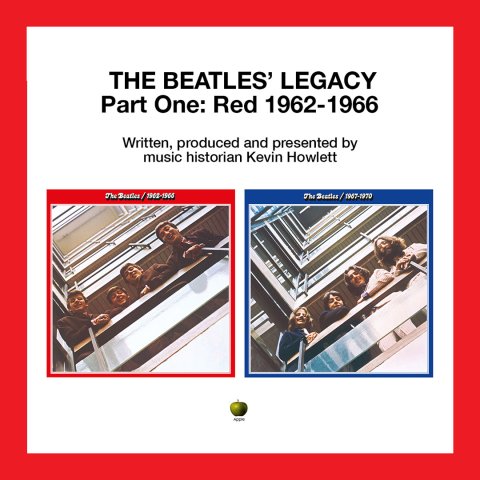
Just in time for some holiday listening The Beatles have quietly launched a new official 6-part podcast celebrating the legacy of the band.
Written, produced and presented by someone close to the band, music historian Kevin Howlett, it features interviews with John, Paul, George and Ringo, as well as many other musicians and producers including George and Giles Martin, Dave Grohl and Mark Ronson,
The podcast documentary ties in with the 50th anniversary reissues of the ‘Red’ and ‘Blue’ compilations and also unpacks the story behind the band’s final single, ‘Now And Then’.
Part 1 of The Beatles’ Legacy is divided into three chapters and deals with The Beatles 1962-1966. You can find it here.
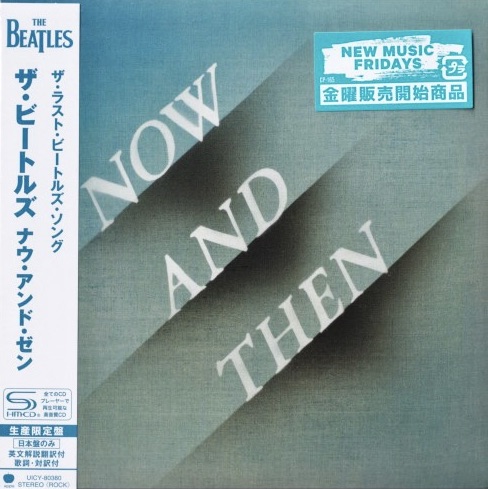
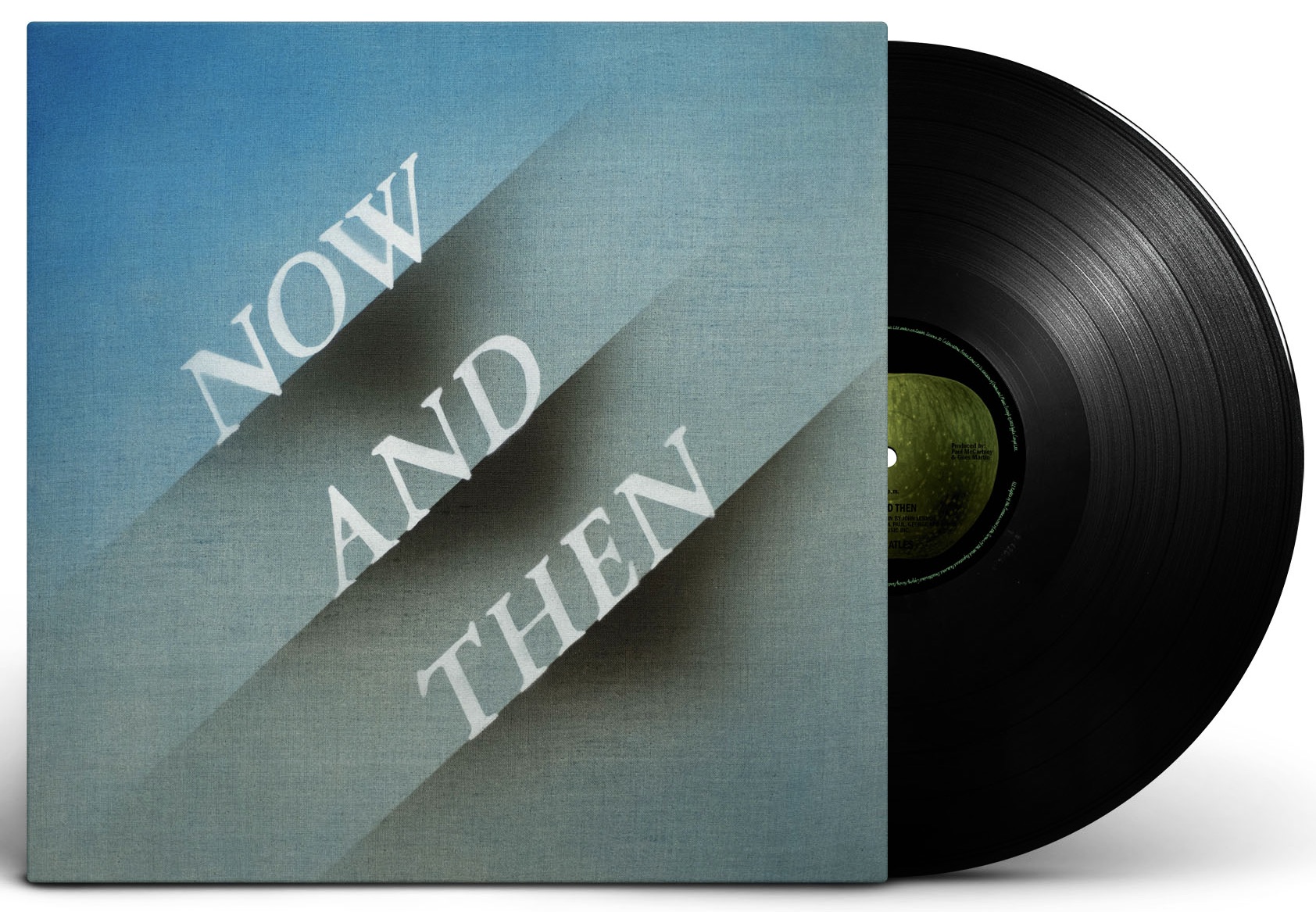
One of our readers (Guy in the USA) prides himself on securing every possible variation and often sends us a tantalising image or two. For ‘Now and Then’ he points out that most collectors only show pictures of the outer covers. Here, he says, are the contents – photographed all together:
For collectors in the west there are no fewer than 9 variations to seek out. If you add in unique Japanese editions that number creeps up to 14.
Because there are enough different pressings we thought we’d create another visual representation to capture them all (we have previously created these for McCartney III and McCartney III Imagined too):
(Click on the image to see a larger version)
The Japanese ‘Now and Then’ vinyl pressings are unique in that they have a rear cover written in Japanese. They also come with a special lyric sheet with the lyrics in English and Japanese:
Additionally, the SHM-CD single comes with an OBI strip (and also the extra lyric insert):
To add to the onslaught on collector wallets there was also Black Friday Record Store Day.
Also released on that day were further coloured vinyl editions (in “Yellow Submarine Yellow”) of Ringo Starr’sOld Wave and Stop and Smell the Roses. Here’s Guy again:
You can see there on the bottom row the little Yoto kids toy card editions of the 2023 Red and Blue albums, plus a unique Paul McCartney card containing a selection of his hits for kids which also contains two hard-to-get instrumentals.
“It wasn’t like we were following a trend; we were in the trend.” — PAUL MCCARTNEY
There’s no doubt that clothing is one of the most visible aspects of the development of a culture. A new book that’s just hit the shelves, Fashioning the Beatles – The Looks That Shook the World, is a well-researched and thoughtful exploration on how The Beatles played a leading role in shaping the fashion, attitudes and social change going on around them throughout the 1960s and beyond.
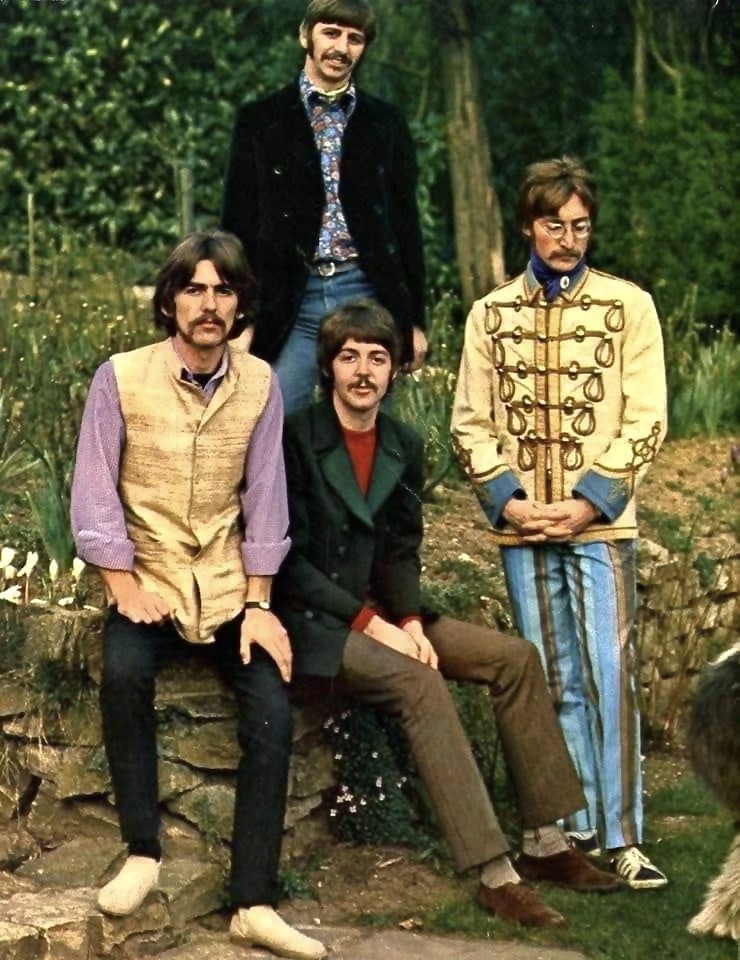
Author Deirdre Kelly wisely begins her book with a brief preliminary section called ‘Dressing for Pepperland’. That’s because during this period the band reached the zenith of their flamboyant style. Designers on Carnaby Street and around the world were influencing, and were in turn being influenced by, The Beatles in something of a symbiotic relationship. They were in their heyday.
We then journey back to the year 1960 and in chronological order, chapter by chapter, visit key fashion moments with quite a detailed examination year-by-year of what the band were wearing through to 1970, and beyond. We learn who was helping, advising, and being commissioned to come up with new looks for them, but also importantly, how The Beatles themselves played a central role in defining their style. Kelly then uncovers how that style in turn influenced whole industries and often swung the pendulum of the fashion world in new directions.
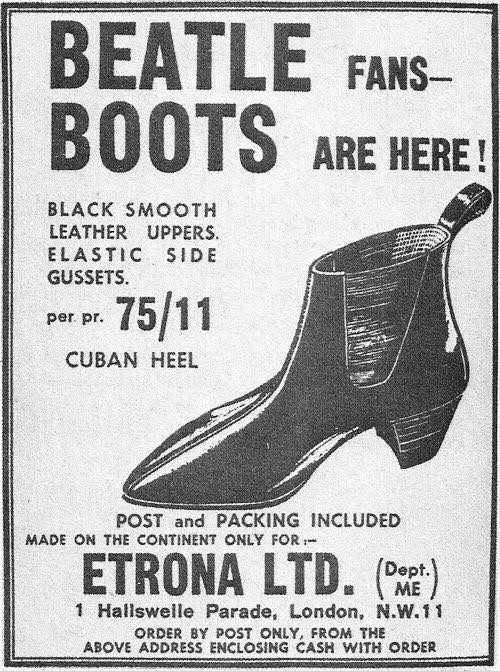
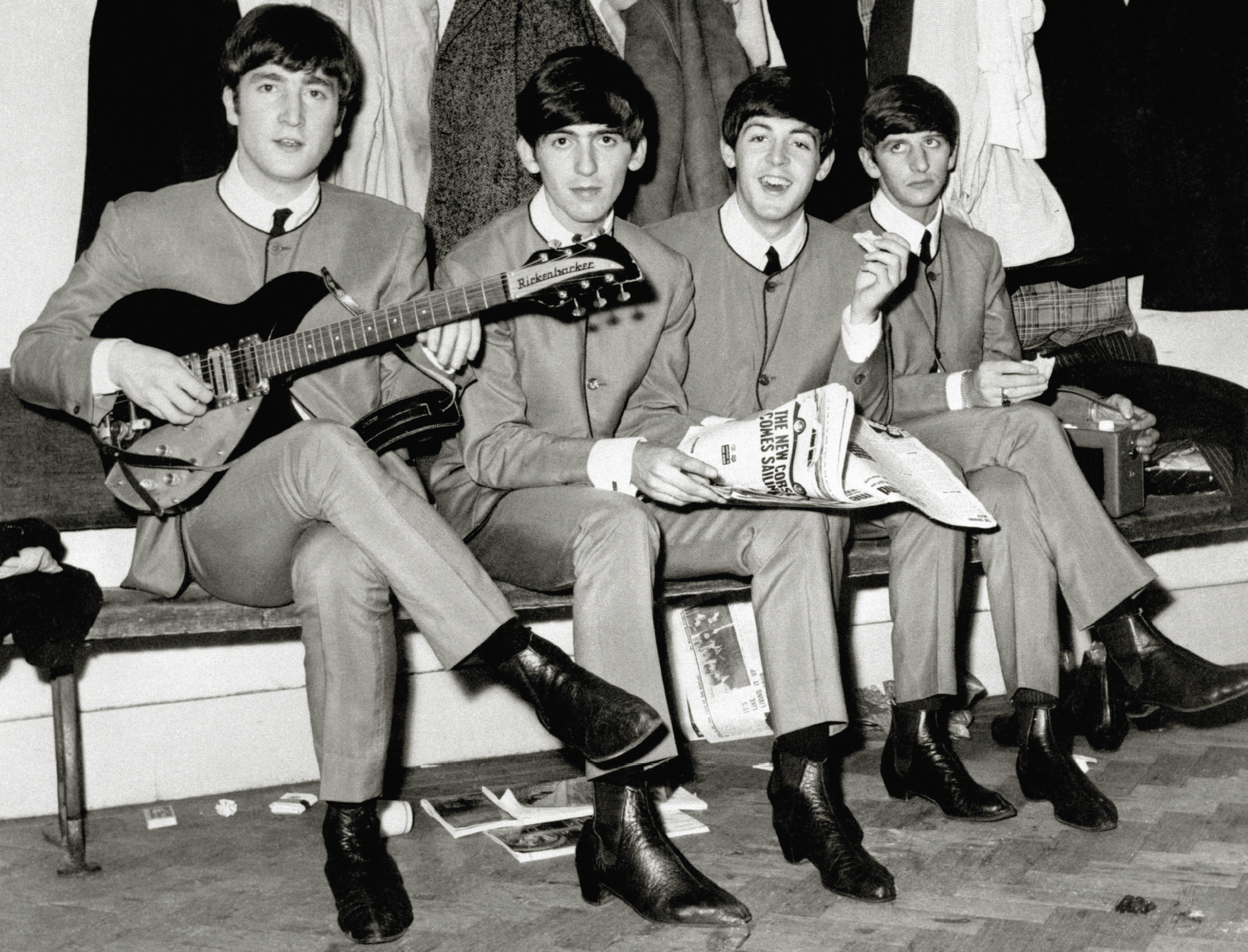
After a stint as “the savage young Beatles” which (in their early Hamburg/Liverpool days) saw the band sporting a tough look (black leather pants and jackets, black shirts, black t-shirts), in 1961 the group underwent a complete makeover. At the suggestion of their new manager, Brian Epstein, the band took on a suited, clean-cut, almost boy-next-door look that was carefully designed to help them break through in the pop world. They weren’t forced into this. It was something the group agreed was the right thing, as they too saw it as a way to achieve their goal of becoming the “toppermost of the poppermost!”. It was a makeover that worked, one where even the footwear they chose was considered. Kelly goes into detail about how the band had input into the evolution of the famous “Beatle Boots” and how this too became part of their defining look, and a fashion icon of the time. Soon manufacturers where knocking off copies and The Beatles were well on their way to becoming major influencers.
1963 was the year of the now iconic collarless suit – created for the band by UK tailor, Dougie Millings, whom we learn went on to make over 500 outfits for the group. His collarless creation was conceived in a brainstorming session involving Paul McCartney, who’d originally proposed the idea. Their suits were modeled on an original design by Pierre Cardin, but tweaked to make it a distinctively Beatles’ garment. Kelly writes: “It established the Beatles as fashion forerunners”:
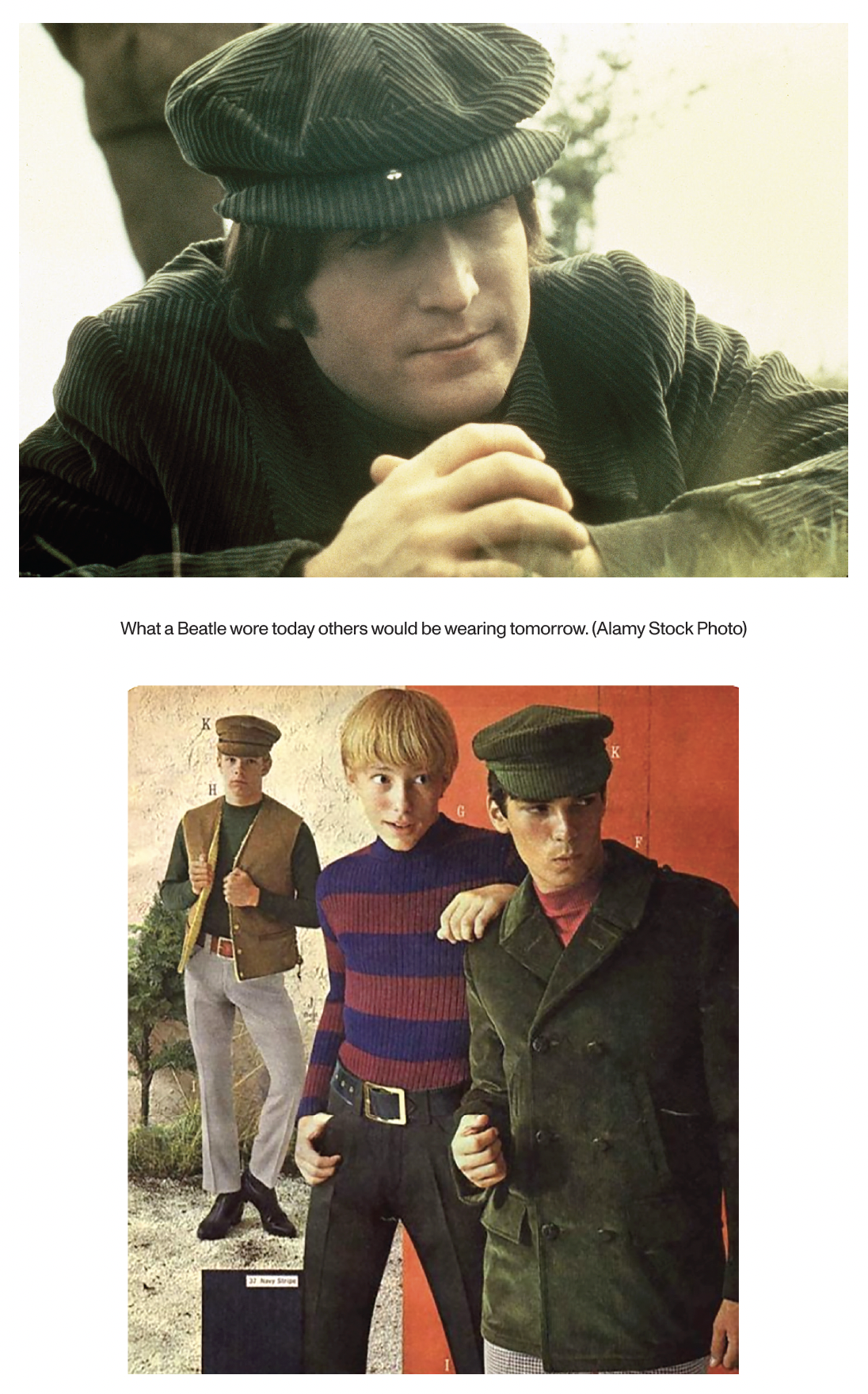
It continued what was to become a trend. What a Beatle wore today would soon turn up as the latest hot trend in the shops tomorrow:
However, as with their music, The Beatles never stood still, always pushing the boundaries and never repeating themselves. Once a particular fashion look they’d pioneered started catching on, they’d already moved on.
Fashioning The Beatles is meticulously researched and contains fascinating detail around how the designs they wore came to be. The book also turns up interesting side observations along the way. Take this 1965 photograph taken during the filming of Help!:
In the movie, the band mixed British and US clothing styles. Denim wasn’t yet the ubiquitous fabric it would become and was regarded as something of a novelty. Notice though that George has bleached his jeans, prefiguring the acid wash jean trend that proliferates to this day.
By this mid-decade period and beyond The Beatles largely discard the suits (and boots) and begin to dress to please themselves. In doing so they have a further profound influence on the way young people dress and behave too. What the band wears is an extension of their innate creativity: their personal taste, their natural sense of style – and it was being followed closely by millions.
Tony Palmer (director of the documentary series All You Need is Love: The Story of Popular Music) says in his Preface to the book that The Beatles didn’t set out to be trendsetters. They were innately stylish young men and by simply wearing what they wanted to wear, became the leading style-makers of their day. Their huge, worldwide fame ensured that whenever they were photographed, filmed, or simply seen out and about in public, people took notice of their sartorial style, and those looks helped influence the culture of the day.
By the mid to late 60s The Beatles were now routinely mixing stage clothes with items from their personal wardrobes, and even (albeit briefly) starting up commercial fashion outlets of their own. Kelly provides great detail and context to these ill-fated forays into the fashion retail world via the Apple Boutique store and Apple Tailoring. And herein lies an Australian connection (and yet another example of The Beatles’ questionable choice in business partners), in the form of one John Crittle, proprietor of a business often frequented by the band called Dandie Fashions. They eventually came to own a 50% stake in the store and re-branded it Apple Tailoring (Civil and Theatrical). They opened a hair salon in the premises too, presided over by Leslie Cavendish (who’d been cutting the hair of Paul, George and John). However it turned out that the brains and style behind the clothing part of the venture was really Crittle’s fashion-savvy wife Andrea, who is perhaps better known as the mother of British prima ballerina, Darcey Bussell. Just how Crittle sullied Apple Tailoring’s reputation is something you’ll need to buy the book to read about. It’s not pretty.
Fast forward to today and the influence and spirit of The Beatles still ricochets around the fashion world. Take for example this 2023 collaboration between fashion house Rabanne and the multinational, mass market clothing retailer, H&M. The look could easily owe its inspiration to 1967 and the famous foursome’s adoption of the militaristic uniforms from their Sgt. Pepper era:
We here at beatlesblogger.com have a mountain of books about The Beatles. Amongst them is just one other book on Beatle fashion, Fab Gear – The Beatles and Fashion by Paolo Hewitt – and it’s long out of print. That is proof that very little has been written about this aspect of the band’s creativity and their huge impact on fashion and culture. It is why Fashioning The Beatles – The Looks That Shook the World is an important piece of scholarship. Deirdre Kelly’s new work is a very welcome addition to the library. Grab a copy while you can.
By now you’ll be aware that there’s a brand new Beatle song coming. It is called ‘Now and Then’ and is the last Beatles song ever to be released.
Like the singles ‘Free As a Bird’ (1995) and ‘Real Love’ (1996) before it, ‘Now and Then’ is all four Beatles contributing additional music and vocals to a cassette demo that John Lennon was working on in the late 1970’s but never got to properly record. It will now be released in 2023 as a vinyl single (in a variety of colours, plus as a 12″ single), and as a cassette (or a “cassingle” as we used to say), on November 3.
The new single has ‘Love Me Do’, the song that started it all off for the band, on the other side. So, it is listed as a “Double A Side”. The ‘Love Me Do’ news is that it is in stereo in a 2023 mix!
The colours for the 7″ are:
And an exclusive Beatles Shop blue/white marble 7″. Also available at some independent record stores:
There is also a 12″ single.
It’s a little confusing as to whether this is also available on red vinyl. It’s shown on the front page of the official Beatle announcement site, but when you click through to purchase it is not on either the US or UK stores.
Not finished with vinyl yet…..on some official sites there have been links to a black vinyl 10″ pressing. Take the French Beatles store for example:
The 10″ was listed briefly on the UK official site too – as a “Spotify Fans First” exclusive – but the link provided no longer seems to work. However, it is still up on the US Beatles Store, Universal Music Canada, and the Universal Music Brazil sites – but with all now showing as ‘Sold Out’. Strangely it is still for sale on the Universal Music Columbia site though!
In 2022, Paul and Ringo set about completing the song. Besides John’s demo vocal (now much enhanced quality thanks to the use of new technology developed by film director Peter Jackson and his audio team for the Get Back documentary series) ‘Now And Then’ includes electric and acoustic guitar recorded in 1995 by George, Ringo’s new drum part, and bass, guitar and piano from Paul, which matches John’s original playing. Paul added a slide guitar solo inspired by George; he and Ringo also contributed backing vocals to the chorus.
Then in Los Angeles, Paul oversaw a Capitol Studios recording session for the song’s Beatlesque string arrangement, written by Giles Martin, Paul and Ben Foster. Paul and Giles also added one last touch: backing vocals from the original recordings of ‘Here, There And Everywhere’, ‘Eleanor Rigby’ and ‘Because’, which are woven into the new song using the techniques perfected during the making of the LOVE show and album. The finished track was produced by Paul and Giles, and mixed by Spike Stent. Can’t wait to hear it!
Just by the way, the cover artwork is by celebrated US artist Ed Ruscha. That’s a Paul McCartney influence right there because Ruscha did the cover art (in all it’s many variations) for the McCartney III, McCartney III Imagined releases, and the box set McCartney 1,2,3.
Coincidentally, Ruscha is the subject of a major retrospective currently showing at the Museum of Modern Art in New York. It’s title? “Now Then”. You can see a short CBS News interview and retrospective about the man here.
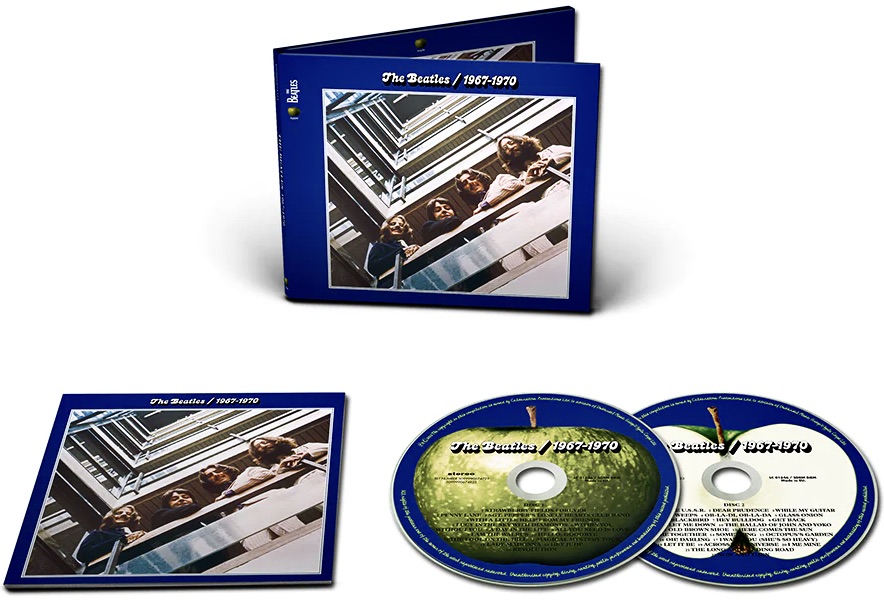
As if all this wasn’t enough, on November 10, The Beatles’ 1962-1966 (aka The Red Album) and The Beatles 1967-1970 (aka The Blue Album) collections are to be released in 2023 Edition packages.
Both collections have been expanded, with all the songs mixed in stereo and Dolby Atmos. Together both sets contain 75 tracks, 36 of which have new mixes for 2023. The booklets will contain new sleeve notes by journalist and author John Harris.
The UK single version of ‘Love Me Do’ now kicks off the CD version of The Beatles 1962-1966 (2023 Edition) – now expanded with 12 additional tracks added chronologically. ‘Now And Then’ ends the CD version of The Beatles 1967-1970 (2023 Edition) – now expanded with 9 additional tracks also added chronologically – to complete the career-spanning CD collections. Both are 2CD sets.
But is is different with the vinyl.
The Red and the Blue will have the first two discs just as they were originally released when they were double LPs, with the third disc containing all the expanded material. In other words, 12 extra tracks on Disc 3 for the Red, and 9 extra tracks Disc 3 for the Blue. Quite a different approach to the CD. No slotting in the newly added songs in chronological order here. In fact the new song ‘Now and Then’ is Track 1 of Side 6 of the Blue. A little bit odd.
Both are 180 gram Half Speed Mastered. They will be available on black vinyl separately as triple LP sets, and they’ll be sold together as a 6LP box set:
The Beatles Store is also offering exclusive limited editions of the box set and individual albums on red and blue colour vinyl:
And here’s the CD packaging:
And a 4CD collections will pair the Red and Blue in a slip-cased set.
The new music video for ‘Now And Then’ will debut on Friday, November 3. It is directed by Peter Jackson.
There’s also going to be a short “making of” documentary film released on November 1. Here’s the teaser:
Last year saw the release of the lavish Let It Be box set. It celebrated the final Beatle LP, their swansong after a ten-year run as the biggest band in the world. The box set was accompanied by Peter Jackson’s extended 8-hour documentary Get Back, detailing the creation of the album. Despite the fact that Let It Be had been recorded more than a year earlier, its May 1970 release has forever seen it associated with the news that The Beatles were to continue no longer.
However, with an organisation as tight and complicated as The Beatles (along with their company Apple Records), things weren’t destined to cleanly end for them overnight.
It would take until the close of 1974 before all four members had signed the contracts that dissolved their immense, famous and complex partnership.
This, argues author Terry Wilson, makes the period from 1970 to 1974 a “second phase” for the band. Despite each member pursuing solo careers, technically they were still The Beatles and this continued on across that four-year span. As individuals they were tied together legally and financially. And they worked together collaboratively on many solo and other projects.
Wilson’s book is called Four Sides of the Circle. In it he details this often overlooked “second half” in the history of the band. It was an era of huge creativity and output. An era that gave us absolute standout releases like Lennon’sJohn Lennon/Plastic Ono Band and Imagine LPs, McCartney’sRAM and Band on the Run, Harrison’s All Things Must Pass, and Starr’sRingo, along with a myriad of other great and sometimes lesser-known songs and recordings.
These happened because band member collaborations continued in a variety of forms throughout this distinct “Phase II”. Their paths inevitably crossed both in and out of the studio despite the huge dissolution process looming over them.
Four Sides Of The Circle uses a very accessible song-by-song format, stepping through (in chronological order) all the formal recordings the individual Beatles made between1970-1974. It actually begins slightly earlier with John Lennon’s ‘Give Peace A Chance’ from June 1969, and concludes with Wings ‘Love In Song’, recorded in November, 1974. Every song – released and unreleased – has production details, recording location, who played what and (where applicable) the US and UK release dates. The song is then discussed by Wilson and critiqued with an appreciative eye. Each song is given a context with a clear emphasis on the music being made. This detailed and sequenced approach presents a true chronology of the period for the first time.
This is a book with something for even the most well-informed Beatle fan. Wilson is comprehensive and knowledgeable. There’s great detail here. In many ways he takes quite a scholarly approach – but the research never gets in the way of making Four Sides Of The Circle very readable. It finally completes the fascinating, long and winding story that was the Beatles. A story where – right to the last – they remained at the top of their game.
As Wilson writes on the final page of his book: “The legal conclusion of the Beatles technically occurred on 9 January 1975, when McCartney’s four-year-old case was settled, the completed paperwork having been sent back to London for the court to make its formal declaration. A cursory glance at the current edition of Billboard shows that on this day, Lennon was at 47 on the singles chart with ‘#9 Dream’; Harrison was at 16 with ‘Dark Horse’; Starr was at 7 with ‘Only You’ and McCartney was at 4 with ‘Junior’s Farm’. Appropriately, Lennon and McCartney were at number 1, courtesy of Elton John’s version of ‘Lucy In The Sky With Diamonds’ on which Lennon sang and played.”
“They ended at the very top.”
Four Sides of the Circle is a great read and a fantastic reference book. Not only does it contain extensive background and historic notes on each song, in the appendices there’s a complete song list, record release details (complete with US and UK chart positions), a bibliography, and what we always like to see in books like this: an Index. It is the sort of book you can dip in and out of endlessly. Here’s the blurb on the rear cover:
At over 420 pages Four Sides of the Circle is very reasonably priced. You can find it on Amazon Australia, Amazon US and on the Amazon UK site as well. The US and UK sites also have a “Look Inside” feature so you can check out sections of the book in more detail. It will give you an idea of the format and content. You won’t be disappointed.
Late last year we were contacted by a researcher and writer named David Marshall.
David helps curate a UK website dedicated to the humble apple. That’s the fruit – not the computer company, or the famous Beatle record label!
The site Apples & People is, in part, funded by the Museum of Cider in Hereford which helps support an online exhibition program telling short illustrated stories about the apple from around the world.
The site is dedicated to exploring “the astonishing story of the apple, connecting its diverse history to humanity and culture. Based upon a specially commissioned global map of the apple which traces a network of stories from the ancient world to the present day, this online program and associated social media reveals just how significant and iconic this humble fruit has become.”.
So, they wanted to do a feature on the Granny Smith apple, specifically about it being photographed to become the celebrated, and much-loved, Apple label.
David had read our April, 2011 article which touched on how that apple image came to be, and he wanted to know more. We helped out a bit, but David is thorough and contacted many more people – especially those involved in the concept and creation of the Apple label in the very beginning.
We think his article came up very well and is a very interesting read.
We particularly liked the section on Billy Apple, and the statement: Apple Records was also transformative branding. Interpreted by the Beatles, the apple also came to be a symbol of independence and artistic freedom. It brought about a diverse artist-orientated approach to recording. We had never thought about it in those terms before.
You can see all the Apples & People stories about apples here.
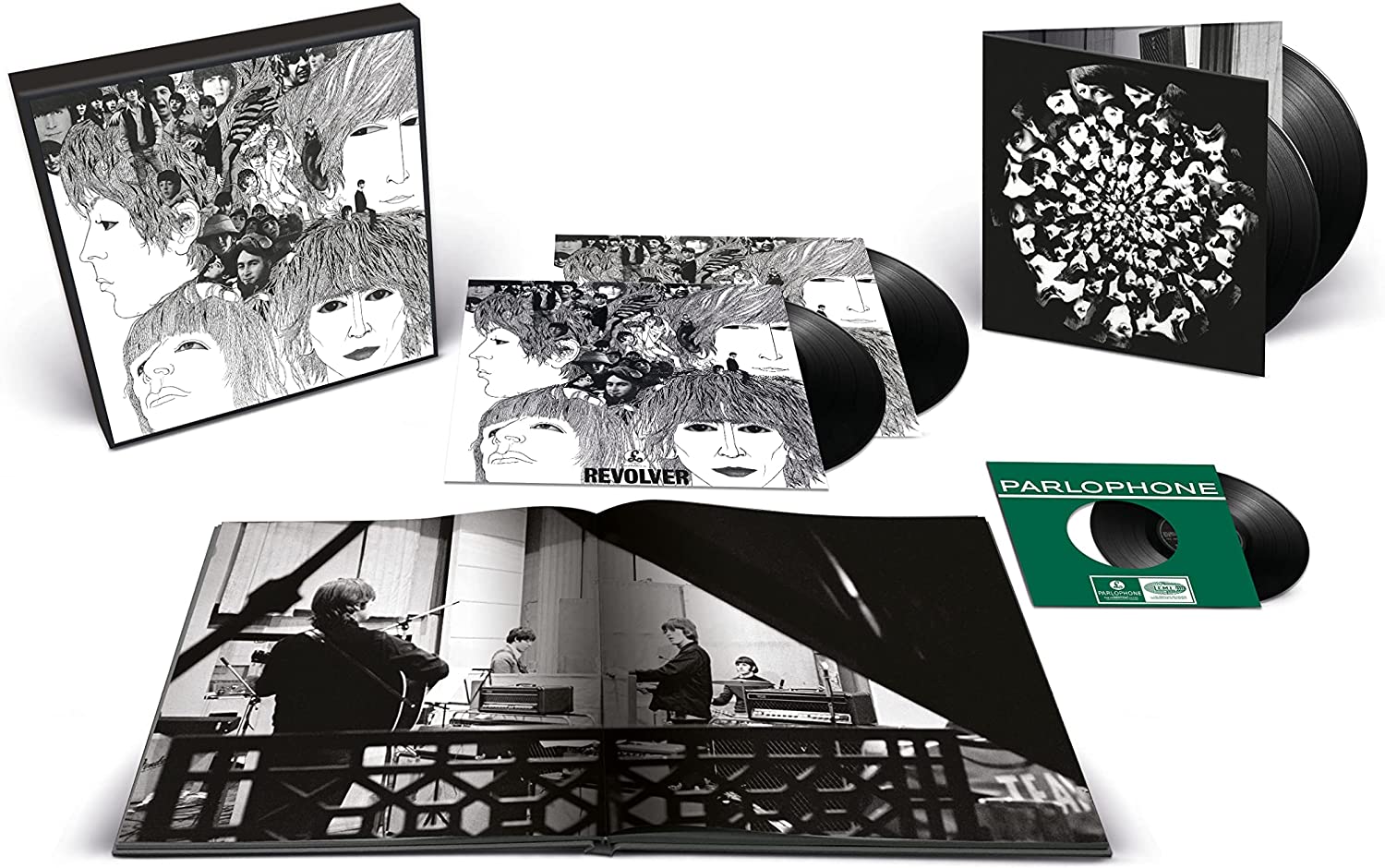
The Beatles, Apple and Universal Music have jumped a little earlier than expected. Overnight they officially announced all the details of the forthcoming Revolver re-mix and remaster project, due in stores on October 28.
There’s also a 4CD + 1EP CD super deluxe slipcase box, also with a 100-page hard cover book:
There’s a 2CD edition with the new stereo mix of the album plus a unique ‘Session Highlights’ disc:
A 1CD edition with the new stereo re-mix:
And a 1LP edition featuring the new stereo re-mix:
And, just as they did with the Sgt Pepper, the White Album, Abbey Road and Let It Be re-issues, there’s to be a Revolver picture disc:
The rumoured Dolby Atmos Mixes will only be available as Downloads and on Streaming.
The original mono mix will be part of the super deluxe boxes and accompany never-before-released session recordings and demos, plus two singles from the era, ‘Paperback Writer’ and ‘Rain’ are on the four track EP that is in the vinyl and CD boxes (in 2022 re-mixed versions and in original mono too).
Each edition is available for pre-order now and all the the physical product hits stores on October 28.
The opening song on Revolver, ‘Taxman’, has been chosen as the teaser 2022 mix sample song and it is available now on streaming media and in Dolby Atmos where that is supported.
The store is a wonderful place to poke around in as its walls are literally stacked floor-to-ceiling with books while much of the floor space is taken up with wide selection of good quality used vinyl. There are two large “Recent Arrivals” bins, plus extensive Pop & Rock from the 50’s, 60’s, 70’s, 80’s and 90’s, a good selection of Jazz, and sections for Folk, Soundtracks, Hip Hop, Spoken Word/Comedy – you name it.
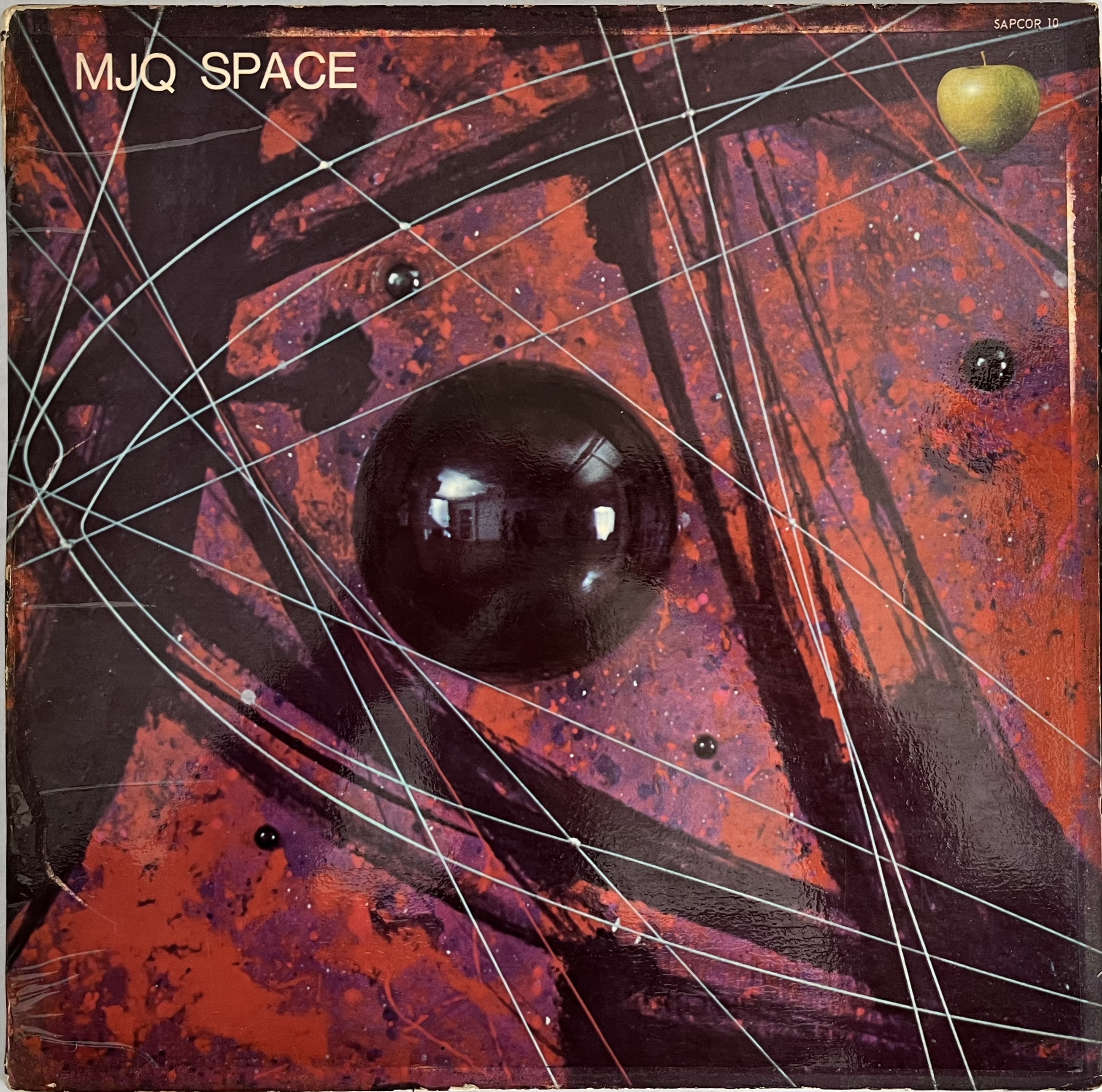
We visited there the other day and found this little treasure, an original South African pressing of the Modern Jazz Quartet’s album Space on the Apple label:
Here’s the rear cover:
Space, which was released in 1969, comes in a cool gatefold cover:
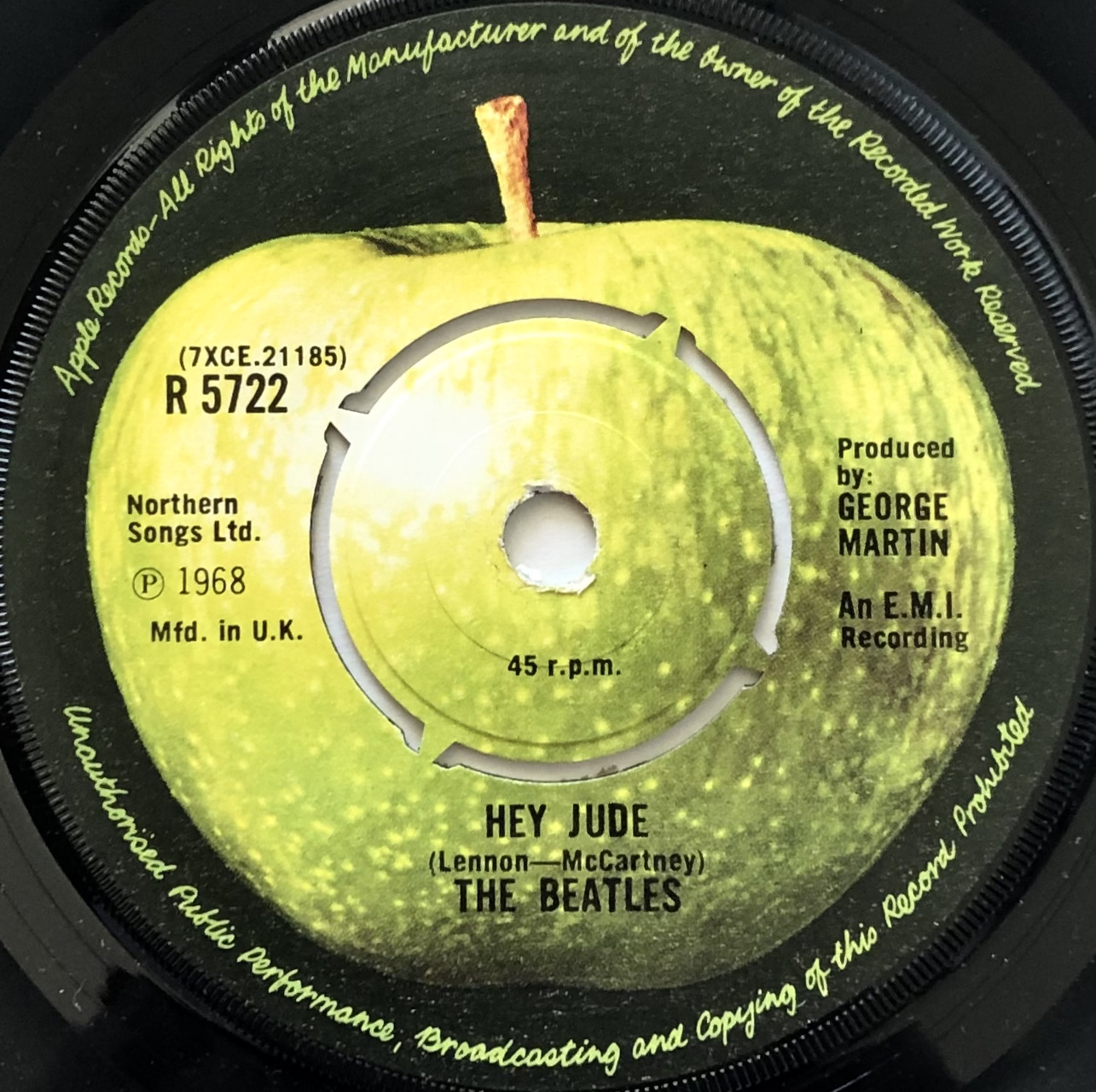
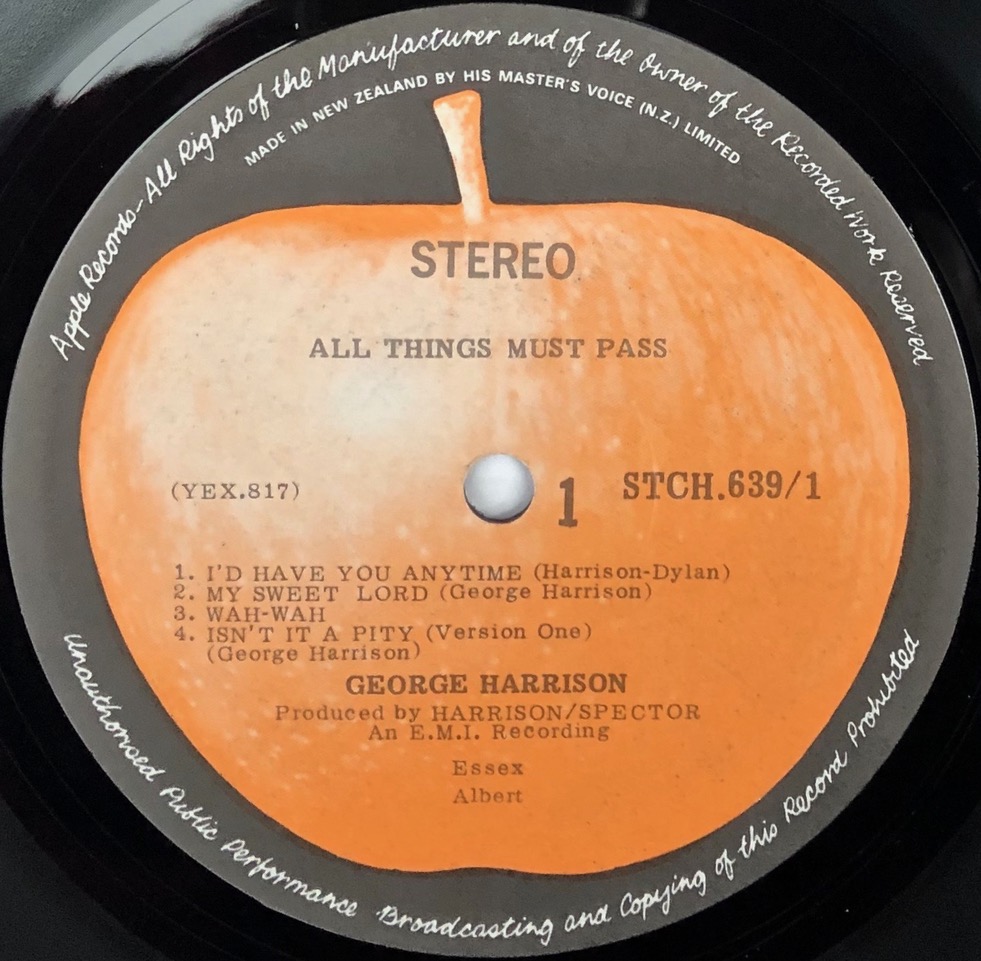
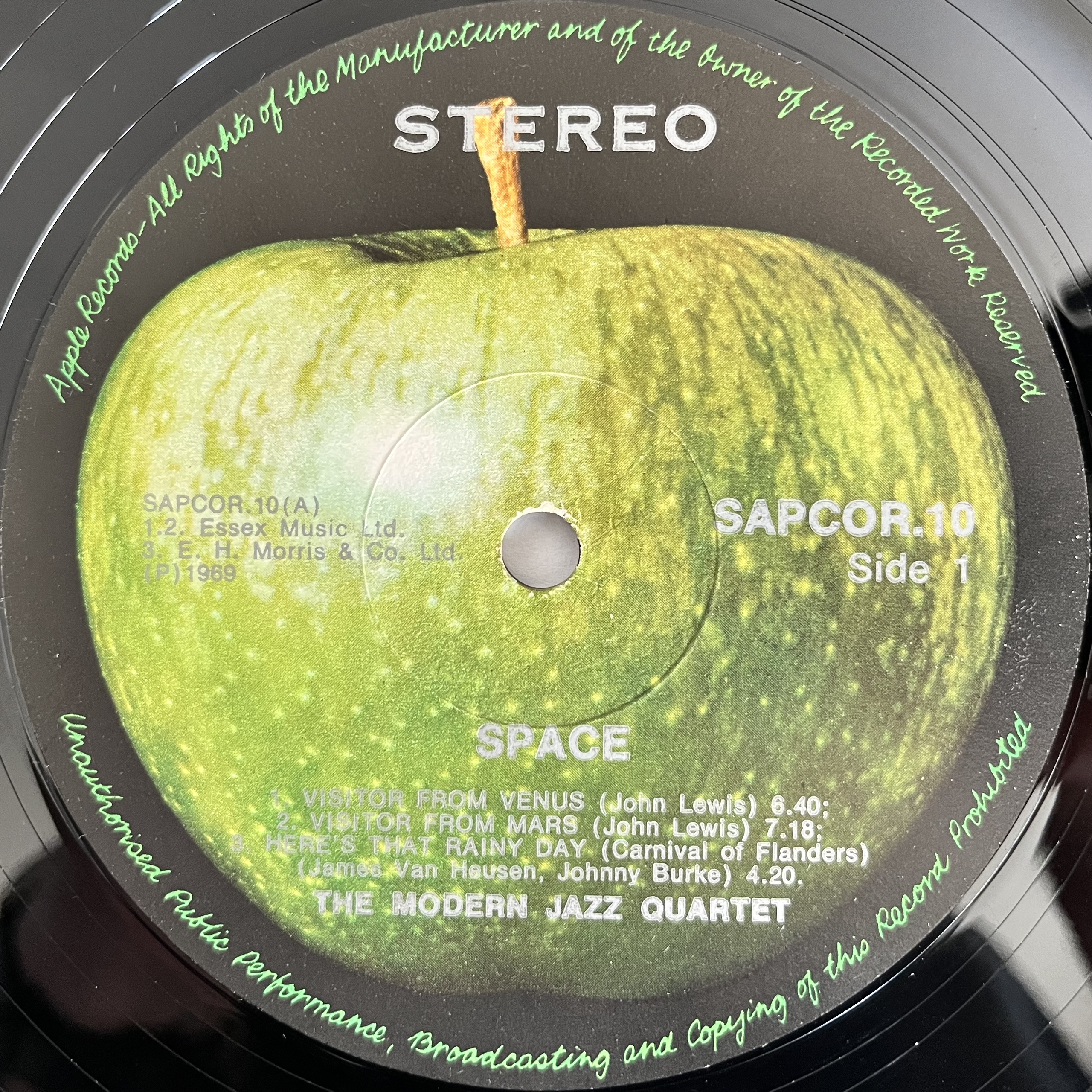
And of course comes on the famous green Apple label. Interestingly, the word STEREO plus the title and track information on many South African Apple pressings is printed in silver:
As usual, click on the images above to see larger versions, and if you’re interested in the many an varied Apple Records pressings from around the world why not visit the amazing Worldwide Apple Records Discograghy page. It’s an incredible repository of images and info on Apple, Dark Horse, and more.
A recent trip to the New South Wales south coast town of Berry turned up an opportunity for a little crate digging.
It was a nice feeling. Since the advent of COVID-19 the chances to get out and about and hunt for records in the wild have really been few and far between.
On the first Sunday of every month the town puts on a big market at the local Showgrounds. There are all sorts of stalls set up with people selling home made goods like candles, local produce, handcrafted items, food and second-hand goods – including a couple of stalls selling records! This allowed us to get back to what this blog is all about: adventures in collecting Beatles music.
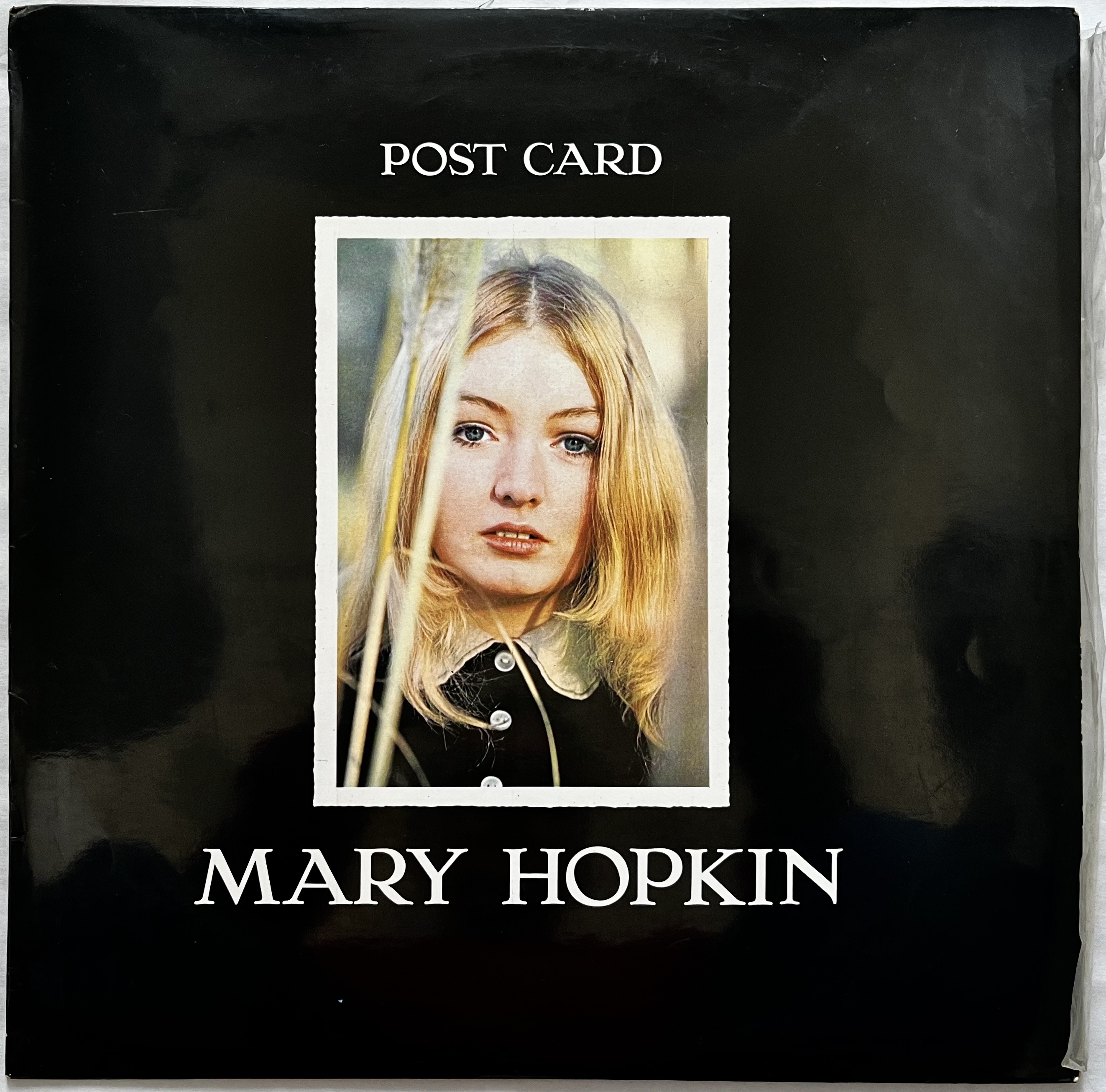
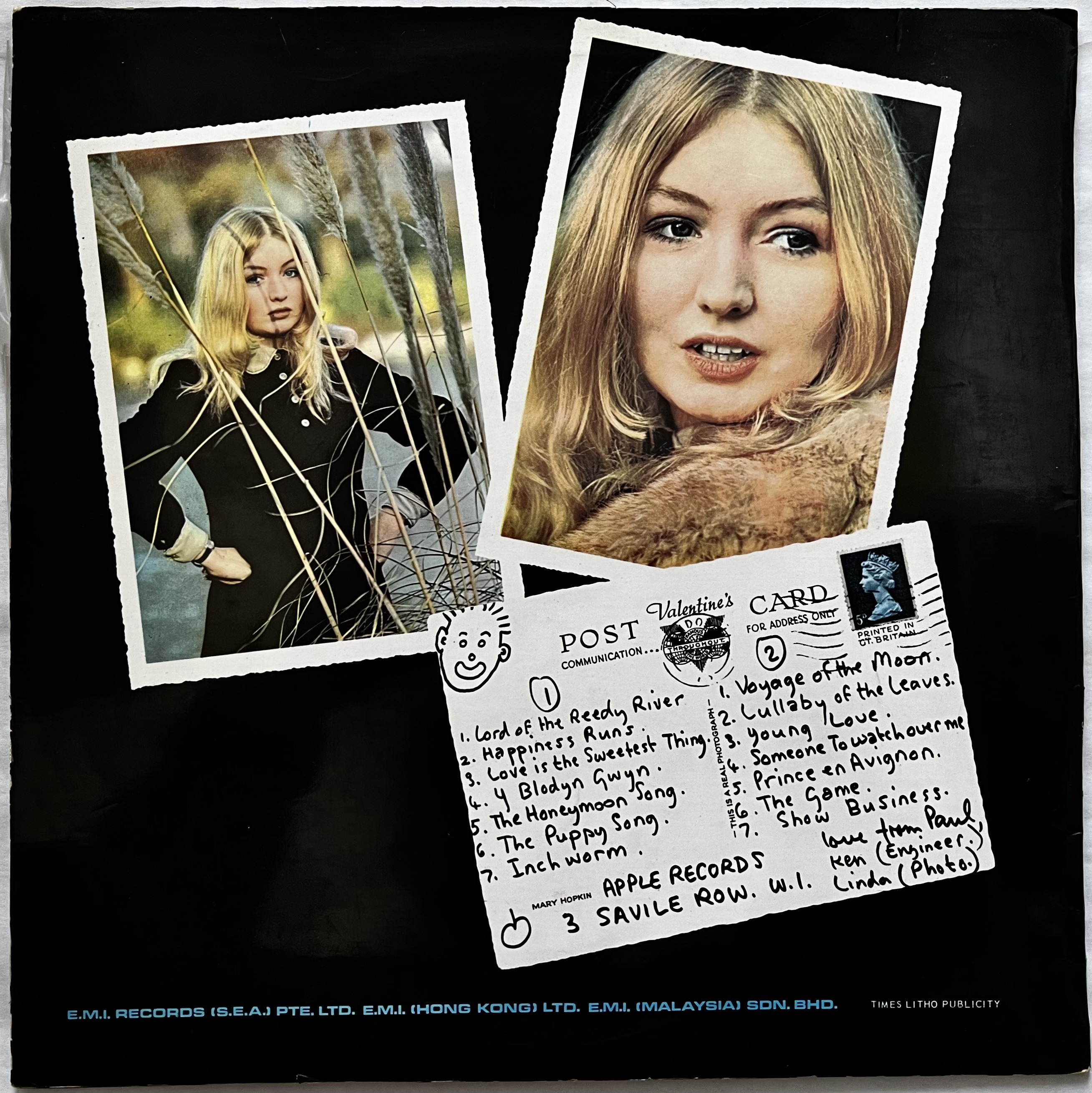
One thing we’re always on the lookout for are Apple Records artists – and we found an interesting variation of the Mary Hopkin LP Post Card, produced by Paul McCartney and released in 1969. This one was different because it was manufactured by EMI in South East Asia for the Hong Kong and Malaysian markets:
There are a couple of things to note here about the differences between this and the US and Australian pressings of this release.
First is that it follows the original UK vinyl track listing. Notice that there is no ‘Those Were The Days’ – which was hit single for Hopkin in 1968 – included on this edition.
Second is the printing in blue at the bottom of the rear cover (which by the way has a very nice glossy finish on both sides):
This South East Asian edition also comes with an original black paper inner sleeve:
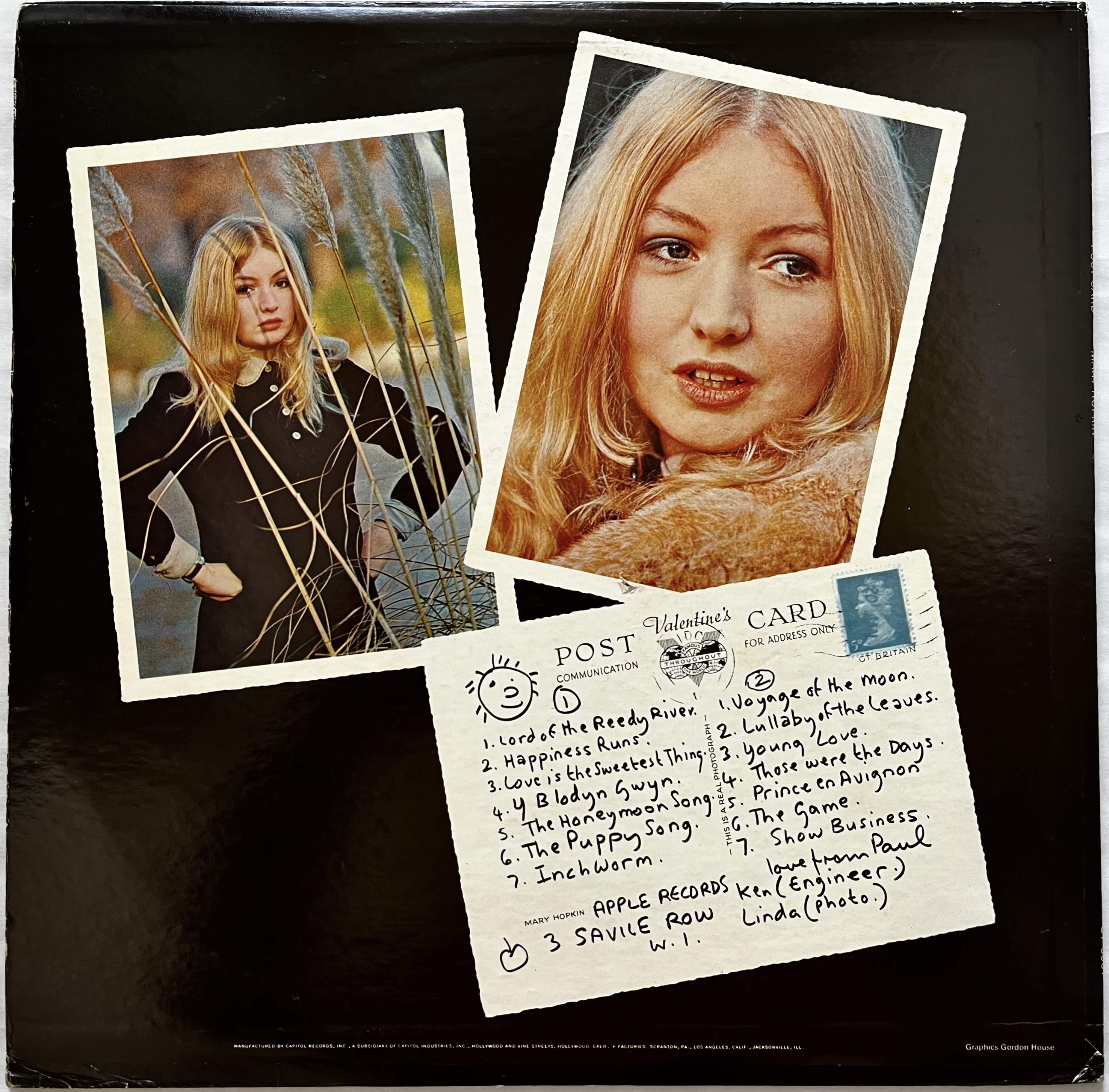
To compare the differences, here’s the US release:
Notice that the title of the LP is at the bottom of the front cover photo – whereas on the Hong Kong/Malaysia and UK pressings the title is at the top of the photo of Mary.
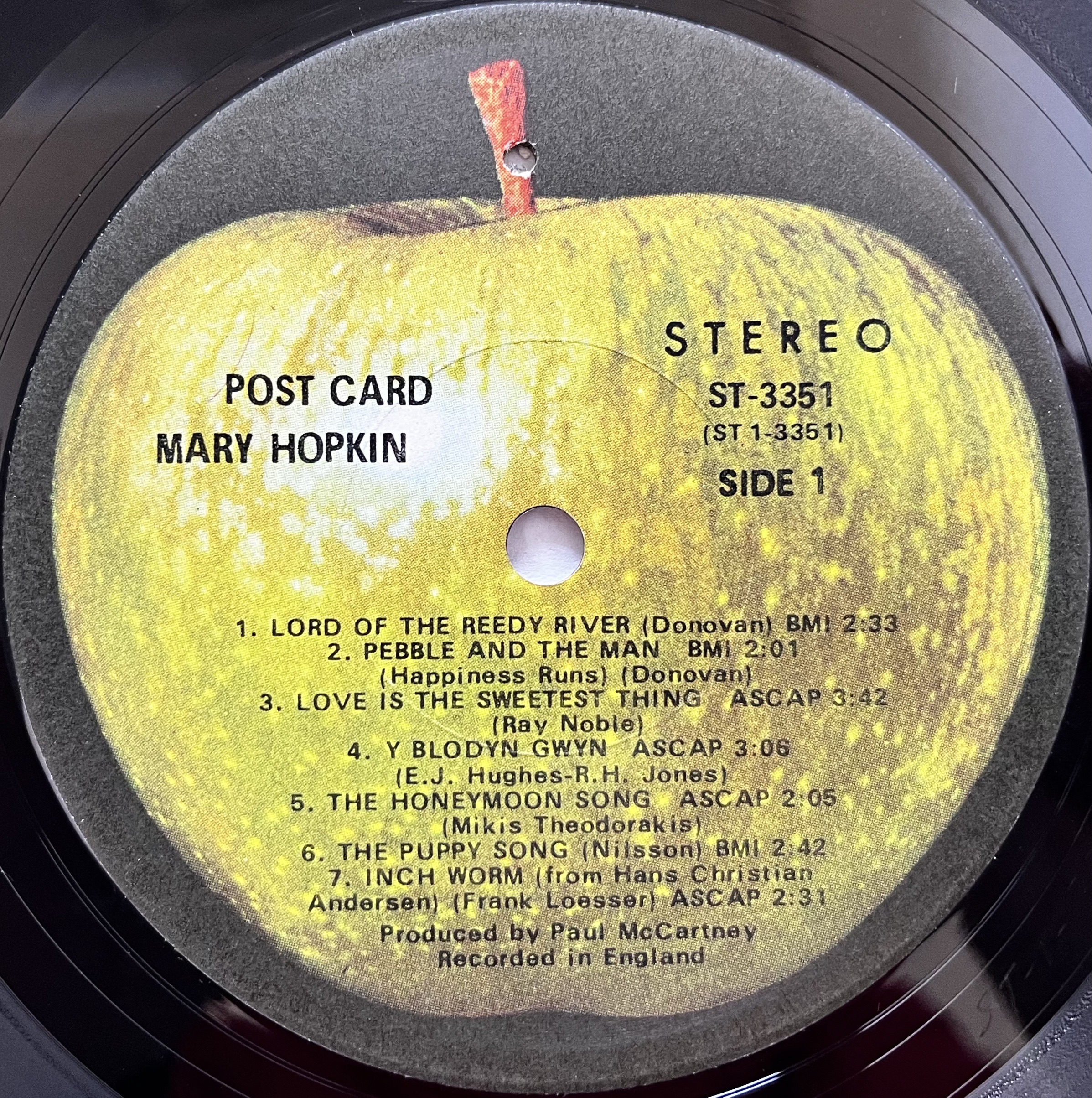
Also, as already mentioned, that Side 2, Track 4 has ‘Those Were The Days’ in place of ‘Someone To Watch Over Me’ which is found on the UK and and South East Asian pressings. Here are the US labels:
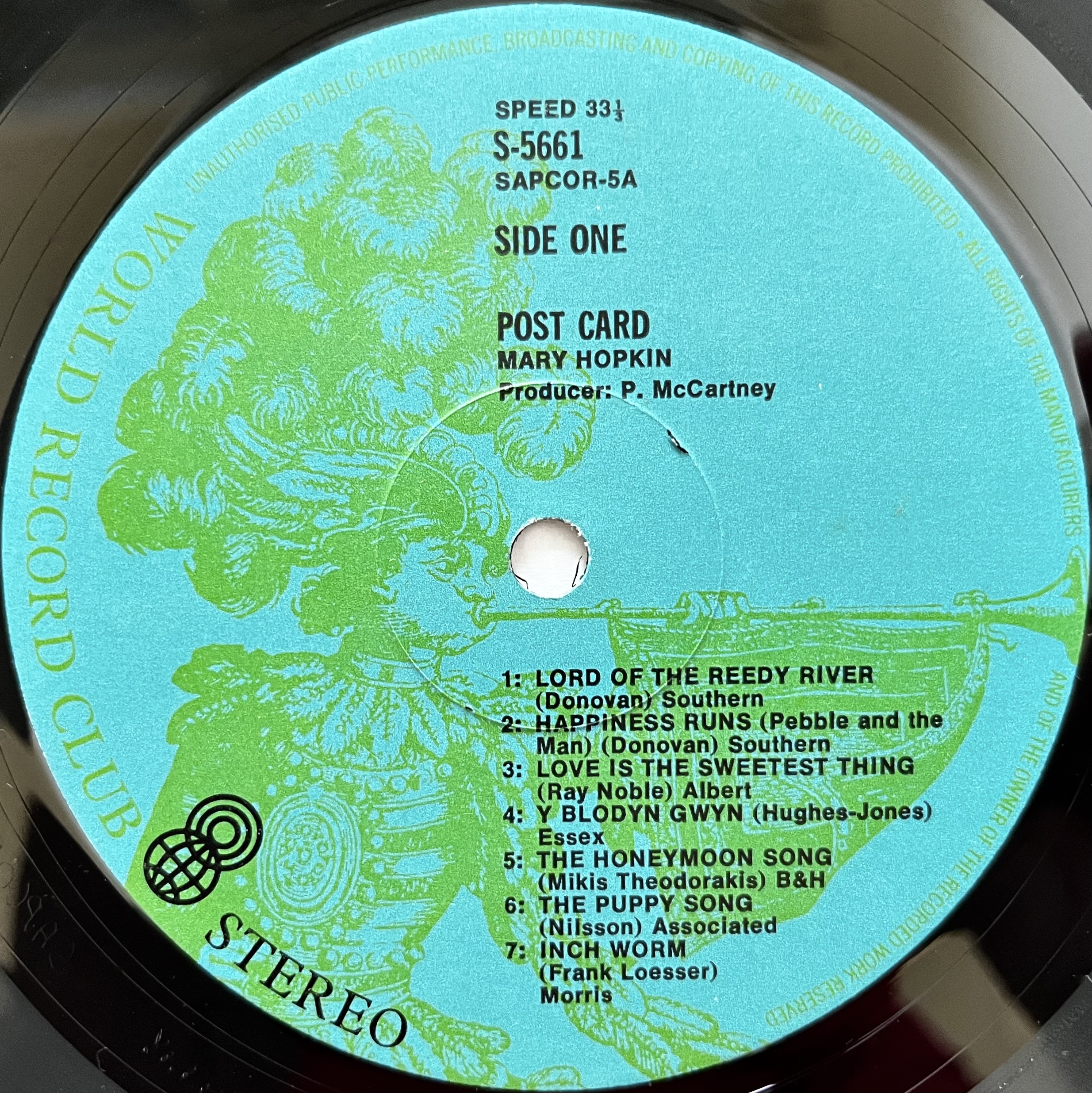
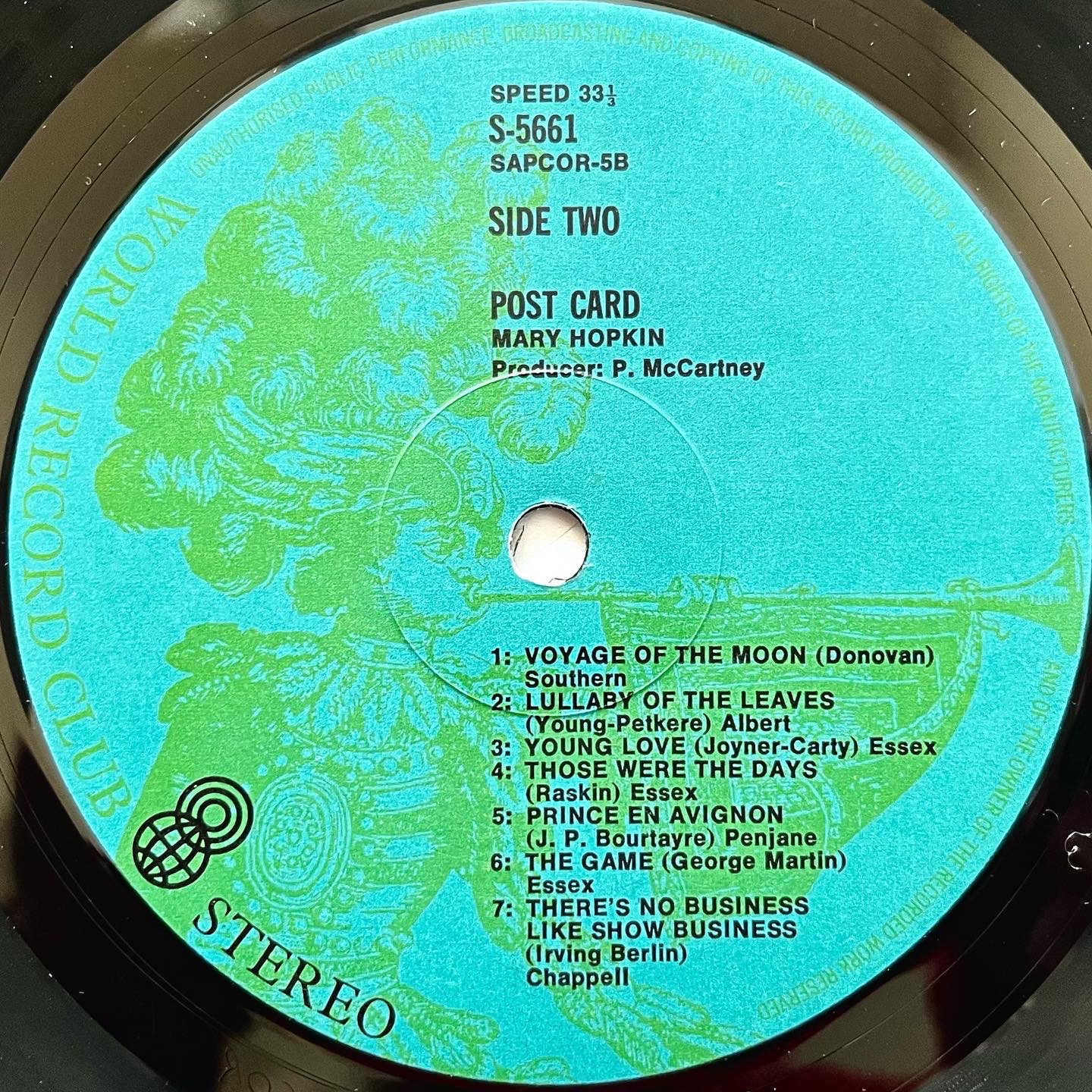
Just by way of interest, we also have an Australian pressing of Post Card issued by the World Record Club. It has completely different artwork for the front and rear covers, and labels:
This Aussie World Record Club release also follows the US track listing, with ‘Those Were The Days’ as Track 4, Side 2.
(As usual, click on the images above to see larger versions).
For an exhaustive look at the differences between the UK and US editions, check out BeatleDave’s Beatle Channel.
Finally, after months (or is it years?), the official announcement for the 50th anniversary editions of The BeatlesLet It Be has been made public.
And in physical form this is what we’ll be getting – on October 15:
It begins with a 180-gram, half-speed mastered vinyl 4LP set that also includes a 45rpm 12-inch vinyl EP, with a 105-page hardbound book in a special die-cut slipcase.
There’ll also be a special edition of the same content on a 5CD + 1Blu-ray (containing the album’s new stereo mix in hi-res 96kHz/24-bit; new 5.1 surround DTS and Dolby Atmos album mixes), also with a 105-page hardbound book in a die-cut slipcase.
Both these total 57 tracks in all: the original Let It Be LP in a new stereo mix by Giles Martin and Sam Okell, two discs of previously unreleased outtakes, studio jams and rehearsals, and the previously unreleased 1969 Get Back LP mix by Glyn Johns, newly remastered. Then there’s that Let It Be EP (in both the vinyl and CD boxes) as a separate disc containing 4 tracks: o Glyn Johns’ unreleased 1970 mixes of ‘Across The Universe’ and ‘I Me Mine’. o Giles Martin & Sam Okell’s new stereo mixes of the ‘Don’t Let Me Down’ and ‘Let It Be’ singles.
The hardback book this time will be available in both boxes – something that hasn’t happened before with Beatle re-mix re-issues. It features a foreword by Paul McCartney, an introduction by Giles Martin; a remembrance by Glyn Johns; chapters and detailed track notes by Beatles historian, author, and radio producer Kevin Howlett; and an essay by journalist and author John Harris exploring the sessions’ myths vs. reality. The book is illustrated, scrapbook style, with rare and previously unpublished photos by Ethan Russell and Linda McCartney, as well as never before published images of handwritten lyrics, session notes, sketches, Beatles correspondence, tape boxes, film frames, and more.
After the two ‘Super Deluxe’ boxes there’s a 2CD set that comes in a digipak with a 40-page booklet. This set contains on one disc the original Let It Be album (in it’s new stereo mix), plus a disc unique to this set with 13 tracks of highlights from the previously unreleased outtakes, studio jams, rehearsals, and the previously unreleased Glyn Johns 1970 mix of ‘Across The Universe’. That makes it an interesting purchase for those completists among us!
Of course, there’s the stand-alone 1 LP which is also half-speed mastered and pressed on 180-gram vinyl, along with a single CD of the of the original album in re-mixed form too.
And there’s to be a picture disc as well.
As to track listings, here are images of the rear covers of the 4LP/EP box set:
And the 5CD/Blu-ray:
And the rear cover of the single LP:
Click on any of the images above to see larger versions.
We liked the artwork on the offical Bealtes page depicting some masking tape with the words Let It Be roughly stuck over what was the original title of this project: Get Back.
Really looking forward to hearing this re-mix. It is a favourite LP for us, up there with Pepper, Abbey Road and The White Album for sure.