An Overview of Australian Beatles Records

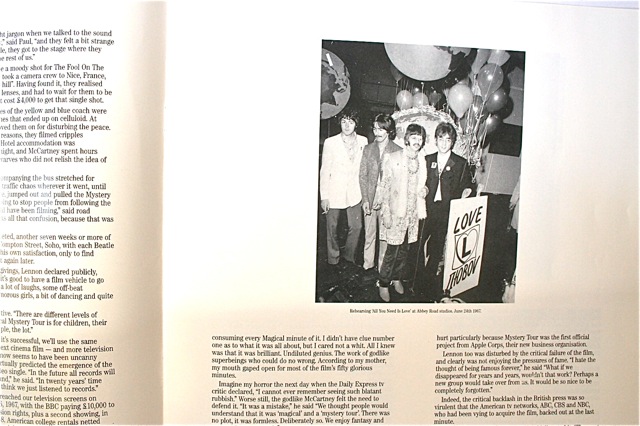
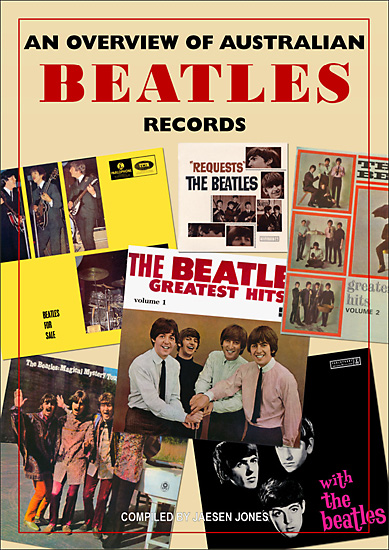
Got home from work today to discover this book in the postbox. I’d ordered it online just last week. Its a fantastic new book on the Beatles output on vinyl in Australia. When you say the words “in depth” they don’t really convey the work that collector and author Jaesen Jones has put into researching every aspect of the Australian arm of the mammoth EMI company as it relates to the Beatles output here. EMI Australia was responsible for releasing all the Beatles Parlophone and Apple label records in Australia. (The book also has information of the very few Polydor Beatle discs released here).

An avid Beatles collector from Canberra (Australia’s national capital), Jaesen has really done a terrific job in pulling together a lot of relevant information about the Australian Beatles releases – some of them quite unique in the world.

This release information from Ebay sums up well the content of the book:

They toured Australia on a single occasion in 1964, but once was enough for The Beatles to claim the continent as an integral dominion in their global Empire and to forever assure record-breaking sales of their recordings.

“An Overview of Australian Beatles Records” details Beatles records manufactured in Australia, from the first in February 1963 until the last in 1990, with emphasis on those distributed by EMI (Australia). It begins with a brief history of EMI (Australia) and its introduction of The Beatles to the people of Australia. It continues by detailing both the similarities and differences between EMI (Australia) and its parent, EMI UK, before focussing on the unique Antipodean pressings.

The book describes local publishing arrangements, major record label styles, sleeve design, production outsourcing/contracting, mastering methods and official imports. Where possible, period EMI publications, newspaper clippings, press releases and people directly involved with EMI (Australia) and Festival have been consulted.

For collectors there’s a section listing recommended Australian Beatles pressings, based on the views of numerous local and international audiophiles, as well as thirty-five pages of full colour label, sleeve and sticker scans (covering singles, EPs and LPs). Included are over 180 images, representing the most comprehensive collection of Australian Beatles record labels, outer and inner sleeves, inserts, and ephemera ever gathered together in a reference document to date.

Also included is a record rarity guide that lists all known major Aussie Beatles record variations with their relative rarity.

An Overview of Australian Beatles Records is an essential aid to the collector of Australian Beatles vinyl and is a book which will surely elevate the esteem in which this interesting subset of Beatles records is held in the global Beatles community.

You can find out more at I Am The Platypus – The Beatles Australia Album Labelography – a huge online resource also covering Australian Beatles releases.

Here are some page views from “An Overview of Australian Beatles Records”:

“An Overview of Australian Beatles Records”
First Edition, 2011
Compiled by Jaesen Jones
Published in Canberra, Australia
88 A4-sized pages (210mm x 297mm)
Over 180 colour scans and photos
ISBN: 978-0-9871048-0-9 (paperback)

Magical Mystery Tour – HMV Box Set

I’ve been able to get hold of another in the 1987 series of box sets released by the British HMV record store chain to celebrate the first editions of the Beatles on CD. I’ve previously posted on the “Sgt Pepper” box set, and also the “Beatles Red 1962-1966” box set.  Now they’re joined by the HMV “Magical Mystery Tour”:

When the Beatles catalogue came out on CD for the very first time back in 1987 it was a big deal and HMV (which has close ties back to the Beatles record company EMI) released a series of limited edition 12” x 12″ box sets containing CD’s to mark the occasion. There were 12 box sets released in all, plus a large (and expensive) HMV box which housed every CD then available.

Box set BEACD25/6 was “Magical Mystery Tour”, and it came with a 12-page booklet, a large fold out colour poster, and a badge. You can see the front cover image of the box above. It features the same artwork as that used on the CD. When you take the lid off this is what you first see:

This is a large format 12-page booklet with lots of photographs and the text is an article about the making of the film “Magical Mystery Tour”, plus the background to each song. Here are couple of pages from the booklet:

Underneath the booklet is a poster featuring the band in their tuxedos from a scene in the film, plus text on the left-hand side telling the Magical Mystery Tour story:

Then comes the CD itself, held in place by a special cardboard holder with a slot just right for the CD, which is in the standard plastic jewel case. There’s a small thumb-slot at the top to help you get the CD out:

Also in the box is a small metal Magical Mystery Tour/HMV pin or badge:

The CD that comes with the HMV box is the original 1987 UK release with its own booklet:

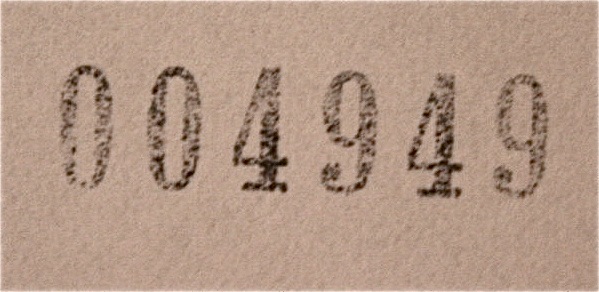
Like the other titles in the set, inside the lid of the HMV box there’s a limited edition stamped number. Mine as you can see is a nice round number, 004949:

There were apparently 10,000 copies of “Magical Mystery Tour” released worldwide, although one site I found disputes this saying there were only 8000.

Websites for “McCartney” and “McCartney II” Launched

Two separate websites have been launched in the lead-up to the official release of the new “McCartney” and “McCartney II” reissues, due on June 13.

Both feature photos and information about the new releases, which incidentally now include a single disc “Standard” edition of each title – something that until now has not been mentioned.

Both websites have a short video trailer (with Paul talking about the making of each album) to promote the discs:

These are the next two releases in the Concord Records/Hear Music Paul McCartney Archive series. See also my un-boxing of the first release in the series: “Band on the Run“.

“Come Together” TV Campaign for the City of Brisbane

Oh dear.

I’m getting onto this story a little late because it came to light last month, but the Australian state of Queensland is running an advertising campaign using a cover version of the Beatles “Come Together” to win tourist visitors back to their flood-ravaged capital city of Brisbane.

In January Brisbane, along with most of Queensland, suffered through devastating floods and has seen a real downturn in tourist visitors as a result. The state and the city need to get back on their feet. But really – why spoil “Come Together”? I don’t know about you, but I really hate to hear Beatles songs used in this way. In fact I hate hearing any song I really like bastardised by advertising agencies to sell any product.

Another Australian example from a couple of years ago that really grated (and I suspect this was used globally) was the use of the classic Beach Boys “Wouldn’t It Be Nice” to sell Cadbury chocolate. It just belittled this song for everyone for evermore:

Thanks for nothing, Cadbury. You spoiled a really great song.

The Brisbane version of “Come Together” was recorded by two local bands Hungry Kids of Hungary and Ball Park Music. Its not the first time Beatles music has been used in advertising. Probably the most celebrated example was from back in 1987 when Nike used the actual track (not a cover version) of “Revolution“. When it got to court Apple and the Beatles’ attorneys argued that “…the Beatles position is that they don’t sing jingles to peddle sneakers, beer, pantyhose or anything else. Their position is that they wrote and recorded these songs as artists and not as pitchmen for any product.”

I’d be interested to hear what you think. Does the use of Beatle tracks (or any great popular music for that matter) to sell or promote product get on your nerves?

Let me know.

Tittenhurst Park

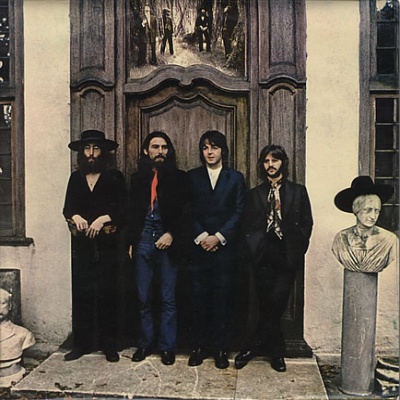
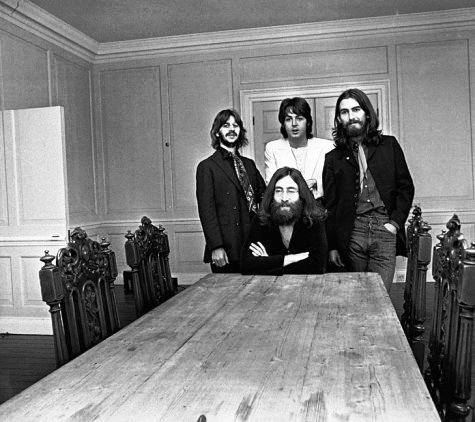
Stumbled upon an interesting article on the BBC website about John Lennon’s former home Tittenhurst Park near Ascot, Berkshire in England. It reminded me how much it has formed a part of the imagery surrounding record covers in my collection, and probably in yours. These albums, along with videos and publicity shots taken at Tittenhurst, have gone into the collective consciousness. Fans will know of this mansion house because although Lennon and Yoko Ono only lived there for around two years it featured in many a photo session, song video and documentary about John Lennon and the Beatles. There were in fact a huge number of photographs taken there – probably the most famous being the front and rear cover images for the Beatles best-of album known variously as The Beatles Again/Hey Jude (released in 1970 in the USA), and as Hey Jude (released in 1979 in the UK): This image, also taken at the house, was used for the rear cover: The next most famous images from Tittenhurst Park (which by the way is on London Road at a place called Sunningdale – one blogger has dedicated an entire blog to the house) came about when Lennon recorded his Imagine album there in 1971. When the song ‘Imagine’ was released as a single it was accompanied by this now legendary video which begins with John and Yoko walking through the fog-filled extensive grounds of Tittenhurst, and ends in an all-white main room inside the house:

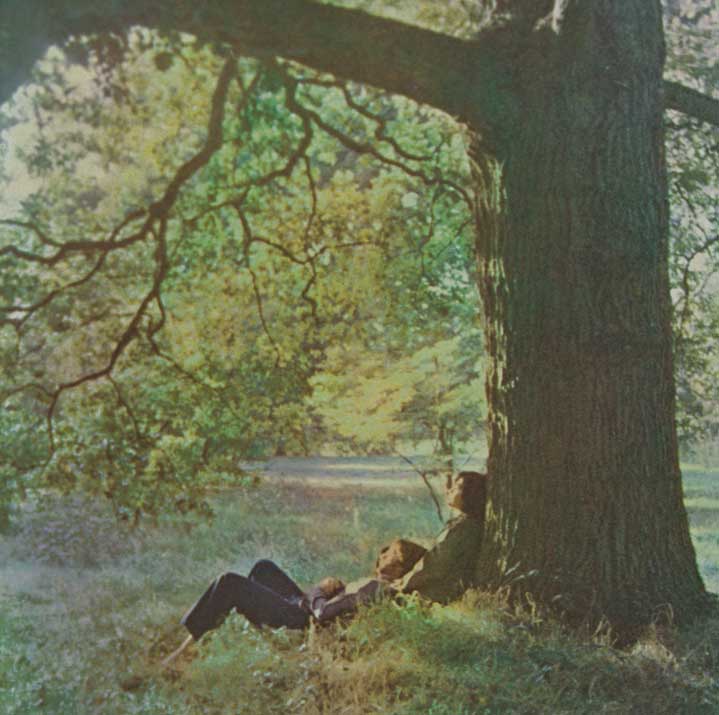
There’s also a fantastic scene from Gimme Some Truth, the documentary on the making of the Imagine album, where John talks to a young man who turns up at the house and invites him in for breakfast. And of course the cover photograph for Plastic Ono Band (1970) was also taken in the grounds of the manor – beside the man-made lake the Lennon’s had constructed on the property:

There’s a fairly comprehensive article about Tittenhurst Park in Wikipedia. John subsequently sold the property to Ringo Starr. Lennon biographer Philip Norman wrote:

“Ringo had…recently bought Tittenhurst Park, in the same obliging spirit that a Liverpool pal might take over some old banger of a car. John hated the thought that his rolling parklands and lake had gone forever, and drew comfort from Ringo’s promise that a bedroom would always be kept for him there.” (“John Lennon – The Life”. Harper Collins, 2008)

Sadly the events of 1980 meant that was no longer a requirement. The house and grounds were again sold in 1988 to present owner, Sheikh Zayed bin Sultan Al Nahyan, President of the United Arab Emitrates and ruler of Abu Dhabi. On Friday, August 22, 1969 the Beatles final photo session as a band was at Tittenhurst. The dream was over.

(See also “John Lennon’s Rolls Royce“, and the Kenwood site which goes into great detail about the house Lennon owned prior to purchasing Tittenhurst Park)

“Penny Lane” Trumpeter Dies

David Mason, the musician who played the now famous trumpet parts for the Beatles “Penny Lane”, has died. In January, 1967 he provided just a short couple of sections for the song – but they are solos from a virtuoso which are so impressive and important in making “Penny Lane” so loved by so many.

David had been Principal Trumpet of the Royal Philharmonic Orchestra, the Philharmonia Orchestra, the Covent Garden Opera, and the English Chamber Orchestra.

Here’s the story of how “Penny Lane” came about:

And of course the song itself in full:

Vale David Mason. And thanks for the music.

McCartney’s “The Family Way” to get proper CD Release

Interesting news last week that Paul McCartney’s very first solo work outside the Beatles is to get a decent CD release in July this year.

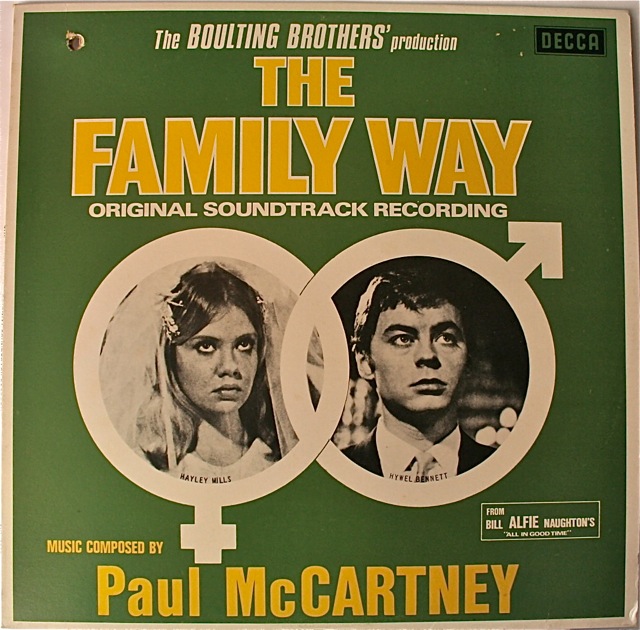
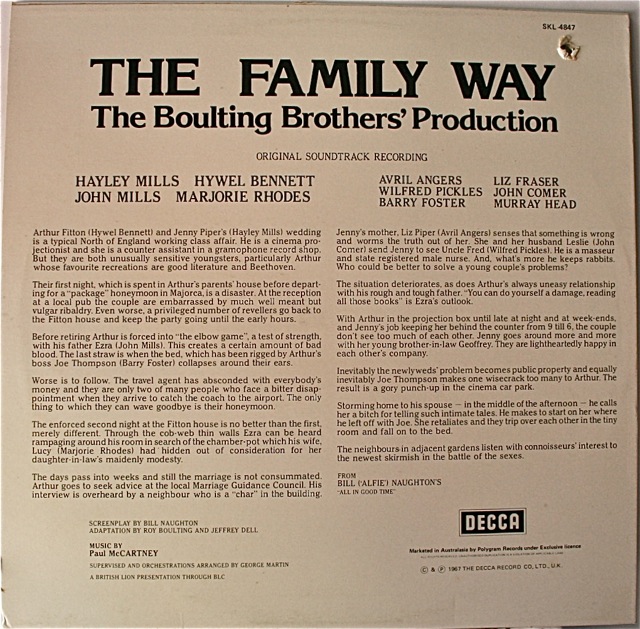
McCartney wrote the original soundtrack music to the 1966 British movie “The Family Way“, starring Hayley Mills and Hywell Bennett. He was assisted with orchestrations and arrangements by Beatles producer George Martin. The news of a new CD release got me scrabbling through the collection to find my vinyl copy:

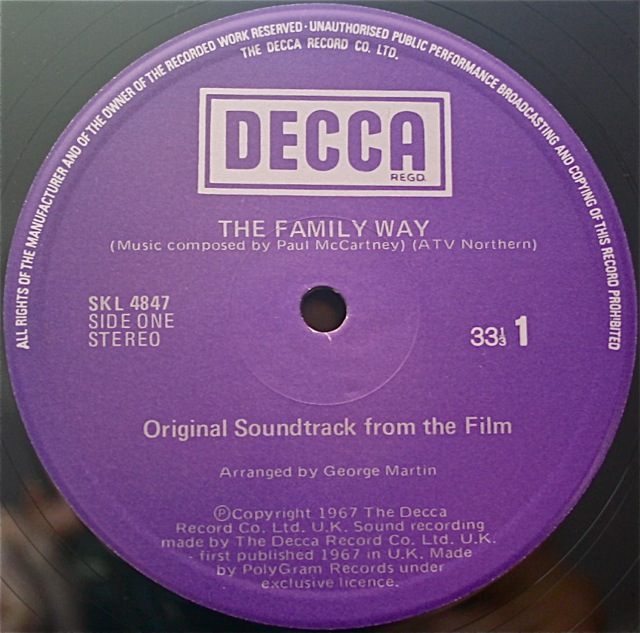
This is the Australian pressing – which came out on Decca Records originally in 1967 (though my copy is a re-issue). In the UK the LP also came out on Decca, while in the US it was released on the London label. The LP has 13 tracks but interestingly (as you can see on the label image above) there are no titles for any of them.

“The Family Way” will be released on CD on July 26 by specialist soundtrack label Varèse Sarabande, based in California. It takes a bit of a search to find any references to the forthcoming CD on their website. You have to go to the “Vintage News” section and there’s information contained there when you scroll a fair way down the page…..

It’s very interesting to hear the music now with the benefit of hindsight. It would have been composed by McCartney just after the release of “Revolver”, and just before he went into the studio to record “Sgt Pepper”:

The original 1967 soundtrack recording of “The Family Way” contains both the above McCartney themes, the main theme and “Love in the Open Air” – plus eleven more score cues suited to the on-screen action. Varèse Sarabande says that for his composition McCartney was initially inspired by the sound of brass bands, familiar to his childhood in the North of England.

Steve Marinucci in his Beatles Examiner column says the new single-disc release will be taken from the original mono master tapes and will feature sleeve notes by Chip Madinger, author of a new book on the Beatles solo work called “Eight Arms To Hold You“.  The CD will also include a previously unreleased stereo mix of “A Theme From ‘The Family Way'”, a rarity that in 1966 appeared as the b-side of a 1966 UK/US 7-inch single by a band called the Tudor Minstrels.

Are You A Beatles Autograph Hunter?

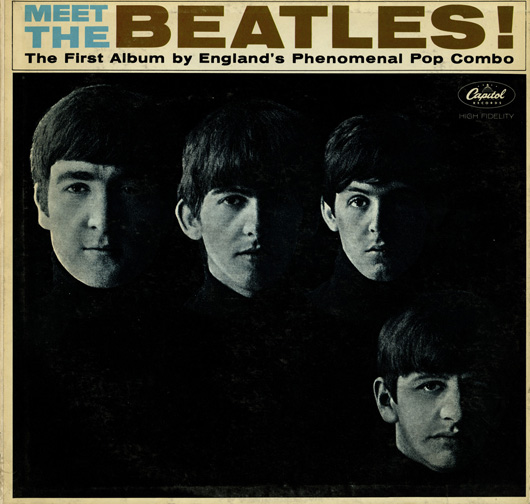
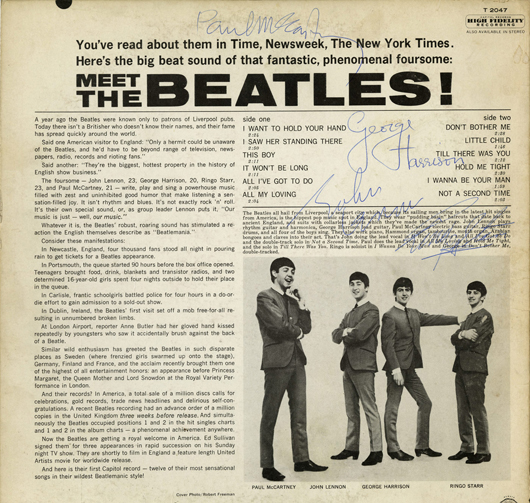
I’m not, but I was kind of intrigued reading this article about a forthcoming auction of an autographed copy of the Beatles US LP “Meet The Beatles!” from 1964.

Signed on the rear cover by all four Beatles on the eve of their legendary Ed Sullivan Show TV appearance, the record comes from the estate of  Dr Jules Gordon who treated an ailing George Harrison at New York’s Plaza Hotel, the hotel where the Beatles were staying during their first US visit.

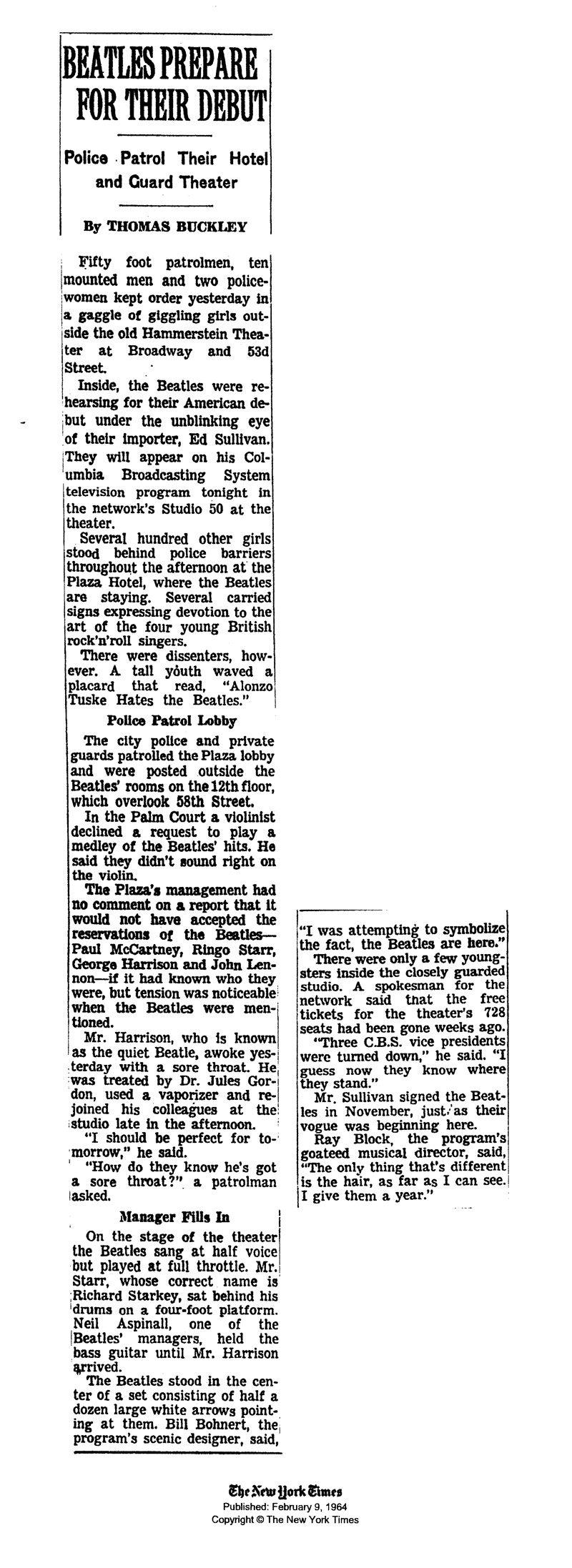
George was suffering from a very sore throat and Dr Gordon, the house physician at the hotel, was called upon to treat him. In fact, at one stage it looked like he might not be able to perform at all on the TV show – which broke the band big time in the US.

The auction is being conducted by Case Antiques. Their May 21 auction is billed as a “Fine Art and Antique Auction” – and hidden away on page 15 of the 37-page internet listing, in amongst the furniture and artworks, is the signed Beatles album. To save you time here’s a link to that page. Click on the album to bring up some more pictures and details. The auction listing describes the item as:

“Very good condition. 12-1/4″ H x 12-1/4″ W. Provenance: From the estate of Dr. Jules Gordon, the New York physician who treated George Harrison for a sore throat on February 8, 1964, the day before their American television debut on the Ed Sullivan Show. Refer to the New York Times Article dated February 9, 1964 by Thomas Buckley which names Dr. Gordon and describes the doctor’s treatment of Harrison as well as events surrounding their New York appearance”:

Its sobering to think that a simple sore throat could very well have changed the course of popular music history….

Yoko Ono – “Fly”

You might be wondering why I’ve just purchased a 40 year-old vinyl copy of the 2LP set “Fly” by Yoko Ono….

I’ve pretty much always liked the Beatles, and have had a variety of their records in my collection for over 40 years now. What really got me started on collecting seriously though (and this is about fifteen years ago now) was a fascination with their Apple Records label and an attempt to learn all I could about company and to get vinyl copies of all the artists they signed to that label over the years it was active and under the band’s direct influence.

That has meant hunting down discs as diverse as British modern classical composer John Tavener (“The Whale” and “Celtic Requiem”); The Modern Jazz Quartet (“Space” and “Under the Jasmine Tree”); Billy Preston (“Encouraging Words” and “That’s the Way God Planned It”), as well as the soundtracks of obscure films like “Cometogether” and “El Topo“.

The hunt is still continuing and as Yoko Ono was on Apple Records her work has been part of the process for me. But until now I didn’t have a copy of her 1971 double LP Apple release called “Fly”.

Continue reading

It’s Official – “McCartney” and “McCartney II” Re-Issue Details

After quite a bit of speculation confirmed details have finally been released on the official Paul McCartney site about the two latest titles in the Paul McCartney Archives series.

“McCartney” (1970) and “McCartney II” (1980) will both be re-issued in a range of forms on June 12 (June 13 in the United States).

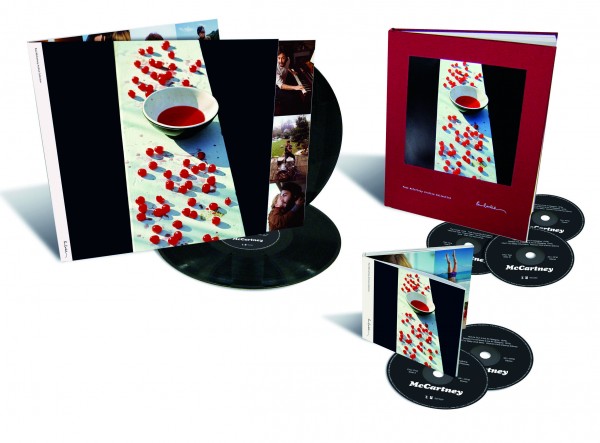
Both will come out in the deluxe linen book format (to match the already released “Band on the Run” re-issue from last year). They will both be available as a two-CD “standard” edition, and both will also be released as 2-LP, 180 gram audiophile vinyl albums for collectors:

The “McCartney” deluxe re-issue will be a 2 CD plus 1 DVD set contained within a 128 page bound book.

The “McCartney II” deluxe set will contain 3 CD’s plus 1 DVD. Each will contain previously unreleased material, including music, film footage and bonus tracks.

The McCartney official site has the complete track listings.

The new disc sets will come out on the Concord Records/Hear Music label.  The label has embarked on an extensive re-issue series its calling the Paul McCartney Archive. In late 2010 the first of the releases was Paul McCartney and Wings 1973 album “Band on the Run“.