40th Anniversary of Beatles Break Up – Special Broadcasts This Weekend

Here’s some news for Beatles fans.

This coming weekend (10 & 11 April) marks the 40th anniversary of Paul McCartney formally announcing the break-up of the Beatles. He was about to release this album:
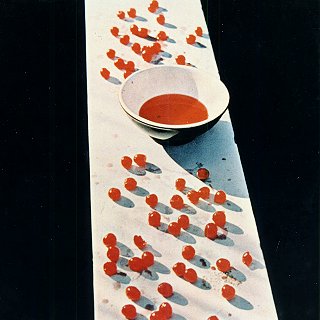
"McCartney" April, 1970

McCartney issued a press release in the form of a self-interview that was inserted into early promo copies of his first-ever solo album. It went something like this (I’ve highlighted the most telling question that signaled the Lennon/McCartney partnership was over – forever):

FOR IMMEDIATE RELEASE
FROM: Paul McCartney
DATE: April 9, 1970

Q: “Why did you decide to make a solo album?”

PAUL: “Because I got a Studer four-track recording machine at home, practiced on it (playing all the instruments)- liked the results, and decided to make it into an album.”

Q: “Were you influenced by John’s adventures with the Plastic Ono Band and Ringo’s solo LP?”

PAUL: “Sort of, but not really.”

Q: “Are all songs by Paul McCartney alone?”

PAUL: “Yes, sir.”

Q: “Will they be so credited: McCartney?”

PAUL: “It’s a bit daft for them to be Lennon/McCartney-credited, so ‘McCartney’ it is.”

Q: “Did you enjoy working as a solo?”

PAUL: “Very much. I only had me to ask for a decision, and I generally agreed with me. Remember, Linda’s on it too, so it’s really a double act.”

Q: “What is Linda’s contribution?”

PAUL: “Strictly speaking, she harmonizes, but of course it’s more than that, because she’s a shoulder to lean on, a second opinion, and a photographer of renown. More than all this, she believes in me- constantly.”

Q: “Where was the album recorded?”

PAUL: “At home, at EMI (no. 2 studio), and at Morgan Studios. (Willesden!)”

Q: “What is your home equipment– in some detail?”

PAUL: “Studer four-track machine. I only had, however, one mike, and as Mr. Pender, Mr. Sweathenham and others only managed to take six months or so (slight delay) I worked without VU meters or a mixer, which meant that everything had to be listened to first for distortion, etc, then recorded. So the answer– Studer, one mike, and nerve.”

Q: “Why did you choose to work in the studios you chose?”

PAUL: “They were available. EMI is technically very good and Morgan is cozy.”

Q: “The album was not known about until it was nearly completed. Was this deliberate?”

PAUL: “Yes, because normally an album is old before it even comes out. (aside) Witness GET BACK.”

Q: “Why?”

PAUL: “I’ve always wanted to buy a Beatles album like people do and be as surprised as they must be. So this was the next best thing. Linda and I are the only two who will be sick of it by the release date. But we love it really.”

Q: “Are you able to describe the texture or feel of the album?”

PAUL: “Home, family, love.”

Q: “How long did it take to complete- from when to when?”

PAUL: “From just before Christmas, until now. ‘The Lovely Linda’ was the first thing I recorded at home and was originally to test the equipment. That was around Christmas.”

Q: “Assuming all the songs are new to the public, how new are they to you? Are they recent?”

PAUL: “One was from 1959– ‘Hot As Sun.’ Two are from India– ‘Junk’ and ‘Teddy Boy.’ And the rest are pretty recent. ‘Valentine Day,’ ‘Momma Miss America’ and ‘Oo You’ were ad-libbed on the spot.”

Q: “Which instruments have you played on the album?”

PAUL: “Bass, drums, acoustic guitar, lead guitar, piano, organ, mellotron, toy xylophone, bow and arrow.”

Q: “Why did you play all the instruments yourself?”

PAUL: “I think I’m pretty good.”

Q: “Will Linda be heard on all future records?”

PAUL: “Could be. We love singing together and have plenty of opportunity for practice.”

Q: “Will Paul and Linda become a John and Yoko?”

PAUL: “No, they will become a Paul and Linda.”

Q: “Were you influenced by their work?

PAUL: “No.”

Q: “Will they or who will receive the first copies?

PAUL: “The press.”

Q: “What has recording alone taught you?”

PAUL: “That to make your own decisions about what you do is easy, and playing with yourself is very difficult but satisfying.”

Q: “Who did the cover?”

PAUL: “Linda came up with and took the photos, and she and I designed tha album cover.

[The following question was not part of the original press release, but appears in some sources on the web.]

Q: “Is it true that neither Allen Klein nor ABKCO have been nor will be in any way involved with the production, manufacturing, or promotion of this new album?”

PAUL: “Not if I can help it.”

Q: “Did you miss the other Beatles and George Martin? Was there a moment when you thought, ‘I wish Ringo were here for this break?'”

PAUL: “No!”

Q: “Assuming this is a very big hit album, will you do another?”

PAUL: “Even if it isn’t, I will continue to do what I want, when I want.”

Q: “Are you planning a new album or single with the Beatles?”

PAUL: “No.”

Q: “Is this album a rest away from the Beatles or the start of a solo career?”

PAUL: “Time will tell. Being a solo means it’s ‘the start of a solo career…’ and not being done with the Beatles means it’s just a rest. So it’s both really.”

Q: “Is your break with the Beatles temporary or permanent, due to personal differences or musical ones?”

PAUL: “Personal differences, business differences, musical differences, but most of all because I have a better time with my family. Temporary or permanent? I don’t know.”

Q: “Do you foresee a time when Lennon/McCartney becomes an active songwriting partnership again?”

PAUL: “No.”

Q: “What do you feel about John’s peace effort? The Plastic Ono Band? Giving back his MBE? Yoko?

PAUL: “I love John and respect what he does, but it doesn’t really give me any pleasure.”

Q: “Were any of the songs on the album originally written with the Beatles in mind?”

PAUL: “The older ones were. ‘Junk’ was intended for ‘Abbey Road,’ but something happened. ‘Teddy Boy’ was for ‘Get Back,’ but something happened.”

Q: “Were you pleased with ‘Abbey Road’? Was it musically restricting?”

PAUL: “It was a good album. (No. 1 for a long time.).”

Q: “What is your relationship with Klein?”

PAUL: “It isn’t. I am not in contact with him, and he does not represent me any way.”

Q: “What is your relationship with Apple?”

PAUL: “It is the office of a company which I partly own with the other three Beatles. I don’t go there because I don’t like offices or business, especially when I am on holiday.”

Q: “Have you any plans to set up an independent production company?”

PAUL: “Yes, McCartney Productions.”

Q: “What are your plans now? A holiday? A musical? A movie? Retirement?”

PAUL: “My only plan is to grow up!”

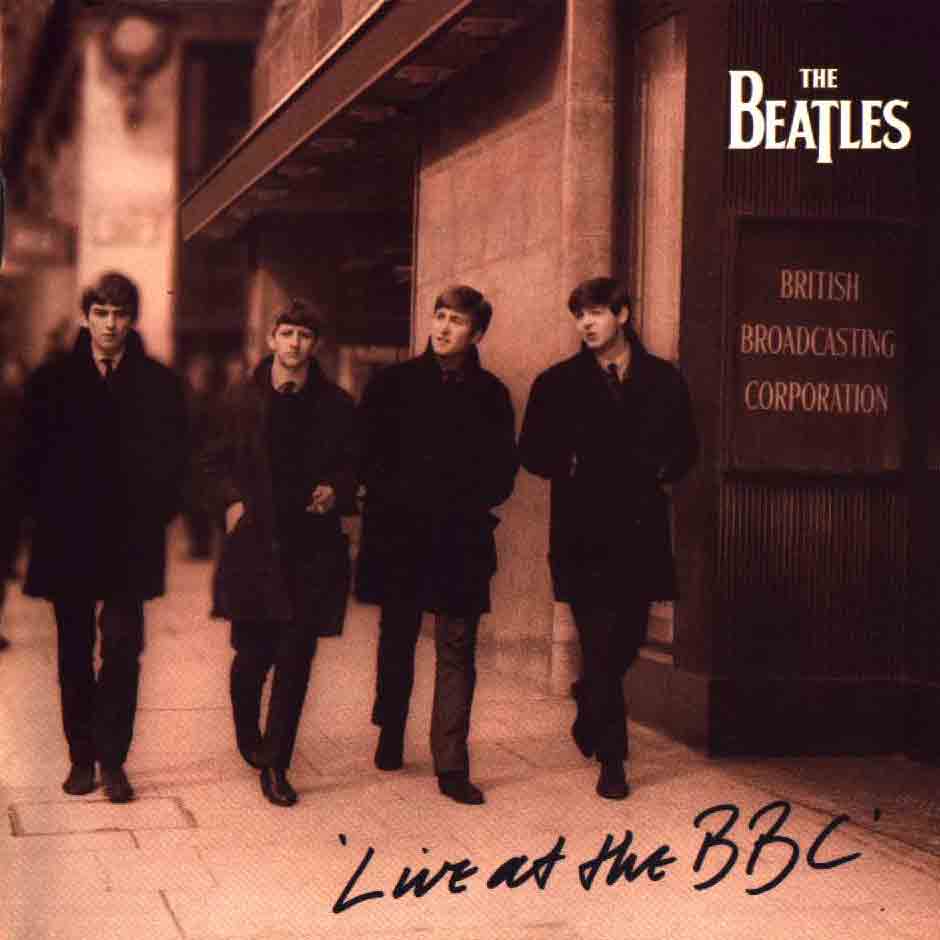
Well, all this coming weekend ABC Digital Radio in Australia will be marking the anniversary with a continuous stream of special programs and documentaries (many sourced from the BBC and never before heard in this country) celebrating the music and the history of the band. If you have a digital radio and you live in Brisbane, Sydney, Melbourne, Adelaide or Perth you can hear the special programs on your radio. If you don’t have digital, or don’t live in any of those places you can still hear them streamed on the internet.

This is from the ABC Radio press release:

ABC Beatles: Saturday 10 – Sunday 11 April

On the 40th anniversary of Paul McCartney’s announcement that his songwriting partnership with John Lennon was over, the Australian Broadcasting Corporation is presenting a weekend of very special digital radio broadcasts to celebrate the band from Liverpool that changed the course of popular music.

On ABC Digital Radio (and online), beginning at 8am (Eastern Australian Time), Saturday 10th April and continuing until midnight Sunday 11th April, ABC Beatles will give listeners the opportunity to hear rare and exclusive material drawn from the depths of the BBC Radio archives. The broadcast will include an in-depth history of the band, interviews and recordings from their visits to BBC studios and documentaries never broadcast in Australia.

There will be online streaming links (Windows Media & Real Audio) via this page.

New Beatles Book Released This Month – Looks Interesting

Pop culture historian Robert Rodriguez has a new Beatles book just out.

It’s the sequel to a previous title, “Fab Four FAQ: Everything Left to Know About the Beatles, and More!” This was released in 2007 and co-authored with Stuart Shea. It tells the story of the Beatles years in a new way – chronicling many previously unknown facts about the famous four and their recording career, friends, songs and lots of other stuff. It has its own dedicated web page.

Rodriguez newest is called “Fab Four FAQ 2.0: The Beatles’ Solo Years 1970-1980”.

As the title suggests this one looks at the group’s solo output over a ten-year period, and like the first book you can dip into it to discover facts and info that either you forgot or never knew about the recordings and lives of the Beatles as four individual artists. As with the first book, Rodriquez has created a stand-alone web page to accompany the book release. It is really worth a visit because it has some exclusive content not published in the book – including a free chapter you can download called “You Think You’re A Groove: Album Packaging”. In it Rodriguez takes a walk through some of the album art for many solo Beatles releases. Quite an interesting read for collectors of vinyl records and the often fascinating cover artwork they contained.

(The website for the first book is worth a visit too – it has an additional four free chapters to download and read). Rodriguez is nothing if not prolific.

Check out the latest book at Amazon. And there’s a review here.

Klaus Voormann – A Sidesman’s Journey

One of the great artists and session men and part of the inner-circle of the Beatles for many years is Klaus Voormann.

He’s been a long-time friend and sometime collaborator and he has an album out looking back and celebrating that association with the group. I stumbled across this video which pretty much tells the back story to the making of the record, which is called “A Sidesman’s Journey”:

As you can see “A Sideman’s Journey” features guest appearances by Paul McCartney and Ringo Starr, as well as Beatle-related songs like George Harrison’s “All Things Must Pass” – here sung by Yusef Islam (Cat Stevens).

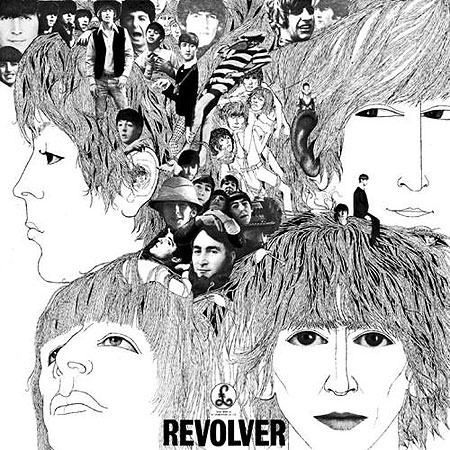
Voormann has known the Beatles since the Hamburg days and is an artist and bass player. For example, he drew the legendary cover for “Revolver”:

The Beatles - Revolver (1966)

Later Voormann also played bass on numerous Beatles solo projects including, amongst many others,  Lennon’s “Walls and Bridges” and “Imagine”, Harrison’s “All Things Must Pass” and “Concert for Bangladesh”, and on the Ringo solo outings “Ringo” and “Goodnight Vienna”.  He was a founding member of the Plastic Ono Band.  See his biog entry in Wikipedia here.

Voormann’s new CD is made up of newly-recorded covers of some of the songs he helped make famous with the former Beatles plus many other artists over the years.

Well worth a listen.

Goodbye, Abbey Road

I just got home and opened my emails to find this post by Brandonblog, a guy who writes with great wit and authority on music matters. Couldn’t really say it better myself, so here are Brandon’s words as-is:

Just heard news of the ultimate bit of Beatles memorabilia, although, you can bet it isn’t about to be offered on ebay.

If Michael Jackson were still around, he’d probably be vying for it but, most likely, it will go to some cashed-up entrepreneur who will want to open it up for tours. Let’s hope it isn’t turned into a restaurant: “Would sir like the Savoy Truffle? Or, the Yellow Matter Custard, perhaps?”

Anyhoo, for better or worse – and I fear it may be the latter – EMI is about to sell the historic Abbey Road Studios where the Fabs recorded the greater bulk of their astonishing legacy.

But it wasn’t just The Beatles who recorded there. Abbey Road also played host to the likes of Pink Floyd who delivered their landmark opus, ‘Dark Side Of The Moon’ in those hallowed studios.

How cool would it be if the British Government chipped-in for it and registered Abbey Road with The National Trust? Former Kinks frontman, Ray Davies recently lamented the gradual disappearance of his city’s iconic landmarks in the song he recorded with Chrissie Hynde, “Postcard From London”.  Imagine what he must think of this.

In it’s current financial predicament, I can’t blame EMI one bit but if Abbey Road is allowed to disappear, or to be so transformed as to become virtually unrecognizable, then England will lose something of significant cultural value.

Let’s hope not. 

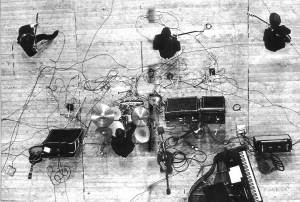
Brandon accompanied his post with this groovy photograph – an angle of the boys in concert that I’d certainly never seen before…

How the Beatles Recorded Their Music

Have you ever wondered how the Beatles actually pieced together the masterpieces, instrument-by-instrument, track-by-track?

Well, here’s a fantastic insight thanks to blogger Andy Baio who has posted some all-too brief extracts from what looks to be a fascinating BBC 6 radio documentary called “The Record Producers: Extended Cut”.

The BBC was given free access to the original multi-track recordings of some of the Beatles most famous music, and the radio show begins to pick apart how the songs we know so well now were made in the studio way back when.

Andy has three short extracts from the show on his blog: “She’s Leaving Home”, “A Day In The Life”, and “Come Together”. Each of them is just amazing in the insights they give. Really worth a listen.

As Andy says, unfortunately the original BBC broadcasts are no longer available on their site.

Anyone who has access to where we can find the whole program please let us all know!

More on the Beatles 2009 “Christmas Pack” – Another Variation Exists

Before Christmas I wrote about Apple/EMI putting together a small box set containing four of the most popular of the new stereo remasters.

I decided as it was a variation in an officially produced box that it’d be worth having in the collection. I found a place in the UK on Ebay that was selling them for a reasonable price (quite a bit cheaper than my local record shops) and so I got one. Who knows, maybe one day it might become a collectable because these were only produced in limited numbers as I understand it.

It arrived the other day – here’s the front view of the box:

Beatles "Christmas Pack" Box Front

And here is the rear:

Beatles "Christmas Pack" Box Rear

I can’t show you the CD’s inside because I’m going to keep this one sealed.

Well, the other day I was in the city and called in to one of the best independent record shops going around – Red Eye Records. They’re great and stock a wide variety of hard-to-get music from around the world. If they haven’t got it they’ll search for you and order it in too. Anyway, while there I saw that they had quite a few copies of what at first appeared to be this same box set up on the shelves behind the counter.

Just out of curiosity (I guess to confirm that I’d got a good deal!) I asked what the price was. The assistant said “Those? Oh, they’re just empty boxes. The record company gave them to us to give to people who bought a few Beatles stereo remasters as something to put them in as gifts. We’ve got a lot of them left over. You can have one if you want.” I thought, well one might be handy to have in case any other remasters come my way, or it could store any Beatles CDs really.

Also, something about the box looked a bit different, though I couldn’t figure out what straight away in the shop, and so I took up the offer. It wasn’t until I got home and compared it to the box above that I realised it was quite different. Here’s the front of the free box:

Beatles "Gift Box" Front

Notice just an Apple logo instead of the four small stereo remasters cover images on the other box. And the rear is different, too:

Beatles "Gift Box" Rear

All the cover images for the entire remasters series are shown.

So, a genuine little gift box that can be used for multiples of any of the new re-issue series. And another collectors item?

Big Price set for Rare “Butcher” Cover

Earlier this week I posted an item about a rare, first-state copy of the Beatles “Yesterday and Today” famous butcher cover which was up for auction on Ebay.

Well, it sold for a pretty impressive price.

Have a look here for the results.

Very Rare Beatles “Butcher Cover” For Auction

One very unique and rare Beatles item is up for grabs at the moment – but you’d better be quick and have your wallet ready…

It is a fine, sealed, mint example of the legendary “Butcher Cover” – which is the generic name given by collectors for the original cover of the Beatles US release called “The Beatles Yesterday and Today”.

No need to go into great detail here because most Beatles collectors know the story – but Capitol had to quickly withdraw the cover which was considered offensive at the time by most American consumers. It was a shot of the band smiling at the cameras while holding cuts of butchered meat and baby dolls….not a good combo:

Original "Butcher Cover" in good shape

Because they detected public outcry and took the record off the shelves so fast this particular cover has become one of the most sought after and rare items. Finding one in good condition is rare. Capitol Records initially pasted over thousands of existing withdrawn pressings with a new, safer picture that looked like this:

The Capitol paste-over and the image used for all later releases

Well, one original, un-pasted-over copy – still sealed in it’s shrink-wrap – has come up for auction on Ebay here.

To give you some context of what copies of this item in good condition can sell for have a look at this YouTube item from the US version of Antiques Roadshow.

Thanks to Web Wire for pointing to this item. Also to ivegotneatstuff.com for some more detail and the YouTube link.


Harry Nilsson’s “Son of Dracula” – US Vinyl

No trip to Newcastle (the one in Australia on the New South Wales north coast) can go without a visit to one of my favourite second-hand record store haunts – Antique Sounds on King Street.  Its a tiny little shop that is literally chock full with a wide range of second-hand items – from clocks, to clothing, bakelite radios, trinkets, toys….you name it and its probably there.

Up the back of the shop are racks and racks of old vinyl and amongst them many Beatles and Beatles-related collectables. To be perfectly honest most of these are not in the best condition or what you might call at the high-grade end of the collectable spectrum. And for the condition that some of the items are in the owner is usually asking an inflated price.  But, the thing about this store is that you just never know what you might find.

The other day I had to pass through Newcastle briefly and so dropped in.

While there I discovered a nice clean copy of an interesting Beatles-related 12-inch vinyl disc I have had on my “should get” list for some time: Harry Nilsson’s “Son of Dracula”, which is the soundtrack to the Apple film of the same name.

Way back in 1974 Apple Corps, the Beatles’ company, was still operating its soon to be defunct Apple Film division. When they first set up Apple the Beatles always envisioned a film arm and, while not prolific, some films they made include the well-known “The Concert for Bangladesh” and the lesser known “Born to Boogie”, a concert film featuring T-Rex and Marc Bolan – directed by Ringo Starr.

Well ahead of the present-day fascination with vampires,  “Son of Dracula” was billed as “the first rock-n-roll Dracula movie musical”.  It starred Nilsson, Ringo Starr, Peter Frampton, John Bonham and Keith Moon….

A film poster from the 1974 Apple film "Son of Dracula"

Apparently it wasn’t much of a film – but the soundtrack and songs provided by Harry Nilsson (still relatively fresh and marketable from his huge, world-wide hit album “Nilsson Schmilsson”) along with contributions from legendary orchestrator Paul Buckmaster, had some really great songs – all largely taken from the LP’s “Nilsson Schmilsson” and its follow-up “Son of Schmilsson”).

I already had the Australian release of this record – which came out here with a very plain, single sleeve cover, and on the standard orange-coloured RCA record label. However, the original US pressings were released with a unique cover, complete with opening bat wings (see pics below):

Front cover - "Son of Dracula" US pressing

The "bat wings" gate-fold cover

Cover with the "bat wings" open

“Son of Dracula” is also interesting to Beatles collectors because it was on something of a unique hybrid label called Rapple Records. There isn’t a lot of detail about this but I can only assume that as Nilsson was contracted to RCA at the time, and this was an Apple film, they decided to combine RCA and Apple and came up with the name Rapple! Its the only time this label was ever used to my knowledge. I like it because they also created a custom record label for the project, complete with a half-eaten apple….perhaps a sign of things to come as the company slowly self-destructed:

The very unusual "Rapple" label

So, another junk shop treasure to add to the collection: an original US pressing (in great condition) of 1974’s “Son of Dracula” – on the intriguing Rapple Records.

Harry Nilsson’s own site has some further reading and pictures from the project if you are interested.

(By the way, the record cost me $8.00 Australian).

Label Variations – Part One – Sgt. Pepper

For some reason today I started to think about all the different label variations there must be of Beatles LP and single vinyl discs – released over time and from a wide range of countries around the world.

Different countries have different labels of course, but there have been many label artwork changes over the years – from the original issues to the more recent re-releases. For some collectors this is a never-ending fascination. How many different label variations can they possibly find of a particular album or single?

For me as a collector it’s not the primary reason I’ll purchase an item – but for certain titles I already have it can be a factor. For some reason if browsing a stack of second-hand Beatles LPs I’ll always go looking for different labels or covers for Sgt. Pepper, Abbey Road and Let It Be. Don’t know why – I guess they where formative in my initial collection and mean more to me as records than the other titles in the collection.

As a result, over many years,  I have accumulated a few variations which I’ll share with you over the coming few weeks. (To see larger images just click on each picture).

First up – Sgt. Peppers Lonely Hearts Club Band. My very first copy of this on vinyl was the Australian pressing. Originally all Australian pressings were on Parlophone. By the time I was old enough to buy it the Parlophone label was a bright orange colour and looked like this:

Australian pressing – Orange Parlophone

However, there where a couple of other Australian variations on the Parlophone label prior to it becoming orange like the one above. I think when Sgt. Pepper originally came out it was on a black and silver label like this:

Australian Parlophone – Black and Silver

After the black and silver there was a further Australian variation (seen below) which was very much like the original UK release. It’s a black and yellow Parlophone label. Note in the picture below that this is the Mono version (denoted by the catalogue number PMCO-7027. The stereo versions are all PCSO-7027):

Australian Parlophone – Black and Yellow variation

Across the Tasman Sea in New Zealand they had their own range of variations. An early NZ Parlophone was quite different to both the British and the Australian:

New Zealand Parlophone – Blue and White variation

As you can see, the New Zealand version was unique. New Zealand later went on to release the entire Beatles catalogue on the Apple label, and again there are differences here to the “usual” Apple look – quite distinctive in its way and I reckon collectable for that very reason:

New Zealand – Apple label

This Apple has some unusual features – most prominent among them the large STEREO lettering on the right hand side.

Back to Parlophone – on which most versions of Sgt. Pepper were/are released.  This is how the current UK version of the label looks today:

United Kingdom – the current Parlophone LP label

As you can see in the picture above, the Parlophone name and logo is in a large box, and the EMI label is also present twice on the label in smaller boxes. This is the label you will see if you go out tomorrow to buy a vinyl UK release of this classic Beatles record.

A couple of years ago EMI Australia re-issued Sgt. Pepper on the Parlophone label – and the label looked like this:

Australian Parlophone – Black and Silver c. 1987

The label above comes from 1987 when a special 20th Anniversary commemorative edition of Pepper was released. The pic above is of the more common black vinyl edition, but the record was also released on limited edition red vinyl (same label though!):

Australian Parlophone – Red vinyl edition 1987

OK. On to the US now – and I only have two label variations – which is not that impressive as there are many, many more. In the USA Capitol Records, as an EMI/Parlophone US subsidiary, is the principal label you’ll find Sgt. Pepper released on. This version below is the traditional black and “rainbow” surround Capitol label:

US Capitol – black and rainbow label

Later there were other Capitol variations. This one is the orange Capitol, which I bought originally in the late 1970s or early 1980s:

US Capitol – orange label

Another unusual US variation is the Sgt. Pepper released as part of the MFSL (Mobile Fidelity Sound Lab) company’s high fidelity “Original Master Recording” series. This has a different label, but also quite a different cover image as well. The series was released in a big boxed set of all the Beatles records given the MFSL treatment –  which you occasionally see come up on Ebay for many thousands of dollars. I don’t have the box set – but I do have an individual copy of Pepper – picked up at a second-hand shop for a few bucks!:

Mobile Fidelity Sound Labs edition

Finally, two foreign releases worthy I think of a pic of the labels. The first is from Singapore – interesting because it is so similar to the UK “black and yellow” edition:

Singapore Parlophone – black and yellow

And a very different Sgt. Pepper label from Odeon, the subsidiary of EMI that released the Beatles’ records in countries like Germany and France. This one comes from Germany and is an early version fo the Odeon label there:

German Odeon label

I hope you’ve enjoyed a peek at some of the label variations for Sgt. Pepper from my collection. These really only touch the surface of some of the different labels out there. If you have any other information or pictures or scans of Sgt. Pepper labels please leave a comment, or email me at: beatlesblogger@gmail.com

See also:  Label Variations – Part Two – Let It Be

See also: Label Variations – Part Three – McCartney’s Choba B CCCP