Ringo Starr – Vintage LP Finds

For some reason or other our Ringo Starr collection has grown exponentially over the last couple of weeks….

For a long time we’ve had an Australian pressing of his 1976 outing, Ringo’s Rotogravure

Below is the rear cover of the Australian pressing. US readers will note that the track listing for Side Two is five tracks instead of six. That’s because it is missing the short song, ‘Spooky Weirdness’: ‘Spooky Weirdness’ is however listed on the inner bag liner notes:
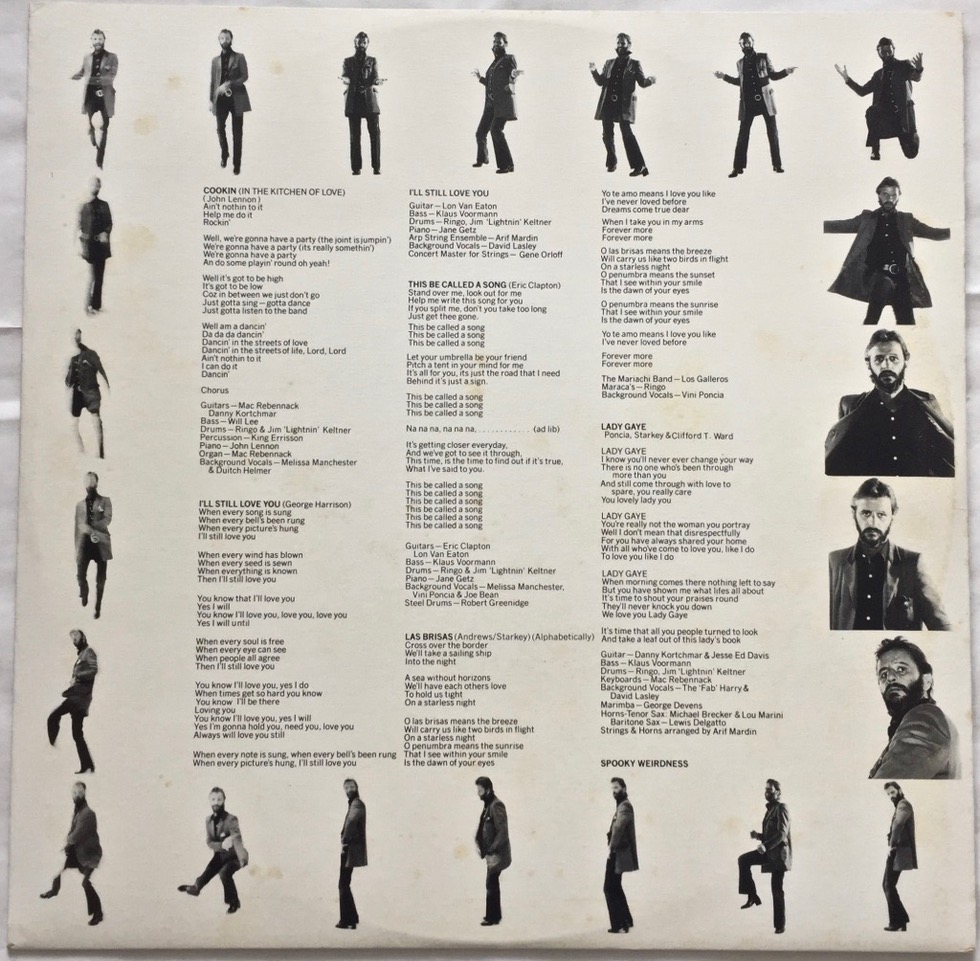
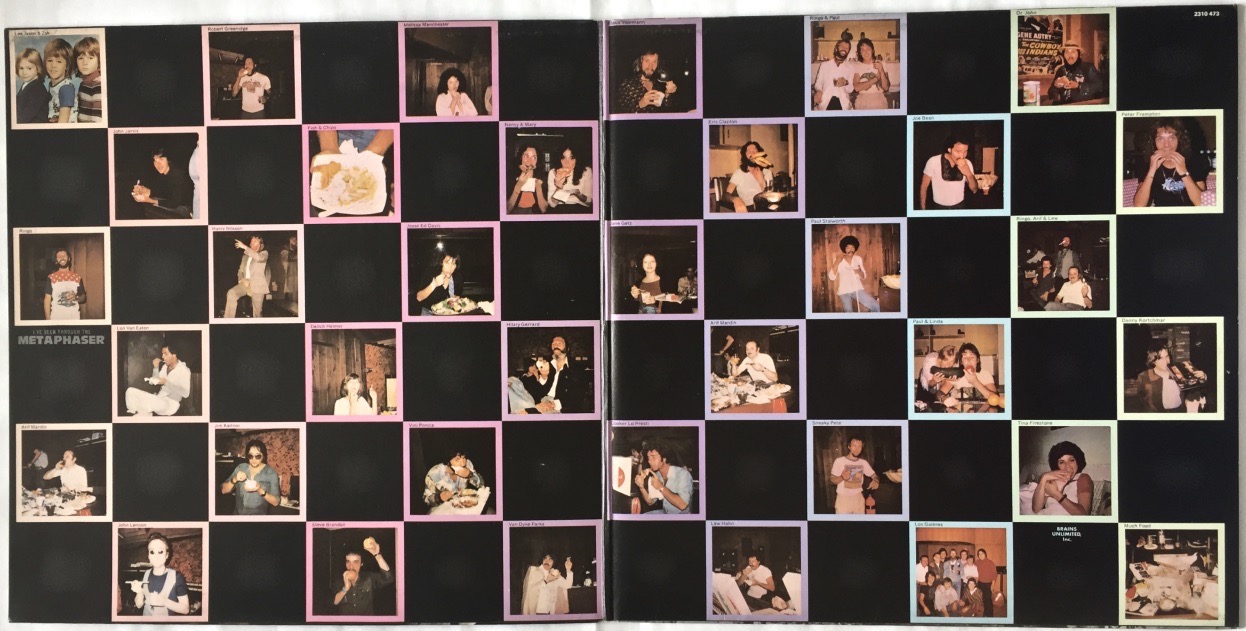
Like the rest of the world, this album came out housed in a gatefold sleeve. Here’s how it looks:
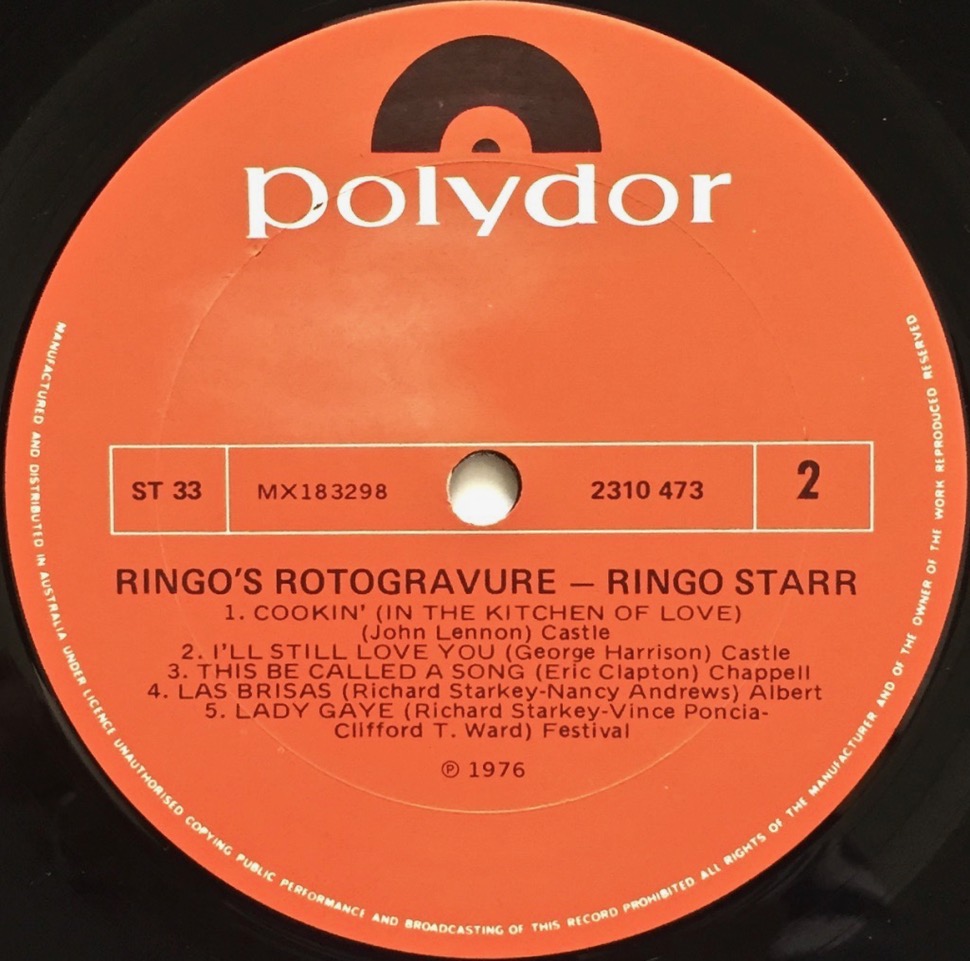
And here are the Australian labels. Note no ‘Spooky Weirdness’ listed on Side Two here either, and that the record company is different to the US release. The LP was issued Down Under on Polydor:
So anyway, we were picking around the bins at a favourite local second hand store when we randomly came across some variations of this LP.

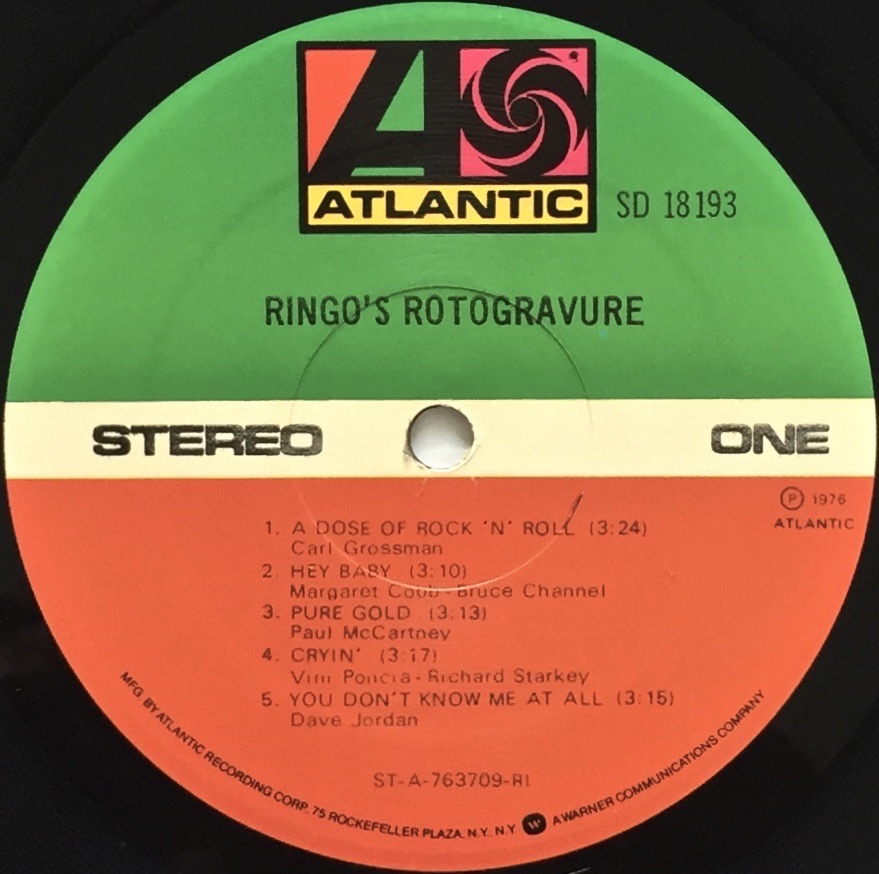
First up was the aforementioned US pressing. It has the exact same front cover image, but there are few details on the rear cover that differ to the Australian: Note the Atlantic logo bottom left (above); a pink box at the bottom for the record company details/place of manufacture; and ‘Spooky Weirdness’ is listed on the track list for Side Two. The label is the famous green and red Atlantic Records too: Then, further into the bin, we noticed two more distinctly different pressings of this same title. First was a fairly rare budget edition that only ever came out in Australia. It was in really good condition and is on the now defunct Rainbow label. (You can find it listed on page 27 of this document):
The gatefold sleeve inside is printed in a much lighter blue to the original Australian and US releases:Because it’s a budget release there is no inner bag with the lyrics, but it is on a Rainbow Records label:Sitting just behind the Rainbow re-issue was an original New Zealand pressing of Rotogravure. Again, it has the exact same front cover image to the Australian and US pressings. Only the rear is a little different: And the labels (also on Polydor) mention “Made in New Zealand” – its in the small print at top left:

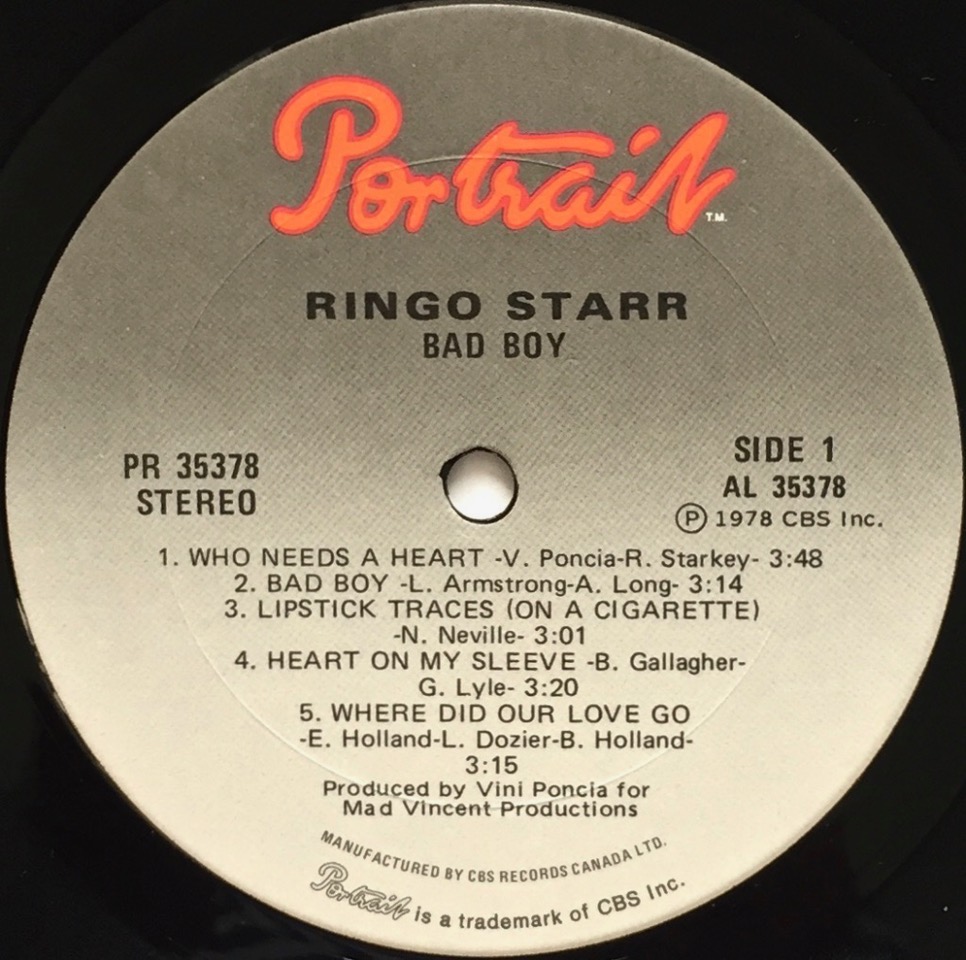
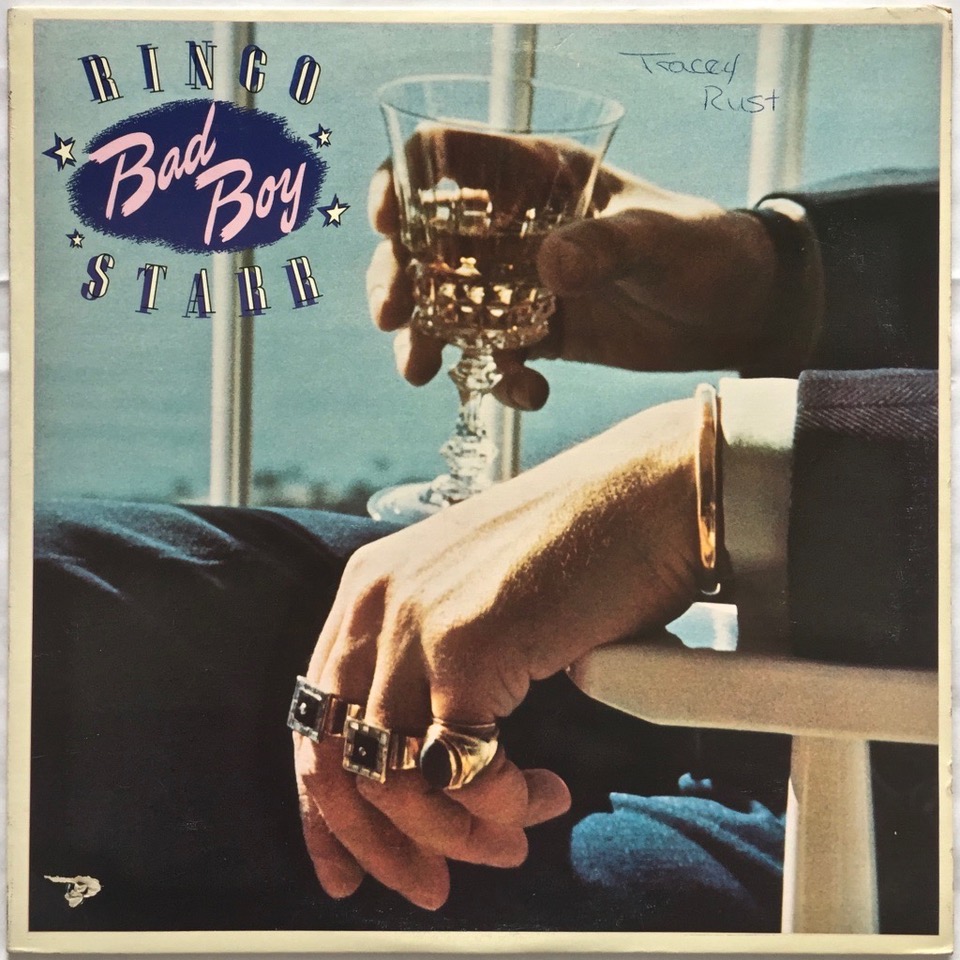
Lastly, a Canadian pressing of Ringo’s Bad Boy LP (from 1978) popped up in the bins as well.

As you can see, it’s a little beat up (writing on the cover; ‘cut out’ hole bottom left; foxing to the rear cover and inner bag from age, etc.), but worth grabbing at $5.00: 
So, not one – but four additions from the Ringo Starr back catalogue end up in our collection.

As usual, click on any of the images above to see larger versions.

More adventures in collecting Beatle records soon.

Strange/Unusual Find of the Month – George Harrison’s ‘Poor Little Girl’ Promo

Paid a visit this week to a new and second-hand record/book store we’d not visited before. It’s called Title, and they specialise in music, books and film.

One item in their “1/2 Price” sale bins caught our eye: 

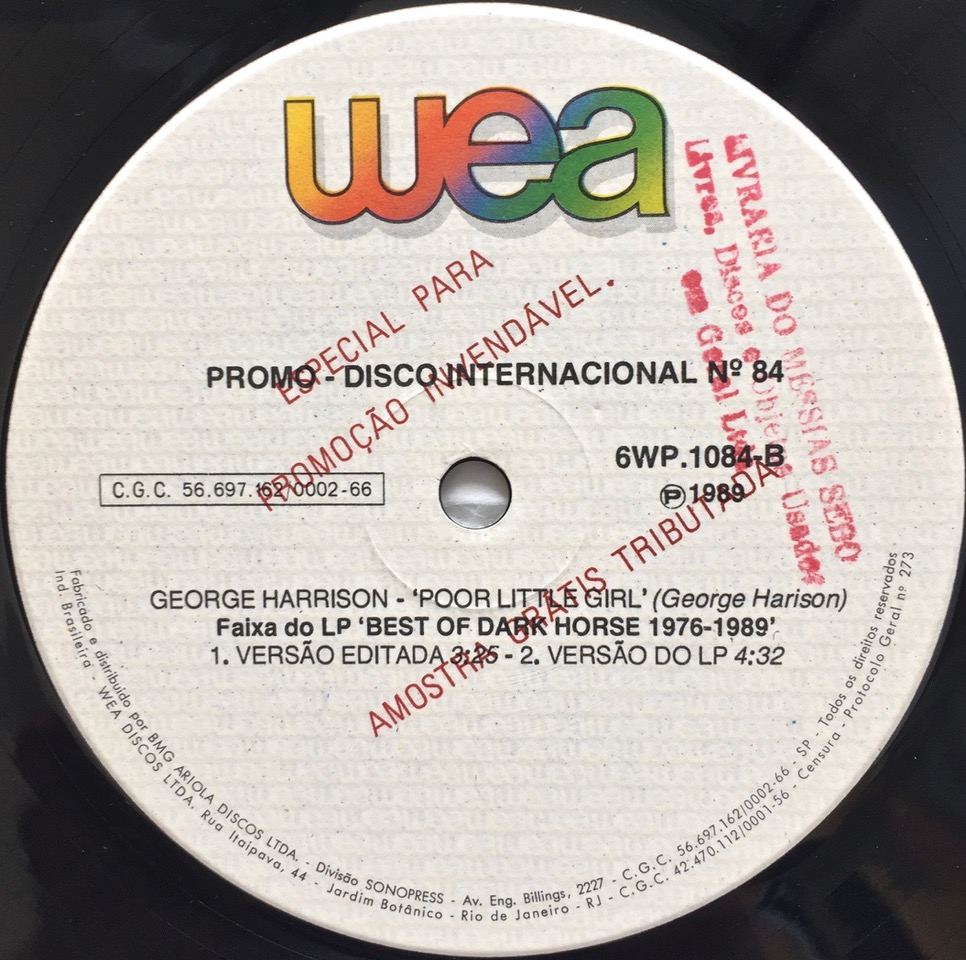
It is a 12″ promotional-only single from Brazil containing two versions of a rare George Harrison solo song from 1989 called ‘Poor Little Girl’. Oddly enough the flip side of the disc is Rod Stewart singing a Tom Waits-penned song, ‘Downtown Train’:

Harrison’s ‘Poor Little Girl’ was only ever released on a 1989 compilation called The Best of Dark Horse 1976-1989, and it looks like this promo disc was issued to promote that album. The 12″ promo contains two versions of the song – an edited version that runs 3:25, and the LP version with a running time of 4:32.

As you can see, there was not great attention to detail by whoever prepared both the cover and label as they misspell George’s surname both times in the songwriting credits.

Strange to have come across this 12″ tucked away in the inner Sydney suburb of Surry Hills – but that’s sometimes the way record collecting goes…..

As usual, click on the images above to see larger versions.

New George Martin Biography – Maximum Volume

We have reviewed author Ken Womack’s work previously on beatlesblogger.com

He’s a recognised authority on The Beatles and their enduring cultural influence. His latest work is the first in what will become a two-volume biography devoted to Beatle producer, Sir George Martin.

First published last year in the United States, then quickly followed by a UK edition, the first installment is called Maximum Volume: The Life of Beatles Producer George Martin (The Early Years: 1926-1966).

Here’s the US jacket:

And here’s the somewhat more tame UK cover

This book is long-overdue. There have been surprisingly few in-depth studies of the life of one of the most influential figures in popular music, a career spanning more than 60 years.

In Womack’s book we learn that George Martin scored his first real job in the music industry pretty much by accident when he joined the recording giant EMI as an A&R man for Parlophone Records and that in the 1950s being in A&R (or Artist and Repetoire) didn’t mean you were a producer – it was more about talent scouting and the artistic and commercial development of the artists signed to your label.

Martin had a natural musical talent and great training, and he’d had some success with comedy and novelty records for Parlophone. But he needed more than that. By the early 1960s to keep his label afloat George Martin needed to hit it big with a pop group – and soon.
Though he had tons of creativity, drive, and a solid musical background, Martin’s main handicap was that he had little knowledge or experience of the world of Rock & Roll.

Then, into his life walks a young, four-piece outfit from Liverpool.

These guys knew a lot about Rock & Roll, but had no knowledge about studios and how to record their music. The pairing of the two was a marriage made in heaven. What George Martin was able to bring to the table fitted perfectly with what the Beatles needed – and together they went on to make magic.

It wasn’t always plain sailing though, and Martin often had to be tough and give as good as he got because the Beatles were hard task masters. They were ambitious, confident, and didn’t suffer fools lightly. But George Martin had the chutzpah and the musical knowledge and ability to carry it off:

Martin: “Let’s have one more go at the backing, then we’ll record your voices separately. This time, we’ll get it exactly right.”

McCartney: “Why—what was exactly wrong?”

Martin: “The tuning sounded wrong. And you, George, should be coming in on the second beat every time instead of every fourth beat.”

Harrison: “Oh, I see.”

In its essence, this brief exchange demonstrated what people in the Beatles’ inner circle understood implicitly: namely, that George was possibly the single most influential person in their world, really the only one who could impinge upon the nature of their music. Even Brian [Epstein], whom they held in extraordinarily high esteem, held little, if any, sway in terms of influencing the direction of their creative lives. At one point, when Brian dared to offer an opinion about their efforts in the studio, John coolly replied, “You look after your percentages, Brian. We’ll take care of the music.” (pg. 252)

In Maximum Volume Womack candidly – and comprehensively – tells the story of George Martin from his very humble childhood and early adulthood, through to the heights of success he and the Beatles enjoyed globally. It’s a great read, a real page-turner in fact as the detail behind that enormous success unfolds.

As one reviewer put it, the book contains enough fresh information and informed insight about the group’s early years to satisfy [even] the most devout Beatlemaniac.

Maximum Volume takes a similar approach to that of Mark Lewisohn’s well-researched and highly regarded multi-volume telling of the Beatles story: there are footnotes detailing where Womack is getting his information and where his quotes come from; there’s an extensive bibliography; and there’s a comprehensive index. All these things point to the thorough research undertaken by Ken Womack and the efforts he’s gone to put the life and work of George Martin into a context that can be supported by facts.

The importance of this approach to writing about the Beatles, or any subject or person for that matter where so much has been written over many years, is imperative. Sifting through the mass of it to find those kernels of truth about your subject before forming it into an accurate and entertaining narrative is paramount – and Womack pulls it off. For a great reflection on this subject it’s worth a listen to the Something About the Beatles podcast episode called “The Beatles and the Historians“. See too the show’s interview with Ken Womack himself: “George Martin – Maximum Volume“.

Womack’s second and final volume on the life and work of Sir George Martin will be published in September this year. It’s to be called Sound Pictures: The Life of Beatles Producer George Martin (The Later Years: 1966-2016).

In the meantime, enjoy Volume One – Maximum Volume. It is highly recommended.

McCartney – Eight Coloured Vinyls Arrive

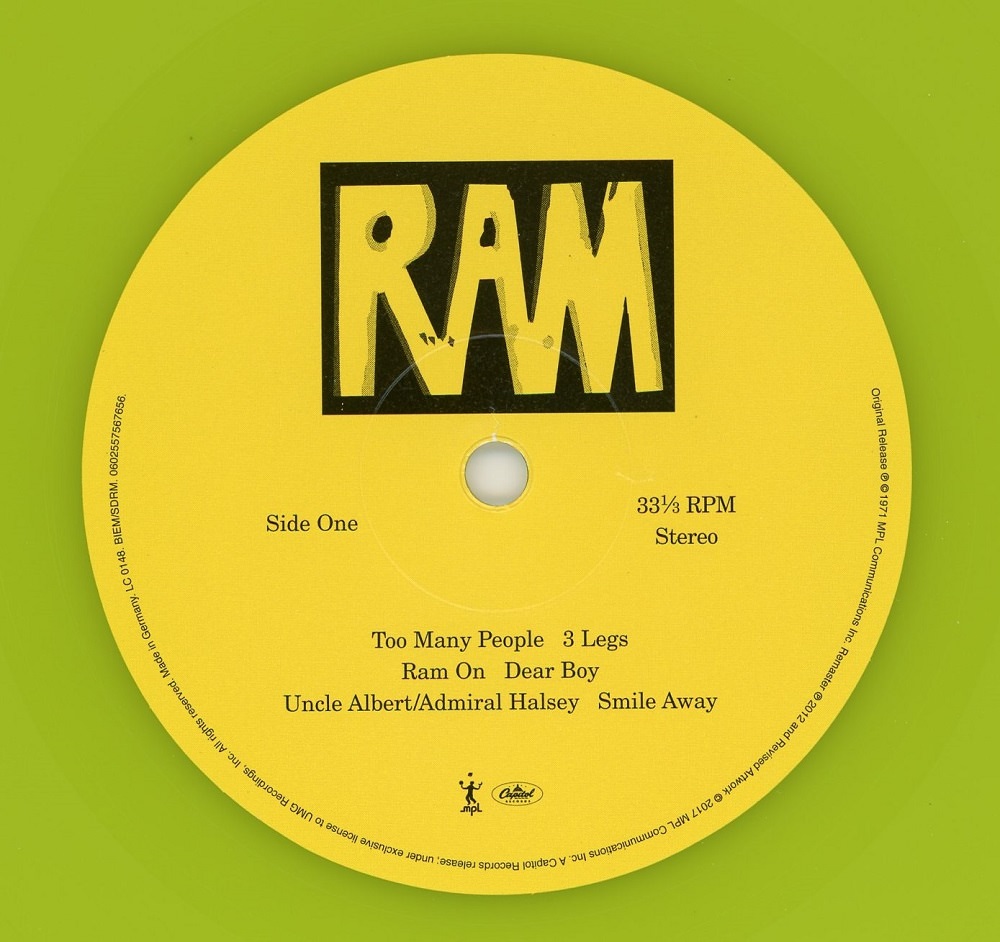
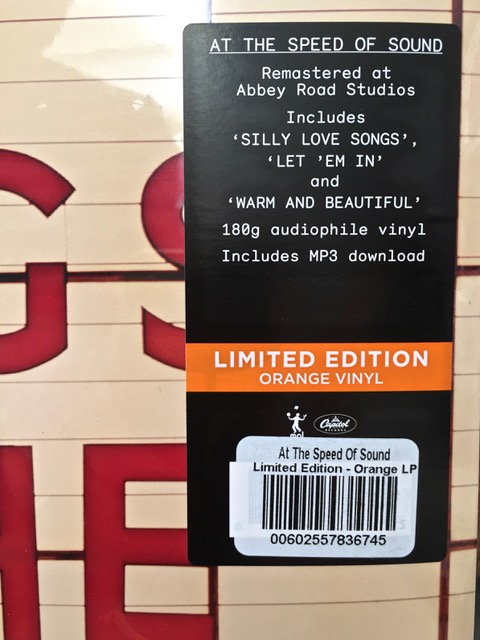
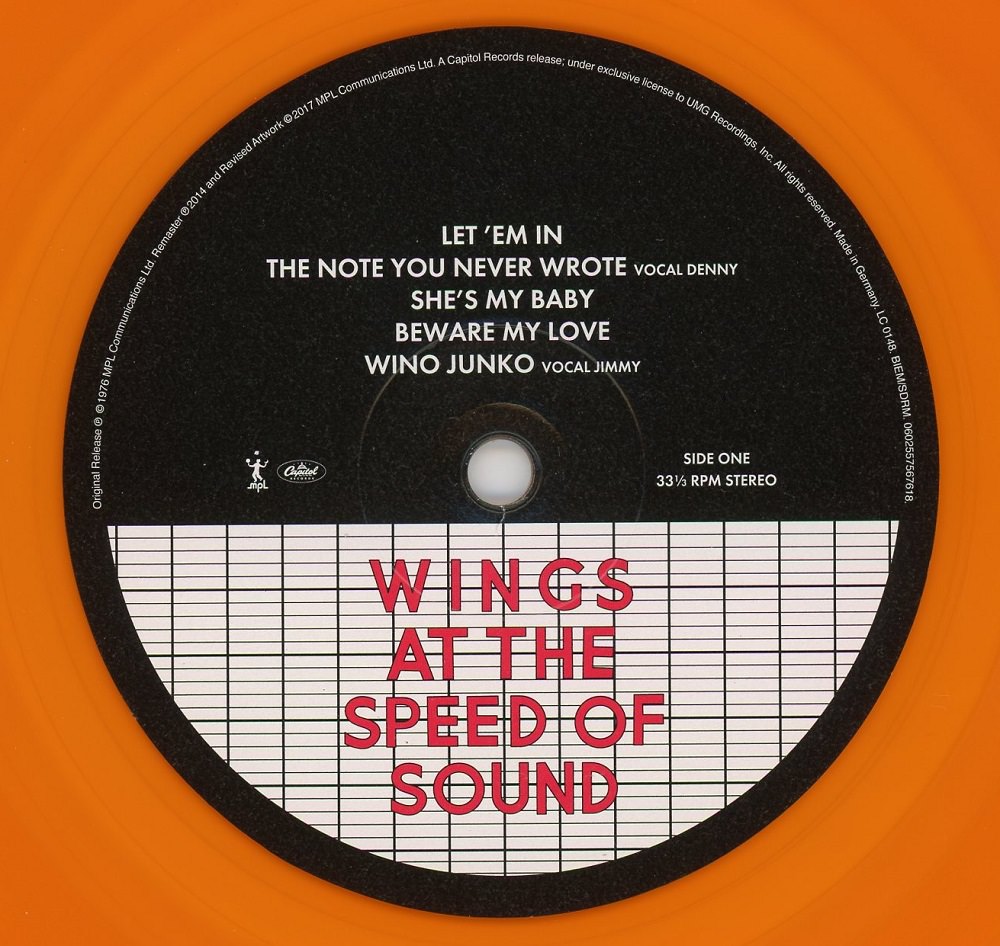
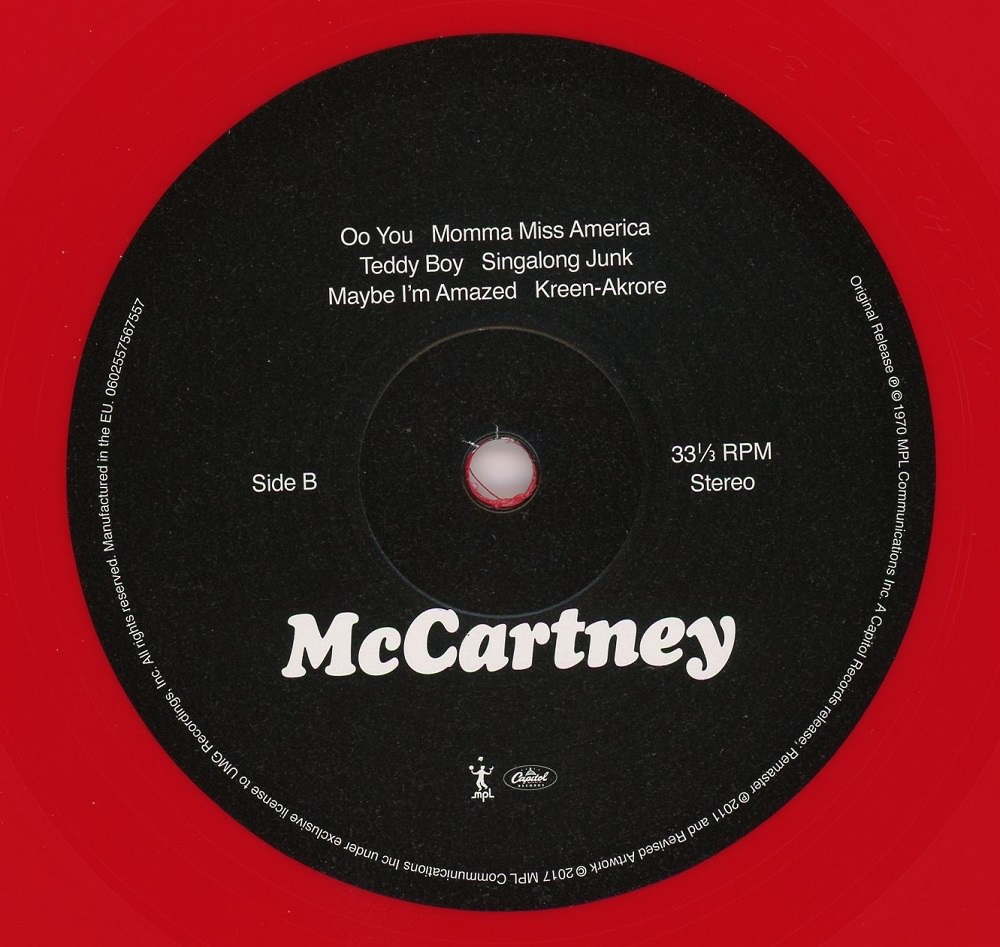
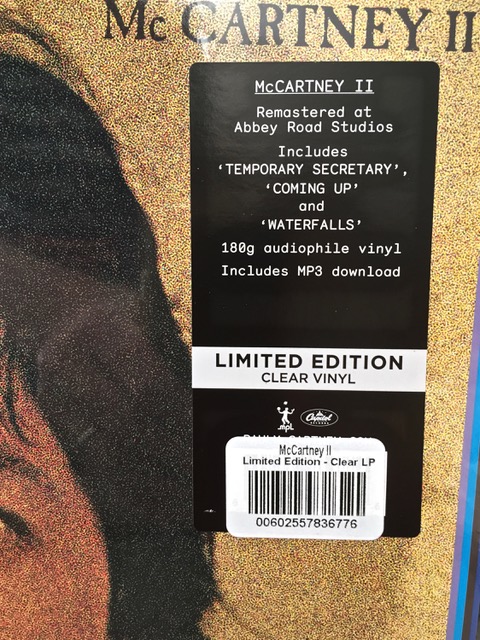
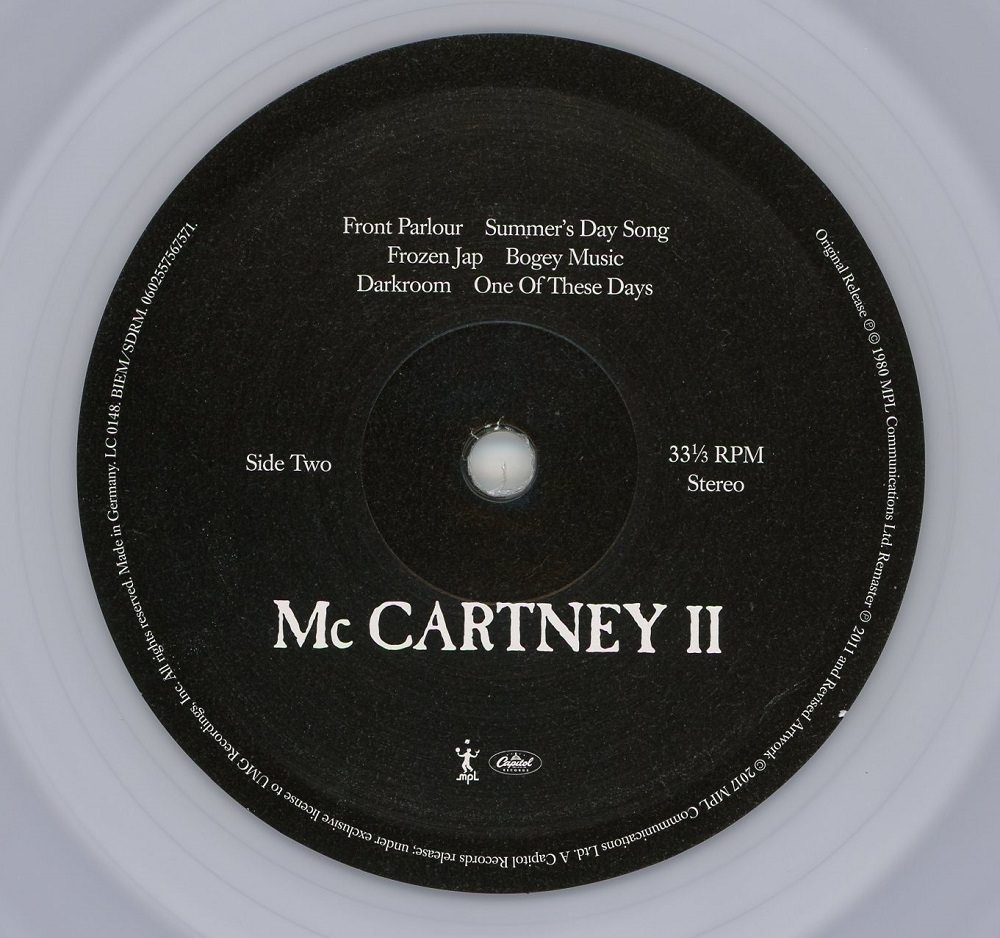
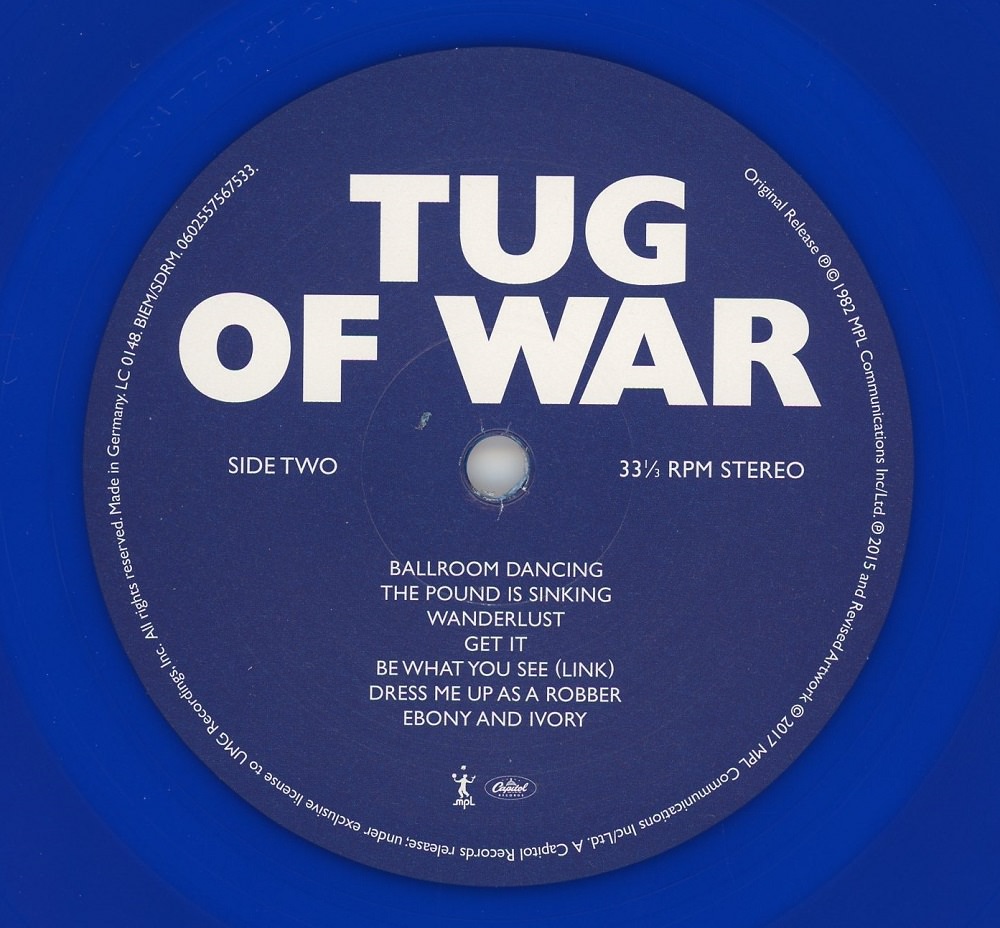
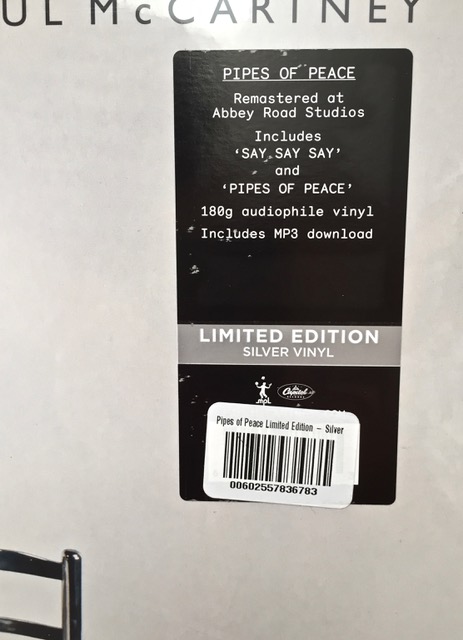
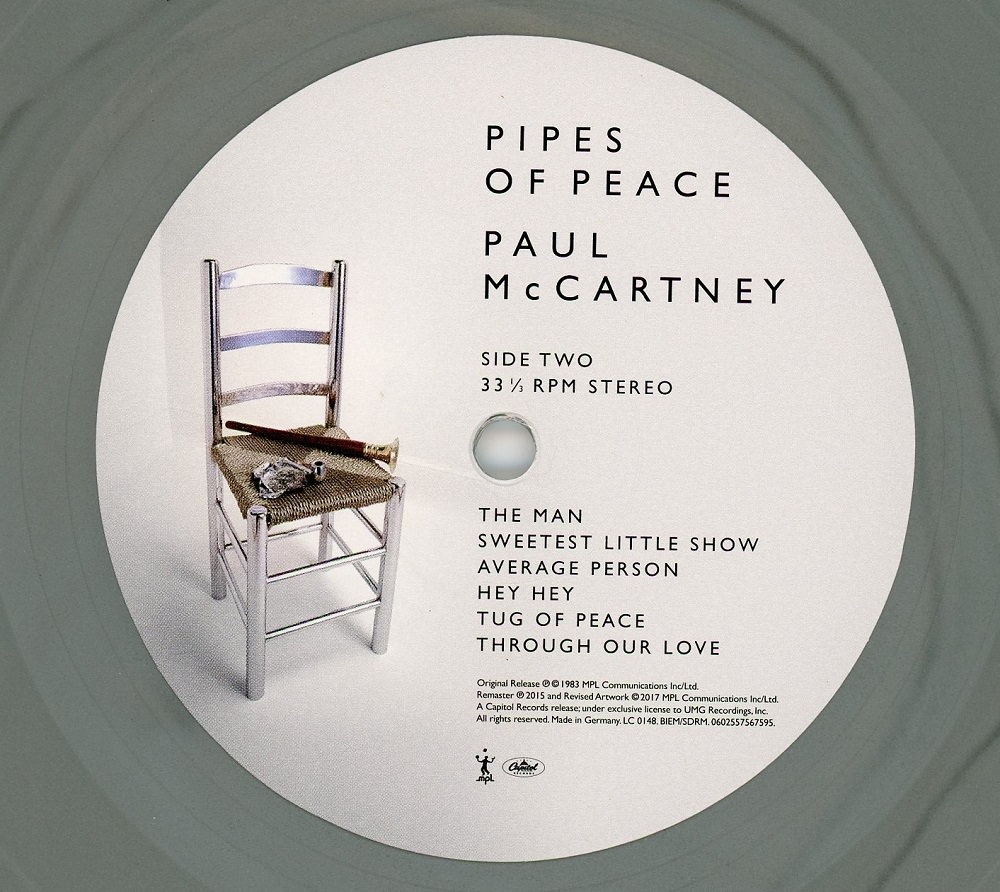
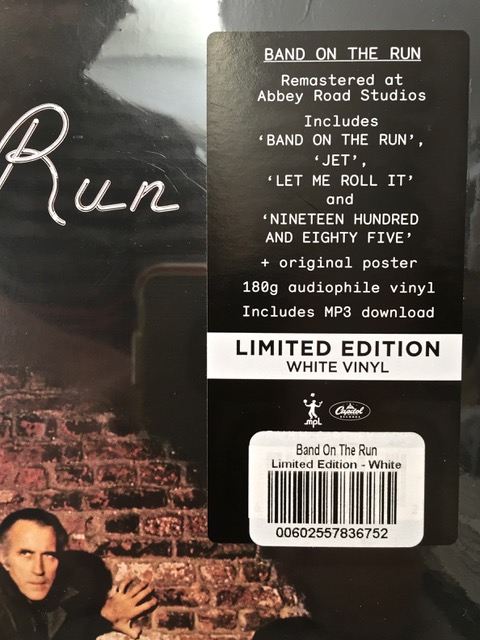
Like a lot of collectors around the world, we have been waiting patiently for Universal Music to sort out the delays and confusion around the supply and delivery of the recent Paul McCartney vinyl re-issues on coloured vinyl.

We ordered ours last year, weeks before the advertised shipping date – but it is only in the new year that they have finally arrived, and in two separate shipments. Ram clearly was in very short supply and it is pretty obvious that a pressing of more copies had to be hurriedly arranged. That LP came in a separate package a few following the main batch.

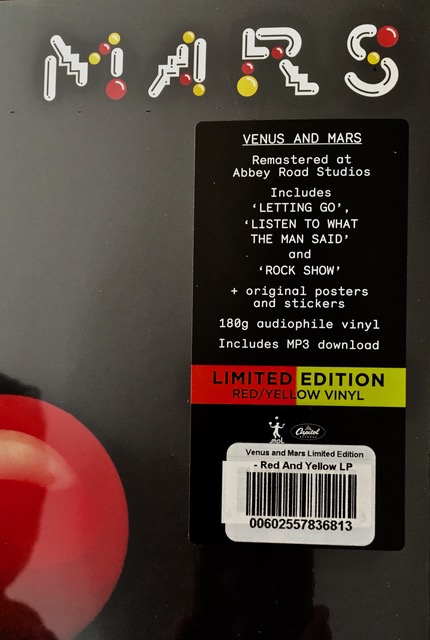
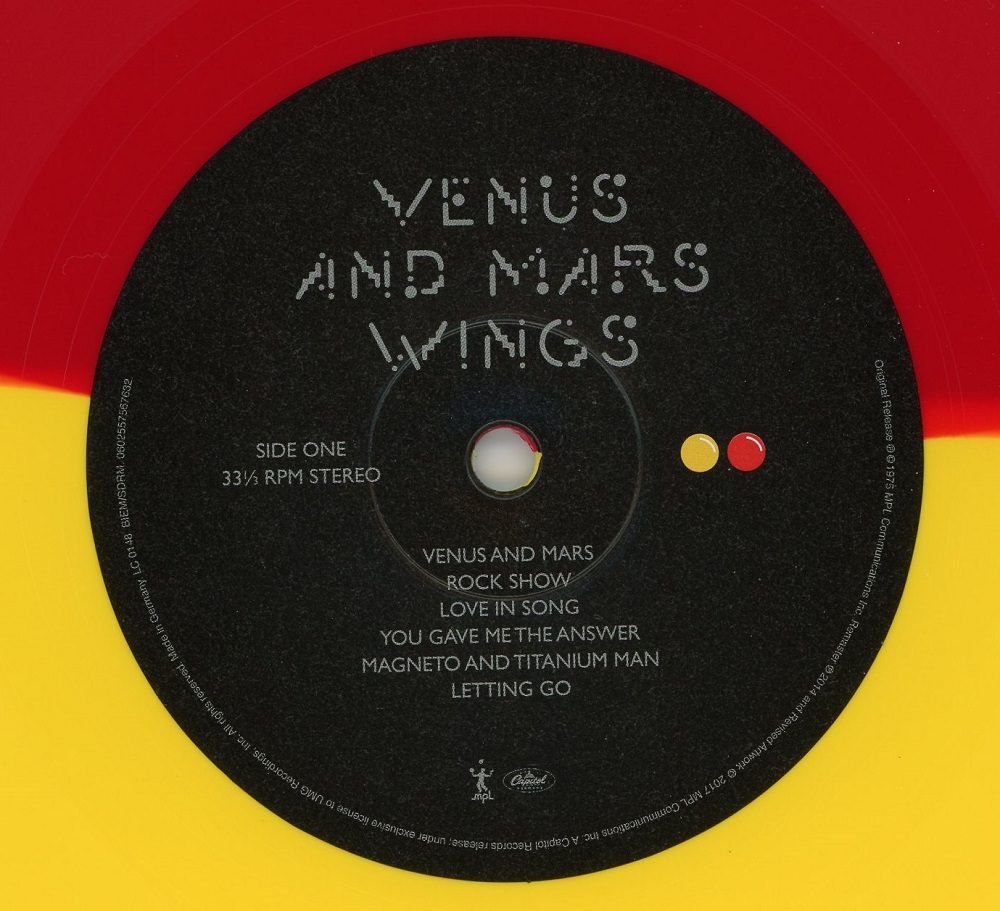
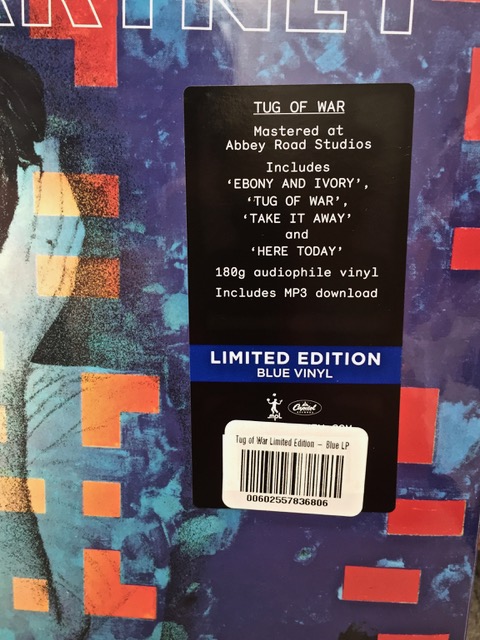
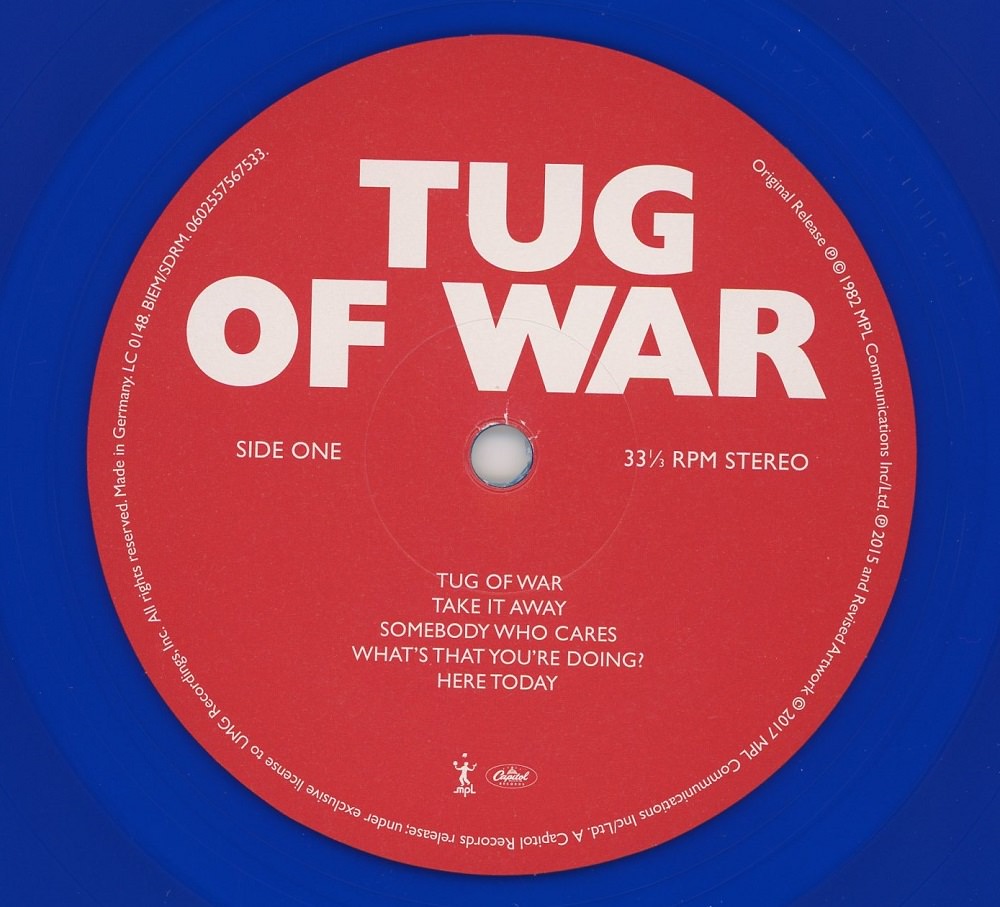
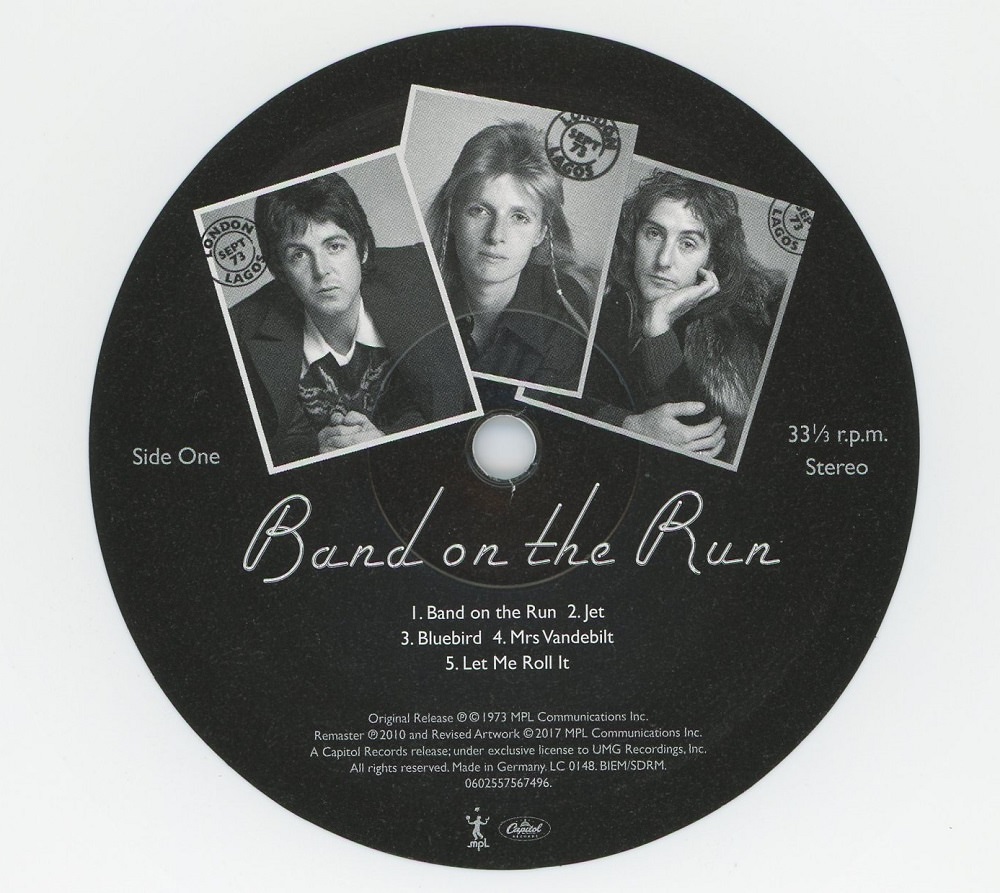
Having said all that, these look absolutely fantastic. Here are some images of the collection – the front “hype” stickers and record labels: 

(As usual, click on the images to see larger versions)

Paul McCartney – ‘Music of the Spheres’

On Christmas Day, two keen music fans leaked their version of the as-yet unreleased original symphonic music composed for the the video game, Destiny.

There is of course a Beatle connection here in the form of Sir Paul McCartney who contributed to the soundtrack for the game, most notably the end-credits song ‘Hope for the Future‘.

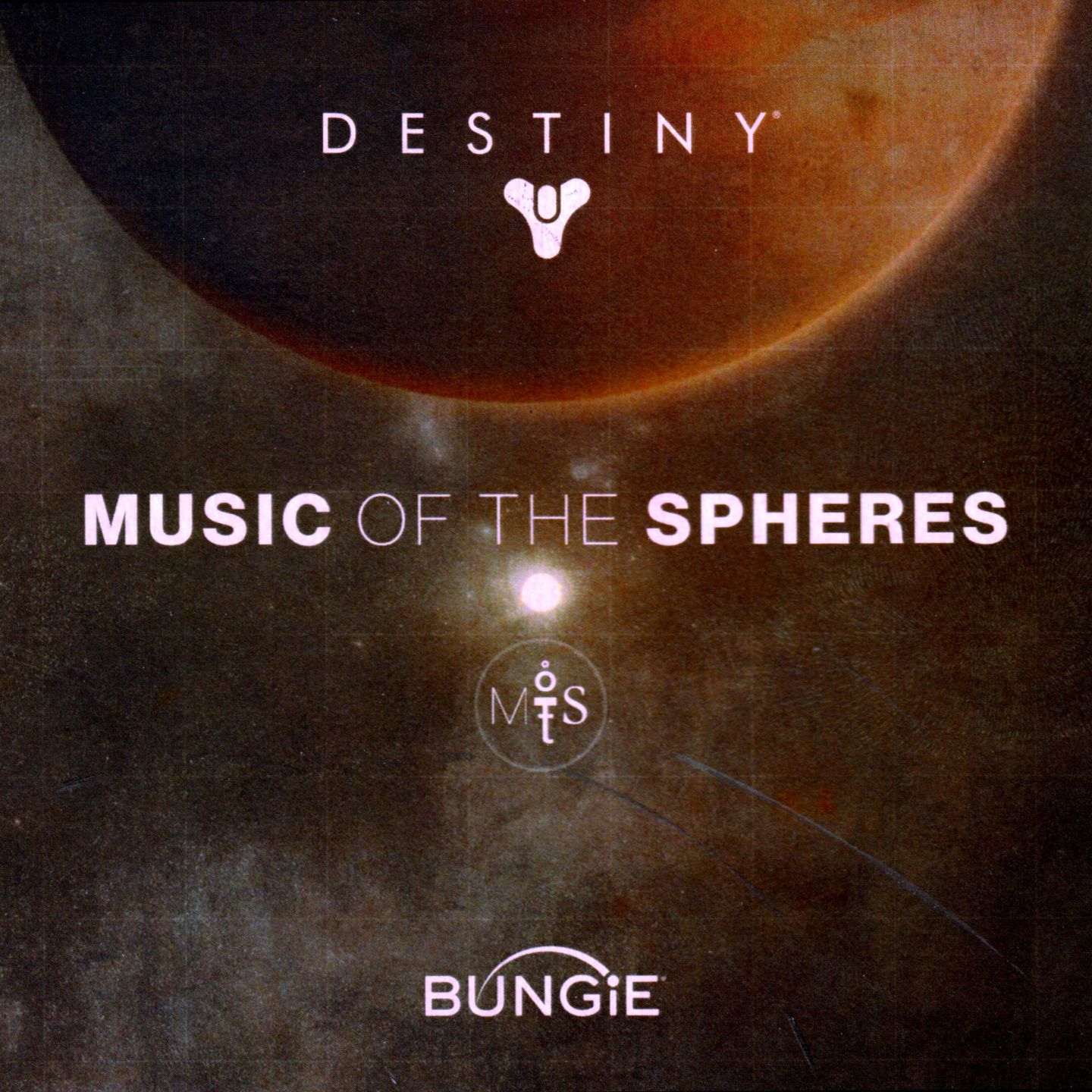
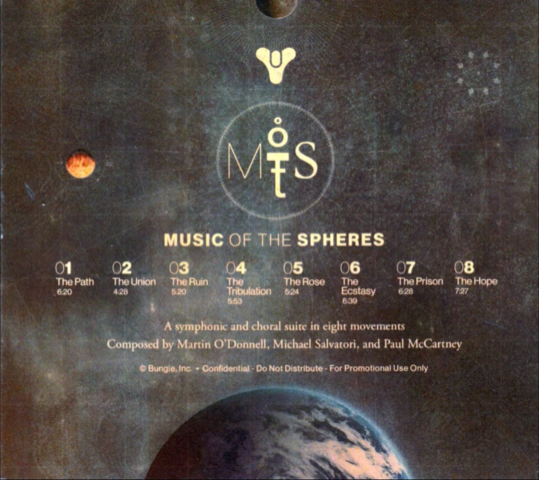
The Destiny: Music of the Spheres suite is the work of Martin O’Donnell and Michael Salvatori, but it took the fan duo of Tlohtzin Espinosa and Owen Spence to bring it to the public. They spent more than a year pulling together all the elements they could get their hands on to compile what is essentially a complete soundtrack album of Destiny:

You can hear it on Soundcloud, and on YouTube. Download links are out there on the World Wide Web too if you are interested.

There’s more background on how all this came to be in an article on the Ars Technica site, plus you should also see this Reddit post by the two fans who took the risk of putting it out there in the first place.  

Yellow Submarine – 50th Anniversary Celebration Ideas Taking Shape

This year, being the 50th anniversary of the Beatles’ Yellow Submarine LP and animated film, we’ll see some official Apple-backed activities to mark the occasion.
There’s to be a new graphic novel adaptation of the film story from comic-book artist, writer and editor Bill Morrison. This will be released on August 7 and is available for pre-order now from Amazon US and Amazon UK. See more on the background to the book hereAlso, The Beatles official site today also announced that, in the UK and Ireland at least, Yellow Submarine will be making a return to cinemas for one day only. It’s planned to show the film in multiple locations on July 8. Tickets go on sale from April 17. More details about this here – and you can keep up with the event on a new Yellow Submarine Film Facebook page.
Meanwhile, at the recent Consumer Electronics Show (CES) in Las Vegas, the Pro-Ject turntable company leaked some teaser vision of their latest collaboration with Apple – a Yellow Submarine themed turntable:

The company has already issued two Sgt. Pepper turntables (in Drum and Limited Edition versions); a Beatles 1964-themed player; plus a George Harrison commemorative model. No further details about availability or pricing of the Yellow Submarine model are available yet.

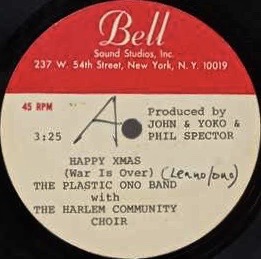
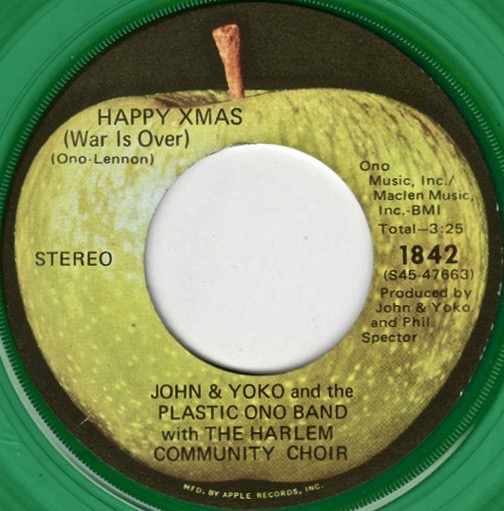
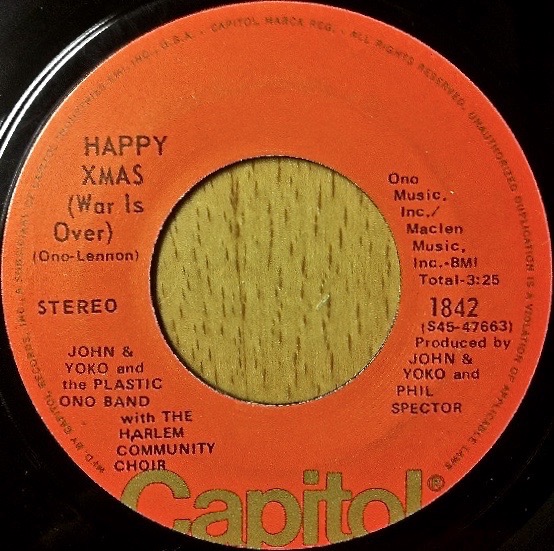
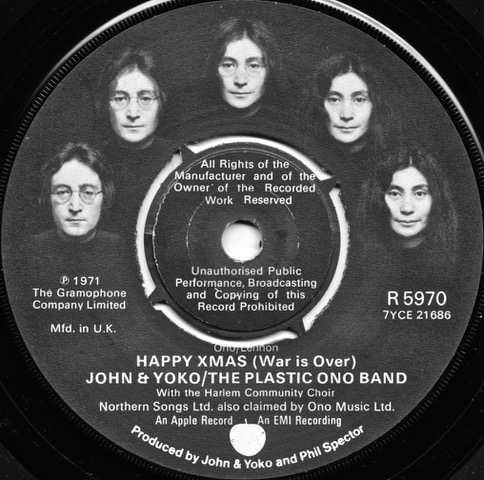
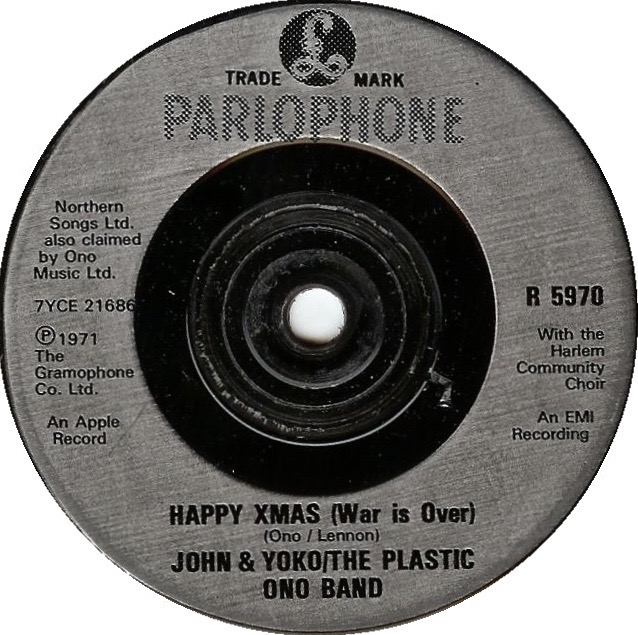
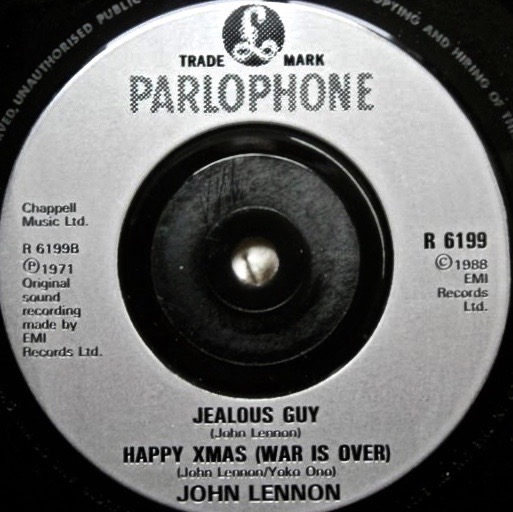
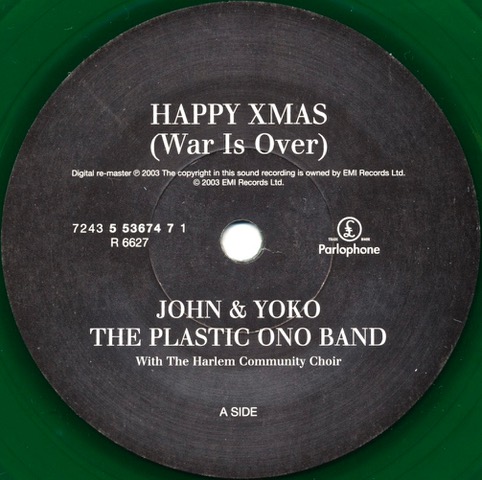
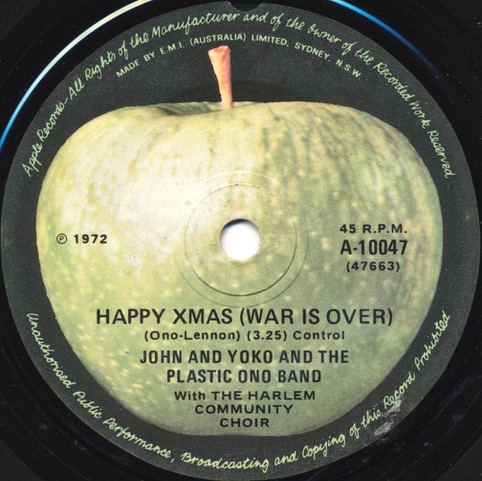
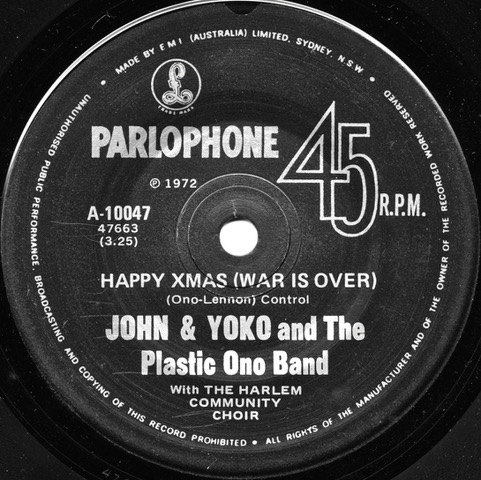
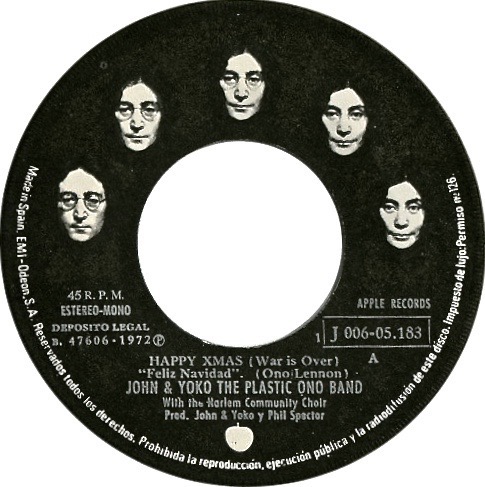
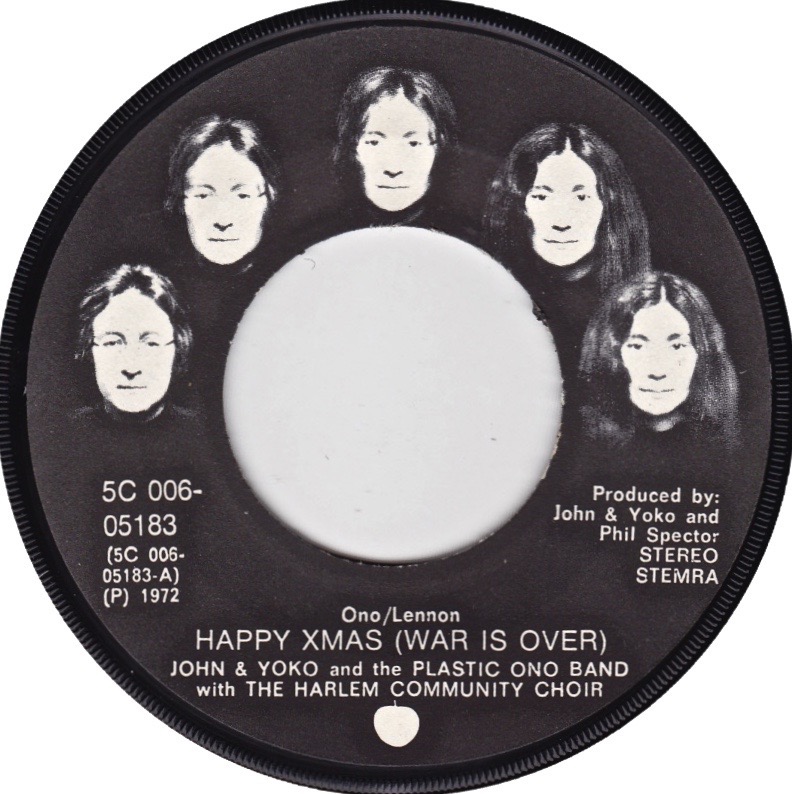
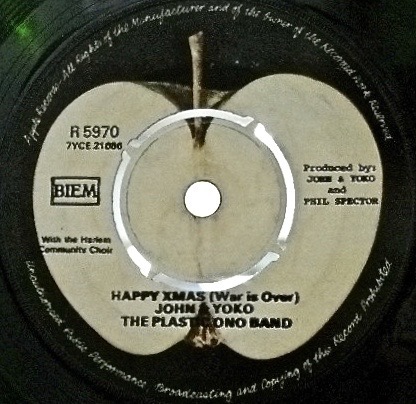
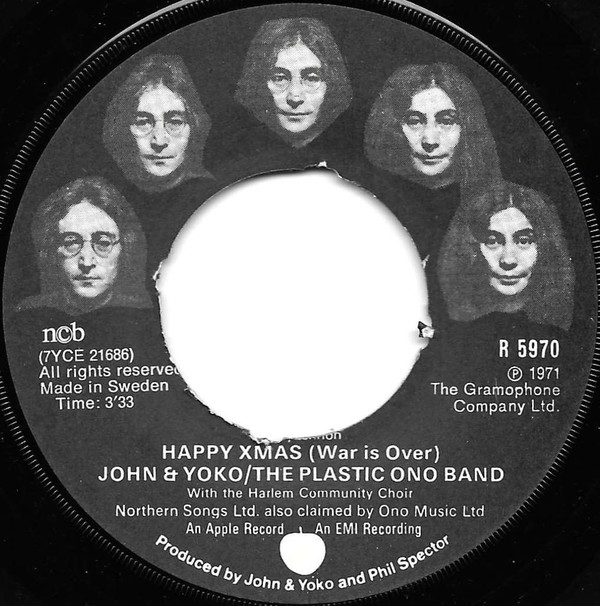
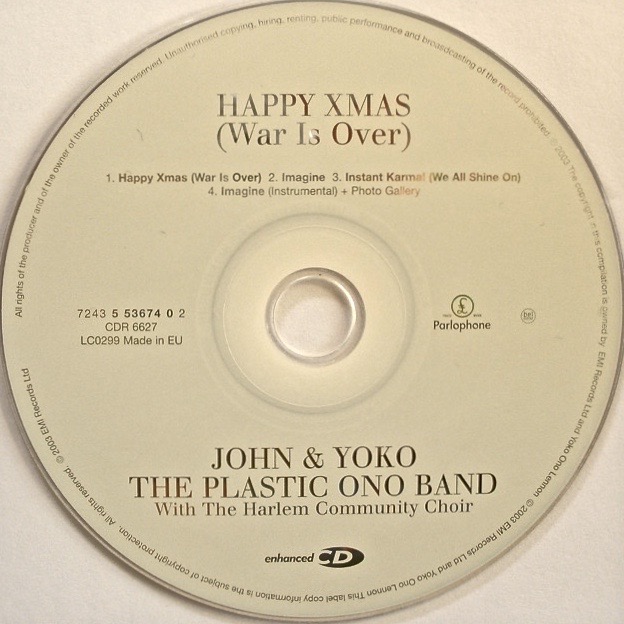
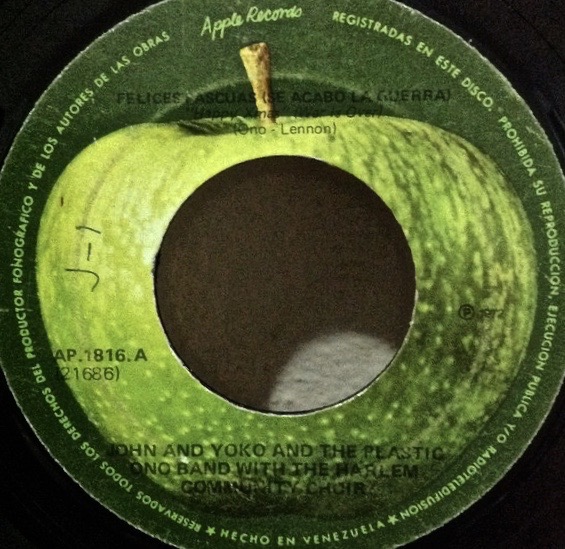
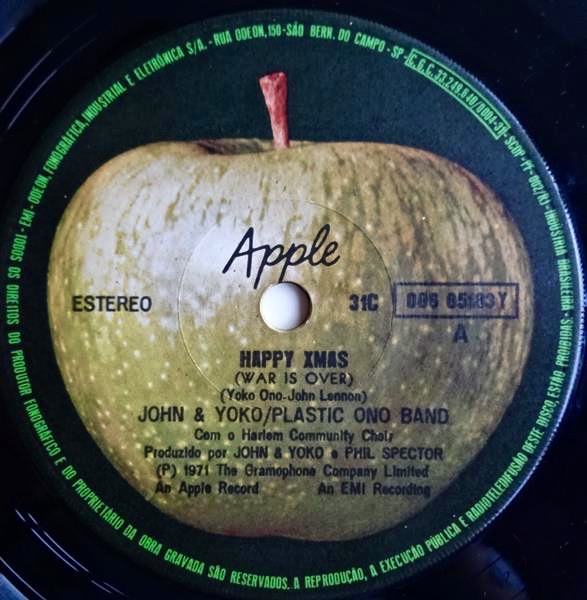
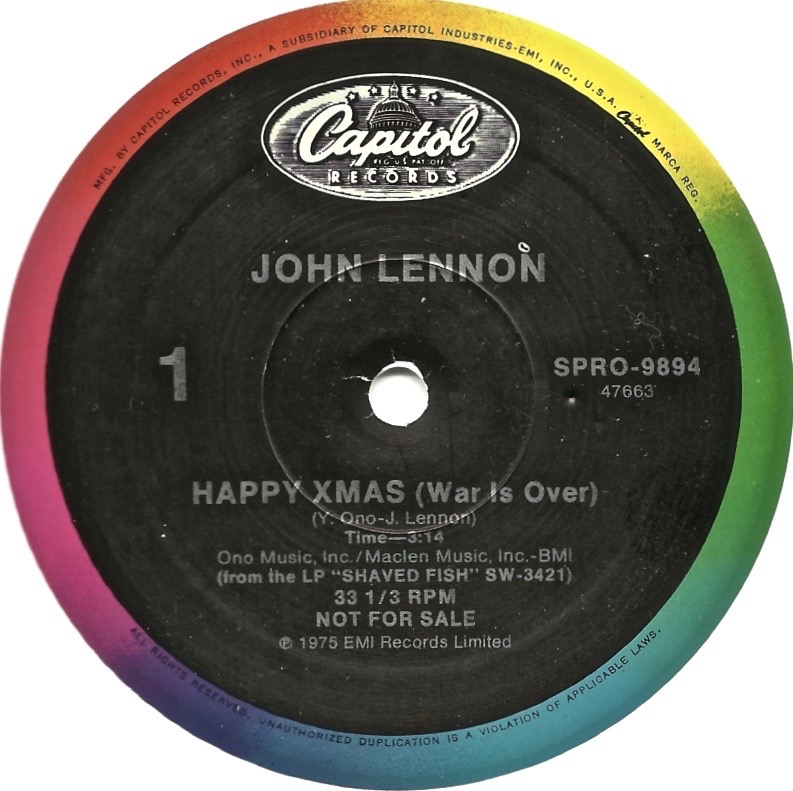
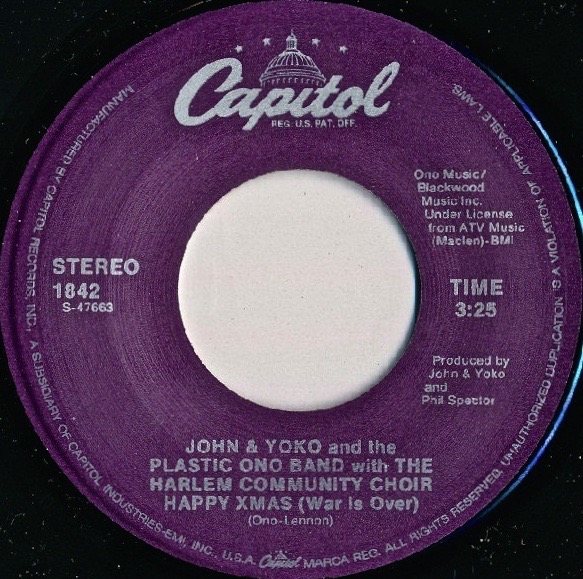
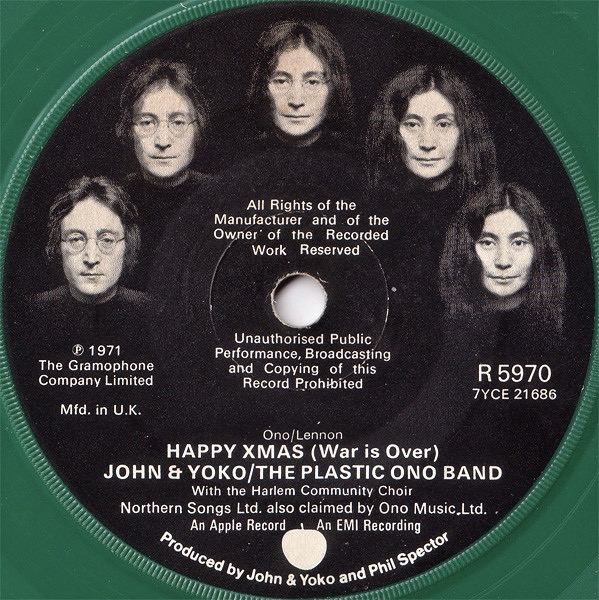
Label Variations Part Eleven – Happy Xmas (War is Over)

A Christmas theme for the next installment in our occasional Label Variations segment.

This time it’s John Lennon, Yoko Ono and the Plastic Ono Band, with the Harlem Community Choir  and the 1971/1972 song ‘Happy Xmas (War is Over)’. Early versions (and some re-issues) were on green vinyl to suit the season.

The US Bell Sound test pressing:

Other US variations:

Some of the UK releases:

And Australia/New Zealand:

Here are some European releases. First Spain ‘Feliz Navidad’:

The Netherlands:

Italy:

France:

Greece:

Sweden:

An EU-made CD single from 2003:

Back to vinyl, this one is from Yugoslavia:

And a couple of South American countries, including Venuzuela ‘Felices Pascuas (Se Acabo La Guerra)’:

Brazil:

Mexico ‘Feliz Navidad (La guerra termino)’:

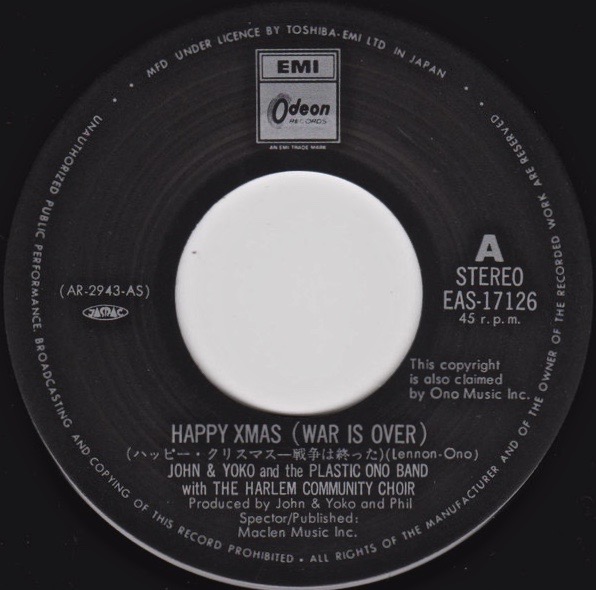
Here’s one from Japan ‘ハッピークリスマス戦争は終わった’:

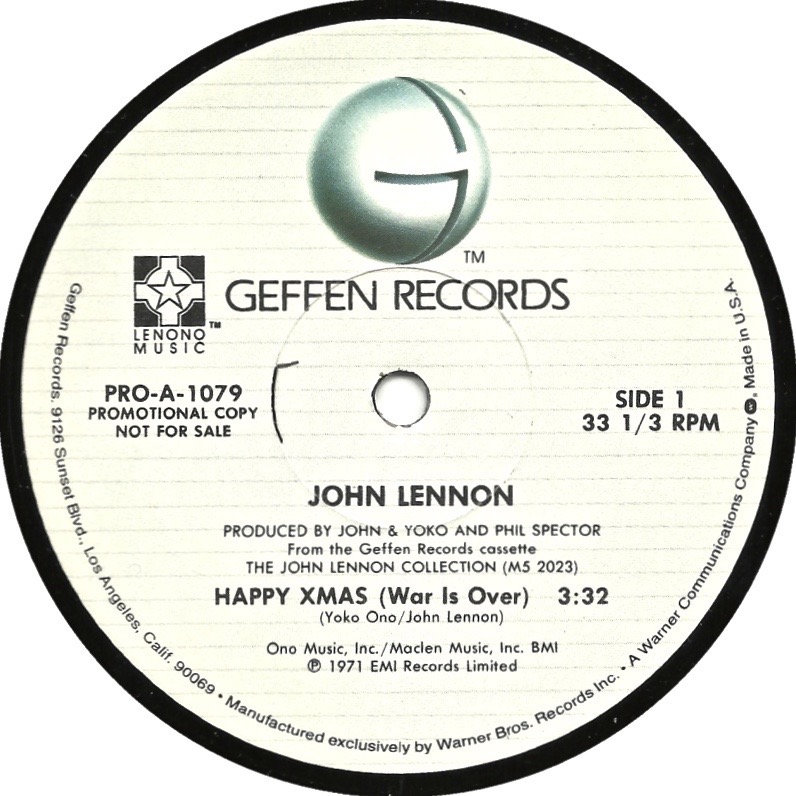
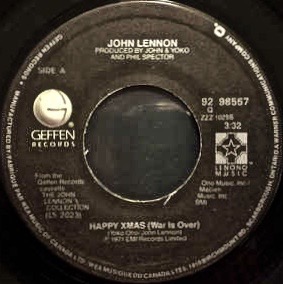
Later on, when John Lennon was signed briefly to Geffen Records, that label released ‘Happy Xmas (War is Over)’ too:

(As usual, click on most images to see larger versions)

Please note that not all these are from our collection! Check out this link to a ‘Happy Xmas (War is Over)’ 40th Anniversary page. Catch some others in the Label Variations series here. And visit the Imagine Peace (War is Over!) site.

Merry Christmas and a Happy New Year to all our readers.

Some Sgt. Pepper’s Holiday Listening

With the holidays upon us, and to celebrate the release of the 2017 remix of Sgt. Pepper’s Lonely Hearts Club Band (on 180 gram vinyl) in single LP form – plus the Sgt. Pepper vinyl picture disc, here are a couple of Pepper-related items for your listening pleasure.

They all come from the Australian Radio National program, The Music Show – hosted by Andrew Ford.

For the 50th anniversary of Sgt. Pepper earlier this year The Music Show spoke to singer Barb Junger (whom you’ll hear has a record of Beatle covers out) and writer Joyce Morgan about their memories of first hearing the album back when it was first released in the Summer of Love:

The Music Show also spoke to Beatle biographer extraordinaire, Mark Lewisohn:

The program’s final Pepper installment came from Joanne Petersen, Brian Epstein’s personal assistant. Petersen, who now lives in Australia, recalls the time she heard a test pressing of Sgt. Pepper’s; details some of the launch activities (including John Lennon’s psychedelic Rolls Royce); and George Harrison refusing to cuddle British DJ Kenny Everett:

Their Pepper special also came with a special bonus. It’s a link to a fantastic mini documentary on the background to the people (and horses!) mentioned in the poster John Lennon used to inspire his song, ‘Being for the Benefit of Mr Kite’. And, believe it or not, there’s another Australian connection:

All audio is ex ABC Radio National. Visit The Music Show website for more of their great programs.


McCartney Musical Memory for endthesilence.com

“When a baby in an orphanage cries nobody comes to comfort them. As a result, they learn not to cry; internalising their pain, causing lifelong mental and physical damage. Deprived of love, deprived of life. Left to grow up without laughter, without music, without hope. Left there, children will never experience the love and protection only a family can offer. Together we can End the Silence.”

So begins the explanation of what the charity End the Silence is about. It is asking everyone to share a musical memory, and to donate, so that 8 million children confined to orphanages around the world might have their silence ended.

Lots of music personalities have got behind the push to raise money by sharing their own musical memories, including Paul McCartney:

Get cracking. Every pound donated to the End the Silence campaign before the 27th December will be doubled by the UK Government. Every child should grow up surrounded by love, family and music.

John Lennon – 2018 US Postal Service Stamp

Looks like the US Postal Service is to honour John Lennon in 2018.

The newest stamp in its Music Icons series will honor singer and songwriter John Lennon (1940–1980), “….a rock ’n’ roll hero successful both as a founding member of the Beatles and as a solo artist.”

If the photograph for the stamp looks familiar, it was most recently used on the cover of Philip Norman’s book John Lennon – The Life, which came out in 2008. The image is by legendary rock photographer Bob Gruen who knew Lennon well and has taken many iconic images of him. The photograph comes from a photo shoot for the cover of his 1978 album Walls and Bridges:  

The Postal Service has previously honoured The Beatles as a group on a 1999 postage stamp as part of its Celebrate the Century series. That issue depicted the Yellow Submarine from the animated movie and soundtrack Yellow Submarine. The upcoming Lennon release will be the first to feature an actual likeness of one of the Beatles on a U.S. stamp.

In 2007 Britain’s Royal Mail issued ten different stamps celebrating the importance of The Beatles to Britain and the world. These depicted album covers (With The Beatles; Help!; Revolver; Sgt. Pepper; Let It Be; and Abbey Road, plus the single ‘Love Me Do’), along with images of Beatle memorabilia. For more detail on those releases click here.

Detailed information and the issue date for the Lennon US Postal Service stamp will be revealed later. The stamp design is preliminary and subject to change until issuance dates.