Last post we looked at how to go about identifying an unusual Australian pressing of Sgt. Pepper’s Lonely Hearts Club Band. This type of id task comes up all the time when collecting Beatle and solo discs. Exactly which pressing do I have, and what are the key things to look out for?
One of the big collectables with a range of variations is original pressings of Paul McCartney’sCHOBA B CCCP. So it was great to have sent to us this week a handy article describing the basics of identifying the key differences to look out for with this LP. It is penned by our mate, Andrey Lukanin:
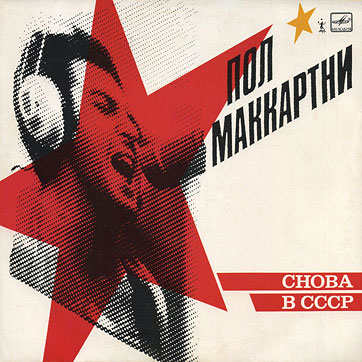
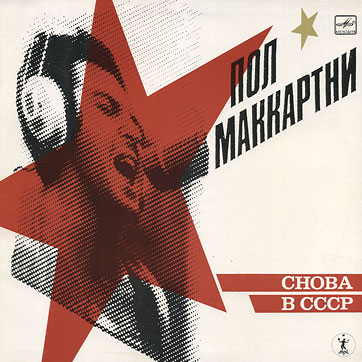
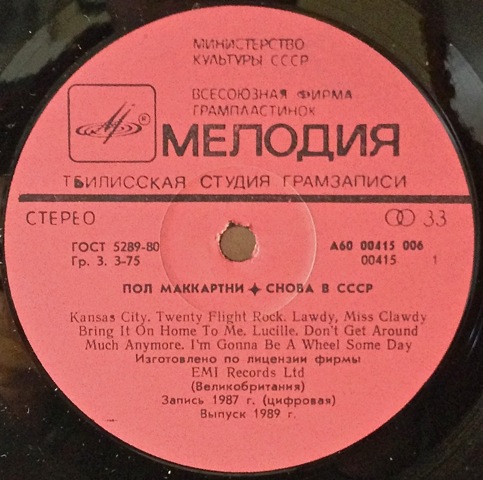
As we know, the 1st and 2nd editions of the album СНОВА В СССР have the same catalogue and main matrix numbers. This led to Soviet Melodiya pressing plant employees getting confused about these editions. So a good deal of so-called “hybrid” albums went on sale – with the records having different covers/labels/vinyl.
Due to this same confusion with catalogue/matrix numbers, various plants released a number of mispressed editions too. These came with with 12 tracks (instead of 11 or 13) and such records are a great rarity. Their sleeves and labels could look the same as any other pressing, but the number of tracks on the actual disc is different. That’s why it is very important to always check the number of tracks on each side of the vinyl itself. If they add up to 12 tracks it is very rare and collectable.
Aside from the rare 12 track version, the most common variations out there are the 11 track and 13 track variations.
To purchase a truly complete 1st pressing (11 tracks) or truly complete 2nd pressing (13 tracks), you need to check these three main components of the album: 1) the sleeve, 2) the labels, and 3) the number of tracks on the vinyl itself.
How to do this quickly and accurately: 1) Sleeve, front side (without looking at the back side: which could be yellow or white): 1st edition – MPL logo is in the upper right corner 2nd edition – MPL logo is in the lower right corner
2) Labels (without reading/counting song titles): 1st edition – tracklist is in Russian 2nd edition – tracklist is in English
3) Number of tracks: 1st edition – the total number of tracks on both sides of the vinyl should be 11 2nd edition – the total number of tracks on both sides of the vinyl should be 13
There is another way as well – and that’s to examine the endings of the full matrix numbers on the vinyl, but this is not very convenient.
So, those who already own this Soviet-made album in their collection have a reason to check their copy.
Interestingly, in 2014 the Melodiya company celebrated its 50th anniversary. On the company’s website, a poll among music lovers was launched in advance: what records would they like Melodiya to re-release in limited quantities in honor of its anniversary? СНОВА В СССР appeared in the list of winners. But for some reason, like many other records from the list, the album has never been officially re-issued by Melodiya.
Unless you’ve been living under a rock you are probably aware by now that Paul’s 1961 Höfner 500/1 bass guitar, which was stolen in 1972, has been….
In September last year we reported on a concerted new effort to trace the missing instrument – and it seems that the case has well and truly been solved. In fact, the bass is already back in the hands of its original owner – Paul McCartney.
The instrument is a little worse for wear but, according to an expert from Höfner called in to examine it, it shouldn’t be all that difficult to once again get it going again.
One of the most informative articles about what state it is in and the intriguing back story as to where the bass has been all this time is in the Dutch music magazine, De Bassist. They interviewed Höfner expert Nick Wass about finding The Lost Bass. Their article is well worth a read!
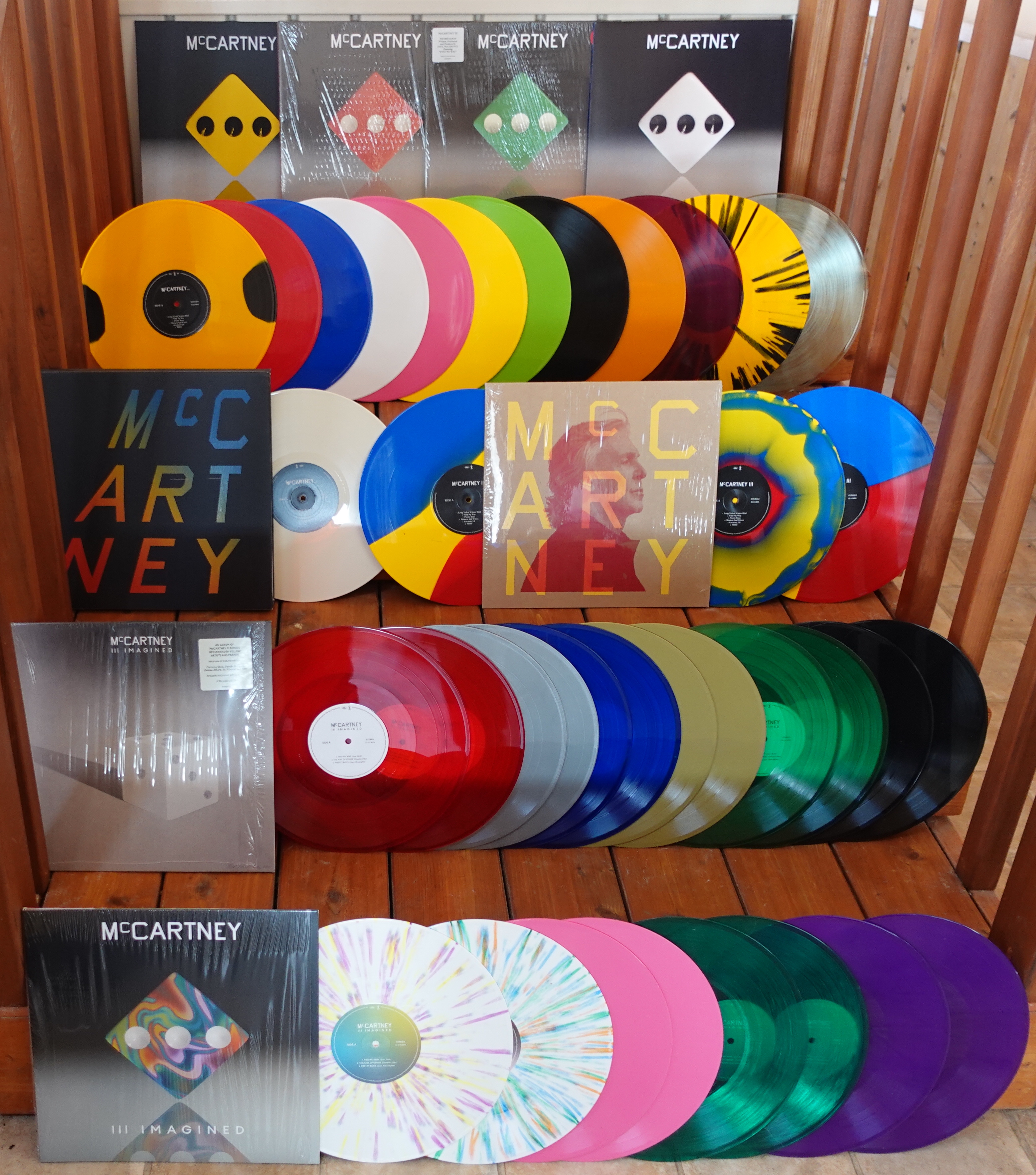
If you don’t believe there are collectors out there intent on having every single variation, then think again:
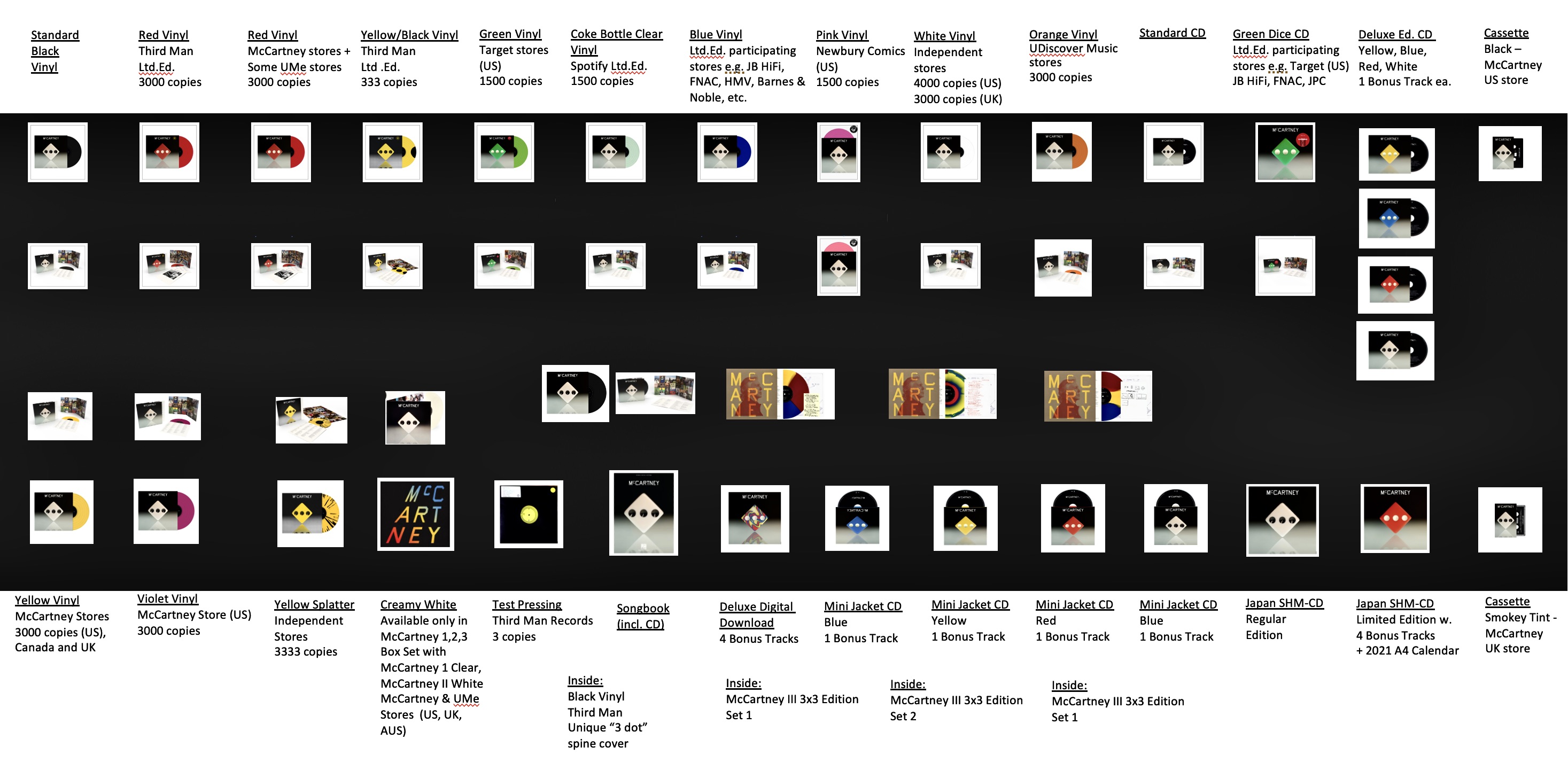
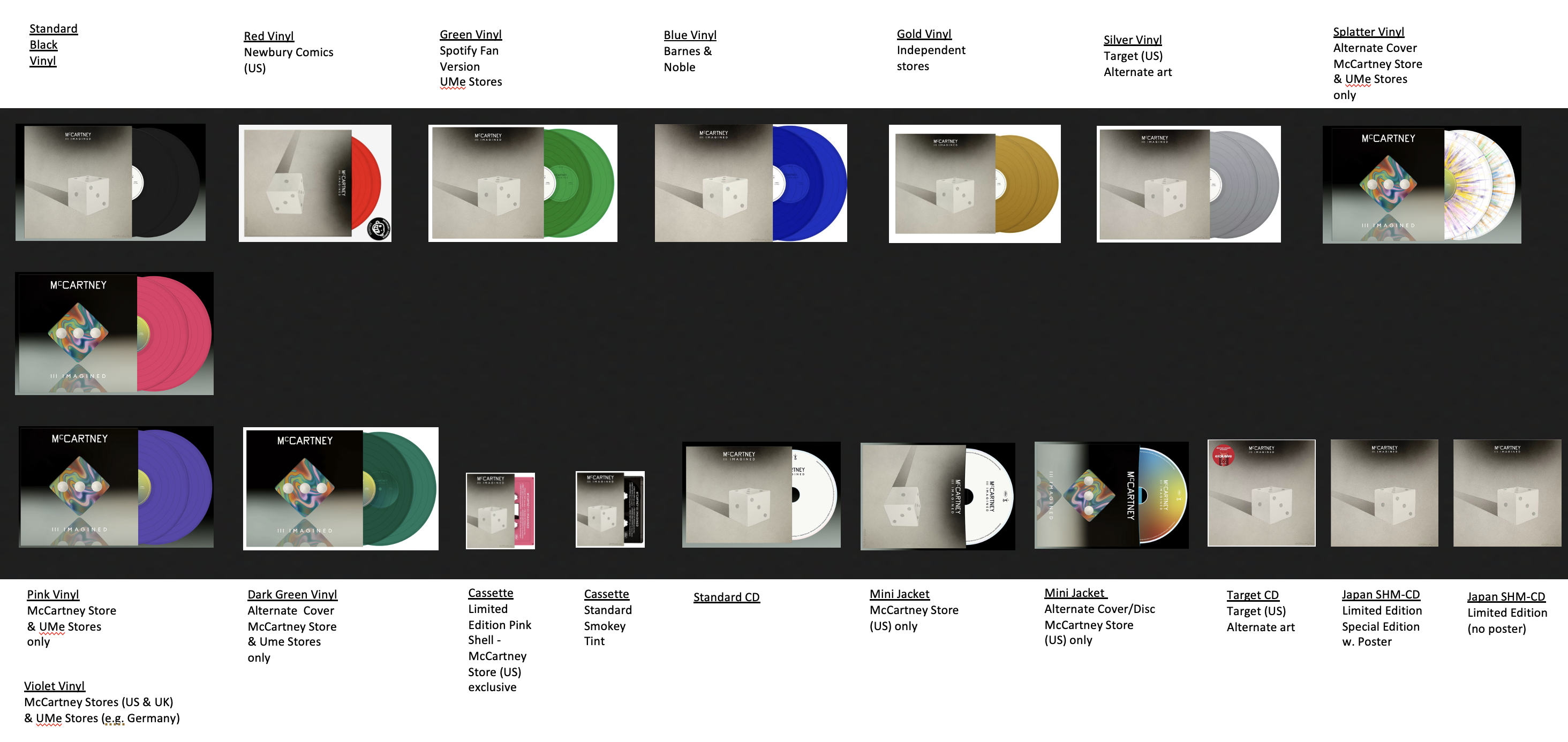
This is a photograph from the collection of one of our readers and contributors – Guy from the USA. Guy has managed to secure no less than 16 different McCartney III colour variants, and 10 different McCartney III Imagined double LPs.
You can check them off against our two guides to all the known variants below (they include CDs and cassettes – which Guy also has BTW!). Click on the images to enlarge:
It was for Best Music Video for the song ‘I’m Only Sleeping’ – the film clip made to promote last year’s re-issue of the Revolver album.
The award went to Em Cooper, video director, and Jonathan Clyde, Sophie Hilton, Sue Loughlin and Laura Thomas, video producers.
Artist and director Em Cooper explored the space between dreaming and wakefulness, working on an animation rostrum on sheets of celluloid. She painted every frame individually in oil-paint, a labourious process which took many months.
(Interestingly Revolver won an award for Best Album Cover in 1966. That honour went to Klaus Voormann. And the Song of the Year Grammy in 1966 went to John Lennon and Paul McCartney for ‘Michelle’. McCartney also won the Best Contemporary Solo Vocal Performance, Male or Female, for ‘Eleanor Rigby’.)
Also in the hunt for awards recognition is another short animated film with Beatle connections – this time for Sean Ono Lennon and War Is Over!, a film inspired by the music of John and Yoko.
War Is Over! is nominated in the 96th Oscars, to be announced on Sunday, March 10. You can view the trailer here:
Set in an alternate WWI reality where a senseless war rages on, two soldiers on opposite sides of the conflict play a joyful game of chess. A heroic carrier pigeon delivers the soldiers’ chess moves over the battlefield as the fighting escalates. Neither soldier knows his opponent as the game and the war builds to its climatic final move. Whoever wins the game, one thing is for certain: there are no winners in war.
The eleven-minute short animated film is made by the animation company ElectroLeague. Its anti-war story is by Sean Ono Lennon and Dave Mullins, and it features original music composed by Thomas Newman plus the song ‘Happy Xmas (War Is Over)’. The film is directed by Dave Mullins and produced by Brad Booker. It is executive produced by Yoko Ono and Sean Ono Lennon, and is created as a production of Lenono Music, ElectroLeague, WetaFX and Epic Games.
Here’s some more background on how the project came about, and what to expect when you get to see it:
And check out this filmmakers’ panel discussion about the Oscar-nominated War Is Over! It features writer/director Dave Mullins, producer Brad Booker, executive producer Sean Ono Lennon, and composer Thomas Newman. They’re in conversation with executive producer Karen Dufilho:
One of our readers (Guy in the USA) prides himself on securing every possible variation and often sends us a tantalising image or two. For ‘Now and Then’ he points out that most collectors only show pictures of the outer covers. Here, he says, are the contents – photographed all together:
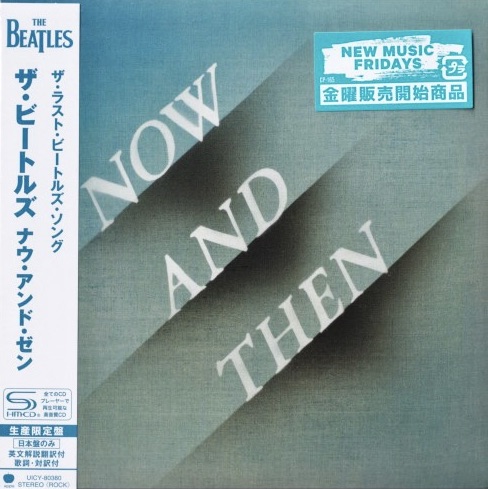
For collectors in the west there are no fewer than 9 variations to seek out. If you add in unique Japanese editions that number creeps up to 14.
Because there are enough different pressings we thought we’d create another visual representation to capture them all (we have previously created these for McCartney III and McCartney III Imagined too):
(Click on the image to see a larger version)
The Japanese ‘Now and Then’ vinyl pressings are unique in that they have a rear cover written in Japanese. They also come with a special lyric sheet with the lyrics in English and Japanese:
Additionally, the SHM-CD single comes with an OBI strip (and also the extra lyric insert):
To add to the onslaught on collector wallets there was also Black Friday Record Store Day.
Also released on that day were further coloured vinyl editions (in “Yellow Submarine Yellow”) of Ringo Starr’sOld Wave and Stop and Smell the Roses. Here’s Guy again:
You can see there on the bottom row the little Yoto kids toy card editions of the 2023 Red and Blue albums, plus a unique Paul McCartney card containing a selection of his hits for kids which also contains two hard-to-get instrumentals.
Well, we knew that all the previous marketing for McCartney III (and McCartney III Imagined) has revolved around the number 3.
After all, the first (and very limited) release of McCartney III was made at Jack White’s Third Man Records. Symbolically, 333 copies were pressed. Then came the myriad of coloured vinyl editions, many limited to 3000 copies (again to tie into the 3 theme). There were also the dice sets you could buy from the official McCartney store, which had the number 3 on all sides, etc, etc.
So the marketing gurus thought (no doubt over a long lunch), “Why not celebrate 3 years since McCartney III came out with yet another limited edition? And while we’re at it, let’s not make it just one limited edition, but three limited editions!”
Yes. Three morevariations will be joining the 32 iterations already out there of this title across vinyl, CD, and cassette. That’s right, we said 32 variations (see the table below).
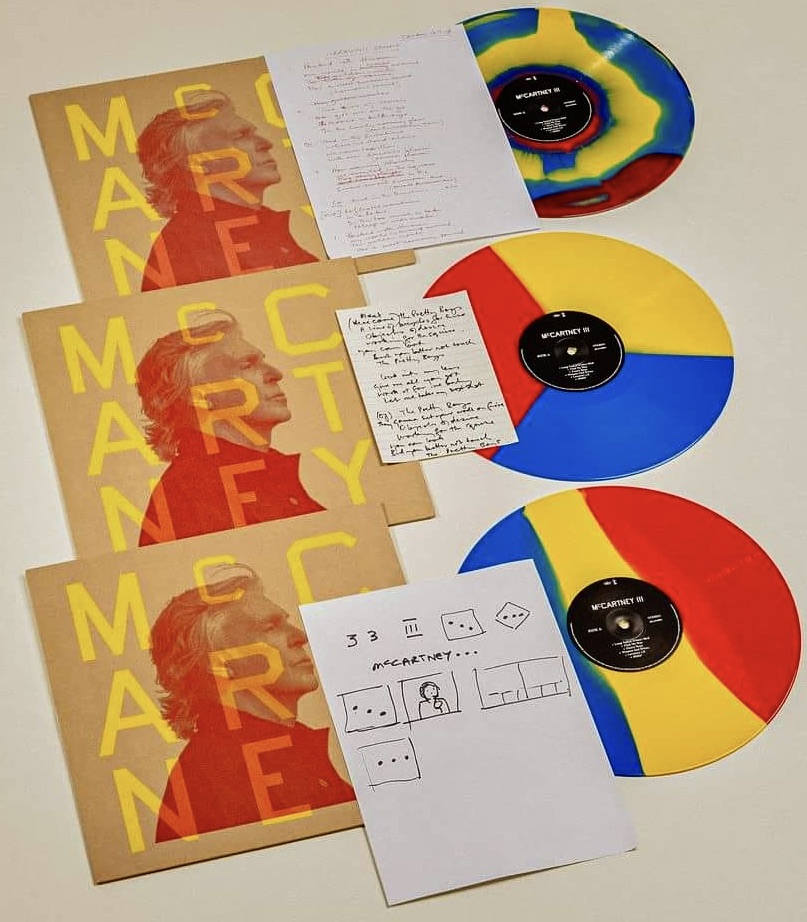
Today the McCartney camp announced that the McCartney III 3×3 Edition will be joining them:
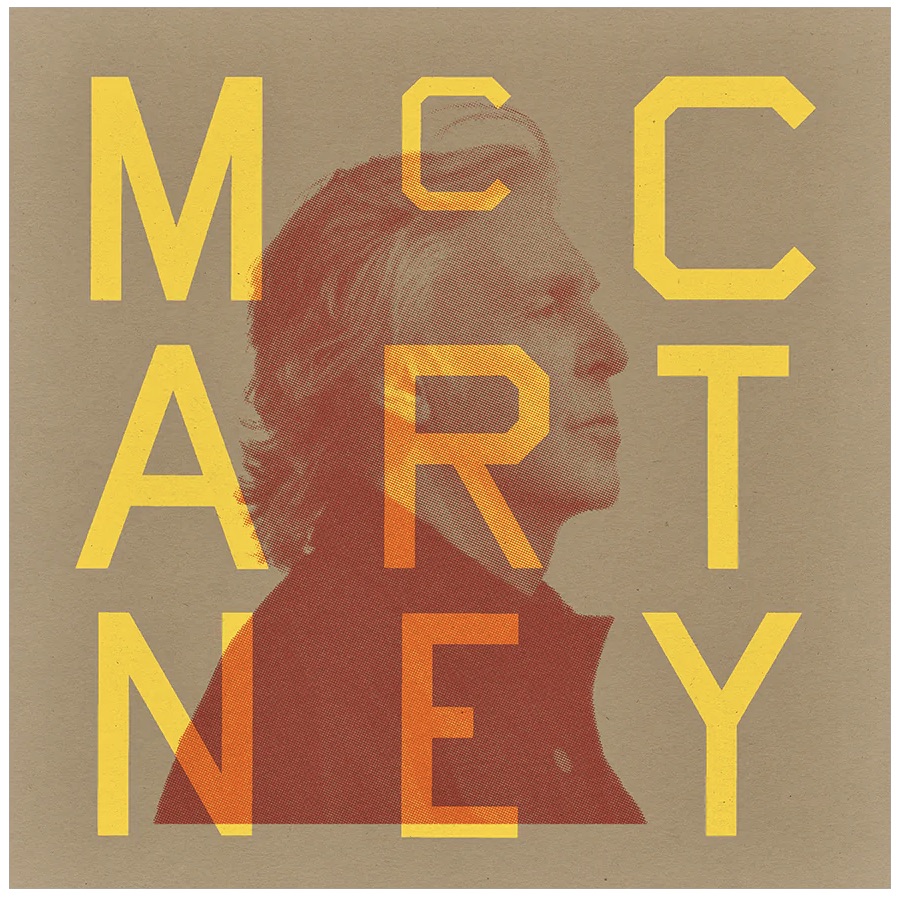
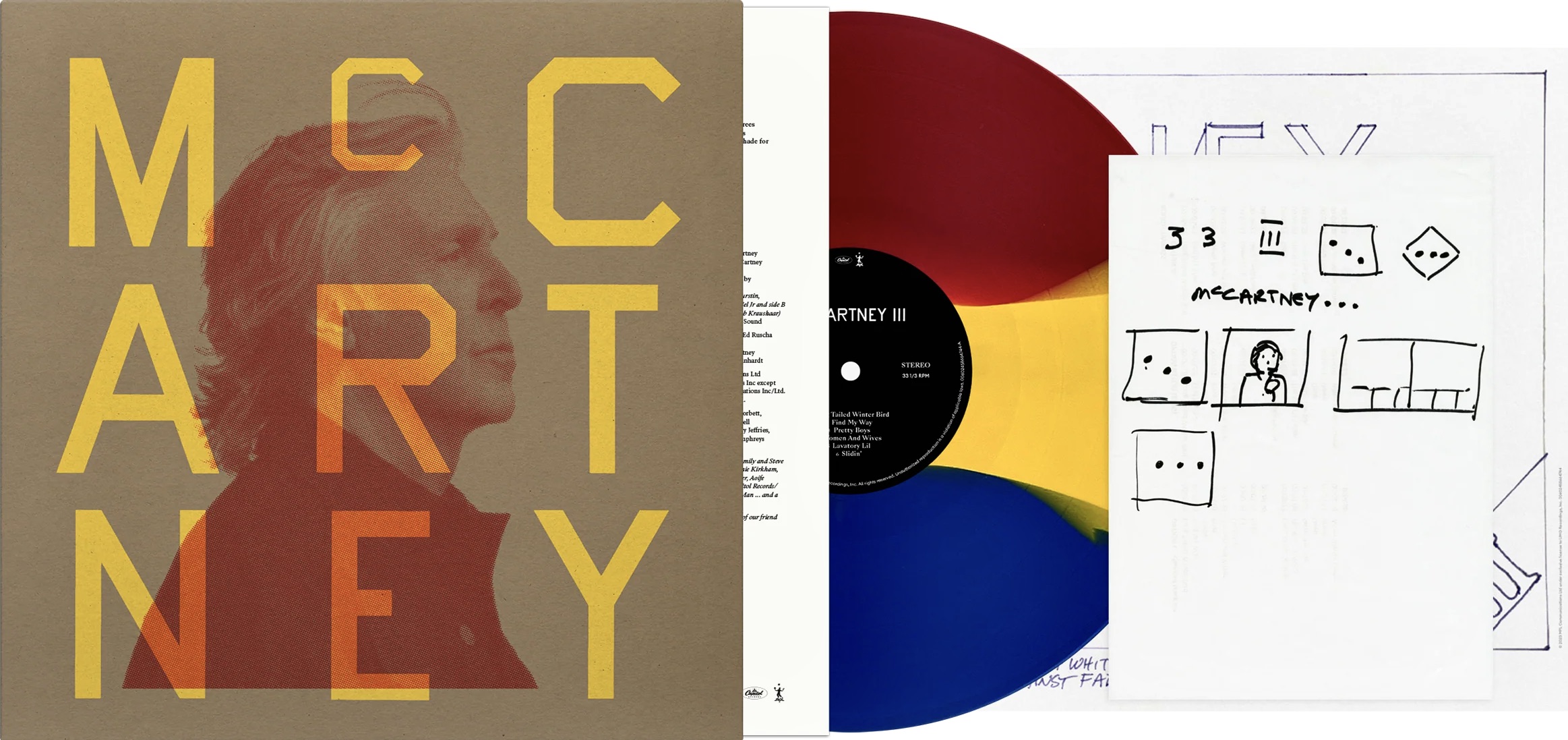
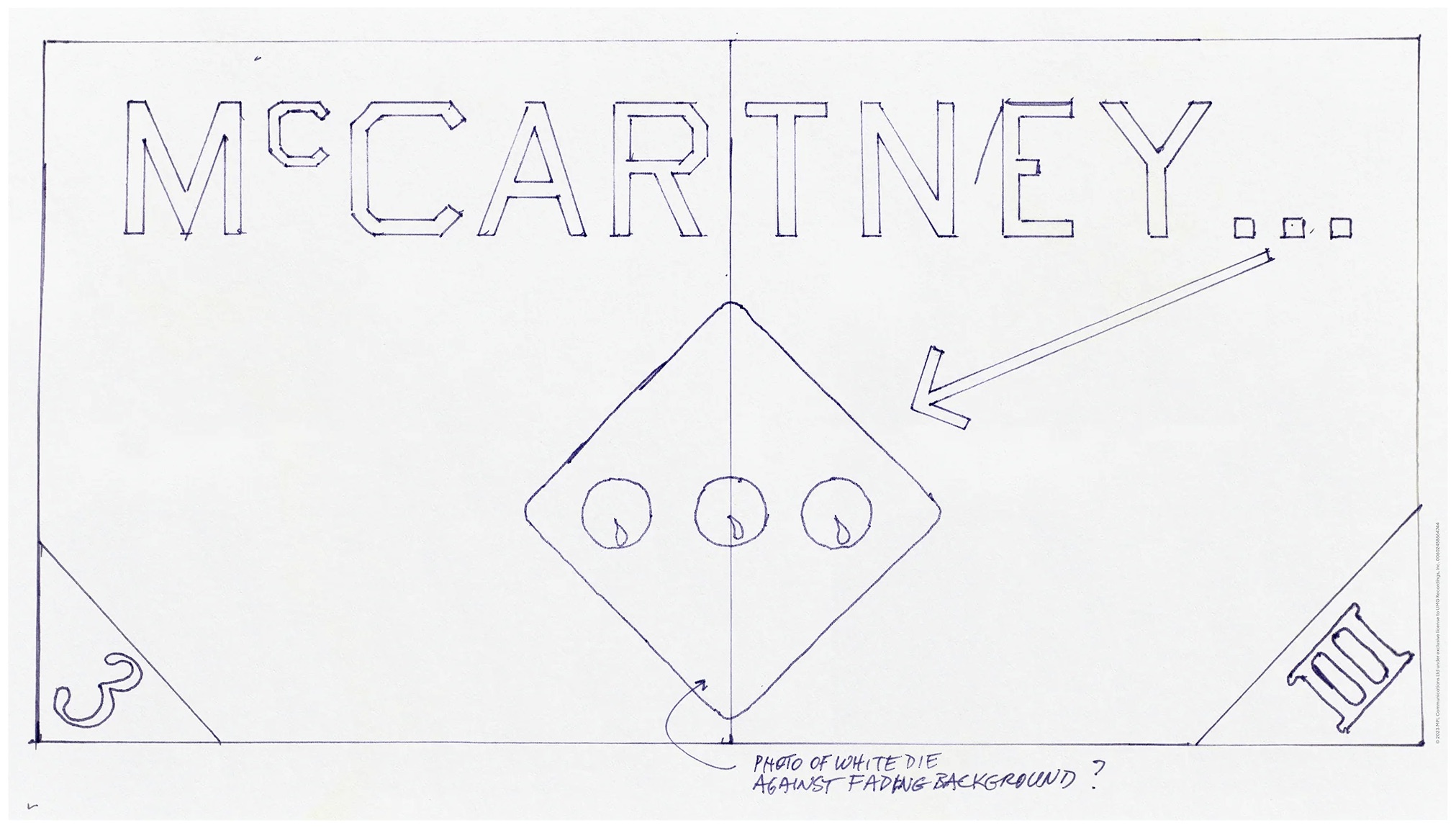
The idea is you place your order for a limited edition coloured vinyl disc. One of the three variations available will then be randomly selected and sent to you. Your LP will come in a newly designed Ed Ruscha cover. It will have a lyric printed inner sleeve plus an Ed Ruscha sketch poster for the cover design of McCartney III included:
Also randomly included will be a smaller replica Paul McCartney handwritten print. From the images released so far this will either be the handwritten lyric to ‘Pretty Boys’, ‘The Kiss of Venus’, or what looks like an early sketch of McCartney’s album logo/cover ideas.
So, to summarise: each customer gets 1 LP, a handwritten replica print and a poster in the newly designed cover, with the record in a lyric/credits inner sleeve. However, the colour of the LP and the print pairing is random. If you purchase more than one copy, the store won’t guarantee you will receive two or three different variants.
If you want to have all three unique colours and all three prints you will have to take your chances. Most stores are limiting pre-sales to 4 copies per customer. However, here in Australia the official store limit was initially set at two copies per customer (though this seems to have been removed entirely now).
At this stage we don’t know how “limited” these sets are.
McCartney III 3×3 Edition ships on December 15, 2023 (but for Australia make that January 12, 2024).
Do we really need another three McCartney III coloured vinyl in the world? No. Here’s our running total of all the variations to date (click on image to see a larger version):
The first YouTube unboxing of McCartney III 3×3? Got to admit, he was quick:
So sad to wake today and read the news that the great Denny Laine had passed away at the age of 79.
His wife, Elizabeth Hines, posted this message on social media:
My darling husband passed away peacefully early this morning. I was at his bedside, holding his hand as I played his favorite Christmas songs for him. He’s been singing Christmas songs the past few weeks and I continued to play Christmas songs while he’s been in ICU on a ventilator this past week.
He and I both believed he would overcome his health setbacks and return to the rehabilitation center and eventually home. Unfortunately, his lung disease, Interstitial Lung Disease (ILD), is unpredictable and aggressive; each infection weakened and damaged his lungs. He fought everyday. He was so strong and brave, never complained. All he wanted was to be home with me and his pet kitty, Charley, playing his gypsy guitar.
Denny was so very thankful to all of you who sent him so much love, support and the many kind words during these past few months of his health crisis-it brought him to tears.
I thank you all for sending both of us love and support. It was my absolute honor and privilege to not only be his wife, but to care for him during his illness and vulnerability.
Thank you to Dennys surgeons, doctors, specialists, physical therapists and nurses at Naples Hospital for working so hard to help him. Thank you for your compassion and support for me during these past several emotional months.
My world will never be the same. Denny was an amazingly wonderful person, so loving and sweet to me. He made my days colorful, fun and full of life-just like him. Thank you sweetie for loving me, for all the laughter, friendship, fun and for asking me to be your wife. I will love you forever ❤️
Please give Denny’s friends and family the time and privacy needed as we grieve our loss.
To mark the 50th anniversary of its release in December of 1973, most fans were expecting an LP of Paul McCartney and Wings’Band On The Run in Half Speed Mastered form. This would follow the pattern of previous releases for McCartney, RAM, Wings Wild Life and, earlier this year, Red Rose Speedway.
What we didn’t expect was that Band On The Run would be accompanied by a whole bonus LP featuring previously unheard music that is being termed “underdubbed mixes”. In other words, early mixes without overdubs.
These “underdubs” aren’t newly created in 2023. They come from 1973 and were prepared by the album’s engineer, Geoff Emerick. They’re basically a previously unreleased mix of Band On The Run, but without any of the orchestral and string overdubs written by Tony Visconti that were used on the final release. Interestingly, the tracklisting for these “underdubbed mixes’ doesn’t follow the original sequencing of album. The bonus LP mirrors the original analogue tapes as discovered in the MPL archives (see the changed running order below).
“This is Band on the Run in a way you’ve never heard before. When you are making a song and putting on additional parts, like an extra guitar, that’s an overdub. Well, this version of the album is the opposite, underdubbed.”
There’ll be three physical releases for the 50th Anniversary, and these will be available from February 2, 2024.
You can get a stand-alone Half Speed Master of the original LP, cut from the original master tapes from 1973 by Miles Showell at Abbey Road Studios. The single vinyl album configuration mirrors the US tracklist, which added the song ‘Helen Wheels’ to the end of the LP. The 50th anniversary album includes the original inner sleeve and poster featuring a series of Polaroid photos taken by Linda McCartney during the making of Band On The Run :
Then there’s the 2 LP edition featuring the original US album, remastered at half speed as above, plus a second LP titled Underdubbed Mixes Edition. The two LPs are housed in a premium slipcase. The set includes two Linda McCartney Polaroid posters:
The 2 LP slipcase version can only be purchased from Universal Music’s own online stores around the world, as well as from Paul McCartney’s own online store.
And there’ll be a 2 CD set, with one disc containing the original US album, and a second disc with the “underdubbed” mixes. There’s a double-sided fold-out poster of Polaroids taken by Linda included:
Band on the Run (Underdubbed) will also be released digitally. The album itself has also been newly mixed in Dolby Atmos by Giles Martin and Steve Orchard – but there is no physical edition of this mix.
Here’s the running order for Disc Two – Band on the Run (Underdubbed Mixes):
1. Band on the Run 2. Mamunia 3. No Words 4.Jet 5. Bluebird 6. Mrs. Vandebilt 7. Nineteen Hundred and Eighty Five 8. Picasso’s Last Words (Drink to Me) 9. Let Me Roll It
“It wasn’t like we were following a trend; we were in the trend.” — PAUL MCCARTNEY
There’s no doubt that clothing is one of the most visible aspects of the development of a culture. A new book that’s just hit the shelves, Fashioning the Beatles – The Looks That Shook the World, is a well-researched and thoughtful exploration on how The Beatles played a leading role in shaping the fashion, attitudes and social change going on around them throughout the 1960s and beyond.
Author Deirdre Kelly wisely begins her book with a brief preliminary section called ‘Dressing for Pepperland’. That’s because during this period the band reached the zenith of their flamboyant style. Designers on Carnaby Street and around the world were influencing, and were in turn being influenced by, The Beatles in something of a symbiotic relationship. They were in their heyday.
We then journey back to the year 1960 and in chronological order, chapter by chapter, visit key fashion moments with quite a detailed examination year-by-year of what the band were wearing through to 1970, and beyond. We learn who was helping, advising, and being commissioned to come up with new looks for them, but also importantly, how The Beatles themselves played a central role in defining their style. Kelly then uncovers how that style in turn influenced whole industries and often swung the pendulum of the fashion world in new directions.
After a stint as “the savage young Beatles” which (in their early Hamburg/Liverpool days) saw the band sporting a tough look (black leather pants and jackets, black shirts, black t-shirts), in 1961 the group underwent a complete makeover. At the suggestion of their new manager, Brian Epstein, the band took on a suited, clean-cut, almost boy-next-door look that was carefully designed to help them break through in the pop world. They weren’t forced into this. It was something the group agreed was the right thing, as they too saw it as a way to achieve their goal of becoming the “toppermost of the poppermost!”. It was a makeover that worked, one where even the footwear they chose was considered. Kelly goes into detail about how the band had input into the evolution of the famous “Beatle Boots” and how this too became part of their defining look, and a fashion icon of the time. Soon manufacturers where knocking off copies and The Beatles were well on their way to becoming major influencers.
1963 was the year of the now iconic collarless suit – created for the band by UK tailor, Dougie Millings, whom we learn went on to make over 500 outfits for the group. His collarless creation was conceived in a brainstorming session involving Paul McCartney, who’d originally proposed the idea. Their suits were modeled on an original design by Pierre Cardin, but tweaked to make it a distinctively Beatles’ garment. Kelly writes: “It established the Beatles as fashion forerunners”:
It continued what was to become a trend. What a Beatle wore today would soon turn up as the latest hot trend in the shops tomorrow:
However, as with their music, The Beatles never stood still, always pushing the boundaries and never repeating themselves. Once a particular fashion look they’d pioneered started catching on, they’d already moved on.
Fashioning The Beatles is meticulously researched and contains fascinating detail around how the designs they wore came to be. The book also turns up interesting side observations along the way. Take this 1965 photograph taken during the filming of Help!:
In the movie, the band mixed British and US clothing styles. Denim wasn’t yet the ubiquitous fabric it would become and was regarded as something of a novelty. Notice though that George has bleached his jeans, prefiguring the acid wash jean trend that proliferates to this day.
By this mid-decade period and beyond The Beatles largely discard the suits (and boots) and begin to dress to please themselves. In doing so they have a further profound influence on the way young people dress and behave too. What the band wears is an extension of their innate creativity: their personal taste, their natural sense of style – and it was being followed closely by millions.
Tony Palmer (director of the documentary series All You Need is Love: The Story of Popular Music) says in his Preface to the book that The Beatles didn’t set out to be trendsetters. They were innately stylish young men and by simply wearing what they wanted to wear, became the leading style-makers of their day. Their huge, worldwide fame ensured that whenever they were photographed, filmed, or simply seen out and about in public, people took notice of their sartorial style, and those looks helped influence the culture of the day.
By the mid to late 60s The Beatles were now routinely mixing stage clothes with items from their personal wardrobes, and even (albeit briefly) starting up commercial fashion outlets of their own. Kelly provides great detail and context to these ill-fated forays into the fashion retail world via the Apple Boutique store and Apple Tailoring. And herein lies an Australian connection (and yet another example of The Beatles’ questionable choice in business partners), in the form of one John Crittle, proprietor of a business often frequented by the band called Dandie Fashions. They eventually came to own a 50% stake in the store and re-branded it Apple Tailoring (Civil and Theatrical). They opened a hair salon in the premises too, presided over by Leslie Cavendish (who’d been cutting the hair of Paul, George and John). However it turned out that the brains and style behind the clothing part of the venture was really Crittle’s fashion-savvy wife Andrea, who is perhaps better known as the mother of British prima ballerina, Darcey Bussell. Just how Crittle sullied Apple Tailoring’s reputation is something you’ll need to buy the book to read about. It’s not pretty.
Fast forward to today and the influence and spirit of The Beatles still ricochets around the fashion world. Take for example this 2023 collaboration between fashion house Rabanne and the multinational, mass market clothing retailer, H&M. The look could easily owe its inspiration to 1967 and the famous foursome’s adoption of the militaristic uniforms from their Sgt. Pepper era:
We here at beatlesblogger.com have a mountain of books about The Beatles. Amongst them is just one other book on Beatle fashion, Fab Gear – The Beatles and Fashion by Paolo Hewitt – and it’s long out of print. That is proof that very little has been written about this aspect of the band’s creativity and their huge impact on fashion and culture. It is why Fashioning The Beatles – The Looks That Shook the World is an important piece of scholarship. Deirdre Kelly’s new work is a very welcome addition to the library. Grab a copy while you can.