The White Book

Got this one second-hand on Ebay – and it looks like a really good read.

Ken Mansfield was a Capitol Records executive and an insider in the Beatles camp. He had a unique insight into the way the band worked, the absolute power they wielded in the music business, and the causes behind their ultimate demise. His book is called “The White Book”, and it carries the subtitle “The Beatles, the Bands, the Biz: an Insider’s Look at an Era”.

Each book, like the album after which it is named, is plain white all over, comes with the title embossed on the front cover, and has a limited edition number stamped on the lower right-hand side. Mine is 028525.
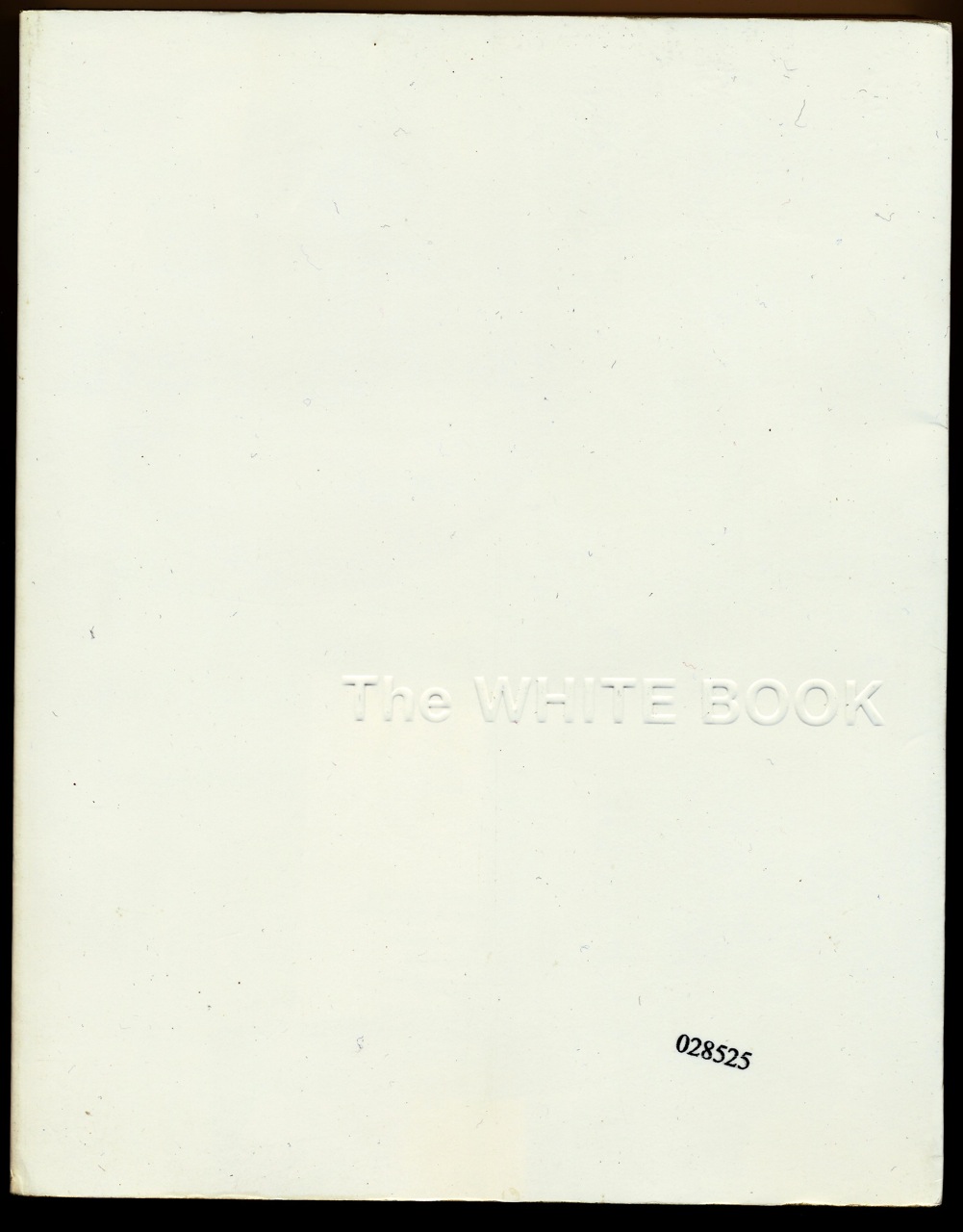
I really like the layout, look and feel of this book. Its a mid-sized softback, 248 pages with what they call in the book industry French flaps (don’t ask me why they are called that…the paperback front cover and rear extend and fold in – if that makes sense. Small but boring detail?). It has a large selection of photographs which are a combination of black and white, colour and colour-tinted photographs, many of them originals from Mansfields personal collection and as such never seen before. If you want a sneak peak at “The White Book” Google Books has a large selection you can see, along with extensive text extracts. Amazon also has a “Look Inside” preview.

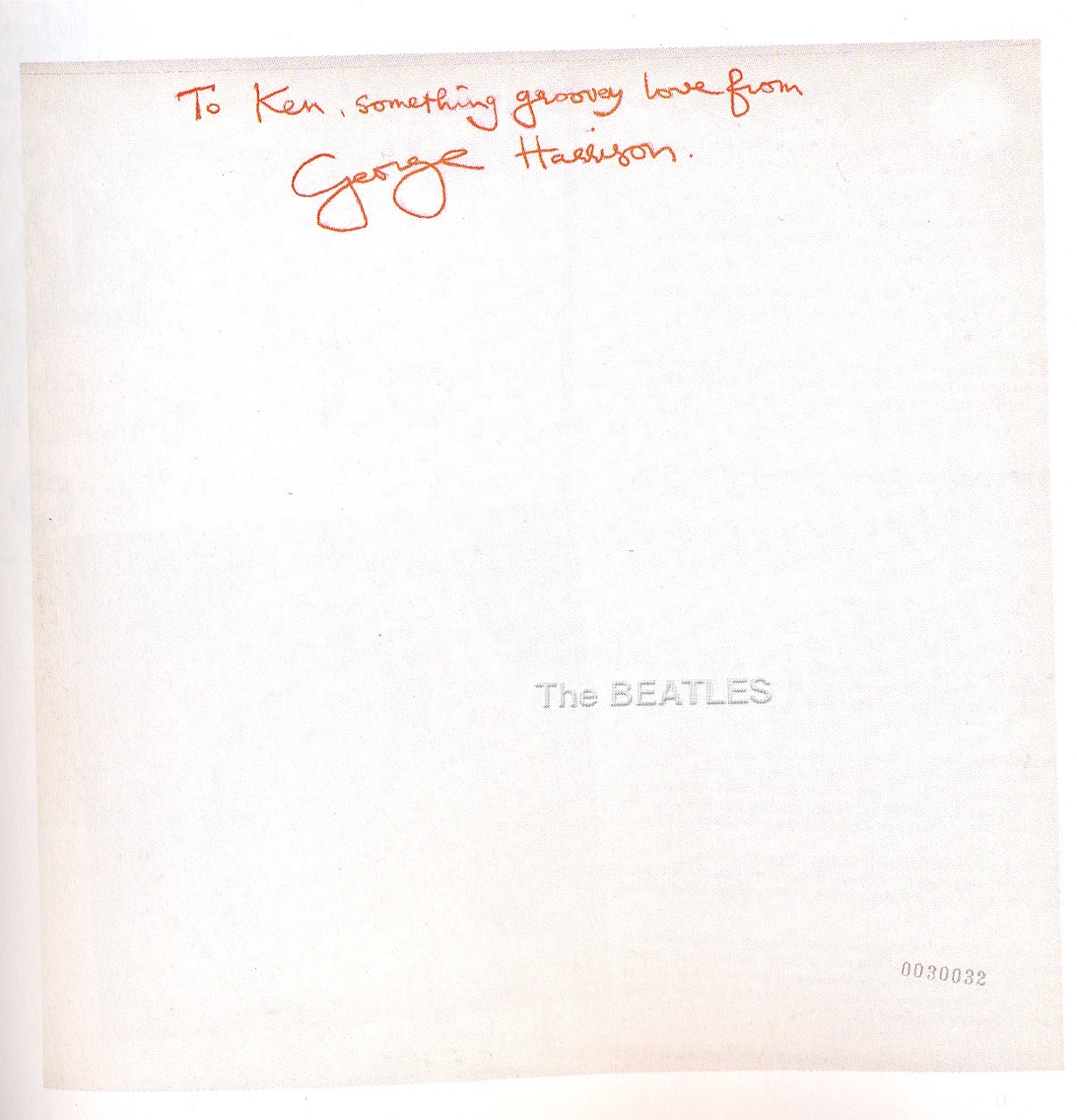
Those links give you a really good idea about the design of “The White Book” and how it’s laid out. If you’ve scrolled through the Google Books/Amazon links you’ll appreciate there are lots of photos of items that illustrate key moments: telegrams, record covers, photographs, and hand-written notes from the Beatles to Ken Mansfield. One of my favourites: an autographed copy of the White Album given to him by George Harrison:
To sum up the contents of the book, this extract from Publishers Weekly is revealing:  “The second memoir from record-industry vet Mansfield (The Beatles, the Bible and Bodega Bay), a simple look at a complex happening, recounts his overwhelmingly positive experiences working with the Fab Four (and others) as they put together their late-career masterpiece The White Album. Mansfield relates how a lucky break in the 1960s took him from promotions executive for Hollywood’s Capitol Records to U.S. manager of Beatles-owned Apple Records. One of the few Americans allowed into the group’s inner circle, Mansfield presents revealing one-on-one time with each band member, yielding insight beyond their public personas. He notes, for instance, that mere words can’t explain how intimidating John Lennon and Yoko Ono were. Though he provides his side of artistic debates (should “Hey Jude” or “Revolution” be the first Apple single?), and eyewitness accounts of key Beatles moments (including the group’s final public performance atop the label’s London headquarters), Mansfield misses numerous opportunities to provide insider details and to comment on the progress (or lack thereof) in the recording industry; further, Mansfield’s awkward writing style—clumsy metaphors and alliteration, short chapters and confusing chronology—gives the work an amateurish feel. As Mansfield notes in the foreword, this book is something to enjoy because of its simplicity: engaging but hardly essential reading for the casual fan.

That last bit is probably harsh. As a real fan this looks to me like it contains a treasure trove of stuff I don’t know, told from a unique perspective. “The White Book” has its own website fabwhitebook.com with lots more information and of course – a video:

The Beatles Revealed

Another nice Beatles book has joined the collection.

“The Beatles Revealed” is a large-format hardback book of 200 pages, printed on quality glossy paper:

Music journalist and author Hugh Fielder would be known to some Beatles collectors because he compiled the rear cover liner notes for the British edition of the Beatles “Rarities” album. This originally came out as a bonus record available only as part of “The Beatles Collection” box set. But in 1979 the record was issued separately as a stand-alone single vinyl LP (with the Fielder liner notes) due to popular demand. You can read that story here. The rear cover of that release looks like this:

“The Beatles Revealed” book is organised chronologically by year and covers all the major events in the Beatles career, beginning with “The Formative Years 1957-1962” and ending with “The Break-up Years 1969-1970”, and an “Epilogue” of 1970 reunion rumours and 1995’s “Anthology” TV/DVD series and CD sets. The book contains some great images:

“The Beatles Revealed” is published by Flame Tree Publishing and came out in 2010.

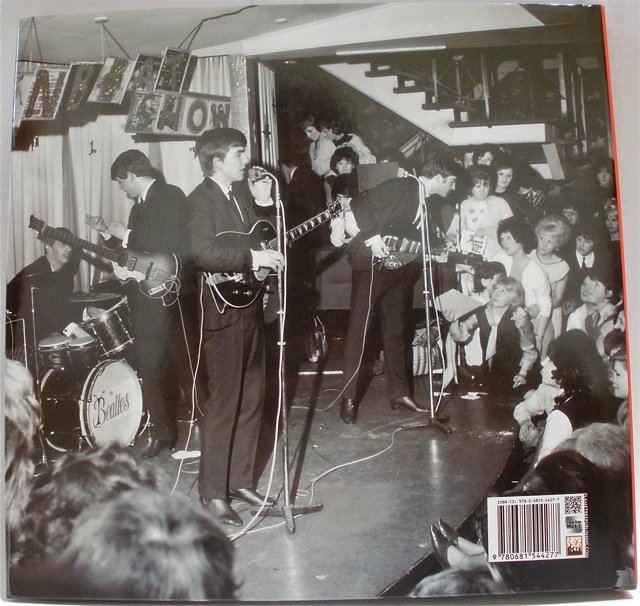
The photo above is a beauty of George in the very early days (note the script used for “The Beatles” on Ringo’s drum skin). It’s on the rear jacket cover.

We have a Winner….

In my previous post we had a small competition running to win a Bruce Spizer additional booklet for “The Beatles on Capitol Records Vol.1” CD set.

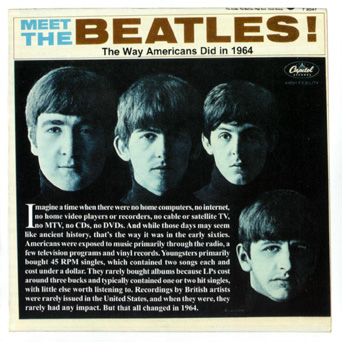
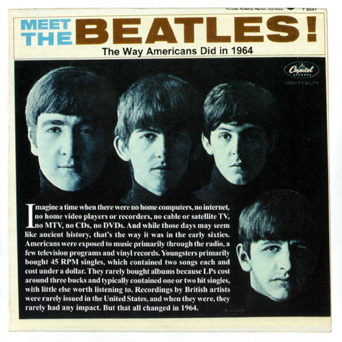
The easy question was:  “Meet The Beatles!”, one of the US Capitol records included in the box set, features the same striking black and white cover photo as the British LP “With The Beatles”Who took that photograph?

Of course the answer was Robert Freeman.

Curtis from Indiana in the USA was the first to contact us with the correct entry. Well done Curtis, and your booklet will be in the post very soon. It looks like this:

Incidently, that Robert Freeman photograph used for both “With the Beatles” and “Meet The Beatles!” has a connection to this post about a new book out recently called “Yeah Yeah Yeah – The Beatles and Bournemouth”.  The Freeman shot was actually taken on 22 August, 1963 in the Palace Court Hotel in Bournemouth, England.

Thank you to all those who submitted entries.

Competition – Win a Beatles “Capitol Albums – Vol. 1” Extra Booklet

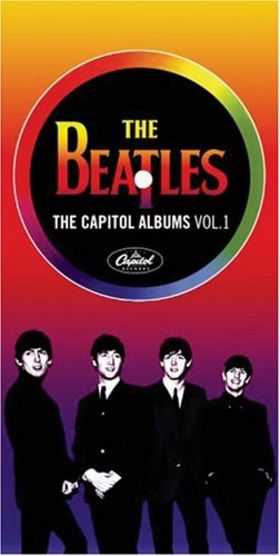
If you own the 2004 CD box-set release of “The Capitol Albums – Vol. 1” you might not be aware that respected Beatle historian and author Bruce Spizer has written and self-published an additional little booklet designed to accompany that set. “The Capitol Albums – Vol. 1” set containing the first four Beatles releases on that label looks like this:

The front cover of Bruce’s companion 12-page booklet for this set looks like this:

This booklet is in addition to the official booklet that comes in the four CD box set (which also contains a wealth of rare photos and has notes by well-known Beatles historian Mark Lewisohn). You can find out more about Bruce’s booklet here.  It is CD-sized and designed to simply slip into the box set alongside the CDs.

Bruce Spizer ended up writing the liner notes for the official booklet that comes with “The Capitol Albums – Vol. 2”, and he’s the author of a suite of impressive (and very large and heavy!) books on the history and discography of all the Beatles record releases.

His latest work is “The Beatles For Sale on Parlophone Records” annotating in minute detail all the band’s British record releases. That book joins his previous works detailing in a similar comprehensive manner all the US releases on Capitol, Apple, VJ, Swan, and other labels. They’re all well worth seeking out but are becoming increasingly difficult and expensive to find due to them being self-published and therefore only released in limited numbers. Bruce’s website is at beatle.net

Anyway…..this is long way of getting around to saying I have a spare copy of the little companion 12-page booklet he wrote for the Beatles “The Capitol Years – Vol. 1” and I’d like to give it away to a lucky reader.

It is not an expensive item but one you might like to add to your collection if you own a copy of “The Capitol Albums – Vol. 1”.

Just so you know: what happened was I ordered this booklet through Bruce’s site just before Christmas  but due to a mix-up I received two copies, not one.  So, I’d very much like to give one away to someone who’d like it.

All you need to do to win is answer this easy question:  “Meet The Beatles!”, one of the US Capitol records included in the box set, features the same striking black and white cover photo as the British LP “With The Beatles”Who took that photograph?

The first correct answer sent to me at beatlesblogger@gmail.com, complete with your name and postal address, will win. I will post the booklet to you. It’s as easy as that.

Good luck.

Bruce has written an interesting article on “The Capitol Albums – Vo.l 1” here.

Yeah Yeah Yeah – The Beatles and Bournemouth

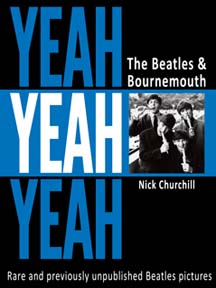
There’s a new book which came out just before Christmas with what you might think is a slightly unlikely title: “Yeah Yeah Yeah – The Beatles and Bournemouth”:

On first seeing the title you wonder if there could be so many links with this southern UK city to warrant a whole book on the subject? After all, the Beatles hailed from the far more well-known and much larger northern English city of Liverpool….

Bournemouth is a large seaside resort town – well south of London:

Well, the book’s author – journalist and Beatle fan Nick Churchill – has been in touch and I can now vouch for the fact that there are a great number of very interesting links and stories connecting the world’s most famous band to Bournemouth. His book on the subject contains a wealth of fascinating material and a great number of previously unseen photographs. Nick uncovers often surprising connections….for example the house John purchased for his aunt Mimi at Sandbanks in the Bournemouth area in 1965. In mid-1965 Mimi had sold Mendips, her Liverpool home, and so John bought her a waterside bungalow where she lived until her death in 1991. On various visits he was spotted in the area by locals in either a Mini Cooper or in his famous psychedelic Rolls Royce.

The book has a foreword written by Howie Casey, of Howie & the Seniors. Howie, originally from Liverpool and a long-time friend of Paul McCartney, played with Wings in the 1970′s and since coming off the band’s 1980 tour has lived in Bournemouth. He shares his memories of seeing the Beatles from their very earliest days in Liverpool and in Hamburg.

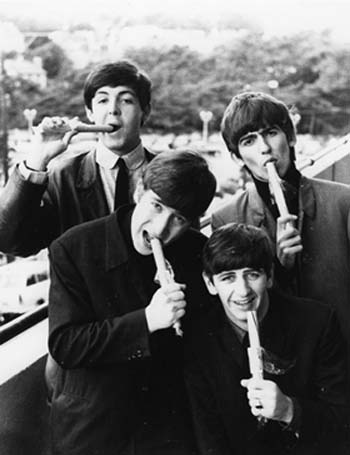
“Yeah Yeah Yeah – The Beatles and Bournemouth” features over 200 rare and previously unpublished photos as well as lots of memorabilia, show posters and tickets from the time. Local photographer Harry Taylor was there to record the groups visits at every step – and until now his images have remained largely unseen. Here’s one of them, taken on the balcony of the Palace Court Hotel in Bournemouth on the 19th or 20th of August, 1963:

If you’re wondering what the boys are chomping on its probably a hard, sticky English toffee known as rock which is still very popular at British seaside towns. Maybe it was some “Bournemouth Rock”?

It was while staying at the Palace Court Hotel that August in 1963 that one of the band’s most iconic photo shoots took place, the half-shadow shot by Robert Freeman that appeared on the sleeve of their second album, “With The Beatles”.  George Harrison wrote “Don’t Bother Me” at the same hotel during that week. It was his first song for the Beatles, penned while he was holed up in his room suffering a heavy cold at the time.

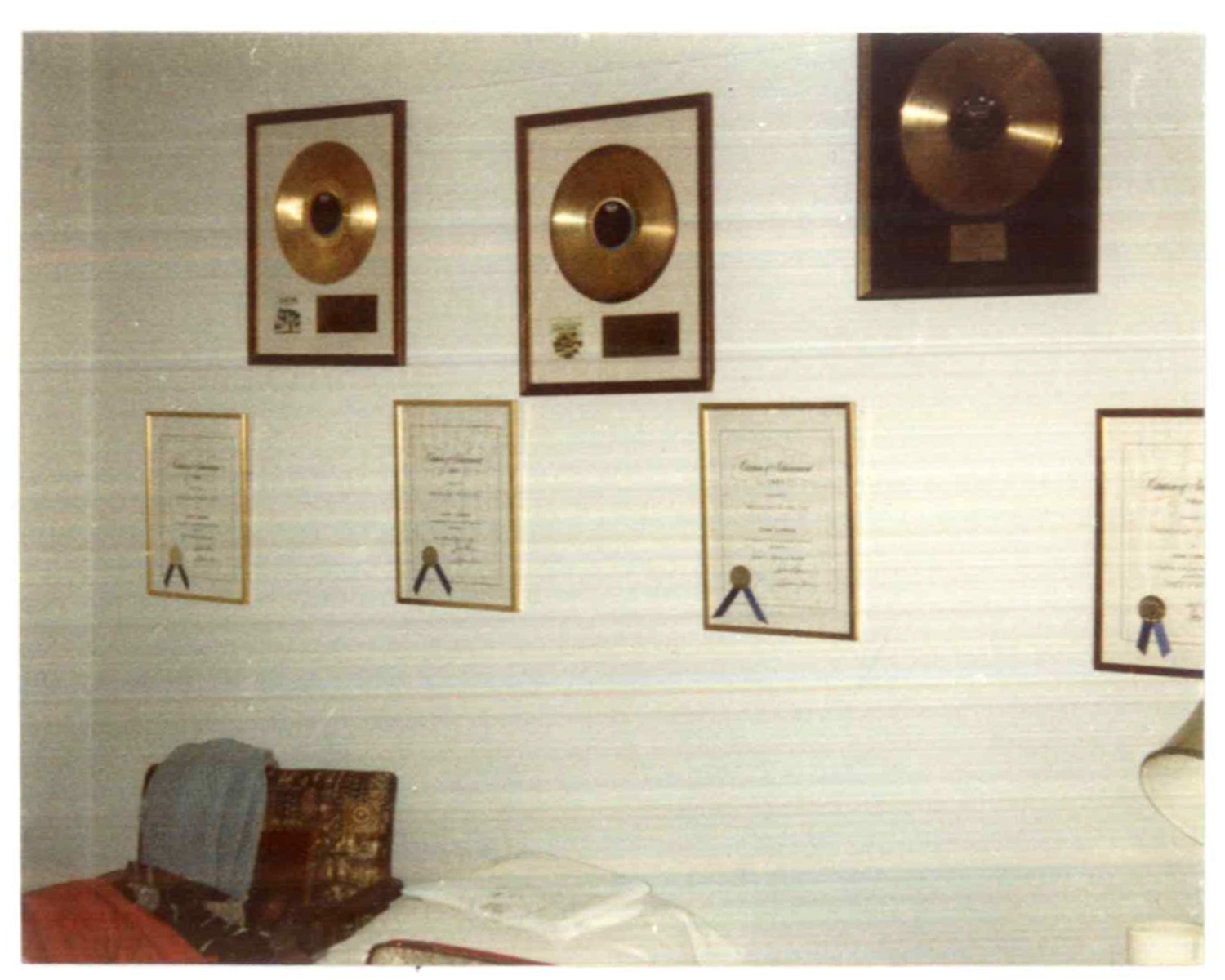
There’s a wonderful photo of John with baby Julian and Aunt Mimi by the ferry near Mimi’s house (which was just around the corner on Panorama Road at Sandbanks) in 1967 – as well as photos from inside Mimi’s house including John’s gold discs – and lots of first-hand accounts from those who met and worked with the Beatles.

Aunt Mimi's Gold Records - click to enlarge. (photo: David Stark)

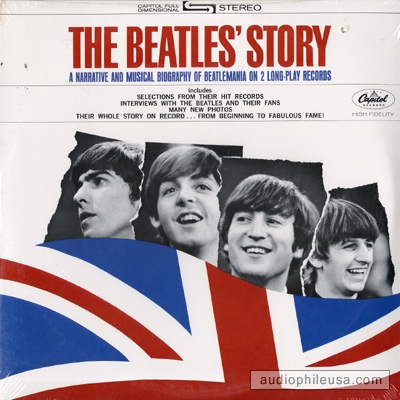
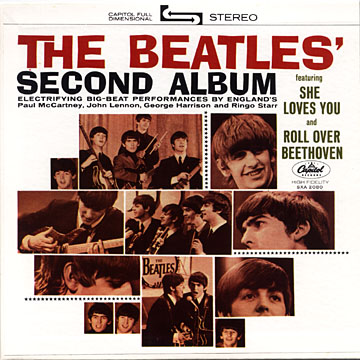
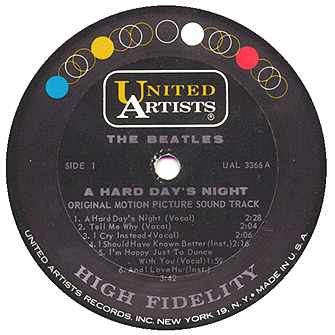
Seems like John gave his Aunt Mimi the gold records the band received for three US releases. I can just make out (l to r): “The Beatles Story” (Capitol); “The Beatles Second Album” (Capitol); and what looks like the United Artists pressing of “A Hard Days Night”:

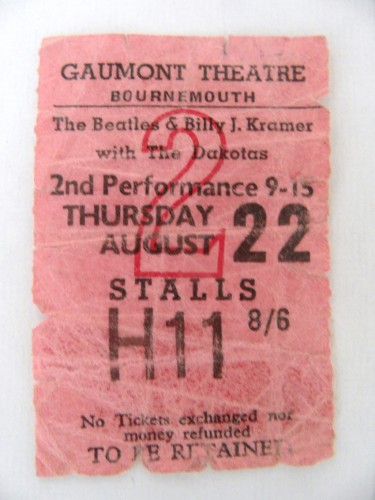
There are many, many great stories in this book proving that Bournemouth really did play a big part in the lives of the Beatles. It was there, at the very beginning of their success, that they played 18 gigs during a six-day season between the 19-25th August, 1963. They then returned in November, 1963 to the much bigger Winter Gardens venue; and then twice more at the Gaumont Theatre on 2 August and 30 October 1964. The band played more shows at the Gaumont than at any other UK theatre outside London. During their first stay in Bournemouth the Beatles’ third single “She Loves You” was released. That was on the 23rd of August 1963 and it stayed in the charts for 31 weeks, returning to number one the week they arrived back in town to play the Winter Gardens in November.

They were exciting times and Nick Churchill has captured it all in “Yeah Yeah Yeah – The Beatles and Bournemouth”.  Through the stories and the often evocative images he gives us a feel for the times – the mood of the early to mid 1960s. Nick also highlights the importance of regional touring in those days and the role that smaller towns and cities played in feeding talent through to London, and on to the world stage. Underlying all this is a sense of it being a more innocent time, too.

The Beatles Rarity page has also written about the book here, and Happy Nat conducted an interview with Nick which you can access at this page.

You can visit the “Yeah Yeah Yeah – The Beatles and Bournemouth” site for more, you can order the book here (where I notice it is on sale at a special price at the moment!), and you can find out more about Nick and read more of his work at nickchurchill.org.uk

Happy Christmas – Free Yellow Submarine iBook download

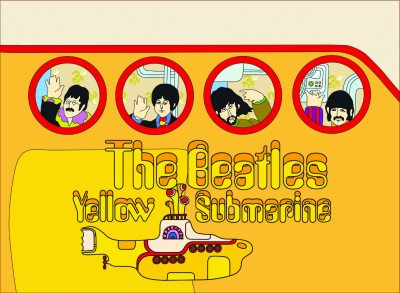
The Beatles and iTunes are giving fans an early Christmas present this year – a free illustrated and interactive iBook download of “Yellow Submarine”.

You can go to the Beatles official website for more information, but basically the press release says:

“From today (9 December) an exclusive Beatles “Yellow Submarine” book that lets readers tap their iPad, iPhone and iPod touch to immerse themselves in the legendary film’s colourful sights and sounds is available for free download at itunes.com/thebeatles. Featuring animated illustrations and text from the 2004 book, 14 full-colour video clips from the original 1968 film, audio clips of classic Beatles hits and Sir George Martin’s original score, plus original dialogue from the film. Actor Dean Lennox Kelly narrates the book which includes interactive features that let you tap the story’s wild array of butterflies, starfish and sea monsters to make them come alive.

The book, designed by Fiona Andreanelli, uses Heinz Edelmann’s original artwork from the film and its story has been adapted by Charlie Gardner from the film’s original screenplay, co-written by Lee Minoff, Al Brodax, Jack Mendelsohn and Eric Segal.

Inspired by The Beatles’ song of the same name, “Yellow Submarine” dives 80,000 leagues beneath the sea to Pepperland, a musical paradise where Sergeant Pepper’s band plays on until the music-hating Blue Meanies invade, sealing the band inside a music-proof bubble and leaving it a silent wasteland.  But Old Fred, captain of the Yellow Submarine, escapes to Liverpool and persuades Ringo – with a little help from his friends John, Paul and George – to join him on a magical adventure to return music and love to Pepperland.”

On the Beatles site front page at the moment there’s a short promotional film about what you’ll get in the free download.

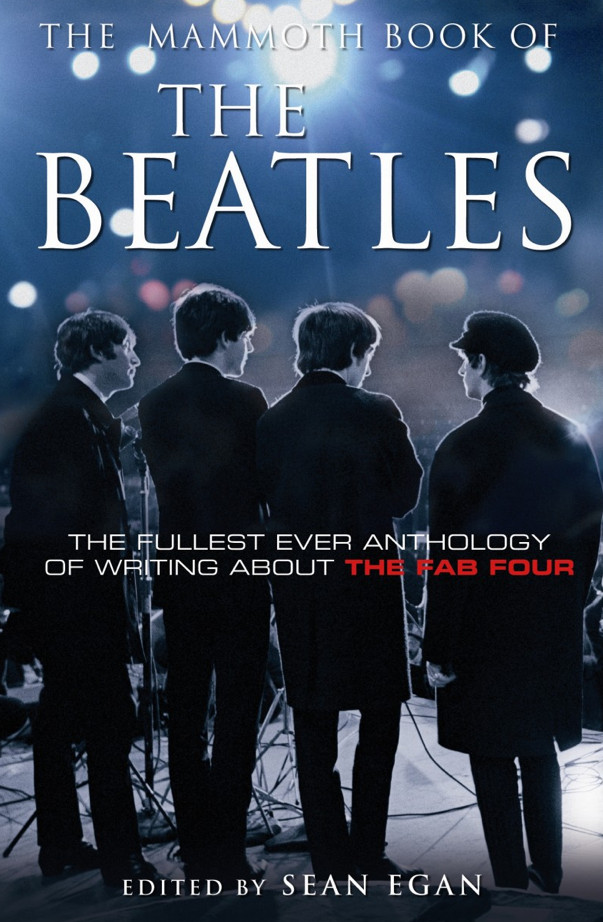
The Mammoth Book of the Beatles

Stumbled across yet another discount book this week. Not bad for A$5.95:

“The Mammoth Book of the Beatles” contains a LOT of information across its 594 pages.

This is a compilation book edited by Sean Egan who has gathered together more than 30 contemporary accounts, articles, and interviews about the Beatles (from Maureen Cleave’s “Beatles Bigger than Christ” feature, to their debunking in the News of the World just before the release of “Sgt Pepper”. Hmmm. Good timing News of the World. It was a dodgy newspaper back then, too). There are also latter-day memoirs and re-assessments. Contributors include Paul Gambaccini, Dave Marsh, Greil Marcus and Alan Clayson. There’s also a short section on the Beatles cartoon series – written by Mitch Axelrod (from the Fab Forum radio show and podcast). The book also includes reviews of each album and single release, interviews, and a comprehensive Beatles and solo Beatles UK discography.

Published by Constable and Robinson in the UK, and by Running Press in the US. I have the US paperback edition that came out in 2009.

There’s a pretty good review of the book here by blogger David Marx.

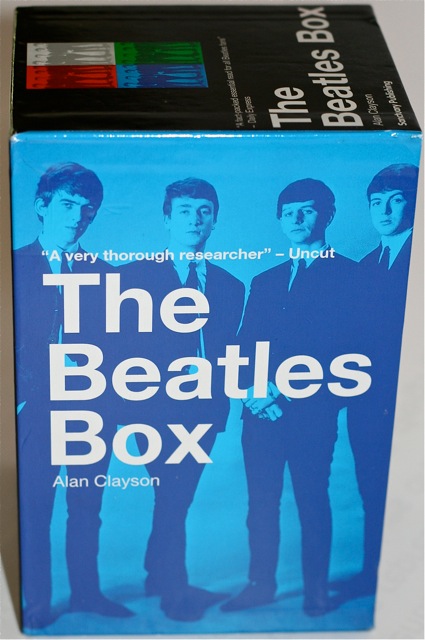
The Beatles Box

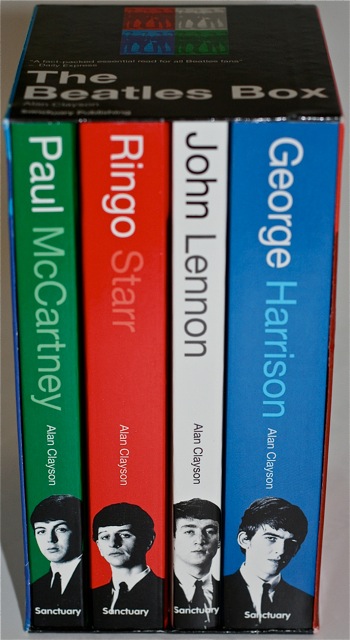
In the city the other day I stumbled upon this box of Beatles books:

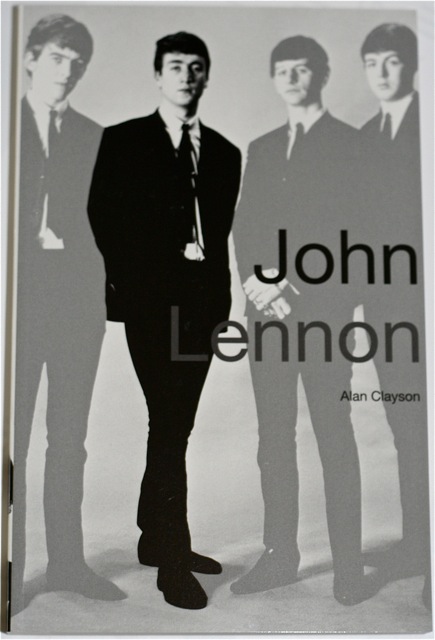
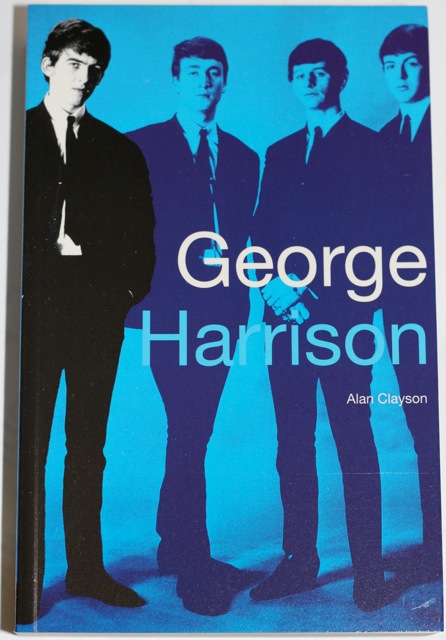
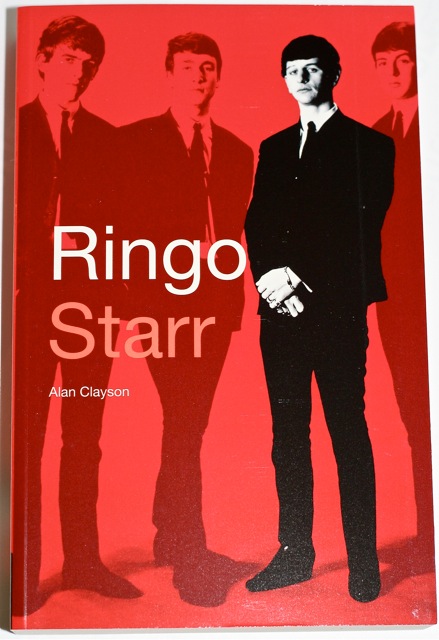
It gathers together four books by respected British Beatles historian and writer Alan Clayson. Collectively it’s called “The Beatles Box”, and contains four individual books on each member of the group. There’s one on John Lennon (which was originally published in 2003):

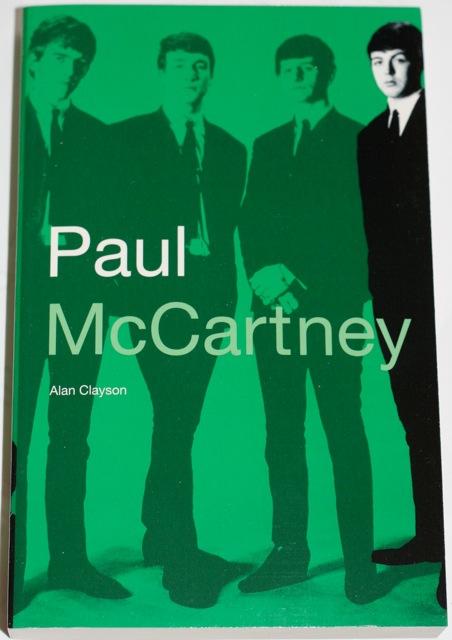
One on Paul McCartney (also originally published in 2003):

One on George Harrison (originally published in 1996 as “The Quiet One: A Life of George Harrison”, but updated here in 2003):

And one on Ringo Starr (originally published in 1996 as “Ringo Starr: Straight Man or Joker?”, but also updated here in 2003):

This box of books is nicely designed. The covers are all complementary and the book spines line up when they are placed side-by-side in the box, with photos of each looking out:

“The Beatles Box” is published by Sanctuary Publishing. Alan Clayson is also a musician and has his own website.

Beatles For Sale on Parlophone Records

For a leading tax attorney Bruce Spizer sure knows a lot about the Beatles.

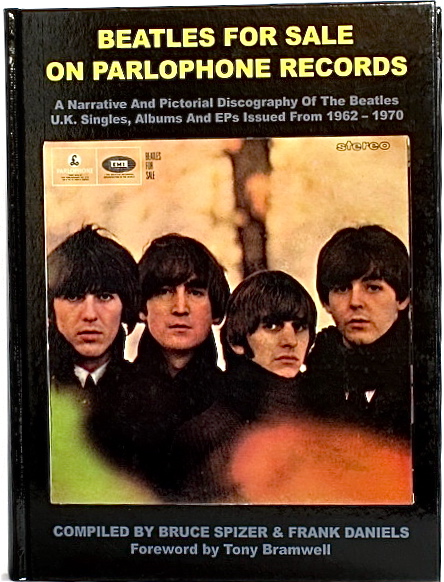
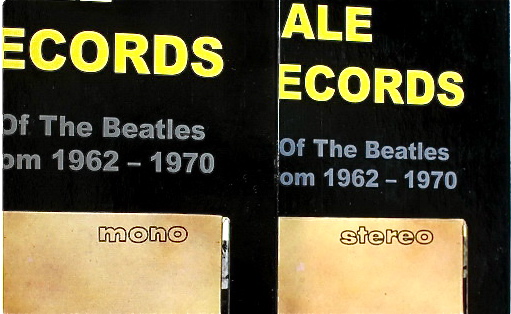
He is something of a legend amongst Beatles collectors. His books about the record labels the band’s output has been released on are much sought-after and comprehensive. Now, there’s a new one. The New Orleans-based Spizer has just released “Beatles For Sale on Parlophone Records”:

In a cheeky collector-driven move the book is available in two different versions. You can order it with the Stereo version of “The Beatles For Sale” album on the cover, or you can get the Mono image. The contents of both books are the same inside though:

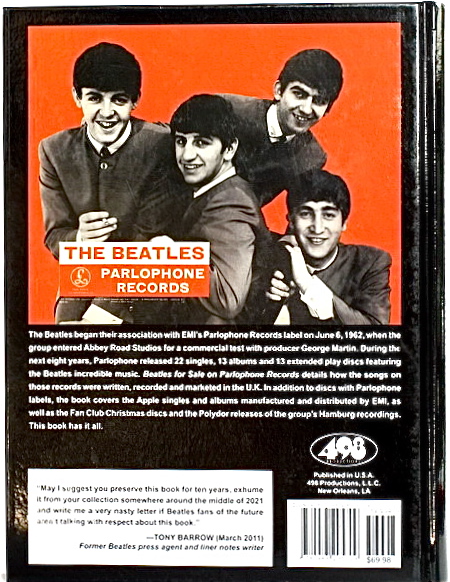
Here’s the rear cover:

When asked to compare this book to his previous titles, Spizer said, “This is by far the most comprehensive book I have ever done because it covers all of the songs released by the Beatles in the sixties. The U.K. singles, albums and EPs, all in one 444-page book. Like my other books, it is full of hundreds of images in either color or original black & white. It contains rarely seen British ads and promotional posters. Frank Daniels and I were able to track down tons of label variations that will please and frustrate the hard-core collectors.”

Surprisingly (according to Wikipedia), Bruce Spizer didn’t start collecting seriously until 1997 when he earned a large fee from the settlement of a lawsuit and decided to use some of the money to replace his childhood collection of Beatles LPs with a set of first edition albums. From that moment he was drawn into the world of collecting and has since written and self-published eight great books on the subject of the Beatles, their records and record labels.

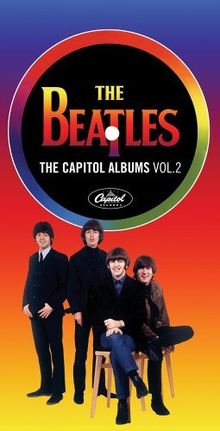
In case you think you’ve never heard of him, you may already have some of his work in your collection if you own this CD box set:

Bruce wrote the essay contained in the booklet which came with “The Beatles Capitol Albums Volume 2”. The four-CD box set contains stereo and mono versions of the Beatles albums released by Capitol in 1965.  Spizer also served as a consultant to Capitol Records for both Volumes 1 and 2 in the series.

Bruce Spizer’s website is beatle.net and there is a lot more about all his books there.

Paul Theroux on Harrison and Scorsese

As interest grows around the release this week of the new Martin Scorsese documentary on the life of George Harrison, much is being written about the documentary and it’s importance.

Many will know and respect the work of US travel writer and novelist Paul Theroux. He has written a lengthy but insightful piece for The Daily Beast on “Living in the Material World”. It carries the title “The Sixth Beatle?” and contains the byline “George Harrison was liberated by rock and roll. Turns out Martin Scorsese was too”.

Theroux postulates that the two men, the musician and the film-maker, have more in common than might first appear:

“He had everything so young—everything was possible. He was struggling for his own creativity—for his creativity to be recognized,” Scorsese said. “But he wouldn’t have been able to create All Things Must Pass had he not gone through the relationship—the family relationship of the Beatles. That’s what you pay. That’s the price you pay.”

Scorsese’s solemn tone suggested that he could relate to George’s ups and downs. George’s Dark Horse tour was savaged, in the way that some of Scorsese’s greatest films were initially greeted with bewilderment and scorn.

Scorsese agreed, saying, “In my own work I was in those areas not once but many times—coming up against a brick wall. I thought Raging Bull was the last picture I was ever going to make. A number of times I was that way, flattened out, and coming back. As George’s story developed there was no way I couldn’t relate to it in my own life.”

There are two other articles I’d recommend, both from the New York Times. The first is a revealing interview with Olivia Harrison about the project. The second is a feature by David Itzkoff about George and the documentary.

Worth a look.