This is a well put together analysis of how the original demo tape of ‘Now and Then’ compares to the finished Beatles ‘Now and Then’ just released:
Comparing John’s Demo to the Final Track
1
This is a well put together analysis of how the original demo tape of ‘Now and Then’ compares to the finished Beatles ‘Now and Then’ just released:
One of the podcasts we’ve really enjoyed in the last few years has been Take It Away – The Complete Paul McCartney Archive Podcast.
Back in 2016 the knowledgeable hosts, Ryan Brady and Chris Mercer, set themselves the task of discussing, in detail, every single solo McCartney release. And they succeeded!
However, in November 2020 Ryan was tragically killed in a car accident. He was just 34 years old.
Understandably, the podcast went into a hiatus. How do you go on when one very talented half of the team has been taken away?
Well, the podcast is now re-emerging – as Take It Away: The Complete Solo Beatles Archive Podcast. Chris Mercer is joined by a new co-host and fellow Beatle nut, Paul Kaminski. Together they plan to expand the original brief to take in the solo careers of all four Beatles.
If you’re interested in The Beatles, Wings, or Paul McCartney the solo artist, then this could be the podcast for you.
The all-new Take It Away begins with a dive into the music of George Harrison. The first episode, ‘Beatle George’ (part one of two) is out now at your favourite podcast aggregator.
Chris and Paul write: “In this preamble to the next phase of the podcast, we’ll explore the origins of Harrison’s songwriting, musicianship and legacy, as the “quiet one” fights for his place amongst both his band mates and his musical contemporaries alike. We’ll chronicle every single (official) George Harrison Beatles songwriting contribution from the band’s beginnings up through 1967 in this first installment — an extensive deep dive you will not want to miss! Now, without further ado: take it away, George…”
Worth checking out.
Oh, and while we’re talking podcasts, just a reminder that the first two episodes in the brand new Paul McCartney and Paul Muldoon outing, A Life In Lyrics, will now be available for download from October 4. (Seems they missed the originally advertised September 20 release date for some unknown reason).
Over the weekend a dedicated new project to once and for all try to locate one of the most sought-after musical instruments of all time was launched.
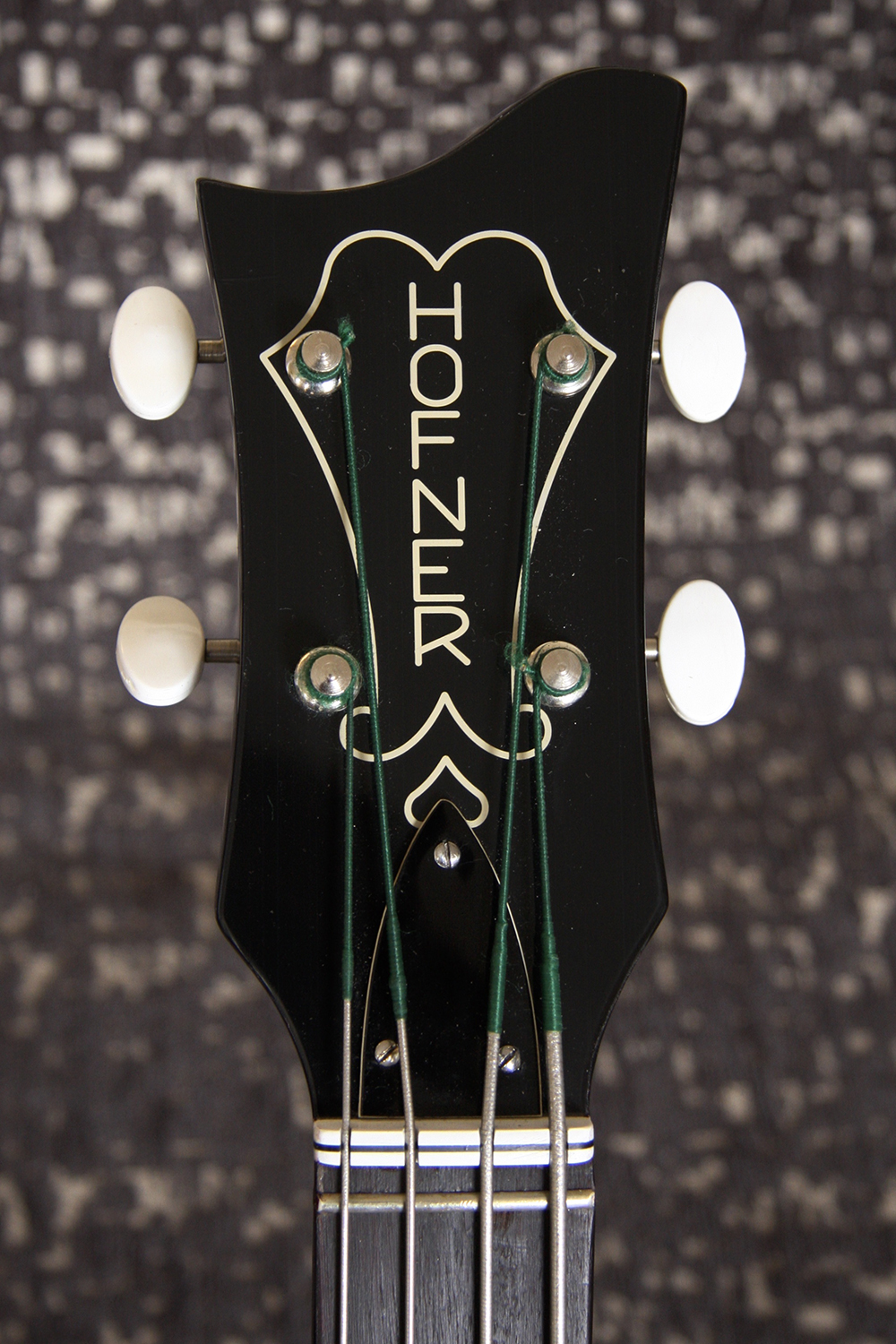
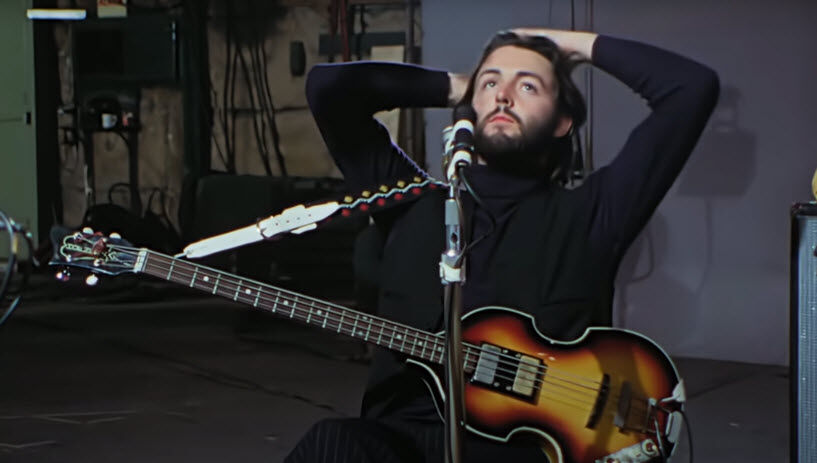
It’s called The Lost Bass Project and it has been set up to find Paul McCartney’s lost 1961 Höfner bass guitar.
This is the bass McCartney played at the Top Ten Club in Hamburg in 1961, at the Cavern in Liverpool, and on those first Abbey Road recordings. This is the bass you hear on ‘Love Me Do’, ‘She Loves You’, and ‘Twist and Shout’. The bass that powered Beatlemania – and shaped the sound of the modern world.
But in late January 1969, when The Beatles were in London recording the ‘Get Back/Let It Be’ sessions, the 1961 Höfner 500/1 Violin Bass disappeared. It has not been seen since.
The Lost Bass Project is a global search dedicated to tracing the bass – and solving the greatest mystery in the history of rock and roll.

This morning on the Australian Broadcasting Corporation’s national Breakfast Show Scott Jones, one of the team behind The Lost Bass Project, said that already – just two days in from the launch – they’re getting information that will help lead them to the famous missing instrument. He’s speaking here to host, Patricia Karvelas:
To find out more visit the project’s comprehensive website. There you’ll find all the information you need to learn the story of the ’61 Höfner, keep up with the latest developments in the search, but most importantly how you can make a contribution if you think you might have another piece in the jigsaw puzzle that might help solve the case. Also, check out the official Höfner site.
The idea here is not to find it to make money. The idea is to finally get it back to it’s rightful owner.
If you’ve been following any of the forums you’ll be aware that speculation has been rife over the last month or so about new Beatle or Beatle-related releases. Now Ringo Starr has emerged as the first to announce a new release for the Summer.
His record – another EP in what is quickly becoming a series – is called Rewind Forward. It contains four new songs – one of which is written, produced and played on by Paul McCartney.
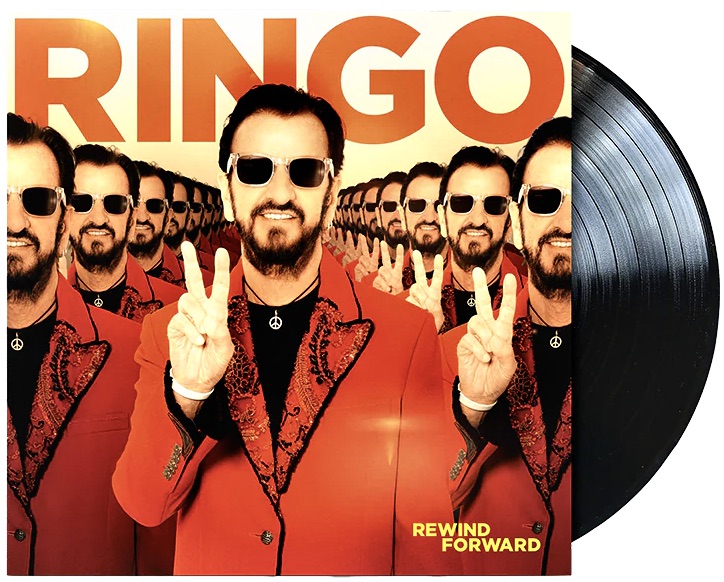
Rewind Forward is available to pre-order on the official Ringo Starr Store website from today ahead of its release on October 13, 2023.
It is available on digital, cassette, CD, and on 10” black vinyl.
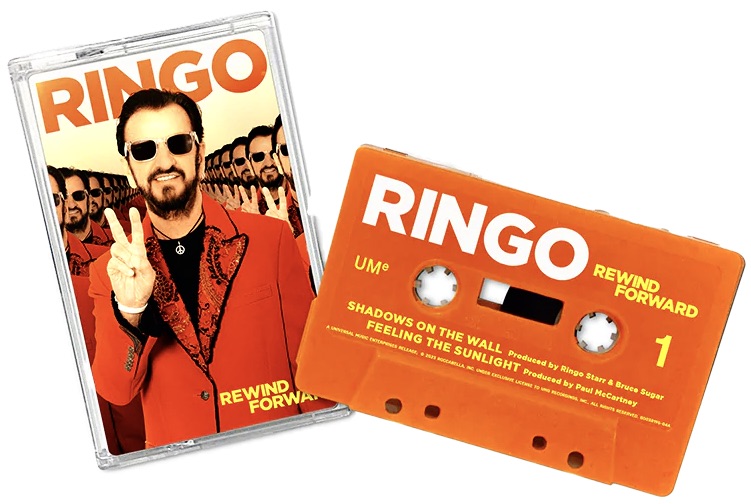
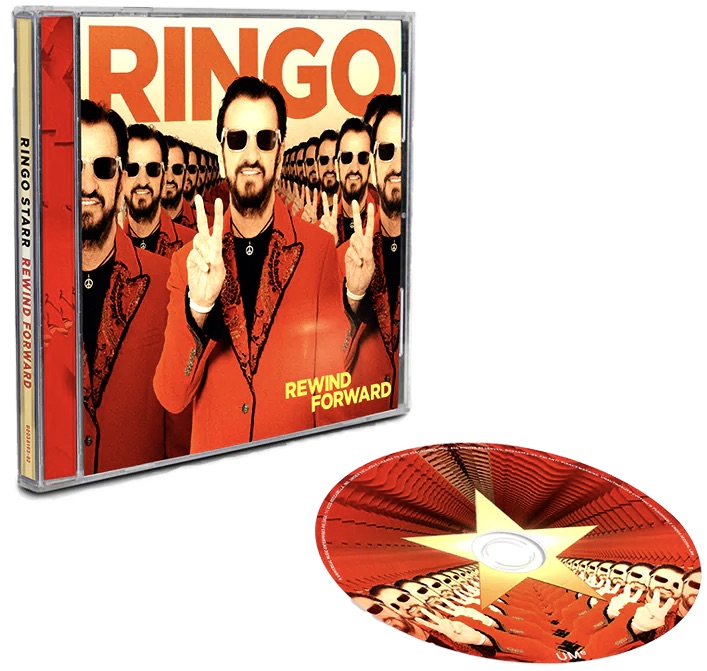
Also, the title track ‘Rewind Forward’ will be available to stream or purchase everywhere this Friday August 25, 2023.
The EP features four new songs:
1. Shadows On The Wall
2. Feeling The Sunlight
3. Rewind Forward
4. Miss Jean
Paul McCartney wrote ‘Feeling The Sunlight’. He also produced and, according to rumours, sings and plays four instruments on the track. So, it’ll be interesting to hear that one.
As to the ongoing speculation about a new Beatle release…..
In 2021 Ringo’s EP Change The World preceded the release of the super deluxe edition of Let It Be in 2021, and his last EP (simply called EP3) preceded Revolver last year. So, theoretically, are we all clear now for a big Beatles announcement?

Sometimes tip-offs about Beatle stuff come from the most unexpected places…
Beatlesblog is located in Australia, but it took an email from our friend and avid collector Andrey – based in Russia – to let us know about this magazine, out now in Australian newsagents.
Its the latest edition of Australian Guitar and, following Andrey’s email, we simply walked up to to the corner store and got a copy. Wouldn’t have known it was there otherwise!
As you can see, the mag has a major article (13 pages in all) called ‘The Ultimate Beatles Tone Guide’. In it they unpack how the band crafted their sound from the perspective of the instruments and the electronics used.

To do this writer Chris Gill examines 11 specific songs: ‘Please Please Me’, ‘A Hard Day’s Night’, ‘I Feel Fine’, ‘Ticket To Ride’, ‘Michelle’, ‘Taxman’, ‘Sgt. Pepper’s Lonely Hearts Club Band’, ‘Revolution’, ‘While My Guitar Gently Weeps’, Let It Be’, and ‘The End’.
Obviously, this article has been published previously in the US by parent magazine Guitar World (and you can read it here), but it’s nice to have a physical copy to flip through.
Being a guitar magazine the focus is entirely on the gear – the makes, model and year of manufacture, the amplifiers, studio speakers, etc. In some cases they even get right down to the likely strings used on the guitars to achieve a particular sound quality.

Gill acknowledges a big part of the challenge here is the great amount of sometimes conflicting information out there about these things. The Beatles themselves, their producer George Martin, and even engineers like Geoff Emerick, have offered over the years conflicting accounts. They even contradict themselves in some of their personal recollections.
So, its a tough ask to get this stuff right. Gill says that what the feature contains are his best efforts to determine the guitars, basses, amps and effects actually used. He admits it is not perfect and in many cases highly speculative (for example the amp used by John Lennon to record his solo on ‘The End’), but he reckons it is a good guideline for any guitarist wanting to replicate those magic sounds.

The feature is richly illustrated with great photos and examples of the the actual guitars and amplifiers, plus a list of suggestions for modern-day or way less expensive alternatives to get your hands on if you want to sound like John, Paul or George.
And yes, there’s a whole section on guitar string specifics. To quote: “Many guitar nerds note that perhaps the most important detail of replicating the Beatles’ tones after their guitars and amps is the types of strings that they used. It is generally believed that Harrison and Lennon used flatwound strings in the early years up until late 1965, just after the release of Rubber Soul. After that, from Revolver and beyond, they apparently switched to roundwound strings.” Check out the section on string theory here.
The feature ends with a short article called ‘Beatles Unplugged – A Guide to the Fab Four’s Acoustic Arsenal’. You can read that too online here:

The podcast, which is called McCartney: A Life in Lyrics, starts on September 20. It promises listeners a fly-on-the-wall opportunity to sit in on recordings of conversations made over many years between Paul McCartney and poet Paul Muldoon as they dissected the people, experiences, and art that inspired his songwriting.
The conversations between the two were a central part of their process in compiling the book The Lyrics: 1965 to the Present, released in hardback in 2021, and just about to be re-published in paperback form – with added chapters.
Over two seasons and 24 episodes the podcast will let us in on how that book came together. We’ll be able to hear what is described as “a combination master class, memoir, and an improvised journey with one of the most beloved figures in popular music”.
Each episode will focus on one song from McCartney’s catalog and will span early Beatles through to his solo work.

You can listen to a promo for the new podcast here:
A longer introduction to the podcast series is here: Welcome to McCartney: A Life in Lyrics.
For more background on how it all came about there’s also an interview in The Verge with Justin Richmond, Executive Producer of the podcast. It’s really interesting. “The idea for the podcast came through McCartney’s production team, from the person in charge of special projects. The sort of system that [McCartney and Muldoon] came up with to write [The Lyrics: 1956 to the Present] is that Muldoon turns up to McCartney’s house, turns on his phone, and records a conversation between the two of them. Eventually, the pandemic happened, lockdown, etc., and some stuff was delivered over Zoom.”
“My read on it is that after the stress of getting the book together was relieved, they were sort of realizing that they have hours of Paul McCartney being candid in a really special way. It’s not like this was expertly recorded in the studio. It’s not as if he was sitting down to be Paul McCartney of The Beatles to give an official interview about the band. These [recordings] really have the tenor of someone sitting down with a friend and having a leisurely chat about times past. And McCartney’s “times past” happens to be, for him, The Beatles and Wings and a litany of incredible solo work.”
Season One drops weekly starting September 20. It will feature twelve episodes examining ‘Eleanor Rigby’, ‘Back in the USSR’, ‘Let It Be’, ‘When Winter Comes’, ‘Penny Lane’, ‘Uncle Albert/Admiral Halsey’, ‘Here Today’, ‘Live and Let Die’, ‘Magical Mystery Tour’, ‘Jenny Wren’, ‘Too Many People’ and ‘Helter Skelter’.
Season Two will follow with an additional 12 episodes in February, 2024.
McCartney: A Life in Lyrics is a co-production between Pushkin Industries and iHeartPodcasts.
(If you don’t want to wait for each weekly episode and need to binge the whole series all at once you can subscribe to Pushkin+ to get access to all of Season One on September 20).
Let’s get this straight up front. Luca Perasi’s Paul McCartney: Music Is Ideas – The Stories Behind the Songs (Vol.1) 1970-1989 is a big, weighty tome. It is way more book in real life than you might imagine from seeing it pictured on the web. At over 520 pages Music Is Ideas is thick and packed with tons of useful information. Its an obvious labour of love into which he’s poured an enormous amount of thought, hard work and creative effort.

Obviously Music Is Ideas serves as a very handy adjunct to McCartney’s own award-winning, two-volume set The Lyrics (published in 2021) which covers off a selection of just 154 songs from Paul’s earliest boyhood compositions, his Beatle days, some Wings songs, and solo work to the present day. Perasi’s book however extends and amplifies this with it’s aim (eventually in subsequent volumes) to detail absolutely every post-Beatle composition we know of. This first installment – Volume 1 – closely examines 296 released songs, plus a further 50 unreleased works. It should be said too that The Lyrics is a book Luca Perasi knows extremely well. It was he who officially co-authored the translation for the Italian market.
Music Is Ideas is also a natural partner to the terrific Allan Kozin and Adrian Sinclair release published just at the end of last year, The McCartney Legacy – Volume 1 1969-1973. While that work deals more with the day-to-day life of McCartney (and so far only goes up 1973), these two books together will provide the reader, collector, or anyone even vaguely interested in popular music and the process of songwriting with an in-depth examination of the life and work of one of our most important creative artists.
And let’s not forget Perasi’s previous runs on the board in the form of his 2014 book Paul McCartney: Recording Sessions 1969-2013 – A Journey Through Paul McCartney’s Songs After The Beatles, and his work with McCartney’s MPL company with additional research for the recent The 7″ Singles Box Set. So, there’s no question – this guy knows his stuff.
As mentioned, this latest book includes all the songs released by McCartney on album or as singles, plus side projects or songs written or co-written by him between 1970 and 1989. In other words, everything from McCartney to Flowers In The Dirt. That’s a total of 296 entries. This includes songs he didn’t write himself but has recorded (think Choba b CCCP), plus songs composed and recorded during the preparation of particular albums but maybe not released until much later. These are clustered together at appropriate points in the timeline so as not to be missed. In addition there are 50 completely unreleased songs detailed. There is also an index and a bibliography at the end which is always good to see.
Each entry deals with the story behind the song in detail: its inspiration, the demos that were recorded, as well as the studio recordings themselves. How were they made? Where was each song recorded? Are there alternative versions? And on which album or albums does the work appear?
As you read it becomes clear that Perasi tries to cover off five main aspects for each entry. He begins with an analysis of the songwriting technique employed by McCartney for the particular work – in other words how the song came into being in the first place, and by which means.
A second analysis is around the genre utilized. Paul McCartney’s vast catalogue ranges across experimental and rock’n’roll, to traditional music hall and classical. Over the years he’s dabbled in reggae, blues, folk, country, disco, children’s music and new wave, a huge array of influences – sometimes following but also often leading the way with avant-garde and electronic sounds. So, what are the influences? These are mentioned in each entry.
The third examination in each entry is how Paul worked in the studio to get the recording down. The Beatle years were a steep learning curve for him of discovering just what could be achieved in the studio and how to use the studio as an instrument in itself. So, what were the processes for each recording? These are touched on in each entry in the book.
Fourthly comes an accounting of the instrumentation used on each track. McCartney is well-known as a master of many instruments – not the least of which is his own voice. There is an in-depth look in each entry at who played what, and how. Specific attention is paid to the many vocal influences and techniques employed too. What is the style at play in any given song?
Lastly there’s consideration paid to the lyrics. What is the song about? How has it been written? What is McCartney’s main theme? Perasi breaks down each of the songs in an effort to understand and appreciate the poetry (and sometimes call out the doggerel!) for each entry.
Let’s take one example to illustrate for you what a typical entry might involve. A prime candidate is that quintessential McCartney song from the 1970s – ‘Silly Love Songs’.
This is entry 126 (on page 233) of Music is Ideas. Composition is credited to Paul and Linda. We learn in the first instance that the basic track was put down at Abbey Road Studios on January 16, 1976 with just guide vocals and piano from Paul and drums by Joe English being recorded. Overdubs were added during February. The engineer was Peter Henderson. A faster tempo version that is quite different appears on Give My Regards to Broad Street in 1984, there’s a live version on Wings Over America (1976), and its also appeared on the compilation albums Wings Greatest (1978), All The Best! (1987), Wingspan (2001), Pure McCartney (2016), and as a single in the The 7″ Singles Box (2022). Oh, and a demo alternate version appears on the 2014 release Wings At The Speed of Sound – Archive Collection. This demo is important as it clearly shows – which Perasi expands upon in his entry – that ‘Silly Love Songs’ was already a completely well-defined song. All the different melodies characteristic of the final version are in place. We also learn that, according to an unofficial source, McCartney had second thoughts about the initial arrangement and that a reggae version was tried out but put aside!
Then follows an in depth examination. ‘Silly Love Songs’, Parasi writes, is “…a prime example of McCartney’s polyphonic art, here using a contrapuntal technique, piling three different melodies on top of each other over the same chord pattern. The song….masterfully alternates between verses, chorus, bridge and instrumental breaks, while concentrating on a bass line that is technically simple but full of invention and which binds the whole track together….”
There’s then an explanation of how the song was arranged and how the horn and string arrangements (by Tony Dorsey) were added. Another interesting sidelight for me was that ‘Sha La La’, a hit for soul singer Al Green in 1974, was probably an inspiration: “The link between the two is clear in many respects, such as the horn and string arrangements as well as the melodic and jagged bass line.” True.
The single was a huge hit around the world, reaching number 1 on the Billboard charts in the US, and was also number 1 in Canada and in Ireland. In the UK it peaked at number 2. (Incidentally, it only got to number 20 here in Australia!)
And so similar information is provided for each of the 296 song entries. There’s also a mix of shorter and longer entries for the 50 unreleased tracks, making this book is a great companion as you listen to your Paul McCartney collection.
It all adds up to an intriguing mix of information that truly demonstrates that music is indeed about ideas, and that the prolific Paul McCartney is never short of them.
Music Is Ideas – The Stories Behind the Songs (Vol.1) 1970-1989 is guaranteed to inform, stimulate, and lead to further exploration of the music.
Highly recommended. Bring on Volume 2!
Find out a whole lot more at: www.mccartney-musicisideas.it/
Luca is already working on the next in the series, in fact the whole series is mapped out as follows:
– Paul’s discography (Vols. 1 and 2)
– Collaborations and appearances on other people’s records (Vol. 3)
Volume 2 is expected mid 2024, and Volume 3 is due mid 2025.


Cool cover, huh?
That cover is a harbinger of what is contained inside.
Let’s get straight to the point – this is one of the best studies of Paul McCartney and his solo music you are going to find. Epic and essential, full stop.
The McCartney Legacy by Allan Kozinn and Adrian Sinclair is the first installment of what will become a multi-volume set. As its subtitle suggests, Volume 1 captures the life of McCartney in the years 1969-1973. That’s immediately following the dissolution of the Beatles, a period in which he had to recreate himself as both a person and a performer. In musical terms, this first volume takes us from the LP McCartney through to Band On The Run.
This book is a seriously in-depth and revealing exploration of McCartney’s creative and personal life. The thought and research that has gone into it is immediately evident. But it’s not scholarly and cold in tone (as some highly researched books can be). It’s actually a real page-turner! Kozinn and Sinclair write in a conversational and descriptive style that belies the hundreds of interviews, extensive ground-up research, and the thousands of never-before-seen documents they’ve trawled to give us a very approachable and personal story. They are very good storytellers and it is almost guaranteed that every couple of pages you will learn something you didn’t know about Paul McCartney and his music.
Kozinn and Sinclair initially set out to do a book about McCartney’s solo time in the studio, detailing recording dates, personnel, etc. – a bit like Mark Lewisohn’s 1988 book The Complete Beatles Recording Sessions, but looking at Paul’s solo career. However, following a couple of interviews with former Wings drummer Denny Seiwell and the discovery of a treasure trove of additional information that he had, the pair decided to change tack and broaden the scope of their book considerably.
Once you read this book you’ll have a renewed insight into the music McCartney created across this period. In fact with the clever connections the authors make and the stories they tell you’ll never be able to hear some songs in the same light again. Take for example ‘Another Day’. In late 1970 and early 1971 the song was being recorded and worked on as part of the preparations for the album Ram. But Paul, knowing that in February 1971 he had coming up a key court date in the messy ‘divorce’ proceedings that were under way with his former band mates, wanted a new single to be out and played on the radio to coincide with his and Linda’s court appearance. He settled on that single being ‘Another Day’ to send a subtle message that nothing could faze him. Despite his life and business dealings being publicly picked over, for him this was just another day: “It’s just another day, du-du-du-du-du, it’s just another daaaaaay!”

Alongside the copious information on every page there are many illustrative photographs and memorabilia scattered throughout as well, as are frequent breakout boxes containing the aforementioned dates detailing his recording sessions.
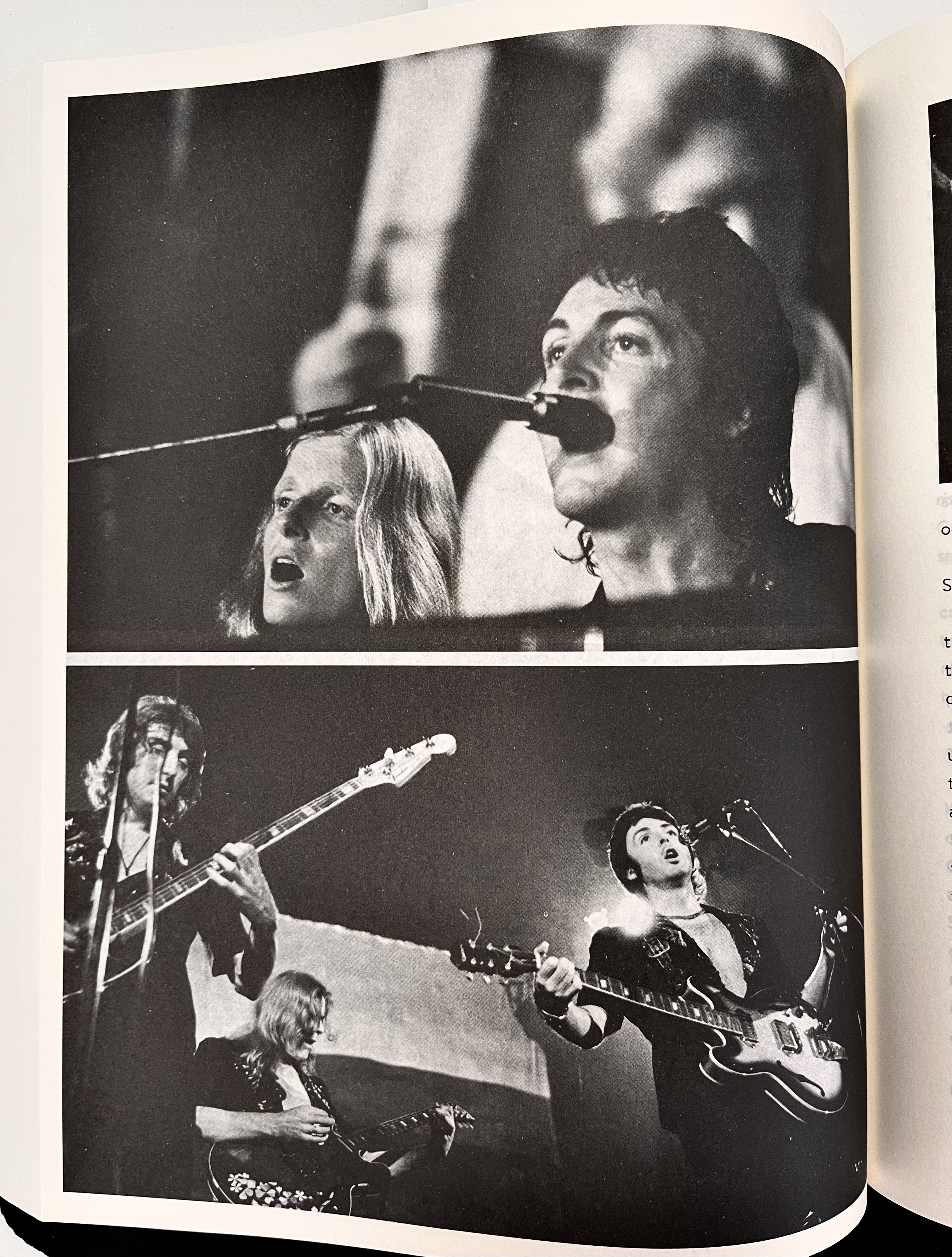
If this truly is the first of a multi-volume set, let’s hope that subsequent volumes arrive much faster than Lewisohn’s 2013 biography of The Beatles. Ten years later we are still waiting for Volume 2 of his epic…..
Kozinn and Sinclair however say they’re well under way with preparations for The McCartney Legacy Volume 2. It should be in stores in late 2024. It will cover the years 1974 – 1980. We can’t wait to read the next installment!
Volume 1 is getting rave reviews. The only criticism of it we’ve seen so far is that the font used is a bit small and spindly to read! (FYI it looks like a slight variation of a font called Brandon Text Light).
You can read a generous extract of The McCartney Legacy here to see if you like what you see.
If audio books are more your thing, here’s an extract from the Introduction, read by Simon Vance, to further whet your appetite:
The McCartney Legacy Volume 1 is published by Dey Street books (an imprint of Harper Collins).
It’s available in hardcover, paperback, e-book and, as mentioned, an audio book and audio CD:

The McCartney Legacy Volume 1 1969-73 is highly recommended.
It’s not often we get to bring you news relating to The Beatles directly from here (down under in Australia) – but there is some today.
It’s been announced that an original REDD.17 mixing console, used to record and mix music at the famous Abbey Road Studios studios in London, is now the centrepiece of a brand new new recording studio at the amazing Museum of New and Old Art (MONA) located just outside Hobart, Tasmania.
The vintage console, one of only four ever built, was one of those used to mix several Beatle albums. It is now part of Frying Pan Studios on the grounds of the museum, and has become the first working recording studio housed by a museum in Australia.


The console was purchased back in 2014 by Australian businessman David Roper. He started discussions with MONA’s artistic director of music (and Violent Femmes bassist) Brian Ritchie about the studio-in-a-museum idea. They took it to flamboyant MONA founder David Walsh who liked the concept and funded the creation of Frying Pan Studios, so named because it sits opposite Frying Pan Island right next to the museum and the beautiful Derwent River.
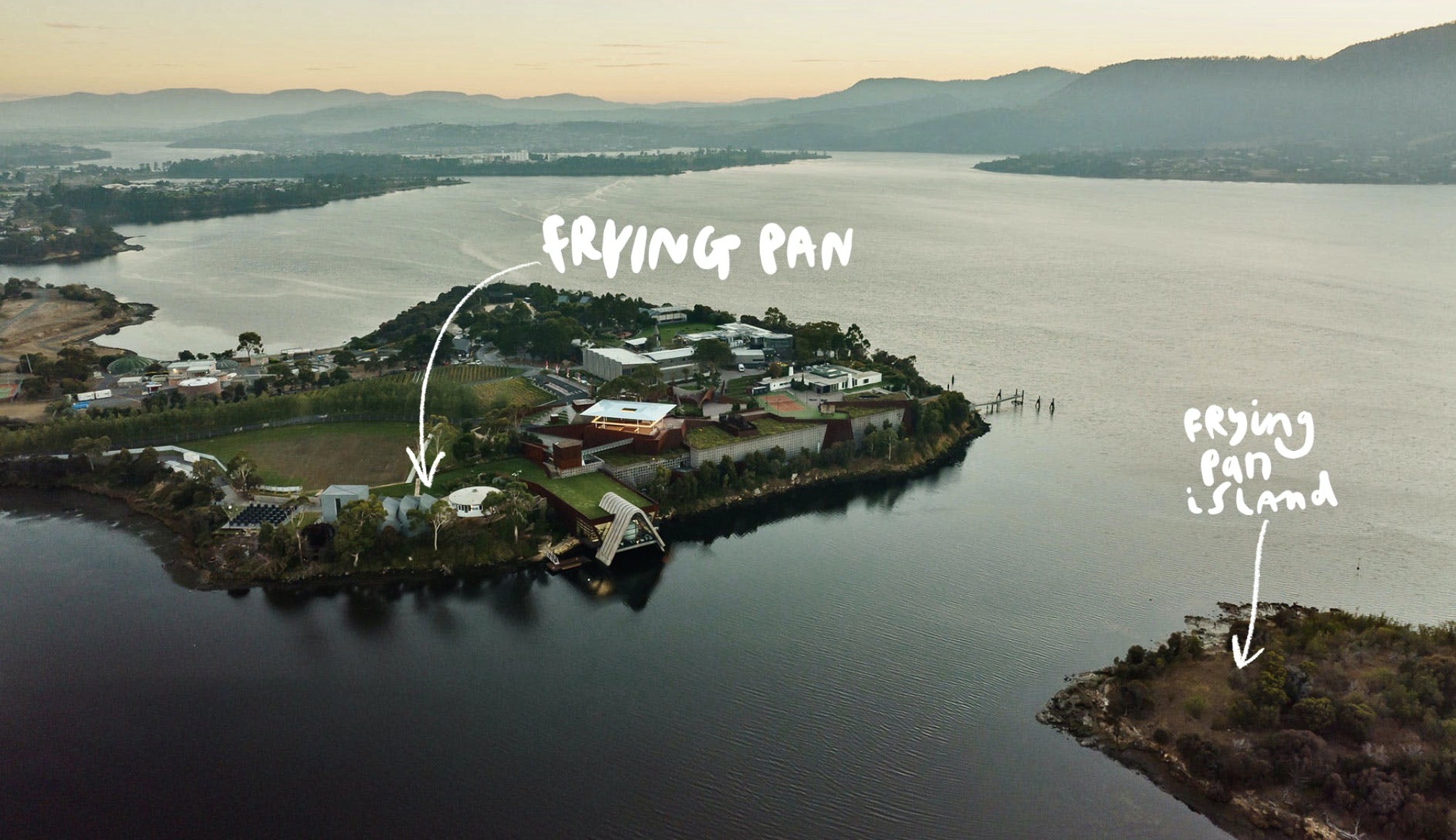
Frying Pan is a working studio and so it’s bookable facility. You can find more details here. Maybe you’d like to record your own album using the very same mixing desk that John, Paul, George and Ringo used!
You can also visit the studio as part of your ticketed entry into MONA and, if you time it right, actually see musicians at work. It does look like an incredible place to work and create:
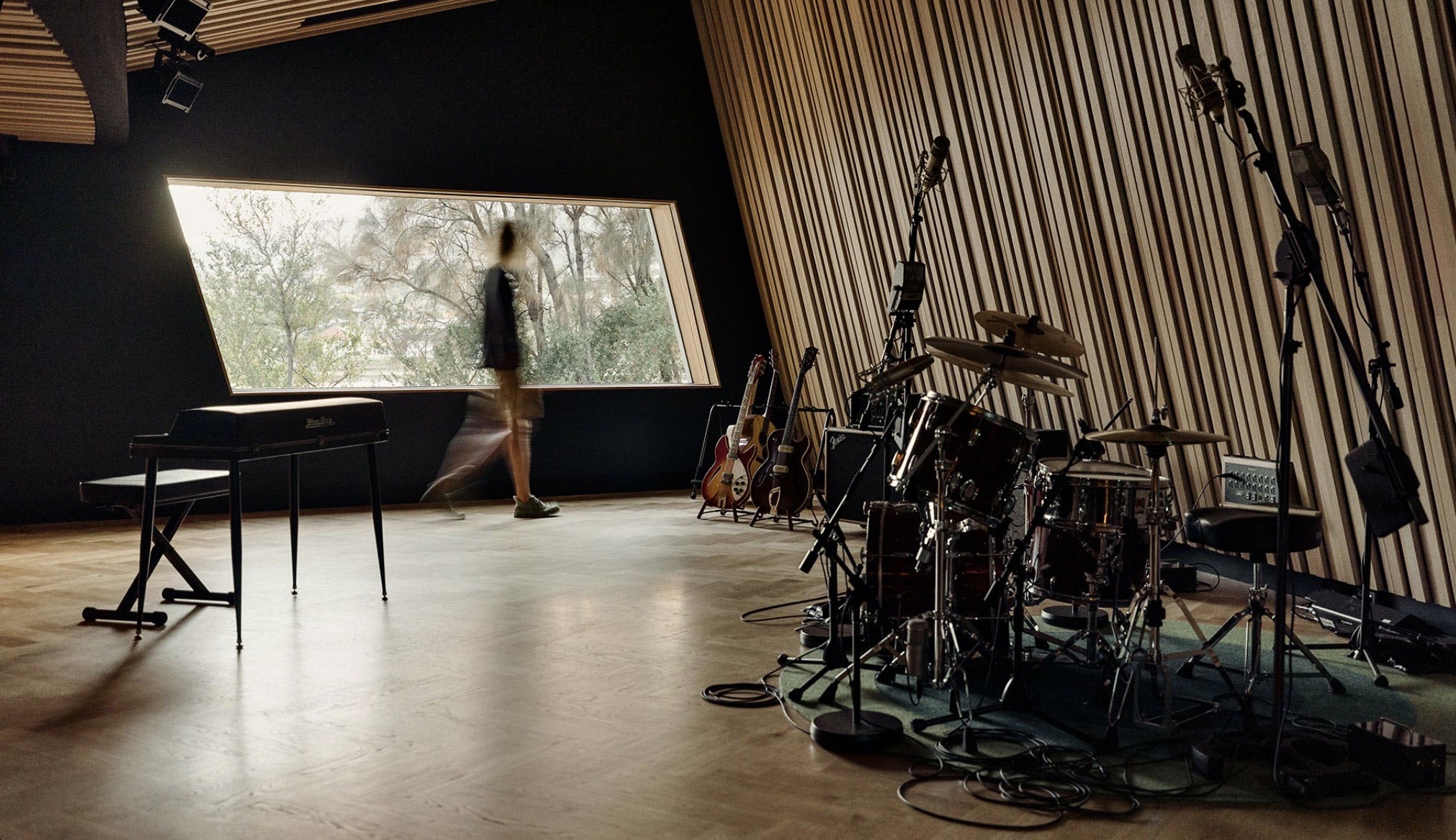

Frying Pan Studios have built a great interactive website that gives you more on the history, the facilities, and the amazing location.
You can also check out this article from the Australian Broadcasting Corporation (ABC) for more.

Last year saw the release of the lavish Let It Be box set. It celebrated the final Beatle LP, their swansong after a ten-year run as the biggest band in the world. The box set was accompanied by Peter Jackson’s extended 8-hour documentary Get Back, detailing the creation of the album. Despite the fact that Let It Be had been recorded more than a year earlier, its May 1970 release has forever seen it associated with the news that The Beatles were to continue no longer.
However, with an organisation as tight and complicated as The Beatles (along with their company Apple Records), things weren’t destined to cleanly end for them overnight.
It would take until the close of 1974 before all four members had signed the contracts that dissolved their immense, famous and complex partnership.
This, argues author Terry Wilson, makes the period from 1970 to 1974 a “second phase” for the band. Despite each member pursuing solo careers, technically they were still The Beatles and this continued on across that four-year span. As individuals they were tied together legally and financially. And they worked together collaboratively on many solo and other projects.

Wilson’s book is called Four Sides of the Circle. In it he details this often overlooked “second half” in the history of the band. It was an era of huge creativity and output. An era that gave us absolute standout releases like Lennon’s John Lennon/Plastic Ono Band and Imagine LPs, McCartney’s RAM and Band on the Run, Harrison’s All Things Must Pass, and Starr’s Ringo, along with a myriad of other great and sometimes lesser-known songs and recordings.
These happened because band member collaborations continued in a variety of forms throughout this distinct “Phase II”. Their paths inevitably crossed both in and out of the studio despite the huge dissolution process looming over them.
Four Sides Of The Circle uses a very accessible song-by-song format, stepping through (in chronological order) all the formal recordings the individual Beatles made between1970-1974. It actually begins slightly earlier with John Lennon’s ‘Give Peace A Chance’ from June 1969, and concludes with Wings ‘Love In Song’, recorded in November, 1974. Every song – released and unreleased – has production details, recording location, who played what and (where applicable) the US and UK release dates. The song is then discussed by Wilson and critiqued with an appreciative eye. Each song is given a context with a clear emphasis on the music being made. This detailed and sequenced approach presents a true chronology of the period for the first time.
This is a book with something for even the most well-informed Beatle fan. Wilson is comprehensive and knowledgeable. There’s great detail here. In many ways he takes quite a scholarly approach – but the research never gets in the way of making Four Sides Of The Circle very readable. It finally completes the fascinating, long and winding story that was the Beatles. A story where – right to the last – they remained at the top of their game.
As Wilson writes on the final page of his book: “The legal conclusion of the Beatles technically occurred on 9 January 1975, when McCartney’s four-year-old case was settled, the completed paperwork having been sent back to London for the court to make its formal declaration. A cursory glance at the current edition of Billboard shows that on this day, Lennon was at 47 on the singles chart with ‘#9 Dream’; Harrison was at 16 with ‘Dark Horse’; Starr was at 7 with ‘Only You’ and McCartney was at 4 with ‘Junior’s Farm’. Appropriately, Lennon and McCartney were at number 1, courtesy of Elton John’s version of ‘Lucy In The Sky With Diamonds’ on which Lennon sang and played.”
“They ended at the very top.”
Four Sides of the Circle is a great read and a fantastic reference book. Not only does it contain extensive background and historic notes on each song, in the appendices there’s a complete song list, record release details (complete with US and UK chart positions), a bibliography, and what we always like to see in books like this: an Index. It is the sort of book you can dip in and out of endlessly. Here’s the blurb on the rear cover:

At over 420 pages Four Sides of the Circle is very reasonably priced. You can find it on Amazon Australia, Amazon US and on the Amazon UK site as well. The US and UK sites also have a “Look Inside” feature so you can check out sections of the book in more detail. It will give you an idea of the format and content. You won’t be disappointed.
 Beatles Blog