George Harrison Estate Launches New Record Label

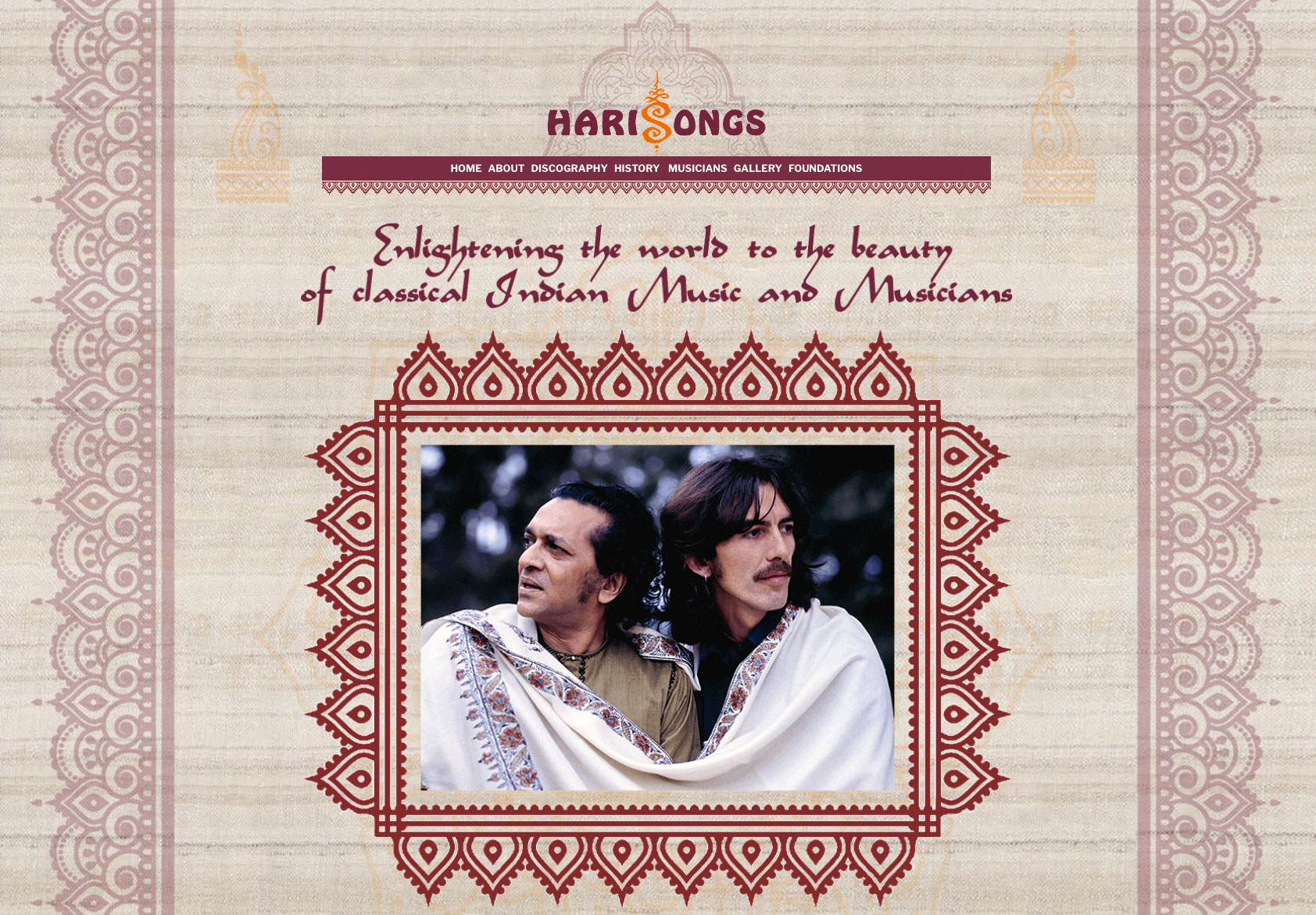
The estate of George Harrison has just announced a new record label which will be dedicated to re-issuing some of the Indian classical and World music that George so dearly loved.

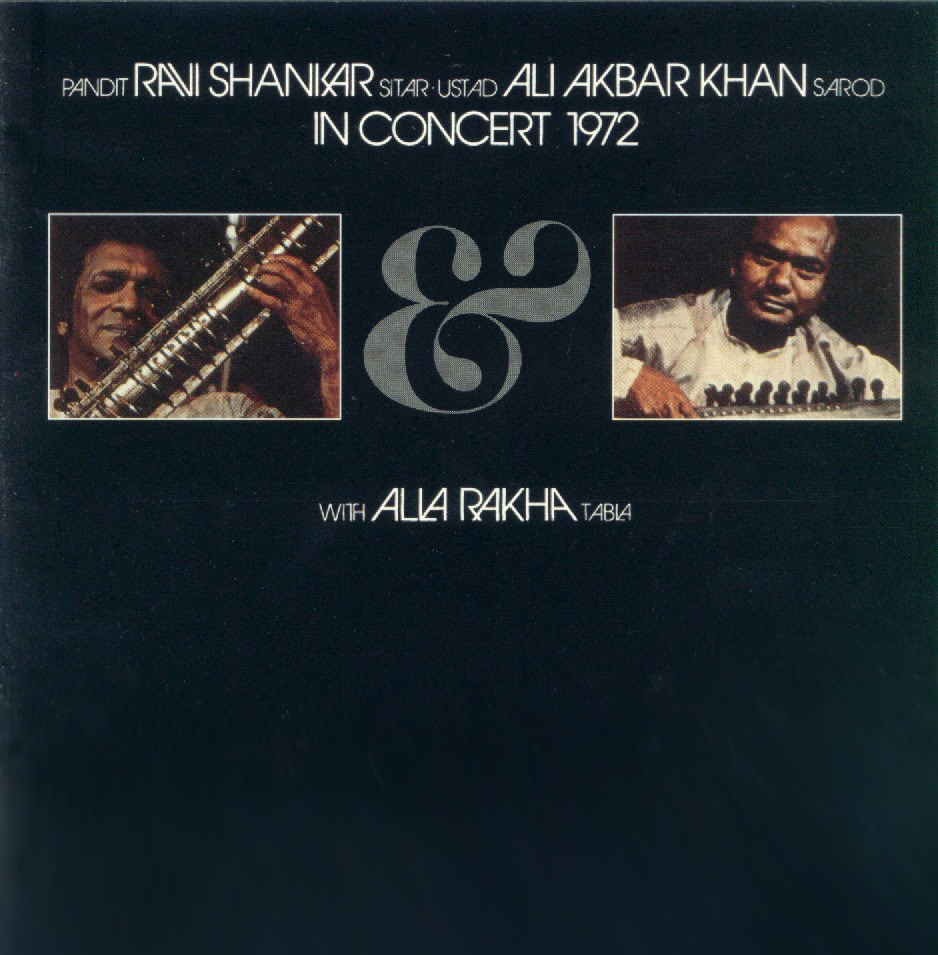
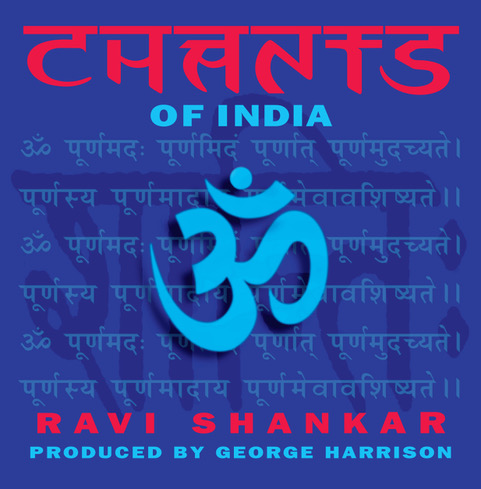
The label, called HariSongs, is kicking off by making two titles available to stream or download: In Concert 1972, featuring virtuoso’s Ravi Shankar and Ali Akbar Khan recorded live at New York’s Philharmonic Hall; and Chants of India, another Ravi Shankar project dating back to 1997. So far there is no talk of any physical product being made available, but there is a brand-spanking and comprehensive new website to go along with the new label.

In Concert 1972 was originally released on the Beatles’ Apple Records label in 1973, and was mixed and edited by George Harrison (with Zakir Hussain and Phil McDonald).

Chants of India, produced by George Harrison, was originally released in 1997 on the Angel Records label (formerly a classical music division of EMI). It was recorded in Madras, India, and at Harrison’s Friar Park home at Henley-on-Thames in the UK.

Both titles are recently out-of-print, and have never before been available via streaming platforms. In Concert 1972 is also available in Hi-Res 96/24 and 192/24 formats.

You can read the full details of George’s dedication to and delight in Indian classical music, plus the new record label and releases in the press release issued by the George Harrison Estate here.

Brilliant New Beatle Book – Visualizing The Beatles

They say there are four basic types of learners: those who like to listen (auditory); those who like to take notes and read (reading/writing); those who like to be hands-on (kinaesthetic); and those who prefer to see the information in order to visualise the relationships between ideas (visual).

Well, if you fall into the visual camp, then you’re going to love this new Beatle book because on each of its 276 pages it packs a huge amount of data told in a truly unique way: using fantastic infographics.

Even if you’re not a “visual” person you’ll love this book for the breadth of the information it contains, and the fun, innovative way it tells the Beatle story anew. There’s really nothing else like it on the market:

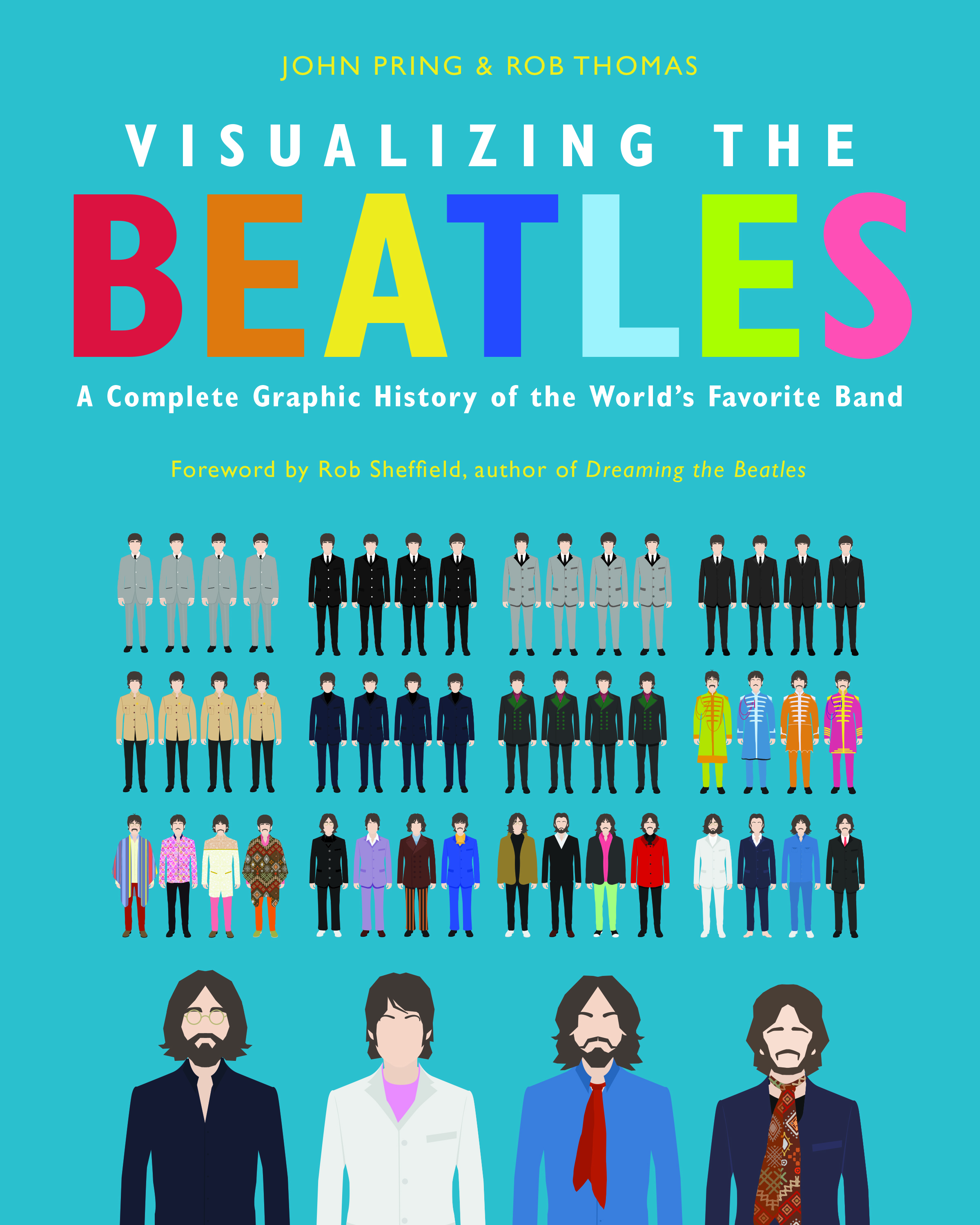
The book is called Visualizing The Beatles – A Complete Graphic History of the World’s Favorite Band. Not only does it mange to squeeze three US spellings into it’s title, it crams a truly amazing amount of facts, figures, maps, history, stories and information between it’s covers – all told using infographics. Because of this the book forces you to think about the band we all know so well in very different ways, often bringing new understanding to how four young musicians from Liverpool had such an impact on the world.

Authors John Pring and Rob Thomas organise their information in a fairly standard fashion – each album in the order it was released, starting with Please Please Me and ending with Let It Be – but the way they go about deconstructing each has a unique telling. As they say in their introductory note: “It is by no means a definitive history of The Beatles. Instead, it is an attempt to create something beautiful, vibrant, and original from the data their music left behind. It is an attempt to present the facts in a way you haven’t seen them before, so you can spot, in an instant, the patterns, anomalies and changes.”

There are infographic pages for each LP detailing (amongst many other things):

  • An album overview
  • A song lyrics “word map”
  • Composer
  • What keys the songs were in
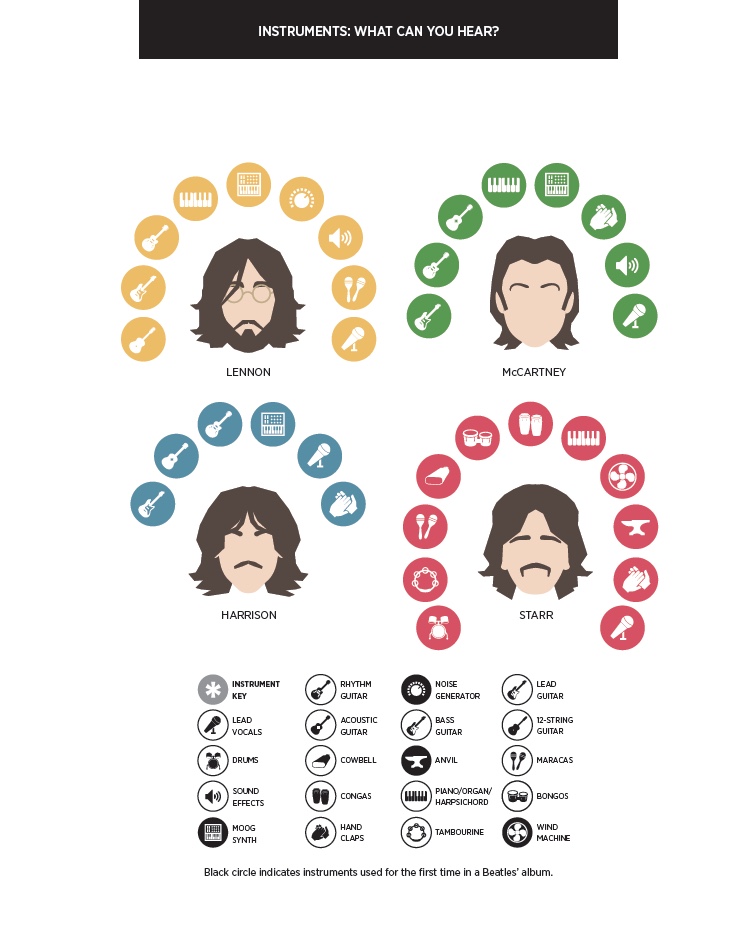
  • Instruments used
  • Album design details
  • Track lengths + original work v. covers
  • Who took lead vocals?
  • Success of the album – and any singles released

By way of example, here are a couple of pages. The first visually represents the many instruments used – and who played what – on Abbey Road, released in September, 1969:

As usual, click on these images to see larger versions. This next page covers off songwriting duties for the 1967 album Magical Mystery Tour

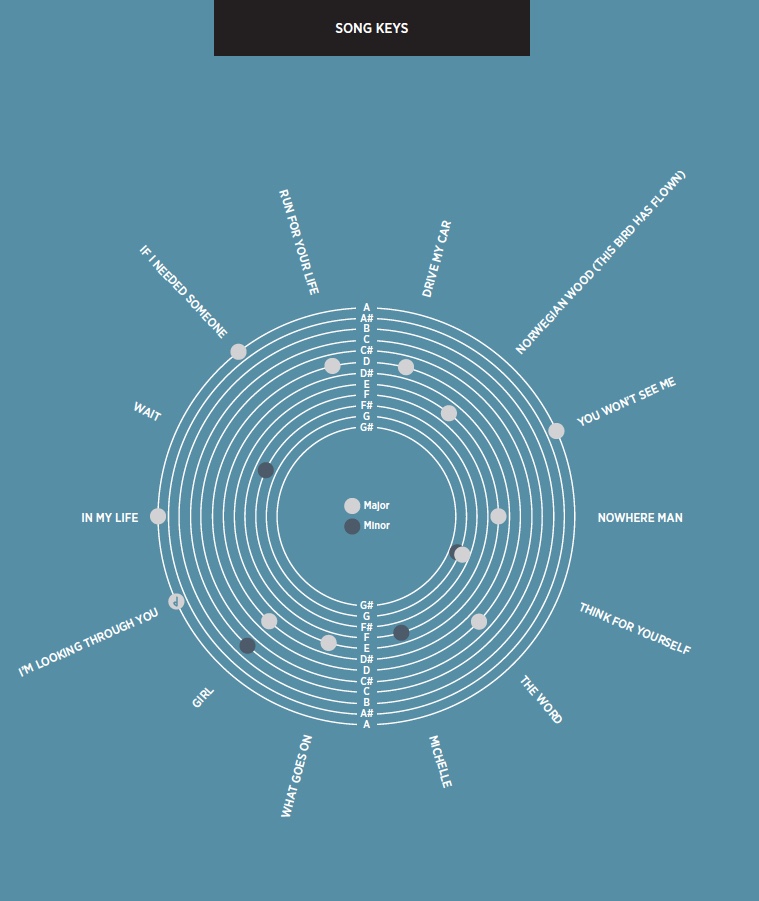
And this page shows the song titles – and the musical keys for each – on Rubber Soul from 1965:

Slowly, as you flip through the book, these images build to reveal a unique way of looking at the band’s output. Additionally, there are pages graphically representing things like all their US releases and the chart positions each achieved; a Beatle filmography; there are timelines detailing what else was happening in the world at the time of each album release; what the Beatles were wearing and their hairstyles through each phase of their career; where each album was recorded; tour maps; and key places of interest in the cities they lived in and visited, and much, much more.

One particularly interesting map page shows the city of Liverpool with flags dotted across it marking where the band lived in relation to each other; the locations of places like Strawberry Field and Penny Lane; schools and key performance venues from the early days. It is simple, but instantly gives a whole new context by visually representing basic facts from the Beatle story in a brand new way.

Visualizing The Beatles by John Pring and Rob Thomas is published by Dey Street Books. It goes on sale in the USA on May 1st. [FYI the book was originally published as Visualising the Beatles in the UK in 2016].
You will definitely learn things you didn’t know about the Beatles. Highly recommended.

Strange/Unusual Finds of the Month – Nowhere Man and Double Fantasy

Every couple of months the Lifeline organisation (which offers a free phone crisis and suicide prevention counselling service in Australia) holds a huge fundraising book fair. They always have, as a side note, lots of second-hand CDs, and usually a few records too. These are usually placed in one corner and any Beatle titles would be scattered in amongst hundreds of other artists.

However, the Lifeline book fair last month had its very own Beatles section!

Obviously someone had donated a large collection and the volunteers had hived off a dedicated section of the tables just for Beatle stuff. There were books, a small selection of LPs and CDs, plus a very large stack of 45 singles. By the time we got through the door though another collector was well into sifting through the 45’s and so we had to wait patiently by for him to finish. Sadly (for us) he took just about all of them, and we were left to pick over the remains.

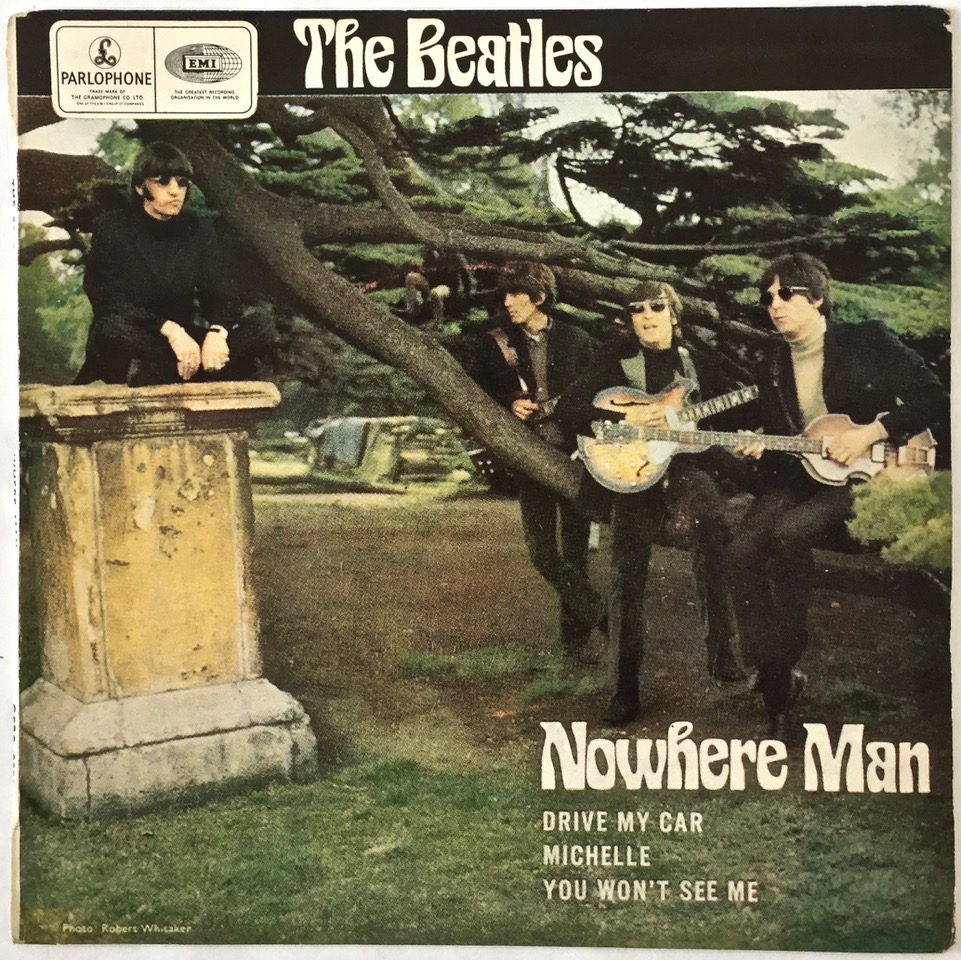
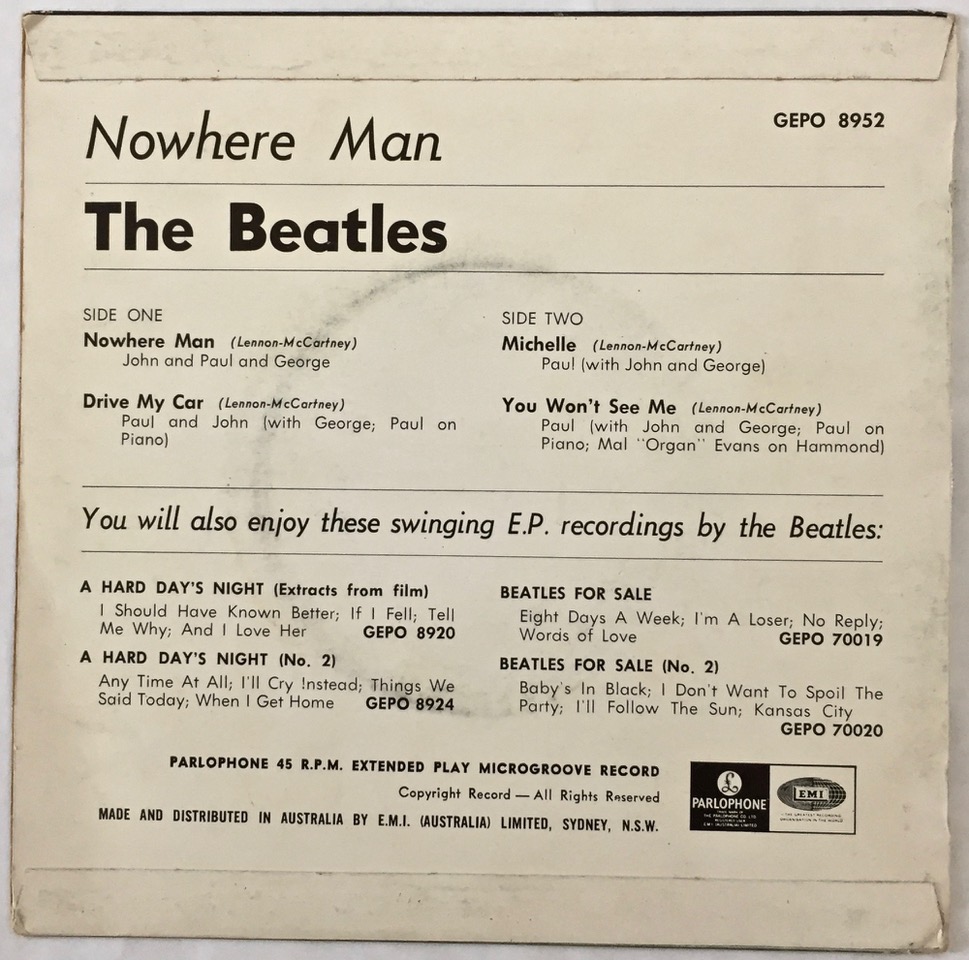
Much to our delight though we discovered a very clean copy of a Beatle EP that had been missing from the collection – one that is now considered rare and fetches hefty prices on eBay. It’s the Australian pressing of the band’s Nowhere Man EP, released on November 3, 1966:This one has the flipback tabs on the rear cover, and the early black and yellow Parlophone label with the Northern Songs royalty stamps included:We’d been looking for a copy of this EP for ages, so to find a copy in good condition was a real bonus. It completes a full set of all the Beatles’ Australian EP releases.

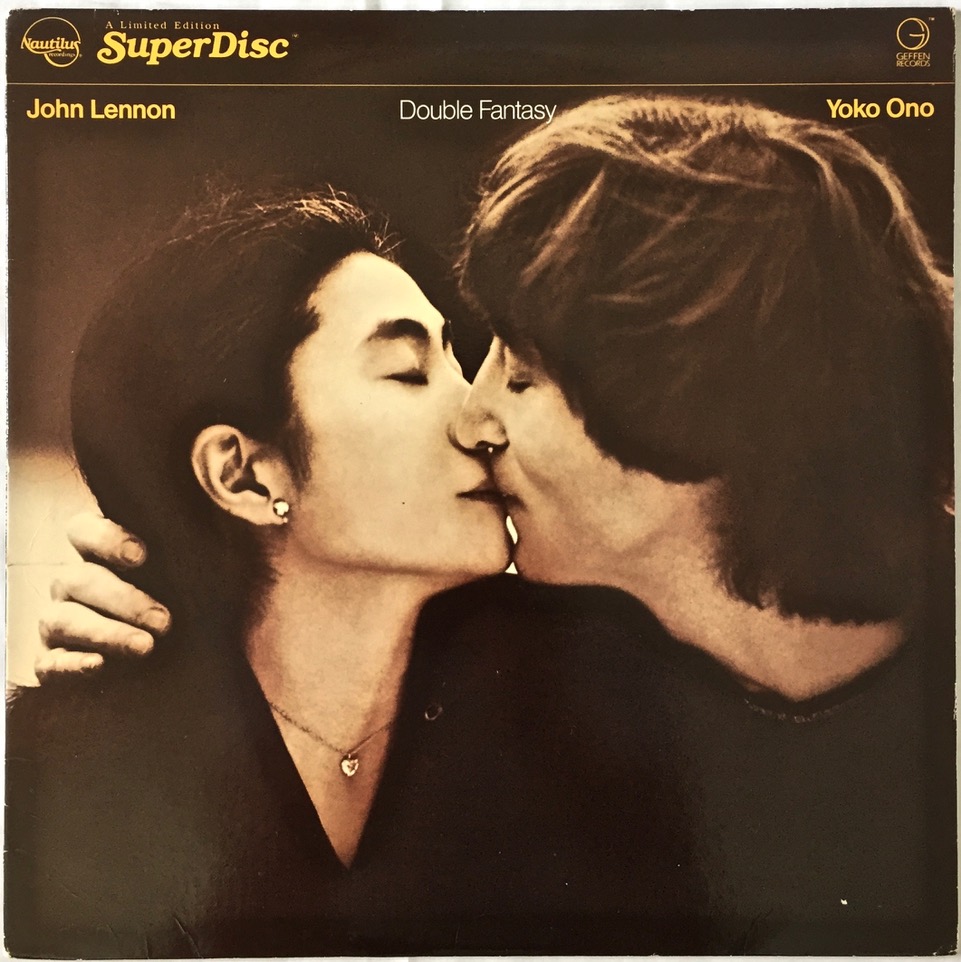
While biding time waiting for the other collector to sift through the stack of 45’s we checked out the books and the small number of Beatle albums on offer. Amongst these was this LP: This is the rarer Half-Speed mastered pressing of the John Lennon/Yoko Ono disc Double Fantasy. It is on the Geffen/Nautilus Superdisc label and dates from 1982. This limited edition release should come with a poster and a lyric sheet insert. Both these are missing, but it does have the original Nautilus ‘blue disc’ poly inner “Super Sleeve”:So, another strange/unusual find on what turned out to be a pretty good day.
More McCartney Coloured Vinyl To Be Issued

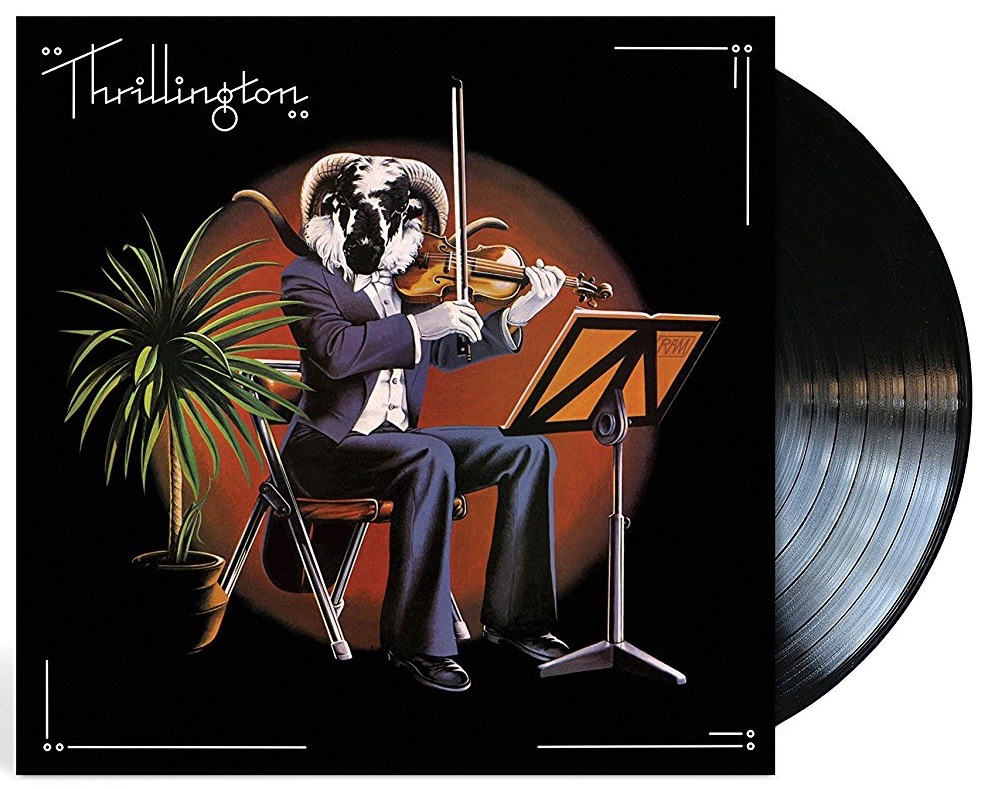
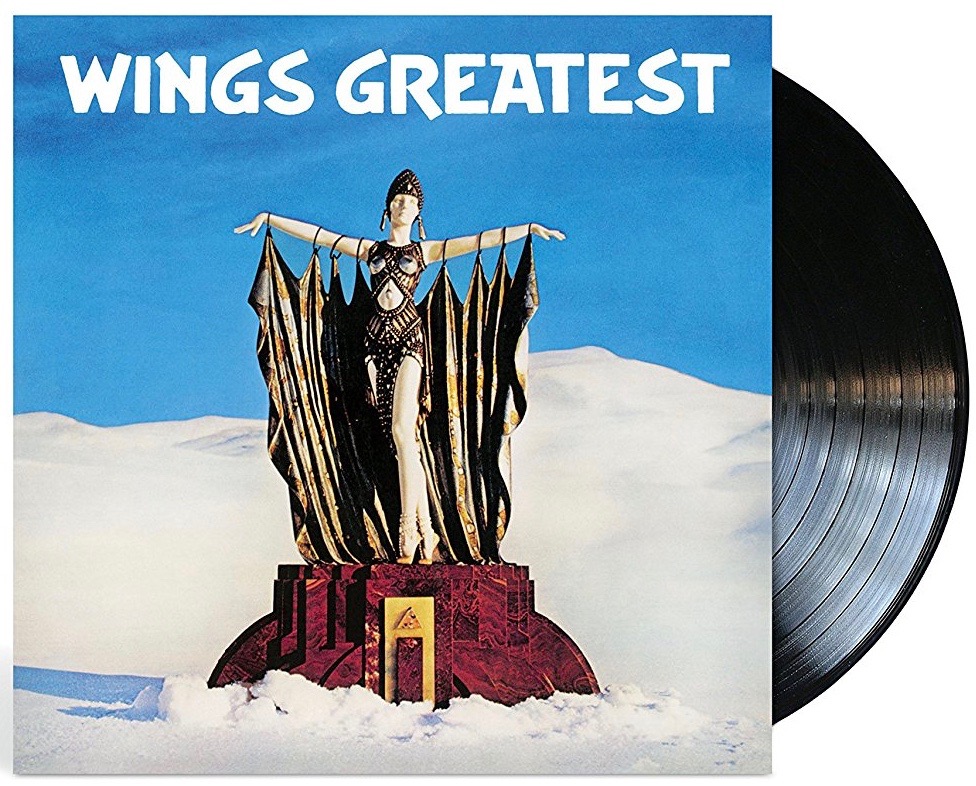
Capitol Records is following up last year’s coloured vinyl Paul McCartney releases with four more titles. These will be available on May 18 (fingers crossed, given the delays experienced last time!) and they are the albums NEW; Thrillington; Wings Greatest; and Chaos and Creation in the Backyard

As you can see, NEW is to be on pink vinyl, Thrillington on what looks to be a marbled red/black, Wings Greatest is on blue, and Chaos will be on gold coloured vinyl.

As they were last time each title will also be issued on black vinyl, and as single CD’s in the digipak format. Every release is supervised by Paul himself, who oversees all aspects of each and every title. See the official McCartney site for more details.

Vale Bruce Hamlin – Australian Beatle Collector

Some very sad news has come through that the well-known and respected Australian Beatle expert Bruce Hamlin has passed away.

Bruce ran the The Beatles Records Information Service, and he issued regular and comprehensive updates to his many email newsletter subscribers – right up until the last.

In 1981 Bruce wrote a compendium, the first of its kind for this country. It details the Beatles’ released catalogue in Australia. Called simply The Beatles Records in Australia, his book pulled together their complete discography to that date. It was self-published and limited to just 450 copies, but it stands as a unique record for collectors.

Bruce was also a supporter and regular at the many record fairs in the greater Sydney area, always there with a Beatle-themed stall and always willing to chat and share his considerable knowledge of the Beatles and their solo releases. 

Like me Bruce lived on the north side of the city and I would regularly bump into him at local garage or yard sales. Like me too he was always on the lookout for second-hand treasures, and to be honest my heart would sink if I saw that Bruce had arrived before me at a sale as I knew it would have been well picked over and that he would have found anything worth finding there! We’d still stop and have a chat and pass the time of day though. We’d talk about the latest Beatle news, and then be on our way.

The local representatives at EMI would often utilise Bruce’s expert knowledge and his extensive record collection, not only for sound but also vision. They’d come to him for advice and in 1983 he helped compile a unique Australian LP release called The Number Ones. It contained 23 Beatle songs (including three songs on a special bonus EP) that made it to the number one position on the Australian charts.

EMI Australia would also sometimes ask Bruce to appear in local promotional videos – like this one from May last year for the 50th Anniversary Edition release of Sgt. Pepper’s Lonely Hearts Club Band. Looking back at the video again it’s clear that Bruce had not been well. However, in his regular newsletters he never overtly came out and said that he was in a life and death battle. On the contrary, he always appeared eternally optimistic. Take this email from as recently as January 15 this year where he lists all the significant Australian Beatle release anniversary dates for 2018, and is looking forward with enthusiasm to likely new releases and reissues:

Well here we are at the beginning of another Beatles year..

First up, our Australian 50th anniversary of releases in 1968:

8 Feb – GEPO 70044 Norwegian Wood (EP)

22 Feb  – PCSO 7533 The Beatles Greatest Hits Vol 1 – after 20 months, finally in stereo!!

14 Mar – MMT 1 Magical Mystery Tour (EP)

14 Mar – SMMT 1 Magical Mystery Tour (EP in stereo)

29 Mar – A 8293 Lady Madonna/The Inner Light

16 May – PMCO 7016 A Collection Of Beatles Oldies – held over for a year

16 May – PCSO 7016 A Collection Of Beatles Oldies – and in stereo

4 July – GEPO 80045 Penny Lane (EP)  (the last of the original ep’s)

20 Sept – A 8493 Hey Jude/Revolution

26 Sept – APPLE 8526 Those Were The Days/Turn Turn Turn – Mary Hopkin

10 Oct – APPLE 8537 Sour Milk Sea/The Eagle Laughs At You – Jackie Lomax

4 Dec – PMCO 7067-8 The Beatles (the double white album)

4 Dec – PCSO 7067-8 The Beatles (double White in stereo)

So that’s 13 reasons to party down in 2018. Especially for those of us who were around then.

For those not around here are some 40th Anniversaries to celebrate – 1978:

9 Jan – 2001 751 Sneaking Sally Through The Ally/Tango All Night – Ringo

23 Mar – A 11687 With A Little Luck/Backwards Traveller-Cuff Link – Wings

3 Apr – PAS 10012 London Town – Wings

29 May – 2310 599 Bad Boy – Ringo

19 Jun – A 11746 I’ve Had Enough/Deliver Your Children – Wings

21 Aug – A 11787 London Town/I’m Carrying – Wings

28 Aug A 12000 Sgt. Pepper’s Lonely Hearts Club Band/With A Little Help From My Friends/Within You, Without You

9 Oct – 2001 787 Lipstick Traces/Bad Boy – Ringo

29 Nov – BC 13 The Beatles Collection (13 lps in imported box)

29 Nov – PSLP 261 Rarities – included in the above box set.

4 Dec – P 256 Wings Greatest – Wings

Another 11 parties to be had.

So what can we expect in 2018 ?? I very much doubt we will get another Beatle to tour our country.

Ringo’s 2 most popular albums are due for the 180g treatment on 26 January, Ringo and Goodnight Vienna. So that will really kick the year off.

There should be another new album from Paul probably mid year. Supposedly with a TRUMP comment included on it.

Another Archive Series box set – maybe Red Rose Speedway – it’s overdue.

After the Christmas singles box set just released, expect the album for next Christmas, the American version for America and the UK version for the rest of the world, so you have to buy it twice. If we are lucky the CD release will wait until 2019 and again with the 2 different covers. Double dipping into our pockets yet again.

3 more of Yoko’s early albums, on white vinyl, black vinyl and CD, all nicely remastered by Sean.

John’s Imagine album is due for the ‘Archive’ style treatment, I wonder if they will do a good a job as Vigotone did with 5 CD’s worth of unreleased material!!

Expect Sean to have several more side projects popping up and Dhani probably will have at least one new release in 2018.

Now that Paul’s current world tour is almost over, perhaps a live album and DVD!

And it’s still only mid January.

Hurstville Record Fair on 14 February.

Cheers till next time,

Bruce

I think you can detect above an essence of optimism in that newsletter, a continuing energy and love of the band that he’d followed so closely since his early teens and for all his adult life.

I was very saddened to hear the news of Bruce’s passing and my condolences go out to his family for their loss. Bruce will be missed. His energy, enthusiasm and knowledge about the band he loved so dearly was extraordinary.

Ringo Starr – Vintage LP Finds

For some reason or other our Ringo Starr collection has grown exponentially over the last couple of weeks….

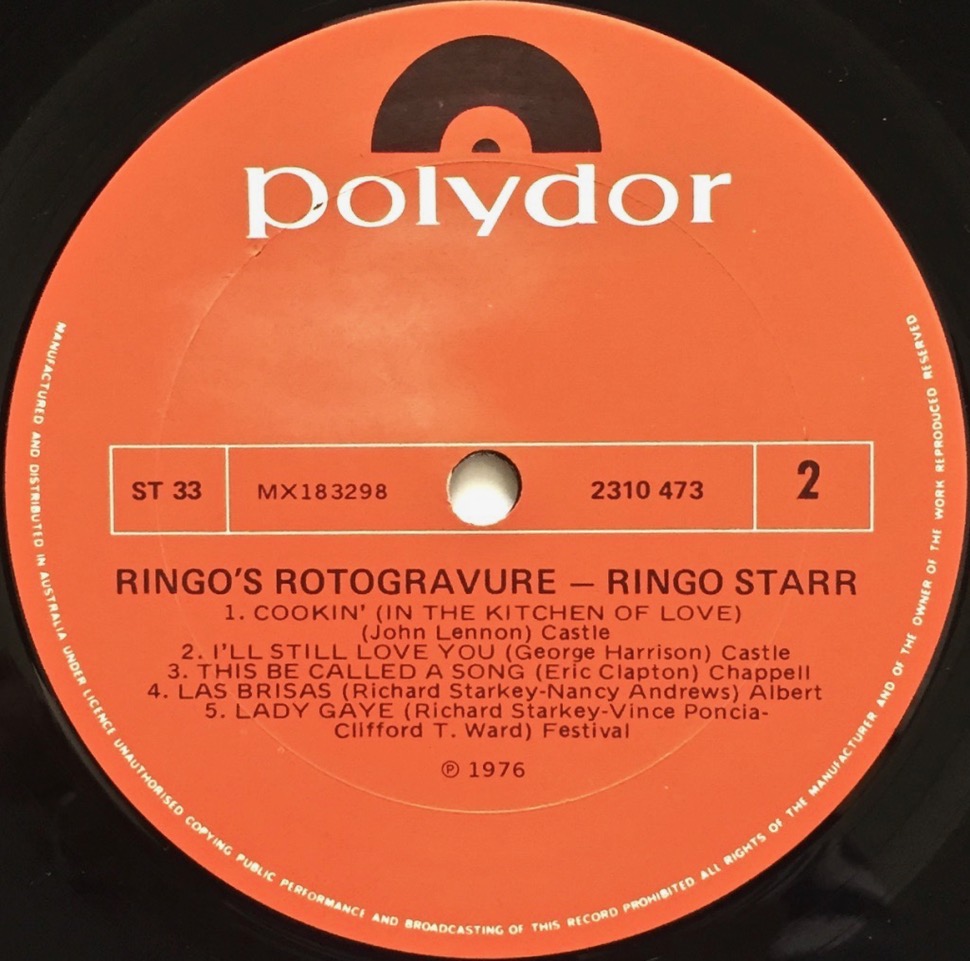
For a long time we’ve had an Australian pressing of his 1976 outing, Ringo’s Rotogravure

Below is the rear cover of the Australian pressing. US readers will note that the track listing for Side Two is five tracks instead of six. That’s because it is missing the short song, ‘Spooky Weirdness’: ‘Spooky Weirdness’ is however listed on the inner bag liner notes:

Like the rest of the world, this album came out housed in a gatefold sleeve. Here’s how it looks:

And here are the Australian labels. Note no ‘Spooky Weirdness’ listed on Side Two here either, and that the record company is different to the US release. The LP was issued Down Under on Polydor:

So anyway, we were picking around the bins at a favourite local second hand store when we randomly came across some variations of this LP.

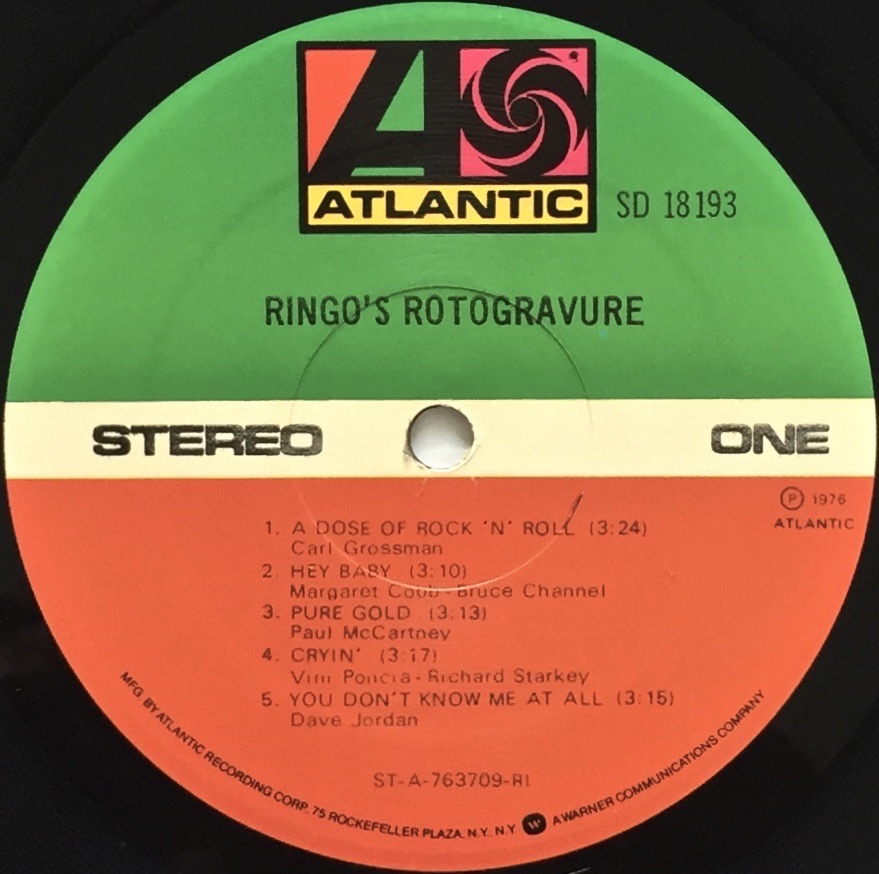
First up was the aforementioned US pressing. It has the exact same front cover image, but there are few details on the rear cover that differ to the Australian: Note the Atlantic logo bottom left (above); a pink box at the bottom for the record company details/place of manufacture; and ‘Spooky Weirdness’ is listed on the track list for Side Two. The label is the famous green and red Atlantic Records too: Then, further into the bin, we noticed two more distinctly different pressings of this same title. First was a fairly rare budget edition that only ever came out in Australia. It was in really good condition and is on the now defunct Rainbow label. (You can find it listed on page 27 of this document):

The gatefold sleeve inside is printed in a much lighter blue to the original Australian and US releases:Because it’s a budget release there is no inner bag with the lyrics, but it is on a Rainbow Records label:Sitting just behind the Rainbow re-issue was an original New Zealand pressing of Rotogravure. Again, it has the exact same front cover image to the Australian and US pressings. Only the rear is a little different: And the labels (also on Polydor) mention “Made in New Zealand” – its in the small print at top left:

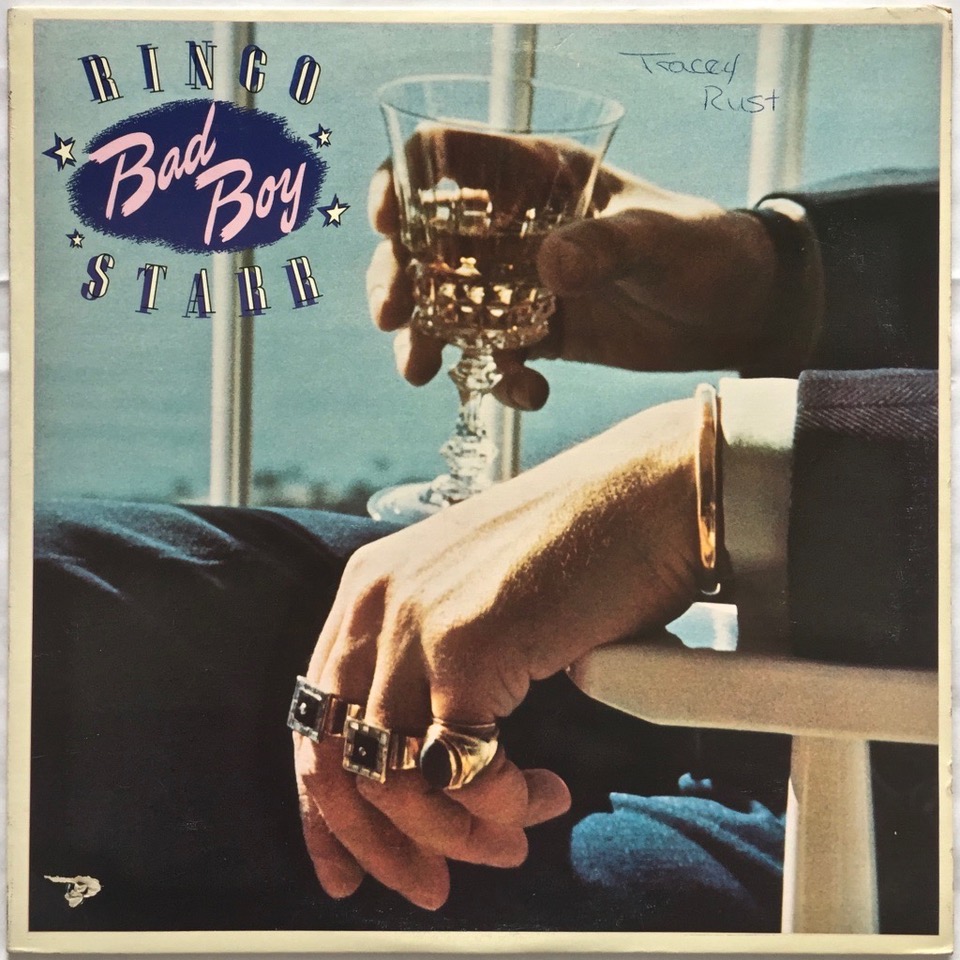
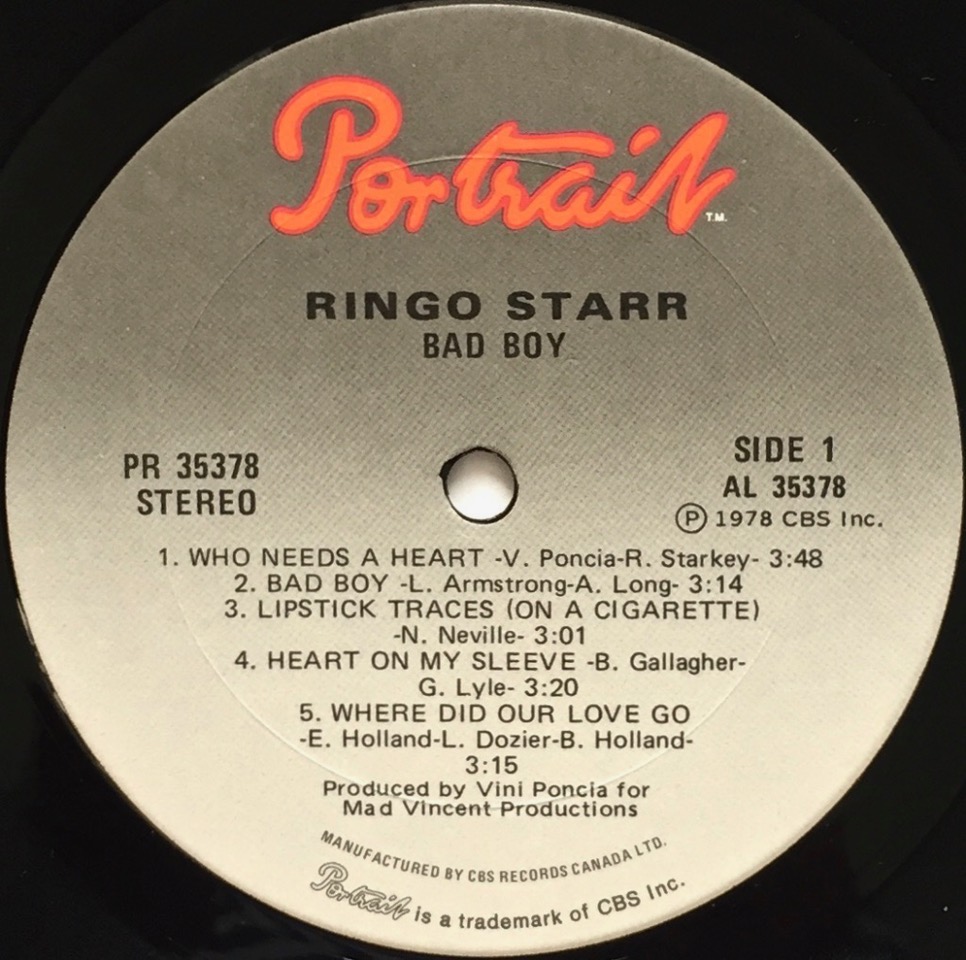
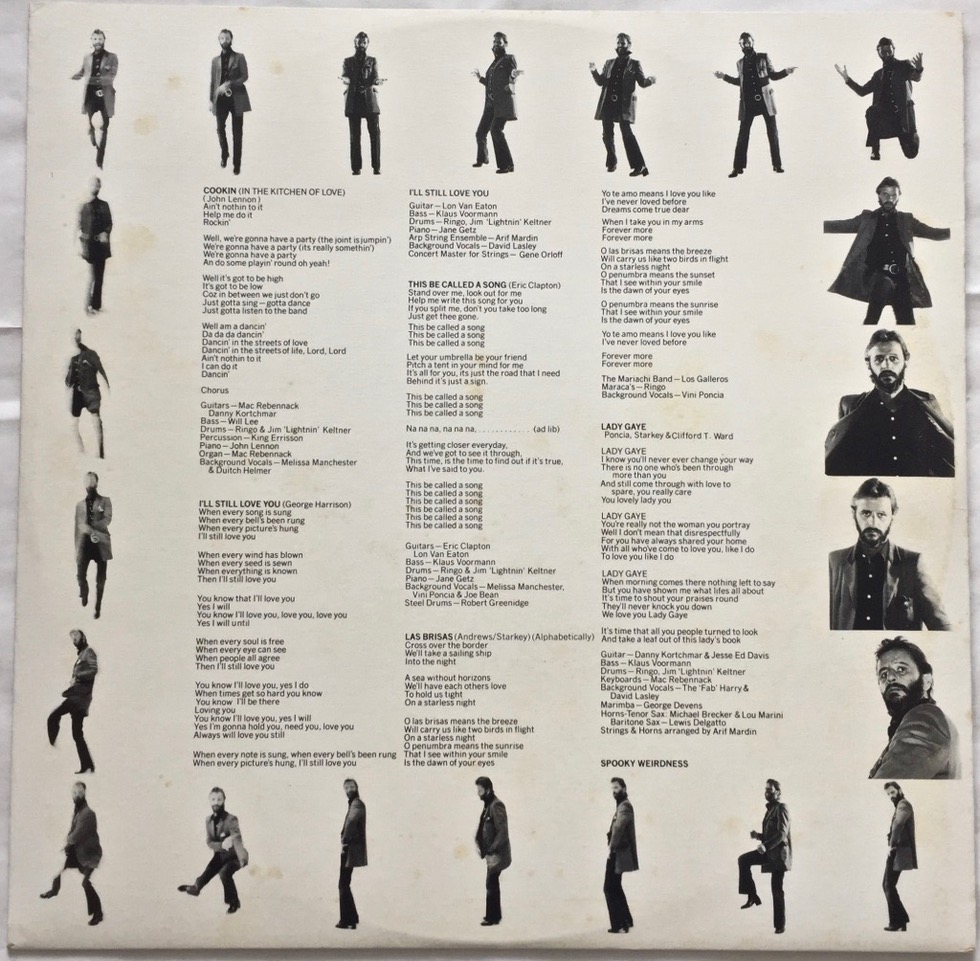
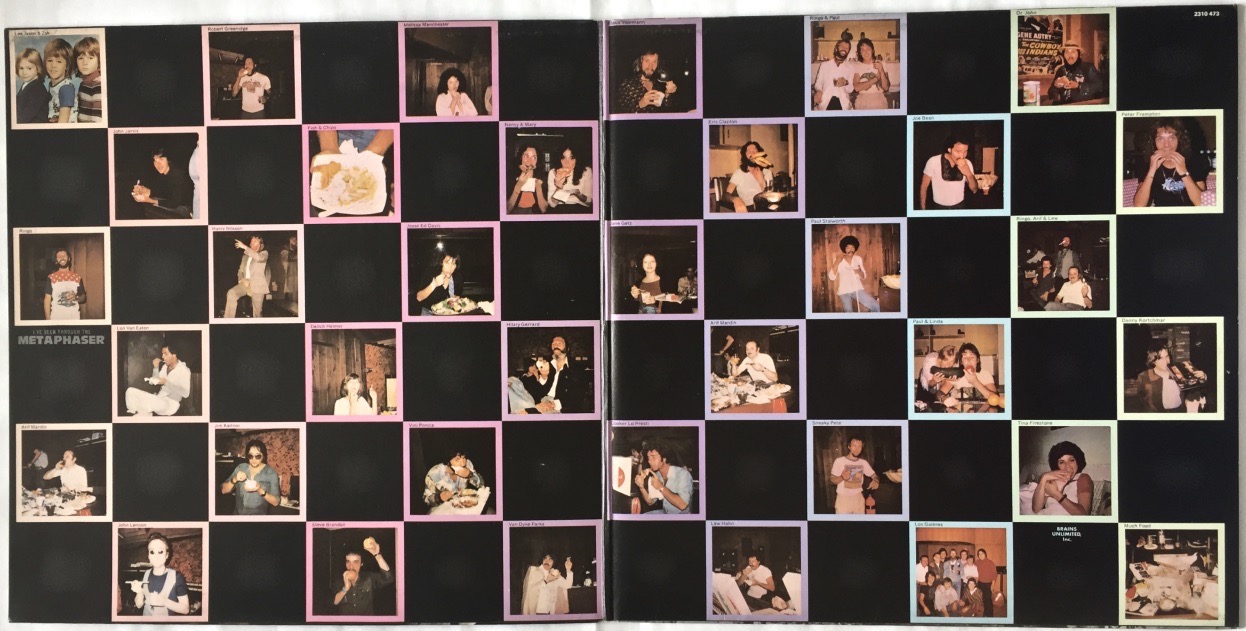
Lastly, a Canadian pressing of Ringo’s Bad Boy LP (from 1978) popped up in the bins as well.

As you can see, it’s a little beat up (writing on the cover; ‘cut out’ hole bottom left; foxing to the rear cover and inner bag from age, etc.), but worth grabbing at $5.00: 

So, not one – but four additions from the Ringo Starr back catalogue end up in our collection.

As usual, click on any of the images above to see larger versions.

More adventures in collecting Beatle records soon.

McCartney’s ‘Pipes of Peace’ – Original Labels

Looking at the recently released Capitol Records coloured (and black) vinyl reissue of the Paul McCartney Pipes of Peace LP, we got thinking about the labels used for the original release back in 1983.

This is the label style used on both sides of the 2017 version:

As you can see, the custom designed labels are similar thematically (but not exactly the same) as those used for Side 2 of the 1983 vinyl release:

The chrome-plated chair image is larger and positioned differently, plus it has a different musical instrument on it.

But it’s the labels used for Side 1 in 1983 that fascinate.

For some reason Side 1 in each of the major markets around the world featured vintage depictions of either Parlophone or Odeon record labels (for those territories outside the US), or Columbia Records for the United States (because that was the label McCartney was signed to there at the time).

Here, for example, is the Side 1 label used in the UK – a vintage Parlophone in deep maroon:

And here’s the label used in the US, which was done in the style of an old-fashioned Columbia release:

In Australia it was a vintage Parlophone – done in a dark brown and gold:

For Europe, where the Odeon label was used to release EMI titles, they used a vintage version too. Here’s the one for Germany:

And Spain of course:And here’s the label used in France for Side 1. Unusually, it’s a vintage Parlophone – which is strange because you’d think it would more likely be on Odeon too:

It was definitely vintage Odeon for Japan: And in New Zealand it was a Parlophone: 

These next few are from smaller territories where we’re pretty sure that on both sides of the disc the  labels used were both the same. If you happen to have any further info on these please get in touch using the “Leave a Reply” section below. First up, India:

We can confirm that The Philippines definitely used a vintage black and yellow Parlophone for both sides of the disc:

Malaysia:

And to some South American countries now – Argentina:

Uruguay:

Bolivia:

And lastly, Columbia, which interestingly seems to be serviced by both Parlophone and Columbia/CBS records:

If you’d like to see these labels in more detail, click on the images to bring up larger versions.

And if anyone knows just why Paul McCartney wanted to use vintage labels for Side 1 only of Pipes of Peace, please let us know by commenting below.

Strange/Unusual Find of the Month – George Harrison’s ‘Poor Little Girl’ Promo

Paid a visit this week to a new and second-hand record/book store we’d not visited before. It’s called Title, and they specialise in music, books and film.

One item in their “1/2 Price” sale bins caught our eye: 

It is a 12″ promotional-only single from Brazil containing two versions of a rare George Harrison solo song from 1989 called ‘Poor Little Girl’. Oddly enough the flip side of the disc is Rod Stewart singing a Tom Waits-penned song, ‘Downtown Train’:

Harrison’s ‘Poor Little Girl’ was only ever released on a 1989 compilation called The Best of Dark Horse 1976-1989, and it looks like this promo disc was issued to promote that album. The 12″ promo contains two versions of the song – an edited version that runs 3:25, and the LP version with a running time of 4:32.

As you can see, there was not great attention to detail by whoever prepared both the cover and label as they misspell George’s surname both times in the songwriting credits.

Strange to have come across this 12″ tucked away in the inner Sydney suburb of Surry Hills – but that’s sometimes the way record collecting goes…..

As usual, click on the images above to see larger versions.

New George Martin Biography – Maximum Volume

We have reviewed author Ken Womack’s work previously on beatlesblogger.com

He’s a recognised authority on The Beatles and their enduring cultural influence. His latest work is the first in what will become a two-volume biography devoted to Beatle producer, Sir George Martin.

First published last year in the United States, then quickly followed by a UK edition, the first installment is called Maximum Volume: The Life of Beatles Producer George Martin (The Early Years: 1926-1966).

Here’s the US jacket:

And here’s the somewhat more tame UK cover

This book is long-overdue. There have been surprisingly few in-depth studies of the life of one of the most influential figures in popular music, a career spanning more than 60 years.

In Womack’s book we learn that George Martin scored his first real job in the music industry pretty much by accident when he joined the recording giant EMI as an A&R man for Parlophone Records and that in the 1950s being in A&R (or Artist and Repetoire) didn’t mean you were a producer – it was more about talent scouting and the artistic and commercial development of the artists signed to your label.

Martin had a natural musical talent and great training, and he’d had some success with comedy and novelty records for Parlophone. But he needed more than that. By the early 1960s to keep his label afloat George Martin needed to hit it big with a pop group – and soon.

Though he had tons of creativity, drive, and a solid musical background, Martin’s main handicap was that he had little knowledge or experience of the world of Rock & Roll.

Then, into his life walks a young, four-piece outfit from Liverpool.

These guys knew a lot about Rock & Roll, but had no knowledge about studios and how to record their music. The pairing of the two was a marriage made in heaven. What George Martin was able to bring to the table fitted perfectly with what the Beatles needed – and together they went on to make magic.

It wasn’t always plain sailing though, and Martin often had to be tough and give as good as he got because the Beatles were hard task masters. They were ambitious, confident, and didn’t suffer fools lightly. But George Martin had the chutzpah and the musical knowledge and ability to carry it off:

Martin: “Let’s have one more go at the backing, then we’ll record your voices separately. This time, we’ll get it exactly right.”

McCartney: “Why—what was exactly wrong?”

Martin: “The tuning sounded wrong. And you, George, should be coming in on the second beat every time instead of every fourth beat.”

Harrison: “Oh, I see.”

In its essence, this brief exchange demonstrated what people in the Beatles’ inner circle understood implicitly: namely, that George was possibly the single most influential person in their world, really the only one who could impinge upon the nature of their music. Even Brian [Epstein], whom they held in extraordinarily high esteem, held little, if any, sway in terms of influencing the direction of their creative lives. At one point, when Brian dared to offer an opinion about their efforts in the studio, John coolly replied, “You look after your percentages, Brian. We’ll take care of the music.” (pg. 252)

In Maximum Volume Womack candidly – and comprehensively – tells the story of George Martin from his very humble childhood and early adulthood, through to the heights of success he and the Beatles enjoyed globally. It’s a great read, a real page-turner in fact as the detail behind that enormous success unfolds.

As one reviewer put it, the book contains enough fresh information and informed insight about the group’s early years to satisfy [even] the most devout Beatlemaniac.

Maximum Volume takes a similar approach to that of Mark Lewisohn’s well-researched and highly regarded multi-volume telling of the Beatles story: there are footnotes detailing where Womack is getting his information and where his quotes come from; there’s an extensive bibliography; and there’s a comprehensive index. All these things point to the thorough research undertaken by Ken Womack and the efforts he’s gone to put the life and work of George Martin into a context that can be supported by facts.

The importance of this approach to writing about the Beatles, or any subject or person for that matter where so much has been written over many years, is imperative. Sifting through the mass of it to find those kernels of truth about your subject before forming it into an accurate and entertaining narrative is paramount – and Womack pulls it off. For a great reflection on this subject it’s worth a listen to the Something About the Beatles podcast episode called “The Beatles and the Historians“. See too the show’s interview with Ken Womack himself: “George Martin – Maximum Volume“.

Womack’s second and final volume on the life and work of Sir George Martin will be published in September this year. It’s to be called Sound Pictures: The Life of Beatles Producer George Martin (The Later Years: 1966-2016).

In the meantime, enjoy Volume One – Maximum Volume. It is highly recommended.

McCartney – Eight Coloured Vinyls Arrive

Like a lot of collectors around the world, we have been waiting patiently for Universal Music to sort out the delays and confusion around the supply and delivery of the recent Paul McCartney vinyl re-issues on coloured vinyl.

We ordered ours last year, weeks before the advertised shipping date – but it is only in the new year that they have finally arrived, and in two separate shipments. Ram clearly was in very short supply and it is pretty obvious that a pressing of more copies had to be hurriedly arranged. That LP came in a separate package a few following the main batch.

Having said all that, these look absolutely fantastic. Here are some images of the collection – the front “hype” stickers and record labels: 

(As usual, click on the images to see larger versions)