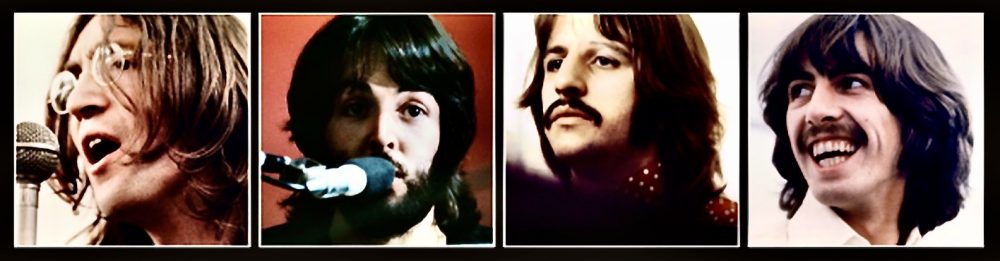
The Beatles, “Let It Be”, and Peter Jackson

Of course you’ll have heard by now that the multi-award winning film maker Peter Jackson has been selected by to re-cut the hours of Let It Be footage and audio from the winter of 1969 into an entirely new film.

We’ve been letting that huge news from last week sink in and percolate a bit – and have come to the conclusion that it’s a stroke of genius by the remaining Beatles and their Apple company.

We all know that the original Let It Be film has been languishing in the vaults for years, with seemingly no chance of unanimous agreement amongst the four-headed monster that controls these things (Paul McCartney, Ringo Starr, Yoko Ono and Olivia Harrison) that a re-issue – on its own – would ever get the green light.

But giving all the footage (over 55 hours of never-before-seen film and 140 hours of audio) to the Oscar-winning Jackson is something of a masterstroke.

First and foremost is the fact that Peter Jackson (who made the Lord of the Rings and Hobbit movies) is a mad keen Beatle fan, and has been for decades.

Secondly, his most recent project – the documentary film They Shall Not Grow Old – has seen he and his team at Park Road Post in Wellington, New Zealand, work wonders with the restoration and colorization of old photos and never-before-seen footage from World War I. The film was made to commemorate the centennial of the end of the war.

If you want proof of what they can do with footage and images from one hundred years ago just take a look at the trailer for They Shall Not Grow Old. It is breathtaking:

The services at Park Road Post include: restoration from scanned film – scratch and splice fixes, de-noise, image sharpening, stabilizing, re-speeding and re-timing; grading – black and white and final colour grading of specialised colour created footage; and dialogue recording, Foley, and pre and final sound mixing and mastering. So they are very capable experts in their field.
As to the legend that The Beatles’ time together during the filming of Let It Be was entirely fraught and only shows a band in its final death throes, Jackson – who has seen all the footage – begs to differ: “I was relieved to discover the reality is very different to the myth. After reviewing all the footage and audio that Michael Lindsay-Hogg shot 18 months before they broke up, it’s simply an amazing historical treasure-trove. Sure, there’s moments of drama – but none of the discord this project has long been associated with. Watching John, Paul, George, and Ringo work together, creating now-classic songs from scratch, is not only fascinating – it’s funny, uplifting and surprisingly intimate. I’m thrilled and honoured to have been entrusted with this remarkable footage – making the movie will be a sheer joy.”
This all points to what should be something very special being produced.

As to fans who were worried that the new film would take the place of the original Let It Be, that it would forever consigned to the Apple dustbin, well that seems not to be the case. A restored version of director Michael Lindsay-Hogg’s theatrical release is set to finally get its belated digital release “following the release of this new film”, according to Apple’s official announcement.

And, it’s kind of ironic that The Beatles once tried to obtain the film rights to The Lord of the Rings…..

Beatles “White Album” 50th Anniversary Turntable

There’s another Beatle-themed turntable out there: 

Turntable manufacturer Pro-Ject Audio Systems, in association with Universal Music, has launched a Beatles White Album model to help celebrate the 50th anniversary of the release of the legendary recording.

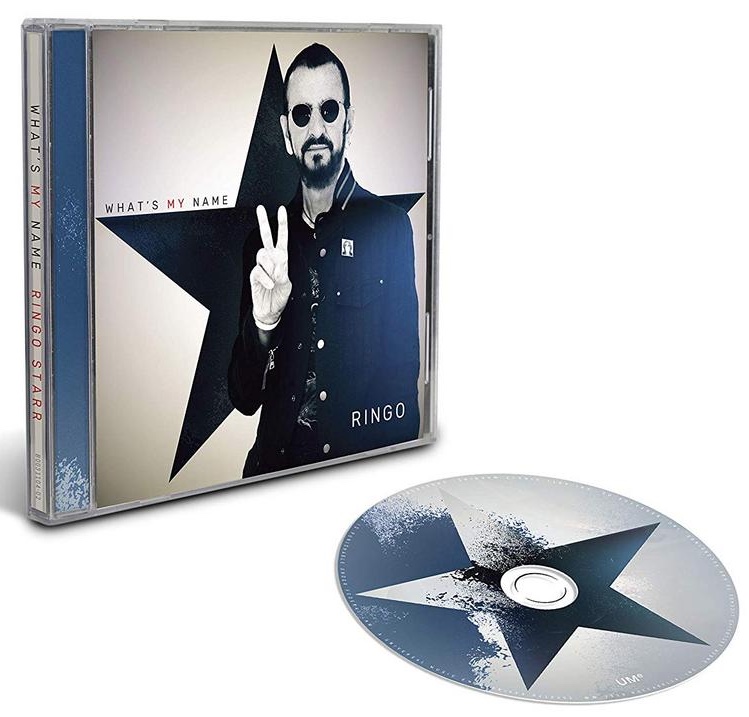
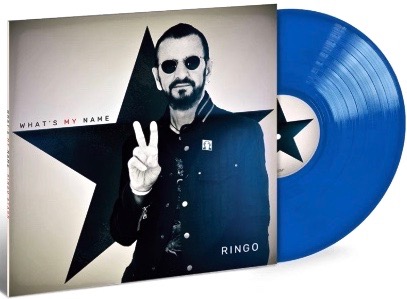
Based on a Pro-Ject 2Xperience SB model, the limited White Album version really is all-white, down to the platter, tonearm, switch gear, and even a specially produced white-bodied Ortofon 2M cartridge pre fitted at the factory:The company now has seven Beatle-related record players: the Yellow Submarine model; two Sgt Pepper’s Lonely Hearts Club Band models (in Drum and Limited Edition versions); a Beatles 1964 edition; a George Harrison turntable , and now a Ringo Starr “Peace and Love” turntable as well:

PeaceAndLoveTurntable-1-1024x684 2The Beatles White Album turntable is limited to 500 pieces worldwide. It looks to have a limited edition number stamped on it, just like the original LP covers did back in 1968, but it’s not clear if these are individual or not:The Pro-Ject White Album Limited Edition is up at the higher end of Pro-Ject’s turntable offerings and retails for US$1799 (and in Australia for $2699). You can read the official press release here.

Two Interviews Worth Reading

Here are two interview-based articles – one featuring Paul McCartney, the other the John Lennon Imagine re-issue box set from late last year. If you haven’t seen these already they are both worth a look.

The first is from GQ magazine and dates back to September, 2018 when Paul McCartney was very much in publicity mode for his then new album Egypt Station.

In it he’s quite revealing and, as the opening hype paragraph states, the article takes in some familiar ground, but traverses some very new territory too:

“He’s as famous and accomplished as a man can be. He could just stay home, relax, and count his money. But Paul McCartney is as driven as ever. Which is why he’s still making music and why he has loads of great stories you’ve never heard—about the sex life of the Beatles, how he talked John Lennon out of drilling holes in his head (really), and what actually happened when he worked with Kanye.”

One pertinent section deals with his brand new song ‘Get Enough’, which was only made public earlier this month (on New Years Day actually).

The song is right now polarizing listeners because of the heavy use of Auto-Tune as an effect on the vocal. At the time of the interview the song wasn’t yet in the public domain, but what McCartney says about it in the interview gives some valuable context now, shedding light on where he was coming from, why he recorded it, and why he released it:

“McCartney proceeds to tell me that he recently used Auto-Tune on a song—one that’s not even on his new album—and how he worried for a moment about it. “Because I know people are going to go, ‘Oh no! Paul McCartney’s on bloody Auto-Tune! What have things come to?’… At the back of my mind I’ve got Elvis Costello saying, ‘Fucking hell, Paul!'” But then he considered it some more, and what he thought was: “You know what? If we’d had this in the Beatles, we’d have been—John, particularly—would be so all over it. All his freaking records would be…”

McCartney demonstrates a version of how he’d imagine a modern-day John Lennon singing in an extreme Auto-Tune warble, and then he gets out his iPhone and plays me some of the song in question, another collaboration with Ryan Tedder, called “Get Enough”, which has an emphatically full-on Auto-Tuned McCartney vocal, plenty more than would be required to horrify any passing purists. It also sounds pretty good.”

The GQ article is accompanied by photographs of McCartney modelling some stylish and expensive menswear. It’s also associated with a lengthy YouTube video the magazine uploaded to its channel where the songwriter steps through the background to some of his best-known works, both solo and Beatle:

The second article is an interesting (if a little rough around the edges) insight into the recording of John Lennon’s classic Imagine LP – which was beautifully remixed, remastered and re-issued late last year in a number of formats. It provides fans with cleaned-up sound and a wealth of previously un-heard outtakes, demos and more.

The article comes from Rock Cellar magazine and takes the form of interviews with three of the musicians who made key contributions to the iconic recording: bass player Klaus Voormann; drummer Jim Keltner; and guitarist Joey Molland.

In contrast to the GQ offering, Rock Cellar is an online magazine operated by volunteers so the attention to detail is a bit lacking in places. They could really use a good sub-editor to lift the quality of simple things like spell-checking and grammar. But there are some really valuable recollections, insights and information here on how Imagine came together from three artists directly involved at the time:

What were the things that most impressed you about John as an artist, both professionally and personally?

Jim Keltner: Well, he was John Lennon. He always found it interesting and funny when I told him I never liked rock and roll. When he was a young guy, we were all around the same age, Ringo’s a little bit older than me, Klaus is a little bit older too — John was older than me by just a little bit. As we were coming up he was a rocker. Along with Paul and George and Ringo, he loved American blues and rock more than anything, it affected their lives big time.

They dedicated their whole lives to that, and we know what happened. But for me, over here during that same time I was just listening to Miles (Davis) and (John) Coltrane; I didn’t want to have anything to do with any rock and roll. I hated it. John just thought that was so funny. And then when I started playing with him I could tell that he liked my feel. I could feel it because we shared the same kind of attitude about feel. By the time I had gotten with him I made a commitment to understand this rock and roll thing. So I was doing it from my gut, plus I had listened to Ringo so much.Whether you wanted to or not, if you were a drummer you were influenced by Ringo. Whether you even knew it or not you definitely were influenced by Ringo because any Beatles music you listened to it was all about Ringo’s feel.

John and George both told me, John especially, that Ringo was his very favorite drummer. I loved hearing him say that, because he was my favorite drummer too. John was the easiest person to play with. It’s interesting for me because John and Bob Dylan and were on my radar right at the same time. I played with Bob right around that same time with Leon (Russell) and Carl Radle and Jesse Ed (Davis) in New York. I got the same feeling from both of them. They were so strong in the way they played and sang and of course when you’re talking about rising to the level of a good song, if you’re talking about John Lennon or Bob Dylan it’s a no-brainer. You knew the songs were gonna make you wanna play at your best.

You can check out the full interviews here.

John Lennon photo by Peter Fordham © Yoko Ono

A Very Happy Christmas To All

A very happy Christmas and a joyous New Year to all our readers.

May you all have a safe and fun holiday season.

The Complete Beatles Songs – The Stories Behind Every Track Written by The Fab Four

Here’s a nice little Christmas stocking-filler for you.

If you’re on the lookout for a decent Beatle book this holiday season, you should consider The Complete Beatles Songs – The Stories Behind Every Track Written by The Fab Four. It is written by the respected music writer, Steve Turner, and has just been re-published in a paperback format:

This book has actually been around in a couple of different forms and editions dating back as far as 1994.

You might know it as A Hard Day’s Write: The Stories Behind Every Beatles Song, and over the years more than 440,000 copies have been sold. That’s because when it was first released the book was a first of its kind, a definitive examination of Beatle lyrics all gathered together in one complete package.

And this is why it has stayed in print, and why it is regularly updated and re-issued with new information as it comes to hand, and as new titles in the Beatles discography are added. It has been expanded considerably over the years with new findings added, and it has jettisoned some false information along the way too.

The book’s purpose is the definitive analysis of the words of the songs. It includes the full lyrics to each, and details why, how and where the recordings were created. The meaning behind each song is explored, as are the characters, places and themes. It is richly illustrated throughout too.

Steve Turner is a journalist, biographer and poet who writes about music, and has done so for a wide range of publications over many years. He’s the author of a number of books, and in 2016 wrote the critically acclaimed Beatles ’66: The Revolutionary Year.

As he writes in the Introduction to The Complete Beatles Songs, “More than forty years since the band stopped playing, those songs still mean something to us. They are like old friends who we met when we were young and who made life a little more exciting and easier to cope with. Because of what they did for us, we heave great affection for them. It is because we hold such affection for them that it makes sense to find out where they came from”.

So, maybe your old copy of Steve Turner’s original is getting a bit dog-eared and beaten-up, or you just want to get this latest, updated edition, or maybe this will be your very first copy of this essential book. Either way, The Complete Beatles Songs should find it’s place in every serious Beatle collector’s library.

The edition shown here was re-issued in paperback by Carlton Books in October this year.(As usual, click on the images for larger versions)

McCartney ‘Wild Life’ and ‘Red Rose Speedway’ Unboxings

We all greatly appreciate the many fans putting up “unboxing” videos of the latest Beatle and solo releases.

But Paul McCartney has gone one better by inviting the writers who contributed the main essays to his latest Paul McCartney Archive Collection deluxe edition reissues, Wings Wild Life and Red Rose Speedway, to talk through what they think of each album and in the process unpack the contents for us. Brilliant stuff.

First up is David Fricke, senior editor at Rolling Stone magazine who penned the Wild Life essay:

And then Amanda Petrusich, staff writer for The New Yorker magazine who wrote the essay that accompanies Red Rose Speedway:

Beatles White Album 50th Anniversary SDE – Anyone Else Worried?

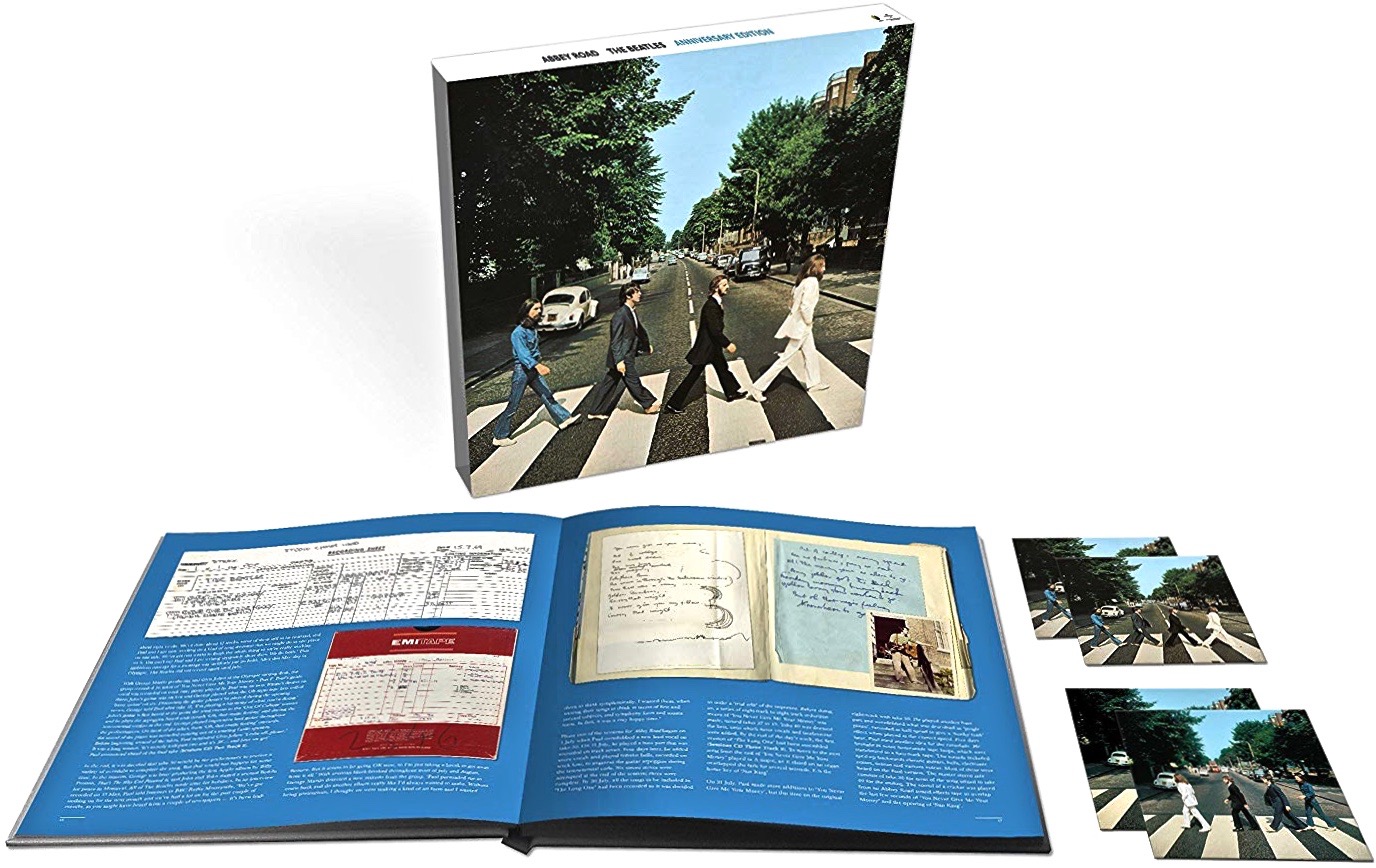
We’ve just taken delivery of the new Beatles 50th Anniversary Super Deluxe Edition of The Beatles (a.k.a. The White Album), and we love the look of the packaging.

It is undeniably beautiful in its pure-white, large format book form, and the clear plastic slipcase – printed with the four band members on the front and the track listing on the back –  creates a very special first impression. But for how long?

While we appreciate the design, we couldn’t help but be reminded of two similar approaches to this style of packaging that have not stood the test of time.

Both examples signal that there will be definitely be a long-term deterioration to your pristine new 50th Anniversary White Album clear plastic slipcase.

As it turns out the two examples were both released twenty years ago in 1998, and the first is from the Beatles own Apple Records, so you might have thought that they’d have learned something about what happens to clear plastic outer slipcases over time.

It’s actually The White Album in its 30th anniversary edition version:

While a much smaller and more modest design, the 30th anniversary White Album also comes in a clear plastic outer slipcase, similar to the new 50th anniversary edition. The example shown here was purchased brand new in 1998 and we’ve tried hard to keep it in mint condition. But even so, that plastic outer sleeve is beginning to show the first signs of ageing and yellowing:

Likewise, there’s a wonderful deluxe, long-box style book and three CD set called The Look of Love – The Burt Bacharach Collection, that’s showing even worse signs of age on its once crystal clear plastic outer sleeve:

This too has been in our collection since new from 1998, but that plastic outer sleeve – on which is printed the album title and a list of some of the top songs it contains – is now almost completely yellowed, especially around the spine area where it is glued:

At the time of release this clear slipcase was a real design plus – but sadly it’s now looking quite ordinary and aged:

Interestingly the cardboard packaging part of the design inside both slipcases have stayed nice and white:

So, it begs the question: in twenty years time what will your 2018 Super Deluxe Edition of The Beatles White Album look like?

New Book: The Beatles Recording Reference Manual – Volume 3

If you’ve got the first two volumes in this impressive (and growing) body of work, then you’ll definitely want to have Jerry Hammack’s latest installment, The Beatles Recording Reference Manual – Volume 3: Sgt. Pepper’s Lonely Hearts Club Band through Magical Mystery Tour (late 1966-1967) as part of your collection:

Hammack is a Canadian-American musician, producer and recording engineer known for his in-depth knowledge of vintage recording techniques. You can learn more about Jerry at his website jerryhammack.com

Like previous volumes, this book contains song-by-song reconstructions of the session work (for both performance and technical) that went into each of The Beatles’ singles, EPs and albums – from the start of the Sgt. Pepper’s Lonely Hearts Club Band era to the release Magical Mystery Tour.

Hammack’s reconstructions of what went down come from his painstaking examination of the most reliable and authoritative resources, including original EMI studios documentation; recollections and interviews with the original engineers who worked on the sessions; photographic and film evidence of the band at work; and of course analysis of the actual recordings themselves, including the many out-takes, session recordings and remixes available. Where there’s doubt or conflicting information, Hammack tries to document and reconcile discrepancies and offers well-considered justifications for the views he is putting forward.

The particular period covered in this volume offers rich pickings because The Beatles had recently given up touring in preference to immersing themselves entirely in the recording process and learning to make the studio itself another one of their instruments. As Hammack writes: “Spanning 189 days between November 24th, 1966 and June 1st, 1967 the Sgt. Pepper’s Lonely Hearts Club Band era forever set The Beatles apart from any other band in the history of popular music. If Revolver had freed the band from the four-piece format that best suited live performance, Pepper shattered those shackles entirely.”

A good example comes from the first song to be recorded in the Pepper sessions, ‘Strawberry Fields Forever’. This required work, on and off, over a 35 day period with 12 different recording sessions before it was completed.

What we find for each song is when and where each recording session took place; which instruments were played; what type of microphones were used; what signal processing was in place; what effects units were used; even details on the types of speakers in the studios and control rooms used to listen back to and mix the recordings. The detail here for those who are into the minutiae of this sort of stuff is extraordinary. Added to the detail are informative, song-by-song visual representations of how each song came together:Looking ahead, Hammack has only Volume 4 to go. It will be the final book in the series and covers off the LPs The Beatles (a.k.a. The White Album) through to Abbey Road (1968-1970). The plan is to release that volume in about 6 months time.

See also our review of Volume 1 and Volume 2 in the series, plus Jerry Hammack’s official Beatles Recording Reference Manuals website for the book, and Amazon’s Look Inside if you’d like to get a better idea of the format and what each book contains.

Wings Wild Life – Deluxe Edition Unboxing

Paul McCartney has issued an “unboxing” video of his forthcoming Wings deluxe edition of the album Wild Life:

Wild Life and Red Rose Speedway are the next two titles in the Paul McCartney Archive Collection series, and both are due for release on December 7. Full details are contained in the official press release.

There will be multi-disc deluxe box sets for both titles, as well as 2CD editions and 2LP Archive releases as well. Red Rose Speedway gets an additional 2LP release that re-imagines the album as it was originally submitted to the record company, but rejected as a concept and the original single LP issued instead: If you wanted both deluxe CD box sets paired into one very limited edition box, along with an additional bonus Wings Over Europe 20 track CD, photo book, facsimile 1972 tour programme all housed in a special 7 colour screen printed box, inspired by the 1972 Wings Over Europe tour bus, then that was available too – for a time. The website is saying the first edition is now completely sold out. No news of a second edition – yet. The 11CD super box set is called Paul McCartney and Wings 1971-1973 and the details are here

Meanwhile on Instagram McCartney has shared some comments from Abbey Road mastering engineer Alex Wharton about his experiences working on the reissues of both Wild Life and Red Rose Speedway:

“It’s always an absolute honour and pleasure to work with Paul and the team at MPL. Working on Wild Life and Red Rose Speedway, there were so many nuggets such as the psychedelic jam ‘Loup (1st Indian On The Moon)’ and ‘When The Wind Is Blowing’. These are incredible portals in my opinion! It’s amazing to see how much Paul cares about music that he has already put out into the ether – to go back to the original tapes and create a sound that both Paul and we believe will touch people in a deeper way. The song ‘Wild Life’ is a real highlight for me. It’s a great sounding record, but the lyrics cover real awareness and the relationship between ourselves and other animals – themes that are more relevant today than ever.”

Black Friday RSD Blues

Record Store Day and Black Friday for us is definitely a hit-and-miss affair.

Today we were of course on the hunt for the Paul McCartney RSD double A-side single ‘I Don’t Know’/’Come On To Me’.

On Black Friday last year it had paid off to get up bright and early to be somewhere near the front of the queue at the biggest and best independent record store in Sydney – Red Eye Records. This time around we got there so early the store wasn’t open yet and were actually the very first in line! Our massive fail from Record Store Day proper in 2017 wasn’t going to happen this time around, oh no…..

…or was it?

That sense of euphoria at being very likely to secure the new, limited-edition single was soon brought crashing down when we saw, much to our disappointment, this sign posted on the front door:

That was a blow. We’d checked their website earlier in the week and there’d been no indication of a delay. So we decided to stick around to see if the sign meant they hadn’t got all of their order, but possibly had received some.

When 9 o’clock rolled around and the doors finally opened the staff were very apologetic. They had in fact got zero of their entire Record Store Day order. No Paul McCartney, but nothing of anything else either. None. Zilch.

The only bright side to the story was that they were expecting the new Paul McCartney. It’d been confirmed from the supplier that the single was definitely included in their order and so, because we’d actually come into the store, they were prepared to take our name and put one aside. When will we get it? ‘I Don’t Know’. But we’ve got one!

UPDATE:  Seems that there are two different pressings of this single, one for the US market and one for the UK. The US version is hand-numbered on the rear (from a total of 5600 copies) and comes with a non die-cut inner sleeve: 

While the UK/Europe version is not individually numbered on the rear, has no FBI anti-piracy logo on the rear, and comes with a die-cut inner sleeve that reveals the labels: 

Just one more collecting wrinkle for those completists among us!

(Click on iamges for larger versions)