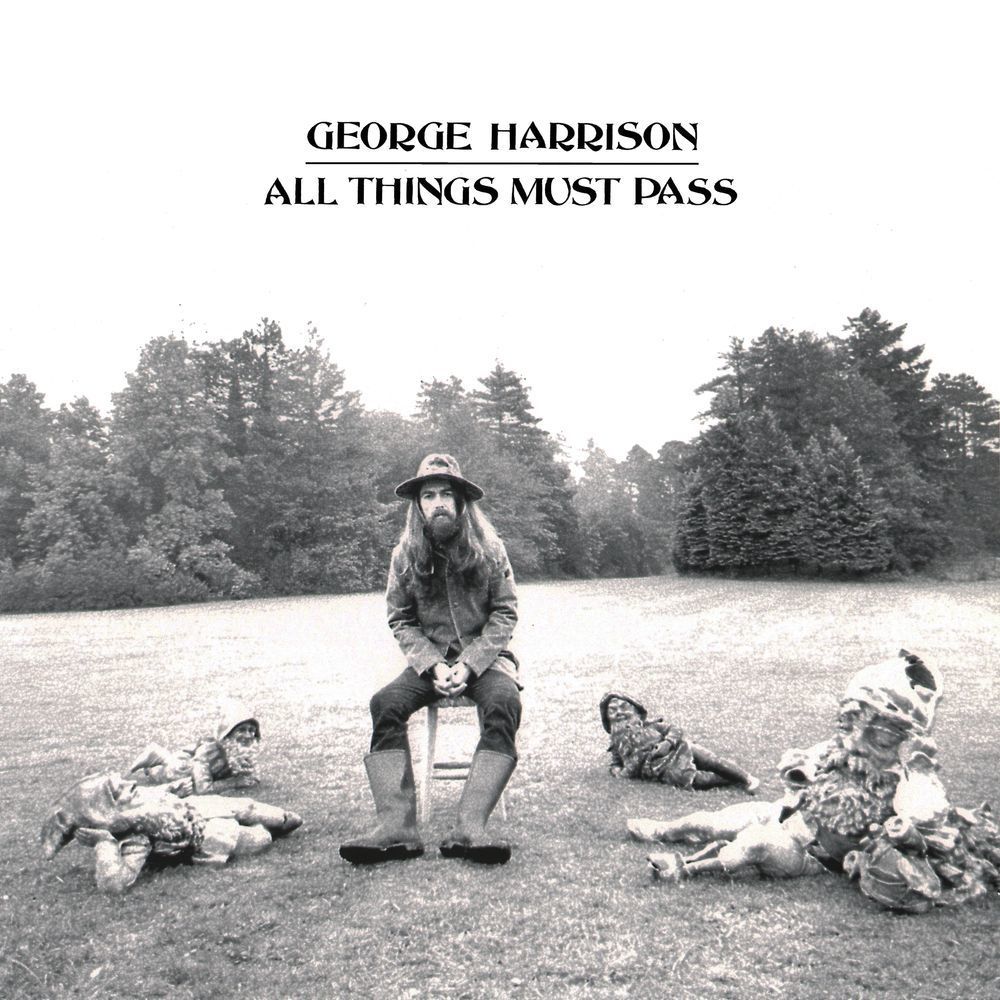
We’re all used to seeing the occasional photograph showing glimpses of Friar Park – the mansion, extensive grounds and amazing gardens that George purchased in 1970. The most famous would have to be this album cover:
So it is interesting to read a contemporary article about how the gardens, in particular the topiary section, are doing now. When Harrison first moved in they were in a very poor state, having been let go by the previous occupants for more than 30 years:
George became a very keen gardener and determined to put not only the house (which had also fallen into disrepair) but all the gardens back to rights. He was so hands-on that his son Dhani once said: ‘My earliest memory of my dad is probably of him somewhere in a garden covered in dirt… just continuously planting trees. I think that’s what I thought he did for the first seven years of my life. I was completely unaware that he had anything to do with music.’
His widow Olivia has maintained that dream and, to be honest, from the images in this article the topiary section today is looking magical.
The article ends:
In short, the impeccably maintained topiary garden at Friar Park today is a masterpiece—one of the most important in all Europe.
“It wasn’t like we were following a trend; we were in the trend.” — PAUL MCCARTNEY
There’s no doubt that clothing is one of the most visible aspects of the development of a culture. A new book that’s just hit the shelves, Fashioning the Beatles – The Looks That Shook the World, is a well-researched and thoughtful exploration on how The Beatles played a leading role in shaping the fashion, attitudes and social change going on around them throughout the 1960s and beyond.
Author Deirdre Kelly wisely begins her book with a brief preliminary section called ‘Dressing for Pepperland’. That’s because during this period the band reached the zenith of their flamboyant style. Designers on Carnaby Street and around the world were influencing, and were in turn being influenced by, The Beatles in something of a symbiotic relationship. They were in their heyday.
We then journey back to the year 1960 and in chronological order, chapter by chapter, visit key fashion moments with quite a detailed examination year-by-year of what the band were wearing through to 1970, and beyond. We learn who was helping, advising, and being commissioned to come up with new looks for them, but also importantly, how The Beatles themselves played a central role in defining their style. Kelly then uncovers how that style in turn influenced whole industries and often swung the pendulum of the fashion world in new directions.
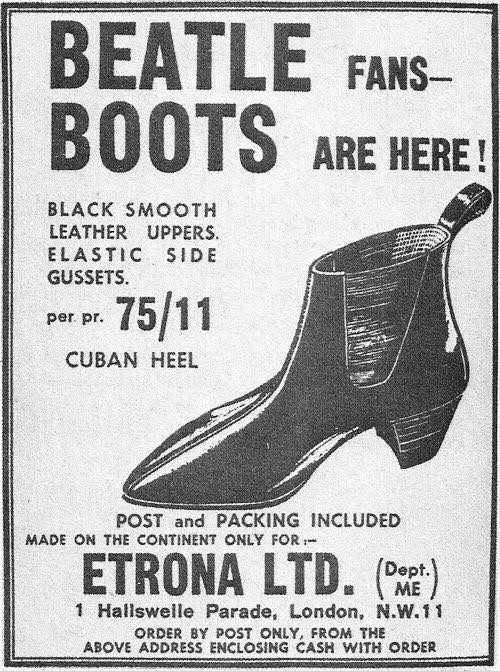
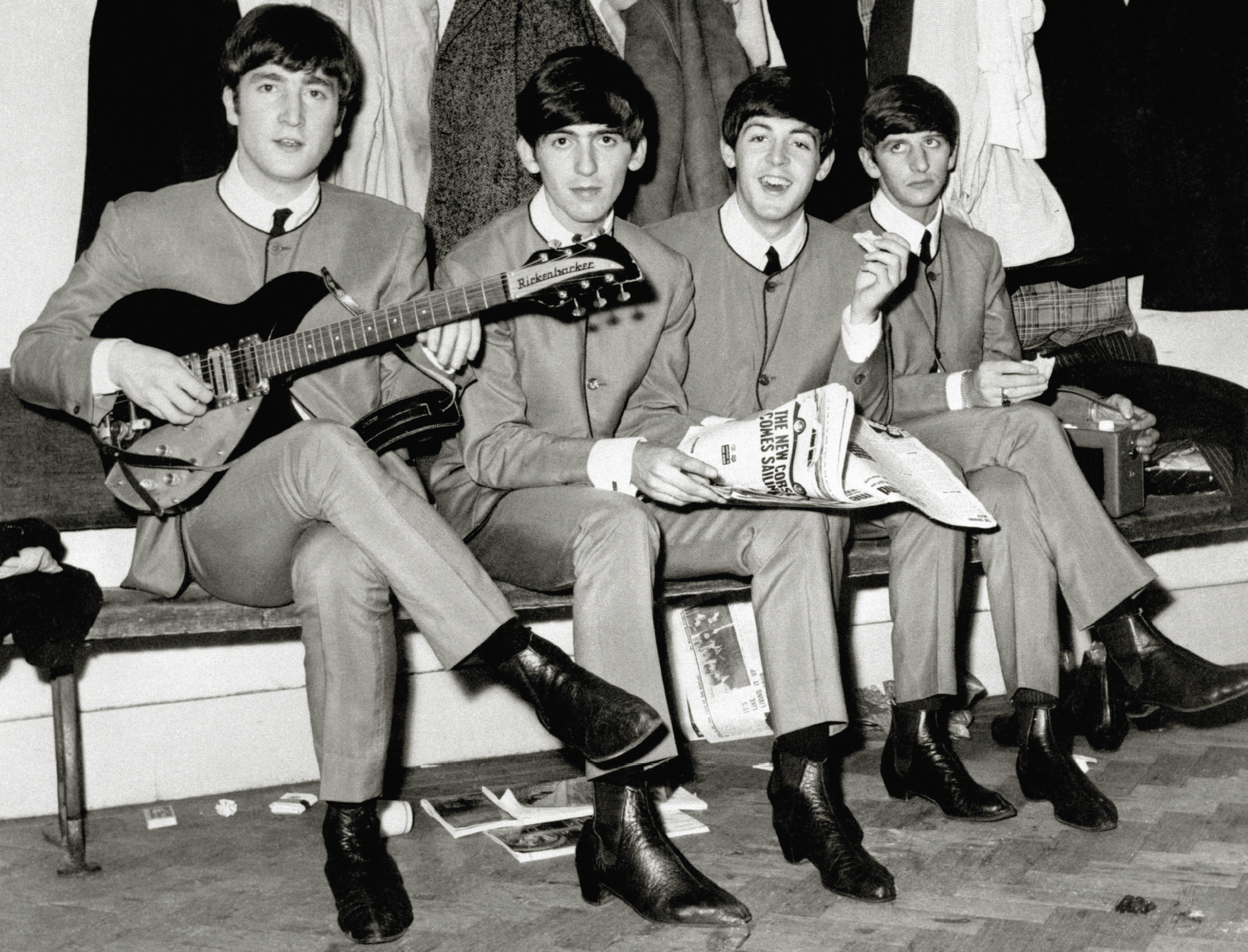
After a stint as “the savage young Beatles” which (in their early Hamburg/Liverpool days) saw the band sporting a tough look (black leather pants and jackets, black shirts, black t-shirts), in 1961 the group underwent a complete makeover. At the suggestion of their new manager, Brian Epstein, the band took on a suited, clean-cut, almost boy-next-door look that was carefully designed to help them break through in the pop world. They weren’t forced into this. It was something the group agreed was the right thing, as they too saw it as a way to achieve their goal of becoming the “toppermost of the poppermost!”. It was a makeover that worked, one where even the footwear they chose was considered. Kelly goes into detail about how the band had input into the evolution of the famous “Beatle Boots” and how this too became part of their defining look, and a fashion icon of the time. Soon manufacturers where knocking off copies and The Beatles were well on their way to becoming major influencers.
1963 was the year of the now iconic collarless suit – created for the band by UK tailor, Dougie Millings, whom we learn went on to make over 500 outfits for the group. His collarless creation was conceived in a brainstorming session involving Paul McCartney, who’d originally proposed the idea. Their suits were modeled on an original design by Pierre Cardin, but tweaked to make it a distinctively Beatles’ garment. Kelly writes: “It established the Beatles as fashion forerunners”:
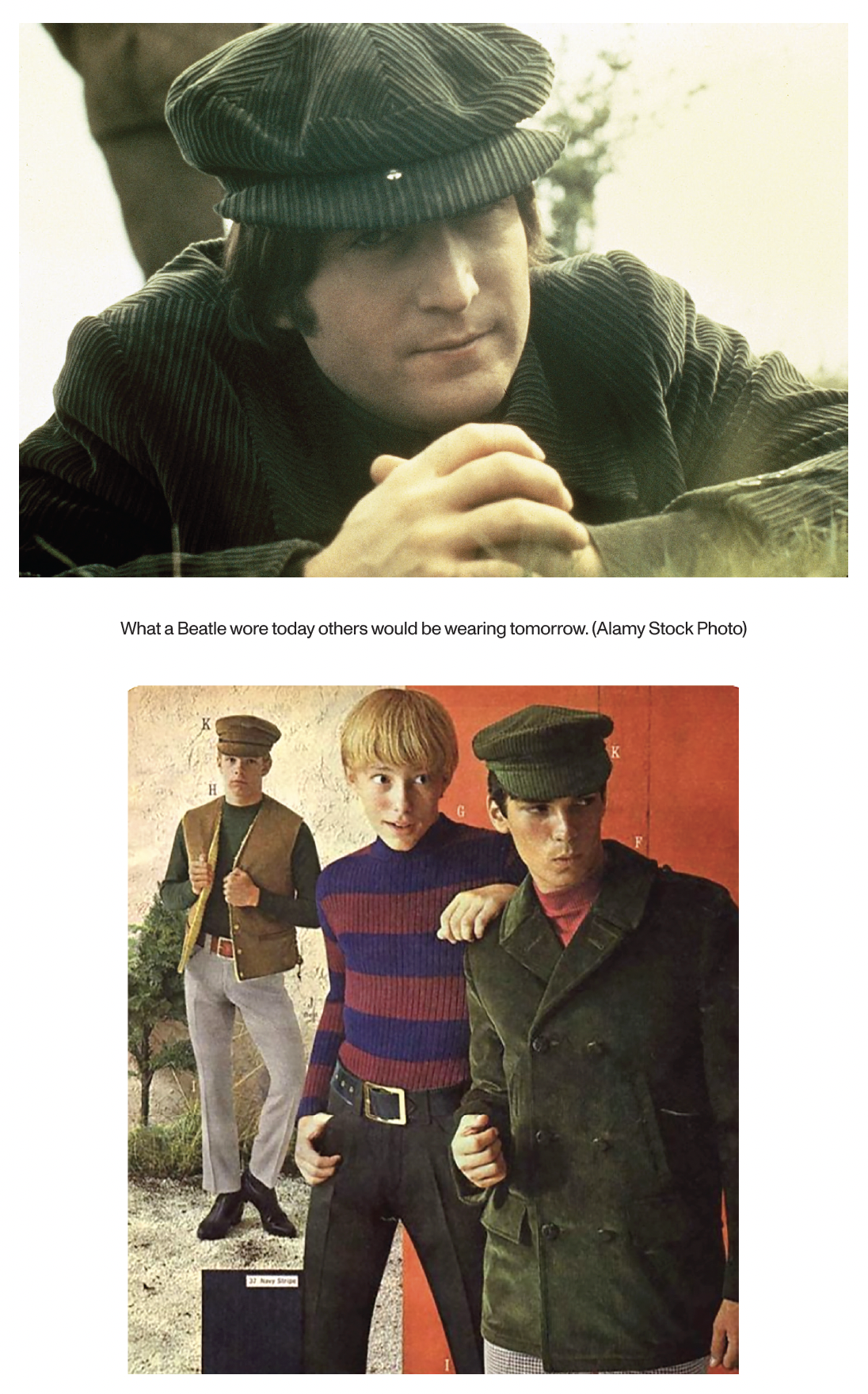
It continued what was to become a trend. What a Beatle wore today would soon turn up as the latest hot trend in the shops tomorrow:
However, as with their music, The Beatles never stood still, always pushing the boundaries and never repeating themselves. Once a particular fashion look they’d pioneered started catching on, they’d already moved on.
Fashioning The Beatles is meticulously researched and contains fascinating detail around how the designs they wore came to be. The book also turns up interesting side observations along the way. Take this 1965 photograph taken during the filming of Help!:
In the movie, the band mixed British and US clothing styles. Denim wasn’t yet the ubiquitous fabric it would become and was regarded as something of a novelty. Notice though that George has bleached his jeans, prefiguring the acid wash jean trend that proliferates to this day.
By this mid-decade period and beyond The Beatles largely discard the suits (and boots) and begin to dress to please themselves. In doing so they have a further profound influence on the way young people dress and behave too. What the band wears is an extension of their innate creativity: their personal taste, their natural sense of style – and it was being followed closely by millions.
Tony Palmer (director of the documentary series All You Need is Love: The Story of Popular Music) says in his Preface to the book that The Beatles didn’t set out to be trendsetters. They were innately stylish young men and by simply wearing what they wanted to wear, became the leading style-makers of their day. Their huge, worldwide fame ensured that whenever they were photographed, filmed, or simply seen out and about in public, people took notice of their sartorial style, and those looks helped influence the culture of the day.
By the mid to late 60s The Beatles were now routinely mixing stage clothes with items from their personal wardrobes, and even (albeit briefly) starting up commercial fashion outlets of their own. Kelly provides great detail and context to these ill-fated forays into the fashion retail world via the Apple Boutique store and Apple Tailoring. And herein lies an Australian connection (and yet another example of The Beatles’ questionable choice in business partners), in the form of one John Crittle, proprietor of a business often frequented by the band called Dandie Fashions. They eventually came to own a 50% stake in the store and re-branded it Apple Tailoring (Civil and Theatrical). They opened a hair salon in the premises too, presided over by Leslie Cavendish (who’d been cutting the hair of Paul, George and John). However it turned out that the brains and style behind the clothing part of the venture was really Crittle’s fashion-savvy wife Andrea, who is perhaps better known as the mother of British prima ballerina, Darcey Bussell. Just how Crittle sullied Apple Tailoring’s reputation is something you’ll need to buy the book to read about. It’s not pretty.
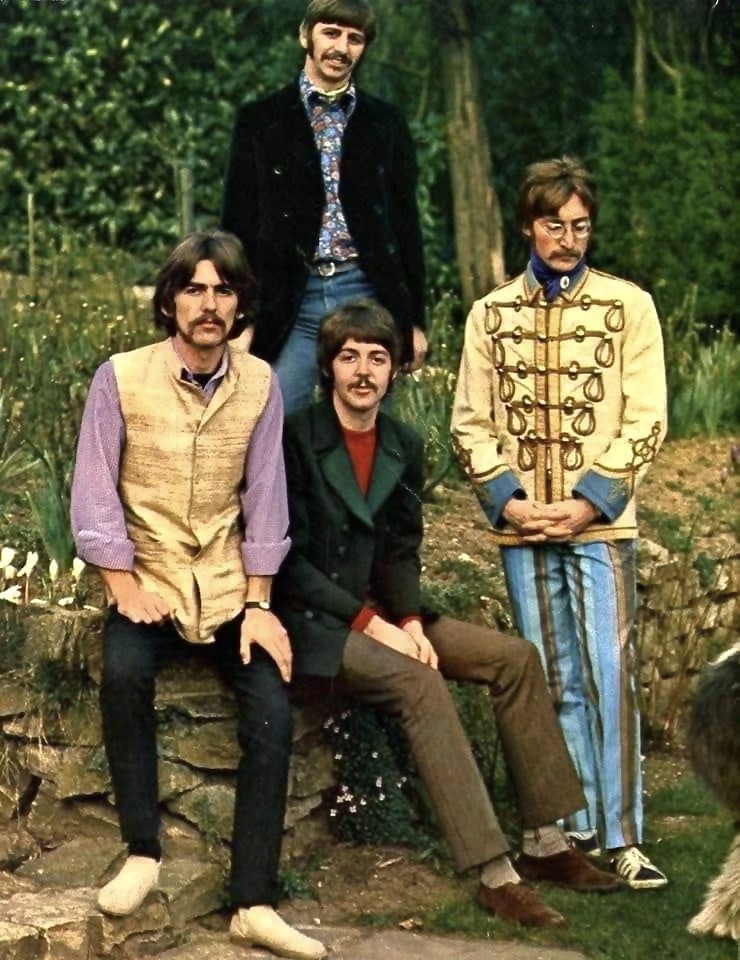
Fast forward to today and the influence and spirit of The Beatles still ricochets around the fashion world. Take for example this 2023 collaboration between fashion house Rabanne and the multinational, mass market clothing retailer, H&M. The look could easily owe its inspiration to 1967 and the famous foursome’s adoption of the militaristic uniforms from their Sgt. Pepper era:
We here at beatlesblogger.com have a mountain of books about The Beatles. Amongst them is just one other book on Beatle fashion, Fab Gear – The Beatles and Fashion by Paolo Hewitt – and it’s long out of print. That is proof that very little has been written about this aspect of the band’s creativity and their huge impact on fashion and culture. It is why Fashioning The Beatles – The Looks That Shook the World is an important piece of scholarship. Deirdre Kelly’s new work is a very welcome addition to the library. Grab a copy while you can.
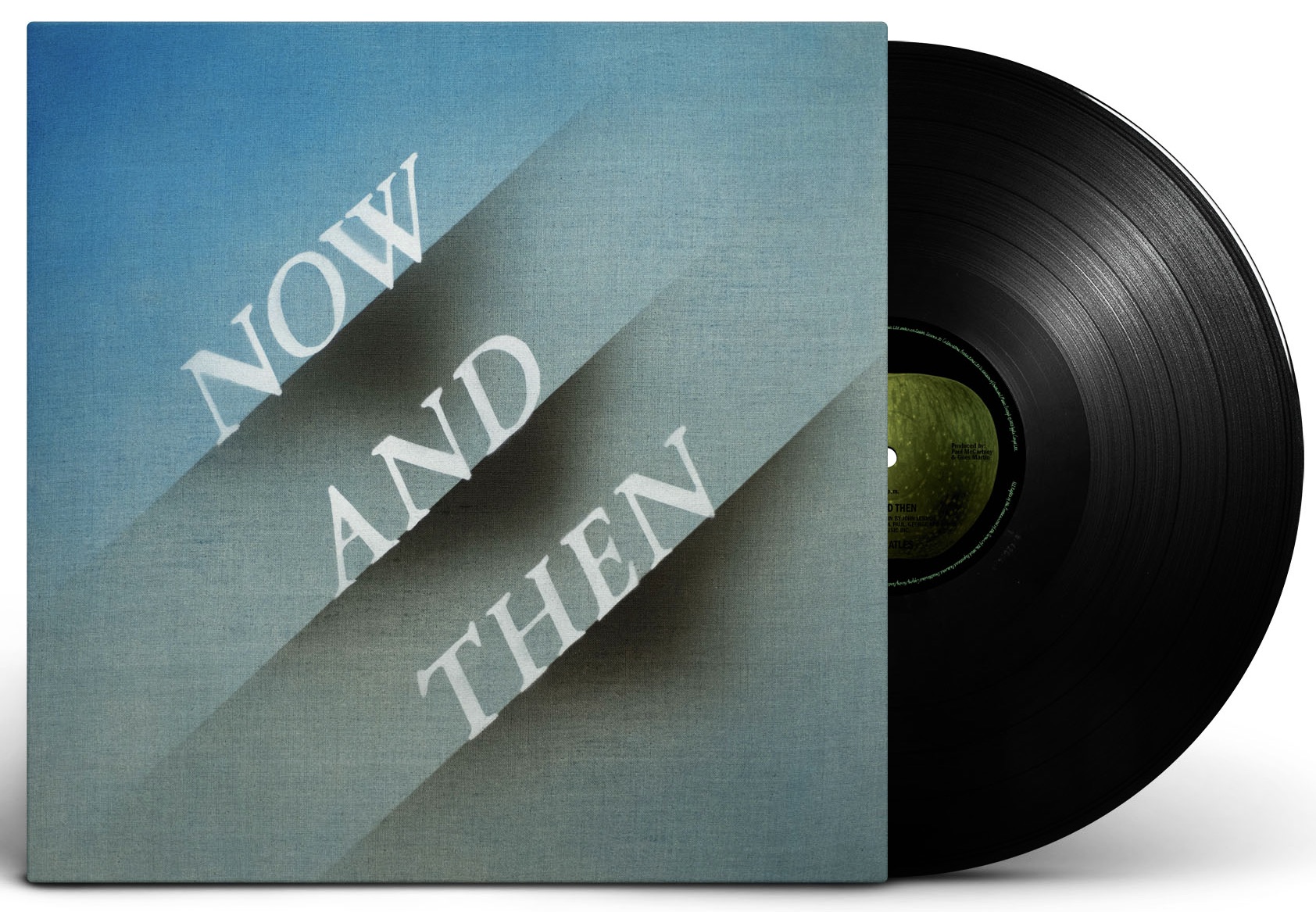
There’s been huge discussion on a lot of forums and socials about the cover art choices for the new ‘Now and Then’ Beatle single.
This post on Reddit (by PowerPlaidPlays) is an articulate argument for why it actually works:
“A lot of people have a lot of negative things to say about the new single art. I initially did not like it at first ether, but it’s grown on me and I thought a post defending it would be a good counterbalance to all of the “improved cover” mock ups lol.
The biggest thing I appreciate about it is how it stands on it’s own.
It reminds me of how The White Album was a deliberate departure from Sgt Pepper’s cover, or how Abbey Road lacked the band’s name on the front. It’s not rubbing the band’s legacy in your face or leaning too hard into nostalgia. We already have Anthology if you want references to their entire career, or the Red/Blue albums if you want the ‘Please Please Me’/’Get Back’ photos paired together. It’s not just a normal boring photo of the band like the ‘Real Love’ single got. It’s not focusing too much on John like the ‘Free as a Bird’ single did by using one of his drawings. The song has it’s own unique image.
I think the most it hearkens back to old Beatles imagery is the serif font (similar to the drop-T logo) and the color palate reminds me of Abbey Road, with the blue (like the sky), green (like the trees), grey (like the road), and white (like the crosswalk).
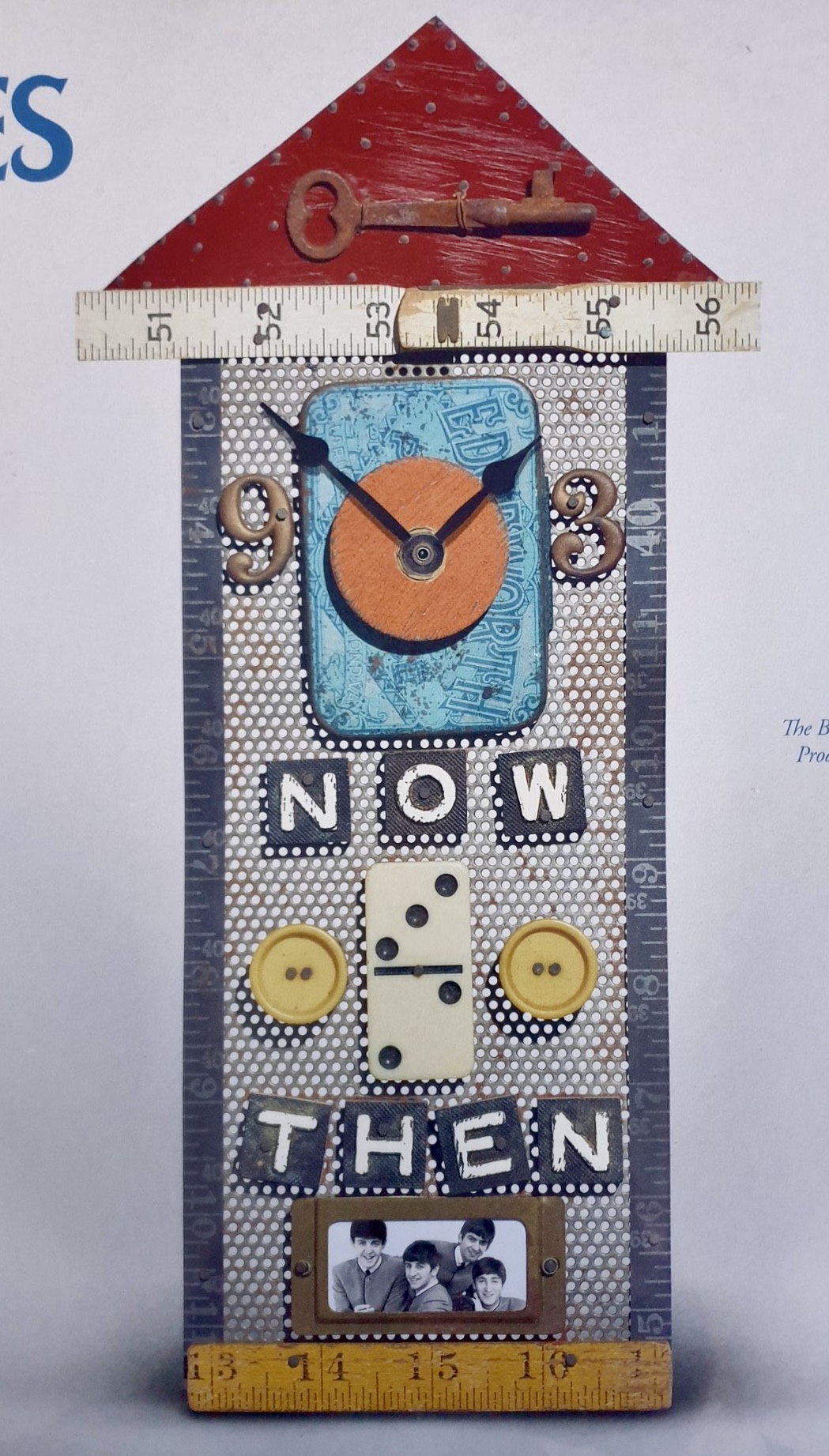
The back cover is where I think some more symbolism is present. With the “Then” being the I ‘Wanna Hold Your Hand’ photo, and the “Now” being a clock with 3 and 9, but missing 6 and 12. I think the assembled sculpture also is fitting for a song that is a mix of 1979, 1995, and 2023 recordings, with apparently some stuff sampled from a few other Beatles songs.
I also do like how it seems to be a painting and not digital typography. Looking at higher resolution images of it, you can see the canvas texture and paint imperfections.
Admittedly I am not in love with it, and probably like it more for the things it’s not, but I can appreciate it for being an interesting decision. I keep looking at it, and it keeps making me think. It’s not just an obvious “yep, it’s a Beatles single and it has a photo of the Beatles.”“
And this (from zosterpops) also on Reddit:
“To add to the interpretation, the angles are reminiscent of the covers on the Red & Blue comps and it has a decades-spanning quality to it with its colors, typography, and texture.
I think it’s also worth mentioning how the cover works as a minimalist design. It’s inspired paragraphs of both appreciative and unappreciative discussion on this sub. That’s always a hallmark of good art/design for me. Something that gets people talking about it.“
This make a lot of sense. Yes, it’s a very plain front cover but it has lots of references and room for interpretation.
As to the rear cover image, more information on the origins of the cute little clock image have come to light since the 7″, 10″ and 12″ records have landed in fan hands.
Inside the record sleeve is an insert with notes by John Harris which reveals the origins of the art piece shown:
So, it turns out this is an actual little clock owned by the Harrison estate, purchased by George in 1997. It was made by an Oregon artist named Chris Giffin, who is regarded as something of a local cultural treasure. She specialises in found object, assemblage and altered art.
“I create objects from materials that capture my eye, and that can be recycled materials or found objects. I make functional and sculptural and jewelry objects out of these materials that I collect. I try to take things that have had a past life and then give them a new life.”
Much of Giffin’s work involves metaphor, specifically concepts having to do with measurement, or man-made divisions applied to natural forms: “Time for me is a real metaphor, so I do make a lot of clocks, and I have a lot of measurement objects in them. Because time is a measurement, and of course tape measures and rulers and protractors—all that kind of stuff—to me is just the way we have chosen to decipher our need to organize our daily lives.”
What better way to depict “Now” and “Then”? You can see more of Giffin’s work on this Pinterest page. You get the feeling that the value of their pieces just went up 1000%!
It was always odd that there wasn’t a CD single of “the Beatles last ever single” included in the long-awaited big release announcement last week.
Well, now there is.
A CD single, in what looks to be a simple cardboard slipcase, has belatedly appeared on the official UK Beatles site:
Like all other formats, the CD will feature ‘Now and Then’, plus the 2023 stereo remix of ‘Love Me Do’.
The release date is 3 November – exactly the same date as all the other formats – which suggests that physical product has been prepared and is ready to go out to stores. So why was it not part of the launch last week? Did somebody at Apple/Universal Music stuff up?
So far the CD single only appears on the UK Beatle store site but we’d expect it to pop up elsewhere during the day.
By now you’ll be aware that there’s a brand new Beatle song coming. It is called ‘Now and Then’ and is the last Beatles song ever to be released.
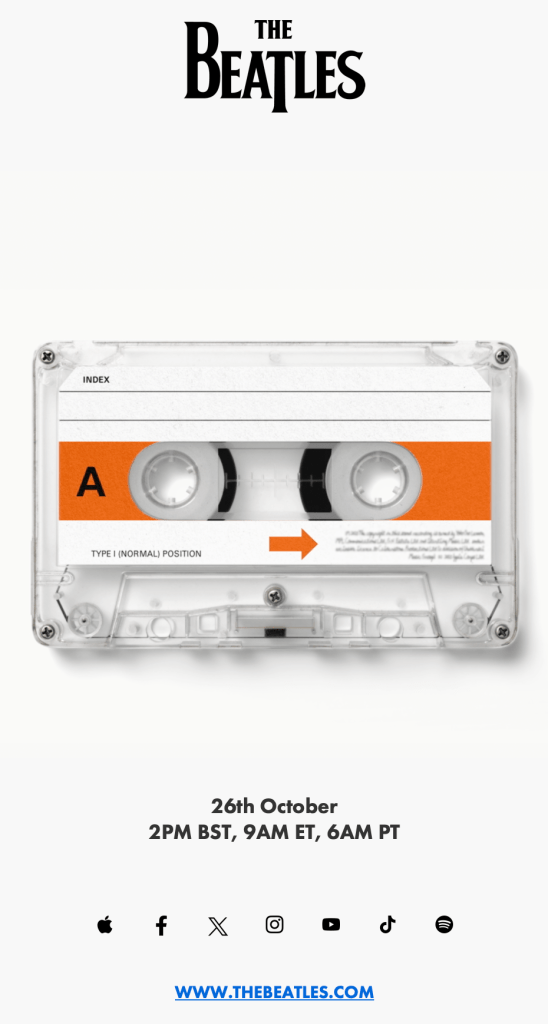
Like the singles ‘Free As a Bird’ (1995) and ‘Real Love’ (1996) before it, ‘Now and Then’ is all four Beatles contributing additional music and vocals to a cassette demo that John Lennon was working on in the late 1970’s but never got to properly record. It will now be released in 2023 as a vinyl single (in a variety of colours, plus as a 12″ single), and as a cassette (or a “cassingle” as we used to say), on November 3.
The new single has ‘Love Me Do’, the song that started it all off for the band, on the other side. So, it is listed as a “Double A Side”. The ‘Love Me Do’ news is that it is in stereo in a 2023 mix!
The colours for the 7″ are:
And an exclusive Beatles Shop blue/white marble 7″. Also available at some independent record stores:
There is also a 12″ single.
It’s a little confusing as to whether this is also available on red vinyl. It’s shown on the front page of the official Beatle announcement site, but when you click through to purchase it is not on either the US or UK stores.
Not finished with vinyl yet…..on some official sites there have been links to a black vinyl 10″ pressing. Take the French Beatles store for example:
The 10″ was listed briefly on the UK official site too – as a “Spotify Fans First” exclusive – but the link provided no longer seems to work. However, it is still up on the US Beatles Store, Universal Music Canada, and the Universal Music Brazil sites – but with all now showing as ‘Sold Out’. Strangely it is still for sale on the Universal Music Columbia site though!
In 2022, Paul and Ringo set about completing the song. Besides John’s demo vocal (now much enhanced quality thanks to the use of new technology developed by film director Peter Jackson and his audio team for the Get Back documentary series) ‘Now And Then’ includes electric and acoustic guitar recorded in 1995 by George, Ringo’s new drum part, and bass, guitar and piano from Paul, which matches John’s original playing. Paul added a slide guitar solo inspired by George; he and Ringo also contributed backing vocals to the chorus.
Then in Los Angeles, Paul oversaw a Capitol Studios recording session for the song’s Beatlesque string arrangement, written by Giles Martin, Paul and Ben Foster. Paul and Giles also added one last touch: backing vocals from the original recordings of ‘Here, There And Everywhere’, ‘Eleanor Rigby’ and ‘Because’, which are woven into the new song using the techniques perfected during the making of the LOVE show and album. The finished track was produced by Paul and Giles, and mixed by Spike Stent. Can’t wait to hear it!
Just by the way, the cover artwork is by celebrated US artist Ed Ruscha. That’s a Paul McCartney influence right there because Ruscha did the cover art (in all it’s many variations) for the McCartney III, McCartney III Imagined releases, and the box set McCartney 1,2,3.
Coincidentally, Ruscha is the subject of a major retrospective currently showing at the Museum of Modern Art in New York. It’s title? “Now Then”. You can see a short CBS News interview and retrospective about the man here.
As if all this wasn’t enough, on November 10, The Beatles’ 1962-1966 (aka The Red Album) and The Beatles 1967-1970 (aka The Blue Album) collections are to be released in 2023 Edition packages.
Both collections have been expanded, with all the songs mixed in stereo and Dolby Atmos. Together both sets contain 75 tracks, 36 of which have new mixes for 2023. The booklets will contain new sleeve notes by journalist and author John Harris.
The UK single version of ‘Love Me Do’ now kicks off the CD version of The Beatles 1962-1966 (2023 Edition) – now expanded with 12 additional tracks added chronologically. ‘Now And Then’ ends the CD version of The Beatles 1967-1970 (2023 Edition) – now expanded with 9 additional tracks also added chronologically – to complete the career-spanning CD collections. Both are 2CD sets.
But is is different with the vinyl.
The Red and the Blue will have the first two discs just as they were originally released when they were double LPs, with the third disc containing all the expanded material. In other words, 12 extra tracks on Disc 3 for the Red, and 9 extra tracks Disc 3 for the Blue. Quite a different approach to the CD. No slotting in the newly added songs in chronological order here. In fact the new song ‘Now and Then’ is Track 1 of Side 6 of the Blue. A little bit odd.
Both are 180 gram Half Speed Mastered. They will be available on black vinyl separately as triple LP sets, and they’ll be sold together as a 6LP box set:
The Beatles Store is also offering exclusive limited editions of the box set and individual albums on red and blue colour vinyl:
And here’s the CD packaging:
And a 4CD collections will pair the Red and Blue in a slip-cased set.
The new music video for ‘Now And Then’ will debut on Friday, November 3. It is directed by Peter Jackson.
There’s also going to be a short “making of” documentary film released on November 1. Here’s the teaser:
One of the three is Splinter’sThe Place I Love, the very first record to come out on George Harrison’s then new label.
Produced by and featuring Harrison, The Place I Love was one of the earliest recordings to be made at the FPSHOT studio in his Friar Park home.
DETAILS Event: BLACK FRIDAY 2023 Release Date: 11/24/2023 Format: Clear vinyl LP Label: Dark Horse Records Quantity: 1000 Release type: ‘RSD First’ Release
MORE INFO Splinter was comprised of duo Bill Elliot and Bobby Purvis, and their blend of folk, pop, and rock were introduced to Dark Horse Records founder George Harrison in 1973. Harrison was quick to spot their potential and made them one of the first signings to his new label.
The band’s debut album The Place I Love was produced by Harrison and features extensive guitar work by the legendary musician, as well as contributions from Billy Preston, Jim Keltner, Alvin Lee (Ten Years After), and Gary Wright (Spooky Tooth and ‘Dream Weaver’).
Including the hit record ‘Costafine Town’, along with the singles ‘Drink All Day (Got to Find Your Own Way Home)’ and ‘China Light’, this remastered recording will be available on vinyl for the first time since its 1974 release. For RSD Black Friday it is remastered and pressed on transparent clear vinyl with reproduced gatefold artwork and an OBI strip.
Also being readied for RSD Black Friday is an album that originally made it’s debut on the Apple label – Ravi Shankar and Ali Akbar Khan’s In Concert 1972.
DETAILS Event: BLACK FRIDAY 2023 Release Date: 11/24/2023 Format: 2 x LP Label: Dark Horse Records Quantity: 1280 Release type: RSD Exclusive Release
MORE INFO The original Apple Records release, now remastered and reissued on Dark Horse, is the Indian sitar master in concert with Ali Akbar Khan on sarod, and Alla Rakha on tabla. It was recorded at Philarmonic Hall in New York City. The double LP is produced by George Harrison, Zakir Hussain, and Phil McDonald.
Dark Horse is also digging deeper into its Leon Russell catalogue with a special edition red vinyl release of his called Hank Wilson Volume II.
DETAILS Event: BLACK FRIDAY 2023 Release Date: 11/24/2023 Format: Red vinyl LP Label: Dark Horse Records Quantity: 1700 Release type: RSD Exclusive Release
MORE INFO This is a coloured vinyl reissue of Leon Russell’s 1984 country album Hank Wilson Vol. II. Hank Wilson is Russell’s country music alter ego, and this title has a bit of a strange release history. You can read up here for a bit of the background. Originally released on Paradise Records, Dark Horse is reissuing the album on vinyl for the first time since 1984. It includes country staples such as ‘Wabash Cannonball’ and ‘I Saw the Light’. Willie Nelson makes a guest appearance on ‘Wabash Cannonball’.
So there you have it. Some Dark Horse titles to look out for in November.
And if you’re collecting the new Dark Horse release series don’t forget they’re once again re-issuing Joe Strummer & The Mescaleros Streetcore LP on October 20. This time it will be on black vinyl with an exclusive ‘Coma Girl’ Lyric Art Print from the Joe Strummer Archive. It will also be available on CD. Dark Horse already issued this album on limited edition white vinyl for Record Store Day proper earlier this year.
Back in 2016 the knowledgeable hosts, Ryan Brady and Chris Mercer, set themselves the task of discussing, in detail, every single solo McCartney release. And they succeeded!
Understandably, the podcast went into a hiatus. How do you go on when one very talented half of the team has been taken away?
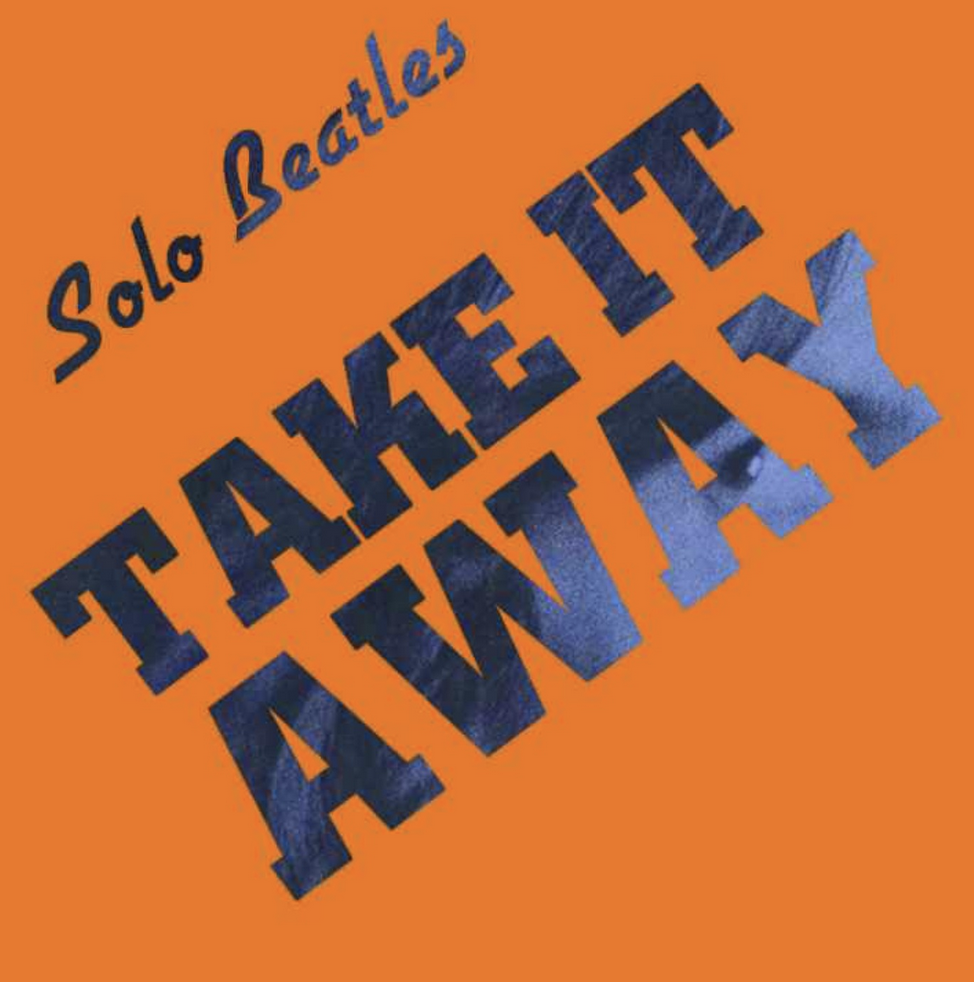
Well, the podcast is now re-emerging – as Take It Away: The Complete Solo Beatles Archive Podcast. Chris Mercer is joined by a new co-host and fellow Beatle nut, Paul Kaminski. Together they plan to expand the original brief to take in the solo careers of all four Beatles.
If you’re interested in The Beatles, Wings, or Paul McCartney the solo artist, then this could be the podcast for you.
The all-new Take It Away begins with a dive into the music of George Harrison. The first episode, ‘Beatle George’ (part one of two) is out now at your favourite podcast aggregator.
Chris and Paul write: “In this preamble to the next phase of the podcast, we’ll explore the origins of Harrison’s songwriting, musicianship and legacy, as the “quiet one” fights for his place amongst both his band mates and his musical contemporaries alike. We’ll chronicle every single (official) George Harrison Beatles songwriting contribution from the band’s beginnings up through 1967 in this first installment — an extensive deep dive you will not want to miss! Now, without further ado: take it away, George…”
Worth checking out.
Oh, and while we’re talking podcasts, just a reminder that the first two episodes in the brand new Paul McCartney and Paul Muldoon outing, A Life In Lyrics, will now be available for download from October 4. (Seems they missed the originally advertised September 20 release date for some unknown reason).
If you’re a completist and want to cross check that you have every physical and digital release, or if you’re interested in a smart, informed commentary on every song by Paul McCartney then this book series is for you.
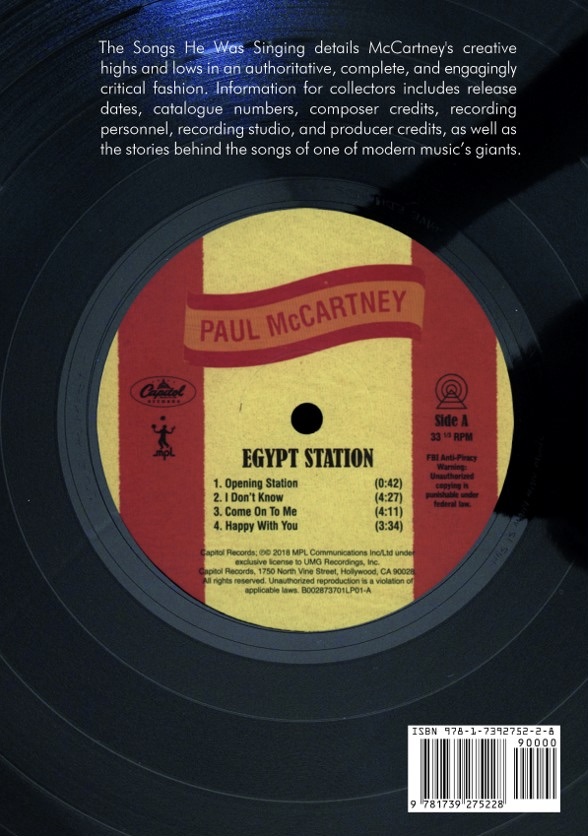
Paul McCartney The Songs He Was Singing Vol. 5 2010 – 2019 is (as its title suggests) the latest installment in a series compiled and written by John Blaney. Blaney, a passionate Beatle fan, brings to his writing the expertise and rigour of a professional historian. After starting out in music retail he trained as a graphic designer and studied History Of Art at Camberwell College Of Arts and at Goldsmith College (both in London) before taking up his present post as the curator of a museum of technology. He’s the author and publisher of no less than twelve books on The Beatles, Paul McCartney, John Lennon and George Harrison.
In The Songs He Was Singing series Blaney has split McCartney’s songwriting and his steady release schedule roughly into ten-year slabs, with Volume 1 covering the period 1967-1979; Volume 2 the 1980’s; Volume 3 the 1990’s; and Volume 4 the Noughties (i.e. the years 2000-2009).
And that brings us to the present book (due out next month) and the years 2010 – 2019. Or, to put it another way, from the re-release of Band OnThe Run – the very first in the Archive Collection series – through to the bloated Egypt Station (Traveller’s Edition).
The way Blaney has structured the content in this series is comprehensive – with just a couple of caveats. For each entry you get US and UK release dates and chart positions, then the name of each song, the personnel who played, and recording locations. If it’s not a re-issue (or, if it’s a previously unreleased bonus track) you get an individual song description and an appraisal by Blaney. Then there’s a concluding “Data” section for each release detailing correctly and succinctly exactly how it was issued i.e. which formats (LP, CD, digital), along with the sometimes complex configurations and extras the release came in. This includes if promo copies were produced and distributed. It is great book for identifying those rarities which may have escaped your attention. A good example of this is the “Tug Of War Data” section where Blaney explains the more obscure extras. Like for example the Barnes and Noble-only 7″ bonus single ‘Ebony and Ivory’/’Rain Clouds’, released exclusively to their customers in a replica picture sleeve; or the fact that there was a very limited Super Deluxe Edition of the Tug Of War box set issued in a red acrylic slipcase with exclusive hand-numbered 8×10 photo prints. It’s detail like this the avid collector sometimes forgets. Then, for each release, there’s a selection of colour photographs of the packaging and labels to help further identify what you have – or what you might be still be seeking out for your own collection.
The album summaries and individual song descriptions which Blaney provides are worth a special mention – especially for their often outspoken honest opinions. It’s clear that while he reveres the McCartney canon, Blaney is no fanboy who treats everything McCartney touches as brilliant art. If there’s something he feels isn’t up to scratch he has no qualms in saying so. Take this example from the Archive Collection edition of McCartney II. Blaney is addressing one of the included bonus tracks, ‘Mr H Atom’/’You Know I’ll Get You Baby’:
“Not so much a song as a chorus in search of a verse, ‘Mr H Atom’ sounds like a demo recorded by an obscure New Wave band fronted by a female singer – Linda McCartney. Another example of McCartney being unable to flesh out his original idea, ‘Mr H Atom’ is little more than an unfinished fragment. If McCartney had the will to finish the song it may have developed into something a little more interesting. As it stands it’s of passing interest but no contender as a lost gem. ‘You Know I’ll Get You Baby’ is, if anything, less interesting. Consisting of the title repeated over a chugging 12-bar, it may possibly be the worst ‘song’ McCartney has allowed to slip out of his archives.”
Ouch.
Now to a couple of items missing from the book and, to be fair here, what we were sent for review is an early “proof” copy, so there could still be some changes prior to it’s October release. We think the 12 track Paul McCartney Live in Los Angeles should have been included. Yes, it was a free CD given away in 2010 to buyers of the UK newspaper The Mail on Sunday (and also The Irish Mail on Sunday), and it is related to a four-song EP called Amoeba’s Secret officially released on CD and 12″ single by Hear Music in 2007 and 2009 (so it my well have been detailed in a previous volume), but it was the first release of 9 previously unavailable live tracks. Having said all that, Blaney provides at the back of the book a separate section listing all the release dates, record company information, catalogue numbers, etc. Mentioned there briefly is the 2019, 2 x LP, 21 track Amoeba Gig album (also available on CD). But the Mail on Sunday release is different.
There’s also no mention of the 2011 CD re-issue of The Family Way original soundtrack on the Varese Sarabande label. Nor the 2015 vinyl LP of the same title. Again, these may have been dealt with in Volume 1 as the original did come out in 1967.
This volume does give a good amount of space (including some handy photographs) to the12″ EP Hope for the Future from 2015. This contains music McCartney composed for the Bungie online video game Destiny. It even references the very obscure (and rare) secret Record Store Day 12″ ‘Sweet Thrash’ single mix of the song. But it misses an important reference to a 6-LP release called The Music of Destiny Volume Icontaining the Destiny original soundtrack with many McCartney co-compositions, and a piece titled Music of the Spheres which ends with a movement called ‘The Hope’ that includes his ‘Hope For The Future (Main Version)’.
Having said that some items are missing, in all fairness these are minor and there is plenty here that will be a revelation – even to avid collectors. For us there was numerous releases included we hadn’t been aware of at all. For example in 2011 McCartney and his company MPL helped put together a compilation CD and LP of Buddy Holly cover versions. Rave On Buddy Holly has contributions from the likes of Modest Mouse, Florence and the Machine, Patti Smith, Nick Lowe, and Lou Reed. It also contains Paul McCartney singing a strange, rocky, distorted version of ‘It’s So Easy’. We also learn there was a different digital download only version of the same song sung in a more traditional Holly fashion. Of the CD version Blaney writes “…while McCartney delivers a passionate vocal, the backing is more than a little sloppy and sounds for all the world like a first run through…..And quite why [he] felt compelled to burst into an improvised rap before the track returns for a brief reprise is beyond me…..the result is like watching your dad dancing at a wedding: embarrassing.” When a song is great it gets praised in this book, but if it’s lacking then that gets called out as well – which is kind of refreshing.
Overall, this book is a delight to read, dip into, and is a great resource to cross-check your own collection. John Blaney has done a power of work in researching and engagingly critiquing (almost) every release by Paul McCartney between the years 2010 – 2019. Well worth having in your library.
Now all I need to do is track down the four previous volumes!




















 Beatles Blog