The Countdown Begins
Image
Reply
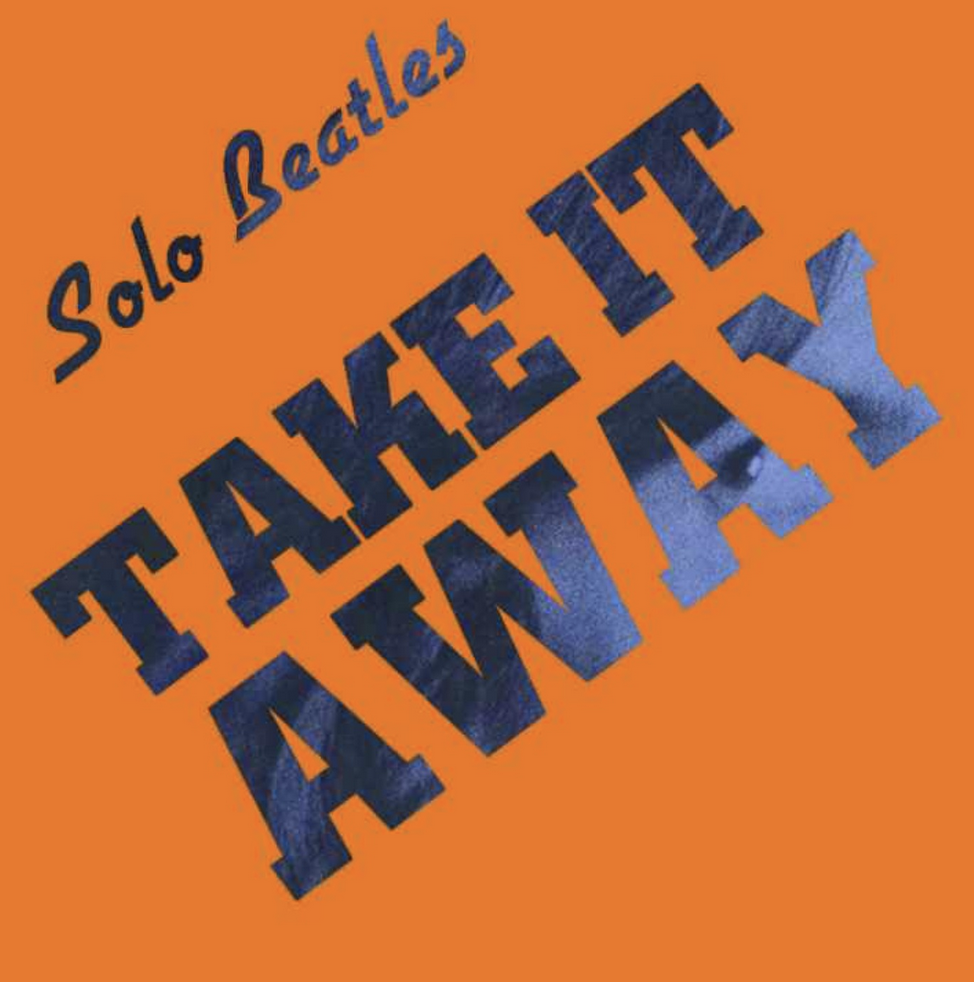
One of the podcasts we’ve really enjoyed in the last few years has been Take It Away – The Complete Paul McCartney Archive Podcast.
Back in 2016 the knowledgeable hosts, Ryan Brady and Chris Mercer, set themselves the task of discussing, in detail, every single solo McCartney release. And they succeeded!
However, in November 2020 Ryan was tragically killed in a car accident. He was just 34 years old.
Understandably, the podcast went into a hiatus. How do you go on when one very talented half of the team has been taken away?
Well, the podcast is now re-emerging – as Take It Away: The Complete Solo Beatles Archive Podcast. Chris Mercer is joined by a new co-host and fellow Beatle nut, Paul Kaminski. Together they plan to expand the original brief to take in the solo careers of all four Beatles.
If you’re interested in The Beatles, Wings, or Paul McCartney the solo artist, then this could be the podcast for you.
The all-new Take It Away begins with a dive into the music of George Harrison. The first episode, ‘Beatle George’ (part one of two) is out now at your favourite podcast aggregator.
Chris and Paul write: “In this preamble to the next phase of the podcast, we’ll explore the origins of Harrison’s songwriting, musicianship and legacy, as the “quiet one” fights for his place amongst both his band mates and his musical contemporaries alike. We’ll chronicle every single (official) George Harrison Beatles songwriting contribution from the band’s beginnings up through 1967 in this first installment — an extensive deep dive you will not want to miss! Now, without further ado: take it away, George…”
Worth checking out.
Oh, and while we’re talking podcasts, just a reminder that the first two episodes in the brand new Paul McCartney and Paul Muldoon outing, A Life In Lyrics, will now be available for download from October 4. (Seems they missed the originally advertised September 20 release date for some unknown reason).
Over the weekend a dedicated new project to once and for all try to locate one of the most sought-after musical instruments of all time was launched.
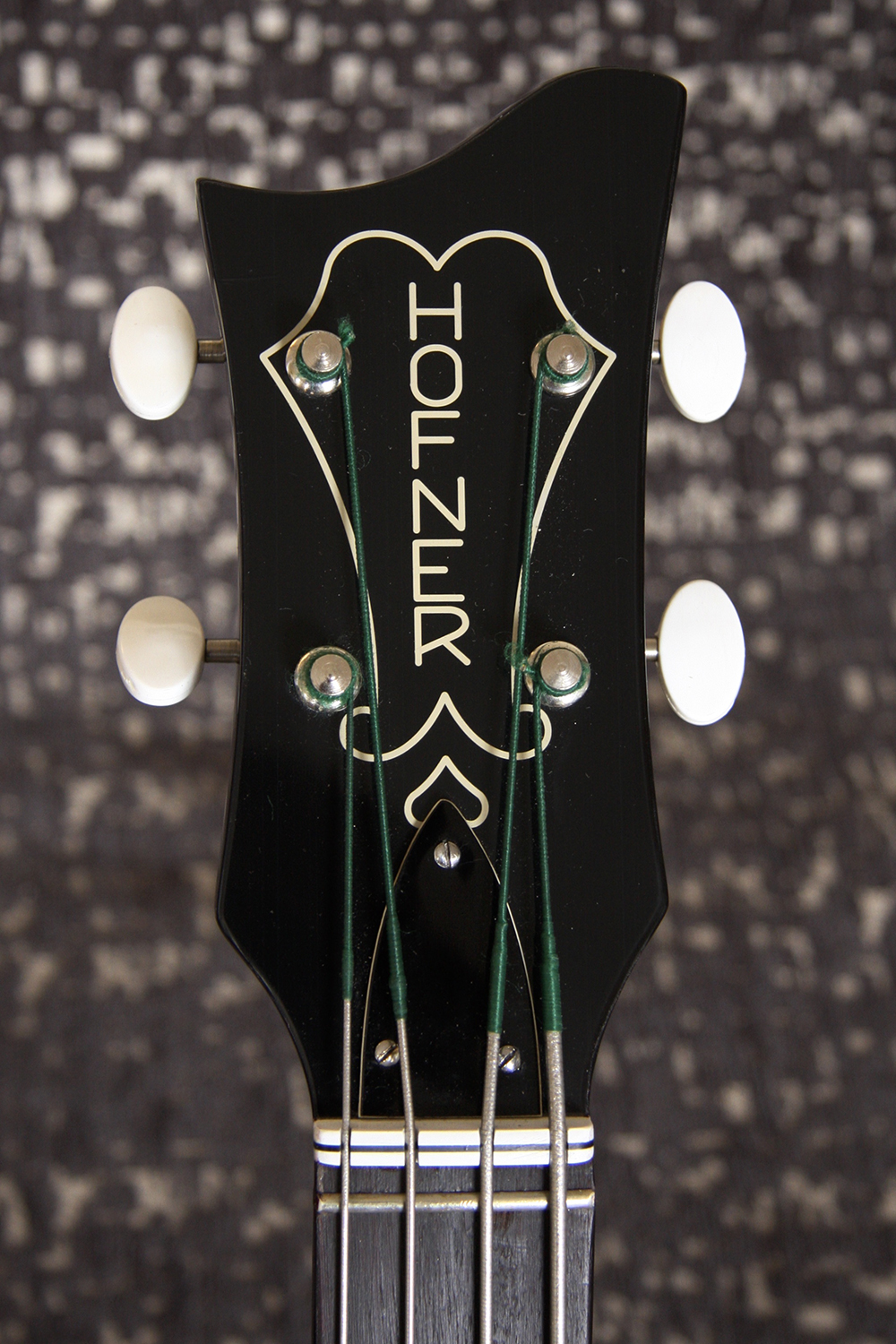
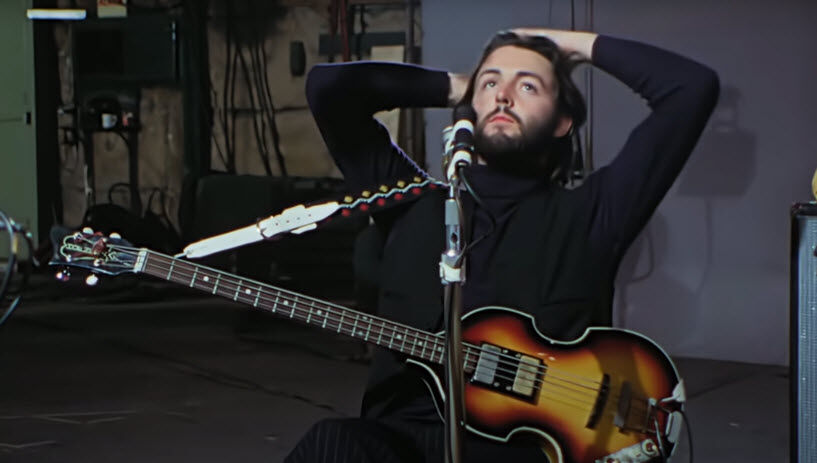
It’s called The Lost Bass Project and it has been set up to find Paul McCartney’s lost 1961 Höfner bass guitar.
This is the bass McCartney played at the Top Ten Club in Hamburg in 1961, at the Cavern in Liverpool, and on those first Abbey Road recordings. This is the bass you hear on ‘Love Me Do’, ‘She Loves You’, and ‘Twist and Shout’. The bass that powered Beatlemania – and shaped the sound of the modern world.
But in late January 1969, when The Beatles were in London recording the ‘Get Back/Let It Be’ sessions, the 1961 Höfner 500/1 Violin Bass disappeared. It has not been seen since.
The Lost Bass Project is a global search dedicated to tracing the bass – and solving the greatest mystery in the history of rock and roll.
This morning on the Australian Broadcasting Corporation’s national Breakfast Show Scott Jones, one of the team behind The Lost Bass Project, said that already – just two days in from the launch – they’re getting information that will help lead them to the famous missing instrument. He’s speaking here to host, Patricia Karvelas:
To find out more visit the project’s comprehensive website. There you’ll find all the information you need to learn the story of the ’61 Höfner, keep up with the latest developments in the search, but most importantly how you can make a contribution if you think you might have another piece in the jigsaw puzzle that might help solve the case. Also, check out the official Höfner site.
The idea here is not to find it to make money. The idea is to finally get it back to it’s rightful owner.
If you’re a completist and want to cross check that you have every physical and digital release, or if you’re interested in a smart, informed commentary on every song by Paul McCartney then this book series is for you.
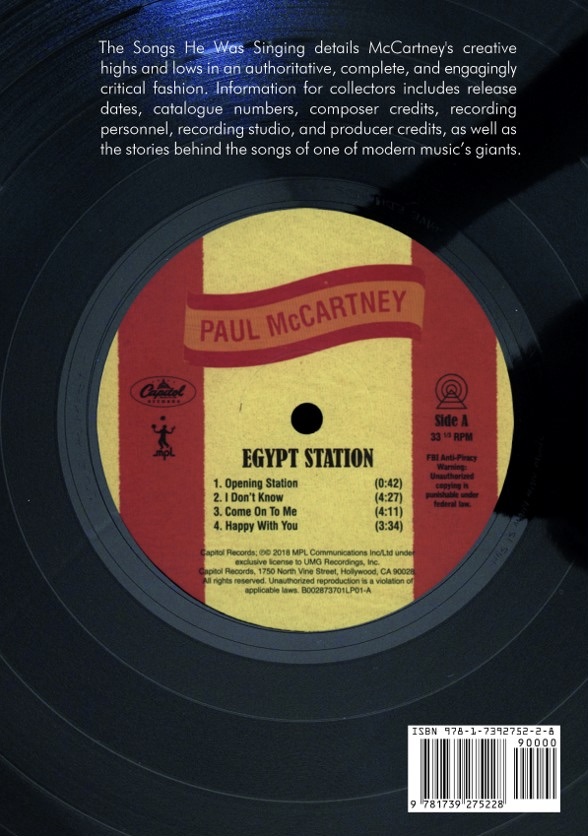
Paul McCartney The Songs He Was Singing Vol. 5 2010 – 2019 is (as its title suggests) the latest installment in a series compiled and written by John Blaney. Blaney, a passionate Beatle fan, brings to his writing the expertise and rigour of a professional historian. After starting out in music retail he trained as a graphic designer and studied History Of Art at Camberwell College Of Arts and at Goldsmith College (both in London) before taking up his present post as the curator of a museum of technology. He’s the author and publisher of no less than twelve books on The Beatles, Paul McCartney, John Lennon and George Harrison.
In The Songs He Was Singing series Blaney has split McCartney’s songwriting and his steady release schedule roughly into ten-year slabs, with Volume 1 covering the period 1967-1979; Volume 2 the 1980’s; Volume 3 the 1990’s; and Volume 4 the Noughties (i.e. the years 2000-2009).
And that brings us to the present book (due out next month) and the years 2010 – 2019. Or, to put it another way, from the re-release of Band On The Run – the very first in the Archive Collection series – through to the bloated Egypt Station (Traveller’s Edition).
The way Blaney has structured the content in this series is comprehensive – with just a couple of caveats. For each entry you get US and UK release dates and chart positions, then the name of each song, the personnel who played, and recording locations. If it’s not a re-issue (or, if it’s a previously unreleased bonus track) you get an individual song description and an appraisal by Blaney. Then there’s a concluding “Data” section for each release detailing correctly and succinctly exactly how it was issued i.e. which formats (LP, CD, digital), along with the sometimes complex configurations and extras the release came in. This includes if promo copies were produced and distributed. It is great book for identifying those rarities which may have escaped your attention. A good example of this is the “Tug Of War Data” section where Blaney explains the more obscure extras. Like for example the Barnes and Noble-only 7″ bonus single ‘Ebony and Ivory’/’Rain Clouds’, released exclusively to their customers in a replica picture sleeve; or the fact that there was a very limited Super Deluxe Edition of the Tug Of War box set issued in a red acrylic slipcase with exclusive hand-numbered 8×10 photo prints. It’s detail like this the avid collector sometimes forgets. Then, for each release, there’s a selection of colour photographs of the packaging and labels to help further identify what you have – or what you might be still be seeking out for your own collection.
The album summaries and individual song descriptions which Blaney provides are worth a special mention – especially for their often outspoken honest opinions. It’s clear that while he reveres the McCartney canon, Blaney is no fanboy who treats everything McCartney touches as brilliant art. If there’s something he feels isn’t up to scratch he has no qualms in saying so. Take this example from the Archive Collection edition of McCartney II. Blaney is addressing one of the included bonus tracks, ‘Mr H Atom’/’You Know I’ll Get You Baby’:
“Not so much a song as a chorus in search of a verse, ‘Mr H Atom’ sounds like a demo recorded by an obscure New Wave band fronted by a female singer – Linda McCartney. Another example of McCartney being unable to flesh out his original idea, ‘Mr H Atom’ is little more than an unfinished fragment. If McCartney had the will to finish the song it may have developed into something a little more interesting. As it stands it’s of passing interest but no contender as a lost gem. ‘You Know I’ll Get You Baby’ is, if anything, less interesting. Consisting of the title repeated over a chugging 12-bar, it may possibly be the worst ‘song’ McCartney has allowed to slip out of his archives.”
Ouch.
Now to a couple of items missing from the book and, to be fair here, what we were sent for review is an early “proof” copy, so there could still be some changes prior to it’s October release. We think the 12 track Paul McCartney Live in Los Angeles should have been included. Yes, it was a free CD given away in 2010 to buyers of the UK newspaper The Mail on Sunday (and also The Irish Mail on Sunday), and it is related to a four-song EP called Amoeba’s Secret officially released on CD and 12″ single by Hear Music in 2007 and 2009 (so it my well have been detailed in a previous volume), but it was the first release of 9 previously unavailable live tracks. Having said all that, Blaney provides at the back of the book a separate section listing all the release dates, record company information, catalogue numbers, etc. Mentioned there briefly is the 2019, 2 x LP, 21 track Amoeba Gig album (also available on CD). But the Mail on Sunday release is different.
There’s also no mention of the 2011 CD re-issue of The Family Way original soundtrack on the Varese Sarabande label. Nor the 2015 vinyl LP of the same title. Again, these may have been dealt with in Volume 1 as the original did come out in 1967.
This volume does give a good amount of space (including some handy photographs) to the12″ EP Hope for the Future from 2015. This contains music McCartney composed for the Bungie online video game Destiny. It even references the very obscure (and rare) secret Record Store Day 12″ ‘Sweet Thrash’ single mix of the song. But it misses an important reference to a 6-LP release called The Music of Destiny Volume I containing the Destiny original soundtrack with many McCartney co-compositions, and a piece titled Music of the Spheres which ends with a movement called ‘The Hope’ that includes his ‘Hope For The Future (Main Version)’.
Having said that some items are missing, in all fairness these are minor and there is plenty here that will be a revelation – even to avid collectors. For us there was numerous releases included we hadn’t been aware of at all. For example in 2011 McCartney and his company MPL helped put together a compilation CD and LP of Buddy Holly cover versions. Rave On Buddy Holly has contributions from the likes of Modest Mouse, Florence and the Machine, Patti Smith, Nick Lowe, and Lou Reed. It also contains Paul McCartney singing a strange, rocky, distorted version of ‘It’s So Easy’. We also learn there was a different digital download only version of the same song sung in a more traditional Holly fashion. Of the CD version Blaney writes “…while McCartney delivers a passionate vocal, the backing is more than a little sloppy and sounds for all the world like a first run through…..And quite why [he] felt compelled to burst into an improvised rap before the track returns for a brief reprise is beyond me…..the result is like watching your dad dancing at a wedding: embarrassing.” When a song is great it gets praised in this book, but if it’s lacking then that gets called out as well – which is kind of refreshing.
Overall, this book is a delight to read, dip into, and is a great resource to cross-check your own collection. John Blaney has done a power of work in researching and engagingly critiquing (almost) every release by Paul McCartney between the years 2010 – 2019. Well worth having in your library.
Now all I need to do is track down the four previous volumes!
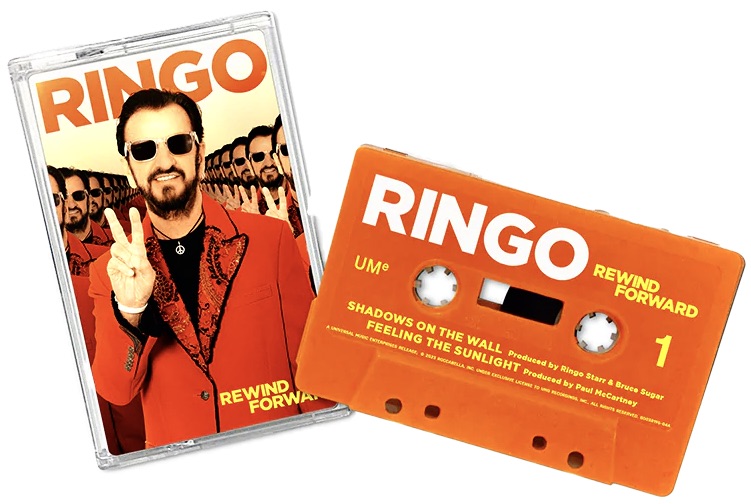
If you’ve been following any of the forums you’ll be aware that speculation has been rife over the last month or so about new Beatle or Beatle-related releases. Now Ringo Starr has emerged as the first to announce a new release for the Summer.
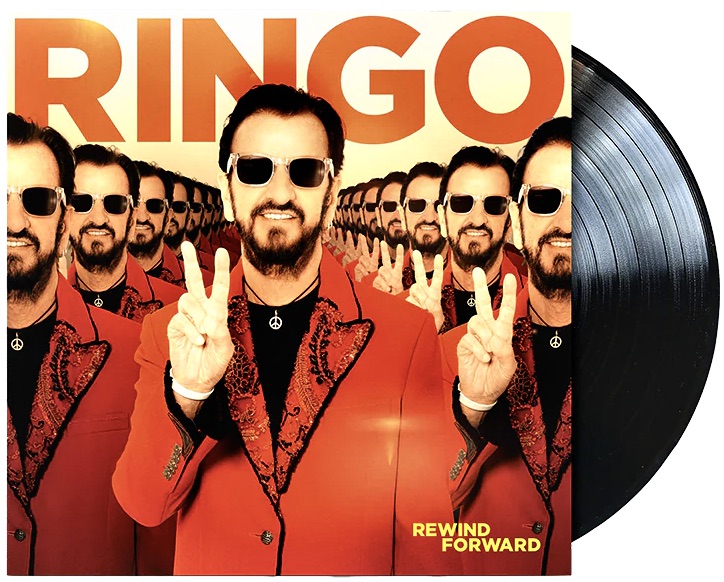
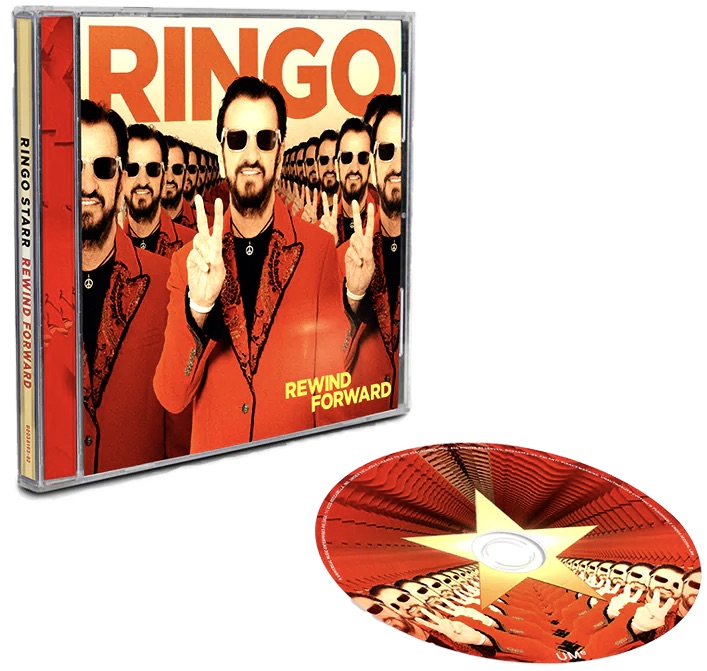
His record – another EP in what is quickly becoming a series – is called Rewind Forward. It contains four new songs – one of which is written, produced and played on by Paul McCartney.
Rewind Forward is available to pre-order on the official Ringo Starr Store website from today ahead of its release on October 13, 2023.
It is available on digital, cassette, CD, and on 10” black vinyl.
Also, the title track ‘Rewind Forward’ will be available to stream or purchase everywhere this Friday August 25, 2023.
The EP features four new songs:
1. Shadows On The Wall
2. Feeling The Sunlight
3. Rewind Forward
4. Miss Jean
Paul McCartney wrote ‘Feeling The Sunlight’. He also produced and, according to rumours, sings and plays four instruments on the track. So, it’ll be interesting to hear that one.
As to the ongoing speculation about a new Beatle release…..
In 2021 Ringo’s EP Change The World preceded the release of the super deluxe edition of Let It Be in 2021, and his last EP (simply called EP3) preceded Revolver last year. So, theoretically, are we all clear now for a big Beatles announcement?
Great news overnight, especially if you live Down Under.
Paul McCartney and Frontier Touring have announced that the living legend is headed this way in October and November for a series of six concerts. For those of our readers who may not know Australia that well, one interesting thing about this announcement is that the tour takes in two regional centres that are not capital cities: Newcastle in the state of New South Wales, and the Gold Coast in Queensland.
McCartney took to social media with this slightly longer video filmed at The Liverpool Institute for the Performing Arts, of which he is lead patron:
Also, as part of the publicity for the tour McCartney granted a lengthy interview to the Aussie podcast Behind The Hits, hosted by Dave Gleeson. In it he speaks about the Australian tour plus a whole lot more. It’s worth a listen:
Then Paul followed up with a TV interview on one of Australia’s leading news and current affairs shows, ABC 7.30. Here’s the version that went to air. He’s speaking with host Sarah Fergusson:
Or, if you prefer, the extended version of the interview:
Sometimes tip-offs about Beatle stuff come from the most unexpected places…
Beatlesblog is located in Australia, but it took an email from our friend and avid collector Andrey – based in Russia – to let us know about this magazine, out now in Australian newsagents.
Its the latest edition of Australian Guitar and, following Andrey’s email, we simply walked up to to the corner store and got a copy. Wouldn’t have known it was there otherwise!
As you can see, the mag has a major article (13 pages in all) called ‘The Ultimate Beatles Tone Guide’. In it they unpack how the band crafted their sound from the perspective of the instruments and the electronics used.
To do this writer Chris Gill examines 11 specific songs: ‘Please Please Me’, ‘A Hard Day’s Night’, ‘I Feel Fine’, ‘Ticket To Ride’, ‘Michelle’, ‘Taxman’, ‘Sgt. Pepper’s Lonely Hearts Club Band’, ‘Revolution’, ‘While My Guitar Gently Weeps’, Let It Be’, and ‘The End’.
Obviously, this article has been published previously in the US by parent magazine Guitar World (and you can read it here), but it’s nice to have a physical copy to flip through.
Being a guitar magazine the focus is entirely on the gear – the makes, model and year of manufacture, the amplifiers, studio speakers, etc. In some cases they even get right down to the likely strings used on the guitars to achieve a particular sound quality.
Gill acknowledges a big part of the challenge here is the great amount of sometimes conflicting information out there about these things. The Beatles themselves, their producer George Martin, and even engineers like Geoff Emerick, have offered over the years conflicting accounts. They even contradict themselves in some of their personal recollections.
So, its a tough ask to get this stuff right. Gill says that what the feature contains are his best efforts to determine the guitars, basses, amps and effects actually used. He admits it is not perfect and in many cases highly speculative (for example the amp used by John Lennon to record his solo on ‘The End’), but he reckons it is a good guideline for any guitarist wanting to replicate those magic sounds.

The feature is richly illustrated with great photos and examples of the the actual guitars and amplifiers, plus a list of suggestions for modern-day or way less expensive alternatives to get your hands on if you want to sound like John, Paul or George.
And yes, there’s a whole section on guitar string specifics. To quote: “Many guitar nerds note that perhaps the most important detail of replicating the Beatles’ tones after their guitars and amps is the types of strings that they used. It is generally believed that Harrison and Lennon used flatwound strings in the early years up until late 1965, just after the release of Rubber Soul. After that, from Revolver and beyond, they apparently switched to roundwound strings.” Check out the section on string theory here.
The feature ends with a short article called ‘Beatles Unplugged – A Guide to the Fab Four’s Acoustic Arsenal’. You can read that too online here:

The podcast, which is called McCartney: A Life in Lyrics, starts on September 20. It promises listeners a fly-on-the-wall opportunity to sit in on recordings of conversations made over many years between Paul McCartney and poet Paul Muldoon as they dissected the people, experiences, and art that inspired his songwriting.
The conversations between the two were a central part of their process in compiling the book The Lyrics: 1965 to the Present, released in hardback in 2021, and just about to be re-published in paperback form – with added chapters.
Over two seasons and 24 episodes the podcast will let us in on how that book came together. We’ll be able to hear what is described as “a combination master class, memoir, and an improvised journey with one of the most beloved figures in popular music”.
Each episode will focus on one song from McCartney’s catalog and will span early Beatles through to his solo work.
You can listen to a promo for the new podcast here:
A longer introduction to the podcast series is here: Welcome to McCartney: A Life in Lyrics.
For more background on how it all came about there’s also an interview in The Verge with Justin Richmond, Executive Producer of the podcast. It’s really interesting. “The idea for the podcast came through McCartney’s production team, from the person in charge of special projects. The sort of system that [McCartney and Muldoon] came up with to write [The Lyrics: 1956 to the Present] is that Muldoon turns up to McCartney’s house, turns on his phone, and records a conversation between the two of them. Eventually, the pandemic happened, lockdown, etc., and some stuff was delivered over Zoom.”
“My read on it is that after the stress of getting the book together was relieved, they were sort of realizing that they have hours of Paul McCartney being candid in a really special way. It’s not like this was expertly recorded in the studio. It’s not as if he was sitting down to be Paul McCartney of The Beatles to give an official interview about the band. These [recordings] really have the tenor of someone sitting down with a friend and having a leisurely chat about times past. And McCartney’s “times past” happens to be, for him, The Beatles and Wings and a litany of incredible solo work.”
Season One drops weekly starting September 20. It will feature twelve episodes examining ‘Eleanor Rigby’, ‘Back in the USSR’, ‘Let It Be’, ‘When Winter Comes’, ‘Penny Lane’, ‘Uncle Albert/Admiral Halsey’, ‘Here Today’, ‘Live and Let Die’, ‘Magical Mystery Tour’, ‘Jenny Wren’, ‘Too Many People’ and ‘Helter Skelter’.
Season Two will follow with an additional 12 episodes in February, 2024.
McCartney: A Life in Lyrics is a co-production between Pushkin Industries and iHeartPodcasts.
(If you don’t want to wait for each weekly episode and need to binge the whole series all at once you can subscribe to Pushkin+ to get access to all of Season One on September 20).
Whichever way you look at it the announcement overnight by Paul McCartney and Penguin Books that the paperback edition of his book The Lyrics: 1956 to the Present will contain seven additional song commentaries to those in the hardback edition from 2021 is a sneaky marketing ploy to get fans to buy additional copies of content they already own.
Yes, the paperback will have different cover art and will come in one volume (the hardback is split into two separate books), but still, to get McCartney’s thoughts and memories of those seven additional songs we’ll have to fork out yet again…..
The seven new song commentaries will be:
’Bluebird’
’Day Tripper’
’English Tea’
‘Every Night’
‘Hello, Goodbye’
’Magical Mystery Tour’
‘Step Inside Love’
Fans are already reacting to the news – and not in a good way:
“The old bonus track swindle. 😦 I’m sure people who bought the hardback get a free copy.”
“Next up: the expanded hard cover edition with the 7 additions as well as 3 additional additions. This is getting ridiculous.”
“Gotta love marketing. Extra songs for a new book edition, man. I have the hardcover. It’s beautiful. I’m good with what I have…No second bite of the apple from me.”
“I’m waiting for the limited edition cream paper, newspaper, blue paper, green paper, lambskin paper, pink paper, yellow paper, parchment paper, orange paper, purple paper, swirl paper, papyrus paper, 98 bright paper, rolling paper and black paper editions. Each with a unique and previously unreleased song write up! Collect them all!”
The paperback is scheduled for release on 7 November, and preorders are open now in the UK (Penguin) and in the USA (Norton).
Let’s get this straight up front. Luca Perasi’s Paul McCartney: Music Is Ideas – The Stories Behind the Songs (Vol.1) 1970-1989 is a big, weighty tome. It is way more book in real life than you might imagine from seeing it pictured on the web. At over 520 pages Music Is Ideas is thick and packed with tons of useful information. Its an obvious labour of love into which he’s poured an enormous amount of thought, hard work and creative effort.
Obviously Music Is Ideas serves as a very handy adjunct to McCartney’s own award-winning, two-volume set The Lyrics (published in 2021) which covers off a selection of just 154 songs from Paul’s earliest boyhood compositions, his Beatle days, some Wings songs, and solo work to the present day. Perasi’s book however extends and amplifies this with it’s aim (eventually in subsequent volumes) to detail absolutely every post-Beatle composition we know of. This first installment – Volume 1 – closely examines 296 released songs, plus a further 50 unreleased works. It should be said too that The Lyrics is a book Luca Perasi knows extremely well. It was he who officially co-authored the translation for the Italian market.
Music Is Ideas is also a natural partner to the terrific Allan Kozin and Adrian Sinclair release published just at the end of last year, The McCartney Legacy – Volume 1 1969-1973. While that work deals more with the day-to-day life of McCartney (and so far only goes up 1973), these two books together will provide the reader, collector, or anyone even vaguely interested in popular music and the process of songwriting with an in-depth examination of the life and work of one of our most important creative artists.
And let’s not forget Perasi’s previous runs on the board in the form of his 2014 book Paul McCartney: Recording Sessions 1969-2013 – A Journey Through Paul McCartney’s Songs After The Beatles, and his work with McCartney’s MPL company with additional research for the recent The 7″ Singles Box Set. So, there’s no question – this guy knows his stuff.
As mentioned, this latest book includes all the songs released by McCartney on album or as singles, plus side projects or songs written or co-written by him between 1970 and 1989. In other words, everything from McCartney to Flowers In The Dirt. That’s a total of 296 entries. This includes songs he didn’t write himself but has recorded (think Choba b CCCP), plus songs composed and recorded during the preparation of particular albums but maybe not released until much later. These are clustered together at appropriate points in the timeline so as not to be missed. In addition there are 50 completely unreleased songs detailed. There is also an index and a bibliography at the end which is always good to see.
Each entry deals with the story behind the song in detail: its inspiration, the demos that were recorded, as well as the studio recordings themselves. How were they made? Where was each song recorded? Are there alternative versions? And on which album or albums does the work appear?
As you read it becomes clear that Perasi tries to cover off five main aspects for each entry. He begins with an analysis of the songwriting technique employed by McCartney for the particular work – in other words how the song came into being in the first place, and by which means.
A second analysis is around the genre utilized. Paul McCartney’s vast catalogue ranges across experimental and rock’n’roll, to traditional music hall and classical. Over the years he’s dabbled in reggae, blues, folk, country, disco, children’s music and new wave, a huge array of influences – sometimes following but also often leading the way with avant-garde and electronic sounds. So, what are the influences? These are mentioned in each entry.
The third examination in each entry is how Paul worked in the studio to get the recording down. The Beatle years were a steep learning curve for him of discovering just what could be achieved in the studio and how to use the studio as an instrument in itself. So, what were the processes for each recording? These are touched on in each entry in the book.
Fourthly comes an accounting of the instrumentation used on each track. McCartney is well-known as a master of many instruments – not the least of which is his own voice. There is an in-depth look in each entry at who played what, and how. Specific attention is paid to the many vocal influences and techniques employed too. What is the style at play in any given song?
Lastly there’s consideration paid to the lyrics. What is the song about? How has it been written? What is McCartney’s main theme? Perasi breaks down each of the songs in an effort to understand and appreciate the poetry (and sometimes call out the doggerel!) for each entry.
Let’s take one example to illustrate for you what a typical entry might involve. A prime candidate is that quintessential McCartney song from the 1970s – ‘Silly Love Songs’.
This is entry 126 (on page 233) of Music is Ideas. Composition is credited to Paul and Linda. We learn in the first instance that the basic track was put down at Abbey Road Studios on January 16, 1976 with just guide vocals and piano from Paul and drums by Joe English being recorded. Overdubs were added during February. The engineer was Peter Henderson. A faster tempo version that is quite different appears on Give My Regards to Broad Street in 1984, there’s a live version on Wings Over America (1976), and its also appeared on the compilation albums Wings Greatest (1978), All The Best! (1987), Wingspan (2001), Pure McCartney (2016), and as a single in the The 7″ Singles Box (2022). Oh, and a demo alternate version appears on the 2014 release Wings At The Speed of Sound – Archive Collection. This demo is important as it clearly shows – which Perasi expands upon in his entry – that ‘Silly Love Songs’ was already a completely well-defined song. All the different melodies characteristic of the final version are in place. We also learn that, according to an unofficial source, McCartney had second thoughts about the initial arrangement and that a reggae version was tried out but put aside!
Then follows an in depth examination. ‘Silly Love Songs’, Parasi writes, is “…a prime example of McCartney’s polyphonic art, here using a contrapuntal technique, piling three different melodies on top of each other over the same chord pattern. The song….masterfully alternates between verses, chorus, bridge and instrumental breaks, while concentrating on a bass line that is technically simple but full of invention and which binds the whole track together….”
There’s then an explanation of how the song was arranged and how the horn and string arrangements (by Tony Dorsey) were added. Another interesting sidelight for me was that ‘Sha La La’, a hit for soul singer Al Green in 1974, was probably an inspiration: “The link between the two is clear in many respects, such as the horn and string arrangements as well as the melodic and jagged bass line.” True.
The single was a huge hit around the world, reaching number 1 on the Billboard charts in the US, and was also number 1 in Canada and in Ireland. In the UK it peaked at number 2. (Incidentally, it only got to number 20 here in Australia!)
And so similar information is provided for each of the 296 song entries. There’s also a mix of shorter and longer entries for the 50 unreleased tracks, making this book is a great companion as you listen to your Paul McCartney collection.
It all adds up to an intriguing mix of information that truly demonstrates that music is indeed about ideas, and that the prolific Paul McCartney is never short of them.
Music Is Ideas – The Stories Behind the Songs (Vol.1) 1970-1989 is guaranteed to inform, stimulate, and lead to further exploration of the music.
Highly recommended. Bring on Volume 2!
Find out a whole lot more at: www.mccartney-musicisideas.it/
Luca is already working on the next in the series, in fact the whole series is mapped out as follows:
– Paul’s discography (Vols. 1 and 2)
– Collaborations and appearances on other people’s records (Vol. 3)
Volume 2 is expected mid 2024, and Volume 3 is due mid 2025.