Rick Ward – Beatles and Solo Album Designer

If I said the name Rick Ward to you, you’d probably reply, “Rick who??”

Which is interesting because if you’re a Beatle fan with even a half-decent collection you’ll definitely have at least five or six examples of his work amongst your vinyl, CDs and DVD’s.

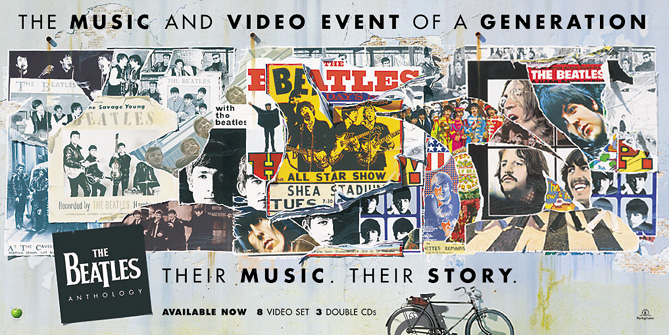
We’re all aware that long-time Beatle mate, bass player and artist Klaus Voormann (along with fellow artist Alfons Kiefer) painted the fantastic cover art for the Anthology series, but did you know the entire Anthology concept and packaging brief was the brainchild of a guy called Rick Ward?
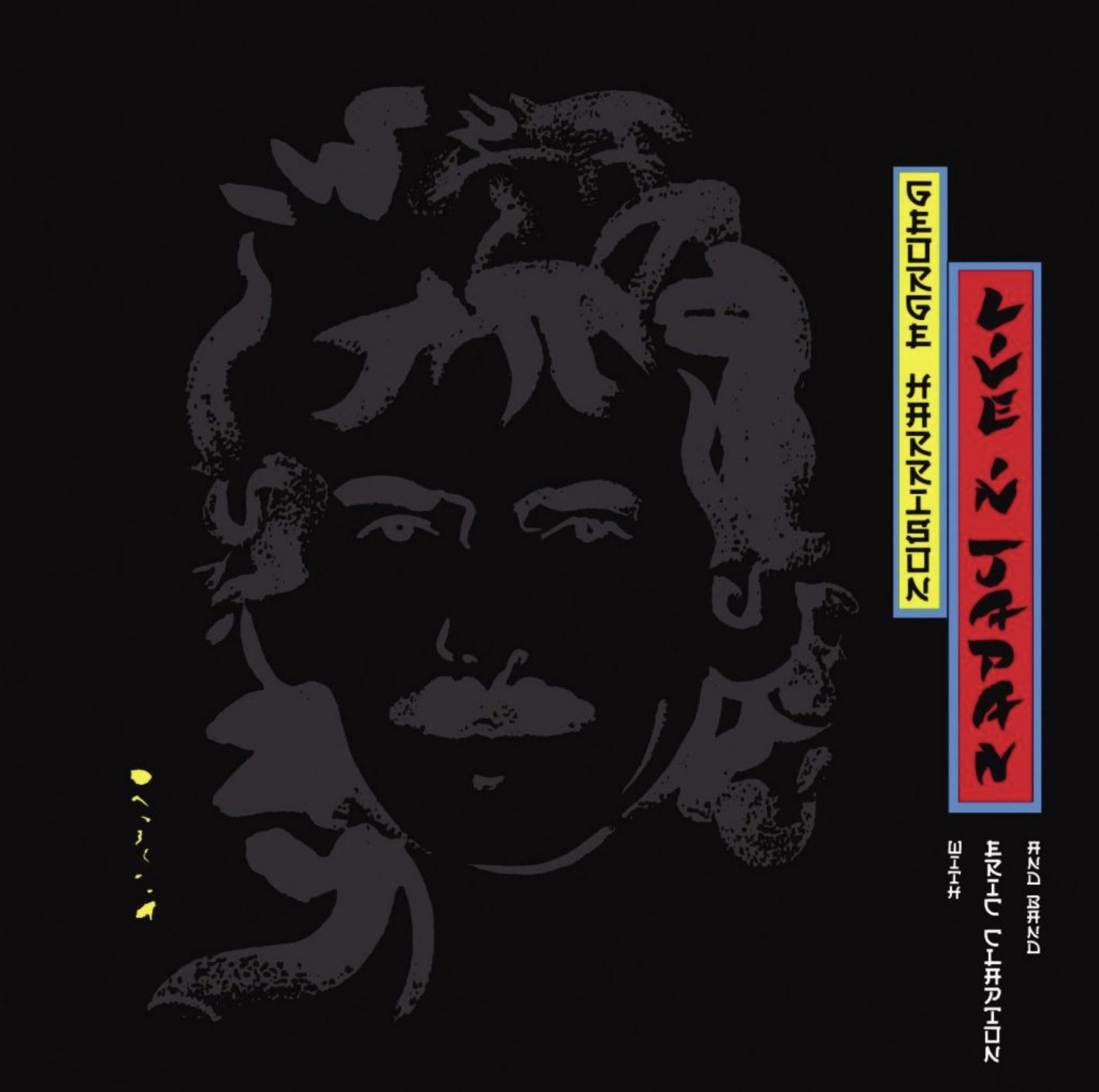
In 1995 Ward was working for The Team, a top London design and branding company. He’d already done some work for George Harrison, designing the sleeve and contents of his 1992 double LP, Live In Japan (now long out of print but soon to be re-issued on Dark Horse/BMG):
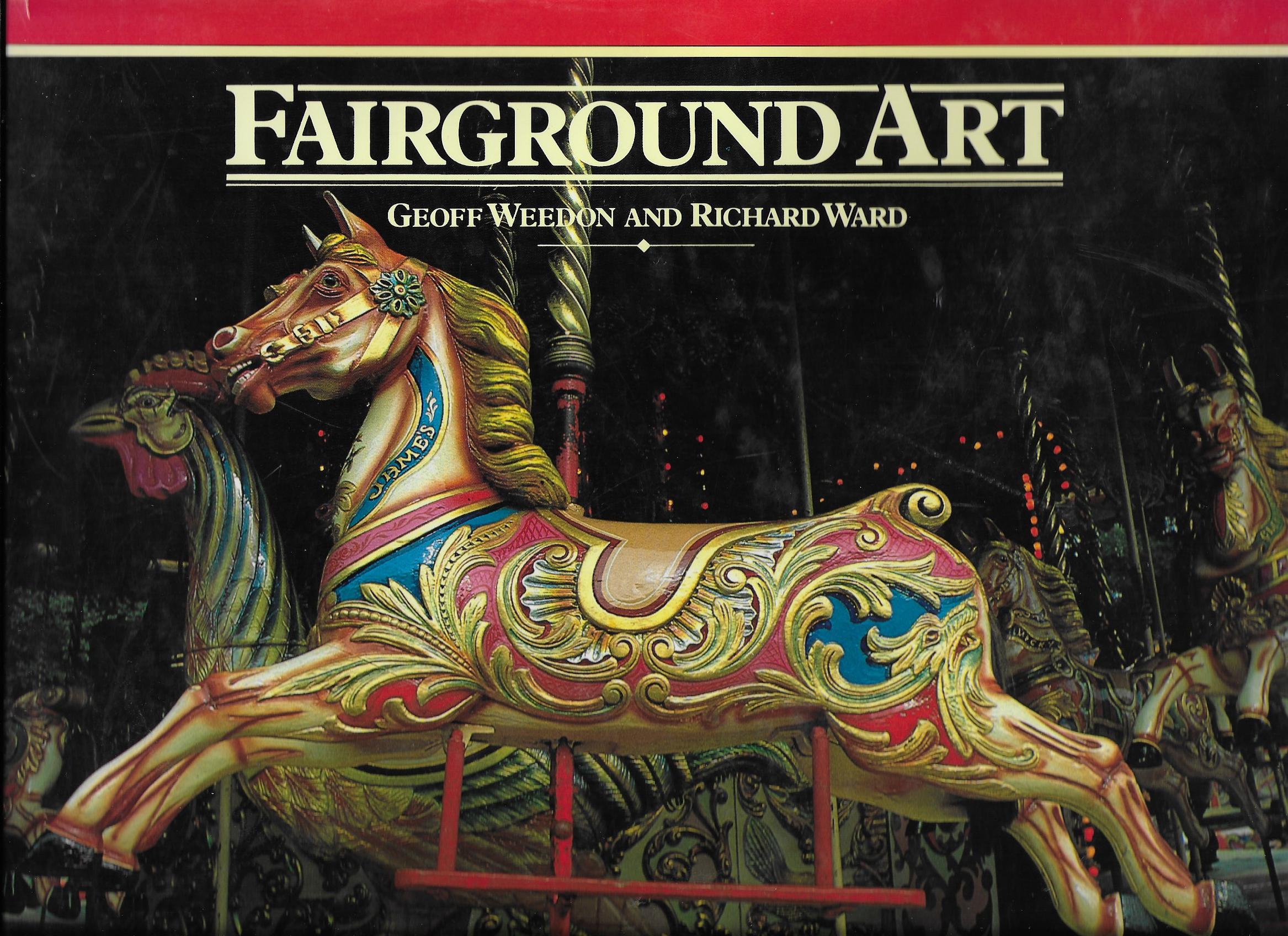
Ward had met George through a client of The Team, the F1 car designer Gordon Murray. They’d been working together on the graphics, marketing and launch of the McClaren F1 supercar. As we know, Harrison was a mad F1 racing fan and it turns out that he knew Murray who had given the Beatle a book for his birthday on the history of fairground art – co-authored by none other than Rick Ward:
George obviously loved that book because he called Ward and invited him to visit Friar Park. The two subsequently became friends and before you know it he was designing the Live in Japan package. A year later it was George who suggested Ward might come up with the design for The Beatles Live at the BBC packaging. He was soon invited into Apple to discuss and produce concepts for what would be the band’s first new album of previously unreleased material since Let It Be:
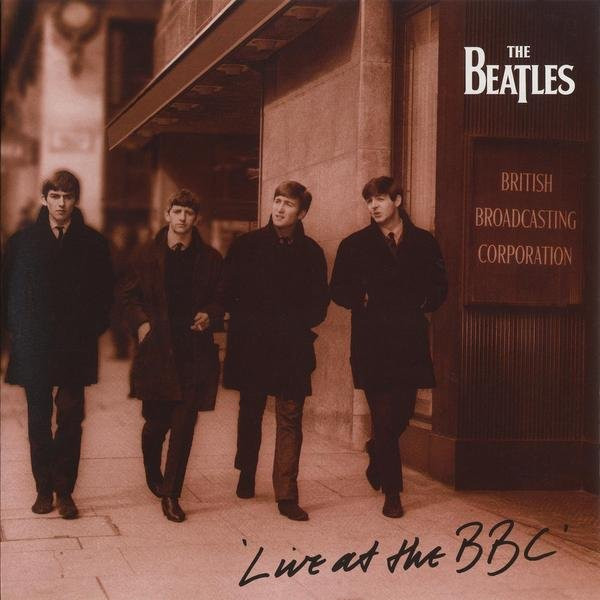
Ward recounts a funny story behind the hand-written title of the front cover: “The concept was a fan’s photograph with an autograph on the front. I had found a great image, got the picture retouched, and then just wrote “Live at the BBC” in the corner. It was supposed to mimic the bootleg albums that were cropping up at the time. They instantly loved it, but we had to decide whose handwriting was going to be on the front. I asked Paul, George, Ringo and Yoko to take a pen and write “Live at the BBC” just like they were signing a photograph. I then printed all the versions out, randomly adding mine and Neil Aspinal’s to the mix. I then sent the options back to the four of them and asked them to choose their favorites. When they came back with their votes, I couldn’t believe it: It was mine!”

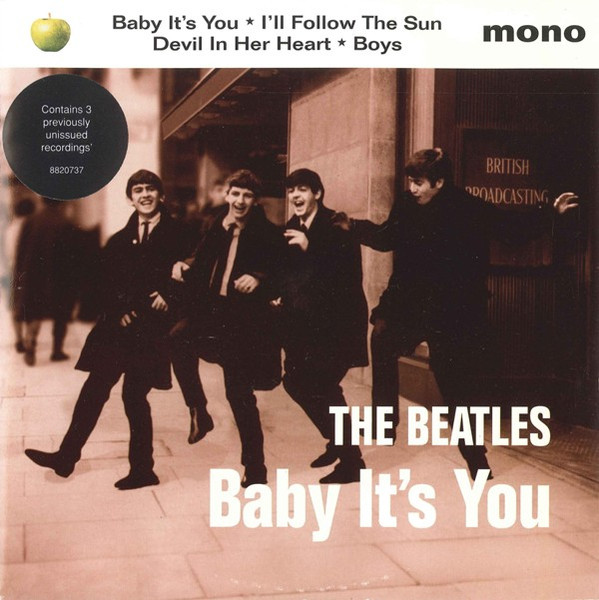
Ward also got involved in the cover for Baby It’s You, the four-song EP released in support of Live at the BBC which featured three additional previously unreleased songs:
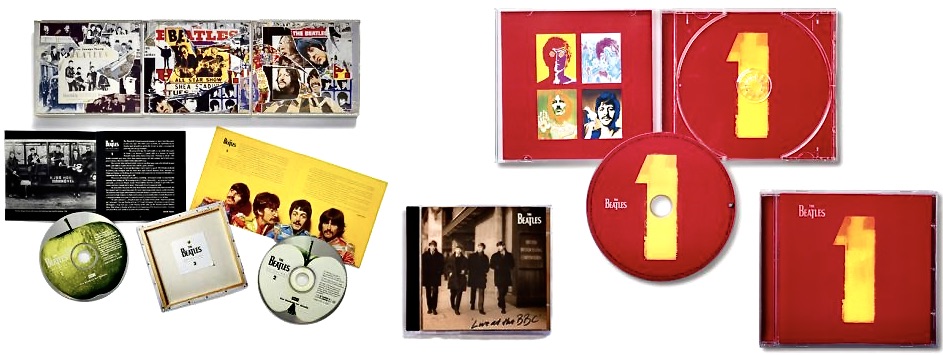
So, another success. It proved worthwhile because in 1995 The Beatles and EMI started on Anthology, the largest music project ever attempted by the band: three triple albums plus a multi-part TV documentary subsequently released on VHS tape (and DVD) as boxed sets. Not to mention a book, all covering their entire recording career, released across every major format of the time. Anthology was to be a definitive statement, the band telling their own story and setting the record straight. The concept for it all, conceived by Ward, was an artist’s painting, a ‘masterpiece’ and a rediscovery of ‘their art’.

Last year when talking about the design Ward recalled: “I had always considered their music and  lyrics as works of art, so that was my starting point. The idea was for the project to literally be a work of art that could be divided up into three sections that charted and reflected their career – giving equal presence to all four members…..To realise this, we invited six artists, each with their own creative connection to the band, to respond to the brief.”

Those artists were David Hockney, Peter Blake, Brian Grimwood, Humphrey Ocean, David Oxtoby and Klaus Voormann. Only five submitted their thoughts. Peter Blake (the artist behind the iconic Sgt Pepper‘s Lonely Hearts Club Band cover art) simply refused. He wasn’t going in a competition. They could either choose him outright, or not at all. Of the other five Ward recalls it was Voormann’s concept that immediately stood out. “It perfectly captured the album and importantly, it allowed us to work with pre-approved imagery, which was vital, because literally everything had to be unanimously approved by each individual Beatle before it could move forward.” Klaus later decided to take the idea further, transforming his collage into a painted work that retained its layered quality but added more depth.
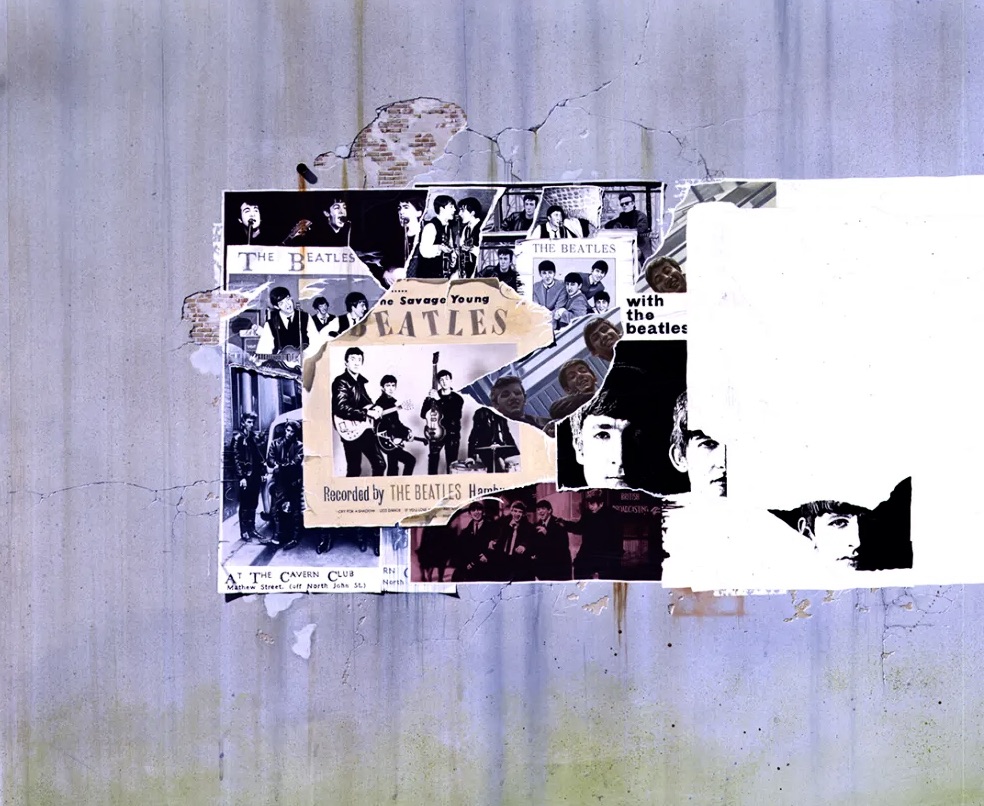
“Together, we developed the vision by using the idea of a large billboard poster on the side of a  fictitious concert hall they had played at from the beginning to the end of their recording career. It became both an artwork and a metaphor for their legacy.”

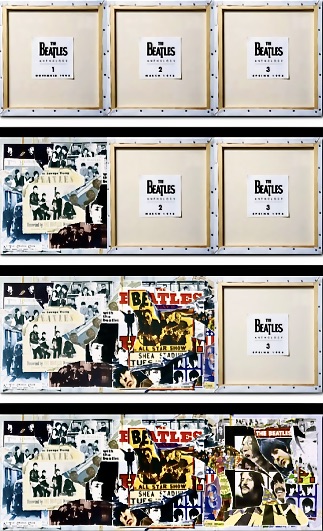
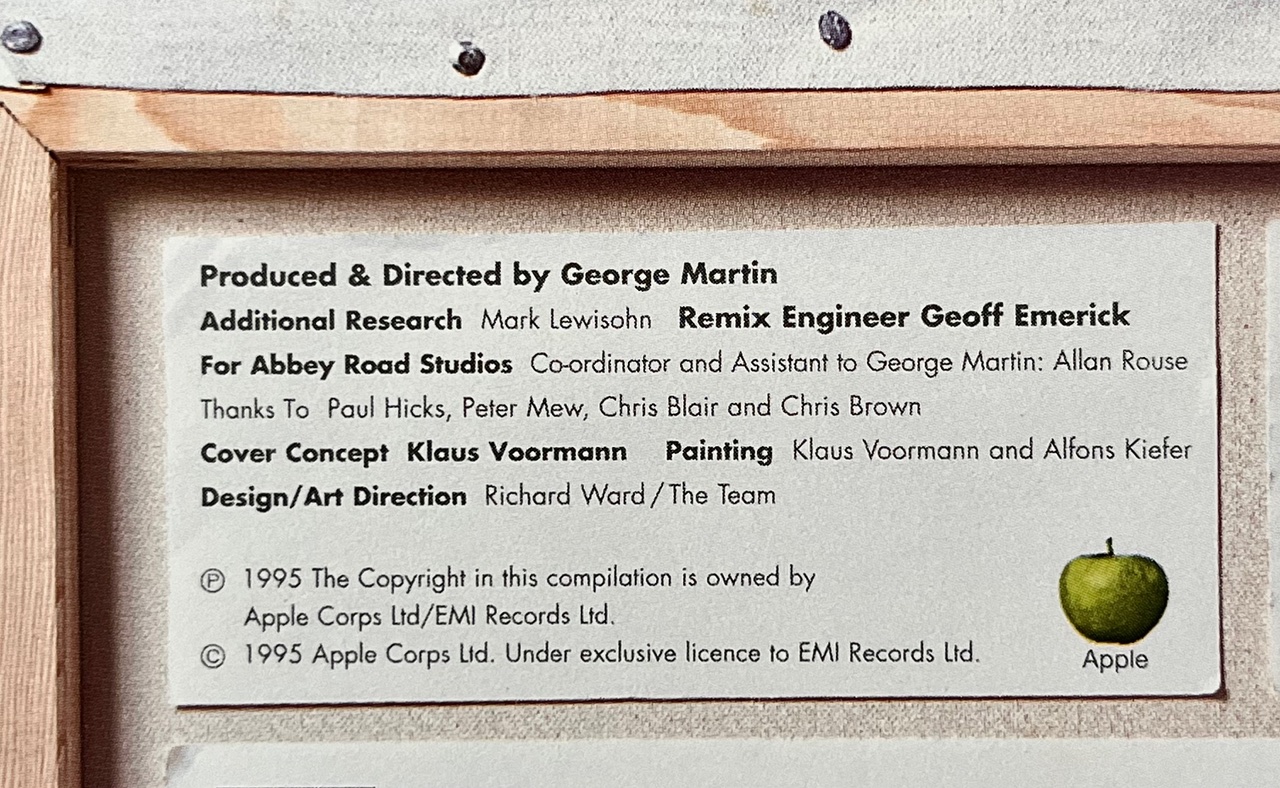
“A small but defining design touch came on the back covers. Since the concept revolved around a “work of art,” I chose to show the reverse of the canvas, as a teaser for the pre-release marketing. It gave the sense of seeing a masterpiece in progress, an artist’s work evolving before your eyes, while also serving as a teaser for what was to come. This gave Klaus much needed time, between each release date to then go on to do the second image, and then finally the third completed image.”

Very clever, but even so they worked right down to the strict deadline for each release to get the covers completed:
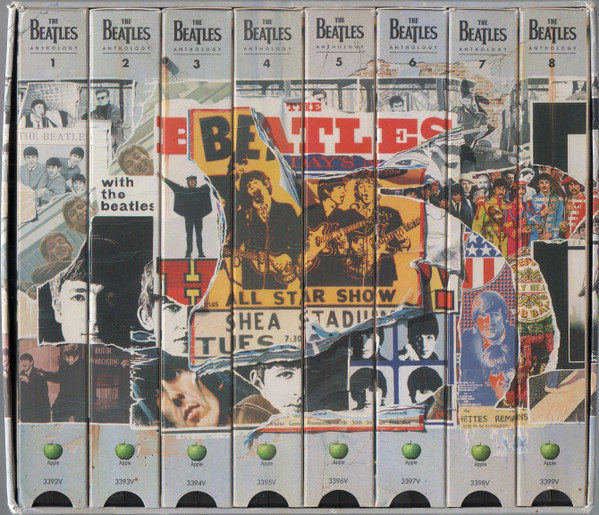
Ward also had to take into account all the different ways these images would or could be used. “It was extremely challenging to lay out due to the varying proportions of the different design formats like cassettes, 45s, 12″ LP covers, LaserDiscs, VHS covers, etc., and so on. I developed a grid matrix which we constantly laid over the rough visual to keep checking that it would fit every format, and that each of the four Beatles were equally represented.” The genius of this is well illustrated by how the individual spines of the VHS tapes present when on the shelf:
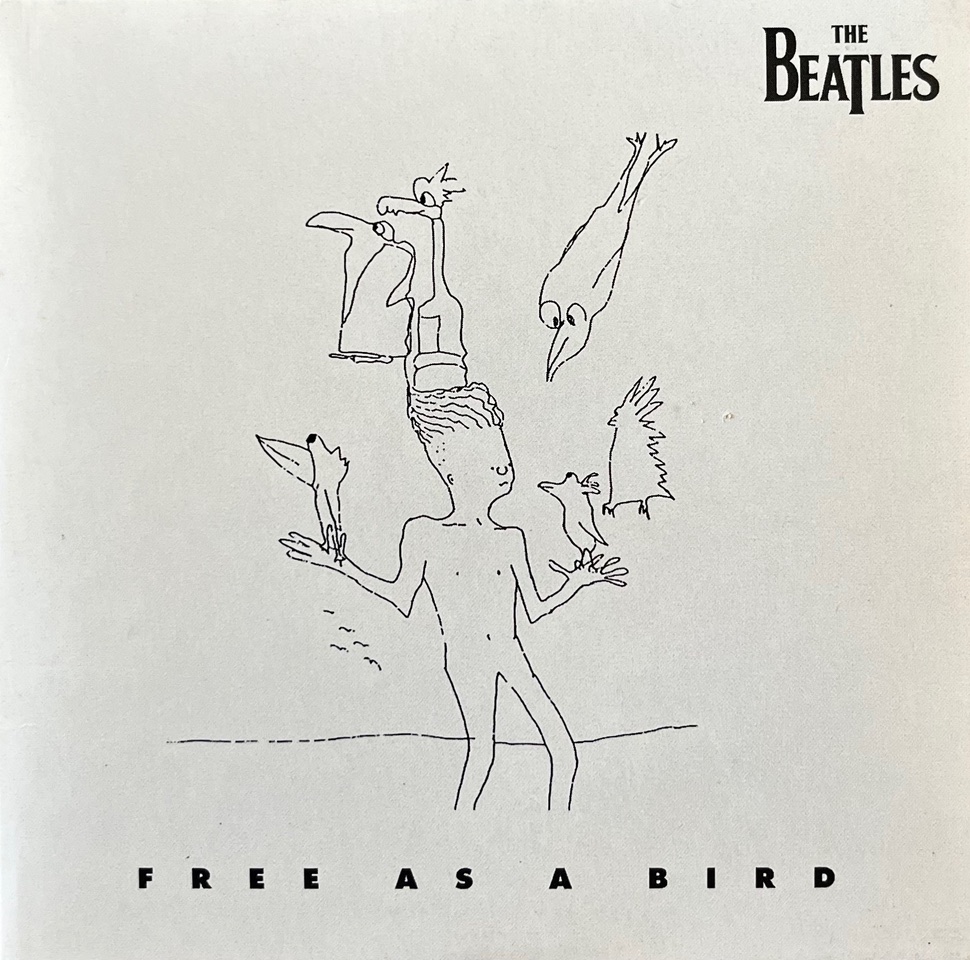
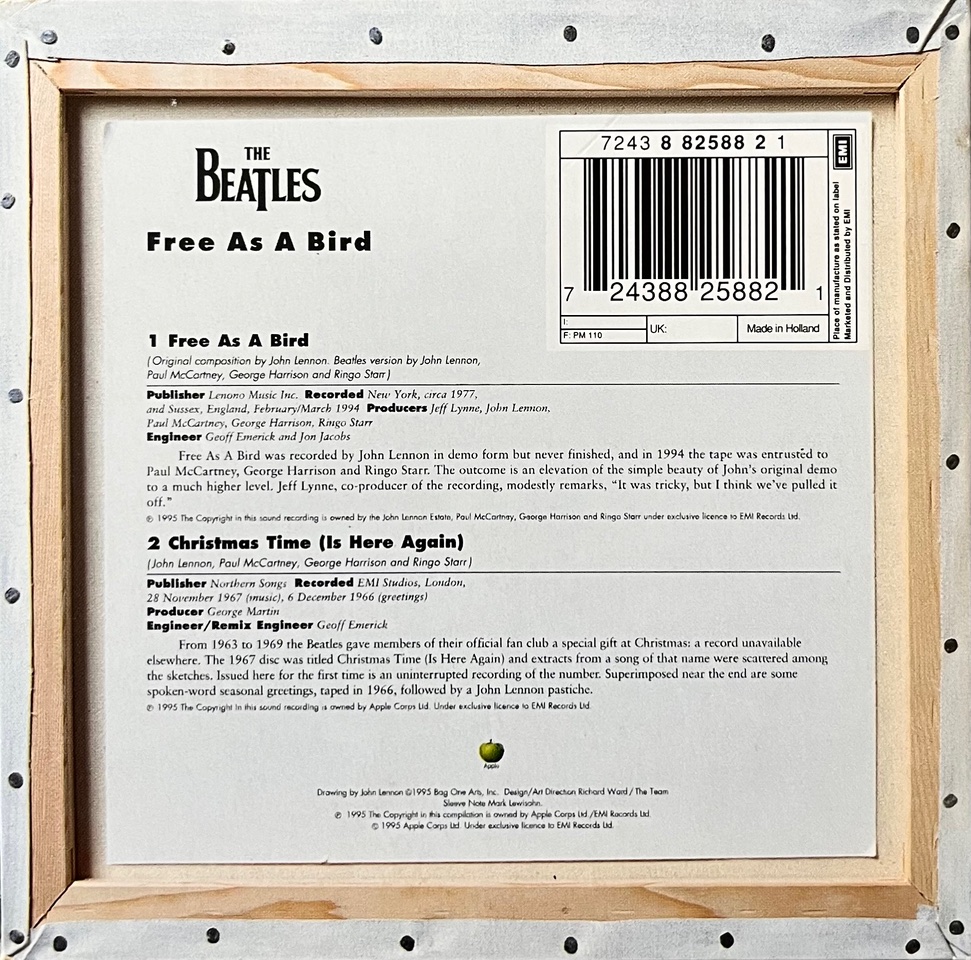
Ward was also involved in many of the Anthology spin-offs, like press kits and the quite substantial promo CD samplers for each Anthology album, not to mention the singles that came out for ‘Free As A Bird’ and ‘Real Love’. Each carried over elements of the original concept:
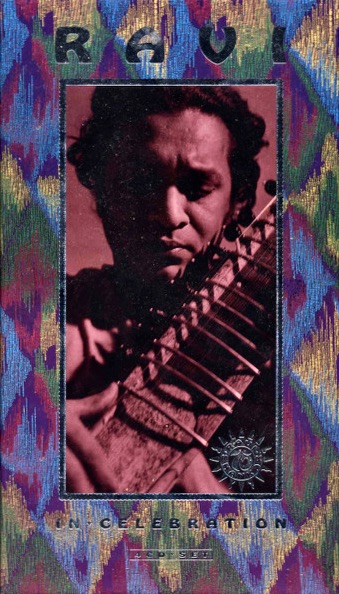
As is the way with these things, one thing lead to another. In 1996 Ward was also commissioned to design the Ravi Shankar retrospective compilation called In Celebration, a 4 CD box set co-produced by George Harrison:
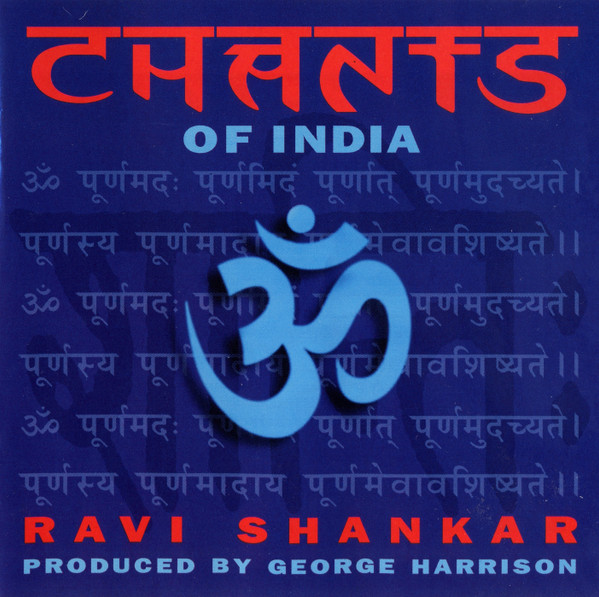
This was followed the next year by Ravi Shankar’s Chants of India, also produced by Harrison:
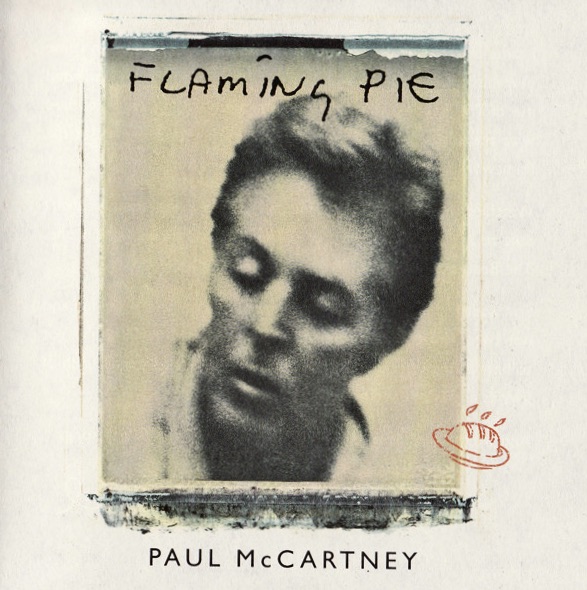
Interestingly, in 1997 Ward’s company The Team also designed the cover art and packaging for Paul McCartney’s Flaming Pie:
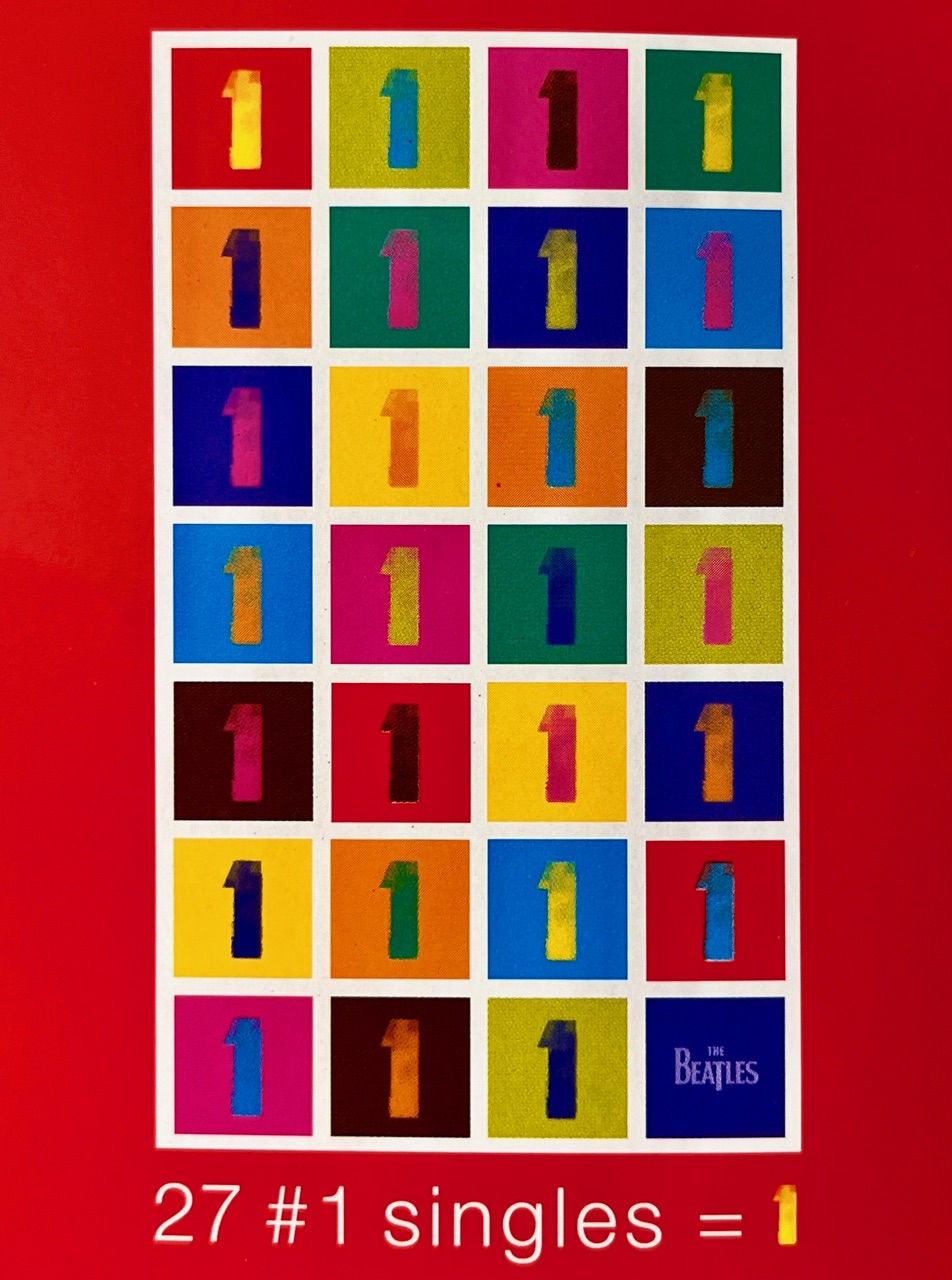
And then, in 2000, came another big one, probably the biggest – certainly from a sales perspective. Ward received a further commission from the Beatle camp to come up with ideas on how to present globally a new compilation of every Number 1 hit they’d had (all 27 of them) in an album simply to be called 1:
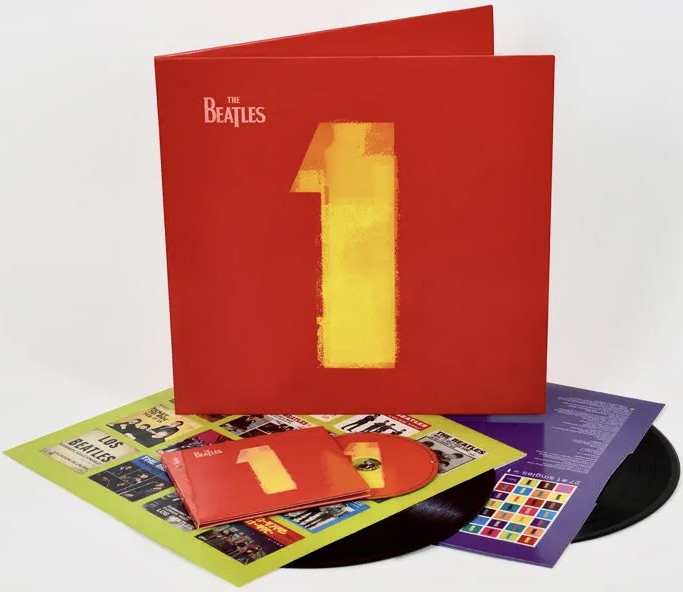
Speaking in PRINT Magazine in 2023 about the ideas he came up with Ward recalled: “I had always loved the graphic look of basic ticket printing for entry into dances in town halls, then we treated the bold “1” as a piece of graphic art, the “hero,” so to speak. So we kept it minimal, strong and simple. We obviously needed to have pictures of them somewhere in the album, and as the cover had turned quite pop art–ish, I was reminded of the ultimate iconoclastic photos Richard Avedon had taken of them in the ’60s for Look magazine, so I suggested using them.”
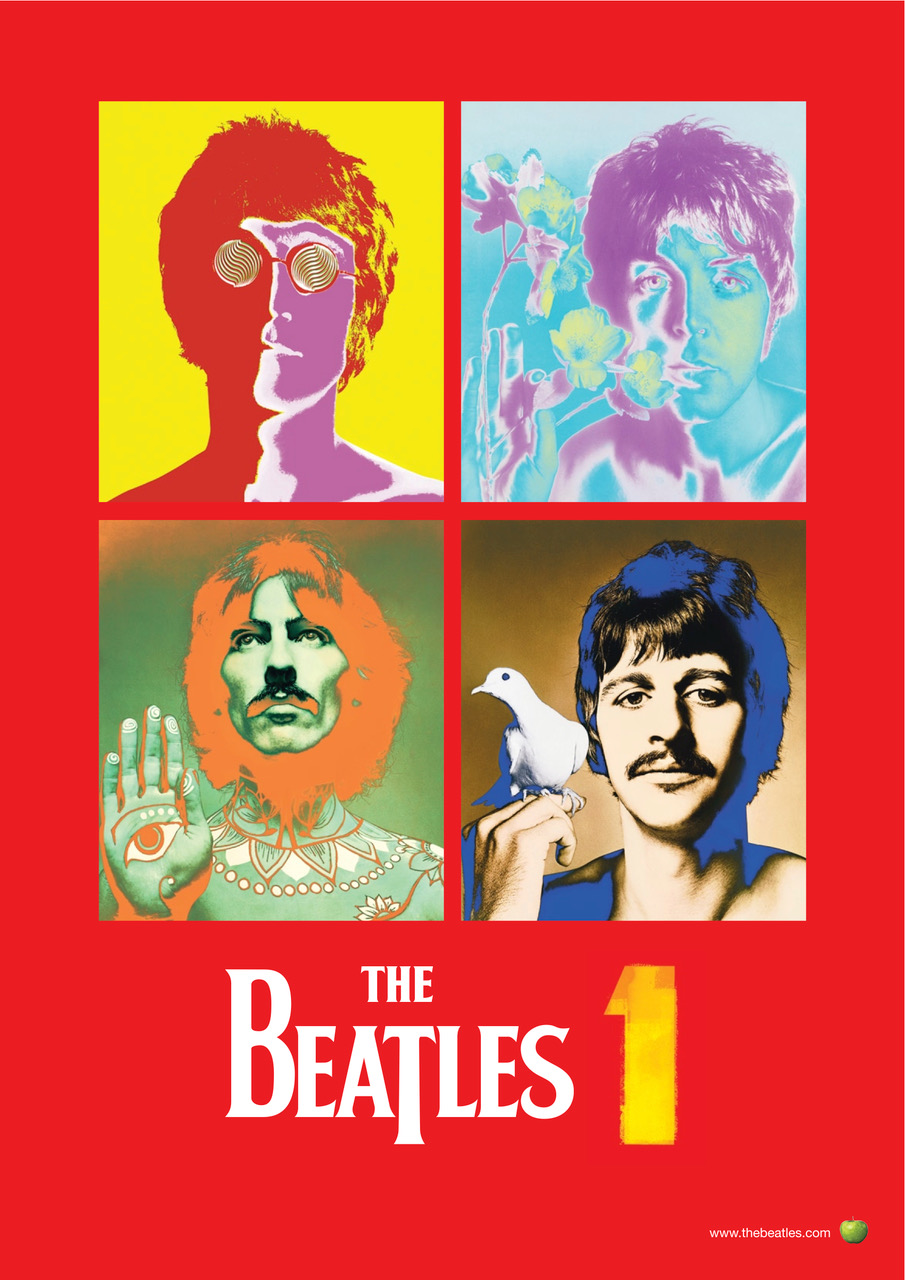
Inside the packaging was an absolute wealth of visual material for Beatle fanatics, including hundreds of picture sleeves from singles released around the world. There was also unique artwork and a common design theme which tied it all together as a musical and visual celebration of the band’s incredible success.
When asked which album design he was most happy with, Ward said, “I thoroughly enjoyed working on all of them, as they were each so different in what they were setting out to achieve and all had challenges to overcome. There is no one album that’s my favorite, and I learned so much doing each one. It was always interesting, stimulating and very challenging. Live at the BBC, being my first one, was initially quite overwhelming; being invited to design an album cover for the greatest band in the world was a bit unreal. But upon reflection, the fact that they were asking me meant that they had enough respect for me and my work, and so I was able to accept it, and take it as a compliment, and for the amazing opportunity it was.”
From time-to-time we like to bring you the background stories like highlighting some of the lesser-known players who helped The Beatles (either as a group or as solo artists) to extend their music through the art, design or photographs created for record covers, stage designs, tour programs and the like. You can find some more of those stories here:

Richard Hamilton

Ferry Gouw and Gary Card and also see here.

Brian Clark

Santi Pozzi

Chris Giffin

Kathryn Durst

Ed Ruscha

More Info on the Photographs Used for the Revolver Cover

We’ve had readers doing a lot more detective work and research into the photographs that Klaus Voormann used for his collage and line drawings for the famous Revolver cover.

In case you’ve missed it the story on our blog started here and here when we stumbled across a terrific montage detailing all the then known images used for the cover.

Turns out the author of that montage was Ukrainian Beatle fan Sergey, one of our readers! He wrote to us letting us know he’d first created it (way back in 2012!) for a Russian Beatles discussion forum called beatles.ru.

Sergey has since tracked down the source of the image of Ringo used as inspiration for the line drawing of him Klaus placed at the bottom left of the Revolver cover – the one where he is looking skywards.

We’re still not sure of the photographer, but it was published in a German booklet Das sind die Beatles which features a series of black-and-white photographs and short comments about each. It was produced by Bravo magazine for the 1966 Bravo Blitztournee tour, under the auspices of Beat Publication Ltd. The photographer details are not indicated, but Sergey sent us these photographs of the actual publication:

We then published what we feel is another piece in the mystery – the photograph of John Lennon that was very likely the inspiration for Klaus’s line drawing of John at the top right-hand side of Revolver. You can read about that here.

That prompted two other readers – Tom and burnham42 – to offer up even more clues. These revolve around the source images for the three small Beatle faces (and two hands) on this part of the cover:

burnham42 wrote:

I think the one of the three small photos top left is in The Beatles Anthology book page 70 (in my French edition). You can also find it on pinterest. The photo was taken on the way to Hamburg. There is John, Paul, George and Gerry and the Pacemakers in the photo. The man on the floor (George?) is pulling a face and you even have the hands that Klaus also used.

Well, drag out your English edition of The Beatles Anthology book too if you have one because the image is also on page 70 there as well:

The Anthology Book says the photo is from George Harrison’s private collection. The caption in the book reads: In a lay-by on the road to Hamburg and the Ost See. Me, Paul and John with Gerry and the Pacemakers.

We have George and Paul, who are standing on the left, and John sitting on the ground pulling a funny face.

Voormann has cut out three sections of this image. Paul has been placed to the left, his raised arm now just below George’s face. And he’s cropped John’s face to make it appear he has a Beatles hair-cut, and tilted it so that it is more upright. His hand from the image is also used, but also at a different angle.

So, one more mystery solved!

Following all this, Sergey has been back in touch and has offered up a revised, updated version of his original Revolver cover “sources” montage. Here it is:

Please click on the image to see a larger version.

Another Piece in the ‘Revolver’ Cover Mystery?

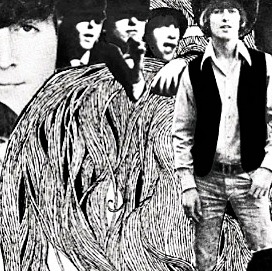
Could this be another piece in the jigsaw puzzle that is the famous Revolver cover montage by Klaus Voormann?

In this explainer collage below there’s a question mark about the origins of the photograph Voormann used as inspiration for his drawing of John Lennon:

(Click on the image to see a larger version)

It is the drawing on the top right-hand side:

Could it have been this image?

The eyes, mouth and hair all look very similar.

We don’t think this has been identified in other Revolver photo research info before. See our previous posts on this here and here.

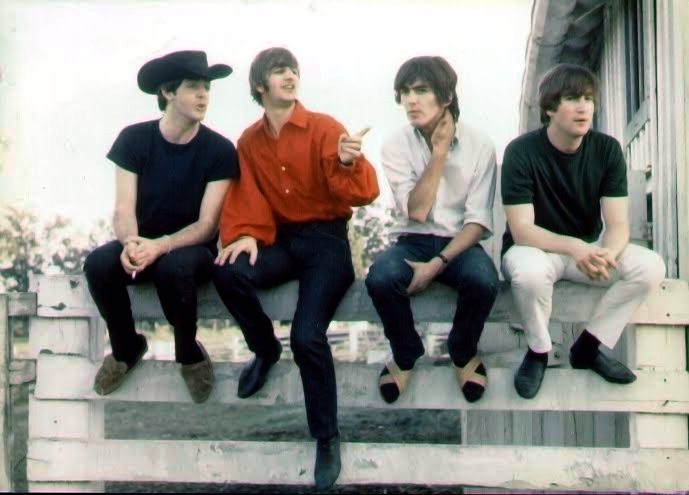
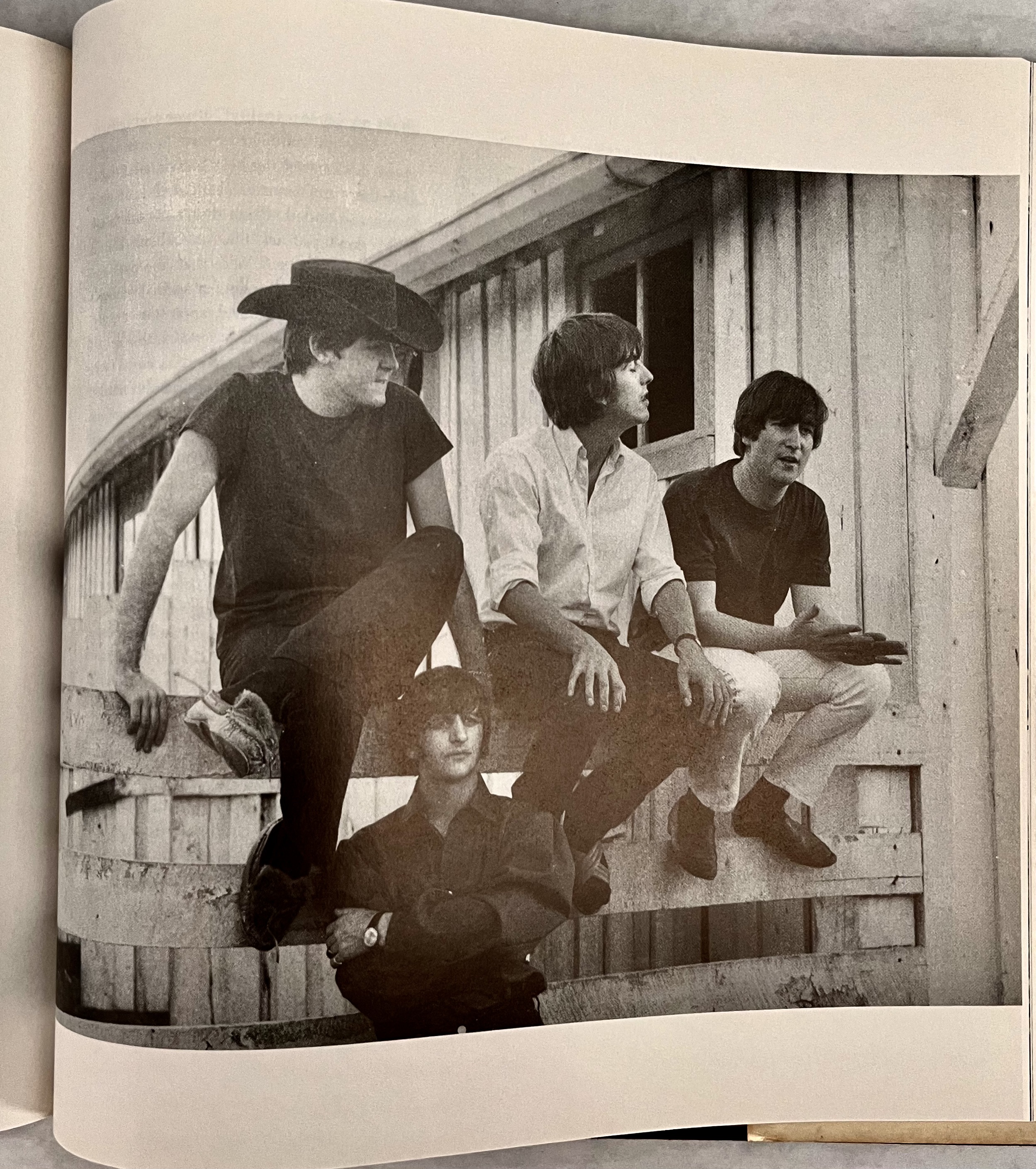
We’re still looking to confirm who might have taken the photo (more on this soon) but beatlesblogger.com reader naturalkatsup, who kindly sent it in, says it was taken at Reed Pigman’s “Pigman Ranch” in Missouri on September 19th, 1964. They say it seems to be taken by a photographer named Curt Gunther? We’re not sure if the image was published in a magazine that Klaus had access to, but naturalkatsup has found other photos from the same day on the web. Here’s the full photo:

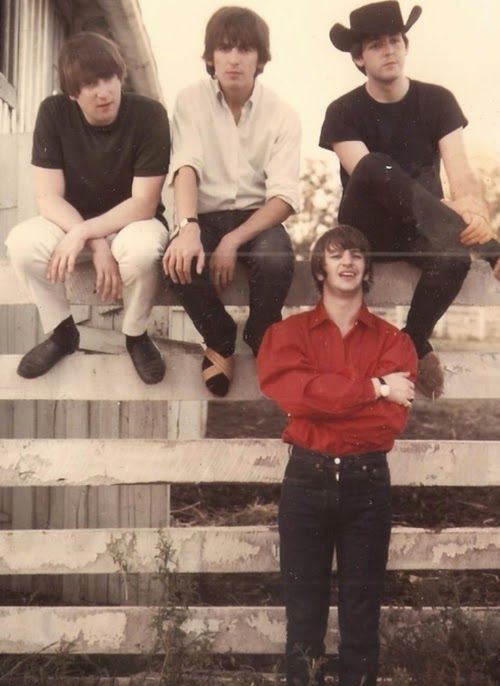
And here are a couple of other shots from the same photo shoot:

What do you think? Could this be the source for Klaus Voormann’s Revolver drawing of John?

If you definitely know who the photographer is please get in touch.

UPDATE:

We can now confirm that this image was in fact taken by photographer Curt Gunther:

Thanks to the info supplied by naturalketsup, we checked our own Beatle library, and found this book:

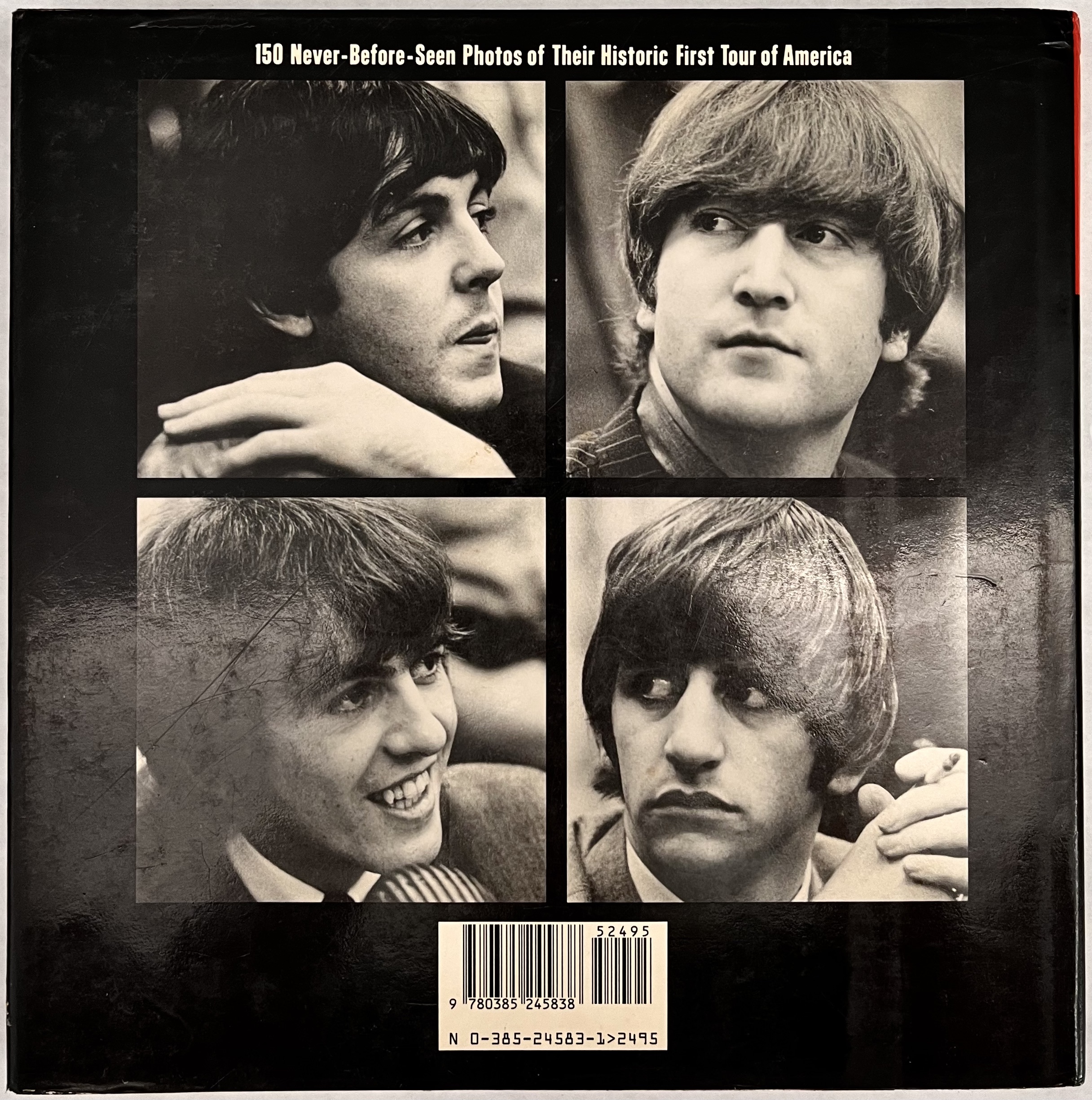
It was published in 1989 and chronicles the Beatles’ 1964 tour of the U.S. and Canada in great detail. It includes 150 never-before-seen photographs at the time by freelance photographer, Curt Gunther.

Although Beatle manager Brian Epstein had ordered that no photographers accompany The Beatles on the tour, Derek Taylor, their Press Officer and friend, had persuaded Epstein to allow Gunther to tag along with the touring party. And he captured some amazing images. They were issued in 2000 in an expensive Genesis Publications book called Mania Days.

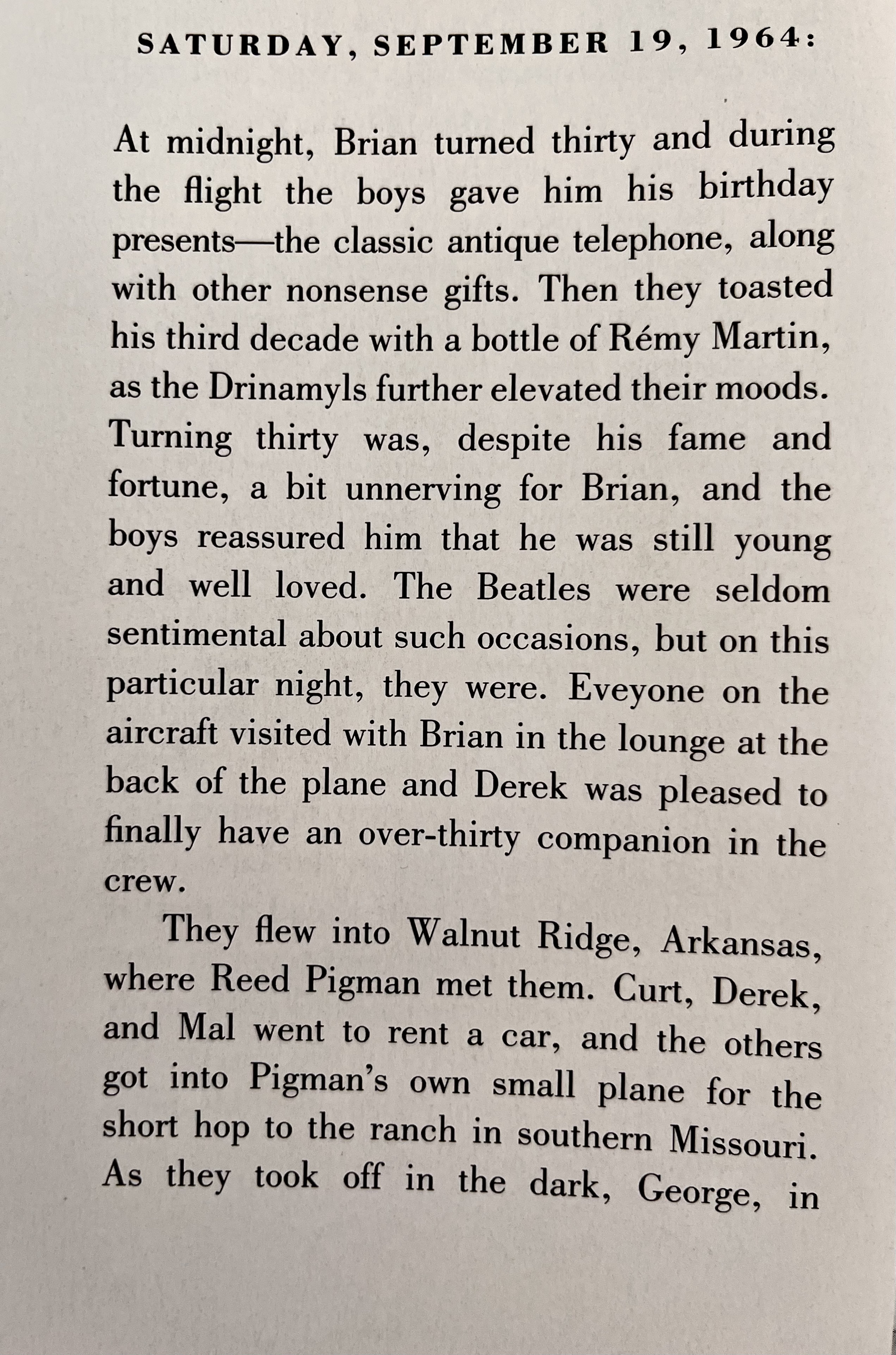
But prior to that came another more affordable book called Beatles ’64 – A Hard Day’s Night In America, with text by A.J.S Rayl and many of the same photographs by Curt Gunther. Here’s the rear cover:

The book has the details a day the band had off in their hectic schedule and their visit to Reed Pigman’s “Pigman Ranch” in Missouri on September 19th, 1964, including a very scary night flight from Arkansas in a small plane to get there. George Harrison feared they’d perish, just like Buddy Holly, Ritchie Valens and the Big Bopper had in a small plane crash in 1959:

So, this confirms the origins of the image:

And the photographer:

The meetthebeatlesforreal.com site has some more images from the Pigman ranch stay.

The only question is, did Klaus Voormann use one of Gunther’s photos as his inspiration for John Lennon’s image on the cover of Revolver?

We reckon it’s likely.

More ‘Revolver’ Cover Photo Mysteries Solved

With the 2022 remaster and remix of The BeatlesRevolver album due to hit stores next month, there’s renewed interest in solving some of the remaining mysteries of just where cover designer Klaus Voormann sourced all those little images that make up the collage he created for this now-famous cover:

As you know last year we published an article about the latest thinking. There were still at least four images (circled in yellow) that remain mysterious as to their source (click on the image to see a larger version):

Now at least three of those four yellow circles have been solved (to an extent) by German fan and YouTuber, Yaacov (Jack) Edisherashvili.

Jack actually took a trip to visit Klaus Voormann in person and spoke with him about the Revolver cover. While there he asked him about where he’d sourced some of those photos.

You can see that video below. It’s interesting because in this first video Klaus talks about the cover and how it will be explained in the new book that’ll be included in the new 2022 release:

After Jack visited Klaus he wrote to us to say:

The image on the top left corner – the three faces – was never published. This was given privately to Klaus by the band.

The one on far right – the tiny image of Klaus himself – was shot by the late Astrid Kirchherr while Klaus was in his band Paddy, Klaus & Gibson.

The Ringo image – on top right corner – Klaus says was shot on a boat trip.

The John Lennon image with cigarette – I forgot to ask, but looks to me taken from press conference pictures?

So, that’s more information than we’ve had previously. Following his visit to Klaus, Jack has also uploaded this comprehensively researched YouTube with a detailed breakdown of the Revolver cover:

As you can see still a couple of mysteries remain.

If anyone knows the origins of the John Lennon photo with the cigarette – please let us know.

Also, two other outstanding questions are around the origins of the image of Ringo that Klaus used as inspiration for the drawing at the bottom left of the Revolver cover. Where was it published and who’s the photographer? And also the George image on the right – same questions: 

Origins of the ‘Revolver’ Cover Art

This collage detailing the source photos for Klaus Voormann’s legendary cover image for the Beatles’ 1966 release Revolver has been doing the rounds for a while but its worth returning to because it is awesome:

(Click on the image to enlarge) Those pictures with yellow circles are still being sought after. If you know, contact us in the comments section below.

There’s a great article on the genesis of the cover here. “Revolver was the first Beatles’ album that truly marked out the four distinct personalities of the group. Voormann’s illustration captures the band perfectly. Looking at it, you can see that the group is made up of four unique individuals, but they are also connected by kinship, a friendship and an affinity for one another. It is the perfect summation of the band’s relationship at that point in time.”

UPDATE: Thank you to reader Angel who sent us a link to the Dutch magazine Furore and the information that they did a major article on the Revolver cover. It really looks good.

For those interested the exact magazine issue is Furore No 22, from January 2012. and it appears that back-issues are still available to be purchased.

They pitch it as “an exhaustive ten-page story describes the genesis of Klaus Voormann’s iconic cover design of The Beatles’ Revolver album, now fifty years ago, and traces the source of each photograph used therein.”

You can see a teaser graphic on Furore’s back-issues page for the larger article that’s inside the magazine. It gives a hint of the detailed info they provide on the origins of the photographs that Klaus Voormann used. Here’s that teaser image:

Click on image to see a larger version.

And here are two pages from the article itself:

Again, click on the image to see a larger version.

Also, on Revolver, we’ve just discovered the very good I Am The Eggpod podcast. You really should have a listen. Check out the latest episode where host Chris Shaw and songwriter and musician Andy Bell discuss the1966 masterpiece.

Egypt Station – The Packaging

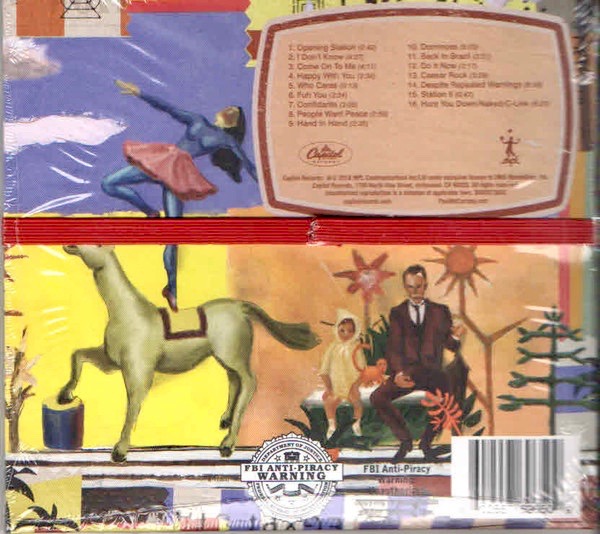
Now that the general public and the reviewers verdicts are in (all generally very positive btw), and now that Paul McCartney’s Egypt Station has entered the Billboard 200 at No.1, making it his first No.1 album on the US charts in over 36 years (the last time was Tug Of War in 1982), maybe it’s time to take a closer look at the cover art and design of the album – both in LP and CD form – because these too seem to have met with a very favourable reception from fans:

Explaining the album’s concept, Paul says, “I liked the words ‘Egypt Station.’… I think of it as a dream location that the music emanates from.” The title is taken from the piece of art which is featured on the album cover. It’s a limited edition lithograph, the original of which Paul himself painted back in 1988:

“My original inspiration [for the painting] was….Egyptian symbols and shapes I got from looking at a reference book on Egypt. I was interested in the way they drew sunflowers, so two appear on the left and on the right. It was a nice shape, so I took that and then I also love the way they symbolize trees. I like the way they reduce a tree to just some very simple symbols.”  Paul McCartney

The art directors hired for the project are Ferry Gouw, an illustrator, graphic designer and video director based in London, and Gary Card, a set designer, illustrator and artist also based in London. They’ve taken McCartney’s original painting and extended out its themes and style across many panels (for both the CD and the LP) in a spectacular way.

At first the two seem an odd choice as on the surface they both appear to work in very different worlds to that of Paul McCartney. Gouw inhabits more of an out there, conceptual electronic dance music, skater/cartoon world. He’s also the in-house designer for James Blake’s record label, 1800-Dinosaur. This video is a little old, but it gives a taste of Gouw’s style:

So, you might wonder how Gouw got the McCartney gig. Then you discover that earlier this year Roxy Music hired him to produce a new video interpretation of their legendary song (from 1972), ‘Virginia Plain‘. Gouw says:

“I wanted it to feel like a kaleidoscopic holiday in glamorous, but surreal locations, that only exist in vintage posters and your imagination. The song is so dense – the imagery comes thick and fast, so they all have to pop up in a stream of consciousness. So I researched vintage holiday posters, Americana pin-up icons, art deco jazz posters, and re-drew all the elements to make up the video.”

It was Bryan Ferry who commissioned the piece after being impressed with Gouw’s work on a video for his solo album, Olympia. The result has been described as the creative rebirth of an iconic track in British musical lore:

On the other hand, Gary Card seems more into groovy and colourful pop sculpture of late. By way of example there’s this amazing eight foot high plasticine Christmas tree he made for a London hotel last holiday season:Both Gouw and Card have been on Instagram since the release of Egypt Station“After months of hard work this beauty is finally out in the world. So proud to see it everywhere, it’s a real privilege to be a part of this. Expect me and @garycard to be spamming Instagram with this for the next few years LoL” – Ferry Gouw

Woke up this morning to news that the Paul McCartney album we designed is number 1 in the U.S 👍🏻 here’s the full art work @ferry_gouw n me based around @paulmccartney‘s original painting #egyptstation” – Gary Card. He then posted this image of the  6-panel “concertina” style packaging they devised for the CD:

When folded up the CD cover is held in place with a bright red cloth fabric elastic band:

For the exclusive Target and HMV editions (which have two bonus songs) the elastic band is green in colour to help set it apart:

It’s not the first time that McCartney has employed elastic bands to hold together a cover. In 1999, under his The Fireman persona, he released a 12″ vinyl featuring remixes of a song called ‘Fluid’, taken from the Rushes album. That folded cover has a red rubber band to keep everything in place too:

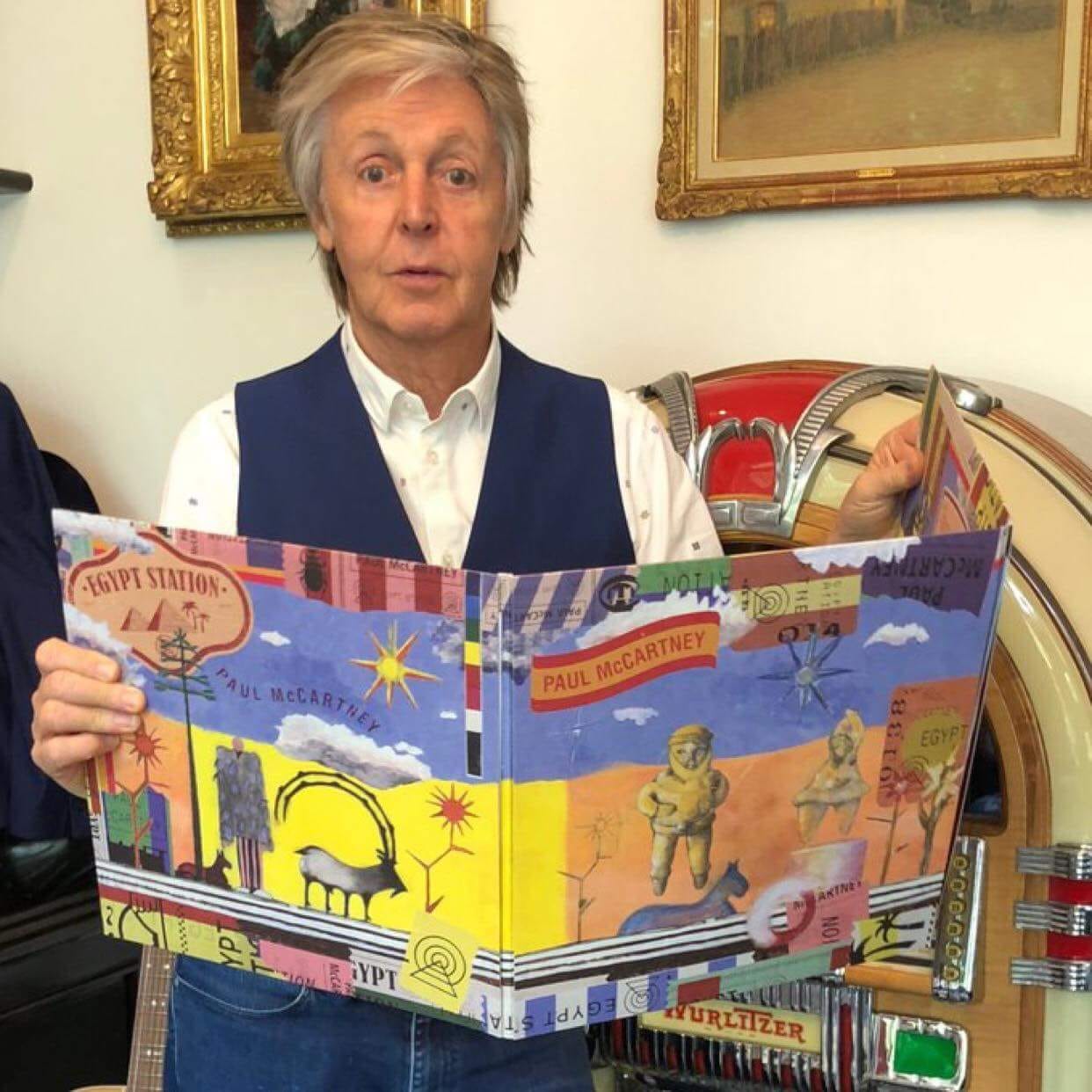
The Egypt Station “concertina” idea for the CD is also used for the vinyl record, but only in the “Deluxe Edition” design. This is a three-panel gatefold and you can see Sir Paul holding an example of it here:The LP cover is quite spectacular in this larger format, with a beautifully textured feel to the paper used giving a high quality tactile feel. There’s also a tri-fold lyric sheet in a deep blue which fits within – also beautifully designed by Gouw and Card. Here’s one page from the lyric sheet:

You can see how the LP package folds compared to the CD version a little more clearly here:
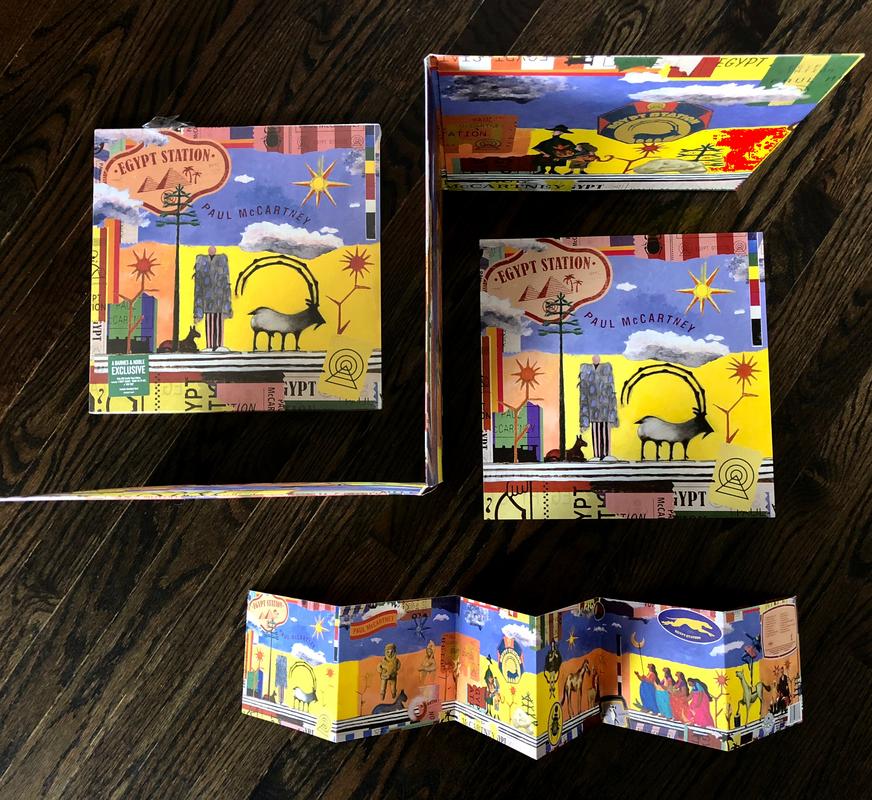
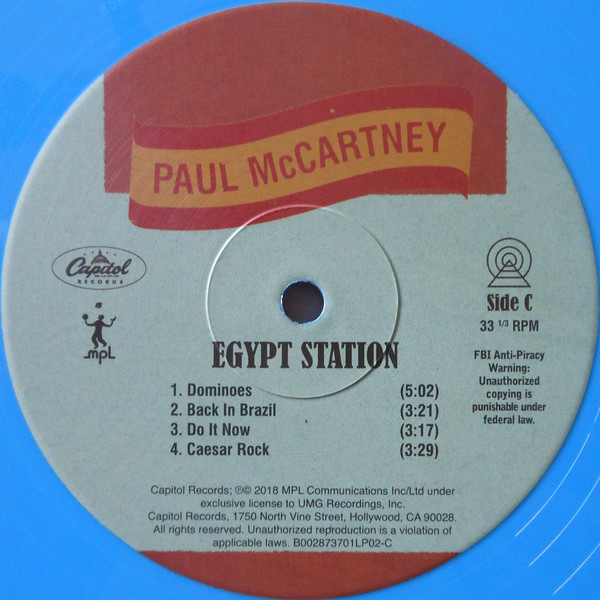
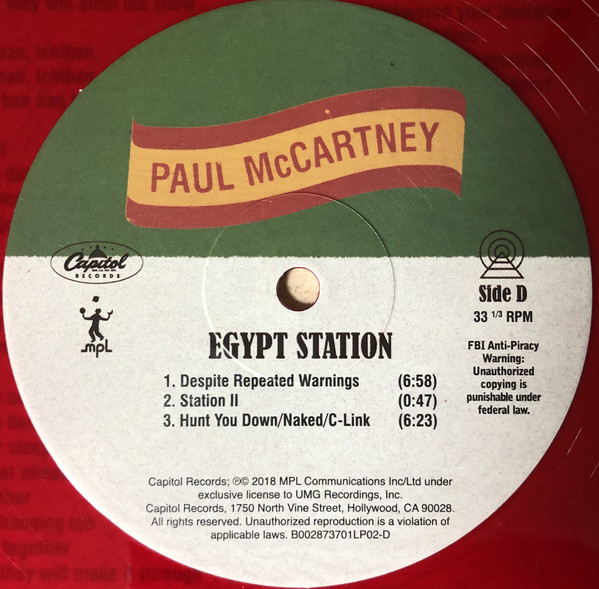
The attention to detail extends further inside, with the labels on each side of the LP being individually custom designed as well. Another nice touch:

And that brings us to the vinyl colours. Egypt Station is offered in black vinyl (140 gram standard, and 180 gram deluxe); in blue and orange coloured vinyls for the deluxe version – only available via McCartney’s official site; in red vinyl as a Barnes & Noble store exclusive; and in green vinyl – offered to Spotify subscribers first, but for a period also available to all via the McCartney site as well.

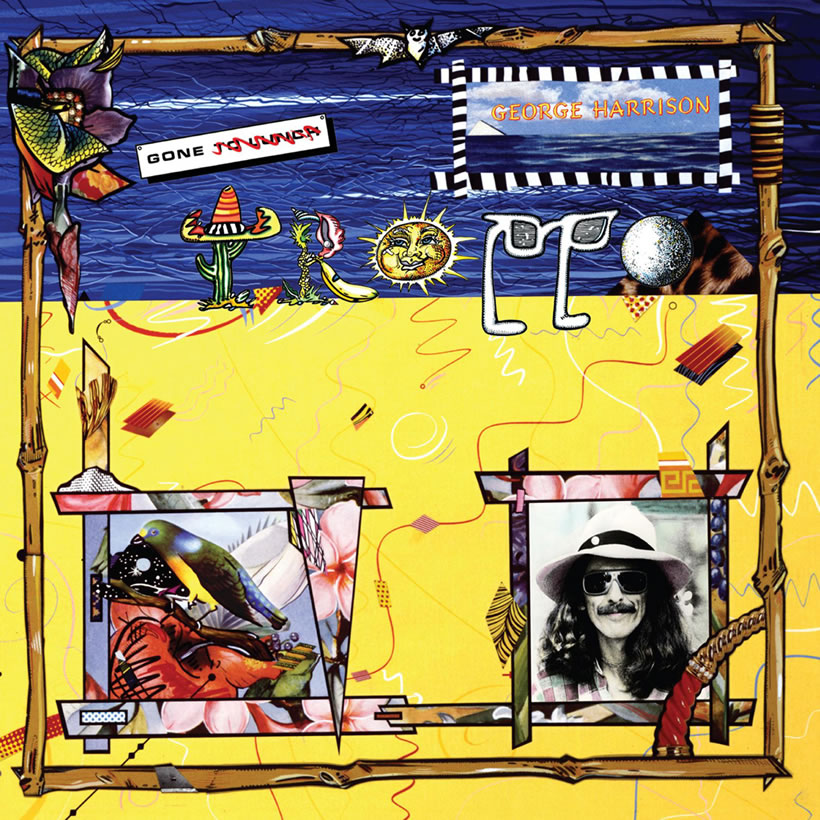
When the images for Egypt Station first began to appear many likened the cover to George Harrison’s 1982 outing, Gone Troppo:

Yes, there are certain similarities in the colours and the pastiche style used, but Egypt Station‘s artwork goes far beyond. It harkens back to the days when albums really were works of art. They could be folded out and explored and enjoyed as an immersive experience in themselves, quite apart from the music contained within. We think Ferry Gouw and Gary Card should be congratulated.

Interesting peice of trivia: In 2004, when Paul headlined the Glastonbury Festival in England, the same Egypt Station artwork from his original painting adorned the pre-show curtain:

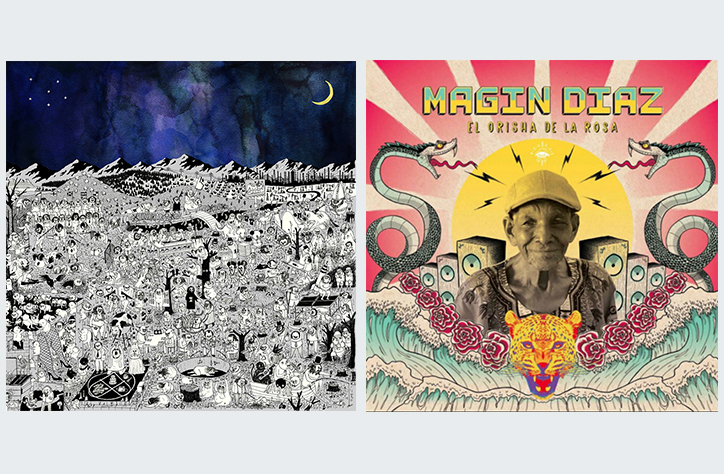
There is a Grammy Award for Best Recording Package of the year. In 2018 there was a tie for first place and so two winners were recognised (click here to see the list and scroll down to Award Number 65):

Above on the left is Father John Misty’s Pure Comedy (Deluxe Edition) – Sasha Barr, Ed Steed and Josh Tillman, art directors.

On the right is Magin Díaz’s El Orisha De La Rosa – Carlos Dussan, Juliana Jaramillo, Juan Martinez and Claudio Roncoli, art directors.

There’s a good article about both albums and their cover art here. There’s further information on both here also.

I guess we’ll just have to wait until January, 2019 to see if: a) Egypt Station receives a Grammy nomination for its extraordinary packaging, and b) it wins!

Paul McCartney always puts a lot of effort into the design and presentation of his albums. Two excellent examples are the totally integrated concept for his Electric Arguments release as The Fireman in 2008/09, which saw the standard CD right through to an extraordinary limited edition deluxe box set executed with aplomb; and his album New from 2013. You can find the story behind the cover art for that one here.

FOR MORE ON EGYPT STATION SEE ALSO:

Record Store Day Double A Side to be released; a retro Egypt Station Cassette; some Egypt Station Reviews; the Spotify Egypt Station Green Vinyl; and Packaging Variations of Egypt Station.

Imitation is the Sincerest Form of Flattery – Part 4

We’ve run an occasional series on Beatle album covers that have possibly been, well, borrowed as inspiration by others…..(see here, here, and here).

The Melbourne-based band The Paper Kites have just released their latest. It’s called Twelve Four:pk tf2

Remind you of anything?paul-mccartney-new

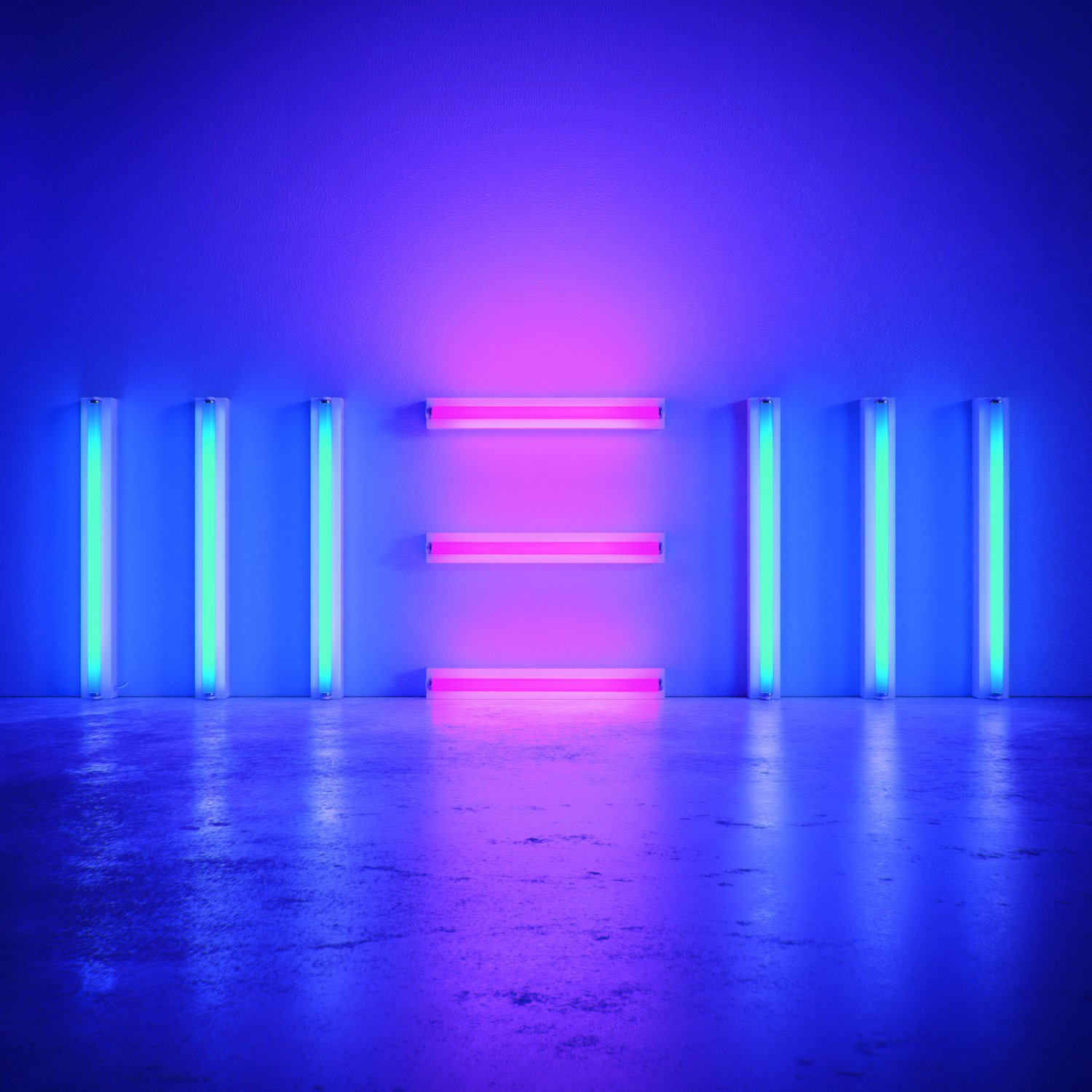
That’s not to say Paul McCartney was entirely original either, using as his inspiration for the cover of New the works of American artist Dan Flavin.

For more in-depth information about Flavin and his neon art visit the artsy.net website.

The Story Behind the Cover Art for McCartney’s “New”

Speaking of inspirations for album cover artwork, the small print in the credits for Paul McCartney’s latest recording turns up some interesting background information on where he looked for the stylised image of the word NEW depicted on the cover.

Here’s the cover for the standard edition CD [and vinyl]:paul-mccartney-new-album

…and the different coloured “deluxe” CD variation, which contains two bonus tracks:New - Deluxe Edition

Inside, along with who played and produced what, there’s this:

Artwork information:
NEW album cover inspired by Dan Flavin with special thanks to Stephen Flavin
Logo and cover concept: Rebecca and Mike
Consultancy and design: YES
Cover Image: Ben Ib

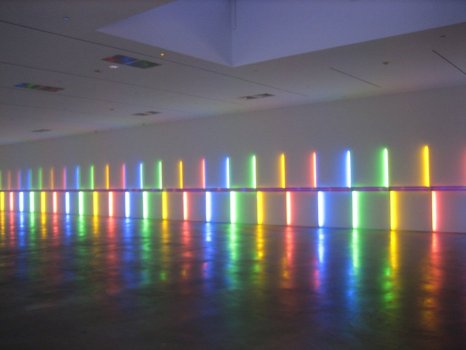
Dan Flavin was an American minimalist sculptor who specialised in using coloured neon and fluorescent tubes. As an example, here’s Flavin’s 1987 work Untitled (to Don Judd, colorist) at the Tate Liverpool gallery in 2009 (photograph: Colin McPherson):Dan-Flavin-Unititled-to-D-007

Or this (Site specific installation 1996 – Menil Collection, Houston Texas): Flavin 2

You can easily see where the New cover is coming from. The reference to Stephen Flavin is to Dan Flavin’s son, who has overseen the activities of his father’s estate since 1997. (For an in-depth and scholarly review of a retrospective exhibition of Dan Flavin works held in London in 2006 try this). The website Artsy.net has also created a page which really captures well what Flavin’s art is all about – and it has some great images too.

So much for the inspiration for the New cover.

Turns out though that the image used wasn’t actually made of fluorescent lights. See that reference to Ben Ib? Well, he’s a music video director who has worked extensively with Paul McCartney in the past. On his website Ib says he made the piece using a computer rendering program (with a logo and concept by Rebecca and Mike, and consultancy and design by YES). He also says the cover is “…my first foray into print work…It was a great team to work with under Paul’s guidance. I’ve also created the deluxe edition (gatefold) image.”

Ben Ib has done heaps of video work for McCartney. He created visual content for the “On the Run” and “Out There” tours, and the visuals for the song “Sing the Changes” which featured Barack Obama and which Sir Paul used for his headlining set at the Coachella festival. You can see a short extract of that here.

Ib’s talents were also utilised in June 2008 when Paul McCartney came home to Liverpool to give a performance (the first in his home town in five years) for the Liverpool Sound 2008 event. Ib built a huge, beautiful 20-minute long visual collage to serve as a backdrop to the show. It charts Paul’s story – from the early Cavern club days to the present, with footage and memorabilia from Paul and Linda’s personal archives.

And Ben Ib did this short biographical documentary film featured on the deluxe CD re-issue edition of Ram. If you haven’t seen it here’s an extract:

Meanwhile….back to the cover of New and Paul McCartney has provided the following piece of advice:

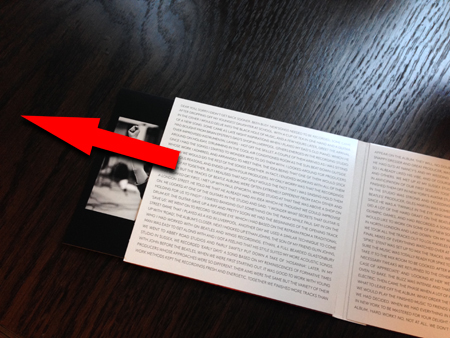
“If you buy ‘NEW’ on CD, please be careful when removing the booklet and take it out through the front cover gap, rather than the inside gap; If you do it could rip the cover. I only know this because I did it three times before I realised the booklet had to come out of the front gap! I hope you enjoy the music!! And please pass this message on.”

To help illustrate his point the news page on his official site shows these two photographs. First the correct way to remove the booklet:Correct_Image

…and this is the incorrect way:Incorrect_Image