Beatles and Advertising

We wrote recently about Paul McCartney advertising for JBL and Tiffany. It’s not the first time he’s allowed his name and music to be associated with commercial products. Its actually a tradition that goes way back – to the very start of Beatlemania.

For a very long time, having your product associated with the Beatles in any way has been considered advantageous….take this tastefully designed, directed and edited commercial – with a soundtrack provided by you know who:

You gotta admit at least that was clever and stylish. Not so much this unfortunate one Ringo Starr and some former Monkees got themselves involved in a while back – for Pizza Hut:

I guess there’s a big difference between Beatles songs being used in a commercial and an actual personal endorsement – although the Ringo example had both…..

Turns out Beatle songs being used in advertising is much more frequent than you might first imagine. In 2007 for example “Hello Goodbye” was licensed for use by Target to promote its stores:

Back in 2002 Julian Lennon recorded “When I’m Sixty Four” specifically for a retirement investment ad for the US company Allstate:

That then raises the question of actual, original Beatle recordings being used, as opposed to re-recordings by anonymous studio musicians. Which is more offensive to you, if at all?

One famous example of a real, iconic Beatles song being used was provided by Nike in 1987, and it caused an absolute uproar:

“If it’s allowed to happen, every Beatles song ever recorded is going to be advertising women’s underwear and sausages. We’ve got to put a stop to it in order to set a precedent. Otherwise it’s going to be a free-for-all. It’s one thing when you’re dead, but we’re still around! They don’t have any respect for the fact that we wrote and recorded those songs, and it was our lives.” — George Harrison (November 1987)

It didn’t stop of course, and for many fans the ultimate insult came with “All You Need is…Luvs” – a commercial for disposable nappies…

And that’s not the only time that same, famous Beatles song has been used. Blackberry got in on the act with this one:

Of course, control over their song catalogue has long been out of the Beatles hands. They no longer own the rights and therefore have very little say in how songs they wrote might be used (although Paul McCartney does control all his subsequent solo work). That begs the question: are the surviving Beatles themselves ever consulted about which of their songs are used and how? The Independent newspaper says it is unclear if McCartney or Yoko Ono, John Lennon’s widow, approved use of “All You Need is Love” for the Blackberry commercial. It does however say that in 2008 Sony/ATV (owners of the catalogue) said it had a “moral obligation” to contact them before giving approving to such projects.

Ono herself has not been free of criticism. She apparently gave permission for an actor to overdub John Lennon’s voice on some archival footage which was turned into an advertisement for a Citroen car:

In May last year we posted on Beatlesblogger about the Australian city of Brisbane using “Come Together” to advertise what a great place Brisbane was after their big flood event. It looks like the organisers have since taken down their YouTube video of that commercial, probably because they only paid for the use of the song for a limited time.

The more you delve into this question of the Beatles and advertising the more examples you find. Maybe its best to just stop here before it gets too depressing….

Beatles With Records – Part Eight

This is the latest in a series about the Beatles being photographed holding or being nearby LP records or CD’s. Of all the many thousands of photographs taken of the band (or of them as solo artists) there are not actually that many with them in close proximity to the product they sold so many of….

The other posts in this series are: The Beatles with Records Parts 123467910111213141516 and 17.

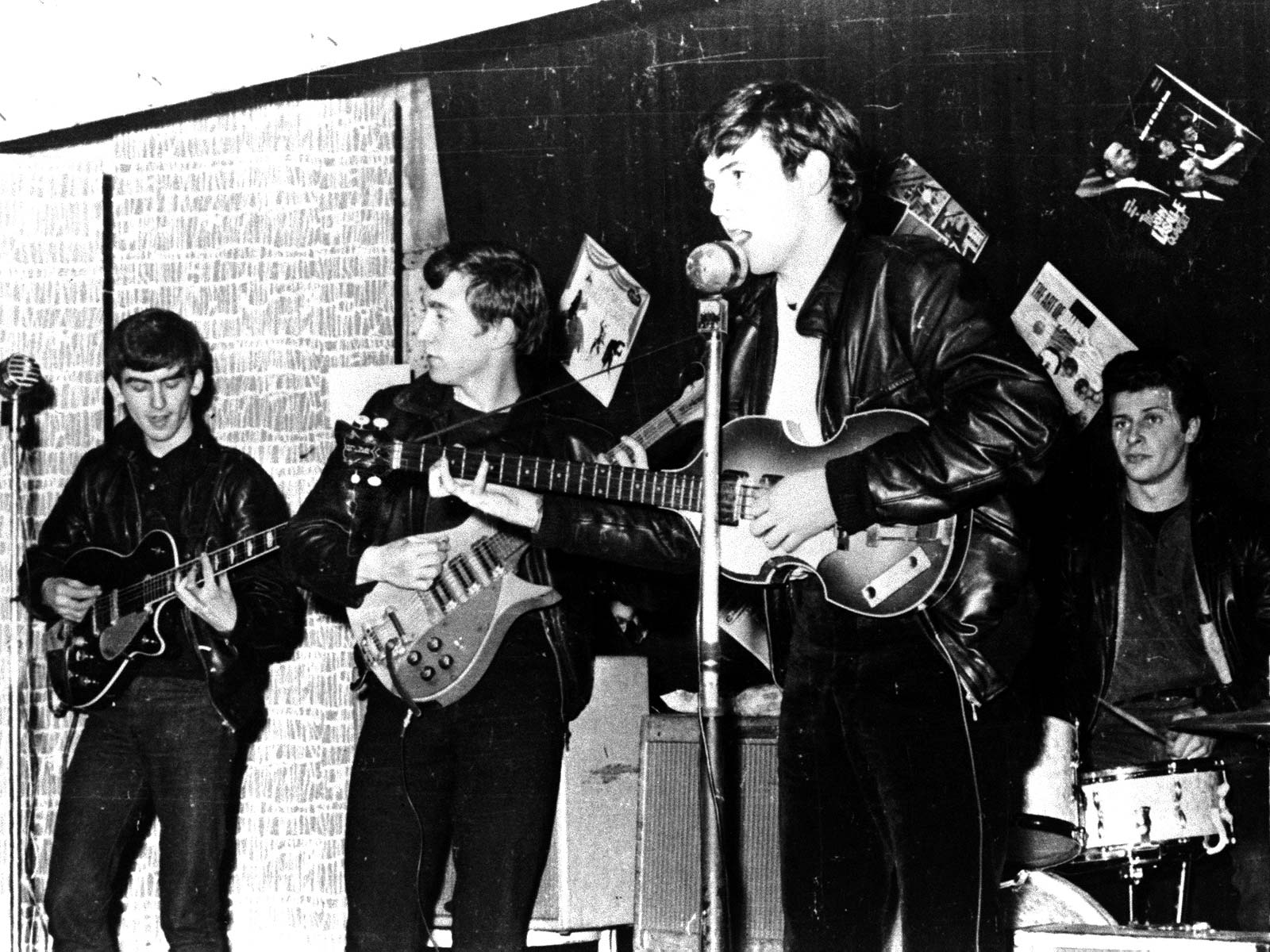
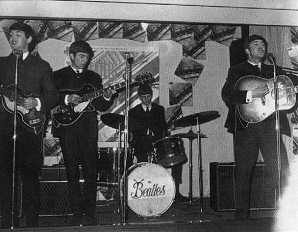
Readers have sent in some additional photos and so its time for maybe one more installment. This first one, which comes from Thomas Repetny, is an early shot taken on a stage decorated with record covers behind what is clearly an early incarnation of the group (i.e. no Ringo yet…):

Thanks for this one Tom – and check out Tom’s own zany site tomwantstoplaywithpaulmccartney.com and watch as he follows his dream.

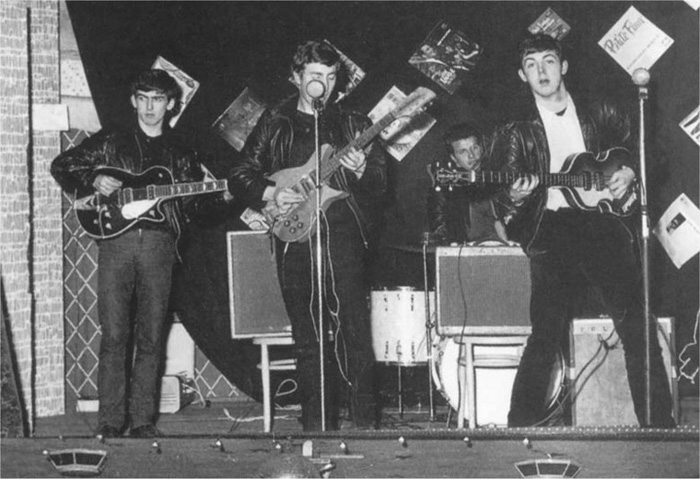
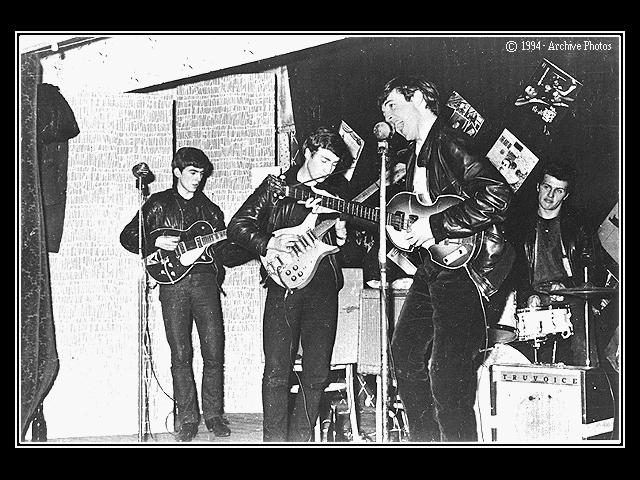
In researching this photograph (to try to figure out the LP covers hanging up on the wall behind the Beatles) I found the same early stage shot taken from a couple of other angles:

Of the eight LP covers and one 45 that can be seen behind the band I can clearly make out just two. They’re both above drummer Pete Best. The first is right at the top and it’s The John Lasalle Quartet LP “Jumpin’ at the Left Bank”:

This jazz album was recorded live at the New York City nightclub of the same name. It was released in the early Sixties. Interestingly its on the Capitol label – which of course would soon become the Beatles own label in the United States.

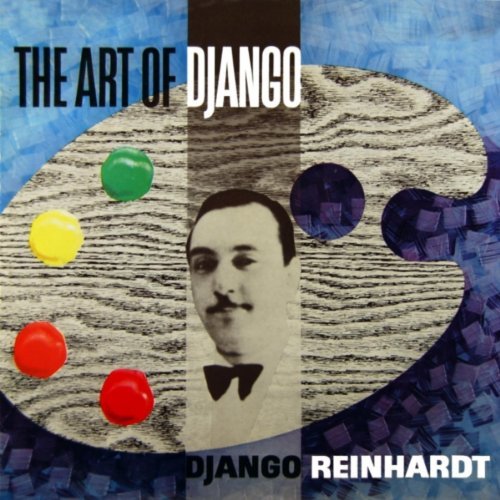
The other album cover is just above Peter Best’s right shoulder. It’s an album by the legendary Belgian jazz guitarist Django Reinhardt – “The Art of Django”:

All the albums on this stage seem to be jazz-influenced. The only other title I can vaguely make out is “The (something) Jazz Quartet”. If anyone knows when and where this photograph was taken, and if anyone can identify any of the other record covers, please email us at beatlesblogger@gmail.com

There was another photograph sent in also with the Beatles playing on stage – this time with their own record “Please Please Me” enlarged as the backdrop:

Again, it’s quite an early shot – but there is Ringo, and there is the very early flowing script version of a Beatles logo on his bass drum. Clearly it’s just after the release of their very first LP in Britain because there behind them, plastering the rear of the stage is a large poster and many record covers for “Please Please Me”:

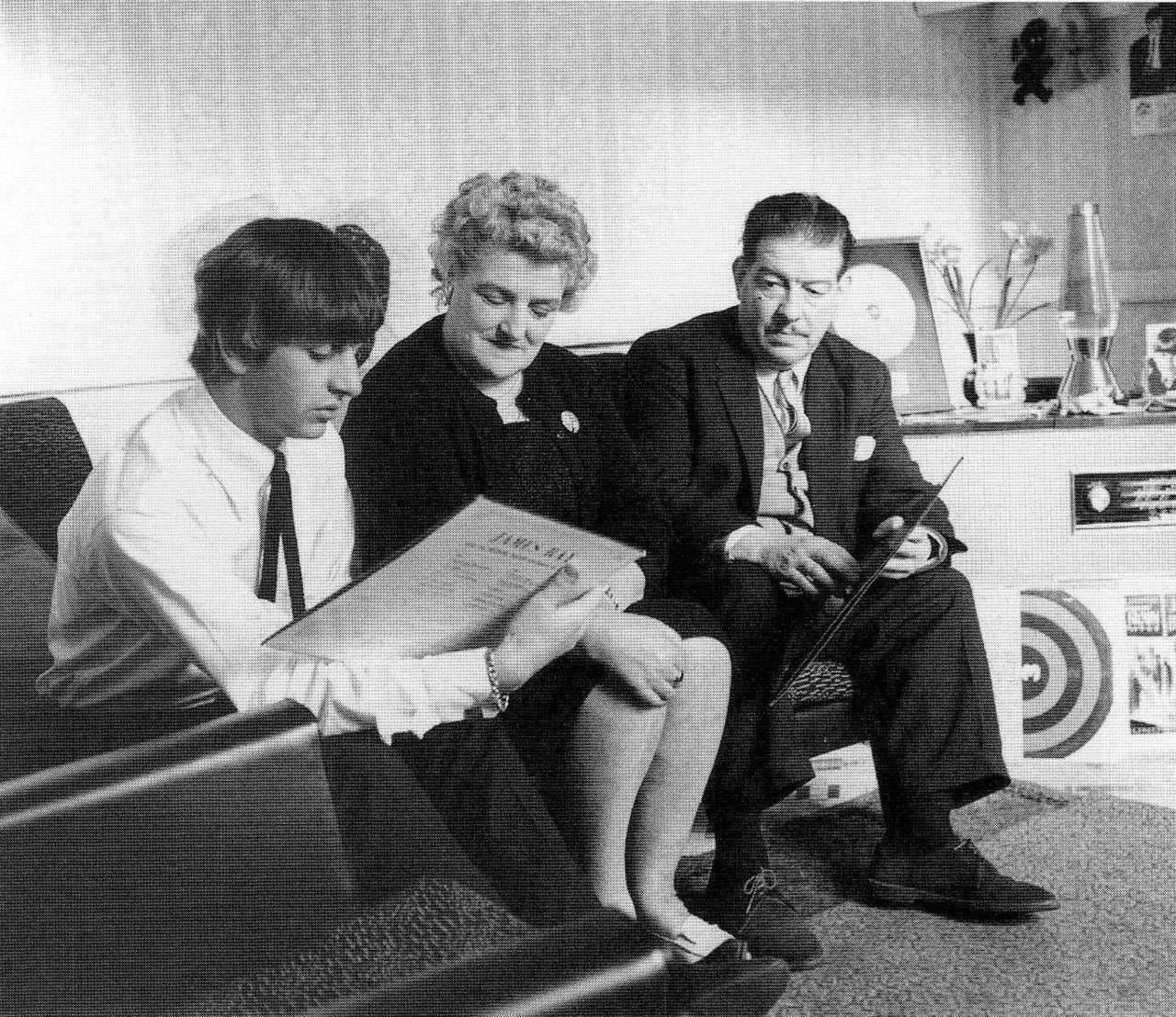
Once the band started to become famous the press wanted photographs of them at home and in more relaxed surroundings. Here’s one of those featuring Ringo with his Mum and stepfather – who both loved their music. He’s talking with them about the record he’s holding. It’s by James Ray:

You can see the rear of the cover in the photo above:

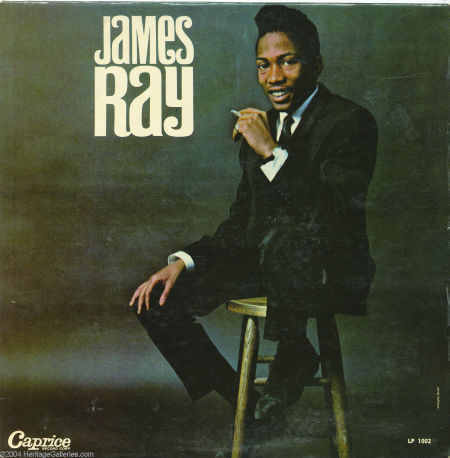
And this is the front cover image:

Nice. James Ray was an American R&B singer. There’s another Beatle connection here because in 1962 it was James Ray who recorded the original version of “Got My Mind Set on You” (you can see that on the rear cover track-listing from the album that Ringo is holding. See track 3). Much later (in 1987) the song became a number one hit for George Harrison. (To compare the two versions see: YouTube – James Ray and YouTube – George Harrison)

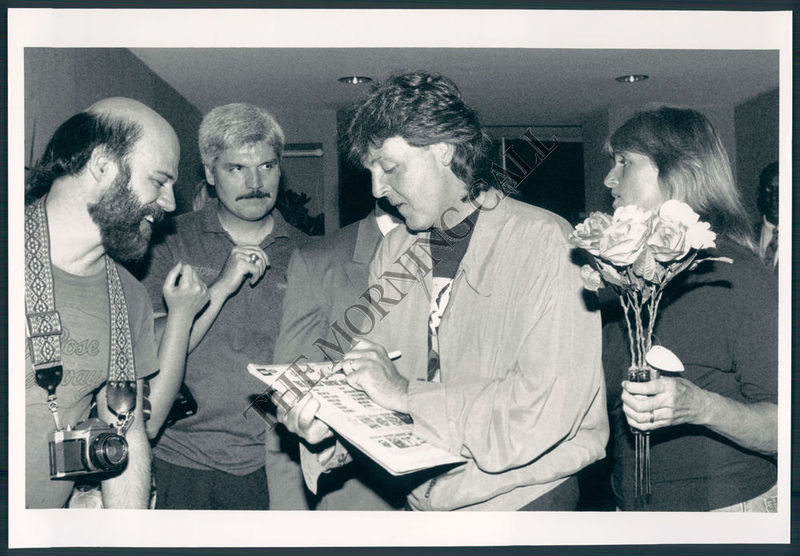
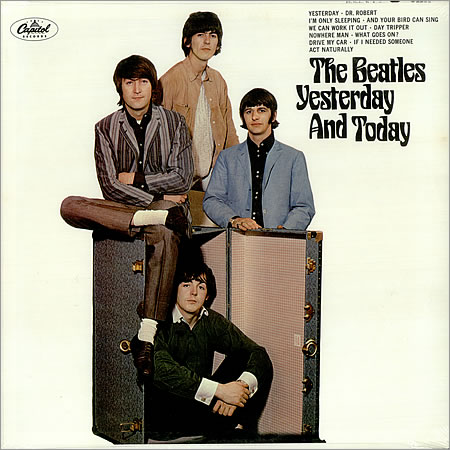
Signing albums has always been a task when in public for all the Beatles. Here’s Paul in what looks like the mid 1980s signing a copy of one of the Beatles most famous record covers – “Yesterday and Today”:

What you can see in the picture above is the rear cover:
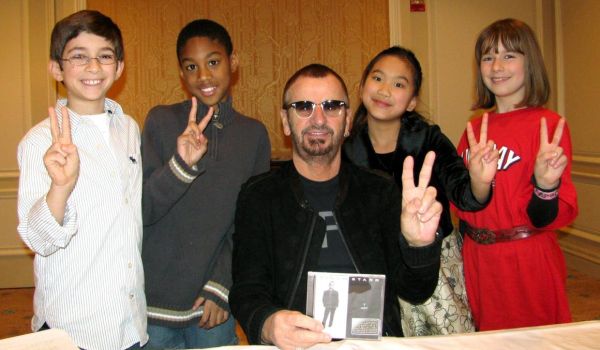
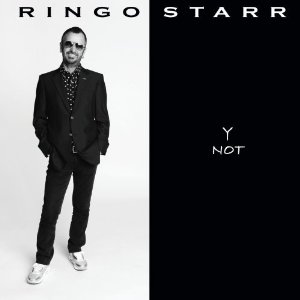
Doing publicity for a new record that is out in the shops goes without saying – even for ex-Beatles:

Ringo’s “Y Not” was released in January, 2010.

As he would say: “Peace and love.”

And happy Easter everyone.

You can see the other parts in “The Beatles with Records” series here:  Parts 1234679 , 10 , 111213141516 and 17.

Harrison – Early Takes Vol. 1

As reported on the Beatles Examiner, Wogblog and The Second Disc sites, Martin Scorsese’s spectacular documentary “Living in the Material World” (on the life and times of George Harrison) is about to be released on BluRay and DVD for the first time in the USA:

While that’s of course worthy of note (the film has been available in other markets since October last year), the BIGGER news is that the limited edition music CD only previously available if you purchased the expensive Deluxe Box Set of “Living the Material World”, is soon to be released as a single, stand-alone CD:

Not only that, for us mad vinyl collectors it will also be released in vinyl:

Both the CD and vinyl are to be released on the Hip-O Records label, part of the Universal Music stable. They’re the company that released Ringo Starr’s latest CD’s. The Harrison discs will contain previously unavailable demos and, as the title suggests, “early takes” of these ten songs:

  1. My Sweet Lord (demo) 3:33
  2. Run Of The Mill (demo) 1:56
  3. I’d Have You Any Time (early take) 3:06
  4. Mama You’ve Been On My Mind (demo) 3:04
  5. Let It Be Me (demo) 2:56
  6. Woman Don’t You Cry For Me (early take) 2:44
  7. Awaiting On You All (early take) 2:40
  8. Behind That Locked Door (demo) 3:29
  9. All Things Must Pass (demo) 4:38
  10. The Light That Has Lighted The World (demo) 2:23

The other good thing is that the disc is sub-titled “Volume 1” – which suggests that there may just be others in the series……

McCartney’s Kisses on the Bottom – Who Owns The Songs?

Just had an email from Bruce Hamlin, an Australian collector who runs The Beatles Records Information Service, with some information about the new Paul McCartney release of Kisses on the Bottom (out on February 7).

Because the album is Paul interpreting some of the great old songs he loves, Bruce muses at the end of his email: “The cynic in me reckons that Paul owns the publishing rights to all these songs too. Just for that extra bit of icing on the cake when the royalties come in….”

McCartney of course owns MPL Communications Limited, one of the biggest song publishing and licensing companies in the world – and in fact does own the rights to literally thousands of songs and covering nearly 100 years of music.

So, how many of the songs he’s covering on Kisses on the Bottom does McCartney already own, and will he subsequently get song royalties from tracks he didn’t write back into his own business? In the album’s track-list below I’ve put in RED whether MPL administers the publishing rights:

1. I’m Gonna Sit Right Down And Write Myself A Letter  –  YES  (written by Joe Young, Fred E. Ahlert, 1935)
2. Home (When Shadows Fall)  –  NO
3. It’s Only A Paper Moon  –  NO
4. More I Cannot Wish You  –  YES  (written by Frank Loesser, 1949)
5. The Glory Of Love  –  NO
6. We Three (My Echo, My Shadow And Me)  –  YES  (written by Dick Robertson, Sammy Mysels, Nelson Cogane, 1939)
7. Ac-Cent-Tchu-Ate The Positive  –  YES  (written by Harold Arlen, Johnny Mercer, 1944)
8. My Valentine (it’s a new McCartney composition, 2012)  –  YES 
9. Always  –  NO
10. My Very Good Friend The Milkman  –  NO
11. Bye Bye Blackbird  –  NO
12. Get Yourself Another Fool  –  NO
13. The Inch Worm  –  YES  (written by Frank Loesser, 1951)
14. Only Our Hearts (another new composition)   –  YES  

The Deluxe CD Album will feature 2 bonus tracks:

15. Baby’s Request (a 1979 McCartney tune from Back to the Egg)  –  YES 
16. My One And Only Love  –  YES

Therefore, in answer to Bruce’s question, for the standard CD edition of Kisses Paul McCartney owns half the songs. For the deluxe edition he owns the rights to 9 out of the 16 tracks.

Also, it’s just been pointed out to me by Beatlesblog reader Craig that two of the songs on the album have previously been released in versions on Apple Records. Ringo did ‘Bye, Bye Blackbird’ on Sentimental Journey (his 1970 tribute to old songs he loves), and Mary Hopkin recorded ‘The Inch Worm’ on her first album, Postcard (1968).

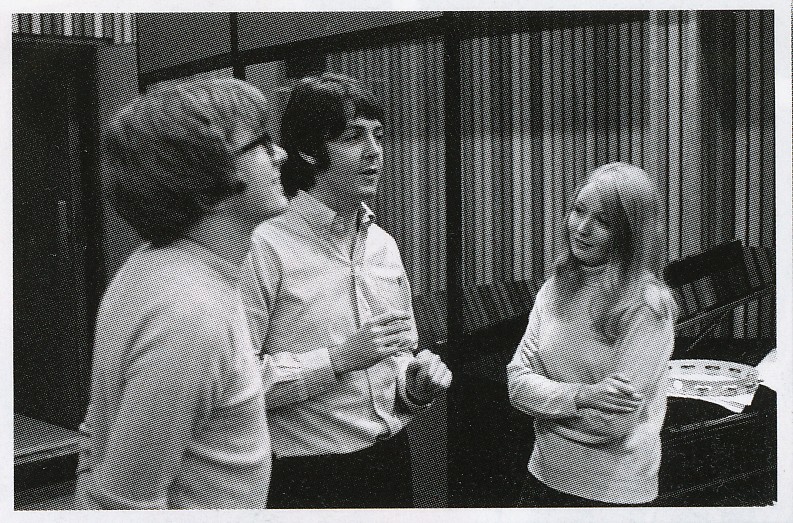
Peter Asher, Paul, Mary Hopkin at Trident Studios, London, 1968 (Apple)

Paul produced Mary Hopkin’s Postcard LP, so he must have liked the song ‘The Inch Worm’ for a long time. He chose the album’s songs, the arranger and even the artwork for the album cover. From the liner notes of the digitally re-mastered edition of Postcard from 2010:

Mary remembers that the show tunes and hits from yesteryear that make up half the collection were favourites of Paul’s father, Jim McCartney. They call to mind the valve-warming radio days of the BBC’s old Light Programme, Ringo Starr’s Sentimental Journey album that Apple would soon release, and the comfy familiarity that Paul evoked in Beatles songs such as ‘Honey Pie’, ‘When I’m Sixty Four’ and ‘Your Mother Should Know’.

Sounds just like the 2012 publicity for Kisses on the Bottom, doesn’t it.

‘The Inch Worm’ originally comes from the 1952 Danny Kaye film Hans Christian Anderson. And Paul’s company MPL Communications Limited now owns the publishing rights to the song.

You can access the database for all the songs that ML Communications has the rights to at: www.mplcommunications.com/search.php  For most tracks in the database you can also listen to full audio examples, often by a range of performers.

For a great film of Mary Hopkin performing different language versions of ‘Those Were the Days’ see the Wogblog page. Great shots of the Apple offices in 1968, too.

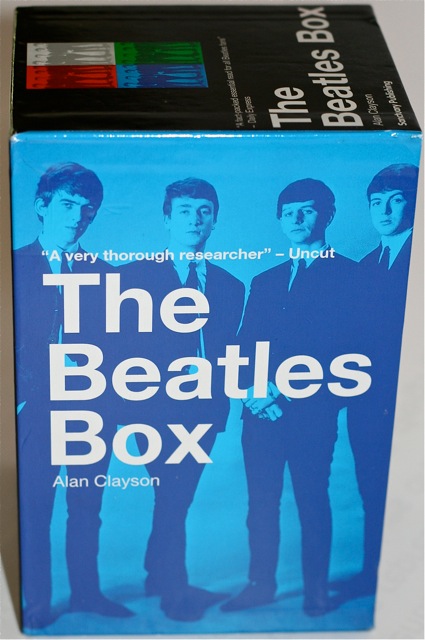
The Beatles Box

In the city the other day I stumbled upon this box of Beatles books:

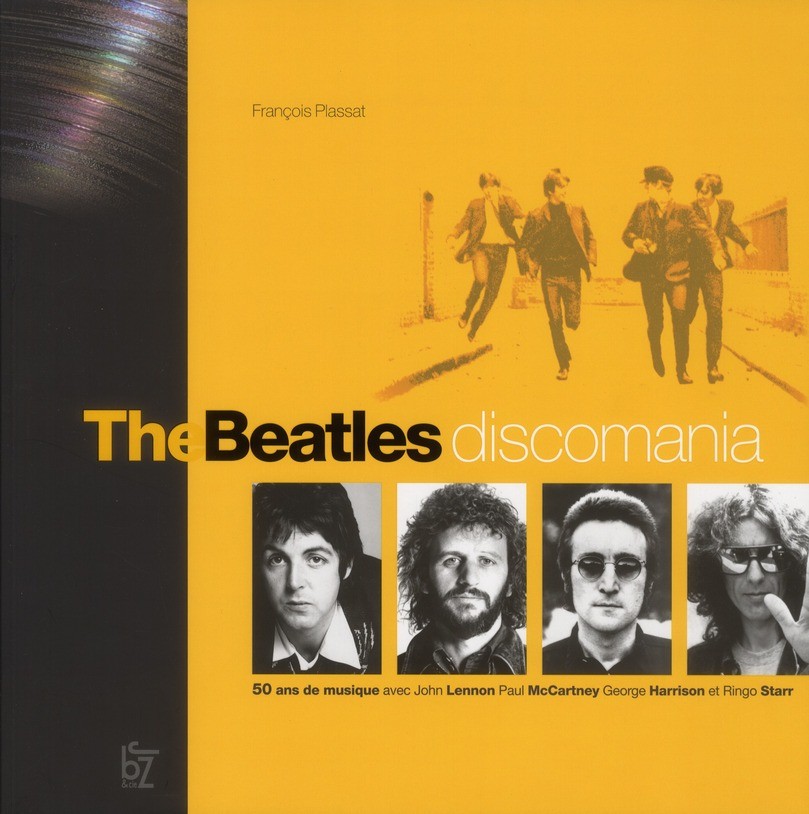
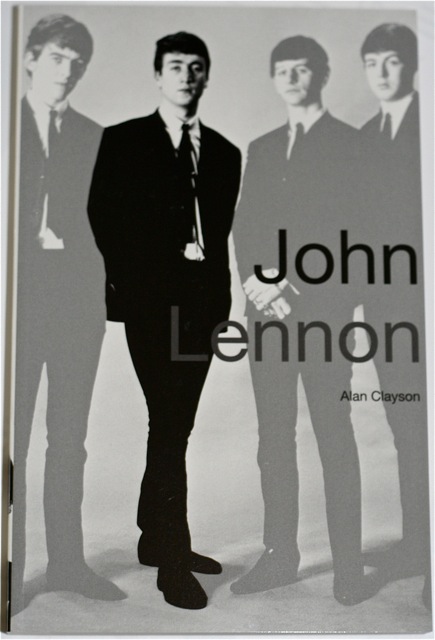
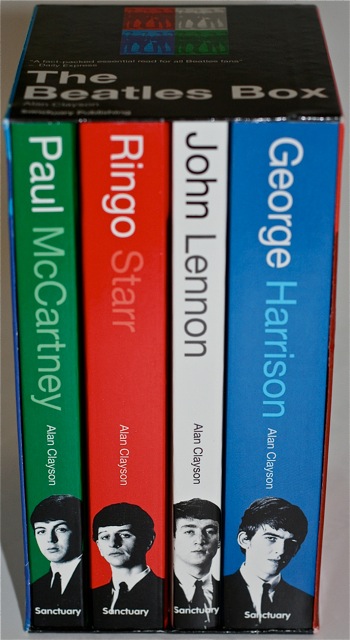
It gathers together four books by respected British Beatles historian and writer Alan Clayson. Collectively it’s called “The Beatles Box”, and contains four individual books on each member of the group. There’s one on John Lennon (which was originally published in 2003):

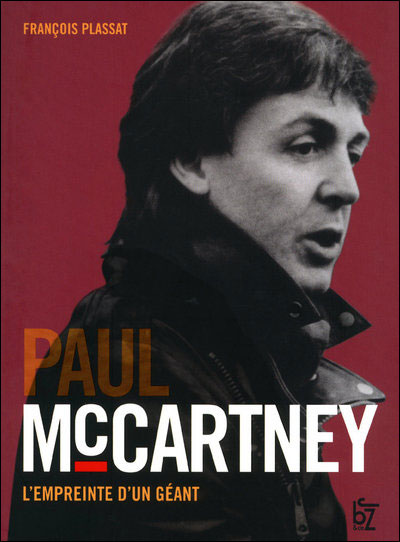
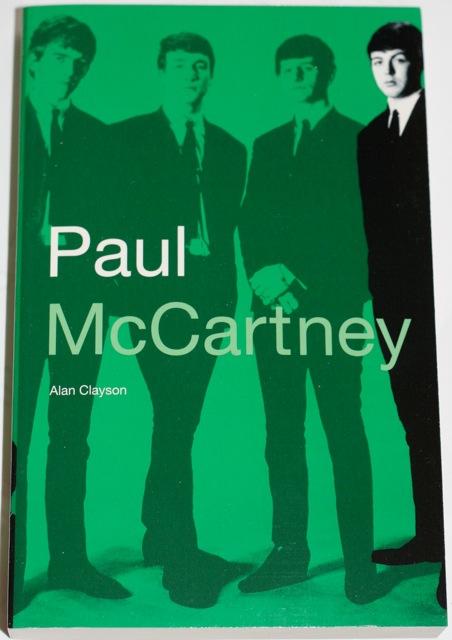
One on Paul McCartney (also originally published in 2003):

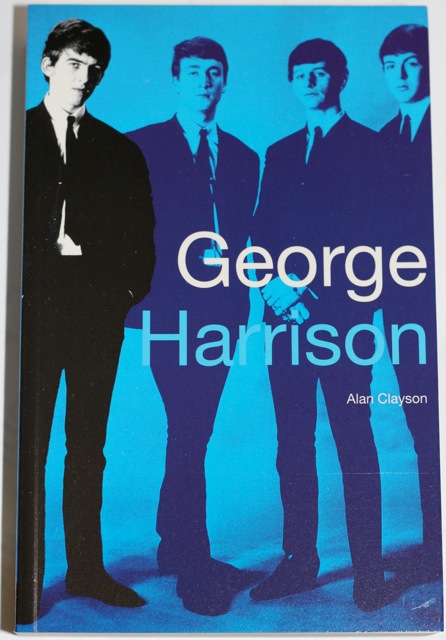
One on George Harrison (originally published in 1996 as “The Quiet One: A Life of George Harrison”, but updated here in 2003):

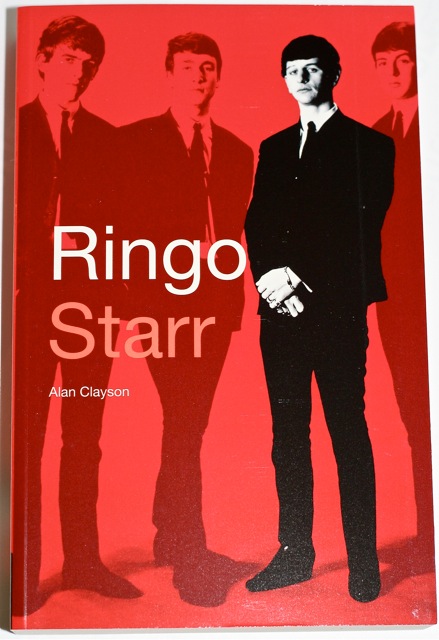
And one on Ringo Starr (originally published in 1996 as “Ringo Starr: Straight Man or Joker?”, but also updated here in 2003):

This box of books is nicely designed. The covers are all complementary and the book spines line up when they are placed side-by-side in the box, with photos of each looking out:

“The Beatles Box” is published by Sanctuary Publishing. Alan Clayson is also a musician and has his own website.

The Beatles and Why Music Matters

The Beatles are up for the fight against music pirates. The surviving members of the band, and the estates of the late members, have pledged support for the anti-piracy campaign Music Matters by sanctioning a special animated short film featuring a selection of original Beatles music.

You may have seen this already (it’s been out for about a week now), but its so cute and catchy I’m adding the Beatles film below.
 
An eclectic range of recording artists are featured in this new online campaign. The Music Matters group describe themselves as “a collective of artists and people from across the industry, which has formed to remind music fans of the significance and value of music.” The group works to promote legal digital music and have posted a series of great little animated videos featuring the music of some big hitters including: The Beatles, Elbow, Kate Bush, Stevie Wonder, Nina Simone and Sigur Ros – to name just a few on the international site. There’s also an Australia/New Zealand sitewith a much smaller selection of videos using the music of Nick Cave, Eskimo Joe, Dave Dobyn and others. The Beatles’ film was animated and directed by Lee Gingold. According to Paul McCartney’s website, “The film focuses on the message that music is a shared experience and as such brings us all together, and for him that’s why music matters.”
 

The Beatles With Records – Part Two

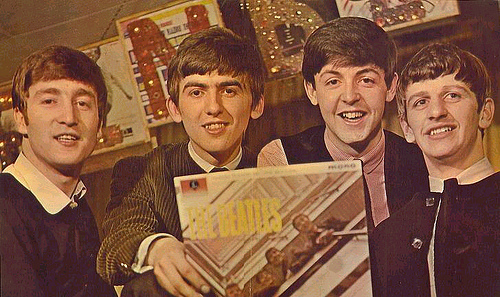
Since my earlier post about the Beatles being photographed actually holding the things they sold so many of – LP and single records – a few more photos have come to light. This first one is a very early publicity shot of the band with a copy of their very first album for Parlophone Records – from 1963 “Please Please Me“:

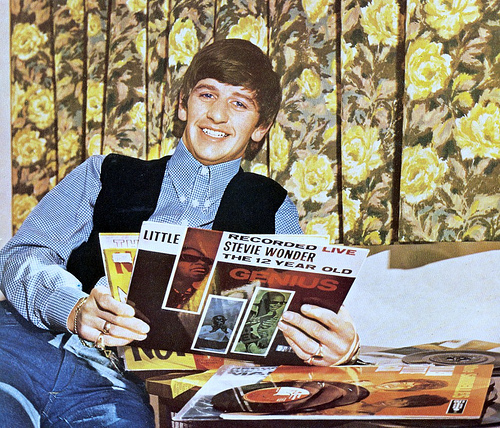
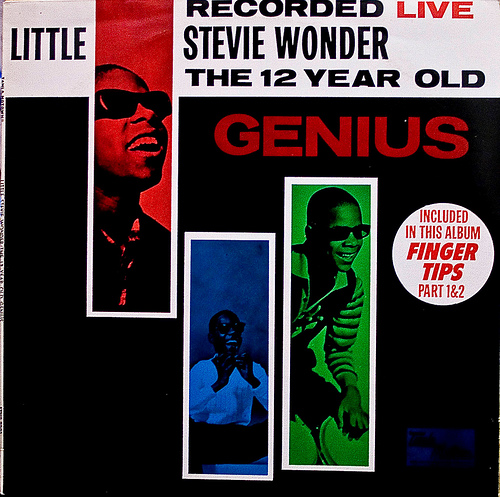
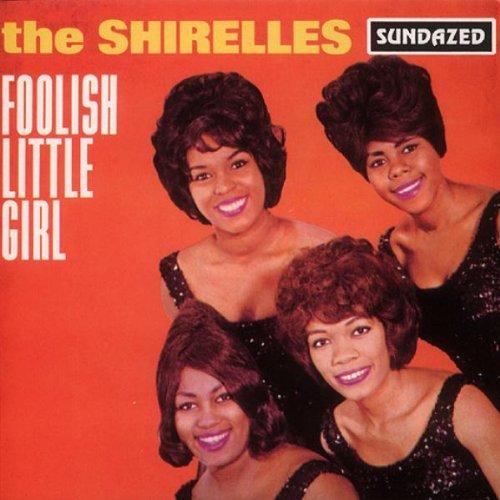
Trawling the web I came across a great photo of an obviously happy Ringo Starr with a pile of LPs and singles:

Here you can clearly see Ringo holding the Motown Record “Little Stevie Wonder – The 12 Year Old Genius” (from 1963):

He’s also got a copy of The Shirelles “Foolish Little Girl“, which again dates from 1963 leading to the conclusion that this photograph was taken in that year. The record is lying down, just near Ringo’s left hand:

And on top of that LP are a couple of 45 rpm singles. Its impossible to make out the title of the one we can see, but you can clearly make out the distinctive red and white label of Top Rank records. I wonder if it’s also The Shirelles? In Britain they were released on Top Rank – so it could very possibly be a copy of  “Baby Its You“, a song the Shirelles recorded in 1961 and which the Beatles themselves covered on “Please Please Me“:

I’ve also found  a photograph of Ringo with wife Maureen. They’re sitting at home in a flat they rented for some time in London’s Montague Square. Behind Ringo you can see on the shelf quite a large collection of LP’s, and if I’m nor mistaken Maureen is sitting on what, for the times, would have been quite a sophisticated “radiogram” or record player:
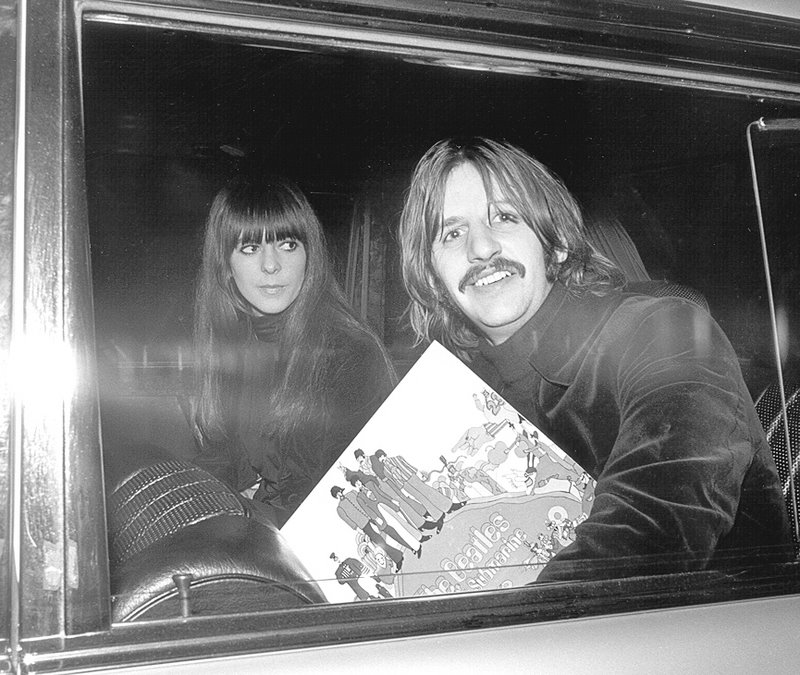
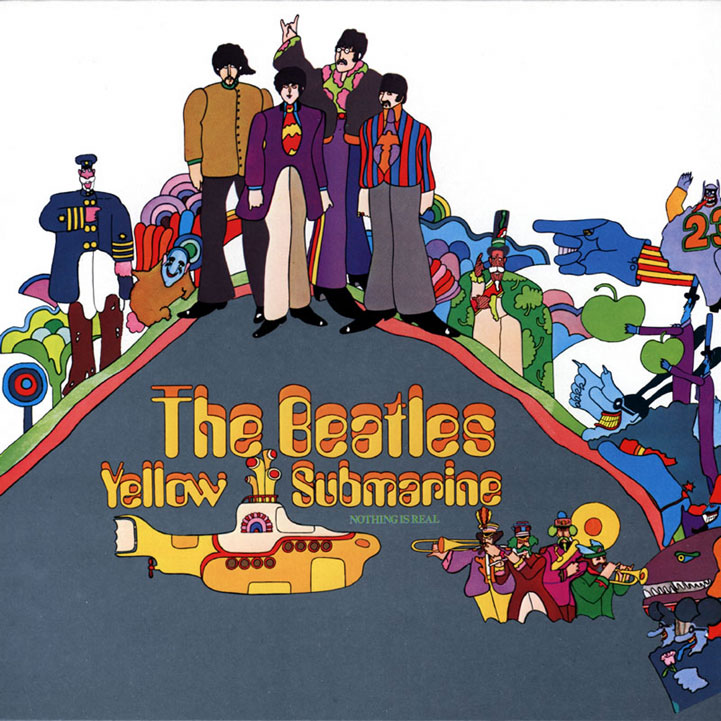
Here’s another of Ringo, once again with Maureen, clutching a copy of the Beatles “Yellow Submarine” LP:

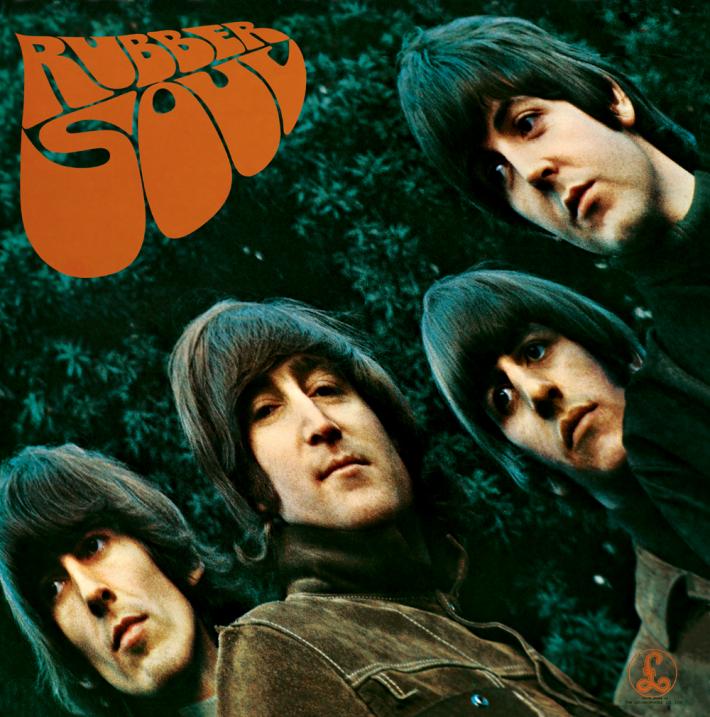
I had a  a photo sent to me after the earlier blog post. It’s Paul with a copy of 1965’s “Rubber Soul“:

George Harrison features on the web photographed with records, some with easily identifiable discs and some not. This one is pretty easy to see. Its a lucky fan getting an autographed copy of “Help“:

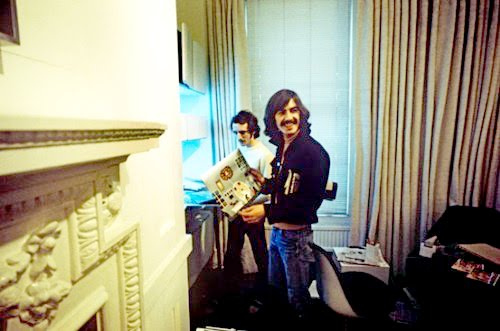
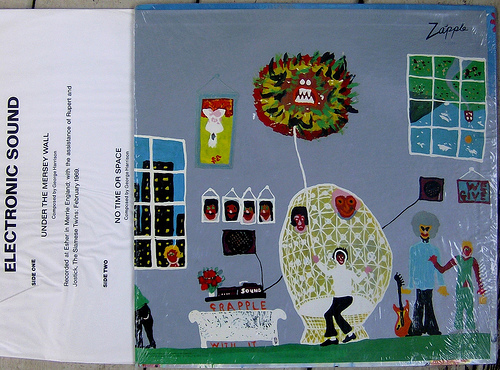
Here’s George again, this time a shot taken in what looks to be the Apple offices. It’s him holding a copy of his second solo outing “Electronic Sound“, released on the Zapple label:

You can clearly see the rear artwork for the LP in the photo above. Below is a shot of the back cover of the LP:

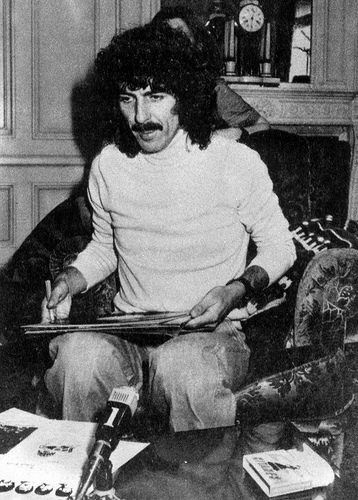
And here’s another one of George again signing albums, but this time its very difficult to see just what they are:

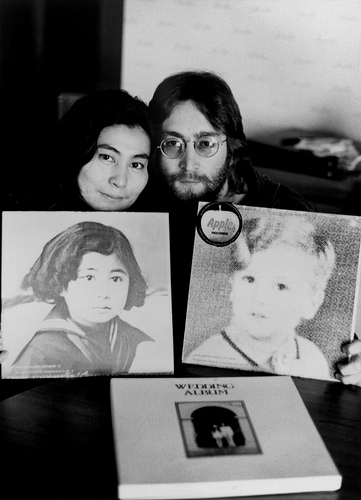
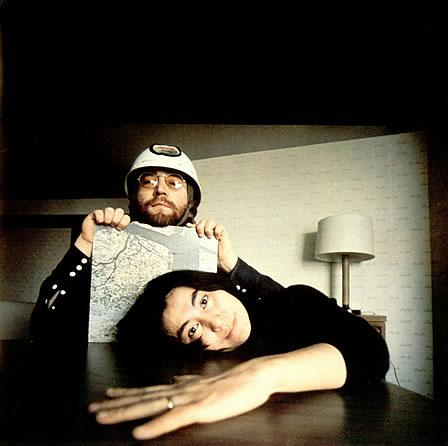
In 1970 John and Yoko posed for some photographs to publicise their new records. John had “John Lennon/Plastic Ono Band”, and Yoko had “Yoko Ono/Plastic Ono Band”. Both titles, on Apple Records, were released simultaneously. The front covers were almost identical, but the rear artwork of Yoko’s album showed her as a young girl, while John’s showed him as a young boy:

In the photo is also “The Wedding Album” box set, which came out in 1969. The photo below is taken at the same session:

As I said, the front cover artwork of these two LP’s is difficult to tell apart. “John Lennon/Plastic Ono Band” has John leaning against Yoko:

While “Yoko Ono/Plastic Ono Band” has Yoko leaning against John:

Very subtle.

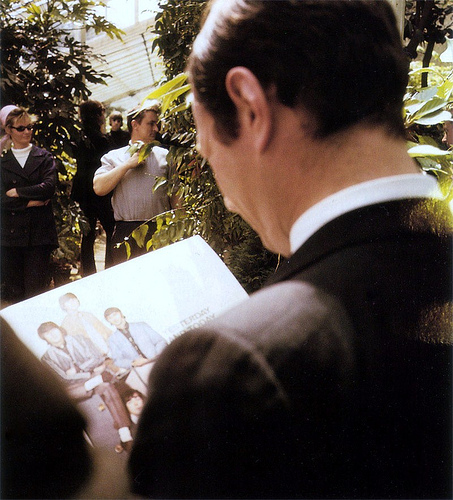
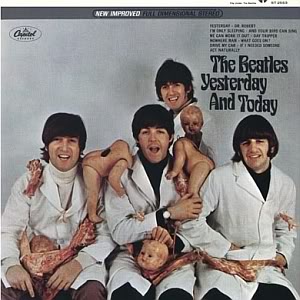
Finally, a photograph of Beatles’ manager Brian Epstein. He’s holding a copy of the controversial 1966 US Capitol Records release “Yesterday and Today“. This is the famous “Butcher Cover” LP. Maybe he’s contemplating the new photograph that Capitol was forced to paste over all the original issues of the album:

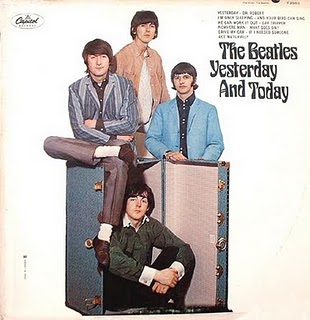
This is the more acceptable “trunk” cover shot that Capitol put on over the top of the original artwork:

And this is what it replaced:

The interesting thing about the Epstein photograph is that what he is holding appears to be an early mock-up of the replacement artwork. If you look closely there is no song list at the top and the font for the words “Yesterday and Today” is different to that used on the final version. Interesting.

Don’t forget, if you have any other photographs of the Beatles actually listening to or holding singles or LP’s you can send them to me at:  beatlesblogger@gmail.com

You can see the other parts in “The Beatles with Records” series here:  Parts 13467 , 89 , 10 , 111213141516 and 17.

Thinking About Abbey Road Studios at 80

I stumbled today upon an article on (of all places) the computer/gadget specialist site CNet. It is about the famed EMI Abbey Road studios in St. John’s Wood, London – the site of so much fantastic recorded music including just about all the songs recorded, in one way or another, by the Beatles. The studios have just turned 80 years old and it got me thinking about what an important role this particular pile of bricks and mortar on a nondescript street has played in the history of popular and classical music – not the least of which is the music of the the Beatles.

If George Martin is often referred to as “the fifth Beatle” then surely Abbey Road could be regarded as one of the instruments they played – with as much importance to the Beatles sound as the Gibson acoustics, the Gretsch and Epiphone electrics, the Ludwig drums, and the famous Hofner bass.

The CNet article has some very interesting observations made during a recent tour of the famous building and it’s numerous rooms – so many of which are associated with Beatles tracks. You have got to scroll through the thirty photographs taken during CNet’s visit. Its a terrific tour with some great shots for both Beatles fans and technical nerds alike.

The studio itself has a website which is worth a visit every now and again to catch up on their news – one of the latest of which is the remastering of the Beatles “Anthology” series for digital download.

So much happened at this one address – including the Beatles themselves honoring their home-away-from-home with an album bearing the studio’s name.

Abbey Road photo session - August 8, 1969

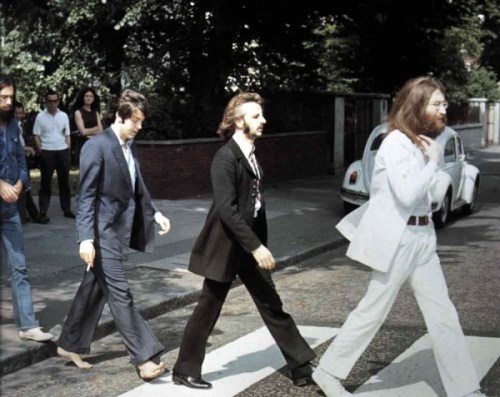
Then there was the heritage listing for that famous zebra crossing out the front….and the zebra crossing web cam, now complete with live street sounds. Its no longer in exactly the same spot as the photo on the front of the “Abbey Road” album having been moved down the road a bit from the studios – but countless fans still come each day, month, and year to be photographed striding across it.

Happy 80th birthday Abbey Road Studios. Here’s to 80 more years.

The Beatles Forever


Nicholas Schaffner wrote this book in 1977, and I gather from what I’m reading on the web that it was, in it’s time, something of a Beatles “bible” for readers back then. So far this book has eluded me – so its good to have an original paperback copy now in the collection.

“The Beatles Forever” has subsequently been reprinted numerous times and the current cover looks like this. But the copy I found last weekend in an old-wares/antiques/records and second-hand book shop has the original cover above. This is a paperback copy.

It is genuinely one of the first really comprehensive survey’s of the band’s output in terms of their record releases, rarities and memorabilia – all accompanied by fairly detailed text describing the history of the Beatles and giving the context in which records were released and the collectable nature of a wide range of Beatles items. There are extensive photographs of the band as well as photos of albums, singles and memorabilia – but all in black and white. I won’t go into a detailed analysis of the contents because this has already been done by a range of writers who have reviewed and critiqued “The Beatles Forever”. Probably the most comprehensive is by Donald Sauter – who has written extensively on his Beatles collection and reminiscences from his youth. His article also contains a small selection of the many photos from the book. There is another interesting page on the book here.

Its a handy reference book to have in the collection – even though it came out more than 30 years ago. It still has lots of information and insights.

Previously Unseen Beatles Photographs

The fine art auctioneers Christie’s in New York will next month auction some pretty impressive and previously unseen Beatles photographs from 1964.

They come from a collection of photos of the group shot by photographer Mike Mitchell. At age 18 he was at the Washington Coliseum in Washington, D.C. for the Beatle’s first US concert, two days after their historic Ed Sullivan appearance.

Christie’s is calling the event “The Beatles Illuminated: The Discovered Works of Mike Mitchell“. Their website says it’s:

“….a sale comprised of nearly 50 lots of unpublished and never-before-seen photographs of the Beatles’ first hysteria-inducing visits to America in 1964. Shot in black and white by photographer Mike Mitchell when he was just 18 years old, the images have been filed away for nearly fifty years. The complete rediscovered collection is expected to realize in the region of $100,000.

Over eight thousand fans packed into the Washington Coliseum on February 11th, 1964 and they were treated to the Beatles at their very best. The Washington Coliseum was not only their first American concert but also by far the largest venue in which the Beatles had ever played. Its unique setup – it was often used for boxing matches – meant that the Beatles were surrounded on all sides by an adoring, cheering audience. The Beatles were clearly delighted and having a great time on stage, sharing all of the enthusiasm of the crowd. Here they were, performing in America, the land of their musical heroes and cultural icons, the home of Elvis and Chuck Berry – who’s “Roll Over Beethoven” was chosen by the Beatles to begin the show – and Little Richard, who’s “Long Tall Sally” was chosen to end it. The concert given at the Washington Coliseum was part of a defining moment in the Beatles’ career, and it remains both an important event and a notable place in their story. And Mike Mitchell was there to capture it.”

Yahoo has quite a nice photo gallery here. There’s an absolute ripper shot of Ringo in full flight and absolutley enjoying himself: