The Beatles “1” – Remastered 2011

It was released today (Friday, September 2) in Australia:

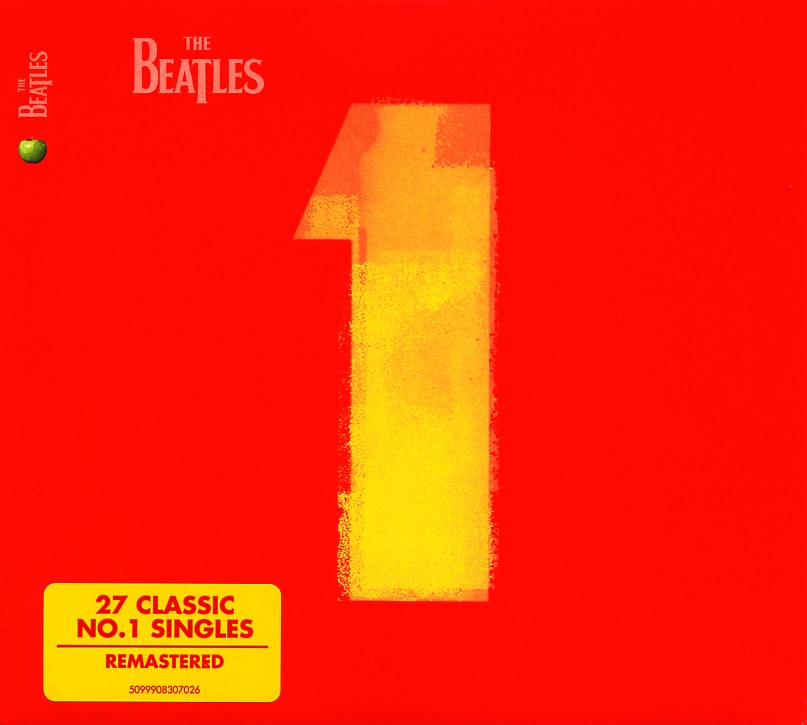
This is the re-issue, in newly remastered form, of “The Beatles 1” compilation which first came out in the year 2000. As the sticker on the front cover says: “27 Classic Number 1 Singles – Remastered”. Here’s the rear cover:

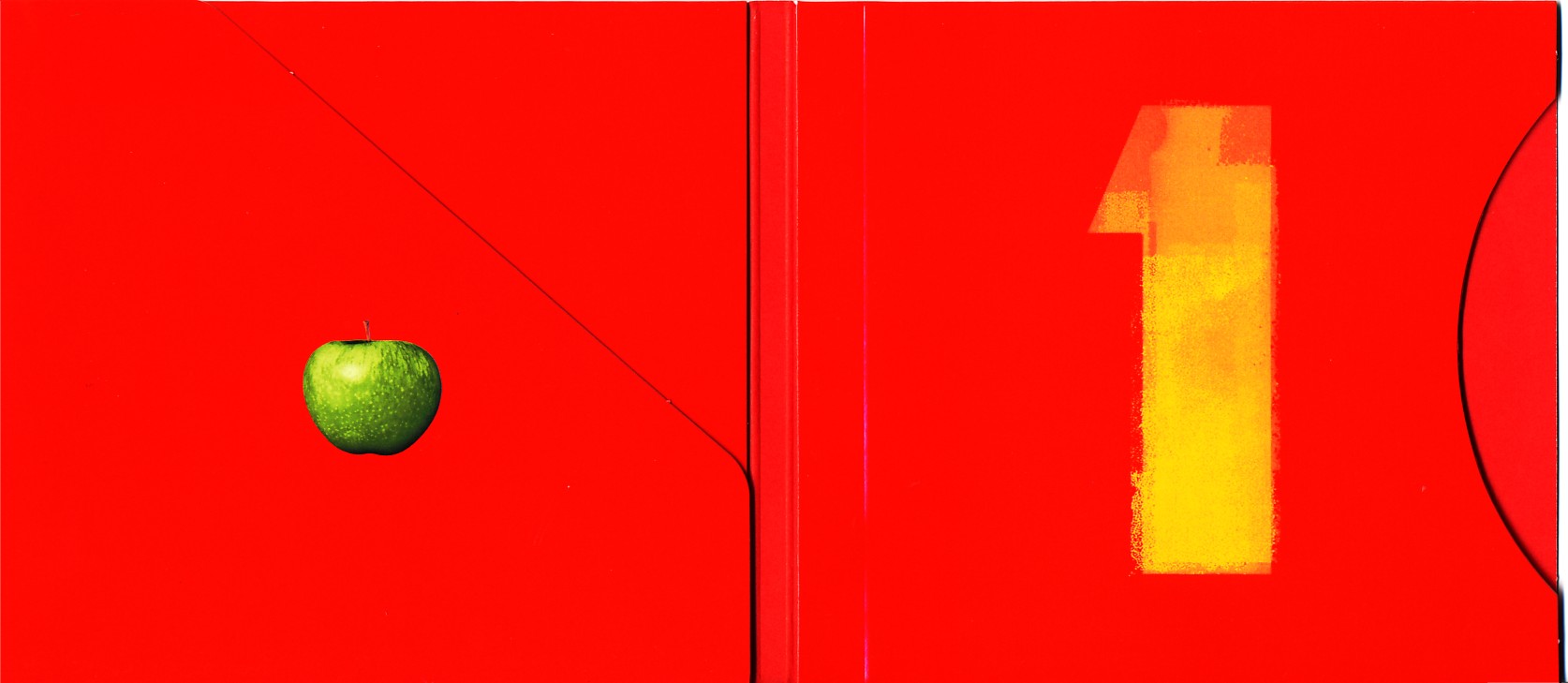
These are the remasters done at the same time as the big release of all the albums back in 2009. It comes in a cardboard gatefold sleeve that’s in the same format as all the 2009 re-issues.

Below is the front cover of the booklet, which despite some speculation that it would be different, has exactly the same 30 pages and layout as the 2000 issue:

Each page is dedicated to a particular song and gives the recording place and date, chart information and full colour photographs of various record sleeves of that single from around the world.  Even the CD printing is the same as the 2000 issue:

(click on images to see a large version)

A bit disappointing really….

It comes out on September 13 in the US, on September 5 in the UK, and is also expected on iTunes as a digital download on September 6th.

See also:  The Beatles Number 1 Vinyl  and  The Beatles Number 1 – Taiwan Variation  and  Imitation is the Sincerest Form of Flattery

The Beatles official site has this promotional video for “1” now on the front page:

The Beatles With Records – Part Two

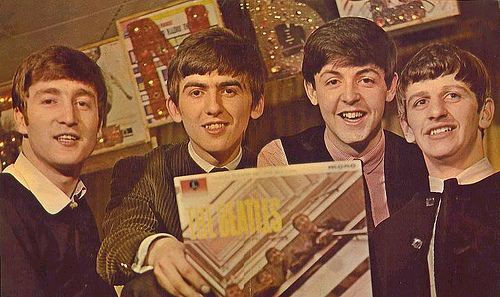
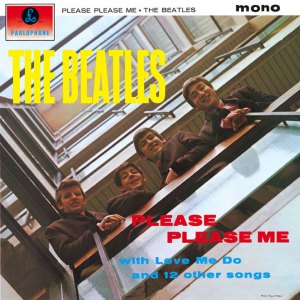
Since my earlier post about the Beatles being photographed actually holding the things they sold so many of – LP and single records – a few more photos have come to light. This first one is a very early publicity shot of the band with a copy of their very first album for Parlophone Records – from 1963 “Please Please Me“:
Trawling the web I came across a great photo of an obviously happy Ringo Starr with a pile of LPs and singles:
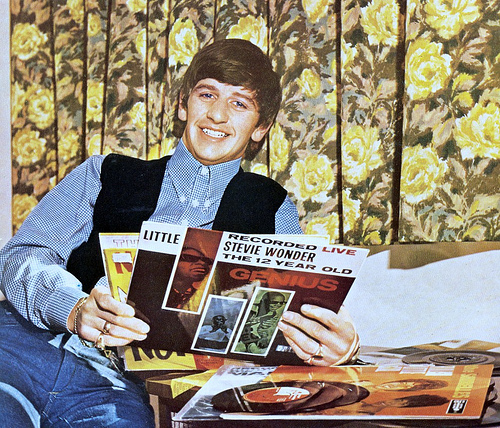
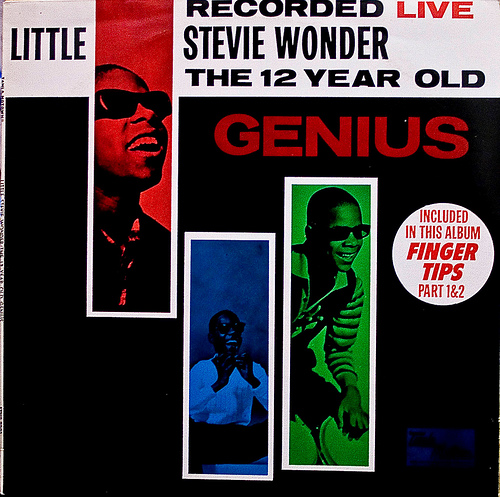
Here you can clearly see Ringo holding the Motown Record “Little Stevie Wonder – The 12 Year Old Genius” (from 1963):

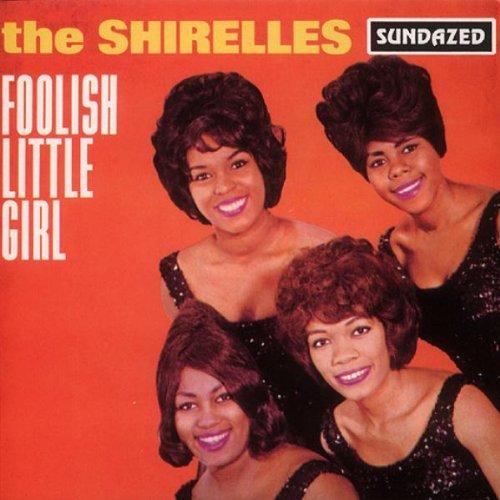
He’s also got a copy of The Shirelles “Foolish Little Girl“, which again dates from 1963 leading to the conclusion that this photograph was taken in that year. The record is lying down, just near Ringo’s left hand:

And on top of that LP are a couple of 45 rpm singles. Its impossible to make out the title of the one we can see, but you can clearly make out the distinctive red and white label of Top Rank records. I wonder if it’s also The Shirelles? In Britain they were released on Top Rank – so it could very possibly be a copy of  “Baby Its You“, a song the Shirelles recorded in 1961 and which the Beatles themselves covered on “Please Please Me“:

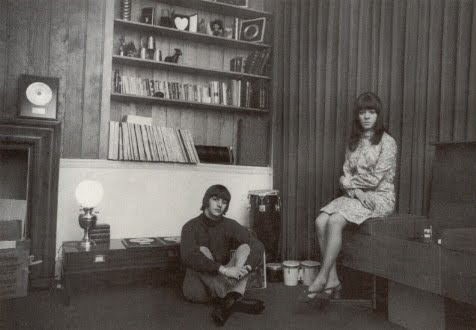
I’ve also found  a photograph of Ringo with wife Maureen. They’re sitting at home in a flat they rented for some time in London’s Montague Square. Behind Ringo you can see on the shelf quite a large collection of LP’s, and if I’m nor mistaken Maureen is sitting on what, for the times, would have been quite a sophisticated “radiogram” or record player:
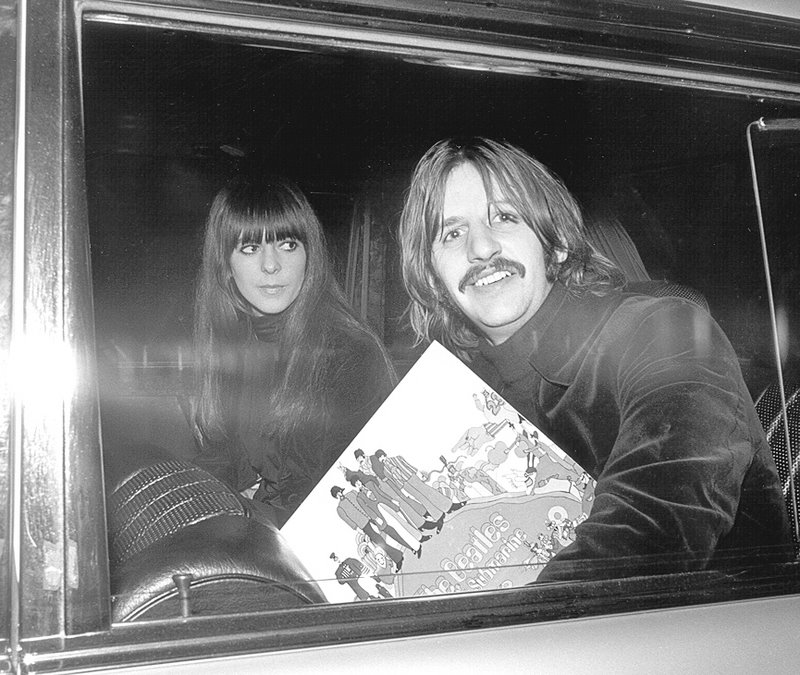
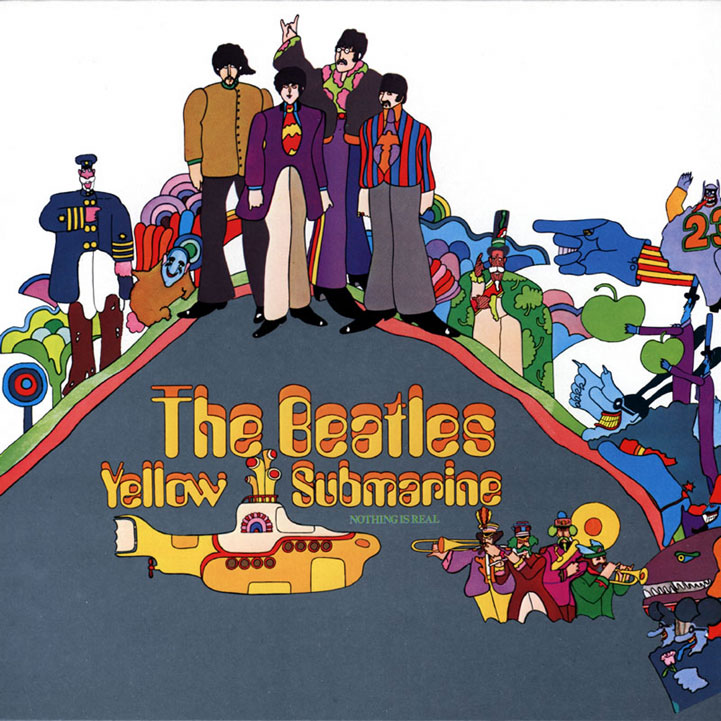
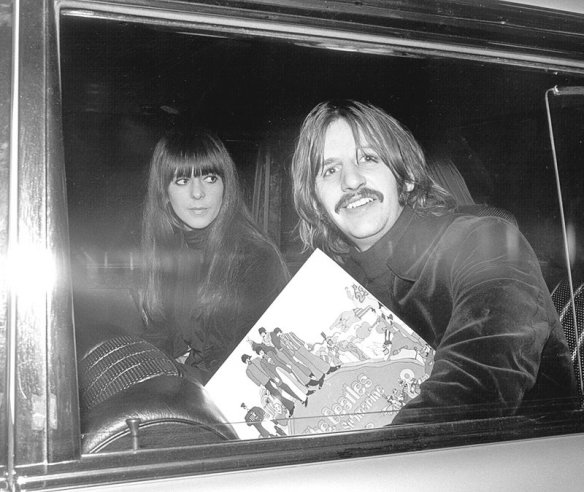
Here’s another of Ringo, once again with Maureen, clutching a copy of the Beatles “Yellow Submarine” LP:
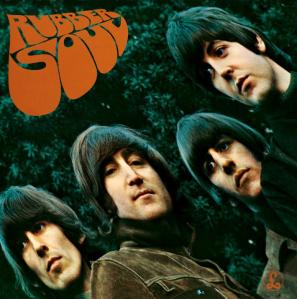
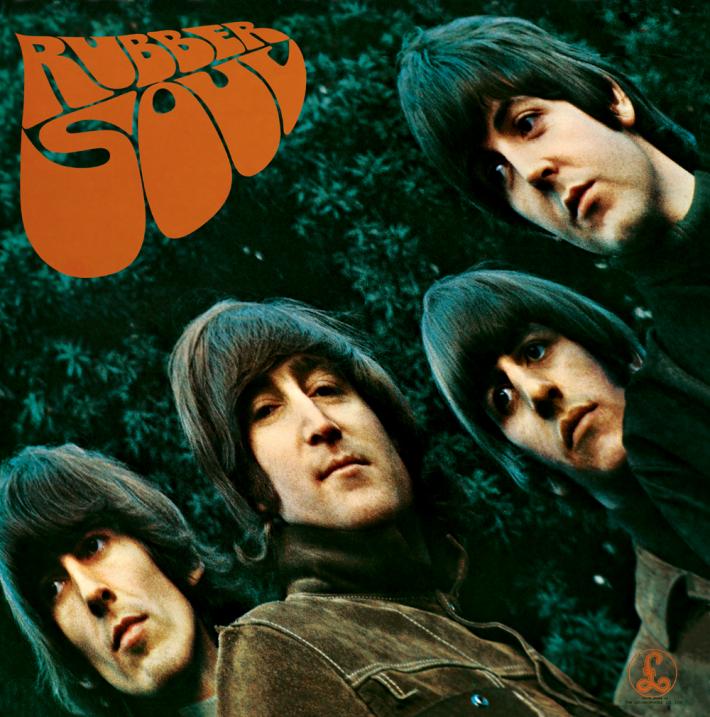
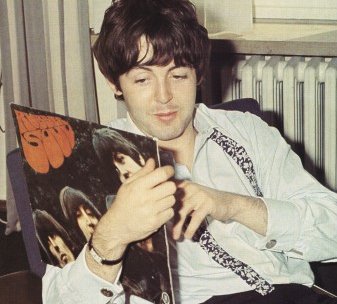
I had a  a photo sent to me after the earlier blog post. It’s Paul with a copy of 1965’s “Rubber Soul“:
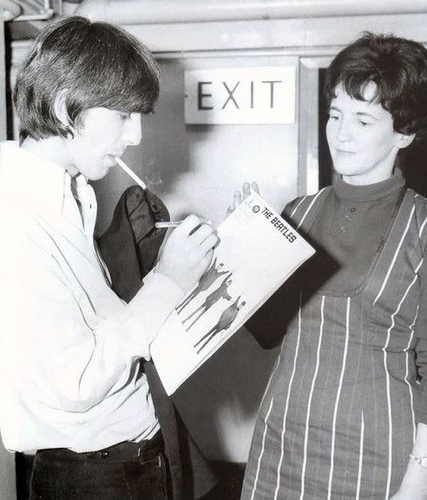
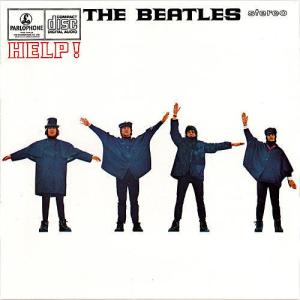
George Harrison features on the web photographed with records, some with easily identifiable discs and some not. This one is pretty easy to see. Its a lucky fan getting an autographed copy of “Help“:
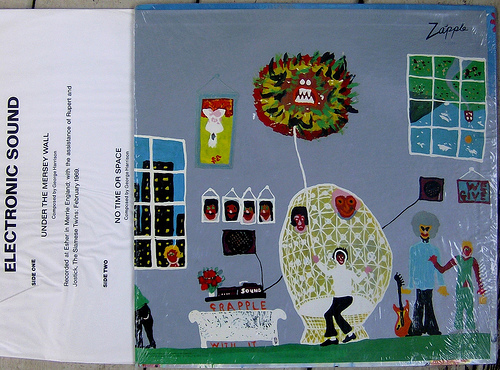
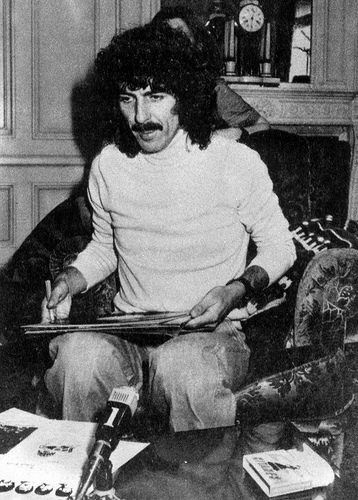
Here’s George again, this time a shot taken in what looks to be the Apple offices. It’s him holding a copy of his second solo outing “Electronic Sound“, released on the Zapple label:
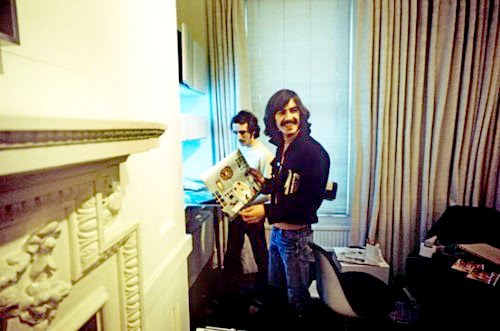
You can clearly see the rear artwork for the LP in the photo above. Below is a shot of the back cover of the LP:

And here’s another one of George again signing albums, but this time its very difficult to see just what they are:

In 1970 John and Yoko posed for some photographs to publicise their new records. John had “John Lennon/Plastic Ono Band”, and Yoko had “Yoko Ono/Plastic Ono Band”. Both titles, on Apple Records, were released simultaneously. The front covers were almost identical, but the rear artwork of Yoko’s album showed her as a young girl, while John’s showed him as a young boy:
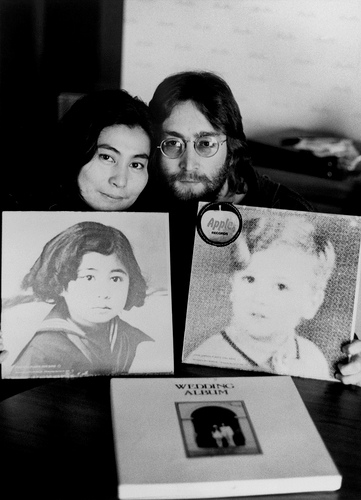
In the photo is also “The Wedding Album” box set, which came out in 1969. The photo below is taken at the same session:
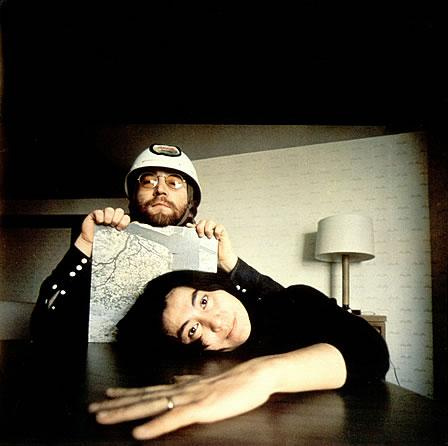
As I said, the front cover artwork of these two LP’s is difficult to tell apart. “John Lennon/Plastic Ono Band” has John leaning against Yoko:
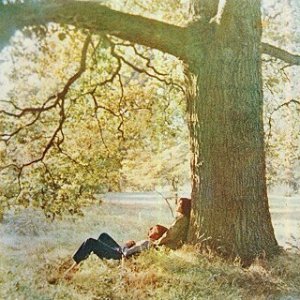
While “Yoko Ono/Plastic Ono Band” has Yoko leaning against John:
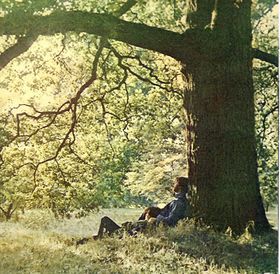
Very subtle.

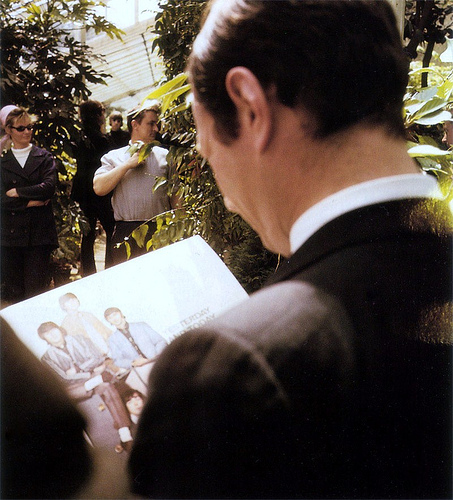
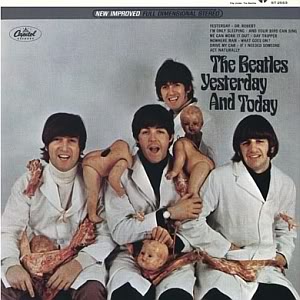
Finally, a photograph of Beatles’ manager Brian Epstein. He’s holding a copy of the controversial 1966 US Capitol Records release “Yesterday and Today“. This is the famous “Butcher Cover” LP. Maybe he’s contemplating the new photograph that Capitol was forced to paste over all the original issues of the album:
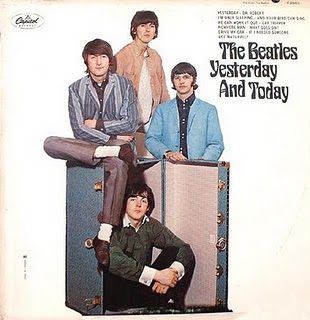
This is the more acceptable “trunk” cover shot that Capitol put on over the top of the original artwork:
And this is what it replaced:
The interesting thing about the Epstein photograph is that what he is holding appears to be an early mock-up of the replacement artwork. If you look closely there is no song list at the top and the font for the words “Yesterday and Today” is different to that used on the final version. Interesting.

Don’t forget, if you have any other photographs of the Beatles actually listening to or holding singles or LP’s you can send them to me at:  beatlesblogger@gmail.com

You can see the other parts in “The Beatles with Records” series here:  Parts 13467 , 89 , 10 , 111213141516 and 17.

Thinking About Abbey Road Studios at 80

I stumbled today upon an article on (of all places) the computer/gadget specialist site CNet. It is about the famed EMI Abbey Road studios in St. John’s Wood, London – the site of so much fantastic recorded music including just about all the songs recorded, in one way or another, by the Beatles. The studios have just turned 80 years old and it got me thinking about what an important role this particular pile of bricks and mortar on a nondescript street has played in the history of popular and classical music – not the least of which is the music of the the Beatles.

If George Martin is often referred to as “the fifth Beatle” then surely Abbey Road could be regarded as one of the instruments they played – with as much importance to the Beatles sound as the Gibson acoustics, the Gretsch and Epiphone electrics, the Ludwig drums, and the famous Hofner bass.

The CNet article has some very interesting observations made during a recent tour of the famous building and it’s numerous rooms – so many of which are associated with Beatles tracks. You have got to scroll through the thirty photographs taken during CNet’s visit. Its a terrific tour with some great shots for both Beatles fans and technical nerds alike.

The studio itself has a website which is worth a visit every now and again to catch up on their news – one of the latest of which is the remastering of the Beatles “Anthology” series for digital download.

So much happened at this one address – including the Beatles themselves honoring their home-away-from-home with an album bearing the studio’s name.

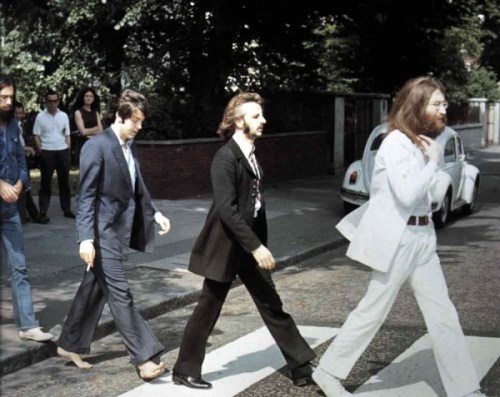
Abbey Road photo session - August 8, 1969

Then there was the heritage listing for that famous zebra crossing out the front….and the zebra crossing web cam, now complete with live street sounds. Its no longer in exactly the same spot as the photo on the front of the “Abbey Road” album having been moved down the road a bit from the studios – but countless fans still come each day, month, and year to be photographed striding across it.

Happy 80th birthday Abbey Road Studios. Here’s to 80 more years.

The Beatles Collection – 25 Singles

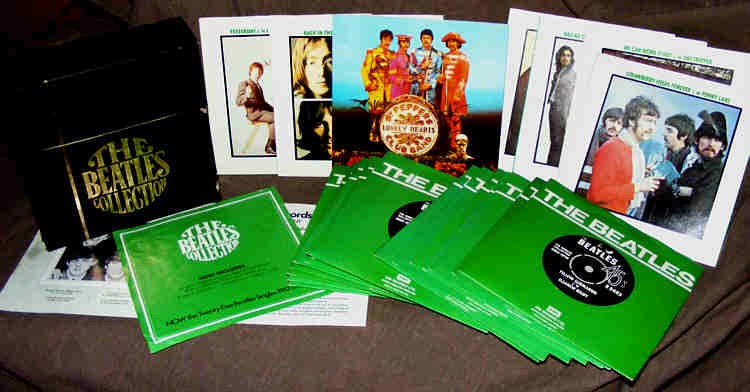
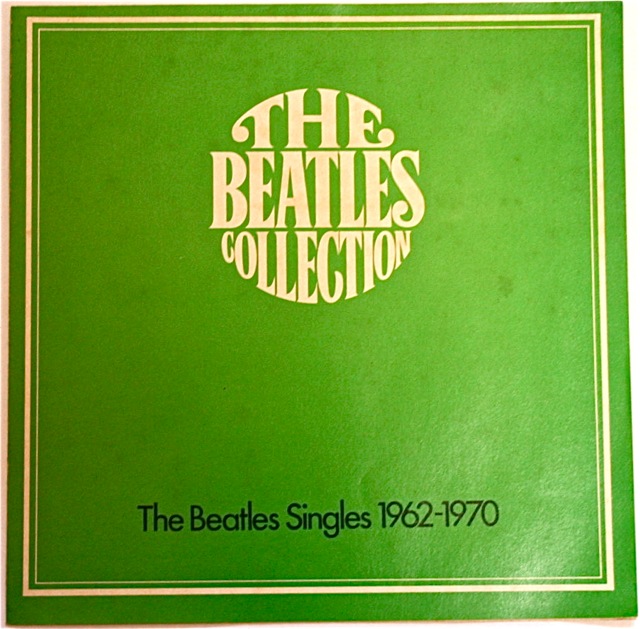
We recently came into possession of a UK pressing of the Beatles box set called “The Beatles Collection”, their twenty-five British singles at the time, released by World Records and EMI in 1978. The singles are all encased in a black, textured cardboard box:

It was compiled and sold by World Records, EMI’s mail order division. It was never commercially released to stores – the only way you could get it was through ordering it via World Records.

The earlier titles are pressed on the EMI/Parlophone label while the later discs are on the Apple Records label.

Each single is in a picture sleeve – which are all green on one side but have a Beatles picture on the other. There aren’t different pictures for each and every single, but four main pictures are used multiple times, relating to the Beatles era in which the single comes from:

There are however different photographs used for the three additional discs in this set: one for “Back in the USSR/Twist and Shout”, one for “Yesterday/  Have Known Better”, and the “Sgt. Peppers Lonely Hearts Club Band/With a Little Help From My Friends/A Day in the Life” getting its own, unique picture sleeve:

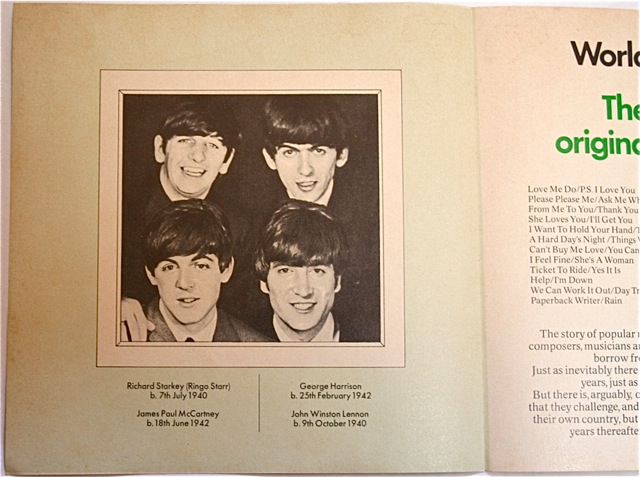
Also included is a four-page booklet detailing the history of the group:

There’s also an additional, one sided sheet stating that the set now includes the addition of the “Sgt. Peppers Lonely Hearts Club Band” disc, indicating that previous boxes came without this particular record:

The “Beatles Singles Collection” (UK – 1978 – World Records/EMI, 25 Original 45 RPM Records box set) comprises all the Beatles singles 1962-1978:

1. Love Me Do / P.S. I Love You (Parlophone/October 5, 1962)
2. Please Please Me / Ask Me Why
3. From Me To You / Thank You Girl
4. She Loves You / I’ll Get You
5. I Want To Hold Your Hand / This Boy
6. Can’t Buy Me Love / You Can’t Do That
7. A Hard Day’s Night / Things We Said Today
8. I Feel Fine / She’s A Woman
9. Ticket To Ride / Yes It Is
10. Help / I’m Down
11. Day Tripper / We Can Work It Out
12. Paperback Writer / Rain
13. Eleanor Rigby / Yellow Submarine
14. Strawberry Fields Forever / Penny Lane
15. All You Need Is Love / Baby You’re A Rich Man
16. Hello Goodbye / I Am The Walrus
17. Lady Madonna / The Inner Light
18. Hey Jude /Revolution
19. Get Back / Don’t Let Me Down
20. The Ballad Of John And Yoko / Old Brown Shoe
21. Something / Come Together
22. Let It Be / You Know My Name (Look Up The Number)
23. Yesterday / I Should Have Known Better
24. Back In The USSR / Twist And Shout
25. Sgt. Pepper’s Lonely Hearts Club Band

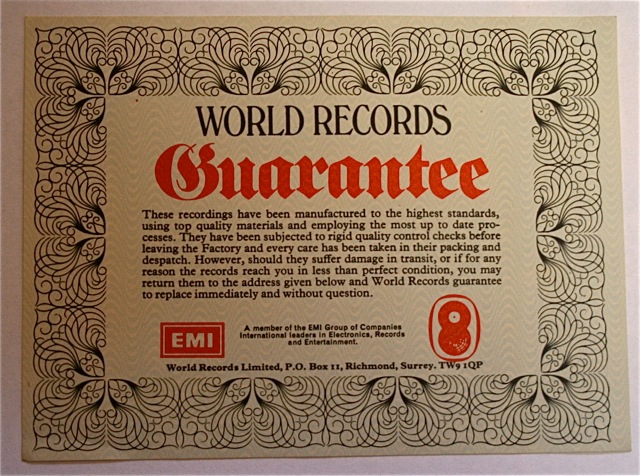
Finally, you get a “World Records Guarantee” of quality:

John Lennon – Vinyl Box Set from 1981

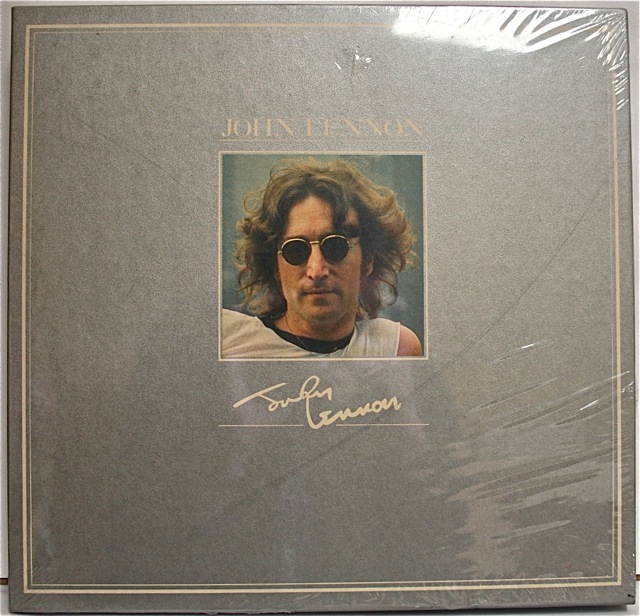
This week I managed to secure a still sealed copy of the 1981, 8-LP box set simply called “John Lennon”. Mine is the one in the silver box with the now famous Bob Gruen photo of John (taken in New York) on the front cover:

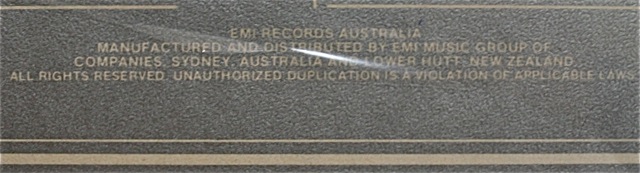
This is the Australian release of this set, put out by EMI.

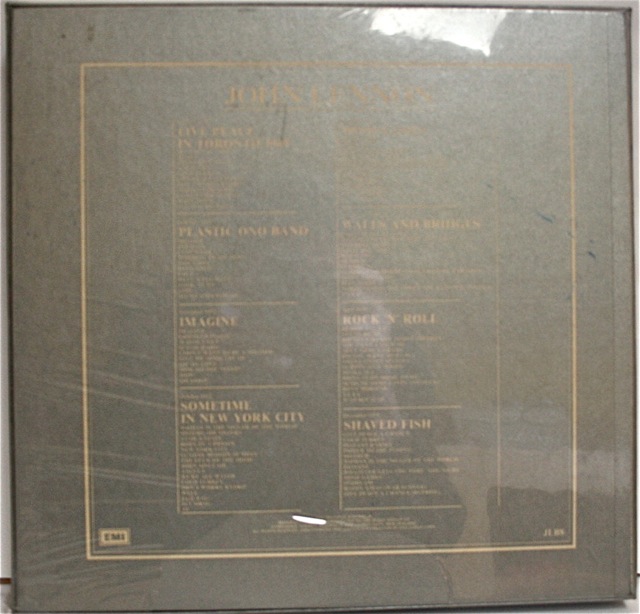
The box contains:

1. “Live Peace In Toronto”;  2. “Plastic Ono Band”;  3. “Imagine”; 4. “Sometime In New York City”;  5 . “Mind Games”;  6. “Walls And Bridges”;  7. “Rock ‘N’ Roll”;  and  8. “Shaved Fish”:

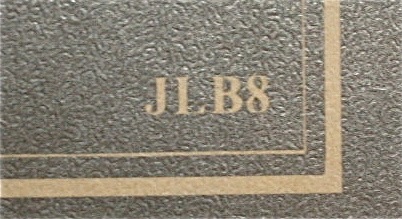
The set came out just a year after John Lennon’s death and followed the success of other Beatles box sets. It was released in several countries using very similar packaging. The set was first released in Britain, and was later sold in Japan, Germany, and of course Australia – with the catalogue number JLB8:

Mitch McGeary and William McCoy write (on their Beatles Rarities and Box Sets website) that all the LPs were issued on the Apple label and packaged in their original covers: “Included in the UK and other sets was a twenty-page, black-and-white booklet, “The Liverpool Echo’s Tribute To John Lennon,” which was loaded with pictures and song lyrics. The albums were encased in a silver box that had a color photo of John on the front. The set’s title and facsimile of John’s autograph were also embossed on the front of the box while the LP and song titles were printed on the back”.

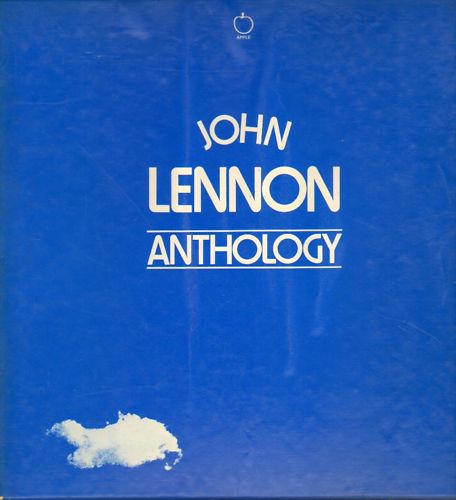
EMI in Italy also issued a Lennon compilation and it is unique. Its called the “John Lennon Anthology” and consisted of all the albums in the British/Australian edition, but omitted the “best of” album “Shaved Fish”. Instead the box had three singles made up of tracks not found on any of the other seven LPs. Unlike the silver box versions these discs came in a blue, pizza-style box reminiscent of the “Live Peace in Toronto” cover:

Apparently only 1,000 copies were made of this one, making it quite a collectable item.

Beatles “Anthology” Sets Now on iTunes

The Beatles and iTunes have today announced that the three, boxed set “Anthology” series will be available for electronic download exclusively on iTunes from June 14.

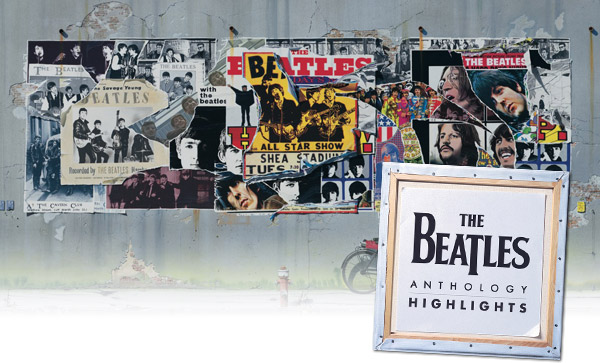
The “Anthology” Volumes 1 – 3 (each originally released in 1995 and 1996 as three double CD sets) will be available for download separately. There will be an iTunes-exclusive “Anthology Box Set” with all 155 tracks from the three volumes combined, and there will also be an exclusive new 23-track “Anthology Highlights” collection of standout tracks from all three albums.

“Anthology” songs will also be available for individual download.

All tracks have been digitally remastered by the team of engineers at EMI’s Abbey Road Studios who were responsible for the remastering of all the Beatles original UK studio albums in 2009. The result, says the publicity, is “…the highest fidelity the catalogue has seen since its original release”.  Sadly for collectors though there will be no physical CD’s or vinyl released. EMI Music has confirmed this with Steve Marinucci at Beatles Examiner.

A special “Anthology” video introduction and a “Meet The Beatles” radio show are available for free streaming at iTunes.com/TheBeatles starting today.

The “Meet The Beatles” radio show on the iTunes page has a 2 minute teaser, then three separate parts totaling just over 50 minutes. This is actually a cut-down version of a much longer three-part radio special called “Here, There and Everywhere” which was made for the launch of the Beatles Remastered catalogue in December 2009. It’s narrated by Paul Gambaccini and written and produced by Beatles historian Kevin Howlett.

An Overview of Australian Beatles Records

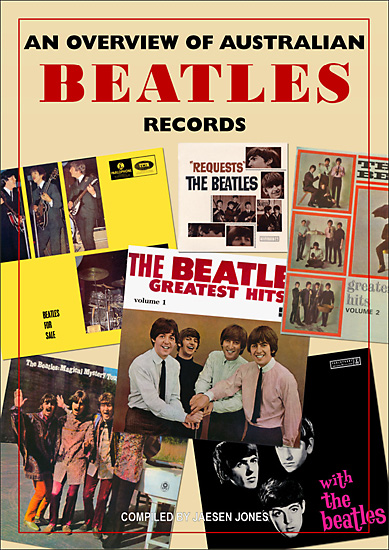
Got home from work today to discover this book in the postbox. I’d ordered it online just last week. Its a fantastic new book on the Beatles output on vinyl in Australia. When you say the words “in depth” they don’t really convey the work that collector and author Jaesen Jones has put into researching every aspect of the Australian arm of the mammoth EMI company as it relates to the Beatles output here. EMI Australia was responsible for releasing all the Beatles Parlophone and Apple label records in Australia. (The book also has information of the very few Polydor Beatle discs released here).

An avid Beatles collector from Canberra (Australia’s national capital), Jaesen has really done a terrific job in pulling together a lot of relevant information about the Australian Beatles releases – some of them quite unique in the world.

This release information from Ebay sums up well the content of the book:

They toured Australia on a single occasion in 1964, but once was enough for The Beatles to claim the continent as an integral dominion in their global Empire and to forever assure record-breaking sales of their recordings.

“An Overview of Australian Beatles Records” details Beatles records manufactured in Australia, from the first in February 1963 until the last in 1990, with emphasis on those distributed by EMI (Australia). It begins with a brief history of EMI (Australia) and its introduction of The Beatles to the people of Australia. It continues by detailing both the similarities and differences between EMI (Australia) and its parent, EMI UK, before focussing on the unique Antipodean pressings.

The book describes local publishing arrangements, major record label styles, sleeve design, production outsourcing/contracting, mastering methods and official imports. Where possible, period EMI publications, newspaper clippings, press releases and people directly involved with EMI (Australia) and Festival have been consulted.

For collectors there’s a section listing recommended Australian Beatles pressings, based on the views of numerous local and international audiophiles, as well as thirty-five pages of full colour label, sleeve and sticker scans (covering singles, EPs and LPs). Included are over 180 images, representing the most comprehensive collection of Australian Beatles record labels, outer and inner sleeves, inserts, and ephemera ever gathered together in a reference document to date.

Also included is a record rarity guide that lists all known major Aussie Beatles record variations with their relative rarity.

An Overview of Australian Beatles Records is an essential aid to the collector of Australian Beatles vinyl and is a book which will surely elevate the esteem in which this interesting subset of Beatles records is held in the global Beatles community.

You can find out more at I Am The Platypus – The Beatles Australia Album Labelography – a huge online resource also covering Australian Beatles releases.

Here are some page views from “An Overview of Australian Beatles Records”:

“An Overview of Australian Beatles Records”
First Edition, 2011
Compiled by Jaesen Jones
Published in Canberra, Australia
88 A4-sized pages (210mm x 297mm)
Over 180 colour scans and photos
ISBN: 978-0-9871048-0-9 (paperback)

“Come Together” TV Campaign for the City of Brisbane

Oh dear.

I’m getting onto this story a little late because it came to light last month, but the Australian state of Queensland is running an advertising campaign using a cover version of the Beatles “Come Together” to win tourist visitors back to their flood-ravaged capital city of Brisbane.

In January Brisbane, along with most of Queensland, suffered through devastating floods and has seen a real downturn in tourist visitors as a result. The state and the city need to get back on their feet. But really – why spoil “Come Together”? I don’t know about you, but I really hate to hear Beatles songs used in this way. In fact I hate hearing any song I really like bastardised by advertising agencies to sell any product.

Another Australian example from a couple of years ago that really grated (and I suspect this was used globally) was the use of the classic Beach Boys “Wouldn’t It Be Nice” to sell Cadbury chocolate. It just belittled this song for everyone for evermore:

Thanks for nothing, Cadbury. You spoiled a really great song.

The Brisbane version of “Come Together” was recorded by two local bands Hungry Kids of Hungary and Ball Park Music. Its not the first time Beatles music has been used in advertising. Probably the most celebrated example was from back in 1987 when Nike used the actual track (not a cover version) of “Revolution“. When it got to court Apple and the Beatles’ attorneys argued that “…the Beatles position is that they don’t sing jingles to peddle sneakers, beer, pantyhose or anything else. Their position is that they wrote and recorded these songs as artists and not as pitchmen for any product.”

I’d be interested to hear what you think. Does the use of Beatle tracks (or any great popular music for that matter) to sell or promote product get on your nerves?

Let me know.

Yoko Ono – “Fly”

You might be wondering why I’ve just purchased a 40 year-old vinyl copy of the 2LP set “Fly” by Yoko Ono….

I’ve pretty much always liked the Beatles, and have had a variety of their records in my collection for over 40 years now. What really got me started on collecting seriously though (and this is about fifteen years ago now) was a fascination with their Apple Records label and an attempt to learn all I could about company and to get vinyl copies of all the artists they signed to that label over the years it was active and under the band’s direct influence.

That has meant hunting down discs as diverse as British modern classical composer John Tavener (“The Whale” and “Celtic Requiem”); The Modern Jazz Quartet (“Space” and “Under the Jasmine Tree”); Billy Preston (“Encouraging Words” and “That’s the Way God Planned It”), as well as the soundtracks of obscure films like “Cometogether” and “El Topo“.

The hunt is still continuing and as Yoko Ono was on Apple Records her work has been part of the process for me. But until now I didn’t have a copy of her 1971 double LP Apple release called “Fly”.

Continue reading

Apple Moves to Finally Own the Original Apple Logo

In what will be a sad end to a long-running trademark war, Apple Computers is taking action to finally get to own what we always thought was a unique symbol associated with the Beatles – the original Apple Corps logo.

This one came to my notice about mid-March – and as a Beatles collector with a fondness for the Beatles Apple Records label I find it interesting and so have done a bit more research.

As Shelley Germeaux wrote in her regular John Lennon Examiner column last month, this comes as a result of a 23 year-long legal battle between the two companies. The Beatles and Apple Corps actually lost their legal rights to the famous Granny Smith apple logos as part of a 2007 settlement.  Apple Inc. is now just taking the required steps to formally trademark for themselves the two logos that have, since 1968, symbolised the Beatles company and especially their recordings. From the trademark documentation submitted last month come these two images:

Two trademark applications have been filed with the European Trademarks Office under 14 International Classifications and indicate that Apple Inc. will have control over the use of the logos across a very wide range of products and services including computer hardware, online social networking, mobile phones, musical instruments, games, clothing/headgear, advertising, education and broadcasting – to name just a few. If you really want the full bottle on the trademark story go to Patently Apple – its got more of the actual documentation filed last month and further links…

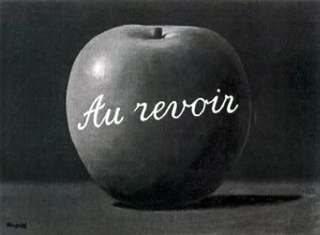
Its interesting to note that while the Apple Computer logo was inspired by the Beatles, the original Beatles Apple logo in turn was itself directly inspired by a Belgian painter, the surrealist René Magritte (1898-1967). Paul McCartney owns one of his paintings called Le Jeu de Mourre (The game of mora), which dates from 1966:

The Belgian Beatles Society page says that in an interview with Johan Ral in 1993, Paul McCartney recalled:

“….I had this friend called Robert Fraser, who was a gallery owner in London. We used to hang out a lot. And I told him I really loved Magritte. We were discovering Magritte in the sixties, just through magazines and things. And we just loved his sense of humour. And when we heard that he was a very ordinary bloke who used to paint from nine to one o’clock, and with his bowler hat, it became even more intriguing. Robert used to look around for pictures for me, because he knew I liked him. It was so cheap then, it’s terrible to think how cheap they were. But anyway, we just loved him … One day he brought this painting to my house. We were out in the garden, it was a summer’s day. And he didn’t want to disturb us, I think we were filming or something. So he left this picture of Magritte. It was an apple – and he just left it on the dining room table and he went. It just had written across it “Au revoir”, on this beautiful green apple. And I thought that was like a great thing to do. He knew I’d love it and he knew I’d want it and I’d pay him later. […] So it was like wow! What a great conceptual thing to do, you know. And this big green apple, which I still have now, became the inspiration for the logo. And then we decided to cut it in half for the B-side!”

That story seems to be true because as recently as last year, Paul McCartney himself told it again to David Jenkins at the Telegraph newspaper in London.

Taking Magritte for inspiration, the Apple record labels were designed by a fellow named Gene Mahon, an advertising agency designer. The Beatles Collection website has a great summary of how this all came about:

“[It was Gene Mahon who] proposed having different labels on each side of the record. One side would feature a full apple that would serve as a pure symbol on its own without any text. All label copy would be printed on the other side’s label, which would be the image of a sliced apple. The white-colored inside surface of the sliced apple provided a good background for printing information.
The idea of having no print on the full apple side was abandoned when EMI advised Apple that the contents of the record should appear on both sides of the disc for copyright and publishing reasons. Although Mahon’s concept was rejected for legal (and perhaps marketing) reasons, his idea of using different images for each side of the record remained. Mahon hired Paul Castell to shoot pictures of green, red and yellow apples, both full and sliced. The proofs were reviewed by the Beatles and Neil Aspinall, with the group selecting a big green Granny Smith apple to serve as the company’s logo. A sliced green apple was picked for B side. Alan Aldridge provided the green script perimeter print for labels [on UK, EU and Australian releases – this does not appear on US labels] and, in all likelihood, the script designation on the custom record sleeve.”