I know this is old, but it’s nice:
The Beatles Through the Years
Reply
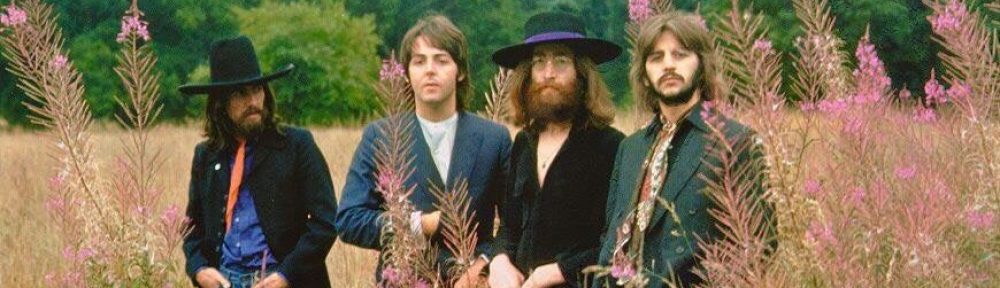
I know this is old, but it’s nice:
When Paul McCartney re-issued “McCartney II” last year one of the bonus tracks on the 2 CD Edition set (and as audio and video versions in the Deluxe Edition book), was the previously un-released song “Blue Sway”. See track 1 on CD 2 for the details:
 (click on the image to enlarge)
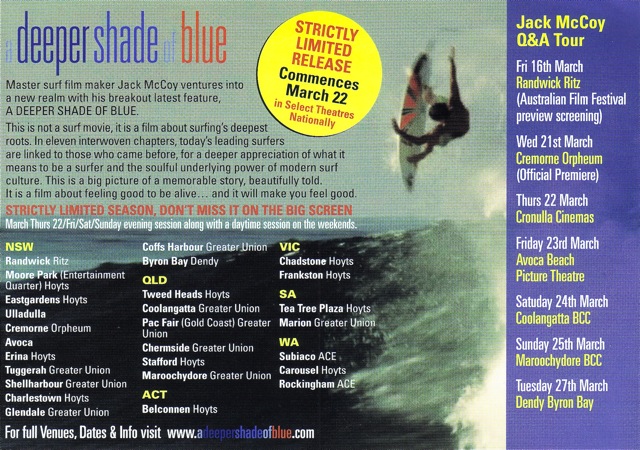
Its a great song and I wrote about this at the time because there was a fantastic YouTube video featuring “Blue Sway” doing the rounds at the time. The song, it turned out, had been officially licensed to accompany one of the amazing sequences from a forthcoming Jack McCoy surfing film called “A Deeper Shade of Blue”:
Well, after being well-received overseas the film is now about to get its first theatrical release in Australia – and its causing a round of renewed interest here:
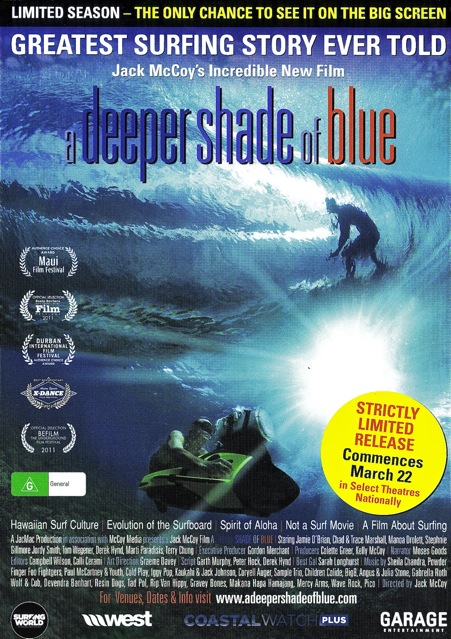
While Jack McCoy is US-born he’s considered a local in Australia because he lives in one of Sydney’s northern beaches suburbs. Last week Jack was interviewed on Australian radio by Fran Kelly about “A Deeper Shade of Blue”. Click here for a link to ABC Radio National and have a listen – Jack talks about Paul McCartney’s substantial interest and involvement in the the film at about 4 minutes in.
You might have noticed that we’ve now got a new domain name. It’s much more simple. All you need to remember is:
Don’t worry if you have beatlesblogger.wordpress.com in your bookmarks because it will automatically redirect.
We’re also on Twitter. Just search for beatleblogger (note there is no “s”, just beatleblogger).
And we have a Google+ account called the beatlesblogger

Our email is still beatlesblogger@gmail.com Please feel free to get in touch.
 And we have a QR Code (just in case you want to copy and paste it somewhere). It looks like this:

Got this one second-hand on Ebay – and it looks like a really good read.
Ken Mansfield was a Capitol Records executive and an insider in the Beatles camp. He had a unique insight into the way the band worked, the absolute power they wielded in the music business, and the causes behind their ultimate demise. His book is called “The White Book”, and it carries the subtitle “The Beatles, the Bands, the Biz: an Insider’s Look at an Era”.
Each book, like the album after which it is named, is plain white all over, comes with the title embossed on the front cover, and has a limited edition number stamped on the lower right-hand side. Mine is 028525.
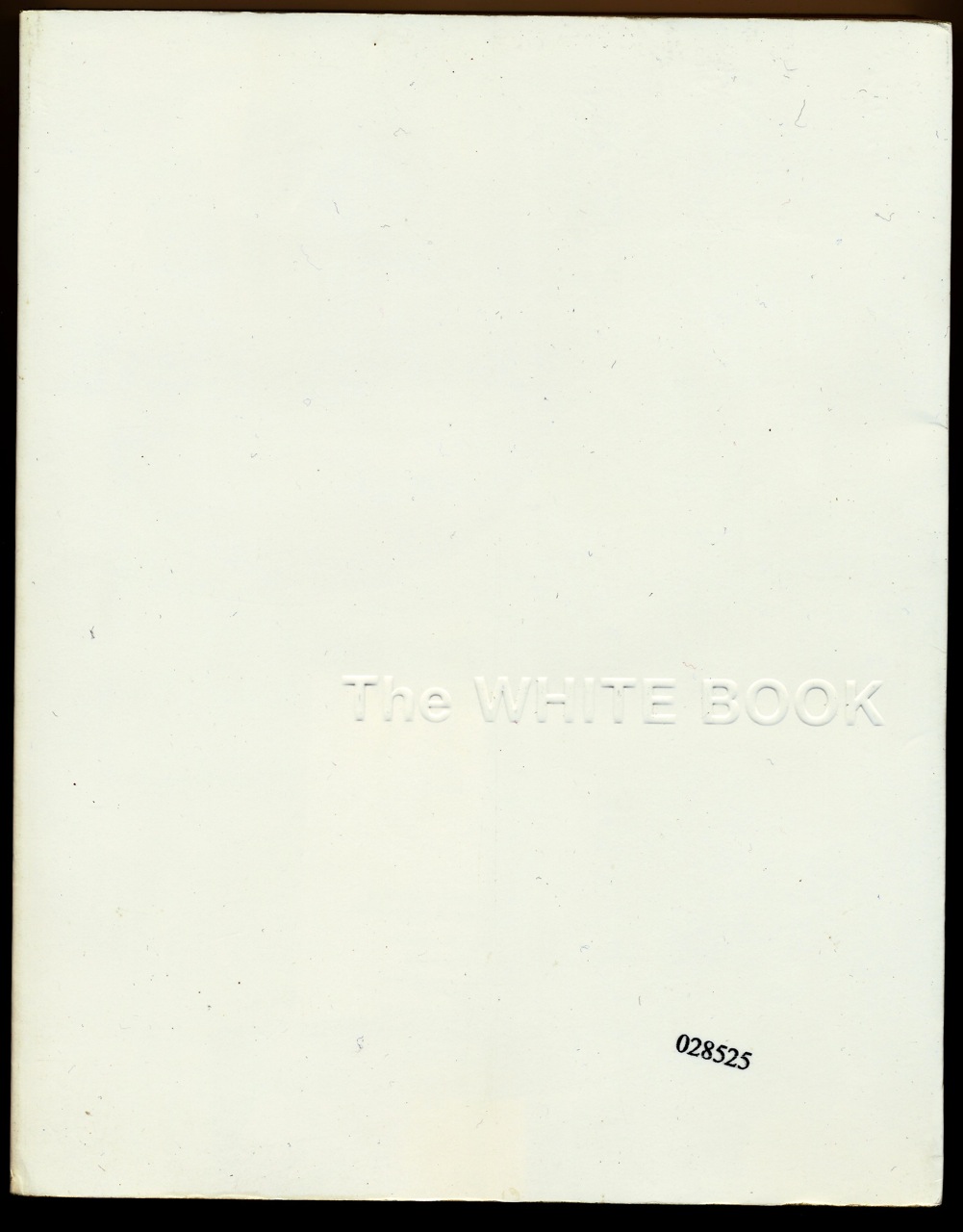
I really like the layout, look and feel of this book. Its a mid-sized softback, 248 pages with what they call in the book industry French flaps (don’t ask me why they are called that…the paperback front cover and rear extend and fold in – if that makes sense. Small but boring detail?). It has a large selection of photographs which are a combination of black and white, colour and colour-tinted photographs, many of them originals from Mansfields personal collection and as such never seen before. If you want a sneak peak at “The White Book” Google Books has a large selection you can see, along with extensive text extracts. Amazon also has a “Look Inside” preview.
Those links give you a really good idea about the design of “The White Book” and how it’s laid out. If you’ve scrolled through the Google Books/Amazon links you’ll appreciate there are lots of photos of items that illustrate key moments: telegrams, record covers, photographs, and hand-written notes from the Beatles to Ken Mansfield. One of my favourites: an autographed copy of the White Album given to him by George Harrison:
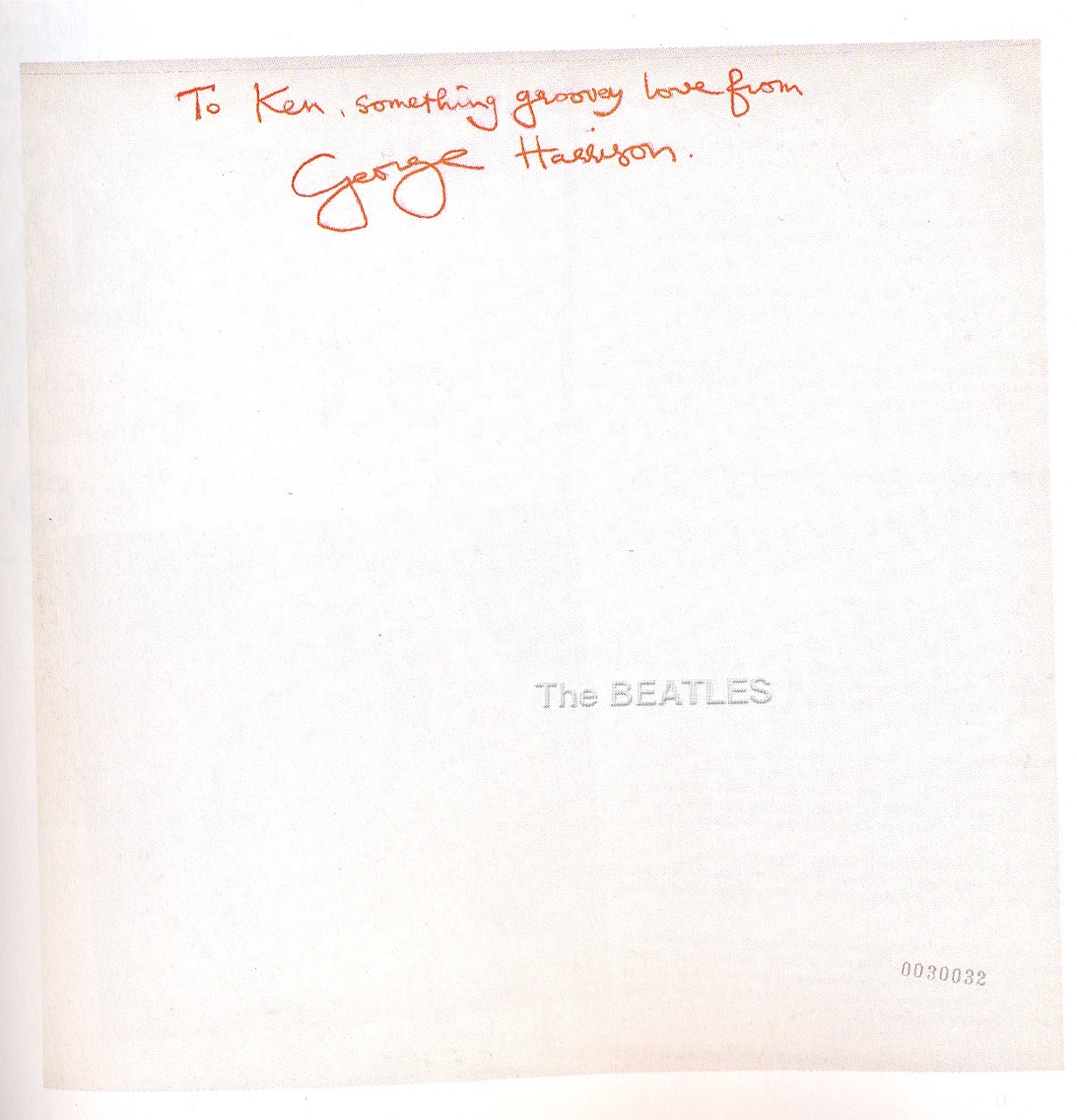
To sum up the contents of the book, this extract from Publishers Weekly is revealing: “The second memoir from record-industry vet Mansfield (The Beatles, the Bible and Bodega Bay), a simple look at a complex happening, recounts his overwhelmingly positive experiences working with the Fab Four (and others) as they put together their late-career masterpiece The White Album. Mansfield relates how a lucky break in the 1960s took him from promotions executive for Hollywood’s Capitol Records to U.S. manager of Beatles-owned Apple Records. One of the few Americans allowed into the group’s inner circle, Mansfield presents revealing one-on-one time with each band member, yielding insight beyond their public personas. He notes, for instance, that mere words can’t explain how intimidating John Lennon and Yoko Ono were. Though he provides his side of artistic debates (should “Hey Jude” or “Revolution” be the first Apple single?), and eyewitness accounts of key Beatles moments (including the group’s final public performance atop the label’s London headquarters), Mansfield misses numerous opportunities to provide insider details and to comment on the progress (or lack thereof) in the recording industry; further, Mansfield’s awkward writing style—clumsy metaphors and alliteration, short chapters and confusing chronology—gives the work an amateurish feel. As Mansfield notes in the foreword, this book is something to enjoy because of its simplicity: engaging but hardly essential reading for the casual fan.”
That last bit is probably harsh. As a real fan this looks to me like it contains a treasure trove of stuff I don’t know, told from a unique perspective. “The White Book” has its own website fabwhitebook.com with lots more information and of course – a video:
Found this great pic on the web the other day:

It’s a beauty – and kind of joyous. The faces behind the Beatles are just as interesting to look at as the band themselves. Check out the face of the cop, who seems to be looking straight at the camera.
This looks like the first arrival in the United States?
Clearly this photograph is from the same day and same photographer as this shot used for these two covers, only the background crowd has been Photoshopped out:
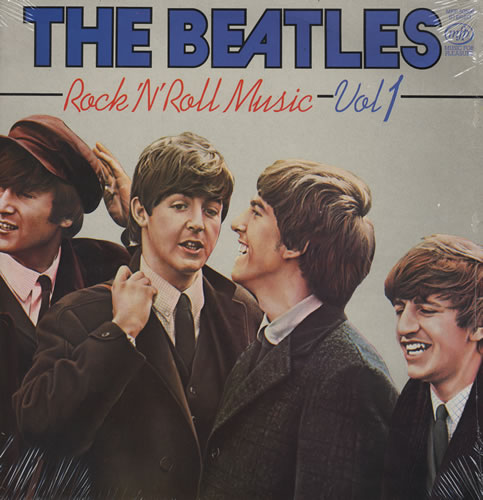
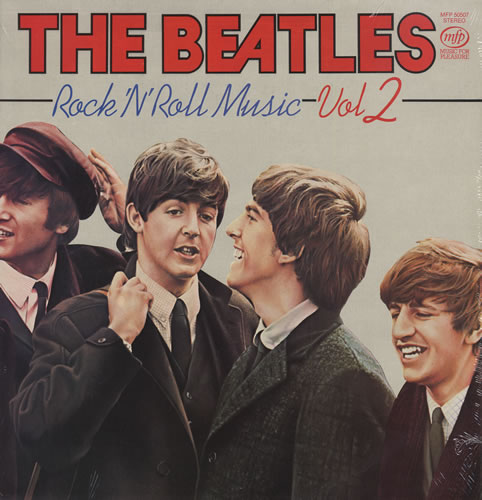
For more info on these releases see the Beatles Music for Pleasure.
Back in November I wrote about the release of a new two CD, 50th Anniversary Edition of “The Beatles (with Tony Sheridan) – First Recordings”. I’ve finally tracked down a copy for the collection and so can now give you a few more details about its contents and packaging.
“First Recordings” is released by Time-Life/Universal Music Special Markets, and the two CD’s come in a separate gatefold sleeve along with a thick booklet, all contained in a cardboard outer slipcase:


Inside is the gatefold cardboard sleeve which holds the two CDs – the front and rear covers of the sleeve look like this:
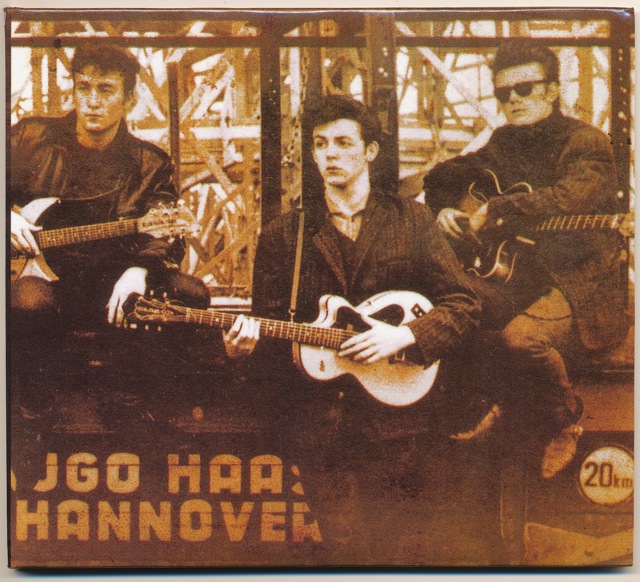
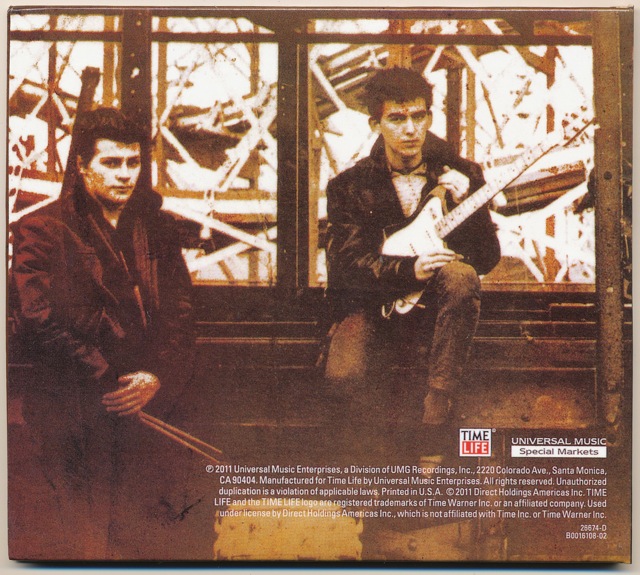
And here are the two CDs:

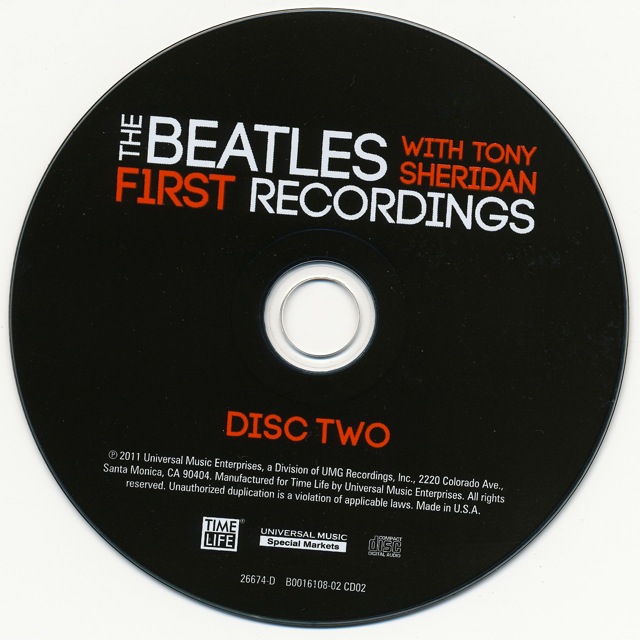
Also included in the package is a very detailed and thick 36 page booklet with a lengthy essay written by Swedish Beatles expert Hans Olof Gottfridsson (edited by respected music writer Colin Escott); lots of black and white and colour photographs; reprints of original recording contracts; details of recording dates; and hand-written biographies by Pete Best, George Harrison, Paul McCartney, and John Lennon (who credits himself in brackets as the band’s “LEADER”).
There are also lots of examples of original record covers and labels from the time. Here is the front and rear covers of the booklet:
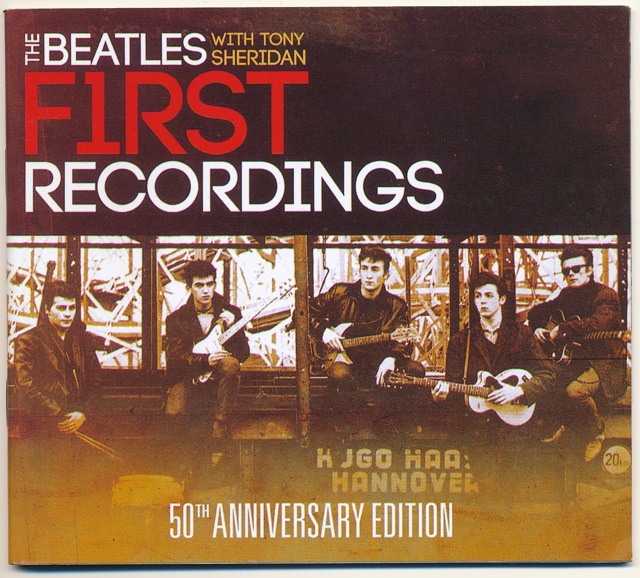
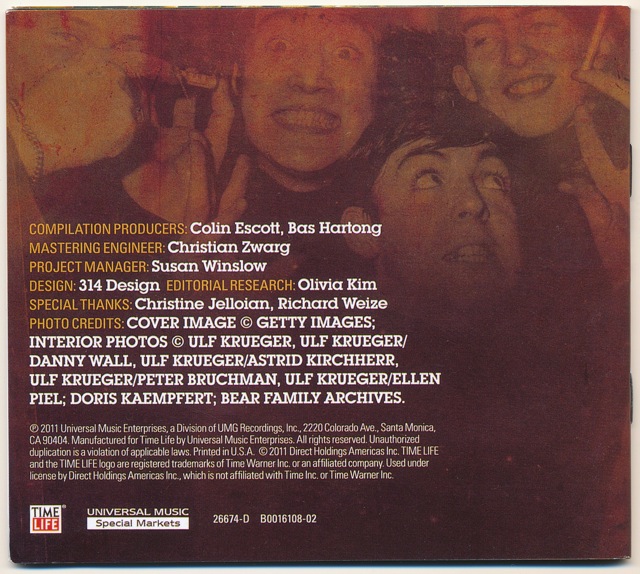
Here are some examples from inside the booklet:
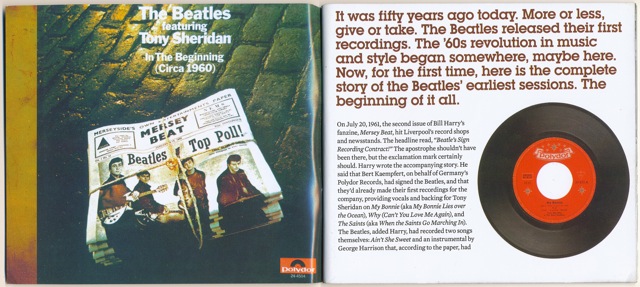
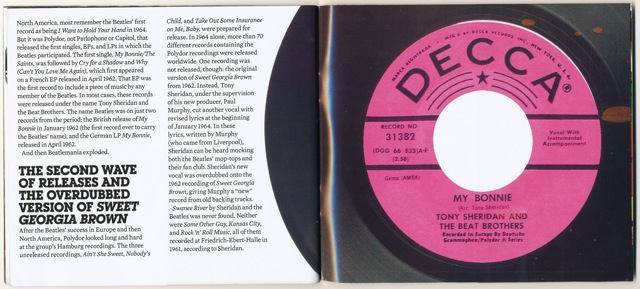
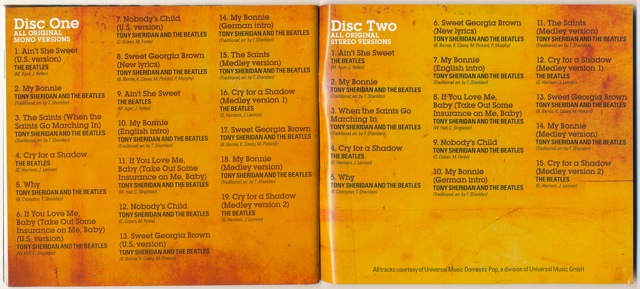 (click on any of these images to see larger versions)
As you can see above there are 35 tracks in all, in both mono and stereo and the disc claims this is to be every version and track of their earliest recordings. Time-Life has a small website with a little bit more detail about the release and there’s some further information about these recordings here. Of course these tracks have been released in many forms many time (both officially and unofficially) over the years. This set gathers them together in the one place – very much like the two CD box set released in 2002 for the 40th anniversary by Bear Records called “The Beatles with Tony Sheridan: Beatles Bop – Hamburg Days” in which Hans Olof Gottfridsson was also involved:
Writing a review on the Amazon site, kennedy19 summed it up this way (and the same can be said for this Time-Life 50th anniversary edition: “….the 1961-62 recordings of the Beatles (with Pete Best, not yet Ringo) in recording studios in Germany as a backup band for Liverpool singer Tony Sheridan. The Beatles themselves had nothing to do with this reissue, but Beatlemaniacs will be impressed with the thoroughness with which this collection was made….The recordings themselves are contained on 2 CDs, and it should be noted that there are really only about 10 songs here, but that this set excels in tracking down every available mix of each one that was ever released (the original tapes no longer exist), both in mono and stereo. Beatles fans may be disappointed that Sheridan (impersonating Elvis pretty well) sang most of the lead vocals on these recordings, although John Lennon does get to sing a version of “Ain’t She Sweet,” and the Beatles did get to record their own catchy instrumental composition, “Cry for a Shadow.” Other songs include “When the Saints Go Marching In” and the famous “My Bonnie” which brought the band to Brian Epstein’s attention. It is interesting to hear the Beatles playing their recognizable sound here, with the energy and versatility that would amaze the world in a few short years. This is also a rare chance to assess the drumming of Pete Best. Casual fans will think this set, with its multiple versions of the same songs, and its painstaking documentation of each one, to be too much ado about too little. But scholars and rabid fans interested in the early years of the group will definitely want to add this to their collection. And yes, the sound quality is very good.”
Time to take a run through the different versions of “Kisses on the Bottom”, Paul McCartney’s new album.
It’s been released in physical form as a standard CD, a deluxe CD, a deluxe CD with bonus tracks (more on this later), and as a double LP vinyl. (Remember, to see larger images of all the scans below just click on the image).
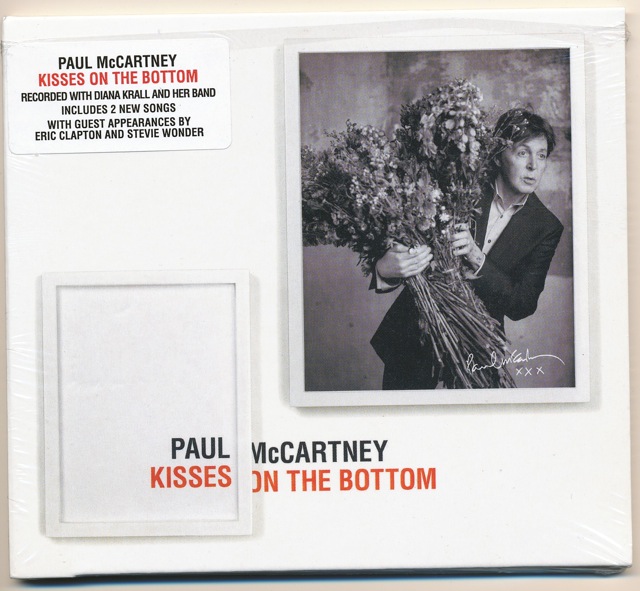
Firstly the standard CD. Here’s the front cover with the sticker on the shrink- wrap still attached:
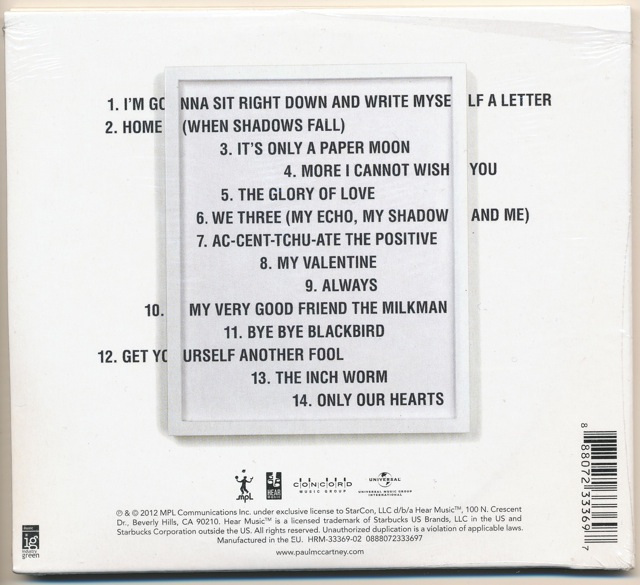
This is the rear cover of the standard CD – which has 14 tracks. This copy is manufactured in the EU:
The standard CD is a cardboard, single gatefold sleeve with the booklet glued onto the cardboard:
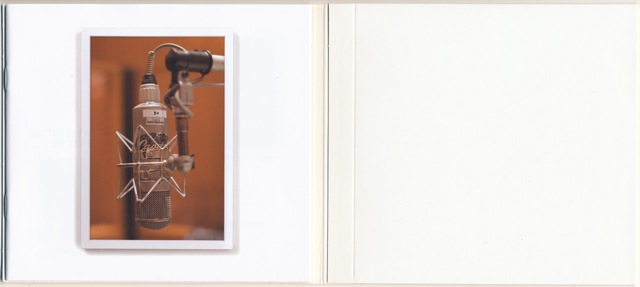
Personally I think that when the cover is first opened it looks odd to have that large expanse of white cardboard on the right-hand side. Surely another couple of images or text could have been put there. Or, like the deluxe version (see below), a cutout provided so that you can see the CD label.
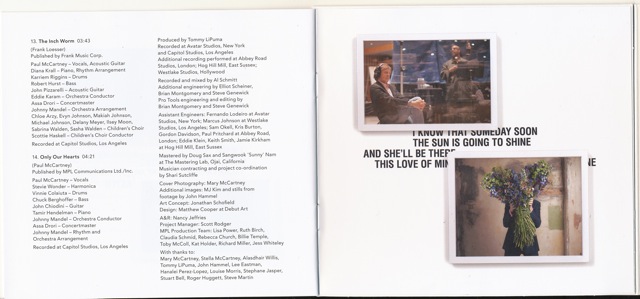
The booklet in this version is 18 pages and contains an interview about the album, photographs taken during the recording and also photos from the Mary McCartney official photo shoot. There is also track-by-track personnel details for each song, followed by a page with final credits including studio locations, engineers and the obligatory “thank you’s”, etc.:
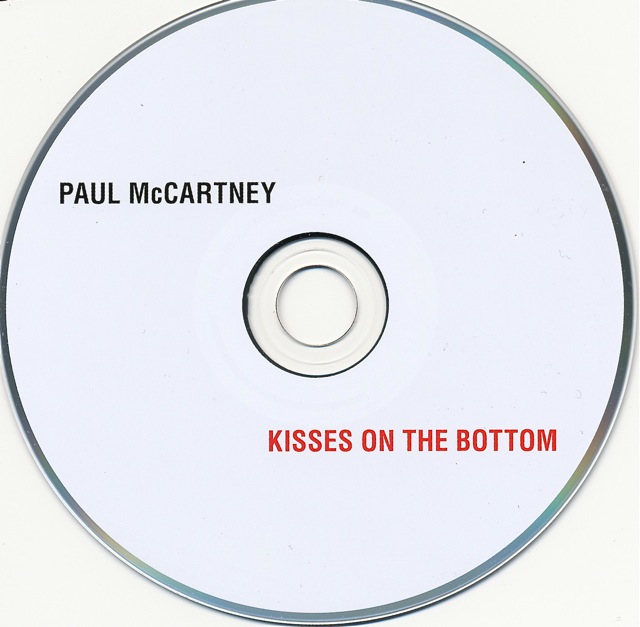
The CD printing itself is very simple and uncluttered and looks like this:
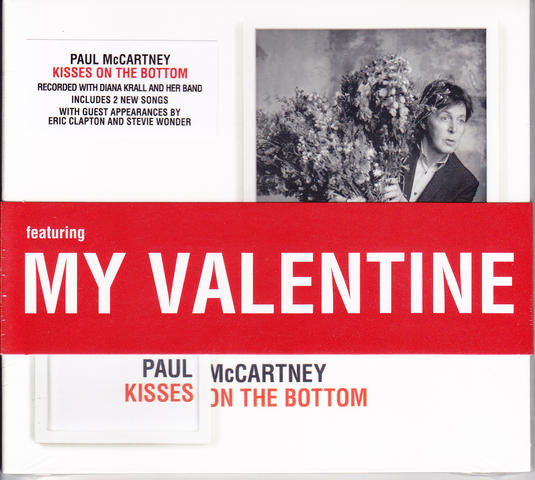
In some markets (in the US, I think) the CD came with a red wrap, promoting the song “My Valentine”:
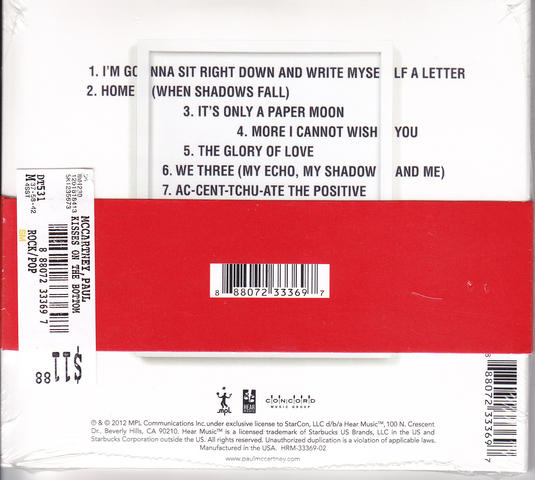
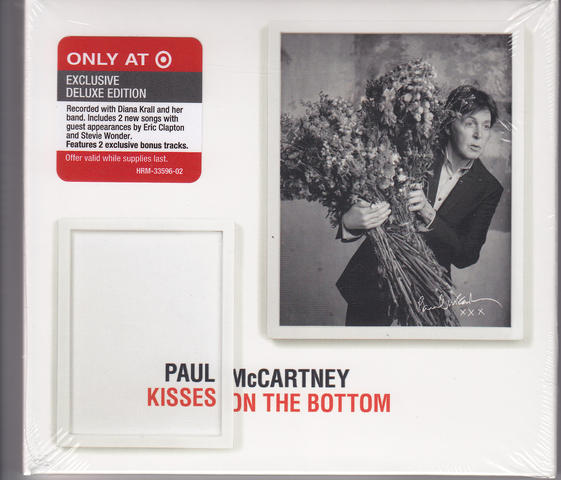
Buyers of the deluxe CD edition in the US will need to know there are two versions: one has 14 tracks and the other has 16 (which is available only from Target stores at this stage – see details below, and see also this post from Wogblog). In Britain, the EU countries (and in Australia because we are getting the EU versions) all deluxe versions have the two bonus tracks:

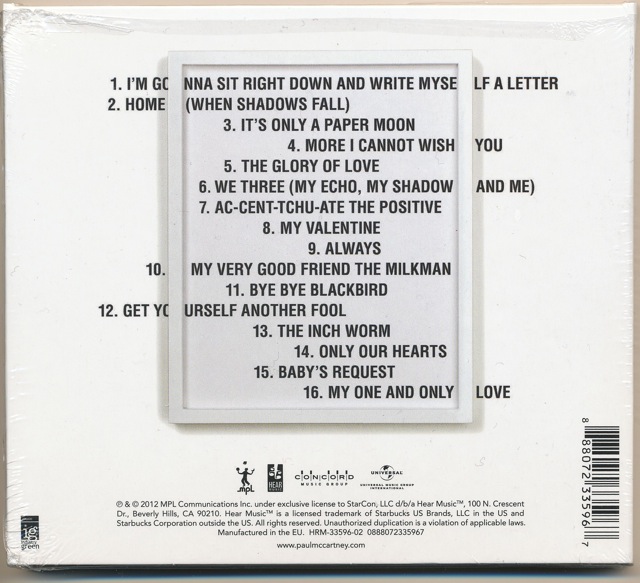
The bonus tracks are “Baby’s Request”, a re-recording of a McCartney song which first appeared on the 1979 Wings album “Back to the Egg”, and “My One and Only Love”.
The deluxe CD has more complex packaging. It comes in a cardboard, double gatefold cover. In other words it opens out to be four panels in total. To give you an idea of how this looks here’s a photograph of how the package opens up, plus the inclusions (which are covered in more detail below). This is the US non-bonus track deluxe version:

When you first open the deluxe CD cover this is what you see on the inside:
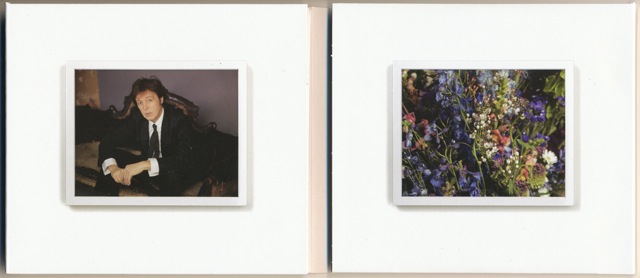
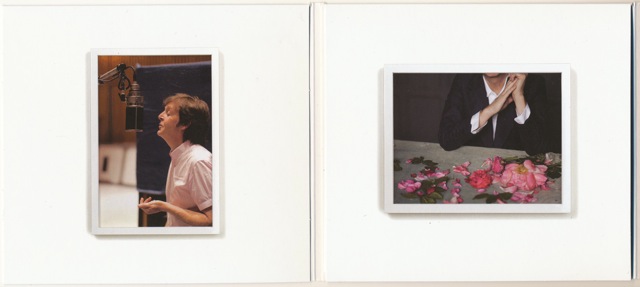
These two panels then open out again. This is the left-hand side:
And this is the right-hand side (containing the booklet):
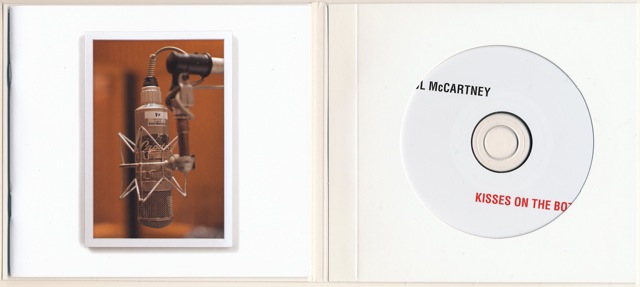
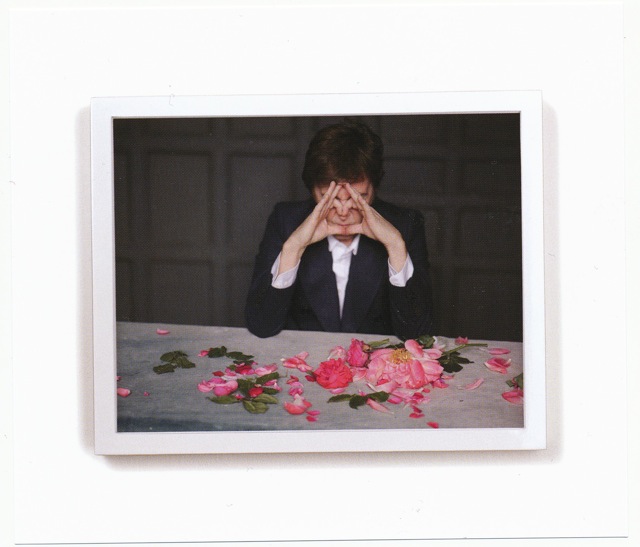
What looks to be the same booklet as the standard CD (also glued onto the cardboard) is actually longer – with 22 pages. The extra space is for a longer version of the interview with Paul McCartney, and there are additional photographs, and these are laid out differently to the standard CD. Inside a pocket in the deluxe CD cover there are also three postcards:
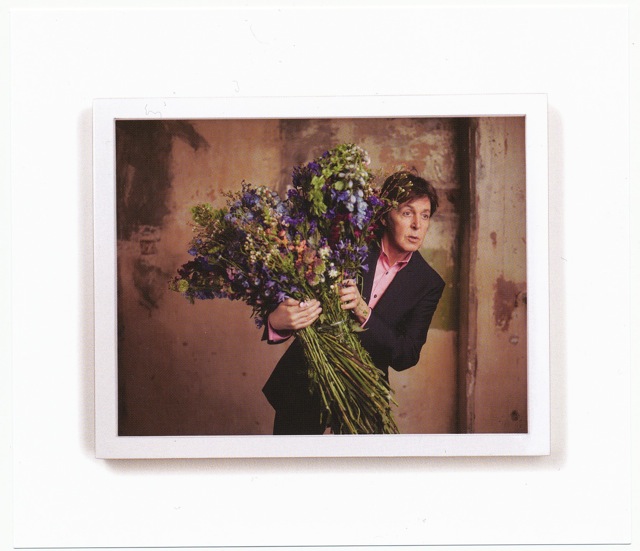
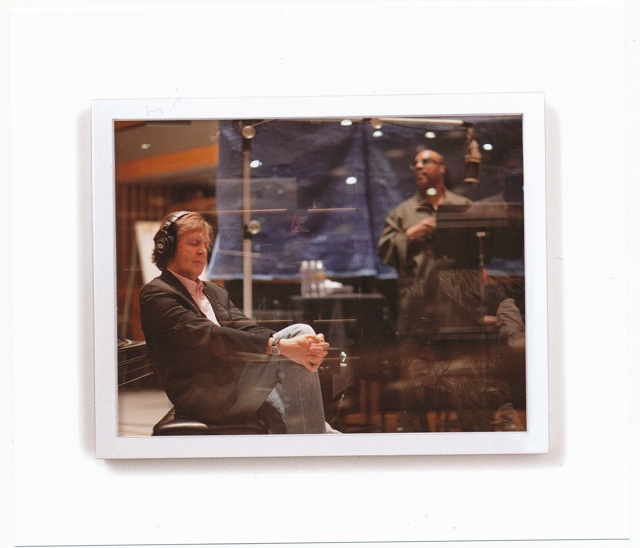
And included in the postcards pocket is a smaller card with details and a code for a download “…of Paul McCartney’s exclusive performance at Capitol Studios…”:
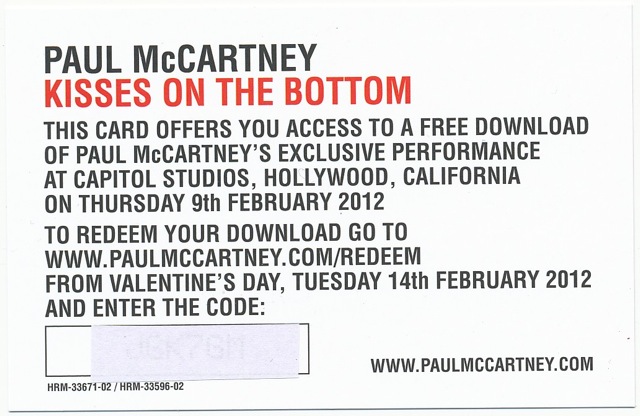
That bonus download sounds like an enticing extra on first read. But when you log in with your code you get just four live songs from that live performance, not the whole show. You get “I’m Gonna Sit Right Down and Write Myself a Letter”; “Home (Where the Shadows Fall)”; “Ac-Cent-Tchu-Ate The Positive”; and “My Valentine”. As has already been noted on the web by Wogblog, this is kind of disappointing. I mean, just four songs? It feels kind of cheapskate on Paul’s behalf.
Back to the 14 track/16 track deluxe confusion. Target in the US is selling the 16 track deluxe edition as a retail exclusive and are the only US vendor selling this edition:
There’s an interesting side story to the interview featured in both “Kisses on the Bottom” CD booklets. It’s done by Paul Du Noyer. If the name sounds familiar he is the well-known British music journalist and writer who also did the liner notes for all the John Lennon remastered re-issues a while back including the John Lennon Signature Box, and the “Double Fantasy – Stripped Down” version. He also worked extensively on Paul McCartney’s “Band On The Run – Deluxe Edition“, which has just won a Best Historical Album Grammy Award. As editorial consultant for the package, Du Noyer edited the 128-page book, wrote the liner notes and interviewed McCartney. He also worked on the “McCartney” and “McCartney II” deluxe reissues.
Finally to the vinyl edition of “Kisses on the Bottom”. This is a double LP and comes in a gatefold sleeve:
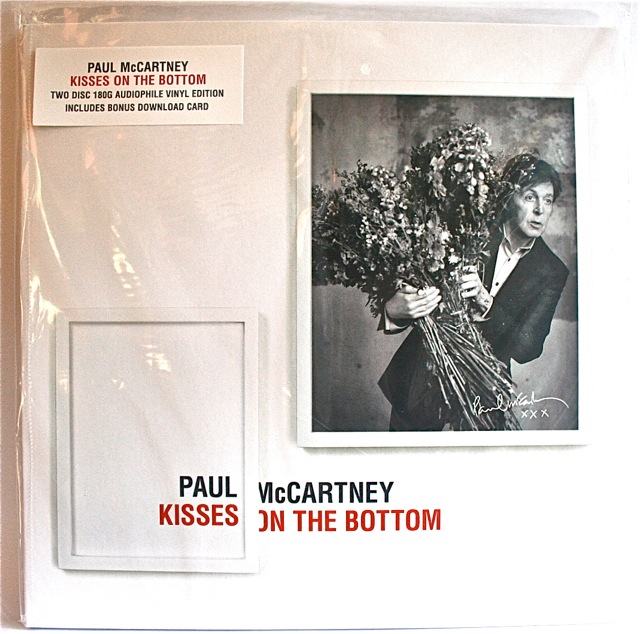
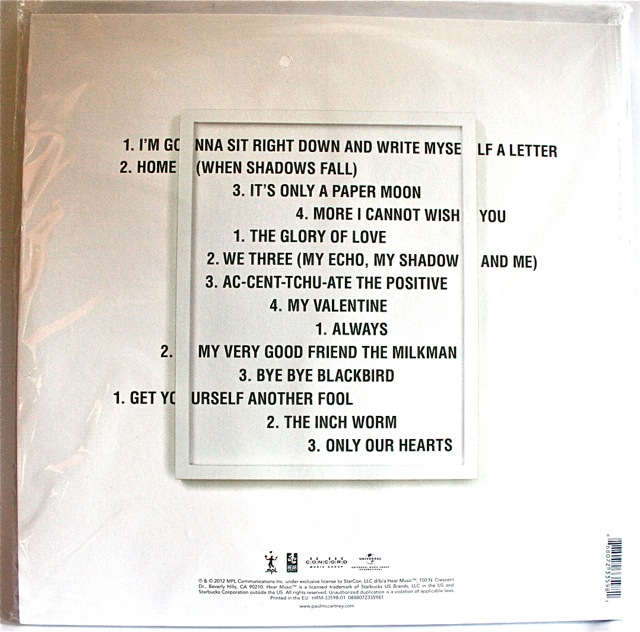
I got my copy from Amazon and thought it would be made in the US, but it says “Printed in the EU” on the back cover…
I haven’t taken my copy out of its sealed plastic cover, preferring it to remain a collectors item and “still sealed”. Also, all that white cardboard is going to get easily marked and scuffed. Keeping it sealed will also help keep it in pristine condition. Looking around on the web I did find this image of the vinyl package opened up:

You can see that it comes with two inner sleeves which reproduce the text elements of the CD booklets. The two 180g vinyl LPs have custom labels. And you get access to a digital download of the 14 track album as well.
[Thanks to cyber-beatles.com for the additional images used in this post.]
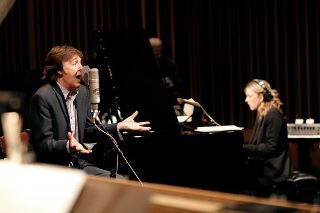
In all the talk about Paul McCartney’s “Kisses on the Bottom” the well-known and popular jazz vocalist/pianist Diana Krall – who plays on every track – has very much taken a back seat. She has stayed quietly in the background. However, I think Krall plays a pivotal role in the success and the essential sound of the album – far more than she’s so far been given credit for.
Diana Krall has been refining her own sound and style for nearly twenty years now, dating right back to her debut recording, “Stepping Out“. Over that time she has released ten jazz albums which, for all intents and purposes, mirror exactly the way Paul McCartney’s “Kisses on the Bottom” was put together – right down to the players and the studio in which many tracks were recorded.
If you want proof you need look no further than her most recent studio recording from 2009 called “Quiet Nights“.
Take, for example, track 2 from that album – the song “Too Marvelous for Words“. It’s a classic popular song from 1937 recorded hundreds of times over the years. The personnel on Krall’s version reads as follows: Diana Krall – vocals, piano; Anthony Wilson – guitar; John Clayton – bass; Jeff Hamilton – drums; Paulinho Da Costa – percussion; produced by Tommy LiPuma and Diana Krall; recorded and mixed by Al Schmidt and Steve Genewick; recording studio – Capitol Studios, Hollywood, California.
Now take track 5 from McCartney’s “Kisses on the Bottom”. The song is “The Glory of Love“, a classic popular song from 1936 recorded hundreds of times over the years. The personnel reads as follows: Paul McCartney – vocals; Diana Krall – piano and rhythm arrangement; Anthony Wilson – guitar; John Clayton – bass; Jeff Hamilton – drums; Mike Mainieri – vibraphone; produced by Tommy LiPuma; recorded and mixed by Al Schmidt and Steve Genewick; recording studio – Capitol Studios, Hollywood, California…..
Start to get the picture?
In considering the recording of an album devoted to covers of pop standards from the pre-rock years McCartney himself said he didn’t just want to repeat what Rod Stewart had done so successfully already with his recordings of tunes from the popular American songbook. Speaking to Rolling Stone magazine in May, 2011 he said: “I’ve wanted to do that kind of thing forever, since the Beatle days. But then Rod [Stewart] went mad on it. I thought, ‘I have to wait so it doesn’t look like I’m trying to do a Rod.'”
No offense Paul. I don’t think you’ve done a Rod at all. I think you’ve done something far more clever, so more tasteful, sophisticated and stylish. I reckon you’ve done a Diana.
For an insightful review of “Kisses on the Bottom” see RadioBrandon.blog’s thoughts. Got a lot of time for Brandon’s take on music.
Had to take another driving trip to Canberra – Australia’s national capitol – and so I called into the country town of Goulburn, which is along the way. There’s a big old second-hand book and record store there called the Argyle Book Emporium. I wrote about this shop once before when I discovered three copies of “Q” magazine there which were of interest.
When I got to the Argyle Emporium I headed straight to the room the owner uses to store his records, music books, and music magazines. As I said in the previous post, searching here is pretty frustrating as everything is just a free-for-all, with masses of unsorted discs on shelves and in boxes all over the place. There is so much that it is difficult to know where to start, and it’s one of those places where you get the distinct impression that the whole collection has already been picked over very thoroughly by collectors….Not surprisingly after pretty solid search I didn’t find anything of much interest amongst the records, and so I turned my attention to some boxes of magazines in one corner. There I found three items – two “Q” magazines from way back in 1993, and an “Uncut” magazine from a relatively recent 2010.
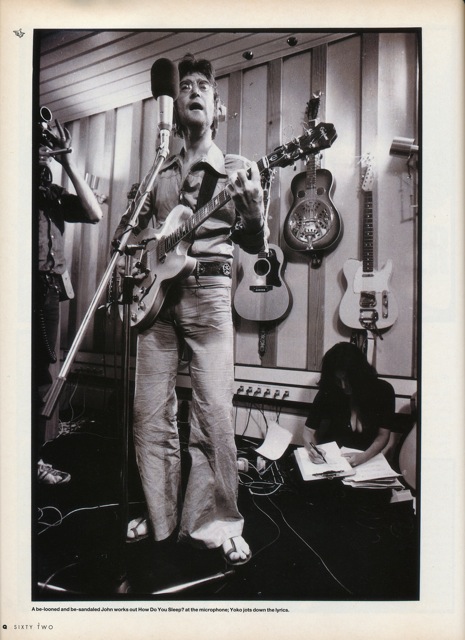
Both “Q” mags had info of interest to the Beatles collector. The June 1993 edition had and article about Irish photographer Kieron Murphy who in April 1971 was sent to cover John Lennon recording what would become the “Imagine” album:
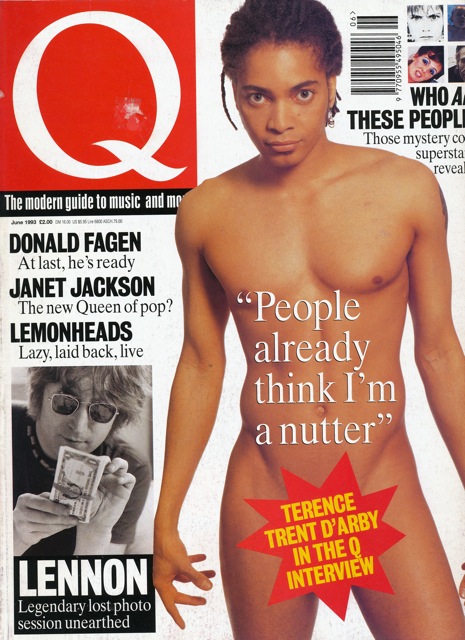
Ummm…if you can get past the rather striking cover photo of Terence Trent D’Arby (and yes, there is more of the same, only more, inside the magazine) you can see on the left-hand side a reference to a legendary and historic lost photo session for “Imagine”. It took place just outside London at John Lennon’s home, Tittenhurst Park. Of this very special assignment Kieron Murphy says “Meeting him was the high point of my life. I’d never met anyone so famous and I suppose I still haven’t. When I got there it was five o’clock in the afternoon and he was having breakfast…..More people began to arrive, like Klaus Voorman (bass player), and Alan White (drummer), and Nicky Hopkins who was playing the piano; then George Harrison came along, and there they were, all having a cup of tea.”
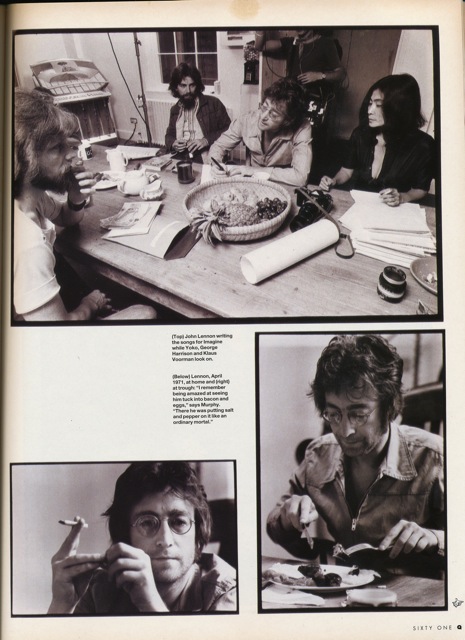
Kieron Murphy captured some great images for “Sounds”, the magazine he was working for at the time. If anyone has seen the documentary “Gimme Some Truth – The Making of John Lennon’s Imagine Album” (released in 2000) then these black-and-white photographs will look familiar. Like that film, Murphy has captured a unique point in musical history – being played out amongst scenes of very ordinary domesticity. There are only six photographs in the magazine but they are special.
The other “Q” magazine comes from December 1993:
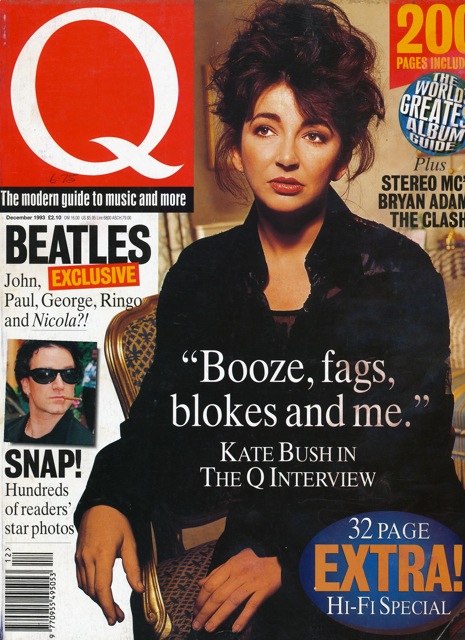
Kate Bush adorns the cover but what caught my eye was the heading: BEATLES EXCLUSIVE – John, Paul, George, Ringo and Nicola?!
It’s a neat little four-page article and photo essay, a where are they now piece on the whereabouts of the little girl called Nicola who appears in the Beatles 1967 film “Magical Mystery Tour” and who is name-checked and immortalised on the track-listing on both the album and the original EP cover. You can see this in the printed title for the song “I Am the Walrus”, which has the hand-written subtitle (“No you’re not!” said Little Nicola):

Well, in 1993 “Q” magazine tracked Nicola down and told the story of how she and her mum, Pam, ended up appearing in the MMT film. They found Nicola Hale, then aged 30, living in Forest Park on the outskirts of Chicago. She was working at a drop-in centre for young people with substance abuse problems. The article has some great photographs of Nicola in scenes with Paul McCartney, John Lennon, and this one mucking around with a soccer ball on the bus with Ringo Starr:
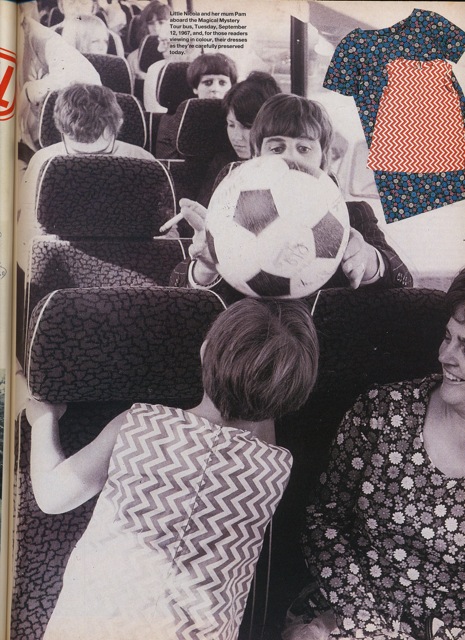
That’s her mum Pam on the right, and the carefully preserved dresses they wear in the scene are shown in colour in an insert at top right. All the pictures, newspaper clippings and memorabilia shown in the article come from the collection of Nicola’s father, Dave Hale.
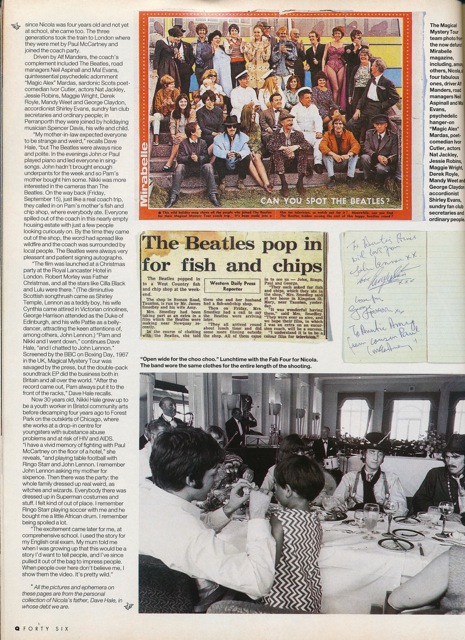
Its a great little article and well worth having. I wonder where Little Nicola Hale is today? She would be 48 years old. Does anyone have any information? Please let us know.
The final magazine is much more recent – an “Uncut” from the UK, dated August 2010:
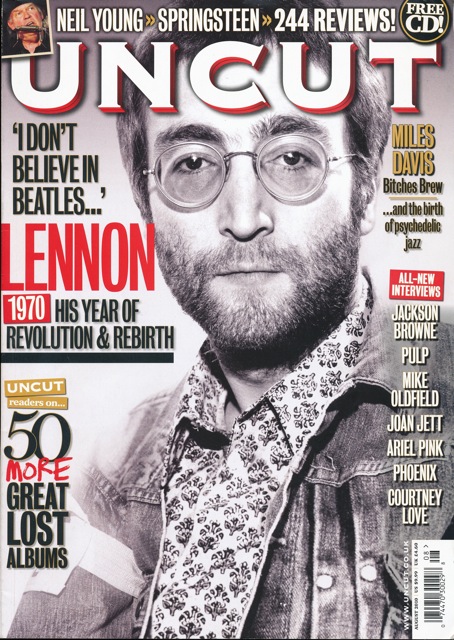
Basically this is Part One in a four-part series where the magazine looks at what each Beatle did following the break-up of the band. The first in the series was John Lennon:
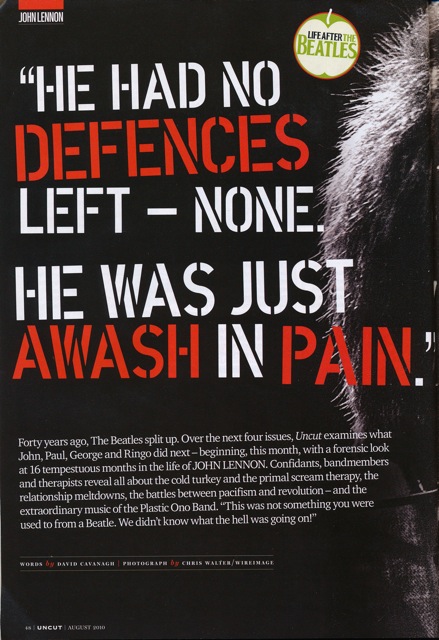
“Confidants, band members and therapists reveal all about the cold turkey and primal scream therapy, the relationship meltdowns, the battles between pacifism and revolution – and the extraordinary music of the Plastic Ono Band.”
With great photographs throughout this article ranges over 10 pages. It features the reminiscences of a range of people including Andy Stephens who was a tape operator at EMI’s Abbey Road studios during the rush recording of the song “Instant Karma” in 1970. (We learn in the article that Stephens is now the manager of Susan Boyle!). He relates a revealing story of Lennon enjoying a rare moment of privacy at Abbey Road in 1970:
“It was about two in the morning. He asked me to have a look out the front. There were always fans hanging around….I told him the fans had gone. John got hold of Yoko and they turned left and walked up Abbey Road. They came back 15 minutes later. John had a wonderful grin on his face. I mean, just a wonderful wonderful grin. He said, ‘You’ve no idea what it’s like to go for all that time without getting hassled.’ It was such a buzz for him. He’d gone 15 whole minutes without getting stopped.”

Footnote: Interestingly, in looking up the “Uncut” magazine site I discovered that the Beatles are in fact this month’s cover story as well:
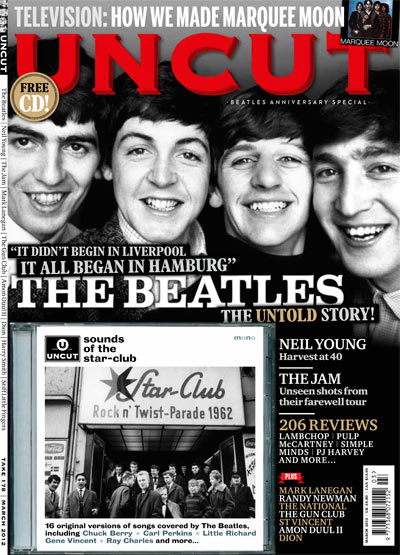
It’s all about the Beatles time in Hamburg. The issue comes with a free CD called “Sounds of the Star Club” with 16 tracks of songs covered by the Beatles, including tracks by Chuck Berry, Carl Perkins, Fats Waller, Little Richard, Gene Vincent, Ray Charles and Elvis Presley.
OK. Some will be saying “Enough already!”
But still they come – photographs of the Beatles holding on to the things they produced so many of – records.
And now here’s another because some really good photographs have continued to trickle in.
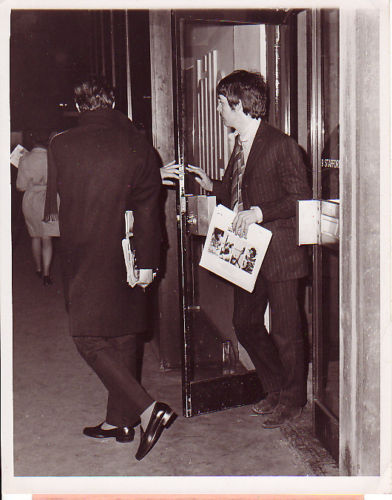
I must say I like the ones that are of a Beatle holding a record that they didn’t actually make themselves. This one of Paul McCartney (above) is a great example submitted by Beatlesblog reader Lammert Mulder. In a great piece of detective work by Lammert we find out that Paul is holding a copy of this 1966 album by the Lovin’ Spoonful. What you can see in the picture above is the rear cover:

This is what the front cover looks like:

Staying with Paul, how many copies do you reckon he’s signed of Sgt. Pepper?
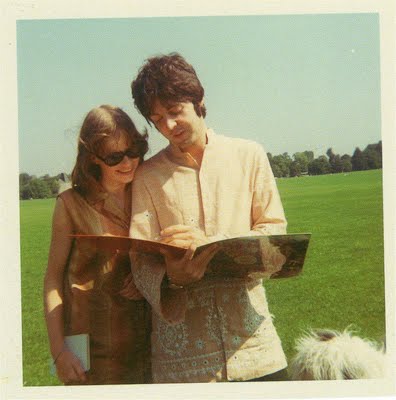
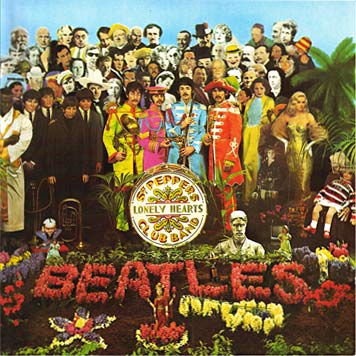
Yes, that’s a gate-fold original copy alright. And it’d be worth quite a bit now if it’s still around….
If anyone knows who the young woman is, and how she managed to find Paul McCartney out in the park walking his dog Martha on a summer’s day and just happened to have a copy of the LP with her at the time – let us know.
Here’s another one of Paul from around the same period, again running the gauntlet with fans, this time assisted by stalwart Beatle roadie, Mal Evans (in glasses) – who looks to be shepherding Paul from a fan holding a copy of the ‘Strawberry Fields Forever’/’Penny Lane’ single:

That is definitely the picture sleeve cover of the 1967 Beatles single ‘Strawberry Fields Forever’/’Penny Lane’. We had another photo of the same single being signed by John Lennon in the Beatles with Records Part Six.
Interestingly, the same image was used for the 1981 EP issue containing the songs ‘The Inner Light’/’Baby, You’re A Rich Man’/’She’s A Woman’/’This Boy’:
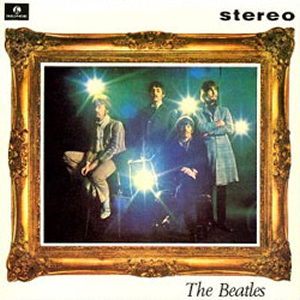
Paul has endured of course – right up to the DVD age – where he is asked to sign copies of those as well:


The Space Within Us, a McCartney concert DVD, comes from 2006.
George Harrison was also often collared to do an autograph or two – sometimes on Beatle records. This one looks like he’s been nabbed in the driveway, leaving his home Kinfauns in Surrey:

That’s gotta be the rear cover of this 1967 Beatle EP, don’t you think?:
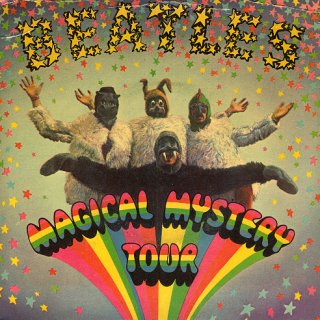
Paul has also been snapped signing a copy of Magical Mystery Tour:
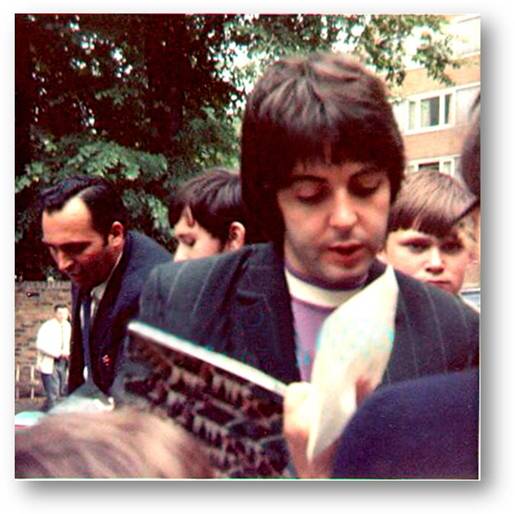 Thanks to Claude Defer for sending that photograph.
Sometimes, despite their familiarity with their own product, the Beatles can be seen studying their record covers quite closely:
 That’s George with…..
I also like this one of George, but do you know which LP he is carrying out the door? His clothing suggests its around the time of “Sgt Pepper”:

If you know or can can figure it out please let us know at beatlesblogger@gmail.com
This LP that John is carrying is much more obvious:

And finally we have to have one of Ringo. This is from 1974, sitting with the late, great Harry Nilsson and holding up a copy of the Nilsson single “Daybreak”, taken from the album “Son of Dracula“:


Thanks to everyone who submitted photographs. You can see the other parts in “The Beatles with Records” series here: Parts 1, 2, 3, 4, 5 , 6, 8, 9, 10, 11, 12, 13, 14, 15, 16 and 17.
 Beatles Blog