Beatles with Records – Part Fourteen

Since the last instalment we’ve been swamped with some great content – enough for at least two or three more posts featuring the Beatles (or people close to them) photographed or filmed with records or CDs – either their own or those of other artists.

This first one comes from beatlesblogger.com reader Ariel, who sent in this great YouTube clip of John Lennon and Yoko Ono strolling past a crowd of reporters and photographers:

The footage was clearly taken in 1970 when John and Yoko were publicising this Plastic Ono Band album:
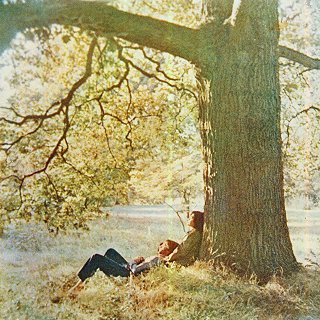
john-lennon2

The footage comes from a 1977 film by French film-maker Gérard Courant, whose website says of the film:  “The year punk music exploded, Courant gave his most avant-garde outburst by relating for the first time the shattering experiences that took place in the second half of the 20th century…with the rock culture that clamored that same idea of rupture…”. Lennon and Ono can also be seen publicising the same LP in Part Five and also in Part Two.

Staying with John Lennon for a moment here’s an image sent in by Andrey in Russia of the Lennon’s in New York – holding court with assembled media and hangers-on in their apartment in February, 1972 in Greenwich Village:

Lennons Greenwich Village

There’s obviously a record you can see sitting there at the foot of the bed:

Lennons New York 2

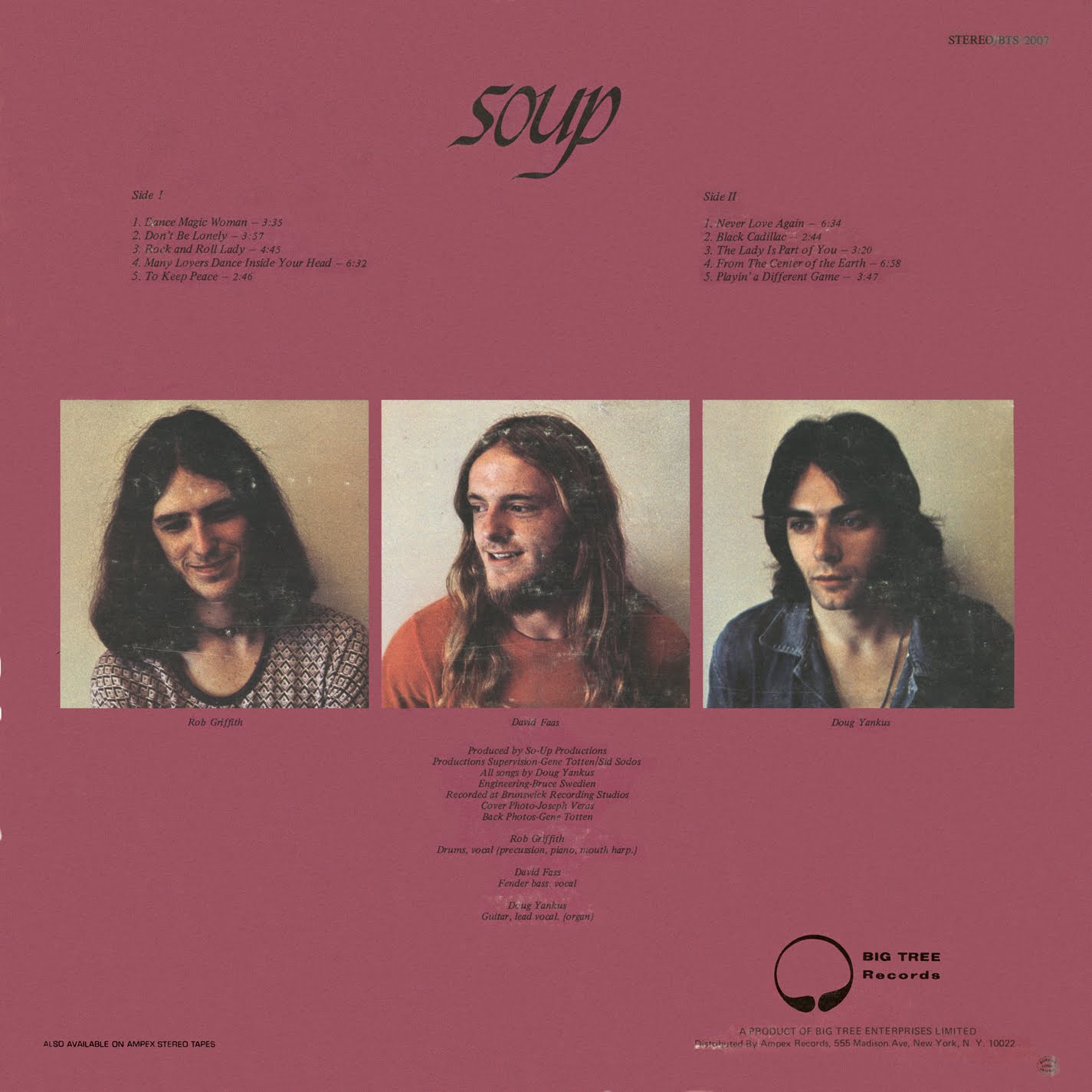
But what and who is it? I was having real trouble identifying this one. Well, thanks to Andrey’s Russian-speaking friends we’ve been able to find that LP. He asked one of the Beatles.ru forums for some help. Which artist could it be? Andrey says he got the answer in about ten minutes:

The Album Soup Front CD SZSOUP BACK CD SZ

The Power Pop website says that the group Soup was from Wisconsin in the USA and the members were Doug Yankus, Rob Griffith and David Faas . The band released a self-titled album in 1970, however what we can see here is the bands second LP, The Album Soup, from 1971. How it came to the attention of John Lennon, and what he thought of it we’ll probably never know.

Continuing on the Lennon theme – this time with Yoko and a gentleman named Kristofer Englehardt, author of the book “The Beatles Undercover“, holding a copy of her solo LP from 1971 called Fly:

Undercover1-1

Fly

In Part Six there’s a terrific photo of George Harrison in the back of a limo holding up a copy of his All Things Must Pass LP. Here’s another good one from around the same time:

RSSpecial2-1

harrison-all-things-must-pass-1970

Could it be that this photo below was taken on the same day and location? It looks very much like the same shirt George is wearing above. Perhaps he’s playing one of the sides from All Things Must Pass on his record player at home?

George with Record Player

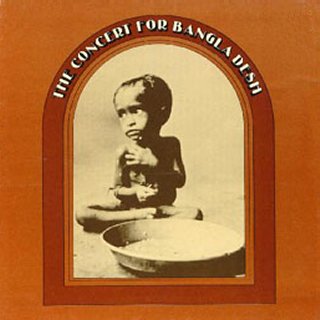
One final shot of George taken in 1972 according to the caption, this time with his triple LP from 1971 The Concert for Bangladesh:
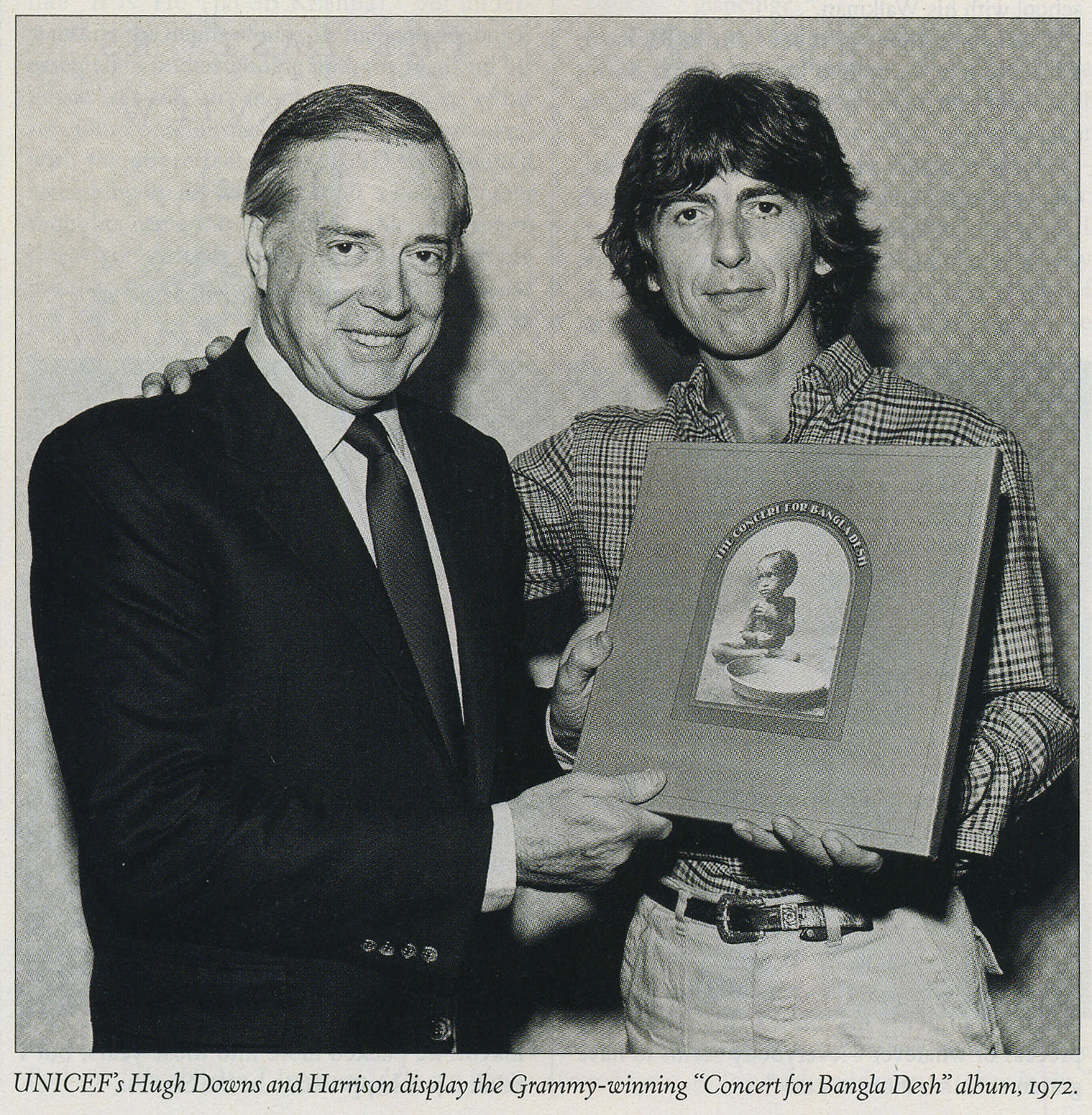
RSSpecial1-1BanglaDeshCover

When you are Paul McCartney, just getting into a building you are visiting can have it’s challenges. The photo below shows the type of crush which can eventuate when everyone wants a photograph or an album signed – including one fan bravely holding up a copy of the 1988 Russian release Снова в СССР:

Choba CCCP Paul

Choba b CCCP

Here he is again – this time with fans thrusting forward copies of (amongst other things) Help! and Tug of War (you can see the cover of Tug of War at the very bottom right-hand side of the photo):

Paul Signing - Help!beatles-helpTug of War

One other final shot of Paul holding a 45 single, this time with Ringo and John. It is what is reported as a test acetate recording (printed in limited quantities and used by the band and engineers for checking the quality and the mix) – it is supposedly of a song from Sgt Pepper:

Sessions3-1

There’s another photo from the studio on the same day below –  from a different angle with George also in attendance and more acetates lined up on the piano:
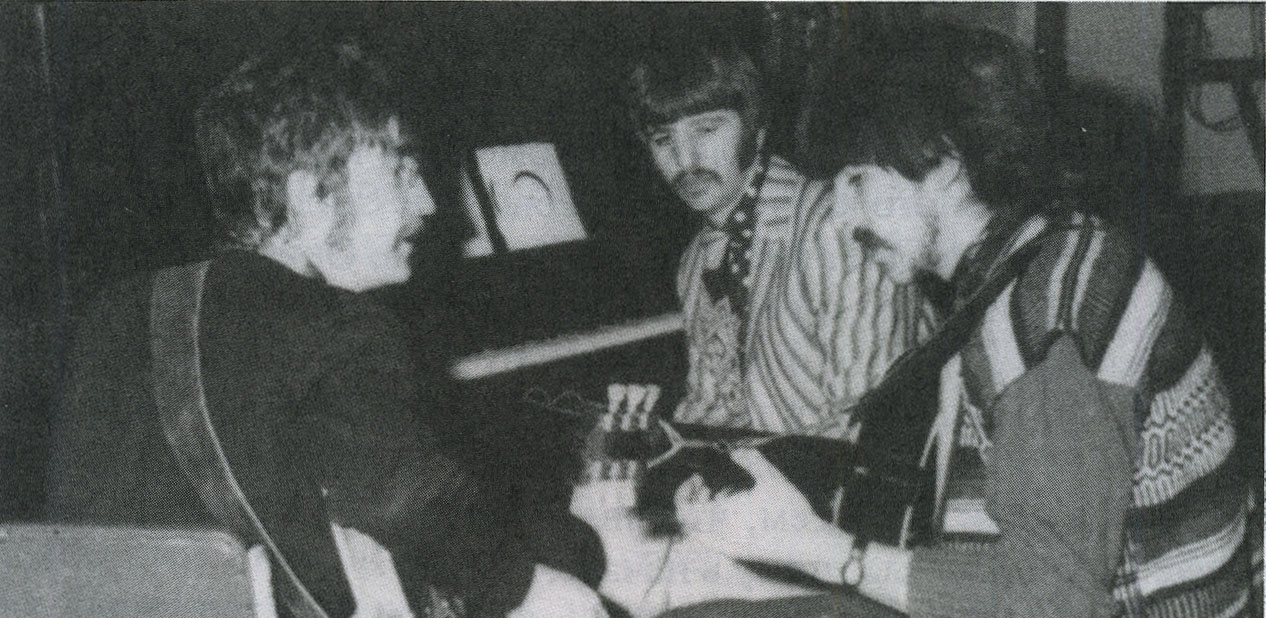
Deliev2-1

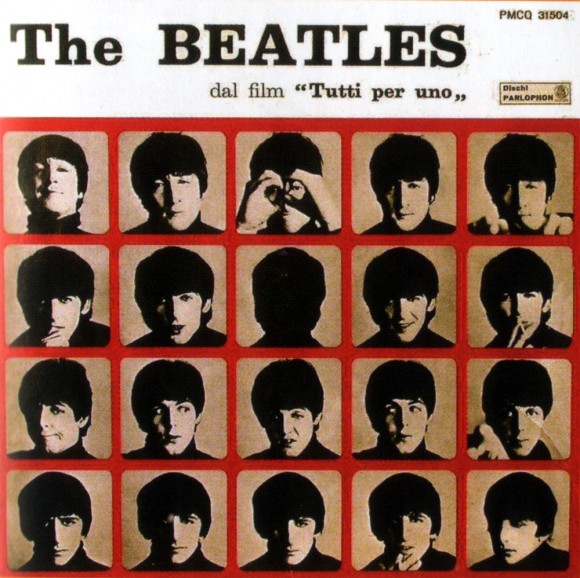
One final photo for this instalment – again of the Beatles as a group and possibly arriving in Rome. I say that because the gentleman in the light coloured jacket, moustache and glasses (who is a fellow named Alf Bicknell – the Beatles chauffeur between 1964-1966) is holding a copy of the Italian version of A Hard Day’s Night. You can tell it’s the Italian cover of the LP because the large type across the top saying “The BEATLES” is distinctively different to the standard UK release:
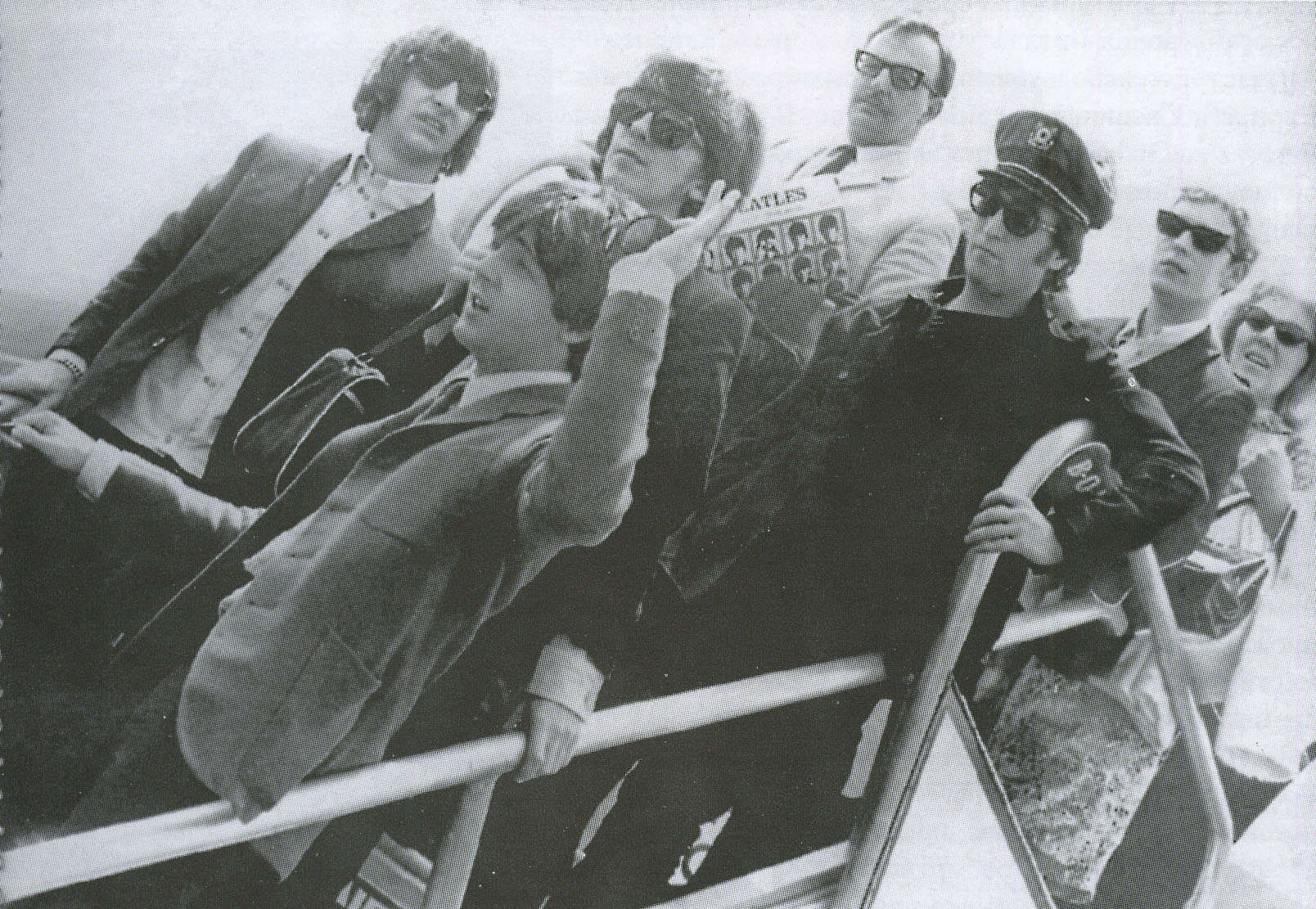
FMTY28_1-1_Alf_Bicknell

italy_a_hard_days_night_lp-580x578

Thanks to all those who have sent in content and further information. You can see the other parts in “The Beatles with Records” series here: Parts 123467 , 89101112131516 and 17.

There will be more “Beatles with Records” soon….
The Beatles in Australia

This post comes about for a couple of reasons.

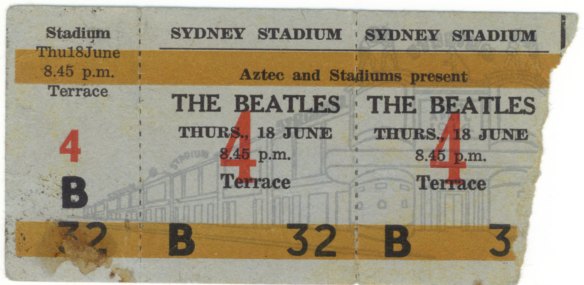
Firstly, it was prompted when last week Neville, a beatlesblog.com reader, sent in a scan of an original ticket stub from one of the concerts given by the Beatles in 1964 in Sydney, Australia at a venue called The Stadium….

beatles ticket

Neville wrote:  “This is not a particularly fancy ticket and is definitely used. They tore off the end of it at the door as you went in. This is 1964. Sending you this is giving away my age, I was 19 at the time….I can recall the concert fairly well although some details are a little bit sketchy now. Suffice to say that the Beatles performance was much shorter than today’s concerts, only about 45 mins max perhaps and about 15 songs only I think. And despite the claims about the deafening screams, you could still actually hear the songs (just). However that might have been because we knew them all at the time. It was mostly from “Please Please Me” and a few of the singles. It really was a very exciting performance and you got carried away by the crowd reaction!”

“There were a couple of support acts as well. The one I remember the most was Johnny Devlin who was then a fairly wild rocker and wore skin-tight black leather pants which the girls seemed to like…”

“The remarkable thing about the Stadium was that is was built as a boxing venue and the audience surrounded the stage (ring) which was in the middle of the building. For concerts they had a revolving platform on the stage so that no matter where you sat, at some stage the performers would be facing you. This must have been a bit disconcerting for the acts. The acoustics weren’t that great, neither were the seats, just being wooden benches. Anyway, concerts there just seemed to have an atmosphere all their own.”
Thanks for the scan. Neville got talking to a friend recently who’d also been at a Sydney Stadium Beatles concert (at a different performance though – the band played three shows there on 18, 19 and 20 June), and he confirmed that the performance of the Beatles was short – only about 30 to 45 minutes. He also reminded Neville that another act was Sounds Incorporated, who performed instrumental material only. Also on the bill were Alan Field, Johnny Chester, and a band called The Phantoms.

This was part of the Beatles’ very first world tour, June 1964. Ringo Starr missed the first leg of the Australian concerts due to severe tonsilitis (the band went first to Adelaide in South Australia, then to Melbourne in Victoria before the  Sydney shows, then to New Zealand, and back to Australia for two shows in Brisbane in Queensland before jetting back to England). Ringo re-joined the group in Melbourne and Neville says he was definitely on stage for the Sydney concerts. Until then his place was taken by the then little-known drummer Johnny Nicol.

2014 of course will be the 50th anniversary of the tour and two museums here are teaming up for a large exhibition. The Powerhouse Museum in Sydney and the Melbourne Arts Centre will next year launch a “Beatles Down Under” exhibit featuring collectables, documents, memorabilia, photographs and sounds from the time. It centres around the personal archives of the Australian tour promotor at the time, Ken Brodziak, and will be on show at the Powerhouse in 2013, and then move to the Arts Centre Melbourne in 2014.

The Australian Broadcasting Corporation (ABC Radio) broadcast a lengthy interview with Peter Cox (curator at the Powerhouse) and rock historian Glenn A. Baker (author of the book “The Beatles Down Under”). Here’s a short extract. The interviewer is Rod Quinn:

You can click here to listen to the entire interview.

The final reason for this post is the book simply called “The Beatles in Australia”. It was originally released in 2005, but seems to be still available as it remains on the New Holland book publishers website.

beatles in australia[1]-page-001

As you can see from the cover image above this book features many unique images, mostly taken during the Adelaide leg of the Beatles Australian tour where drummer Jimmy Nicol was standing in for an ill Ringo Starr.  Most of the images in the book had never been published previously. They were taken by Brian Cooter and Rosemary Blackwell and were purchased by the author, Mark Hayward through Christie’s and Sothebys.

Below is part of a transcript, included in the book, from the Beatles first press conference in Australia held on Thursday, 11 June 1964 in Kings Cross, Sydney:

Interviewer: Have you written any songs with Australian themes?

John: We never write any themes about anything. We just write the same rubbish all the time.

Interviewer: Do you play the kind of music you want to play or music people want to hear?

John: No, we’ve been playing the same music for five or six years, just rock n roll, we just happen to write it

Interviewer: Well what do you think made the difference that suddenly pushed you above all the other groups?

George: We got a record contract.

It is evidence of typical Beatle banter – clever, unassuming, disarming. There are some really great photos in this book, including the arrival of the band in Adelaide where they were greeted by a crowd estimated to be 350,000 people. If you know Adelaide (even today) that is a huge turnout of fans:

beatles in australia[1]-page-002

George with the local press and media:

beatles in australia[1]-page-005

And at the concerts:

beatles in australia[1]-page-006 beatles in australia[1]-page-008

I’m still trying to track down the exact exhibition dates for the Sydney Powerhouse and Melbourne Arts Centre. More soon.

Label Variations Part Nine – Plastic Ono Band “Cold Turkey”

In Label Variations Part Eight an unusual New Zealand Parlophone label version of John Lennon’s “Imagine” was featured.

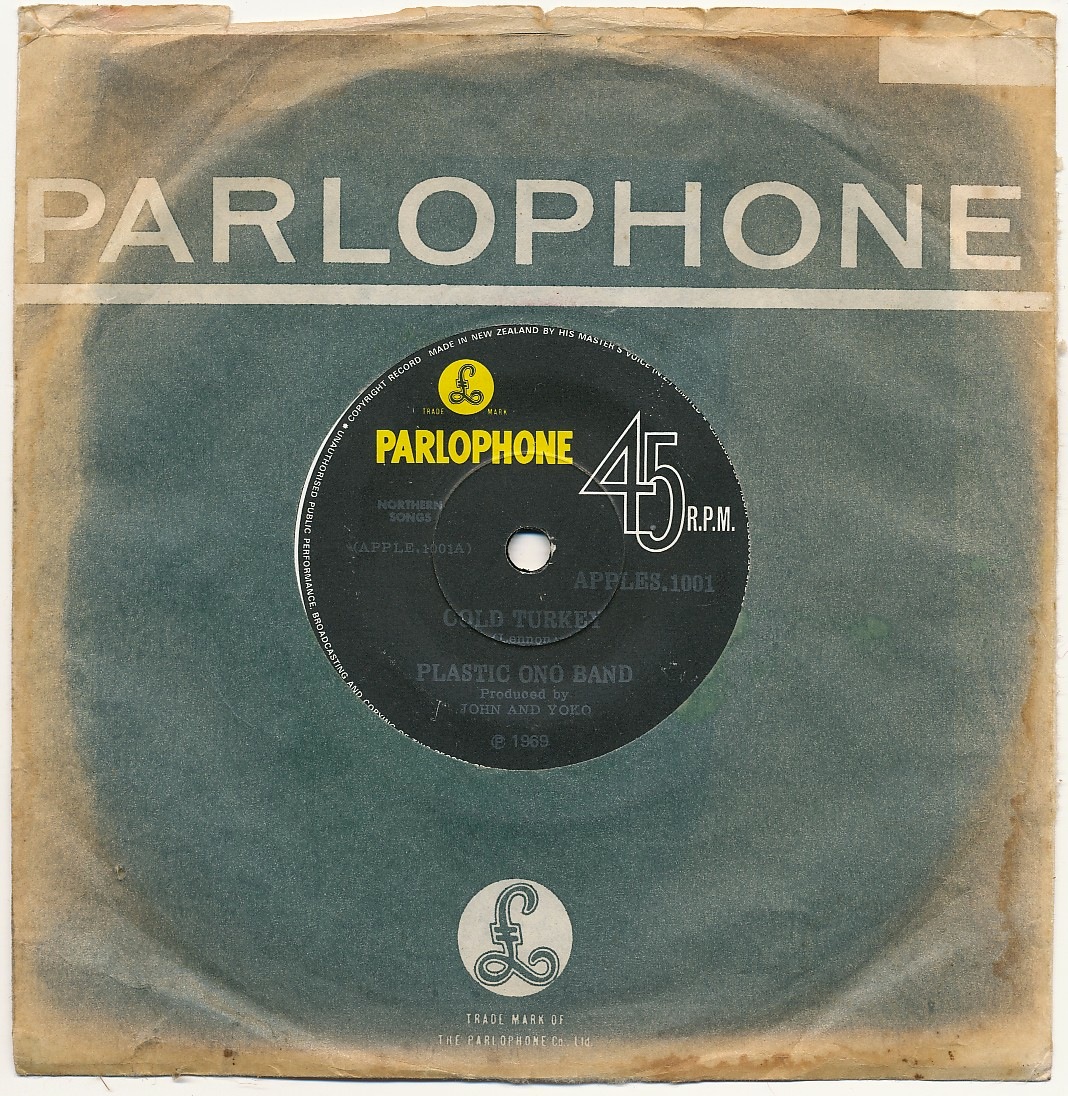
I’ve stumbled across another from NZ –  this time Lennon’s anguished drug withdrawal song “Cold Turkey“, performed by the Plastic Ono Band. It’s definitely original and as you can see pretty beat up, but interesting I guess – especially for one particular reason which will be revealed later:

Plastic Ono Band Cover 1

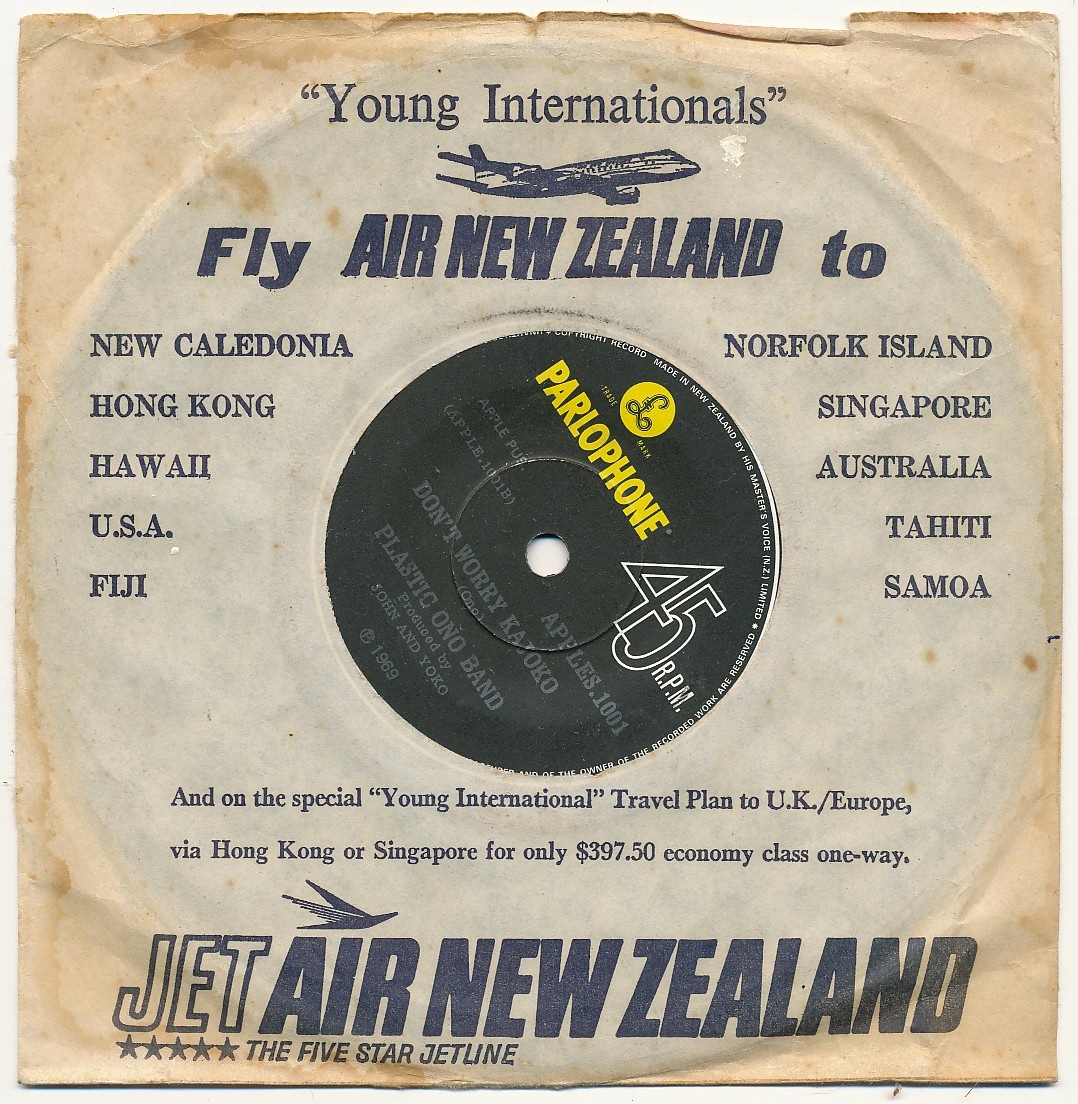
It is in it’s original New Zealand Parlophone bag – very faded, but the rear side is interesting with it’s groovy “Young Internationals” advertisement for Air New Zealand (only $397.50 one-way to Singapore or Hong Kong!):

Plastic Ono Band Cover 2

The main point of interest though is the black and yellow Parlophone label:

Plastic Ono Band Label 1

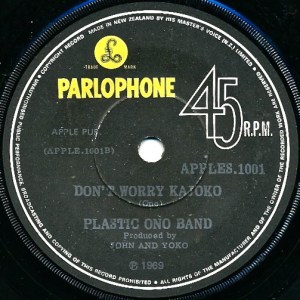
The printing on the A-side is kind of faded and difficult to read because the silver-coloured lettering does not stand out well on the black background. Like the UK edition, this 45 rpm single carries the catalogue number APPLES 1001, and as in other markets around the world the flip-side is the Yoko Ono song “Don’t Worry Kyoko (Mummy’s Only Looking for Her Hand in the Snow)”. However, this New Zealand pressing has a spelling mistake. It clearly says “Don’t Worry Kajoko”, and it has no sub-title printed on the label:

Plastic Ono Band Label 2

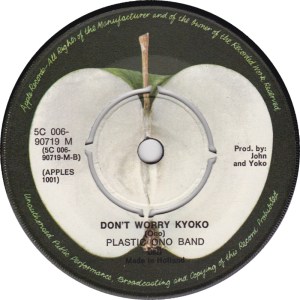
Some people quite like collecting label printing mistakes and so this makes it interesting as well. The spelling should be “Don’t Worry Kyoko….”:

cold-turkey-Don't Worry Kyoko

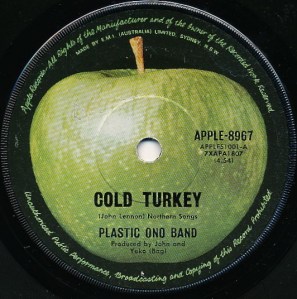
Here are some other label variations from around the world, starting with Australia:

cold-turkey-Aust

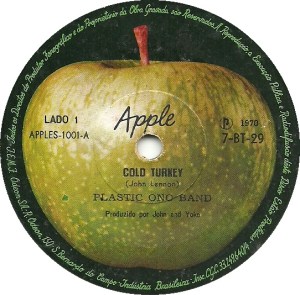
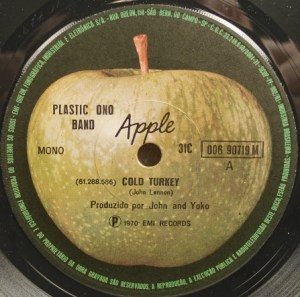
These images following aren’t from my collection but gleaned from the web. Here are two different variations from Brazil:

cold-turkey-Brazilcold-turkey-brazil2a

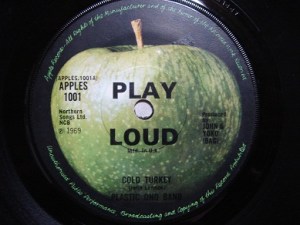
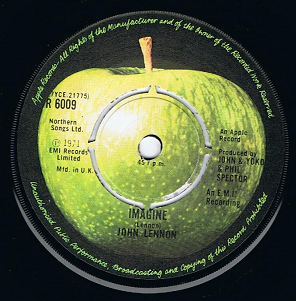
The original UK version looked like this:

cold-turkey-UK

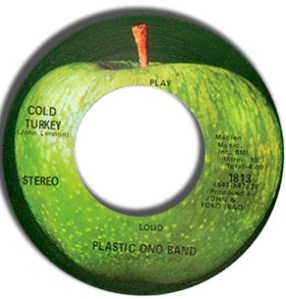
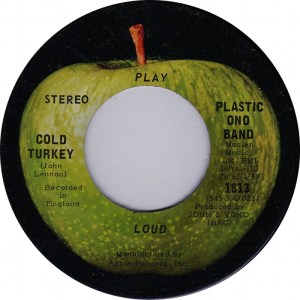
And the US and Canadian versions:

cold-turkey-USAcold-turkey-canada

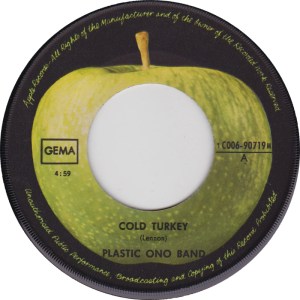
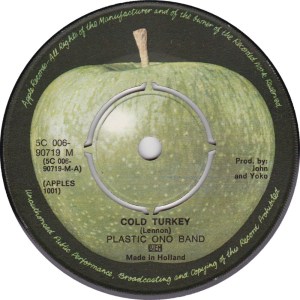
Here’s one variation from Germany, followed by one from the Netherlands:

cold-turkey-german

cold-turkey-netherlands

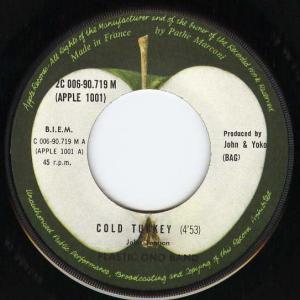
And since posting this I’ve been contacted by Claude Defer in France with two French variations. He says: “In France, we have 2 types of labels : the first one has «Cold Turkey» on the white part of the apple and the second one has «Cold Turkey» on the green part of the apple. The first one was probably a misprint and the second one fixed it.”:

Cold-turkey-france 1Cold-turkey-france 2

Also, Andrey in Russia sent another France variation which is very similar to the one above, just a greener Apple:

ColdTurkeyFranceMonoSide1

If you have any other label variations you would like to share please email me.

Label Variations Part Eight – Lennon’s “Imagine” Single

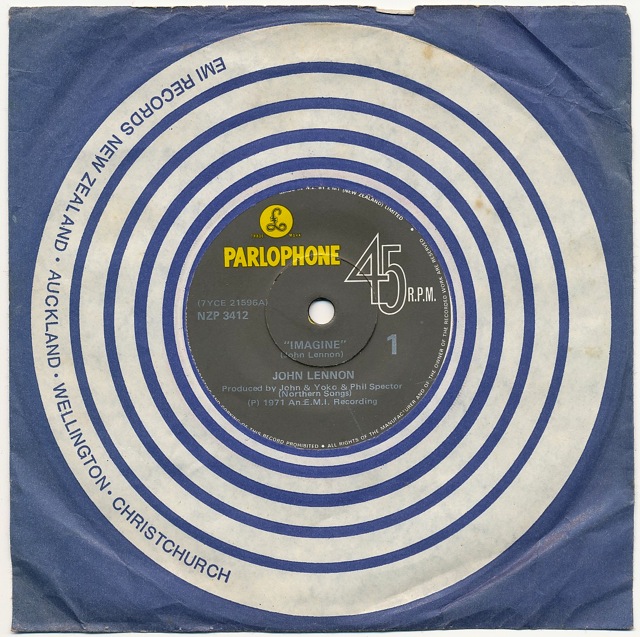
Last post I wrote about a couple of unusual garage sale finds.  One was a vinyl copy of John Lennon’s 1971 single “Imagine” – but on the much less common Parlophone label in New Zealand.

When researching the post I had a good trawl around the internet to see if I could find a similar copy.  I couldn’t.

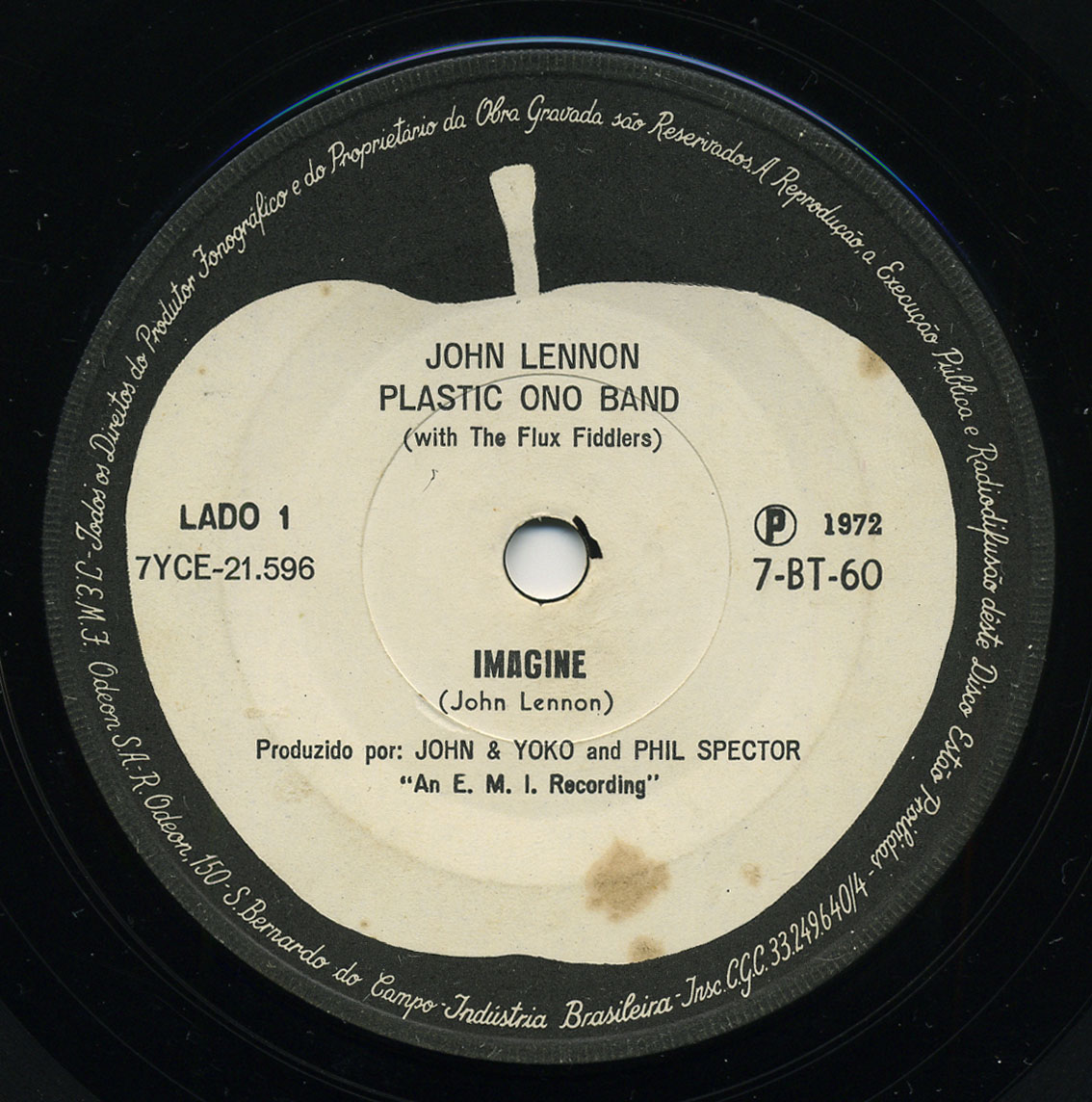
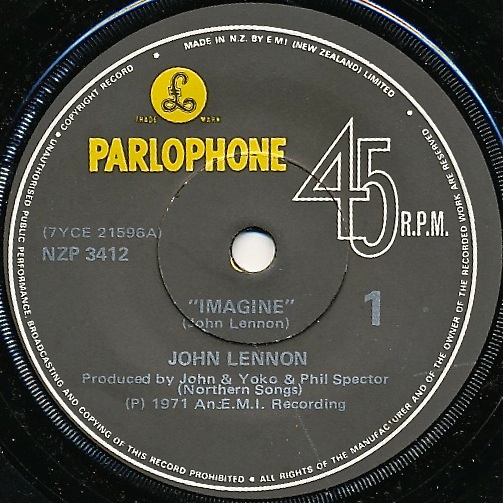
However I did find a huge number of other interesting label variations. I guess that’s not surprising given the fact that this song has become an iconic John Lennon  composition. Here are just some of them, starting with the rare New Zealand pressing I found:

Looking around the web I could not find anything about this release – so if you know more details please get in touch. The more common New Zealand pressing, though still quite collectable in my view, would be on the green Apple label:

Of course Lennon releases in Australia also came out on the Apple label, and I own probably the most common original Australian release of “Imagine”. It looks like this:

Searching through Google Images I actually stumbled across a picture of what would have been the original Apple acetate pressing of the song:

 These acetates were test pressings, done in-house at Apple so that the engineers and John Lennon could take them away and have a listen to the mix and to the quality of the pressing before saying “yes” to printing so many hundreds of thousands of copies…Those big first press runs would have been in the United Kingdom – which used a green Apple.  Here’s an early promo copy sent out to radio stations, followed by the legitimate single released to the public :


And in the United States – which used a plain white Apple label favoured by John Lennon at the time:

Of course other countries quickly followed, including places like Germany:

And the Netherlands:

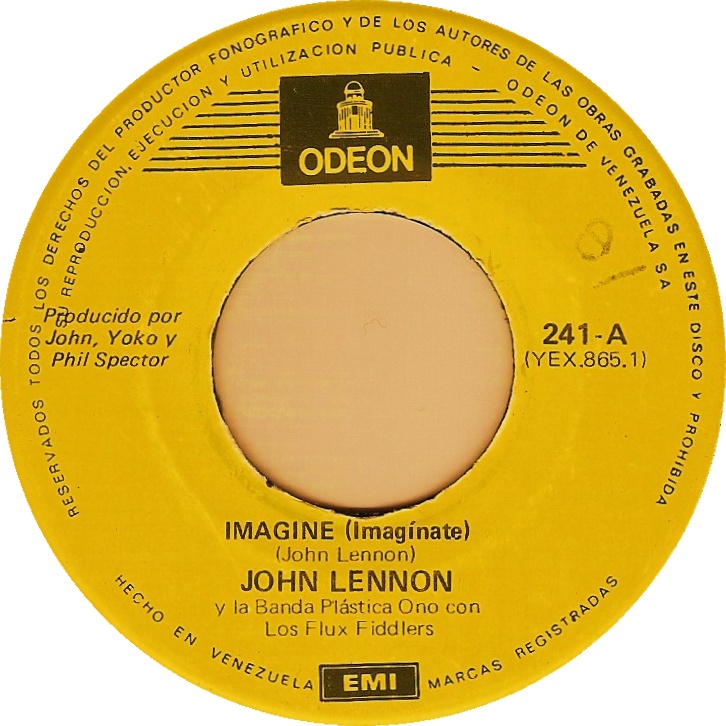
Such was the fame of this song there were also pressings from unusual countries like Venezuela:

From Mexico:

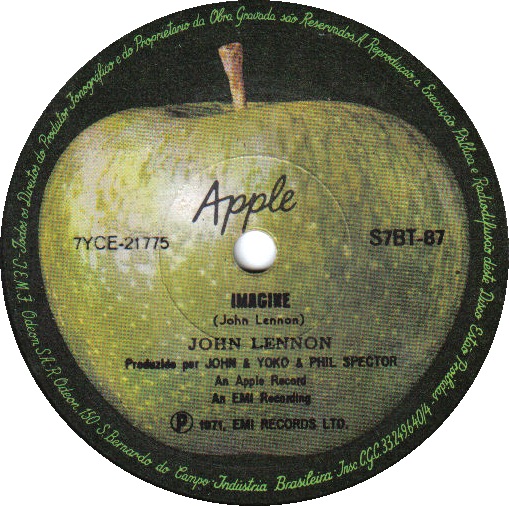
And from Brazil:

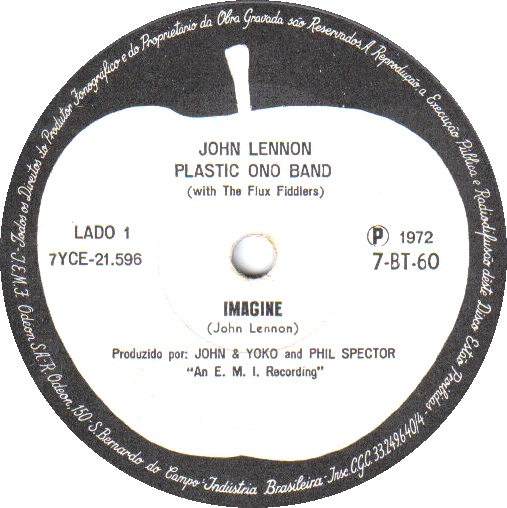
Brazil also released the song on a plain white label – but a variation on the white Apple issued the USA:

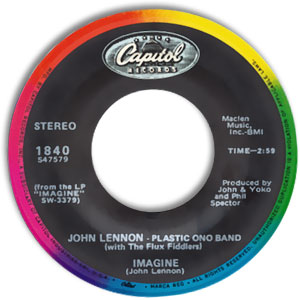
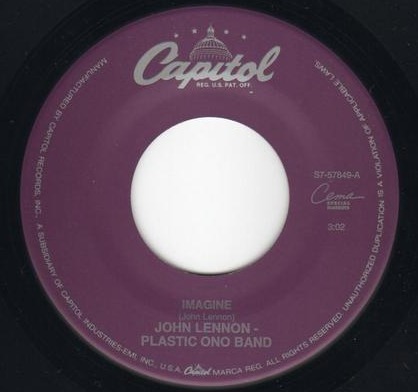
In the US the song was so popular it kept getting re-issued on a variety of Capitol labels:

And this purple Capitol example:

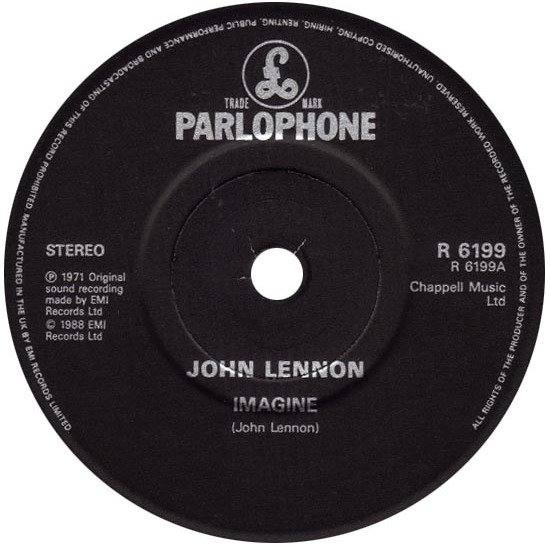
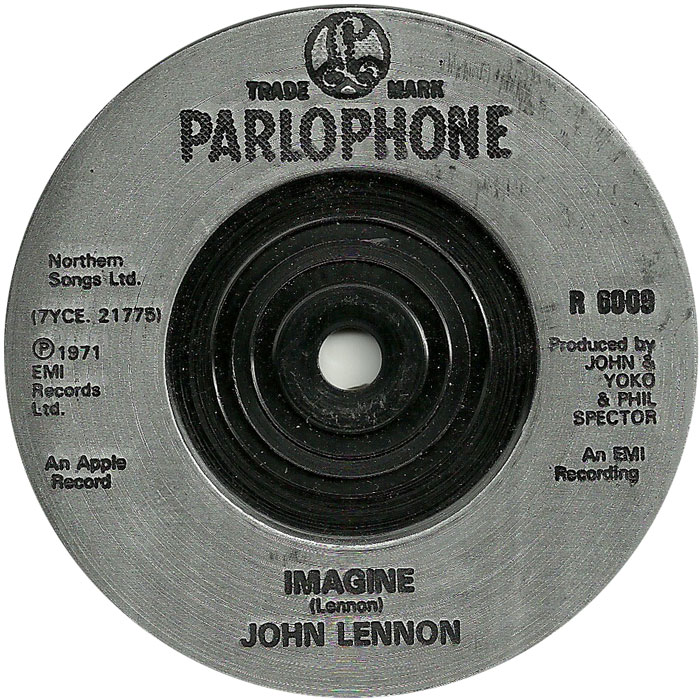
Meanwhile back in the UK the single was being re-issued countless times as well. Here are two later examples on the Parlophone label:

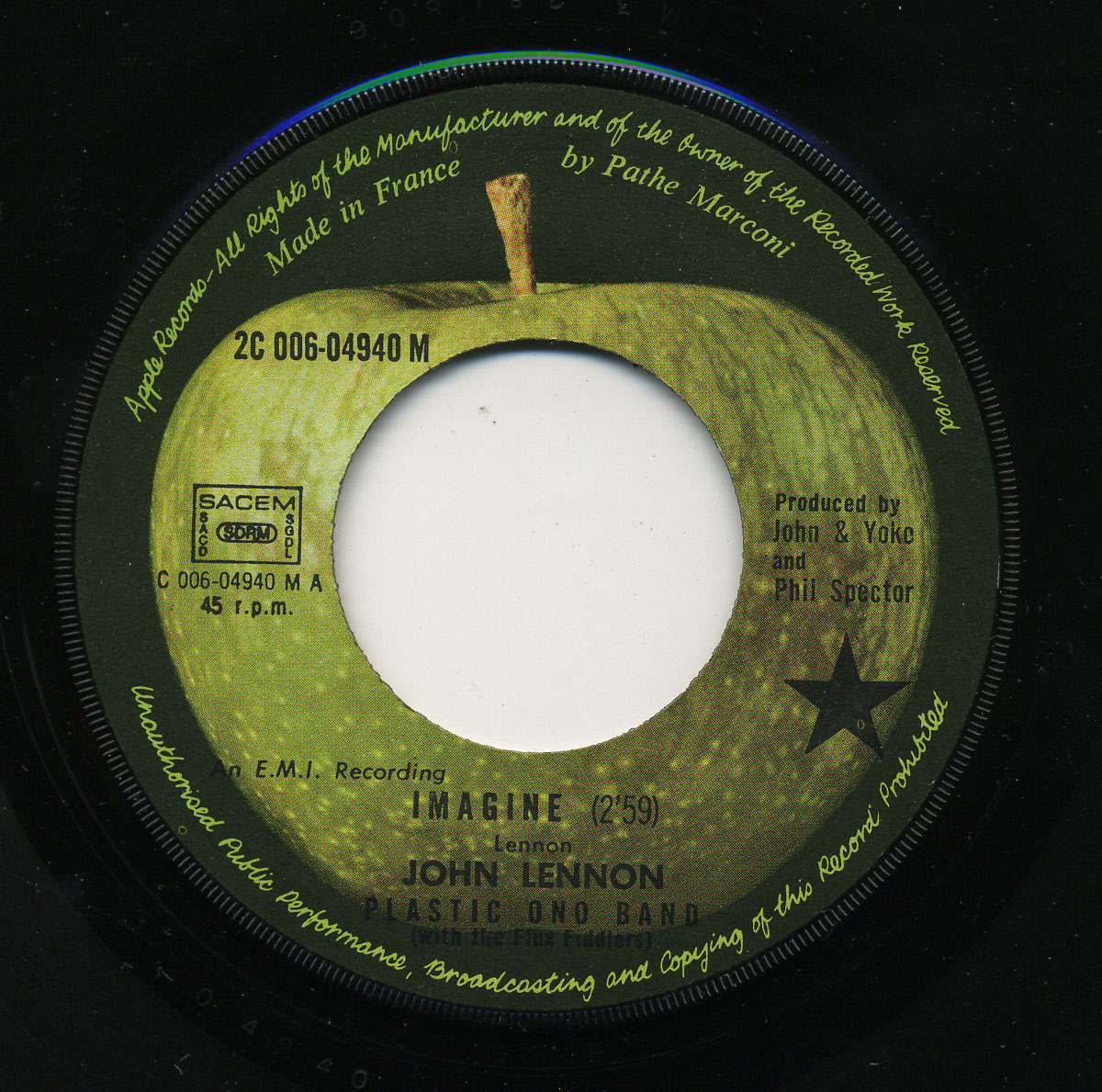
Friend Andrey in Russia has sent another two examples. The first is a mono single from France:

And a slightly different image of the white label above from Brazil (different font on the year of issue):

There are no doubt many more examples given the worldwide love of this one song. If you have any other label variations you would like to share please email them through to beatlesblogger@gmail.com

Two Small But Unusual Garage Sale Finds

There are times at garage or yard sales when you are on the hunt for Beatles vinyl that the pickings can be pretty slim.

This was the case last weekend. After visiting quite a few, and with the prospect of going home empty-handed, I struck two very unusual and potentially rare items at the very last house I visited. Sitting in a box of old 45’s I found two New Zealand pressings. They’re both collectable – with this one probably being the most rare:

As you can see, it’s a copy of John Lennon’s “Imagine” – but on the NZ Parlophone label:

I must admit, despite seeing quite a few copies of this single in my time, I’ve never seen in on the black and yellow Parlophone label before.  Next post I’ll put up some of the great variety of label variations of “Imagine” from around the world.

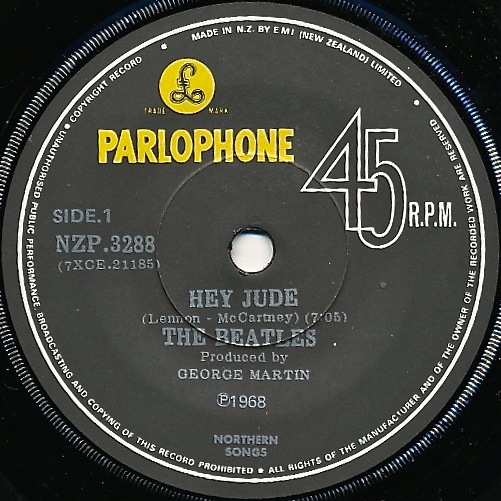
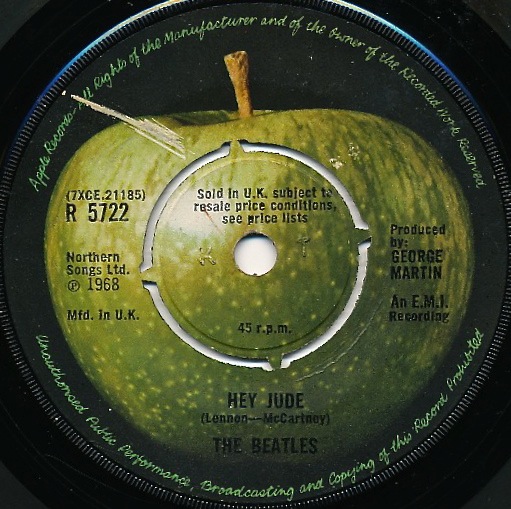
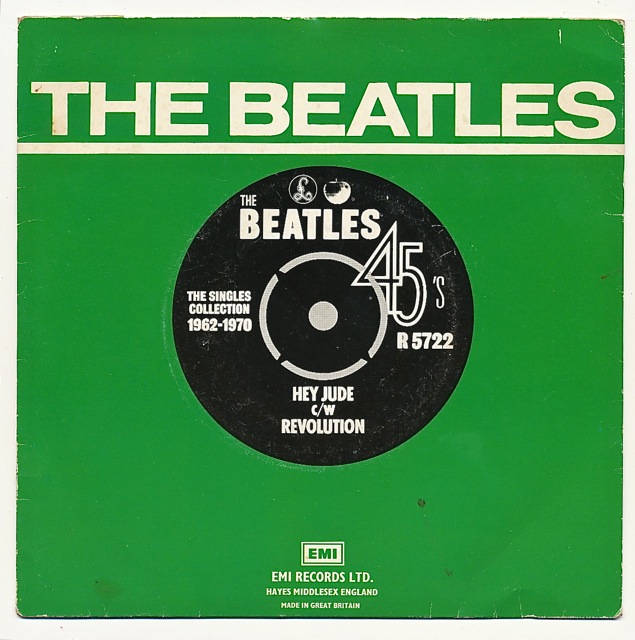
Sitting with the John Lennon was another New Zealand single – a copy of the Beatles “Hey Jude” b/w “Revolution”. Unusually, it was in a UK cardboard outer sleeve:

These covers were produced for the UK Beatles box set “The Beatles Collection” containing all 25 British single releases. However, inside this one there was a New Zealand Parlophone pressing of the single – again on the yellow and black Parlophone label:

In “The Beatles Collection” box set this single looks like this:

So, the copy I found is quite strange. I’m not sure if New Zealand EMI ever produced a version of this box set where they sourced the British packaging but inserted locally pressed vinyl. In some countries that sometimes happened. If so, my single has become separated from the rest of the collection at some stage….

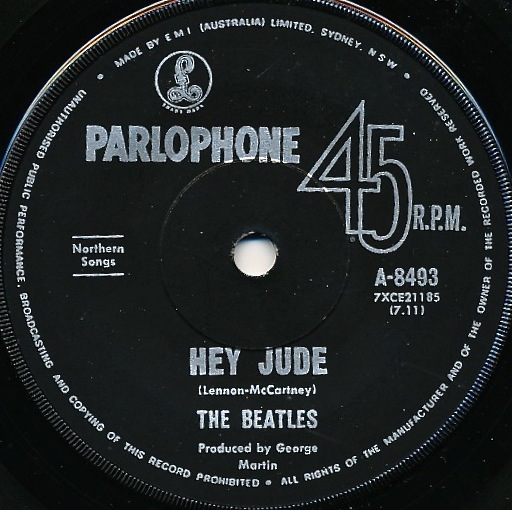
These are the other versions of  the “Hey Jude” single in my collection. The record was released in that period just when Apple Records had first been created and so some copies in Australia also came out on the Beatles’ old label, Parlophone:

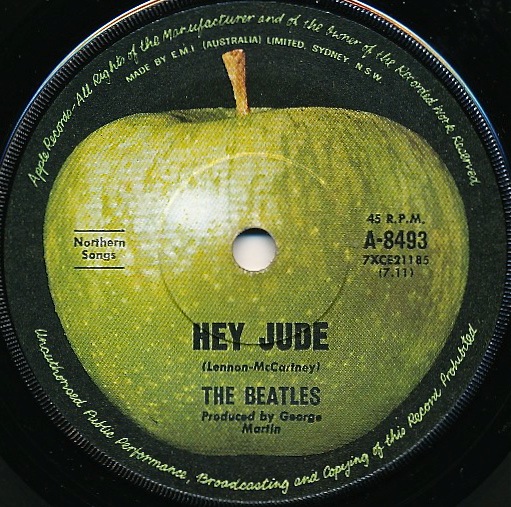
It was also released here on a standard Apple:

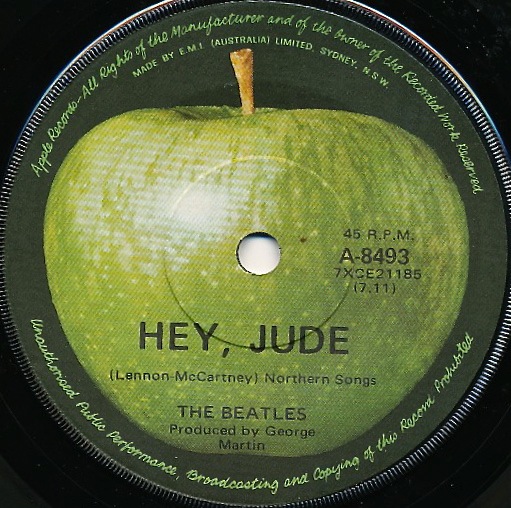
And here’s an example of some weird typography being used in the song title on a later Australian Apple pressing:

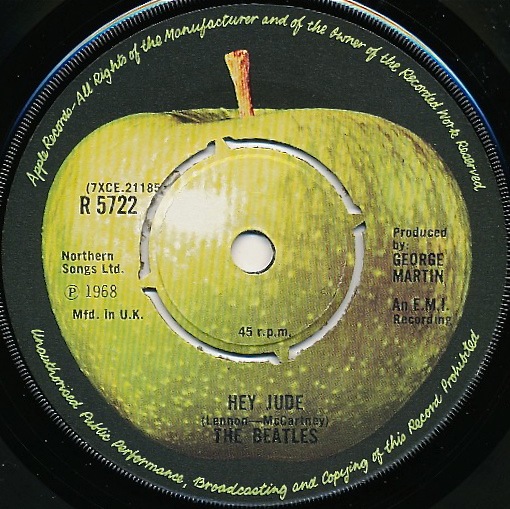
Finally an example of the original UK Apple version:

So, when garage sale hunting seems fruitless sometimes its worth going to just one more house….

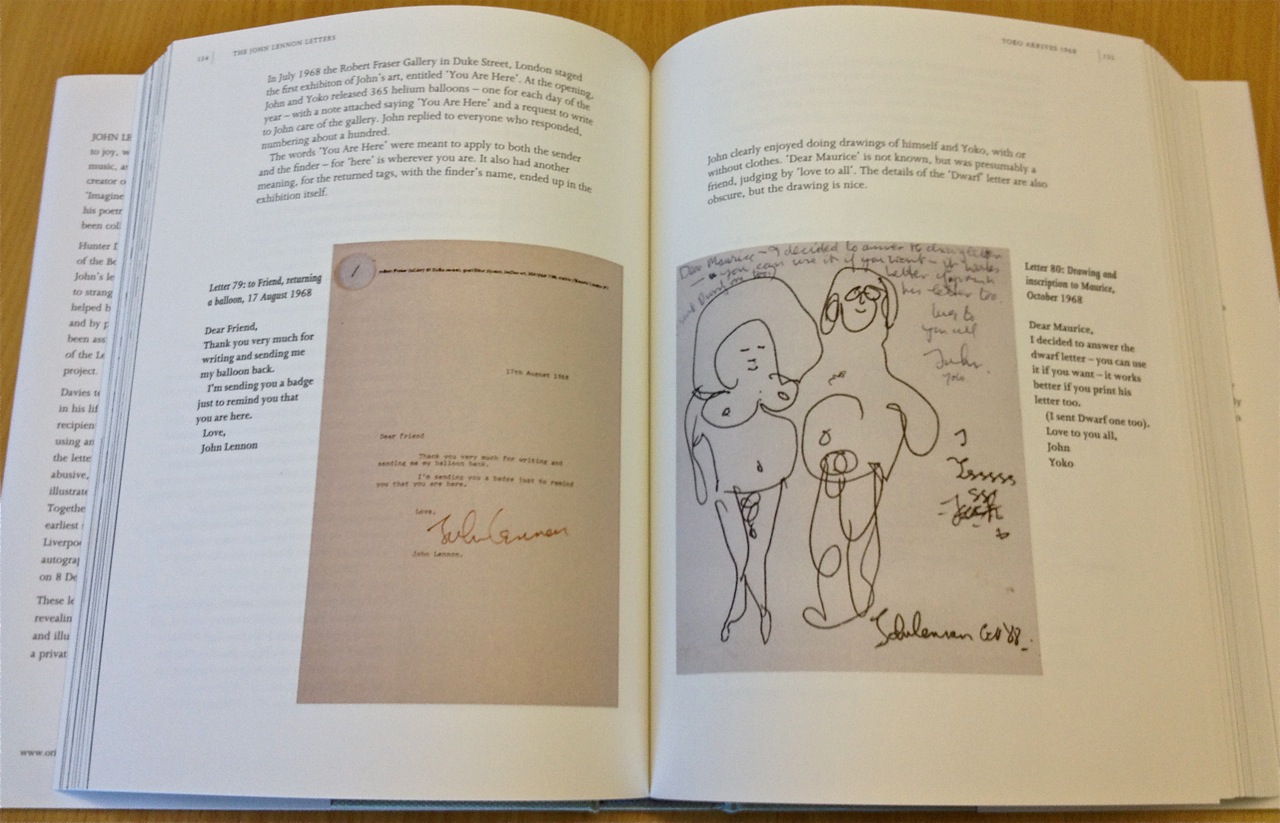
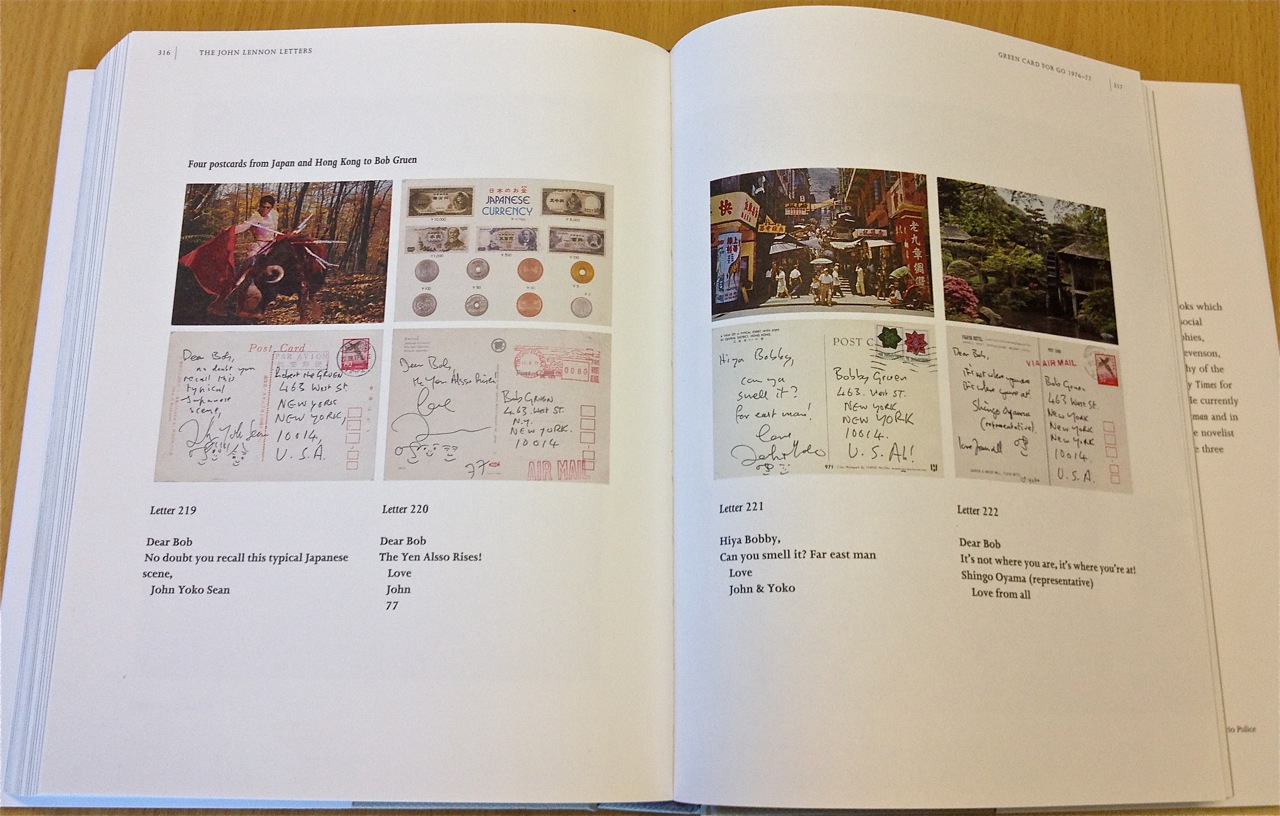
The John Lennon Letters – New Book

“John Lennon lived and died in an era before computers, emails, twits, tweets, and twitters, hence he handwrote or typed letters and postcards to his family, friends, fans, strangers, newspapers, organisations, lawyers and the laundry.  Most of his letters were funny, informative, campaigning, wise, mad, anguished, poetic.  Sometimes they were heartbreaking.  We know from his lyrics and his two books of poems that he had a way with words, but his letters have up to now never been collected and published, and in many cases their very existence has remained unknown.” – Hunter Davies

In the month that should have seen John Lennon’s 72nd birthday comes a great new and very insightful book – “The John Lennon Letters”:

This book features almost 300 letters that were recovered by famed Beatles biographer Hunter Davies with the help of major auction houses in the UK and US.  They include a page from the “Daily Howl,” a  homemade newspaper John created when he was 12 or 13; a page from a homemade book John penned at age 11; letters to relatives including his mother, father, son, half-sister, cousins and aunts; to his first wife Cynthia (including his first ever written correspondence to her which was a homemade card celebrating their first Christmas together); early fan letters, countless items to friends, journalists, dignitaries, record executives, and of course to the other Beatles.

It is all compiled and edited by Hunter Davies, who this week gave an interview to Australian radio host Philip Clark on the ABC’s Radio National Breakfast program:

The book reveals Lennon’s emotional states – highs and lows – and much about his songwriting. It includes hand-written Beatles set-lists, drawings, lyrics to never-recorded songs, and even grocery lists from the later parts of his life.

It is the first-ever compilation of John Lennon’s musings and paints a unique, intimate, and rather emotional portrait of one of music’s – and the world’s – most beloved and enigmatic figures.

(click images to see larger versions)

“The John Lennon Letters” is published by Little, Brown and Company.

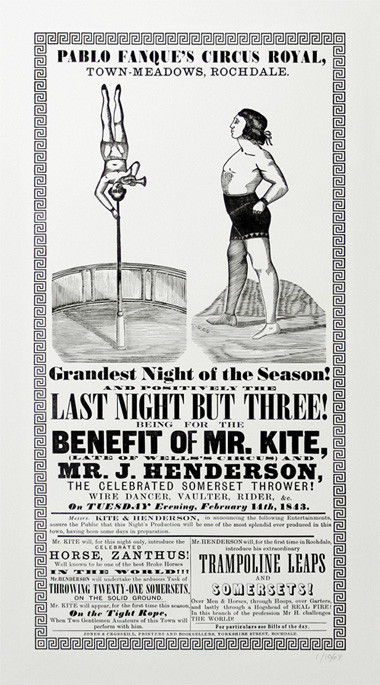
John Lennon’s Poster Replicated – Mr Kite!

This is nice.

The Beatles tune “Being for the Benefit of Mr. Kite!” was inspired by an 1843 circus poster that John Lennon purchased at an antiques store and hung in his music room.

Now London designer and Beatles superfan Peter Dean has recreated this poster in obsessive detail. He went so far as to collaborate with a wood-engraving artist and had the final poster letterpress printed. The short film (above) has been made about the project. You can find a larger format version of it and a lot more info on a cool website at:  http://kiteprint.com

And for more info Peter’s email is:  mail@kite.com

“A Hard Day’s Night” Chord Cracked – Maybe…

The  Sydney Morning Herald and other Australian news providers are today (via the Press Association) reporting on one of the often-mentioned Beatle mysteries – the opening chord of the song  “A Hard Day’s Night”:

The SMH says:  “It is one of the most famous sounds in the history of rock and roll. The clanging, opening chord at the start of the 1964 Beatles hit A Hard Day’s Night is instantly recognisable. Yet, as many musicians have discovered, every attempt to reproduce it seems to sound wrong.

A British mathematician now claims to have got closer than anyone else to solving the decades old musical mystery. Dr Kevin Houston, from the University of Leeds, used sophisticated software to split up the sound on the record into its component frequencies.

Presented on a computer screen, a pattern was revealed showing which notes were most prominent. The results suggest a much simpler solution than one proposed four years ago by another scientist from Canada.

Professor Jason Brown, from Dalhousie University, maintained that missing guitar notes were replaced by Beatles producer George Martin playing a piano. Buried in the background behind the guitars, the piano is hard to hear. Yet according to Prof Brown it provides the vital musical spark that makes the chord so distinctive. Dr Houston does not dispute that the piano is there, but challenges its importance.

His believes George Harrison was playing a straightforward F add9 on his 12-string electric Rickenbacker guitar, rather than the unusual fingering indicated by Prof Brown. At the same time, Harrison appears to have had his thumb curled round the neck of the guitar, pressing down the bottom E string at the first fret. This is a common technique among self-taught pop and rock guitarists.

Dr Houston also established that John Lennon was playing the same chord on an acoustic guitar. On the stereo track, Harrison and Lennon are heard on different speakers.

The wonders of music and mathematics! Dr Houston takes us through it all in detail here:

The SMH continues:  “The opening chord to A Hard Day’s Night is a mystery,” said Dr Houston, who was speaking at the British Science Festival. “It turns out that nobody really knows what it is. People who do know are a bit cagey about it. George Martin probably knows quite well but I think he’s quite happy not to tell people. “I wouldn’t like to say that we’ve definitely got it right, but I think we’ve put the record straighter. It makes mathematical and musical sense.”

Both are implausible, according to fellow mathematician, teacher and guitarist Ben Sparks who was taking part in Saturday’s presentation. “It beggars belief to say George Harrison was dodging the first string; its laughable,” he said. “Trying to play four strings in the middle of a 12 string is bloody hard, and most musicians would think it’s ludicrous to have John Lennon play just a high C.”

A question mark still hung over the role of Paul McCartney’s bass guitar, said the mathematicians. Whether he was playing a full note, or a harmonic, or both, remains a puzzle.” (ends)

Meanwhile….Paul McCartney has been in France being presented with France’s highest cultural award, the Legion of Honor, by French President Francois Hollande:

Paul looked pleased. Nice tapestry in that room, too!


The Art & Music of John Lennon

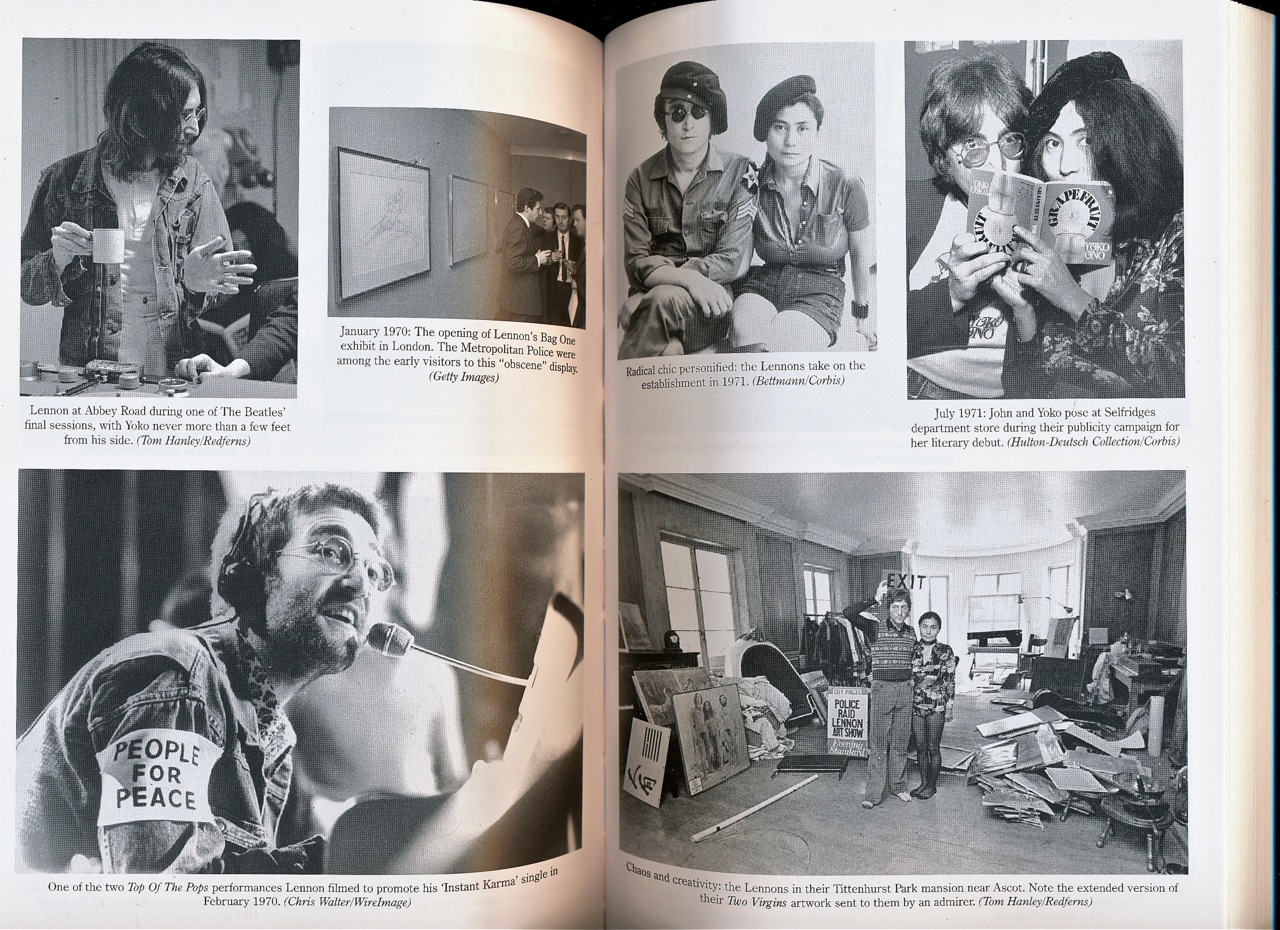
Visiting my local discount bookstore again this week turned up this interesting read – “The Art and Music of John Lennon” – by Peter Doggett.

Peter Doggett writes a Beatles blog called You Never Give Me Your Money, which is also the title of a book he released in 2009/10, a critically-acclaimed history of why the Beatles split, and what happened over the next 40 years. Doggett knows his stuff. He’s the author of a number of books, and was the editor of the famous and respected “Record Collector” magazine between 1983 and 1999. He’s a regular contributor to “Mojo” magazine as well.

This updated edition of “The Art and Music of John Lennon” (published in 2005) includes additional material, some of it discovered and released after John Lennon’s death. The book aims to be a complete catalogue and history of Lennon’s work as a musician, writer and artist – a definitive portrait. It includes details on each then available officially released recording; a UK and US discography; details on home demo recordings from the early Beatle years onwards; studio out-takes; live recordings; collaborations with other artists and interview material.

The book also examines Lennon’s non-musical work: his films from “How I Won the War” to the avant-garde work he did with Yoko Ono and on to more recent documentaries, videos and promotional clips. There’s a complete catalogue of writings from “A Spaniard in the Works”, prose and poetry, and letters to magazines and friends, as well as artwork, erotic lithographs and other drawings and paintings.

There are also some great photographs inside, some of which I’ve never seen before, like the one on the lower right-hand side taken at Tittenhurst Park:

(click on the image to see a larger version)

If you want to see a bit more of the book, Amazon has one of those Look Inside the book pages with more.

The Beatles Discomania – A Great Book

Time for another gem found during my recent brief visit to Paris (see the previous France visit posts here, and here).

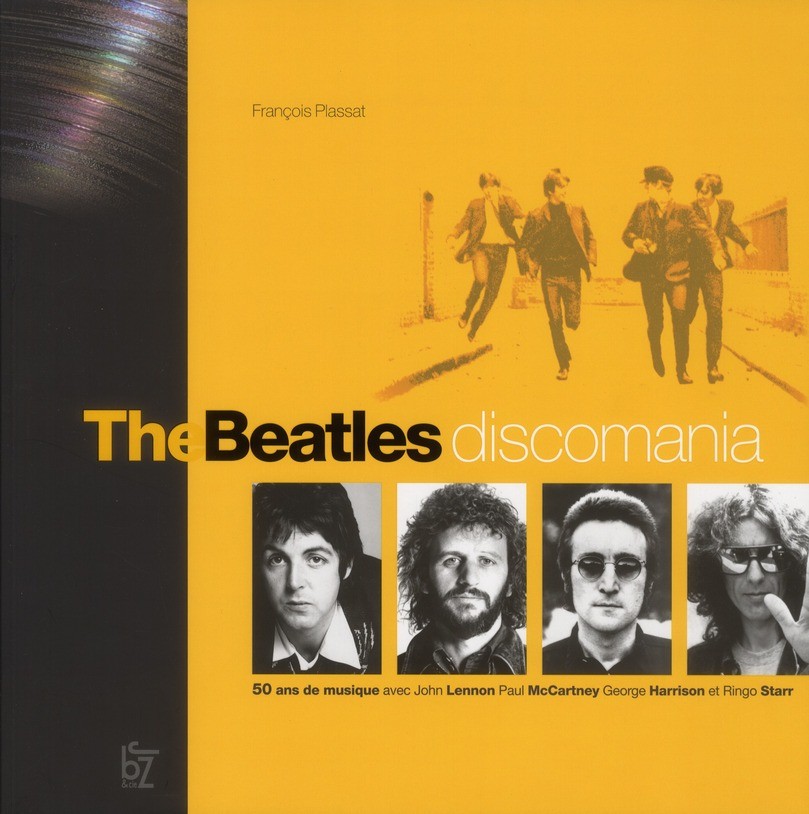
At the Gilbert Jeune bookstore I found this wonderful book by French writer and Beatles fanatic Francois Plassat:

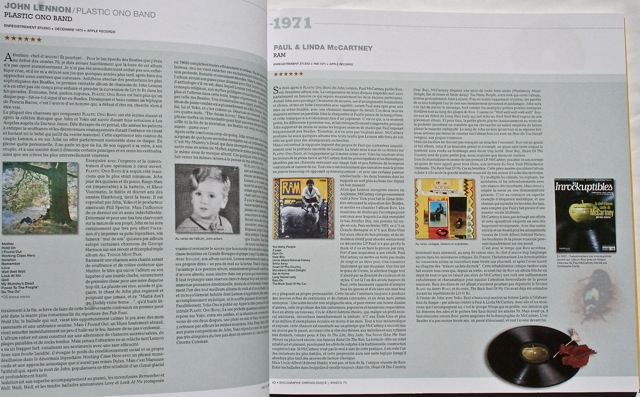
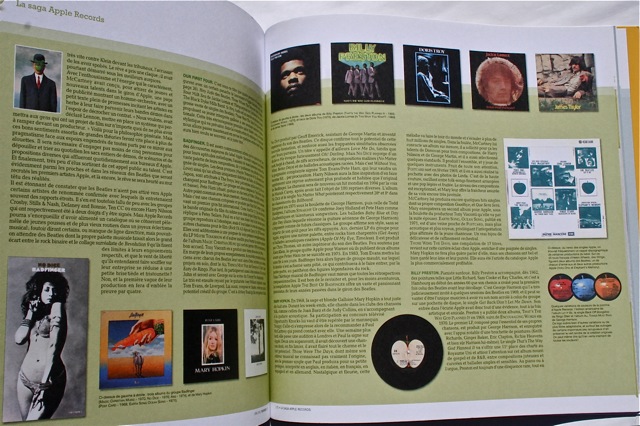
“The Beatles Discomania” is a fantastic career-spanning summary of the Beatles output as a band and also as solo artists. It brings the story right up to the end of 2011 with details of the John Lennon Signature box set and his other re-issues, the Paul McCartney “Archive” series gets a mention, Ringo’s “Y Not”, and the George Harrison documentary “Living in the Material World“.  As you can see in the images below this is a lavishly illustrated with extensive album cover images and memorabilia spanning a wide range of releases. It is a very attractive book to own – even though I don’t speak French!

It turns that François Plassat works in graphic design and it shows as the text and image layout throughout this book is excellent. He created an agency called China Night which he led for more than twenty years . After writing a book about  Paul McCartney (released in October 2010 – see below), Plassat’s most recent work “The Beatles Discomania” is about  fifty years of the Beatles releases.

The book is a large format, soft-back  which has been stylishly and sensibly laid out. It was published by JBz & Co in France in 2011. The book is full of information on all the recordings released by the group as well as the solo releases of each band member. There are sections on Apple Records, George Martin, etc. This is a true guide to the complete musical output of the Beatles, a carefully laid out goldmine of information. Bring on the English translation!

Here are some images giving just a taste of what’s inside and the attention to detail in the illustrations and photographs:

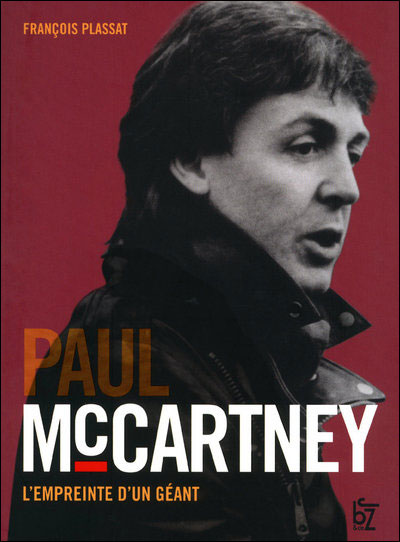
Author Francois Plassat has also written another book “Paul McCartney: L’empreinte d’un Géant”, which translates as “Paul McCartney: The Footprint of a Giant”:

If you speak French (and we have some followers of the Beatles Blog in France) then you might be interested in these two interviews with author Francois Plassat about his amazing book “The Beatles Discomania”.

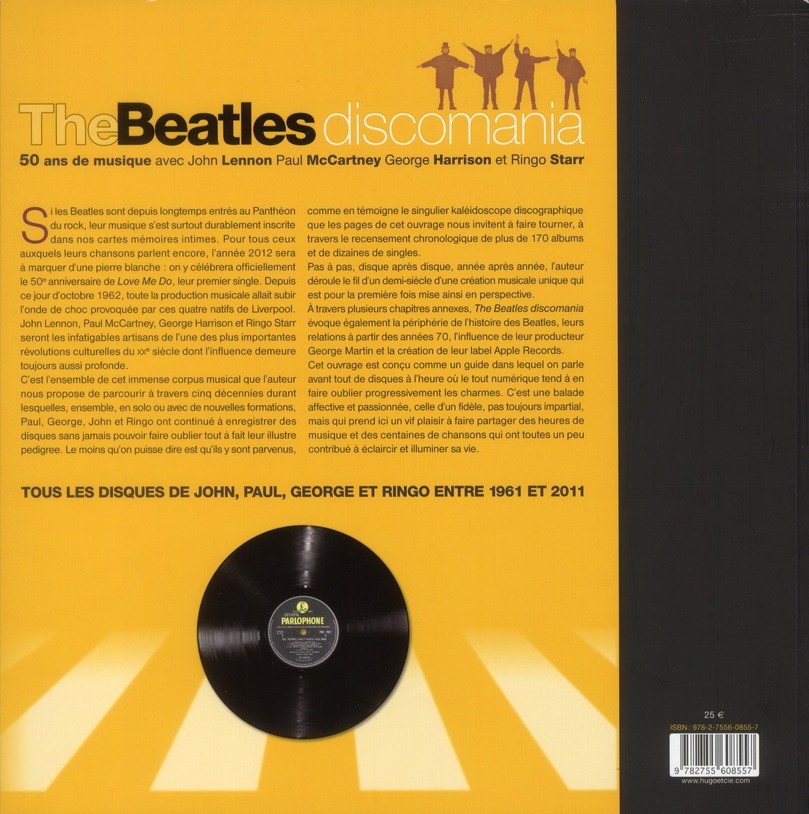
Here’s the rear cover: