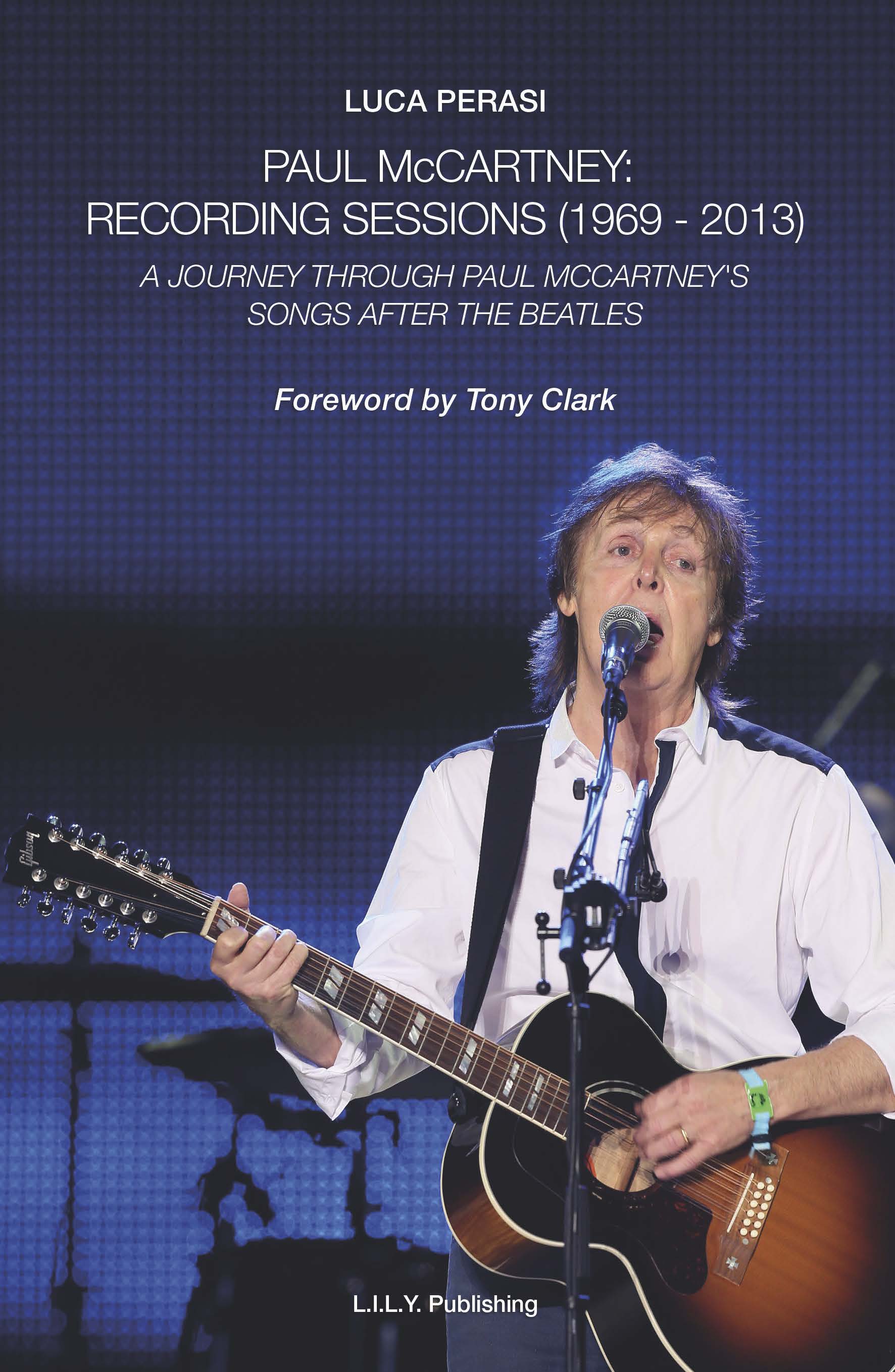
In something of a first in the publishing world comes a new book detailing the background to every Paul McCartney song, from McCartney (1969), to New (2013).
“Paul McCartney: Recording Sessions (1969-2013). A Journey Through Paul
McCartney’s Songs After The Beatles” is written by Italian author, researcher and collector Luca Perasi. It details the stories behind each of McCartney’s 383 compositions in their chronological order of recording. There are recording dates, studios and who played what on each song.
The book includes 70 exclusive interviews with the musicians, arrangers, producers and collaborators who worked with McCartney through the years, including Denny Seiwell, Laurence Juber, Carl Davis, Neil Dorfsman, Jerry Marotta, and Steve Holly…to name just a few. The foreword is by long-time Abbey Road Studios recording engineer Tony Clark.
Plans for the 50th anniversary of the Beatles conquering the US and the world are starting to gather pace.
Looks like there’s now an official logo for the 2014 celebrations:
The big news though is that Capitol Records and Apple Corps have just officially announced the release of The U.S. Albums, a new 13 CD Beatles collection spanning from 1964’s Meet The Beatles! to 1970’s Hey Jude.
The box set (as well as individual CDs “for a limited time”) will be released in the UK on January 20, on January 21 in North America, and on January 17 in Australia:
Great to see The Beatles’ Story included in there. And if you check the photo above (and promo video below) you can see that Yesterday and Today comes with what looks like a peel-off Butcher Cover!
Here’s the EMI Australia press release with the details:
LADIES AND GENTLEMEN, THE BEATLES!
Celebrate 50 Years of Globe-Sweeping “Beatlemania” The U.S. Box Set out January 17, 2014
On February 7, 1964, The Beatles arrived at New York’s John F. Kennedy Airport, greeted by scores of screaming, swooning fans who rushed the gate to catch a glimpse of John Lennon, Paul McCartney, George Harrison and Ringo Starr as they took their first steps on American soil. Two nights later, on Sunday, February 9, 74 million viewers in the U.S. and millions more in Canada tuned in to CBS to watch The Beatles make their American television debut on “The Ed Sullivan Show.” In this cultural watershed moment in American history and one of the world’s top-viewed television events of all time, The Beatles performed five songs on the live broadcast. “Beatlemania,” already in full, feverish bloom in The Beatles’ native U.K., was unleashed with blissful fervor across America and around the world. The British Invasion had begun.
To commemorate the 50th anniversary of these history-making events, The U.S. Albums, a new 13CD Beatles collection spanning 1964’s Meet The Beatles! to 1970’s Hey Jude, will be released January 17 by Apple Corps Ltd./Capitol. The Beatles’ U.S. albums differed from the band’s U.K. albums in a variety of ways, including different track lists, song mixes, album titles, and art.
The albums are presented in mono and stereo, with the exception of The Beatles’ Story and Hey Jude, which are in stereo only. Collected in a boxed set with faithfully replicated original LP artwork, including the albums’ inner sleeves, the 13 CDs are accompanied by a 64-page booklet with Beatles photos and promotional art from the time, as well as a new essay by American author and television executive Bill Flanagan. For a limited time, all of the albums (with the exception of The Beatles’ Story, an audio documentary album) will also be available for individual CD purchase. A Hard Day’s Night (Original Motion Picture Soundtrack), The Beatles’ Story, Yesterday And Today, Hey Jude, and the U.S. version of Revolver make their CD debuts with these releases.
By the end of 1963, before The Beatles’ American arrival, “Beatlemania” had already sprung forth across the Atlantic to take root in the U.S. In early December, The New York Times published a Sunday magazine feature and “CBS Evening News” aired an in-depth report about the unprecedented frenzy over the young band from Liverpool. Radio stations across the U.S. began to play The Beatles’ latest U.K. singles in almost non-stop rotation, trying to meet an insatiable listener demand. Capitol Records rushed out the American single for “I Want To Hold Your Hand” (with B-side “This Boy”) on December 26, three weeks ahead of schedule and one month after the single’s U.K. release. More than one million copies of the U.S. single were sold within 10 days.
On January 3, 1964 Capitol released “Please Please Me” (with B-side “From Me To You”), and The Beatles’ first Capitol album, Meet The Beatles!, followed on January 20. After achieving the No. 1 chart position for five consecutive weeks in the U.K., “I Want To Hold Your Hand” reached the top of the U.S. singles chart on February 1, holding the No. 1 position for seven consecutive weeks, and within two months, more than 3.5 million copies of Meet The Beatles! were sold in the U.S.
[Note: The paragraph above is not correct. The online press release correctly states: In early January 1964, Vee-Jay reissued “Please Please Me” (with B-side “From Me To You”), and Swan reissued “She Loves You.” The Beatles’ first Capitol album, Meet The Beatles!, followed on January 20. After achieving the No. 1 chart position for five consecutive weeks in the U.K., “I Want To Hold Your Hand” reached the top of the U.S. singles chart on February 1, holding the No. 1 position for seven consecutive weeks, and within two months, more than 3.5 million copies of Meet The Beatles! were sold in the U.S.]
The excitement of The Beatles’ February 7 arrival in New York, where they were met by an estimated 3,000 ecstatic fans at the airport, was documented by the world’s leading media outlets, beamed around the world in a blitz of news bulletins and photos. Every move The Beatles made, and seemingly every word they uttered, was captured – melting hearts of young fans everywhere who simply could not get enough of these charming, witty and stylish British boys and their electrifying new songs. America’s biggest star of the day, Elvis Presley, sent The Beatles a telegram wishing them well for their national television debut.
Ed Sullivan spoke of the unprecedented frenzy in his memorable first introduction of The Beatles, saying, “Now, yesterday and today our theater’s been jammed with newspapermen and hundreds of photographers from all over the nation, and these veterans agreed with me that this city never has witnessed the excitement stirred by these youngsters from Liverpool who call themselves The Beatles.”
After captivating North America with their Ed Sullivan debut, The Beatles traveled to Washington, DC, performing their first Stateside concert on February 11 at the Washington Coliseum to 8,000 fans in the round. The Beatles then returned to New York for two sold-out Carnegie Hall concerts on February 12. On February 16, they made their second appearance on “The Ed Sullivan Show” in a live broadcast from The Deauville Hotel in Miami Beach, Florida. Viewership for the episode was nearly as strong as for their debut one week prior, with an estimated 70 million people — 40% of the American population — tuned in to watch their performances of six songs. On February 22, The Beatles returned to England in triumph, welcomed home upon their 7am landing at London’s Heathrow Airport by an estimated 10,000 fans.
The Beatles were now firmly in place as the world’s favorite and most famous band. Their third “Ed Sullivan Show” appearance, a three-song performance taped prior to the band’s live debut on the program, was broadcast on February 23. Billboard’s Hot 100 Singles chart for April 5, 1964 was graced by 12 Beatles songs, including the chart’s Top 5 positions, a sweep of the chart’s summit that has not been achieved by any other artist since. The band’s meteoric rise to unparalleled fame continued as “Beatlemania” swept the globe, a singular and boundless cultural marvel. The Beatles now belonged to the People, as they have ever since, with their universally-loved music and unflagging respect for humankind, advocating peace and love for all people around the world. (ends.)
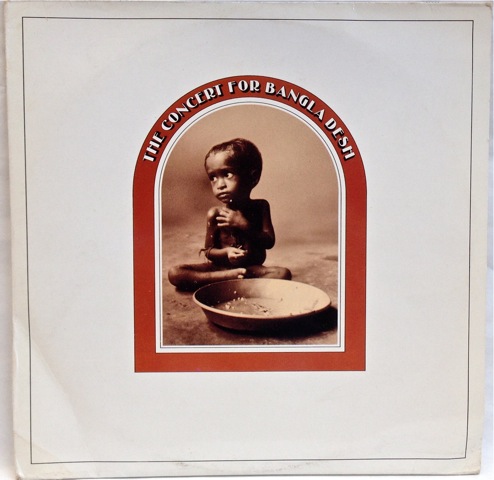
We’ve detailed at least one very unusualGeorge HarrisonConcert for Bangladesh 3 LP set before. (After a bit of detective work by our readers we discovered that that one came from South Africa).
And we picked up a nice US pressing of Bangladesh in San Francisco earlier this year.
But this latest addition to the collection is, we think, a bit of a rarity.
It’s the Epic Records release dating from 1991. The story goes that Epic, which is a subsidiary of Sony Music, had a royalties deal back then with Columbia/EMI (and hence Apple Records), to release some of their titles for the European market. The records we see here were made in Holland.
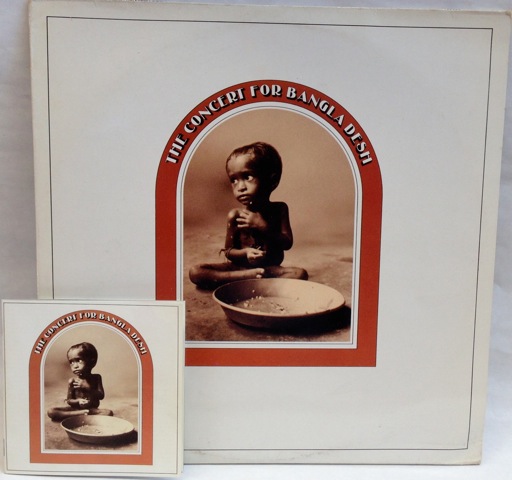
As you can see the Epic set doesn’t come in a brown/orange box. The 3 LPs are housed in a white sleeve that reproduces the artwork used for the booklet which came with the original 1971 Apple release:
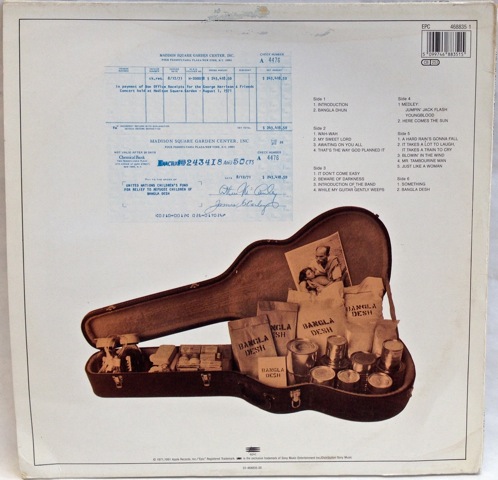
The rear cover is like the rear of the Apple booklet – but it has a track list included:
The inner sleeves are plain white:
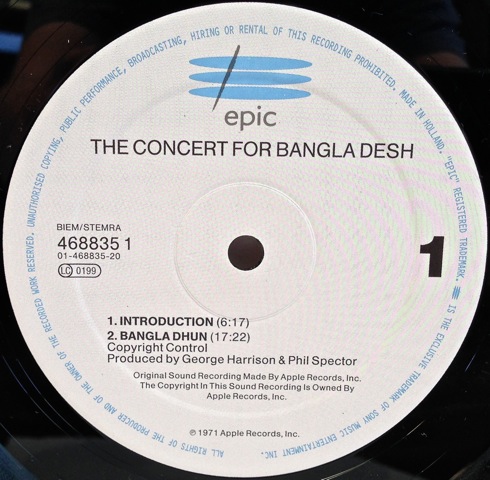
The 3 LPs are on an Epic Records label (with a small Apple Records licence mention at the bottom):
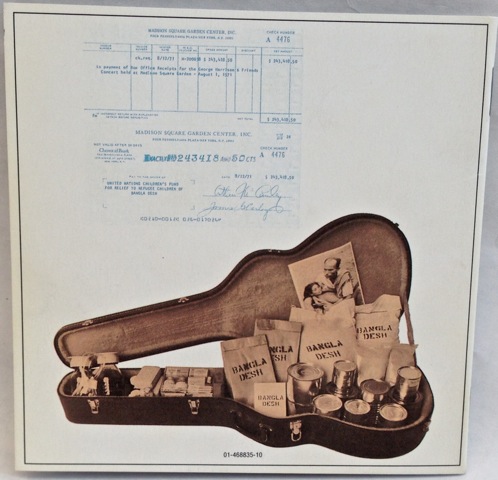
Surprisingly this Epic set includes a CD-sized booklet, not the original 12″ sized booklet. It’s not exactly the same as the booklet used in the Epic 2CD release (which also came out in 1991) because it has an LP catalogue number inserted on the rear (below the guitar case):A close-up of the booklet (click image to see a larger version):
Only thing is there seem to be none available anywhere in Australia at the moment. The local importers site says they are available, but no bookshops have them in stock. It looks like they only brought in limited numbers and they have sold out straight away.
In frustration we went searching the web to find out what we were missing out on. Here’s a special edition visual hit:
When we started way back with Part One of the Beatles With Records series it was based on the premise that (quote): “Despite selling multi, multi-millions of the things, it’s kind of strange that you hardly ever see photographs of the Beatles themselves with, or listening to, records”.
Well, through lots of help from Beatles Blog readers we’ve actually amassed quite a lot of photographs to disprove that theory.
And here are some more….
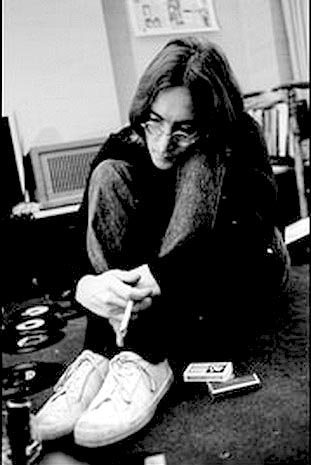
Back in that first post we showed this great photo of John Lennon surrounded by guitars, amplifiers, speakers and 45 singles, listening intently to music:
Here is another angle from that same day:
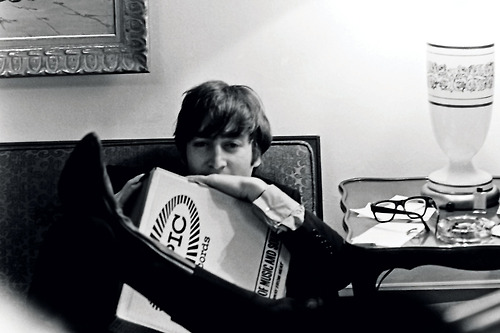
John is a bit of a running theme throughout this post. In this next photograph he seems to be holding either a big reel-to-reel tape box, or some sort of record box from the classic Epic Records company:
You can clearly see the company’s old logo on the front. In the 1960s EMI, the Beatles’ record company, had a distribution deal with Epic to release their titles in the UK – so maybe it was a box of sample records from them for him to listen to?Epic is still going strong of course. Here’s another of John seeking out a track to play on a great-looking jukebox. It’d be interesting to know which song he chose to listen to….
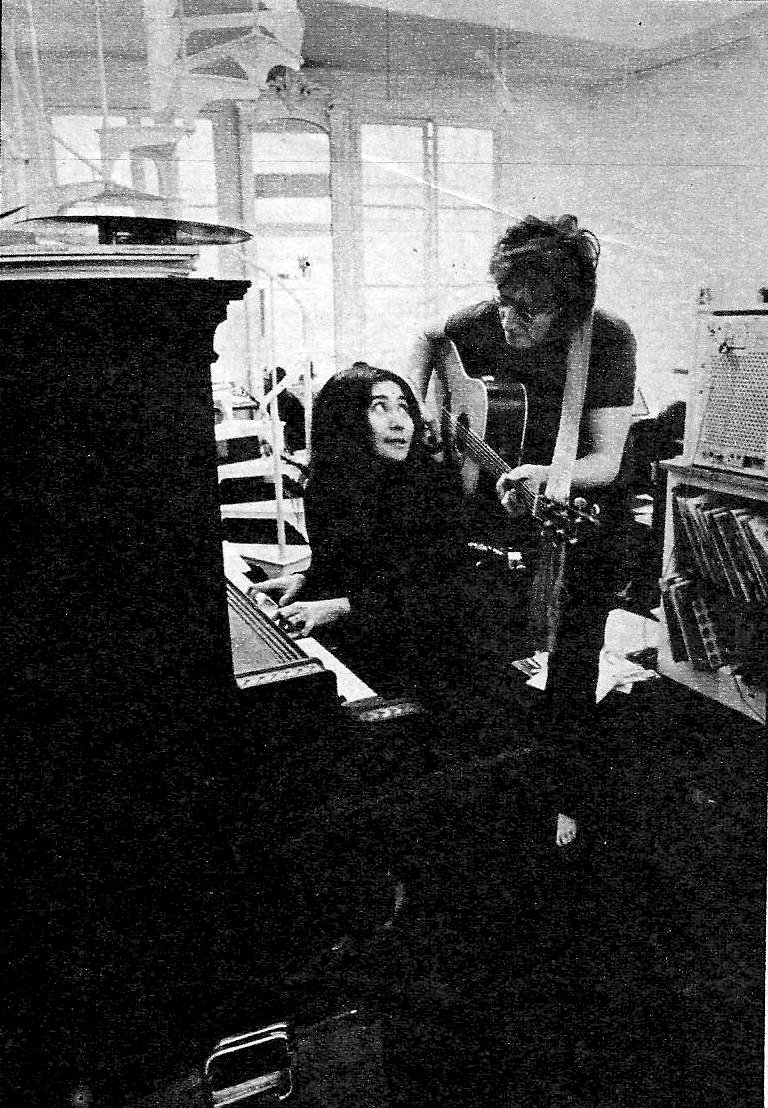
There are no recognisable discs in this next one of John and Yoko rehearsing, but there’s a shelf full of records behind them none-the-less:
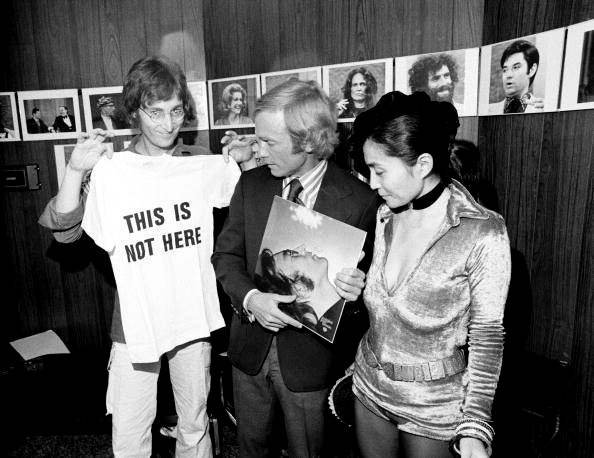
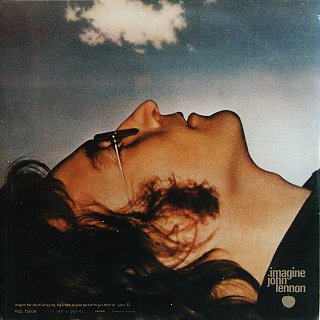
This next photograph shows the couple on the promotion trail for Imagine:
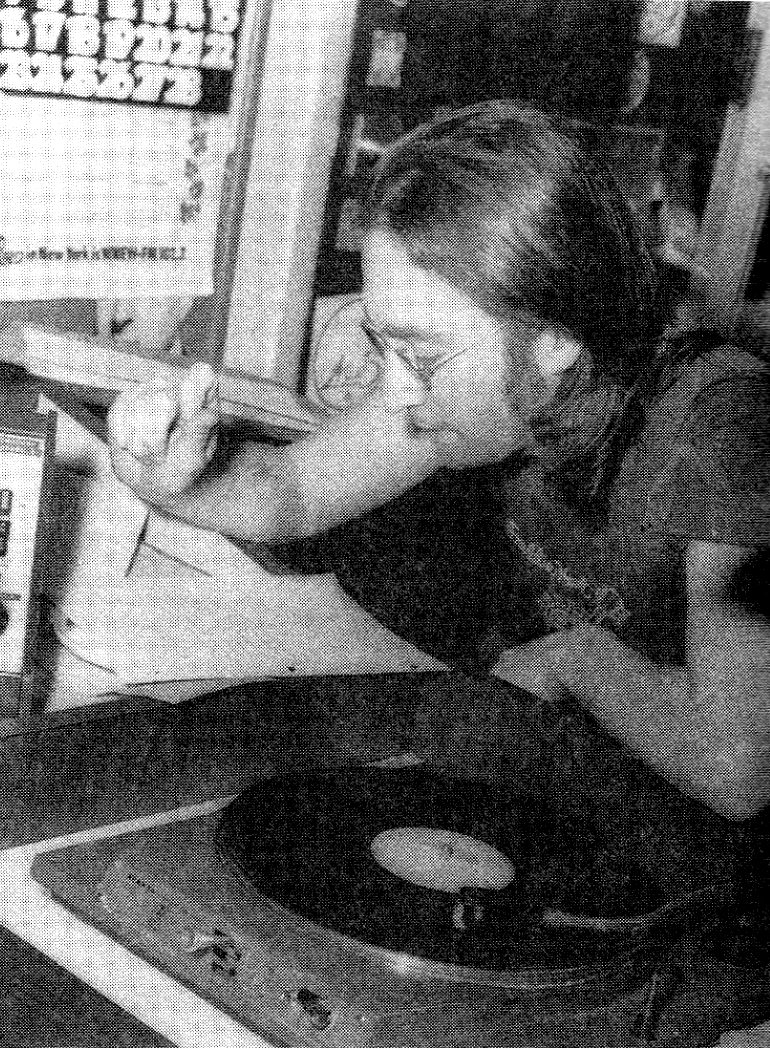
Not sure which LP John is listening to here:
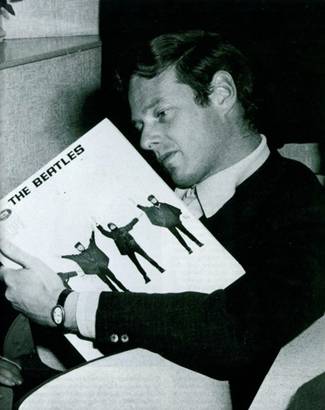
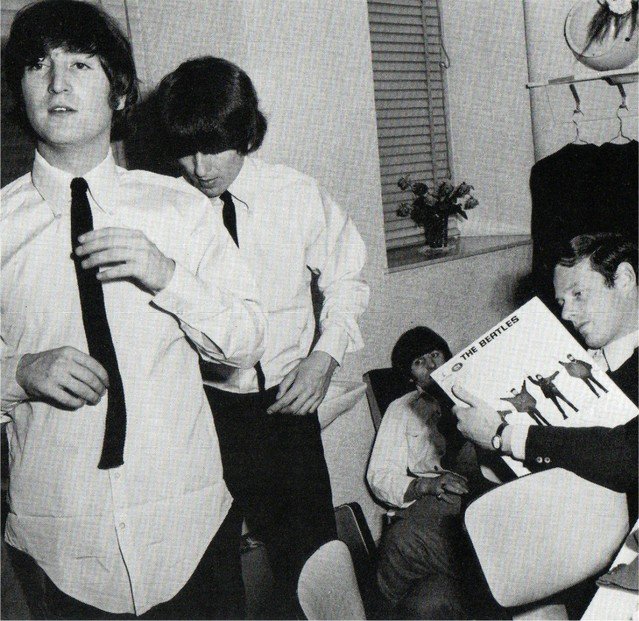
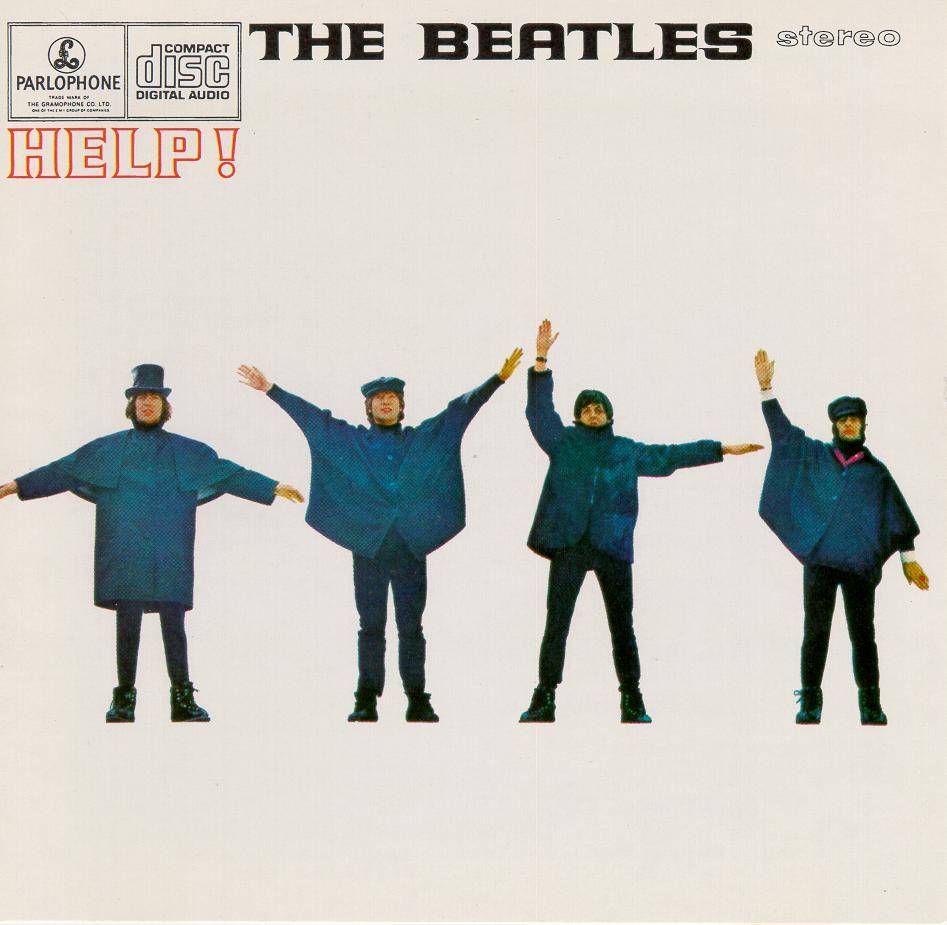
Back in Part 5 we showed this photo of Beatle manager Brian Epstein holding a UK copy of Help!:
Another photo has come in which gives the close-up shot above a great deal more context. Brian was actually studying the cover of Help! amidst the hubbub of the Beatles getting ready to make some sort of an appearance, or about to go on stage: This next one is associated with the same Beatle film-related project. It’s pretty easy to guess that the band is at a press conference in the United States, only this time associated with the US version of the LP from the film Help! It came with a different cover:
Here’s another photograph of Brian Epstein, this time with a much earlier album, Please Please Me:
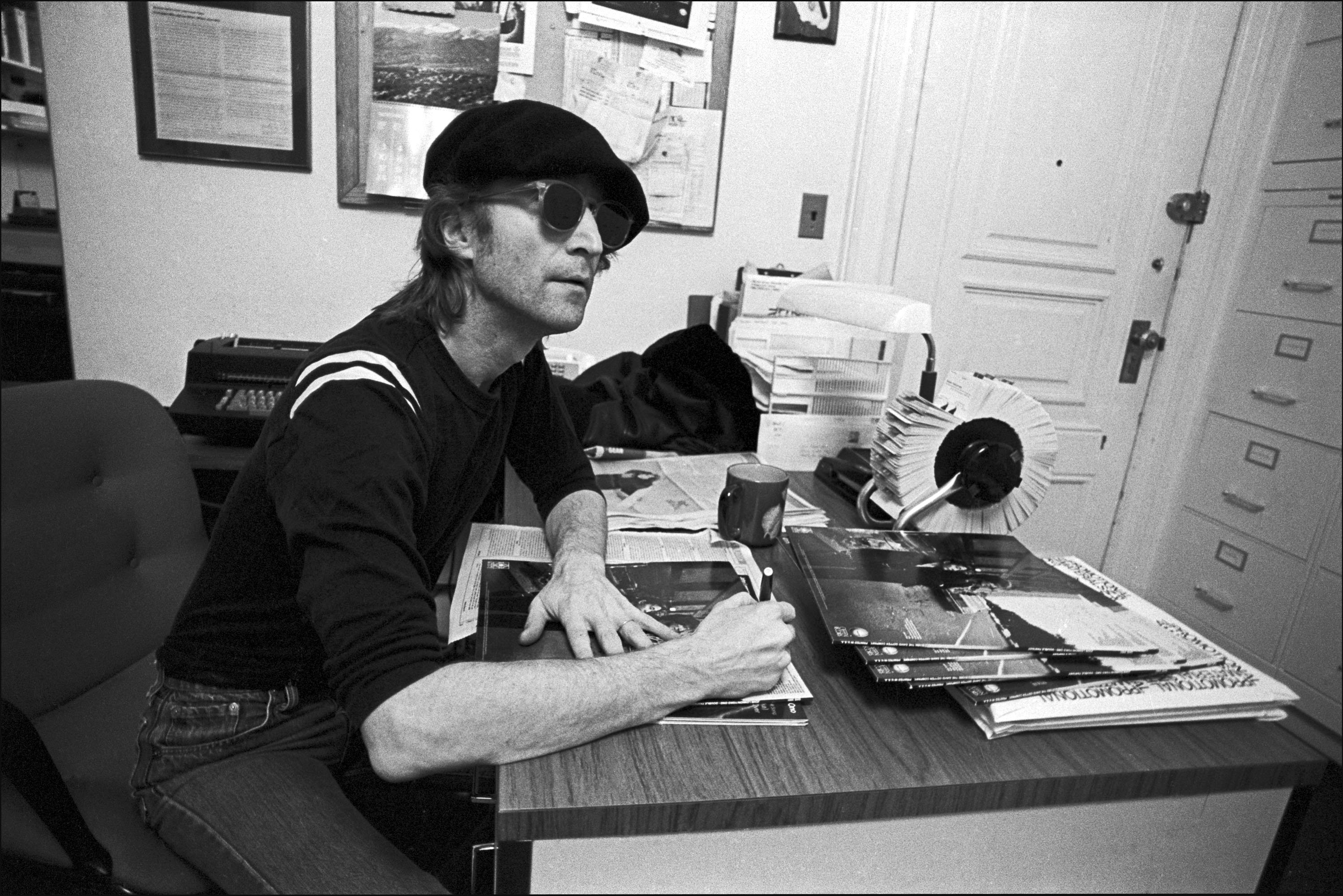
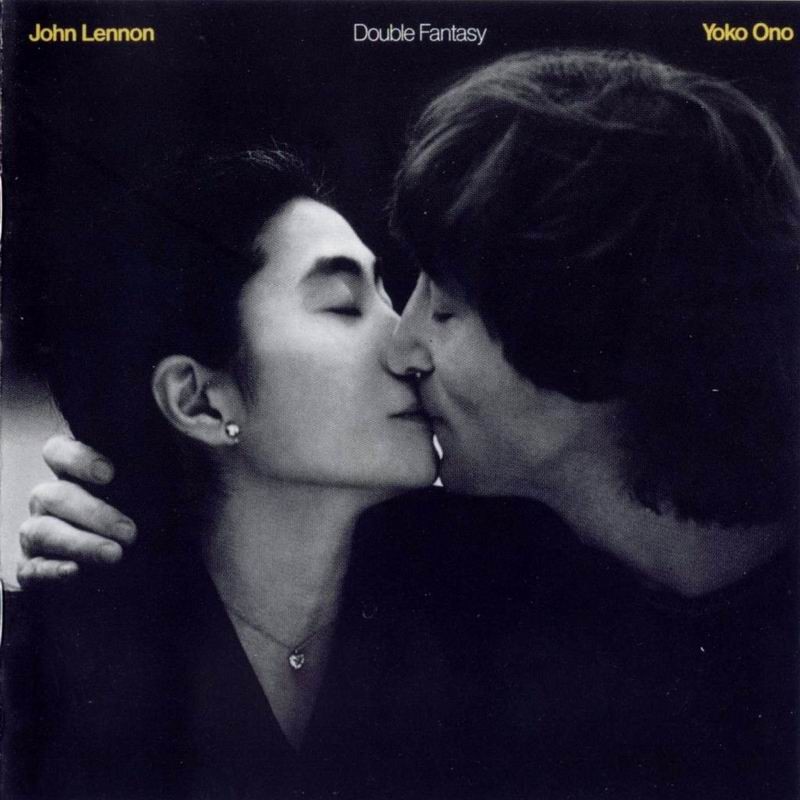
Meanwhile, back to John Lennon, and two photograph taken around the time of the release of Double Fantasy. Check what looks to be a sample image of the cover stuck on the noticeboard:And, in the same office, signing the back covers of promotional copies of Double Fantasy to go out to reviewers at radio stations, magazines and newspapers:
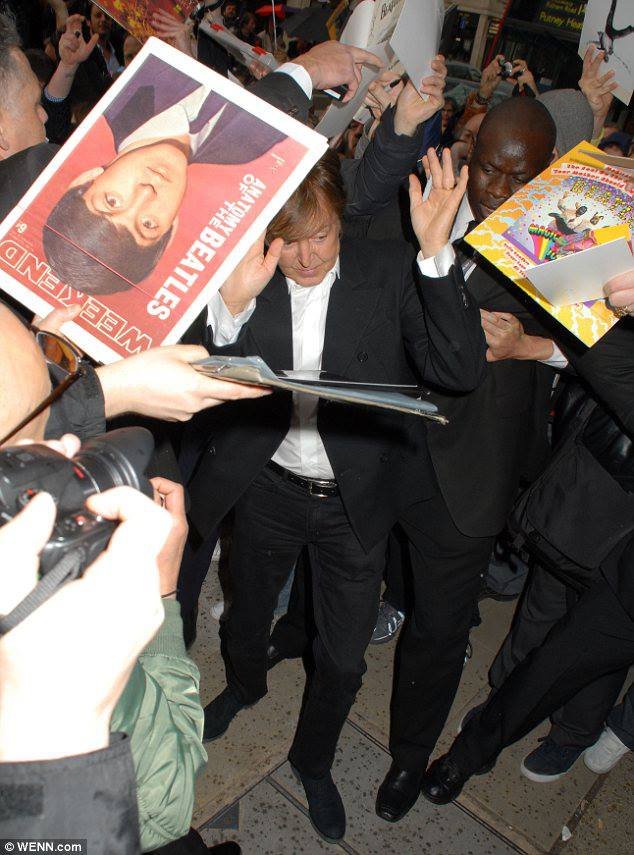
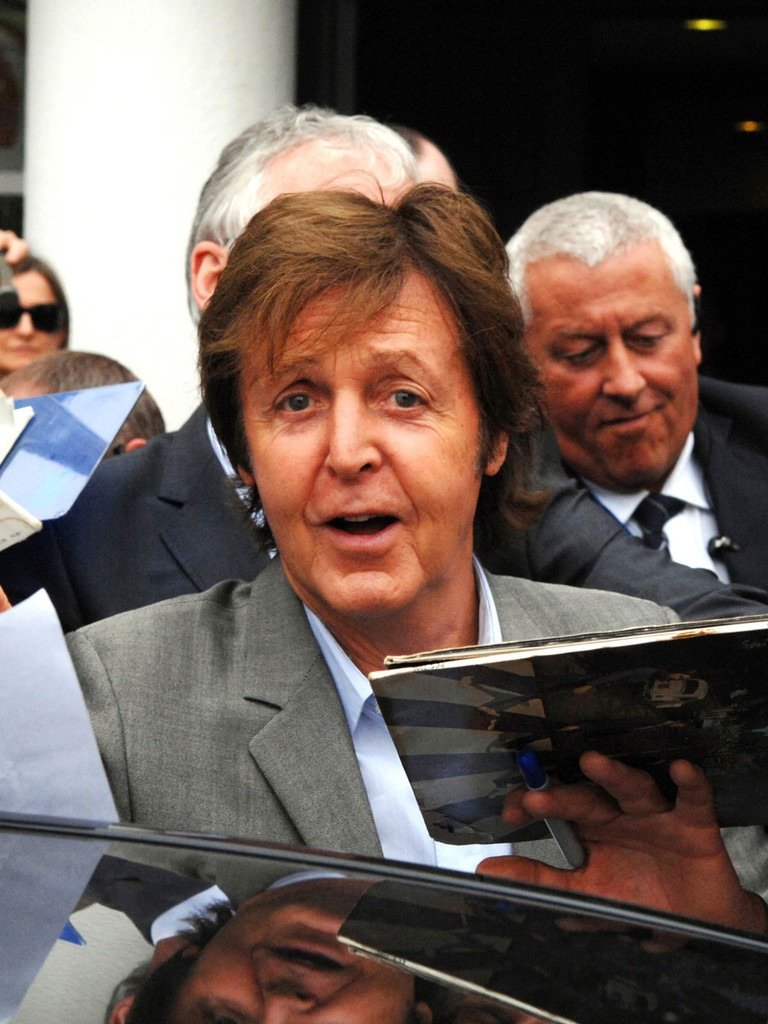
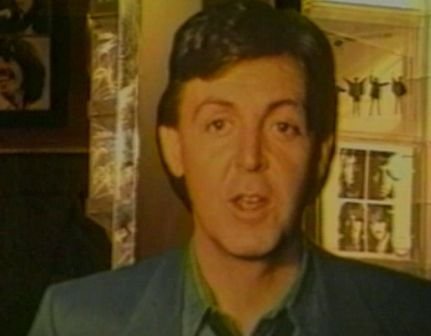
We’ve previously featured Paul McCartney besieged by fans when trying to move between a building and his car. The fans are thrusting out albums to be signed. You can see a couple of good examples in the Beatles With Records Part Twenty, and also in Part Fourteen. Sometimes, from the look on his face, you get the feeling that Paul must be thinking “Will this ever stop?”Most times though he seems very willing to smile and help fans out where he can:And to finish, a couple of earlier Paul photos with records from his Beatle days:
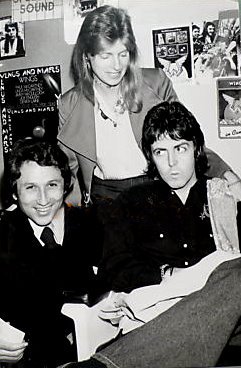
And from the Wings days:You can see the entire Beatles With Records series here: 1, 2, 3, 4, 5, 6, 7, 8, 9, 10, 11, 12, 13, 14, 15, 16,17,18,19 and 20.
If the first two episodes are anything to go by, this will be one worth downloading on a regular basis. The two bring unique and well-informed eyes to a topic they both clearly love. American Rodriquez (Solo in Seventies; Revolver: How The Beatles Reimagined Rock ‘N’ Roll; Fab Four FAQ and Fab Four FAQ 2.0), and Britain’s Buskin (The Complete Idiot’s Guide to the Beatles; Days in the Life: The Lost Beatles Archives; John Lennon: His Life and Legend amongst many others) complement each other with different experiences of growing up fascinated by the Beatles. They are both knowledgable of course, but also have a lot of fun with their topic too. There are no sacred cows here.
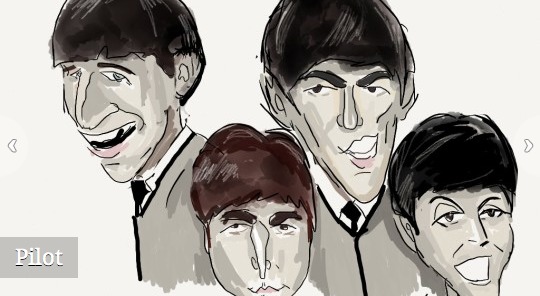
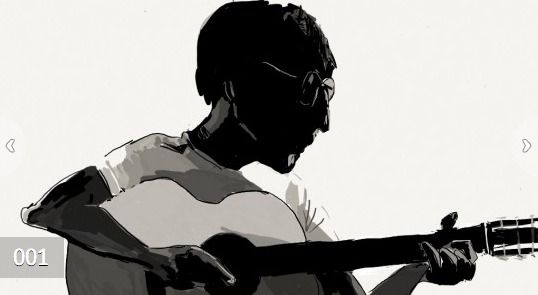
The homepage for the podcast features cool original artwork by Executive Producer Rick Wey:The podcast is also unique in that the pair play real Beatle music to illustrate what they are discussing – something we’ve not heard before. Highly recommended.
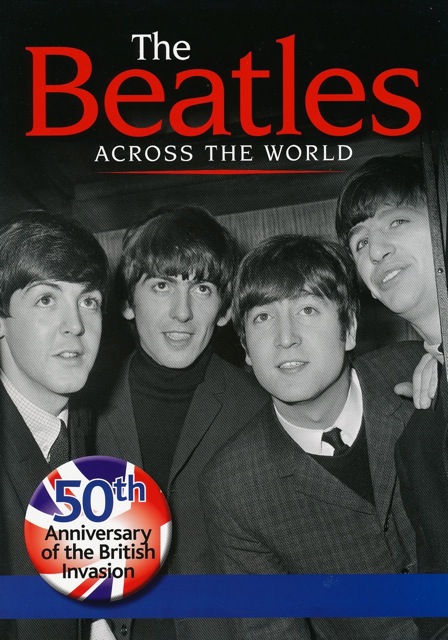
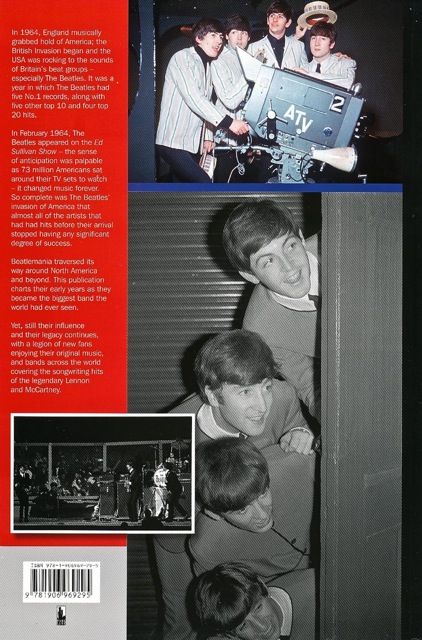
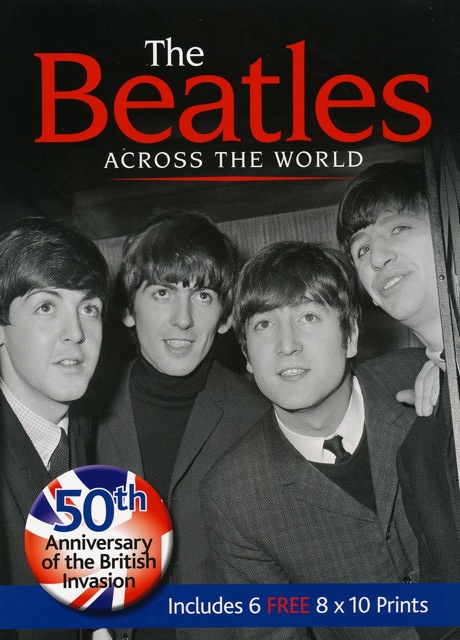
Stumbled across a cheap but only just-released book this week. Penned by a writer named John Stanley, it’s called The Beatles Across the World. Here are the front and rear covers:
The Beatles Across the World just 64 pages (it’s no Lewisohn Tune In, which runs to 946 pages!), and has clearly been released to capitalise on the 50th anniversary of the group’s appearances on the Ed Sullivan Show in the US – and the Beatle-mania which subsequently erupted across that country.
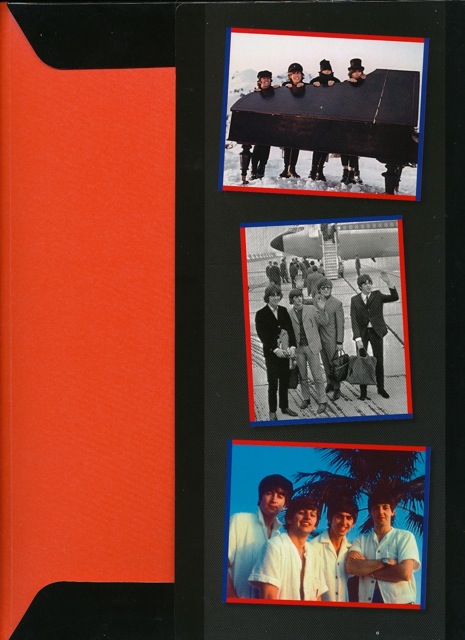
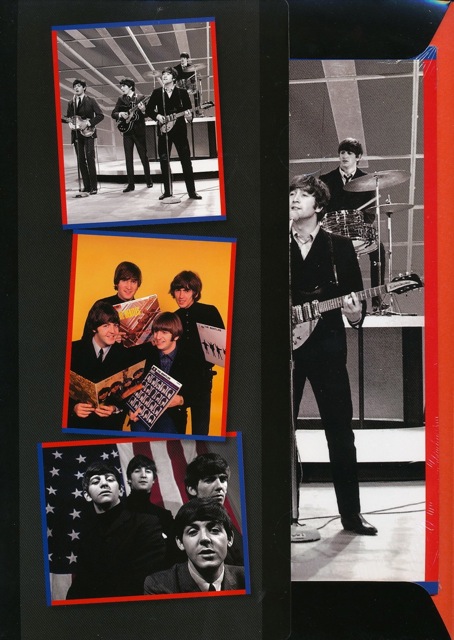
This publication is interesting though. It comes in a carboard folder which opens to reveal two pouches inside, one to hold the book on one side:
Plus on the other side another pouch which hold six 8×10 black and white Beatle prints:
Here’s the front cover of the folder:Go to the publishers website (Park Lane Books) to find out more, or click here for the Australian distributor, Herron Books.
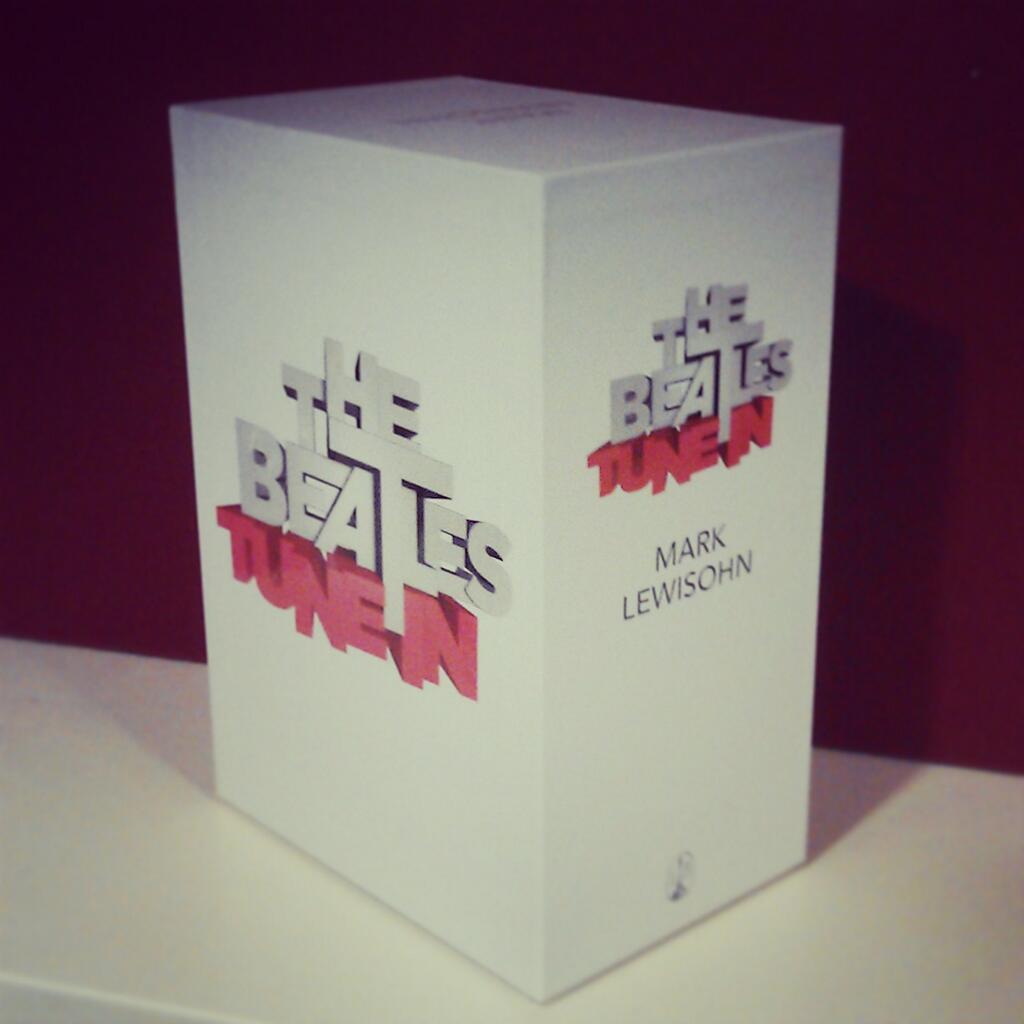
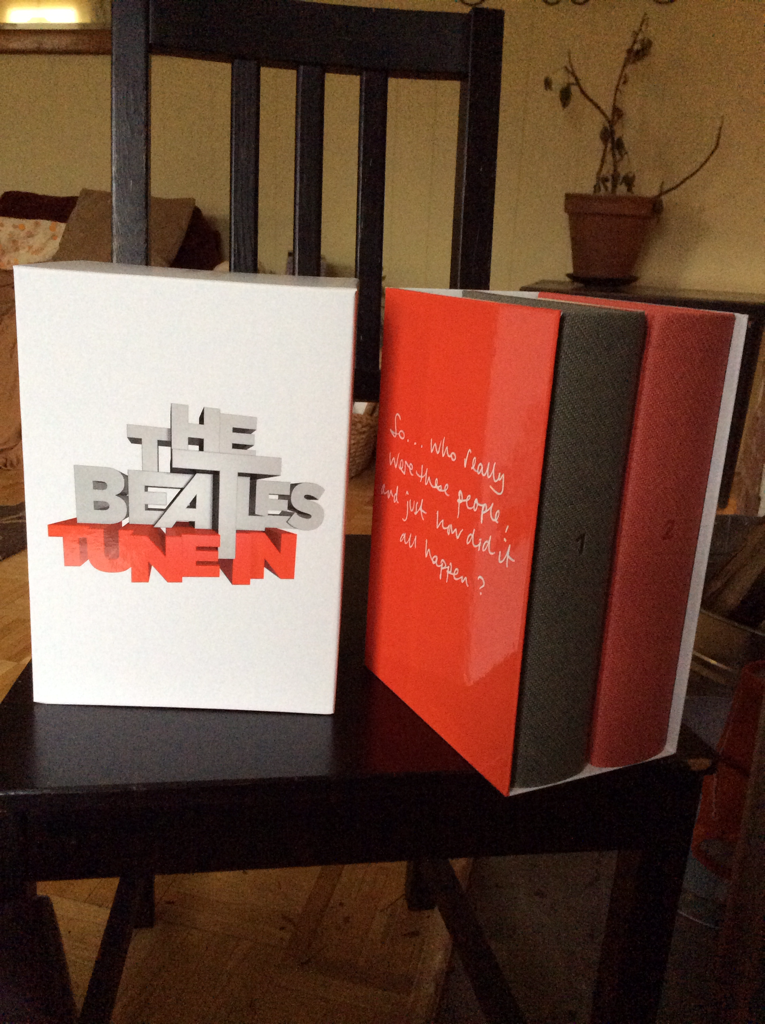
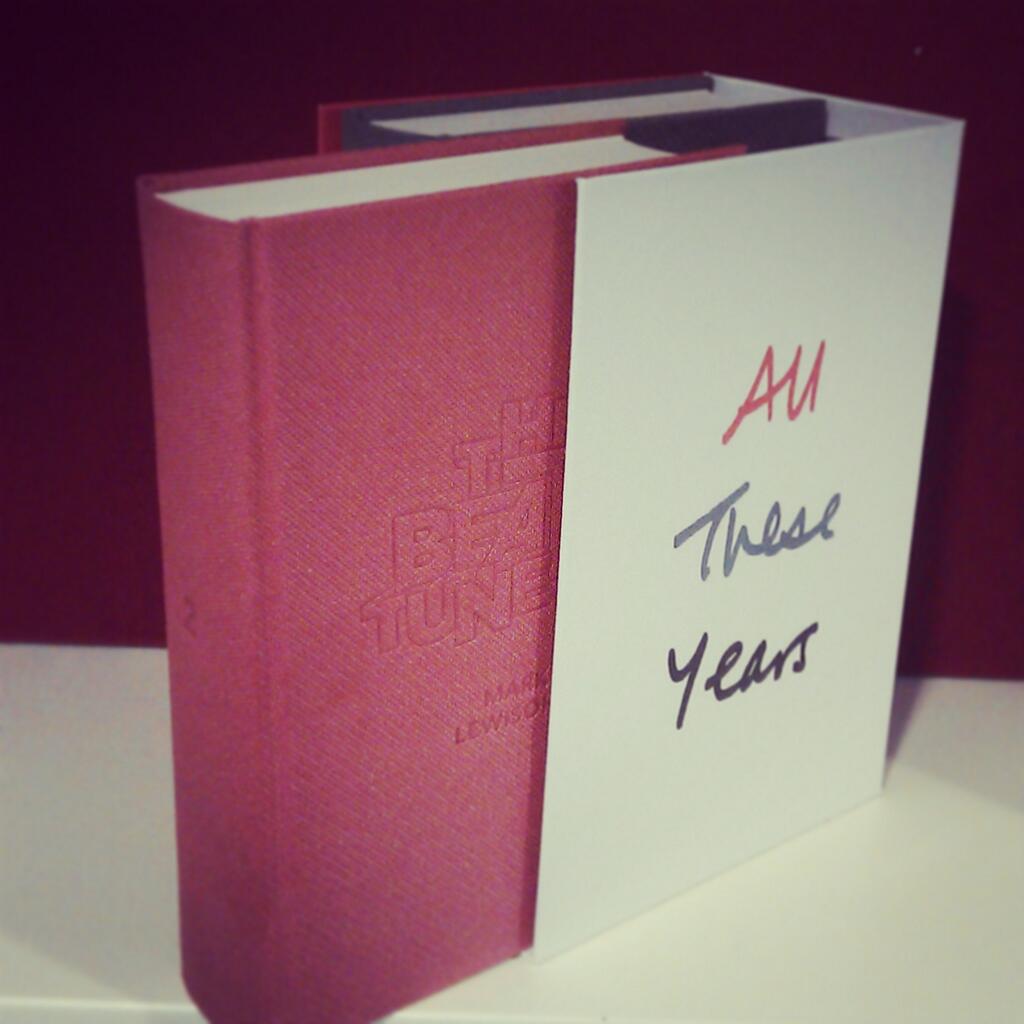
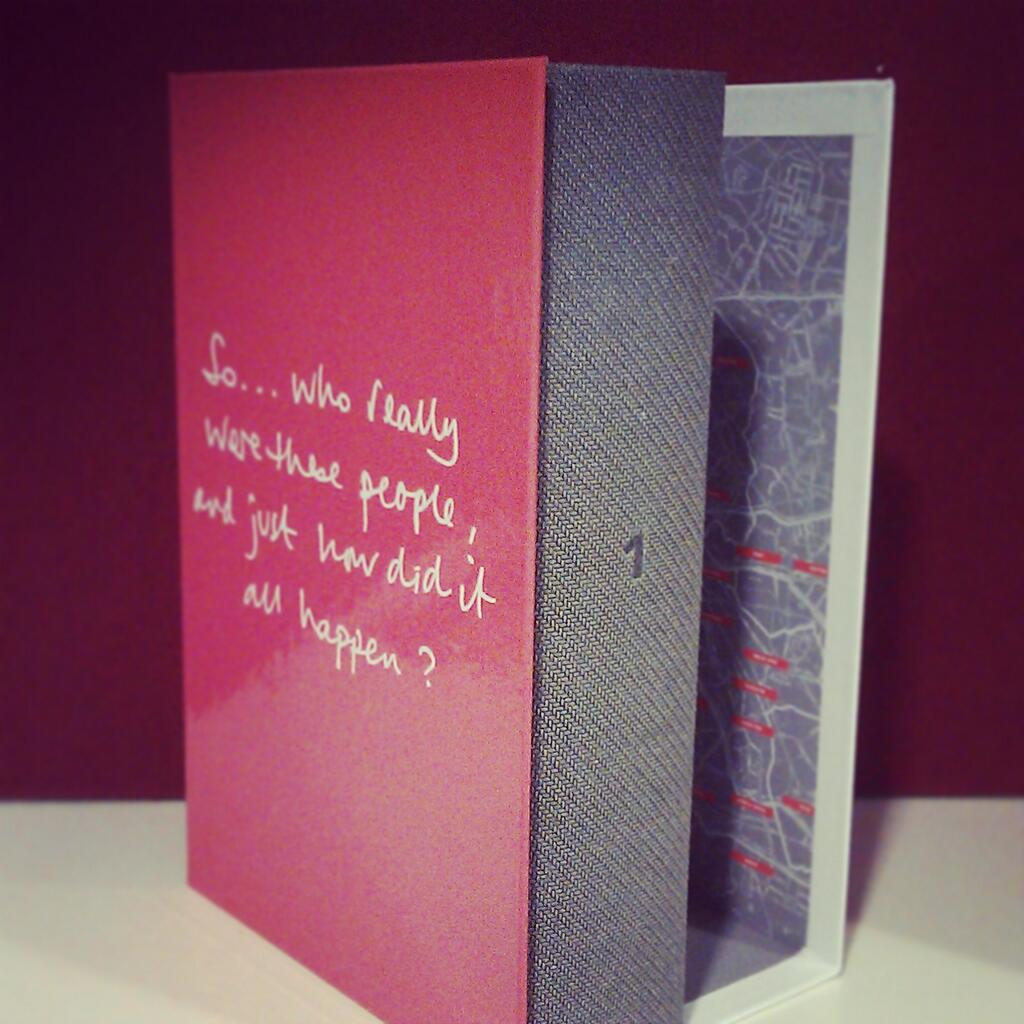
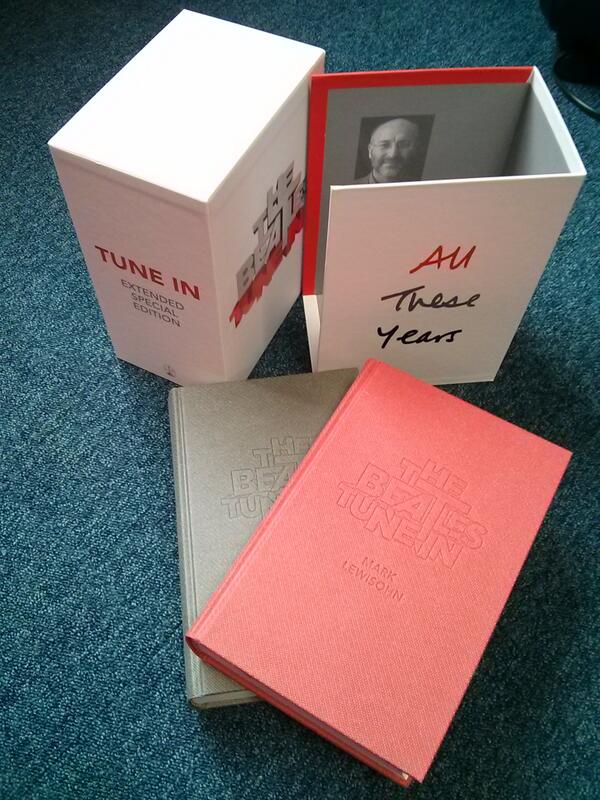
Thanks to everyone who entered our Mark Lewisohn The Beatles: All These Years Volume One: Tune Incompetition.
We asked the question: “How old was Paul McCartney when John Lennon invited him to join his group The Quarry Men?” The correct answer was that Paul was fifteen years old.
Our winner is John from Roebling, New Jersey in the United States.
Congratulations John. The US publishers Crown Archetype will be sending a copy of the book your way very soon. Enjoy!
The next date to watch out for is November 14 and the release of the extended special edition of the book.
Part One of Mark Lewisohn’s new biography of the Beatles is now out in two separate hard cover editions – one for the United States market, and one for the UK.
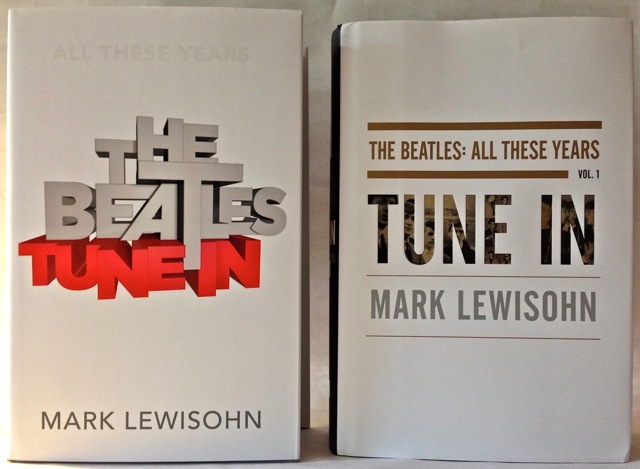
So, how are they similar – and how do they differ?
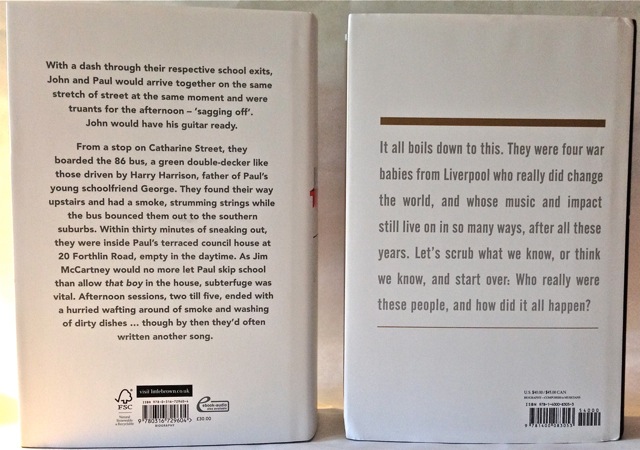
Here are some photos to show you in a direct side-by-side comparison. The UK edition is 946 pages. It appears on the left. The US edition is 932 pages and it appears on the right:
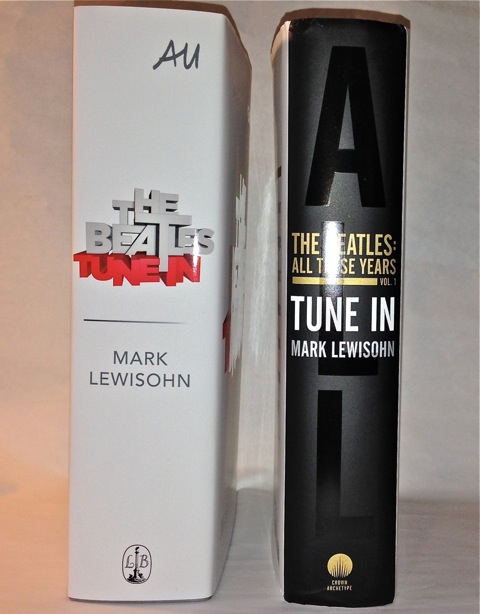
The book spines with their dust jackets on:
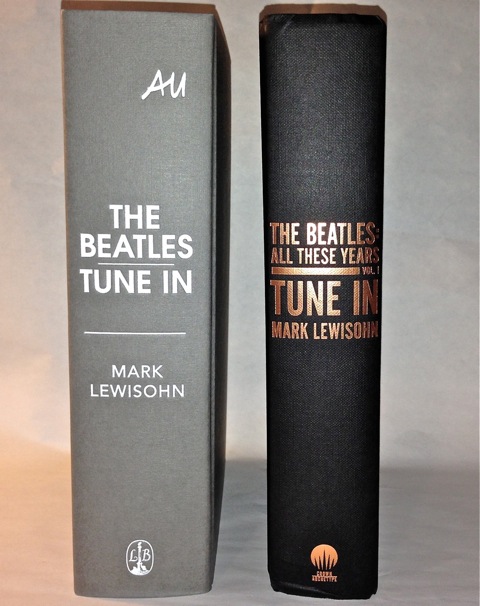
And without:
There’s an interesting and as-yet unexplained design element about the spines. On both dust-jackets you can see the word “All”. My guess is that Volume 2 will have the the word “These”, and Volume 3 will have the word “Years”. When they are eventually lined up on our bookshelves they will collectively read “All These Years”.
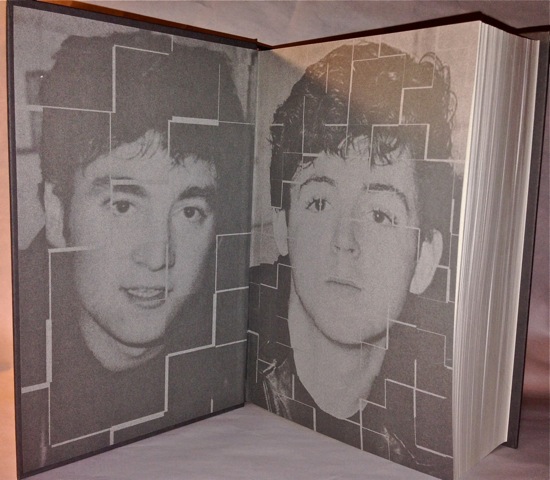
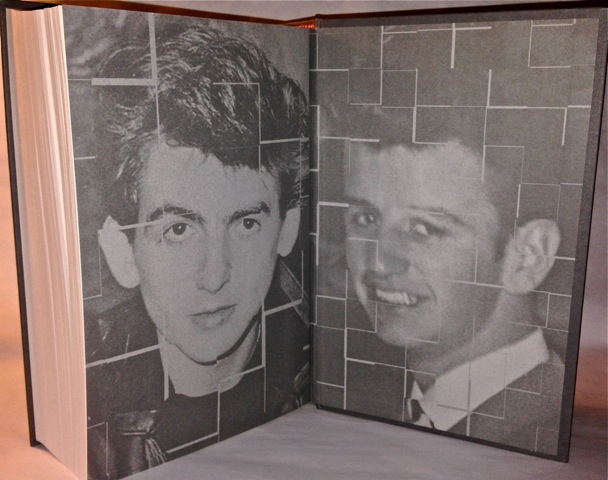
The UK edition gets fancy end papers, front and rear. The front ones show pictures of a youthful John and Paul:
The rear has George and Ringo. It is a nice additional design touch:
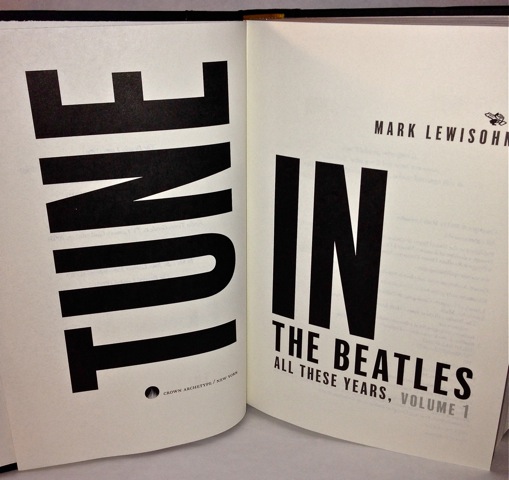
The US edition has plain end papers. Here are the title pages. First, the UK edition:
And the US:
You’ll be pleased to know that despite the design and layout differences the contents are exactly the same. Both have the same text and chapters, and both have three sections with pages of historic photographs – some of which have never been previously published.
In the UK The Beatles: All These Years Volume One: Tune In is published by Little Brown. In the Unites States the book is published by Crown Archetype.
Now, the people at Crown Archetype have kindly given Beatles Blog a US edition of the book to give away to a lucky reader. All you need to do is answer this simple question:
How old was Paul McCartney when John Lennon invited him to join his group The Quarry Men?
The first correct answer to reach beatlesblogger @ gmail . com will win a US copy of Mark Lewisohn’s book – kindly provided by publishers Crown Archetype.
There are three distinct aspects to the Beatles’ main output and the direct connection they had with their audience. These are the band’s official studio recordings; their live performances; and (as this book examines in intricate and fascinating detail) their appearances during the height of their popularity on radio and television.
Kevin Howlett, a former BBC radio producer, has for many years been chronicling the band’s long and close association with the British Broadcasting Corporation (BBC). If you want proof that their output on radio and TV was prolific here are some stats: the Beatles performed a huge catalogue of songs across 275 performances at the BBC between March 1962 and June 1965. They appeared on 39 radio shows just in 1963 and, on one single day, recorded 18 songs for three editions of the BBC’s “Pop Go The Beatles” series in a session lasting just under seven hours. In total they played 88 different songs, most done in one take with little time to correct mistakes.
What also has to be remembered is the extent to which the BBC was at the core of daily life in the UK. Unlike the multiple channels and sources of information we take for granted today, no other broadcasting organisation was licensed to operate in the UK until 1973. It seems extraordinary and almost incomprehensible now. There was some competition from overseas and “pirate” radio stations, but during the life of the Beatles as a band the BBC pretty much had the market to itself.
This book The Beatles: the BBC Archives: 1962-1970 isn’t the first go Kevin Howlett has had at writing about the close relationship between these two icons of British life in the sixties. It is however the most comprehensive and beautifully produced effort so far. Beatles Blog has in its collection a small 1982 softback book called The Beatles at the Beeb – The Story of their Radio Career 1962-65:
Howlett tried again in 1996 with The Beatles at the BBC, the Radio Years. However both these previous attempts are nothing on his latest effort.
What Kevin Howlett has done with this book is to significantly expand the scope and the content of his subject to produce the definitive examination of the Beatles interaction with their fans using BBC radio and television.
The new work comes packaged in an impressive look-alike (and slightly used) 1960’s BBC reel-to-reel tape box:
Inside is the book, which contains many pictures, examples of contracts, internal memos and letters, memorabilia and complete details of all their appearances, along with a discography of the songs that the Beatles performed. If the songs were covers then there are details of the original artists too.
We learn that some 36 of the 88 songs they performed were never issued on record and, with the exception of the Beatle original “I’ll Be On My Way”, these unreleased tracks were all cover versions. Inside the book there are lift out prints and and removable facsimile documents – making this a great collectable item in itself.
Kevin Howlett is now very much an insider in the Beatles camp, having completed a number of prestigious Apple Records re-issue projects for them. He co-wrote the liner notes for the digitally remastered CD catalogue in 2009. Howlett wrote the notes and produced the ‘Fly On The Wall’ bonus disc for the 2003 Beatles remixed album Let It Be …Naked. He also wrote the liner notes for the original 1994 double CD and LP package Live at the BBC, and has done the same for the forthcoming set On Air – Live at the BBC Volume 2(to be released on November 11). Both feature previously unreleased recordings and studio chatter by the Beatles made available for the first time. The new release will include early hits and cover songs recorded at the BBC in 1963 and 1964, audio of the group talking to radio presenters such as Radio 2’s Brian Matthew, different versions of some of the songs from the first Live at the BBC album, and interviews recorded in November 1965 and May 1966 for the BBC “Pop Profile” series.
A remastered version of the original Live At The BBC will also come out on 11 November to coincide with the release of Volume 2.
So, Howlett knows his subject. His book The Beatles: The BBC Archives: 1962-1970 is destined to become the ultimate publication detailing in every respect the the band’s interaction with it’s adoring public via the BBC – then one of the most important and dominant media outlets in Britain. It is published in the US by Harper Design (Harper Collins), and in the UK by Ebury Publishing (BBC Books).



















 Beatles Blog