yellowsubmarine.com (Plus a Few Other Things)

I’ve been a bit slow in telling you about some of the supporting websites and background info around two of the latest Beatle-related releases – Paul McCartney’s “Ram” reissues, and “Yellow Submarine” which is now out on BluRay, DVD and CD.

So, here’s a bit of a catch-up:

(click on the image to go there)

On the Yellow Submarine site there is a wealth of interactive material like photos, games, movie dialogue, sounds and “making of” videos. Well worth a look.

There’s also a range of great things out on the web now about the reissue of Paul McCartney’s “Ram” album:

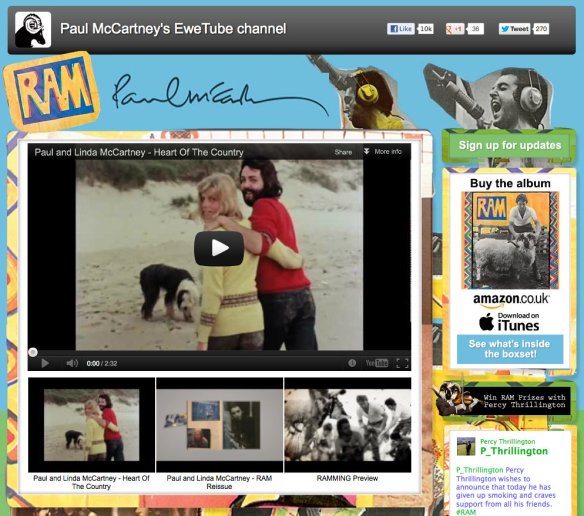
Paul’s people certainly have been busy in producing supporting web content for “Ram” with not one but two dedicated websites:

(click on the image to go there)

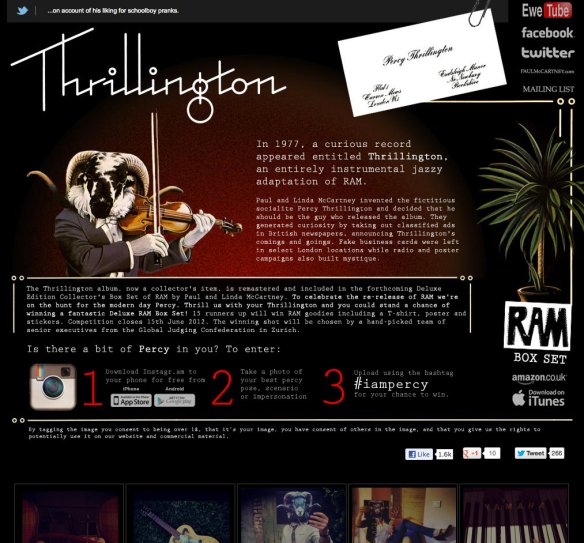
In the Deluxe Box set of “Ram” you also get the 1977 orchestral/instrumental version of “Ram” that Paul put out under the pseudonym of Percy “Thrills” Thrillington:

(click on the image to go there)

There’s also a very interesting and insightful interview with McCartney by Paul Draper from the band Mansun. It’s not only about “Ram” but a wide range of other things. One great example is Paul talking about his early influences as a songwriter:

What I take the influence back to was A Teenage Opera. That was a very early record in the late 60s, by Keith West… it was his only, like, big hit. That was episodic, there was a bit and it went ‘buh-buh-bum’, then it went there, and there, and there [Sir Paul makes some stacking gestures with his hands]. I think that was the first record I heard, and we heard, and we thought ‘that’s interesting’. You can have a song here, then you can cut like a film to another song, and you can even cut the tempo and go slow and so on. That was really the one that was the biggest influence, and then lots of people started doing it. We’d do it a bit, prog-rock did it, Townshend started doing it a bit, The Who opera and all that. I think it was just that one record that made you realise that it didn’t have to be the same tempo or the same key all the way through, you could cut like a film.

You can read Part One here, and Part Two here. There are links to musical examples given throughout.

Finally, one cute little “Ram” publicity item – a “Ewe-Tube Map” – based on the London Underground train network:

(click for a larger version)

Oh, and this kind person has added a “Ram” Deluxe Edition “unboxing” video to YouTube:

Beatles and Advertising

We wrote recently about Paul McCartney advertising for JBL and Tiffany. It’s not the first time he’s allowed his name and music to be associated with commercial products. Its actually a tradition that goes way back – to the very start of Beatlemania.

For a very long time, having your product associated with the Beatles in any way has been considered advantageous….take this tastefully designed, directed and edited commercial – with a soundtrack provided by you know who:

You gotta admit at least that was clever and stylish. Not so much this unfortunate one Ringo Starr and some former Monkees got themselves involved in a while back – for Pizza Hut:

I guess there’s a big difference between Beatles songs being used in a commercial and an actual personal endorsement – although the Ringo example had both…..

Turns out Beatle songs being used in advertising is much more frequent than you might first imagine. In 2007 for example “Hello Goodbye” was licensed for use by Target to promote its stores:

Back in 2002 Julian Lennon recorded “When I’m Sixty Four” specifically for a retirement investment ad for the US company Allstate:

That then raises the question of actual, original Beatle recordings being used, as opposed to re-recordings by anonymous studio musicians. Which is more offensive to you, if at all?

One famous example of a real, iconic Beatles song being used was provided by Nike in 1987, and it caused an absolute uproar:

“If it’s allowed to happen, every Beatles song ever recorded is going to be advertising women’s underwear and sausages. We’ve got to put a stop to it in order to set a precedent. Otherwise it’s going to be a free-for-all. It’s one thing when you’re dead, but we’re still around! They don’t have any respect for the fact that we wrote and recorded those songs, and it was our lives.” — George Harrison (November 1987)

It didn’t stop of course, and for many fans the ultimate insult came with “All You Need is…Luvs” – a commercial for disposable nappies…

And that’s not the only time that same, famous Beatles song has been used. Blackberry got in on the act with this one:

Of course, control over their song catalogue has long been out of the Beatles hands. They no longer own the rights and therefore have very little say in how songs they wrote might be used (although Paul McCartney does control all his subsequent solo work). That begs the question: are the surviving Beatles themselves ever consulted about which of their songs are used and how? The Independent newspaper says it is unclear if McCartney or Yoko Ono, John Lennon’s widow, approved use of “All You Need is Love” for the Blackberry commercial. It does however say that in 2008 Sony/ATV (owners of the catalogue) said it had a “moral obligation” to contact them before giving approving to such projects.

Ono herself has not been free of criticism. She apparently gave permission for an actor to overdub John Lennon’s voice on some archival footage which was turned into an advertisement for a Citroen car:

In May last year we posted on Beatlesblogger about the Australian city of Brisbane using “Come Together” to advertise what a great place Brisbane was after their big flood event. It looks like the organisers have since taken down their YouTube video of that commercial, probably because they only paid for the use of the song for a limited time.

The more you delve into this question of the Beatles and advertising the more examples you find. Maybe its best to just stop here before it gets too depressing….

“Kisses on the Bottom” – The Variations

Time to take a run through the different versions of “Kisses on the Bottom”, Paul McCartney’s new album.

It’s been released in physical form as a standard CD, a deluxe CD, a deluxe CD with bonus tracks (more on this later), and as a double LP vinyl. (Remember, to see larger images of all the scans below just click on the image).

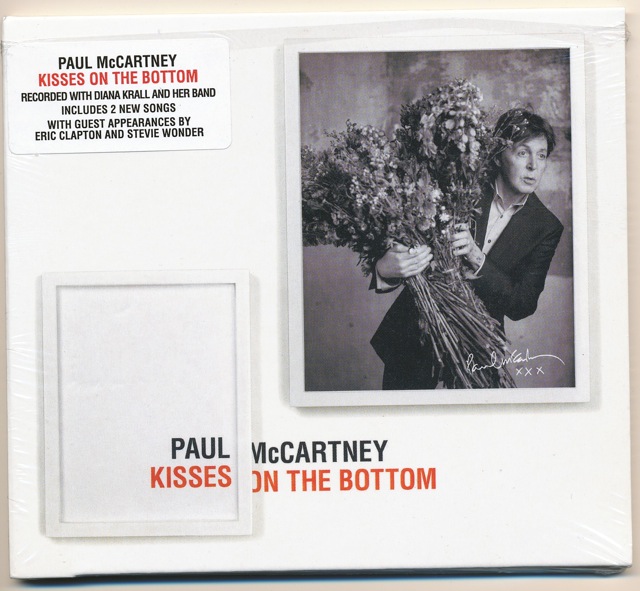
Firstly the standard CD. Here’s the front cover with the sticker on the shrink- wrap still attached:
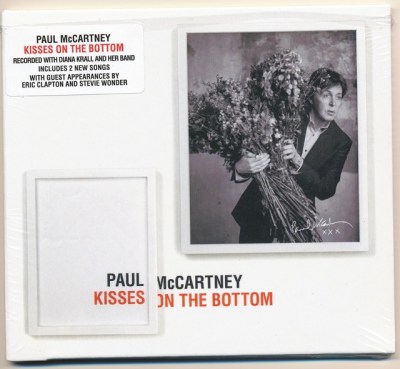
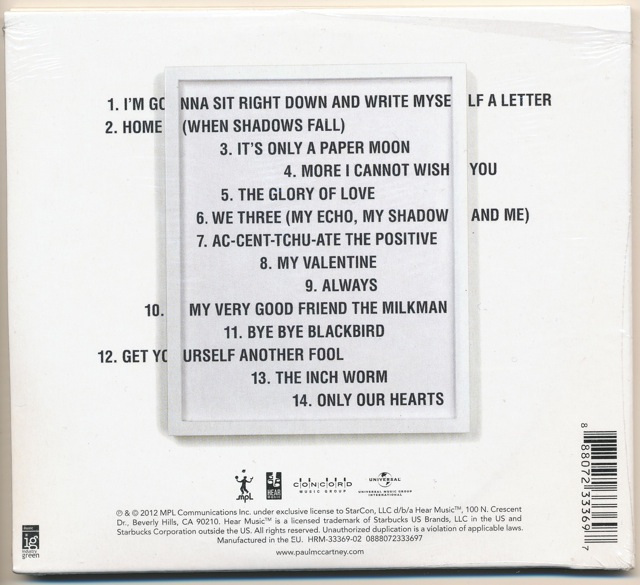
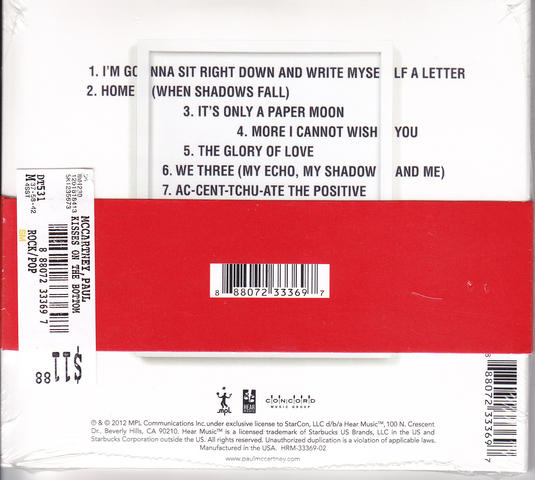
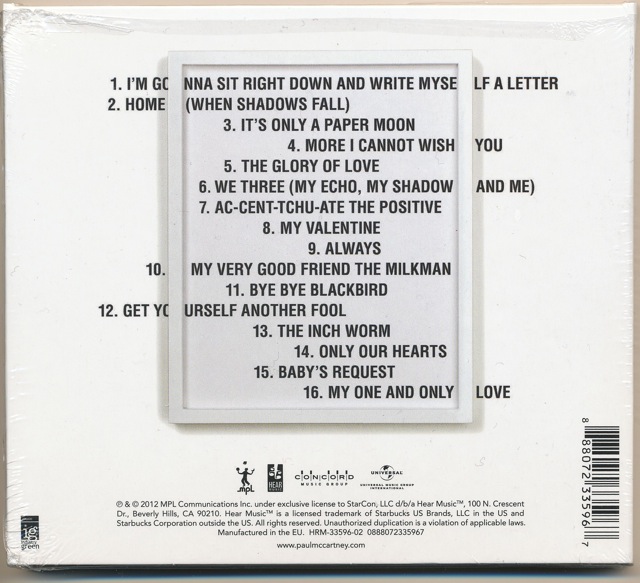
This is the rear cover of the standard CD – which has 14 tracks. This copy is manufactured in the EU:
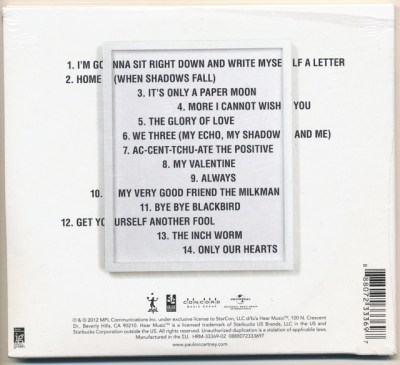
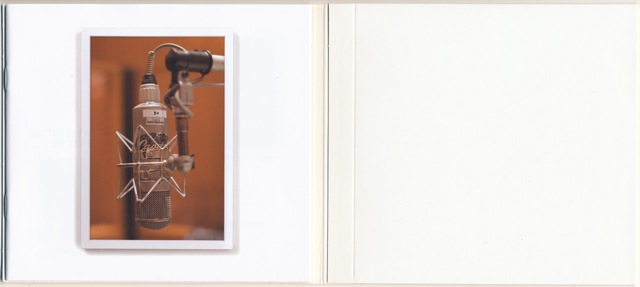
The standard CD is a cardboard, single gatefold sleeve with the booklet glued onto the cardboard:
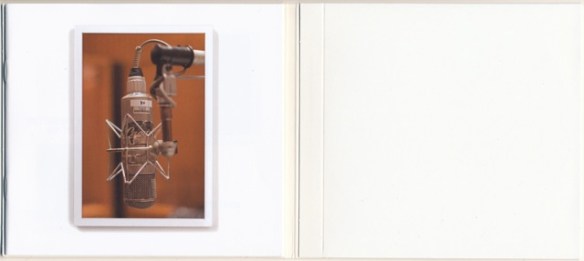
Personally I think that when the cover is first opened it looks odd to have that large expanse of white cardboard on the right-hand side. Surely another couple of images or text could have been put there. Or, like the deluxe version (see below), a cutout provided so that you can see the CD label.

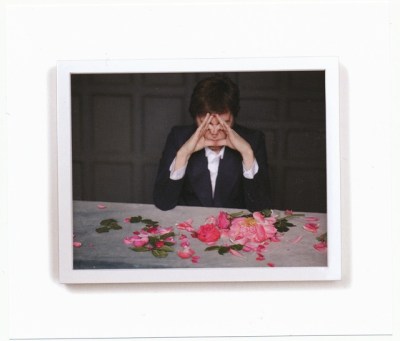
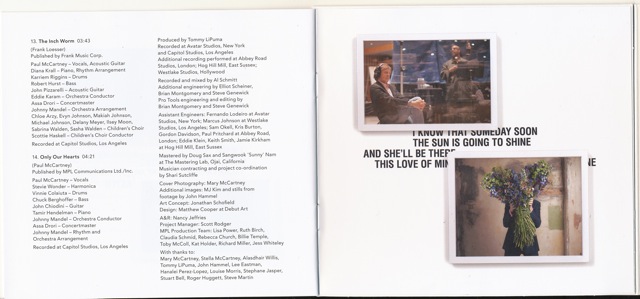
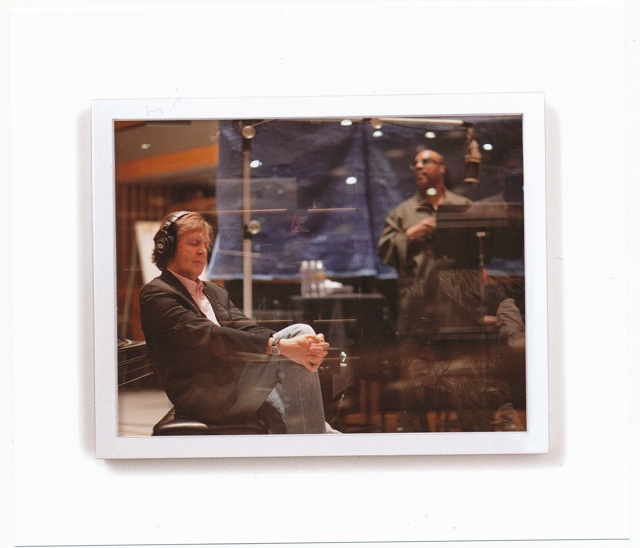
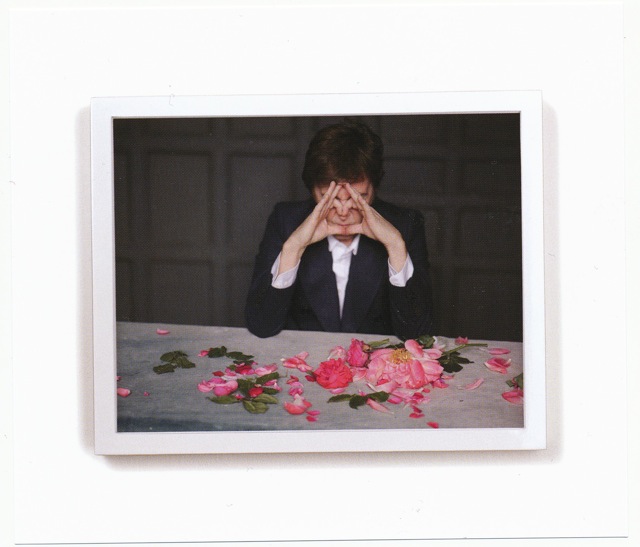
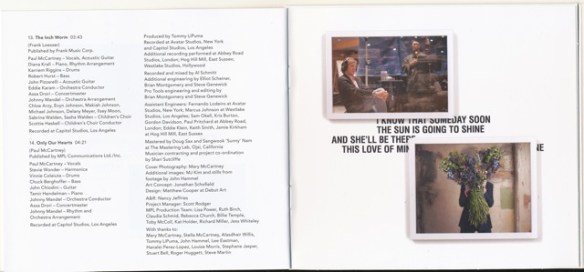
The booklet in this version is 18 pages and contains an interview about the album, photographs taken during the recording and also photos from the Mary McCartney official photo shoot. There is also track-by-track personnel details for each song, followed by a page with final credits including studio locations, engineers and the obligatory “thank you’s”, etc.:
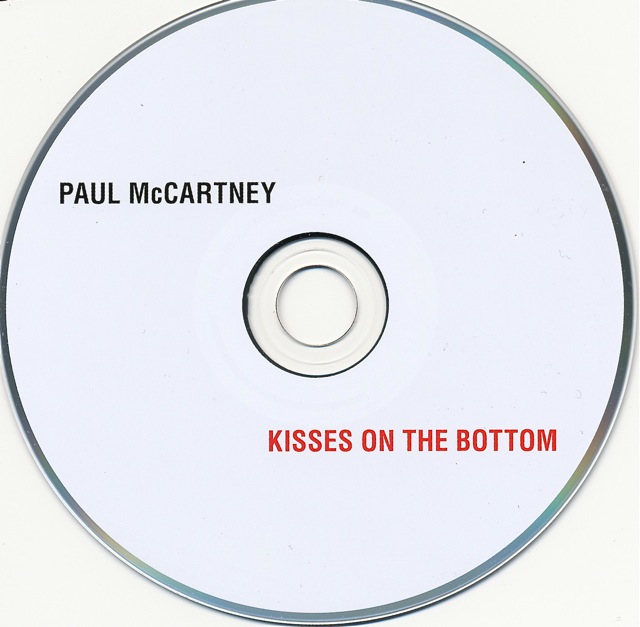
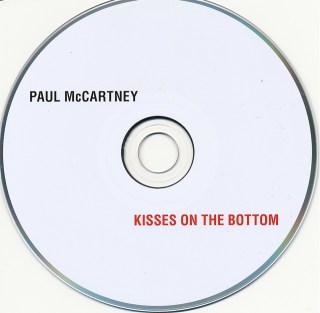
The CD printing itself is very simple and uncluttered and looks like this:
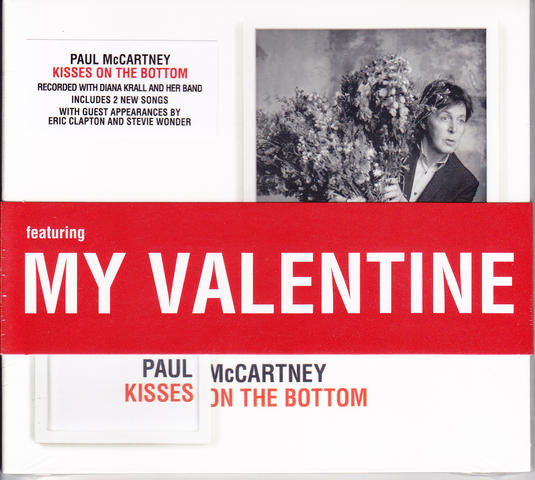
In some markets (in the US, I think) the CD came with a red wrap, promoting the song “My Valentine”:
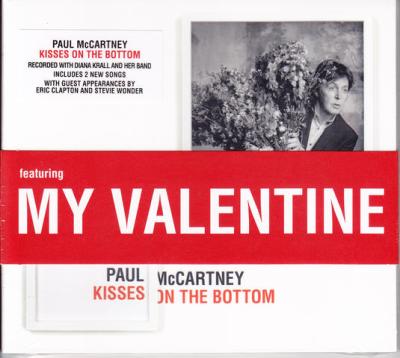
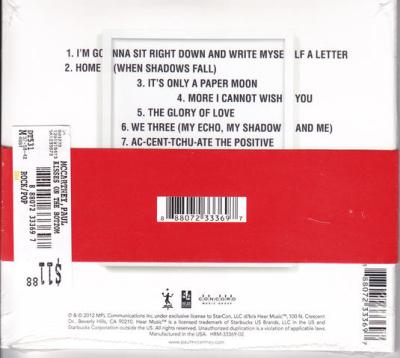
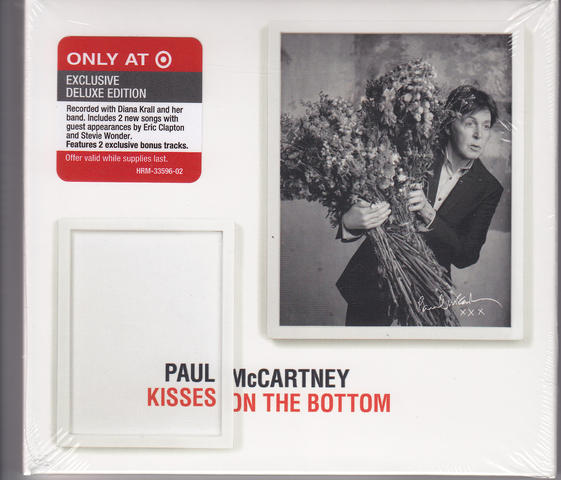
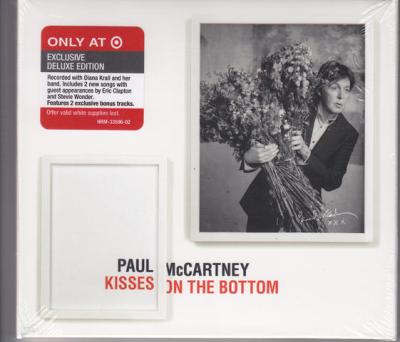
Buyers of the deluxe CD edition in the US will need to know there are two versions: one has 14 tracks and the other has 16 (which is available only from Target stores at this stage – see details below, and see also this post from Wogblog). In Britain, the EU countries (and in Australia because we are getting the EU versions) all deluxe versions have the two bonus tracks:
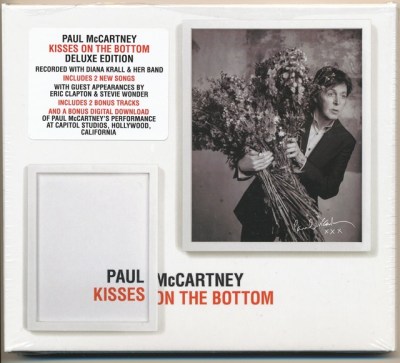
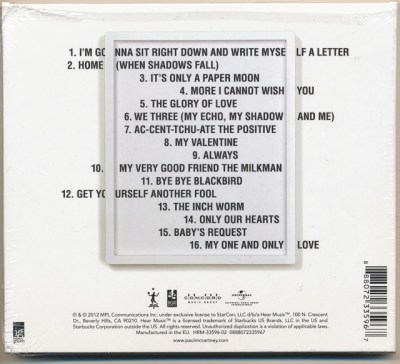
The bonus tracks are “Baby’s Request”, a re-recording of a McCartney song which first appeared on the 1979 Wings album “Back to the Egg”, and “My One and Only Love”.

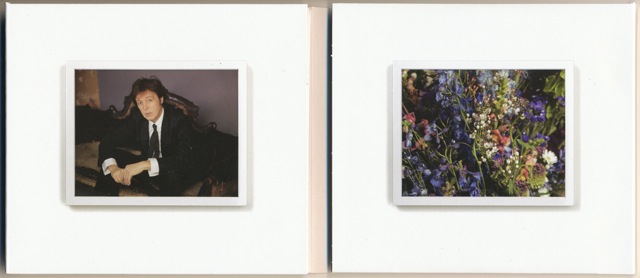
The deluxe CD has more complex packaging. It comes in a cardboard, double gatefold cover. In other words it opens out to be four panels in total. To give you an idea of how this looks here’s a photograph of how the package opens up, plus the inclusions (which are covered in more detail below). This is the US non-bonus track deluxe version:
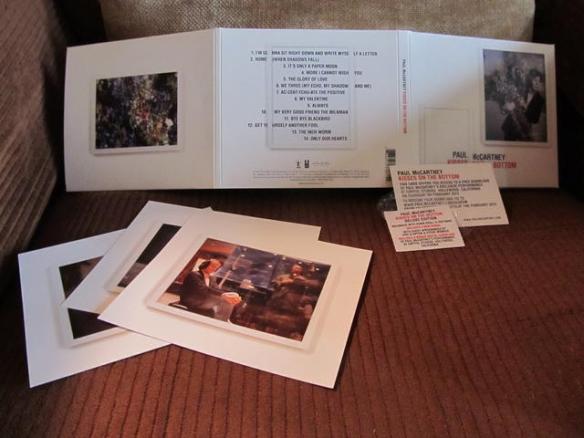
When you first open the deluxe CD cover this is what you see on the inside:

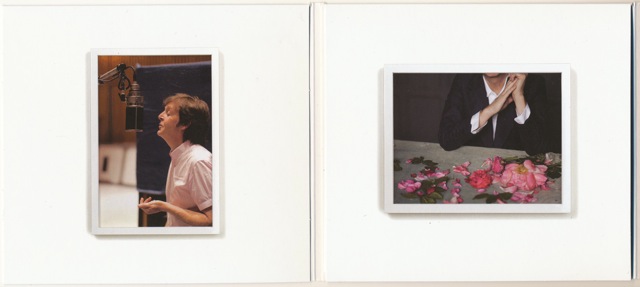
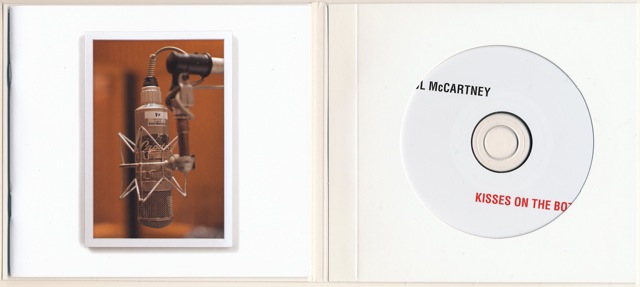
These two panels then open out again. This is the left-hand side:
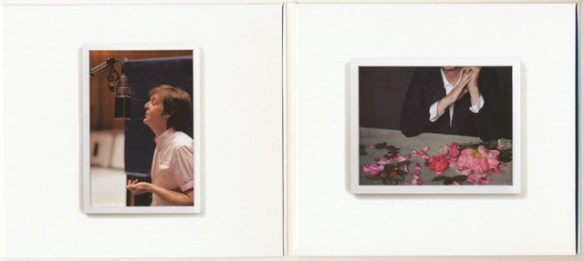
And this is the right-hand side (containing the booklet):
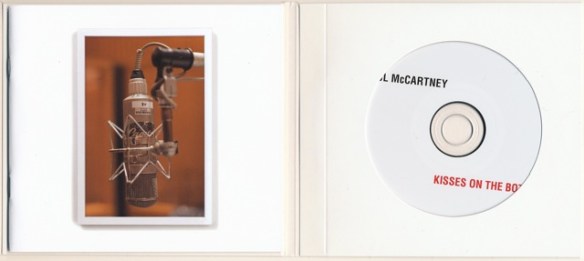
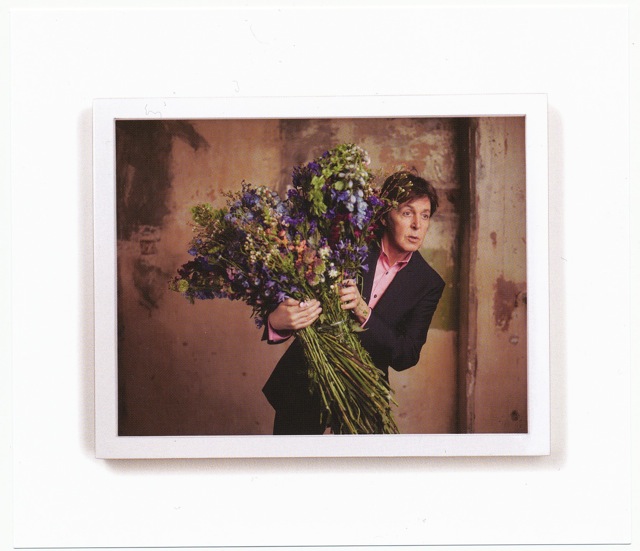
What looks to be the same booklet as the standard CD (also glued onto the cardboard) is actually longer – with 22 pages. The extra space is for a longer version of the interview with Paul McCartney, and there are additional photographs, and these are laid out differently to the standard CD. Inside a pocket in the deluxe CD cover there are also three postcards:
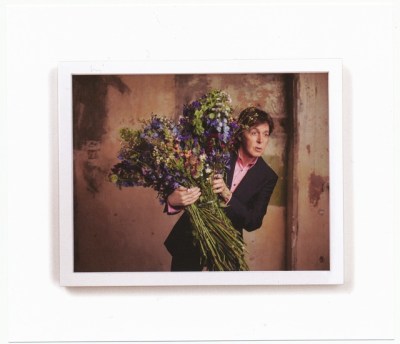
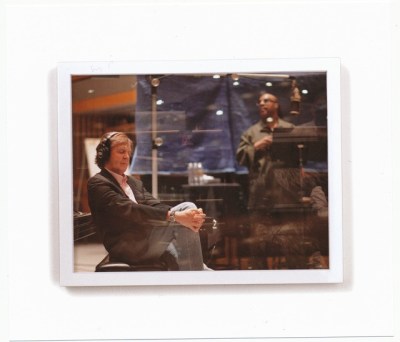
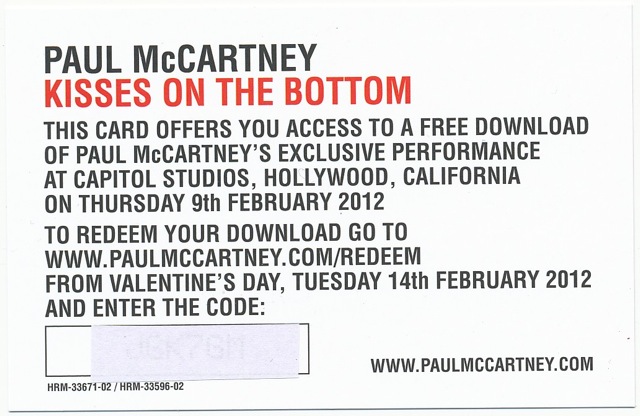
And included in the postcards pocket is a smaller card with details and a code for a download “…of Paul McCartney’s exclusive performance at Capitol Studios…”:
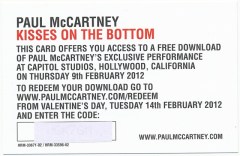
That bonus download sounds like an enticing extra on first read. But when you log in with your code you get just four live songs from that live performance, not the whole show. You get “I’m Gonna Sit Right Down and Write Myself a Letter”; “Home (Where the Shadows Fall)”; “Ac-Cent-Tchu-Ate The Positive”; and “My Valentine”.  As has already been noted on the web by Wogblog, this is kind of disappointing. I mean, just four songs? It feels kind of cheapskate on Paul’s behalf.

Back to the 14 track/16 track deluxe confusion. Target in the US is selling the 16 track deluxe edition as a retail exclusive and are the only US vendor selling this edition:
There’s an interesting side story to the interview featured in both “Kisses on the Bottom” CD booklets. It’s done by Paul Du Noyer. If the name sounds familiar he is the well-known British music journalist and writer who also did the liner notes for all the John Lennon remastered re-issues a while back including the John Lennon Signature Box, and the “Double Fantasy – Stripped Down” version. He also worked extensively on Paul McCartney’sBand On The Run – Deluxe Edition“, which has just won a Best Historical Album Grammy Award. As editorial consultant for the package, Du Noyer edited the 128-page book, wrote the liner notes and interviewed McCartney. He also worked on the “McCartney” and “McCartney II” deluxe reissues.

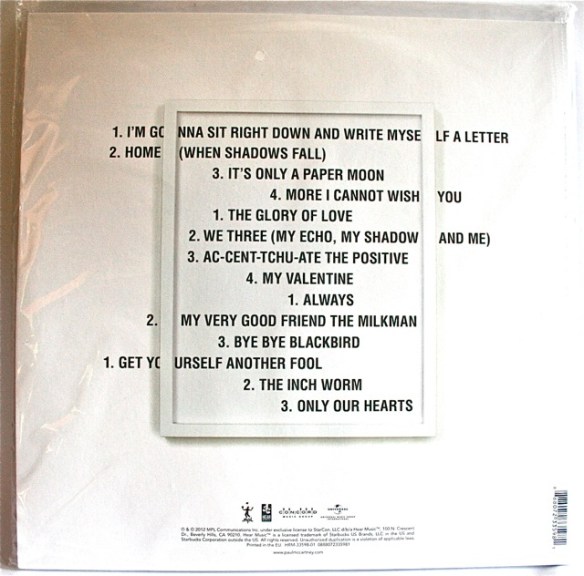
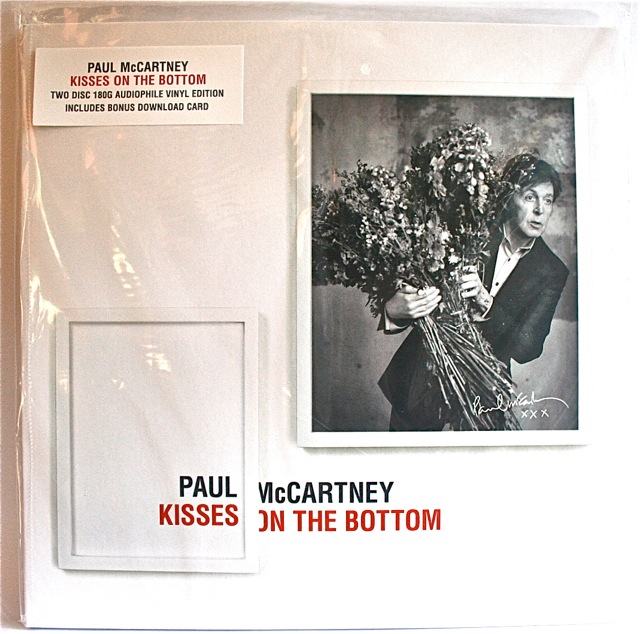
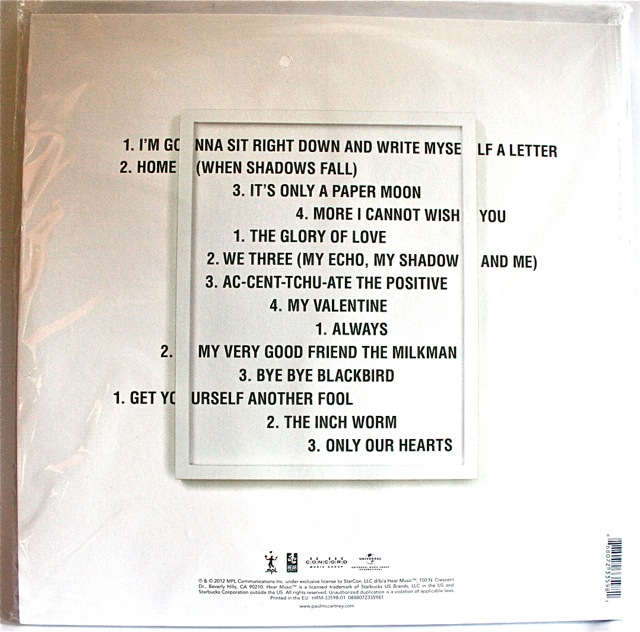
Finally to the vinyl edition of “Kisses on the Bottom”.  This is a double LP and comes in a gatefold sleeve:
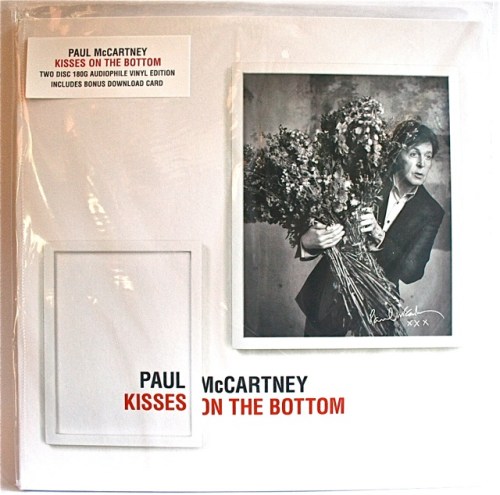
I got my copy from Amazon and thought it would be made in the US, but it says “Printed in the EU” on the back cover…

I haven’t taken my copy out of its sealed plastic cover, preferring it to remain a collectors item and “still sealed”. Also, all that white cardboard is going to get easily marked and scuffed. Keeping it sealed will also help keep it in pristine condition. Looking around on the web I did find this image of the vinyl package opened up:
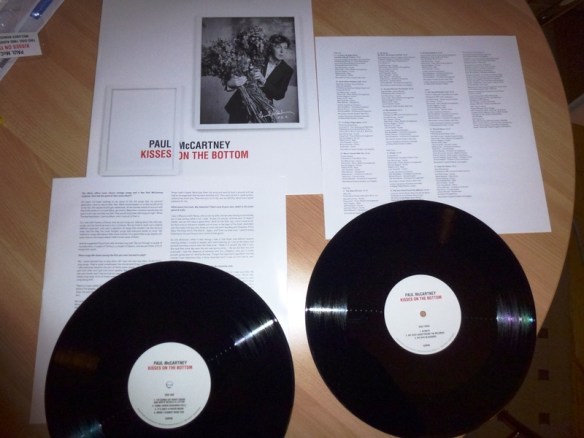
You can see that it comes with two inner sleeves which reproduce the text elements of the CD booklets. The two 180g vinyl LPs have custom labels. And you get access to a digital download of the 14 track album as well.

[Thanks to cyber-beatles.com for the additional images used in this post.]
The Mammoth Book of the Beatles

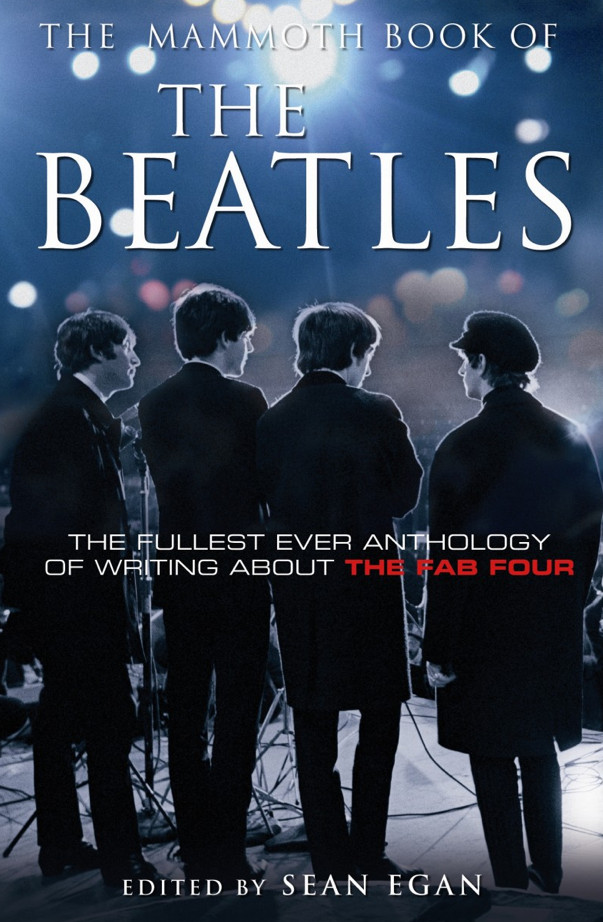
Stumbled across yet another discount book this week. Not bad for A$5.95:

“The Mammoth Book of the Beatles” contains a LOT of information across its 594 pages.

This is a compilation book edited by Sean Egan who has gathered together more than 30 contemporary accounts, articles, and interviews about the Beatles (from Maureen Cleave’s “Beatles Bigger than Christ” feature, to their debunking in the News of the World just before the release of “Sgt Pepper”. Hmmm. Good timing News of the World. It was a dodgy newspaper back then, too). There are also latter-day memoirs and re-assessments. Contributors include Paul Gambaccini, Dave Marsh, Greil Marcus and Alan Clayson. There’s also a short section on the Beatles cartoon series – written by Mitch Axelrod (from the Fab Forum radio show and podcast). The book also includes reviews of each album and single release, interviews, and a comprehensive Beatles and solo Beatles UK discography.

Published by Constable and Robinson in the UK, and by Running Press in the US. I have the US paperback edition that came out in 2009.

There’s a pretty good review of the book here by blogger David Marx.

Ltd Ed Beatles Target Singles Box Sets

I’ve got a feeling that these are set to become quite valuable Beatles collectors items.

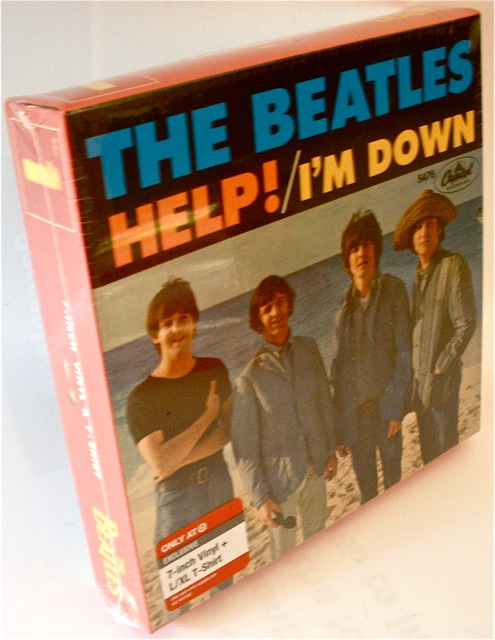
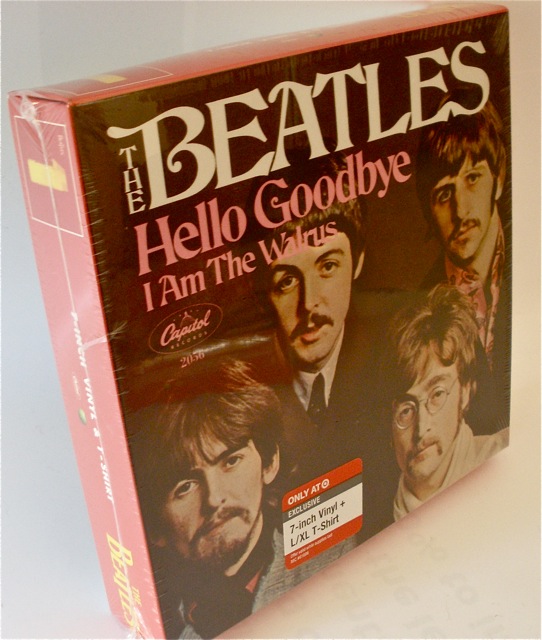
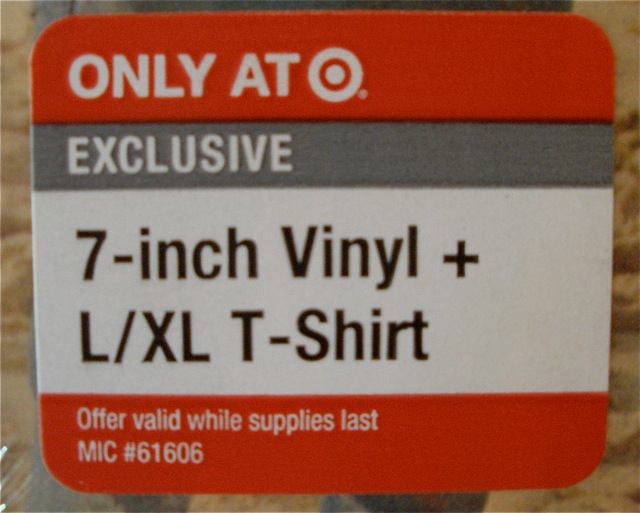
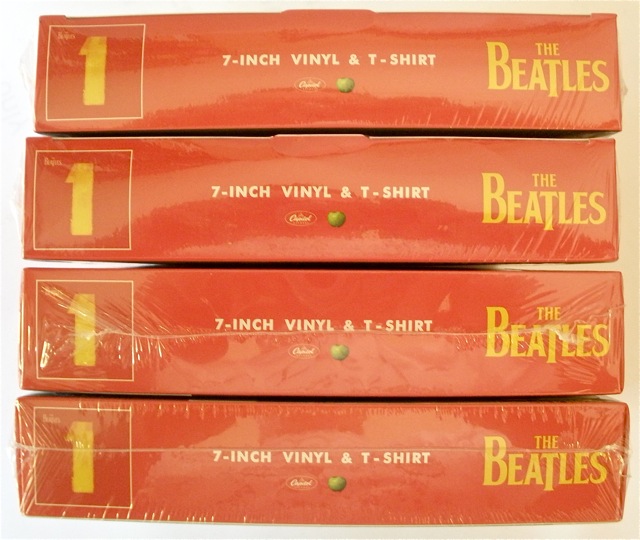
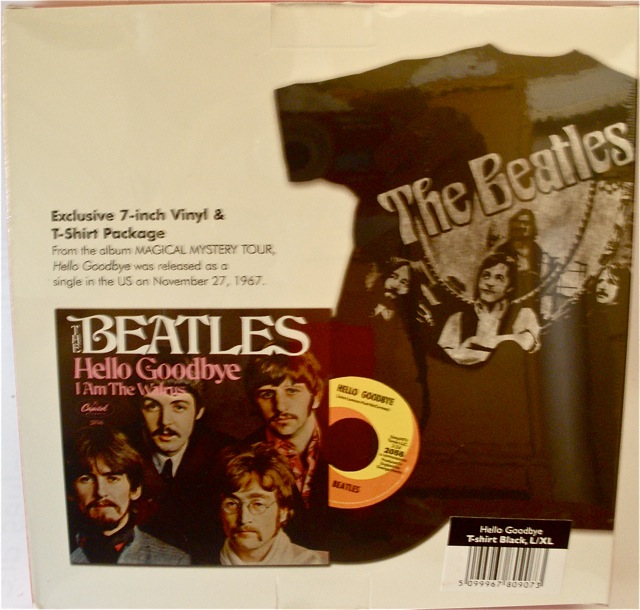
Target stores in the USA recently sold an exclusive and official limited edition of four Beatles 45 rpm singles. Each record was packaged along with a Beatles t-shirt in a box. The four vinyl singles are newly-pressed and digitally remastered using the same mastertapes as the 2009 re-issues. This makes these four singles (along with the Record Store Day “Paperback Writer” single released last year) the only vinyl available so far from the recent Abbey Road Studios remasters of the Beatles back-catalogue.

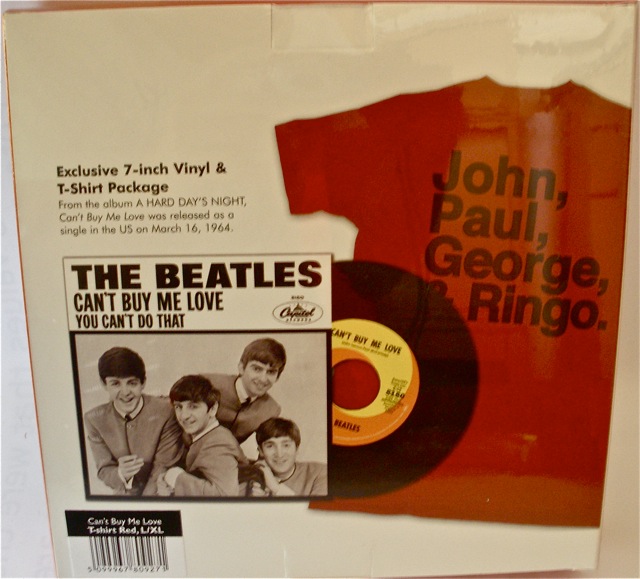
They are “Can’t Buy Me Love/You Can’t Do That“:

Help!/I’m Down“:

Hello Goodbye/I Am The Walrus“:

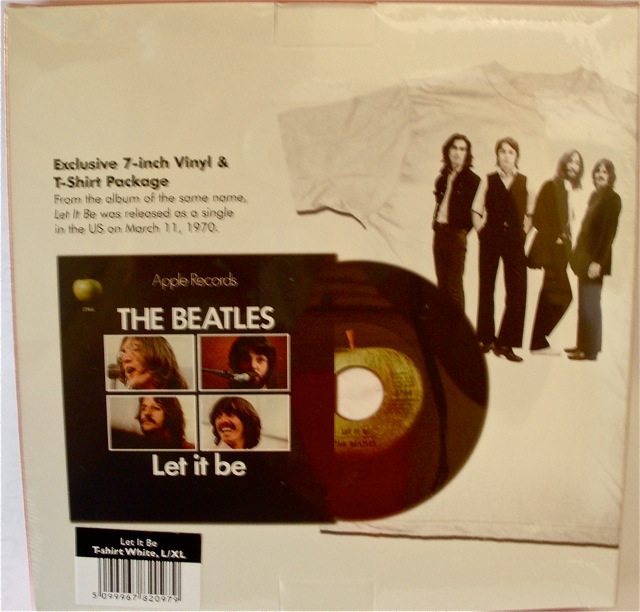
And “Let It Be/You Know My Name Look Up The Number“:

According to sources only 10,000 copies of each single were pressed by Capitol Records – very small numbers by Beatles standards. And only ever sold in Target stores in the United States:

All the vinyl singles have Capitol Records labels, except for “Let It Be” which is on the Apple Records label – just as it would have been back in 1970 when it first came out. The singles look like the original issues except that Sony/ATV is listed as the music publisher. The picture sleeves are in a thicker cardboard than the paper ones that were originally were issued. The contents of each box, deatiling the cover, the labels, and the enclosed t-shirt design are pictured on the rear of each package:

You can see from the packaging that these releases are linked closely to the recent re-issue  of the Beatles “1” CD, which has been released in digitally remastered form. Hence the familiar red and yellow theme and the prominent “1” logos on each box.

What do you think? Valuable collectors item of the future?

See also Steve Marinucci’s Beatles Examiner and the Beatles Target Ltd Release Singles Part 2.

Another Beatles Picture Disc

A little while back I wrote about this Beatles picture disc single that I got for free when I purchased this little item.

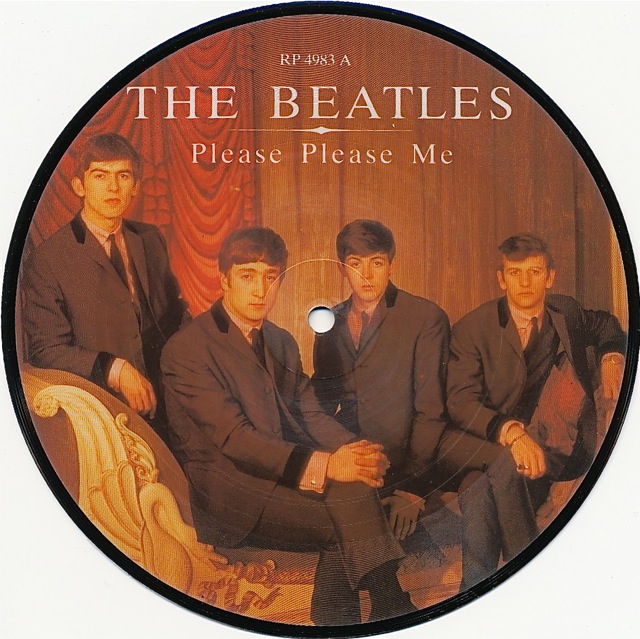
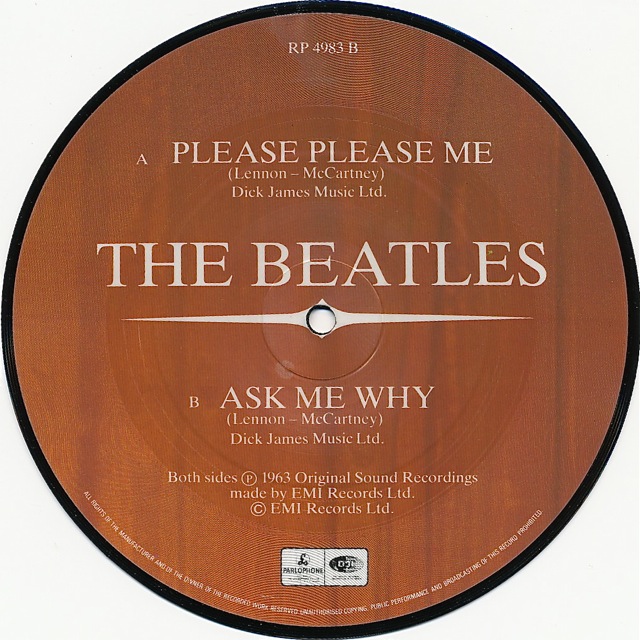
The other day I got one more in the series – “Please Please Me”:

It’s another one of the 22 picture discs released by EMI/Parlophone in the UK on the anniversary of each singles’ release. Each disc was released on the 20th anniversary of that single reaching the number one spot on the charts.

You can see the rest of the UK picture disc series here (1982-1985), here (1985-1987), and here (1988-1990) – with thanks to Dave Dermon.

See the other two Beatles 45 picture discs in my collection here.

The Beatles With Records

Despite selling multi, multi-millions of the things, it’s kind of strange that you hardly ever see photographs of the Beatles themselves with, or listening to, records.

Here are a couple I’ve found:

A very early shot of John using an old record player

A much later shot of John listening intently to a range of singles

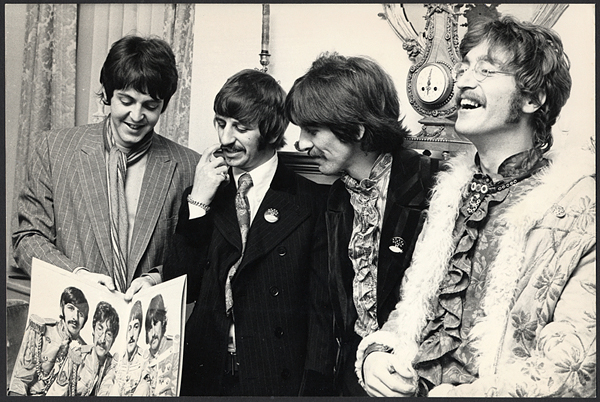
There is of course the well known launch of “Sgt Pepper”, when lots of photographs were taken inside Brian Epstein’s house with the four holding copies of their latest masterpiece:

A colour shot of the Sgt Pepper launch

The gatefold photograph displayed with pride

Did Linda Eastman (later McCartney) take any of these? She was there….

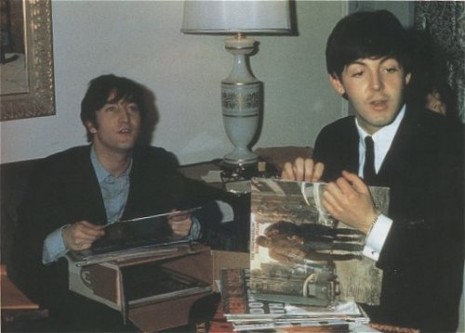
Given their fame the Beatles would have found it difficult to get out to shop for music like you and me – and this photo clearly shows John and Paul opening a box of LP’s that have been purchased for them. And don’t they look pleased to have some new titles to listen to?

A new box of albums

You can clearly see “The Freewheelin’ Bob Dylan”, and underneath that Ben E. King’s “Don’t Play that Song!” LP:

If you have any other photographs of the Beatles actually listening to, or with singles or LPs, send them to:  beatlesblogger@gmail.com

You can see the other parts in “The Beatles with Records” series here:  Parts 23467 , 89 , 10 , 111213141516 and 17.

Beatles Picture Disc 45

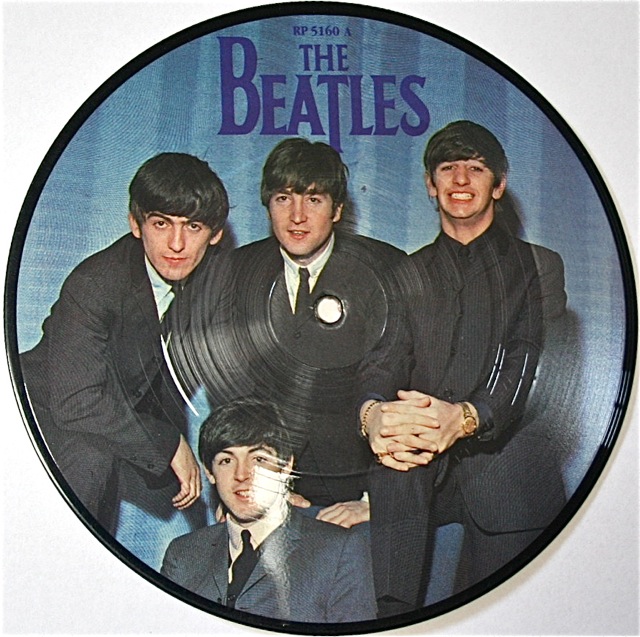
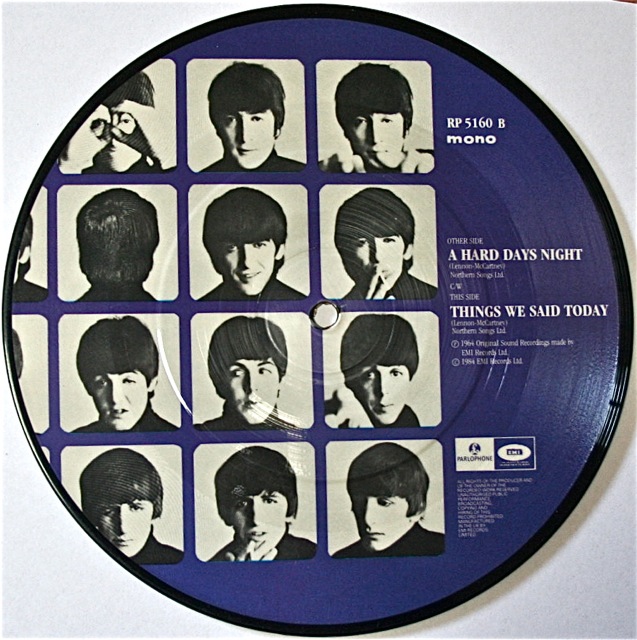
When I purchased this boxed set the guy selling the set to me threw in this UK-manufactured Beatles picture disc 45rpm single for free:

It’s got the catalogue number RP 5160, and from what I can tell from these sites it is part of a set of 22 UK picture discs released over a number of years (1982-1985), (1985-1987), and (1988-1990).  EMI/Parlophone issued one disc on the anniversary of each singles’ release. In other words, it would have taken quite a while to collect all 22!

If anyone else has any information about this series please let me know.

I’m now scared I’m on a whole new collecting journey….(see the other three I now have here and here).

Thanks to Dave Dermon for the images of the entire set.

Hear and See McCartney’s “Blue Sway”

One of the previously unreleased songs from the “McCartney II” sessions that will feature on the forthcoming re-issue of the album has popped up on YouTube.

Its an unlikely pairing between Paul McCartney and a US surf film-maker of some renown named Jack McCoy. McCartney’s smooth and stylish song “Blue Sway” accompanies an intriguing video clip of McCoy’s innovative underwater photography, utilising a camera attached to a jet ski. Have a look and listen for yourself – the way the images and music mesh is quite unique and compelling:

The song is credited on the reissue CD as “Blue Sway (With Richard Niles Orchestration)”.

The text accompanying the clip says:

“Written nearly 20 years ago, McCartney’s never-before released song, “Blue Sway,” is available for the first time on the bonus audio disc of the special edition of “McCartney II”. The music video created by McCoy is also featured on the bonus DVD included in the set.

Using a high powered underwater jet ski, the filmmaker found that he was able to travel behind a wave, creating underwater images that have never been seen before.

Over the past couple of years, McCoy set out to capture footage for his surf film, “A Deeper Shade of Blue“. During the editing process, McCoy put one of his surfing sequences to a song off McCartney’s “The Fireman” album. A mutual friend, Chris Thomas, saw the footage while visiting McCoy in Australia, and when he returned to the UK he gave McCartney a copy of the sequence.

“Paul was pretty stoked with what I’d created. He immediately thought my images might be suitable to go with his unreleased song “Blue Sway”.” said McCoy.

McCoy spent the next six weeks creating the music video, while also working full days on making “A Deeper Shade of Blue”. McCoy compiled and edited footage that he filmed off Tahiti’s Teahupoo reef to create what became the “Blue Sway” video.

“When I saw Jack McCoy’s underwater surfing footage put to the soundtrack of “Blue Sway” I was blown away,” said McCartney.

“Blue Sway” won ‘Best Music Video’ at NYC BE FILM Short Festival this past May, and the video will be featured as part of Surfrider Foundation’s summer PSA campaign. Surfrider Foundation is a non-profit grassroots organization dedicated to the protection and enjoyment of our world’s oceans, waves and beaches.

The film clip is dedicated to Linda McCartney.

There is also a “Making of Blue Sway” video clip:

“Come Together” TV Campaign for the City of Brisbane

Oh dear.

I’m getting onto this story a little late because it came to light last month, but the Australian state of Queensland is running an advertising campaign using a cover version of the Beatles “Come Together” to win tourist visitors back to their flood-ravaged capital city of Brisbane.

In January Brisbane, along with most of Queensland, suffered through devastating floods and has seen a real downturn in tourist visitors as a result. The state and the city need to get back on their feet. But really – why spoil “Come Together”? I don’t know about you, but I really hate to hear Beatles songs used in this way. In fact I hate hearing any song I really like bastardised by advertising agencies to sell any product.

Another Australian example from a couple of years ago that really grated (and I suspect this was used globally) was the use of the classic Beach Boys “Wouldn’t It Be Nice” to sell Cadbury chocolate. It just belittled this song for everyone for evermore:

Thanks for nothing, Cadbury. You spoiled a really great song.

The Brisbane version of “Come Together” was recorded by two local bands Hungry Kids of Hungary and Ball Park Music. Its not the first time Beatles music has been used in advertising. Probably the most celebrated example was from back in 1987 when Nike used the actual track (not a cover version) of “Revolution“. When it got to court Apple and the Beatles’ attorneys argued that “…the Beatles position is that they don’t sing jingles to peddle sneakers, beer, pantyhose or anything else. Their position is that they wrote and recorded these songs as artists and not as pitchmen for any product.”
I’d be interested to hear what you think. Does the use of Beatle tracks (or any great popular music for that matter) to sell or promote product get on your nerves?
Let me know.