I know Christmas is well and truly over, but one more thing on the Holidays Rule release before we move on.
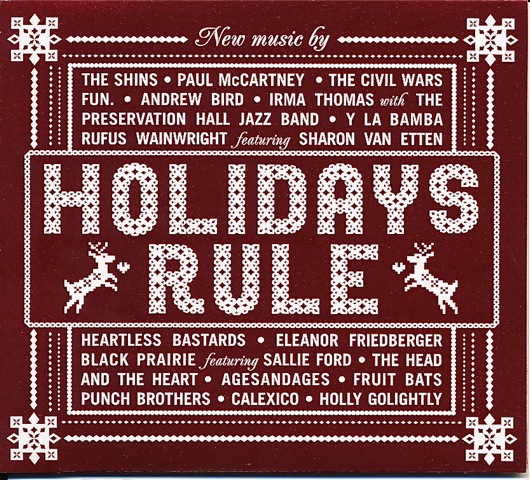
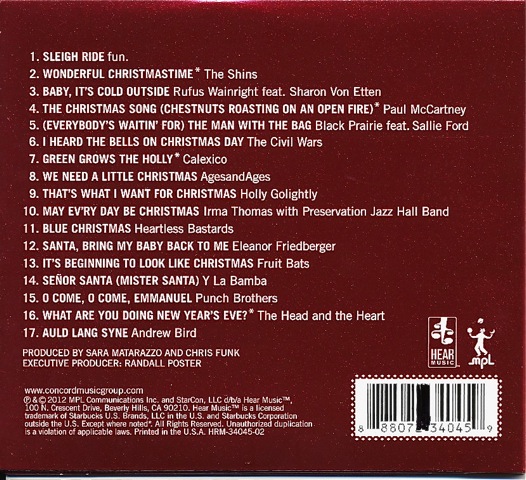
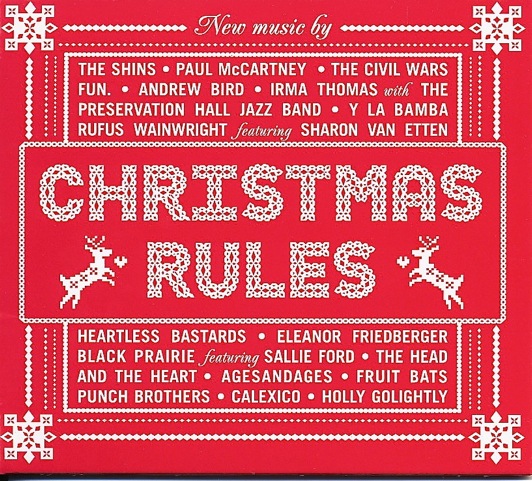
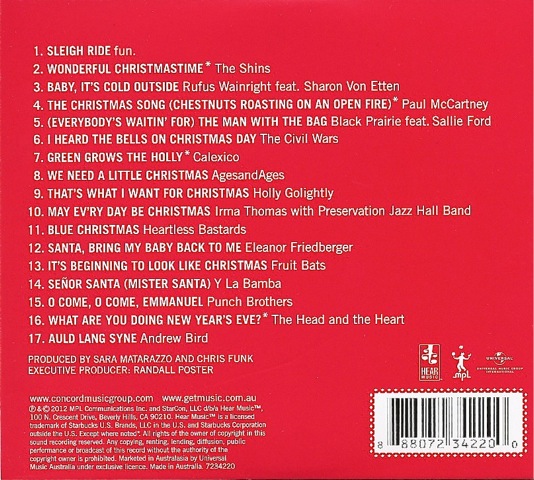
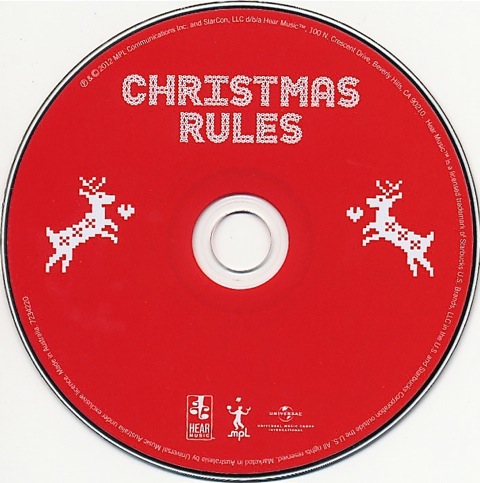
This CD came out with the title Holidays Rule in the US – but for the European, UK and Australian markets we got a CD called Christmas Rules. This is because we don’t use the term “happy holidays” when talking about the Christmas break.
Here’s what they both look like, beginning with the US version which comes in a sparkly, metallic, dark red and white gatefold cover:
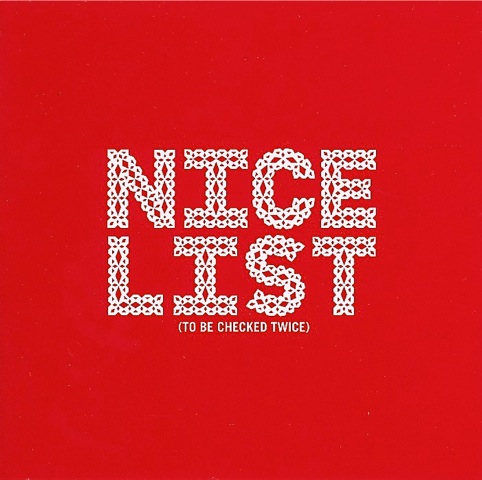
And in the UK/EU/Australia it is called Christmas Rules and comes in a bright red, matt finish gatefold:
The 8-page booklet (above) for both the US and the Australian/European versions appears to be the same. There is an odd website address on the rear of the booklet though. In large type at the bottom of the page of both versions it says: SEARCH PARTY, and then gives this address in smaller type: searchpartymusic.com
This is strange because it’s the website for a Boston-based wedding and functions band. Not sure what’s going on with that….
Both Holidays Rule and Christmas Rules come with the non-strings version of the “The Christmas Song (Chestnuts Roasting on an Open Fire)”. To get the strings version you need to download the iTunes version.
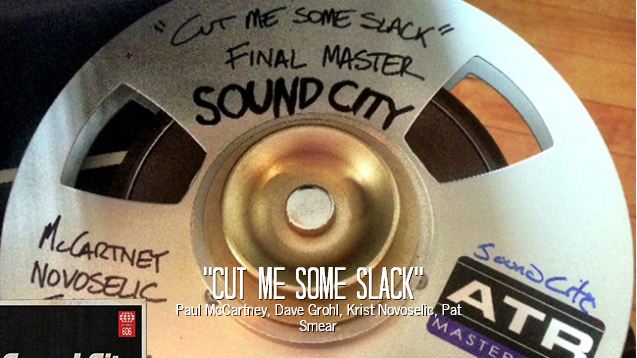
On December 13 the WogBlog site featured a video of a brand new Paul McCartney song performed for the first time at the big fundraiser concert for Hurricane Sandy held at Madison Square Garden. Paul called out former Nirvana members Dave Grohl, Krist Noveselic and Pat Smear to back him on a brand new and rocking song called “Cut Me Some Slack”:
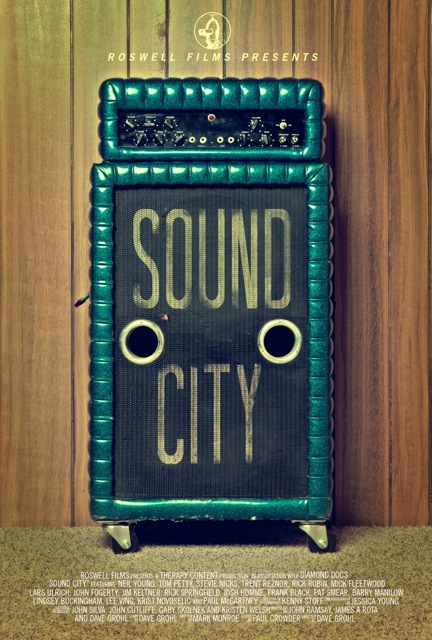
Turns out the song will also feature in a new, feature-length documentary and album directed and coordinated by Dave Grohl called “Sound City”:
It’s about the legendary recording studios called Sound City, in the Los Angeles San Fernando Valley, which was (as the press release says): “….home to countless legends, capturing their magic on two-inch tape, decade after decade. It was witness to history. It was rock and roll hallowed ground. And it was our best-kept secret.”
“Sound City was state-of-the-art when it opened in 1969. It soon became known for churning out one rock and roll classic after another. Featuring a legendary, one-of-a-kind Neve recording console, and arguably the best tracking room in America, many of the seminal albums of the ‘70’s, ‘80’s and ‘90’s were put on tape within these walls: classics by Fleetwood Mac, Neil Young, Tom Petty, Metallica, Nirvana… The list is staggering.”
Had this amazing find yesterday. Just near where I work there’s a discount bookshop that sells lots of remainders. Over the years I’ve picked up quite a few things here (see: The Beatles Second Album; “The Beatles” book; Beatles Books Abound; etc.)
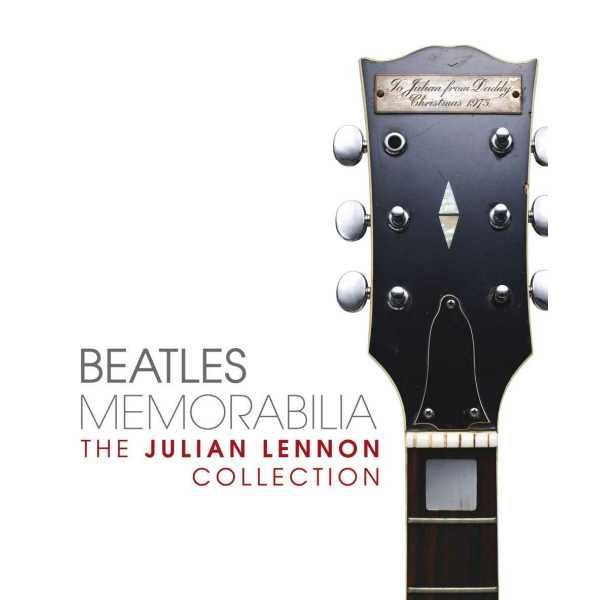
Yesterday I went in for the first time in weeks and saw about five copies of this sitting on a shelf:
I’ve seen this book around the traps but never purchased a copy, but at just A$14.99 how could I refuse?
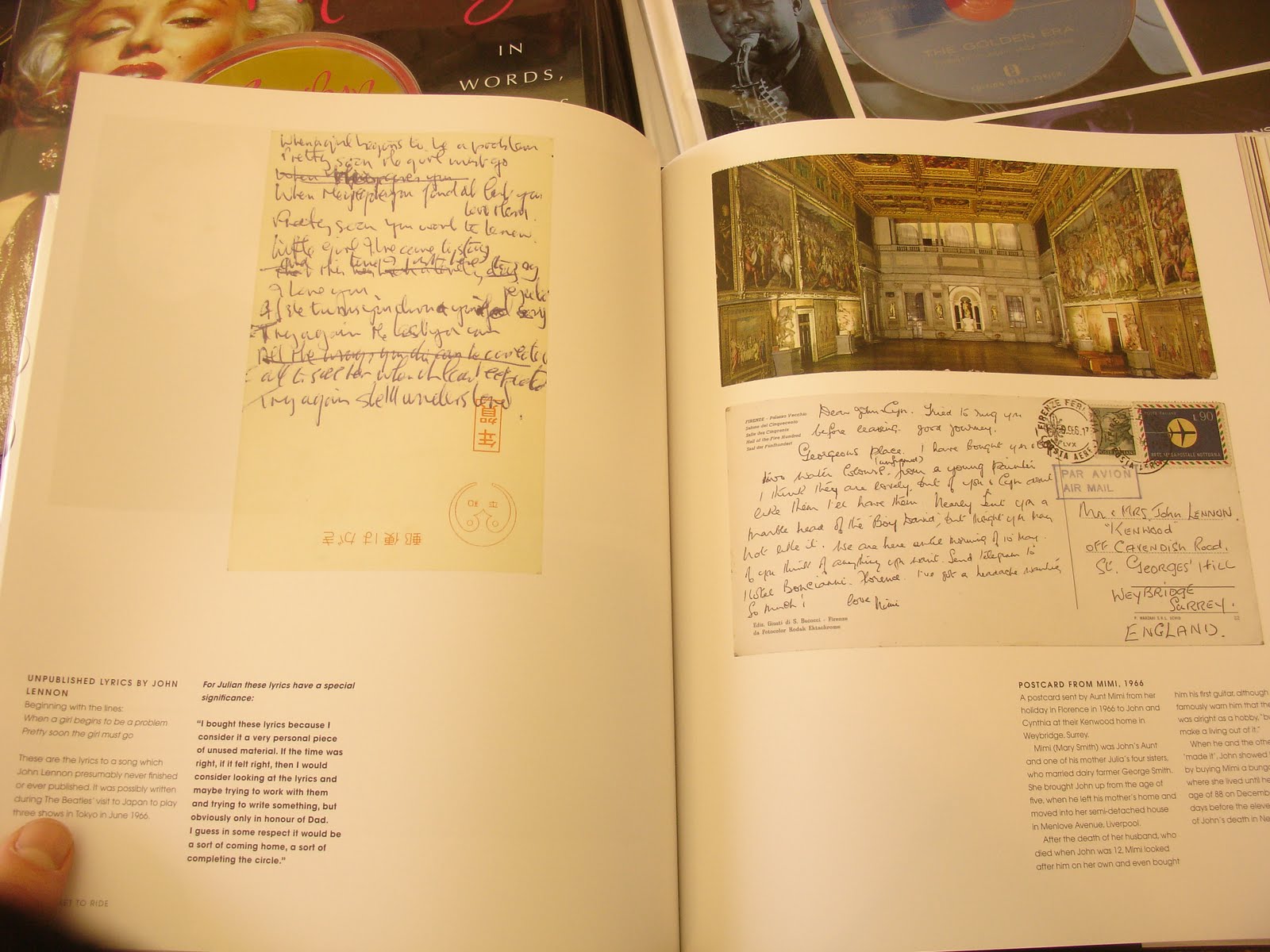
John Lennon’s son Julian has turned his Beatles memorabilia, previously sitting in storage, into a travelling exhibition and a book – all to raise funds for his charity The White Feather Foundation.
There are lots of gold record awards – all of them from the US and all of them genuine (that is, the actual records that were presented by the RIAA – the Recording Industry of America – to the Beatles). In fact Julian says that his is the only full collection of the American gold discs. How can you tell they are all original? Well the book explains that official presentations are identifiable by the “…white-matte style, so named because of the white linen background used in the construction of the award. These types of awards were produced from 1963 to 1974 and were strictly limited to the artists only.”
Interestingly, Julian says in the text that despite being the only person to own a complete set of Beatles US gold records, he doesn’t own any of the Beatles vinyl albums at all. Extraordinary.
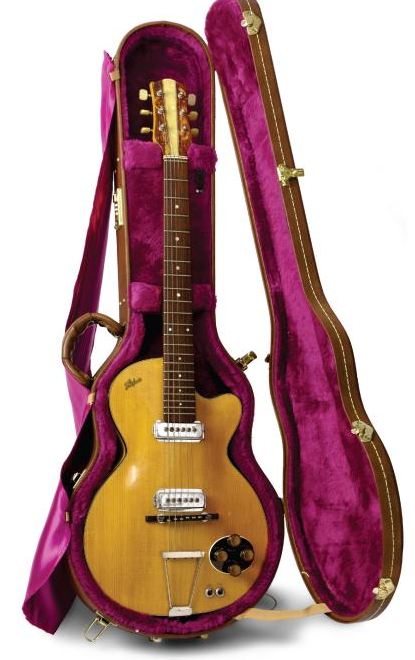
There are a couple of great guitars pictured in the book – some of which were given to him by his father and others acquired later (like this one):
Julian says that nearly everything he now owns he had to buy at auction. When his father passed away in 1980 he didn’t inherit any mementoes or keepsakes. Which is incredibly sad for himself and for his family.
If you want to have a peek inside just click here, and here’s a video of Julian Lennon talking about the book and exhibition.
I have posted very rarely on Wings in this blog, but of course collecting records and CDs by (or related to) the Beatles and Paul McCartney means that the band is well-and-truly included. During a recent visit to Canberra (the capital of Australia) I came across a second-hand shop I’d not visited before in the city’s downtown area. They mostly specialise in CDs, DVDs and games, but on the floor there was a large amount of unsorted vinyl where I found a small but interesting addition to the collection.
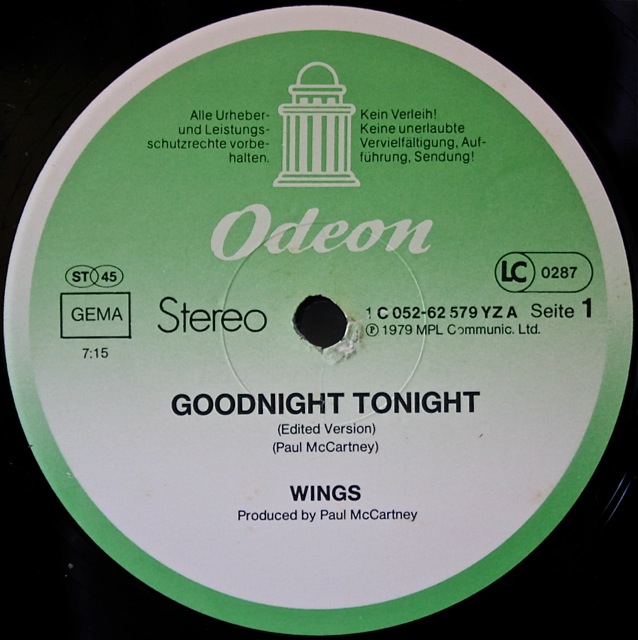
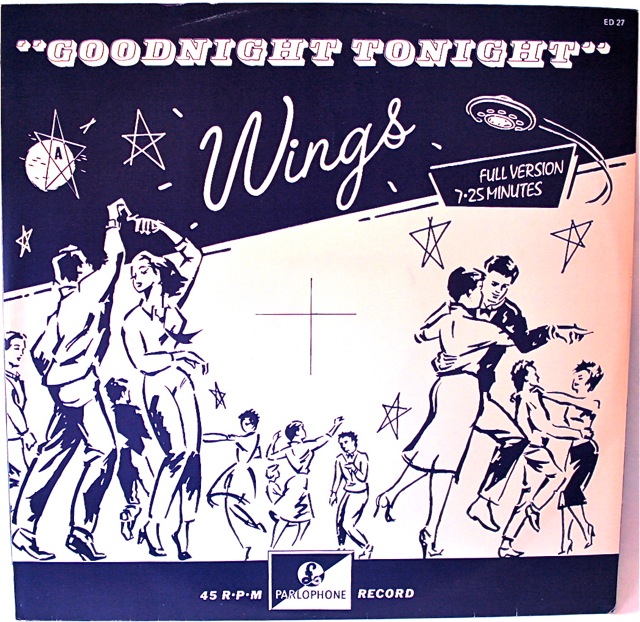
I already have a German pressing of the Wings single “Good Night Tonight” (1979). It’s the 12″ full version (7 minutes 15 seconds) of the song, on a green EMI Electrola/Odeon label:
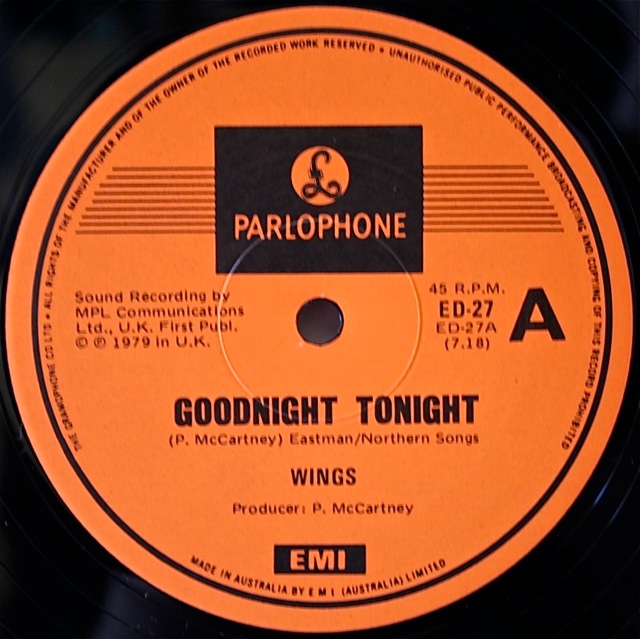
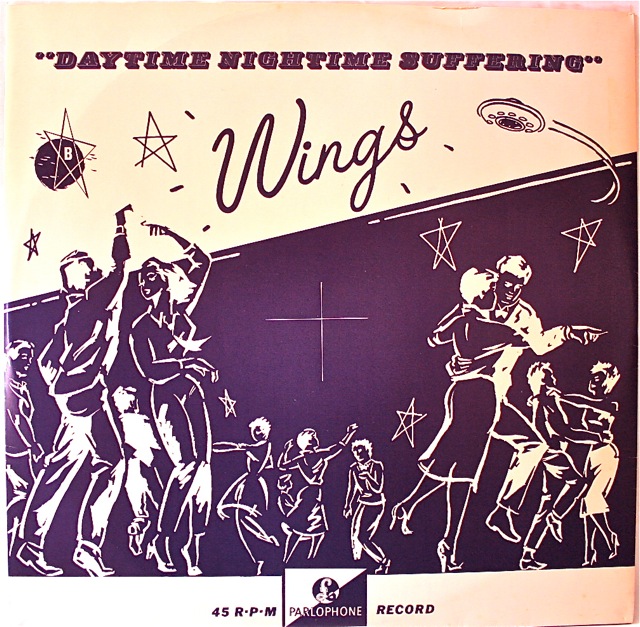
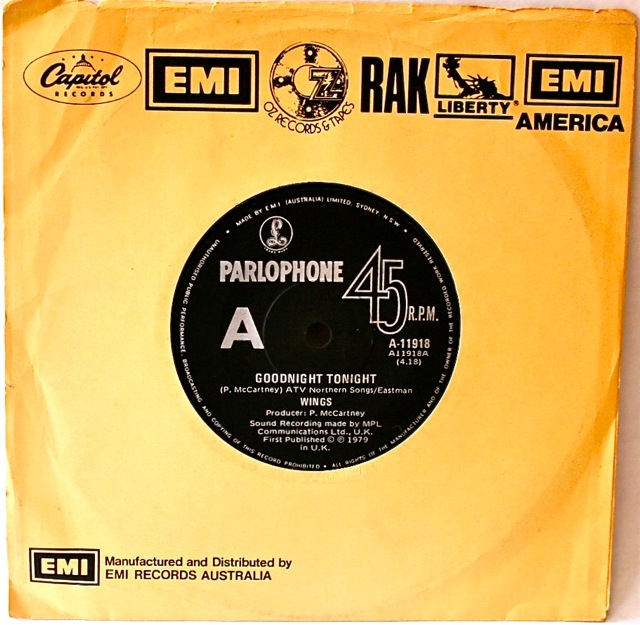
As you can see, the cover is not in great shape but the vinyl is in mint condition. Anyway, in the Canberra store I found the Australian release of this same disc. It came out here with an orange Parlophone label:
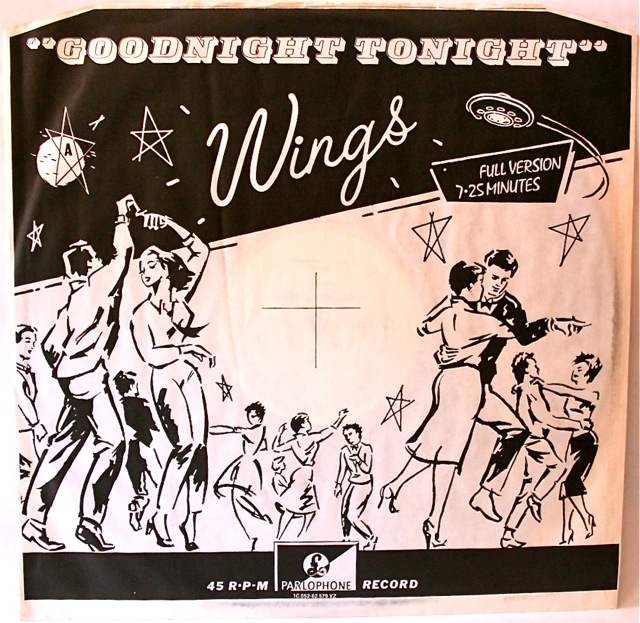
The two releases have pretty much identical exterior artwork throughout with the only real difference being the colour of the inner sleeves. The German inner sleeve is made from thin paper and is printed in black and white:
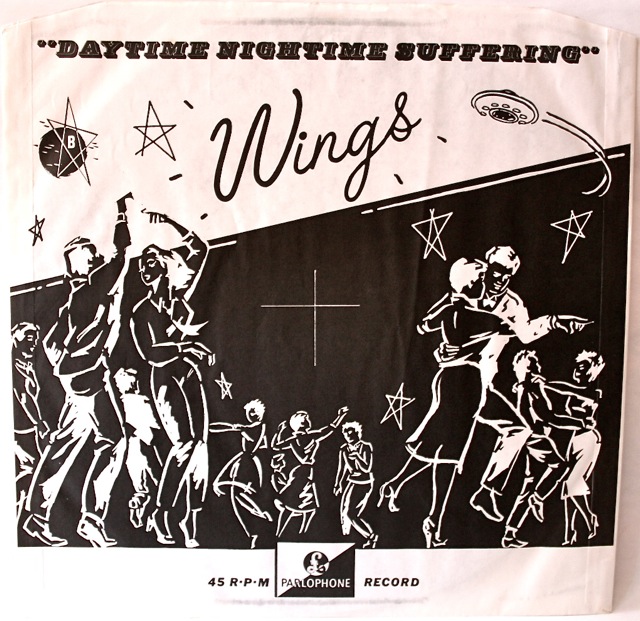
While the Australian inner sleeve is made of thicker cardboard and is more deep blue in colour:
I also have the 7″ 45rpm edited version (4 minutes 18 seconds) of “Good Night Tonight” on an Australian black and silver Parlophone label:
It’s nice to have the orange Parlophone version, and at the cost of just A$3.00, a small but worthwhile addition to the collection.
Since the last instalment we’ve been swamped with some great content – enough for at least two or three more posts featuring the Beatles (or people close to them) photographed or filmed with records or CDs – either their own or those of other artists.
This first one comes from beatlesblogger.com reader Ariel, who sent in this great YouTube clip of John Lennon and Yoko Ono strolling past a crowd of reporters and photographers:
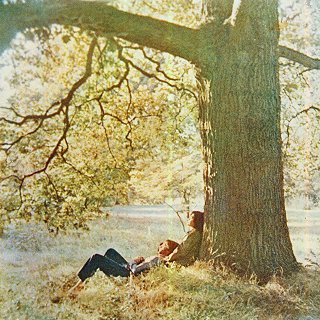
The footage was clearly taken in 1970 when John and Yoko were publicising this Plastic Ono Band album:
The footage comes from a 1977 film by French film-maker Gérard Courant, whose website says of the film: “The year punk music exploded, Courant gave his most avant-garde outburst by relating for the first time the shattering experiences that took place in the second half of the 20th century…with the rock culture that clamored that same idea of rupture…”. Lennon and Ono can also be seen publicising the same LP in Part Five and also in Part Two.
Staying with John Lennon for a moment here’s an image sent in by Andrey in Russia of the Lennon’s in New York – holding court with assembled media and hangers-on in their apartment in February, 1972 in Greenwich Village:
There’s obviously a record you can see sitting there at the foot of the bed:
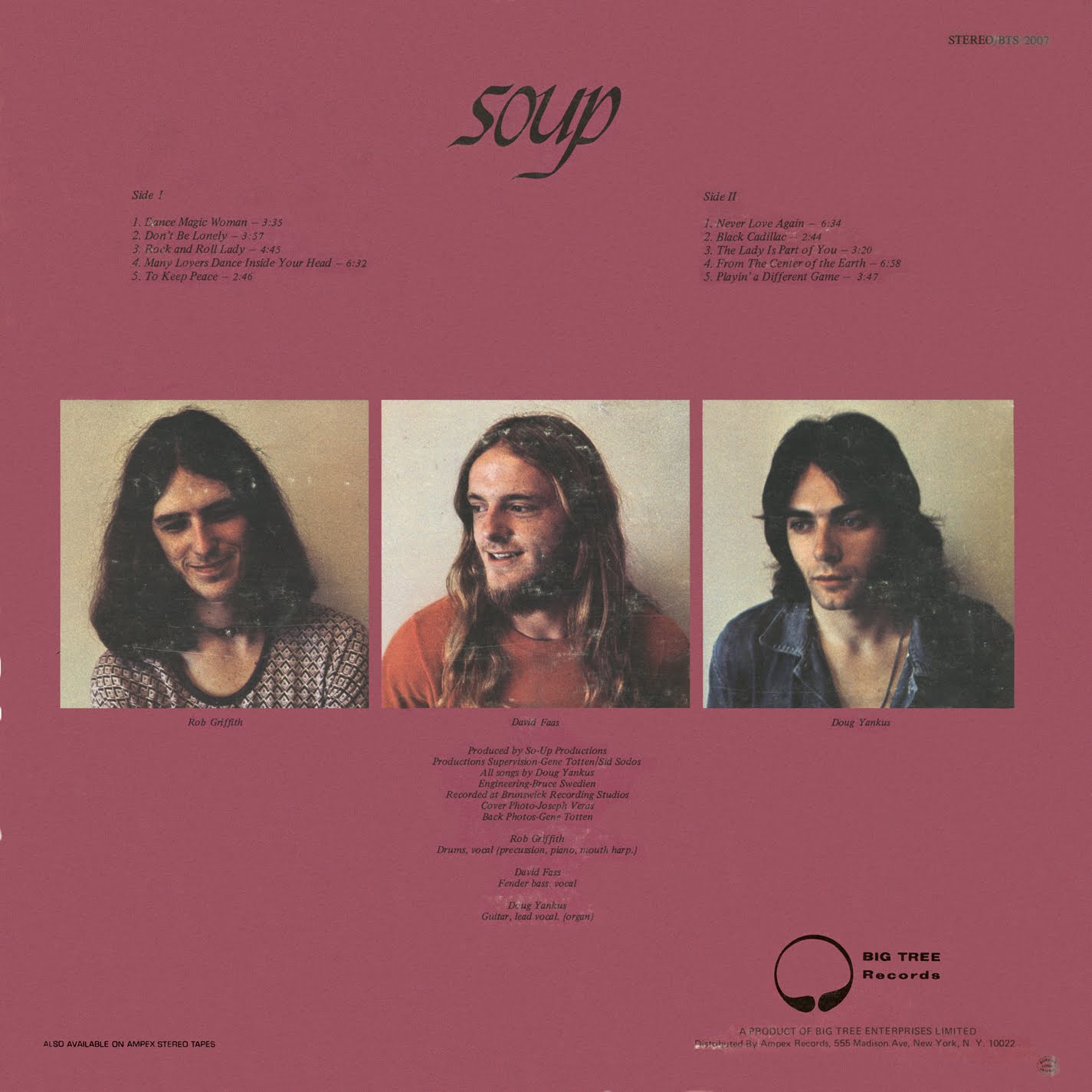
But what and who is it? I was having real trouble identifying this one. Well, thanks to Andrey’s Russian-speaking friends we’ve been able to find that LP. He asked one of the Beatles.ru forums for some help. Which artist could it be? Andrey says he got the answer in about ten minutes:
The Power Pop website says that the group Soup was from Wisconsin in the USA and the members were Doug Yankus, Rob Griffith and David Faas . The band released a self-titled album in 1970, however what we can see here is the bands second LP, The Album Soup, from 1971. How it came to the attention of John Lennon, and what he thought of it we’ll probably never know.
Continuing on the Lennon theme – this time with Yoko and a gentleman named Kristofer Englehardt, author of the book “The Beatles Undercover“, holding a copy of her solo LP from 1971 called Fly:
In Part Six there’s a terrific photo of George Harrison in the back of a limo holding up a copy of his All Things Must Pass LP. Here’s another good one from around the same time:
Could it be that this photo below was taken on the same day and location? It looks very much like the same shirt George is wearing above. Perhaps he’s playing one of the sides from All Things Must Pass on his record player at home?
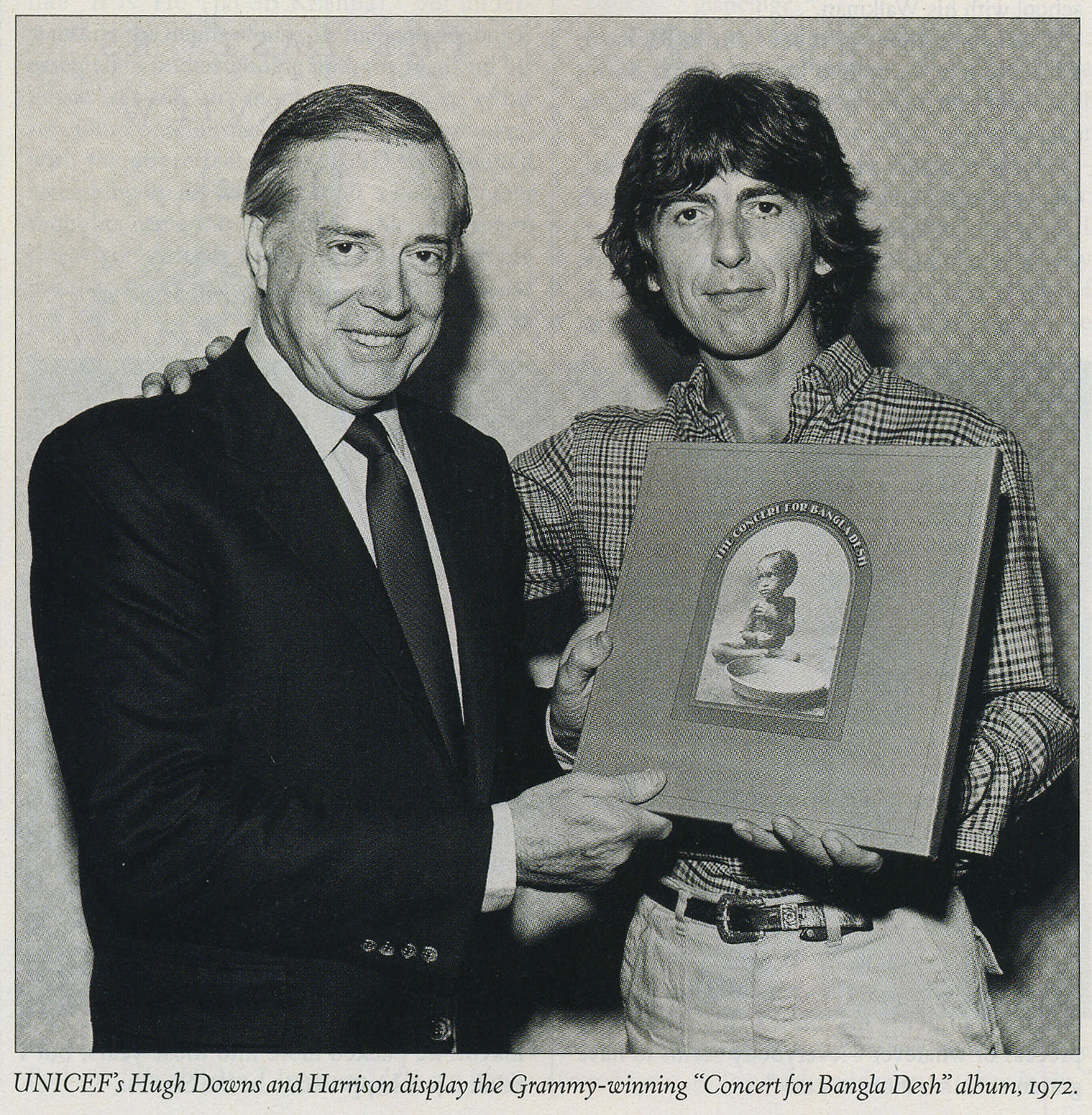
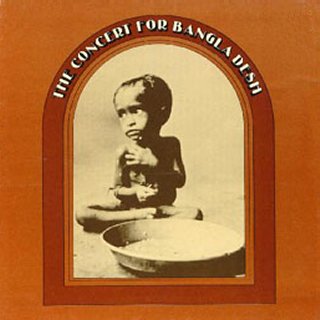
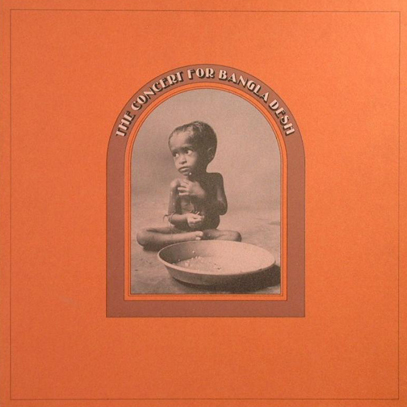
One final shot of George taken in 1972 according to the caption, this time with his triple LP from 1971 The Concert for Bangladesh:
When you are Paul McCartney, just getting into a building you are visiting can have it’s challenges. The photo below shows the type of crush which can eventuate when everyone wants a photograph or an album signed – including one fan bravely holding up a copy of the 1988 Russian release Снова в СССР:
Here he is again – this time with fans thrusting forward copies of (amongst other things) Help! and Tug of War (you can see the cover of Tug of War at the very bottom right-hand side of the photo):
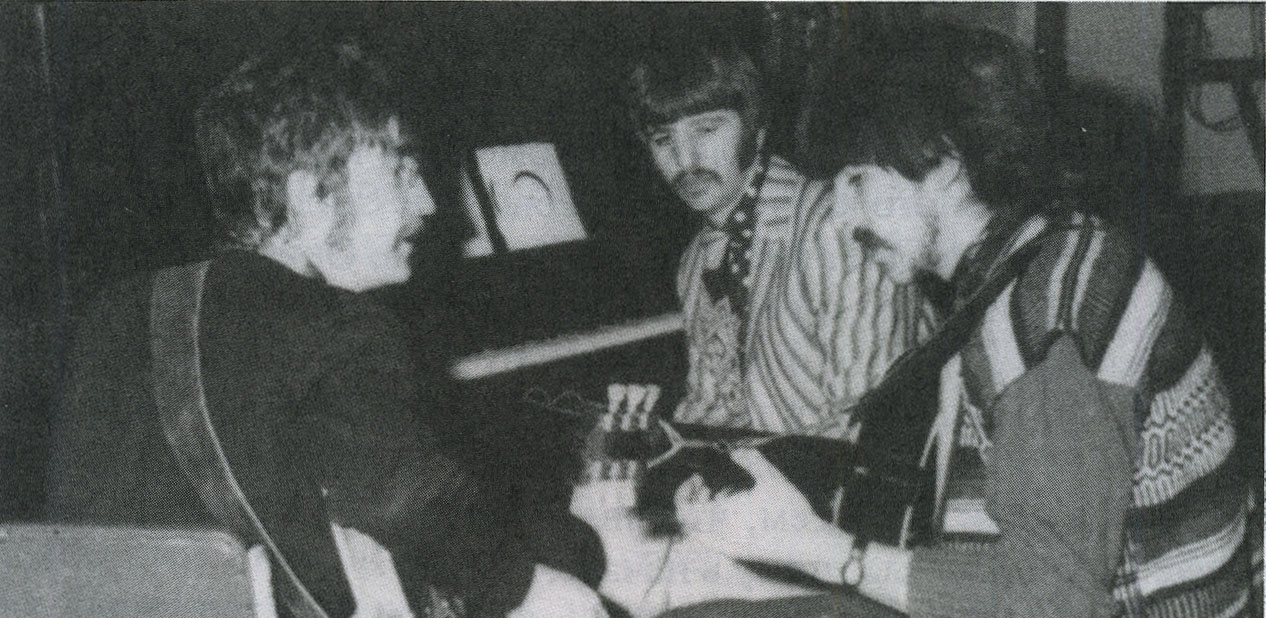
One other final shot of Paul holding a 45 single, this time with Ringo and John. It is what is reported as a test acetate recording (printed in limited quantities and used by the band and engineers for checking the quality and the mix) – it is supposedly of a song from Sgt Pepper:
There’s another photo from the studio on the same day below – from a different angle with George also in attendance and more acetates lined up on the piano:
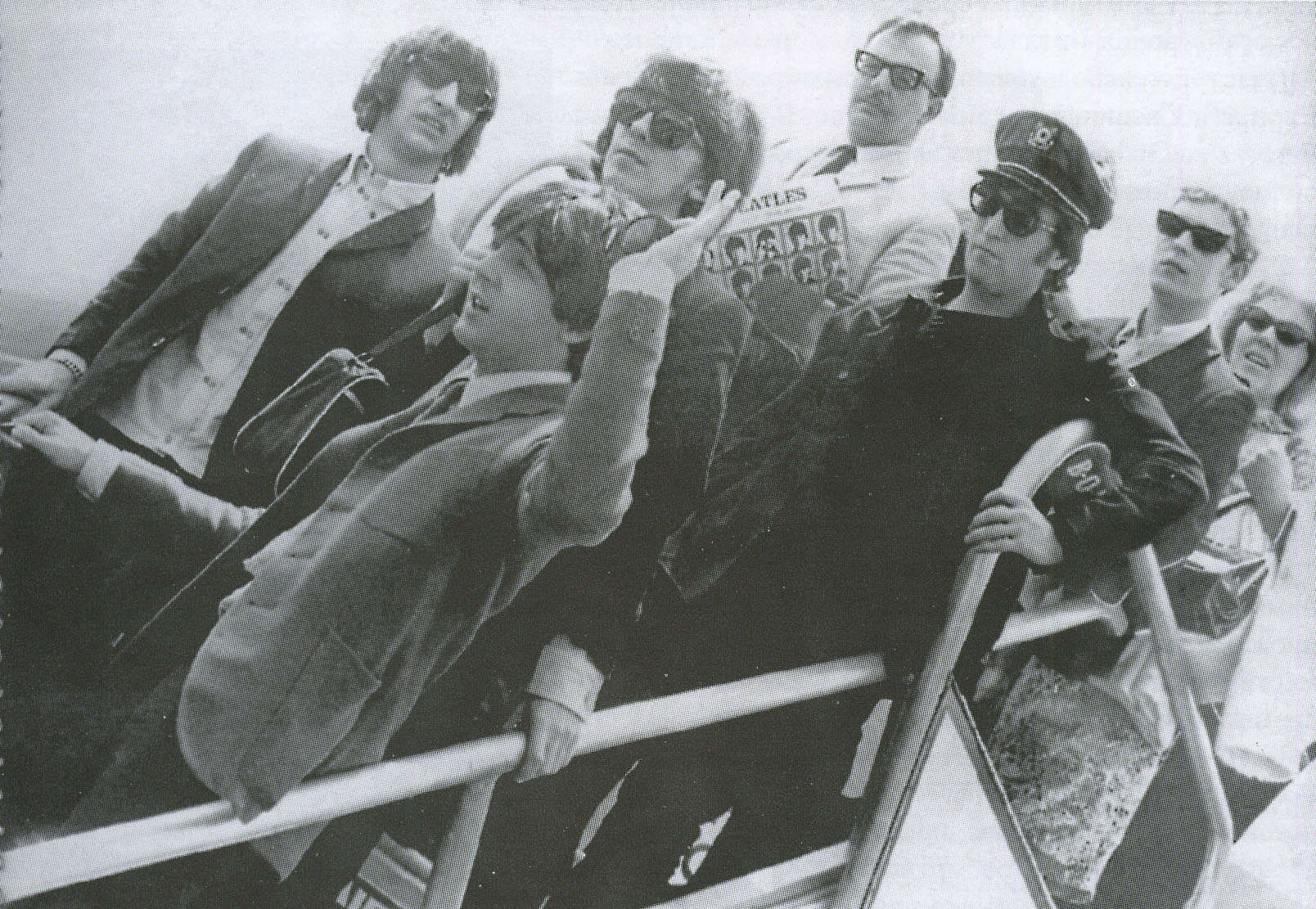
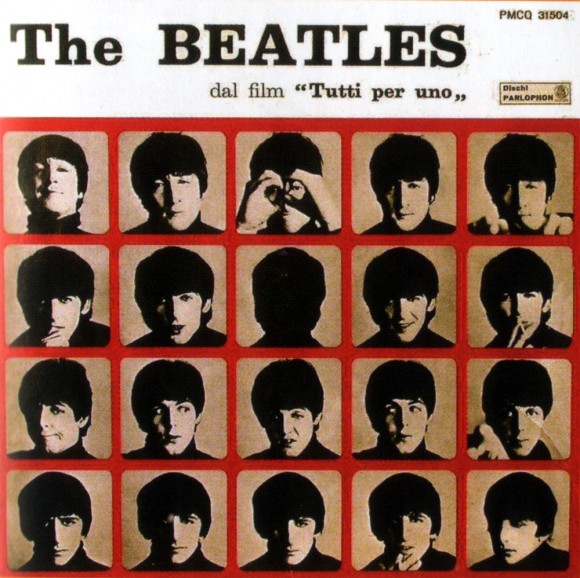
One final photo for this instalment – again of the Beatles as a group and possibly arriving in Rome. I say that because the gentleman in the light coloured jacket, moustache and glasses (who is a fellow named Alf Bicknell – the Beatles chauffeur between 1964-1966) is holding a copy of the Italian version of A Hard Day’s Night. You can tell it’s the Italian cover of the LP because the large type across the top saying “The BEATLES” is distinctively different to the standard UK release:
Thanks to all those who have sent in content and further information. You can see the other parts in “The Beatles with Records” series here: Parts 1, 2, 3, 4, 5 , 6, 7 , 8, 9, 10, 11, 12, 13, 15, 16 and 17.
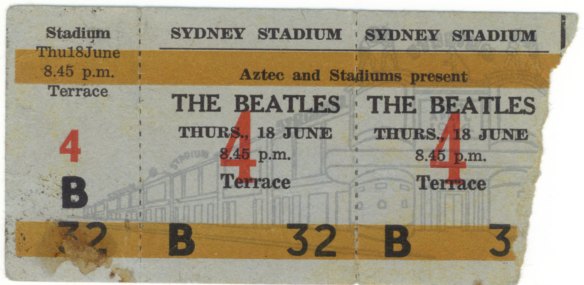
Firstly, it was prompted when last week Neville, a beatlesblog.com reader, sent in a scan of an original ticket stub from one of the concerts given by the Beatles in 1964 in Sydney, Australia at a venue called The Stadium….
Neville wrote: “This is not a particularly fancy ticket and is definitely used. They tore off the end of it at the door as you went in. This is 1964. Sending you this is giving away my age, I was 19 at the time….I can recall the concert fairly well although some details are a little bit sketchy now. Suffice to say that the Beatles performance was much shorter than today’s concerts, only about 45 mins max perhaps and about 15 songs only I think. And despite the claims about the deafening screams, you could still actually hear the songs (just). However that might have been because we knew them all at the time. It was mostly from “Please Please Me” and a few of the singles. It really was a very exciting performance and you got carried away by the crowd reaction!”
“There were a couple of support acts as well. The one I remember the most was Johnny Devlin who was then a fairly wild rocker and wore skin-tight black leather pants which the girls seemed to like…”
“The remarkable thing about the Stadium was that is was built as a boxing venue and the audience surrounded the stage (ring) which was in the middle of the building. For concerts they had a revolving platform on the stage so that no matter where you sat, at some stage the performers would be facing you. This must have been a bit disconcerting for the acts. The acoustics weren’t that great, neither were the seats, just being wooden benches. Anyway, concerts there just seemed to have an atmosphere all their own.”
Thanks for the scan. Neville got talking to a friend recently who’d also been at a Sydney Stadium Beatles concert (at a different performance though – the band played three shows there on 18, 19 and 20 June), and he confirmed that the performance of the Beatles was short – only about 30 to 45 minutes. He also reminded Neville that another act was Sounds Incorporated, who performed instrumental material only. Also on the bill were Alan Field, Johnny Chester, and a band called The Phantoms.
This was part of the Beatles’ very first world tour, June 1964. RingoStarr missed the first leg of the Australian concerts due to severe tonsilitis (the band went first to Adelaide in South Australia, then to Melbourne in Victoria before the Sydney shows, then to New Zealand, and back to Australia for two shows in Brisbane in Queensland before jetting back to England). Ringo re-joined the group in Melbourne and Neville says he was definitely on stage for the Sydney concerts. Until then his place was taken by the then little-known drummer Johnny Nicol.
2014 of course will be the 50th anniversary of the tour and two museums here are teaming up for a large exhibition. The Powerhouse Museum in Sydney and the Melbourne Arts Centre will next year launch a “Beatles Down Under” exhibit featuring collectables, documents, memorabilia, photographs and sounds from the time. It centres around the personal archives of the Australian tour promotor at the time, Ken Brodziak, and will be on show at the Powerhouse in 2013, and then move to the Arts Centre Melbourne in 2014.
The Australian Broadcasting Corporation (ABC Radio) broadcast a lengthy interview with Peter Cox (curator at the Powerhouse) and rock historian Glenn A. Baker (author of the book “The Beatles Down Under”). Here’s a short extract. The interviewer is Rod Quinn:
You can click here to listen to the entire interview.
The final reason for this post is the book simply called “The Beatles in Australia”. It was originally released in 2005, but seems to be still available as it remains on the New Holland book publishers website.
As you can see from the cover image above this book features many unique images, mostly taken during the Adelaide leg of the Beatles Australian tour where drummer Jimmy Nicol was standing in for an ill Ringo Starr. Most of the images in the book had never been published previously. They were taken by Brian Cooter and Rosemary Blackwell and were purchased by the author, Mark Hayward through Christie’s and Sothebys.
Below is part of a transcript, included in the book, from the Beatles first press conference in Australia held on Thursday, 11 June 1964 in Kings Cross, Sydney:
Interviewer: Have you written any songs with Australian themes?
John: We never write any themes about anything. We just write the same rubbish all the time.
Interviewer: Do you play the kind of music you want to play or music people want to hear?
John: No, we’ve been playing the same music for five or six years, just rock n roll, we just happen to write it
Interviewer: Well what do you think made the difference that suddenly pushed you above all the other groups?
George: We got a record contract.
It is evidence of typical Beatle banter – clever, unassuming, disarming. There are some really great photos in this book, including the arrival of the band in Adelaide where they were greeted by a crowd estimated to be 350,000 people. If you know Adelaide (even today) that is a huge turnout of fans:
George with the local press and media:
And at the concerts:
I’m still trying to track down the exact exhibition dates for the Sydney Powerhouse and Melbourne Arts Centre. More soon.
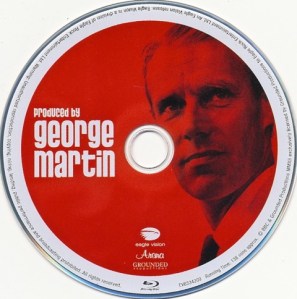
We’ve really been enjoying the newly-released BBC-Arena documentary “Produced by George Martin“. And it has been getting some very good reviews too. You might recall a little while ago we gave away a copy of the DVD to a lucky Beatlesblog reader, Eric Leon in France.
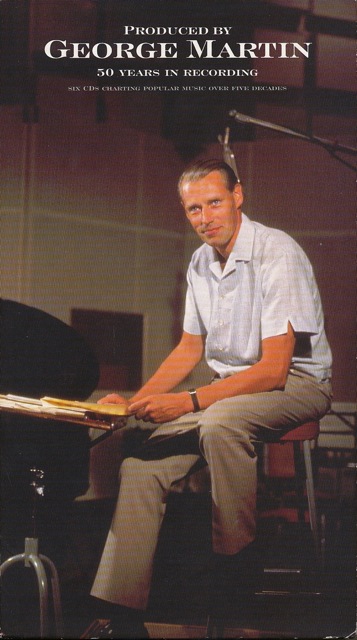
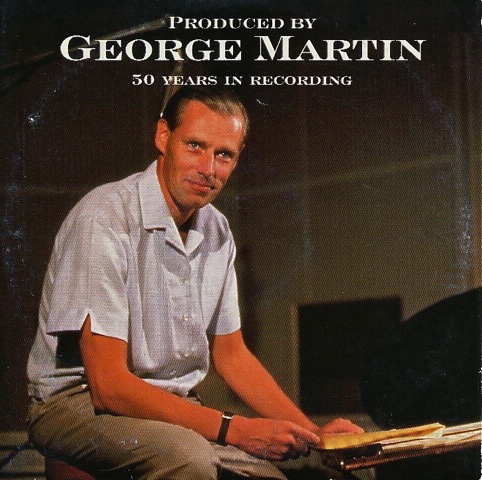
The DVD and BluRay contain the extensive documentary, plus over 50 minutes of extended interviews with Martin, Paul McCartney, Ringo Starr and many others. But it is not just Sir George’s work with the Beatles which is featured. “Produced by George Martin” is a history of Parlophone Records, which is a division of the huge recording conglomerate known as EMI. George Martin was the boss of Parlophone and so alongside the Beatles (by far his most famous signing) he was responsible for recording some of the top hit-makers in Britain (and the world) including Cilla Black, Peter Sellers, Spike Milligan, Rolf Harris, Gerry and the Pacemakers, Billy J. Kramer, Matt Monro, Shirley Bassey, and of course Wings. Many who see the doco will be wondering if there’s a way to get hold of some of the great music and comedy featured which Martin produced. There is – it’s a six CD box set of his work that came out way back in 2001. Interestingly, although it was released more than ten years before this latest documentary, it carries a very similar title to this year’s DVD and BluRay: “Produced by George Martin – 50 Years in Recording”:
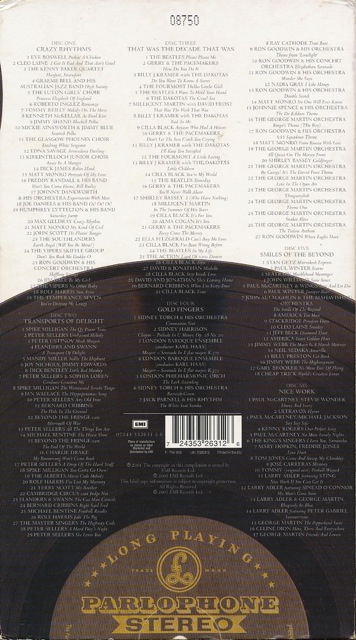
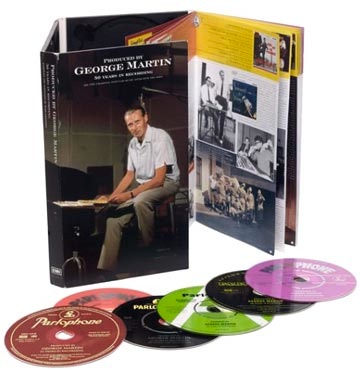
Each CD set is individually numbered (mine is 08750) and comes in a fold-out, long-box length holdings which holds the six CD’s and a book. Here’s the rear cover and some of the inside fold-out panels:
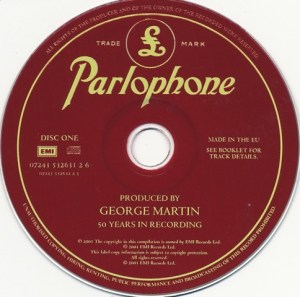
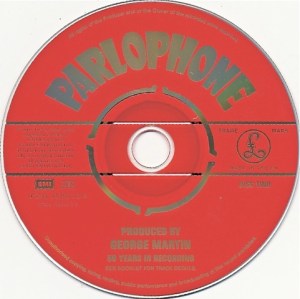
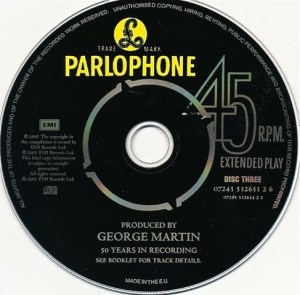
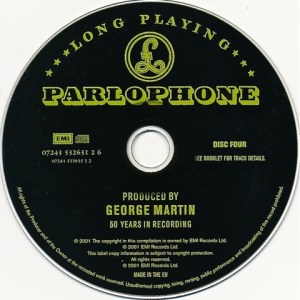
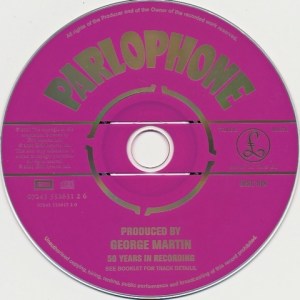
The CD’s themselves contain tracks that date back to Sir George’s earliest work, beginning in 1955 and then traversing his entire career up to his post-Parlophone days recording acts like America, Jeff Beck, Jimmy Webb and John McLaughlin. Whoever designed the set decided to give each CD an authentic and historic Parlophone label. It’s a design idea that the Beatles themselves decided to copy in the their latest series of remastered re-issues of their own work, both for the 2009 CD remasters (mono and stereo), and for the LP box set which has only just been released:
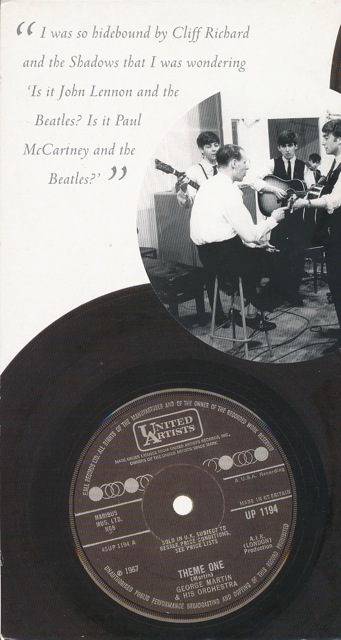
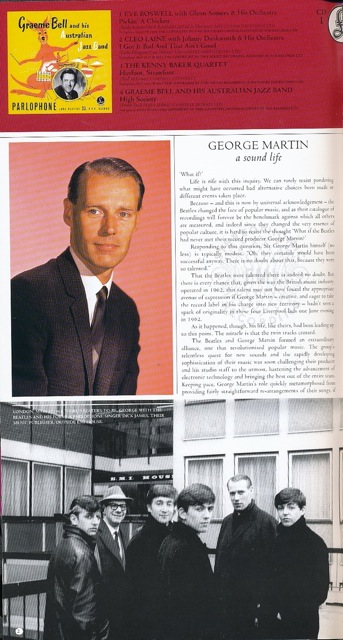
Glued inside the fold-out package is a 35 page book, with liner notes by Mark Lewisohn (who will be well-known to Beatles fans as the band’s most knowledgable and respected biographer). In it Lewisohn details the background to Sir George’s life and the multitude of artists and styles he produced over a 45-year span in the business:
For those who were not able to fork out the considerable outlay for the full 6 CD box set, EMI/Parlophone also produced a “Highlights” single CD version containing 24 tracks:
And there was also a promo CD produced. It came in a simple cardboard slipcase with a further reduced selection of material (14 tracks). This would have been sent to radio stations, and reviewers at magazines and newspapers to promote the box set:
This 2001 box set from 2001 forms a great companion to the filmed “Produced by George Martin” DVD and BluRay documentary released in 2012.
On this Christmas Eve a post to mark the time of year. Paul McCartney always seems to have ways of making his releases just that little bit collectable and sometimes very difficult to keep up with…
For those completists among us you’d think it’d be a simple thing to secure a copy for your collection. It’s just one song after all – done in the same crooner style and the light jazz instrumentation of Kisses on the Bottom, Paul’s LP from earlier in the year.
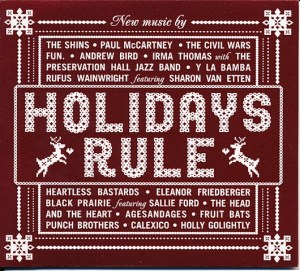
The first we heard of this song’s existence was that it was coming out on a compilation CD called Holidays Rule:
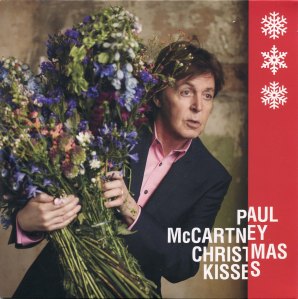
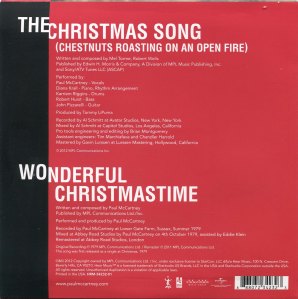
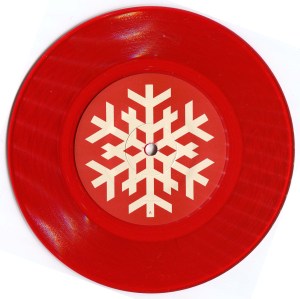
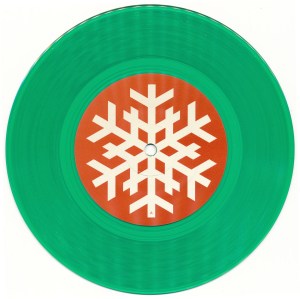
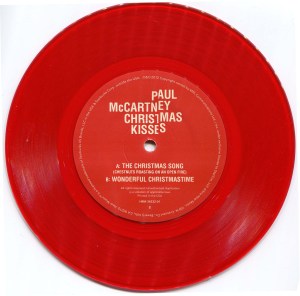
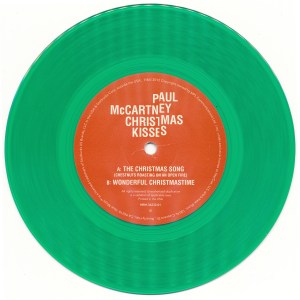
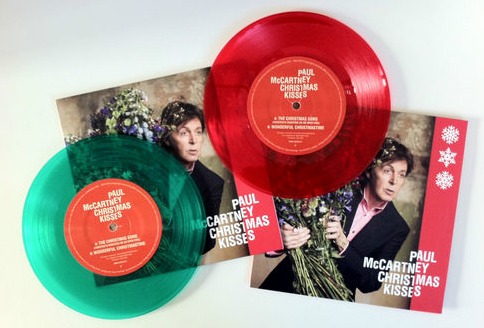
Easy. Just order a copy of the CD, or download the song from iTunes and you are up-to-date. Not so because then comes the news that it is also to be released as a vinyl single. But not just any vinyl single. There will only be 5000 copies made, it will be on coloured vinyl, it will have custom labels, and will only be available from independent record stores… Oh, and in the Christmas spirit some of the vinyl will be red, and some will be green:
Thanks to Andrey in Russia for sending through these scans. He got them from a mate in Germany who ordered the single from two different sources and was lucky to get one copy of each colour. Apparently one of his friends in the USA ordered five copies but got all of them in the red colour. Another collector in Japan ordered four copies and got all of them in the green….As the covers are all sealed in heat-shrink plastic nobody knows what colour vinyl will arrive until they open them. And, given it’s limited release status, the single has been for sale on Ebay at very inflated prices…..
You’d think that would be the end of it. But no. There are two different versions of Paul McCartney’s rendition of “The Christmas Song” (and thanks to the WogBlog site for this information).
One version comes with strings and is only available as a bonus track on the digital download album called Complete Kisses. This is an iTunes exclusive, digital-only album released in conjunction with the DVD/BlueRay of Paul performing all the songs from Kisses on the Bottom live.
However, the song on the vinyl singles above and on the Holidays Rule CD are without the strings, just Paul singing backed by a small jazz ensemble.
So, if you want every version of just this one McCartney song you have to hunt around – and reach deep into your wallet – this Christmas.
Happy Christmas, happy collecting, and happy holidays everyone.
The opening lines of George Harrison’s“Bangladesh” song from 1971 are: “My friend came to me with sadness in his eyes, he told me that he wanted help, before his country dies…..”.
That friend was Ravi Shankar – Indian sitar virtuoso and legendary musician who has died today – aged 92.
A statement on the musician’s website says he passed away in San Diego, near his Southern California home. His foundation issued a statement saying that he suffered upper respiratory and heart problems and had undergone heart-valve replacement surgery last week.
Indian Prime Minister Manmohan Singh also confirmed his death and called Shankar a “national treasure”.
Labelled “the godfather of world music” by George Harrison, Shankar helped millions of classical, jazz and rock lovers (including me) discover the centuries-old traditions of Indian music. He became a teacher, mentor and father figure to Harrison and greatly influenced the Beatles music, from composition through to their fascination with India and it’s culture.
His discography is understandably extensive, spanning a recording career of well over 55 years. Ravi Shankar was briefly signed to the Beatles Apple Records label and released two albums. The first was a soundtrack album to a film about his music and life called Raga(1971), with the album of music from the film produced by George Harrison:
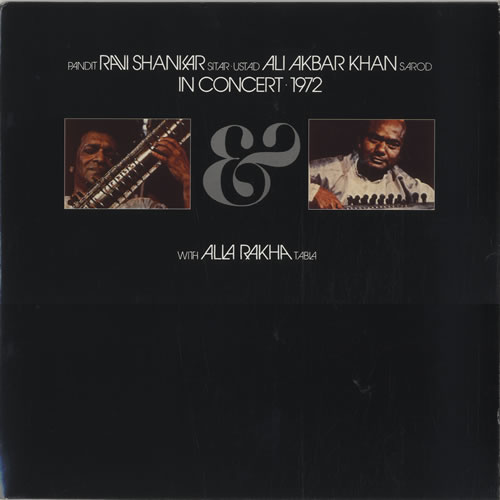
Andthen in 1973 came a double LP called In Concert 1972, with sarod player extraordinaire Ali Akbar Khan:
George Harrison of course famously called upon his friend Shankar in 1971 to open the fundraising Concert for Bangladesh in 1971, and then released a live film and a triple LP called The Concert for Bangladesh with the whole of the first side of Disc One dedicated to a performance by Ravi Shankar. This was also released on Apple Records:
Following the demise of Apple in the seventies, George Harrison continued his association with Shankar, releasing two LP’s on his Dark Horse label. The first was Shankar Family and Friends (1974):
Shankar Family and Friends was followed on Dark Horse Records in 1976 by Ravi Shankar’s Music Festival From India:
George Harrison also compiled and produced a 1996 box set called Ravi – In Celebration (for the EMI subsidiary label, Angel Records). A single CD of highlights was also released:
And in 1997 (also on the Angle label) came Chants of India, which was again produced by George Harrison:
It was no surprise then, when in 2002 a tribute concert was held in honour of the late Beatle, that the music of Ravi Shankar would feature prominently. He was present for the show and a Shankar composition “Arpan” (Sanskrit for ‘to give’), was specially written for the occasion:
All the Dark Horse Harrison/Shankar collaborations, plus Chants of India, came out in a lavish box set simply called Collaborations in November 2010:
In recent years Ravi Shankar’s own record label EastMeetsWest Music has been steadily working through his back-catalogue and re-releasing his life’s work on CD, DVD, and digitally.
OK. These are a bit old now (2003), but this is the first time I’ve seen them. So here goes.
For those of us who feel we know the Beatles album catalogue like it is part of our DNA it is always interesting to have that challenged from time to time.
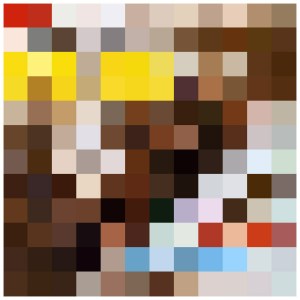
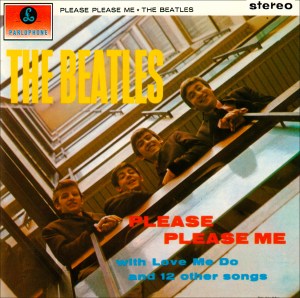
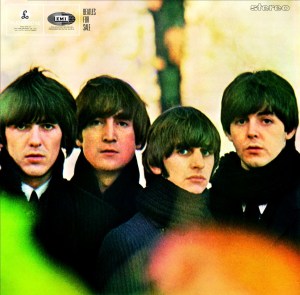
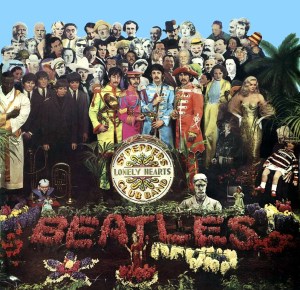
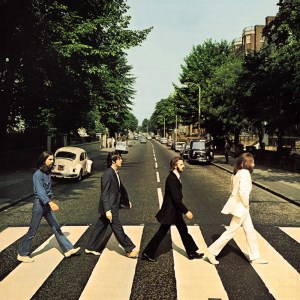
The visual nature of collecting has always intrigued me. How you can know so many of the variations of album covers and album art. Looking at and handling these all the time I guess means they become ingrained in your subconscious memory. That’s why I was intrigued to see these examples of the catalogue stripped right back to the basics by British artist Jonathan Lewis.
It’s Beatle album cover inspired pixel work. I recommend taking a few steps back (or squinting) to really see how amazing these painting are.
You can see all the collection in an online book called “The Pixles” (after “The Beatles (White Album”)….but these are five of my favourites:














![beatles in australia[1]-page-001](https://beatlesblogger.com/wp-content/uploads/2012/12/beatles-in-australia1-page-001.jpeg?w=584)
![beatles in australia[1]-page-002](https://beatlesblogger.com/wp-content/uploads/2012/12/beatles-in-australia1-page-002.jpeg?w=584)
![beatles in australia[1]-page-005](https://beatlesblogger.com/wp-content/uploads/2012/12/beatles-in-australia1-page-005.jpeg?w=584)
![beatles in australia[1]-page-006](https://beatlesblogger.com/wp-content/uploads/2012/12/beatles-in-australia1-page-006.jpeg?w=584)
![beatles in australia[1]-page-008](https://beatlesblogger.com/wp-content/uploads/2012/12/beatles-in-australia1-page-008.jpeg?w=584)

















 Beatles Blog